 Behavioural responses of Anopheles darlingi (Diptera: Culicidae) to host odours: insights from vertical and horizontal olfactometers
Abstract
BACKGROUND Anopheles darlingi is the primary vector of malaria in the Americas, particularly in the Amazon, where it thrives in forest margins. This species exhibits considerable flexibility in feeding behaviour, adapting to environmental conditions and host availability. Previous studies on its attraction to human odour have relied mainly on baited traps, with limited research using vertical olfactometry to explore host-seeking behaviour.
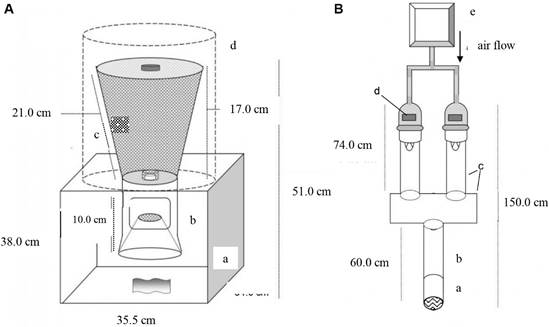
OBJECTIVES This study aimed to assess the feasibility of using vertical and horizontal olfactometry to investigate the behavioural responses of both wild and laboratory-reared (F1) An. darlingi females to human odours. The odours were presented through direct (hands and feet) and indirect (sweat-impregnated synthetic substrates) stimuli.
METHODS Wild mosquitoes were collected from Porto Velho and Candeias do Jamari, Brazil, and laboratory-reared (F1) mosquitoes were bred under controlled conditions. A vertical olfactometer was employed to assess short-range attraction, and a dual-choice horizontal olfactometer evaluated host-seeking behaviour. Human odours were obtained from volunteers’ hands, feet, and worn socks. Mosquito responses were analysed for attraction, activity, and inactivity, with statistical analysis performed using two-factor analysis of variance (ANOVA).
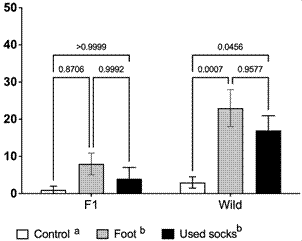
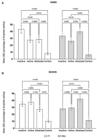
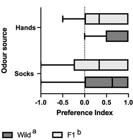
FINDINGS Wild An. darlingi mosquitoes showed significantly higher attraction to human odours compared to F1 mosquitoes in both the vertical and horizontal olfactometers. Wild mosquitoes were more attracted to feet and worn socks than F1 mosquitoes, which exhibited low attraction to both stimuli. The preference index (PI) was higher in wild mosquitoes for both hand and sock odours, indicating a stronger attraction to human odours.
MAIN CONCLUSIONS Wild An. darlingi mosquitoes exhibit a stronger behavioural response to human odours compared to F1 mosquitoes. The use of olfactometry, particularly vertical and horizontal methods, proved effective in studying An. darlingi mosquito’s host-seeking behaviour and can be applied to further research on vector behaviour and potential control strategies.
Key words:
Anopheles darling
; malaria; mosquito behaviour; olfactometry; host-seeking behaviour
 Thumbnail
 Thumbnail
 Thumbnail
 Thumbnail