 Evidence of insecticide resistance in Aedes aegypti populations of Suriname: first report of malathion resistance and presence of the kdr mutations V410L, V1016I and F1534C
Abstract
BACKGROUND Dengue outbreaks pose a significant public health risk in Suriname, with challenges in mosquito surveillance and limited data on insecticide resistance hampering control efforts.
OBJECTIVES To investigate the resistance status and involved mechanisms of Aedes aegypti mosquitoes for malathion and λ-cyhalothrin insecticides.
METHODS The Centres for Disease Control and Prevention (CDC) bottle bioassay was used to test the resistance phenotypic status of Ae. aegypti while the occurrence and frequency of knockdown resistance (kdr) mutations were accessed by TaqMan genotype assays for the sites 410L (Valine/Leucine), 1016I (Valine/Isoleucine), and 1534C (Phenylalanine/Cysteine).
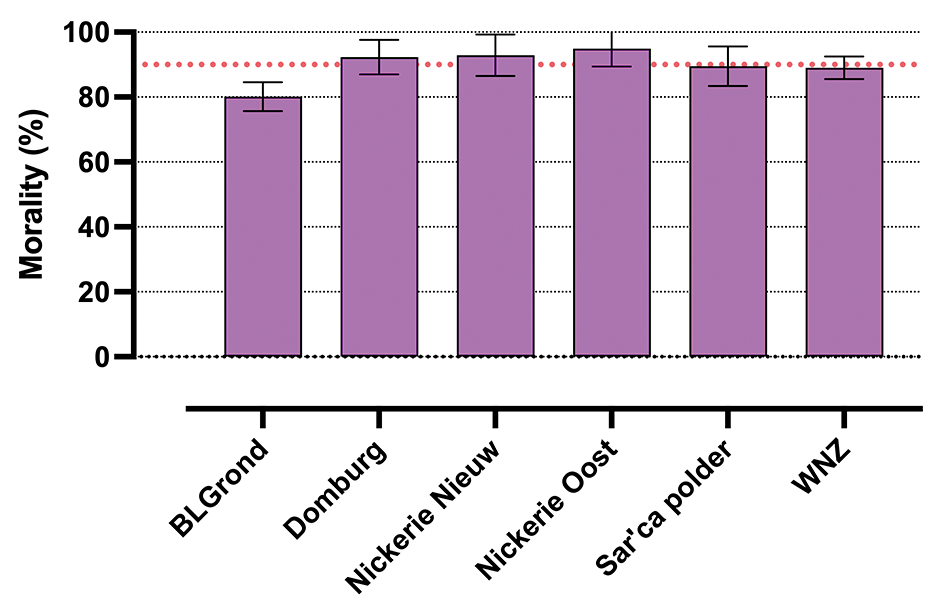
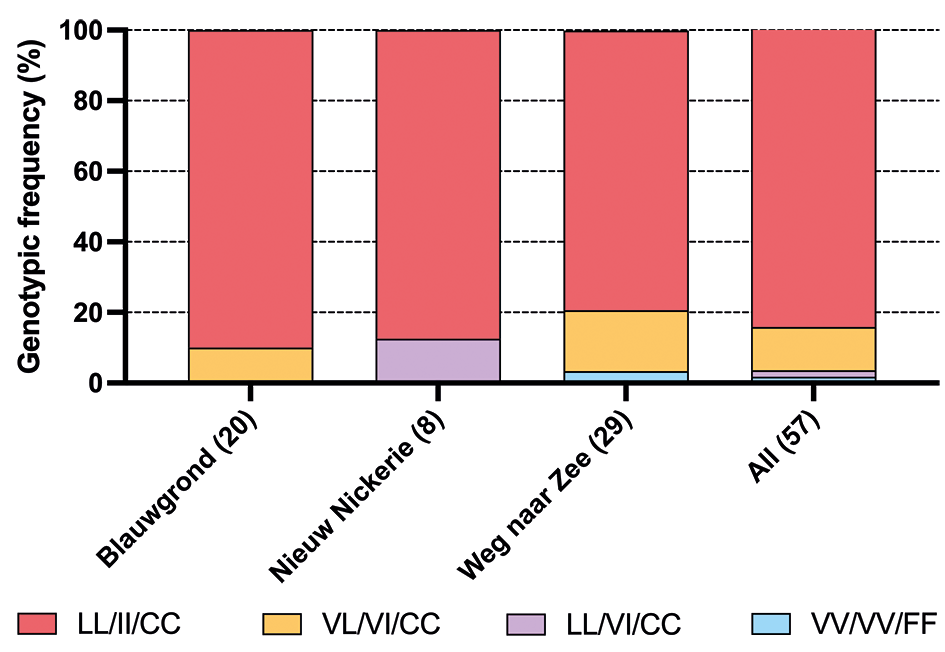
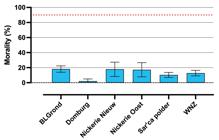
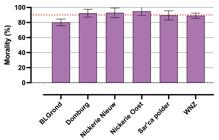
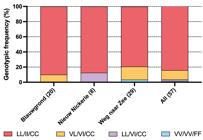
FINDINGS Results showed resistance to malathion in the Blauwgrond population, with other regions exhibiting reduced susceptibility based on mortality rates between 89% and 94%. Very low mortality rates indicate resistance to λ-cyhalothrin in all tested areas. Knockdown resistance (kdr) mutations were detected at high frequencies. The triple homozygous kdr genotype leucine/leucine, isoleucine/isoleucine, cysteine/cysteine (LL/II/CC) predominated (84.2%), while the wild-type genotype was found only in 1.8% of the samples.
MAIN CONCLUSION This study reports the first detection of malathion resistance in Ae. aegypti from Suriname and confirms high levels of resistance to λ-cyhalothrin, possibly driven by kdr gene mutations. The results emphasise the importance of sustained surveillance and continued research on resistance mechanisms to guide effective and evidence-based vector control strategies.
Key words:
Aedes aegypti
; insecticide resistance; kdr mutation; malathion; λ-cyhalothrin
 Thumbnail
 Thumbnail
 Thumbnail
 Thumbnail