 Understanding the genetic complexity of Leishmania infantum in the Americas: a focus on 3’NT/NU gene deletion
Abstract
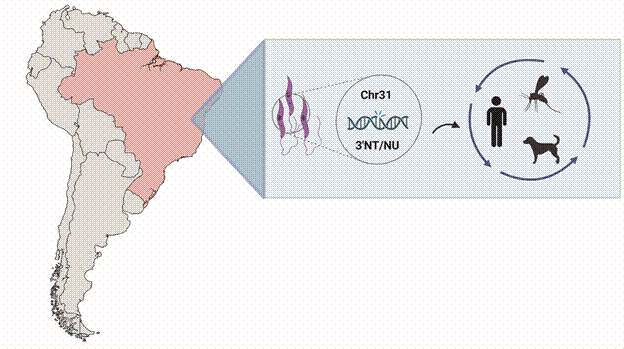
Visceral Leishmaniasis in the Americas is primarily associated with Leishmania (Leishmania) infantum. This parasite is non-native and was imported during the colonisation era. The constitutive instability of the Leishmania genome allows this parasite to express flexibility in adapting to environmental fluctuations and different selective pressures, such as those the parasite faced when arrived in the New World. Therefore, genetic diversity is expected among the populations of L. infantum in the Americas, despite the bottle neck of importation route. Indeed, subpopulation of strains of L. infantum carrying a homozygous deletion in the genome was detected exclusively in the continent. These strains are more spread across Brazilian territory to the detriment of the non-deleted; the locus includes four genes, two of which encode the enzyme ecto-3’-nucleotidase/nuclease (3’NT/NU), a virulence factor in L. infantum. In this review, we highlight the sub estimated genetic complexity of L. infantum populations in Brazil, addressing the biological importance of the 3’NT/NU enzyme and the possible phenotypic impacts of its deletion, pointing out how it may configure an adaptive strategy for L. infantum. Finally, we raise the discussion of how the genome of L. infantum might be shaped in a unique way under the ecological conditions of Brazil.
Key words:
American visceral Leishmaniasis;
Leishmania infantum
; deletion; ecto-3’-nucleotidase/nuclease; adaptation; evolutionary process
 Thumbnail