Effect of Cooling Rate on the Secondary Dendritic Spacing of a Horizontally Solidified 6xxx Series Aluminum Alloy
Abstract
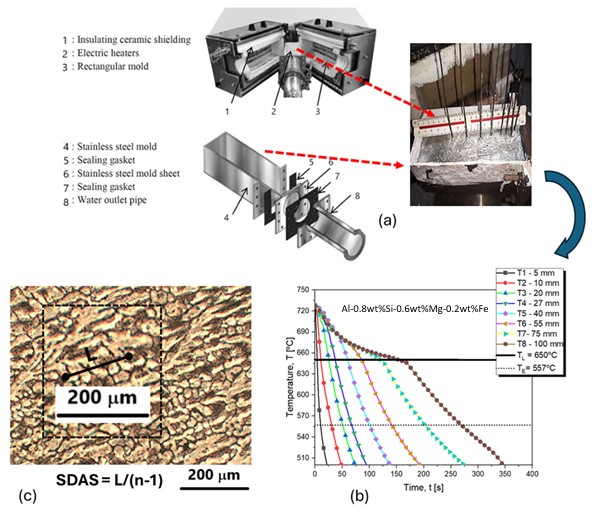
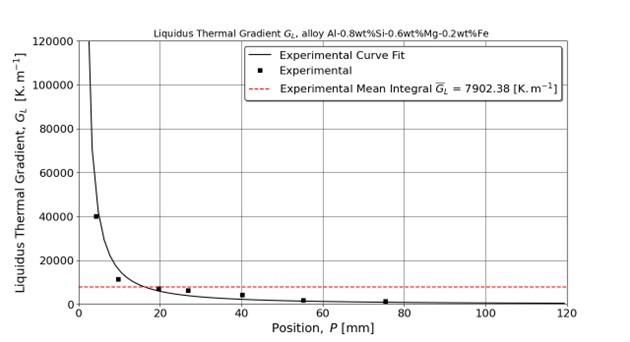
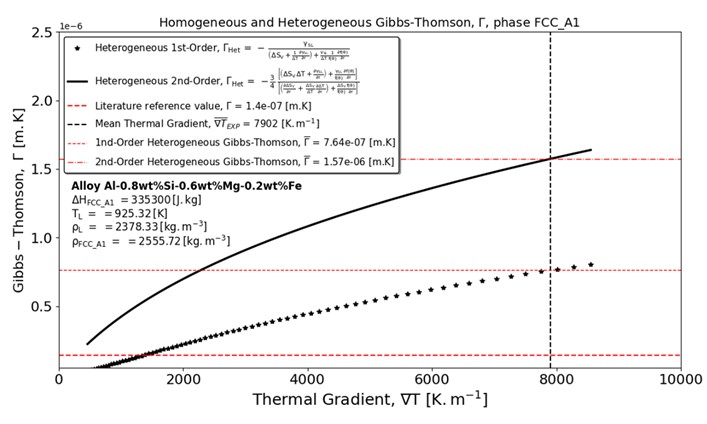
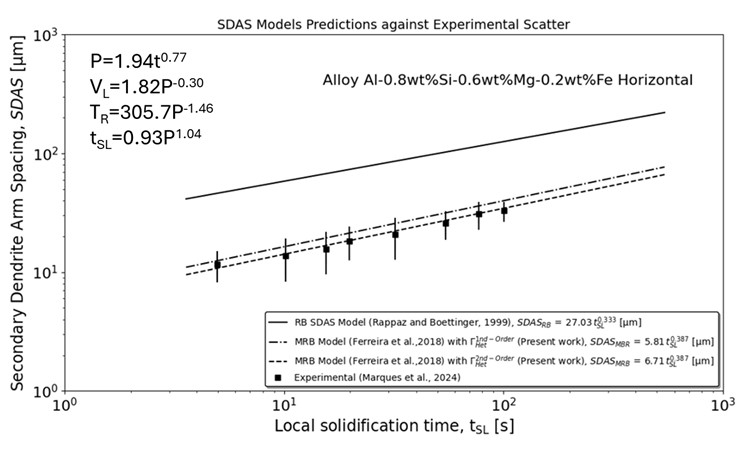
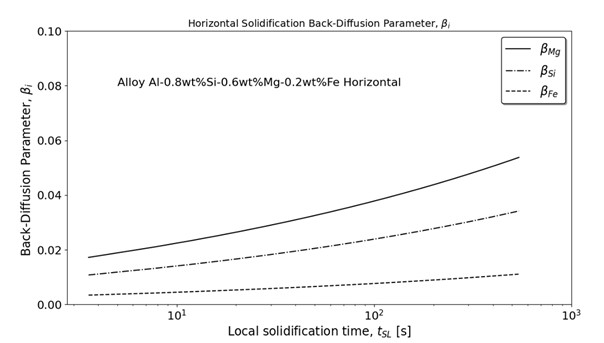
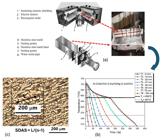
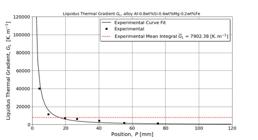
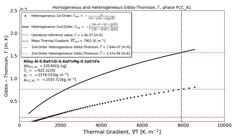
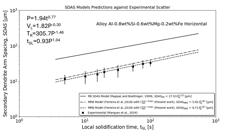
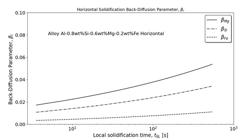
The 6xxx series alloys [Al-Mg-Si] are valued for their excellent mechanical and electrical properties, making them suitable for power conductors in non-steel core transmission and distribution lines. This study investigates the growth of the dendritic microstructure in the Al-0.6wt%Mg-0.8wt%Si-0.2wt%Fe alloy, specifically under horizontally solidified conditions. We employ both experimental techniques and mathematical modeling to predict the growth of the secondary dendritic arm spacing (SDAS). Samples of the as-cast alloy were obtained using a water-cooled horizontal solidification device. Our research starts with a mathematical model that was originally developed for solidification conditions close to thermodynamic equilibrium (low cooling rates - TR). We extend this model to address non-equilibrium conditions (high TR) by incorporating the reverse diffusion parameter β into our analysis. The experimental relationships for SDAS as functions of TR and local solidification time (tSL) are expressed with the equations: SDAS = constant × (TR)(-1/3) and SDAS = constant × (tSL)(1/3). We found a good agreement between the results from our iterative method and the experimental values. Additionally, we utilized a recently developed theoretical formulation for nonequilibrium nucleation to predict the Gibbs-Thomson coefficient under these conditions.
Keywords:
Multicomponent alloys; Unsteady-state horizontal solidification; Dendritic growth models
 Thumbnail
 Thumbnail
 Thumbnail
 Thumbnail
 Thumbnail