Upper to Lower Bainite Transition in a High-Carbon Low Alloy Steel: Linking Overall Transformation Kinetics, Microstructure and Microhardness
Abstract
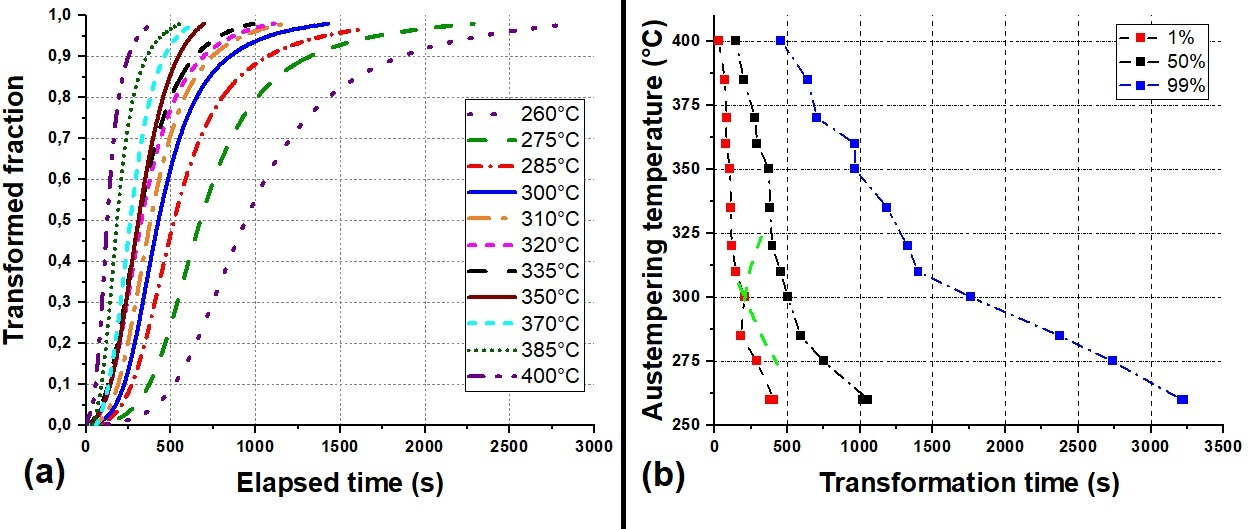
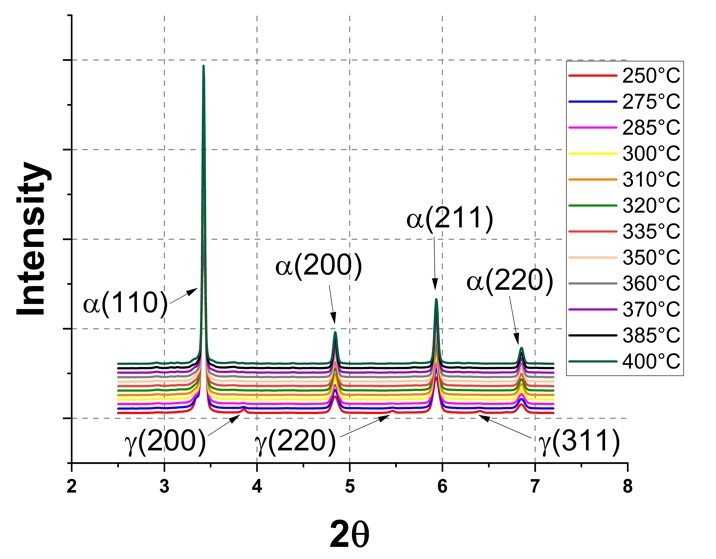
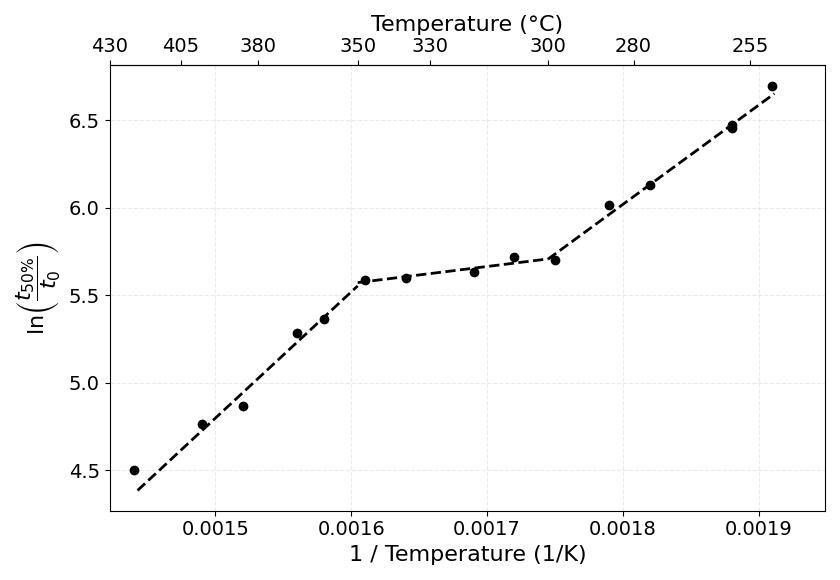
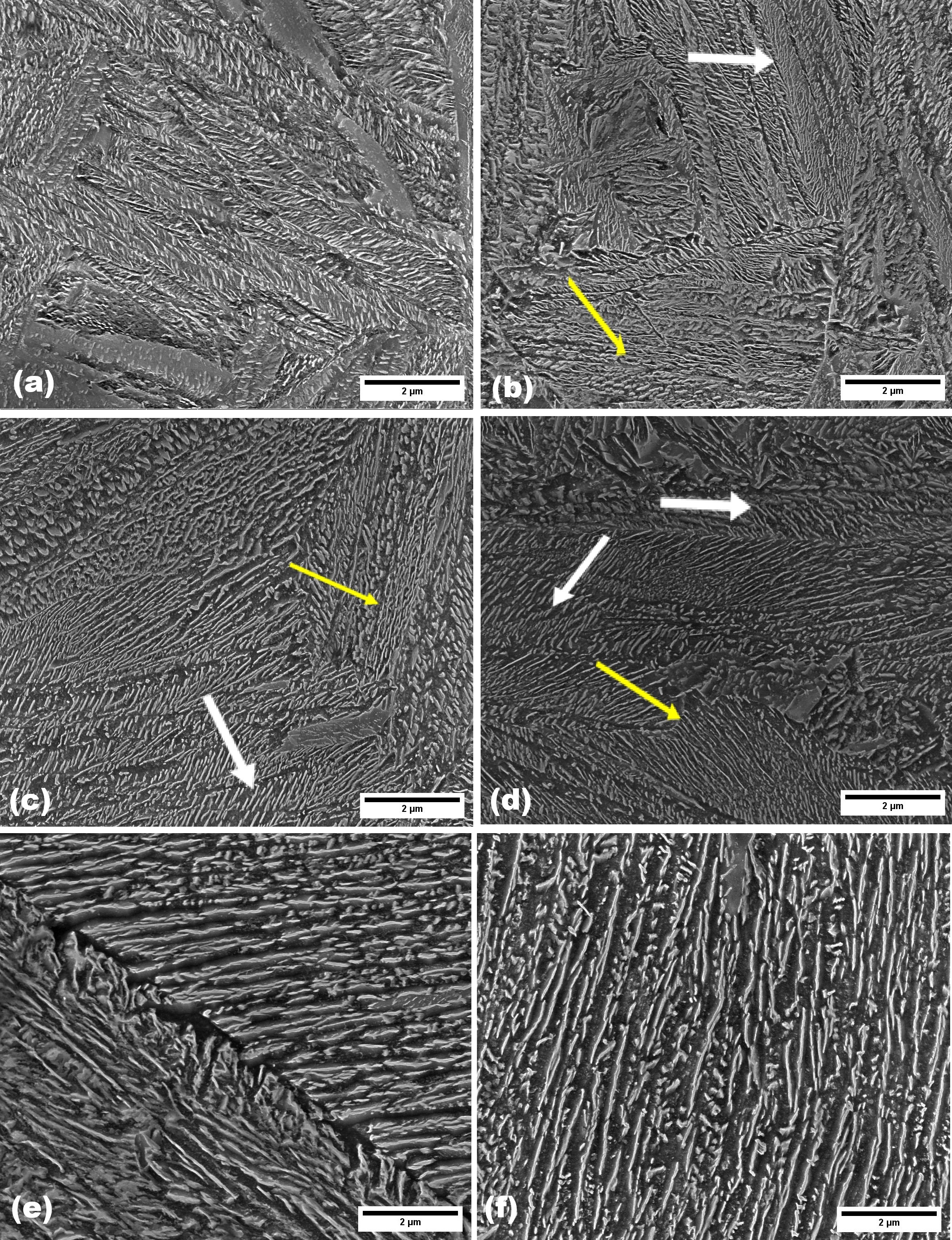
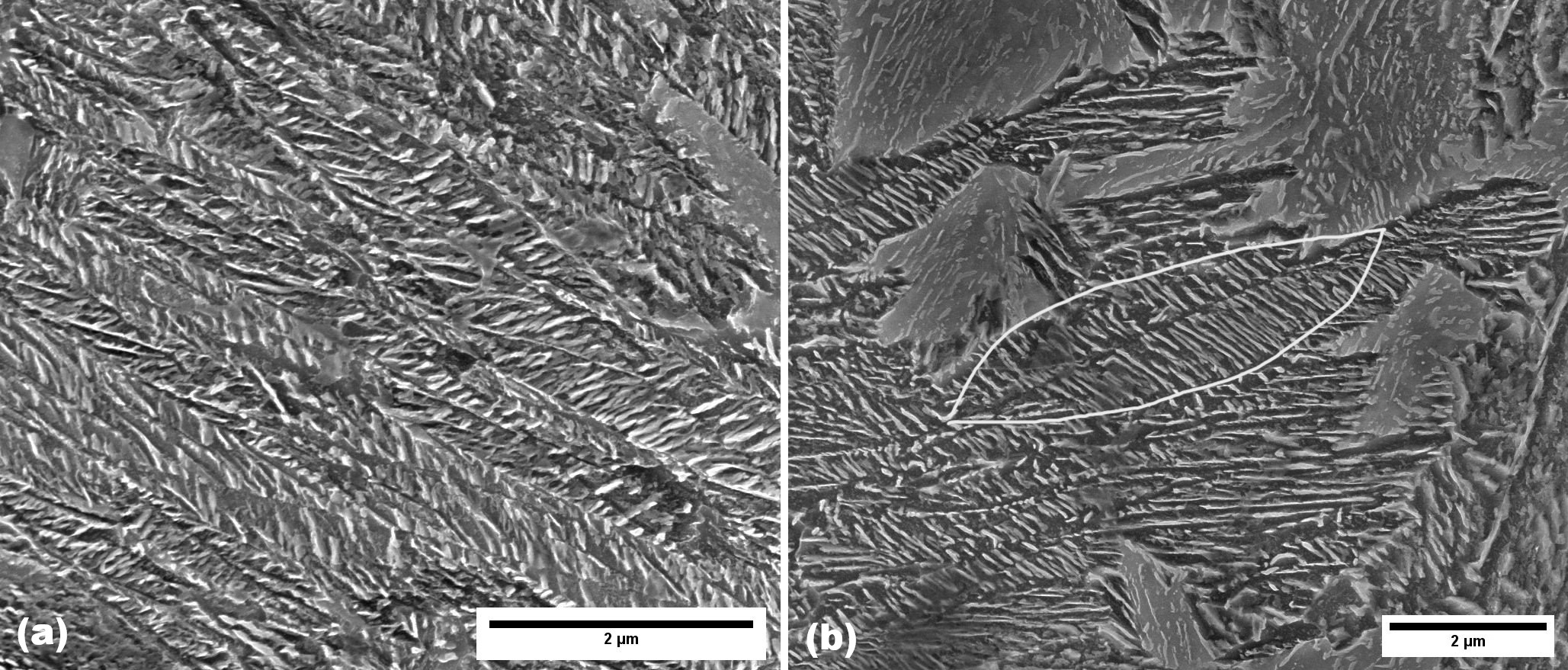
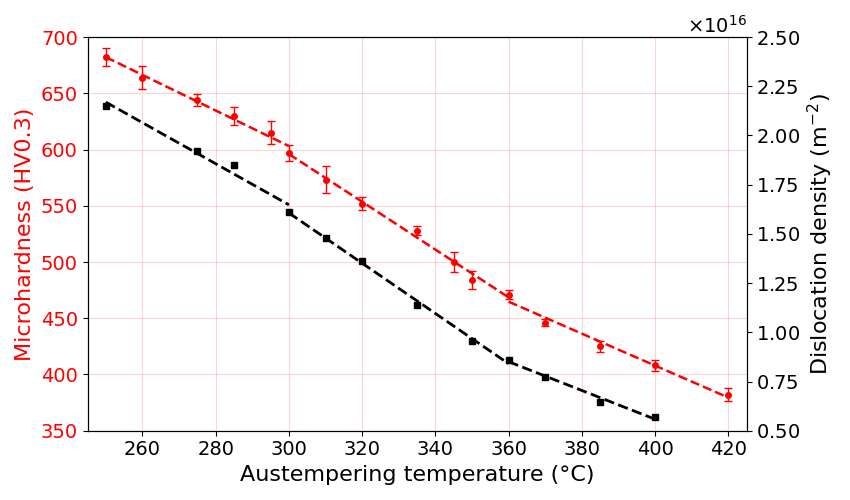
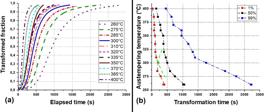
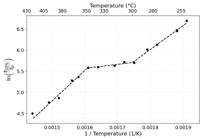
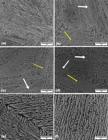
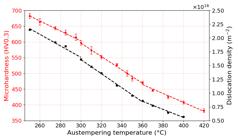
The transition from upper-to-lower bainite in carbon steels is a complex process yet not fully explored. This study examines such transition in a 0.7C, 0.74Mn, 0.61Si, 0.2Cr (wt%) low-alloy steel using a comprehensive approach that integrates dilatometry, scanning electron microscopy (SEM), ex-situ HEXRD, and microhardness testing. Microhardness and dislocation density were found strongly coupled, both increasing with decreasing austempering temperature and presenting changing trends at approximately 350°C and 300°C. Likewise, an Arrhenius plot derived from the curves of transformed fraction as a function of austempering temperature presented the same behaviour. These turning points are considered, respectively, the onset and the end of the transitional interval between upper and lower bainite. Furthermore, SEM analyses confirmed a progressive change in morphology, from coarse upper bainite at high temperatures (400°C), to a mixture of upper and lower bainite in the transitional range, and finally to exclusively fine lower bainite at low temperatures (275°C). The results support that the upper-to-lower bainite transition is not a discrete step but a continuum and offer insights into the interplay between bainite morphology, overall transformation kinetics, and microhardness, which are critical for optimizing heat treatments routes.
Keywords:
upper and lower bainite; transition; transformation kinetics; morphology
 Thumbnail
 Thumbnail
 Thumbnail
 Thumbnail
 Thumbnail
 Thumbnail
 Thumbnail
 Thumbnail
 Thumbnail