 In vitro callus induction in grapevine rootstock
ABSTRACT
Grapevine (Vitis spp.) is traditionally propagated by cutting and grafting. However, micropropagation represents a promising alternative for the production of plants free of systemic pathogens. This study aimed to evaluate callus induction in grapevine rootstock cv. IAC 766, using the thin cell layer (TCL) technique. Longitudinal (lTCL) and transverse (tTCL) sections were obtained from internodal segments and cultivated in two types of culture media (½ MS and WPM). The experimental design was completely randomized, in a 2 × 2 factorial arrangement, with four replicates per treatment. After 70 days of in vitro culture, the presence of friable or watery calli was evaluated. The WPM medium was superior to ½ MS for the induction of friable calli, with 2 and 0.65 calli formed, respectively. Likewise, the longitudinal section was superior to the transverse one (2.37 and 0.25, respectively).
KEYWORDS:
Vitis spp
; viticulture; micropropagation
RESUMO
A videira (Vitis spp.) é propagada tradicionalmente por estaquia e enxertia; porém, a micropropagação é uma alternativa promissora para a obtenção de plantas livres de patógenos sistêmicos. Objetivou-se avaliar a indução de calos de porta-enxerto de videira cv. IAC 766, utilizando-se a técnica thin cell layer (TCL). Foram realizados cortes longitudinais (lTCL) e transversais (tTCL) de segmentos internodais, cultivados em dois tipos de meio de cultura (½ MS e WPM). O delineamento foi inteiramente casualizado, em esquema fatorial 2 x 2, com 4 repetições por tratamento. Após 70 dias de cultivo in vitro, avaliou-se a presença de calos friáveis ou aquosos. O meio WPM foi superior ao ½ MS na indução de calos friáveis, respectivamente com 2 e 0,65 calos formados, assim como o corte longitudinal foi superior ao transversal (2,37 e 0,25, respectivamente).
PALAVRAS-CHAVE:
Vitis spp
; viticultura; micropropagação
INTRODUCTION
Cutting and grafting techniques have been widely used for decades in the commercial propagation of grapevine (Vitis spp.). Cutting consists in the multiplication of grapevine from cuttings used either as rootstocks or as own rooted plants, whereas grafting enables the union of the scion cultivar with the rootstock, resulting in a complete plant that combines resistance and desirable agronomic traits (Thagunna 2023). The use of these techniques has allowed the cultivation of grapevine with improved characteristics, in areas that were previously considered unsuitable or even infested with pests and diseases that hinder crop management (Macedo et al. 2021).
Although grafting is an efficient technique for the commercial propagation of grapevine, alternative approaches have been explored, especially when the focus is on plant breeding or on virus elimination from propagative materials (Ebrahimi et al. 2022). Micropropagation enables the production of viable clones in large quantities with high uniformity, in addition to ensuring the elimination of pathogenic agents such as fungi, bacteria, and viruses (Doroshenko et al. 2021, Melyan et al. 2021).
Totipotency is a fundamental mechanism that allows any living plant cell to be reprogrammed, differentiate again, and give rise to new tissues and organs (Su et al. 2021). This phenomenon not only enables the union between the scion cultivar and the rootstock in grapevine, but is also essential for the success of in vitro culture. Grapevine micropropagation is mainly directed toward breeding and clonal sanitation, in which meristem culture, combined with other techniques such as thermotherapy, is employed for the eradication of most grapevine viruses, since meristematic cells multiply rapidly, retain embryonic characteristics, and do not have contact with the plant vascular system (Golino et al. 2017).
Calli are multicellular structures formed from the dedifferentiation and proliferation of plant cells in response to external stimuli or injuries (Fehér 2019). These undifferentiated tissues play an essential role in in vitro propagation, demonstrating cellular totipotency (Souza et al. 2018). Callus induction is modulated by several factors, including interactions with plant growth regulators, composition of the culture medium, type of explant used, and procedures adopted for its preparation and inoculation into the nutrient medium (Silva et al. 2018).
Callus induction in grapevine constitutes a crucial step in several micropropagation protocols, such as somatic embryogenesis and clonal sanitation. The optimization of this process requires a specific hormonal balance, and the combination of high concentrations of cytokinin (2.5 µM TDZ) and low concentrations of auxin (1 µM NAA) has demonstrated a high efficiency in callus induction from internodal segments of the Merlot cultivar (Carvalho et al. 2011). Friable calli, which are characterized by a light color and a dry and granular appearance, exhibit high metabolic activity and accelerated cell multiplication, typical of meristematic cells that are undifferentiated, and present high embryogenic competence, which makes it necessary to apply techniques that enhance callus formation (Apio et al. 2024).
Among the employed techniques, the thin cell layer (TCL) approach stands out. This methodology uses ultrathin sections of plant tissues ranging from 0.5 to 2 mm in thickness, such as meristems, floral organs, nodal and internodal segments (Silva & Dobránszki 2015). The use of explants with reduced thickness maximizes cell exposure to the culture medium, promoting the diffusion of nutrients and growth regulators (Arli et al. 2023). The application of TCL enables woody species, many of which exhibit recalcitrance to in vitro culture such as apple, to achieve efficient micropropagation protocols (Dobránszki & Silva 2011). Although grapevine is a recalcitrant species depending on the genotype, TCL is still not among the techniques commonly used to optimize protocols for this species (Dobránszki 2021). The application of this technique in grapevine presents a broad potential, allowing advances in areas such as clonal sanitation, callus induction, and somatic embryogenesis.
The TCL technique is recognized for optimizing the in vitro morphogenetic response and is a crucial tool for micropropagation and somatic embryogenesis in crops with difficult regeneration. Despite its importance, information on this technique applied to grapevine remains scarce, which highlights the need to deepen knowledge on this approach in this species. Therefore, this study aimed to promote in vitro callus induction in grapevine rootstocks of the cultivar IAC 766 subjected to different culture media, using the TCL technique.
MATERIAL AND METHODS
The experiment was initiated on November 27, 2024, and conducted in the plant micropropagation laboratory of the Universidade Federal de São João del Rei, in Sete Lagoas, Minas Gerais state, Brazil (19º28’33”S; 44º11’43”W). The propagative material consisted of ex situ internodes collected from new shoots of the grapevine rootstock IAC 766 grown in the experimental field of the university. Asepsis was performed under a laminar flow hood by immersing the material in 70 % ethanol for 1 min, followed by immersion in a 1 % sodium hypochlorite solution for 20 min, and subsequent rinsing three times in deionized and autoclaved water.
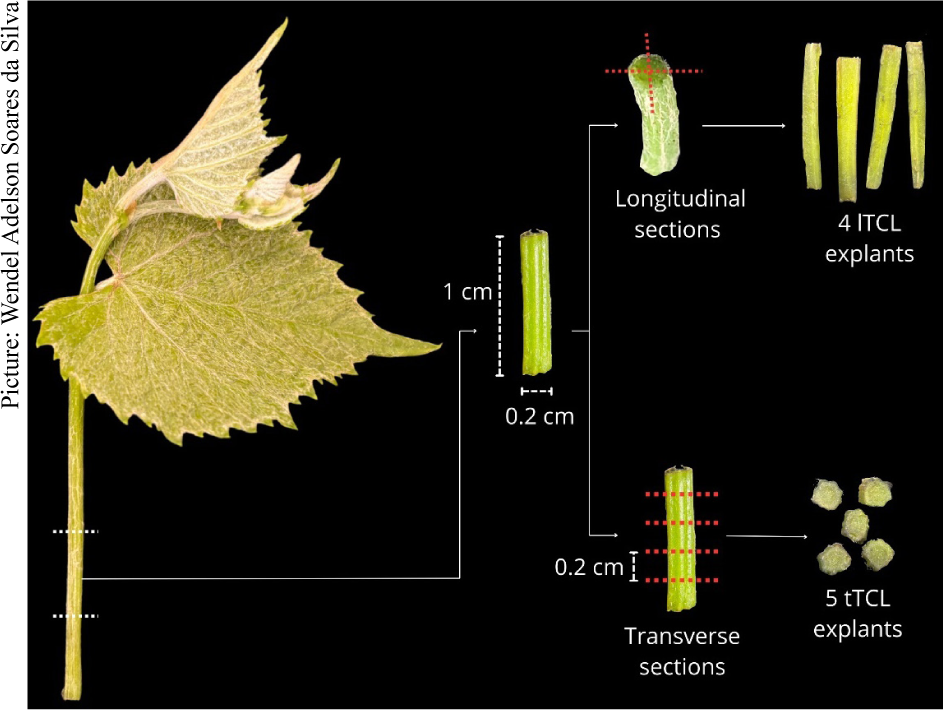
Internodal segments were obtained by cutting the material into pieces measuring 1 cm in length. Transverse sections of 2 mm were then prepared to obtain 5 tTCL explants, and longitudinal sections of approximately 1 mm thickness were prepared to obtain 4 lTCL explants (Figure 1). Immediately after sectioning, the explants were transferred to culture bottles containing two culture media, with four explants per bottle and 40 mL of medium in each. The media consisted of ½ MS (Murashige & Skoog), containing half the concentration of salts and vitamins, and WPM (woody plant medium by Lloyd & McCown). Both media were supplemented with 30 g L-¹ of sucrose, 5.5 g L-¹ of agar, 2 mg L-¹ of glycine, 100 mg L-¹ of myoinositol, and 1 mg L-¹ of BAP (6 benzylaminopurine). The pH was adjusted to 5.8 ± 0.2 prior to autoclaving at 120 ºC, for 20 min. All culture steps were conducted in a growth room maintained at 26 ± 2 ºC, in the absence of light. The experiment remained under these conditions for 40 days, after which the explants were transferred to Petri dishes containing identical medium composition. Contaminated explants were discarded to prevent cross contamination during the transfer process.

Illustration showing the preparation of thin cell layer (TCL) explants from internodes of new shoots of the grapevine rootstock IAC 766. Internodes of 1.0 cm were sectioned longitudinally to generate 4 lTCL explants or transversely to produce 5 tTCL explants with approximately 0.2 cm thick. Dashed lines indicate the position and orientation of each cut.
After 70 days of in vitro culture, the material was evaluated for number of explants that produced callogenesis, general morphological appearance classified as predominantly friable or watery, and histological characteristics. For the histological analysis, calli were selected based on their morphological features and fixed in FAA 70 %. After 24 hours, the samples were dehydrated in an increasing ethanol series of 80, 90, and 100 %, remaining for 1 hour in each solution. The material was then embedded in Leica historesin, sectioned using a semi-automatic microtome, prepared on slides, and stained with a 2 % aqueous toluidine blue solution (m v-¹), for 15 min. The samples were subsequently examined under a microscope to characterize cellular organization and the formation pattern of each callus type.
The obtained data were subjected to analysis of variance (Anova) using a completely randomized design, in a 2 × 2 factorial arrangement, considering the main effects of culture medium and section type, as well as their interaction. Each treatment consisted of 4 replicates, and each replicate comprised 4 explants, totaling 16 explants per treatment and 64 explants in the entire experiment. Means were compared using the F test at 5 % of significance. The assumptions of normality and homogeneity of variances were assessed using the Shapiro-Wilk and Levene tests, respectively. Statistical analyses were performed using the R software (R Core Team 2019) at 5 % of significance.
RESULTS AND DISCUSSION
No significant interaction was observed between the culture media and the TCL section types for friable callus formation in the grapevine rootstock IAC 766 (p = 0.063). However, when the factors were analyzed independently, significant differences were detected among the treatments.
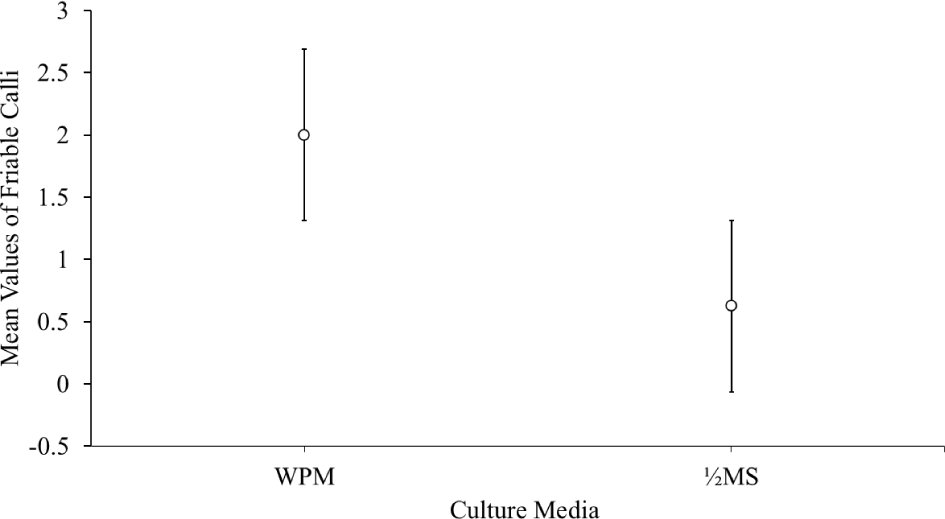
The WPM medium was superior to ½ MS for the induction of friable calli (p = 0.007), with mean values of 2 and 0.65 formed calli, respectively (Table 1). This result is influenced by the composition of the culture medium and its interaction with grapevine morphology (Figure 2). Although the ½ MS medium is widely used in plant tissue culture and supports a broad range of processes such as meristem culture and plant tissue regeneration, its formulation contains high concentrations of mineral salts such as potassium and nitrogen. In contrast, the WPM medium is more commonly used for shrub and woody species, providing lower salt concentrations and a more balanced nitrate to ammonium ratio, when compared to MS, which favors the in vitro establishment of these species (Quisen & Angelo 2008).
Estimated marginal mean values of friable calli of the grapevine rootstock IAC 766 for each type of culture medium, WPM and ½ MS, at 70 days.
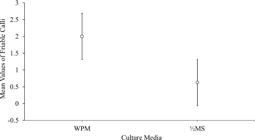
Mean number of friable calli produced per explant of the grapevine rootstock IAC 766 after 70 days of in vitro culture in two culture media, WPM and ½ MS. Points represent the means and vertical bars correspond to the standard error.
A similar study with hazelnut (Corylus avellana L.) demonstrated that the WPM medium provided a greater efficiency in in vitro callus regeneration, when compared with the MS medium, which can be largely attributed to differences in medium composition. The MS medium is characterized by a higher salt concentration, which may subject the plant to physiological stress, whereas WPM, formulated for woody species, presents a more suitable balance of nitrogen and micronutrients (Jafarova et al. 2025).
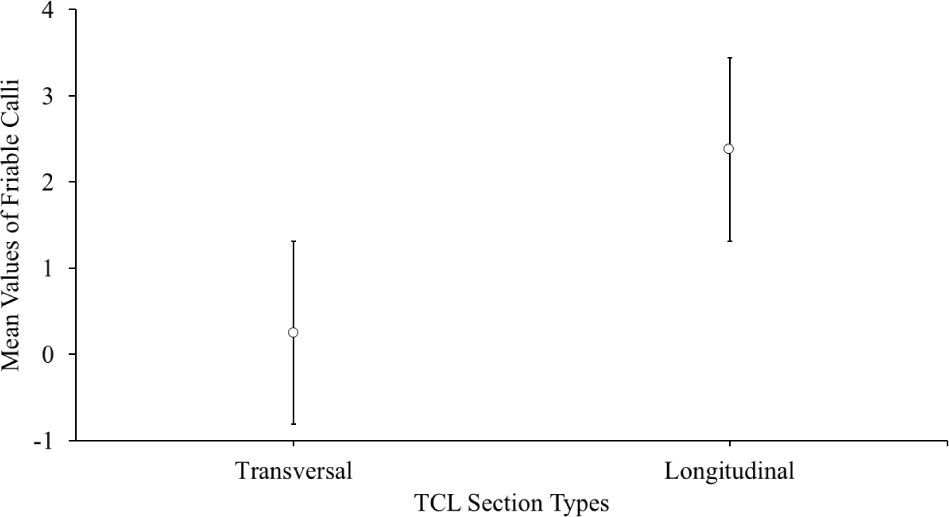
The longitudinal section of the explants was superior to the transverse section for the induction of friable calli (p < 0.001), with mean values of 2.37 and 0.25, respectively (Table 2). According to Sharma et al. (2023), transverse TCL sections contain greater cellular diversity within a smaller cutting area and would therefore be expected to respond more efficiently, in terms of cell multiplication and organ regeneration, than lTCL. However, when the longitudinal cut is very thin, it may contain only epidermal cells, which can limit the response to regenerative stimuli.
Estimated marginal mean values of friable calli of the grapevine rootstock IAC 766 for each type of TCL section, at 70 days.
In the present study, the longitudinal section preserved not only epidermal cells, but also cortical, cambial, and parenchymatic cells (Figure 1), which explains the superior callogenesis observed for lTCL (Figure 3). In addition, this type of explant presents a larger surface area in contact with the culture medium and with phytohormones, which enhances callus induction (Ikeuchi et al. 2016).
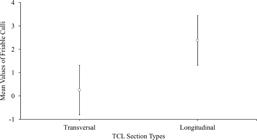
Mean number of friable calli obtained from explants of the grapevine rootstock IAC 766 subjected to transverse and longitudinal TCL sections. After 70 days of in vitro culture, means are represented by points and the standard error by vertical bars.
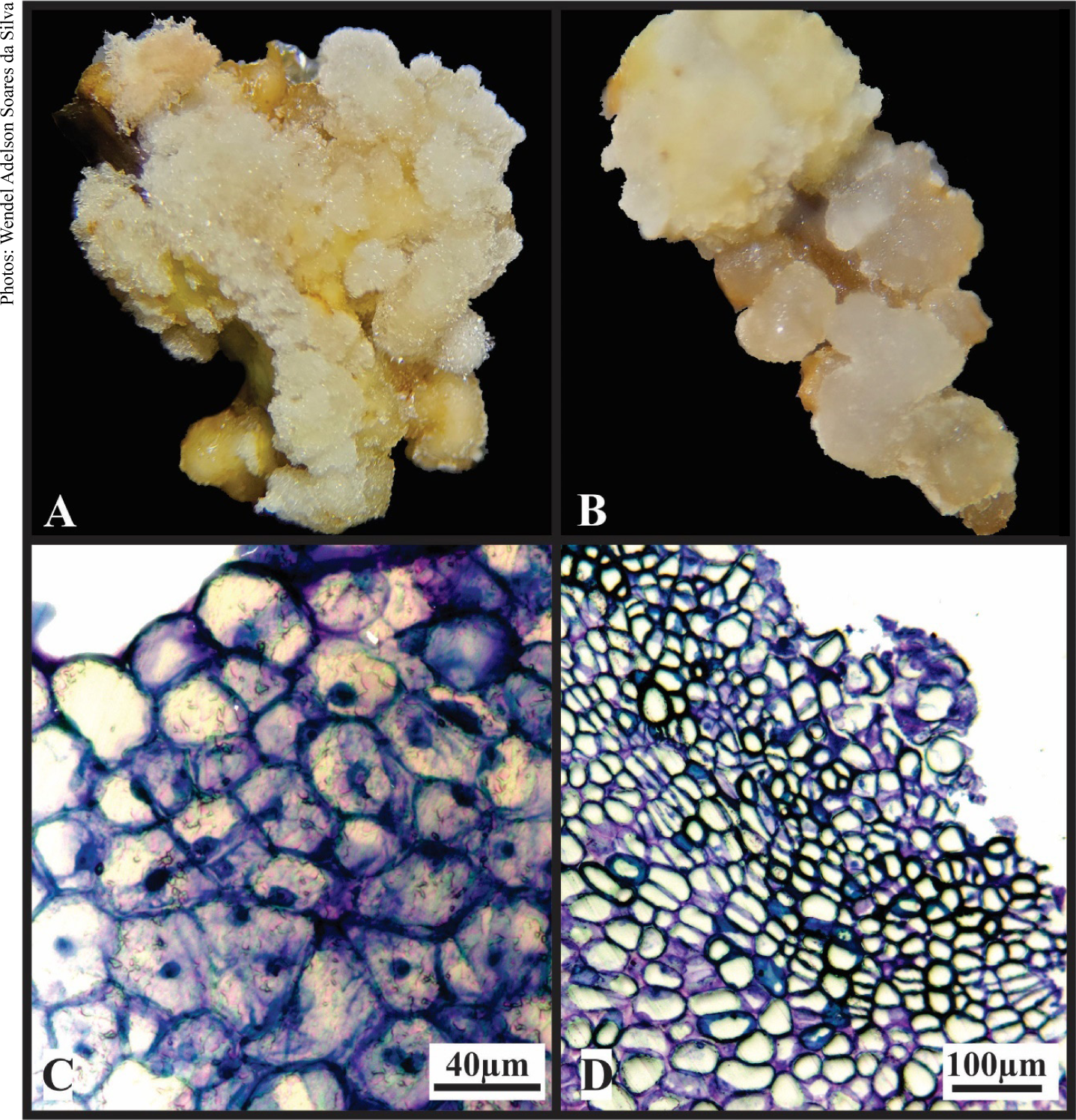
There was no significant interaction between section type and culture medium for the formation of watery calli, and no significant differences were observed when the factors were analyzed independently. Watery calli present a soft and water-soaked texture due to their high internal moisture content and their less cohesive cells (Figure 4B). In contrast, friable calli exhibit a light color, translucent appearance, and a drier texture (Figure 4A), in addition to presenting a high rate of cell division and greater embryogenic potential (Silva et al. 2018).
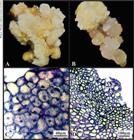
Morphological and histological characterization of calli formed from explants of the grapevine rootstock IAC 766. A) friable callus with granular and dry appearance; B) watery callus with translucent texture and greater turgidity; C) histological section of friable callus showing small, rounded cells with prominent nuclei and reduced vacuoles; D) histological section of watery callus showing cells with evident vacuoles and poorly perceptible nuclei.
Watery calli presented more differentiated cells with high water content, absence of a defined organizational pattern, presence of evident vacuoles, and poorly perceptible nuclei (Figure 4D). Due to these characteristics and the pattern of cell multiplication, there is a higher risk of maintenance and transmission of viral pathogens at each subculture, since these calli exhibit a lower cellular plasticity and reprogramming potential (Ikeuchi et al. 2013).
Friable calli were characterized by a high multiplication capacity, as they are formed by meristematic cells in constant division (Figure 4C), which are small and rounded, with prominent nuclei, high cellular density, and smaller vacuoles (Ma et al. 2015). Meristematic cells are undifferentiated and present a high embryogenic competence, which favors the success of in vitro culture and clonal sanitation programs.
The induction of embryogenic calli is highly relevant for the application of micropropagation techniques in grapevine, mainly because of their greater potential for somatic embryogenesis induction (Zdravković-Korać et al. 2019). When associated with grapevine, this process is crucial for clonal sanitation, including viral elimination, since highly undifferentiated cells that multiply rapidly consume energy and metabolites, and are therefore not infected by viruses (Sriskanda et al. 2022).
Although only one cultivar was evaluated, the induction of friable calli using the TCL technique represents a relevant advance for grapevine in in vitro culture and may contribute in the future to somatic embryogenesis protocols and clonal sanitation of varieties of economic interest.
CONCLUSIONS
-
The application of the thin cell layer (TCL) technique to internodes of the grapevine rootstock IAC 766 is viable for the in vitro induction of friable calli;
-
For friable calli, the WPM medium was superior to ½ MS, with mean values of 2.00 and 0.62, respectively. In addition, the longitudinal section (lTCL) was superior to the transverse section (tTCL), with mean values of 2.37 and 0.25, respectively. For watery calli, neither the interaction nor the independent effects were significant.
Data Availability Statement:
Research data are only made available by authors upon request.
ACKNOWLEDGMENTS
We acknowledge the financial support granted to the first and second authors by the Coordenação de Aperfeiçoamento de Pessoal de Nível Superior (Capes), through the Graduate Program in Agricultural Sciences of the Universidade Federal de São João del Rei.
REFERENCES
- APIO, H. B.; ELEGBA, W.; NUNEKPEKU, W.; OTU, S. A.; BAGUMA, J. K.; ALICAI, T.; DANSO, K. E.; BIMPONG, I. K.; OGWOK, E. Effect of gamma irradiation on proliferation and growth of friable embryogenic callus and in vitro nodal cuttings of Ugandan cassava genotypes. Frontiers in Plant Science, v. 15, e1414128, 2024.
- ARLI, N. M.; NOLI, Z. A.; IDRIS, M. The application of plant growth regulators in propagation of dendrobium orchid with thin cell layer (TCL) technique: a review. International Journal of Progressive Sciences and Technologies, v. 39, n. 2, e416, 2023.
- CARVALHO, D. C.; SILVA, A. L. L.; TANNO, G. N.; PURCINO, M.; BIASI, L. A. Organogênese a partir de segmentos foliares e internodais de videira cv. Merlot. Ciência e Agrotecnologia, v. 35, n. 1, p. 108-114, 2011.
- DOBRÁNSZKI, J. Application of naturally occurring mechanical forces in in vitro plant tissue culture and biotechnology. Plant Signaling and Behavior, v. 16, n. 6, e1902656, 2021.
- DOBRÁNSZKI, J.; SILVA, J. A. T. da. Adventitious shoot regeneration from leaf thin cell layers in apple. Scientia Horticulturae, v. 127, n. 3, p. 460-463, 2011.
- DOROSHENKO, N.; PUZIRNOVA, V.; TROSHIN, L. Optimization of grapevine clonal micropropagation. IOP Conference Series: Earth and Environmental Science, v. 937, n. 2, e022109, 2021.
- EBRAHIMI, M.; HABASHI, A. A.; EMADPOUR, M.; KAZEMI, N. Recovery of virus-free almond (Prunus dulcis) cultivars by somatic embryogenesis from meristem undergone thermotherapy. Scientific Reports, v. 12, n. 1, e14948, 2022.
- FEHÉR, A. Callus, dedifferentiation, totipotency, somatic embryogenesis: what these terms mean in the era of molecular plant biology? Frontiers in Plant Science, v. 10, e442509, 2019.
- GOLINO, D. A.; FUCHS, M.; SIM, S.; FARRAR, K.; MARTELLI, G. P. Improvement of grapevine planting stock through sanitary selection and pathogen elimination. In: MENG, B.; MARTELLI, G.; GOLINO, D.; FUCHS, M. Grapevine viruses: molecular biology, diagnostics and management Cham: Springer, 2017. p. 561-579.
- IKEUCHI, M.; OGAWA, Y.; IWASE, A.; SUGIMOTO, K. Plant regeneration: cellular origins and molecular mechanisms. Development, v. 143, n. 9, p. 1442-1451, 2016.
- IKEUCHI, M.; SUGIMOTO, K.; IWASE, A. Plant callus: mechanisms of induction and repression. The Plant Cell, v. 25, n. 9, e3159, 2013.
- JAFAROVA, V.; SADIGOVA, A.; ISMAYILOVA, G.; ADILOVA, L.; SULEYMANOVA, S.; MAMMADOVA, M. Evaluation of physiological responses of hazelnut (Corylus avellana L.) explants to MS and WPM culture media. Transactions of the Institute of Molecular Biology & Biotechnologies, v. 9, n. 1, p. 59-65, 2025.
- MA, Q.; ZHOU, W.; ZHANG, P. Transition from somatic embryo to friable embryogenic callus in cassava: dynamic changes in cellular structure, physiological status, and gene expression profiles. Frontiers in Plant Science, v. 6, e163751, 2015.
- MACEDO, T. A. de; FAGHERAZZI, A. F.; BETTONI, J. C.; KRETZSCHMAR, A. A. Propagação da videira. In: RUFATO, L.; MARCON FILHO, J. L.; BRIGHENTI, A. F.; BOGO, A.; KRETZSCHMAR, A. A. (org.). A cultura da videira: viticultura de altitude Florianópolis: Ed. UDESC, 2021. p. 134-158.
- MELYAN, G.; BARSEGYAN, A.; SAHAKYAN, N.; DANGYAN, K.; MARTIROSYAN, Y. Development of in vitro culture establishment conditions and micropropagation of grapevine rootstock cultivar ‘Ruggeri-140’. BIO Web of Conferences, v. 39, e03002, 2021.
- QUISEN, R. C.; ANGELO, P. C. da S. Manual de procedimentos do laboratório de cultura de tecidos da Embrapa Amazônia Ocidental Itacoatiara: Embrapa Amazônia Ocidental, 2008.
- R CORE TEAM. R: a language and environment for statistical computing Vienna: R Foundation for Statistical Computing, 2019.
- SHARMA, V.; MAGOTRA, T.; CHOURASIA, A.; MITTAL, D.; SINGH, P. U.; SHARMA, S.; SHARMA, S.; RAMÍREZ, G. Y.; DOBRÁNSZKI, J.; MARTINEZ-MONTERO, M. Thin cell layer tissue culture technology with emphasis on tree species. Forests, v. 14, n. 6, e1212, 2023.
- SILVA, D.; IMAKAWA, A.; BRUNO, F.; SAMPAIO, P. Indução de calos friáveis em explantes foliares e segmentos nodais de pau-ferro (Caesalpinia ferrea). Revista de Ciências Agrárias, v. 41, n. 4, p. 1044-1050, 2018.
- SILVA, J. A. T. da; DOBRÁNSZKI, J. Plant thin cell layers: update and perspectives. Folia Horticulturae, v. 27, n. 2, p. 183-190, 2015.
- SOUZA, J. C. de; RESCAROLLI, C. L. de S.; NUNEZ, C. V. Produção de metabólitos secundários por meio da cultura de tecidos vegetais. Revista Fitos, v. 12, n. 3, e269, 2018.
- SRISKANDA, D.; CHEW, X. J.; CHEW, B. L. Callus induction of fig (Ficus carica cv. Violette de Soillès) via thin cell layer technique. Journal of Tropical Plant Physiology, v. 14, n. 1, p. 22-30, 2022.
- SU, Y. H.; TANG, L. P.; ZHAO, X. Y.; ZHANG, X. S. Plant cell totipotency: insights into cellular reprogramming. Journal of Integrative Plant Biology, v. 63, n. 1, p. 228-243, 2021.
- THAGUNNA, S. S. A review on propagation methods of grape (Vitis vinifera L.). Reviews in Food and Agriculture, v. 4, n. 1, p. 28-31, 2023.
- ZDRAVKOVIĆ-KORAĆ, S.; TUBIĆ, L.; DEVRNJA, N.; ĆALIĆ, D.; MILOJEVIĆ, J.; MILIĆ, M.; SAVIĆ, J. Somatic embryogenesis from stamen filaments of Aesculus flava Sol. and peroxidase activity during the transition from friable to embryogenic callus. Scientia Horticulturae, v. 247, n. 1, p. 362-372, 2019.
-
Editor:
Luis Carlos Cunha Junior