 Essential oils for the management of bacterial wilt in tomato plants1
ABSTRACT
Bacterial wilt, caused by Ralstonia solanacearum, is considered one of the main phytosanitary problems in tomato cultivation. This study aimed to evaluate the efficacy of essential oils on the in vitro inhibition of R. solanacearum, as well as their ability to reduce the pathogen in the soil and decrease the severity of bacterial wilt, in addition to verify their effects on the growth of tomato plants of the ‘TY 2006’ hybrid, under greenhouse conditions. The chemical composition of the oil with the greatest efficiency in controlling the disease was characterized and the effect was correlated with the main bioactive constituent. The clove essential oil (0.14 %), among the other tested essential oils, promoted the in vitro inhibition of bacterial colonies, as well as a significant reduction in the soil bacterial population and lower incidence, severity, and progression of the disease, in addition to promote tomato plant growth. The bactericidal activity was attributed to eugenol acetate, the major compound of the oil.
KEYWORDS:
Ralstonia solanacearum; Solanum lycopersicum, clove essential oil.
RESUMO
A murcha bacteriana, causada por Ralstonia solanacearum, é considerada um dos principais problemas fitossanitários do cultivo do tomateiro. Objetivou-se avaliar a eficácia de óleos essenciais na inibição in vitro de R. solanacearum, bem como sua capacidade de reduzir o patógeno no solo e diminuir a severidade da murcha bacteriana, além de verificar seus efeitos sobre o crescimento de plantas de tomateiro do híbrido ‘TY 2006’, em condições de casa-de-vegetação. Foi caracterizada a composição química do óleo com maior eficiência de controle da doença e correlacionou-se o efeito com o principal constituinte bioativo. O óleo essencial de cravo (0,14 %), entre os demais testados, promoveu inibição das colônias bacterianas in vitro, redução significativa da população bacteriana do solo e menor incidência, severidade e progresso da doença, além do crescimento dos tomateiros. A atividade bactericida foi atribuída ao acetato de eugenol, composto majoritário do óleo.
PALAVRAS-CHAVE:
Ralstonia solanacearum; Solanum lycopersicum, óleo de cravo.
INTRODUCTION
Bacterial wilt, caused by Ralstonia solanacearum (Smith) Yabuuchi, is one of the main diseases affecting tomato plant (Solanum lycopersicum L.) cultivation worldwide, potentially causing severe production losses (Mansfield et al. 2012).
This pathogen has high genetic diversity and adaptability to different edaphoclimatic conditions and hosts, which makes its management difficult and favours the occurrence of outbreaks under favourable conditions (Silva et al. 2023).
The disease has been reported in several regions of Brazil and in various economically important crops, such as banana, potato, tobacco, pepper, and tomato, with incidence in several states such as Amazonas, Bahia, Espírito Santo, Maranhão, Paraíba, Pernambuco, Rio de Janeiro, Rondônia, Roraima, and São Paulo, resulting in losses of up to 100 % of the total production (Santiago et al. 2020, Lopes et al. 2022, Gasparotto et al. 2024).
Therefore, the management of bacterial wilt is restricted to exclusion techniques which aim to prevent the bacteria from entering pathogen-free areas in the soil, as well as the use of disease-tolerant varieties (Wang et al. 2018). However, the efficiency of these strategies is limited due to the difficulty in identifying genotypes resistant to different phylotypes (Phiri et al. 2024).
The use of essential oils (EOs) in the soil-plant system is considered a fumigant practice, as the substances extracted from plant species consist of highly volatile chemical molecules with antimicrobial properties capable of penetrating the cell membrane and causing disintegration in the bacterial cell (Raveau et al. 2020). This technique has been shown to be a promising tool for managing R. solanacearum, since volatile compounds such as phenols and terpenes cause damage to the bacterial cell by disrupting the cell membrane and degrading organelles (Mikhail et al. 2024).
A study with clove essential oil revealed antibacterial activity against R. solanacearum in up to 25 % of banana seedlings (Amorim et al. 2011), in addition to reducing bacterial populations in the soil to undetectable levels and preventing the appearance of wilt symptoms in tomato and geranium (Huang & Lakshman 2010). However, integrated investigations comparing in vitro and in vivo efficacy and relating the chemical composition of the oils to their effect on wilt control in tomato plants are lacking.
Therefore, the present study aimed to investigate the efficacy of EOs on the in vitro inhibition of R. solanacearum, evaluate the biofumigation of contaminated soil and measure the effects of these treatments on the incidence and severity of bacterial wilt and growth variables of the ‘TY 2006’ tomato plant, in addition to chemically characterizing the most effective oil, and comparing the effect of its major component.
MATERIAL AND METHODS
The study took place between July and December 2016, using the Ralstonia solanacearum UNEB01 isolate, obtained from Santa Clara tomato plants with symptoms of bacterial wilt grown in the municipality of Petrolina (Pernambuco state, Brazil). The pathogenicity of the isolate was tested using the Koch’s postulates technique with Santa Clara tomato plants due to their susceptibility to the disease (Cardoso et al. 2012).
The isolate was identified as Ralstonia solanacearum, phylotype IAA-38, using multiplex PCR kits (Pmx-PCR) with the primers Nmult:21:1F, Nmult:21:2F, Nmult:23:AF, Nmult:22:InF, Nmult:22:RR, 759, and 760 (Opina et al. 1997, Fegan & Prior 2005, Safni et al. 2014). After molecular identification, the bacterial concentration used in the experiments was prepared from growth in Kelman culture medium, enriched with 1 % triphenyl tetrazolium tetrachloride (TZC) solution, cultured for 48 h at 28 ºC, and adjusted in a spectrophotometer at 600 nm to 5 x 10⁸ CFU mL-1.
First, 100 % pure vegetable oils of rosemary (Salvia rosmarinus), bergamot (Citrus bergamia), lemongrass (Cymbopogon citratus), citronella (Cymbopogon nardus), clove (Syzygium aromaticum), eucalyptus (Eucalyptus globulus), ginger (Zingiber officinale), sweet orange (Citrus sinensis), tea tree (Melaleuca alternifolia), palmarosa (Cymbopogon martinii), and sage (Salvia officinalis), all produced by the Bioessência® company, were tested. Concentrations of 1.0 % were used for ginger and tea tree, 0.5 % for rosemary and citronella, and 0.14 % for the other oils (v/v) in all in vitro and greenhouse experiments. Thus, the oil with the greatest control effectiveness based on the results obtained in this assay among the analyzed variables was selected to verify its chemical composition.
The in vitro bacteria sensitivity was evaluated in Petri dishes containing NYDA medium (meat extract - 3 g L-1; peptone - 5 g L-1; yeast extract - 3 g L-1; glucose - 10 g L-1; agar - 15 g L-1), supplemented with the respective concentrations of EOs. R. solanacearum inoculation was performed using the spreading technique of 100 µL of the bacterial suspension, previously emulsified in Tween 20 at a ratio of 1:1 (v/v) and diluted in sterile distilled water (SDW) to 10-6. The plates were incubated for 72 h at 28 ºC, and then the number of colonies was counted and the CFU mL-1 was calculated. The experiment was conducted in a completely randomized design, with 12 treatments, represented by 11 EOs and a control (2.5 mL of Tween 20 and inoculation of R. solanacearum), with 4 replicates, containing 5 plots per replicate, totalling 240 sample units.
A Fluvisol (Santos et al. 2018, FAO 2022) sample was initially collected at the Universidade do Estado da Bahia (Juazeiro, Brazil), to evaluate the effect of soil biofumigation with EOs. The soil was subsequently autoclaved at 120 ºC, for 60 min, at successive 24 h intervals, for 7 days. After this period, 10 mL of the R. solanacearum concentration were added to each 250 g of soil, mixing uniformly and incubating for 72 h, before the application of the EOs. The tested concentrations were based on results from preliminary assays with minimum doses of in vitro growth inhibition of R. solanacearum.
Next, 350-mL aliquots of all EOs were emulsified in Tween 20 (1:1) (v/v), mixed with 10 mL of ADE, and distributed in 250 g of infested soil inside plastic bags, obtaining a final concentration of 0.14 % (v/v) for all EOs. The soil treated with the EOs was left in plastic bags for biofumigation for four days, on a bench of a greenhouse, and three days for aeration, after which it was distributed into 0.30-L pots, and ‘TY 2006’ tomato seedlings were transplanted.
The experiment was conducted in a completely randomized design, with 14 treatments (11 EOs and three controls): Tween - infested soil treated with 2.5 mL of Tween 20 per 250 g of soil; relative control - infested soil treated with 40 mL of ADE; and absolute control - uninfested soil without any treatment. Each treatment had five replicates, with four plants per replicate.
The R. solanacearum population in the soil, soil chemical characteristics, incidence, latency period (LP50), and disease severity were evaluated using descriptive scores from 0 to 4, where: 0 = absence of symptoms; 1 = plant with 1/3 of wilted leaves; 2 = plant with 2/3 of wilted leaves; 3 = plant completely wilted; and 4 = dead plant. Furthermore, the bacterial wilt index, area under the disease progress curve, and growth variables such as plant height, fresh and dry shoot and root biomass were evaluated (Nileson & Haynes 1960, Shaner & Finney 1977, Silveira et al. 1999).
After obtaining the data from the first test, the clove EO was collected for subsequent analyses, because it showed a greater effectiveness in controlling R. solanacearum. Thus, 25 mg of the oil were previously diluted in dichloromethane solvent. Gas chromatography coupled to a flame ionization detector was performed for quantification analysis. The constituents were then identified by calculating the Kovats indices obtained by co-injecting the sample with a homologous series of n-alkanes (C8 to C24) by comparing the mass spectra with the equipment library and consulting the specialized literature (Adams 2007).
The bactericidal activity and determination of the minimum inhibitory concentration of the EO and its bioactive component on R. solanacearum was determined using a microtiter plate, wherein 60 µL of NYD liquid medium (NYDA without agar addition) and 40 µL of the bacterial suspension, with concentration adjusted to 5 x 10⁸ CFU mL-1, were distributed in each well and incubated at 29 ºC, for 24 h. After colony formation and sedimentation at the bottom of the plate wells, the clove EO concentrations (since it was the most effective in controlling the disease) and its major chemical component (eugenol acetate) were added.
The experiment followed a completely randomized design, with 10 treatments, represented by clove EO and eugenol acetate at the concentrations of 0.14, 0.07, 0.035, and 0.008 µL, including the controls (0.00 µL), with four replications, each represented by a well. The experiment was repeated three times independently.
In addition, the effect of biofumigation with clove essential oil and eugenol acetate in the soil infested with R. solanacearum on the bacterial population, reduction of bacterial wilt severity and growth of tomato plants were verified again, as determined by the addition of eugenol acetate to autoclaved soil previously infested with the bacteria.
First, 21-day-old ‘TY 2006’ tomato seedlings were transplanted into 0.30-L plastic pots containing previously treated soils. The plants were monitored daily for 15 days, for a reduction in the severity of the bacterial wilt. At the end of this period, plant height, fresh and dry root and shoot biomass were evaluated according to the aforementioned methodology.
The experiment was conducted in a completely randomized design, with 6 treatments distributed in concentrations of 0.07 and 0.14 % of eugenol acetate; clove oil at 0.035, 0.07, and 0.14 %; and control - infested soil + Tween with 5 replications, each one consisting of 4 plots containing 1 plant plot-1. Samples were taken before the treatments and at 7 days after them, to evaluate the R. solanacearum population, according to the aforementioned methodology.
All experiments were performed twice, to determine the consistency of the results, except for the minimum inhibitory concentration test, which was performed three times. The assumptions for the analysis of variance (Anova) were verified using the Shapiro-Wilk and Levene tests, with the aid of the Statistix 9.0 software (Florida State University). The means were compared using the T-test (in vitro and in vivo bacterial population, soil chemical characteristics) and LSD tests (reduction in bacterial wilt severity and plant growth variables), using the Statistix 9.0 software.
RESULTS AND DISCUSSION
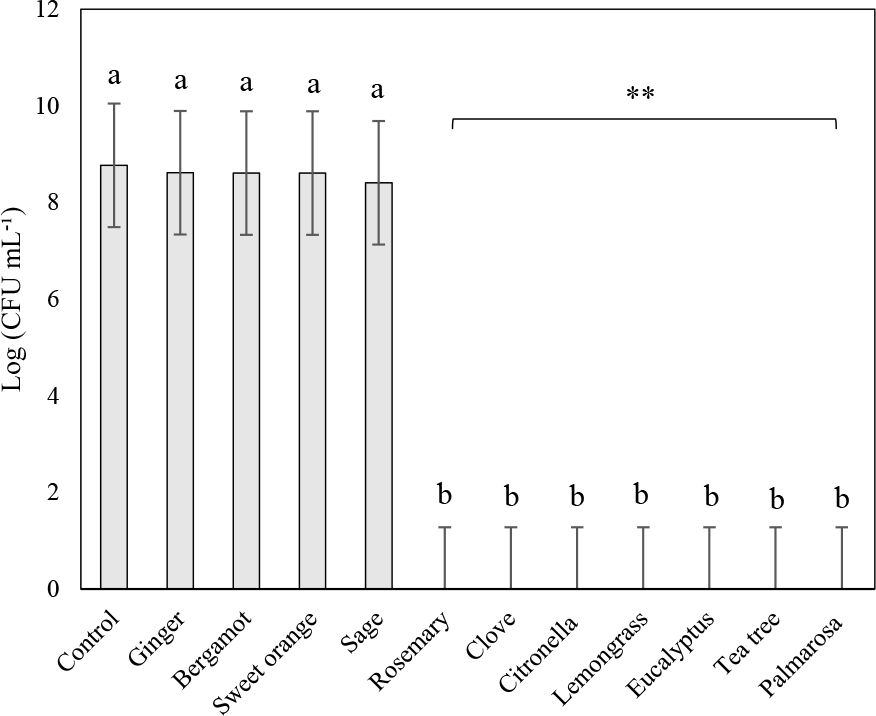
The tea tree (1 %); rosemary and citronella (0.5 %); clove, lemongrass, eucalyptus and palmarosa (0.14 %) EOs completely inhibited the R. solanacearum growth, whereas ginger (1 %); bergamot, sweet orange and sage (0.14 %) did not differ from the control (Figure 1).
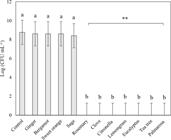
In vitro sensitivity of Ralstonia solanacearum to essential oils evaluated by growth in NYDA culture medium, incubated for 72 h, at 28 ºC, under aseptic laboratory conditions. Oil concentrations: ginger and tea tree at 1.0 % (v/v); rosemary and citronella at 0.5 % (v/v); lemongrass, clove, eucalyptus, palmarosa, bergamot, sweet orange, and sage at 0.14 % (v/v). Data transformed to log. ** Means followed by the same letter in the column do not differ from each other (p ≤ 0.05) according to the LSD test. Error bars represent the standard deviation of the means.
Although a preliminary assay was performed to determine the lowest concentration with inhibitory potential for each oil, some treatments, even at higher doses (such as ginger at 1 %) did not show antibacterial effect. Furthermore, other oils such as bergamot, sweet orange, and sage did not differ from the control, because the bioactive compounds in these plant species have low antibacterial activity, which may not have been sufficient to significantly reduce the R. solanacearum bacterial population.
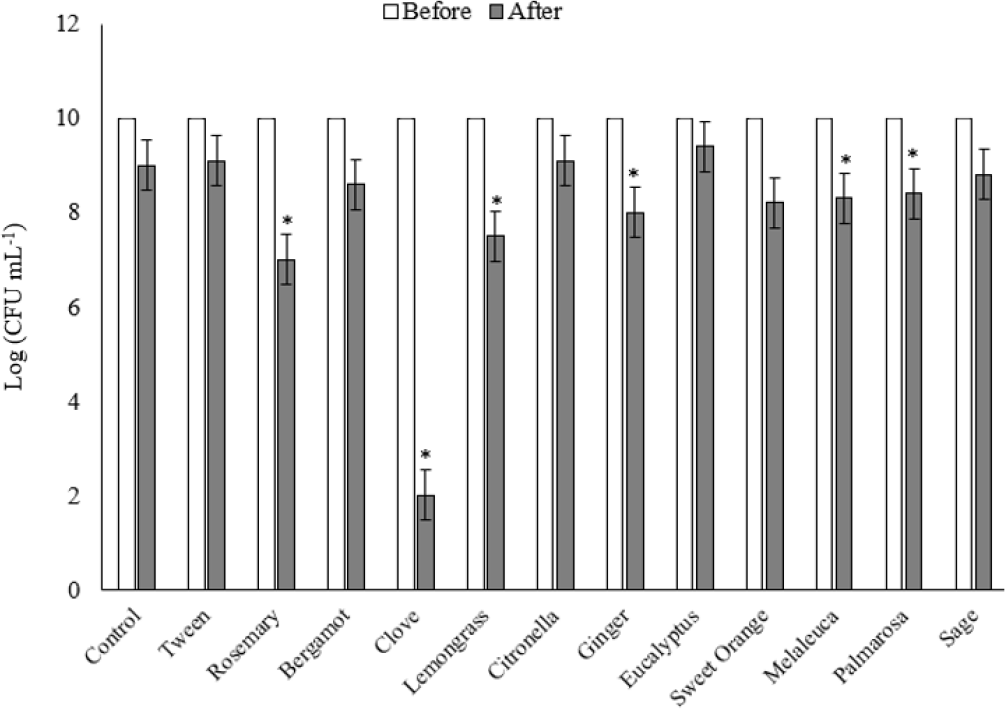
Biofumigation with the rosemary, clove, lemongrass, ginger, tea tree, and palmarosa EOs significantly reduced (p ≤ 0.05) the R. solanacearum population in the soil at 7 days after application. The clove and rosemary EOs stood out for reducing the population [log (CFU mL-1)] of R. solanacearum from 9.07 to 5.6 (42.3 %) and from 9.15 to 6.9 (24.6 %), respectively. However, soils biofumigated with bergamot, citronella, eucalyptus, sweet orange, and sage EOs did not show a reduction in the R. solanacearaum population in the soil (Figure 2).
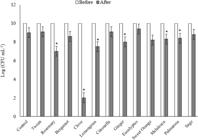
Ralstonia solanacearum population in the soil before and after biofumigation with the essential oils evaluated after 72 h of incubation. The bars represent the number of CFU g-1 of soil (transformed to log10). The treatments consisted of: ginger and tea tree at 1.0 % (v/v); rosemary and citronella at 0.5 % (v/v); lemongrass, clove, eucalyptus, palmarosa, bergamot, sweet orange, and sage at 0.14 % (v/v). The “Before” column corresponds to the initial R. solanacearum population added to the soil (108 CFU g-1), whereas the “After” column represents the remaining population after exposure to the essential oils.
The soil used in the experiments presented the following attributes: pH (H2O) = 6.81; Ca+2 = 4.30 cmolc dm-3; Mg+2 = 1.10 cmolc dm-3; Na+ = 0.10 cmolc dm-3; K+ = 0.51 cmolc dm-3; P = 44.53 mg dm-3; N = 0.99 g kg-1; Al+3 = 0.00 cmolc dm-3; H+ + Al+3 = 0.00; OM = 0.65 %; SB = 6.01 mg dm-3; T = 6.01 mg dm-3; V = 100 %.
The biofumigation with the EOs did not significantly alter (p ≤ 0.05) the initial soil pH (6.3) after 4 and 7 days (averages of 6.5 and 6.4, respectively). The Ca+2, Mg+2, Na+, K+, P, N, Al+3, and H + Al levels also did not undergo changes after biofumigation with the EOs (data not shown).
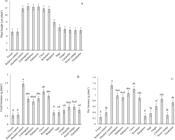
The clove EO did not significantly differ from the rosemary EO in the bacterial wilt incidence (INC), bacterial wilt index (BWI), or area under the disease progress curve (AUDPC), nor from the tea tree oil in INC, latency period (LP50), or BWI (Figure 3). However, these oils also did not differ significantly from Tween and the relative control, regarding INC. These controls respectively presented 77.50 and 77.0 % of INC; 61.80 and 57.50 of BWI; and 41.30 and 46.70 of AUDPC (Figure 3).
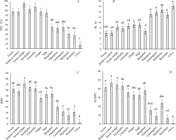
Effect of soil biofumigation with essential oils on the severity of bacterial wilt in ‘TY 2006’ hybrid tomato plants, in a greenhouse. A) incidence (INC) - percentage of infested plants in relation to the total number of inoculated plants; B) latency period (LP50) - number of days required for wilting to appear in 50 % of the inoculated plants; C) bacterial wilt index (BWI) at 15 days; D) area under the disease progress curve (AUDPC). Means followed by the same letter in the column do not differ from each other (p ≤ 0.05) according to the LSD test.
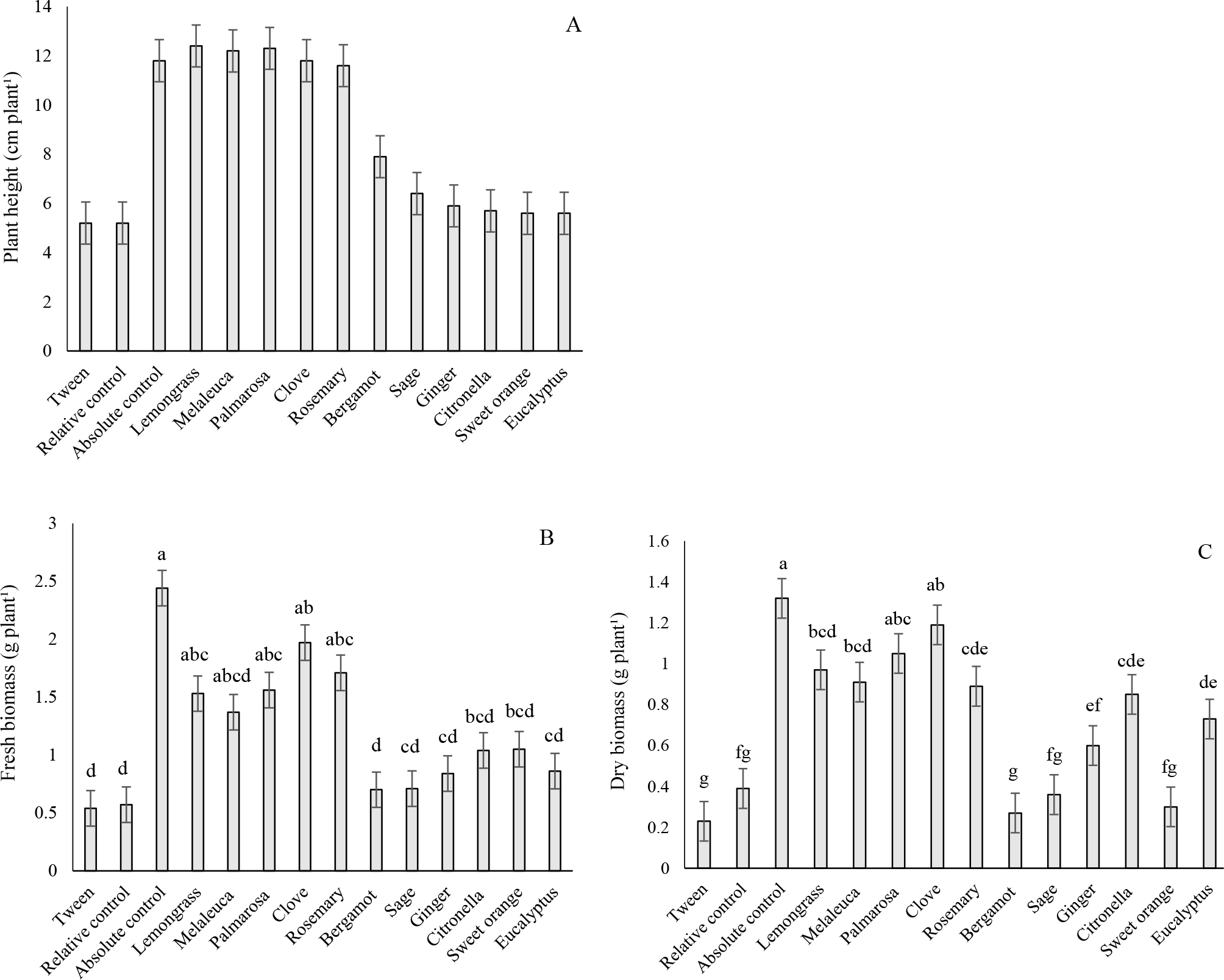
Plants grown in soil biofumigated with the clove EO showed the highest growth rates for the variables analyzed after 15 days of cultivation (Figure 4). They significantly differed from Tween and the relative control (soil infested with R. solanacearum), but not from the absolute control (plants grown in soil without R. solanacearum).
Effect of soil biofumigation with essential oils on the development of ‘TY 2006’ hybrid tomato plants in a greenhouse. A) plant height; B) fresh biomass; C) dry biomass. Means followed by the same letter in the column do not differ from each other (p ≤ 0.05) according to the LSD test.
The fresh biomass was significantly higher in plants grown in soil biofumigated with different EOs, with lemongrass oil (1.53 g), palmarosa oil (1.56 g), and rosemary oil (1.71 g) showing the highest yields, when compared to Tween (0.54 g) and the relative control (0.57 g). The dry biomass of plants treated with palmarosa oil (1.05 g) did not differ from the treatment with clove oil or the absolute control (Figure 4).
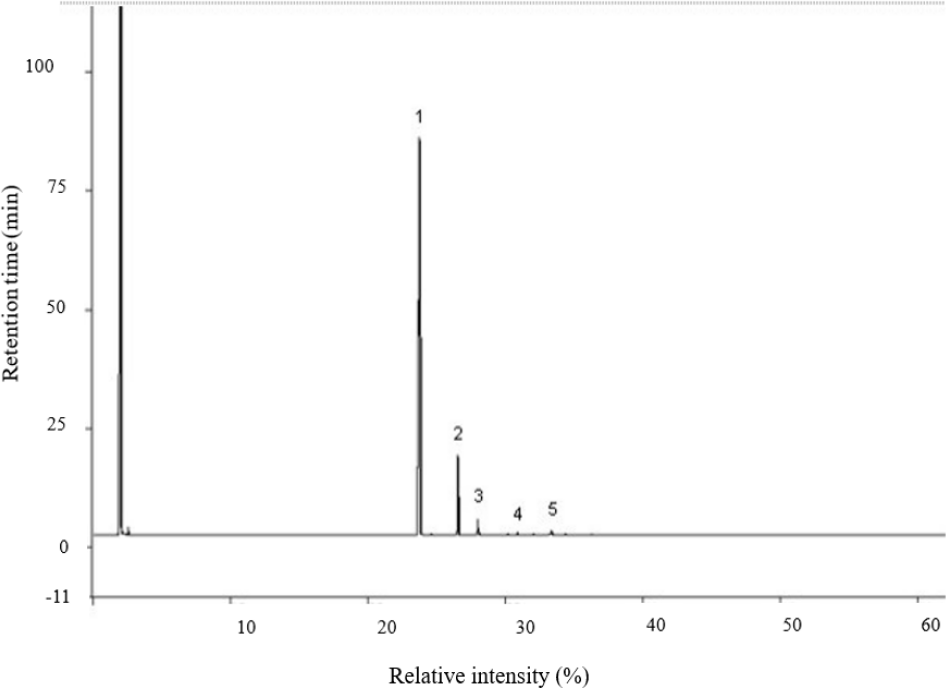
The analysis of the clove EO chemical composition revealed eugenol acetate as the major constituent (87 %), in addition to other molecules such as: β-caryophyllene (10 %), α-humulene (2 %), δ-cadinene (0.40 %), and caryophyllene oxide (0.60 %) (Table 1). Gas chromatography-flame ionization detection (GC/FID) analysis resulted in a chromatogram with eugenol acetate showing the highest peaks (Figure 5; Table 1).
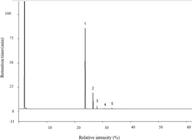
Chromatogram of clove essential oil containing eugenol acetate as (first peak on the left): 1. eugenol acetate; 2. β-caryophyllene; 3. α-humulene; 4. δ-cadinene; 5. caryophyllene oxide.
The clove EO and eugenol acetate showed differences in the minimum concentration for inhibition of R. solanacearum bacterial growth (Table 2). The clove EO promoted a total inhibition from 0.035 % (v/v), whereas its bioactive component only from a concentration of 0.07 % (v/v).
Minimum inhibitory concentration of clove essential oil and its bioactive component (eugenol acetate) for the in vitro growth of Ralstonia solanacearum.
The R. solanacearum population in soils biofumigated with clove EO and eugenol acetate was completely inhibited at all tested concentrations, and significantly increased (p ≤ 0.05) in the relative control (soil infested with the bacteria + ADE), from 47 to 59 log (CFU mL-1), at 7 days after the treatment (data not shown).
Plants grown in soils biofumigated with clove EO and eugenol acetate did not show symptoms of bacterial wilt at any of the analyzed concentrations, significantly differing from the control, which showed INC of 100 %, LP50 of 8.0, BWI of 62.8, and AACPD of 6.5.
The plants also showed a significantly greater growth than the control in all analyzed variables and at all tested concentrations (Figure 6).
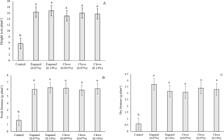
Effect of soil biofumigation with clove essential oil and its bioactive compound (eugenol acetate) on the growth of ‘TY 2006’ hybrid tomato plants, in a greenhouse. The treatments consisted of soil applications of eugenol acetate at 0.07 and 0.14 % (v/v), and clove essential oil at 0.035, 0.07 and 0.14 % (v/v), in addition to a control without application. The variables evaluated were: A) plant height; B) fresh biomass; C) dry biomass. Bars represent the means ± standard deviation. Different letters above the bars indicate a significant difference among the treatments by the Tukey test (p ≤ 0.05).
The bactericidal action of the clove, tea tree, citronella, lemongrass, eucalyptus, and palmarosa EOs on in vitro R. solanacearum may be related to the complex chemical constituents that EOs possess, with more than 100 different terpenic components which can present a broad action spectrum through synergistic action (Tiwari et al. 2009).
The effect of the EOs on R. solanacearum has already been widely documented for bacterial isolates from different hosts. For example, Mikhail et al. (2024) verified in vitro that eucalyptus, peppermint, thyme, lemongrass, and ginger EOs were effective against the pathogen. In addition, the antibacterial activity of palmarosa has shown promise in the biocontrol of R. solanacearum isolated from potato (Mohamed et al. 2019).
The bactericidal activity of the clove EO, regarding R. solanacearum, was demonstrated in tomato plants, also showing a broad action spectrum at a concentration of 0.5 % against other phytopathogenic bacteria affecting tomato and geranium plants, such as Rhizobium rhizobacter, Agrobacterium tumefaciens, Pectobacterium carotovorum subsp. carotovorum, Erwinia carotovora pv. carotovora, Xanthomonas hortorum pv. pelargonii, X. campestris pv. pelargonii, Streptomyces spp.; and Rhodococcus fascians (Huang & Lakhsman 2010). Furthermore, other EOs, such as those of Pimenta racemosa var. racemosa, anise, and fennel, have demonstrated positive activity in reducing the growth of R. solanacearum (Deberdt et al. 2018, Abd-Elrahim et al. 2022).
The reduction in the R. solanacearum population in the soil by ginger, tea tree, citronella, rosemary, lemongrass, clove, palmarosa, and sage EOs likely occurred due to the action of the volatile compounds present in these oils, which diffuse through the soil during biofumigation and exert a deleterious effect on bacterial cells. Monoterpenes stand out among these compounds, which have the functionality of interacting with the cell membrane of Gram-negative bacteria, promoting degradation of the lipid bilayer, release of lipopolysaccharides, and alterations in permeability, resulting in cell death (Santos et al. 2014, Pandey et al. 2017).
The biofumigant action of the palmarosa EO at 0.14 % and lemongrass at 0.7 % were identified on Ralstonia isolates in tomato and bell pepper, respectively, in experiments conducted in a greenhouse and in the field (Paret et al. 2010, Alves et al. 2014). Biofumigation is considered a soil disinfestation technique through the addition of organic matter or EOs that release substances toxic to pathogens (Li et al. 2022). The effectiveness in suppressing R. solanacearum in the soil in the present study is possibly due to the concentrated volatile compounds present in these oils, such as citrol (lemongrass), geraniol (palmarosa), β-citronellol (citronella), α-terpinene (tea tree) and eugenol acetate (clove), which can act through lipophilic activity against the cell membrane of the microorganism, causing rupture and alteration in the transport of molecules, inhibition of enzymatic activity and coagulation of the cytoplasmic content (Paret et al. 2012). However, the decrease in the R. solanacearum population in the soil observed in this study only reduced the severity of bacterial wilt in the greenhouse with the clove EO treatment, with a lower incidence of the disease (7.5 %) and higher LP50 values (16 days), which resulted in a reduction in BWI (1.88) and AUDPC (0.50). The effectiveness of biofumigation with this oil in controlling bacterial wilt in plants has already been cited in pepper, potato, and banana plants (Amorim et al. 2011, Bandana et al. 2020, Rahma et al. 2021). The authors attribute the efficiency of the clove EO in controlling bacterial wilt to eugenol acetate, its main chemical component.
The effects of biofumigation with essential oils on soil pH and macro and micronutrient levels were promising, as there were no significant changes in these variables. Furthermore, plants grown in soil biofumigated with clove and palmarosa EOs showed significantly higher fresh biomass, dry biomass, and height averages, constituting similar results to the control without infestation by R. solanacearum. Therefore, these oils do not demonstrate phytotoxic effects on tomato plants, corroborating the findings of Alves et al. (2014).
The clove EO presented eugenol acetate (C10H12O2) as its major chemical constituent, with small amounts of β-caryophyllene, α-humulene, δ-cadidene, and caryophyllene oxide, confirming the reports already evidenced in the literature (Kiki 2023, Liñán-Atero et al. 2024). Studies with clove EO and its major chemical component (eugenol acetate), both for in vitro tests where the minimum inhibitory concentration was evaluated and in soil biofumigation, showed similar results, demonstrating that eugenol acetate is the main chemical constituent responsible for reducing the R. solanacearum population in vitro in the soil, and in the management of bacterial wilt in greenhouses due to the bactericidal action of the oil.
Further studies under field conditions with different EO concentrations and in other host crops are needed to validate and expand the applicability of this strategy in controlling the disease.
CONCLUSIONS
-
1. Clove essential oil at 0.14 % demonstrated potential as a biofumigant and bactericidal agent against Ralstonia solanacearum, both in vitro and in the soil;
-
2. Clove essential oil is effective in reducing bacterial wilt of tomato plants under greenhouse conditions, and could be an important tool for the phytosanitary management of the disease.
Data Availability Statement:
Research data are only made available by authors upon request.
REFERENCES
- ABD-ELRAHIM, R.; TOHAMY, M. R. A.; ATIA, M. M.; ELASHTOKHY, M. M.; ALI, M. A. S. Bactericidal activity of some plant essential oils against Ralstonia solanacearum infection. Saudi Journal of Biological Sciences, v. 29, n. 6, p. 2163-2172, 2022.
- ADAMS, R. B. Identification of essential oil components by gas chromatogroph/mass spectrometry 4. ed. Carol Stream: Allured, 2007.
- ALVES, A. O.; SANTOS, M. M. B.; SANTOS, T. C. G.; SOUZA, E. B.; MARIANO, R. L. R. Biofumigation with essential oils for managing bacterial wilt of sweet peppers. Journal of Plant Pathology, v. 96, n. 2, p. 363-367, 2014.
- AMORIM, E. P. R.; ANDRADE, W. R.; MORAES, E. M.; SILVA, J. C.; LIMA, R. S.; LEMOS, E. E. P. Atividade antibacteriana de óleos essenciais e extratos vegetais. Revista Brasileira de Fruticultura, v. esp., p. 392-398, 2011.
- BANDANA, M.; GAYATRI, B.; SUDEEPTA, P. In vitro evaluation of different plant oils on growth of Ralstonia solanacearum causing wilt disease in Capsicum annum. Journal of Pharmacognosy and Phytochermistry, v. 9, n. 5, p. 312-315, 2020.
- CARDOSO, S. C.; SOARES, A. C. F.; BRITO, A. S.; SANTOS, A. P.; LARANJEIRA, F. F.; CARVALHO, L. A. Evaluation of tomato rootstocks and its use to control bacterial wilt disease. Semina: Ciências Agrárias, v. 33, n. 2, p. 595-604, 2012.
- DEBERDT, P.; DAVEZIES, I.; CORANSON-BEAUDU, R.; JESTIN, A. Efficacy of leaf oil from Pimenta racemosa var. racemosa in controlling bacterial wilt of tomato. Plant Disease, v. 102, n. 1, p. 124-131, 2018.
- FEGAN, M.; PRIOR, P. How complex is the Ralstonia solanacearum species complex? In: ALLEN, C.; PRIOR, P.; HAYWARD, A. C. (ed.). Bacterial wilt disease and the Ralstonia solanacearum species complex. Saint Paul: APS, 2005. p. 449-461.
- FOOD AND AGRICULTURE ORGANIZATION (FAO). World reference base for soil resources 4. ed. Rome: FAO, 2022.
- GASPAROTTO, L.; PEREIRA, M. C. N.; SCHURT, D. A. Sobrevivência da bactéria Ralstonia solanacearum raça 2, agente causal do moko da bananeira, em solos de terra firme do Amazonas Manaus: Embrapa Amazônia Ocidental, 2024. (Comunicação técnica, 168).
- HUANG, K.; LAKSHMAN, D. K. Effect of clove oil on plant pathogenic bacteria and bacterial wilt of tomato and geranium. Journal of Plant Pathology, v. 92, n. 3, p. 701-707, 2010.
- KIKI, J. M. In vitro antiviral potential, antioxidant, and chemical composition of clove (Syzygium aromaticum). Essential Oil Molecules, v. 28, n. 6, e2421, 2023.
- LI, X.; SKILLMAN, V.; DUNG, J.; FROST, K. Legacy effects of fumigation on soil bacterial and fungal communities and their response to metam sodium application. Environmental Microbiome, v. 17, e59, 2022.
- LIÑÁN-ATERO, R.; AGHABABAEI, F.; GARCÍA, S. R.; HASIRI, Z.; ZIOGKAS, D.; MORENO, A.; HADIDI, M. Clove essential oil: chemical profile, biological activities, encapsulation strategies, and food applications. Antioxidants, v. 19, n. 13, e488, 2024.
- LOPES, C. A. Murcha bacteriana (Ralstonia solanacearum) em batateiras no Brasil: distribuição geográfica, fatores climáticos e manejo. Brasília, DF: Embrapa Hortaliças, 2022.
- MANSFIELD, J.; GENIN, S.; MAGORI, S.; CITOVSKY, V.; SRIARIYANUM, M.; RONALD, P.; DOW, M.; VERDIER, V.; BEER, S.; MACHADO, M. A.; TOTH, I.; SALMON, G.; FOSTER, G. Top 10 plant pathogenic bacteria in molecular plant pathology. Molecular Plant Pathology, v. 13, n. 6, p. 614-629, 2012.
- MIKHAIL, M. S.; AHMED, I. A.; BALABEL, N. M.; AHMED, M. A. Evaluation of the antibacterial activity of some plant essential oils against Ralstonia solanacearum and the molecular diagnosis of the bacterium. Egyptian Pharmaceutical Journal, v. 24, n. 2, e407732, 2024.
- MOHAMED, A. A.; BEHIRY, S. I.; YOUNES, H. A.; ASHMAWY, N. A.; SALEM, M. Z. M.; MÁRQUEZ-MOLINA, O.; BARBABOSA-PILEGO, A. Antibacterial activity of three essential oils and some monoterpenes against Ralstonia solanacearum phylotype II isolated from potato. Microbial Pathogenesis, v. 135, n. 1, e103604, 2019.
- NIELSEN, L. W.; HAYNES, F. Resistance in Solanum tuberosum to Pseudomonas solanacearum. Potato Journal, v. 37, n. 1, p. 260-267, 1960.
- OPINA, N.; TAVNER, F.; HOLLOWAY, G.; WANG, J. F.; LI, T. H.; MAGHIRANG, R.; FEGAN, M.; HAYWARD, A. C.; KRISHNAPILLAI, V.; HONG, W. F.; HOLLOWAY, B. W.; TIMMIS, J. N. A novel method for development of species and strain specific DNA probes and PCR primers for identifying Burkholderia solanacearum (formerly Pseudomonas solanacearum). Asia-Pacific Journal of Molecular Biology and Biotechnology, v. 5, n. 1, p. 19-30, 1997.
- PANDEY, A. K.; KUMAR, P.; SINGH, P.; TRIPATHI, N. N.; BAJPAI, V. K. Essential oils: sources of antimicrobials and food preservatives. Frontiers Microbiology, v. 7, e2161, 2017.
- PARET, M. L.; CABOS, R.; KRATKY, B. A.; ALVAREZ, A. M. Effect of plant essential oils on Ralstonia solanacearum race 4 and bacterial wilt of edible ginger. Plant Disease, v. 94, n. 5, p. 521-527, 2010.
- PARET, M. L.; SHARMA, S. K.; ALVAREZ, A. M. Characterization of biofumigated Ralstonia solanacearum cells using micro-raman spectroscopy and electron microscopy. Phytopathology, v. 102, n. 1, p. 105-113, 2012.
- PHIRI, T. M.; BHATTARAI, G.; CHIWINA, K. E.; FAN, Q.; XIONG, H.; ALATAWI, I.; DICKSON, R.; JOSHI, N. K.; ROJAS, A.; LING, K.-S.; SHI, A. An evaluation of bacterial wilt (Ralstonia solanacearum) resistance in a set of tomato germplasm from the United States Department of Agriculture. Agronomy, v. 14, e350, 2024.
- RAHMA, A. B. E.; TOHAMY, M. R. A.; MAHMOUD, M. A.; ELASHTOKHY, M. A.; MOHAMED, A. A. Bactericidal activity of some plant essential oils against Ralstonia solanacearum infection. Saudi Journal of Biological Sciences, v. 24, n. 29, p. 2163-2172, 2021.
- RAVEAU, R.; FONTAINE, J.; LOUNÈS-HADJ SAHRAOUI, A. Essential oils as potential alternative biocontrol products against plant pathogens and weeds: a review. Foods, v. 9, n. 3, e365, 2020.
- SAFNI, I.; CLEENWERCK, I.; VOS, P.; FEGAN, M.; SLY, L.; KAPPLER, U. Polyphasic taxonomic revision of the Ralstonia solanacearum species complex: proposal to emend the descriptions of Ralstonia solanacearum and Ralstonia syzygii and reclassify current R. syzygii strains as Ralstonia syzygii subsp. syzygii subsp. nov., R. solanacearum phylotype IV strains as Ralstonia syzygii subsp. indonesiensis subsp. nov., banana blood disease bacterium strains as Ralstonia syzygii subsp. celebesensis subsp. nov. and R. solanacearum phylotype I and III strains as Ralstonia pseudosolanacearum sp. nov. International Journal of Systematic and Evolutionary Microbiology, v. 64, n. 9, p. 3087-3103, 2014.
- SANTIAGO, T. R.; LOPES, C. A.; CAETANO-ANOLLÉS, G.; MIZUBUTI, E. S. G. Genetic structure of Ralstonia solanacearum and Ralstonia pseudosolanacearum in Brazil. Plant Disease, v. 104, n. 4, p. 1019-1025, 2020.
- SANTOS, H. G.; JACOMINE, P. K. T.; ANJOS, L. H. C.; OLIVEIRA, V. A.; LUMBRERAS, J. F.; COELHO, M. R.; ALMEIDA, J. A.; ARAUJO FILHO, J. C.; OLIVEIRA, J. B.; CUNHA, T. J. Sistema brasileiro de classificação de solos 5. ed. Brasília, DF: Embrapa, 2018.
- SANTOS, M. M.; PEIXOTO, A. R.; PESSOA, S. E.; NEPA, H. B. S.; PAZ, C. D. da; SOUZA, A. V. V. Estudos dos constituintes químicos e atividade antibacteriana do óleo essencial de Lipia gracilis a Xanthomonas campestris pv. viticola “in vitro”. Summa Phytopathologica, v. 40, n. 3, p. 277-280, 2014.
- SHANER, G.; FINNEY, R. E. The effect of nitrogen fertilization on the expression of slow-mildewing resistance in Knox wheat. Phytopathology, v. 67, n. 1, p. 1051-1056, 1977.
- SILVA, M. A. P. da; COSTA, M. R.; OLIVEIRA, J. R. de; ALMEIDA, N. F.; MACHADO, M. A. Phenotypic and genotypic diversity of Ralstonia solanacearum species complex isolates from Brazil. Plant Pathology, v. 72, n. 2, p. 227-238, 2023.
- SILVEIRA, E. B.; GOMES, A. M. A.; FERRAZ, E.; MARANHÃO, E. A. A.; MARIANO, R. L. R. Identification of tomato progenies for resistance to bacterial wilt. Horticultura Brasileira, v. 17, n. 1, p. 6-10, 1999.
- TIWARI, B. K.; VALDRAMIDIS, V. P.; O’DONNELL, C. P.; MUTHUKUMARAPPAN, K.; BOUKE, P.; CULLEN, P. J. Application of natural antimicrobials for food preservation. Journal of Agricultural and Food Chemistry, v. 57, n. 14, p. 5987-6000, 2009.
- WANG, Y.; ZHANG, Y.; GAO, Z.; YANG, W. Breeding for resistance to tomato bacterial diseases in China: challenges and prospects. Horticultural Plant Journal, v. 4, n. 5, p. 193-207, 2018.
-
Editor:
Luis Carlos Cunha Junior