 Aboveground biomass modeling and tree spacing: nutritional implications for a leguminous tree species1
ABSTRACT
The search for fast-growing species associated with ecological services points out to several Brazilian species with potential for reforestation. However, information gaps regarding biomass production and sustainability need to be overcome. This study aimed to model the aboveground biomass and evaluate the influence of planting spacing on biomass and nutrient stocks, as well as the nutrient-use efficiency in stands of Anadenanthera peregrina (L.) Speg. var. peregrina. In a field experiment, 30 trees were sampled, measured, segmented into fractions such as stemwood, stembark, leaves, twigs and branches, and had their biomass evaluated. Regression models were adjusted for biomass prediction, and chemical analysis was performed to determine the macronutrients in the aboveground biomass. Spacing influenced the allocation of biomass, with the highest individual biomass production for the 5 x 5 m spacing, but with a similar overall yield per hectare among the treatments. The stands were more efficient using nutrients at wider spacings, with greater benefits when only the stemwood is harvested, possibly mitigating nutritional imbalances, such as phosphorus deficiency.
KEYWORDS:
Anadenanthera peregrina; forest sustainability; silvicultural management.
RESUMO
A busca por espécies de rápido crescimento associadas a serviços ecológicos aponta várias espécies brasileiras com potencial para reflorestamento. No entanto, lacunas de informação relacionadas à produção de biomassa e à sustentabilidade ainda precisam ser superadas. Objetivou-se modelar a biomassa acima do solo e avaliar a influência do espaçamento de plantio sobre a biomassa e os estoques de nutrientes, bem como a eficiência de uso de nutrientes em povoamentos de Anadenanthera peregrina (L.) Speg. var. peregrina. Em experimento de campo, foram amostradas 30 árvores, as quais foram mensuradas e segmentadas em frações como lenho do fuste, casca do fuste, folhas, ramos finos e galhos, e suas biomassas foram avaliadas. Modelos de regressão foram ajustados para a predição de biomassa, bem como análises químicas foram realizadas para determinar os macronutrientes na biomassa acima do solo. O espaçamento influenciou na alocação de biomassa, com maior produção individual no espaçamento de 5 × 5 m; porém, com produtividade total por hectare semelhante entre os tratamentos. Os povoamentos foram mais eficientes no uso de nutrientes em espaçamentos mais amplos, com maiores benefícios quando apenas o lenho do fuste é colhido, possivelmente superando desequilíbrios nutricionais, como o déficit de fósforo.
PALAVRAS-CHAVE:
Anadenanthera peregrina; sustentabilidade florestal; manejo silvicultural.
INTRODUCTION
The growing expansion of productive planted forests challenges decision-makers to reconcile high production levels with sustainability parameters demanded by the market (Rolim et al. 2019). Global concern regarding climate change and sustainability led the forestry sector to seek alternatives of a cleaner and efficient forest production (Ibá 2023). To achieve this goal, intensifying silvicultural management is crucial, increasing the production per unit area and promoting sustainable forest management techniques to offset land use conflicts and environmental impacts (Payn et al. 2015).
Eucalyptus plantations occupy most of Brazilian silviculture, as one of the main suppliers of pulp, paper, biomass, and solid wood products (Guimarães et al. 2019). Although the species produces greater aboveground biomass stocks over time (Eloy et al. 2018), different species might produce biomass at different nutrient costs, hence, performing differently in terms of nutrient sustainability. Aligned with the need for forest production diversification, planting native species stands out as a promising and sustainable alternative, with higher aggregated value and viability for the Brazilian and global markets (Batista et al. 2021). Research and overall improvements are necessary, so native species can reach their best, in terms of timber and other products.
Native species with high potential for timber and multi-product uses are listed by Silva et al. (2012) as lacking in terms of growth behavior and genetic breeding studies. Such species are not widely used, especially because of persistent branches and slow growth patterns. Many of them, however, are leguminous trees with rapid growth, high timber value and great potential for multiple uses and ecosystem services (Castro et al. 2017). For N2 fixing legume trees such as Anadenanthera peregrina (L.) Speg. var. peregrina, the supposed increase in the amount of N on soil and aboveground biomass are promising, highlighting the importance of working on its silvicultural management for enhanced production.
One of the main factors affecting forest production and individual growth patterns are stand characteristics. Among these, planting spacing can be easily manipulated by the producers, making it a dynamic and functional tool in silvicultural management (Lima et al. 2013). Studying the behavior of native species in forest stands with different spacings can provide valuable information for the silvicultural management of the species. The way individuals store their aboveground biomass and nutritional reserves can shed light on production, nutritional status of the stand, sustainability of the plantation, and conditions for subsequent rotations (Rosim et al. 2016).
To understand the role of planting spacing and biomass management in the sustainability of afforestation and forest production, this study aimed to describe the aboveground biomass and evaluate the influence of planting spacing on biomass and nutrient stocks, as well as the balance between nutrient export through harvesting and nutrient cycling from residual biomass in stands of Anadenanthera peregrina var. peregrina, at 7.5 years after planting. We hypothesize that wider spacings increase the nutrient-use efficiency and improve long-term sustainability due to lower nutrient export per unit area.
MATERIAL AND METHODS
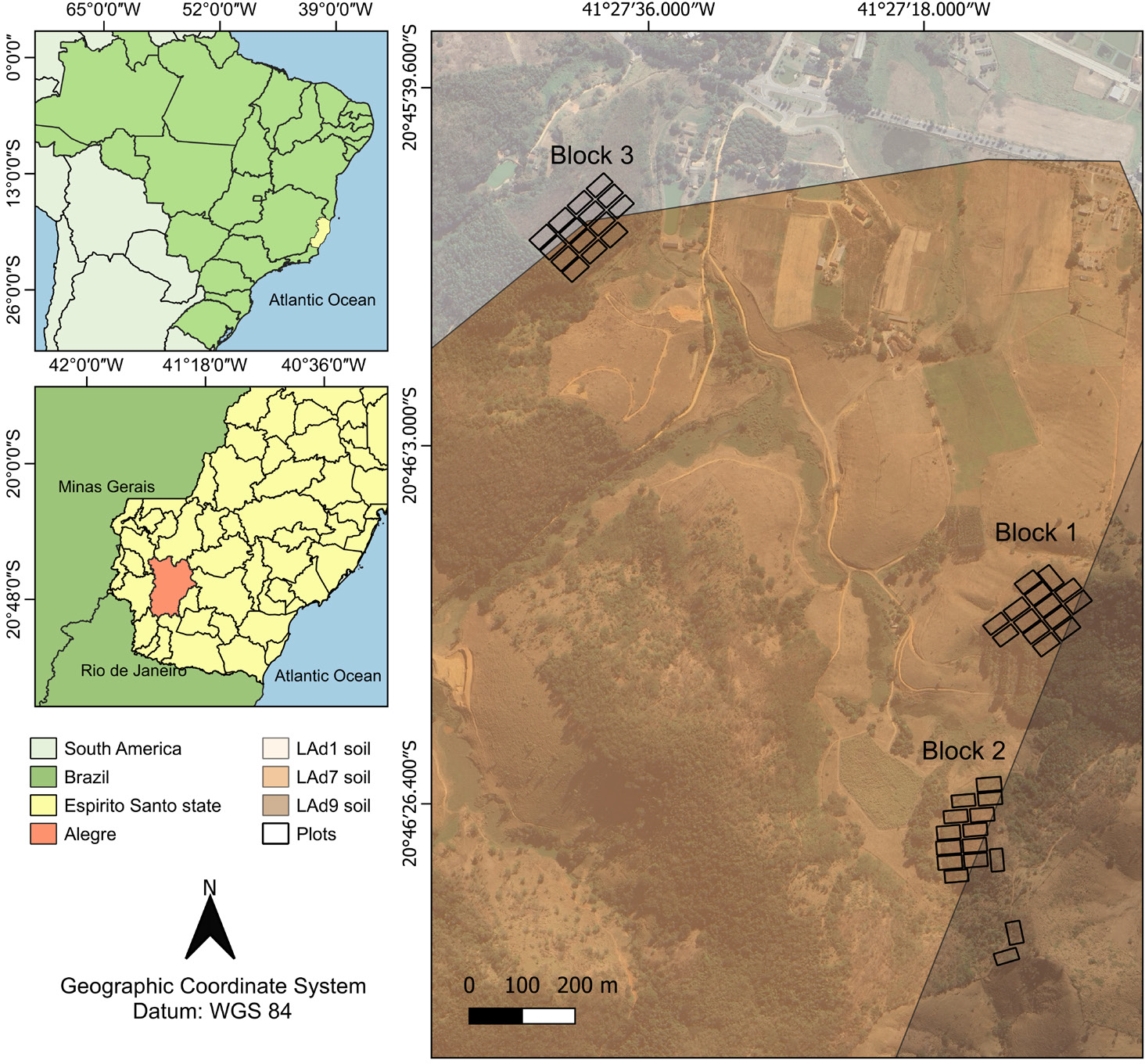
A field experiment was established in an area administered by the Instituto Federal do Espírito Santo, in Alegre, Espírito Santo state, Brazil (Figure 1). The region is in the Atlantic Forest biome domain and mostly composed of semideciduous seasonal forests. The mean annual temperature is 24 ºC and annual rainfall around 1,200 mm (Brasil 2022). The site is known for its heterogeneous slope and soil types, with Latossolo Amarelo Distrófico alone (LAd1) or combined with Argissolo Vermelho-Amarelo Distrófico (LAd7) or Cambissolo Háplico Distrófico (LAd9), according to the Embrapa soil classification (Santos et al. 2018), equivalent to different types of Ferralsols (FAO 2015).
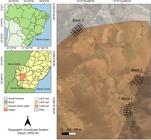
Experimental area and plot distribution along Anadenanthera peregrina var. peregrina plantings in Alegre, Espírito Santo state, Brazil.
Historically, the site had been used as grazing pasture covered up by Urochloa sp. grasses. The weeds were chemically controlled, and the cattle were removed. Soil sampling was performed in 2010 and most soils were classified as clayey textured with medium organic matter content and pH values varying from 5.3 to 6.1 (Table 1).
Main soil chemical attributes at depths of 0-20 and 20-40 cm, at 9 months before the establishment of the stands of Anadenanthera peregrina var. peregrina.
Seedlings of Anadenanthera peregrina var. peregrina were planted in 2011, in separate locations along the same experimental area, occupying at least 6.8 ha altogether. The plots were 30 x 50 m in size. There were 5 planting spacings among the plantings, of which only 3 were considered in this study as treatments: 3 x 3 m, 4 x 4 m, and 5 x 5 m. The stands were designed in 3 randomized blocks, with 3 replicates. The pits were fertilized with 220 g of formulated 02-30-06 NPK with 0.2 % of B, Cu, and Zn.
A forest inventory was conducted at 7.5 years after planting. Diameter measurements at breast height (DBH; cm) were taken with a graduated tape measure and commercial heights (Hc; m) with a graduated stick. Hc was measured just below the first branch insertion. Measurements were taken in all the experimental plots for all individuals, except for the trees located on the edges of the plot. The total heights were measured using a digital clinometer on the first 5 trees in each sample plot, totaling 45 trees.
The data were used to fit hypsometric models to predict the remaining tree heights. The best-performing models were selected based on the adjusted coefficient of determination (R2adj) and the residual standard error (Syx). For the 3 × 3 m spacing, the selected model was h = -5.844 + 2.798DBH - 0.1158DBH2 (R2adj = 0.947; Syx = 2.3 %); for the 4 × 4 m spacing, the model was h = 5.535 + 0.4277DBH (R2adj = 0.929; Syx = 2.4 %); for the 5 × 5 m spacing, the model was h = 9.945 - 0.0918DBH + 0.0095DBH2 (R2adj = 0.906; Syx = 3.1 %). Table 2 shows the mean measurements of the standing and estimated total heights.
Mean measurements in the Anadenanthera peregrina var. peregrina stand, at 7.5 years after planting.
Based on the forest inventory, 30 trees were selected, 10 per spacing, to estimate the aboveground biomass using the direct method. The trees were selected according to diametric classification of the stand, considering only individuals below and above the standard deviation (Picard et al. 2012). After measurements, the trees were segmented into the following fractions: stemwood (up to commercial height), stembark, leaves, twigs, and branches. Sampling procedures were conducted according to methodologies adopted by Rondon (2002) and Dallagnol et al. (2011). All fractions were entirely weighed in the field using a digital scale to obtain the individual fresh biomass. Stemwood was sampled in disks with bark, being approximately 5-cm thick, removed at 0.10 m, diameter of 1.30 m, ½ of the stem length and top positions. The stembark samples were extracted from the disks, making up a composite sample of the various sampled diameters. Leaf samples were taken from the lower, middle, and upper positions of the crown. The twigs (up to 1.0 cm) and branches (over 1.0 cm) were sampled in portions from the lower, middle, and upper third of the tree’s crown.
The samples were placed in paper packages and transferred to the laboratory, where moisture content and biomass dry weight were determined by weighing the fresh samples and drying them in a forced air circulation oven at 103 ± 2 ºC, until constant weight. After drying, the stemwood and bark samples were weighed and separated to obtain the dry weight and the percentage of stembark biomass. The dry biomass was calculated according to Soares et al. (2011): Biom = [FW(f) * DW(s)]/FW(s), in which: Biom is the total dry biomass of the fractions (kg), FW(f) the fresh weight of the whole fractions in the field (kg), DW(s) the dry weight of the samples (kg), and FW(s) the fresh weight of the samples (kg).
With the individual biomass, diameter (1.30 m), and total height values, regression models were adjusted to predict the biomass in the stands for each evaluated fraction and spacing. The regression models were adjusted for stemwood, stembark, leaves, twigs, branches, and total biomass, based on the adjusted coefficient of determination (R2adj) and the residual standard error (Syx). Table 3 shows the adjusted equations.
Adjusted equations and their respective statistics for biomass estimation of the fractions of Anadenanthera peregrina var. peregrina trees, at 7.5 years after planting.
After determining the dry weight of the biomass fractions, the samples were ground in a knife mill, sieved, and stored in plastic containers. The material was subjected to chemical analysis, and the macronutrient levels were determined in accordance with the laboratory’s standard procedure (Miyazawa et al. 1999).
After determining the nutrient content in the biomass for the fractions, the nutrient stocks in the biomass were calculated by multiplying the concentration of each nutrient and the weight in biomass of the fraction. Using the individual stocks (g tree-1), the stocks per unit area (kg ha-1) were calculated for each nutrient, fraction, and total biomass.
To assess the nutritional sustainability of the stands, the potential number of rotations for each harvest intensity scenario was estimated by dividing the remaining nutrient stock (harvest waste and soil stock) by the stock of nutrients removed by harvesting (Dick & Schumacher 2020). To determine the soil nutrient stock (Mg ha-1), mean nutrient levels in the soil were sampled from trenches of 100 cm deep for each experimental plot. The stocks were calculated using the methodologies described by Veldkamp (1994) and Ellert & Bettany (1995), based on the soil density and nutrient contents: soil nutrient stock = Ct × BD × e × 10, in which: Ct is the macronutrient content (N, P, K, Ca, and Mg), in g kg-1; BD the soil bulk density, in g cm-3; and e the thickness of the evaluated layer, in m.
Different scenarios of possible nutrient export via harvesting were determined. Table 4 lists the harvest intensity scenarios and the equations for the potential number of rotations.
Possible harvesting scenarios considering the removal of biomass compartments and calculation of the number of rotations (NR).
The data were submitted to variance homogeneity test (Oneill & Mathews; p < 0.05) and normality of residuals (Shapiro-Wilk; p < 0.05). Once the assumptions were met, an analysis of variance (F < 0.05) was conducted using the randomized block design, and, if significant, the mean comparation test (Tukey; p < 0.05) was applied. The tests were conducted in the R environment (R Core Development Team 2013).
RESULTS AND DISCUSSION
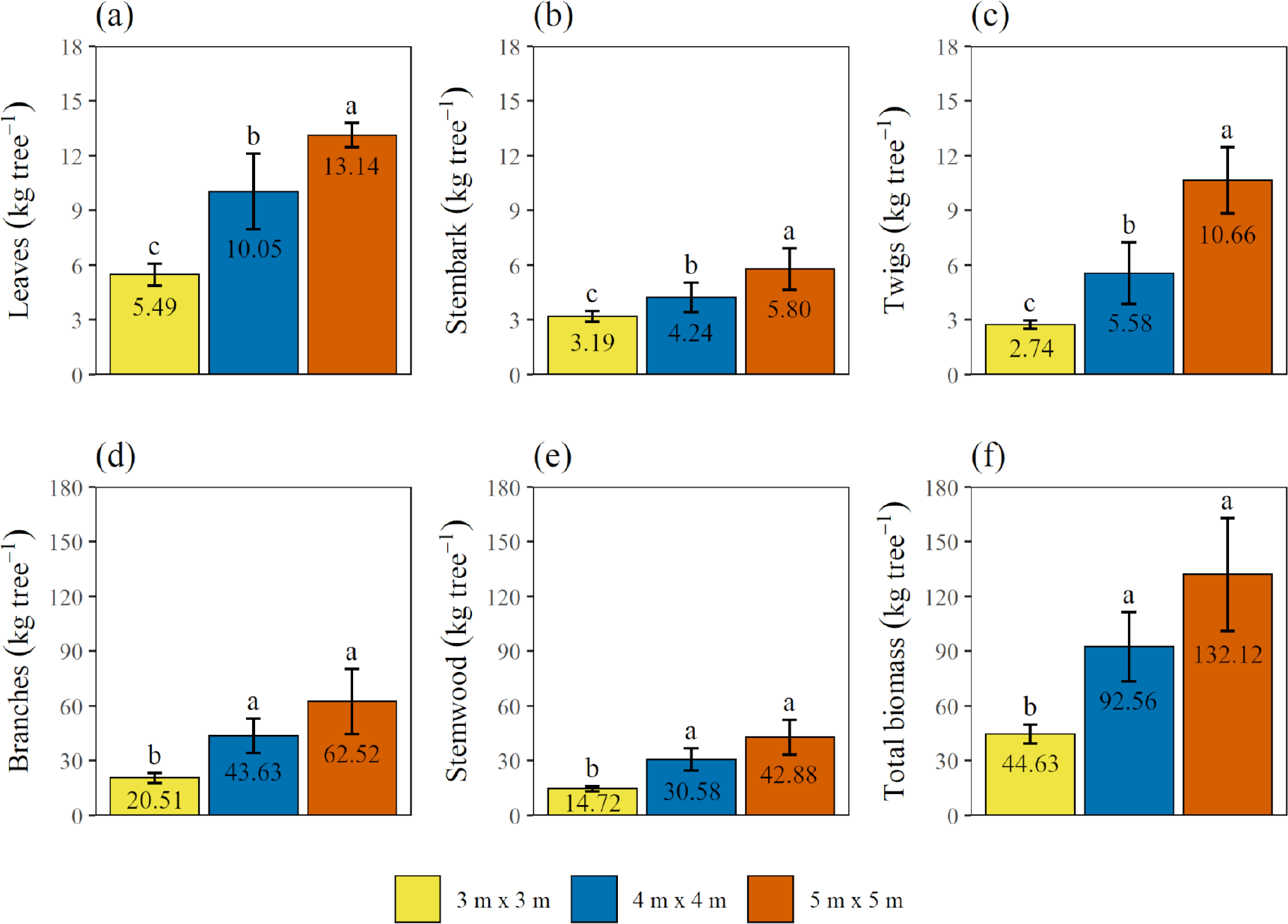
All the fractions and the total aboveground biomass were affected by the planting spacing, regarding individual aboveground dry weight (Figure 2). Higher values are shown for wider spacings, regardless of the studied fraction, which was expected comparing different studies in forest plantations (Eloy et al. 2018). This occurs because there is less intraspecific competition, and individuals can obtain more resources, in addition to greater root development and available growth area (Lima et al. 2013).
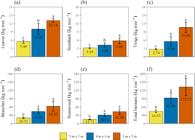
Estimated individual aboveground biomass (kg tree-1) in leaves (a), stembark (b), twigs (c), branches (d), stemwood (e), and totals (f), in the different planting spacings. Columns followed by different lowercase letters differ statistically in terms of planting spacing, according to the Tukey test at 5 % of probability.
The branches’ biomass exceeded the biomass attributed to the stemwood at all spacings. One of the major challenges in the silviculture of non-conventional species is related to trees with sympodial growth pattern, most of which have spreading crowns (Rolim et al. 2019). The individual biomass data confirm this pattern for A. peregrina var. peregrina, with predominance of branches instead of stemwood, regardless of planting spacing. However, tree spacing might be a useful tool to control individual biomass distribution and optimize branch and stemwood ratios.
The growth pattern was also observed at the same exact stands at 4.5 years old, in which branches (including twigs) occupied 44.99 % of the total aboveground biomass (Souza et al. 2023). Nearly 3 years later, in this study, the biomass of branches + twigs increased to 52.6 % of the aboveground biomass. Moura et al. (2006), comparing two plantations of the Mimosa caesalpiniaefolia species, observed a difference in biomass allocation, with greater predominance of stem for the 8-year-old stand at the 3 x 3 m spacing and greater predominance of branches at the 4.5 x 4.5 m spacing, at 11 years old.
Changes in biomass allocation in forest stands occur mainly due to nutritional phases, with a differentiation in nutrient allocation after canopy closure (Schumacher et al. 2011). The authors point to other factors influencing this process, such as species characteristics, soil fertility, and stand density. An unfavorable characteristic for these processes in the present study is that the species has poor natural pruning, requiring silvicultural practices to guide the branches (Carvalho 2003), which were not managed during the years. In addition, a large part of the branch composition is occupied by thick branches, which are not susceptible to natural pruning (Silva et al. 2012). As for twigs, they occupy a higher percentage at the 5 x 5 m spacing, in which there is less competition among individuals.
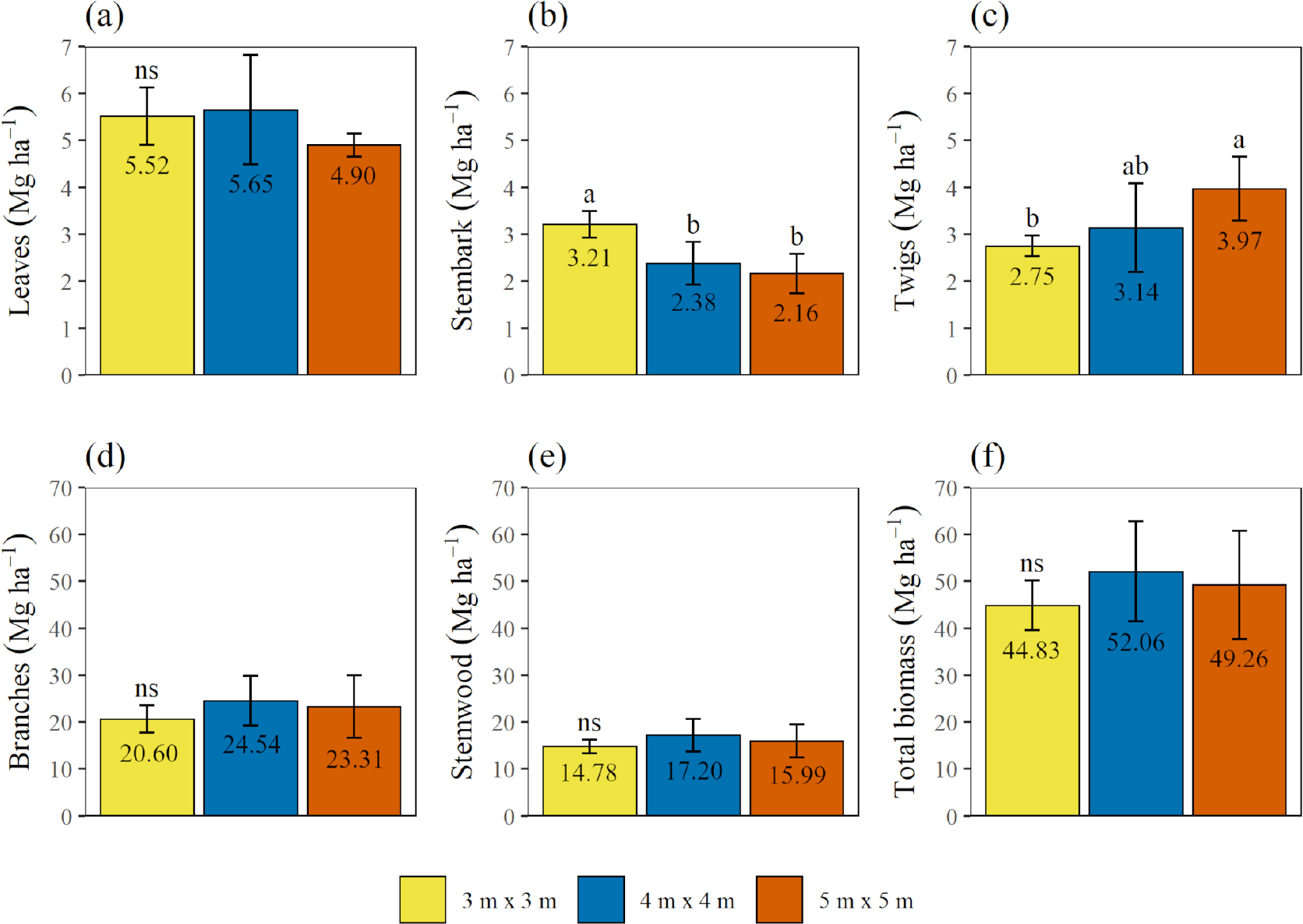
Figure 3 shows the stand aboveground biomass (Mg ha-1). Only stembark and twig biomass differed between the evaluated treatments (p < 0.05), with higher stembark production per hectare for the 3 x 3 m spacing and twigs for 5 x 5 m. The distribution pattern of the fractions is like the relative distribution previously described, with a predominance of branches > stemwood > leaves > twigs > stembark. The branches have the highest biomass production per hectare, and its production is higher than the stemwood production at all spacings. Nonetheless, the twigs were accumulated in the 5 x 5 m spacing, due to wider crowns. There was no significant difference in total biomass production for the studied planting spacings, with values between 44.8 and 52.1 Mg ha-1 for the 3 x 3 m and 4 x 4 m spacings, respectively.
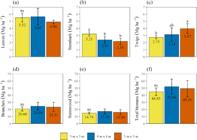
Biomass in leaves (a), stembark (b), twigs (c), branches (d), stemwood (e), and total (f) at planting spacings. Columns followed by different lowercase letters differ statistically in terms of planting spacing, according to the Tukey test at 5 % of probability.
As for total biomass, it is commonly expected that denser spacings produce a greater amount of biomass per unit area, due to an increasing number of individuals, as reported by Eloy et al. (2018), where different species produce more biomass per hectare in denser spacings, including species from the Eucalyptus, Acacia, and Mimosa genus. As for A. peregrina var. peregrina trees, it did not occur, with significant individual biomass production at wider spacings, providing substantial amount of aboveground biomass, which did not differ from the narrower spacing. The lack of silvicultural practices (e.g., fertility corrections, pruning, etc.) may have played an important role in the results.
Based on the aboveground biomass stocks, the nutrient stocks per hectare were estimated (Table 5). Spacing did not alter the nutrient stocks per hectare in the biomass of twigs and branches (p > 0.05). In the stemwood, only P and Ca stocks changed with planting spacing. For stembark and leaves, higher stocks of N, P, K, and Ca were expressed in the 3 x 3 m spacing and lower stocks for the 5 x 5 m spacing.
The highest nitrogen stocks per hectare were found in the leaves, with a mean of 164.8 kg ha-1, corresponding to 42 % of the total. Large stocks of P and Ca were found for branches biomass, with means of 24.8 and 293.17 kg ha-1. N has a high concentration in young tissues, whereas P is related to cell division and Ca is a major component of the cell wall, present in structural tissues (Pandey 2015). In the stemwood, Ca values differed statistically, with higher stock for the 3 x 3 m spacing. For the same nutrient, the 3 x 3 m spacing was also higher in leaves and stembark Ca, with 121.0 and 119.5 kg ha-1, respectively. There was no difference for Mg stocks, in terms of planting spacing, regardless of the fraction. The 5 x 5 m spacing showed the lowest stocks for all nutrients.
In forest stands with commercial exotic species, stemwood usually stands out due to its higher biomass volume (Gatto et al. 2014). When the species has a predominance of stemwood in the total biomass, there is a large export of nutrients during harvesting, especially if the stembark is exported along with the stem (Dick et al. 2016). In the A. peregrina var. peregrina stands, as branches occupy a larger portion than the trunk, they have larger diameters and a greater contribution of bark, making up larger stocks than the barkless stemwood. Despite its non-dominance, stemwood is responsible for significant amounts of Ca, as well as stembark. Leaves also store good amounts of Ca and are important for nutrient cycling, since Ca is not translocated, returning to the soil through the litter (Caldeira et al. 2017). In addition to Ca, most of the Mg is stored in the leaves, followed by branches.
Sometimes, increased planting spacing turns into higher concentration of nutrients in the biomass (Medeiros et al. 2020). Considering that most biomass fractions are not influenced by spacing, and that the stock of nutrients such as P, K, and Ca in the stem and leaves is higher in denser spacing, there is an inverse pattern to that reported in the literature. The smaller planting spacing contributes to the expansion of the root system, as well as abundant fine roots, which are efficient at capturing nutrients (Craine & Dybzinski 2013).
The species shows nitrogen contents because it is a fixing-leguminous tree (Mendes et al. 2021). As for P, several other leguminous species respond positively to this nutrient (Queiroz et al. 2007). The high levels of Ca are due to the low conversion efficiency of this nutrient and its slow mobility in the plant (Dick & Schumacher 2020). The nutrients K and Mg, on the other hand, are little required by the species (Gonçalves et al. 2008).
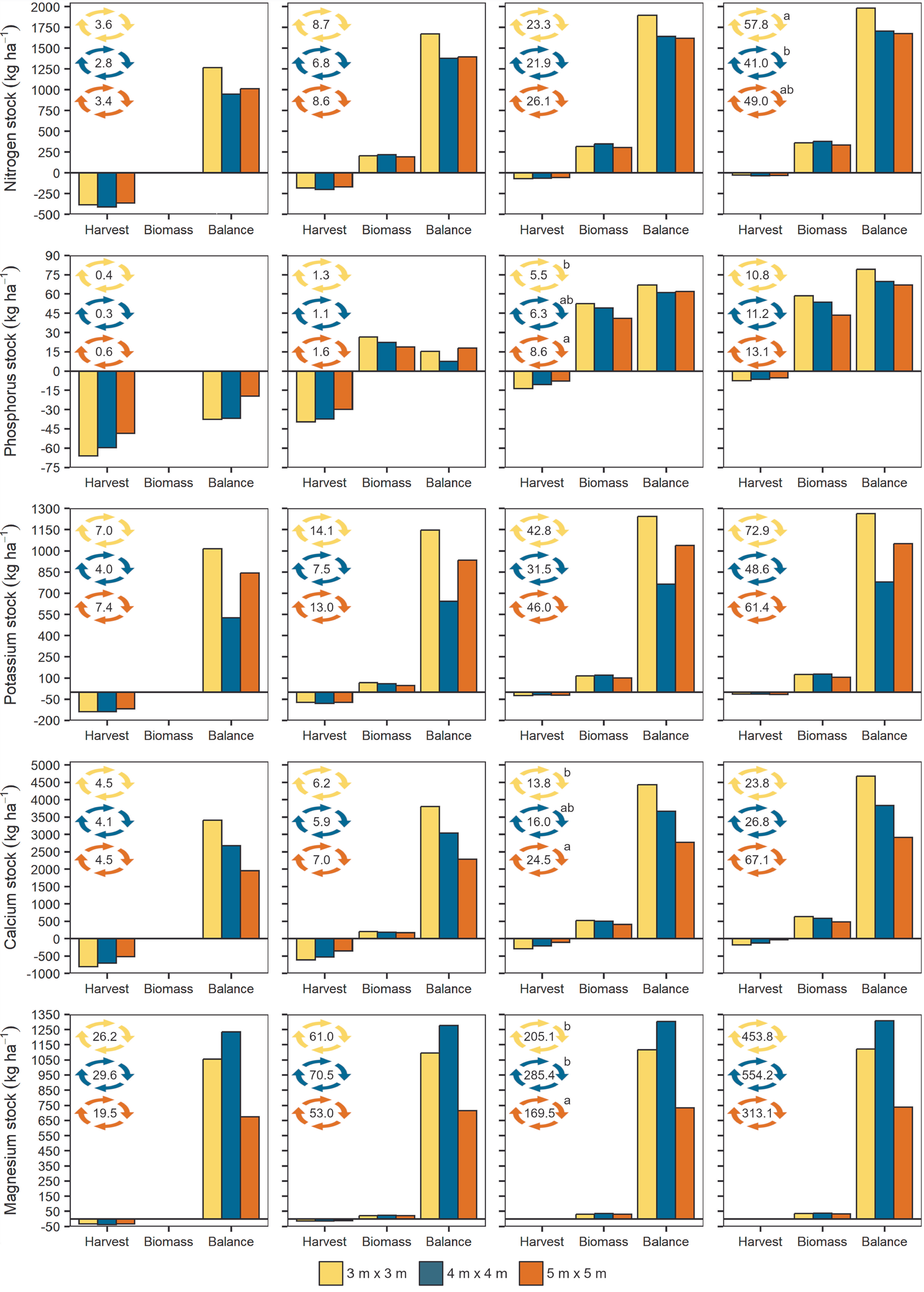
Figure 4 shows the estimated potential number of rotations and the nutrient balance for each harvest scenario. The results reaffirm the pattern of tested harvesting intensity, with S1 being more aggressive and S4 more conservative, in terms of nutrient sustainability. There is no difference in the potential cycles in the S1 and S2 harvest scenarios, with greater nutrient withdrawal. In the S3 scenario, the 5 x 5 m spacing gives greater longevity to the P and Ca cycle. In the S4 scenario, the Ca cycle is favored by the 5 x 5 m spacing, but the 3 x 3 m spacing provides greater N longevity.
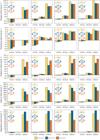
Biomass nutrients and balance after harvesting systems, in a stand of Anadenanthera peregrina var. peregrina at 7.5 years after planting.
Total biomass removal scenarios such as S1 are considered detrimental to the nutritional sustainability of the stand, as a large part of the nutrients are supplied by the forest biomass itself (Rosim et al. 2016). The permanence of these fractions in the forest soil after harvesting guarantees the nutritional sustainability of the next rotations, resulting in more ecological practices and savings for the producer (Witschoreck & Schumacher 2019). With total removal of aboveground biomass from the plantations (S1), the subsequent rotation would begin with a deficit of P. The species is efficient at using P, but the soil lacks this nutrient. In this way, P could become a limiting factor for future rotations. Although the species has good P use efficiency (Table 5), the stocks are scarce and insufficient to meet the needs of the stand in a new rotation, in a scenario with total removal of aboveground biomass (S1). For the same scenario, only Mg has a high supply of nutrients, due to the species’ lower demand for it.
With the S2 harvest proposal, maintaining leaves and twigs on the soil, there is an improvement in the potential rotation cycles. For P, the values exceed one cycle, and the system can meet the needs of the next rotation. The cycles for N, K, and Mg double, and those for Ca are also extended in S2. In this harvesting system, the species can be exploited in various ways. The stembark is used to produce tannin (Andrade et al. 2013), the extensive biomass of the branches is exploited for energy uses (Souza et al. 2020), and the stemwood, which has great commercial value, is used for wood processing (Carvalho 2003). Although the stembark exports large quantities of nutrients, the producer has multiple sources of income, and the incorporation of forest residues results in savings. Nutritional balance for this system is positive for all nutrients.
The S3 and S4 scenarios provide greater longevity for subsequent rotations, with more nutrients remaining in the system. Both are timber harvesting alternatives, leaving the entire canopy in the system for the next rotations. The branches constitute a large reserve of nutrients, contributing to a positive balance that is higher than the initial soil stock. In these systems, if well managed, they can result in economic gains (Guimarães et al. 2019) and prove the sustainability of forest stands (Gatto et al. 2014). As it is more efficient at wider spacings, for some nutrients such as P and Ca in S3 and N and Ca in S4, the influence of spacing was observed. Both P and Ca are critical for the development of the crops in the studied soils, as they have limiting P levels and the species demands a greater amount of Ca. Not extracting the stembark helps to maintain Ca stocks in subsequent rotations (Dick & Schumacher 2020).
CONCLUSIONS
-
1. For Anadenanthera peregrina var. peregrina, planting spacings influence the individual biomass allocation, but not the total hectare production;
-
2. The species allocates most of its biomass to the branches, and not to the stem;
-
3. Most nutrients are stored in the leaves and branches, with higher accumulation for the 3 x 3 m spacing. However, the stands are more efficient using nutrients at wider spacings;
-
4. Harvesting the stemwood without bark provides a greater number of potential cycles.
ACKNOWLEDGMENTS
The authors would like to acknowledge the Instituto Federal do Espírito Santo for the experimental site, and the financial support from Fundação de Amparo à Pesquisa e Inovação do Espírito Santo (FAPES) call nº 19/2018, Coordenação de Aperfeiçoamento de Pessoal de Nível Superior (Capes) call nº 10/2018, Capes/FAPES PDPG call nº 09/2018, and Conselho Nacional de Desenvolvimento Científico e Tecnológico (CNPq), process nº 132001/2020-9.
Data Availability Statement:
Research data are only made available by authors upon request.
REFERENCES
- ANDRADE, B. G.; CARNEIRO, A. D. C. O.; VITAL, B. R.; SOUZA, A. L. de; COELHO, D. J. da S. Determinação do potencial tanífero em povoamentos de angico. Brazilian Journal of Wood Science, v. 4, n. 2, p. 140-151, 2013.
- BATISTA, A.; CALMON, M.; LUND, S.; ASSAD, L.; PONTES, C.; BIDERMAN, R. Investimento em reflorestamento com espécies nativas e sistemas agroflorestais no Brasil: uma avaliação econômica. São Paulo: WRI Brasil, 2021.
-
BRASIL. Instituto Nacional de Meteorologia. Meteorological data from automatic weather station [A617] 2022. Available at: https://bdmep.inmet.gov.br/ Access on: Jan. 24, 2022.
» https://bdmep.inmet.gov.br/ - CALDEIRA, M. V. W.; MOREIRA, F. L.; GONÇALVES, E. O.; CAMPANHARO, I. F.; CASTRO, K. L. Teor e redistribuição de nutrientes nas folhas de Bixa arborea Huber. e Joannesia princeps Vell. em área de restauração florestal. Scientia Forestalis, v. 45, n. 114, p. 305-317, 2017.
- CARVALHO, P. E. R. Espécies arbóreas brasileiras: volume 1. Colombo: Embrapa Florestas, 2003.
- CASTRO, D.; URZÚA, J.; RODRIGUEZ-MALEBRAN, M.; INOSTROZA-BLANCHETEAU, C.; IBÁÑEZ, C. Woody leguminous trees: new uses for sustainable development of drylands. Journal of Sustainable Forestry, v. 36, n. 8, p. 764-786, 2017.
- CRAINE, J. M.; DYBZINSKI, R. Mechanisms of plant competition for nutrients, water and light. Functional Ecology, v. 27, n. 4, p. 833-840, 2013.
- DALLAGNOL, F. S.; MOGNON, F.; SANQUETTA, C. R.; CORTE, A. P. D. Teores de carbono de cinco espécies florestais e seus compartimentos. Floresta e Ambiente, v. 18, n. 4, p. 410-416, 2011.
- DICK, G.; SCHUMACHER, M. V. Sustentabilidade nutricional em povoamento de Eucalyptus dunnii Maiden no bioma Pampa, RS. Scientia Forestalis, v. 48, n. 127, e3277, 2020.
- DICK, G.; SCHUMACHER, M. V.; MOMOLLI, D. R.; SANTOS, J. C.; LUDVICHAK, A. A.; GUIMARÃES, C. C.; SOUZA, H. P. Quantificação da biomassa e nutrientes em um povoamento de Eucalyptus dunnii Maiden estabelecido no bioma Pampa. Ecologia e Nutrição Florestal, v. 4, n. 1, p. 1-9, 2016.
- ELLERT, B. H.; BETTANY, J. R. Calculation of organic matter and nutrients stored in soils under contrasting management regimes. Canadian Journal of Soil Science, v. 75, n. 4, p. 529-538, 1995.
- ELOY, E.; SILVA, D. A. D.; CARON, B. O.; ELLI, E. F.; SCHWERZ, F. Effect of age and spacing on biomass production in forest plantations. Revista Árvore, v. 42, n. 2, e4220214, 2018.
- FOOD AND AGRICULTURE ORGANIZATION (FAO). International soil classification system for naming soils and creating legends for soil maps Rome: FAO, 2015.
- GATTO, A.; BUSSINGUER, A. P.; RIBEIRO, F. C.; AZEVEDO, G. B. D.; BUENO, M. C.; MONTEIRO, M. M.; SOUZA, P. F. D. Ciclagem e balanço de nutrientes no sistema solo-planta em um plantio de Eucalyptus sp., no Distrito Federal. Revista Brasileira de Ciência do Solo, v. 38, n. 3, p. 879-887, 2014.
- GONÇALVES, E. D. O.; PAIVA, H. N. D.; NEVES, J. C. L.; GOMES, J. M. Crescimento de mudas de angico-vermelho (Anadenanthera macrocarpa (Benth.) Brenan) sob diferentes doses de macronutrientes. Revista Árvore, v. 32, n. 6, p. 1029-1040, 2008.
- GUIMARÃES, C. do C.; SCHUMACHER, M. V.; MOMOLLI, D. R.; SOUZA, H. P. de; LUDVICHAK, A. A.; MALHEIROS, A. C. Biomass production and nutritional efficiency in Eucalyptus genotypes in the Pampa biome. Journal of Experimental Agriculture International, v. 34, n. 6, p. 1-10, 2019.
- INDÚSTRIA BRASILEIRA DE ÁRVORES (IBÁ). Relatório anual IBÁ 2023: ano base 2022. São Paulo: IBÁ, 2023.
- LIMA, R.; INOUE, M. T.; FIGUEIREDO FILHO, A.; ARAUJO, A. J. D.; MACHADO, S. D. A. Efeito do espaçamento no desenvolvimento volumétrico de Pinus taeda L. Floresta e Ambiente, v. 20, n. 2, p. 223-230, 2013.
- MEDEIROS, P. L.; SILVA, G. G. C.; OLIVEIRA, E. M. M.; RIBEIRO, C. O.; SILVA, J. M. S.; PIMENTA, A. S. Efficiency of nutrient use for biomass production of a Eucalyptus clone as a function of planting density in short-rotation cropping. Australian Forestry, v. 83, n. 2, p. 66-74, 2020.
- MENDES, L. J.; PAULA, R. R.; SOUZA, P. H. de; CALDEIRA, M. V. W.; CAMPANHARO, Í. F.; TRIVELIN, P. C. O.; DELARMELINA, W. M. Nitrogen accumulated and biologically fixed by uninoculated Anadenanthera peregrina (L.) Speg trees under monospecific stands in the Atlantic Forest biome. Revista Brasileira de Botânica, v. 44, n. 2, p. 503-512, 2021.
- MIYAZAWA, M.; PAVAN, M. A.; MURAOKA, T.; CARMO, C. A. F. S.; MELLO, W. J. Análise química de tecidos vegetais. In: SILVA, F. C. (ed.). Manual de análise química de solos, plantas e fertilizantes Brasília, DF: Embrapa, 1999. p. 172-223.
- MOURA, O. N.; PASSOS, M. A. A.; FERREIRA, R. L. C.; MOLICA, S. G.; LIRA, M. de A.; SANTOS, M. V. F. dos. Distribuição de biomassa e nutrientes na parte aérea de Mimosa caesalpiniaefolia Benth. Revista Árvore, v. 30, n. 6, p. 887-884, 2006.
- PANDEY, R. Mineral nutrition of plants. In: BAHADUR, B.; VENKAT RAJAM, M.; SAHIJRAM, L.; KRISHNAMURTHY, K. V. (ed.). Plant biology and biotechnology: volume I: plant diversity, organization, function and improvement. New Delhi: Springer, 2015. p. 499-538.
- PAYN, T.; CARNUS, J. M.; FREER-SMITH, P.; KIMBERLEY, M.; KOLLERT, W.; LIU, S. Changes in planted forests and future global implications. Forest Ecology and Management, v. 352, n. 1, p. 57-67, 2015.
- PICARD, N.; SAINT-ANDRÉ, L.; HENRY, M. Manual for building tree volume and biomass allometric equations: from field measurement to prediction. Rome: FAO, 2012.
- QUEIROZ, L. R.; COELHO, F. C.; BARROSO, D. G.; QUEIROZ, V. A. V. Avaliação da produtividade de fitomassa e acúmulo de N, P e K em leguminosas arbóreas no sistema de aléias, em Campos dos Goytacazes, RJ. Revista Árvore, v. 31, n. 3, p. 383-390, 2007.
-
R CORE TEAM. R: a language and environment for statistical computing. 2013. Available at: https://www.r-project.org/ Access on: Feb. 27, 2022.
» https://www.r-project.org/ - ROLIM, S. G.; PIÑA-RODRIGUES, F. C. M.; PIOTTO, D.; BATISTA, A.; FREITAS, M. L. M.; BRIENZA JUNIOR, S.; ZAKIA, M. J. B.; CALMON, M. Research gaps and priorities in silviculture of native species in Brazil São Paulo: WRI Brasil, 2019.
- RONDON, E. V. Produção de biomassa e crescimento de árvores de Schizolobium amazonicum (Huber) Ducke sob diferentes espaçamentos na região de mata. Revista Árvore, v. 26, n. 5, p. 573-576, 2002.
- ROSIM, C. C.; HSING, T. Y.; PAULA, R. C. Nutrient use efficiency in interspecific hybrids of eucalypt. Revista Ciência Agronômica, v. 47, n. 3, p. 540-547, 2016.
- SANTOS, H. G.; JACOMINE, P. K. T.; ANJOS, L. H. C. dos; OLIVEIRA, V. A.; LUMBRERAS, J. F.; COELHO, M. R.; ALMEIDA, J. A.; ARAÚJO FILHO, J. C.; OLIVEIRA, J. B.; CUNHA, T. J. F. Sistema brasileiro de classificação de solos 5. ed. Brasília, DF: Embrapa, 2018.
- SCHUMACHER, M. V.; WITSCHORECK, R.; CALIL, F. N. Biomassa em povoamentos de Eucalyptus spp. de pequenas propriedades rurais em Vera Cruz, RS. Ciência Florestal, v. 21, n. 1, p. 17-22, 2011.
- SILVA, M. P. S.; CARNEIRO, J. G. A.; BARROSO, D. G. Desrama florestal. In: CARNEIRO, J. G. A. (ed.). Princípios de desramas e desbastes florestais Campos dos Goytacazes: O Coordenador, 2012. p. 11-44.
- SOARES, C. P. B.; PAULA NETO, F.; SOUZA, A. L. Dendrometria e inventário florestal 2. ed. Viçosa: UFV, 2011.
- SOUZA, C. O.; SILVA, J. G. M.; ARANTES, M. D. C.; VIDAURRE, G. B.; DIAS JÚNIOR, A. F.; OLIVEIRA, M. P. Pyrolysis of Anadenanthera peregrina wood grown in different spacings from a forest plantation in Brazil aiming at the energy production. Environment, Development and Sustainability, v. 22, n. 6, p. 5153-5168, 2020.
- SOUZA, P. H. D.; CALDEIRA, M. V. W.; DELARMELINA, W. M.; TRAZZI, P. A.; PAULA, R. R.; MOMOLLI, D. R. Comparando espaçamentos do povoamento de Anadenanthera peregrina (L.) Speg: resposta em biomassa e estoque de carbono acima e abaixo do solo. Revista Ambiente e Água, v. 18, e2919, 2023.
- VELDKAMP, E. Organic carbon turnover in three tropical soils under pasture after deforestation. Soil Science Society of America Journal, v. 58, n. 1, p. 175-180, 1994.
- WITSCHORECK, R.; SCHUMACHER, M. V. Alocação de nutrientes ao longo do tronco em Pinus taeda L. aos 17 anos de idade. Ciência Florestal, v. 29, n. 1, p. 50-62, 2019.
-
Editor:
Luis Carlos Cunha Junior