 Management of Megathyrsus maximus cv. BRS Tamani intercropped with imidazolinone-tolerant sorghum1
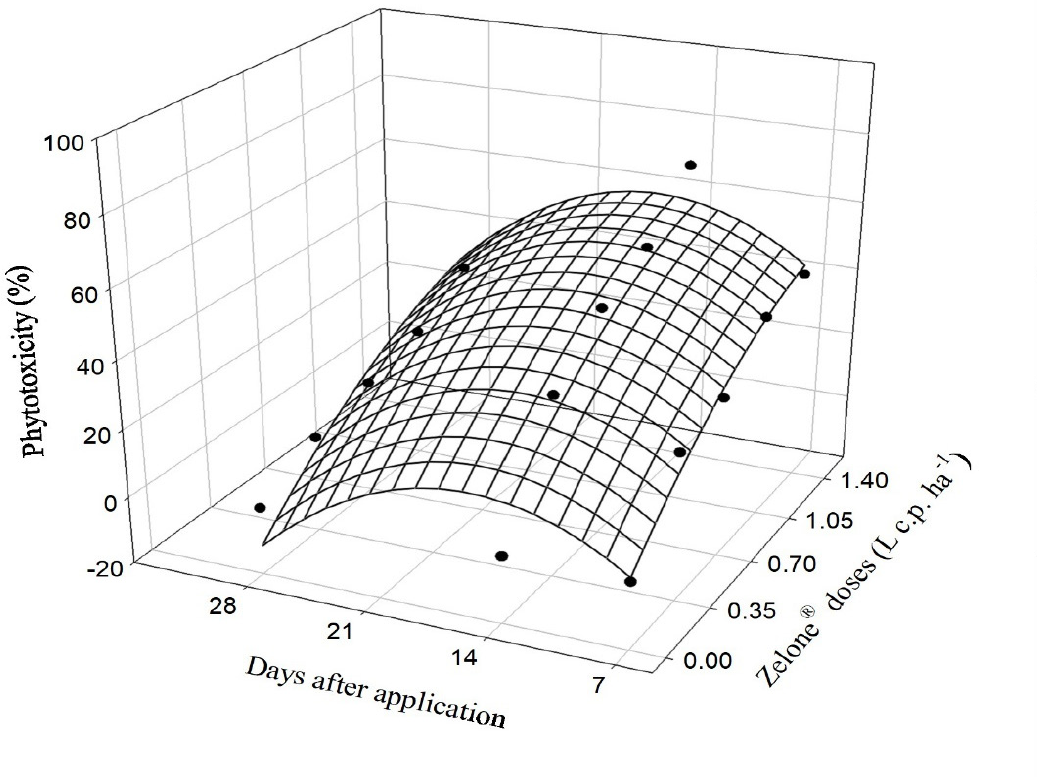
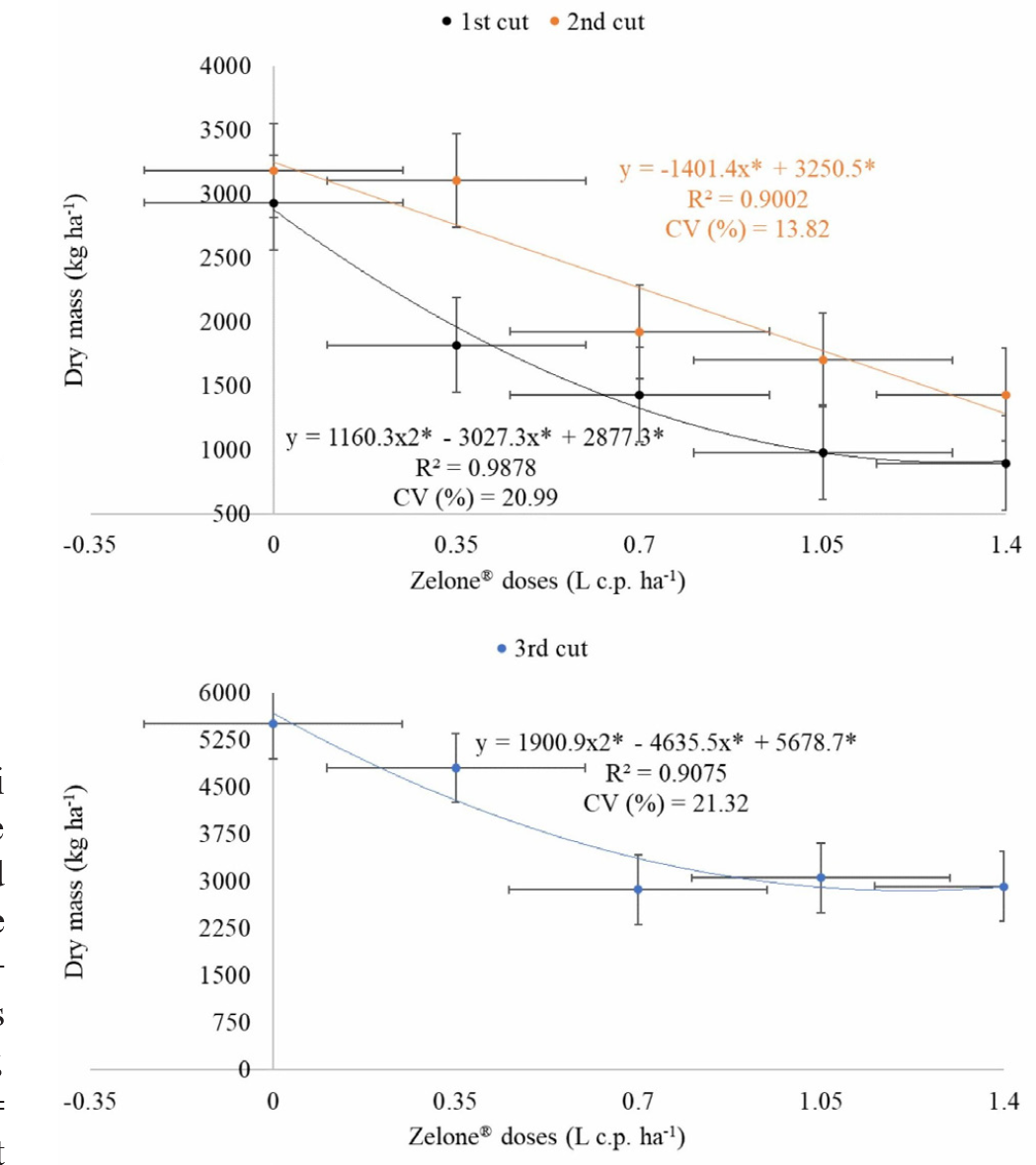
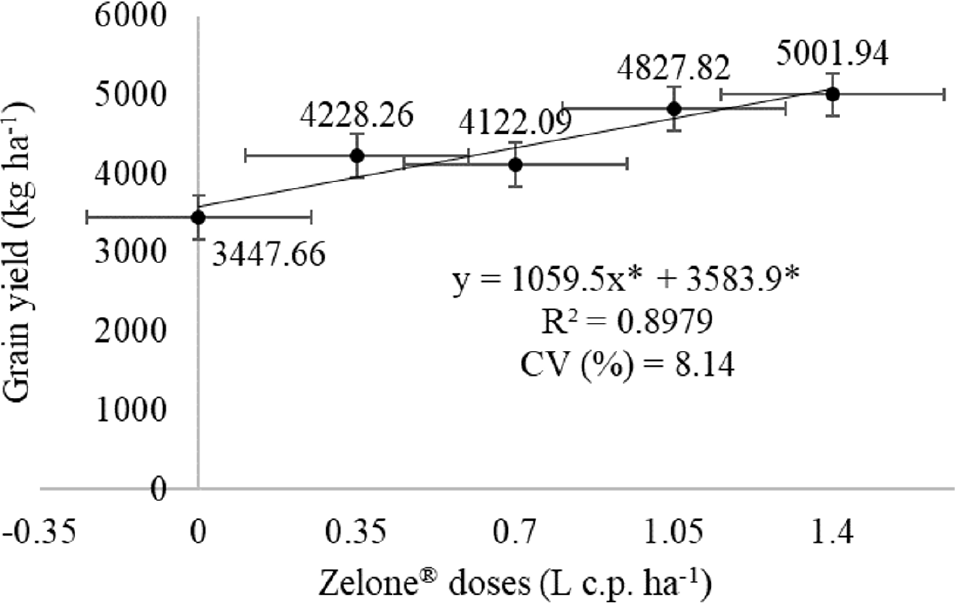
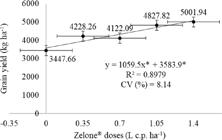
There are knowledge gaps in the management of sorghum-forage intercropping during the off-season under Brazilian Savanna conditions due to the lack of selective herbicides. This study aimed to determine the optimal doses of the imazethapyr + imazapic ready-mix herbicide to manage Megathyrsus maximus cv. BRS Tamani intercropped with sorghum [Sorghum bicolor (L.) Moench], as well as to assess the effects of crop residue on the weed suppression and performance of the succeeding soybean crop. The experiment was carried out in a randomized block design, with four replications. The treatments included sorghum monoculture and intercropped with M. maximus, subjected to five doses of the Zelone® commercial herbicide (0, 18.75 + 6.25, 37.50 + 12.50, 56.25 + 18.75, and 75.00 + 25.00 g a.i. ha-1 of imazethapyr + imazapic). There was initial phytotoxicity in BRS Tamani, reaching 80 % at 14 days after the application, followed by a gradual recovery. The 1.05 and 1.4 L c.p. ha-1 doses provided an effective forage suppression. The sorghum yield was affected by the coexistence with BRS Tamani; however, the application of the 1.05 and 1.4 L c.p. ha-1 doses resulted in a yield similar to that of the sorghum monoculture. The residue from the intercropping system delayed the weed infestation, eliminating the need for pre-emergence herbicide application in the soybean without affecting the crop establishment or yield. It is necessary to suppress BRS Tamani when intercropped with sorghum using 1.05 and 1.4 L c.p. ha-1 herbicide doses. Mulch delayed the weed infestation without negatively affecting the soybean development or yield.
KEYWORDS:
Panicum; crop-livestock intercropping; grass weed; Brazilian Savanna.
 Thumbnail
 Thumbnail
 Thumbnail
 Thumbnail