
 Physiological and sanitary quality of chickpea seeds obtained in different sowing dates1
ABSTRACT
Due to its nutritional relevance and edaphoclimatic adaptability, several studies have been carried out on chickpea (Cicer arietinum L.); however, further information about growing periods is still needed, especially regarding the quality of seeds in regions outside the Cerrado (Brazilian Savanna). This study aimed to analyze the physiological and sanitary quality of chickpea seeds (BRS Cristalino cultivar) obtained from different sowing dates in the central region of the Rio Grande do Sul state, Brazil. Seeds from nine sowing dates, between July and October, were evaluated. Germination, first count, seedling length and mass, and electrical conductivity tests were also performed, as well as pathogen incidences. The sowing dates influenced the incidence of Rhizopus spp. and the evaluated physiological parameters, except for root dry mass and length. The seeds showed a high incidence of Fusarium spp. and Aspergillus flavus, but it was the presence of Rhizopus spp. that negatively affected their vigor and viability. Unfavorable climate conditions at the end of flowering and close to harvests, especially between September and October, limited the seed performance. Minimum air temperatures below 10 ºC did not prevent germination and plant development. The production of chickpea seeds in the central region of Rio Grande do Sul is feasible with sowing at the end of July, since the lots showed germination rates equal to or greater than 80 %, meeting the requirements of seed marketing standards.
KEYWORDS:
Cicer arietinum L.; Rhizopus spp.; seed germination; climate stress; seed-associated fungi.
RESUMO
Devido à sua relevância nutricional e adaptabilidade edafoclimática, diversas pesquisas têm sido realizadas com grão-de-bico (Cicer arietinum L.); todavia, ainda são necessárias informações acerca das épocas de cultivo, sobretudo quanto à qualidade de sementes em regiões externas ao Cerrado brasileiro. Objetivou-se analisar a qualidade fisiológica e sanitária de sementes de grão-de-bico (cultivar BRS Cristalino) obtidas em diferentes épocas de semeadura na região central do Rio Grande do Sul. Foram avaliadas sementes oriundas de nove épocas de semeadura, entre julho e outubro, bem como realizados testes de germinação, primeira contagem, comprimento e massa de plântulas e condutividade elétrica, além de incidências de patógenos. As épocas de semeadura influenciaram na incidência de Rhizopus spp. e nos parâmetros fisiológicos avaliados, exceto massa seca e comprimento de raízes. As sementes apresentaram alta incidência de Fusarium spp. e Aspergillus flavus, mas foi a presença de Rhizopus spp. que afetou negativamente o seu vigor e viabilidade. Condições climáticas desfavoráveis no final da floração e próximas às colheitas, principalmente entre setembro e outubro, limitaram o desempenho das sementes. Temperaturas mínimas do ar inferiores a 10 ºC não impediram a germinação e o desenvolvimento das plantas. A produção de sementes de grão-de-bico na região central do Rio Grande do Sul é viável com semeadura no final de julho, visto que os lotes apresentaram germinação igual ou superior a 80 %, atendendo às exigências dos padrões de comercialização de sementes.
PALAVRAS-CHAVE:
Cicer arietinum L.; Rhizopus spp.; germinação de sementes; estresse climático; fungos associados a sementes.
INTRODUCTION
Chickpea (Cicer arietinum L.) stands out both for its nutritional value, high in protein, and for its ability to adapt to different climates and soils. The consumption of this food is mainly concentrated in the Asian and African continents. In these regions, the demand for the grain has been growing (Merga & Haji 2019, Queiroga et al. 2021).
The growth of the world population, especially in Asia, has generated significant demands for agricultural production, in order to meet the needs of these consumers. As a result, the chickpea production area expanded by about 500 % between 2010 and 2020 in South America, especially in the continent’s main exporter, Argentina (Merga & Haji 2019, FAO 2022).
Brazil is among the importers of this grain from Argentina, since the national production is not considered sufficient to meet the domestic market (Nascimento et al. 2016). Chickpea has attracted Brazilians because it is rich in protein and have all the essential amino acids, except for those containing sulfur (Jukanti et al. 2012, Nascimento et al. 2016). However, when consumed with cereals, it meets the amino acid needs of the general population, including vegetarian and vegan diets (Intikhab 2023).
In addition to the nutritional value, chickpea has the capacity for symbiotic nitrogen fixation in the soil, low production costs and tolerance to water restriction (Queiroga et al. 2021, Gou et al. 2023). As a result, its cultivation has a significant growth potential in Brazil (Nascimento et al. 2016).
The number of national studies has also grown, especially after the release of several chickpea cultivars by Embrapa, since 2015. Much of this research concerns agricultural production (Avelar et al. 2018b, Almeida Neta et al. 2020, Reyes et al. 2023), and seed quality (Avelar et al. 2018a, Paraíso et al. 2019, Silva et al. 2022, Santos et al. 2023).
Several studies have investigated the best sowing time for the production of seeds of good physiological quality in other crops, such as white oat (Avena sativa L.) (Bazzo et al. 2020), wheat (Triticum aestivum L.) (Viganó et al. 2010), pearl millet [Pennisetum glaucum (L.) R. Br.] (Coimbra & Nakagawa 2006), and soybean [Glycine max (L.) Merr.] (Albrecht et al. 2008, Bornhofen et al. 2015, Colet et al. 2023). For chickpea, studies on this topic were also found (Avelar et al. 2018a), including those related to the sanitary quality of seeds (Hoskem et al. 2017). However, most studies were conducted in the Cerrado (Brazilian Savanna), which limits the understanding of cultivation in other regions of the country.
The central region of the Rio Grande do Sul state has potentially favorable conditions for chickpea cultivation (Nascimento et al. 2016), characterized by relatively well-distributed rainfall throughout the year, hot summers, and mild-to-cold winters (Alvares et al. 2013), in addition to the occurrence of different soil classes, such as Argissolos (Ultisols) (USDA 2022). These factors may influence plant development and seed quality.
Seed sanitary quality is another important factor, since the crop is highly susceptible to pathogens and insects (Santos et al. 2023). Significant percentages of seeds infested by microorganisms have already been reported, ranging from 20.5 (Araujo et al. 2010) to 95 % (Nishad et al. 2020).
Among these microorganisms are field fungi, with Fusarium spp. being the main pathogen associated with the crop (Pandey et al. 2017), causing damage mainly prior to harvest, with little progress during storage (Martín et al. 2022). In addition, storage fungi, such as Aspergillus spp., Rhizopus spp., and Penicillium spp., may occur and develop under higher humidity conditions and intensify the deterioration of seeds during storage, reducing their physiological and sanitary quality (Araujo et al. 2010).
Thus, this study aimed to evaluate the physiological and sanitary quality of chickpea seeds (BRS Cristalino cultivar) obtained in different sowing dates in the Rio Grande do Sul state, and to analyze whether there are linear relationships between the physiological and sanitary quality parameters.
MATERIAL AND METHODS
The used seeds were previously standardized in a uniformity trial (experiments without treatments, in which the crop and all the cultural practices performed are homogeneous throughout the experimental area) at the Universidade Federal de Santa Maria, in Santa Maria, Rio Grande do Sul state, Brazil (29º42’S, 53º49’W, and 95 m of altitude), under a humid subtropical climate (Cfa) (Alvares et al. 2013), in an Argissolo Vermelho Distrófico arênico (Ultisol) (USDA 2022), in the 2022 season.
The first sowing was carried out on July 27, 2022, in an experimental area of 20 × 7 m (140 m2), consisting of 14 rows of 20 m in length, spaced 0.5 m apart, considering the central usable area of 18 × 6 m (108 m2) for harvest. The plants harvested from this usable area made up the first lot. The eight subsequent sowings were carried out between Aug. 19 and Oct. 13, 2022, in plots with four rows of 5 m in length (80 m2). In all sowings, the adopted spacing was 0.5 m between rows and 0.0625 m between plants (16 seeds m-1). Harvests were carried out between Dec. 16, 2022, and Jan. 20, 2023, when the plants reached the R11 reproductive stage, characterized by approximately 90 % of mature pods with golden-yellow color (Carvalho et al. 2021).
The soil analysis was carried out at the depth of 0-20 cm, as follows: pH water (1:1) = 5.4; Ca = 6.1 cmolc dm-3; Mg = 2.3 cmolc dm-3; Al = 0.1 cmolc dm-3; H + Al = 6.2 cmolc dm-3; effective cation exchange capacity (ECEC) = 9.1 cmolc dm-3; SMP buffer index = 5.7; organic matter = 2.3 %; clay = 26.0 %; S = 13.4 mg dm-3; P = 29.9 mg dm-3 (Mehlich-1); K = 0.573 cmolc dm-3; CEC pH7 = 15.2 cmolc dm-3; Cu = 2.4 mg dm-3; Zn = 1.04 mg dm-3; and B = 0.82 mg dm-3.
Basal fertilization was carried out at sowing with the application of 22.5 kg ha-1 of N, 90 kg ha-1 of P2O5 and 90 kg ha-1 of K2O, corresponding to 450 kg ha-1 of the formulation NPK 05-20-20. Top-dressing fertilization was carried out with urea, applying 27 kg ha-1 of N at the V3 stage (emergence of the third leaf in the main branch) and 27 kg ha-1 of N at the V5 stage (emergence of the third secondary branch) (Carvalho et al. 2021).
Sowing was carried out manually, without seed treatment, using the BRS Cristalino chickpea cultivar, of the Kabuli type. No pesticides were used in the management, and weed control was manual. Irrigation was carried out when necessary until the establishment of the plants. At the end of the cycle, the seeds were harvested manually and dried at room temperature.
Thus, nine seed lots were obtained from nine sowing dates (uniformity trials), between July 27 and Oct. 13, 2022, all considered to be late, since previous rainy periods did not allow sowing at other times. The lots were stored in Kraft paper bags, also at room temperature, for about three months after the date of the last harvest, under average daily air temperature of 23.8 ºC and average relative humidity of 76 %. From these lots, samples were subjected to the following seed quality tests:
a) 1,000-seed weight: determined by weighing eight replicates of one hundred seeds (Brasil 2025);
b) Moisture content: obtained from two samples of 4.5 ± 0.5 g, by the method of oven drying at 105 ± 3 ºC, for 24 h (Brasil 2025);
c) Sieve retention test: conducted with two samples of approximately 300 g of seeds, on sieves with mesh ≤ 7.00 mm, 7.50 mm, 8.00 mm, 8.50 mm, and ≥ 9.00 mm (Brasil 2025);
d) Germination test and first count: performed with four replicates of 50 seeds each, sown in trays with sand previously washed, sieved, and sterilized, at 40 % water holding capacity. The trays were placed in a B.O.D. chamber with alternating temperature of 20-30 ºC (for 16 and 8 h, respectively) and kept for five days for evaluating vigor in the first count, and for eight days for evaluating germination, considering only the percentage of normal seedlings (Brasil 2025);
e) Seedling length: shoots and roots of ten normal seedlings from the germination test were measured in cm, and the average result expressed in cm seedling-1;
f) Seedling dry mass: the same ten seedlings used to measure length, divided into shoot and root, were dried in an oven with forced ventilation at 65 ± 5 ºC, for 48 h (Nakagawa 2020), and then weighed, with the average result expressed in g seedling-1;
g) Mass electrical conductivity test: conducted with four replicates of 25 seeds in 50 mL of distilled water at 25 ºC, as adapted by Castilho et al. (2019), and for 24 h (Brasil 2025).
For the seed health test, the samples were previously frozen for 24 h in a domestic freezer, to prevent seed germination from compromising the evaluation. Afterwards, the Blotter test was set up according to Brasil (2025), with four replicates of 25 seeds. The seeds were arranged in Gerbox-type plastic boxes sanitized with 3 % sodium hypochlorite and 70 % alcohol (Lima et al. 2021). Two autoclaved sheets of Germitest paper were added and then moistened with distilled water. The boxes were wrapped in plastic bags and kept in a B.O.D chamber for 7 days at 25 ºC, with a photoperiod of 12 h.
Pathogens were identified using a stereoscope microscope, and, when necessary, slides were prepared to identify the microorganisms under an optical microscope. Identification was based on the morphological characteristics of the microorganisms, compared with descriptions and identification keys available in the specialized literature, such as the fungi identification guide described by Henning (2015). Quantification was performed based on incidence (%), considering the presence or absence of each pathogen in the evaluated seeds, and the results were expressed as percentage of infected seeds relative to the total analyzed.
The assumptions for physiological quality data were tested by the Bartlett (for the homogeneity of variance) and Shapiro-Wilk tests. The seed health data met the assumptions in the Bartlett test and at least one among the error normality tests of Shapiro-Wilk and Lilliefors.
These data were subjected to analysis of variance and F test at 5 % of significance, considering a completely randomized design, and to the Scott-Knott test, also at 5 % of significance. The Pearson’s correlation was performed with the means of the replicates of pathogen incidence in relation to the physiological quality traits, which showed a significant difference in the analysis of variance. The significance of the coefficients was verified using the Student’s t-test at 5 % of probability. The intensity of the correlations was classified according to Dancey & Reidy (2006). All statistical analyses were performed in the Rbio software.
RESULTS AND DISCUSSION
The seed moisture content ranged from 12.02 to 11.49 %, i.e., a difference of at most 0.53 % among the lots (Table 1). Thus, it was safe to perform the other tests, since Marcos Filho (2015) mentions that the moisture difference limit among lots should be a maximum of 2 %, so that moisture does not influence the results.
Moisture content, 1,000-seed weight (TSW), and uniformity test (sieve retention) of samples obtained from nine sowing dates in 2022, using the BRS Cristalino chickpea cultivar.
Similar moisture contents in chickpea seeds have been reported by Silva et al. (2022), from 7.10 to 13.36 %, and Castilho et al. (2019), from 11.30 to 12.00 %. However, Francisco & Usberti (2008) recommended moisture contents below 13 % for common bean, as they concluded that the higher the seed moisture during storage, the higher the incidence of the pathogens Fusarium spp., Aspergillus spp., Penicillium spp., Rhizoctonia spp., and Alternaria spp.
It was also observed that the sowing dates of early September (dates 4 and 5) and October (dates 8 and 9) were the only ones that led to 1,000-seed weight below 300 g, that is, they did not meet the expectations for Kabuli grains, from 0.3 to 0.5 g seed-1, as mentioned by Nascimento et al. (2016) and Queiroga et al. (2021). Despite that, Avelar et al. (2018a) reported weights of 187.90 to 345.97 g in different sowing periods, in the Minas Gerais state, with the BRS Aleppo cultivar, also of the Kabuli type.
Another issue is that the highest proportion of seeds passed through the 8.0-mm-mesh sieve and were retained in the 7.5-mm-mesh sieve for all dates (Table 1). It is worth noting that the seed sizes presented in Table 1 were also not compatible with those cataloged for the BRS Cristalino cultivar, from 8 to 9.5 mm (Brasil 2015).
The first two dates were the ones that came closest to the cataloged values, with 39.33 and 44.38 % of seeds larger than 8 mm, and together with date 3, with fewer small seeds (≤ 7.0 mm). Despite that, date 6 (Sept. 16) was the one that showed greater uniformity, when compared to the others, with 72.16 % of the seeds retained in the 7.5-mm-mesh sieve.
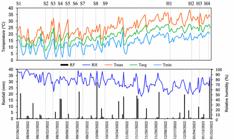
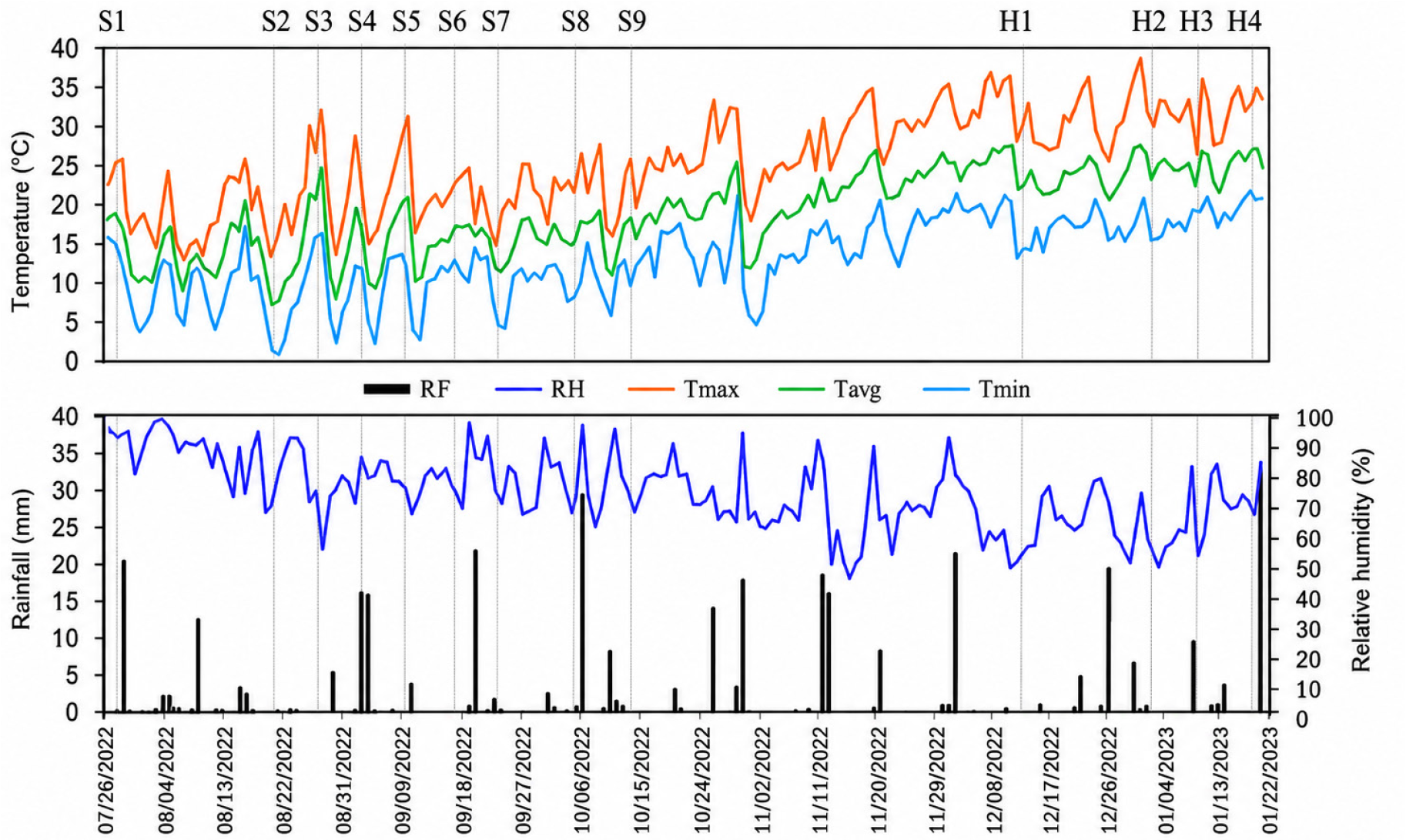
In view of these results, it can be seen that dates 1 (July 27) and 2 (Aug. 19) led to the largest sizes and highest 1,000-seed weights, and that the last two dates resulted in relatively smaller seeds. This indicates a trend that climatic conditions at the end of the study period negatively affected these traits. In addition, the relative air humidity also gradually decreased during the evaluated period (Figure 1).
Meteorological data of rainfall (RF; mm), relative humidity (RH; %), maximum (Tmax; ºC), minimum (Tmin; ºC), and average (Tavg; ºC) daily air temperatures for the uniformity trial period. S1: sowing carried out on July 27; S2: Aug. 19; S3: Aug. 26; S4: Sept. 02; S5: Sept. 09; S6: Sept. 16; S7: Sept. 23; S8: Oct. 04; and S9: Oct. 13, in 2022. H1: harvest on Oct. 13, 2022; H2: Oct. 04, 2023; H3: Jan. 10, 2023; H4: Jan. 20, 2023. Source: Brasil (2025).
Under these conditions, rainfall was higher during the cycle of date 1 (306.4 mm), gradually decreasing until date 9 (99.0 mm) (Figure 1). These low rainfall levels were associated with the presence of the La Niña phenomenon during the experiment period. However, according to Nascimento et al. (2016), chickpea cultivation shows good results in places with low (≥ 800 mm year-1) and medium rainfall (between 800 and 1,600 mm), in addition to moderate cold, so the total water applied (considering rainfall) should not exceed 400 mm during cultivation.
Likewise, the number of days with minimum air temperatures below 10 ºC gradually decreased from 35 days (in the cultivation period of date 1) to 4 days (in the cultivation period of date 9) (Figure 1). The opposite was observed for high air temperatures, as in the cycle of the first sowing date, where only 30 days had maximum air temperature above 30 ºC, whereas, for the cycles of dates 6, 7, 8, and 9, there were 54 days. Low rainfall combined with high air temperatures, especially during the cycle of dates 8 and 9, may have resulted in the small seeds observed (Table 1). In agreement, Avelar et al. (2018a) associated lower seed weight with the increase in days with maximum air temperatures above 30 ºC.
According to Carvalho & Nakagawa (2012), larger seeds tend to have well-formed embryos with greater accumulation of reserves, resulting in more vigorous seeds. This is consistent with the results presented in Table 2, as the highest germination and first count were associated with date 1, which had the highest number of seeds retained in a sieve with mesh greater than or equal to 8 mm among those evaluated (Table 1).
First count (FC), germination (GERM), abnormal seedlings (ABNOR), dead seeds (DS), shoot length (SL), root length (RL), shoot dry mass (SDM), and root dry mass (RDM) obtained from different sowing dates of the BRS Cristalino chickpea cultivar.
Likewise, there was a significant difference (in addition to germination) for first count, abnormal seedlings, dead seeds, seedling shoot length, seedling root dry mass, and, as presented in Table 3, mass electrical conductivity and incidences of Rhizopus spp. and Aspergillus flavus.
Electrical conductivity (COND; μS cm-1 g-1) and incidences of Rhizopus spp. (RHIZ; %), Fusarium spp. (FUS; %), Penicillium spp. (PEN; %), Aspergillus flavus (A.FLA; %), and other Aspergillus species (ASP; %) obtained from different sowing dates of the BRS Cristalino chickpea cultivar.
A significant influence of sowing dates has also been observed for the germination and root and shoot lengths of chickpea seedlings by Avelar et al. (2018a), and for germination, first count, and seedling dry mass by Araujo et al. (2010), in chickpea. In addition to germination and first count, Hoskem et al. (2017) concluded that the incidence of Rhizopus spp. varies also according to sowing time and site.
Regarding these influences, the first sowing date was still among the best, with fewer abnormal seedlings (6 %), fewer dead seeds (7 %), higher root dry mass (0.029 g), lower electrical conductivity (145.8 μS cm-1 g-1), lower incidence of Rhizopus spp. (10 %), and considerably low incidence of Aspergillus flavus (26 %) (Tables 2 and 3). Castilho et al. (2019) and Araujo et al. (2010) observed variations of 33.17 to 97 % for germination, and from 12.08 to 92 % for first count, whereas Avelar et al. (2018a) found values from 0.014 to 0.035 g for total seedling mass, and from 2.17 to 4.33 cm and 7.17 to 13.06 cm for shoot and root length, respectively, and Castilho et al. (2019) reported values from 16.91 to 189.96 μS cm-1 g-1 for mass electrical conductivity.
The first sowing date generated seeds with good physiological and sanitary quality, despite the exposure to temperatures below 10 ºC for 35 days and above 30 ºC for 30 days, mainly in the last 66 days (Figure 1). These results indicate a thermal tolerance of the crop, since the conditions exceeded the limits of 10 to 15 ºC (minimum) and 25 to 30 ºC (maximum) recommended by Nascimento et al. (2016) and Swamy (2023).
On the other hand, seed quality from the other sowing dates was compromised by the increase in heat stress. Excessive heat, ranging from 43 to 54 days with temperatures ≥ 30 ºC, may have negatively interfered with plant development and, consequently, seed quality.
The first sowing date was the only one that produced seeds meeting the standards established by Brasil (2009), according to which chickpea needs to have germination above 80 % to be marketed as seed. Considering that this date was the best for germination, the evaluation also made it possible to segregate the other dates into three other groups: from 63 to 70 %, from 56 and 38 % to 46 %, being one of the traits that differed the most among the lots.
Despite germination, the second sowing date (Aug. 19) stood out both for seedling traits, i.e., shoot length and root dry mass, and for electrical conductivity. Except for the first count, the second date was among the best for all the other vigor parameters.
A possible explanation for why the first two dates generated the most vigorous seeds is that, in the cycles of the other dates, the end of flowering coincided with 19 consecutive days of water scarcity, with rainfall of only 1 mm and maximum air temperatures exceeding 30 ºC on almost all of these days. For Vilakazi et al. (2023), water suppression at the end of flowering affected the accumulation of non-reducing soluble sugars and germination performance in chickpea seeds, besides the electrical conductivity. In addition, the seeds were larger in the stress-free environment (Table 1).
Date 2 was among the ones with the lowest incidence of Rhizopus spp., but it was the second with most seeds contaminated by Aspergillus flavus, and the opposite was observed for date 7 (Sept. 23). On the other hand, date 4 led to 85 % of the seeds contaminated with Aspergillus flavus. Both pathogen evaluations were effective in differentiating lots.
Despite not differing from the others, dates 6 and 9 led to 99 % of the infested seeds, respectively with Fusarium spp. and Rhizopus spp. It is worth mentioning that all samples had an incidence of at least 78 % of Fusarium spp. Other authors have also found a high incidence of these pathogens in their studies. Hoskem et al. (2017) observed 17 % of seeds infested with Rhizopus sp., in addition to significant values for Cladosporium sp. (21 %) and Alternaria sp. (86 %). For Getaneh et al. (2020), 25.59 % of the seeds were contaminated by Aspergillus flavus (in addition to five other species of the same genus), 26.11 % by Penicillium crustosum and 23.37 % by Fusarium sp. The incidence of Rhizopus spp. was alarming from the fourth sowing date (Sept. 02), with percentages of infested seeds ranging from 83 to 99 %. From the third date (Aug. 26), an increase in electrical conductivity was also observed, in addition to the fact that only the first date (July 27) had the first count above 70 %.
Therefore, many physiological quality parameters were correlated with the presence of Rhizopus spp. A strong (r between 0.7 and 1.0) and negative correlation was found among Rhizopus spp., first count, and root dry mass (Table 4), as well as a positive correlation between Rhizopus spp. and electrical conductivity. Moderate correlations (r between 0.4 and 0.7) were also observed: negative for germination and positive for dead seeds. However, no associations were found for Aspergillus flavus, which may indicate that the similarities between the incidence of this fungus and the low physiological qualities found are attributed to chance or, because it is a storage fungus, to the conditions of relative humidity and air temperature to which the seeds were subjected. As also reported by Lima et al. (2021), the presence of Rhizopus spp. negatively interfered with the physiological quality of chickpea seeds, both for vigor and viability.
Pearson’s correlation coefficients (r) estimated among the pathogens Rhizopus spp. and Aspergillus flavus and first count (FC), germination (GERM), abnormal seedlings (ABNOR), dead seeds (DS), shoot length (SL) and root dry mass (RDM) of seedlings and electrical conductivity (COND) evaluated in chickpea.
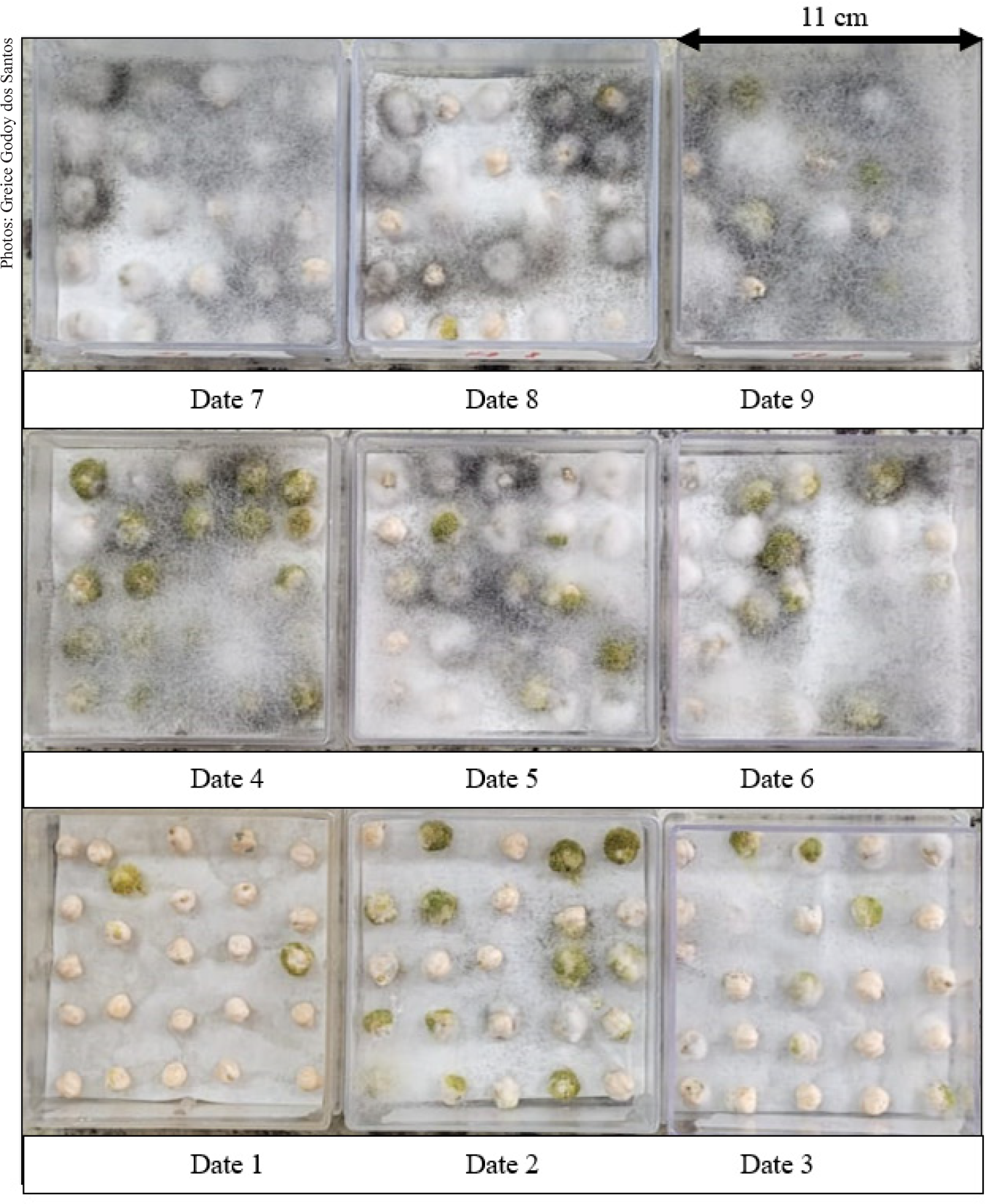
Given the ability of Rhizopus to quickly coat seeds with its mycelium (Figure 2), Goulart (2018) also reported that it can hide the presence of pathogens of greater economic importance. Therefore, its identification is important for disease control and to reduce grain storage losses.
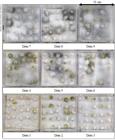
Blotter test performed on chickpea samples obtained from nine sowing dates between July 27, 2022, and October 13, 2022.
In addition, although the relative density of infestation of the samples was not evaluated, it was visible that the later the sowing, the more intense the infection in the seeds. Thus, it is understood that, for later sowing dates, both the vigor and the sanitary quality of the seeds declined (Table 2; Figure 2).
Although Muasya et al. (2008) did not address seed health, these authors found that the combination of intense heat and low rainfall contributes to the decrease in overall seed quality. This may explain the lower physiological and sanitary quality found associated with the later sowing dates in the present study (Figure 2).
In addition, the intensity of infestation of fungi such as Fusarium spp. is influenced by environmental conditions. According to Martín et al. (2022), prolonged periods of rainfall during the maturation phases are ideal for the proliferation of the pathogen. For Meronuck (1987), a relative humidity of 65 % or more favors the growth of pathogens of the Aspergillus genus. Likewise, Visagie et al. (2014) reported that both Aspergillus and Penicillium had their development accentuated under conditions of high relative humidity and moderate air temperatures.
These conditions were observed in the 30 days prior to harvest for the sowing dates 2 to 9. For these dates, the relative air humidity averaged from 64.12 to 67.13 %, and the rainfall from 45.8 to 59.0 mm (Figure 1).
This may have been a differential for the first sowing date to be superior to the others, not only for the physiological quality traits, but also as one of those with the lowest incidence of pathogens, since rainfall did not exceed 34 mm at the end of the cycle. Accordingly, Avelar et al. (2018a) reported that the delay in planting in the Minas Gerais state increased the risk of rainfall during the harvest period, which compromised seed quality.
CONCLUSIONS
-
1. Sowing performed between September and October resulted in lower physiological and sanitary quality of chickpea seeds, due to water stress associated with temperatures ≥ 30 ºC at the end of flowering and higher relative air humidity and rainfall close to harvest;
-
2. Sowing at the end of July enabled the production of seeds of the BRS Cristalino cultivar in Santa Maria, Rio Grande do Sul state, Brazil;
-
3. The incidence of Rhizopus spp. is associated with reduced seed vigor and viability, indicating a relationship between sanitary and physiological quality.
ACKNOWLEDGMENTS
To the Conselho Nacional de Desenvolvimento Científico e Tecnológico (CNPq; processes nº 304652/2017-2 and 304878/2022-7), Coordenação de Aperfeiçoamento de Pessoal de Nível Superior (Capes), and Fundação de Amparo à Pesquisa do Estado do Rio Grande do Sul (FAPERGS), for providing research grants; as well as the Embrapa Hortaliças and the researcher Warley Marcos Nascimento, for the assistance and provision of chickpea seeds.
Data Availability Statement:
Research data are only made available by authors upon request.
REFERENCES
- ALBRECHT, L. P.; BRACCINI, A. L.; SCAPIM, C. A.; AGUIAR, C. G.; ÁVILA, M. R.; STÜLP, M. S. Qualidade fisiológica e sanitária das sementes sob semeadura antecipada da soja. Scientia Agraria, v. 9, n. 4, p. 445-454, 2008.
- ALMEIDA NETA, M. N.; PEGORARO, R. F.; SAMPAIO, R. A.; COSTA, C. A.; FERNANDES, L. A.; FERREIRA, J. M. Does inoculation with Rhizobium tropici and nitrogen fertilization increase chickpea production? Ciência e Agrotecnologia, v. 44, e016520, 2020.
- ALVARES, C. A.; STAPE, J. L.; SENTELHAS, P. C.; GONÇALVES, J. L. M.; SPAROVEK, G. Köppen’s climate classification map for Brazil. Meteorologische Zeitschrift, v. 22, n. 6, p. 711-728, 2013.
- ARAUJO, A. V.; FERREIRA, I. C. P. V.; BRANDÃO JÚNIOR, D. S.; BRANDÃO, A. A.; ALMEIDA, M. N. F.; SALES, N. L. P.; AQUINO, C. F.; COSTA, C. A. Qualidade das sementes de diferentes genótipos de grão-de-bico produzidas no norte de Minas Gerais. Ciência Rural, v. 40, n. 5, p. 1031-1036, 2010.
- AVELAR, R. I. S.; COSTA, C. A.; BRANDÃO JÚNIOR, D. S.; PARAÍSO, H. A.; NASCIMENTO, W. M. Production and quality of chickpea seeds in different sowing and harvest periods. Journal of Seed Science, v. 40, n. 2, p. 146-155, 2018a.
- AVELAR, R. I. S.; COSTA, C. A.; ROCHA, F. S.; OLIVEIRA, N. L. C.; NASCIMENTO, W. M. Yield of chickpeas sown at different times. Revista Caatinga, v. 31, n. 4, p. 900-906, 2018b.
- BAZZO, J. H. B.; ARRUDA, K. M. A.; FONSECA, I. C. B.; ZUCARELI, C. Sowing dates and densities on physiological potential of seeds of white oat cultivars. Journal of Seed Science, v. 42, e202042023, 2020.
- BORNHOFEN, E.; BENIN, G.; GALVAN, D.; FLORES, M. F. Épocas de semeadura e desempenho qualitativo de sementes de soja. Pesquisa Agropecuária Tropical, v. 45, n. 1, p. 46-55, 2015.
- BRASIL. Instituto Nacional de Meteorologia. Banco de dados meteorológicos para ensino e pesquisa (BDMEP): tabela de dados da estação A803 de Santa Maria, Rio Grande do Sul. Brasília, DF: INMET, 2025.
- BRASIL. Ministério da Agricultura, Pecuária e Abastecimento. Grão-de-bico: BRS Cristalino. Brasília, DF: Embrapa Hortaliças, 2015.
- BRASIL. Ministério da Agricultura, Pecuária e Abastecimento. Manual de análise sanitária de sementes Brasília, DF: MAPA/ACS, 2009.
- BRASIL. Ministério da Agricultura, Pecuária e Abastecimento. Regras para análise de sementes Brasília, DF: Secretaria de Defesa Agropecuária, 2025.
- CARVALHO, N. M.; NAKAGAWA, J. Sementes: ciência, tecnologia e produção. 5. ed. Jaboticabal: Funep, 2012.
- CARVALHO, S. I. C.; BIANCHETTI, L. B.; SILVA, P. P.; NASCIMENTO, W. M. Fenologia do grão-de-bico tipo Kabuli Brasília, DF: Embrapa, 2021.
- CASTILHO, I. M.; CATÃO, H. C. R. M.; CAIXETA, F.; MARINKE, L. S.; MARTINS, G. Z.; MENEZES, J. B. C. Teste de condutividade elétrica na avaliação do potencial fisiológico de sementes de grão-de-bico. Revista de Ciências Agrárias, v. 42, n. 3, p. 101-110, 2019.
- COIMBRA, R. A.; NAKAGAWA, J. Época de semeadura, produção e qualidade fisiológica de sementes de milheto. Revista Brasileira de Sementes, v. 28, n. 2, p. 53-59, 2006.
- COLET, F.; LINDSEY, A. J.; LINDSEY, L. E. Soybean planting date and seeding rate effect on germinability and vigor of harvested seed. Crop Science, v. 64, n. 2, p. 903-913, 2023.
- DANCEY, C.; REIDY, J. Estatística sem matemática para psicologia: usando SPSS para Windows. 3. ed. Porto Alegre: Artmed, 2006.
- FOOD AND AGRICULTURE ORGANIZATION OF THE UNITED NATIONS (FAO). Crops and livestock products Rome: FAO, 2022.
- FRANCISCO, F. G.; USBERTI, R. Seed health of common bean stored at constant moisture and temperature. Scientia Agricola, v. 65, n. 6, p. 613-619, 2008.
- GETANEH, G.; TEFERA, T.; LEMMESSA, F.; AHMED, S.; ZEWUDIE, A. Seed quality and mycoflora associated with chickpea (Cicer arietinum L.) seed in Ethiopia. African Journal of Food, Agriculture, Nutrition and Development, v. 20, n. 6, p. 16761-16778, 2020.
- GOU, X.; REICH, P. B.; QIU, L.; SHAO, M.; WEI, G.; WANG, J.; WEI, X. Leguminous plants significantly increase soil nitrogen cycling across global climates and ecosystem types. Global Change Biology, v. 29, n. 14, p. 4028-4043, 2023.
- GOULART, A. C. P. Fungos em sementes de soja: detecção, importância e controle. 2. ed. Dourados: Embrapa Agropecuária Oeste, 2018.
- HENNING, A. A. Guia prático para identificação de fungos mais frequentes em sementes de soja Brasília, DF: Embrapa, 2015.
- HOSKEM, B. C. S.; COSTA, C. A.; NASCIMENTO, W. M.; SANTOS, L. D. T.; MENDES, R. B.; MENEZES, J. B. C. Productivity and quality of chickpea seeds in northern Minas Gerais, Brazil. Revista Brasileira de Ciências Agrárias, v. 12, n. 1, p. 261-268, 2017.
- INTIKHAB, A. Aquafaba: nutritional significance for vegans: a way towards environmental sustainability. Life and Science, v. 4, n. 1, p. 75-81, 2023.
- JUKANTI, A. K.; GAUR, P. M.; GOWDA, C. L. L.; CHIBBAR, R. N. Nutritional quality and health benefits of chickpea (Cicer arietinum L.): a review. British Journal of Nutrition, v. 108, n. s1, p. s11-s26, 2012.
- LIMA, M. L. P.; SANTOS, C. E.; BIAZOTTO, F. O.; PEIXOTO, M. J.; KRAEMER, A. P. N.; WANGEN, D. R. B. Tratamento químico de sementes de grão-de-bico e impacto fisiológico e sanitário. Agropecuária Técnica, v. 42, n. 1-4, p. 16-23, 2021.
- MARCOS FILHO, J. Fisiologia de sementes de plantas cultivadas 2. ed. Londrina: Abrates, 2015.
- MARTÍN, I.; GÁLVEZ, L.; GUASCH, L.; PALMERO, D. Fungal pathogens and seed storage in the dry state. Plants, v. 11, e3167, 2022.
- MERGA, B.; HAJI, J. Economic importance of chickpea: production, value, and world trade. Cogent Food & Agriculture, v. 5, e1615718, 2019.
- MERONUCK, R. A. The significance of fungi in cereal grain. Plant Disease, v. 71, n. 3, p. 287-292, 1987.
- MUASYA, R. M.; LOMMEN, W. J. M.; MUUI, C. W.; STRUIK, P. C. How weather during development of common bean (Phaseolus vulgaris L.) affects the crop’s maximum attainable seed quality. NJAS - Wageningen Journal of Life Sciences, v. 56, n. 2, p. 85-100, 2008.
- NAKAGAWA, J. Testes de vigor baseados no desempenho das plântulas. In: KRZYZANOWSKI, F. C.; VIEIRA, R. D.; FRANÇA-NETO, J. B. (ed.). Vigor de sementes: conceitos e testes. Londrina: Abrates, 2020. p. 79-140.
- NASCIMENTO, W. M.; SILVA, P. P.; ARTIAGA, O. P., SUINAGA, F. A. Grão-de-bico. In: NASCIMENTO, W. M. (ed.). Hortaliças leguminosas Brasília, DF: Embrapa Informação Tecnológica, 2016. p. 89-118.
- NISHAD, R. N.; SINGH, R. B.; KUMAR, S.; SINGH, P. Study the seed health status of farmers’ saved chickpea seed of eastern Uttar Pradesh in relation to bruchid, C. chinensis. Journal of Entomology and Zoology Studies, v. 8, n. 4, p. 356-358, 2020.
- PANDEY, R.; GOHEL, N.; JAISANI, R. Management of wilt and root rot of chickpea caused by Fusarium oxysporum f. sp. ciceri and Macrophomina phaseolina through seed biopriming and soil application of bio-agents. International Journal of Current Microbiology and Applied Sciences, v. 6, n. 5, p. 2516-2522, 2017.
- PARAÍSO, H. A.; BRANDÃO JÚNIOR, D. S.; AVELAR, R. I. S.; COSTA, C. A.; GOMES, L. S. P.; NASCIMENTO, W. M. Adjustments in the tetrazolium test methodology for assessing the physiological quality of chickpea seeds. Journal of Seed Science, v. 41, n. 1, p. 7-12, 2019.
- QUEIROGA, V. P.; GIRÃO, E. G.; ALBUQUERQUE, E. M. B. Grão de bico (Cicer arietinum L.): tecnologias de plantio e utilização. Campina Grande: Arepb, 2021.
- REYES, C. P.; QUEIROZ, P. R. M.; SPECHT, A.; MONNERAT, R. Identification of Heliothinae species (Lepidoptera: Noctuidae) in chickpeas in central Brazil. Horticultura Brasileira, v. 41, e2534, 2023.
- SANTOS, S. G. F.; ARAUJO, E. F.; ARAUJO, R. F.; KOHL, S.; COELHO, A. P. F.; NASCIMENTO, W. M. Processing on the physical and physiological quality of chickpea (Cicer arietinum L.) seeds. Journal of Seed Science, v. 45, e202345025, 2023.
- SILVA, A. M.; FIGUEIREDO, J. C.; TUNES, L. V. M.; GADOTTI, G. I.; RODRIGUES, D. B.; CAPILHEIRA, A. F. Chickpea seed storage in different packagings, environments and periods. Revista Brasileira de Engenharia Agrícola e Ambiental, v. 26, n. 9, p. 649-654, 2022.
- SWAMY, K. R. M. Origin, domestication, taxonomy, botanical description, genetics and cytogenetics, genetic diversity and breeding of chickpea (Cicer arietinum L.). International Journal of Development Research, v. 13, n. 6, p. 63107-63127, 2023.
- UNITED STATES DEPARTMENT OF AGRICULTURE (USDA). Soil Survey Staff. Keys to soil taxonomy. 13. ed. Washington, DC: USDA, 2022.
- VIGANÓ, J.; BRACCINI, A. L.; SCAPIM, C. A.; FRANCO, F. A.; SCHUSTER, I.; MOTERLE, L. M.; TEXEIRA, L. R. Qualidade fisiológica de sementes de trigo em resposta aos efeitos de anos e épocas de semeadura. Revista Brasileira de Sementes, v. 32, n. 3, p. 86-96, 2010.
- VILAKAZI, B. S.; OGOLA, J. B. O.; ODINDO, A. O.; NCAMA, K. Water stress affected seed accumulation of non-reducing soluble sugars and germination performance of three chickpea cultivars. Legume Research, v. 46, n. 7, p. 849-854, 2023.
- VISAGIE, C. M.; HOUBRAKEN, J.; FRISVAD, J. C.; HONG, S.-B.; KLAASSEN, C. H. W.; PERRONE, G.; SEIFERT, K. A.; VARGA, J.; YAGUCHI, T.; SAMSON, R. A. Identification and nomenclature of the genus Penicillium. Studies in Mycology, v. 78, n. 1, p. 343-371, 2014.
-
Editor:
Luis Carlos Cunha Junior

 Photos: Greice Godoy dos Santos