
 Interventional Psychoanalytic Psychodiagnosis: Building a Device for a Borderline Clinical Practice
This study describes the theoretical-technical foundation that supported the creation of a device using interventional psychoanalytic psychodiagnosis with projective methods from the Paris School (the Rorschach and thematic apperception tests). The device constitutes a multifocal apparatus integrating psychoanalysis and psychological assessment. It was developed in partnership with a school psychology service and a university hospital to assist adolescents and young adults with borderline functioning. The initiative arises from the need to offer a greater network of psychic protection to severe cases. Used as a symbolizing device, it plays a clinical, mediating, diagnostic, and interventional role for young people with extreme psychic distress. The synthesis of projective findings enables a confrontation with clinical hypotheses raised in therapeutic consultations, generating precise comparisons about defensive dynamics and symptomatic manifestation. It stresses that this procedure favors work on trauma, promoting the construction of demands for individual psychological care, facilitating multiple transfers in the multifocal device. Interventional psychoanalytic psychodiagnosis (Paris School) performs the interlocution between psychoanalysis and psychological assessment, aiming not only for differential diagnosis but a path of clinical treatment. Quality control of the investigation-intervention must be carried out for a good execution of the intervention-assessment.
Keywords:
Rorschach Test; Thematic Apperception Test; Borderline Personality; Psychological Practice; Interventional Psychodiagnosis
 Thumbnail
 Thumbnail
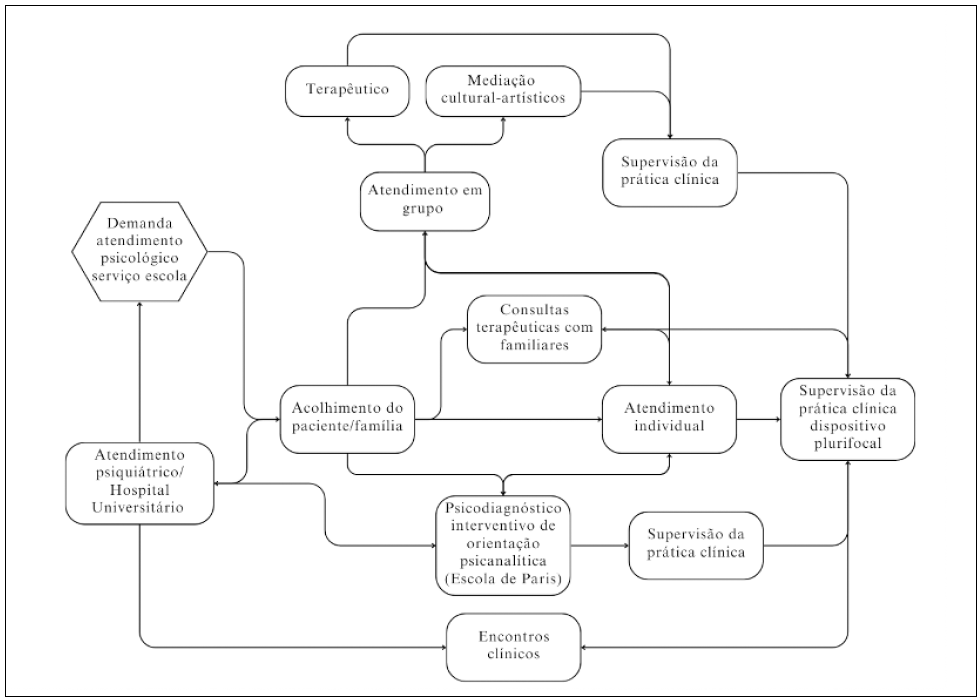 Modificado de
 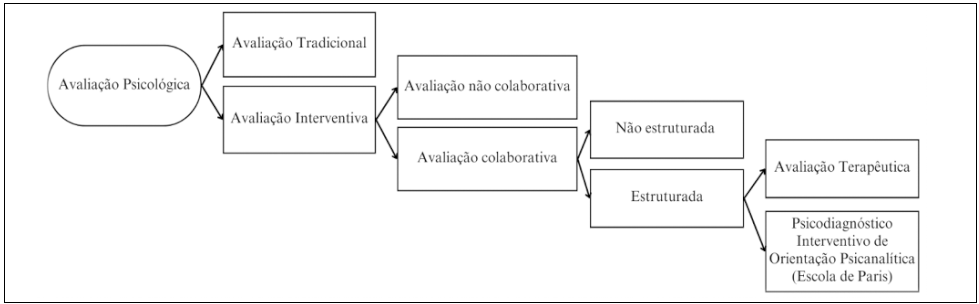 Organograma modificado de