
 An examination of the (dis)articulation of the child and adolescent psychosocial care network in pandemic times
Abstract
Despite the advances in child and Youth mental health care, various weaknesses deserve to be glimpsed. The social isolation to contain the advances of COVID-19 brought aggravating factors to this care. This study aimed to identify and analyze network-based mental health care for children and adolescents during the COVID-19 pandemic from the perspective of professionals working in a Child and Adolescent psychosocial care center. This qualitative research was based on the Complex Paradigm. Data was collected through minimal maps of the institutional social network, focus groups and semi-structured interviews with eleven professionals from a city in São Paulo in 2021. Reflective thematic analysis was used for thematic analysis. Two categories emerged: “Impacted well”: contextualizing child and adolescent mental health care in pandemic times; “Everything is health, everything is CAPS”: looking at the psychosocial care network for children and adolescents in pandemic times. Despite the negative impacts of the pandemic on the mental health of children, adolescents and their families, the construction of care was fragmented, with a medium, low-density, geographically dispersed and heterogeneous network. This neglected care during the Brazilian pandemic needs to be reconsidered and reorganized to promote psychosocial construction.
Keywords:
Mental Health Services; Adolescent; Child; COVID-19; Health Personnel
Resumo
Apesar dos diversos avanços no cuidado à saúde mental infantojuvenil, há fragilidades que merecem ser vislumbradas. O isolamento social, para conter o avanço da Covid-19, trouxe agravantes a este cuidado. Este estudo objetivou identificar e analisar o cuidado em rede à saúde mental infantojuvenil durante a pandemia de Covid-19, na perspectiva de profissionais de um Centro de Atenção Psicossocial Infantojuvenil. Pesquisa de abordagem qualitativa, apoiada no Paradigma Complexo. A coleta de dados foi realizada por meio de mapas mínimos da rede social institucional, grupos focais e entrevistas semiestruturadas, com 12 profissionais de um município de São Paulo, entre abril e junho de 2021. Para a análise dos dados, utilizou-se a análise temática reflexiva. Emergiram duas categorias: “Impactou bem”: contextualizando o cuidado em saúde mental infantojuvenil em tempos pandêmicos; “Tudo é saúde, tudo é CAPS”: olhando para a rede de atenção psicossocial infantojuvenil em tempos pandêmicos. A despeito dos impactos negativos intensos da pandemia referentes à saúde mental de crianças, adolescentes e suas famílias, a construção de cuidado apareceu fragmentada, com uma rede mediana, pouco densa, dispersa geograficamente e heterogênea. Esse cuidado negligenciado, em tempos pandêmicos brasileiros, necessita ser revisitado e reorganizado no sentido da construção psicossocial.
Palavras-chave:
Serviços de Saúde Mental; Adolescente; Criança; Covid-19; Pessoal de Saúde
Introduction
According to statistical data, children and adolescents comprise approximately 57.6 million of the Brazilian population and are full subjects of rights and comprehensive protection. According to the United Nations Children's Fund (UNICEF), this population must have its unique psychosocial needs met, respecting its developmental process (UNICEF, 2020). This task poses a significant challenge, as childhood and adolescence are relatively recent social constructs and have historically been neglected in health programs and policies, particularly those related to mental health (Couto; Delgado, 2015).
At the beginning of the 21st century, Brazil belatedly began to incorporate mental health policies for children and adolescents through the establishment of Child and Adolescent Psychosocial Care Centers (CAPSij). These centers were designed to develop intersectoral coordination strategies (Couto; Delgado, 2015; Rossi et al., 2019). Such services are responsible for addressing the demands of children and adolescents with severe mental disorders, coordinating a psychosocial care network aimed at this population (Couto; Delgado, 2015).
As a central concept in this study, it is important to highlight the structure of the Psychosocial Care Network (RAPS), which seeks to integrate health care strategies in a comprehensive and continuous manner. Its objective is to establish horizontal connections both among individuals and between services. RAPS has represented a significant advancement in mental health care in Brazil, as it has increased accessibility to mental health services and guided user- and community-centered assistance through Primary Health Care (PHC) (Lima; Guimarães, 2019). Additionally, RAPS directs care toward life territories through intersectoral actions (Taño; Matsukura, 2019).
The CAPSij are horizontally integrated into the RAPS, functioning as an expanded clinical service where care is provided through interdisciplinary and intersectoral approaches. This perspective allows for a broader understanding of the social environment in which the child or adolescent is embedded. It also facilitates the engagement of mental health professionals with other services and stakeholders, using the network and the territory itself as dimensions of action (Taño; Matsukura, 2019; Couto; Delgado, 2015).
Despite various advances, however, certain fragilities still require attention. The lack of coordination among mental health services can create challenges in implementing effective care strategies, as it weakens the connections among professionals, patients, and different sectors. These weaknesses are even more pronounced in child and adolescent mental health, as evidenced by the limited literature on this topic in Brazil (Lima; Guimarães, 2019). Studies indicate difficulties in implementing the RAPS at the municipal level, with CAPS centers often operating in isolation, struggling to develop therapeutic projects, intersectoral actions, and matrix-based support that are both effective and sustainable (Couto; Delgado, 2015; Lima; Guimarães, 2019; Delfini et al., 2017).
Beyond these challenges, a new aggravating factor in promoting and maintaining child and adolescent mental health was social isolation - an urgent and necessary measure to curb the spread of the COVID-19 pandemic (Marques et al., 2020). One of the most evident consequences of this measure for children and adolescents was school closures (Marques et al., 2020). The literature overwhelmingly concludes that this process significantly exacerbated psychological distress among children and adolescents, intensifying, in some cases, environments that were already unfavorable to well-being (Lee et al., 2022; Shankar et al., 2022).
Despite this consensus, there is a need to recognize and legitimize discussions regarding the organization of child and adolescent mental health care networks during the pandemic. However, this aspect remains underexplored in the literature, particularly in Brazil. The way in which these networks were-or were not-structured has had ongoing consequences, especially in the current period of service and sector reorganization. Therefore, it is essential to critically analyze and enhance these networks to ensure adequate social support for this population (Geweniger et al., 2022). Furthermore, it is crucial to address the foreseeable consequences of pandemic-induced social isolation, particularly for children and adolescents, given their specific vulnerabilities (Raballo et al., 2021). In this regard, it is necessary to examine the pandemic experience and use the lessons learned to rebuild viable services and practices, emphasizing a psychosocial approach (Kola et al., 2021).
Network-based coordination enables comprehensive mental health care for children and adolescents, with CAPSij serving as the coordinating entity within the RAPS. Based on this premise, the present study focuses on network-based mental health care for children and adolescents during the pandemic. The theoretical framework adopted is the Complex Paradigm. Derived from the Latin complexus, meaning "woven together" or "intertwined," this paradigm seeks to understand the meaning of complex phenomena, which are characterized by instability, nonlinearity, and the impossibility of being described in a finite number of steps or within a fixed timeframe.
The various elements of this phenomenon remain in constant interaction, potentially giving rise to unknown properties. These elements often appear contradictory, as they coexist within the phenomenon itself, thereby shaping what is known as the principle of dialogics. By articulating the multiple dimensions that constitute the studied phenomenon, this approach enhances the level of understanding and knowledge, making it possible to grasp its complexity (Morin, 2007).
The concept of networks dialogues with complexity, as it involves the sharing of objectives, autonomy, interdependence, and cooperation between services and individuals. It also aligns with the principle of intersectorality, which aims to promote integration within a heterogeneous, multifaceted, and diverse field of knowledge (Lima; Guimarães, 2019; Taño; Matsukura, 2019; Morin, 2007). Accordingly, the objective of this study was to identify and analyze network-based mental health care for children and adolescents during the COVID-19 pandemic from the perspective of professionals working in a CAPSij.
Methodology
To conduct the present study, a Qualitative Research Approach was employed, specifically a strategic social research method (Minayo, 2014), grounded in the Complex Paradigm (Morin, 2007). The study setting was a CAPSij located in a medium-sized municipality in the central region of the state of São Paulo, Brazil. This care center comprised 11 professionals and four interns in the fields of Psychology, Occupational Therapy, and Nursing in 2019, serving a total of 549 children, adolescents, and their families.
The study participants were professionals from the CAPSij, selected based on the following inclusion criteria: (i) professionals in their final year of training or graduated who provided direct care to children and adolescents; (ii) professionals who had been working in care services for at least three months. Professionals who had been absent for more than 30 days during the pandemic period were excluded from the study.
To achieve the objectives related to analyzing mental health care for children and adolescents during the COVID-19 pandemic, the following data collection strategies were utilized: (i) development of minimum institutional social network maps; (ii) focus groups; and (iii) semi-structured interviews.
An online presentation of the study was conducted for the CAPSij professional team on March 5, 2021, during a team meeting via Google Meet. In total, ten professionals and two trainees expressed interest in participating in the study, providing their personal WhatsApp contact details to receive the Free and Informed Consent Form (TCLE) via Google Forms, along with a sociodemographic characterization questionnaire. All professionals participated in the development of maps and focus groups. However, the semi-structured interviews were conducted with only eight participants due to data saturation, as explained below. All data collection was conducted via Google Meet.
The construction of the minimum institutional social network map was carried out collectively and concurrently with the focus group sessions. The primary objective of the minimum network map is to identify the connections established between the assessed institution and those within its territorial scope, configuring its internal and external networks (Carlos et al., 2016). Initially, the map was drawn to outline the CAPSij's connections with other entities in the fields of education, culture, leisure/sports, health, protective agencies, families/caregivers, socio-educational service centers, non-governmental organizations (NGOs), the legal system, and social assistance. The quality of these connections was indicated by lines referring to significant, weakened, severed, and/or non-existent links. Additionally, the geographical distance between institutions was classified into three quadrants: near, distant, or very distant.
Focus groups, considered a crucial strategy for research aimed at understanding collective experiences (Kinalski et al., 2017), utilized the network map as a starting point for discussions. The guiding question was: How do you perceive the network built through CAPSij for child and adolescent mental health care?
Finally, semi-structured interviews were conducted individually and guided by a structured script (Minayo, 2014), addressing the following open-ended and guiding questions: Do you believe the pandemic has impacted the mental health of children and adolescents? How has the CAPSij work process been during this pandemic period? How do you organize your work as a team? How have services been structured? What are the weaknesses and strengths of this pandemic period?
All data collection took place between April 13, 2021, and June 29, 2021, coinciding with the second wave of the COVID-19 pandemic, during which vaccination was available for healthcare professionals and the elderly. During this period, CAPSij services were limited to individual in-person care through home visits or virtual formats (individual or group sessions). Three sessions were conducted for the development of the maps and focus groups, each lasting approximately 60 minutes. Interviews had an average duration of 25 minutes. Data saturation was achieved based on the following criteria: in-depth exploration of issues related to the child and adolescent mental health care network, emergence of divergences and convergences in team interactions, and repetition and deepening of issues related to mental health care provided by the CAPSij team (Minayo, 2014).
Statements from the focus groups were identified with the abbreviation "GF." Regarding the interviews, participants were labeled with the letter "P" followed by the sequential number of their interview. The mapping process and focus groups were moderated by the last author of this study, while the first author served as the rapporteur. The interviews were conducted by the first author.
Participant characterization was performed using descriptive statistics. The evaluation of the network maps was based on the following criteria: size, density, distribution/composition, dispersion, and homogeneity or heterogeneity (Carlos et al., 2016). The dataset was analyzed by incorporating the previous map assessment within a reflexive thematic analysis (Braun; Clarke, 2019). The analysis followed these steps: familiarization with the data, coding, theme identification, theme review, theme definition and naming, and final writing. To ensure greater validity and reliability, the coding and theme construction were performed by two independent researchers and validated by the research group of the first author. The data were also validated by the study participants.1
This study was approved by the Research Ethics Committee in March 2021, under opinion number 4.568.606, registered under CAAE 42893721.80000.5504.
Results
The information about the participants is presented in Table 1. As previously mentioned, participants P9, P10, P11, and P12 did not take part in the interviews.
Two final themes emerged from the analysis and interpretation of the data, as presented below.
Theme 1 - Contextualizing Child and Adolescent Mental Health Care During the Pandemic
This theme discusses new elements that have impacted child and adolescent mental health care, which cannot be dissociated from the experiences imposed by the pandemic context. The professionals highlighted the pandemic’s effects on the mental health of children and adolescents, particularly due to the loss of socialization resulting from school closures and physical distancing-both essential aspects of their developmental process, especially for adolescents:
Both children and adolescents have exhibited symptoms related to the pandemic, such as distress, crying, and chest pain that arises unexpectedly. They understand the issues surrounding the pandemic, but they do not fully perceive the connections between them (P2).
We were not prepared to be alone. Even though adolescents may enjoy solitude, they are not truly prepared for it, are they? So, I think this affected everyone-adults as well-but especially children, who need socialization. A child needs to be with their peers for their own development [...] it had a significant impact (P8).
One professional noted that this process may have brought children and adolescents closer to their families, which could be seen as a positive aspect. In this regard, they highlighted that family bonds may have strengthened during the pandemic, along with an increased sense of shared responsibility for care:
Even from a distance, care is still happening, and families have noticed this, right? [...] At the same time, having parents and family members at home for longer periods, at least at the beginning... (P6).
According to the professionals, due to the pandemic and its constraints, children and adolescents experienced heightened psychological distress:
But for those who already had, for example, ASD (Autism Spectrum Disorder), who require routine and organization, the impact was particularly strong on families, completely disrupting their structure. Mothers often reported increased agitation, compulsive eating, and issues with organizational structure because their children were used to attending certain activities, and suddenly, they were no longer able to (P7).
For adolescents, they have their groups or 'gangs,' and taking that away-removing their ability to be together-generated a lot of anxiety. As a result, we saw some exhibiting depressive behaviors, others experiencing suicidal ideation, and in some cases, actual suicide attempts. This was a very noticeable trend among adolescents (GF).
Faced with this scenario, in order to maintain mental health care for children and adolescents during the pandemic, professionals implemented various adaptations, such as the use of digital social networks, phone consultations, and video calls:
Most children and adolescents participate in consultations, whether through Google Meet, phone calls, or in-person visits. However, we do not have enough electronic devices available in the service, but overall, it has worked quite well (P5).
As noted in the previous statement, there was no ongoing guidance for the team, nor was there provision of electronic devices to facilitate technological resources. While remote interaction was, at times, the only available means of contact with users, participants mentioned several challenges related to its implementation, including a lack of private spaces, financial difficulties, and limited internet access, which hindered the provision of care:
The problem with the remote format is that, often, users lack privacy. We were speaking with an adolescent, and she suddenly started speaking more softly. So, I asked, 'Are you okay? Are you comfortable talking?' and she replied, 'I’d rather go to the CAPSij to talk.' So, there is also the issue that the online format-like what we are doing now-poses challenges. Trying to organize a workshop via Meet or online is quite difficult for me; I don’t find it easy. But that’s my own limitation... (P4).
Theme 2 - A Focus on the Child and Adolescent Psychosocial Care Network During the Pandemic
The minimum institutional social network map, as shown in Figure 1, revealed a large yet low-density network structured by CAPSij for child and adolescent care, as most connections were found to be weakened. It is a heterogeneous network; however, some sectors - such as culture and leisure, which are recognized as essential for the mental health of children and adolescents -were found to be absent from the network. These areas were particularly affected by the pandemic:
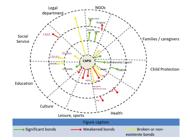
The majority of services were geographically distant from the CAPSij; however, according to the participants, this factor alone did not significantly impact the care provided. Some sectors, such as the legal and social protection areas, exhibited weakened ties with CAPSij, particularly due to limited dialogue concerning case discussions and shared responsibilities or decision-making. Professionals also emphasized that many relationships remained informal and heavily dependent on individuals or specific territories, particularly in interactions with the Child Protection Council.
Connections within the healthcare sector were identified as fragile or nonexistent, primarily due to a lack of coordination and communication, as reflected in the referral and counter-referral processes:
This counter-referral, this communication, this coordination of the case-it does not happen, so I see this as a weakened link because of that (GF).
Schools represent a key sector in shaping child and adolescent mental healthcare; however, even before the pandemic, their connection with CAPSij was already fragile. During this period, schools became even more distant, leading to the suspension of joint evaluation and monitoring processes for children and adolescents:
Some schools still refer cases and even during the pandemic manage to provide us with reports, but others claim that, due to the pandemic, they have been unable to assess children since last year" (GF).
Links with basic social protection services, such as the Centers for Social Assistance (CRAS), were also described as fragile. While there was some level of communication, it did not function as an integrated network characterized by partnerships and joint actions:
For them, everything falls under healthcare, everything is CAPS. So, there is always this expectation that we should handle situations that, in our view, would be their responsibility. There is a great deal of communication, but it is one-sided-they expect us to do everything, and I believe this makes the relationship fragile (GF).
Professionals highlighted institutional isolation in this process, whether due to a lack of support from municipal health management or the absence of relationships with other services in the network. The use of digital tools such as Google Meet, Google Drive, and Google Calendar was not only essential for conducting remote consultations but also for organizing the CAPSij team and intersectoral network. This increased digital engagement was perceived positively, with participants expressing an intention to maintain these tools beyond the pandemic.
Finally, participants underscored the impact of this lack of network coordination, which was particularly evident during the pandemic, as a significant factor influencing the (non)construction of child and adolescent mental healthcare:
Our team had to manage all of this because our group activities were canceled. We are a mental healthcare and psychosocial support center for the entire municipality. In this regard, the lack of school support, network cooperation, and financial difficulties-another major issue-also worsened the cases (GF).
Discussion
The pandemic context introduced new elements that needed to be simultaneously considered and integrated into the construction of child and adolescent mental healthcare. Both national and international literature corroborate the findings of this study regarding the negative consequences of isolation for children and adolescents due to the lack of socialization resulting from physical distancing during the pandemic. Concerns were reported regarding emotional, behavioral, and attentional aspects during periods of severe movement restrictions and school closures (Shum et al., 2021; Vásquez et al., 2022).
One study found that the primary emotions experienced by children during the pandemic included fear, sadness, insecurity, anger, and boredom. It is important to highlight that adult emotions directly influence children's mental health (Silva et al., 2021). Another study emphasized that the situation imposed by the pandemic triggered significant stress among families who were confined, socially isolated, unable to use prior family coping mechanisms, and unable to receive in-person support (Imram et al., 2020). Moreover, in South Global countries such as Brazil, economic concerns further exacerbated these challenges.
Children, who are highly sensitive to the mental state of their parents or caregivers-typically their primary source of security and emotional well-being-were particularly affected. Children and adolescents with special healthcare needs, particularly environmental needs such as neurocognitive disorders or ASD, were especially vulnerable to the psychological impacts of disasters such as COVID-19. Those already experiencing psychological distress required special attention, as exposure to news about deaths, illnesses, and preventive measures could be traumatic. The continuity and monitoring of child and adolescent mental health must be considered an essential component of any universal and community-based response to the pandemic (Oliveira et al., 2020). However, as observed in this study, these priorities were not effectively addressed.
The findings of this study indicate that adolescence is a developmental stage characterized by increasing socialization, wherein adolescents distance themselves from family members and engage more with peers. However, the social isolation enforced during the pandemic disrupted this socialization, creating a paradoxical experience for young people. A theoretical study, based on a Winnicottian perspective, examined the implications of COVID-19 for adolescent mental health and described paradoxical experiences within this population during the epidemic (Costa et al., 2021). The need for separation from parents/caregivers and for collective socialization conflicted with the necessity of confinement and social isolation. The study suggested that adolescents were unable to undergo normal developmental processes, making them highly vulnerable to mental distress, which may result in a generation of adults with increased psychological disorders (Costa et al., 2021; Jones et al., 2021).
The family, as the primary and immediate developmental environment for children and adolescents-and, therefore, also a key focus of CAPSij-emerged as a central health-promoting agent during the pandemic. This role was reinforced by the increased time spent together and the consequent co-responsibility, which became significantly linked to mental health services. At the same time, as highlighted in the literature, the family is also a dynamic and evolving entity. Increased time spent together can lead to greater interpersonal tensions, which, combined with work overload, pandemic-related stress, and social restrictions, contributed to a rise in domestic violence (Marques et al., 2020).
Although the negative impacts of the pandemic on family relationships for children and adolescents are well documented, a more recent review supports the findings of this study. It suggests that one potential benefit of the pandemic was increased family interaction, bringing children, adolescents, and families closer together (Trejo et al., 2020). A quantitative study analyzing adolescents and their caregivers emphasized the need to foster positive relationships within the family as a protective factor against adversity. Thus, considering the experiences and emotions within the family system during the pandemic is crucial for understanding the emotional well-being of children and adolescents (Feijt et al., 2020).
In response to the pandemic, child and adolescent mental health services had to be adapted. One major challenge was the difficulty of conducting remote consultations due to the lack of appropriate spaces or resources, which affected the quality of care. A qualitative study conducted in the Netherlands with mental health professionals highlighted difficulties in establishing relationships with clients, as not all mental health issues are suitable for online interactions (Cruz et al., 2020). Additionally, participants in our study reported technological barriers, including the lack of necessary devices, difficulties in managing digital tools, and inadequate internet quality.
The Dutch study also found that some professionals struggled to convey messages effectively due to the absence of non-verbal cues typically used in face-to-face communication, such as hand gestures. On the other hand, in many cases, professionals viewed remote treatment positively, citing increased flexibility due to the elimination of travel time and more efficient scheduling of support sessions. Furthermore, some patients exhibited reduced inhibition in front of the camera, and therapists gained insight into clients’ home environments, which could enhance the therapeutic relationship and improve treatment adherence (Cruz et al., 2020).
The literature has demonstrated that the creation of online mutual support groups via digital platforms can yield positive outcomes for mental healthcare during periods of social distancing (Eapen et al., 2021). Despite the potential benefits of remote care, in a country like Brazil-where a significant portion of the population lacks internet access-interventions cannot rely exclusively on digital solutions. A study conducted in San Francisco, United States, highlighted concerns among primary care pediatricians regarding the rapid transition to telehealth, noting that this shift negatively impacted mental healthcare by limiting the availability and effectiveness of many resources (Lee et al., 2022).
An Australian study emphasized the importance of considering privacy and security concerns for children, adolescents, and their families in remote care. It also advocated for a flexible approach that respects the needs and assessments of both professionals and users (Hoagwood et al., 2021). Beyond accessibility issues, it is crucial to recognize that many users of Brazilian RAPS have fragile family ties and live in unsafe environments, making participation in remote interventions and exclusive home confinement challenging (Eapen et al., 2021). Telephone consultations may provide an alternative for access-related challenges, but in-person services remain essential.
The present study outlined a mental healthcare network that was already fragile and lacking structural support prior to the pandemic. In addition to school closures, which significantly impacted children and adolescents, changes in healthcare, social assistance, cultural, sports, and recreational services further affected this population, as corroborated by the literature (Hoagwood et al., 2021). More than simply increasing social isolation, these changes led to the institutional isolation of certain essential services, particularly in healthcare. According to the data in our study, CAPSij experienced this isolation firsthand and was deprioritized by policymakers in favor of COVID-19 care, despite the potential psychological consequences of the pandemic for children and adolescents.
This phenomenon was observed in other countries. A study in the Eastern Mediterranean estimated the impact of COVID-19 on mental health services through national strategic assessments. The study found that even before the pandemic, mental health services were scarce, and during the crisis, prevention and health promotion programs were among the most disrupted. While global advocacy efforts sought to integrate mental health into COVID-19 responses-resulting in better planning, intersectoral coordination, and innovative strategies to overcome care barriers (e.g., telehealth and crisis helplines)-a significant gap remained in financial and human resources for mental health integration (Elsawy et al., 2022). These findings parallel the Brazilian context, emphasizing the need to learn from past experiences to guide future investments and policy changes.
In crisis situations, mental health support and care must be prioritized in both healthcare and education sectors, with intersectoral coordination ensuring the effective implementation of interventions. Given service disruptions, reestablishing connections and assessing the long-term mental health impacts of COVID-19 are essential. Future research should evaluate the cost-effectiveness of online care platforms and the availability of technological solutions to overcome access barriers, particularly in diverse socio-cultural contexts like Brazil (Elsawy et al., 2022).
The need for integrated healthcare systems and expanded interprofessional mental health teams has been widely emphasized (Frawley et al., 2020). Studies examining the impact of the pandemic on mental health services in low- and middle-income countries reveal that these nations historically receive a disproportionately small share of mental health funding (Kola et al., 2021). In Brazil, chronic underfunding of the public health system (SUS) exacerbated the crisis, with emergency budget adjustments proving reactive and insufficient (Funcia et al., 2022).
Ultimately, the literature strongly advocates for a shift from fragmented, biomedical-centered practices toward community-oriented psychosocial approaches. Brazil, despite setbacks, possesses a non-asylum-based psychosocial care policy that must be preserved and strengthened (Kola et al., 2021).
A theoretical study highlighted the need for proactive organizational strategies in child and adolescent mental health services, particularly in the Global South, to address the anticipated psychological effects of prolonged social isolation. It emphasized the necessity of flexible responses to these psychosocial consequences, which are deeply embedded in complex social dynamics. The study recommended shifting the focus of interventions from symptom reduction to broader preventive strategies, enhancing accessibility and continuity of care in services, and strengthening family engagement. Furthermore, it underscored the importance of considering the developmental trajectory of children and adolescents in shaping care models, including a critical reassessment of diagnostic frameworks. Lastly, the study advocated for the implementation of digital tools to facilitate help-seeking behaviors among digitally native youth, recognizing the potential of technology in bridging gaps in mental health support (Raballo et al., 2021).
Conclusion
Beyond the severe negative impacts of the pandemic on the mental health of children, adolescents, and their families, the provision of care was fragmented, characterized by a weakly connected network with numerous fragile or broken links, geographic dispersion, and heterogeneity. The pandemic exacerbated the neglect of this segment of society, particularly in the fields of health and education.
This study highlights significant gaps that must be addressed to strengthen the care network both during and after the pandemic. Among these, the lack of material, financial, and theoretical-practical resources for the continuation of comprehensive care stands out, including the need for ongoing education in the use of digital technologies and participatory care strategies. As long as interventions remain primarily restricted to online modalities, deficiencies will persist, given that neither the services nor the users received adequate support to effectively implement such actions. Additionally, the growing distance and disconnection between the CAPSij and other services in the network likely created further challenges for all stakeholders involved.
The study underscores the necessity of revisiting and reorganizing child and adolescent mental health care, which was significantly neglected in Brazil during the pandemic, through a psychosocial framework. Efforts-including financial investment-must be made to enhance policies and programs in this area. It is essential to ensure access to supportive interventions, such as continuous follow-up for children and adolescents, with adequate tools and resources that enable care centered on the target population, their families, communities, and territories. Initiatives and collaborations involving the CAPSij should be encouraged, given its strategic role in guiding the entire network on mental health care, which ultimately influences psychosocial support across various services and sectors.
This study’s limitations stem from its specific context-focusing on a CAPSij in a municipality in the state of São Paulo. Further research should incorporate perspectives from other services within the RAPS, as well as from the service users themselves. Despite these limitations, this study provides an original perspective on a neglected phenomenon, addressing contemporary demands while employing a methodology consistent with a networked approach to care..
References
-
BRAUN, V.; CLARKE, V. Reflecting on reflexive thematic analysis. Qualitative Research in Sport, Exercise and Health, v. 11, p. 589-597, 2019. https://doi.org/10.1080/2159676X.2019.1628806
» https://doi.org/10.1080/2159676X.2019.1628806 -
CARLOS, D. M.; PÁDUA, E. M. M.; NAKANO, A. M. S.; FERRIANI, M. G. C. Minimum Map of Social Institutional Network: a multidimensional strategy for research in Nursing. Revista da Escola de Enfermagem da USP, v. 50, n. especial, p. 101-106, 2016. https://doi.org/10.1590/S0080- 623420160000300015
» https://doi.org/10.1590/S0080- 623420160000300015 -
COUTO, M. C. V.; DELGADO, P. G. G. Crianças e Adolescentes na agenda política da saúde mental brasileira: Inclusão tardia, desafios atuais. Psicologia Clínica, v. 27, p. 17-40, 2015. https://doi.org/10.1590/0103-56652015000100002
» https://doi.org/10.1590/0103-56652015000100002 -
COSTA, L. C. R.; GONÇALVES, M.; SABINO, F. H. O.; OLIVEIRA, W. A. D.; CARLOS, D. M. Adolescer em meio à pandemia de Covid-19: um olhar da teoria do amadurecimento de Winnicott. Interface: Comunicação, Saúde e Educação (Botucatu), v. 25, p. e200801, 2021. https://doi.org/10.1590/Interface.200801
» https://doi.org/10.1590/Interface.200801 -
CRUZ, N. M. L. V.; SOUZA, E. B.; SAMPAIO, C. S. F.; SANTOS, A. J. M.; CHAVES, S. V.; HORA, R. N.; SANTOS, J. E. Apoio psicossocial em tempos de COVID-19: experiências de novas estratégias de gestão e ajuda mútua no sul da Bahia, Brasil. APS em Revista, v. 2, n. 2, p. 97-105, 2020. https://doi.org/10.14295/aps.v2i2.94
» https://doi.org/10.14295/aps.v2i2.94 - SILVA, W. C.; SILVA, C. O.; MELO, K. C.; SOARES, A. N.; HERNANDES, L. F.; ARAÚJO, Z. A. M.; SOUSA, F. D. C. A. Explorando os impactos na saúde mental de crianças durante a pandemia de covid-19. International Journal of Development Research, v. 11, n. 4, p. 46248-46253, 2021.
-
DELFINI, P. S. S.; BASTOS, I. T.; REIS, A. O. A. Peregrinação familiar: a busca por cuidado em saúde mental infantil. Cadernos de Saúde Pública, v. 33, n. 12, 2017. https://doi.org/10.1590/0102-311X00145816
» https://doi.org/10.1590/0102-311X00145816 -
EAPEN, V.; DADICH, A.; BALACHANDRAN, S.; DANI, A.; HOWARI, R.; SEQUERIA, A. Z.; SINGER, J. D. E- mental health in child psychiatry during COVID-19: an initial attitudinal study. Australasian Psychiatry, v. 29, n. 5, p. 498-503, 2021. https://doi.org/10.1177/10398562211022748
» https://doi.org/10.1177/10398562211022748 -
ELSAWY, W.; FOUAD, H.; SAEED, K. Impact of COVID-19 on mental health and psychosocial support services in the Eastern Mediterranean Region - results of a rapid assessment. Eastern Mediterranean Health Journal, v. 28, n. 5, p. 321-328, 2022. https://doi.org/10.26719/emhj.22.018
» https://doi.org/10.26719/emhj.22.018 -
FEIJT, M.; KORT, Y.; BONGERS, I.; BIERBOOMS, J.; WESTERINK, J.; IJSSELSTEIJN, W. Mental health care goes online: Practitioners' experiences of providing mental health care during the COVID-19 pandemic. Cyberpsychology, Behavior, and Social Networking, v. 23, n. 12, p. 860-864, 2020. https://doi.org/10.1089/cyber.2020.0370
» https://doi.org/10.1089/cyber.2020.0370 -
FUNDO DAS NAÇÕES UNIDAS PARA INFÂNCIA. Covid-19: Mais de 95% das crianças estão fora da escola na América Latina e Caribe, estima o UNICEF. 2020. Disponível em: <https://www.unicef.org/brazil/comunicados-de-imprensa/covid-19-mais-de-95-por- cento-das-criancas-fora-da-escola-na-america-latina-e-caribe> Acesso em: 13 de jul. 2020.
» https://www.unicef.org/brazil/comunicados-de-imprensa/covid-19-mais-de-95-por- cento-das-criancas-fora-da-escola-na-america-latina-e-caribe -
FUNCIA, F.; BRESCIANI, L. P.; BENEVIDES, R.; OCKE-REIS, O. C. Análise do financiamento federal do Sistema Único de Saúde para o enfrentamento da Covid-19. Saúde em Debate, v. 46, n. 133, 2022. https://doi.org/10.1590/0103-1104202213301
» https://doi.org/10.1590/0103-1104202213301 -
FRAWLEY, T.; VAN GELDEREN, F.; SOMANADHAN, S.; COVENEY, K.; PHELAN, A.; LYNAM-LOANE, P.; DE BRÚN, A. The impact of COVID-19 on health systems, mental health and the potential for nursing. Irish Journal of Psychological Medicine, v. 38, n. 3, p. 220-226, 2020. https://doi.org/10.1017/ipm.2020.105
» https://doi.org/10.1017/ipm.2020.105 -
GEWENIGER, A.; HADDAD, A.; BARTH, M.; HÖGL, H.; MUND, A.; INSAN, S.; LANGER, T. Mental health of children with and without special healthcare needs and of their caregivers during COVID-19: a cross-sectional study. BMJ Paediatric Open, v. 6, n. 1, p. e001509, 2022. https://doi.org/10.1136/bmjpo-2022-001509
» https://doi.org/10.1136/bmjpo-2022-001509 -
HOAGWOOD, K. E.; GARDNER, W.; KELLEHER, K. J. Promoting Children's Mental, Emotional, and Behavioral (MEB) Health in All Public Systems, Post-COVID-19. Administration and Policy in Mental Health and Mental Health Services Research, v. 48, n. 3, p. 379-387, 2021. https://doi.org/10.1007/s10488-021-01125-7
» https://doi.org/10.1007/s10488-021-01125-7 -
IMRAN, N.; ZESHAN, M.; PERVAIZ, Z. Mental health considerations for children & adolescents in COVID-19 Pandemic. Pakistan Journal of Medical Sciences, v. 36, n. COVID19-S4, p. S67, 2020. https://doi.org/10.12669/pjms.36.COVID19-S4.2759
» https://doi.org/10.12669/pjms.36.COVID19-S4.2759 -
JONES, E. A. K.; MITRA, A. K.; BHUIYAN, A. R. Impact of COVID-19 on Mental Health in Adolescents: A Systematic Review. International Journal of Environmental Research and Public Health, v. 18, n. 5, p. 2470, 2021. http://dx.doi.org/10.3390/ijerph18052470
» http://dx.doi.org/10.3390/ijerph18052470 -
KINALSKI, D. D. F.; PAULA, C. C. D.; PADOIN, S. M. D. M.; NEVES, E. T.; KLEINUBING, R. E.; CORTES, L. F. Grupo focal na pesquisa qualitativa: relato de experiência. Revista Brasileira de Enfermagem, v. 70, p. 424-429, 2017. https://doi.org/10.1590/0034-7167-2016-0091
» https://doi.org/10.1590/0034-7167-2016-0091 -
KOLA, L.; KOHRT, B. A.; HANLON, C. et al. COVID-19 mental health impact and responses in low-income and middle-income countries: reimagining global mental health. Lancet Psychiatry, v. 8, n. 6, p. 535-550, 2021. https://doi.org/10.1016/S2215-0366(21)00025-0
» https://doi.org/10.1016/S2215-0366(21)00025-0 -
LEE, C. M.; LUTZ, J.; KHAU, A.; LIN, B.; PHILLIP, N.; ACKERMAN, S.; STEINBUCHEL, P.; MANGURIAN, C. Pediatric Primary Care Perspectives of Mental Health Services Delivery during the COVID-19 Pandemic. Children, v. 9, n. 8, p. 1167, 2022. https://doi.org/10.3390/children9081167
» https://doi.org/10.3390/children9081167 -
LIMA, D. K. R. R.; GUIMARÃES, J. Articulação da Rede de Atenção Psicossocial e continuidade do cuidado em território: problematizando possíveis relações. Physis, v. 29, n. 3, p. e290310, 2019. https://doi.org/10.1590/S0103-73312019290310
» https://doi.org/10.1590/S0103-73312019290310 -
MARQUES, E. S.; MORAES, C. L.; HASSELMANN, M. H.; DESLANDES, S. F.; REICHENHEIM, M. E. A violência contra mulheres, crianças e adolescentes em tempos de pandemia pela COVID-19: panorama, motivações e formas de enfrentamento. Cadernos de Saúde Pública, v, 36, p. e00074420, 2020. https://doi.org/10.1590/0102-311X00074420
» https://doi.org/10.1590/0102-311X00074420 - MINAYO, M. C. S. O desafio do conhecimento: pesquisa qualitativa em saúde. São Paulo: Hucitec, 2014.
- MORIN, E. Introdução ao pensamento complexo. Porto Alegre: Sulina, 2007.
-
OLIVEIRA, W. A. D.; SILVA, J. L. D.; ANDRADE, A. L. M.; MICHELI, D. D.; CARLOS, D. M.; SILVA, M. A. I. A saúde do adolescente em tempos da COVID-19: scoping review. Cadernos de Saúde Pública, v. 36, 2020. https://doi.org/10.1590/0102-311X00150020
» https://doi.org/10.1590/0102-311X00150020 -
RABALLO, A.; POLETTI, M.; VALMAGGIA, L.; MCGORRY, P.D. Editorial Perspective: Rethinking child and adolescent mental health care after COVID-19. Journal of Child Psychology and Psychiatry, v. 62, n. 9, p. 1067-1069, 2021. https://doi.org/10.1111/jcpp.13371
» https://doi.org/10.1111/jcpp.13371 -
ROSSI, L. M.; CID, M. B. F. Adolescências, saúde mental e crise: a história contada por familiares. Cadernos Brasileiros de Terapia Ocupacional, v. 27, n. 4, p. 734-742, 2019. https://doi.org/10.4322/2526-8910.ctoAO1811
» https://doi.org/10.4322/2526-8910.ctoAO1811 -
SERVO, L. M. S.; SANTOS, M. A. B.; OLIVEIRA, F. S.; BENEVIDES, R. P. S. Financiamento do SUS e Covid-19: histórico, participações federativas e respostas à pandemia. Saúde em Debate, v. 44, n. esp. 4, p. 114-129, 2021. https://doi.org/10.1590/0103-11042020E407
» https://doi.org/10.1590/0103-11042020E407 -
SHANKAR, L. G.; HABICH, M.; ROSENMAN, M.; ARZU, J.; LALES, G.; HOFFMANN, J. A. Mental Health Emergency Department Visits by Children Before and During the COVID-19 Pandemic. Academic Pediatrics, v. 22, n. 7, p. 1127-1132, 2022. https://doi.org/10.1016/j.acap.2022.05.022
» https://doi.org/10.1016/j.acap.2022.05.022 -
SHUM, A.; SKRIPKAUSKALTE, S.; PEARCEY, S. Report 10: Children and adolescents’ mental health: One year in the pandemic. Co-SPACE study 2021. Disponível em: https://cospaceoxford.org/findings/report-10-changes-inchildrens-mental-health
» https://cospaceoxford.org/findings/report-10-changes-inchildrens-mental-health -
TAÑO, B. L.; MATSUKURA, T. S. Intersetorialidade e cuidado em saúde mental: experiências dos CAPSij da Região Sudeste do Brasil. Physis, v. 29, n. 1, p. e290108, 2019. https://doi.org/10.1590/S0103-73312019290108
» https://doi.org/10.1590/S0103-73312019290108 -
TREJO, L. L.; MORENO, S. V.; ZEGARRA, S. P.; MARÍN, M. P.; CASTILLA, I. M. Ajuste familiar durante la pandemia de la COVID-19: un estudio de díadas. Revista de Psicología Clínica con Niños y Adolescentes, v. 7, n. 3, p. 66-72, 2020. https://doi.org/10.21134/rpcna.2020.mon.2035
» https://doi.org/10.21134/rpcna.2020.mon.2035 -
VAZQUEZ, D. A.; CAETANO, S. C.; SCHLEGEL, R.; LOURENÇO, E.; NEMI, A.; SLEMIAN, A.; SANCHEZ, Z. M. Vida sem Escola e a saúde mental dos estudantes de escolas públicas durante a pandemia de Covid-19. Saúde em Debate, v. 46, p. 304-317, 2022. https://doi.org/10.1590/0103- 1104202213304
» https://doi.org/10.1590/0103- 1104202213304
All research data are available in this text.

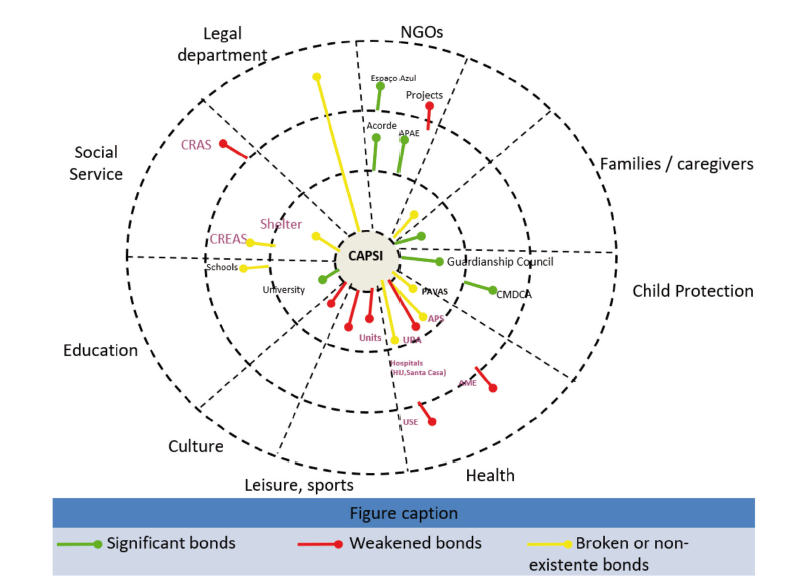 Developed with the team from the Child and Adolescent Psychosocial Care Center (CAPSij). Colored lines represent the quality of connections between institutions or sectors and CAPSij: green indicates significant ties, yellow represents weakened connections, and red denotes broken or non-existent relationships. The geographical distance between CAPSij and these services is illustrated by placing the lines in one of the quadrants: the first quadrant indicates proximity, the second quadrant indicates a distant connection, and the third quadrant indicates a very distant connection. APS - Primary Health Care (Atenção Primária à Saúde); UPA - Emergency Care Unit (Unidade de Pronto Atendimento); HU - University Hospital (Hospital Universitário); USE - University Health Unit (Unidade de Saúde Escola); AME - Medical Outpatient Clinic (Ambulatório Médico); CMDCA - Municipal Council for the Rights of Children and Adolescents (Conselho Municipal dos Direitos da Criança e do Adolescente); PAVAS - Program for Victims of Violence and Sexual Abuse (Programa de Atenção às Vítimas de Violência e Abuso Sexual); CRAS - Social Assistance Reference Center (Centro de Referência de Assistência Social); CREAS - Specialized Social Assistance Reference Center (Centro de Referência Especializada em Assistência Social).