| Team care (2018) |
1. How to maintain team commitment, participation and morale? |
1.1 Ongoing rounds of conversation on relevant topics, such as pregnancy, childbirth, child development and growth |
1.1 Request for topics, participation, team involvement, richness in discussions |
Team |
1.1 Coordination PhD
research |
| 2. How to take care of the team? |
|
2.1 Mobilizing Mothers and development agents |
2.1 Coordination and
Mobilizing mothers |
2.1 Encouragement of self-care, such as discussion module, compassion training, monitoring
2.2 Group activities, such as massage, relaxation, games |
2.1 Adoption of self-care, more collaborative attitudes, communication that values the culture of peace, expansion of the dialogue on compassion, community with healthy and compassionate actions, reports of improvement in symptoms of anxiety or depression. Sense of belonging and improved concentration
2.2 Multiplication of actions, report of calm and improvement in self-care
2.3 Team harmony, joy of belonging to
CEPI |
2.2 Team |
2.2 Coordination and
Mobilizing mothers |
| 2.3 Celebrations |
2.3 Team |
2.3 Coordination |
| Team care (2022) |
1. How to maintain commitment within the team?
|
1.1 Ongoing training on relevant topics such as pregnancy, childbirth, child development and growth, family and social movements |
1.1.1 Request for topics
1.1.2 Team participation
1.1.3 Number of topics covered during the year
1.1.4 Production of audiovisual material and exposure on social media
1.1.5 Safety report to address topics |
1.1 CEPI team |
1.1 Biannual
Mobilizing mothers |
| 1.2 University partnership |
1.2.1 Application of scientific extension projects developed in partnership
1.2.2 Number of team members studying in higher education
1.2.3 Reports on the connection between theory and practice |
1.2 Teams and universities |
1.2 Biannual Coordination and local management |
Team care (2022)
Team care (2022) |
2. How to ensure excellent team care?
|
2.1 Self-care practices:
- Mind, body and heart care/meditation
- Aesthetic and physical care
- Loving dialogues |
2.1.1 Appropriation of self-care in everyday speech
2.1.2 Team reports on emotional and physical health |
2.1 Team |
2.1 Quarterly Local management e Mobilizing mothers |
| 2.2 Encouragement and guidance for individual micro-entrepreneurs (MEI) registrations for Mobilized Mothers |
2.2.1 Number of team members registered as MEI |
2.2 CEPI team |
2.2 Punctual
Local management |
| 2.3 Group activities, such as massage, relaxation, guided meditation, games, picnics, going to the theater, cinema |
2.3.1 Report of calm and improved self-care
2.3.2 Report of improved team relationships
2.3.3 Increased number of activities by team members
2.3.4 Appropriation of self-care perceived by the team
2.3.5 More collaborative attitudes
2.3.6 Communication that values a culture of peace
2.3.7 Report of reduced symptoms of anxiety and stress
2.3.8 Sense of belonging and improved concentration |
2.3 CEPI team |
2.3 Quarterly Coordination and local management |
| 2.4 Happy hour among CEPI teams |
2.4.1 Perception of team harmony and joy of belonging to the Center of Excellence |
2.4 CEPI team |
2.4 Quarterly Coordination and local management |
| 2.5 Tours |
2.5.1 Number of members learning new repertoires
2.5.2 Report of more creative members
2.5.3 Team members applying knowledge acquired outside the territory |
2.5 CEPI team |
2.5 Quarterly Coordination and local management |
| Team care (2022) |
3. How to promote good interaction between CEPI and other CPCD and IBEAC projects?
|
3.1 Rounds of conversation about feelings and emotions |
3.1.1 Teams working together
3.1.2 Problem-solving calmly |
3.1 CEPI, PSTA, BCCL, Amaras, Acolhendo and Vozes
|
3.1 Biannual Coordination and local management |
| 3.2 Moments of relaxation. Happy hour with all the groups |
3.2.1 Teams in harmony
3.2.2 Teams thinking about projects collectively |
3.2 CEPI, PSTA, BCCL, Amaras, Acolhendo and Vozes
|
3.2 Biannual Coordination and local management |
| 3.3 Celebrations of achievements and special dates (birthdays, June festivals, end of the year) |
3.3.1 Perception of team harmony
3.3.2 Report of joy/satisfaction in being part of the Center of Excellence
3.3.3 Report of joy/satisfaction in being part of IBEAC/CPCD |
3.3 CEPI, PSTA, BCCL, Amaras, Acolhendo and Vozes
|
3.3 Biannual Coordination and local management |
|
4. How can we call on men to build our village?
|
4.1 Training for men from CPCD/IBEAC teams (Demystification of taboos about motherhood and fatherhood. Paternal empowerment work) |
4.1.1 Number of meetings held on the topic
4.1.2 Critical and reflective reports on the activity
4.1.3 Men engaged in combating sexism
4.1.4 Men engaged in caring for early childhood |
4.1 CPCD/IBEAC male team |
4.1 Biannual Coordination and local management |
| |

 Vulnerability, compassion meditation and well-being: community-based participatory research
 Thumbnail
 Thumbnail
 Thumbnail
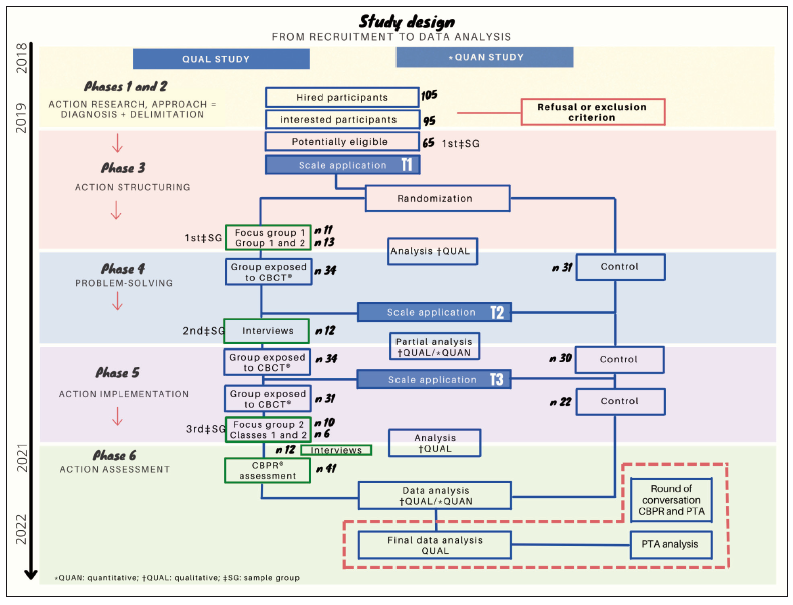 Source: Research data (2022).
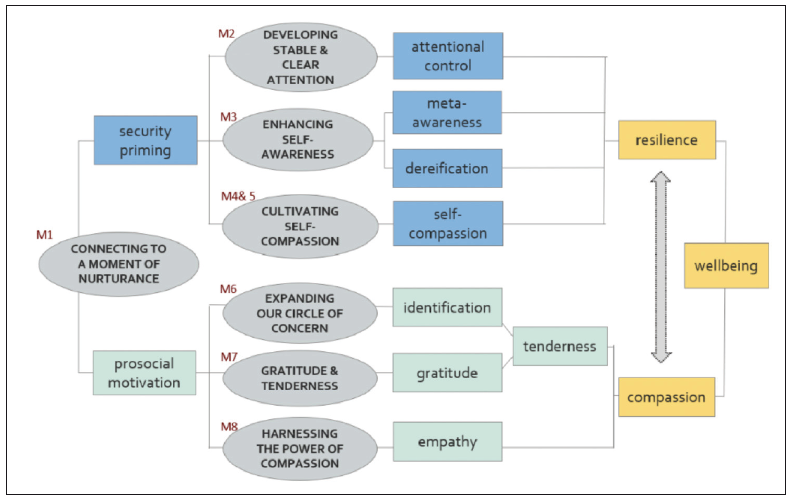 Source: Ash M, Harrison T, Pinto M. et al.
 Source: Research data.