
 High-cost medicine litigation in Brazil: A scoping review
Abstract
Brazil has no established or universally adopted definition for high-cost medicines (HCM). The study mapped the profile and participation of HCM among those cited in the scientific and academic output on health litigation. A scoping review followed the methodology proposed by the Joanna Briggs Institute, searching Medline, Embase, LILACS, Web of Science, and Scopus databases, besides the Digital Library of Dissertations and Theses, for empirical studies produced between 2005 and 2022 regarding litigation for access to medicines that included HCM. Sixty-two articles and 66 theses and dissertations were included. Most date from 2014 to 2022 and were developed in the South and Southeastern regions, focusing on medicines, including HCM. These medicines were specifically approached by case studies. States were the main defendants, joined or not by other government bodies. Mention of values involved in HCM litigation was mostly absent from studies. The most cited HCM criteria were high cost to households and the public health system, followed by absence on the official SUS lists. Conceptual constraints and heterogeneity in how HCM were mentioned prevented a precise accrual of their percent participation in litigation in Brazil or regarding expenditures.
Keywords:
Medicines; Health litigation; Costs; Pharmaceutical Services; Scoping review
Resumo
No Brasil, não existe definição estabelecida e universalmente adotada para medicamentos de alto custo (MAC). Mapearam-se perfil e representatividade dos MAC na produção científica e acadêmica nacional sobre judicialização. A revisão de escopo seguiu metodologia do Joanna Briggs Institute nas bases bibliográficas Medline, Embase, Lilacs, Web of Science e Scopus, e na Biblioteca Digital de Teses e Dissertações, resgatando estudos empíricos relacionados à judicialização de medicamentos que incluíssem MAC, publicados/defendidos entre 2005 e 2022. Foram incluídos 62 artigos e 66 dissertações e teses. A maioria dos estudos datava de 2014 a 2022, foi desenvolvida no Sul e Sudeste do país, tendo como escopo medicamentos, incluindo os MAC; destacam-se os MAC especificamente em estudos de caso. Os estados foram o principal réu envolvido, isolada ou solidariamente a outros entes governamentais. Menção a valores envolvidos na judicialização dos MAC esteve ausente na maioria dos estudos. O alto custo para as famílias e para o sistema público de saúde foram os critérios de MAC mais citados, seguido pela ausência nas listas oficiais do SUS. Dificuldades conceituais e a heterogeneidade na menção aos MAC impediram precisar exatamente qual sua participação percentual na judicialização no contexto nacional, ou em termos de valores gastos.
Palavras-chave:
Medicamentos; Judicialização em saúde; Custo; Assistência farmacêutica; Revisão de escopo
Introduction
Medicines are a growing concern for health system managers worldwide because their costs represent a significant and rapidly rising component of healthcare expenditures.
The global pharmaceutical market is expected to reach approximately US$2.3 billion in 2028, driven mainly by the contribution of new products and patent expirations, including the growing impact of biosimilars. Highly specialized and expensive medicines will represent more than 55% of the developed country markets by 2028 and will account for 43% of global medicine spending. Medicines in three therapeutic areas will drive this scenario: immunology, oncology, and endocrinology (IQVIA, 2024).
The sixth most populous country in the world, Brazil is among the eight largest drug consumption markets and the only one with a public and universal health system (SUS). Medicine expenditure represents a significant burden for households. From 2010 to 2017, the final household medicine consumption expenditure ranged from 89% to 92%, much higher than government spending (Vieira; Santos, 2020), affecting mainly the more impoverished households (Boing et al., 2014).
In the national setting, this situation has been aggravated by the significant participation of medicines in health litigation, especially high-cost products (Lopes et al., 2019). The Ministry of Health total medicine expenditure from court decisions increased from 4.0% in 2012 to 7.4% in 2018, reaching figures above BRL 1.02 billion (Vieira, 2020). These expenses totaled BRL 1.78 billion in 2021 (INESC, 2022).
Defining what constitutes a ‘high-cost medicine’ lacks greater specification or detail, even in government documents related to pharmaceutical services. There is no specific or shared definition of what medicines would be considered high-cost or more expensive in Brazil (Libanore, 2020). Access to these medicines depends on several actions and coordinated efforts involving the three governmental spheres. Of the three components of pharmaceutical services, the Specialized Component (CEAF) includes the most expensive medicines made available by the SUS. It also concentrates a significant portion of the medicines subject to legal proceedings in the country (Vieira, 2020). The CEAF is defined as a strategy for access to medicines to guarantee comprehensive treatments, and clinical pathways are defined in the Clinical Protocols and Therapeutic Guidelines (PCDT).
Medicines not on the CEAF or the official SUS lists and those not registered with the National Health Surveillance Agency (ANVISA) are also frequently sought through litigation. Between 2010 and 2015, 54% of the Ministry of Health’s expenditure on purchasing medicines due to legal actions was allocated to just three medicines, none of which were on the CEAF list or included in the SUS lists (TCU, 2017). Furthermore, from 2003 to 2013, health litigation was responsible for 81.9% of the purchases of medicines without ANVISA market approval (Teodoro et al., 2017).
There is significant scientific and academic production describing and analyzing health or medicine litigation in the country (Catanhede; Lisboa; Souza, 2016; Freitas; Fonseca; Queluz, 2020). However, its main focus is not specifically on high-cost medicines, which makes it important to know this demand in particular. Thus, we aimed to map the profile and representativeness of high-cost medicines participation among the medicines cited in national scientific and academic production that addresses health litigation, describing their main characteristics from 2005 to 2022.
Methods
We conducted a scoping review, and such reviews are indicated when seeking to summarize existing knowledge and information gaps regarding a specific topic, establishing them within a practice and policy setting (Anderson et al., 2008). They help answer broader questions by categorizing the existing literature in a given field regarding its nature, resources, and volume and can include evidence from any research methodology (Munn et al., 2018).
We followed the methodology proposed by the Joanna Briggs Institute (Aromataris et al., 2024), and reporting followed the recommendations of the Preferred Reporting Items for Systematic Reviews and the Meta-Analysis for Scoping Reviews checklist (PRISMA-ScR) (Tricco et al., 2018). The protocol was registered before the start of the review on the Open Science Framework platform (doi https://doi.org/10.17605/OSF.IO/8PXUB), and published (Caetano et al., 2022).
The review’s guiding question was: “In national scientific and academic studies on medicines litigation, is it possible to infer any information about the participation and characteristics of the litigation of high-cost medicines?”
We employed the mnemonic P (Population) C (Concept) C (Context) to guide the search and the inclusion and exclusion criteria used, where “Population” corresponded to studies that addressed the litigation of medicines in Brazil, “Context” was related to the litigation of high-cost medicines, and “Concept” to the characteristics of the lawsuits related to high-cost medicines (HCM) with the public entity (Federal Government, state, or municipality) as defendant.
The lack of a consensual definition for HCM in Brazil required creating an operational definition composed of different criteria for selecting studies. A study could meet one or more criteria depending on the litigated medicines.
The operational definition criteria included medicine with a high unit cost to the public health system or households; with a high overall cost of treatment for diseases with significant social impact or high mortality; with complex administration and/or need for patient monitoring or specific conditions of use; and new products under patent or monopoly status (PAHO, 2009). Considering the country’s pharmaceutical structure, this definition also included those belonging to the Exceptional (before 2009) and Specialized dispensing components, medicines outside the official SUS lists, and non-market approved medicines in the country. These criteria are frequently cited in publications on the litigation of access to medicines in Brazil (Teodoro, 2017; TCU, 2017; Libanore, 2020).
Identifying relevant studies
Two types of scientific publications were examined - articles, and dissertations and theses (D&Ts) - considering that health and medicine litigation is a frequent subject of Brazilian academic products. The search was carried out in the following bibliographic databases: MEDLINE (via PubMed), EMBASE, LILACS (via BVS), SCOPUS, the Web of Science, and the Brazilian Digital Library of Dissertations and Theses (BDTD).
With the help of an experienced librarian the reviewers developed specific search strategies for each database. Health descriptors (MeSH Terms, DeCS, and Emtree) were used, when available, and specific terms related to ‘health litigation’, ‘medicine litigation’, and ‘Brazil’ in the titles and abstracts, combined with the Boolean operators AND/OR. No limits were established regarding publication language, and 2005 was the initial time filter. The bibliographic databases were searched from November 1 to November 15, 2022. Alerts of new publications registered in the MEDLINE and EMBASE databases were monitored biweekly until the completion of the summary.
The advanced search tool was employed in the BDTD, with generic terms such as ‘health litigation’, ‘lawsuits’, and ‘medicine litigation’, starting from 2005 onwards. The search occurred between January 9 and January 12, 2023. This search was complemented by a specific search on January 17, 2023, in the FIOCRUZ ARCA institutional repository, given its late adherence to the BDTD and the institution’s significant academic production in health litigation.
Access to detailed search strategies is available on the Open Science Framework (OSF) open data platform (doi 10.17605/OSF.IO/GVSFY). Search results were exported to the EndNote® reference manager, and identified duplicates were eliminated.
Selecting relevant studies for the review
Two independent researchers selected articles and academic products in two stages (screening titles and abstracts and reading full texts). A third reviewer resolved any disagreement using the eligibility criteria set out in Box 1.
Standardized electronic forms, created in Google Forms, were used for each stage of the selection process, specific to each document type. The forms fed a database exported in Excel® spreadsheet format. They were accompanied by instructions that guided the researchers in collecting and recording data to reduce bias and process standardization. Specific training and pre-tests were staged with random study samples.
Extracting data
Pairs of independent reviewers also performed this procedure, and a third reviewer resolved any disagreement. Standardized electronic forms specific to each product type, accompanied by instructions, and developed in Google Forms® were also used. Three pre-testing and training sessions were held before starting data collection.
The following information was extracted: (1) study identification data (title; author, date; year of publication/defense; journal of publication and, in the case of D&Ts, the higher-education institution (HEI) of defense and type of academic product (academic and professional masters and doctorates); (2) the study’s general characteristics (objective; scope; locus; period; sample size; government entity involved as defendant); (3) list of medications subject to litigation and amounts involved in the litigated HCM.
In the case of D&Ts, academic products were classified by area and subarea of the National Council for Scientific and Technological Development (CNPq) index, using information available on September 5, 2023, from the website of the Coordination for the Improvement of Higher Education Personnel (CAPES, 2023).
Data summary
Besides the information mentioned above, a database containing all the medicines listed in each included study was constructed in Excel® software, compiling all the information made available in the original scientific product. The results were analyzed regarding absolute and relative frequencies and presented descriptively with figures, tables, and flowcharts summarizing the findings.1
Results
A total of 1,709 bibliographic references and 653 dissertations and theses were identified. After selection, 62 articles and 66 academic products were included (Figure 1). Lists with the complete references can be consulted in the Open Science Framework open data repository (doi 10.17605/OSF.IO/5G3HT).
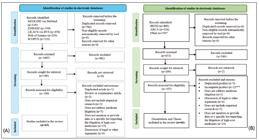
Flowcharts of the selection of bibliographic references (A) and dissertations and theses (B) for the scoping review
The 62 articles were published in 20 national journals (66%) and 10 international journals. Five national journals accounted for 51.6% of the articles, namely, Revista de Saúde Pública, Cadernos de Saúde Pública, Revista de Direito Sanitário, Ciência e Saúde Coletiva, and e Cadernos Ibero-Americanos de Direito Sanitário.
Dissertations from academic master’s degrees accounted for most of the academic products (51.9%), with only nine doctoral theses identified that included HCM among the explicitly cited litigated medicines. Products from the broad knowledge area of Health Sciences predominated (69.7%), followed by Applied Social Sciences (21.2%). Regarding subareas, the most prominent were the D&Ts defended in Public Health (47% of the total), followed by Pharmacy and Public Administration (12.1%), and Business and Accounting Sciences (10.6%). The products were defended in 27 different educational institutions, with five (USP, Fiocruz, UFMG, UFJF, and UNB) accounting for 47% of the total; USP and Fiocruz, in their several campuses, gathered more than a quarter of the included D&Ts. The studies’ principal characteristics are shown in Table 1.
More than 60% of the studies were published or defended from 2014 onwards, especially from 2018 onwards (35.5% of the articles and 30.3% of the D&Ts). The states were the primary defendants involved, alone or in solidarity with other government entities.
The studies were conducted in several states of the Federation, predominating works from the Southeast (40.3% of the articles and 45.5% of the theses). The primary study loci were São Paulo, Minas Gerais, and Rio de Janeiro in the Southeast and Rio Grande do Sul in the South. Proceedings/lawsuits/legal actions were the primary unit of analysis found in the studies.
The way by which litigated medicines, including HCM, were presented varied in the studies; most were cited as “most prevalent”, or not specifially highlighted among the studies’ medicines. Some studies chose HCM for case studies, focusing on the treatment of rare diseases, biologicals, oncological medicines, and insulin analogs (Alves, 2016; Brito, 2020; Campos Neto, 2012; Cardoso, 2021; Coelho, 2021; Oliveira, 2022; Dias, 2021; Diniz, 2012; Galvão, 2017; Lisboa, 2017; Lopes, 2010; 2014; Luo, 2014; Medeiros, 2013; Mendonça, 2020; Barreto, 2019; Oliveira, 2019; 2021; Pinheiro, 2019; Ramos, 2014; Ribeiro, 2017; Salha, 2022; Sartori Junior, 2012; Souza, 2017; Szpak, 2020; Vidal, 2017; Vieira, 2022).
Most studies did not mention the values involved in HCM litigation. When they did, this information took different forms, many referred to as proportions of the expenditure on the medicines studied.
Considering the criteria that make up the operational definition of high-cost medicines, we found that the most frequently used criterion in both types of scientific publications was high cost/unit price to the public health system (Figure 2). The high proportion of HCM subject to legal proceedings outside the official SUS lists is noteworthy. When identified, they were mainly CEAF medicines, many of which were requested for indications other than those of the PCDT, characterizing off-label use (Barcellos, 2010; Aires, 2016; Barreto, 2018; Finatto, 2018; Gualberto, 2020).
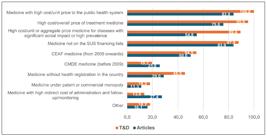
Proportion of completed operational definition criteria for high-cost medicines included in the scoping review by type of scientific publication, 2005-2022
High-cost medicines recurrently mentioned in 25% or more of the studies were adalimumab, bevacizumab, tiotropium bromide, cetuximab, etanercept, quetiapine hemifumarate, infliximab, short- and long-acting insulin analogs, sunitinib maleate, methylphenidate, mycophenolate mofetil, ranibizumab, rituximab, temozolomide, teriparatide, sorafenib tosylate, and trastuzumab (Table 2).
Discussion
The review had a different focus from the several integrative and systematic reviews on medicine litigation in the country, denoted by the choice of the subset “high-cost” medicines as specific focus. Another relevant difference was the inclusion of scientific articles, and of dissertations and theses, which do not always result in publications in national or foreign journals (Oliveira et al., 2015; Ribeiro; Vidal, 2018).
Finally, we performed a comprehensive and sensitive search in five bibliographic databases and the BDTD. We proceeded with a manual search in institutional repositories of some graduate programs to obtain the greatest possible representation of the production on the subject. As a result, the review included 128 studies, including articles and D&Ts, a number much higher than in other reviews on the litigation of medicines, which range from 16 to 60 (Anjos, 2019; Catanhede; Lisboa; Souza, 2016; Freitas; Fonseca; Queluz, 2020; Ribas; Pedroso, 2021).
Health litigation articles have been increasing in numbers in indexed journals in the country but follow different approaches. Several focus on the topic from a legal perspective and management strategies (Floriano et al., 2023), while others address work quality, indicating homogeneous research designs and heterogeneous scope (Lyro et al., 2021). This review included 62 articles, which reflect these aspects well.
The predominance of academic products originating from master’s degrees is possibly related to the distribution of graduate courses in the country. According to CAPES data, 94.2% of the 7,027 stricto sensu graduate courses in 2022, found in 4,592 recognized programs, were master’s degree courses, and most were academic (81.21%). However, the concentration of products related to medicine litigation in specific areas and subareas does not show a direct relationship with this distribution.
The main field of Health corresponds to 15.6% of the total number of graduate courses registered with CAPES in 2022. Regarding Health, 37.4% of the courses belong to the subareas of Medicine I, II, and III, with only 13.3% part of Public Health and 9.5% of Pharmacy (Brazil/ME, 2022). The specificities of the topics, with a strong focus on the profile of legal demands for medicines and their relationships with Pharmaceutical Services policies, could explain the predominant production in these subareas.
More than 60% of the included studies surfaced after 2014, aligned with increasing litigation and its impacts in the country. This concentration, in turn, is related to the medicines requested by lawsuits since the lists covered by the SUS are dynamic and constantly updated (Vasconcellos et al., 2017).
The states were the main entities involved as defendants, with the Federal Government alone or jointly accounting for 25.8% and 37.9% in the articles and D&Ts, respectively. The more significant participation of the states has already been identified in some reviews on medicine litigation in the country (Batistella et al., 2019; Trindade et al., 2022). In 2013, Medeiros considered that the Federal Government harbored lawsuits demanding HCM. This participation may have escalated over time.
In 2023, General Repercussion Theme N° 793 of the Federal Supreme Court, which established the thesis that the entities of the federation are jointly liable in the lawsuits for health services, allowed any of them to be the passive party, under the applicable provision rules (STF, 2024). We should also consider the possibility that the litigation that burdens the Federal Government is not relayed in published or defended studies and is somewhat restricted to government reports, which were not part of the publication scope addressed by this study.
The Southeast predominates as the locus of studies, emphasizing São Paulo, Minas Gerais, Rio de Janeiro, and Rio Grande do Sul. The concentration of the population (41.8% of the Brazilian population) and development in the Southeast (55.4% of the national GDP in 2022) possibly account for this result (IBGE, 2023a; 2023b). Moreover, lawsuits presuppose access to health services (diagnoses and exams) and access to the justice system. Also, more prosperous states with more accessible systems are expected to be increasingly sued for HCM.
Proceedings/lawsuits/legal actions, in aggregate, were the most frequent unit of analysis. This aggregation was necessary due to a certain degree of conceptual imprecision between the terms used by study authors, who adopted them as synonyms. Sometimes, the units of analysis were also accompanied by “qualifications”, such as the subject of the claim, the characterization of the plaintiff, and aspects of the legal proceeding.
HCM did not stand out as a specific object of investigation, except in case studies. There was also no standardized approach to HCM in the studies. Estimating the ‘high cost’ can be challenging, as it is often absolute - for example, regarding new medicines under patent, biologicals, or antineoplastics.
“Cost” has many meanings in health economics. Regarding medicines, direct cost refers to the amount spent on acquiring the medicine and all the costs involved in its dispensing, monitoring, and use, depending on the study’s perspective. However, in studies involving the litigation of HCM, what is usually referred to as ‘cost’ exclusively addresses the defendant’s expenses for acquiring the medicines in question (Arora; Moriates; Shah, 2015).
References to specific values related to litigated medications were found in approximately 41% of the D&Ts and 43% of the articles. Notably, references to financial impact were not always restricted to HCM. They were also presented differently, sometimes referring to all litigated medicines, including those that did not correspond to the operational definition of HCM, but also to those not on the official lists, medicines of a particular pharmaceutical services component (CEAF, or CMDE - before 2009), and related to a specific therapeutic class (such as antineoplastics, insulins, and biologicals). Even when related to “off-list” medicines or those belonging to the CEAF, values often referred only to most prevalent medicines or ones that had the most significant impact on spending (Boarati, 2020; Cirico, 2019; Honorato, 2014; Leitão, 2012). The heterogeneous mention of financial information in the different studies and the fact that they always referred to local jurisdictions or specific medicines (Alves, 2016; Mello et al., 2016; Braga, 2018; Galvão, 2017; Diniz; Medeiros; Schwartz, 2020) determine important limitations in understanding and establishing representativeness of HCM in litigated medicines expenditures in the country.
Considering the criteria used to define high-cost medicines, we found that the most frequently cited criteria were high unit cost/price to the public health system, high overall treatment costs, and medicines with high unit or aggregate cost for diseases with a significant social impact or high prevalence. All three of these criteria focus on expenditure. Depending on the plaintiff’s financial status, many of the medicines requested in lawsuits may be perceived as expensive, since they are costly for an individual or household, considering income of the Brazilian population (IBGE, 2024c). On the other hand, the financial burden on the health system emerges keenly, showing that if previously the high cost was a concern mainly for households, it has increasingly emerged as a considerable expense for government entities. As Vieira (2023) mentions, lawsuits against the Federal Government consumed 25.2% of CEAF’s resources in 2019, of which 21% were related to only 10 medicines, half of which were not included in the SUS lists and three were not even market-approved by ANVISA. The same author (Vieira, 2017) mentioned an increase in the transfer of resources abroad to purchase medicines by the Federal Government.
Another criterion that causes worry is the high proportion of litigated HCM not on the official SUS lists. When present, these were mainly CEAF medicines (Lima, 2014; Moraes, 2016), several of which were requested for indications other than those of PCDT or for off-label use (Barcellos, 2010; Chieffi, 2017). Several years ago, the literature pointed out that litigation is often employed as a pressure strategy for incorporating new technologies (Santos-Pinto et al., 2013; Oliveira et al., 2020).
Twenty HCM medicines were repeatedly mentioned in at least 25% of the studies. These include biologicals and medicines for treating rare diseases, emphasizing rituximab and rapid or long-acting insulin analogs. New medicines recently introduced to the market and under patent, and unlicensed medicines are additions to the HCM mentioned in this manuscript (Alberto, 2012; Marçal, 2012; Nunes, 2014; Torrieri, 2017; Finatto, 2018; Cirico, 2019; Laffin, 2019), but infrequently cited.
Two reasons can explain this profile. First, several of the most frequently cited medicines, while currently on the SUS lists, were subject to legal proceedings when they were not yet on the official lists; in fact, to this day some are not yet included. Litigation responds to the dynamism of the therapeutic arsenal, which is growing and increasingly diverse. Second, litigation regarding older medicines remains recurrent in the SUS (Catanhede; Lisboa; Souza, 2016; Borges, 2017; Vieira, 2023).
We should discuss some limitations of this review. Some HCM may have been subject to litigation and were not captured by the review. The studies always referred to geographically and temporally circumscribed samples. Mentions of litigated medicines were highly heterogeneous. A significant portion of the scientific and academic studies presented only lists of the most prevalent medicines, or those with the most significant financial impact, or cited HCM within the texts among several other medicines.
Given conceptual imprecision in the literature, an operational definition was created, which served as a proxy for elements usually associated with the high cost of medicines. As with any proxy, there is no direct unequivocal correspondence between the categories listed in this elaborate definition and HCM.
We should recall that lists of “high-cost” medicines are dynamic over time. Products subject to litigation may, at one point, “disappear” from lawsuits as they are added to the lists and their public supply is guaranteed. A similar situation also occurs regarding unlicensed medicines. The review respected the categories of “off-list” medicines and the of the pharmaceutical services components informed by the authors, making it impractical to verify each case, including due to the impossibility of identifying the lists in-force at various government levels during the study period.
Conclusions
The review adopted a different approach from existing reviews, focusing on a subset of medicines characterized as “high-cost medicines”. The study allowed us to infer various information about the participation and characteristics of high-cost medicine litigation over almost twenty years.
Some elements stood out, such as the association of high costs with individual expenditures and treatments that exceed household ability to pay, but also with high and growing cost to public entities, exerting pressure on management for inclusion in official medicines lists. Regulatory aspects, such as market approval or patent status, were also associated with high costs. Finally, most of the identified high-cost medicines belonged to specific therapeutic classes, which litigation dynamism has altered over the years.
The conceptual difficulties of HCM and the heterogeneous way HCMs are mentioned prevented us from accurately stating the extent of HCM participation in medicine litigation in the national context in terms of amounts spent or involved.
The litigation of medicines, including HCM, is closely related to SUS sustainability. On the other hand, the ethics and propriety of access through judicial means and the rational use of litigated medicines must be considered and are infrequently explored in the literature. Future studies should further examine these themes.
Exploring a different perspective of HCM in the context of national litigation was made possible in this study, which can contribute to reorienting public policies.
References
-
AIRES, C. C. N. F. Perfil das demandas judiciais para o fornecimento de medicamentos no município de Rio Largo - AL. Dissertação (Mestrado) - Universidade Federal de Alagoas. Maceió, 2016. Disponível em: <http://www.repositorio.ufal.br/jspui/handle/riufal/1575>. Acesso em: 10 mar. 2023.
» http://www.repositorio.ufal.br/jspui/handle/riufal/1575 -
ALBERTO, M. F. Análise das características da Judicialização da Saúde no Estado de São Paulo. Dissertação (Mestrado) - Universidade Estadual Paulista. Araraquara, 2012. Disponível em: <http://hdl.handle.net/11449/90016> Acesso em: 1 mar. 2023.
» http://hdl.handle.net/11449/90016 -
ALVES, G. A. C. Custo do tratamento hospitalar de melanoma maligno em Pernambuco: uma análise da judicialização do ipilimumabe a partir de demandas junto aos Tribunais de Pernambuco. Dissertação (Mestrado) - Universidade Federal de Pernambuco. Recife, 2016. Disponível em: <https://repositorio.ufpe.br/handle/123456789/24773>. Acesso em: 1 mar. 2023.
» https://repositorio.ufpe.br/handle/123456789/24773 - ANDERSON, S.; ALLEN, P.; PECKHAM, S.; GOODWIN, N. Asking the right questions: scoping studies in the commissioning of research on the organisation and delivery of health services. Health Research Policy and Systems, v. 6, p. 7, 2008.
-
ANJOS, E. C. S. Judicialização da saúde no Brasil: uma revisão sistemática da literatura sobre o acesso a ações e serviços de saúde. Dissertação (Mestrado) - Escola Nacional de Saúde Pública Sergio Arouca. Rio de Janeiro, 2019. Disponível em: <https://www.arca.fiocruz.br/handle/icict/40222>. Acesso em: 1 mar. 2023.
» https://www.arca.fiocruz.br/handle/icict/40222 -
AROMATARIS, E.; LOCKWOOD, C.; PORRITT, K.; PILLA, B.; JORDAN, Z. (Ed.). JBI Manual for Evidence Synthesis, 2024. Disponível em: <https://synthesismanual.jbi.global>. Acesso em: 6 jun. 2024.
» https://synthesismanual.jbi.global - ARORA, V.; MORIATES, C.; SHAH, N. The Challenge of Understanding Health Care Costs and Charges. American Medical Association Journal of Ethics, v. 17, n. 11, p. 1046-1052, nov. 2015.
-
BARCELOS, P. C. Perfil de demandas judiciais de medicamentos da Secretaria de Estado da Saúde do Espírito Santo: um estudo exploratório. Dissertação (Mestrado) -Universidade do Estado do Rio de Janeiro. Rio de Janeiro, 2010. Disponível em: <http://www.bdtd.uerj.br/handle/1/4445>. Acesso em: 1 mar. 2023.
» http://www.bdtd.uerj.br/handle/1/4445 -
BARRETO, A. B. Judicialização para fornecimento liminar de medicamentos no Amazonas: tendencias, conflitos e alternativas. Dissertação (Mestrado) - Fundação Getúlio Vargas. Rio de Janeiro, 2018. Disponível em: <https://bibliotecadigital.fgv.br/dspace/handle/10438/24454>. Acesso em: 1 mar. 2023.
» https://bibliotecadigital.fgv.br/dspace/handle/10438/24454 - BATISTELLA, P. M. F. et al. Lawsuits in health: an integrative review. Revista Brasileira de Enfermagem, v. 72, n. 1, p. 809-817, 2019.
-
BOARATI, V. Assistência farmacêutica aos portadores de diabetes mellitus: impacto do Farmácia Popular e do acesso via judicialização da saúde. Tese (Doutorado) - Universidade de São Paulo. São Paulo, SP 2020. Disponível em: <https://repositorio.usp.br/item/003037964>. Acesso em: 1 mar. 2023.
» https://repositorio.usp.br/item/003037964 - BOING, A.C.; BERTOLDI, A. D.; POSENATO, L. G.; PERES, K. G. The influence of health expenditures on household impoverishment in Brazil. Revista de Saúde Pública, v. 48, n. 5, p. 797-807, 2014.
- BORGES, D. D. C. L. Individual Health Care Litigation in Brazil through a Different Lens: Strengthening Health Technology Assessment and New Models of Health Care Governance. Health and Human Rights, v. 20, n. 1, p. 147-162, jun. 2018.
-
BRAGA, B. S. F. Gastos públicos com medicamentos judicializados no Rio Grande do Norte nos anos de 2016 e 2017. Dissertação (Mestrado) - Universidade Federal do Rio Grande do Norte. Natal, 2018. Disponível em: <https://repositorio.ufrn.br/handle/123456789/27297>. Acesso em: 1 mar. 2023.
» https://repositorio.ufrn.br/handle/123456789/27297 -
BRASIL. Ministério da Educação. Painel de Dados do Observatório da Pós-Graduação. 2022. Disponível em: <https://sucupira-beta.capes.gov.br/sucupira4/painel/ReportSection5195196f249c6711e140>. Acesso em: 20 maio 2024.
» https://sucupira-beta.capes.gov.br/sucupira4/painel/ReportSection5195196f249c6711e140 -
BRITO, S. A. Judicialização por medicamentos antineoplásicos para o tratamento de câncer de mama no estado de Pernambuco. Dissertação (Mestrado) - Fundação Oswaldo Cruz. Recife, 2020. Disponível em: <https://www.arca.fiocruz.br/handle/icict/53276>. Acesso em: 1 mar. 2023.
» https://www.arca.fiocruz.br/handle/icict/53276 - CAETANO, R.; OLIVEIRA, I. A. G.; MATTOS, L. T.; KRAUZE, P.; OSORIO-DE-CASTRO, C. G. S. Analysis of right-to-health litigation involving high-cost medicines in Brazil: a scoping review protocol. Research, Society and Development, v. 11, n. 15, p. e550111537584, 2022.
-
CAMPOS NETO, O. H. As ações judiciais por anticorpos monoclonais em Minas Gerais, 1999-2009: médicos, advogados e indústria farmacêutica. Dissertação [Mestrado]. Universidade Federal de Minas Gerais. Belo Horizonte (MG): 2012. Disponível em: <http://hdl.handle.net/1843/BUOS-8UAKF6>. Acesso em: 1 mar. 2023.
» http://hdl.handle.net/1843/BUOS-8UAKF6 -
CAPES. Coordenação de Aperfeiçoamento de Pessoal de Nível Superior Ministério da Educação. Áreas de Avaliação. Disponível em: <https://www.gov.br/capes/pt-br/acesso-a-informacao/acoes-e-programas/avaliacao/sobre-a-avaliacao/areas-avaliacao/sobre-as-areas-de-avaliacao/sobre-as-areas-de-avaliacao>. Acesso em: 22 set. 2023.
» https://www.gov.br/capes/pt-br/acesso-a-informacao/acoes-e-programas/avaliacao/sobre-a-avaliacao/areas-avaliacao/sobre-as-areas-de-avaliacao/sobre-as-areas-de-avaliacao - CARDOSO, J. V. Judicialization of orphan drugs in Brazil: the justiciability of a politically unpalatable issue. International Journal of Constitutional Law, v. 19, n. 4, p. 1322-1350, out. 2021.
- CATANHEIDE, I. D.; LISBOA, E. S.; SOUZA, L. E. P. F. Características da judicialização do acesso a medicamentos no Brasil: uma revisão sistemática. Physis: Revista de Saúde Coletiva, v. 26, n. 4, p. 1335-1356, 2016.
-
CHIEFFI, A. L. Análise das demandas judiciais de medicamentos junto a Secretaria de Estado da Saúde de São Paulo à luz da política de assistência farmacêutica. Tese (Doutorado) - Universidade de São Paulo. São Paulo, 2017. Disponível em: <https://www.teses.usp.br/teses/disponiveis/5/5137/tde-31072017-130420/pt-br.php>. Acesso em: 10 mar.2023.
» https://www.teses.usp.br/teses/disponiveis/5/5137/tde-31072017-130420/pt-br.php -
CIRICO, P. F. Análise dos resultados do programa Acessa SUS na judicialização de medicamentos na grande São Paulo-SP. Dissertação (Mestrado) - Universidade Nove de Julho. São Paulo, 2019. Disponível em: <http://repositorio.uninove.br/xmlui/handle/123456789/1315>. Acesso em: 1 mar. 2023.
» http://repositorio.uninove.br/xmlui/handle/123456789/1315 - COELHO, T. L.; LOPES, L. M. N.; CAMPOS NETO, O. H.; FIGUEIREDO, T. P.; ANDRADE, E. I G. A propriedade intelectual na judicialização da assistência farmacêutica: uma demanda estrutural em defesa do Sistema Único de Saúde. Saúde & Sociedade, v. 30, n. 1, p. 1-14, set. 2021.
- DE OLIVEIRA, F. H. C.; DE LORENA, S. J. E.; DA CRUZ, G. M. A.; GUTMAN, H. M. S.; JORGE FILHO, G.; MONTARROYOS, U. R. Profile of judicialization in access to antineoplastic drugs and their costs: a cross-sectional, descriptive study based on a set of all lawsuits filed between 2016 and 2018 in a state in the Northeast Region of Brazil. BMC Public Health, v. 22, n. 1, p. 1824, set. 2022.
-
DIAS, G. A. A. Judicialização da saúde: análise dos processos judiciais do medicamento lenalidomida impetrados contra a Secretaria de Saúde do Estado de São Paulo para tratamento de mieloma múltiplo. Dissertação (Mestrado) - Universidade de São Paulo. São Paulo, 2021. Disponível em: <https://www.teses.usp.br/teses/disponiveis/6/6143/tde-23062021-130320/pt-br.php>. Acesso em: 1 mar. 2023.
» https://www.teses.usp.br/teses/disponiveis/6/6143/tde-23062021-130320/pt-br.php - DINIZ, D.; MEDEIROS, M.; SCHWARTZ, IV. Consequências da judicialização das políticas de saúde: custos de medicamentos para as mucopolissacaridoses. Cadernos de Saúde Pública, v. 28, n. 3, p. 479-489, mar. 2012.
-
FINATTO, R. B. Equidade e o perfil da judicialização de medicamentos impetrados contra a Secretaria Estadual de Saúde do RS pelos usuários de Porto Alegre. Dissertação (Mestrado) - Grupo Hospitalar Conceição; Porto Alegre, 2018. Disponível em: <https://www.oasisbr.ibict.br/vufind/Record/BRCRIS_3079a04f9da39a705d51fe8f5d2a0e95>. Acesso em: 1 mar. 2023.
» https://www.oasisbr.ibict.br/vufind/Record/BRCRIS_3079a04f9da39a705d51fe8f5d2a0e95 - FLORIANO, F. R. et al. Estratégias para abordar a Judicialização da Saúde no Brasil: uma síntese de evidências. Ciência e Saúde Coletiva, v. 28, n. 1, p. 181-196, jan. 2023.
- FREITAS, B. C.; FONSECA, E. P.; QUELUZ, D. P. A Judicialização da saúde nos sistemas público e privado de saúde: uma revisão sistemática. Interface (Botucatu), v. 24, n. e190345, p. 1-17, 2020.
-
GALVÃO, M. F. S. M. Causas da judicialização e suas consequências para implementação da política oncológica no Rio Grande do Norte. Tese (Doutorado) - Universidade Federal do Rio Grande do Norte. Natal (RN): 2017. Disponível em: <https://repositorio.ufrn.br/handle/123456789/24357>. Acesso em: 1 mar. 2023.
» https://repositorio.ufrn.br/handle/123456789/24357 -
GUALBERTO, J. M. S. Judicialização de medicamentos ao Estado, equidade e a experiência do NATJUS/DF. Dissertação (Mestrado) - Universidade de Brasília. Brasília, 2020. Disponível em: <https://repositorio.unb.br/handle/10482/39833>. Acesso em: 1 mar. 2023.
» https://repositorio.unb.br/handle/10482/39833 -
HONORATO, S. Judicialização da política de assistência farmacêutica: discussão sobre as causas de pedir no Distrito Federal. Dissertação (Mestrado) - Universidade de Brasília. Brasília, 2014. Disponível em: <https://repositorio.unb.br/handle/10482/16436>. Acesso em: 1 mar. 2023.
» https://repositorio.unb.br/handle/10482/16436 -
INSTITUTO BRASILEIRO DE GEOGRAFIA E ESTATÍSTICA. Censo 2022 - de 2010 a 2022, população brasileira cresce 6,5% e chega a 203,1 milhões. Disponível em: <https://agenciadenoticias.ibge.gov.br/agencia-noticias/2012-agencia-de-noticias/noticias/37237-de-2010-a-2022-populacao-brasileira-cresce-6-5-e-chega-a-203-1-milhoes>. Acesso em: 2 out. 2023a.
» https://agenciadenoticias.ibge.gov.br/agencia-noticias/2012-agencia-de-noticias/noticias/37237-de-2010-a-2022-populacao-brasileira-cresce-6-5-e-chega-a-203-1-milhoes -
INSTITUTO BRASILEIRO DE GEOGRAFIA E ESTATÍSTICA. PIB cresce 2,9% em 2022 e fecha o ano em R$ 9,9 trilhões. Disponível em: <https://agenciadenoticias.ibge.gov.br/agencia-sala-de-imprensa/2013-agencia-de-noticias/releases/36371-pib-cresce-2-9-em-2022-e-fecha-o-ano-em-r-9-9-trilhoes>. Acesso em: 2 out. 2023b.
» https://agenciadenoticias.ibge.gov.br/agencia-sala-de-imprensa/2013-agencia-de-noticias/releases/36371-pib-cresce-2-9-em-2022-e-fecha-o-ano-em-r-9-9-trilhoes -
INSTITUTO BRASILEIRO DE GEOGRAFIA E ESTATÍSTICA. Agência IBGE Notícias. 2024. Estatísticas Sociais: Em 2023, massa de rendimentos e rendimento domiciliar per capita atingem recorde. Disponível em: <https://agenciadenoticias.ibge.gov.br/agencia-noticias/2012-agencia-de-noticias/noticias/39809-em-2023-massa-de-rendimentos-e-rendimento-domiciliar-per-capita-atingem-recorde>. Acesso em: 20 maio 2024.
» https://agenciadenoticias.ibge.gov.br/agencia-noticias/2012-agencia-de-noticias/noticias/39809-em-2023-massa-de-rendimentos-e-rendimento-domiciliar-per-capita-atingem-recorde -
INSTITUTO DE ESTUDOS SOCIOECONÔMICOS. Orçamento temático de acesso a medicamentos (OTMED) 2021. 2022. Disponível em: <https://www.inesc.org.br/wp-content/uploads/2022/11/OTMED_PT-3.pdf>. Acesso em: 22 abr. 2024.
» https://www.inesc.org.br/wp-content/uploads/2022/11/OTMED_PT-3.pdf -
IQVIA Institute. The Global Use of Medicines 2024 - Outlook to 2028. 2024. Disponível em: <https://www.iqvia.com/insights/the-iqvia-institute/reports-and-publications/reports/the-global-use-of-medicines-2024-outlook-to-2028>. Acesso em: 22 abr. 2024.
» https://www.iqvia.com/insights/the-iqvia-institute/reports-and-publications/reports/the-global-use-of-medicines-2024-outlook-to-2028 -
LAFFIN, N. H. F. Determinantes da judicialização de medicamentos: evidências para as políticas públicas de dispensação. Tese (Doutorado) - Universidade de São Paulo. Ribeirão Preto, 2019. Disponível em: https://www.teses.usp.br/teses/disponiveis/96/96133/tde-12122019-124540/pt-br.php>. Acesso em: 1 mar. 2023.
» https://www.teses.usp.br/teses/disponiveis/96/96133/tde-12122019-124540/pt-br.php -
LEITÃO, L. C. A. Análise das demandas judiciais para aquisição de medicamentos no Estado da Paraíba. Dissertação (Mestrado) - Universidade Estadual da Paraíba. Campina Grande, 2012. Disponível em: <http://tede.bc.uepb.edu.br/jspui/handle/tede/1810>. Acesso em: 1 mar. 2023.
» http://tede.bc.uepb.edu.br/jspui/handle/tede/1810 -
LIBANORE, A. C. Medicamentos de alto custo segundo a perspectiva do SUS. Dissertação (Mestrado). Faculdade de Ciências Farmacêuticas da Universidade de São Paulo. São Paulo, 2020. Disponível em: <https://www.teses.usp.br/teses/disponiveis/9/9139/tde-11102021-144856/publico/Alexandre_de_Castro_Libanore_ME_Original.pdf>. Acesso em: 22 abr. 2024.
» https://www.teses.usp.br/teses/disponiveis/9/9139/tde-11102021-144856/publico/Alexandre_de_Castro_Libanore_ME_Original.pdf -
LIMA, J. A. Perfil dos usuários de insulinas análogas nas regiões sul e nordeste nos anos de 2010 a 2012: a responsabilidade do Sistema Único de Saúde e a judicialização. Dissertação (Mestrado) - Universidade de Brasília. Brasília, 2014. Disponível em: https://repositorio.unb.br/handle/10482/16502>. Acesso em: 1 mar. 2023.
» https://repositorio.unb.br/handle/10482/16502 - LISBOA, E. S.; SOUZA, L. E. P. F. Por que as pessoas recorrem ao Judiciário para obter o acesso aos medicamentos? O caso das insulinas análogas na Bahia. Ciência e Saúde Coletiva, v. 22, n. 6, p. 1857-1864, jun. 2017.
- LOPES, L. C.; BARBERATO-FILHO, S.; COSTA, A. C.; OSORIO-DE-CASTRO, C. G. Uso racional de medicamentos antineoplásicos e ações judiciais no Estado de São Paulo. Revista de Saúde Pública, v. 44, n. 4, p. 620-628, ago. 2010.
- LOPES, L. C.; SILVEIRA, M. S. N.; CAMARGO, I. A.; BARBERATO-FILHO, S.; FIOL, F. S. D.; OSORIO-DE-CASTRO, C. G. S. Biological drugs for the treatment of psoriasis in a public health system. Revista de Saúde Pública, v. 48, n. 4, p. 651-661, 2014.
- LOPES, L. M. N.; COELHO, T. L.; DINIZ, S. D. et al. Integralidade e universalidade da assistência farmacêutica em tempos de judicialização da saúde. Saúde e Sociedade, v. 28, n. 2, p. 124-131, 2019.
- LUO, J.; OLIVEIRA, M. A.; RAMOS, M. B.; MAIA, A.; OSORIO-DE-CASTRO, C. G. Antiretroviral drug expenditure, pricing and judicial demand: an analysis of federal procurement data in Brazil from 2004-2011. BMC Public Health, v. 14, n. 367, p. 1-7, abr. 2014.
- LYRA, P. F. C. et al. The quality of research on judicialization and its influence on public policies on access to medicines in Brazil: a systematic review. Ciência e Saúde Coletiva, v. 26, n. 11, p. 5577-5588, nov. 2021.
-
MARÇAL, K. K. S. A Judicialização da Assistência Farmacêutica: o caso Pernambuco em 2009 e 2010. Dissertação (Mestrado) - Fundação Oswaldo Cruz, Centro de Pesquisas Aggeu Magalhães, Recife, 2012. Disponível em: <https://www.cpqam.fiocruz.br/bibpdf/2012marcal-kks.pdf>. Acesso em: 1 mar 2023.
» https://www.cpqam.fiocruz.br/bibpdf/2012marcal-kks.pdf - MEDEIROS, M.; DINIZ, D.; SCHWARTZ, I. V. A tese da judicialização da saúde pelas elites: os medicamentos para mucopolissacaridose. Ciência e Saúde Coletiva, v. 18, n. 4, p. 1089-1098, abr. 2013.
- MELLO, A. F.; SOARES, L. S.; AREDA, C. A.; BLATT, C. R.; GALATO, D. Uma abordagem econômica de processos judiciais de medicamentos impetrados contra um município do sul do Brasil. Jornal Brasileiro de Economia da Saúde, v. 8, n. 1, p. 39-46, 2016.
- MENDONÇA, T. S. et al. Use of more expensive insulin despite guidelines in Brazil. Diabetes & Metabolic Syndrome, v. 14, n. 2, p. 155-157, mar. 2020.
-
MORAES, V. M. S. Análise dos gastos com ações judiciais na Secretaria de Saúde do Estado de Pernambuco no ano de 2014. Dissertação (Mestrado) - Universidade Federal de Pernambuco. Recife, 2016. Disponível em: <https://repositorio.ufpe.br/handle/123456789/26916>. Acesso em: 1 mar. 2023.
» https://repositorio.ufpe.br/handle/123456789/26916 - MUNN, Z.; PETERS, M. D. J.; STERN, C.; TUFANARU, C.; MCARTHUR, A.; AROMATARIS, E. Systematic review or scoping review? Guidance for authors when choosing between a systematic or scoping review approach. BMC Medical Research Methodology, v. 18, n. 1, p. 143, 2018.
-
NUNES, C. F. O. Judicialização do direito à saúde no estado do Ceará, Brasil: cenários e desafios. Dissertação (Mestrado) - Universidade Federal do Ceará. Fortaleza, 2014. Disponível em: <http://repositorio.ufc.br/handle/riufc/15795>. Acesso em: 1 mar. 2023.
» http://repositorio.ufc.br/handle/riufc/15795 - OLIVEIRA, D. B.; SILVA, R. A. M.; DE PAULA, E. A.; CASSAMASSIMO, R. P.; DE SIQUEIRA, P. S; F.; DE MELO, D. O. A judicialização de medicamentos imunoterápicos sem registro na Anvisa: o caso do Estado de São Paulo. Cadernos Ibero-Americano de Direito Sanitário, v. 8, n. 3, p. 27-34, set. 2019.
- OLIVEIRA, M. R. M. et al. Judicialização da saúde: para onde caminham as produções científicas? Saúde em Debate, v. 39, n. 105, p. 525-535, 2015.
-
OLIVEIRA, P. Judicialização por Medicamentos do Componente Especializado da Assistência Farmacêutica no Estado de Minas Gerais. Dissertação (Mestrado) - Universidade Federal de Minas Gerais, Belo Horizonte, 2021. Disponível em: <https://repositorio.ufmg.br/handle/1843/40992>. Acesso em: 01 mar. 2023.
» https://repositorio.ufmg.br/handle/1843/40992 - OLIVEIRA, Y. M. D. C.; BRAGA, B. S. F.; FARIAS, A. D.; PEREIRA, S. P. D.; FERREIRA, M. A. F. Judicialization of medicines: effectiveness of rights or break in public policies? Revista de Saúde Pública, v. 54, p. 130, 2020.
-
ORGANIZAÇÃO PAN-AMERICANA DA SAÚDE. O acesso aos medicamentos de alto custo nas Américas: contexto, desafios e perspectivas. Brasília: OPAS/Ministério da Saúde, 2009. Disponível em: <https://bvsms.saude.gov.br/bvs/publicacoes/acesso_medicamentos_alto_custo_americas.pdf>. Acesso em: 24 abr. 2404.
» https://bvsms.saude.gov.br/bvs/publicacoes/acesso_medicamentos_alto_custo_americas.pdf - PINHEIRO, P. N. Q.; GARCIA, J. V. M.; CARDOSO, E. T. C.; LUZ, D. A.; DA SILVA, V. G. Farmacoeconomia: gastos com análogos de insulina adquiridos por meio de judicialização em um município do estado do Pará, Brasil, no ano de 2016. Jornal Brasileiro de Economia da Saúde, v. 11, n. 1, p. 42-48, abr. 2019.
-
RAMOS, K. A. Solicitações judiciais de medicamentos para tratamento de câncer, Minas Gerais, 1999-2009: estudo descritivo. Dissertação (Mestrado) - Universidade Federal de Minas Gerais. Belo Horizonte, 2014. Disponível em: <http://hdl.handle.net/1843/39570>. Acesso em: 1 mar. 2023.
» http://hdl.handle.net/1843/39570 - RIBAS, M. C.; PEDROSO, B. Judicialização de medicamentos: uma revisão sistemática da literatura no Brasil entre os anos de 2015 e 2019. Revista Brasileira de Pesquisa em Saúde, v. 22, n. 3, p. 145-155, 2021.
- RIBEIRO, K. D.; VIDAL, J. P. Uma análise da produção acadêmica sobre a evolução do fenômeno da judicialização da saúde no Brasil. Cadernos Ibero-Americano de Direito Sanitário, v. 7, n. 2, p. 239-261, 2018.
-
Ribeiro, V. M. C. Análise da demanda de judicialização de medicações e insumos para saúde no Estado da Paraíba. Dissertação (Mestrado) - Universidade Católica de Santos. Santos, 2017. Disponível em: <https://tede.unisantos.br/handle/tede/4001>. Acesso em: 1 mar. 2023.
» https://tede.unisantos.br/handle/tede/4001 - SALHA, L. A. et al. Judicialization of health: profile of demands for oncological medicines in a state in the central region of Brazil. International Journal for Equity in Health, v. 21, n. 112, p. 1-15, ago. 2022.
-
SANTOS, E. C. B. Judicialização do direito à Saúde: acesso ao tratamento de usuários com diabetes mellitus na cidade de Ribeirão Preto e região, de 2003 a 2013. Tese (Doutorado) - Universidade de São Paulo. Ribeirão Preto, 2014. Disponível em: <https://www.teses.usp.br/teses/disponiveis/22/22132/tde-09022015-194034/pt-br.php>. Acesso em: 1 mar. 2023.
» https://www.teses.usp.br/teses/disponiveis/22/22132/tde-09022015-194034/pt-br.php - SANTOS-PINTO, C. D. B. et al. Novos delineamentos da Assistência Farmacêutica frente à regulamentação da Lei Orgânica da Saúde. Cadernos de Saúde Pública, v. 29, n. 6, p. 1056-1058, 2013.
- SARTORI JR, D.; LEIVAS, P. G. C.; SCHWARTZ, I. V. D., et al. Judicialização do acesso ao tratamento de doenças genéticas raras: a Doença de Fabry no Rio Grande do Sul, Brasil. Ciência e Saúde Coletiva, v. 7, n. 10, p. 2717-2728, out. 2012.
-
SOUZA, K. A. O. A influência das ações judiciais na incorporação de medicamentos biológicos ao Sistema Único de Saúde. Tese (Doutorado) - Universidade Federal da Bahia. Salvador, 2017. Disponível em: <https://repositorio.ufba.br/handle/ri/26322>. Acesso em: 1 mar. 2023.
» https://repositorio.ufba.br/handle/ri/26322 -
SUPREMO TRIBUNAL FEDERAL. Tema 793 - Responsabilidade solidária dos entes federados pelo dever de prestar assistência à saúde. Relator: Min Luiz Fux. Disponível em: <https://portal.stf.jus.br/jurisprudenciaRepercussao/verAndamentoProcesso.asp?incidente=4678356&numeroProcesso=855178&classeProcesso=RE&numeroTema=793>. Acesso em: 20 maio 2024.
» https://portal.stf.jus.br/jurisprudenciaRepercussao/verAndamentoProcesso.asp?incidente=4678356&numeroProcesso=855178&classeProcesso=RE&numeroTema=793 - SZPAK, R.; STRAPASSON, G. C.; BÖGER, B.; RATTMANN, Y. D.; GOMES, E. C. Legal demands of the tiotropium bromide for treatment of chronic obstructive pulmonary disease and their financial impact for the State of Paraná, Brazil. Einstein, v. 18, n. eGS4442, p. 1-7, 2020.
-
TRIBUNAL DE CONTAS DA UNIÃO. Auditoria operacional sobre judicialização da saúde: ficha síntese. Brasília: TCU, 2017. Disponível em: https://portal.tcu.gov.br/biblioteca-digital/auditoria-operacional-sobre-judicializacao-da-saude.htm>. Acesso em: 22 abr. 2024.
» https://portal.tcu.gov.br/biblioteca-digital/auditoria-operacional-sobre-judicializacao-da-saude.htm - TEODORO, C. R. D. S. et al. Federal procurement of unlicensed medicines in Brazil; findings and implications. Expert Review of Pharmacoeconomic & Outcomes Research, v. 7, n. 6, p. 607-613, 2017.
-
TORRIERI, R. T. O fenômeno da judicialização de medicamentos na divisão regional de saúde de Ribeirão Preto-SP. Dissertação (Mestrado) - Universidade de São Paulo. Ribeirão Preto, 2017. Disponível em: <https://www.teses.usp.br/teses/disponiveis/96/96133/tde-08112017-161041/pt-br.php>. Acesso em: 1 mar. 2023.
» https://www.teses.usp.br/teses/disponiveis/96/96133/tde-08112017-161041/pt-br.php - TRICCO, A. C.; LILLIE, E.; ZARIN, W. et al. PRISMA Extension for Scoping Reviews (PRISMA-ScR): Checklist and Explanation. Annals of Internal Medicine, v. 169, n. 7, p. 467-473, 2018.
- TRINDADE, M. C. N.; PERES, K. C.; SOUZA, M. N. et al. Acciones judiciales que exigen tecnologías en salud en Brasil: una revisión sistemática de métodos mixtos. Cadernos Ibero-Americano de Direito Sanitário, v. 11, n. 1, p. 64-83, 2022.
- VASCONCELOS, D. M. M.; CHAVES, G. C.; AZEREDO, T. B.; SILVA, R. M. Política Nacional de Medicamentos em retrospectiva: um balanço de (quase) 20 anos de implementação. Ciência e Saúde Coletiva, v. 22, n. 8, p. 2609-2614, 2017.
- VIDAL, T. J.; MORAES, E. L.; RETTO, M. P. F.; SILVA, M. J. S. Demandas judiciais por medicamentos antineoplásicos: a ponta de um iceberg. Ciência e Saúde Coletiva, v. 22, n. 8, p. 2539-2548, ago. 2017.
-
VIEIRA, F. B.; SANTOS, M. A. B. O setor farmacêutico no Brasil sob as lentes da Conta-Satélite de Saúde. (Texto para Discussão n. 2615). Brasília / Rio de Janeiro: Ipea, nov. 2020. Disponível em: <https://repositorio.ipea.gov.br/bitstream/11058/10328/1/td_2615.pdf>. Acesso em: 21 abr. 2024.
» https://repositorio.ipea.gov.br/bitstream/11058/10328/1/td_2615.pdf -
VIEIRA, F. F. M.; VIDAL, T. J.; DA SILVA, M. J. S.; CHAUVET, L. E.; MORAES, E. L. Efeitos da judicialização de medicamentos antineoplásicos nos serviços farmacêuticos em oncologia. Cadernos Ibero-Americano de Direito Sanitário, v. 11, n. 1, p. 163-182, jan-mar. 2022. https://doi.org/10.17566/ciads.v11i1.802
» https://doi.org/10.17566/ciads.v11i1.802 - VIEIRA, F. S. Judicialization and right to health in Brazil: a trajectory of matches and mismatches. Revista de Saúde Pública, v. 57, p. 1, 2023.
-
VIEIRA, F. S. Direito à Saúde no Brasil: Seus Contornos, Judicialização e a Necessidade da Macrojustiça. 2020. (Texto para discussão nº 2.547). Disponível em: <https://repositorio.ipea.gov.br/bitstream/11058/9714/1/TD_2547.pdf>. Acesso em: 25 abr. 2024.
» https://repositorio.ipea.gov.br/bitstream/11058/9714/1/TD_2547.pdf -
VIEIRA, F. S. Evolução do gasto com medicamentos do Sistema Único de Saúde do período 2010 a 2016. Brasília: Instituto de Pesquisa Econômica Aplicada; 2017. Disponível em: <https://repositorio.ipea.gov.br/bitstream/11058/8250/1/TD_2356.pdf>. Acesso em: 11 out. 2023.
» https://repositorio.ipea.gov.br/bitstream/11058/8250/1/TD_2356.pdf
All research data are available in this text.

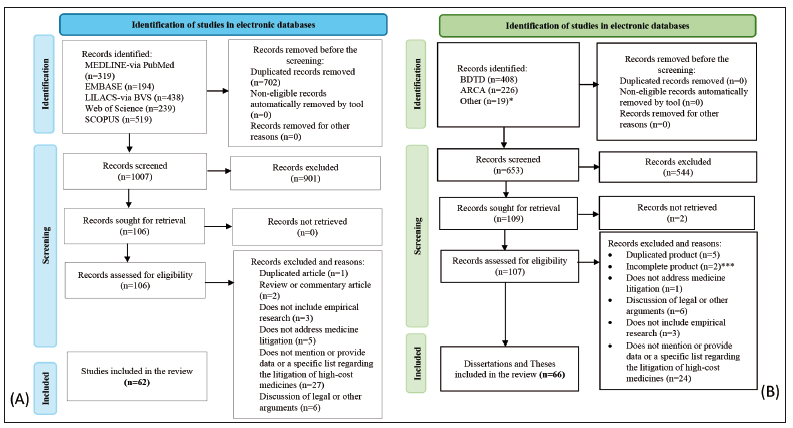 Source: Prepared by the authors, 2023.Notes: * Others = Products originating from search in bibliographic databases, some of which also capture dissertations and theses; the 19 products were not included in the BDTD and ARCA FIOCRUZ search results.** The migration format of the search results for academic products in the BDTD and ARCA FIOCRUZ did not allow the identification of duplications via the reference manager; this verification was conducted using the research database generated in Google Forms, with all products examined in the selection from full texts.*** Academic product with results in article format but not found in the full text made available in the D&Ts database (and also not found in the search for bibliographic references).
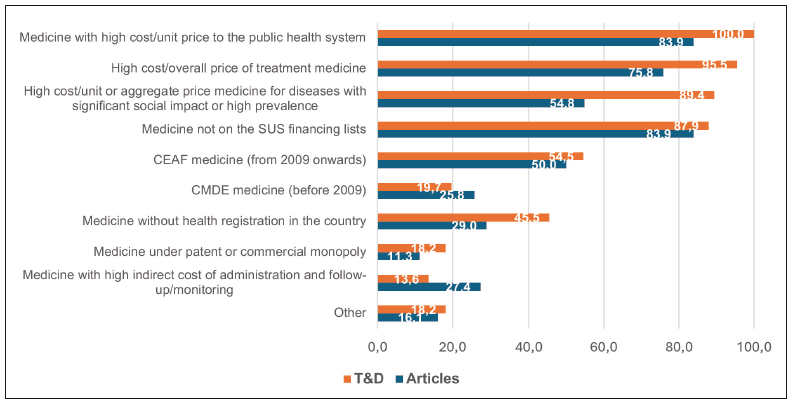 Note: The medicines in the academic article/product could meet more than one operational definition criterion.Captions: CEAF - Specialized Pharmaceutical Care Component; CMDE - Exceptionally Dispensed Drug Component; SUS - Unified Health System.Source: Prepared by the authors.