 Pedalization: types, characteristics, and techniques of the right piano pedal
ABSTRACT:
This research discusses piano pedaling as a vital tool in piano performance. It aims to explore the use of right pedals. Pedal technique is often shaped by direct instructions from a particular teacher or by traditions of a national piano school. Differences in pedaling approaches exist among various piano schools, teaching methods, and individual pedal applications. Methodologically, the study falls within the applied field of piano education, drawing on personal experience and extensive formal training. A qualitative and descriptive approach is employed to provide coherent information and highlight specific pedal techniques. Thus, it follows a structure that adequately supports the main objective of presenting and enhancing piano teachers and students with a better understanding of the pedaling. While many authors dedicate attention to this topic, pedalization remains an area where discrepancies between schools and performers are apparent. Therefore, the purpose of the present research is to bridge pedagogical methods/strategies streaming from the Eastern and Western piano schools. The study also investigates problems arising from inconsistent terminology, discusses where the right pedal is applied, and identifies thirteen types of pedals assisting pianists and teachers in their approach to piano performance.
KEYWORDS:
Pedal; Right pedal; Piano education; Piano technique; Style
RESUMO:
Esta pesquisa aborda a pedalização do piano como uma ferramenta essencial na interpretação pianística. Seu objetivo é explorar o uso do pedal direito. A técnica do pedal é frequentemente moldada por instruções diretas de um professor particular ou pelas tradições de uma escola nacional de piano. Existem diferenças nos enfoques de pedalização entre diversas escolas pianísticas, métodos de ensino e aplicações individuais do pedal. Metodologicamente, o estudo se insere no campo aplicado da educação pianística, fundamentando-se na experiência pessoal e em uma extensa formação formal. Adota-se um método qualitativo e descritivo para fornecer informações claras e destacar técnicas específicas de pedal. Dessa forma, a pesquisa é estruturada de modo a cumprir o objetivo principal de facilitar e enriquecer a compreensão do pedal entre professores e alunos de piano. Embora inúmeros autores abordem essa temática, a pedalização continua sendo uma área em que as discrepâncias entre escolas e intérpretes são evidentes. Portanto, o propósito desta pesquisa é estabelecer uma ponte entre os métodos e estratégias pedagógicas oriundos das escolas pianísticas orientais e ocidentais. O estudo também investiga os problemas decorrentes da terminologia inconsistente, analisa onde o pedal direito é aplicado e identifica treze tipos de pedais que auxiliam pianistas e professores no aprimoramento da interpretação pianística.
PALAVRAS-CHAVE:
Pedal; Pedal direito; Ensino do piano; Técnica pianística; Estilo
1. Introduction
My music educator and piano instructor career has allowed me to work with students from various countries and piano schools. In this process, I have noticed considerable differences in the use of pedals. This provoked me to question why there are such discrepancies when it comes to pedalization. Why do students misinterpret the names of the pedals? What has caused such instability in the systematic knowledge of the pedal? Why do most students use just a few types of pedals? After attending numerous international masterclasses, reading, and discussing the issue with colleagues from different parts of the world, I discovered that pedalization is an area filled with vagueness and inconsistency for many pianists. The widespread ambiguity regarding the employment of the pedal begs the need to reevaluate the technical and artistic aspects of pedaling. This notion has prompted me to begin my research on the topic. Through my investigation, I revisited memories of my piano education in Bulgaria and other countries, recalling my interactions with various musicians. These experiences not only exposed me to multiple schools and pianistic approaches but also deepened my understanding of the diverse performance practices that have shaped the art of piano performance. My experience with different mentors, their extensive (I admit, sometimes contradictory) instructions, and the theoretical knowledge I later attained from Russian and English sources, led me to a clear understanding that although ‘much has been said’ about pedaling, some aspects have been largely neglected. The reviewed literature has equipped me with more questions than answers: Why is there a misconception about pedal terminology? How and where do we use the right pedal? What are the available types of pedals? The present paper addresses these questions by highlighting common misinterpretations in literature and performance practice, illustrating the methods and techniques of pedal application, and identifying the different pedal types, techniques, and characteristics.
The literature devoted to pedaling contains numerous differing interpretations. Indisputably, the nomenclature of pedals presents a significant challenge: Variations of terminology adopted from sources by different schools. In Russian literature, for example, the right pedal is called the ‘damper pedal’ but also the ‘right’ or ‘loud’ pedal. The left pedal is referred to as ‘shifting’, ‘left’, ‘quiet’, and ‘una corda’. The middle pedal is named ‘sostenuto’, ‘sustained’, and ‘middle’. On the other hand, in English academia, the right pedal is denoted as ‘right’, ‘first’, ‘loud’, ‘open’, ‘damper’, ‘amplifier’, ‘connecting’, ‘legato’, and ‘sustain’ pedal. The left pedal can be indicated as ‘una corda’, ‘soft’, ‘left’, ‘sostenuto’, and ‘timbre’ pedal. The middle pedal can be referred to as the ‘middle’, ‘tonal’, ‘sustain’, and ‘Steinway’ pedal. The existence of multiple names designating only three pedals has indeed led to widespread confusion showcasing the diversity of interpretations. Furthermore, the tendency to use the same term referring to two different pedals, for example, a ‘sustain’ for both the right and middle pedal, along with various terms for only the right pedal, has hindered the proper understanding of the topic. Two justifications can explain this paradox: First, the establishment of piano pedagogy in the nineteenth and beginning of the twentieth century was developed in two major independent contexts, depending on the local theoretical models of the East and West. At this time, teachers and theorists from different countries could not efficiently communicate, resulting in various terminologies and definitions associated with the pedal. Globalization in the late twentieth century has facilitated the international exchange of knowledge and practices between distant music schools, including pedal terms, which were then translated and documented based on personal preferences. In this regard, I agree with Reimar Riefling’s (1962) opinion that the most straightforward approach is to name pedals in the simplest conceivable way, as ‘right’, left’, and ‘middle’. This simple naming convention is adopted in current research.
The evolution of the piano as an instrument passed through many phases, beginning with various types of clavichords. In the mid-eighteenth century, famous instrument makers Burkat Shudi (1702-1773) and Jakob Kirkman (1710-1792) introduced harpsichords with two hand stops-one to imitate the sound of a lute, and the other to produce a harp-like effect. In France, a similar approach was adopted, applying knee levers to produce forte and piano effects (Rowland 1994, 15-16). Around 1700, Bartolomeo Cristofori (1655-1731) invented the Gravicembalo col piano e forte, the instrument that is considered the closest prototype of the modern piano (Pollens 2017). John Broadwood (1732-1812) was the first piano maker to replace the knee lever with an actual right pedal (Arnold 1978, 1428). Despite all the changes the instrument underwent, in 1839, Conrad Graf, a German piano master, introduced an instrument with three pedals: the una corda, moderator, and sustaining pedal, which were standardized in the following decades by Steinway & Sons (Rowland 1994, 20).
There are a few important points which should be considered before approaching the prime axis of the research. It is commonly acknowledged among piano teachers and performers that pedal markings in a musical score do not necessarily correspond to the pedal’s actual use. Hans Schmitt noticed that “the pedal markings themselves cannot precisely indicate the exact use of pedal” (Schmitt 1893, 86). A musical score is perceived as a code, an indication, leading the performer to multiple possible interpretations. Such practices depend on an individual’s ability to ‘feel’ and actively listen to the produced musical sound. Pedalization is also a subject to a performer’s interpretation. Alternatively, as Nadirova puts it, “the sense of music-performance practice consists in a creative ‘reading’ of the art piece, uncovering the very same emotional meaning implanted from the composer” (Nadirova 2014, 4). Such distinctive practice can be described as an intuitional rather than purely mechanical or technical process. Richard Taruskin explained this delicate and sophisticated exercise, arguing that “the ultimate authority [with regards to pedaling] rests not in the texts, but in the interpreters” (Taruskin 1995, 185). Simultaneously, strict adherence to the pedal markings in the score suggests that it may overlook the composer’s intentions and limit the performer’s imagination and artistic creativity. Therefore, reasonable control of the sound that is managed by accurate listening and based on well-established aesthetic knowledge, can be recognized as the right formula and an actual guarantee for good pedal interpretation.
Since the evolution of pianistic art, musicians have recognized the importance of pedaling. Multiple studies, teaching books, and instructions were dedicated to the education of young pianists. Pieces, focusing on the technical purposes of obtaining the skills of how and when to use the pedal were created, such as Samuel Maykapar’s 20 Pedal Preludes (1964), Elena Gnesina’s Fortepiano Alphabet (1979), Joan Last’s The Young Pianist (1985), and others. Yet, many of these well-recognized books cover just the main types of pedaling: the straight, late, and half right pedals. With the development of teaching practice, a need for a deeper understanding of the topic emerged, followed by more theoretical literature. As a result, seminal research on the topic was published, including Schmitt’s The Pedals of Pianoforte (1893 [1875]), Alexander Bukhovstev’s Guide of Proper Use of the Pianoforte Pedals (1896), and others that followed in the subsequent decades. These studies primarily focus on positioning, the connection between hands and legs, places of implementation, and the history of pedalization. Even though the accumulation of theoretical knowledge in this literature is significant, most of the scholarly attention is aimed at highlighting the right pedal’s main types, namely, straight, late, and vibrating (in some cases, half pedal). Debating this fact, Keil concluded that such a simple formulation could be due to a “general disagreement on how to discuss and teach piano pedaling” (Keil 2015, 40). Most pianists are aware of the challenges in verbalizing pedalization. As the esteemed professor from Leningrad (Sankt Petersburg) Conservatory, Nathan Perlman remarked about the idea of creating a textbook containing instructions for proper pedaling: “An attempt to draft a book with instructions for pedalization is unthinkable! It is akin to attempting to create a Book of Spells or a Textbook for Magics” (Perlman 2002, 46). It is indeed a risk for an author to employ “non-academic” approaches to a topic, such as delving into deep emotional spheres where one must express feelings and articulate the subtle intensity of shadowed emotional and vague physical interconnections. It is much safer to write and discuss elements capturing intellectual properties; properties that are measurable, statistically convenient, suitable for theoretical formulation, and theoretically ‘comprehensible’.
The body of literature dedicated to piano pedaling includes several important books worth mentioning, one of which is The Art of Pedaling: A Manual for Use of the Piano Pedals by Heinrich Gebhard. This book emphasizes the essential role of the right pedal through numerous examples from piano literature, highlighting stylistic and period-specific applications. However, it does not thoroughly explore the different types of pedals or clearly explain the exact places where the pedal should be applied.
Other important works on piano pedaling by Russian theorists include Golubovskaya’s book The Art of Pedalization (1974) and Semyonina’s book The Art of Pedaling Considering the Genre and Stylistic Features of the Musical Language (2017). These texts also focus on the stylistic use of a pedal according to historical periods and specific compositions but fail to provide an in-depth analysis or classification of pedal types. While many other esteemed teachers and performers address pedaling amongst other musical elements in their publications (which will be referenced throughout this study), they do not cover all possible pedal variations, nor do they specify the location where the pedal should be applied. Over the past few decades, there has been a growing interest in exploring the connection between a particular composer and the use of pedals. Notable studies in this area include Gendler (1998), Beethoven, A Pioner in the Use of the Piano Pedal (M.A. thesis, San Jose University), Lio (2020), Pedagogy in Piano Education (PhD. University of Miami, Metaxiki, (2005), Consideration for Pedaling in Debussy’s Piano Music (PhD, CITY University), and my M.A. student Rita Abukariem (2024), An Analytical Study of Frederic Chopin’s Method of Pedalization, (University of Jordan).
Researchers have also shown interest in examining how the pedal interacts with musical texture, an example of which is Chew and Francois’s 2008 research, MuSA.RT and the Pedal: The Role of the Sustain Pedal in Clarifying Tonal Structure. These studies indicate a renewed scholarly focus on pedaling, demonstrating that much remains to be said regarding the interpretation and specifics of the pedal. Moreover, they reveal contradictions in the existing literature, underscoring the need for further, more comprehensive research. The present study shares a similar goal: To examine the various types of the right pedal and indicate the most common instances in which it is applied. Specifically, it will address the following questions:
-
What are the different types of right pedals used in piano performance?
-
What are the differences and variations between these types of the right pedal?
-
Where and how can these pedals be applied?
This study adopts a descriptive qualitative approach aimed at exploring the various types of the right pedal in piano performance and their contextual applications. The research is grounded in the author’s personal experience as a performing pianist and pedagogue, enriched by formal training under teachers from diverse musical traditions and supported by academic inquiry into historical and stylistic practices. Rather than relying on quantitative data or statistical analysis, the methodology emphasizes in-depth, reflective observation and interpretation. The study systematically addresses the functional distinctions among different right-pedal techniques and examines their usage in relation to musical texture and stylistic periods.
2. When to apply the right pedal?
The pedal is not just a device that is mathematically added to designated, technically calculated spots; it is a powerful engine that can launch the performance toward endless horizons. The lack of conclusive research and instructions addressing the question of “where the pedal should be placed” is a pressing issue that needs to be addressed. This literature gap contributes to the common misinformed or shallow use of pedaling among pianists. Some errors in pedal education are an aftereffect of aural tutoring, as each pedagogue tends to deliver instructions explicitly based on their own experience. This personal knowledge emanates from individual schooling and is an accumulation of different teaching methods and gathered theoretical knowledge. As is common in piano education, the authority of the teacher over the student is largely indisputable; young pianists tend to be accustomed to silently digest every instruction from their mentors without questioning its legitimacy. Admiring the teacher’s expertise leads most pianists to put their teachers on a pedestal, acknowledging their methodological school as incontestable. However, such an uncompromising and rigid belief is one of the most dangerous causes of the insufficient development of pianistic skills. Extensive theoretical education and exposure to different schools’ approaches are invaluable resources for a pianist’s evolution. Furthermore, the fear of over-pedaling (usually implanted in young pianists’ early years of education) restricts attempts at experimentation, thereby limiting the pedal’s role to a supplementary one. Thus, discussing when, how, and where to add the pedal is crucial in instilling change in the general approach to pedalization.
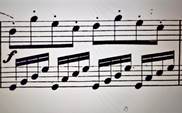
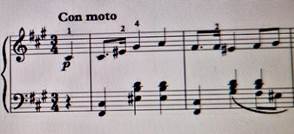
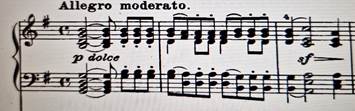
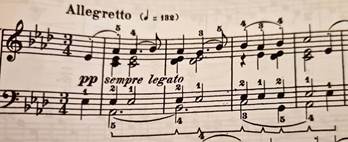
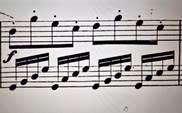
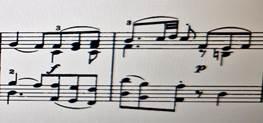
Beginner pianists are usually taught to attach the pedal to bass harmonic notes or chords, to connect it to arpeggios and broken chords, cantabile melodic lines, and to use it as a color modifier. Although these instructions have become well-known norms among pianists, they should not be generalized and adopted as standard practice in all cases. For example, in Mozart’s Sonata K. 545, first movement, bar 11, the pedal should not be added to the broken chords in the left hand, as the staccato line in the right hand will become blurred, losing the lightness and playfulness of the melody (Figure 01).
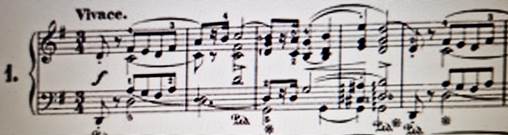
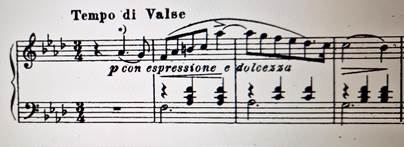
Likewise, suppose we follow standardized rules and pedal the long Dominant and Tonic notes in the left hand of Chopin’s Mazurka Op.50, No. 1; in that case, we will transform Chopin’s style into Debussy’s, depriving the Mazurka of its character, delivered by the semiquaver rest, followed by the semiquaver note in the right hand (Figure 02)
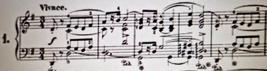
Oeuvres complètes de Frédéric Chopin, Band 1, Editor Karl Kindwarth (1880), Berlin, Bote &Bock
Hence, how can one define the parameters for when and how to use the right pedal with such unstable guidelines? The answers provided in the literature and live practice remain insufficient for an in-depth understanding of pedal placement. Through my extended research and teaching experience, I have devised numerous points that can direct pianists towards the correct method of pedalization. The following are key aspects on which pedaling depends:
-
The epoch and national style of the composer’s school.
-
The composer’s period (for example, early or late opuses of Beethoven).
-
The genre.
-
Formal analysis of the structure.
-
Texture.
-
Articulation.
-
Analysis of melodic lines.
-
Examination of dynamic progress through the architectural plan of the overall music piece (for example, if we play a sonata, suite, or any other form, one must not study each section or movement alone but rather understand it holistically as a complete and dynamic evolution, leading to the central climax of the cycle).
-
Variations in tempo.
-
Tone color, artistic image, and personal interpretative plan.
The pedal should be applied according to the main parameters presented below. However, one must stress that these indications are guidelines to assist pianists rather than strict rules to be followed. They must be approached cautiously, as each pedal placement should be individually investigated and adjusted to the particular style, genre, and other musical considerations.
-
For ‘tone painting’ of the melodic line, emphasizing important phrasing notes.
-
For enhancing the legato line (connection between notes).
-
For highlighting the beginning note of the melodic line.
-
With short ornaments in the melodic line.
-
With long ornamentations (e.g. trills), ensuring perceived connectivity and evenness. The pedal can be adjusted as vibrating, quarter, or repetitive (see types of pedals below).
-
For softening some detached notes in the melodic line which might otherwise disturb the phrase. Pedaling allows the pianist to highlight these notes and add a specific color to their meaning.
-
For sustaining the bass notes or chords.
-
For emphasizing bass notes, that play a structurally significant role within the phrase.
-
For enhancing the entrance of polyphonic lines, which appear in different hands or registers (if note values are long and considering the piece’s tempo).
-
For softening the accented or sharply detached notes.
-
To enhance distinct chords to sound milder and more delicate.
-
To reinforce the dynamic contrasts, such as subito forte or subito piano.
-
To enhance the effect of crescendo or diminuendo (if appropriate for the era or genre).
-
In connecting gradual chord progressions.
-
To mark a metric shift within syncopation.
-
When a slight blurring of diatonic or chromatic scale progressions is needed (Gieseking and Leimer 1972, 132-133)
-
For connecting accompaniment figures such as arpeggios and broken chords (e.g., Chopin, Etude Op. 25, N. 1).
-
To elaborate and connect extended arpeggios, broken chords, or Alberti bass, which should be performed with a clear, bright tone while remaining pedaled (e.g., Mozart, Sonata No.9 in D major, K. 311, left hand).
-
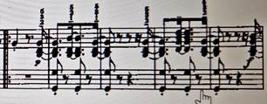
For smoothly connecting single notes or chords that should neither be separated nor blurred but instead blended seamlessly (e.g., Beethoven, Sonata No. 16 in G major, Op. 31, No. 1, bars 3-6).
-
To create a collective, united sound of a section (e.g., Brahms, Intermezzo, Op.118, No.2).
-
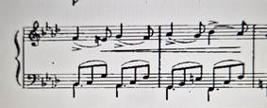
To create smooth sound transition without complete disruption (e.g., Glinka, The Separation, bars 13-14).
-
To highlight the scale or mode of a theme.
-
To distinguish contrasting phrases.
-
For timbre shifts.
-
To create deliberate smooth interference within the tonal plan (highlighting modulation).
-
For connecting different sections, that should be cohesively integrated.
-
To assist fingering in technically challenging passages requiring silent exchanges or overlapping fingers.
-
To enhance sound reverberation waves in dry acoustic halls or for less resonating instruments.
-
For coloring specific notes or chords, that need distinct emphasis (a pedal can be silently reapplied or adjusted to half or quarter pedal (see pedal types below).
-
To introduce and express a new emotional mood.
Throughout the history of piano performance, there have been discussions among performers and educators concerning era-appropriate pedaling. These debates have tackled pedaling in relation to the era, genre, the composer’s style, and performance characteristics. In piano education, a few concepts about pedaling have grown to become standardized conventions, such as: “Mozart’s music should be played with short and limited pedals”, “Bach’s compositions should be performed without a pedal”, and “Romantic music should be heavily pedaled”. One must reconsider and carefully evaluate these conventions and address misunderstandings and misapplications of the pedaling. As pianists develop their interpretive performance plans with multiple perspectives in mind, they must be free to experiment with rules, consider exceptions and achieve their artistic goals. As part of these plans, every pedal placement should fit into the general interpretative framework and the intended aesthetic and performative vision. As the Russian pedagogue N.E. Semyonina argues, “Each case has to be assessed and decided separately; it should be evaluated over and over again” (Semyonina 2017, 12). Pedaling should be tailored not only to the piece’s historical period and composer but also to the piece itself - its structure, form, texture, and artistic idea - thus creating a universe of possibilities.
To allow freedom of interpretation in piano performance, we must first challenge the unquestioned, dangerous conceptions that have seemingly become an unwritten doctrine etched in pianists’ minds and dismiss statements like “Bach with no pedal” from our vocabulary. Throughout my teaching career, I have realized that students often resist using pedals in Baroque music. In these instances, I constantly refer to Ferruccio Busoni, who advised his pupils to obliterate this false convention. “He [Busoni] claimed that contemporary pianists were not fully exploring the ‘unexhausted’ effects of the pedal, saying, explicitly, that the pedal is ‘ill-repute’” (Alvarado 2021, 1). Most experienced pianists know that imagining some Bach’s Preludes, Toccatas, or Partitas stripped from the pedal is nearly impossible. For the sake of argument, if we omit the pedal entirely, then the organ-like character, the acoustic resemblance to the church atmosphere, the improvisatory character, and the endless connectivity of interacting lines will be lost altogether. Bacon, in his Notes, argues that we should “artfully compromise between the dryness of non-pedaling and enriching the harmony with continuous pedaling” (Bacon 1965, 53). Historically, a great deal of Baroque music was composed for other instruments, and the aesthetic authenticity of its sound should be duly preserved. The preservation and expression of the style of a musical work are essential to its performance. Thus, pedaling should not disrupt melodic accuracy, articulation precision, legitimate ornamentation, or the clear display of dominant polyphonic events.
During our lessons in Moscow (1986), Professor Tatyna Nikolaeva (1924-1993) mentioned that capturing the essence of the Baroque period demands clarity of the themes and unity in voice leading. Therefore, the pedal should be short and transparent, highlighting structural points, register shifts, and timbral variations. It should assist legato lines while preserving clarity and distinct voicing. In this context, light pedaling techniques such as straight, half, and quarter pedals are most suitable, while late, sustained, and vibrating pedals should be used sparingly (see pedal types below). As Neuhaus describes it, the Baroque pedal should be “very clever, careful and extremely economical” (Neuhаus 1958, 63). When considering Baroque pedaling, the emphasis should be on the varieties of pedal techniques, which depend not only on tempo and genre characteristics but also on the composer’s style. For instance, in performing Rameau, Couperin, and Scarlatti, the pedals are ‘invisible’, pointing to some rhythmically or metrically important moments, connecting distant notes or registers, and enhancing ornaments or key melodic notes. Ralph Kirkpatrick also discussed the topic, asserting that the pedal in Scarlatti “should [only] be used for highlighting and varying color” (Kirkpatrick 1953, 319). Such applications of the pedal are suited to the distinct textural characteristics of these composers. Their delicate and ‘transparent’ compositional techniques and their light and ‘gallant’ style require a more refined approach to pedalization. Therefore, Baroque pedaling should be considered with great care and taste, focusing more on subtlety and nuance rather than excessive use.
The pedal in Classical music is often recognized as a tool for conveying an orchestral sound, enriching the piano’s timbre, and emphasizing articulation. The dominant opinion holds that the pedals in Classical compositions should be short (primarily straight and late pedals), maintaining clarity and lightness. In the works of Haydn, Mozart, and Clementi, the pedal serves to highlight important harmonic events, strong beats, accents, legato lines, certain ornaments, syncopations, distant bass notes, cadential points, specific chromatic or arpeggio passages, and smooth hand crossing. The straight, late, quarter, half, and vibrating pedals can be introduced in described occurrences.
Herein, I aim to shed light on the discrepancies in pedaling approaches among different editors as each publishing house presents its approaches based on the editor’s personal understanding. Asafyev, in discussing different interpretative approaches, argues that we should not solely depend on the score but also on “the observation of the music, its movement, and its current life” (Barenboim 1989, 339). Determining the most suitable type of pedaling at any given moment can be challenging. Furthermore, there are instances where multiple pedaling techniques may be applied, each producing an equally acceptable result. The choice is never conclusive because every preference serves a unique performance strategy. For example, Goldenweizer’s edition of Mozart sonatas presents a varied and rich pedaling, whereas Urtex’s (Martinsen and Waismann) excludes pedal marking altogether. The same can be said about Haydn’s sonatas, wherein in Urtex (edited by Georg Fedel), pedaling is avoided, while Peters (Kohler) contains economical and modest use of pedal. Muzgiz edition (Jurgenson) of Beethoven’s works interprets the right pedal in a restrained and simplified manner. Simultaneously, Beethoven’s use of the pedal in the same Muzgiz edition, under Goldenweizer’s editionship reflects a more vibrant and pedal-fertile approach. One must note that the Muzgiz edition was the first to recognize Beethoven as a composer who prolonged the pedal into the rest. Such an innovation in pedalization may have stemmed from Beethoven’s own pedal marking. In his Piano Sonata No.21, Op. 53, commonly known as L’Aurora, he employed prolonged pedaling, sustaining a single pedal for 10 bars, in which the major-minor sonority is blended into one complete section. The same is observed in the long pedal marking in Sonata No. 17 in D minor, Op. 31, No. 2, 1st movement, where the pedal assists in the timbral transformation, creating a mystical atmosphere. Given these cases, Beethoven significantly enriched the use of the pedal and interpreted it as a powerful force in creating a specific sonic image and a vibrant atmosphere. Of course, pedal placement differs between Beethoven’s early and late opuses. In his early works, pedals are associated with a textual structure (marking the difference in registers, sections, and the accentuation of melodic and harmonic points). It also maintains continuity (sustaining arpeggios, long lines, and chordal structures), in which case, mostly straight, anticipated, late, and half pedals are employed. On the other hand, in his later works, the pedal is more deeply integrated into the music’s fundamental architectural structure and sound image, playing an essential role in creating the music’s atmosphere and dramatic development.
Unlike earlier periods, Romantic music did not spur conflicting opinions about pedaling. Romanticism idealized the musical sound and the beauty of the clavier tone, transforming the role of pedalization and elevating its significance. Experimenting with the broad register ranges, multiple voicing, thick and dense textures and harmonically rich structures, diverse metric-rhythmic fabrics, and vibrant technical pianism led to the expansion of the art of pedalization. Accordingly, pedal placement options were broadened, and refined pedals emerged. Tone quality, expressed through extracting specific timbres and sound colors, became highly important in romanticism, thus compelling composers to utilize all available tools to achieve their expressive aims. The pedal could no longer be constrained and was converted into the main architectural block on which the musical image was established, enhancing the storytelling atmosphere. Golubovskaya, reflecting on Chopin’s use of the pedal, stated “Chopin is the poet of the piano, and the poet of the pedal” (Golubovskaya 1974, 71). In the romantic style, pedalization evolved into the pulsing heart of the piano.
Impressionism crowned the pedal as the “queen of the ball”. The pedal emerged as a primary tool for conveying the blurriness of musicians’ feelings and the hazy impressions streaming from the outside world. The art of pedaling transformed into a sensitive art form, shaped by instinctive feelings and nuanced pedal touches. With this new image of the pedal, pianists could freely vibrate with the pedal, regulate its depth, and experiment with rapid interruptions and reapplications. Hentova, describing Skryabin’s pedaling, commented: “He avoids the use of straight pedal; he did not press the pedal till the end. Without changing the position of his leg, he only adjusts the depth of the leg’s pressure, in that way changing the quality of the sound” (Hentova 1962, 44). By this stage in its historical development, pedalization was inevitably transformed into an unexplainable and nearly elusive topic that is too fluid for strict verbalization or theorization, placing it entirely in the realm of the pianist’s intuition, knowledge, and taste.
Composers of the late twentieth and twenty-first centuries have significantly expanded the expressive potential of the piano pedal, integrating it into compositional techniques that transcend its traditional role. Sofia Gubaidulina (1931-2025) explored multilayered pedaling to produce microtonal effects, manipulating resonance and sound color in innovative ways. George Crumb (1929-2022), in Makrokosmos, employs silently depressed keys in combination with the right pedal to activate sympathetic resonance. He further integrates rhythmic gestures-such as clapping on the piano lid-while using the pedal to sustain the resonance of plucked or muted strings associated with silently held notes. Similarly, Helmut Lachenmann (b. 1935), in Guero, investigates extended techniques by scraping the keys and knocking on the piano case, creating a rhythmic dialogue between the resonating components of the instrument-namely, the pedal mechanism and the piano’s body. In this context, the pedal in contemporary music is no longer limited to a timbral function but is redefined as a multifaceted device, capable of contributing to rhythm, texture, and structural innovation.
The knowledge of pedaling is strictly connected with the awareness of pedal types. Each type of pedal offers distinct possibilities, capable of embellishing or distorting a musical piece. The following section discusses the different types of the right pedal techniques and their characteristics.
2. The types of right pedal
In his discussion on pedaling, Riefling quoted Anton Rubinstein’s famous remark “The longer I play, the more convinced I am that the pedal is the soul of the piano” (Riefling 1962,1). Although this statement might seem like a cliché, it truly captures the real essence of the topic. Pedaling can either transform the performance into a divine experience or reduce it into а parade of incompetency.
Pedaling relies on the mechanics of dampers and hammers. Therefore, a deep understanding of their mechanical characteristics, functions, and applications is essential. The way the leg responds to these mechanical interactions is a skill that should be instilled in every pianist’s education, as it plays a major role in shaping the desired sound image during a performance. The timing of the pedal presses utterly reflects the resulting sound. For example, pressing the pedal before striking a key allows the strings to resonate freely, even before the hammer and damper make contact, creating a rich, booming tone. If the pedal remains depressed, it accumulates the resonance and reflects in an abundant and fertile sound. When the pedal is slowly released, there is a gradual decrease in sound waves, resulting in a diminuendo. Consequently, the legs and hands work harmoniously to produce the desired tone in coordination with the piano’s mechanism, maintaining balance with the pianist’s physical movements. Discussing this coordination, Galubovskaya stated that “pedalization is produced by ‘leg with hands’ partnership, coexisting with our performance intentions. This is high-level pilotage, characteristic for piano art” (Galubockaya 1974, 52). It is important to highlight that some pianists focus excessively on the mechanical process of determining the exact moment to utilize the pedal, rather than on listening of the produces sound, which may lead them to adhere far too strictly to the notated text. Russian theorist and pianist Anatolievich warned: “It is especially harmful that scores focus our attention on the movement of the hands and leg, teaching us to rely on our visual reaction to the notation, rather than following our ear commands” (Anatolievich 1916, 2). As mentioned, the technique and method of pedalization are rarely fully notated in a musical score; instead, composers or editors tend to indicate where the pedal should begin and end. However, there are places or sections where additional pedal application can be added, re-applied, or swiftly ‘touched’. These effects help achieve brief sound resonance, alter tone color, or maintain continuity in musical lines.
Multiple technical factors determine the type of pedal technique used. This includes:
-
The timing of pedal placement in relation to key depression.
-
The moment the pedal is released, according to the note value.
-
The speed at which the pedal is pressed or released.
-
The depth at which the pedal is pressed.
-
Whether the pedal is fully or partially pressed.
-
The duration for which the pedal remains pressed.
-
Whether the pedal is released completely or repeatedly depressed without full release
These factors influence the resonance, sound waves’ continuity, and other acoustic features, ultimately changing the quality of the tone.
The following section identifies and describes the different types of right pedal techniques.
2.1. The straight pedal
This pedal is referred to as ‘damper’, rhythmic’, ‘parallel’, ‘simultaneous’, or ‘staccato’ pedal in piano literature. It is produced when the right pedal is pressed simultaneously with the key and released together with the key; the motion between the hands and leg is synchronized. The straight pedal emphasizes accents, fortissimo chords, cadential points, metrically stressed beats following rests, as well as tenuto or staccato notes. It is also used to highlight the first of two legato notes and in rhythmically characteristic passages (e.g. Grieg, The List from the Album, Op. 12, No. 5, bars 1-2;
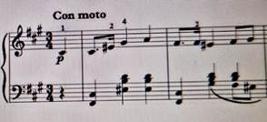
No.7, bars 1 and 5, and is commonly found in Chopin Mazurkas). It is also employed to enrich sonority (e.g. Chopin, Nocturne Op.9, No.1, bar 20, sotto voce).

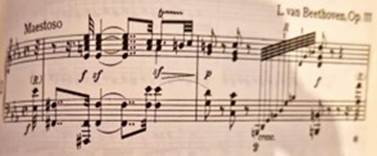
The straight pedal secures a clear entry of bass notes while supporting the seamless connection of harmonic structures that belong to the same chord. A good example of this can be found in Beethoven’s Tempest Sonata No. 17 in D minor, Op. 31, No. 2, third movement, at the opening. Applying the straight pedal in this example adds a brighter sound, securing the music’s flowing movement, as opposed to using other pedal types, such as the late pedal, which would hinder and restrict the sense of motion and produce a more shaded sound. The straight pedal is acknowledged as the most easily used pedal, demanding minimal effort expression for utilization. (Banowetz 1985, 10) This pedal was largely used in the late nineteenth century, during the era of the Viennese classics, and is regarded as the easiest to use among the various types of pedals. (Benowetz 1985, 10).
2.2. The late pedal
Also known as the ‘legato’ or ‘syncopated’ pedal, is engaged immediately after striking a key or chord and is released precisely before the entry of the following note. Thus, the new-sounding tone is not ‘polluted’ from the previous sound; it is clear and bright. The pedal is released at the very end of the note’s value. Venino, examining the ‘syncopated pedal’ (herein referred to as the late pedal), notes that “the pedal should be released only at the end of the note without lifting the foot completely” (Venino 1921, 6). The opening section of Gnesina’s Fortepiano Alphabet, Piece No.50, provides an excellent example of this pedal. The late pedal can connect two notes or add color to a detached chord (e.g. Mozart, Fantasia No. 3 in D minor, K. 397, Adagio; Tchaikovsky, Valse Sentimental, Op. 51, No.6, bar 4;
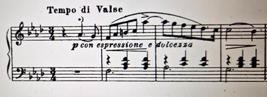
Schumann, Fantasiestücke, Op.16, N.6; Fabel, Introduction - where each note is pedaled with a late pedal and released before the following one is played). The late pedal was extensively used and widely recognized in academia.
2.3. The legato pedal
Also known as the ‘overlapped’, ‘syncopated”, and ‘connecting’ pedal, is pressed slightly after the note is played and released just after the following note is sounded, allowing the strings to resonate and blend the sounds of both notes. The legato pedal is most appropriately used for extending the sound. It helps prolong sound waves and prevents a ‘dry’ tone. This pedal enriches the continuity of the melodic lines; however, it is ultimately the pianist’s fingers that articulate and ensure the sustained resonance of the sounds. Commenting on this interplay, Waterman states that the performer must always maintain a seamless synchronization between both techniques. (Waterman 1983, 28). This pedal should be applied carefully to ensure that the connections between notes do not result in unintended harmonies. It is particularly effective for linking chords, intervals, and notes from different registers, in addition to adding a timbral effect to pivotal notes in a phrase and with tenuto and sforzando notes. It is important to note the functional and technical differences between applying the late and legato pedals: While the late pedal is applied to a single note or chord and held until the natural end of the sound, the legato pedal enters slightly after the next key is pressed and continues, embracing the upcoming note, chords, or harmonies. As such, the legato pedal predominantly regulates the music’s connectivity, producing a flowing effect. An example that clarifies the difference between the two pedal types can be found in Schumann’s Carnaval, Op.9, Valse Noble. In the Introduction, a late pedal is used for the first bass note and released on the second note. The following theme is performed by a legato pedal, which supports the right-hand melodic line.
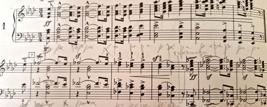
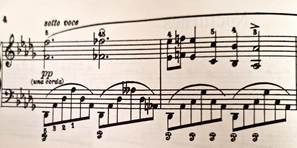
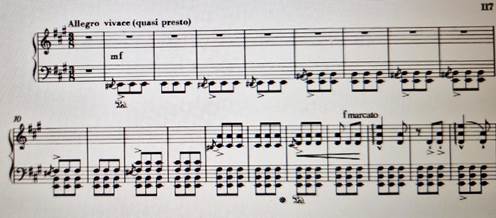
The legato pedal can be used in arpeggiated passages (e.g. Bach, Partita, No. 6, BWV 830, Toccata) for connecting the melodic line and the harmony (e.g. Brahms, Intermezzo, Op.119, No. 1), for sustaining the harmony (e.g. Liszt, Transcendental Etudes, No 4. Mazeppa, bar 6 and after).
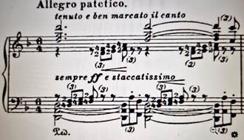
Listz; Musikalishe Werke,Band 1, (Etüden), 1988, editor Busini F., Breitkopf & Härtel, Leiptzig,
The pedal is also used for attaining legatissimo (e.g. Chopin, Etude Op.10 No. 9 - the pedal is attached to the left hand, connecting the six semiquavers, although the two quavers in the right hand are detached; non-legato) and for blending a harmonic accumulation (e.g. Liszt, Mephisto Waltz, bars 2-15).
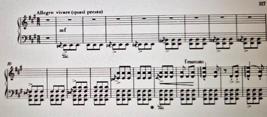
In the performance of the legato pedal, the leg must be flexible, and the release should be fast yet fluent so that it reflects the high quality of sound resonance and the balance between melody and harmony. In his memories of Konstantin Nikolayevich Igumnov’s lessons, Milshtеin mentions that “the pedal in a time of cantilena has to be prolonged until the last possible moment … Therefore, it is not only that the pedal should be pressed with delay, but also its release should be postponed” (Milshtеin, 1954,99).
The three aforementioned pedals are the most well-known pedals. They are widely discussed in piano pedagogy and theoretical studies, although the legato and late pedal are often mistakenly combined as one pedal type. These pedals are also the main - if not the only - types taught in many piano schools. The following section identifies the poorly investigated pedals, both theoretically and practically.
2.4. The anticipated pedal
Known as the ‘acoustic’, ‘preliminary’, or ‘timber’ pedal, is pressed before the key, allowing strings to vibrate immediately and vibrantly. As Feinberg notes, “[a] chord pressed with the earlier pedal sounds mild and ‘moisture’” (Feinberg 1965, 342). This pedal is used prior to the entry of chords and prior to long melodic notes, that should be emotionally accentuated. Anticipating pedals enrich the sound waves with multiple overtones, producing an orchestral-like sound. In my opinion, this is a very powerful pedal, presenting vast opportunities for creating overwhelming beginnings of new themes or sections in many piano pieces. Banowetz underscores the significance of utilizing the anticipated pedal when two related harmonic chords are present, particularly when the first chord is sustained for a longer duration. This technique ensures that the second chord retains its clarity and definition, avoiding any undesirable blurriness. A notable example of this practice can be found in the opening of Beethoven's Concerto No. 4 (Banowetz 1985, 69-71), which effectively demonstrates the benefits of this approach.
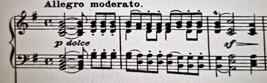
2.5. The partial pedal
Is not pressed fully until its mechanical end but rather engaged somewhere between the two-space borders. As the sound production commences, the damper halts at a small distance from the string, resulting in shorter vibrations followed by an instant stabilization of the pressed note. The partial pedal sustains rich harmonic structures while the principal tone remains dominant and unpolluted. It is also employed when staccato articulation is required to remain strictly detached, yet the sound must appear ‘rich’ (not dry) and in passages following non-pedaled sections to provide contrast in tone color using a slightly more resonant sound (e.g. Chopin Etude Op.25, No.1; Skryabin, 24 Preludes, Op.11, No.6). The partial pedal assists in connecting harmonically rich structures, transitioning to different harmonies, and shifting from a light mood to a darker one.
The half-dampening, followed by its full release, delivers a gentle, mystical sound, therefore, the partial pedal is suitable for impressionistic composers such as Debussy, Ravel, and Scriabin. However, its execution tends to be challenging, even for experienced pianists, because each instrument has different mechanical characteristics, thus, the exact level at which the pedal should be held varies. Locating the precise point at which the leg should stop guarantees capturing the right quality of vibrations. The pedal is also suitable for Baroque keyboard works, composed originally for the harpsichord or clavichord. It is useful in cadential points, where the leading notes should be highlighted and colored, providing a clear but vibrant sound to significantly important structural moments (e.g. Bach, French Suite in D minor, BWV 812, No. 1, Allemnade, at the end of the first section on the C sharp and D in the left hand, leading notes in D minor; then on F and G sharp in right hand, leading notes to the modulation of A major).
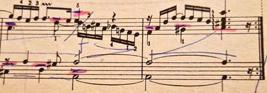
2.6. The half pedal
Is executed by applying pressure onto the mechanism until its very bottom and then releasing it halfway until the middle of the pedal space. After that, the pedal can either be reapplied or fully released. This pedal is similar to the partial pedal, which has led to a common confusion between them and a tendency to treat them as one pedal. Authors mention the partial or the half pedal, when discussing pedaling, but never both.
The half pedal fragmentarily clears the sound waves maintaining primary harmony. Technically, when applying the half pedal, the dampers briefly touch the strings briskly, eliminating part of the vibrations and allowing the thicker strings to dominate. As a result, the bass register or the major harmony prevails. This process limits the pollution of the general sound (e.g., Schubert, Impromptu, Op. 142, D. 935, No. 2, bars 1-5).

Gebhard advocates for the use of the half pedal when playing arpeggios and broken chords, emphasizing its crucial role in achieving an exquisite balance between clarity and rich resonance. This technique not only enhances sound quality but also elevates the overall musical expression. (Gebhard 2012, 35) It can also be used when dynamic nuances are applied in the reiteration of chords, for highlighting the first chord appearances (Ibid., after the repeat sign, on the second of the two legato chords) and to avoid blurriness during running scales or prolonged chordal progressions. When the pedal is pressed, it can be reapplied multiple times, providing vast opportunities for nuancing while securing the transparency of the sounds. The half pedal is useful in Bach’s works, originally composed for the organ, in places where the foot keyboard is meant to hold the basso continue notes, as the notes produced in higher registers remain clear and detached.
2.7. The vibrating pedal
Kown as the ‘tremolo’ or ‘flutter’ pedal, is produced by a full compression followed by a shaking motion of the leg, allowing dampers to quickly move forward and backward from the stings, resulting in a rich and multi-colored sound, while simultaneously keeping the section clear from foreign tones. This technique assists in performing scales, chromatic passages, long chordal passages, and diminuendo, leading to a shimmering effect. A good example of where this pedal can be applied is in Scriabin’s Sonata Op.68 No.9, Molto Meno Vivo and Allegro Molto sections. Vibrating pedals should be utilized exclusively by musicians who have mastered advanced leg techniques. Lui (2020) notes that when employed by those who lack this level of proficiency, vibrating pedals can lead to significant issues with sound clarity, resulting in unwanted sound blurring that detracts from the overall performance quality. (Lui 2020, 70).
2.8. The ghost pedal
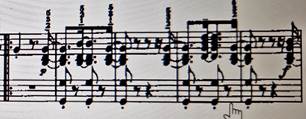
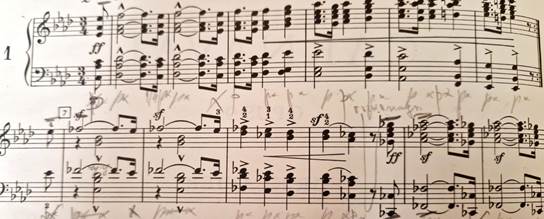
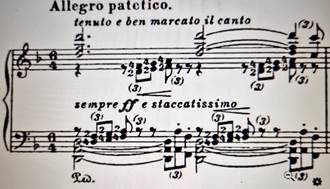
As Tatyana Nikolaeva referred to it in our lessons, is performed when a quiet chord or a single note appears, followed by a different dynamic moment. The ghost technique is primarily associated with Russian piano performers, particularly those from the Moscow piano school.This pedal is produced by a silent, fast push of the leg downward until the end of the mechanism, which remains held until the pedal carries the sound of the fortissimo last chord or note. Then, the pedal is quickly released and rapidly reapplied while the chord or note is held, interrupting the sound wave unexpectedly. With such a technique, the new chord (or note) re-arrives suddenly, mystically as a ‘ghost’. The ghost pedal assists in attaining an excellent subito piano impact (e.g. Beethoven, Sonata No. 24 in F sharp Major, Op. 78, 1st movement, bars 18-19, from the G sharp and B interval in sforzando to the G sharp and A in the next bar;

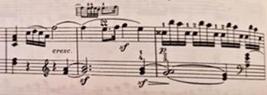
Beethoven, Klaviersonaten, Band 3,1927 editors; Max Pauer and Carl Martenssen, Peters, Leipzig,
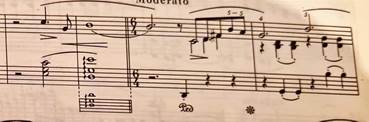
This pedal can also be introduced to add a timbre effect when a note/chord should be extended in the temporal space but colored with multi-spectrum tone nuances. An excellent example of this pedal can be found in Chopin’s Premiere Ballade, Op. 23, beginning when the last chord before the Moderato section is prolonged into the coming single B flat. The use of the pedal, which is transformed into a new ghost pedal at the moment when the hands release the chord, leaves the sound of the single B flat to resonate. Such pedal implementation produces reverberation to the remaining B flat, coloring it with fresh sound waves while keeping the chord and the single tone ‘spiritually’ connected.
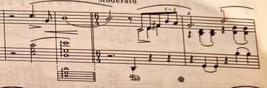
The Ghost pedal remains unexplored in theoretical literature and is poorly adopted in piano performance practice.
2.9. The repetitive pedal
This pedal can be anticipated as an alternative to the vibrating pedal, but it serves additional functions. It is used with long trills, whether in melodic or harmonic lines. Such instances can be seen in Bach’s Partitas and some of Mozart and Beethoven’s Sonatas (in the romantic style, the vibrating pedal is preferably used in similar cases). The repetitive pedal can also be used when the texture is overly saturated with long chordal progressions or extensive scale-like passages. When performing repetitive pedals, the pianist does not vibrate with the pedal but rather exchanges the pedal rapidly. For example, a pianist can start with the straight pedal and throughout the course of the passage, can apply the half, quarter, eighth, or even recurring straight pedals. Therefore, the repetitive pedal can vary and be adjusted according to the pianist’s ear control and aesthetic urgency. The purpose of the repetitive pedal is to emphasize and relate the sound image while securing the harmonic background of the passage.
2.10. The quarter pedal
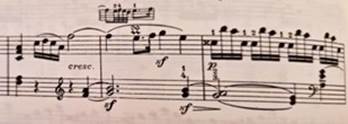
The quarter pedal is performed as the leg is pushed slowly to the quarter of its depth, not reaching the middle border, allowing the sound to slightly revibrate while assuring a more ‘clear’ and distinct tone. (e.g., Beethoven, Sonata Op.31, N.2, 1st movement, end).
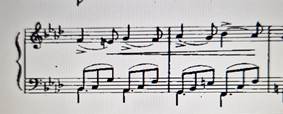
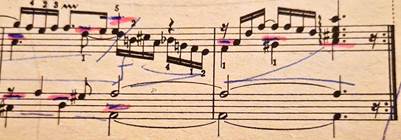
Neuhaus highlights its potential, “This beautiful pedaling allows clear and correct implementation of music. In other cases, the same effect can be delivered only with the assistance of three hands” (Neuhaus 1987, 138). He provides an example of using quarter pedal in Chopin’s Prelude in A-flat major, where the bass line should constantly remain uninterrupted yet clear and brisk, thus allowing the pianist to refresh the harmony, avoid dissonances while maintaining continuity.
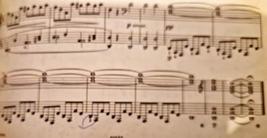
Beethoven, Klaviersonated, Band 2, 1927 editors; Max Pauer and Carl Martenssen, Peters, Leipzig,
2.11. The eighth Pedal
The eight pedal was first mentioned by Venezuelan pianist Teresa Carreño, who described it as being produced by pressing the fourth quarter of the pedal mechanism (Carreño 1919, 29), although this technique was already well-known prior to her mention. Both the quarter and eighth pedals amplify the resonance of the strings without compromising the clarity of the harmonic background. The distinction between these pedals lies in the degree of pressure applied by the leg, affecting the level at which the dampers are lifted and consequently, how freely the strings vibrate. The eighth pedal assists in achieving clarity in dense textures and complex harmonic structures. Additionally, it helps produce an ethereal, transparent quality in the performance of unaccompanied melodic lines, particularly when a fairly-like character is desired while maintaining a stable and bright tone. It assists in achieving a luminous sound when the emotional goal is to evoke a delicate and fairy-like atmosphere. For instance, in Shubert’s Impromptu in E Flat Major, D. 899, the triplets benefit from applying the eighth pedal, as it enhances the depth of the tone without sacrificing clarity. Both the quarter and eighth pedals are well-suited for interpreting works by Mozart and Scarlatti, where the music demands a clear and bright sound, and the pedal serves to enrich the overall sonority of the music while highlighting notes that are essential to the phrasing.
The following two pedals are more functional than qualitative. They are often categorized as variations of the straight or late pedals. However, each possesses unique characteristics and serves distinct purposes. For this reason, they deserve individual recognition and should be examined in terms of their specific applications and performance value.
2.12. The finger pedal
Sometimes referred to as the ‘joint pedal’, is an invaluable tool when connecting successive notes (through overlapping and the silent exchange of fingers). It can also be applied in complex passages or chordal structures that are difficult to connect seamlessly. In academic research, the finger pedal is often associated with the late pedal and is considered a derivative, as the motion between the hands and leg is fully synchronized. However, this association is misleading, as the finger pedal differs from the late pedal in terms of functionality and timing. Like the late pedal, the finger pedal is pressed after the first note is played and released exactly with the entry of the following note or notes. As a result, the finger pedal is held longer than the late pedal but shorter than the legato pedal. The movement to the following note/chord occurs immediately after the dampers are lifted, and as the notes are pressed, the pedal is released simultaneously - rapidly but smoothly.
2.13 The articulation pedal
It separates notes or chords while adding timbral nuances. It is closely associated with the straight pedal but differs in the timing of its release. This pedal can transform staccato, tenuto or non-legato notes to resemble the sound of bowed instruments. The articulation pedal, as my teacher from Bulgarian Conservatory Margarita Krusteva called it, helps create separation between notes while still linking them within a phrase. It is executed by pressing the pedal as a note is played, and when the coming notes are about to be pressed, the pedal is sharply and quickly released, causing the dampers to stop the sound of the previous note abruptly. This pedal is primarily used in the works of Haydn, Mozart, and Beethoven Sonatas (often in second movements), where detached notes are required to imitate an orchestral sound (e.g. Mozart, Sonata in C Major, K.330, 2nd movement, bar 3).
The names of the pedal types have been chosen, based on my preference for clarity and their direct connection to execution. Some, like the ghost and articulation pedal are derived from the names given by my teachers. The names I received from my tutors are not found in academic literature, which allows me to use them. Providing concrete evidence for their teachings and the revived information is challenging. Nonetheless, many pianists have used these pedals either intuitively or based on oral instruction. Therefore, including this information is essential for presenting a systematic and holistic overview of the available right pedals. I believe these names are not only easier to remember and accurately describe their mechanical or performative function, but also reflect the nature of each pedal, providing sense of reassurance and confidence in those who use them.
3. Practical recommendations
When explaining the nature of the right pedal to my students, I always state that it is vital to understand piano mechanics. Therefore, it is essential to examine the instrument as a complex device. This includes how the right pedal is pressed, how the dampers are lifted off the strings, and how the harmonic frequencies influence the sound - these are fundamental aspects on which we establish our knowledge of pedaling. Most importantly, the students must recognize that the pianist has significant control not only over the resonances, but also over the sound quality, length, tone connectivity, and emotional and timbral image. Mastering the precise timing of pedal placement in coordination with the key entries, the depth and frequency of pedal repetitions, the pedal’s length, and the timing of its release are all skills that, collectively, should be guided by the development of a well-established habit of ‘listening’ to the produced sound. Therefore, the right pedal should be seen as a tool transforming performance quality and serving as a prime artistic interpretation engine. Russian musicians, such as Milshtein, Oborin, Goldenweizer, and many others, emphasized the pedal as a fundamental element, shaping a truly artistic performance. Throughout their writings, they repeatedly highlight the significance of era-appropriate pedaling, refined pedal techniques and impeccable auditory control. They assert that through masterful pedal usage a pianist can evoke an aesthetically correct and poetic character and that only with exceptional pedal technique can a musical performance reach a level that can be recognized as true art.
Pedalization depends on the pedal techniques employed by the pianist. The places where the right pedal can be employed are not fixed; they are flexible. Furthermore, they depend on multiple factors, including artistic intent and individual tests. When a pianist constructs a musical replica of a notated text and sculpts a sonic image, they form an interpretative framework in which pedalization emerges as the most sophisticated and delicate element shaping the music’s overall character. This refinement makes pedalization the final and most sophisticated touch of the music’s image. Therefore, the least effective decision is adding pedals from the initial stages of the learning process. The first steps should focus on reading the notated text, establishing correct articulation and phrasing, and defining a coherent dynamic and structural framework. Subsequently, only after these prerequisites are secured should the process of artistic interpretation begin, allowing the exploration of refined pedaling techniques, their alignment, and the sonic embellishment they create. In his memories of the lessons with Goldenweizer, Liya Levinson mentioned that “Alexander Borisovich used to say, ‘before you perform the pedal ‘with feelings’, all the notes should come on their exact places’” (Levinson, Goldenweizer 1969, 379).
The internal hearing of the quality of an upcoming sound that is yet to be produced is a factor that primarily determines the desired tone. Gyorgy Sandor argues that “the manner, frequency, quantity, and intensity of the pedal work must be guided primarily by the ear: constant listening, awareness, and control are needed to produce the desired sound” (Sandor 1995, 178). The ‘well-trained ear ‘actively compares, revises, and balances the image of what the musician expects to hear and what is already produced. Both anticipatory and retrospective listening skills are part of a comprehensive process that is not easily attained and requires extensive practice. As Chopin puts it, “to learn to use the pedals correctly is a life-long study” (Riefling 1962,1). Russian and Bulgarian piano schools often use terms such as ‘dirty’, ‘polluted’, or ‘clean’ pedal. These definitions are attached to intricate elements, including avoiding dissonances, interrupting harmonies, and visualizing an authentic performance. Moreover, such terms are associated with core aspects, such as style, composer, interpretation and structure. This phraseology reflects the understanding that different skills ground the development of the pedal technique: listening, analyzing, experimenting, comparing, and subordinating the physical apparatus to meet the artistic vision. Obviously, at the bottom of this pyramid stands the ear control. Hofman, discussing the same topic, argues that “the skill to listen to your performance, really focused on listening to it […] is the fundament of the musical performance and pedal technique” (Hofman 1961, 62). My first teacher in National Music School, Sofia, Anna Ilieva, constantly repeated the phrase that I now echo to my students: “The wise leg needs wise hands, and the wise hands need wise ears”. Listening, truly listening to each note, connecting structures, blocks, and networks form the ground for a good sound and to effective pedaling. This process closely relates to the pianist’s talent, musical culture, and schooling.
In the previous sections, I explored the technical factors determining the type of pedal, the parameters influencing its use, and the aesthetic considerations guiding pedal choice. It should be emphasized that two fundamental aspects shape pedal usage: texture application and creative artistic image application. The first is associated with the necessity dictated by textural structures, where the musical text itself leads us to the pedal use. This is typically clear for understanding and often fixed within the score. The second depends on the artistic image of the pianist; it is a more sophisticated process and requires good knowledge of eras, genres, and composers’ styles. This type of pedaling can be described as color pedal - that showcases the pianist’s creative talent, depth of understanding of the piece, and expressive abilities. The following points outline the key principles that help determine where to apply a pedal:
-
1. Tempo and note values. When the tempo is slow, and note values are long, the ear can absorb more vibrations and anticipate richer overtones, making long pedals more suitable. Conversely, when in faster tempos and shorter note values, pianists should employ shorter and more varied pedaling.
-
2. Era and style. The stylistic conventions of different musical periods directly affect the pedals and influence the variety of pedaling techniques applied within the musical interpretation.
-
3. Register characteristics. The pedal interacts differently with various piano registers. Higher registers accommodate more extended and resonant pedaling, while lower registers require careful control over the resulting sound.
-
4. Melody and Phrasing. Тhe characteristics of the melodic line: its connectivity, articulation, and inner dynamic- along with phrasing curves, peaks, or low points, directly affect pedal usage. If the melody is simply accompanied, pedaling can be applied more extensively. However, the pedaling should be more refined if the melody is intertwined with a more complex texture or contains non-harmonic notes. It should align with the characteristics of the musical era, either blending the sound picture or clarifying the general overall sonic image.
-
5. Articulation. The pedal plays a crucial role in maintaining the character established by articulation. For staccato, which requires a playful and brisk character, the pedal should be used sparingly with only brief touches to the mechanism. If non-legato playing creates a heavier, more majestic effect, the pedals should respond accordingly, becoming deeper and more extended. In cases of legato articulation, attention should be given to the character it conveys, whether it evokes a light, singing image or a dense, dramatic one. These characteristics directly influence the use, depth and variety of pedal techniques applied.
-
6. Harmonic structure. The harmonic content dictates a variety of pedal applications. For simple harmonic structures, the pedals should be applied in short, controlled stocks, ensuring a clean and elegant style. Conversely, when harmony serves a parallel role to the melody intervening with melodic base lines, or consisting of melodic lines within the harmony, or contributing to a thick, dense sound picture, pedaling can be extended, rich and layered. When considering harmonic progressions, several factors should be taken into account:
-
● Direction of the passage (register shifts)
-
● Chordal structure (number of notes in the chords)
-
● Presents or absences of melodic base line
-
● Type of harmonic structure (chordal, broken chords, arpeggiated).
-
● Dynamic expressional marks of the passage
-
● Speed of the passage
-
● Articulation of the passage
-
● Harmonic function of the passage (whether it leads to modulation, cadence or passing motive).
-
7. Instrument and the venue’s acoustics. The length and depth of pedaling can vary depending on the hall’s acoustic characteristics and the instrument’s specifications. Wolff, referring to Schnabel, states that when performing in a new environment, “There must be flexibility left to cope spontaneously with an unexpected acoustic situation, created by the hall, or the piano, or both” (Wolff, 1979, 159).
-
8. Era and style. The period in which a musical work was created determines its performance style, character, aesthetic principles, and pedaling techniques. As mentioned earlier, the Baroque and Classic periods require simple and short pedaling. However, this does not exclude the necessity of well-tuned and varied types of pedaling. On the contrary, applying aesthetically appropriate pedals in these periods can sometimes test the pianist’s skills and interpretative abilities. Romantic and Contemporary music demand excellent pedal techniques, requiring various and abundant uses of pedalization.
-
9. Edition. Different publishing houses and editors adopt various approaches interpreting musical material. Some strive to preserve the authenticity of the original manuscripts, while others incorporate their understanding of contemporary performance styles. The first approach provides us with a reliable understanding of the composer’s intentions but may limit our access to practical guidance on musical interpretation. The latter sometimes leads to confusion and undermines the composer’s view of the music. Therefore, we must carefully examine different editions and critically reevaluate the use of pedals presented in them, ensuring that our choices align with our understanding of the composer’s intent.
-
10. Composer. Within a musical period, various composers may express different musical visions. For instance, Russian Romanticism is represented by great composers such as Tchaikovsky, Rachmaninov, and Scriabin (to name a few). Each is unique in its style and expression while still embodying Romanticism. Whereas Tchaikovsky displays lyricism and melodic abundance, Rachmaninov presents a dramatic and expansive spectrum of masculine emotions. At the same time Scriabin can be viewed as ‘the prince’ of nuanced, delicately shifting colors of emotions. The choice of pedaling technique should reflect these characteristics. The composer’s life period also directly affects the use of pedals. For instance, while Mozart’s early Sonatas present a crystal-clear, innocent and playful perspective on the universe, his late Sonatas exhibit a deeper, more powerful emotional depth. Similarly, while Scriabin’s early Sonatas are bright and colorful, with hints of humour and joyfulness inspired by the surrounding world, his late Opuses are filled with sentimental, melancholic, tense and tragic feelings. The pedaling must respond to these shifts, highlighting the evolution of their styles.
-
11. Genre. The creation of a musical piece carries its own emotional image and belongs to a specific genre. For example, Chopin’s Ballads cannot be structured into the form of Polonaises, and the Bagatelles of Beethoven cannot have the same expression if composed in the style of Ecossaise. Each musical piece comes to life with its compositional plan, emotional expression, appropriate structure, and genre. Therefore, the genre, its stylistic functions, and its emotional characteristics constitute the choice of pedal technique and its variety.
-
12. Emotional intent. When establishing an interpretation plan for a performed piece, every pianist draws an emotional expression plan in which the musical events unfold. As the musical work progresses, the expression of a dramatic scene will dictate the style of dynamic changes, articulation, sound density, and the use of pedals. The quantity of pedals, their types and the extent of their applications will depend on the artistic image the performer aims to create.
Pianists' imaginations, understanding of the musical score, personal interpretation, and emotional expression jointly create the final touches of a great performance. Finally, sophisticated pedaling depends on proper instinct refined through well-trained listening skills, sufficient knowledge, and practice. Ultimately, pedaling emerges not just as a pianistic skill but as an artistic tool that reflects the composer’s idea while simultaneously shaping the performer’s interpretation of the recreated image.
4. Conclusion
Pedaling is one of the most challenging skills that could be imparted to piano students. Explaining the different types of pedals and verbalizing their practical characteristics and applications are aspects that are not always extensively covered in academia. In my educational experience with different pedagogues, I never received a complete and detailed presentation of pedals from a single instructor. Instead, each teacher gave me some hints and explanations regarding a particular place or piece. Even now, as I write this paper, I can acknowledge that in my own teaching career, I have introduced these pedals to my pupils only in a specific context, according to the material studied, but never in a fully summarized manner. For this reason, I addressed this issue by analyzing pedal types, their uses, the technical skills required to execute them, and how they can be applied effectively, potentially benefitting piano educators and students alike.
In brief, this research reveals the need for a deeper understanding of piano pedalization. Undoubtedly, many pianists face challenges in pedal applications due to insufficient guidance in music scores. The general and often vague rules for pedal placement and types have led to confusion, resulting in a performer’s decision to simplify and restrict pedaling choices. Thus, this study addresses these issues by highlighting the discrepancies in the art of pedalization, identifying ways in which pianists can employ and experiment with different pedal types based on comprehensive musical knowledge, and thoroughly investigating the musical score and its broader context. Therefore, the research suggests that conventional rules surrounding pedaling should be perceived as guidelines, outlining pedaling foundations, yet still leaving room for performers’ artistic judgements and unique tastes. This research can help pianists understand the variations among pedal types, gain insight into where to apply the pedals, and develop a personal approach to this aspect of piano performance. It also directly impacts piano pedagogy, assisting teachers in refining their methods for presenting pedalization while enhancing students’ expressive capabilities. Furthermore, the research can be extended to a deeper investigation of the stylistic application of pedals, and era-appropriate pedaling. Empirical research on how different piano techniques influence the perception of a particular piece or how they affect performance style can also contribute to existing academic research.
The research identifies thirteen types of pedals, their characteristics, and mechanisms of use, providing insight into high-quality piano education while ensuring better application of the pedaling techniques. Based on my education and teaching experience, I firmly believe that good pedaling results from long-term ear-control training, a well-established education, artistic creativity, and interpretative instinct. With this approach to pedalization, one can perceive it as an art - the final fruit of intellectual, artistic, and musical interpretations. Ultimately, pedaling emerges not merely as a pianistic skill but as an artistic tool that mirrors the composer’s idea while simultaneously launching the performer’s interpretation of the recreated image.
5. References
- Alvarado, Gonzalez. 2021, Ferruccio Busoni’s use of the Sostenuto Pedal: Expansion of the Pedaling Technique, PhD thesis, University of British Columbia, Vancouver.
- Anatolievich, Eduard, 1916, “Oсновы искусства педализации. Обучение навыкам педализации в музыкальной школе.“ (The Basics of Pedalization Art Education of Pedalization in Music Schools), Krasnogorsk, Russia.
- Arnold, Denis,1978. The New Oxford Companion to Music (Vols. 1-2). Oxford University Press.
- Bacon, Ernst, 1965, Notes on the Piano, Syracuse, New York, Syracuse University Press.
- Barenboim, Lev, Aronovich, 1989, “За полвека. Очерки, статьи, материалы”, (For Half Century: Essays, Articles, Materials), Soviet Composer, Leningrad.
- Banowetz. Joseph, 1985, The Pianist’s Guide to Pedaling, Indiana University Press.
- Carreno, Teresa, 1919, Possibilities of Tone Color by Artistic Use of Pedal, Cincinnati, John Church.
-
Chew Elene and François Alexandre, 2008, MuSA.RT and the Pedal: The Role of the Sustain Pedal in Clarifying Tonal Structure, In International Conference on Music Perception and Cognition, Sapporo, Japan, https://www.researchgate.net/publication/221573861
» https://www.researchgate.net/publication/221573861 - Feinberg, Samuil. 1965, “Пианизм как искусство” (Pianism, as an Art), Muzika, Moscow.
- Gebhard, Heinrich. 1963, The art of pedaling: a manual for use of piano pedals, New York, Franco Colombo.
-
Gendler Inna. 1998, Beethoven, A Pioneer in the Use of the Piano Pedal, MA, San Jose University, https://doi.org/10.31979/etd.axjs-7r7z
» https://doi.org/https://doi.org/10.31979/etd.axjs-7r7z - Gieseking, Walter and Leimer, Karl. 1972, Piano Technique, Dover Publication Inc., New York.
- Goldenweizer, Alexander. 1969, Статьи , материалы , воспоминания, (Articles, materials, memories), Editor Blagoy, D.D. 366-386, Soviet composer, Moscow.
- Golubovkaya, Nadejda. 1974, “Искусство педализации”, (The Art of Pedalization), Muzika, Leningrad.
- Hentova, Sofia. 1962, Заметки о Скрябине-пианисте, (Notes on the Skryabin as pianist), In: Questions over the music-performance art, Vol. 3, Muzika, Moscow.
- Hofman, Josef. 1961, Фортепианная игра. Ответы на вопросы о фортепианной игре (Piano Playing: Answers to Questions About Piano Playing). State Music Publishing House, Moscow
- Keil, Andrea. 2015, The Dawn of Modern Piano Pedaling: Early Twentieth Century Piano Pedaling Literature and Techniques, MA theses, Bowling Green University, ProQuest Dissertation Publishing.
- Kirkpatrick, Ralph. 1953, Domenico Scarlatti, Princeton University Press, New Jersey.
- Liu, Y. 2020. Pedagogy of Piano Pedaling Doctoral Essay, University of Miami.
- Metaxiki, Maria, 2005, Consideration for Pedaling Debussy’s piano music, PhD, CITY University.
- Milshtein, Yakov. 1975, (1954), Константин Николаевич Игумнов, (Performative and pedagogical principles of K.N. Igumnov) In: The masters of the Soviet pianistic school, (5-41) Muzgiz, Moscow.
- Nadirova, Damilya. 2014, Работа над музыкальным произведением в классе фортепиано, (The work on the musical piece in the class of fortepiano), Ministry of Culture of Tatarstan.
- Neuhаus, Heinrich.1958, Об искусстве фортепианной игры. Записки педагога (On the Art of Piano Playing: Notes of a Teacher), Governmental Musical Edition, Moscow.
- Perlman, Natan. 2002 (1981), В классе рояля “(In the class of piano), 3rd edition, Klasika, Moscow.
- Pollens, Stewart., 2017, Bartolomeo Cristofori and the Invention of the Piano. Cambridge: Cambridge University Press.
- Riefling, Reimar. 1962, Piano pedaling, Oxford University Press.
- Rowland David, 1994, A History of Pino Forte Pedaling, Cambridge University Press.
- Sandor, Georgy. 1995, On Piano Playing: Motion, Sound and Expression, New York, Schirmer Books.
- Schmitt, Hans. 1893, The pedals of the Pianoforte, Philadelphia, Theodore Presser.
- Semyonina, Natalia. 2017, Искусство педализации с учетом жанровых и стилевых особенностей музыкального язык, (The Art of Pedaling Considering the Genre and Stylistic Features of the Musical Language) Tulsk, Russia.
- Taruskin, Richard. 1995, Text and Act, Oxford University Press.
- Venino, Albert. 1921, A Pedal Method for Piano, New York, Edward Schubert. Co.
- Waterman, Fanny. 1983, On Piano Teaching and Performing, Faber Music Ltd and Faber & Faber Ltd.
- Wolff, Konrad. 1979, Schnabel’s Interpretation of Piano Music, 2nd Edition, New York, W.W. Norton & Company, Inc.