 Recent advances in natural fiber treatments for enhanced composite performance
Abstract
Natural fibers have attracted growing attention due to their sustainability, low cost, and low density, yet their hydrophilic nature limits compatibility with polymer matrices and constrains broader applications. To overcome this challenge, diverse surface modification techniques-including chemical, enzymatic, and physical treatments- have been developed to improve fiber–matrix interfacial adhesion. These modifications are crucial for significantly enhancing the mechanical performance and environmental robustness of the resulting composite materials.This review critically evaluates established and emerging strategies, highlighting their effectiveness, advantages, and limitations. Among the various approaches, alkali treatment remains the most widely adopted, demonstrating consistent improvements in composite performance through impurity removal, enhanced surface roughness, improved fiber–matrix adhesion, and superior load transfer capabilities.
Keywords:
chemical treatments; enzyme treatments; fiber-matrix interaction; natural fibers; physical treatments
1. Introduction
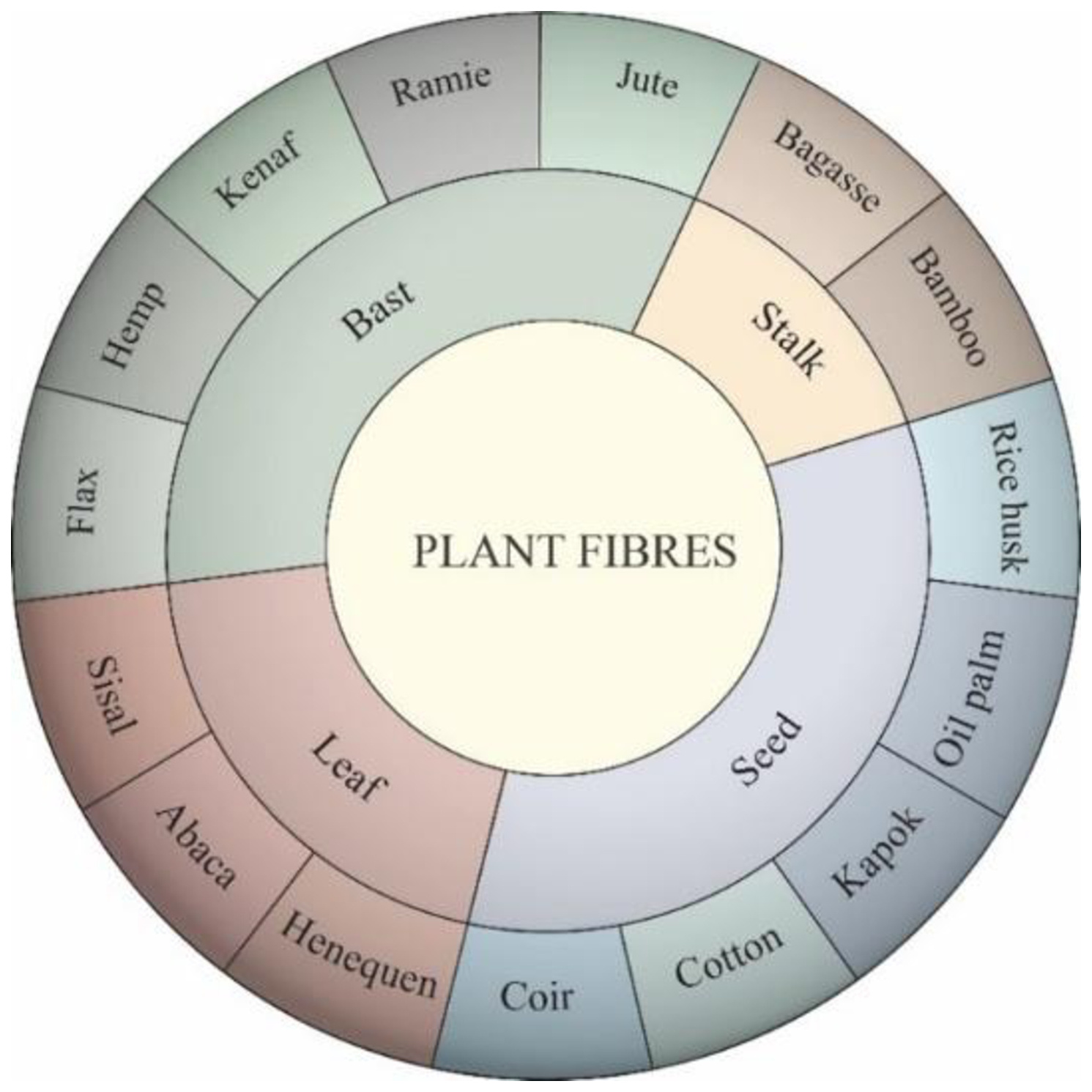
The growing popularity of natural fibers is driven by increasing environmental awareness among consumers and industries, which has fueled demand for sustainable alternatives to synthetic materials[1,2]. Natural fibers, shown in Figure 1, offer biodegradability and often require less energy and water for production compared to their synthetic counterparts, aligning with global efforts towards a circular economy[3]. Their application spans a diverse range of areas, from automotive components and construction materials to marine structures and sporting equipment[4]. In the automotive sector, for instance, natural fiber composites are being explored as lightweight alternatives to traditional materials, contributing to fuel efficiency[3,5-7]. In civil engineering, they offer sustainable options for reinforcing concrete and other building materials[8-10]. Within the marine industry, they provide environmentally friendly alternatives for boat hulls and other structural elements[11,12].
Natural fibers offer several significant advantages, including sustainability, low density, resulting in comparable specific mechanical properties to E-glass fibers[13-15], desirable damping characteristics[16-18] and acoustical properties[19,20]. However, a range of inherent disadvantages limits their wider adoption. The hydrophilic nature of natural fibers renders their physical and mechanical properties susceptible to fluctuations in environmental conditions, especially temperature and humidity[4,21-24]. This moisture sensitivity leads to dimensional instability, swelling, and reduced mechanical strength, particularly in humid environments. Furthermore, their poor compatibility with hydrophobic polymer matrices hinders the formation of strong interfacial bonds in composite materials[25].
The high hydrophilicity of natural fibers, a consequence of the numerous hydroxyl groups present in cellulose and the carboxyl acid groups within hemicellulose[30,31], contributes to increased water absorption and accelerated degradation, a key disadvantage compared to synthetic reinforcing fibers. However, synthetic fibers, typically hydrophobic polymers, exhibit significantly lower moisture absorption and are thus less susceptible to degradation in humid environments. This difference in hydrophilicity is a major factor limiting the widespread application of natural fibers in certain composite applications.
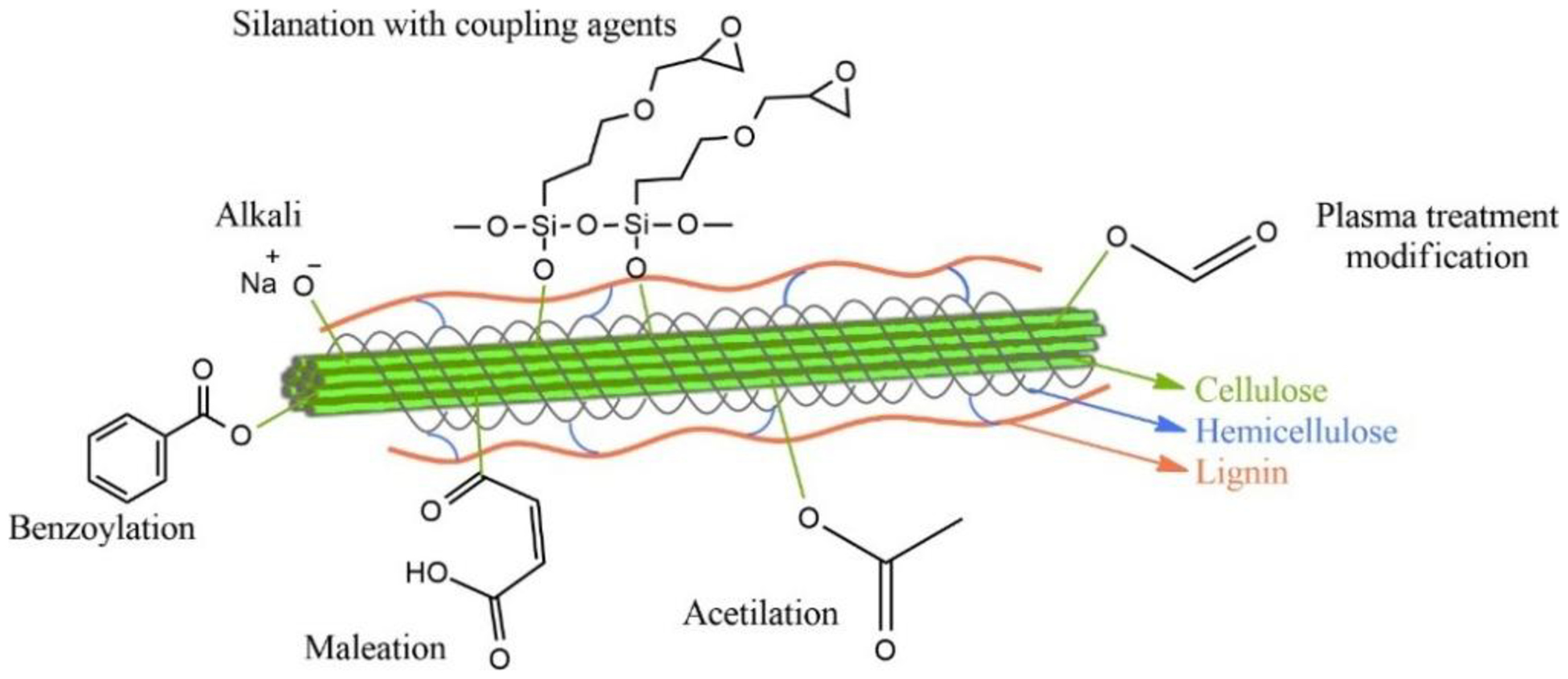
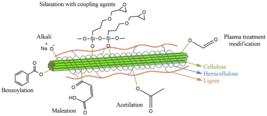
The surface chemistry of natural fibers plays a crucial role in fiber-matrix interaction, as effective adhesion is a function of interfacial adhesion, chemical bonding, and mechanical interlocking[32]. While most natural fibers share common constituents such as cellulose, lignin, hemicellulose, pectin, waxes, and ash[33], the relative proportions of these substances vary significantly depending on the fiber. For instance, flax fibers are characterized by a high wax and pectin content, whereas jute fibers exhibit a greater lignin content and lower pectin levels[34]. The presence of certain surface substances, such as waxes and oils, can hinder effective interaction with the matrix and thus necessitate their removal[34]. Given the distinct surface chemistry profiles of different fiber types, treatment techniques must be tailored to both the specific fiber and the chosen matrix. This targeted approach ensures optimal interfacial bonding and, consequently, enhances the mechanical properties of the resulting composite material. Furthermore, understanding these surface chemical variations is essential for developing effective surface modification strategies that promote stronger interfacial adhesion and improved composite performance. Numerous surface treatments, broadly categorized as chemical, enzymatic, and physical, have been developed. Each of these categories includes a range of techniques that have been the subject of extensive research and schematic illustration of some of these techniques applied to natural fibers is depicted in Figure 2. This study aims to review recent advancements and discuss their implications for tailoring surface treatments to achieve optimal natural fiber reinforced composite performance.
2. Chemical Treatments
The presence of hydroxyl groups on natural fibers renders them susceptible to chemical modification[35-37]. These hydroxyl groups can participate in intramolecular hydrogen bonding within cellulose, activating existing groups, or serve as reactive sites for the introduction of new chemical species that promote effective interlocking within the fiber structure. Chemical modification can thus be employed to tailor fiber surface characteristics, including wettability, adhesion, surface tension, and porosity[38,39]. Such modification can tailor the fibers interaction with different matrices, depending on their molecular affinity.
Poor interfacial bonding, a consequence of the incompatibility between hydrophilic natural fibers and hydrophobic matrices, is a major challenge in composite manufacturing. Chemical treatments aim to mitigate these issues by reducing fiber hydrophilicity. By chemically removing water from the fibers, these treatments enhance fiber-matrix compatibility, leading to improved interfacial bonding and enhanced composite performance[40].
2.1 Acetylation
The presence of hydroxyl (OH) groups in the cellulose and lignin components of natural fibers renders susceptible to moisture absorption. Acetylation, through reaction with acetyl (CH3CO) groups removes moisture by reacting with these hydroxyl groups. Tserki et al.[41] studied the effect of acetylation and propionylation treatments on hemp, flax and wood fibers. The results demonstrated that both treatments resulted in the removal of non-crystalline components, such as waxy substances, from the fibers and induced changes in surface topography. Furthermore, the observed reduction in moisture adsorption suggests that esterification diminished the hydrophilicity of the materials. In another study conducted by Tserki et al.[42] suggested that acetylation and propionylation treatments resulted in improved stress transfer efficiency at the interface after optimization. Khalil et al.[43] studied effect of acetylation on interfacial shear strength (ISS) of oil palm empty fruit bunch (EFB) and coir fibers. Authors reported that acetylation of such fibers increased hydrophobicity, which in turn led to a significant improvement in ISS compared to unmodified fibers. This improved bonding is likely due to the altered fiber surface morphology caused by the acetylation process. The resulting hydrophobicity positively improved the compatibility with matrix materials. Zaman and Khan[44] studied the effect of acetylation treatment on the mechanical and dynamical properties of matted banana empty fruit bunch fiber (BBF), including tensile, flexural and impact strengths. It was concluded that acetylation-treated BBF reinforced composites exhibited reduced water absorption compared to both alkali-treated and untreated controls. Bledzki et al.[45] investigated the influence of acetylation on the structure and properties of flax fibers and their polypropylene composites. Acetylation resulted in a remarkable improvement in both the surface morphology and moisture resistance properties of flax fibers. It was claimed that depending on the degree of acetylation, flax fiber acetylation can reduce moisture absorption by up to 50%. The degree of acetylation was reported to have contrasting effects on the mechanical properties of the composites, increasing tensile and flexural strengths but decreasing Charpy impact strength.
2.2 Alkali treatment
This process uses concentrated alkaline solutions, such as sodium hydroxide, to treat natural fibers, removing waxes, oils and other surface impurities from the fibers, thus increasing surface roughness that enhances mechanical interlocking[46], and enhancing mechanical bonding with the polymer matrix[47,48]. This process also reduces lignin and hemicellulose resulting in higher cellulose content and a cleaner fiber surface. However, optimal fiber properties depend on carefully controlling mercerization parameters, including alkali concentration, immersion time, temperature, and the specific type of fiber being treated[48]. Excessive sodium hydroxide (NaOH concentrations and prolonged exposure times can lead to the disintegration and dissolution of cellulose crystals[49].
Litaiff et al.[50] explored the utilization of mallow fibers as reinforcement in sustainable polymeric composites fabricated from bi-axially oriented polypropylene (BOPP) waste streams. To enhance interfacial bonding and mechanical performance, the authors subjected the fibers to alkali treatment. This surface modification proved highly effective, resulting in a substantial improvement in the fibers' tensile characteristics: the treated fibers achieved a tensile strength of 1039.45 MPa, marking a significant increase over the 447.76 MPa exhibited by the untreated fibers, concurrent with a measured increase in the modulus of elasticity.
Vishnu Vardhini et al.[51] investigated the influence of alkali treatment on the mechanical and impact properties of banana fiber-reinforced polypropylene composites. Specimens were treated with sodium hydroxide (NaOH) solutions at concentrations of 10%, 15%, and 20% to assess the impact of varying alkali concentrations on composite performance. Analysis of tensile properties revealed that all NaOH treatments positively influenced both tensile strength and tensile modulus. However, an optimal concentration of 15% NaOH was observed, beyond which (20% NaOH) a decrease in these properties was noted. Despite this decline at the highest concentration, specimens treated with 20% NaOH still exhibited superior tensile performance compared to those treated with the 10% solution. A similar trend emerged in impact testing, with specimens treated at 15% NaOH demonstrating the highest impact resistance, followed by those treated at 20% and 10%, respectively. This suggests that while increasing alkali concentration initially enhances impact properties, exceeding the optimal 15% concentration leads to a reduction, albeit not below the baseline established by the 10% treatment. In contrast to the tensile and impact behavior, flexural testing revealed a different trend. While the 15% NaOH treatment again yielded the highest performance, specimens treated with 10% NaOH exhibited superior flexural properties compared to those treated with the 20% solution. This indicates that for flexural properties, exceeding the optimal 15% concentration has a more detrimental effect, reducing performance below that achieved with the lowest concentration tested.
Alkali treatment substantially improves the compatibility of coir fibers with polyvinyl alcohol/polyethylene glycol polymer blends, facilitating the production of composite films exhibiting superior mechanical properties[52]. Chamath et al.[53] claimed that removal of lignocellulosic constituents such as oil and wax, from the fiber surface increased with increasing alkali concentration. However, concentrations exceeding 4% NaOH induced surface damage, highlighting the critical balance required in alkaline treatment processes. Furthermore, improved thermal stability was observed in fibers treated with alkali concentrations up to 4% NaOH; beyond this threshold, further increases in concentration led to a reduction in thermal stability. These findings underscore the necessity for careful optimization of alkaline treatment parameters to achieve desired fiber properties. Consequently, a 4% NaOH concentration was determined to be optimal. The effect of alkaline treatment on the properties of bamboo/coconut husk hybrid fibers was investigated by subjecting the fibers to NaOH solutions at concentrations ranging from 2% to 10%, the optimum concentration of NaOH was determined to be 8%[54].
Hafidz et al.[55] investigated the influence of alkaline treatment on the hygroscopic behavior of palm oil fibers and kenaf fibers reinforced unsaturated polyester composites, specifically examining water absorption and thickness swelling. They investigated the influence of 5% NaOH treatment on the water absorption characteristics of palm oil fiber/polyester and kenaf fiber/polyester composite samples at varying fiber volume fractions. In palm oil fiber composites, the 5% NaOH treatment resulted in a reduction in water absorption only at a 30% fiber volume fraction. At higher fiber volume fractions of 40% and 60%, the treatment did not yield any discernible improvement in water absorption behavior. In contrast, the kenaf fiber composites exhibited improved water absorption performance following the 5% NaOH treatment at both 30% and 40% fiber volume fractions. However, similar to the palm oil fiber composites, no improvement in water absorption was observed at the 60% fiber volume fraction.
The influence of alkali treatment with a 5wt% NaOH for 30 minutes was investigated on linen, flax and bamboo fabric reinforced epoxy composites. Alkaline treatment resulted in substantial improvements in the tensile and flexural strength and modulus of all fabric-reinforced composites investigated. In contrast, the tensile and flexural strain of these composites increased only marginally, suggesting that the treatment primarily enhanced stiffness and load-bearing capacity rather than ductility or flexibility[56].
Prome et al.[57] investigated the optimization of natural fiber composites through a comparative study involving five distinct chemical treatments: Alkaline NaOH, Benzoyl Peroxide, Sodium Chlorite, Stearic Acid, and Potassium Permanganate. This methodology was applied to both banana fiber and JUCO (jute/cotton blend) composites. Significantly, the NaOH treated JUCO specimens demonstrated superior performance, achieving the highest recorded tensile strength 70.86 MPa and flexural strength 88.7 MPa under dry conditions.
The dominant effect of NaOH treatment on jute fibers within epoxy composites was reported as fiber shrinkage[58]. This shrinkage was likely due to the removal of hemicellulose and other non-cellulosic components from the fiber structure during alkaline treatment, leading to a reduction in fiber diameter and potentially affecting fiber packing within the composite. The treatment also influenced the tensile properties and fracture mechanisms of the fibers, possibly through changes in cellulose crystallinity or microfibril orientation. However, despite these modifications to the fibers, no improvement in fiber-matrix adhesion was observed[58]. This lack of enhancement at the interface could be due to several factors, such as insufficient chemical bonding between the modified fiber surface and the epoxy matrix or the creation of a weak interfacial layer due to the removal of fiber components.
2.3 Silane treatment
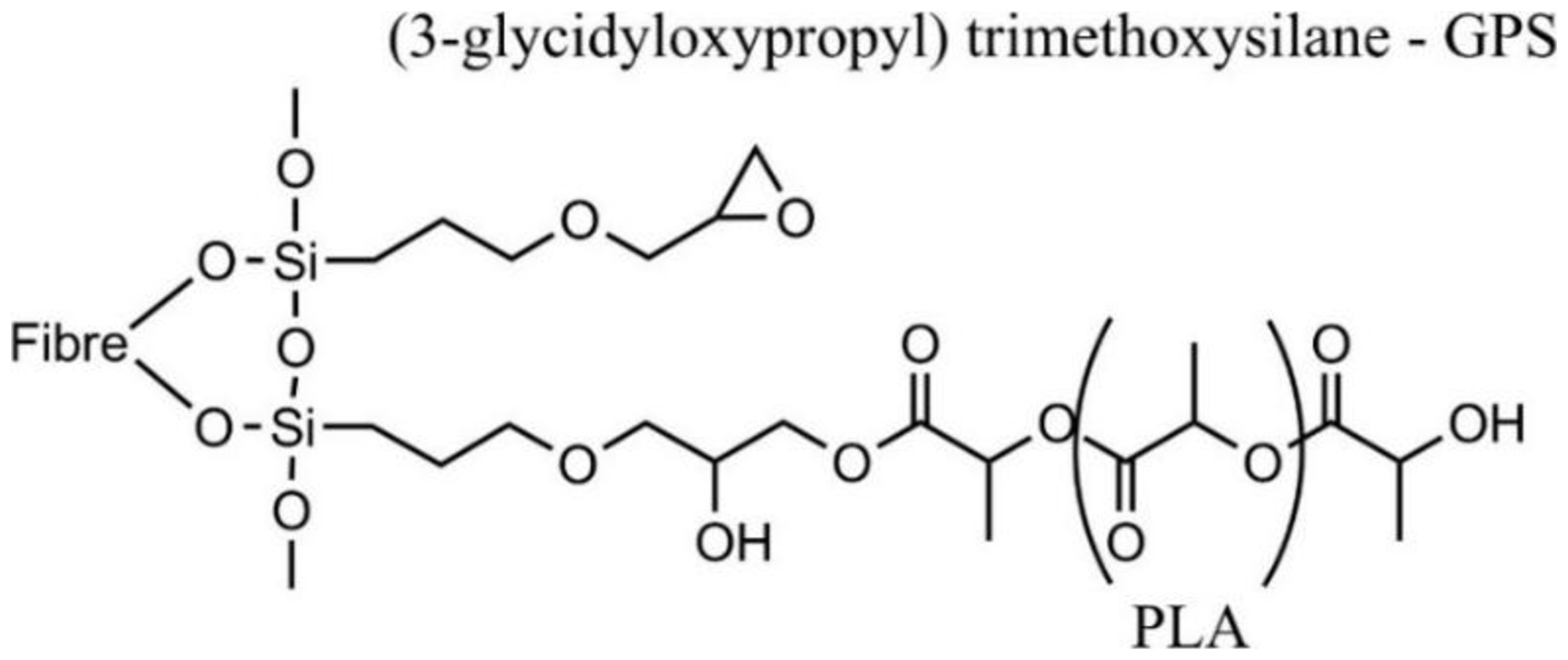
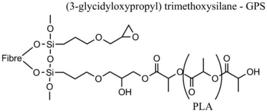
While silane coupling agents are extensively employed to enhance interfacial adhesion and mechanical properties in glass fiber-reinforced composites[59,60], their application to natural fiber composites, including those reinforced with flax and kenaf fibers also demonstrated promising results[61]. The improvement in flax fiber-matrix compatibility achieved through silane treatment is attributed to the formation of hydrogen or covalent bonds between hydrolyzed silanol groups and the hydroxyl groups on the fiber surface. This enhanced interfacial bonding contributes to improved mechanical properties and reduced moisture sensitivity[62]. However, the effectiveness of silane treatment is influenced by factors such as the specific silane chemistry, fiber surface pretreatment, and processing conditions, which should be carefully considered for optimal performance[63,64]. The potential chemical coupling of GPS and PLA is shown in Figure 3. Various techniques for silane application to natural fibers have been documented. These techniques can be broadly classified into two categories: fiber surface treatment, which focuses on modifying the outer layer of the fiber, and cell wall modification, which targets deeper structural changes within the fiber[65].
The application of silane treatment to natural vegetable fibers yielded enhancements in both Young's modulus and tensile strength. Additionally, a reduction of approximately 60% in the moisture absorption of the resulting composites was observed[66]. Silane treatment also improves the compatibility between hydrophilic fibers and hydrophobic polymer matrices by modifying the fiber surface with silane coupling agents. However, silane coupling agents are more expensive than common NaOH for alkali treatment and can be more expensive than plasma treatment in large scale manufacturing. Its effectiveness is also dependent upon factors such as the specific silane agent used and its concentration[67].
Rothenhäusler et al.[68] investigated the influence of various treatments, namely: Sodium hydroxide (NaOH) (alkali), silane and siloxane treatments. Flax fiber-reinforced composites manufactured with alkali treated fibers outperformed all other modifications examined, including composites reinforced with untreated flax fibers. This enhancement in mechanical properties is attributed to the alterations in fiber composition, coupled with improved fiber-matrix adhesion. The improved adhesion was achieved through the removal of the thermoplastic binder and the creation of a rougher fiber surface. Conversely, neither silane nor siloxane modifications yielded improvements in composite tensile properties relative to untreated controls. Another study demonstrating the ineffectiveness of silane treatment on the natural fibers was published by John and Naidu[69] who investigated effect of alkali and silane treatments on the flexural properties of hybridized sisal and E-glass fibers. The results indicated that silane treatment did not significantly affect the flexural properties, whereas alkali treatment led to a marginal improvement in these properties.
2.4 Benzyl treatment
Benzoylation is another method used to increase the fiber’s affinity to non-polar resins, thus enhancing adhesion. The interaction between the hydroxyl functionalities of the cellulose fiber and benzoyl chloride, resulting in a specific chemical reaction, is depicted in Figure 4. Zulyadain et al.[70] prepared composites from PLA and benzoylated sugarcane bagasse at different loads of treated and untreated fiber loads. Their results showed improvement in tensile strength and elongation, notably between 5 and 10% fiber loading. The modulus at break was more consistent for the treated fibers, but at fiber loads below 15%, the modulus was lower than the untreated fibers. The impact performance was overall higher for the treated fibers.

Jiyas et al.[72] studied the effect of different benzoylation reaction times on bamboo fibers. They compared the results with untreated fibers and those only treated with NaOH. Though not in a composite system, their work showed that benzoylation improved the fibers’ properties. The best improvements were progressive up to 15 min reaction time. At 20 min, all the properties were lower than 15%. This behavior was shown in water content, water absorption, tensile stress and tensile modulus.
Izwan et al.[73] prepared polypropylene composites with small (0.1 to 0.5 mm) benzoylated kenaf and sugar palm fibers. In their study, a hybrid system was created by adding 10% of a mixture of the two fibers (3:7, 5:5 and 7:3). These fiber loadings were compared to the same loadings of untreated fibers. Treated fibers showed higher glass transition temperatures and melting points, especially for 5:5. However, the addition of small fibers to polypropylene reduced the flexibility and damping capacity of the composites. Sahu et al.[3] study showed that benzoylation yielded the highest content of cellulose and lowest content of hemicellulose and lignin in Bauhinia vahlii fibers. Benzoylated fibers also presented the highest tensile strength, Young’s modulus and crystallinity index. They concluded that benzoylation was the preferred method when comparing to alkali and bleaching treatments.
A research conducted by Dipta et al.[74] focused on statistically characterizing the ultimate tensile strength of Talipot Palm Fiber (TPF), thereby addressing the inherent mechanical data scatter common in natural reinforcements. The experimental regime involved subjecting the fibers to three distinct chemical modifications- alkalization NaOH, acetylation, and benzylation-each systematically evaluated across three concentration levels (5%, 10%, and 15% by weight). All treatments significantly enhanced the ultimate tensile strength compared to the raw fibers, a finding supported by XRD and FTIR analyses that confirmed the successful removal of amorphous hemicellulose and lignin. The optimal enhancement was achieved using the 10% NaOH concentration, which yielded the highest recorded tensile strength of 462.47 MPa, whilst the 5% benzylated Talipot Palm Fiber exhibited the lowest ultimate tensile strength. Crucially, the study observed that concentrations exceeding this 10% threshold resulted in diminished tensile strength, indicating that excessive chemical exposure induced structural degradation of the cellulosic crystalline chains.
2.5 Maleated coupling agents
Maleation treatment involves the application of a coupling agent to both the fiber surface and the polymer matrix. This process typically involves grafting maleic anhydride onto the polymer to enhance compatibility between the coupling agent and the matrix[75]. The incorporation of maleic anhydride is crucial for improving interfacial adhesion between the fiber and the matrix. During the grafting process, maleic anhydride reacts with hydroxyl groups present on the fiber surface, effectively reducing their availability for other interactions[76]. The interaction between the anhydride groups of maleated coupling agents and the hydroxyl groups present on natural fibers effectively addresses the issue of incompatibility, leading to enhanced tensile and flexural strengths in natural fiber thermoplastic composites[77]. Maleated polypropylene (MAH-PP) reacts with the hydroxyl groups significantly enhanced the composites' mechanical properties under both tensile and flexural stress. This improvement is attributed to covalent bonding between the natural fibers' surface hydroxyl groups and the maleic anhydride in MAH-PP[78].
El-Sabbagh[79] investigated the optimum maleic anhydride polypropylene (MAPP) ratio to natural fibers; namely flax, hemp and sisal fibers. Fibers were pretreated by NaOH at various ratios. The optimal ratio of MAPP for natural fibers varied between 10% and 13.3%, depending on both the specific MAPP source and the type of natural fiber used, as well as the mechanical property being evaluated namely, stiffness, impact and strength[79].
3. Enzyme Treatments
A variety of enzymes can be used in enzyme treatment, but cellulase, xylanase, and pectinase are particularly prevalent due to their effectiveness in modifying plant-based materials. Enzymatic treatment effectively removes hygroscopic pectic and hemicellulosic substances, resulting in more uniform fiber surfaces with enhanced thermal properties. Enzymes improve the thermal stability of natural fibers by selectively removing less stable pectic and hemicelluloses[80]. Flax and hemp fibers were treated with five different enzymes, namely: xylanase, xylanase+cellulase, polygalacturonase, pectinmethylesterase and laccase. Enzymatic treatment was more efficient on flax fibers than on hemp fibers due to flax fibers' greater surface area[80].
Jute fibers were treated with enzymes (pectinase, laccase, xylanase, and cellulase) to assess the impact of enzymatic pretreatment on the mechanical properties of jute/polyester composites[81]. Enzymatic treatment caused fabric fibrillation and yarn opening, resulting in a hairier fabric due to the removal of adhesive substances such as hemicelluloses, lignin, pectin, and oils. This increased surface area led to a stronger fiber-matrix interaction and improved adhesion with the polyester matrix[81].
Natural fibers are not only utilized in composite materials but also in clothing, and textiles. Similar enzyme treatments are employed to achieve different objectives. For instance, enzymatic treatments can enhance the whiteness of fiber surfaces, improving their aesthetic appeal. However, this often involves a trade-off: while desired physical characteristics, such as increased brightness or improved dyeability, are achieved, the fiber's mechanical properties, such as tensile strength or flexibility, may be compromised.
Enzyme concentration had a pronounced effect on both the mechanical and physical attributes of jute fibers[82]. Specifically, increasing the enzyme concentration weakened the flexural rigidity, likely due to the enzymatic breakdown of structural components. Conversely, this increase in the enzyme concentration enhanced physical properties related to appearance, such as brightness index, whiteness index, and reflectance, potentially by removing impurities or surface coatings.
In a study by Zwane et al.[83], investigated the impact of enzymatic treatment on the tensile strength and morphology of sisal fibers. Their goal was to explore hemicellulose, an enzyme derived from Aspergillus niger, as an alternative method to hydrolyze the cementing layers within sisal fibers. Conversely, their findings diverged from previous studies on natural fibers, which often report positive effects of enzymatic treatment. Zwane et al.[83] observed that both sodium hydroxide (NaOH) and enzymatic treatments resulted in a decrease in the tensile properties of the fibers.
Vishnu Vardhini et al.[51] investigated the influence of enzymatic treatments on the tensile strength, flexural strength, and impact resistance of banana fiber/polypropylene composites. The enzymes employed were laccase and xylanase, applied at concentrations of 10%, 15%, and 20% to assess the impact of varying enzyme concentration on composite mechanical properties. Regarding tensile properties, xylanase treatment exhibited a more pronounced effect than laccase. A maximum increase of approximately 70% in tensile strength was achieved with xylanase at the 20% concentration, representing the highest value observed across all xylanase concentrations tested. Laccase treatment, at the same 20% concentration, resulted in an approximate 56% increase in tensile strength. A similar trend was observed in flexural properties. Xylanase treatment induced an increase of over 100% in flexural strength at the 20% concentration, while laccase treatment at the same concentration yielded an 86% increase. This again demonstrates the superior effect of xylanase treatment on the flexural behavior of the composites. The impact of xylanase treatment was particularly notable in terms of impact strength, achieving an improvement exceeding 120%. While laccase-treated samples also demonstrated substantial improvement, they achieved a slightly lower increase of approximately 114%. This further reinforces the observation that xylanase treatment had a greater positive impact on the mechanical properties of the banana fiber/polypropylene composites compared to laccase treatment under the conditions investigated.
4. Physical Treatments
A variety of physical modification techniques have been documented, aimed at altering the surface properties of materials. These methods can be broadly classified into radiative and electrical discharge approaches. Radiation methods, including X-rays, ionizing radiation, gamma radiation, induce surface modifications by altering the chemical composition and morphology through high-energy interactions[84,85]. Electrical discharge methods, such as plasma, corona discharges and so on.
4.1 Corona discharge
Corona discharge treatment has emerged as a promising alternative to conventional pretreatment methods due to its environmentally friendly nature and suitability for industrial processes, offering economic advantages[86,87]. This method modifies plant fiber surfaces by activating the constituent polymers, which leads to improvements in both wettability and adhesion strength[88]. Corona pretreatment enhances fiber-matrix adhesion by activating the fiber surface and increasing its roughness. The surface activation is likely a result of the corona discharge generating reactive species that interact with the fiber surface, potentially creating carboxyl, hydroxyl, or other polar functional groups. These newly formed groups can then form stronger chemical bonds with the matrix, while the increased surface roughness provides additional sites for mechanical interlocking, leading to improved overall adhesion[89].
Corona discharge treatments enhanced the fiber-matrix adhesion of jute/polyester composites[90], however, the application of corona discharge treatment to jute fibers resulted in a reduction in tensile strength, which ultimately led to a decrease in the mechanical performance of the jute fiber/epoxy composites[89]. Corona discharge treatment constitutes a vital step in textile processing[91]. The widespread adoption of this technique is largely attributable to its economic feasibility, stemming from its low energy demand and inherently low operational cost.
4.2 Plasma treatment
Plasma treatment is a versatile technique capable of generating both rough and smooth surface morphologies. Furthermore, it allows for the modification of the substrate's chemical composition through the introduction of diverse functional groups. This dual capability makes plasma treatment a powerful tool in various applications, including enhancing adhesion in composite materials, improving the wettability of surfaces for coating applications[92]. Plasma surface modification offers both economic and ecological advantages[93] by eliminating the need for water and chemicals[94]. A significant benefit of plasma processing is the substantial reduction in pollutant generation, leading to a corresponding decrease in effluent treatment costs[95]. Consequently, plasma treatment can be considered an environmentally friendly technology. Plasma treatment physically modifies the fiber surface, creating roughness through a sputtering process[96]. This surface roughening increases the contact area available for interaction with the polymer, resulting in enhanced interfacial friction.
The mechanical properties of jute fibers and their PLA composites were studied as a function of plasma treatment exposure time[95]. Plasma treatment proved highly effective in enhancing the mechanical properties of jute fiber-reinforced composites. Significant increases were observed across all measured properties: tensile strength increased by 28%, Young's modulus by 17%, and flexural strength by 20%. Notably, the flexural strength of the treated composites exceeded that of the untreated composites by over 20%. This substantial improvement in flexural performance, along with the gains in tensile strength and modulus, suggests a marked enhancement in interfacial adhesion between the jute fibers and the PLA matrix due to the plasma treatment. Following plasma treatments, significant changes were observed in the surface chemistry of the flax fibers, including alterations in functional group composition and an increase in surface roughness[97]. The most notable observation was the generation of new functional groups, indicating a chemical interaction between the plasma and the fiber surface.
5. Discussion and Conclusion
The increasing utilization of natural fiber-reinforced composites offers a promising avenue for significant enhancements in component quality across multiple critical dimensions. Specifically, these materials present substantial advantages with respect to environmental impact, offering the potential for reduced reliance on non-renewable resources. Furthermore, their economic viability is emphasized by the potential for lower raw material costs and reduced energy consumption during processing in certain applications. From a technical feasibility standpoint, these composites can provide tailored mechanical properties, including acceptable strength-to-weight ratios and damping characteristics, making them suitable for a widening range of engineering applications. However, their inherited limitations keep them away from a wider range of use in multiple industries. Surface treatments play a crucial role in enhancing the performance of natural fibers in advanced composites by addressing their inherent limitations of high moisture absorption and poor dimensional stability. The principal mechanistic underpinnings of the current treatment methodologies can be summarized as follows:
-
Acetylation effectively mitigates the inherent moisture sensitivity of natural fibers by chemically substituting the hydrophilic hydroxyl groups within cellulose and lignin, thereby reducing the fiber hydrophobicity.
-
Alkali treatment stands out as a vital surface modification technique for natural fibers. It optimizes composite performance by purifying and etching the fiber surface, thereby promoting superior fiber-matrix adhesion, efficient stress transfer, and enhanced mechanical properties.
-
-Silane treatment enhances flax fiber-matrix compatibility by fostering interfacial hydrogen or covalent bonding between hydrolyzed silanol and fiber surface hydroxyl groups. This improved interfacial adhesion consequently leads to enhanced mechanical performance and reduced moisture sensitivity of the resulting composites.
-
-Benzoylation represents an effective chemical modification strategy for enhancing the interfacial adhesion between cellulose fibers and non-polar resin matrices. This improvement is achieved through a specific chemical reaction, namely the esterification of the fiber's hydroxyl functionalities by benzoyl chloride, thereby increasing the fiber's affinity for the hydrophobic resin.
-
-Maleation treatment, employing a coupling agent on both the fiber and polymer matrix, typically involves grafting maleic anhydride onto the polymer to enhance matrix compatibility. This incorporation of maleic anhydride is critical for improving fiber-matrix interfacial adhesion by reacting with hydroxyl groups on the fiber surface during the grafting process, thereby modulating their reactivity.
-
-Enzymatic treatment effectively enhances the thermal properties of natural fibers by selectively removing hygroscopic pectic and hemicellulosic components, resulting in more uniform surfaces and improved thermal stability.
-
-Corona treatment is shown to bolster fiber-matrix adhesion via dual mechanisms: the generation of polar functional groups on the fiber surface enhances chemical bonding, and roughening improves mechanical interlocking with the matrix.
-
-
Plasma treatment stands as a versatile methodology, enabling precise control over both surface topography and chemical functionality. This dual capability positions plasma technology as a powerful and adaptable tool across a spectrum of applications, enhancing interfacial adhesion in composite systems and optimizing surface wettability for coating processes.
Finally, this review highlighted the main strategies currently employed for natural fiber treatments; nevertheless, alternative techniques remain underexplored and deserve further attention in future studies.
7. Acknowledgements
The authors thank the Coordination for the Improvement of Higher Education Personnel–Brazil (CAPES)-PRINT Grant: 88887.310339/2018-00, Mackenzie Research Fund (Mackpesquisa, Project number 231015). The authors also thank the Conselho Nacional de Desenvolvimento Científico e Tecnológico (CNPq, Brazil, grant number 303139/2024-2) and the Fundação de Amparo à Pesquisa do Estado de São Paulo (FAPESP, Brazil, grant number 2023/08110-1).
-
Data Availability:
All data supporting the findings of this study are available from the corresponding author upon request.
-
How to cite:
Cihan, M., Benega, M. A. G., & Ribeiro, H. (2026). Recent advances in natural fiber treatments for enhanced composite performance. Polímeros: Ciência e Tecnologia, 36(2), e20260016. https://doi.org/10.1590/0104-1428.20250092
8. References
-
1 Sankar Lal, S., Kannan, S., & Sahoo, S. K. (2022). Influence of flax fiber orientation on mechanical, thermo-mechanical and interfacial adhesion properties of epoxidized methyl ricinoleate modified epoxy composite: A sustainable green composite for cleaner production. Materials Today. Communications, 33, 104648. https://doi.org/10.1016/j.mtcomm.2022.104648
» https://doi.org/10.1016/j.mtcomm.2022.104648 -
2 Khatami, M., Bairwan, R. D., Khalil, H. P. S. A., Surya, I., Mawardi, I., Ahmad, A., & Yahya, E. B. (2024). The role of natural fiber reinforcement in thermoplastic elastomers biocomposites. Fibers and Polymers, 25(8), 3061-3077. https://doi.org/10.1007/s12221-024-00621-5
» https://doi.org/10.1007/s12221-024-00621-5 -
3 Sahu, D. P., Kumar, S., & Gupta, M. K. (2025). Flexural and free vibration analysis of glass and natural fiber-based hybrid laminated composites: experimental and numerical insights. Fibers and Polymers, 26(4), 1765-1782. https://doi.org/10.1007/s12221-025-00902-7
» https://doi.org/10.1007/s12221-025-00902-7 -
4 Chen, J., Lei, L., Ji, C., Yang, S., Cheng, Z., Fan, J., & Yu, T. (2025). Cluster analysis of acoustic emission signals for bending damage mechanism of flax fiber reinforced composites under hydrothermal aging. Composites Communications, 53, 102165. https://doi.org/10.1016/j.coco.2024.102165
» https://doi.org/10.1016/j.coco.2024.102165 -
5 Volpe, V., & Pantani, R. (2025). Natural fiber-reinforced light composites for the automotive industry. Polymer Composites, 46(9), 8660-8673. https://doi.org/10.1002/pc.29518
» https://doi.org/10.1002/pc.29518 -
6 Neto, J., Queiroz, H., Aguiar, R., Lima, R., Cavalcanti, D., & Banea, M. D. (2022). A review of recent advances in hybrid natural fiber reinforced polymer composites. Journal of Renewable Materials, 10(3), 561-589. https://doi.org/10.32604/jrm.2022.017434
» https://doi.org/10.32604/jrm.2022.017434 -
7 Ullah, S., Akhter, Z., Palevicius, A., & Janusas, G. (2025). Review: natural fiber-based biocomposites for potential advanced automotive applications. Journal of Engineered Fibers and Fabrics, 20, 15589250241311468. https://doi.org/10.1177/15589250241311468
» https://doi.org/10.1177/15589250241311468 -
8 Veerappan, P., Mani, I., John, A., & Madhavan, H. (2024). Experimental studies of coir and jute-fiber reinforced concrete with M-sand. Matéria, 29(2), e20240115. https://doi.org/10.1590/1517-7076-rmat-2024-0115
» https://doi.org/10.1590/1517-7076-rmat-2024-0115 -
9 Joachim, L., & Oettel, V. (2024). Experimental investigations on the application of natural plant fibers in ultra-high-performance concrete. Materials, 17(14), 3519. https://doi.org/10.3390/ma17143519 PMid:39063811.
» https://doi.org/10.3390/ma17143519 -
10 Awoyera, P. O., Akin-Adeniyi, A., Althoey, F., Abuhussain, M. A., Jolayemi, K., & Romero, L. M. B. (2024). Green structural retrofitting materials for fire-damaged reinforced concrete buildings: advances in sustainable repair of distressed buildings. Fire Technology, 60(3), 1955-1991. https://doi.org/10.1007/s10694-024-01557-1
» https://doi.org/10.1007/s10694-024-01557-1 -
11 Putra, N. R., Ismail, A., Sari, D. P., Suwahyu, S., Utina, M. R., Rizal, N., Machfudin, A., Sandjaja, I. E., & Pratikno, H. (2025). Innovations and trends in composite materials for maritime applications: a 2000–2024 bibliometric study and comprehensive review. Ships and Offshore Structures, 0, 1-18. https://doi.org/10.1080/17445302.2025.2455987
» https://doi.org/10.1080/17445302.2025.2455987 -
12 Baley, C., Davies, P., Troalen, W., Chamley, A., Dinham-Price, I., Marchandise, A., & Keryvin, V. (2024). Sustainable polymer composite marine structures: developments and challenges. Progress in Materials Science, 145, 101307. https://doi.org/10.1016/j.pmatsci.2024.101307
» https://doi.org/10.1016/j.pmatsci.2024.101307 -
13 Sakoshev, Z. G., Blaznov, A. N., Bychin, N. V., Medvedev, P. A., Zadvornykh, G. S., Sakoshev, E. G., Firsov, V. V., & Cheremukhina, I. V. (2024). Morphological and physicomechanical characterization of synthetic and natural fibers. Journal of Polymer Research, 31(3), 86. https://doi.org/10.1007/s10965-024-03938-0
» https://doi.org/10.1007/s10965-024-03938-0 -
14 Ravishankar, P., Arya, M., Dhakal, H., Gouda, F., Skrifvars, M., & Khalili, P. (2024). Assessing the mechanical performance of natural fiber thermoplastic composite sandwiches for advanced applications. Results in Materials, 23, 100600. https://doi.org/10.1016/j.rinma.2024.100600
» https://doi.org/10.1016/j.rinma.2024.100600 -
15 Blanchard, J. M. F. A., Sobey, A. J., & Blake, J. I. R. (2016). Multi-scale investigation into the mechanical behaviour of flax in yarn, cloth and laminate form. Composites. Part B, Engineering, 84, 228-235. https://doi.org/10.1016/j.compositesb.2015.08.086
» https://doi.org/10.1016/j.compositesb.2015.08.086 -
16 Nema, A., Penumakala, P. K., & Adusumalli, R. B. (2025). Dynamic mechanical analysis of flax / carbon hybrid composites : experimental and theoretical investigation. Materials Today. Communications, 43, 111770. https://doi.org/10.1016/j.mtcomm.2025.111770
» https://doi.org/10.1016/j.mtcomm.2025.111770 -
17 Cihan, M., Sobey, A. J., & Blake, J. I. R. (2019). Mechanical and dynamic performance of woven flax/E-glass hybrid composites. Composites Science and Technology, 172, 36-42. https://doi.org/10.1016/j.compscitech.2018.12.030
» https://doi.org/10.1016/j.compscitech.2018.12.030 -
18 Li, Q., Li, Y., Ma, H., Cai, S., & Huang, X. (2020). Effect of processing temperature on the static and dynamic mechanical properties and failure mechanisms of flax fiber reinforced composites. Composites Communications, 20, 100343. https://doi.org/10.1016/j.coco.2020.04.009
» https://doi.org/10.1016/j.coco.2020.04.009 -
19 Merotte, J., Le Duigou, A., Bourmaud, A., Behlouli, K., & Baley, C. (2016). Mechanical and acoustic behaviour of porosity controlled randomly dispersed flax/PP biocomposite. Polymer Testing, 51, 174-180. https://doi.org/10.1016/j.polymertesting.2016.03.002
» https://doi.org/10.1016/j.polymertesting.2016.03.002 -
20 Satankar, R. K., Sharma, N., Katariya, P. V., Kumar, V., Dewangan, H. C., Pal, A., & Panda, S. K. (2023). Computational modelling and analysis of thermoacoustic behaviour of carbon nanotube-reinforced plant fibre epoxy composite – An extensive review. Materials Today. Communications, 36, 106717. https://doi.org/10.1016/j.mtcomm.2023.106717
» https://doi.org/10.1016/j.mtcomm.2023.106717 -
21 Le Duigou, A., Davies, P., & Baley, C. (2013). Exploring durability of interfaces in flax fibre/epoxy micro-composites. Composites. Part A, Applied Science and Manufacturing, 48, 121-128. https://doi.org/10.1016/j.compositesa.2013.01.010
» https://doi.org/10.1016/j.compositesa.2013.01.010 -
22 Moudood, A., Rahman, A., Khanlou, H. M., Hall, W., Öchsner, A., & Francucci, G. (2019). Environmental effects on the durability and the mechanical performance of flax fiber/bio-epoxy composites. Composites. Part B, Engineering, 171, 284-293. https://doi.org/10.1016/j.compositesb.2019.05.032
» https://doi.org/10.1016/j.compositesb.2019.05.032 -
23 Seisa, K., Chinnasamy, V., & Ude, A. U. (2022). Surface treatments of natural fibres in fibre reinforced composites: a review. Fibres & Textiles in Eastern Europe, 30(2), 82-89. https://doi.org/10.2478/ftee-2022-0011
» https://doi.org/10.2478/ftee-2022-0011 -
24 Yang, S., Chen, J., Lei, L., Cheng, Z., Yu, T., Fan, J., Du, J., Li, Q., & Yang, W. (2025). Unlocking the fungi aging secrets of sisal fiber reinforced polylactic acid composites. Composites Communications, 55, 102296. https://doi.org/10.1016/j.coco.2025.102296
» https://doi.org/10.1016/j.coco.2025.102296 -
25 Cihan, M., Benega, M. A. G., & Ribeiro, H. (2022). Investigating the moisture content of flax fibre reinforced composite materials. Turkish Journal of Maritime and Marine Sciences, 8(2), 161-166. https://doi.org/10.52998/trjmms.1144083
» https://doi.org/10.52998/trjmms.1144083 -
26 Skosana, S. J., Khoathane, C., & Malwela, T. (2024). Driving towards sustainability: A review of natural fiber reinforced polymer composites for eco-friendly automotive light-weighting. Journal of Thermoplastic Composite Materials, 38(2), 754-780. https://doi.org/10.1177/08927057241254324
» https://doi.org/10.1177/08927057241254324 -
27 Shakir, M. H., & Singh, A. K. (2024). Ramie fiber and its composites: A review. Polymer Composites, 46(8), 6813-6841. https://doi.org/10.1002/pc.29417
» https://doi.org/10.1002/pc.29417 -
28 Fuqua, M. A., Huo, S., & Ulven, C. A. (2012). Natural fiber reinforced composites. Polymer Reviews (Philadelphia, Pa.), 52(3), 259-320. https://doi.org/10.1080/15583724.2012.705409
» https://doi.org/10.1080/15583724.2012.705409 -
29 Biagiotti, J., Puglia, D., & Kenny, J. M. (2004). A review on natural fibre-based composites-Part I. Journal of Natural Fibers, 1(2), 37-68. https://doi.org/10.1300/J395v01n02_04
» https://doi.org/10.1300/J395v01n02_04 -
30 Farhat, W., Venditti, R. A., Hubbe, M., Taha, M., Becquart, F., & Ayoub, A. (2017). A review of water-resistant hemicellulose-based materials: processing and applications. ChemSusChem, 10(2), 305-323. https://doi.org/10.1002/cssc.201601047 PMid:28029233.
» https://doi.org/10.1002/cssc.201601047 -
31 Feng, Y., Hao, H., Lu, H., Chow, C. L., & Lau, D. (2024). Exploring the development and applications of sustainable natural fiber composites: A review from a nanoscale perspective. Composites. Part B, Engineering, 276, 111369. https://doi.org/10.1016/j.compositesb.2024.111369
» https://doi.org/10.1016/j.compositesb.2024.111369 -
32 Tran, L. Q. N., Fuentes, C. A., Dupont-Gillain, C., Van Vuure, A. W., & Verpoest, I. (2013). Understanding the interfacial compatibility and adhesion of natural coir fibre thermoplastic composites. Composites Science and Technology, 80, 23-30. https://doi.org/10.1016/j.compscitech.2013.03.004
» https://doi.org/10.1016/j.compscitech.2013.03.004 -
33 Chokshi, S., Parmar, V., Gohil, P., & Chaudhary, V. (2022). Chemical composition and mechanical properties of natural fibers. Journal of Natural Fibers, 19(10), 3942-3953. https://doi.org/10.1080/15440478.2020.1848738
» https://doi.org/10.1080/15440478.2020.1848738 -
34 Nassar, M. M. A., Alzebdeh, K. I., Al-Hinai, N., & Pervez, T. (2023). A new multistep chemical treatment method for high performance natural fibers extraction. Journal of Natural Fibers, 20(1), 2150922. https://doi.org/10.1080/15440478.2022.2150922
» https://doi.org/10.1080/15440478.2022.2150922 -
35 Pinto, Â., Esteves, D., Nobre, L., Bessa, J., Cunha, F., & Fangueiro, R. (2025). Mechanical performance enhancement in natural fibre-reinforced thermoplastic composites through surface treatment and matrix functionalisation. Polymers, 17(4), 532. https://doi.org/10.3390/polym17040532 PMid:40006192.
» https://doi.org/10.3390/polym17040532 -
36 Aravinth, K., Ramakrishnan, T., Tamilarasan, V. D., & Veeramanikandan, K. (2022). A brief review on plant fibres composites: Extraction, chemical treatment and fibre orientation. Materials Today: Proceedings, 62(Part 4), 2005-2009. https://doi.org/10.1016/j.matpr.2022.02.291
» https://doi.org/10.1016/j.matpr.2022.02.291 -
37 Ganguly, A., Shankar, S., Das, A., Shukla, M., Swaroop, C., & Bhardwaj, T. (2022). Natural fibre reinforced composites: A review based on additive manufacturing routes and biodegradability perspective. Materials Today: Proceedings, 62(Part 1), 131-135. https://doi.org/10.1016/j.matpr.2022.02.607
» https://doi.org/10.1016/j.matpr.2022.02.607 -
38 John, M. J., & Anandjiwala, R. D. (2008). Recent developments in chemical modification and characterization of natural fiber-reinforced composites. Polymer Composites, 29(2), 187-207. https://doi.org/10.1002/pc.20461
» https://doi.org/10.1002/pc.20461 -
39 Baley, C., Busnel, F., Grohens, Y., & Sire, O. (2006). Influence of chemical treatments on surface properties and adhesion of flax fibre-polyester resin. Composites. Part A, Applied Science and Manufacturing, 37(10), 1626-1637. https://doi.org/10.1016/j.compositesa.2005.10.014
» https://doi.org/10.1016/j.compositesa.2005.10.014 -
40 Kabir, M. M., Wang, H., Lau, K. T., & Cardona, F. (2012). Chemical treatments on plant-based natural fibre reinforced polymer composites: an overview. Composites. Part B, Engineering, 43(7), 2883-2892. https://doi.org/10.1016/j.compositesb.2012.04.053
» https://doi.org/10.1016/j.compositesb.2012.04.053 -
41 Tserki, V., Zafeiropoulos, N. E., Simon, F., & Panayiotou, C. (2005). A study of the effect of acetylation and propionylation surface treatments on natural fibres. Composites. Part A, Applied Science and Manufacturing, 36(8), 1110-1118. https://doi.org/10.1016/j.compositesa.2005.01.004
» https://doi.org/10.1016/j.compositesa.2005.01.004 -
42 Tserki, V., Panayiotou, C., & Zafeiropoulos, N. E. (2005). A study of the effect of acetylation and propionylation on the interface of natural fibre biodegradable composites. Advanced Composites Letters, 14(2), 096369350501400202. https://doi.org/10.1177/096369350501400202
» https://doi.org/10.1177/096369350501400202 -
43 Khalil, H. P. S. A., Ismail, H., Rozman, H. D., & Ahmad, M. N. (2001). The effect of acetylation on interfacial shear strength between plant fibres and various matrices. European Polymer Journal, 37(5), 1037-1045. https://doi.org/10.1016/S0014-3057(00)00199-3
» https://doi.org/10.1016/S0014-3057(00)00199-3 -
44 Zaman, H. U., & Khan, R. A. (2021). Acetylation used for natural fiber/polymer composites. Journal of Thermoplastic Composite Materials, 34(1), 3-23. https://doi.org/10.1177/0892705719838000
» https://doi.org/10.1177/0892705719838000 -
45 Bledzki, A. K., Mamun, A. A., Lucka-Gabor, M., & Gutowski, V. S. (2008). The effects of acetylation on properties of flax fibre and its polypropylene composites. Express Polymer Letters, 2(6), 413-422. https://doi.org/10.3144/expresspolymlett.2008.50
» https://doi.org/10.3144/expresspolymlett.2008.50 -
46 Valadez-Gonzalez, A., Cervantes-Uc, J. M., Olayo, R., & Herrera-Franco, P. J. (1999). Effect of fiber surface treatment on the fiber-matrix bond strength of natural fiber reinforced composites. Composites. Part B, Engineering, 30(3), 309-320. https://doi.org/10.1016/S1359-8368(98)00054-7
» https://doi.org/10.1016/S1359-8368(98)00054-7 -
47 Sahu, P., & Gupta, M. K. (2020). A review on the properties of natural fibres and its bio-composites: effect of alkali treatment. Proceedings of the Institution of Mechanical Engineers. Proceedings Part L, Journal of Materials: Design and Applications, 234(1), 198-217. https://doi.org/10.1177/1464420719875163
» https://doi.org/10.1177/1464420719875163 -
48 Luchese, C. L., Engel, J. B., & Tessaro, I. C. (2024). A review on the mercerization of natural fibers: parameters and effects. Korean Journal of Chemical Engineering, 41(3), 571-587. https://doi.org/10.1007/s11814-024-00112-6
» https://doi.org/10.1007/s11814-024-00112-6 -
49 Bartos, A., Anggono, J., Farkas, Á. E., Kun, D., Soetaredjo, F. E., Móczó, J., Antoni, A., Purwaningsih, H., & Pukánszky, B. (2020). Alkali treatment of lignocellulosic fibers extracted from sugarcane bagasse: Composition, structure, properties. Polymer Testing, 88, 106549. https://doi.org/10.1016/j.polymertesting.2020.106549
» https://doi.org/10.1016/j.polymertesting.2020.106549 -
50 Litaiff, H. A., Santos, G. M. D., Melo, G. D., Cunha, C. D., & Giacon, V. M. (2025). Influence of alkali treatment on physical-mechanical properties of mallow fiber/BOPP composites. Polímeros, 35(1), e20250006. https://doi.org/10.1590/0104-1428.20240040
» https://doi.org/10.1590/0104-1428.20240040 -
51 Vishnu Vardhini, K. J., Murugan, R., & Surjit, R. (2018). Effect of alkali and enzymatic treatments of banana fibre on properties of banana/polypropylene composites. Journal of Industrial Textiles, 47(7), 1849-1864. https://doi.org/10.1177/1528083717714479
» https://doi.org/10.1177/1528083717714479 -
52 Vandna, V., & Yadav, V. L. (2024). Influence of alkali treatment on coir-reinforced polyvinyl alcohol/polyethylene glycol blends. Journal of Plastic Film & Sheeting, 40(3), 307-327. https://doi.org/10.1177/87560879241255892
» https://doi.org/10.1177/87560879241255892 -
53 Chamath, L. G., Srimal, L. K. T., Sewvandi, G. A., Gallage, R., & Epaarachchi, J. (2025). Optimizing the alkaline concentration for coir fibre treatment and estimation of lifetime. Journal of the National Science Foundation of Sri Lanka, 52(4), 515-525. https://doi.org/10.4038/jnsfsr.v52i4.12098
» https://doi.org/10.4038/jnsfsr.v52i4.12098 -
54 Sapiee, N. H. (2024). Influence of alkali treatment on bamboo/coconut husk hybrid fibre polyester composite. Jixie Gongcheng Xuebao, 21(2), 107-124. https://doi.org/10.24191/jmeche.v21i2.26258
» https://doi.org/10.24191/jmeche.v21i2.26258 -
55 Hafidz, N. S. B. M., Rehan, M. S. B. M., & Mokhtar, H. B. (2021). Effect of alkaline treatment on water absorption and thickness swelling of natural fibre reinforced unsaturated polyester composites. Materials Today: Proceedings, 48(Part 4), 720-727. https://doi.org/10.1016/j.matpr.2021.02.209
» https://doi.org/10.1016/j.matpr.2021.02.209 -
56 Yan, L., Chouw, N., & Yuan, X. (2012). Improving the mechanical properties of natural fibre fabric reinforced epoxy composites by alkali treatment. Journal of Reinforced Plastics and Composites, 31(6), 425-437. https://doi.org/10.1177/0731684412439494
» https://doi.org/10.1177/0731684412439494 -
57 Prome, F. S., Hossain, M. F., Rana, M. S., Islam, M. M., & Ferdous, M. S. (2025). Different chemical treatments of natural fiber composites and their impact on water absorption behavior and mechanical strength. Hybrid Advances, 8, 100379. https://doi.org/10.1016/j.hybadv.2025.100379
» https://doi.org/10.1016/j.hybadv.2025.100379 -
58 Gassan, J., & Bledzki, A. K. (1999). Possibilities for improving the mechanical properties of jute/epoxy composites by alkali treatment of fibres. Composites Science and Technology, 59(9), 1303-1309. https://doi.org/10.1016/S0266-3538(98)00169-9
» https://doi.org/10.1016/S0266-3538(98)00169-9 -
59 Le Moigne, N., Longerey, M., Taulemesse, J.-M., Bénézet, J.-C., & Bergeret, A. (2014). Study of the interface in natural fibres reinforced poly(lactic acid) biocomposites modified by optimized organosilane treatments. Industrial Crops and Products, 52, 481-494. https://doi.org/10.1016/j.indcrop.2013.11.022
» https://doi.org/10.1016/j.indcrop.2013.11.022 -
60 Islam, T., Chaion, M. H., Jalil, M. A., Rafi, A. S., Mushtari, F., Dhar, A. K., & Hossain, S. (2024). Advancements and challenges in natural fiber-reinforced hybrid composites: A comprehensive review. SPE Polymers, 5(4), 481-506. https://doi.org/10.1002/pls2.10145
» https://doi.org/10.1002/pls2.10145 -
61 Lee, B.-H., Kim, H.-S., Lee, S., Kim, H.-J., & Dorgan, J. R. (2009). Bio-composites of kenaf fibers in polylactide: role of improved interfacial adhesion in the carding process. Composites Science and Technology, 69(15–16), 2573-2579. https://doi.org/10.1016/j.compscitech.2009.07.015
» https://doi.org/10.1016/j.compscitech.2009.07.015 -
62 Alix, S., Lebrun, L., Morvan, C., & Marais, S. (2011). Study of water behaviour of chemically treated flax fibres-based composites: A way to approach the hydric interface. Composites Science and Technology, 71(6), 893-899. https://doi.org/10.1016/j.compscitech.2011.02.004
» https://doi.org/10.1016/j.compscitech.2011.02.004 -
63 Rauf, F., Umair, M., Shaker, K., Nawab, Y., Ullah, T., & Ahmad, S. (2023). Investigation of chemical treatments to enhance the mechanical properties of natural fiber composites. International Journal of Polymer Science, 4719481, 1-13. https://doi.org/10.1155/2023/4719481
» https://doi.org/10.1155/2023/4719481 -
64 McKay, I., Vargas, J., Yang, L., & Felfel, R. M. (2024). A review of natural fibres and biopolymer composites: progress, limitations, and enhancement strategies. Materials, 17(19), 4878. https://doi.org/10.3390/ma17194878 PMid:39410449.
» https://doi.org/10.3390/ma17194878 -
65 Xie, Y., Hill, C. A. S., Xiao, Z., Militz, H., & Mai, C. (2010). Silane coupling agents used for natural fiber/polymer composites: A review. Composites. Part A, Applied Science and Manufacturing, 41(7), 806-819. https://doi.org/10.1016/j.compositesa.2010.03.005
» https://doi.org/10.1016/j.compositesa.2010.03.005 -
66 Bledzki, A. K., Reihmane, S., & Gassan, J. (1996). Properties and modification methods for vegetable fibers for natural fiber composites. Journal of Applied Polymer Science, 59(8), 1329-1336. https://doi.org/10.1002/(SICI)1097-4628(19960222)59:8<1329::AID-APP17>3.0.CO;2-0
» https://doi.org/10.1002/(SICI)1097-4628(19960222)59:8<1329::AID-APP17>3.0.CO;2-0 -
67 Owen, M. M., Ishiaku, U. S., Danladi, A., Dauda, B. M., & Romli, A. Z. (2018). Mechanical properties of epoxy-coated sodium hydroxide and silane treated kenaf/recycled polyethylene tereph-thalate (RPET) composites: effect of chemical treatment. AIP Conference Proceedings, 1985(1), 030001. https://doi.org/10.1063/1.5047159
» https://doi.org/10.1063/1.5047159 -
68 Rothenhäusler, F., Ouali, A.-A., Rinberg, R., Demleitner, M., Kroll, L., & Ruckdaeschel, H. (2024). Influence of sodium hydroxide, silane, and siloxane treatments on the moisture sensitivity and mechanical properties of flax fiber composites. Polymer Composites, 45(10), 8937-8948. https://doi.org/10.1002/pc.28386
» https://doi.org/10.1002/pc.28386 -
69 John, K., & Naidu, S. V. (2004). Effect of fiber content and fiber treatment on flexural properties of sisal fiber/glass fiber hybrid composites. Journal of Reinforced Plastics and Composites, 23(15), 1601-1605. https://doi.org/10.1177/0731684404039799
» https://doi.org/10.1177/0731684404039799 -
70 Zulyadain, Z., Yelwa, J. M., Abdullahi, S., Gwangwazo, I. U., & Ojo, O. (2024). Effect of benzoyl chloride and fiber loading on mechanical properties and biodegradation of poly lactic acid/sugarcane bagasse fibre composites. European Journal of Applied Science, Engineering and Technology, 1(1), 38-52. https://doi.org/10.59324/ejaset.2023.1(1).05
» https://doi.org/10.59324/ejaset.2023.1(1).05 -
71 Liao, Z., Hu, Y., Shen, Y., Chen, K., Qiu, C., Yang, J., & Yang, L. (2024). Investigation into the reinforcement modification of natural plant fibers and the sustainable development of thermoplastic natural plant fiber composites. Polymers, 16(24), 3568. https://doi.org/10.3390/polym16243568 PMid:39771421.
» https://doi.org/10.3390/polym16243568 -
72 Jiyas, N., Sasidharan, I., Kumar, B. K., Gopakumar, B., & Dan, M. (2024). Harnessing the potential of Pseudoxytenanthera bamboo rhizome for enhanced high-friction assistive solutions. Journal of Cleaner Production, 451, 142114. https://doi.org/10.1016/j.jclepro.2024.142114
» https://doi.org/10.1016/j.jclepro.2024.142114 -
73 Izwan, S. M., Sapuan, S. M., Zuhri, M. Y. M., & Mohamed, A. R. (2021). Thermal stability and dynamic mechanical analysis of benzoylation treated sugar palm/kenaf fiber reinforced polypropylene hybrid composites. Polymers, 13(17), 2961. https://doi.org/10.3390/polym13172961 PMid:34503001.
» https://doi.org/10.3390/polym13172961 -
74 Dipta, M. S. I, Haque, S., Soshi, S. S., & Gafur, M. A. (2025). Statistical determination of mechanical strength of talipot palm fiber using Weibull distribution. Polymer Bulletin, 82(9), 3785-3804. https://doi.org/10.1007/s00289-025-05693-8
» https://doi.org/10.1007/s00289-025-05693-8 -
75 Andersons, J., Spārniņš, E., & Joffe, R. (2006). Stiffness and strength of flax fiber/polymer matrix composites. Polymer Composites, 27(2), 221-229. https://doi.org/10.1002/pc.20184
» https://doi.org/10.1002/pc.20184 -
76 Mylsamy, B., Shanmugam, S. K. M., Aruchamy, K., Palanisamy, S., Nagarajan, R., & Ayrilmis, N. (2024). A review on natural fiber composites: polymer matrices, fiber surface treatments, fabrication methods, properties, and applications. Polymer Engineering and Science, 64(6), 2345-2373. https://doi.org/10.1002/pen.26713
» https://doi.org/10.1002/pen.26713 -
77 Ali, A., Islam, M. S., Hamdan, S., & Abdullah, M. (2025). Enhancing the performance of hybrid bio-composites reinforced with natural fibers by using coupling agents. Materials Research Express, 12(3), 035504. https://doi.org/10.1088/2053-1591/ad92f4
» https://doi.org/10.1088/2053-1591/ad92f4 -
78 Mutjé, P., Vallejos, M. E., Gironès, J., Vilaseca, F., López, A., López, J. P., & Méndez, J. A. (2006). Effect of maleated polypropylene as coupling agent for polypropylene composites reinforced with hemp strands. Journal of Applied Polymer Science, 102(1), 833-840. https://doi.org/10.1002/app.24315
» https://doi.org/10.1002/app.24315 -
79 El-Sabbagh, A. (2014). Effect of coupling agent on natural fibre in natural fibre/polypropylene composites on mechanical and thermal behaviour. Composites. Part B, Engineering, 57, 126-135. https://doi.org/10.1016/j.compositesb.2013.09.047
» https://doi.org/10.1016/j.compositesb.2013.09.047 -
80 George, M., Mussone, P. G., & Bressler, D. C. (2014). Surface and thermal characterization of natural fibres treated with enzymes. Industrial Crops and Products, 53, 365-373. https://doi.org/10.1016/j.indcrop.2013.12.037
» https://doi.org/10.1016/j.indcrop.2013.12.037 -
81 Karaduman, Y., Gokcan, D., & Onal, L. (2013). Effect of enzymatic pretreatment on the mechanical properties of jute fiber-reinforced polyester composites. Journal of Composite Materials, 47(10), 1293-1302. https://doi.org/10.1177/0021998312446826
» https://doi.org/10.1177/0021998312446826 -
82 Vigneswaran, C., & Jayapriya, J. (2010). Effect on physical characteristics of jute fibres with cellulase and specific mixed enzyme systems. Journal of the Textile Institute, 101(6), 506-513. https://doi.org/10.1080/00405000802542333
» https://doi.org/10.1080/00405000802542333 -
83 Zwane, P. E., Ndlovu, T., Mkhonta, T. T., Masarirambi, M. T., & Thwala, J. M. (2019). Effects of enzymatic treatment of sisal fibres on tensile strength and morphology. Scientific African, 6, e00136. https://doi.org/10.1016/j.sciaf.2019.e00136
» https://doi.org/10.1016/j.sciaf.2019.e00136 -
84 Shahzad, A., Tanasa, F., & Teaca, C. A. (2022). Surface treatment methods of natural fibres and their effects on biocomposites Sawston: Woodhead Publishing. https://doi.org/10.1016/C2019-0-04389-0
» https://doi.org/10.1016/C2019-0-04389-0 -
85 Mahmud, S. H., Das, S. C., Saha, A., Islam, T., Paul, D., Akram, M. W., Jahan, M. S., Mollah, M. Z. I., Gafur, M. A., & Khan, R. A. (2025). Next Sustainability Effect of glass fiber hybridization and radiation treatment to improve the performance of sustainable natural fiber-based hybrid (jute / glass) composites. Next Sustainability, 6, 100104. https://doi.org/10.1016/j.nxsust.2025.100104
» https://doi.org/10.1016/j.nxsust.2025.100104 -
86 Belgacem, M. N., Bataille, P., & Sapieha, S. (1994). Effect of corona modification on the mechanical properties of polypropylene/cellulose composites. Journal of Applied Polymer Science, 53(4), 379-385. https://doi.org/10.1002/app.1994.070530401
» https://doi.org/10.1002/app.1994.070530401 -
87 Izdebska-Podsiadły, J. (2019). Application of plasma in printed surfaces and print quality. In S. Thomas, M. Mozetič, U. Cvelbar, P. Špatenka, & K.M. Praveen (Eds.), Non-thermal plasma technology for polymeric materials: applications in composites, nanostructured materials, and biomedical fields (pp. 159-191). Amsterdam: Elsevier. https://doi.org/10.1016/B978-0-12-813152-7.00006-8
» https://doi.org/10.1016/B978-0-12-813152-7.00006-8 -
88 Mesquita, R. G. A., César, A. A. S., Mendes, R. F., Mendes, L. M., Marconcini, J. M., Glenn, G., & Tonoli, G. H. D. (2017). Polyester composites reinforced with corona-treated fibers from pine, eucalyptus and sugarcane bagasse. Journal of Polymers and the Environment, 25(3), 800-811. https://doi.org/10.1007/s10924-016-0864-6
» https://doi.org/10.1007/s10924-016-0864-6 -
89 Gassan, J., & Gutowski, V. S. (2000). Effects of corona discharge and UV treatment on the properties of jute-fibre expoxy composites. Composites Science and Technology, 60(15), 2857-2863. https://doi.org/10.1016/S0266-3538(00)00168-8
» https://doi.org/10.1016/S0266-3538(00)00168-8 -
90 Campomori, J. B., Hugen, L. N., Silva, F. A., Toledo Filho, R. D., Guimarães, T. C., Bufalino, L., Sanadi, A. R., Barsberg, S., Ferreira, S. R., & Tonoli, G. H. D. (2024). Effect of hot water and corona discharge treatments on the bonding behavior of jute fibers in polyester matrix. Discover Materials, 4(1), 14. https://doi.org/10.1007/s43939-024-00085-7
» https://doi.org/10.1007/s43939-024-00085-7 -
91 Ghalme, S., Hayat, M., & Harne, M. (2024). A comprehensive review of natural fibers : bio-based constituents for advancing sustainable materials technology. Journal of Renewable Materials, 13(2), 273-295. https://doi.org/10.32604/jrm.2024.056275
» https://doi.org/10.32604/jrm.2024.056275 -
92 Sun, D. (2016). Surface modification of natural fibers using plasma treatment. In D. Sun (Ed.), Biodegradable green composites (pp. 18-39). Hoboken: John Wiley & Sons. https://doi.org/10.1002/9781118911068.ch2
» https://doi.org/10.1002/9781118911068.ch2 -
93 Gupta, U. S., Dhamarikar, M., Dharkar, A., Chaturvedi, S., Kumrawat, A., Giri, N., Tiwari, S., & Namdeo, R. (2020). Plasma modification of natural fiber: A review. Materials Today: Proceedings, 43(Part 1), 451-457. https://doi.org/10.1016/j.matpr.2020.11.973
» https://doi.org/10.1016/j.matpr.2020.11.973 -
94 Morent, R., De Geyter, N., Verschuren, J., De Clerck, K., Kiekens, P., & Leys, C. (2008). Non-thermal plasma treatment of textiles. Surface and Coatings Technology, 202(14), 3427-3449. https://doi.org/10.1016/j.surfcoat.2007.12.027
» https://doi.org/10.1016/j.surfcoat.2007.12.027 -
95 Carneiro, N., Souto, A. P., Silva, E., Marimba, A., Tena, B., Ferreira, H., & Magalhaes, V. (2001). Dyeability of corona‐treated fabrics. Coloration Technology, 117(5), 298-302. https://doi.org/10.1111/j.1478-4408.2001.tb00079.x
» https://doi.org/10.1111/j.1478-4408.2001.tb00079.x -
96 Mukhopadhyay, S., & Fangueiro, R. (2009). Physical modification of natural fibers and thermoplastic films for composites: a review. Journal of Thermoplastic Composite Materials, 22(2), 135-162. https://doi.org/10.1177/0892705708091860
» https://doi.org/10.1177/0892705708091860 -
97 Bozaci, E., Sever, K., Sarikanat, M., Seki, Y., Demir, A., Ozdogan, E., & Tavman, I. (2013). Effects of the atmospheric plasma treatments on surface and mechanical properties of flax fiber and adhesion between fiber-matrix for composite materials. Composites. Part B, Engineering, 45(1), 565-572. https://doi.org/10.1016/j.compositesb.2012.09.042
» https://doi.org/10.1016/j.compositesb.2012.09.042
Edited by
-
Editor-in-Chief:
Sebastião V. Canevarolo
All data supporting the findings of this study are available from the corresponding author upon request.