
 THE SEXUAL OBJECTIFICATION OF NUDITY: STUDY OF THE INFLUENCE OF GENDER THROUGH PERFORMANCE ART
Abstract
This study empirically explores sexual objectification through audience interactions with male and female nudity in performance art. Observing anonymous audience behavior with two naked artists (one male, one female), the research examines the impact of artist and observer gender, as well as the artist’s gaze (open or closed eyes), on the audience’s reactions. In the performance Cuerpos en observación, designed in collaboration with the artist Miguel Andrés Vicente, a sample of 15 individuals was observed using a mixed-method approach, analyzing interpersonal distance, gaze direction, and physical contact, complemented by interviews. Results show that audience members displayed more objectifying behaviors toward the female artist, with men especially prone to objectify her body. These behaviors were unaffected by whether the artist’s eyes were open or closed. Findings suggest that gendered social constructs significantly shape how nudity is perceived and engaged with, highlighting gender’s role in shaping objectification dynamics in society.
Keywords:
Sexual objectification; Gender; Female; Behaviour; Performance art.
Resumo
Este estudo investiga a objetificação sexual na interação do público com nus masculinos e femininos na Performance Art. Analisando o comportamento dos espectadores diante de dois artistas nus (um homem e uma mulher), o estudo examina a influência do gênero do artista, do observador e do olhar do artista (com os olhos abertos ou fechados) na objetificação. Na performance “Corpos em Observação,” concebida ad hoc em colaboração com o artista Miguel Andrés Vicente, foram analisadas as condutas não verbais dos participantes (distância interpessoal, direção do olhar e contato físico) e suas experiências, com uma amostra de 15 indivíduos. Os resultados indicam uma tendência maior em objetificar a artista feminina, especialmente por parte dos homens, e este comportamento não foi afetado pelo fato de a artista estar de olhos abertos ou fechados. Esses achados destacam o papel dos construtos de gênero na percepção e no tratamento do corpo nu, ressaltando sua influência na objetificação sexual.
Palavras-chave:
Objectificação sexual; Gênero; Feminino; Comportamento; Performance Art.
Resumen
Este estudio investiga la cosificación sexual en la interacción del público con desnudos masculinos y femeninos en el Performance Art. Al analizar el comportamiento de los espectadores frente a dos artistas desnudos (un hombre y una mujer), el estudio examina la influencia del género del artista, el género del observador y la mirada del artista (con los ojos abiertos o cerrados) en la cosificación. En la performance “Cuerpos en observación,” diseñada ad hoc en colaboración con el artista Miguel Andrés Vicente, se analizaron las conductas no verbales de los participantes (distancia interpersonal, dirección de la mirada y contacto físico) y sus experiencias, en una muestra de 15 personas. Los resultados indican una mayor tendencia a cosificar a la artista, especialmente entre los hombres, sin que la mirada de la artista (abierta o cerrada) afectara este comportamiento. Estos hallazgos resaltan el rol de los constructos de género en la percepción y el tratamiento del cuerpo desnudo, señalando su influencia en la cosificación sexual.
Palabras clave:
Cosificación sexual; Género; Femenino; Comportamiento; Performance Art.
Introduction
This research examines body objectification as a socially and culturally situated phenomenon, focusing on the naked bodies of cisgender white people to study the impact of binary gender socialization on sexual objectification.
Culturally constructed gender can be understood as the set of historical, social and cultural meanings attributed to the sexed body (Butler, 2007). Masculinity and femininity have been articulated in binary fashion based on opposing bodily forms underpinned by biological differentiation, to which expressive differences such as gesturality, the display of emotions and a range of socially acquired behavioural habits have been added (Serrano-Barquín et al., 2018).
Pierre Bourdieu (2000) noted that gender-based issues are naturalized in power relations where the dominant male perception creates the social imaginary through which the female body is signified. Luce Irigaray (1977/2009) established that the privilege of the gaze is not granted in the same way for men and women. Beauty standards, along with sexual attraction, are shaped by the subordination of women to support male dominance (Forbes, Collinsworth, Jobe, Braun, & Wise, 2007). Furthermore, women’s bodies are presented as defenceless or vulnerable in the context of submission to the power of patriarchy. Along the same lines, a model is constructed of a dominant and violent man who is meant to assert himself as the stronger sex (López Betanzos, 2022).
A historical overview of Western art reveals the expression of this difference. The male nude is not the ultimate purpose of the piece but a means of emphasizing a particular action or theme while the representation of women is based on passivity, the limitation of desire and, in short, the elimination of the subject (Berger, 1972/2000).
1.1 Sexual Objectification: the Body as an Object
Sexual objectification is defined as reducing an individual to their physical body or its constituent parts (Gervais, Sáez, Riemer, & Klein, 2019), neglecting their complexity and subjectivity (Nussbaum, 1995). This phenomenon hence occurs when a subject is given a single function, that of embodying the desire of the other, based on an excluding quality: sexual attractiveness (Bartky, 1990). By reducing people to sexual objects, all those characteristics that do not correspond to the observer’s desire are eliminated (Fredrickson & Roberts, 1997). Sexual objectification leads to people having their mental states disregarded, their moral status reduced (Loughnan et al., 2010) and their emotions, concerns and hopes overridden (Bandura, 1999).
All types of objectification are traversed by the cultural context in which they occur (Fredrickson & Roberts, 1997). In socialization processes, the reifying values embedded in many cultures favour the emergence of automatic attitudes that motivate objectifying behaviours (Gervais et al., 2019). It is hence worth emphasising that societally internalized gender rules give different meanings to the same behaviours depending on the gender assigned to individuals, as well as other characteristics such as race and age.
Specifically, reification behaviours can be framed within the so-called sexuality device (Foucault, 1976/2007) that alludes to the hierarchy established according to gender, in which women become eroticizing objects at the disposal of men. There is hence a tendency to attribute to women a subjectivity that is not autonomous but rather influenced by male sexual desires, through a form of social projection (Haslam & Loughnan, 2014).
Beyond the purely perceptual, the core aspect of sexual objectification is the treatment of people as objects (Nussbaum, 1995) through explicit interaction behaviours such as gazes, comments and physical contact. Specifically, sexual objectification interactions entail less interpersonal distance, more invasive eye contact (involving inspection of the body) and sometimes physical contact that is not wanted by the objectified person (Gervais, Holland, & Dodd, 2013). Despite the prevalence of these behaviours and the studies inspired by the objectification theory of Barbara Fredrickson and Tomi-Ann Roberts (1997), a literature review by Gervais et al. (2019) reported that only 13 of the 4,022 articles citing this theory focused on the iterative aspects of sexual objectification. The present empirical study is framed within the perspective of social interaction to contribute to explaining the processes that promote the instrumentalization of women’s bodies in a context of real interaction.
1.2 The Study of Sexual Objectification in the Public Space: Performance Art
Along with the above-mentioned cultural and macro-social factors, the immediate interaction context plays a crucial role in the embodiment of implicit and explicit norms that facilitate the process of sexual objectification. This is particularly evident with regard to the naked body.
The normative processes of cultures such as the Western one have directly affected the contemporary perception of the naked body and the specific situations in which nudity is deemed appropriate. Despite the distance that separates us from nineteenth-century practices, nudity is still linked to modesty and shame. There are hence persistent physical boundaries that limit the exposure of areas considered erogenous across genders (Górnicka, 2016).
Censorship of nudity contributes to defining the intimate and the collective, establishing distinctions between the private, which is considered individually owned and personal, and the public, which belongs to others and requires their participation (Castilla del Pino, 1998). As a result, more rigid environments are associated with less exposure of the body compared to other, less regulated contexts such as nightlife spaces, where such behaviour is considered acceptable or even expected (Gervais et al., 2019).
Along these lines, Elizabeth Grosz (2018) provides a useful means of delimiting the legitimacy of nudity under the public gaze, suggesting that the naked body is legitimized primarily through the mediatization of nudity in representations such as art, film, televisual fiction and advertising.
Consequently, if we wish to empirically analyse the sexual objectification of the naked body, since we cannot access the private relationships where it is genuinely expressed, we need to create a facilitating environment in which contact and social interaction with nudity is accepted. This is why this study uses performance art to achieve its aims. This form of artistic expression allows nudity to be presented in a very non-normative public setting. This field of study, which has scarcely been explored empirically, legitimizes the instrumentalization of the artist’s body for artistic purposes, making them simultaneously the author and object of their work (O’Dell, 1998). In contrast to conventional representation, performers create public situations based on their body in which it is the observer who brings meaning to the piece (Arnstein, 2020). Performance art modifies the link established between artist and spectator, with the latter becoming an active part of the creative process through direct interaction with the performer (Ward, 2012). The social norms that guide the behaviour of the audience thus enable the emergence of behavioural repertoires tending to the reification of the artists’ bodies. As a result, performance art functions as an innovative but highly appropriate methodology for the study of sexual objectification in an artistic, real and controlled environment.
1.3 Behavioural Expression of Sexual Objectification
This study seeks to empirically identify the interactive processes of sexual objectification by analysing both its behavioural expressions and the subjective meanings that people attach to them. We will therefore focus on non-verbal behaviour and, more specifically, on three elements: interpersonal distance, orientation of the observer’s gaze and physical contact with different parts of the performers’ bodies.
Distance. studies have shown that gender influences the distance at which individuals place themselves when interacting (Hall et al., 1968). Judith Hall (1984) observed that people tend to establish greater interpersonal distances when interacting with men than with women. Along these lines, a study evaluating the influence of gender on interpersonal distance found that masculinity was predominantly associated with the establishment of greater interpersonal distances by women compared to femininity (Uzzell & Horne, 2006). Likewise, findings reported by Iachini et al. (2016) in virtual, real, and participant-projected contexts revealed greater distances with male than with female participants. Moreover, power dynamics have a certain influence in proxemics, which is the study of the use of personal space and body orientation in social interaction (Hall et al., 1968). Shorter interpersonal distances indicate a higher level of verticality in interaction, meaning a greater imbalance of power and status (Hall et al. 2005). As a result, it is inferred that in objectification interactions involving differences between the one objectifying and the one instrumentalized in the dyadic relationship, there is less proximity with men and greater closeness with women in the absence of prior acquaintance or intense emotional bonds.
Gaze. Gaze directed toward the body has been widely recognized as an important feature of sexual objectification, most observed in men toward women (Fredrickson & Roberts, 1997). Furthermore, visual attention focused on body parts other than the face is often experienced as undesirable and a potential precursor to sexual aggression in Western culture (Miles-McLean et al., 2015). Along these lines, recent research has demonstrated the utility of observing gaze direction as a marker of sexual objectification (Bareket, Shnabel, Abeles, Gervais, & Yuval-Greenberg, 2018; Hollett, Morgan, Chen, & Gignac, 2019). Some previous studies have used eye-tracking technology to study gaze behaviour, finding no differences between women and men in gaze direction when presented with non-sexualized images of women and men (Hollett et al., 2019). However, the use of more sexualized images did reveal gender differences. In particular, men showed a stronger body gaze deviation than women towards sexualized female bodies (Gervais et al., 2013). In a subsequent investigation, it was found that men exhibited greater gaze deviation toward female images, while women directed their gaze more towards the body in the case of images of dressed men (Hollett, Rogers, Florido, & Mosdell, 2022).
Contact. Tactile interaction differs from other sensory modalities due to its inherent reciprocity: touching necessarily involves the interlocutor who is touched and touches at the same time. It is an action linked to the intimate and private, which may not be accessible from the public sphere (Meyer & von Wedelstaedt, 2017). Forms of contact are also regulated through a series of social mandates and expectations that determine who can touch and be touched in a given context. Within the artistic space of the research, where physical contact with the naked bodies of the two performers is legitimized, we focus on two motives for contact, related to affection and objectification for sexual purposes. Affective contact, involving caresses, massages or hugs, activates an important intersubjective component (Cekaite & Mondada, 2020), since it contributes to the emotional expression of mutual care and affectivity (Sorokowska et al., 2021). In contrast, the most explicit manifestation of sexual objectification is unwanted contact with eroticized body parts such as genitals and breasts, which acts as a predictor of sexual aggression linked to the experience of traumatic events (Miles-McLean et al., 2015).
Distance, gaze direction and contact are influenced by the attitude of the person who is the object of these behaviours. Among the multiple possibilities of interaction, the effect of the gaze of observed individuals is the most powerful source of nonverbal communication in terms of conditioning the behaviour of the other. Following George Mead’s premises (Mead, 1934/1991), particular importance is allocated to intersubjectivity, understood as the development of the capacity to adopt the other’s perspective, share meanings and achieve mutual understanding through symbolic communication. Along these lines, eye contact with people has been shown to be associated with a higher level of intersubjectivity, insofar as it encourages the attribution of mental states to the interlocutor (Khalid, Deska, & Hugenberg, 2016). These mechanisms of intersubjective recognition are especially relevant in the realm of bodily presence and communication. As Ellie Anderson (2022) argues, sexual consent entails complex dynamics of perception, desire, and intentionality that exceed the boundaries of verbal consent, highlighting the depth of nonverbal, embodied exchanges in shaping interpersonal understanding. Based on the foregoing, this study included an analysis of the artists’ gaze as an element of communication, with a design including two conditions that mediated social interaction with the audience: the performers kept their eyes closed at the beginning and opened them later.
Finally, it is worth emphasizing the social meanings that people give to objectifying behaviours in addition to the subjective implications of such behaviours on the objectified person. In this sense, Fredrickson and Roberts (1997) proposed a theory of objectification postulating that experiences of sexual objectification can fundamentally lead women to objectify themselves or to internalize the observer’s perspective of their own body. This is linked to the theorizing of Erving Goffman (1963/2006) on the influence of relations of inequality or domination on the configuration of concept of self. Taking this into consideration, the observation of the audience’s performance was contrasted with the subjective experience of all the people involved in the potentially objectifying interaction.
The three above-mentioned processes of interaction (distance, gaze and contact), traversed by the artists’ gaze and interpreted through the experience of participants and performers, are intended to analyse the influence of power asymmetries linked to the patriarchal structure (Bourdieu, 2000; Fredrickson & Roberts, 1997; Hall et al., 2005; Peker et al., 2018; Mulvey, 1999) in interpersonal interactions prone to objectification. This is achieved by creating an artistic and performative space where consent is explicitly given to freely interact with the naked bodies of two artists, one female and one male, to examine the influence of gender differences on the behaviour of both the potentially objectifying subject and the potentially objectified person. Therefore, the main aim of this research is to analyse the behavioural manifestations of sexual objectification and the subjective perception of the people involved, by studying the differential interaction with female and male nudes in a piece of performance art. The research focused on three general questions with this aim in mind. First: what is the relationship between nudity and the sexual objectification of women? Second: what influence does the gender of the observer have on sexual objectification? And finally: what is the effect on sexual objectification of the gaze of the objectified person, as opposed to keeping their eyes closed?
2. Methods
To achieve the proposed aims, the Cuerpos en Observación live performance was created and then implemented at the Cigarreras Cultural Centre (Alicante, Spain) (Figure 1). The piece was designed and coordinated with Miguel Andrés Vicente1, a performer and visual artist. It was performed on 26 March 2022 by Miguel Andrés Vicente and the multidisciplinary artist Ita Raskin, and documented by the photographers Moon C.E. and Carlota Olmo.

2.1 Design
Following a mixed (quantitative and qualitative) methodology based on the triangulation of research methods (systematic observation, content analysis and semi-structured interviews), the audience interacted individually with the body of the artists in two adjacent rooms, in a successive and counterbalanced manner. The non-verbal behaviour of the participants -interpersonal distance, gaze direction and physical contact with the performers’ naked bodies- was recorded on video, while the subjective experience of the attendees and artists was reported through interviews. To achieve the research aims, ex post facto methods were used to observe the descriptive differences between the experience and interaction with each performer (aim 1), the objectifying behaviour of male, female or non-binary participants (aim 2), and the performance when the artists kept their eyes closed as opposed to having them open (aim 3).
2.2 Participants
15 people participated in the study, with ages between 19 and 63 years (M=40,09; D.T.= 12)2: 10 women, four men and one non-binary person all attended the piece Cuerpos en Observación. The sample was recruited through promotional initiatives on social media. Participation in the study was completely voluntary and required the signing of the corresponding informed consent.
2.3 Procedure
The piece was performed in two adjacent rooms of the Cigarreras Cultural Centre, in which participants could interact individually with each performer for 10 minutes. The performance was divided into different moments of interaction (observation, first interaction, eye-contact, second interaction) between each attendee and the bodies of the artists, who remained motionless (Figure 2). Finally, each attendee was asked to answer a series of questions regarding their experience in the performance once they had interacted with each artist.

In terms of the performance spaces, an adjacent room was separated from the room of the piece by an observation mirror-glass from which the work was recorded. Additionally, marks indicating the different interpersonal distances were subtly traced on the floor of each room, and a red cross was placed to represent the location where the participants were to stand during the eye contact phase. Along with these spaces, there was a reception area for participants and a separate room for conducting interviews.
2.4 Instruments
2.4.1 Systematic observation records
A fixed compact filming camera and a photographic camera were used to record observational data in video and image-capture form, respectively. The instruments were in the recording room, from which the performance was viewed through the observation glass to reduce reactivity bias among the participants. However, in accordance with the ethical standards approved by the American Psychological Association, those attending had previously given their consent to be filmed and photographed as part of this research.
2.4.2 Interviews with the audience
Data on the subjective experience of the audience was collected based on semi-structured interviews, with a six-question script asking the participants to describe their actions during the piece and highlight if they had perceived any difference in their behaviour and experience with each performer. All interviews were recorded using a mobile phone.
2.4.3 Interviews with the performers
A semi-structured interview was prepared to analyse the experience of both artists, based on eight blocks of content that examined the sensations experienced as a result of the attendees’ behaviour, inferences about the behaviour and emotional state of the audience during the piece, and differences between the experience with eyes closed versus eyes open as well as between the experiences with male, female and non-binary audiences. Both interviews were conducted online using the Zoom application.
2.4.4 Data analysis
The observational analysis was carried out indirectly by viewing the recorded video material. A list of behavioural traits was produced from a first viewing of the piece. These traits were then grouped, in line with the conceptual framework of the study, into the following dimensions: (a) distance, (b) gaze direction and (c) physical contact.
Distance (a) was analysed by delimiting three observation spaces: intimate distance (<50 cm), personal distance (between 50 cm and 130 cm) and social distance (>130 cm). Meanwhile, the analysis of gaze direction (b) required observation of the visual orientation toward two main areas: face and body. Finally, a behavioural catalogue (c) was developed to study the participants’ physical contact with the artists. Five behavioural codes were established and grouped into two types of physical contact (table 1).
Participant behaviour was logged based on these previously developed categories, ensuring compliance with the conditions of completeness and mutual exclusivity. As a recording parameter, the relative duration of the behaviour was used, which refers to the time dedicated to an event in relation to the total duration of the observation (Anguera-Argilaga et al. 2007). With respect to aims 1 (influence of male/female nudity) and 2 (influence of the observer gender), the time interval used was the calculation of the phases of observation, first interaction, eye contact and second interaction, which resulted in a total of 344 seconds, while the time intervals of the first and second interactions (each lasting 145 seconds) were compared for aim 3 (eyes closed/open).
Since the study variables are not normally distributed, they were obtained, using the open-source software R (version 4.3.1. R Core Team, 2023), descriptive statistics of central tendency (median (Me) of the rate of behavioural duration and mean (M) when the figures were very close to 0, and dispersion -interquartile range (IQR)) - of the participants’ behaviours in each room (female/male performer), moment of interaction (eyes closed/open) and according to the gender of the participants (male/female/non-binary). This descriptive analysis was intended to highlight trends and patterns observed in the analysed sample, but due to the limited sample size, it was decided not to perform inferential statistical contrasts.
The quantitative results were triangulated with those extracted from the self-administered interviews to explore the emotional experience of participants and artists. The audio materials were transcribed, producing a total of 15 participant documents and 2 artist documents. Subsequently, a content analysis was carried out using the computer program ATLAS. ti 8. Open coding was used to create 41 codes with respect to the information provided by the audience. The study aims were then considered to group the codes into four families (two related to the female body and two to the male body): emotional state and interaction.
3. Results
The descriptive results are presented below regarding the differential objectification of the female and male body (aim 1), the influence of the observer’s gender on the reification of the female body (aim 2) and the gaze of the objectified person as an element of intersubjectivity (aim 3). The results are hence grouped into three subsections corresponding to each aim, which are contrasted by the indicators of distance, gaze direction and physical interaction, as well as the information provided by participants and artists.
3.1 Interaction with the Female and Male Nude
First, the study of distance reveals that the participants spent more time at an intimate distance from the female performer (Me=0.78; IQR=0.52) than from the male (Me=0.7; IQR=0.69), while they occupied the social distance space for less time in the case of the female performer (Me=0.26; IQR=0.1) than the male (Me=0.39; IQR=0.56). This was linked, through the experience of the attendees, with the level of discomfort felt in front of each of the performers. Eight people said they felt more comfortable with the female artist, at the same time as feeling more intimidated and embarrassed in the presence of the male artist. In contrast, three participants were more comfortable with the male performer and the remaining three did not perceive any notable differences in the comfort experienced in each room.
From the artists’ perspective, both reported perceiving a certain level of discomfort among some participants. The male performer noted that this discomfort was particularly evident among older female attendees. He attributed this reaction to generational factors such as sexual segregation and the cultural emphasis on privacy, which may hinder disinhibition and the ability to engage with nudity outside of a sexual context. For her part, the female performer did not identify a specific profile of discomfort but recalled that several young women appeared particularly uneasy during the performance. She linked this discomfort to both personal factors and social constructs related to the perceived invasion of privacy inherent in interacting with nudity.
The temporal rate of gaze direction (table 2) also shows that the female performer’s body was observed to a greater extent than the male, while face and room were contemplated to the same extent in the case of both performers.
Finally, the participants’ subjective experience of their actions shows a relationship with affective contact, which was more enduring toward the male performer (Me=0.089; IQR=0.16) than toward the female (Me=0.043; IQR=0.2), with a need for care driven by the power imbalance that the participants perceived with regard to the performers. In this sense, differences were observed in terms of the public presentation of male and female nudity: while the exhibition of the male performer’s intimacy was associated with vulnerability, nudity was linked to power and strength in the case of the female artist. In contrast, sexual objectification behaviours translated into greater touching of the female performer’s genitals and breasts (Me=0; M=0.056; IQR=0) than in the case of the male (Me=0; M=0.003; IQR=0). In fact, two male participants claimed to enjoy the experience with the female performer more, alluding mainly to observation and contact with the genitalia of the female body. Meanwhile, the female performer emphasized the experience of sexual violence she had with one of the participants during the piece. In line with the quantitative results derived from the observation, she described this attendee as having started to unpleasantly and violently touch her genitals and nipples with no form of prior warning. As a result, the performer claimed to have felt “reduced to a body, an object, a mass of flesh that did not feel during the two minutes that the interaction lasted” (artist, gen_fem), which even led her to dissociate her mind from her body and to experience sexual abuse during the performance, which led her to conclude the following: “the body, even in such an empty and white space, is also sexualized” (artist, gen_fem).
With respect to the male body, on the other hand, none of the participants directly alluded to behaviours linked to the sexualization and instrumentalization of the nude. Along the same lines, the male artist reported feeling aroused in some parts of the piece but not sexually objectified. As such, he described a participant touching his genitals as an act of curiosity that did not make him feel uncomfortable or sexualized.
3.2 Influence of the Observer’s Gender
In relation to the influence of gender (figure 3) in the interaction with the female artist, the men and the non-binary participant positioned themselves at an intimate distance to a greater extent, while the female participants positioned themselves at a personal distance for a longer time than the other participants.
In terms of discomfort attributed to the attendees, the female artist fundamentally recalled some young women who felt uncomfortable during the piece. She explained this by referring to both personal reasons and social constructs associated with the invasion of privacy implied by interacting with nudity.
Despite this, the observation of the female body (table 3) reveals that women directed their gaze towards the performer’s body and towards the room in a higher proportion than men and the non-binary participant, while they spent less time looking at the performer’s face.
With respect to interaction with the female artist, affective contact was linked in the same way for women (Me=0.07; IQR=0.23), men (Me=0.06; IQR=0. 17) and the non-binary participant (Me=0), but five women, one man and the non-binary participant linked their actions to the need to take care of the person that appeared naked in front of them, reflecting in their interviews that owing to perceived power differences with the artist, their predominant actions were linked to touch and caresses based on care. In contrast, men were the only ones to engage in sexual objectification behaviours (Me=0.015; IQR=0.21). Likewise, behaviours directly related to objectification were only expressed by male participants after the interaction with the performer. Two attendees claimed to have drawn more enjoyment from interacting with the female performer, as well as observing and having contact with the eroticized parts of her body.
I really liked the one with the girl because it had been a long time since I had seen a naked girl’s body. I bent down to see the genitalia, I hadn’t seen female genitalia for a long time (participant 10M11H, gen_masc).
Such participants were highlighted in the female artist’s interview. She reported feeling objectified through their interaction, which translated into sexual touching of her breast and body. In this regard, she considered that these participants were able to act guided by the fact that they were being presented with a naked female body.
3.3 Effect of Performers Having Eyes Closed or Open
The behavioural observation shows that the participants spent more time at an intimate distance when the performer kept her eyes open (Me=0.82; IQR=0.58) as opposed to when she closed them (Me=0.7; IQR=0.51). From her experience, the female artist highlighted differences between the interaction with her body when she had her eyes closed, in which she perceived some discomfort in the participants, and when she kept them open, when participants caressed different parts of her body more frequently, out of care and curiosity.
However, the participants looked less at the female performer’s face and for a longer time at her body when she kept her eyes closed, while they mostly directed their gaze at the room when she had her eyes open (table 4). Two participants confessed that when the performer opened her eyes, they no longer dared to look at her body or genitals but instead focused on maintaining eye contact. Consequently, one participant stated, “that was the inertia, the eyes condition the gaze of the other” (13M14H, gen_fem).
Along with the above, five attendees (three women, one man and one non-binary person) experienced the gaze as a humanizing element, such that when the performer opened her eyes, they stopped seeing a body and started seeing a person. This translated into increased affective contact when the performer kept her eyes open (Me=0; M=0.18; IQR=0.37) compared to when she kept them closed (Me=0; M=0.09; IQR=0.1). In this way, the attendees signified the initiation of eye contact as a form of reconciliation, a more direct connection that reduced the individuality of the experience and the sensation of a body being granted to them, changing it to a situation involving interaction with a person: “it seemed more reciprocal and in the others it seemed like they were inert bodies, like I had power over them” (Participant 14M13H, gen_masc). In this sense, gaze was referred to as an element of intersubjectivity that caused two participants to feel more accompanied and welcomed. In line with this, the female artist agreed that opening her eyes generally resulted in much more intense and personal contact and, therefore, the development of a strong connection with many of the participants.
In contrast, four participants (two men and two women) expressed having felt some discomfort or tension at the moment when the performers opened their eyes. One of them linked this discomfort to the fact that the performers might make judgments about him based on his previous behaviour when they saw him. Both performers stated that there were participants who were startled by the performer opening their eyes or who they perceived to be uncomfortable during eye contact.
However, the contact linked to sexual objectification, which was solely exerted by male participants, was carried out in the same way regardless of whether the artist kept her eyes open (Me=0; M=0.07; IQR=0) or closed (Me=0; M=0.07; IQR=0). In the previously described sexual abuse and objectification that the female artist reported experiencing with one attendee, she emphasized that gaze was a very significant aspect. Despite maintaining eye contact with the participant, the artist experienced the following:
I was looking into his eyes, and he was looking into mine and there was no connection whatsoever. I was trying to tell him with my eyes that I didn’t like it (the participant’s touching) and I saw as if...as if he was throwing me into the void there, inside his eyes...as if there was nothing there; I mean, I could almost see the wall behind the void I felt when I looked at him. (Artist, gen_fem)
4. Conclusion
The main aim of this research was to study the sexual objectification of women’s bodies through its behavioural and interactive manifestations (less interpersonal distance, a gaze mostly directed at the body and more physical contact with sexualized parts of the body) and through the subjective experience of participants and artists.
Regarding the relationship between female nudity and sexual objectification (aim 1), the results point in the same direction as reported by both Hall et al. (1984) and Uzzell and Horne (2006) on the establishment of greater interpersonal distances in interaction with men, as well as the findings of Hall et al. (2005) based on the inverse relationship between interpersonal distances and the degree of dominance in an interaction. In addition, there was slight support for the tendency studied by Gervais et al. (2013) and Hollett et al. (2022) regarding body-oriented visual attention being more characteristic of observation of the naked or sexualized female body than the male one.
The findings in terms of touching show that the audience engaged in more intense affective contact in the case of the male body. This, in contrast to what was expected, was supported by the participants’ experience in linking vulnerability to the male body and power to the female body. This differential attribution hence seems, a priori, to oppose the classical view that the female rather than the male body is associated with defencelessness and vulnerability (López Betanzos 2022). Despite this, the positioning of the nude in the artistic space could lead to this issue being linked to the collective imaginary built as a result of the sociocultural representation of the nude, which is considered an end in the case of women, unlike the male image (Berger, 1972/2000). Consequently, the observation of a naked and inert body is much more activated in shared schemas when it comes to the female body. The exposure of a man’s intimacy could hence be perceived as an element of greater vulnerability. On the contrary, observing a woman who shows her body of her own free will is more related to an exercise of challenge and power in a woman’s use of her nudity and sexuality.
On the other hand, the male audience was observed to engage in more touching of the breasts and genitals of the female performer, who pointed out that she felt reduced to an object. The male artist did not perceive such objectification, even though some participants also engaged in direct contact with his genitals. In this sense, only the female artist’s experience fits the definition of sexual objectification based on the dissociation of body parts or functions of a person, reducing them to the condition of instruments (Bartkym, 1990). This leads to the position that the differential perception toward violence also has roots established in gender and in the use of the body. While women throughout history have been part of the so-called device of sexuality, translated into objects at the disposal of men (Foucault 1976/2007), the latter have had greater freedom to decide on their bodies, being able to establish the limits of the violence exercised against them.
Consequently, a certain influence of the assumption of roles attributed to the nude is determined in the activation of implicit prejudices, which promote smaller interpersonal distances and greater inspection and physical contact of the reified body. In other words, the representation of the female body as an object could attribute to female nudity a series of characteristics linked to sexual instrumentalization that mean these previously constructed schemes are activated in its presence, modulating social interaction (Gervais et al. 2013).
In terms of the influence of the participants’ gender on interaction with the artist’s body (aim 2), the results help to show how socialization processes mediate the contemporary perception of nudity (Górnicka 2016), with differences in the distances that men, women and non-binary persons maintained from the artist. Following the theory of Social Dominance (Sidanius & Pratto 1993) and the studies of Peker and collaborators (2018), as the male and non-binary participants positioned themselves closer to the artist, one might infer a greater perception of power among male and non-binary participants vis-à-vis the female body. In this sense, most of the participants who established power differences with the artists’ bodies were women, which emphasizes the gender-based differential perception of the nude presented as an object. Based on Bourdieu’s (2000) premise that bodies are perceived in relation to the social position from which they are observed, one might conclude that men as spectators have internalized their position of power to a greater extent than women, who are more easily aware of the inequalities of domination to which they have also been subjected.
On the other hand, contrary to previous research showing that men have a more explicit body gaze toward the sexualized female subject than women (Gervais et al., 2013), the female study participants were the ones who observed the artist’s body most in this study. Despite this, only male participants engaged in behaviours of sexual objectification involving touching intimate parts of the artist. This highlights how, in a context in which the instrumentalization of the body was favoured equally for men, women and non-binary people, only men carried out such behaviours, demonstrating the influence of certain structural variables rooted in the gender of the observer that legitimize the sexual objectification of women by men. In this sense, it could be understood that the patriarchal discourse, as a result of power differences, modulates the presentation of female nudity as an object linked to male pleasure (Gervais et al., 2019).
Finally, the results showed that the artist’s gaze (aim 3) relatively modulated the distance at which participants placed themselves, but contrary to previous findings (Hall et al., 2005; Sidanius & Pratto, 1993), this translated into greater interpersonal distances when the female artist kept her eyes closed. It is nonetheless clear that the gaze became a powerful, intersubjectivity-attributing element that modulated the way in which the body was observed, significantly increasing eye contact and reducing the orientation of the gaze towards the artist’s body when she was able to observe her audience. Increased affective contact also revealed a certain attribution of mental states to the interlocutor (Khalid et al., 2016), turning the gaze into a source of nonverbal communication through which the attendees wanted to show care to the artist (through hugs, massages and caresses). However, no differences were found in terms of sexual contact with the artist’s intimate parts, which, as highlighted in the previous section, was only carried out by men. From this it could be inferred that in purely sexual objectification, the gaze of the objectified person loses its functionality as an element of nonverbal expression, as the dyadic relationship is eliminated and behaviour is based solely on personal needs, obviating those of the objectified person or even attributing to them a subjectivity related to one’s own desire (Fredrickson & Roberts, 1997; Haslam & Loughnan, 2014).
In short, our exploratory approach to sexual objectification permitted a cautious conclusion that there is a degree of influence of the social construction of the body based on gender, which is promoted based on its social and artistic representation in the interaction with the nude. Locating the study within a piece of performance art highlights the importance of environmental and contextual variables in the rules that modulate the behavioural expectations of individuals. Nevertheless, it is necessary to emphasize that the results and conclusions of this research should be interpreted with caution due to the limitations affecting the development and implementation of the study.
It is mainly worth noting a sampling bias linked to the artistic nature of the work. This made it impossible to implement systematic sampling that would have balanced certain conditions of sample structure, causing differences between the number of participants of each gender, with women forming the majority. In addition, the sample size was not sufficiently large and heterogeneous to be able to extrapolate the results to the general population, as indicated in the methodology. Therefore, the quantitative results did not reach sufficient statistical power in the use of significance tests and were used for descriptive purposes.
However, despite its potential limitations, the methodological novelty of this study, based on the analysis of social interaction in an artistic and performative piece, could open up a new field of research for analysing the behaviour of people in social environments mediated by the artistic sphere. This study has shown the power of this performative practice as a transformer of traditional interaction, enabling us to explore new conceptions between the role of the audience and the artist in the context of social interaction. In addition, our findings offer an initial approach to studying real interaction with nudity and the social implications that this entails, facilitating an empirical examination of the phenomenon of sexual objectification that offers conclusions as to the weight of gender in our society and how differential socialization based on this construct has modelled how we approach and interact with the body. Future lines of research hence need to expand the scale of methodology and sampling, as well as to investigate the presence of other variables such as race, class, diverse gender identities and sexual orientations, as well as the heterogeneity of corporeality in relation to nudity.
-
1
Artist Miguel Andrés' website: https://miguelandres.com/w/cuerposenobservacion/
-
2
The total number of participants was originally 21 people, but some participants entered in small groups due to logistical issues and so they had to be eliminated from the analysis.
Acknowledgements
I am especially grateful to Paula Carril, Laura Amador, Claudia Bohórquez, Clara Costa and Elena Segovia for their collaboration in the technical production and execution of the piece Cuerpos en Observación.
-
Funding
Does not apply.
-
Consent for use of image
Written consent was obtained from the participants and the copyright holder of the image.
-
Approval, ethics and consent
This research was approved by the academic committee of the Master's Program in Social Psychology at the Complutense University of Madrid.
AVAILABILITY OF DATA AND MATERIALS
The datasets used or analyzed during the current study are available from the corresponding author upon reasonable request.
References
-
Anderson, E. (2022). A Phenomenological Approach to Sexual Consent, Feminist Philosophy Quarterly 8(2). 1-24. https://doi.org/10.5206/fpq/2022.2.14239
» https://doi.org/10.5206/fpq/2022.2.14239 - Anguera-Argilaga, M. T., Magnusson, M., & Jonsson, G. (2007). Instrumentos no estandar: planteamiento, desarrollo y posibilidades. Avances en medición, 5(1), 63-82.
-
Arnstein, T. B. (2020). Performing a Social Movement: Theater for Social Change’s Collective Storytelling [PhD dissertation, Columbia University]. https://doi.org/10.7916/d8-kynk-gc36
» https://doi.org/10.7916/d8-kynk-gc36 - Bandura, A. (1999). Social cognitive theory of personality. In L. A. Pervin & O. P. John (Eds.), Handbook of personality: Theory and research (pp. 154-196). Guilford Press.
-
Bareket, O., Shnabel, N., Abeles, D., Gervais, S., & Yuval-Greenberg, S. (2018). Evidence for an association between men’s spontaneous objectifying gazing behavior and their endorsement of objectifying attitudes toward women. Sex Roles, 81(3-4), 245-256. https://doi.org/10.1007/s11199-018-0983-8
» https://doi.org/10.1007/s11199-018-0983-8 - Bartky, S. L. (1990). Femininity and domination: Studies in the phenomenology of oppression. Routledge.
- Bourdieu, P. (2000). La dominación masculina Anagrama.
- Berger, J. (1972/2000). Modos de ver Gustavo Gili. (Original publicado em 1972)
- Butler, J. (2007). El género en disputa: el feminismo y la subversión de la identidad Paidós.
- Castilla del Pino, C. (1 de agosto de 1988). Público, privado, íntimo. Tribuna El País.
- Cekaite, A. & Mondada, L. (2020). Touch in social interaction: Touch, language, and body Routledge.
-
Forbes, G. B., Collinsworth, L. L., Jobe, R. L., Braun, K. D., & Wise, L. M. (2007). Sexism, hostility toward women, and endorsement of beauty ideals and practices: Are beauty ideals associated with oppressive beliefs? Sex Roles 56, 265-273. https://doi.org/10.1007/s11199-0069161-5
» https://doi.org/10.1007/s11199-0069161-5 - Foucault, M. (2007). Historia de la sexualidad I. La voluntad de Saber. Siglo XXI. (Original work published in 1976)
-
Fredrickson, B. L. & Roberts, T. (1997). Objectification theory: Toward understanding women’s lived experiences and mental health risks. Psychology of Women Quarterly, 21(2), 173-206. https://doi.org/10.1111/j.1471-6402.1997.tb00108.x
» https://doi.org/10.1111/j.1471-6402.1997.tb00108.x -
Gervais, S. J., Holland, A. M., & Dodd, M. D. (2013). My eyes are up here: The nature of the objectifying gaze toward women. Sex Roles, 69(11), 557-570. https://doi.org/10.1007/s11199013-0316-x
» https://doi.org/10.1007/s11199013-0316-x -
Gervais, S. J., Sáez, G., Riemer, A. R., & Klein, O. (2019). The social interaction model of objectifcation: A process model of goal-based objectifying exchanges between men and women. British Journal of Social Psychology, 59(1), 248-283. https://doi.org/10.1111/bjso.12339
» https://doi.org/10.1111/bjso.12339 - Goffman, E. (2006). Estigma: La identidad deteriorada Amorrortu. (Original work published in 1963)
- Górnicka, B. (2016). Nakedness, Shame and Embrarrassment: A Long-Term Sociological Perspective Springer Fachmedien Wiesbaden.
- Grosz, E. (2018). Space, time, and perversion Routledge.
- Hall, J. A. (1984). Nonverbal gender differences: Communication accuracy and expressive style. The John Hopkins University Press.
-
Hall, E. T., Birdwhistell, R. L., Bock, B., Bohannan, P., Diebold Jr, A. R., Durbin, M., Munro S. Edmonson, M.S., Fischer, J. L., Hymes, D., Kimball, S.T., La Barre, W., Lynch, F.S.J., McClellan, J.E., Marshall, D.S., Milner, G.B., Sarles, H.B., Trager, G.L., & Vayda, A. P. (1968). Proxemics [and comments and replies]. Current anthropology, 9(2/3), 83-108. https://doi.org/10.1086/200975
» https://doi.org/10.1086/200975 -
Hall, J. A., Coats, E. J., & LeBeau, L. S. (2005). Nonverbal behavior and the vertical dimension of social relations: A meta-analysis. Psychological Bulletin, 131, 898-924. http://dx.doi.org/10.1037/0033-2909.131.6.898
» http://dx.doi.org/10.1037/0033-2909.131.6.898 - Haslam, N. & Loughnan, S. (2014). Dehumanization and infrahumanization. Annual review of psychology, 65(1), 399-423.
-
Hollett, R. C., Morgan, H., Chen, N. T. M., & Gignac, G. E. (2019). Female characters from adult-only video games elicit a sexually objectifying gaze in both men and women. Sex Roles, 83(1), 29-042. https://doi.org/10.1007/s11199-019-01096-y
» https://doi.org/10.1007/s11199-019-01096-y -
Hollett, R. C., Rogers, S. L., Florido, P., & Mosdell, B. (2022). Body gaze as a marker of sexual objectification: a new scale for pervasive gaze and gaze provocation behaviors in heterosexual women and men. Archives of sexual behavior, 51, 1-22. https://doi.org/10.1007/s10508022-02290-y
» https://doi.org/10.1007/s10508022-02290-y -
Iachini, T., Coello, Y., Frassinetti, F., Senese, V. P., Galante, F., & Ruggiero, G. (2016). Peripersonal and interpersonal space in virtual and real environments: Effects of gender and age. Journal of Environmental Psychology, 45, 154-164. https://doi.org/10.1016/j.jen-
» https://doi.org/10.1016/j.jen - Irigaray, L. (2009). Ese sexo que no es uno Akal. (Original work published in 1977)
-
Khalid, S., Deska, J. C., & Hugenberg, K. (2016). The eyes are the windows to the mind: Direct eye gaze triggers the ascription of others’ minds. Personality and Social Psychology Bulletin, 42(12), 1666-1677. https://doi.org/10.1177/0146167216669124
» https://doi.org/10.1177/0146167216669124 -
López Betanzos, I. M. (2022). Estereotipos del cuerpo desnudo femenino en el cine moderno: análisis desde los estudios visuales y el feminismo. El Ornitorrinco Tachado. Revista de Artes Visuales, 15, 1-13. https://doi.org/10.36677/eot.v0i15.17735
» https://doi.org/10.36677/eot.v0i15.17735 -
Loughnan, S., Haslam, N., Murnane, T., Vaes, J., Reynolds, C., & Suitner, C. (2010). Objectification leads to depersonalization: The denial of mind and moral concern to objectified others. European Journal of Social Psychology, 40(5), 709-717. https://doi.org/10.1002/ejsp.755
» https://doi.org/10.1002/ejsp.755 - Mead, G. (1991). Espíritu, persona y sociedad. Desde el punto de vista del conductismo social. Paidós. (Original work published in 1934).
- Meyer, C., & von Wedelstaedt, U. (2017). Intercorporeality, interkinesthesia, and enaction: New perspectives on moving bodies in interaction John Benjamins Publishing.
-
Miles-McLean, H., Liss, M., Erchull, M. J., Robertson, C. M., Hagerman, C., Gnoleba, M. A., & Papp, L. J. (2015). “Stop looking at me!” Interpersonal sexual objectification as a source of insidious trauma. Psychology of Women Quarterly, 39, 363-374. https://doi.org/10.1177/
» https://doi.org/10.1177/ - M. A., & Papp, L. J. (1999) Visual Pleasure and Narrative Cinema. In L. Braudy & M. Cohen (Eds.), Film Theory and Criticism: Introductory Readings (pp. 803-816). Oxford UP.
- Nussbaum, M. C. (1995). Objectification. Philosophy and Public Affairs, 24(4), 249-291.
- O’Dell, K. (1998). Contract with the Skin: Masochism, Performance Art, and the 1970s. University of Minnesota Press.
- Peker, M., Booth, R. W., & Eke, A. (2018). Relationships among self-construal, gender, social dominance orientation, and interpersonal distance. Journal of Applied Social Psychology, 48(9), 494-505.
-
Serrano-Barquín, C., Serrano-Barquín, H., Zarza-Delgado, P., & Vélez-Bautista, G. (2018). Estereotipos de género que fomentan violencia simbólica: desnudez y cabellera. Revista Estudos Feministas, 26(3), 1-14. https://doi.org/10.1590/1806-9584-2018v26n344848
» https://doi.org/10.1590/1806-9584-2018v26n344848 - Sidanius, J. & Pratto, F. (1999). Social dominance: An intergroup theory of social hierarchy and oppression. Cambridge University Press.
-
Sorokowska, A., Saluja, S., Sorokowski, P., Frąckowiak, T., Karwowski, M., Aavik, T., Akello, G., Alm, C., Amjad, N., Anjum, A., Asao, K., Atama, C. S., Atamtürk Duyar, D., Ayebare, R., Batres, C., Bendixen, M., Bensafia, A., Bizumic, B., Boussena, M., … Croy, I. (2021). Affective Interpersonal Touch in Close Relationships: A Cross-Cultural Perspective. Personality and Social Psychology Bulletin, 47(12), 1705-1721. https://doi.org/10.1177/0146167220988373
» https://doi.org/10.1177/0146167220988373 - Uzzell, D. & Horne, N. (2006). The influence of biological sex, sexuality and gender role on interpersonal distance. British Journal of Social Psychology, 45(3), 579-597.
- Ward, F. (2012). No innocent bystanders: Performance art and audience Dartmouth College Press.
-
Scientific editor
PhD Sabrina Daiana Cúnico


 Left: photograph by Moon C.E.;right: photograph by Carlota Olmo.
Source: Images provided by Moon C.E. and Carlota Olmo.
Left: photograph by Moon C.E.;right: photograph by Carlota Olmo.
Source: Images provided by Moon C.E. and Carlota Olmo.
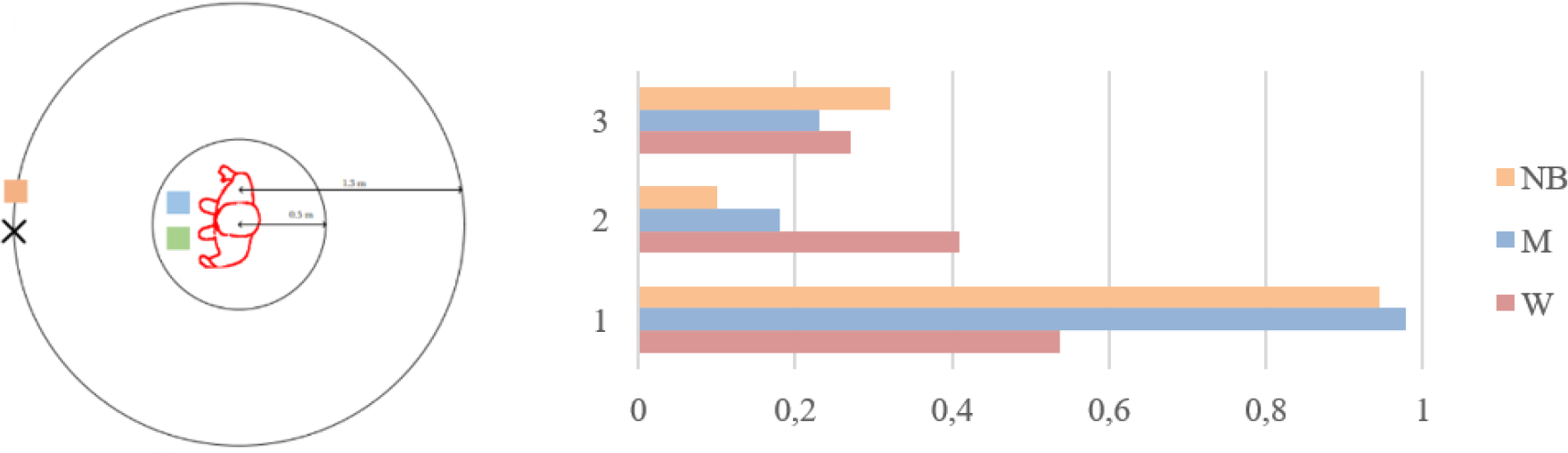 Note: 1 (intimate zone); 2 (personal zone); 3 (social zone); W (women); M (men); non-binary (non-binary gender).