
 Evidence in Favor of Homoparental Adoption: Analysis of Parenting Styles
Abstract
This study analyzed the parenting styles of 64 adoptive couples, 13 heteroaffective, and 19 homoaffective. We used the Parenting Styles Inventory to assess parenting styles. The results showed that there are no significant differences between the parental styles of heteroaffective and homoaffective adopters, including those who declare themselves homosexual and lesbian. This has important implications for the promotion of effective policies for the right to a plural family, which can offer better human development among children and adolescents during the adoption process in Brazil. The study provides relevant evidence, highlighting the importance of equalizing rights between hetero-affective and homo-parent families in contemporaneity.
Keywords:
parenting; discrimination; prejudice; contemporaneity; family
Resumo
Este estudo analisou os estilos parentais de 64 casais adotantes, sendo 13 heteroafetivos e 19 homoafetivos. O Inventário de Estilos Parentais foi utilizado para avaliar os estilos parentais. Os resultados mostraram que não há diferenças significativas entre os estilos parentais de adotantes heteroafetivos e homoafetivos, incluindo aqueles que se autodeclaram gays e lésbicas. Isso tem implicações importantes para a promoção de políticas efetivas de direito às famílias plurais, capazes de oferecer desenvolvimento humano pleno às crianças e adolescentes em processo de adoção no Brasil. O estudo fornece evidências recentes relevantes para esse campo, destacando a importância da equiparação de direitos entre famílias heteroafetivas e homoparentais na contemporaneidade.
Palavras-chave:
parentalidade; discriminação; preconceito; contemporaneidade; família
Parenting is a complex and multifaceted topic that has been the subject of discussion for decades (Ruiz et al., 2019). The challenges of contemporary parenting have become increasingly evident as societal expectations surrounding social institutions and parental roles intersect with diverse issues and continue to evolve (Cortez et al., 2019; Oliveira, 2020). The recognition of parenting by same-sex couples is one of the most pressing issues within contemporary parenting (Viana et al., 2022). Although progress in legislation and public opinion has enabled greater recognition and support for same-sex parenting, many challenges remain for homoparental families in their pursuit of the right to parenthood (Santos & Bossi, 2022).
Controversies surrounding parenting by self-declared gay and lesbian same-sex couples permeate legal and social spheres (Santos et al., 2018a). Clarifying the interactions between same-sex parents and their children, as well as the effects of such parenting on child development, is crucial to this debate and to fostering socially positive outcomes for homoparental families. Numerous studies highlight the multiplicity of family structures and arrangements in parenting, underscoring the relevance of this topic in discussions of contemporary parenthood (Biasutti & Nascimento, 2021; Ribeiro & Granato, 2021).
Different psychological perspectives also address this issue, concluding that child development depends more on the quality of parental relationships than on family structure and composition. This finding supports parenting within plural family configurations (Pereira & Ciríaco, 2020; Vieira & Coutinho, 2019). Pluralistic family structures can contribute positively to child development across single-parent, two-parent, or multi-parent families, including married, separated, single, and widowed parents, as well as those with diverse sexual orientations and gender identities, such as homoparental families (Lamb, 2012; Porta et al., 2020).
Historically, adoptions by pluralistic families have been stigmatized due to prejudice and stereotypes associated with the patriarchal family model (Ruiz et al., 2019; Santos & Bossi, 2022). For homoparental families, this prejudice is exacerbated by conservative representations that disseminate negative information about human sexual and identity diversity, despite evidence showing that family and identity diversity are irrelevant to parenting quality (Coitinho-Filho, 2017; Cerqueira-Santos et al., 2017). Recent theories emphasize the need for psychologists and legal professionals to differentiate between conjugality (couple interactions) and parenting (parent-child interactions) to prevent violations and prejudice against family rights (Mosmann et al., 2017, 2018; Viana et al., 2022).
Prejudice in this area leads to discriminatory practices against same-sex parents, who face psychosocial and legal barriers to adoption compared to couples adhering to the patriarchal family model (Coitinho Filho, 2017; Santos et al., 2018a; Ximenes & Scorsolini-Comin, 2018). Generally, prejudice against same-sex adoption is prevalent among older individuals, men, those with lower educational attainment, limited exposure to diversity, religious beliefs, and politically conservative ideologies (Perry & Whitehead, 2015; Santos et al., 2018b; Tombolato et al., 2019). These groups often support patriarchal family models, directly fostering stigmatization of homoparental families and indirectly hindering children and adolescents' right to family life (Cerqueira-Santos et al., 2017; Moreno & Sudario, 2022).
As a consequence of this exclusionary dynamic, discrimination against same-sex parenting significantly impacts the lives of these families, restricting children's and adolescents' rights (Silva et al., 2022). Denying the right to parenthood to same-sex couples can lead to social exclusion, rights violations, and reduced quality of life for these individuals (Sousa, 2022). Greater societal awareness and sensitivity on this issue are essential to promote the rights and social inclusion of all family members, regardless of sexual orientation or gender identity (Mata & Scorsolini-Comin, 2022).
In Brazil, a paradox exists wherein there are more children awaiting adoption than willing adoptive parents (Morelli et al., 2015; Sampaio et al., 2020). Many prospective parents idealize adopting newborn, white, non-disabled children without siblings, which does not match the profile of most children available for adoption, given the structure of Brazilian childcare institutions (Aguiar et al., 2019; Schulze & Alves, 2019). To fulfil children's and adolescents' family rights, inclusive policies encouraging diverse adoptive families have been successfully implemented, indicating that acceptance of diversity can serve as a pathway to resolving parenting paradoxes (Losier et al., 2020).
Homoparental adoption occurs when the adoptive couple consists of homosexual individuals (gay or lesbian) or a single individual who identifies as homosexual (Grossi, 2003). Homosexual couples seeking parenthood are generally more willing to adopt adolescents, children with siblings, or children with disabilities, demonstrating greater openness to adopting children and adolescents from diverse backgrounds (McConnachie et al., 2020). This inclusive perspective among adoptive parents is also observed in both heterosexual and homosexual couples who undergo psychosocial preparation for adoption (Losier et al., 2020). However, this preparation process can increase the time required for adoption to be finalized. While it reduces incompatibilities during the adoption process, a higher level of preparedness among prospective parents often results in children and adolescents spending longer periods in care institutions (Sampaio et al., 2018).
To address the need for adoptive parents to develop the necessary skills, recent evidence highlights the importance of focusing on the evaluation of parenting practices in adoption processes. This approach aims to enhance the adoptive parents' preparation and reduce the average duration of the adoption process (Borel et al., 2019; Cecílio & Scorsolini-Comin, 2018). Specifically, parenting practices should be evaluated to ensure the adoptive parents, whether heterosexual or homosexual, possess the necessary caregiving and developmental capacities (Lawrenz et al., 2020; Moreno & Batista, 2020). By doing so, this approach not only provides a psychosocial understanding that safeguards parenting competencies but also accelerates the adoption process, benefiting children and adolescents awaiting adoption in institutional care (Alves & Hueb, 2022; Lunelli et al., 2019).
When parenting practices are appropriate, both heterosexual and homosexual couples demonstrate essential competencies to exercise the family rights they are guaranteed, irrespective of the value judgments of external agents mediating the adoption process (Costa et al., 2013; Santos et al., 2018). Suitable parenting involves fostering play, leisure, communication, affection, and care for children, with no differences observed in the treatment of children and adolescents within the family structure of heterosexual and homosexual couples (Bueno et al., 2017; Cerqueira-Santos & Bourne, 2016). In summary, establishing equal criteria for assessing the parenting practices of heterosexual and homosexual couples is essential to protect their civil rights and the rights of families formed by these individuals (Teixeira & Lima, 2019; Silva & Macedo, 2022).
Despite the existence of logical criteria for evaluating parenthood, prejudice against same-sex adoption remains prevalent in Brazil. Unfortunately, this prejudice can lead to psychosocial and legal barriers, making adoption more challenging for same-sex couples compared to those adhering to the patriarchal family model (Coitinho Filho, 2017; Santos et al., 2018a; Ximenes & Scorsolini-Comin, 2018). Such discriminatory practices not only directly impact the rights of adoptive parents but also indirectly affect children’s and adolescents’ rights to family life (Cerqueira-Santos et al., 2017).
To address prejudice and discrimination against same-sex parents in contemporary society, it is crucial to contrast preconceived notions with contextual pragmatism, particularly regarding the similarities in caregiving potential between heterosexual and homosexual parents (Tombolato et al., 2019). The debate on same-sex adoption is intrinsically linked to issues of social justice and equality. The legitimacy of homoparental families and their right to adoption must be analysed and defended in light of principles of equality and human rights (Gomes et al., 2024). Evidence supporting same-sex adoption can help combat prejudice and discrimination, debunk stereotypes, and promote the social acceptance of homoparental families (Cortez et al., 2023).
By comparing parenting styles between heterosexual and homosexual couples, the study can identify differences and similarities relevant to understanding contemporary family dynamics. Strengthening academic evidence may influence public policy and legal recognition of same-sex couples as potential adoptive parents, supporting the development of a more inclusive and equitable system (Marchesi‐Ullastres et al., 2024). Social acceptance and recognition of homoparental families can contribute to their mental health and well-being, fostering healthier and more harmonious family environments for children (Kong, 2024).
Current evidence suggests that same-sex couples have the same capacity to care for and educate children and adolescents as heterosexual couples. However, prejudice and discrimination remain prevalent, posing obstacles to adoption by same-sex couples (Miranda et al., 2020; Teixeira & Lima, 2019). Numerous studies reinforce the equivalence of parental capabilities between heterosexual and homosexual couples. No differences are observed in the psychological adjustment and quality of life of children and adolescents adopted by same-sex couples compared to those adopted by heterosexual couples (Codya et al., 2017; McConnachie et al., 2020).
A prospective study followed 106 adoptive families and their children, including 56 same-sex couples (27 lesbian and 29 gay) and 50 heterosexual couples. The study measured behavioral adjustment, parental stress, couple adjustment, and family functioning. No differences were found between heterosexual and same-sex couples or between gay and lesbian couples in these variables (Farr et al., 2019). Overall, parenting can be effectively performed by anyone capable of transmitting feelings and competencies that foster healthy developmental relationships (Pinderhughes & Brodzinsky, 2019). Parenting styles characterized by intense affection, warmth, and acceptance, alongside low levels of rejection, are associated with positive outcomes for both adopted and non-adopted children and adolescents (McConnachie et al., 2020). The more positive the parenting style, the greater the psychological well-being, responsiveness, interaction quality, and lower levels of aggressive discipline, leading to better developmental outcomes for children and adolescents regardless of family type (Cerezo et al., 2018; Golombok et al., 2017; Gomide et al., 2005, 2017; Tombolato et al., 2019).
Despite the centrality of this topic and the wealth of theoretical and qualitative studies (Miranda et al., 2020; Sampaio et al., 2020; Santos & Bossi, 2020), there is a lack of empirical research evaluating parenting styles to provide Brazilian evidence comparing parenting practices between adoptive heterosexual and homosexual couples. Such research is vital to challenge stereotypes, prejudices, and discriminatory practices surrounding this issue. Analyzing the parenting styles of homoparental couples offers insights into parenting practices and strategies, enriching the study of parenthood. This research contributes to academic debate by critically addressing traditional notions of parenting, challenging stereotypical views, and paving the way for new directions in academic discourse. Therefore, given the psychological and societal issues affecting homoparental adoptive families, this study aims to analyze the parenting styles of adoptive homosexual and heterosexual couples. Based on the literature, the following hypotheses were formulated:
H1. There is no difference in parenting styles between same-sex and opposite-sex adoptive couples.
H2. There is no difference in parenting styles between gay and lesbian same-sex adoptive couples.
Method
This was a quantitative, comparative study aimed at investigating potential differences in parenting styles between heterosexual and same-sex adoptive parents.
Participants
The sample was a non-probabilistic convenience sample, consisting of 64 adoptive parents, including 30 mothers and 34 fathers, responsible for 36 adopted children or adolescents. Participants were selected based on their membership in one of two groups of adoptive parents, ensuring the representation of diverse parental identities. The sample included 13 opposite-sex adoptive couples (n = 26) and 19 same-sex adoptive couples (n = 38). Among the same-sex parents, 16 self-identified as lesbian women and 22 as gay men. The mean age of the parents was 41.62 years (SD = 10.27), ranging from 25 to 66 years. Approximately 36 participants (56.30%) had only one adopted child, 26 (40.60%) had two adopted children, and 2 (3.10%) had three or more adopted children. The average household income was 7.09 times the minimum wage (SD = 3.91), with heterosexual parents reporting an average income of 6.23 (SD = 4.55) and same-sex parents an average of 7.72 (SD = 3.29). Most same-sex parents (79.48%) held university degrees, while the majority of heterosexual parents (46.15%) had completed secondary education. Participants were from four Brazilian states, predominantly in the Southeast region: Paraná (n = 42, 61.70%), Santa Catarina (n = 16, 23.50%), Minas Gerais (n = 7, 10.20%), and São Paulo (n = 3, 4.60%). Post hoc estimations of sample characteristics yielded the following study parameters: power = 0.80, Type I error = 0.05, and effect size = 0.70, as simulated using Python and the “statsmodels” package.
Instruments
Parenting Styles Inventory - IEP (Gomide, 2006): This instrument comprises 42 items that assess parenting practices used in raising children. It evaluates seven parenting practices: two positive (A) positive monitoring (e.g., "They ask how my day was at school and listen attentively"), (B) moral behavior (e.g., "When I damage someone’s belongings, they teach me to admit what I’ve done and apologize") and five negative practices: (C) neglect (e.g., "I feel they don’t pay attention to me"), (D) inconsistent punishment (e.g., "When they are in a good mood, they don’t care about the wrong things I do"), (E) relaxed discipline (e.g., "They threaten to punish me but then do nothing"), (F) negative monitoring (e.g., "When I go out, they call me many times"), and (G) physical abuse (e.g., "They hit me with belts or other objects"). Each variable corresponds to six items.
Participants rated each item using a 3-point Likert scale (1 = Never; 2 = Sometimes; 3 = Always). Factor scores were calculated based on the sum of the items representing each factor, as outlined in the instrument manual (Gomide, 2006). Internal consistency ranged from reasonable to acceptable (Spiliotopoulou, 2009), with Cronbach’s alpha values as follows: positive monitoring (fathers = 0.778; mothers = 0.734), moral behavior (fathers = 0.775; mothers = 0.718), neglect (fathers = 0.745; mothers = 0.764), and physical abuse (fathers = 0.853; mothers = 0.789). For inconsistent punishment (fathers = 0.627; mothers = 0.598), relaxed discipline (fathers = 0.513; mothers = 0.561), and negative monitoring (fathers = 0.526; mothers = 0.448), reliability was lower but acceptable for exploratory purposes. This instrument was chosen due to its psychometric properties and thematic relevance to the study.
Sociodemographic Questionnaire: A self-report instrument was used to collect sociodemographic, familial, and functional characteristics of participants, as previously described. This instrument was employed to characterize the sample and identify differences relevant to the study's scope.
Procedures
The study was submitted to the Institutional Ethics Committee and approved (CAAE: 4.221.173). Researchers underwent standardized training in instrument application and research practices, supervised by two psychologists with doctoral degrees specializing in experimental psychology and psychological assessment. After approval, researchers contacted potential participants through email, WhatsApp, or phone using their personal networks to identify heterosexual and same-sex adoptive parents. Initial participants were recruited, and a snowball sampling approach was employed, whereby participants referred to other adoptive couples (Goodman, 1961). Invitations were sent via email and social media, and participation was voluntary and without compensation, as per Institutional Ethics Committee guidelines. Participants who agreed to participate signed an informed consent form (ICF) electronically and returned it via email. Research sessions were scheduled, with each couple spending approximately one hour completing the study. Due to social distancing during the COVID-19 pandemic, data collection was conducted online via Skype and Zoom. The participation refusal rate was estimated at 80%, with only one family agreeing to participate for every five contacted.
Data Analysis
Data were analyzed using JASP 0.16.0 (Love et al., 2019). Descriptive statistics (mean and standard deviation) and inferential statistics (non-parametric hypothesis testing) were employed. Nonparametric tests were chosen due to the small sample size and lack of matching between the groups (Derrick et al., 2020; Noether, 1987). Welch's t-test was used to compare two groups (Zimmerman & Zumbo, 1993). One-way ANOVA and MANOVA, including post hoc tests with variance correction, were used to compare the three levels (Ruxton & Beauchamp, 2008). Effect sizes were evaluated using Cohen’s d (up to 0.20 = small; up to 0.50 = medium; above 0.80 = large) and η² (up to 0.01 = small; up to 0.06 = medium; above 0.14 = large) (Cohen, 1969).
Results
Initially, the maternal parenting styles of heterosexual and same-sex adoptive couples were compared. Using Welch's t-test to analyze the factors of the Parenting Styles Inventory, no significant differences were found (p > 0.05) between the heterosexual and same-sex adoptive groups in terms of maternal parenting practices. The effect size observed ranged from small to moderate. A summary of the test results for each variable is presented in Table 1.
Subsequently, a test of differences in parenting style factors between paternal groups was conducted. Welch's t-test was used to compare the parenting styles of heterosexual and same-sex adoptive fathers. No significant differences were found in the variables tested between the groups mentioned. The observed effect sizes ranged from small to moderate, as shown in Table 2.
Given the absence of differences in parenting styles between paternal and maternal same-sex and heterosexual adoptive groups, an exploration of differences with greater segmentation of the parental groups was proposed. Using a MANOVA model, emphasizing multivariate analysis of variance among adoptive parents, differences between heterosexual, gay, and lesbian groups were tested simultaneously for all parenting style factors.
Similar to the previous tests, the MANOVA model [F(1,15) = 0.99, p = 0.49, Pillai’s Trace = 0.42] did not identify significant differences in parenting styles when contrasting the simultaneous variation of the variables across the mentioned groups. Additionally, no significant differences (p > 0.05) were found for any factors included in the MANOVA model when parenting style factors were contrasted using One-way ANOVA for groups of adoptive parents self-identified as heterosexual, gay, or lesbian. The observed effect sizes ranged from small to medium, as shown in Table 3.
Subsequently, the total scores for the paternal, maternal, and parental (paternal + maternal) Parenting Styles Inventory were compared using One-way ANOVA. No significant differences were found for any of the total parenting style scores compared based on paternity F(2,33) = 2.22, p = 0.12, η² = 0.11, maternity F(2,33) = 0.19, p = 0.87,η² = 0.01, or parenthood F(2,33) = 0.19, p = 0.87, η ² = 0.01 across the self-declared groups, with effect sizes ranging from small to medium. The total score for each comparison group is presented in Table 4.
In an additional inspection, Levene's test was conducted to analyze the homogeneity of variance in the total IEP score across groups. For the total score of the Parenting Styles Inventory (IEP) paternal F(2,33) = 2.22, p = 0.12, η² = 0.11, maternal F(2,33) = 1.69, p= 0.20, η² = 0.09, and parental F(2,33) = 2.30, p = 0.11, η² = 0.12, homogeneity of variance was observed, with a medium effect size. Given the homogeneity of variance, Tukey's post hoc test was applied, which also did not indicate significant differences between the groups (p > 0.05). In summary, the distribution of total scores evaluated for parenting styles remained reasonably similar across groups, as shown in Figure 1.
Distribution of IEPm, IEPp, and IEPpar scores among self-declared lesbian, gay, and heterosexual individuals.
Discussion
This study aimed to analyze the parenting styles of same-sex and opposite-sex adoptive couples. The findings revealed no differences in maternal and paternal parenting styles between heterosexual and same-sex parents (p > 0.05), thus confirming H1. Similarly, no differences were found in parenting styles between heterosexual, gay, and lesbian parents when examining the approaches adopted in these parenting practices, confirming H2. These findings were further supported by post hoc tests, which reinforced the a priori hypotheses H1 and H2.
Among both maternal and paternal samples, whether same-sex or opposite-sex parents, not only were there no differences, but positive parenting styles, such as positive monitoring and moral behavior, predominated. This finding suggests that, in addition to the lack of differences between same-sex and opposite-sex parents, the quality of parental interactions also tends to be consolidated within plural family configurations (Miranda et al., 2020; Pinderhughes & Brodzinsky, 2019). It can be inferred that, in typical socialization contexts, the human development of children and adolescents raised in same-sex and opposite-sex families remains equivalent concerning parental parenting styles when positive practices are employed, without affecting the quality of the relationship between parents and children (Gomide et al., 2017; Tombolato et al., 2019).
Besides the evidence of equivalence between same-sex and opposite-sex parents, the lack of differences between heterosexual, gay, and lesbian parents suggests that parental roles can be successfully fulfilled in families formed by different relational dyads (Schulze & Alves, 2019). In the cases analyzed in this study, the equivalence in parenting styles across male-female, male-male, and female-female dyads indicates that parenting transcends gender and sex-based role expectations. This perspective strengthens distinct conceptions that assess psychosocial family relationships and corresponding outcomes through functional rather than structural lenses (Ruiz et al., 2019).
Thus, it can be argued that the functions and roles of paternal and maternal parenting styles tend to be more fluid than the gender representation or biological classification of the individual who fulfills them (Mosmann et al., 2017, 2018). Consequently, parenting can be operationalized within plural family structures (Biasutti et al., 2021). Thus, based on the study's evidence, there are no grounds to deny parenthood to plural families within the analyzed scope (Sousa, 2022).
This understanding adds to the body of systematic research on parenting styles, which indicates that relational quality and positive parenting practices are more closely related to parental actions than to any form of predetermined determinism (Gomide et al., 2006; Lawrenz et al., 2020). In this context, the focus on developing positive parenting practices (moral behavior and positive monitoring) should be predominant. Regardless of whether parents belong to same-sex or opposite-sex family structures, their competencies in fostering moral development and performing the monitoring necessary for the development of adopted children - and those conceived within alternative family arrangements - must be evaluated (Cecílio & Scorsolini-Comin, 2018).
From a societal reflection standpoint, considering potential political impacts of these findings for professionals in Psychology and Law, especially concerning public policies, the evidence reinforces the need to uphold equality in evaluations (Silva & Macedo, 2022). Psychologists and other agents involved in adoption and parenting processes, whether same-sex or opposite-sex, must base their decisions on the functionality of the parents rather than their family structure (Ruiz et al., 2019; Santos et al., 2018a). Focusing on family structure rather than parenting styles and their functionality can lead to discriminatory practices (Cortez et al., 2019), which must be challenged as they result in the denial of civil and family rights to both parents and children involved in the process (Teixeira & Lima, 2019).
This is because, in the absence of equality in the evaluation process, plural families may be denied adoption rights based on prejudice and discrimination against same-sex family structures. Such discrimination is often rooted in psychosocial values that marginalize diversity, reducing its legitimacy in exercising civil rights, including within the family sphere (Ribeiro & Granato, 2021). Under these circumstances, psychologists and other professionals must inform decision-making bodies about the structural origins and impacts of prejudices that manifest as discriminatory actions in contemporary contexts (Cortez & Souza, 2017; Ximenes & Scorsolini-Comin, 2018).
In this scope, the study found that negative parenting practices are also equivalent between same-sex and opposite-sex families. This supports the notion that deviations in parenting can occur in any family configuration without predominance among self-declared heterosexual, gay, or lesbian parents (Machado et al., 2015; Ruiz et al., 2019). Addressing negative parenting practices requires psychologists and other professionals to combat the prejudice that plural families are degenerate, dysfunctional, disorganized, or ineffective in parenting. Furthermore, they must differentiate between parenting and conjugality in these processes (Mosmann et al., 2017). After all, given the absence of differences among the groups investigated, both same-sex and opposite-sex families exhibit equivalence in positive and negative parenting practices, as reflected in the study (Pinderhughes & Brodzinsky, 2019).
From a Human Rights perspective, particularly as established in Brazilian constitutional provisions, this raises the issue of equality once again. Equality must be the guiding principle for evaluating and supporting different family configurations in their exercise of parenting in contemporary society (Lunelli et al., 2019; Santos & Bossi, 2022). In cases where positive parenting practices fully realize the duties and rights to life, health, education, leisure, professional development, culture, dignity, respect, freedom, and family and community life for children and adolescents, the right to a family institution cannot be denied (Aguiar et al., 2019). Conversely, when negative parenting practices, such as neglect, discrimination, exploitation, violence, cruelty, or oppression, predominate, societal entities and the State must intervene to ensure justice and social order conducive to the dignity of adoptive parents (Moreno et al., 2020; Schulze & Alves, 2019).
However, it is unacceptable for society and the State to pre-emptively deny the rights of plural families without evidence of negative parenting practices. This is particularly relevant considering the positive impact of diversity on the adoption process among children and adolescents with equitably diverse phenotypes (Calzo et al., 2019; Farr et al., 2019). Within the framework of Brazilian social policy, the evidence from this study - indicating no significant differences between same-sex and opposite-sex groups - addresses the urgent socially positive consequences for our contemporary era: meeting the needs of children and adolescents awaiting adoption with parental configurations capable of employing positive parenting styles (Gomide et al., 2017; Golombok et al., 2017; Lamb, 2012; Moreno & Sudario, 2022; Patterson, 2006).
In this context, both for the expediency of ensuring family rights for children and adolescents awaiting adoption and for the necessary equality regarding the civil rights of plural families, equitable and functional treatment of parenting styles between same-sex and opposite-sex adoptive parents is recommended in adoption processes (Borel et al., 2019; Teixeira & Lima, 2019). Therefore, it is essential to ensure that parenting practices are evaluated equitably, considering competencies related to parenting rather than stereotypes in decision-making processes concerning same-sex or opposite-sex adoption (Teixeira & Lima, 2019; Viana et al., 2022). This argument represents the central thesis evidenced by this study, aimed at addressing the challenges faced by same-sex couples in the Brazilian context.
Conclusion
The evidence from this study reinforces the body of research indicating that family structure and fixed determinations of gender and sexuality are irrelevant when emphasizing the conditions that foster the development of children and adolescents. Relational quality is the predominant factor in parenting, primarily determined by positive and negative parenting styles, which must be evaluated equitably and transparently among those seeking to adopt. The impact of this study lies precisely in its evidence demonstrating this equivalence, aiming to foster inclusive parenting outcomes in contemporary society, especially in a time marked by a lack of reference points, when pragmatic approaches are necessary to align discourse with reality.
From the reference point established by this study, the urgent need for a review of institutional practices in the judiciary and psychosocial assistance in Brazil regarding the rights of same-sex families becomes evident. For legislators, this study highlights the pressing need for policies capable of supporting public measures to ensure the full functionality of social order in a logical, consistent, and coherent manner with the constitutional principles of Brazilian law, namely equality between same-sex and opposite-sex parents.
For future studies, the sample size and coverage represent limitations in terms of breadth and effect size. For small effects, the magnitude of disparities is minor, meaning that while differences are detectable, they are not significant and should be improved in future designs. Medium and large effect sizes usually indicate clearer differences between groups, which may justify implementing practical changes. It is crucial to consider improved strategies for addressing these differences in future investigations on the topic. This could include analyses with expanded samples from other family configurations and representative and stratified samples that reflect Brazilian reality, including populations in greater psychosocial vulnerability. It is also desirable to integrate this study into cross-cultural perspectives, especially those capable of examining the effects of parenting styles in other cultures in-depth, encompassing their discursive and symbolic resources.
Additionally, the study's limitations include the qualitative difficulties in recruiting participants. At a primary level, identifying same-sex families posed challenges, which should be explored further in future studies. Is it a macro-social issue, where same-sex families are rendered invisible due to political and societal mechanisms denying their family rights? Or is it a micro-individual matter, where same-sex parents choose not to pursue parenthood? What implicit and explicit mechanisms in contemporary society must be considered to answer this question? While this study does not provide evidence to address these questions, it underscores their importance, given the challenges faced in forming the sample.
Another qualitative dimension emerged from the interactions between the researchers and the families that challenged Brazil’s conservative status quo by exercising same-sex parenting in the contemporary context: the intersection of structural violence faced by same-sex families. The few same-sex families that participated in the study reported significant legal battles to overcome societal resistance to adoption. These challenges included representations of internalized homophobia, barriers created by psychosocial support technicians, and constant suspicion from decision-makers in Brazilian courts. Participants also expressed concern that research might be misused to reinforce stereotypes and discriminatory practices against plural parenting. Many same-sex families declined participation due to previous experiences of being scapegoated by conservative and reactionary groups that initially approached them amicably but later persecuted them for their same-sex parenting. This insight offers new directions for understanding same-sex parenting in contemporary society. The findings of this study reinforce the absence of differentiation between same-sex and opposite-sex families, underscoring the need for equality and a pragmatic realignment of psychosocial and legal practices that influence the exercise of their respective family rights in contemporary society.
In a broader interpretation of the results, considering the data that supported the research and its relationship with the current state of the field, it is concluded that the study's evidence, within its limitations, supports public policies that advocate for the civil and family rights of same-sex families, promoting equality in the evaluation of adoptive couples. The positive parenting practices observed in both groups strengthen the notion that parenting should not be restricted by prejudices related to gender identity and sexuality. Professionals involved in adoption processes should focus on the functional evaluation of adoptive parents, avoiding biases based on assumptions about family structures. The results highlight the need for inclusive public policies and functional evaluations that prioritize parenting practices compatible with contemporary adoptive family configurations.
References
-
Aguiar, G. M. R. D., Martins, K. P. H., & Rosa, M. D. (2019). Criança, família e acolhimento institucional: entre a norma e a constituição psíquica.Configurações. Revista Ciências Sociais, 23(1), 90-104. https://doi.org/10.4000/configuracoes.6900
» https://doi.org/10.4000/configuracoes.6900 -
Alves, J. R., & Hueb, M. F. D. (2022). Um estudo de caso sobre adoção de uma criança mais velha. Revista da SPAGESP, 23(1), 71-86. https://doi.org/10.32467/issn.2175-3628v23n1a7
» https://doi.org/10.32467/issn.2175-3628v23n1a7 - Biasutti, C. M., & Nascimento, C. R. R. (2021). (Homo) Parenting: From the Adoption Process to the Child’s Arrival. In N. A., Morais, F., Scorsolini-Comin, E., Cerqueira-Santos (Eds.),Parenting and Couple Relationships Among LGBTQ+ People in Diverse Contexts(pp. 251-272). Springer.
-
Borel, E. F., Santos, R. B., & Costa, D. (2019). Evolução da legislação brasileira no tocante à adoção e à devolução de crianças e adolescentes adotados no Brasil.Humanidades em Perspectivas, 2(1), 22-35. https://revistasuninter.com/revista-humanidades/index.php/revista-humanidades/article/view/23
» https://revistasuninter.com/revista-humanidades/index.php/revista-humanidades/article/view/23 -
Bueno, R., Vieira, M. L., & Crepaldi, M. A.. (2017). Envolvimento Paterno com Filhos Adotivos e a Estrutura Familiar. Psicologia: Teoria e Pesquisa, 33(1), 1-10. https://doi.org/10.1590/0102.3772e3342
» https://doi.org/10.1590/0102.3772e3342 -
Calzo, J. P., Mays, V. M., Björkenstam, C., Björkenstam, E., Kosidou, K., & Cochran, S. D. (2019). Parental sexual orientation and children's psychological well‐being: 2013-2015 National Health Interview Survey.Child Development,90(4), 1097-1108. https://doi.org/10.1111/cdev.12989
» https://doi.org/10.1111/cdev.12989 -
Cecílio, M. S., & Scorsolini-Comin, F. (2018). Avaliação de candidatos pretendentes no processo de habilitação para adoção: revisão da literatura.Psico-USF,23(1), 497-511. https://doi.org/10.1590/1413-82712018230309
» https://doi.org/10.1590/1413-82712018230309 -
Cerezo, F., Ruiz-Esteban, C., Lacasa, C. S., & Gonzalo, J. J. A. (2018). Dimensions of parenting styles, social climate, and bullying victims in primary and secondary education. Psicothema 2018, 30 (1), 59-65 http://doi.org/10.7334/psicothema2016.360
» http://doi.org/10.7334/psicothema2016.360 -
Cerqueira-Santos, E; Silva, B. D. B; Rodrigues, H. D. S; Santos, L. D; Araújo, L. F. (2017). Contato interpessoal com homossexuais e crenças sobre a adoção homoparental. Revista Subjetividade, 7(2), 7-10. http://dx.doi.org/10.5020/23590777.rs.v17i2.5991
» http://dx.doi.org/10.5020/23590777.rs.v17i2.5991 -
Codya, P. A., Farrb, R. H., McRoya, R. G., Ayers-Lopeza, S. J., & Ledesmac, K. J. (2017). Youth Perspectives on Being Adopted from Foster Care by Lesbian and Gay Parents: Implications for Families and Adoption Professionals. Adoption Quarterly, 20(1), 98-118. http://dx.doi.org/10.1080/10926755.2016.1200702
» http://dx.doi.org/10.1080/10926755.2016.1200702 -
Coitinho-Filho, R. A., (2017). Sob “o melhor interesse”! O “homoafetivo” e a criança nos processos de adoção. Estudos Feministas, 25(2), 495-518. https://doi.org/10.1590/1806-9584.2017v25n2p495
» https://doi.org/10.1590/1806-9584.2017v25n2p495 - Cohen, J. (1969). Statistical power analysis for the behavioral sciences Academic Press.
-
Cortez, P. A., & Souza, M. V. R. (2017). Menos profissionais, mais sujeitos: formação para a educação popular no Sistema Único de Saúde (SUS).Em Extensao,16(2), 27-37. https://doi.org/10.14393/REP-2017-37610
» https://doi.org/10.14393/REP-2017-37610 -
Cortez, P. A., Souza, M. V. R. D., Salvador, A. P., & Oliveira, L. F. A. (2019). Sexismo, misoginia e LGBTQfobia: desafios para promover o trabalho inclusivo no Brasil.Physis: Revista de Saúde Coletiva,29(1), e290414. https://doi.org/10.1590/S0103-73312019290414
» https://doi.org/10.1590/S0103-73312019290414 - Cortez, P. A., Trombini-Frick, L., Veiga, H. M. S., & Azevedo, A. V. S. (2023). Formulação e avaliação de políticas públicas: contribuições teóricas e práticas para a Psicologia Forense. In A. V. S. Azevedo (Ed.), Psicologia forense e políticas públicas: articulações para o enfrentamento da violência (pp. 39-98). Editora Dialética.
-
Costa, P.A., Caldeira, S., Fernandes, I., Rita, C., Pereira, H., & Leal, I. (2013). Atitudes da População Portuguesa em Relação à Homoparentalidade. Psicologia: Reflexão e Crítica, 26(4), 790-798. https://doi.org/10.1590/S0102-79722013000400020
» https://doi.org/10.1590/S0102-79722013000400020 -
Derrick, B., White, P., & Toher, D. (2020). Parametric and non-parametric tests for the comparison of two samples which both include paired and unpaired observations.Journal of Modern Applied Statistical Methods,18(1), 1-23. https://dx.doi.org/10.22237/jmasm/1556669520
» https://dx.doi.org/10.22237/jmasm/1556669520 -
Farr, R. H., Bruun, S. T., & Patterson, C. J. (2019). Longitudinal associations between coparenting and child adjustment among lesbian, gay, and heterosexual adoptive parent families. Developmental Psychology, 55(1), 2547-2560. https://doi.org/10.1037/dev0000828
» https://doi.org/10.1037/dev0000828 -
Golombok, S., Blake, L., Slutsky, J., Raffanello, E., Roman, G. D., & Ehrhardt, A. (2017). Parenting and the adjustment of children born to gay fathers through surrogacy. Child Development, 89(4), 1-11. https://doi.org/10.1111/cdev.12728
» https://doi.org/10.1111/cdev.12728 - Gomide, P. I .C. (2006). Inventário de Estilos Parentais: modelo teórico, manual de aplicação, apuração e interpretação Editora Vozes.
-
Gomide, P. I. C., Mascarenhas, A. B. D., & Munhoz, G. V. (2017). Avaliação de uma intervenção para redução de comportamentos antissociais e aumento da escolarização em adolescentes de uma instituição de acolhimento.Acta Comportamentalia: Revista Latina de Análisis de Comportamiento,25(1), 25-40. https://psycnet.apa.org/record/2017-20599-002
» https://psycnet.apa.org/record/2017-20599-002 -
Gomide, P. I. C., Salvo, C. G., Pinheiro, D. P. N., & Sabbag, G. M (2005). Correlação entre práticas educativas, depressão, estresse e habilidades sociais. Psico-USF, 10(2), 169-178. https://doi.org/10.1590/S1413-82712005000200008
» https://doi.org/10.1590/S1413-82712005000200008 -
Gomes, R., Machin, R., Nascimento, M. A. F. D., & Couto, M. T. (2024). Problematizando as relações entre homoparentalidade e saúde.Ciência & Saúde Coletiva,29, e18412023. https://doi.org/10.1590/1413-81232024294.18412023
» https://doi.org/10.1590/1413-81232024294.18412023 -
Goodman, L. A. (1961). Snowball sampling.The Annals of Mathematical Statistics, 32(1), 148-170. https://www.jstor.org/stable/2237615
» https://www.jstor.org/stable/2237615 -
Grossi, M. P. (2003). Gênero e parentesco: Famílias gays e lésbicas no Brasil. Cadernos Pagu, 21(1), 261-280. https://doi.org/10.1590/S0104-83332003000200011
» https://doi.org/10.1590/S0104-83332003000200011 -
Kong, T. S. (2024). Disclosure as family practice: Changing family dynamics in Hong Kong after a gay son comes out.Sociology Compass,18(1), e13170. https://doi.org/10.1111/soc4.13170
» https://doi.org/10.1111/soc4.13170 -
Lamb, M. E. (2012). Mothers, fathers, families, and circumstances: Factors affecting children’s adjustment. Applied Developmental Science, 16(1), 98-111. https://doi.org/10.1080/10888691.2012.667344
» https://doi.org/10.1080/10888691.2012.667344 -
Lawrenz, P., Zeni, L. C., Arnoud, T. D. C. J., Foschiera, L. N., & Habigzang, L. F. (2020). Estilos, práticas ou habilidades parentais: como diferenciá-los?.Revista Brasileira de Terapias Cognitivas (Impresso), 16(1), 2-9. http://pepsic.bvsalud.org/scielo.php?script=sci_arttext&pid=S1808-56872020000100002
» http://pepsic.bvsalud.org/scielo.php?script=sci_arttext&pid=S1808-56872020000100002 -
Losier, V., Cyr, C., & Dubois-Comtois, K. (2020). International adoption of cleft lip and palate children: Attachment, behavior problems, and parental sensitivity. c Journal of Applied Developmental Psychology 68(1), 101-138. https://doi.org/10.1016/j.appdev.2020.101138
» https://doi.org/10.1016/j.appdev.2020.101138 -
Love, J., Selker, R., Marsman, M., Jamil, T., Dropmann, D., Verhagen, J.,... & Wagenmakers, E. J. (2019). JASP: Graphical statistical software for common statistical designs.Journal of Statistical Software,88(1), 1-17. https://doi.org/10.18637/jss.v088.i02
» https://doi.org/10.18637/jss.v088.i02 -
Lunelli, M., Lima, D. S., & Tomé, M. D. P. (2019). Devolução de criança e adolescente após adoção e o olhar da justiça brasileira.Humanidades em Perspectivas, 6(3), 158-167. https://cadernosuninter.com/index.php/humanidades/article/view/1200
» https://cadernosuninter.com/index.php/humanidades/article/view/1200 -
Machado, R. N., Féres-Carneiro, T., & Magalhães, A. S. (2015). Parentalidade adotiva: contextualizando a escolha.Psico,46(4), 442-451. https://doi.org/10.15448/1980-8623.2015.4.19862
» https://doi.org/10.15448/1980-8623.2015.4.19862 -
Marchesi‐Ullastres, Á., Pérez‐García, E. M., Lucena‐Ferrero, R., & Martín‐Babarro, J. (2024). Exploring the intersection of gender identity and homoparental family structure: Implications for educational, family and personal well‐being in Spanish students.British Journal of Developmental Psychology [Preprint]. https://doi.org/10.1111/bjdp.12488
» https://doi.org/10.1111/bjdp.12488 -
Mata, J. J., & Scorsolini-Comin, F. (2022). Conjugalidade e parentalidade adotiva em casais de gays e lésbicas: costuras a partir da transmissão psíquica. Avances en Psicología Latinoamericana, 40(2), 1-16. https://doi.org/10.12804/revistas.urosario.edu.co/apl/a.7897
» https://doi.org/10.12804/revistas.urosario.edu.co/apl/a.7897 -
McConnachie, A. L., Ayed, N., Foley, S., Lamb, M. E., Jadva, V., Tasker, F., & Golombok, S. (2021). Adoptive gay father families: A longitudinal study of children’s adjustment at early adolescence.Child Development,92(1), 425-443. http://doi.org/10.1111/cdev.13442
» http://doi.org/10.1111/cdev.13442 -
Miranda, P. R. A., Fiorott, J. G., Giacomozzi, A. I., & Bousfield, A. B. S. (2020). Estratégias de acompanhamento psicológico da parentalidade adotiva: notas sobre experiências grupais. Nova Perspectiva Sistêmica, 29(67), 85-97. http://dx.doi.org/10.38034/nps.v29i67.549
» http://dx.doi.org/10.38034/nps.v29i67.549 -
Morelli, A. B., Scorsolini-Comin, F., & Santeiro, T. V. (2015). O" lugar" do filho adotivo na dinâmica parental: revisão integrativa de literatura.Psicologia Clínica,27(1), 175-194. https://doi.org/10.1590/0103-56652015000100010
» https://doi.org/10.1590/0103-56652015000100010 -
Moreno, G. L., & Batista, C. V. M. (2020). Adoção, acolhimento e devolução: um olhar e uma escuta a criança.Cadernos de Comunicação,24(2),1-19. https://periodicos.ufsm.br/ccomunicacao/article/view/44420/pdf
» https://periodicos.ufsm.br/ccomunicacao/article/view/44420/pdf -
Moreno, G. L., & Sudario, M. V. B. (2022). Criança, escola e acolhimento institucional: a escola como espaço de socialização. Revista Teias, 23(68), 29-41. https://doi.org/10.12957/teias.2022.60916
» https://doi.org/10.12957/teias.2022.60916 -
Mosmann, C. P., Costa, C. B. D., Einsfeld, P., Silva, A. G. M. D., & Koch, C. (2017). Conjugalidade, parentalidade e coparentalidade: associações com sintomas externalizantes e internalizantes em crianças e adolescentes.Estudos de Psicologia (Campinas),34, 487-498. https://doi.org/10.1590/1982-02752017000400005
» https://doi.org/10.1590/1982-02752017000400005 -
Mosmann, C., Costa, C. B. D., Silva, A. G. M. D., & Luz, S. K. (2018). Filhos com sintomas psicológicos clínicos: papel discriminante da conjugalidade, coparentalidade e parentalidade.Trends in Psychology,26, 429-442. https://doi.org/10.9788/TP2018.1-17Pt
» https://doi.org/10.9788/TP2018.1-17Pt -
Noether, G. E. (1987). Sample size determination for some common nonparametric tests.Journal of the American Statistical Association,82(398), 645-647. https://www.tandfonline.com/doi/abs/10.1080/01621459.1987.10478478
» https://www.tandfonline.com/doi/abs/10.1080/01621459.1987.10478478 -
Oliveira, C. D. (2020). O declínio do homem provedor chefe de família: entre privilégios e ressentimentos. [TESTE] Revista Crítica Histórica, 11(22), 202-228. https://doi.org/10.28998/rchv11n22.2020.0010
» https://doi.org/10.28998/rchv11n22.2020.0010 -
Patterson, C. J. (2006). Children of lesbian and gay parents. Current Directions in Psychological Science, 15(5), 241-244. https://doi.org/10.1111%2Fj.1467-8721.2006.00444.x
» https://doi.org/10.1111%2Fj.1467-8721.2006.00444.x -
Patterson, C. J. (2017). Parents' sexual orientation and children's development.Child Development Perspectives,11(1), 45-49. https://doi.org/10.1111/cdep.12207
» https://doi.org/10.1111/cdep.12207 -
Pereira, E. B., & Ciríaco, K. T. (2020). Relação família homoparental-escola: o que acontece quando dois homens adotam crianças?.Perspectivas em Diálogo: revista de educação e sociedade, 7(14), 248-279. https://periodicos.ufms.br/index.php/persdia/article/view/8081
» https://periodicos.ufms.br/index.php/persdia/article/view/8081 -
Perry, S. L., & Whitehead, A. L. (2015). Same-sex adoption as a welfare alternative? Conservatism, neoliberal values, and support for adoption by same-sex couples.Journal of Homosexuality,62(12), 1722-1745. http://doi.org/10.1080/00918369.2015.1078209
» http://doi.org/10.1080/00918369.2015.1078209 - Pinderhughes, E. E., & Brodzinsky, D. M. (2019). Parenting in adoptive families. In M. H. Bornstein (Ed.),Handbook of parenting: Children and parenting(pp. 322-367). Routledge/Taylor & Francis Group.
-
Porta, D. D., Leão, F. E., Antoniazzi, M. P., & Siqueira, A. C. (2020). Vivências e Expectativas de Mulheres Solteiras Habilitadas para Adotar.Psicologia: Teoria e Pesquisa,35(1), 1-9. https://doi.org/10.1590/0102.3772e35nspe10
» https://doi.org/10.1590/0102.3772e35nspe10 -
Ribeiro, L. J., & Granato, T. M. M. (2021). Preconceito e parentalidade? Experiências de casais homoafetivos.Vínculo,18(2), 1-11. http://pepsic.bvsalud.org/scielo.php?script=sci_arttext&pid=S1806-24902021000200014
» http://pepsic.bvsalud.org/scielo.php?script=sci_arttext&pid=S1806-24902021000200014 -
Ruiz, J. M., Borges, C. A. P., Hueb, M. F. D., Tilio, R. D., & Scorsolini-Comin, F. (2019). Gender and adoption in the Brazilian context: An integrative review of the scientific literature.Trends in Psychology,27, 293-308. https://doi.org/10.9788/TP2019.2-01
» https://doi.org/10.9788/TP2019.2-01 -
Ruxton, G. D., & Beauchamp, G. (2008). Time for some a priori thinking about post hoc testing.Behavioral Ecology,19(3), 690-693. https://doi.org/10.1093/beheco/arn020
» https://doi.org/10.1093/beheco/arn020 -
Sampaio, D. D. S., Magalhães, A. S., & Féres-Carneiro, T. (2018). Pedras no caminho da adoção tardia: desafios para o vínculo parento-filial na percepção dos pais.Trends in Psychology,26, 311-324. https://doi.org/10.9788/TP2018.1-12Pt
» https://doi.org/10.9788/TP2018.1-12Pt -
Sampaio, D. D. S., Magalhães, A. S., & Machado, R. N. (2020). Motivações para adoção tardia: entre o filho imaginado e a realidade. Psicologia em Estudo, 25(1), 1-15. https://doi.org/10.4025/psicolestud.v25i0.44926
» https://doi.org/10.4025/psicolestud.v25i0.44926 -
Santos, A. B., & Bossi, T. J. (2022). A Vivência da Parentalidade por Casais Homossexuais: Revisão Sistemática de Teses e Dissertações. Revista Pensando Famílias, 26(1), 152-166. https://pensandofamilias.domusterapia.com.br/index.php/files/article/download/13/12
» https://pensandofamilias.domusterapia.com.br/index.php/files/article/download/13/12 -
Santos, J. V. D. O., Araújo, L. F. D., Cerqueira-Santos, E., & Negreiros, F. (2018b). Conservadorismo, posicionamiento político y preconcepto contra las parejas homosexuales.Estudos de Psicologia (Natal),23(1), 57-66. http://dx.doi.org/10.22491/1678-4669.20180007
» http://dx.doi.org/10.22491/1678-4669.20180007 -
Santos, J. V. D. O., Araújo, L. F. D., Negreiros, F., & Cerqueira-Santos, E. (2018a). Adoção de crianças por casais homossexuais: As representações sociais.Trends in Psychology,26(1), 139-152. https://doi.org/10.9788/TP2018.1-06Pt
» https://doi.org/10.9788/TP2018.1-06Pt -
Schulze, M. D., & Alves, A. C. M. (2019). No limite do psíquico e do legal: a transgeracionalidade em processos de destituição do poder familiar.Opinión Jurídica,18(36), 209-231. https://doi.org/10.22395/ojum.v18n36a9
» https://doi.org/10.22395/ojum.v18n36a9 -
Silva, P. S., Machado, M. S., Silberfarb, M. S., Machemer, R. S., Santos, A. T. R., Chaves, V. P., & Frizzo, G. B. (2022). (Re) Construindo vínculos: relato de experiência de um grupo de apoio à adoção. Revista da SPAGESP, 23(1), 175-190. https://doi.org/10.32467/issn.2175-3628v23n1a14
» https://doi.org/10.32467/issn.2175-3628v23n1a14 -
Silva, W. M., & Macedo, E. B. (2022). A importância da avaliação psicológica em processos de adoção: uma revisão de literatura.Facit Business and Technology Journal, 1(38), 1-16. http://revistas.faculdadefacit.edu.br/index.php/JNT/article/view/1732/1186
» http://revistas.faculdadefacit.edu.br/index.php/JNT/article/view/1732/1186 -
Sousa, V. S. C. (2022). Um Advogando pela adoção: a importância do advogado para o processo de adoção: Importância do advogado. Revista de Direito UNIFACEX, 10(1), 1-14. https://periodicos.unifacex.com.br/direito/article/view/1158
» https://periodicos.unifacex.com.br/direito/article/view/1158 -
Spiliotopoulou, G. (2009). Reliability reconsidered: Cronbach's alpha and paediatric assessment in occupational therapy.Australian Occupational Therapy Journal,56(3), 150-155. https://doi.org/10.1111/j.1440-1630.2009.00785.x
» https://doi.org/10.1111/j.1440-1630.2009.00785.x -
Teixeira, G. É. L, & Lima, F. M. (2019). Adoção homoparental no contexto social brasileiro. Revista Direito Civil, 1(2), 57-68. https://revistas.anchieta.br/index.php/RevistaDirCivil/article/view/1478
» https://revistas.anchieta.br/index.php/RevistaDirCivil/article/view/1478 -
Teixeira, G. E. L., & Lima, F. M. (2019). Adoção homoparental no contexto social brasileiro.Revista Direito Civil, 1(2), 57-68. https://revistas.anchieta.br/index.php/RevistaDirCivil/article/view/1478
» https://revistas.anchieta.br/index.php/RevistaDirCivil/article/view/1478 -
Tombolato, M. A., Maia, A. C. B., & Santos, M. A. D. (2019). A trajetória de adoção de uma criança por um casal de lésbicas. Psicologia: Teoria e Pesquisa, 35(1), e3546. https://doi.org/10.1590/0102.3772e3546
» https://doi.org/10.1590/0102.3772e3546 -
Viana, F. D. C., Leite, C. B., Torres, C. M. G., Martins, V. F., Barbosa, G. S., Diniz, J. A., & Ramos, F. S. (2022). Compreensões e repercussões sob o prisma da homoparentalidade adotiva: uma revisão sistemática da literatura. Revista de Casos e Consultoria, 13(1), e29319. https://periodicos.ufrn.br/casoseconsultoria/article/view/29319
» https://periodicos.ufrn.br/casoseconsultoria/article/view/29319 -
Vieira, I. M., & Coutinho, S. M. D. S. (2019). Social Representations of Family for Institutionalized Adolescents in a Municipality Northern Fluminense.Revista de Psicologia da IMED,11(2), 34-50. http://dx.doi.org/10.18256/2175-5027.2019.v11i2.2957
» http://dx.doi.org/10.18256/2175-5027.2019.v11i2.2957 -
Ximenes, F., & Scorsolini-Comin, F. (2018). Adoção por casais do mesmo sexo: relatos de psicólogos do judiciário.Estudos Interdisciplinares em Psicologia, 9(1), 65-85. http://pepsic.bvsalud.org/scielo.php?script=sci_arttext&pid=S2236-64072018000100005
» http://pepsic.bvsalud.org/scielo.php?script=sci_arttext&pid=S2236-64072018000100005 -
Zimmerman, D. W., & Zumbo, B. D. (1993). Rank transformations and the power of the Student t-test and Welch t-test for non-normal populations with unequal variances.Canadian Journal of Experimental Psychology,47(3), 523-539. https://psycnet.apa.org/doi/10.1037/h0078850
» https://psycnet.apa.org/doi/10.1037/h0078850
The data supporting the findings of this study can be requested from the corresponding author upon reasonable request.

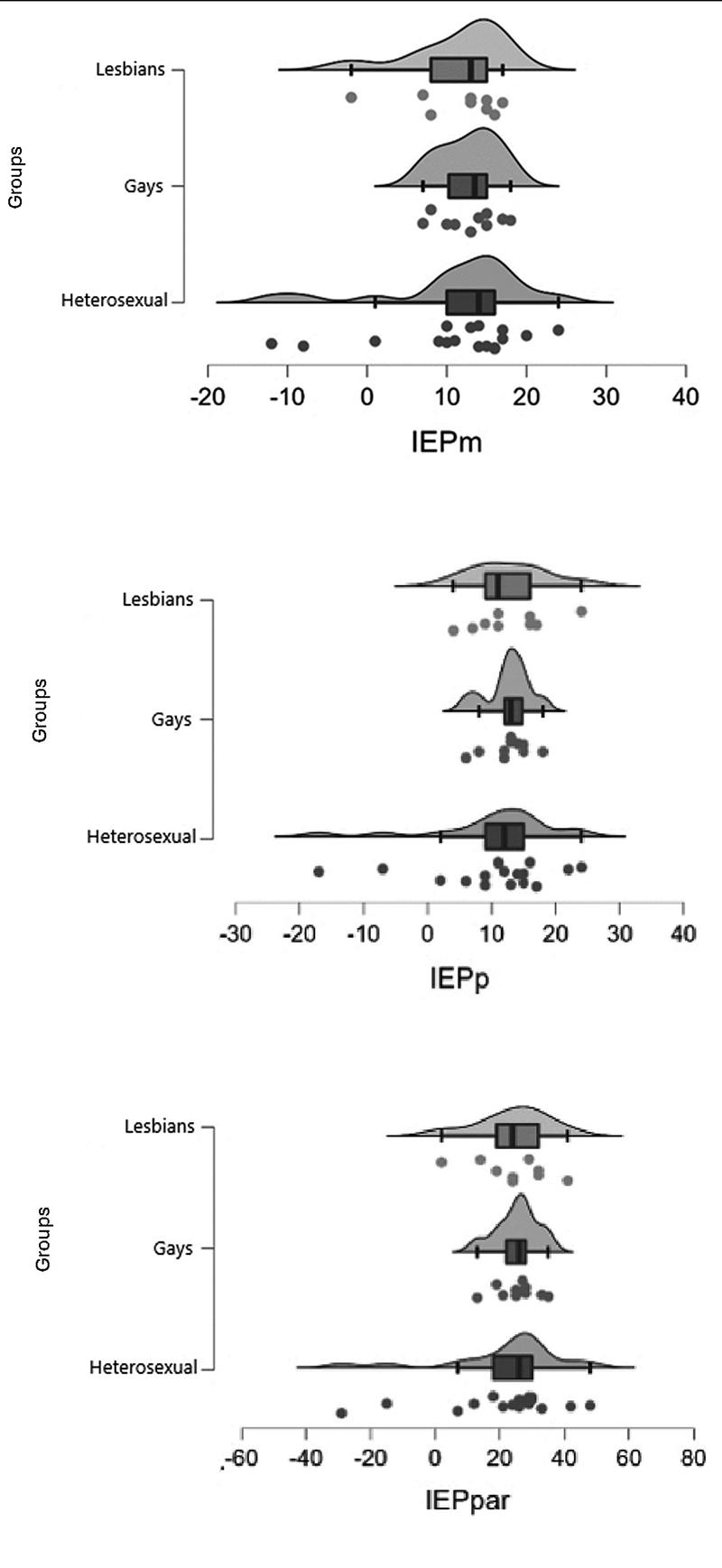 Note. IEPm = Total score of the Maternal Parenting Styles Inventory; IEPp = Total score of the Paternal Parenting Styles Inventory; IEPpar = Total score of the Parental Parenting Styles Inventory (Paternal + Maternal).