 Paths to Forgiveness: Acceptability and Effects of an Intervention
Abstract
This study assessed the short-term effects and acceptability of an intervention aimed at promoting forgiveness. Delivered to ten participants, the intervention consisted of seven weekly sessions, each lasting two hours. The effects on attitudes toward forgiveness, empathic concern, and perspective-taking were assessed, as well as the acceptability of the intervention’s goals, procedures, and outcomes. A comparison between pre- and post-test measures showed a significant increase in positive affects, behaviors, and judgments, as well as an increase in negative affects, behaviors, and judgments. Evidence of acceptability and participant engagement in the proposed activities was also identified, indicating the social relevance of the intervention's goals, procedures, and outcomes. It was concluded that the intervention resulted in expected changes in forgiveness readiness scores, in accordance with the Forgiveness Process Model.
Keywords:
forgiveness; intervention; effects evaluation; adherence
Resumo
O presente estudo avaliou efeitos de curto prazo e aceitabilidade de uma intervenção para promoção do perdão. Oferecida a dez participantes, a intervenção teve sete encontros semanais com duração de duas horas cada. Avaliaram-se os efeitos sobre atitudes para o perdão, consideração empática e tomada de perspectiva, bem como a aceitabilidade em relação às metas, procedimentos e resultados da intervenção. A comparação entre pré e pós-teste demonstrou aumento significativo em afetos, comportamentos e julgamentos positivos e aumento em afetos, comportamentos e julgamentos negativos. Identificaram-se, ainda, evidências de aceitabilidade e engajamento dos participantes nas atividades propostas, indicando a relevância social das metas, procedimentos e efeitos da intervenção. Conclui-se que a intervenção gerou mudanças esperadas nos escores de disponibilidade para o perdão, conforme o Modelo de Processo do Perdão.
Palavras-chave:
perdão; intervenção; avaliação de efeitos; adesão
Interpersonal injustices, to varying degrees, frequently occur for diverse reasons and in a variety of contexts, where forgiveness emerges as a possible response to the negative consequences triggered by such situations. Indeed, when individuals experience injustice and offense, they may feel resentment, desires for revenge, and emotions associated with the lack of forgiveness (Worthington & Wade, 2020). Characteristics of unforgiveness can include emotions such as anger, hostility, depression, and fear (Worthington & Wade, 1999). Unforgiveness is not an immediate response to a transgression but a delayed emotional state of resentment, anger, bitterness, and rumination as the victim reflects on a particular hurt or offense experienced (Wade & Worthington, 2003). The primary goal of forgiveness is to help individuals overcome anger and resentment toward those who treated them unjustly (Almeida & Cunha, 2023).
Given the diversity of contexts in which interpersonal offenses can occur, aggrieved individuals may experience negative emotions and respond to such situations with violent behaviors of revenge and retaliation. Depending on the nature of the violence, this can result in health, social, and even legal problems (Worthington & Wade, 2020). The physical and mental health risks associated with unresolved anger, resentment, and rumination are well known. Those who struggle to manage these emotions effectively face higher risks of heart disease, depression, anxiety, and problematic relationships (Chida & Steptoe, 2009; Ingersoll-Dayton et al., 2010).
In contrast, studies have shown that individuals who forgive may experience reductions in symptoms of anxiety and depression (Kaleta & Mróz, 2020; Wade et al., 2014), improvements in post-traumatic stress symptoms and self-esteem (Reed & Enright, 2006), increased self-efficacy beliefs (Gençoğlu et al., 2018), and other positive emotions (Akhtar & Barlow, 2018; Wade et al., 2014). In summary, studies reveal that forgiveness is beneficial for individual well-being (Allemand et al., 2013; Allemand et al., 2012).
Forgiveness is a multifaceted phenomenon, and its definition is not universally agreed upon among researchers. However, there is consensus that forgiveness is not synonymous with tolerating, forgetting, justifying, excusing, ignoring an offense, or foregoing legal recourse when necessary (Worthington & Wade, 2020). In this study, forgiveness is understood as a voluntary choice for cognitive, affective, and behavioral change associated with a specific offense and offender, allowing victims to overcome negative emotions, behaviors, and thoughts related to the transgression (Enright et al., 1998). Forgiveness is considered a potential protective factor for mental health, as it contributes to reducing resentment, hostility, persistent negative thoughts, and vengeful behaviors directed at the offender (Lundahl et al., 2008).
The literature, particularly international studies, highlights a growing body of research evaluating the extent to which forgiveness contributes to the psychological well-being of individuals who have experienced hurtful or interpersonal violence (Akhtar & Barlow, 2018; Kim et al., 2022; Lundahl et al., 2008; Mróz & Kaleta, 2023; Pinho & Falcone, 2015; Rainey, 2008; Rainey et al., 2012; Wade et al., 2014). These interventions are designed for a variety of offenses and target populations, including adolescents bullied by peers (Gargari et al., 2021), older adults with unresolved interpersonal conflicts (Allemand et al., 2013), adult children of alcoholic parents (Osterndorf et al., 2011), substance users who are victims of offenses in domestic interpersonal relationships (Lin, 2010), married couples experiencing marital conflict (DiBlasio & Benda, 2008), and women victims of violence and psychological abuse by former partners (Cowden et al., 2019; Wu et al., 2021). Forgiveness interventions are designed to help reduce the negative effects of past offenses on victims and should not be confused with efforts to benefit the offender (Lundahl et al., 2008). The results of these interventions suggest that forgiveness is an important factor for mental health improvement (Worthington & Wade, 2020).
Many studies on forgiveness interventions are theoretically structured around the Forgiveness Process Model developed by Enright et al. (1991), which posits that forgiveness can be achieved through a process divided into four phases: discovery, decision, work, and deepening. In the discovery phase, individuals are exposed to strategies to raise awareness about the pain and psychological damage resulting from the offense, as well as strategies used to cope with the event. Recalling the transgression can alter the victim's perception of the world, the offender, and their own future. Next, in the decision phase, individuals evaluate the effectiveness of strategies adopted in the previous phase and consider forgiveness as a response to the transgression, committing to personally offering forgiveness to the offender. In the work phase, individuals adopt a new perspective on the offender and the offense, developing empathic and compassionate attitudes toward the offender. Finally, in the deepening phase, individuals seek meaning in the experience by becoming aware of situations in which they needed forgiveness from others, allowing for new life purposes and the experience of greater emotional freedom.
The Present Study
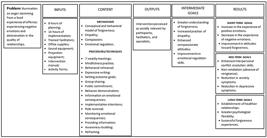
A study conducted by Luz et al. (2019) identified, through systematic literature reviews, elements that enhance the success of interventions aimed at promoting forgiveness. Among these elements are the adoption of the model proposed by Enright et al. (1991), fidelity to the chosen model, and medium-duration interventions. Based on these findings and considering the absence of such interventions in the national context (Pinho & Falcone, 2015), an intervention was developed to promote forgiveness as a mental health promotion strategy for adults with complaints of interpersonal offenses in diverse contexts. This was supported by a prior needs assessment, conducted in a previous study, which highlighted the relevance of such interventions (Luz et al., 2019). The logical model of the proposed intervention is outlined in Figure 1
Thus, the main objective of this study was to evaluate the acceptability of a proposed forgiveness promotion intervention and its associated short-term effects. The specific objectives concerning the effects were to measure, at the beginning and end of the intervention, the extent to which participants forgave and their levels of empathy, specifically in the dimensions of perspective-taking and empathic concern. Additionally, the study sought to assess the acceptability of the intervention's goals, procedures, and effects as perceived by the participants.
Method
Two groups were formed, divided by convenience across different institutions in the city of Brasília, with interventions conducted at different times. The intervention for Group 1 took place in October and November, while activities for Group 2 occurred in November and December. Some suggestions regarding process measures, collected from Group 1, informed adaptations made for Group 2.
Design
A pre-experimental design with pre- and post-test assessments and embedded process evaluation was employed.
Participants
Participants were recruited through posters displayed on university and partner institution bulletin boards, announcements in the university's institutional newsletter, and posts on social media platforms (Facebook, Instagram, Twitter), WhatsApp groups, and the website www.caminhosparaoperdao.com.br, created for this purpose. Additionally, a sensitization lecture was offered at the request of a partner institution.
Following a preliminary evaluation involving 22 individuals, 15 expressed interest in participating in the intervention. Inclusion criteria were a spontaneous expression of interest and the experience of at least one specific offense situation. Participants were allocated to one of the two groups based on their convenience.
The final sample consisted of 10 participants. Five participants were in Group 1, aged 25 to 68 years (M = 42.2; SD = 18.1), including four women and one man, with educational levels ranging from undergraduate degrees (80%) to doctoral degrees (20%). Three participants self-identified as Christians, and two reported no religious affiliation.
The other five participants were in Group 2, aged 39 to 54 years (M = 48.8; SD= 6.91), including four women and one man. Educational levels in this group included 40% with undergraduate degrees, 20% with specializations, 20% with master's degrees, and 20% with doctoral degrees. All participants in Group 2 self-identified as Christians.
Instruments
EFI Scale - 30 Items (Enright Forgiveness Inventory). The EFI is an objective scale of interpersonal forgiveness, originally developed and validated in the United States by Subkoviak et al. (1995) and later adapted to the Brazilian context (Enright et al., 2022; Rique, 1999). The scale consists of three parts:
Cover Sheet, which includes a questionnaire designed to collect information about the context of experienced injustice. Respondents report the degree of hurt suffered on a 5-point scale (1 = no hurt, 5 = tremendously hurt), identify who the offender was, state whether the offender is still alive, indicate how long ago the offense occurred, and provide a brief description of the offense in an open-ended question.
The 30-item Inventory, distributed across six internal subscales with five items each: positive affects (e.g., kindness, care, affection), negative affects (e.g., repulsion, hostility, resentment), positive behaviors (e.g., showing friendship, helping, being considerate), negative behaviors (e.g., avoiding, ignoring, neglecting), positive judgments (e.g., affectionate, a good person, deserving of respect), and negative judgments (e.g., a bad person, weak, difficult to deal with). All EFI items are rated on a six-point Likert scale (1 = strongly disagree, 6 = strongly agree).
A five-item scale designed to assess the internal consistency of the situation described and the evaluation made of the offender.
Finally, the inventory includes an independent single-item scale, the Forgiveness Item (EFI), in which respondents indicate how much they forgave the person evaluated on the EFI using a five-point scale (1 = not at all forgiven, 5 = completely forgiven). Validation studies of the EFI report Cronbach’s Alpha internal consistency index of 0.96.
Multidimensional Interpersonal Reactivity Scale (MIRS). Developed by Davis (1983) and adapted by Formiga et al. (2013), this instrument comprises 26 statements measuring empathic abilities across four dimensions: fantasy, personal distress, empathic concern, and perspective-taking. Responses are marked on a five-point Likert scale, ranging from 1 = strongly disagree to 5 = strongly agree. Validation studies report Cronbach’s Alpha internal consistency indices ranging from 0.77 to 0.83.
Sociodemographic Questionnaire. Comprising closed-ended questions, this instrument characterizes participants by gender, age, religious affiliation, educational level, and marital status.
Session Evaluation Form. This instrument assesses participants' perceptions of the acceptability of session activities. It consists of a table with three columns labeled “What’s Good,” “What’s a Shame,” and “What’s Next,” where participants list positive aspects (What’s Good), negative aspects (What’s a Shame), and suggestions for improving the intervention (What’s Next).
Intervention Evaluation Questionnaire. This eight-item instrument uses a five-point scale (1 = very low, 5 = very high) to measure participants' perceptions of the acceptability of session activities, goal attainment, and suggestions for improving the intervention. An example question is: "To what extent were the proposed activities for the week useful for achieving personal and intervention objectives?"
Field Diary. A notebook for recording the researcher’s observations on implementation dynamics, supporting monitoring of process measures such as recruitment, engagement, and acceptability of the intervention.
Personal Timeline. A complementary qualitative activity for assessing acceptability, in which participants are invited to reflect on their personal journey during the intervention and share their responses to the following questions within the group: Was the intervention aligned with what I was seeking? What did I like most? What did I like least? What was difficult? What was it useful for? How did I feel at the start of the intervention, and how do I feel now?
To ensure fidelity in implementing the intervention, a guidance manual was developed, detailing the resources required, techniques to be used, and step-by-step instructions for execution.
Procedures
Intervention
The intervention is described according to the Template for Intervention Description and Replication Checklist and Guide - TIDieR (Hoffmann et al., 2014).
Brief Name: Paths to Forgiveness.
Why: The intervention was designed as a mental health promotion strategy, considering the role of forgiveness in the internal process of emotion regulation. For this purpose, the Forgiveness Process Model (Enright et al., 1991), which integrates multiple theories, was utilized.
What - Materials: Videos showcasing forgiveness experiences featured in the national press and institutional videos promoting empathy and compassion available on video-sharing platforms; printed materials about forgiveness models; and scripts for group and individual exercises, including instructions for mindfulness practices.
What - Procedures:Table 1 summarizes the activities proposed for each session. The procedures included informational activities on concepts related to the topic, potential benefits of forgiveness, and practical exercises such as sharing feelings about personal forgiveness experiences and completing the proposed activities.
Who Delivered: The intervention was facilitated by the researcher, a psychologist with 13 years of clinical practice and 10 years of experience as a group facilitator.
How: The intervention was conducted in a group setting, delivered in person.
Where: The sessions for both groups took place in two public institutions in the Federal District: one focused on education and the other on fostering science, technology, and innovation. The physical spaces where the sessions were held had similar structures, featuring private rooms with chairs, windows, air conditioning, and equipment for video projection.
When and How Much: Both groups participated in weekly sessions lasting two hours each, over seven weeks, totaling 14 hours of intervention.
Customization: There were no structural or content adaptations to the intervention.
Modifications: The intervention was implemented for Group 1 (G1) as initially designed. Since the groups did not run simultaneously, small adjustments were made for Group 2 (G2) based on the experience with G1. Specifically, process evaluation measures that were conducted at the end of the intervention for G1 were implemented during the intervention for G2. Final evaluations from both groups will inform adjustments for future groups.
How Well - Planned: There was no fidelity assessment of the intervention.
How Well - Conducted: There was no fidelity assessment of the intervention.
Data Collection
The initial registration for both groups (G1 and G2) was conducted via the website www.caminhosparaoperdao.com.br, where participants accessed the Informed Consent Form (ICF), completed the pre-test assessment, and indicated their availability for either group. Information about the location and time of the first session was sent to the email address registered on the website. During the intervention, G1 participants individually completed the Session Evaluation Form at the end of sessions 1 through 6 and, in the seventh session, completed the Intervention Evaluation Questionnaire and the Personal Timeline activity. For G2 participants, the Intervention Evaluation Questionnaire was administered individually at the beginning of sessions 2 through 7. The other instruments were completed similarly to G1. Both groups completed the pre- and post-test measures (EFI and MIRS) and the Sociodemographic Questionnaire during the seventh session. Additionally, participants completed specific forms for the activities proposed in the intervention.
Data Analysis
For the analysis of textual data, content analysis was conducted following Bardin (1995). For quantitative analysis, the Microsoft Excel spreadsheet editor was used to compute descriptive statistics, including frequency, mean, standard deviation, and standard error. Additionally, the JT method (Villa et al., 2012) was employed to investigate the Reliable Change Index (RCI) in the comparison of pre- and post-test scores. The RCI assesses whether the individual changes observed in pre- and post-intervention measures can be attributed to the intervention or are associated with measurement error. Changes are interpreted as positive when they reflect increases in scores for positive factors (e.g., higher indices in the empathetic concern factor) or decreases in scores for negative factors (e.g., lower scores in negative affect). Changes are classified as negative if there is an increase in scores for negative factors (e.g., higher negative judgments) or a decrease in scores for positive factors (e.g., reduced indices in the autonomy factor).
Ethical Considerations
The research was registered and approved by the Research Ethics Committee in Human and Social Sciences (CEP/CHS) at the University of Brasília, Protocol No. 2.731.624. All ethical precautions outlined in Resolution CNS No. 510/2016 were followed, including informing participants about the study’s objectives and their rights, as well as obtaining consent through the signing of the Informed Consent Form (ICF).
Results
The results revealed that the offenses mentioned by the participants were mostly committed by close individuals, such as children (10%), spouses (20%), and other relatives (40%). There were also reports of offenses caused by employers (10%) and other individuals (20%). Regarding the intensity of the hurt, 20% of participants reported feeling slightly hurt, 10% moderately hurt, 30% very hurt, and 40% extremely hurt. Concerning the time elapsed since the offense, the reports indicated occurrences a few days ago (10%), a few weeks ago (10%), a few months ago (20%), and over a year ago (60%).
Effects
When analyzing the degree of forgiveness offered before and after the intervention, all ten participants showed some degree of reliable change post-intervention. Considering the instrument measuring attitudes toward forgiveness, reliable positive changes were observed in all factors. Table 2 highlights the positive and negative changes.
Acceptability of Goals, Procedures, and Effects
The data on participants' acceptability of the intervention are summarized in Table 3, which presents the positive and negative aspects perceived by participants, along with the absolute frequencies of each participant's perception of the intervention’s effects, as well as suggestions for improvement.
As described in Table 3, the acceptability of the intervention was evident through the predominance of reported positive aspects compared to negative aspects. The most salient positive aspects related to the intervention procedures, considered interesting and useful, enable greater self-awareness and insight into the offense situation and its associated harm. The less frequently reported negative aspects highlighted the intervention’s duration, which participants considered too short.
The data from the Intervention Evaluation Questionnaire reinforce the evidence of acceptability already found, revealing perceptions of personal gains and the achievement of goals set by the participants themselves through the execution of the activities proposed in the intervention. Table 4 presents the average responses of participants to the Intervention Evaluation Questionnaire.
Regarding the acceptability of the procedures, participants’ reports highlighted the importance they attributed to the intervention and its procedures as an opportunity to reflect on painful experiences in their lives and as a possibility to develop skills to better handle such experiences and future situations. Table 5 presents statements that illustrate the acceptability of the goals, procedures, and effects associated with the intervention.
Discussion
The results of this study revealed both positive and negative changes. Positive and negative changes occurred in similar proportions, though with a noticeable concentration of positive changes among the indicators of attitudes toward forgiveness, the main target of the intervention. The heterogeneity in the nature of the offense among the groups, the variation in the severity levels, the proximity to the offender, and the time elapsed since the offense may have contributed to the variability in results. Previous studies have shown that homogeneous groups with complaints of more severe offenses tend to experience better results with greater effect sizes (Lundahl et al., 2008).
A more detailed analysis of the reported offenses reveals that 70% were caused by a relative, 70% of participants felt very or extremely hurt, and in 60% of cases, the offense occurred more than 1 year ago. It is possible to imagine a decrease in negative emotions, thoughts, and behaviors over time for various reasons (e.g., denial, avoidance, etc.). When participants are guided to think about a situation of hurt and the person who offended them, responding about what they feel, think, or behave toward that person, emotions and sensations associated with the offense context may be activated, increasing levels of negative emotions, judgments, and behaviors in their responses. Considering the non-linear nature of the forgiveness process proposed by Enright et al. (1991), in which there may be regression to earlier stages of the process, participants may experience, to some extent, negative changes. This intensification of negative feelings, judgments, and behaviors is anticipated during the discovery phase of Enright's proposed process. In this phase, individuals are exposed to strategies to expand awareness of the pain suffered and its consequences, potentially intensifying their sense of injustice and pain. It is important to investigate whether the negative results found in interventions are not iatrogenic effects related to the procedures (Bonell et al., 2015). The contrast with the findings of intervention acceptability and the characteristics of the theoretical model adopted suggests that these are expected effects of the intervention, as participants are guided to recall their experiences of offense.
Regarding empathy, the absence of positive changes and negative changes in the factors of perspective-taking and empathetic concern was notable, as these are essential components of the forgiveness process. It can be inferred that the positive changes in attitudes toward forgiveness may have occurred with the levels of empathy participants already had in the pre-test evaluation. Other interpretations of these findings may also be considered: within the process model proposed by Enright, during the work phase, an increase in empathy toward the offender is expected. It is possible that, given the duration of the intervention, participants did not reach this phase of the process and therefore did not present the expected empathy scores in the post-test evaluation, which may require a longer duration than that of the proposed intervention.
The qualitative analysis of the intervention's effects on attitudes toward forgiveness suggests the achievement of some short- and intermediate-term goals, such as a greater understanding of forgiveness and an increase in attitudes toward forgiveness. Conceptual understanding of forgiveness is important to avoid common misconceptions. According to Wade and Worthington (2005), conceptual misunderstandings can be problematic in abusive situations. For example, failing to distinguish forgiveness from reconciliation can limit realistic decisions about maintaining, breaking, or restoring a relationship. When erroneously associated with reconciliation, forgiveness is criticized for contributing to the maintenance of abusive relationships (Lamb, 2005). Achieving these goals, coupled with participants' reports of willingness to learn new strategies to deal with experienced offenses and changes in perspective regarding personal attitudes, reflects, to some extent, the experience of the forgiveness process proposed by Enright et al. (1991) and adopted in this intervention proposal.
The acceptability indicators reveal that the intervention was considered relevant in its goals, procedures, and effects. The proposed goals of the intervention appear to align with the participants' own goals. Participants evaluated the procedures as suitable for promoting self-awareness and awareness of the offense situation and the resulting pain. Reports of progress and acquired resources reflect the intervention's usefulness in sensitizing participants to engage in the forgiveness process, motivated by the benefits experienced. Furthermore, the personal gains and perceived changes seem important in the individual process, suggesting the acceptability of the effects achieved (Lane & Beebe-Frankenberger, 2004). While not sufficient, participants’ acceptability of the intervention can be considered an indicator of a successful intervention (Berkel et al., 2011).
On the other hand, frequent mention was made of the short duration of the intervention. Indeed, better results in forgiveness-promotion interventions are associated with a greater time investment (Wade et al., 2014). According to Worthington et al. (2000), "anything done to promote forgiveness has little impact unless substantial time is spent helping participants think about and emotionally experience their forgiveness" (p. 18). Thus, considering the partial achievement of intermediate and short-term goals defined in the intervention design and described in the logic model (Figure 1), it can be assumed that the time dedicated to the proposed procedures was insufficient, necessitating adjustments to the intervention's procedures to better align them with its duration, thereby enhancing goal attainment.
Final Considerations
The purpose of this study was to evaluate the implementation process, effects, and social validity of an intervention proposal aimed at promoting forgiveness as a strategy for mental health promotion. The results point to the partial achievement of intermediate and short-term goals defined during intervention planning, contributing to an increase in attitudes toward forgiveness. Participants also experienced an absence of changes and negative changes, primarily reporting an increase in negative emotions, judgments, and behaviors. Such results are possible in interventions of this nature, but warrant a more careful analysis of these unexpected effects.
Although the theory used predicts an intensification of negative feelings in the forgiveness process, which could explain the reliable negative changes identified, the possibility of unexpected negative side effects in this intervention cannot be ruled out (Bonell et al., 2015). However, the consideration of reliable negative changes as intervention-related harm loses strength when these findings are contrasted with those of intervention acceptability. Indeed, the analysis of these findings reveals that participants' change process is marked by emotional discomfort, yet they consider the intervention relevant, useful, and beneficial.
There was also evidence of social acceptability, indicating that the objectives were perceived as important to the personal process; the procedures were considered interesting and useful, and the results were positive and satisfactory. The intervention was well-received, positively evaluated by participants, and deemed applicable to other individuals. These findings suggest the potential acceptability of the intervention assessed.
Among the methodological aspects, the study's design and small sample size may be considered its main limitations. Other gaps include the absence of follow-up evaluations and more specific measures for variables such as engagement, fidelity, and the intervention’s implementation context. The scope and low participant retention rate in this study may indicate the need for adjustments in recruitment for future editions of the intervention. It is suggested, therefore, that future studies examine the mechanisms of change in the forgiveness process to better understand how change occurs among users of forgiveness-promotion interventions. Complementary studies can also be undertaken, adopting more robust designs to enable clinical and statistical significance analyses of the results, evaluation of result maintenance, and investigation of social relevance from the perspective of other informants.
References
-
Akhtar, S., & Barlow, J. (2018). Forgiveness therapy for the promotion of mental well-being: A systematic review and meta-analysis. Trauma, Violence, and Abuse, 19(1), 107-122. https://doi.org/10.1177/1524838016637079
» https://doi.org/10.1177/1524838016637079 -
Allemand, M., Hill, P. L., Ghaemmaghami, P., & Martin, M. (2012). Forgiveness and subjective well-being in adulthood: The moderating role of future time perspective. Journal of Research in Personality, 46(1), 32-39. https://doi.org/10.1016/j.jrp.2011.11.004
» https://doi.org/10.1016/j.jrp.2011.11.004 -
Allemand, M., Steiner, M., & Hill, P. L. (2013). Effects of a forgiveness intervention for older adults. Journal of Counseling Psychology, 60(2), 279-286. https://doi.org/10.1037/a0031839
» https://doi.org/10.1037/a0031839 -
Almeida, B. & Cunha, C. (2023) Time, resentment, and forgiveness: Impacton the well‑being of older adults.Trends in Psychology. https://doi.org/10.1007/s43076-023-00343-2
» https://doi.org/10.1007/s43076-023-00343-2 -
Gargari, R. B., Azar, E. F., Nemati, S., & Mohammadi, D. (2021). Effectiveness of forgiveness training program on self-compassion among victim of bullying students.Pajouhan Scientific Journal,19(3), 34-40. https://doi.org/10.61186/psj.19.3.34
» https://doi.org/10.61186/psj.19.3.34 - Bardin, L. (1995). Análise de conteúdo Edições 70.
-
Berkel, C., Mauricio, A. M., Schoenfelder, E., & Sandler, I. N. (2011). Putting the Pieces Together: An Integrated Model of Program Implementation. Prevention Science, 12(1), 23-33. https://doi.org/10.1007/s11121-010-0186-1
» https://doi.org/10.1007/s11121-010-0186-1 -
Bonell C., Jamal F., Melendez-Torress G. J., & Cummins S. (2015) 'Dark logic': Theorising the harmful consequences of public health interventions. Journal of Epidemiology and Community Health 69(1), 95-98. http://dx.doi.org/10.1136/jech-2014-204671
» http://dx.doi.org/10.1136/jech-2014-204671 -
Chida, Y., & Steptoe, A. (2009). The association of anger and hostility with future coronary heart disease: A meta-analytic review of prospective evidence. Journal of the American College of Cardiology, 53(11), 936-946. https://doi.org/10.1016/j.jacc.2008.11.044
» https://doi.org/10.1016/j.jacc.2008.11.044 -
Cowden, R. G., Worthington, E. L. Jr., Griffin, B.J., & Garthe, R. C. (2019). Forgiveness moderates relations between psychological abuse and indicators of psychological distress among women in romantic relationships. South African Journal of Science, 115(11/12). https://doi.org/10.17159/sajs.2019/6353
» https://doi.org/10.17159/sajs.2019/6353 -
Davis, M. H. (1983). Measuring individual differences in empathy: Evidence for a multidimensional approach. Journal of Personality and Social Psychology, 44, 113-126. https://doi.org/10.1037/0022-3514.44.1.113
» https://doi.org/10.1037/0022-3514.44.1.113 -
DiBlasio, F. A., & Benda, B. B. (2008). Forgiveness intervention with married couples: Two empirical analyses. Journal of Psychology & Christianity, 27(2), 150-158. https://psycnet.apa.org/record/2008-09062-007
» https://psycnet.apa.org/record/2008-09062-007 - Enright, R. D., Freedman, S., & Rique, J. (1998). The psychology of interpersonal forgiveness. In R. D. Enright & J. North (Eds.), Exploring forgiveness (pp. 46-62). University of Wisconsin Press.
-
Enright, R. D., Rique, J., Lustosa, R., Song, M. J. Y., Komoski, M. C., Batool, I., Bolt, D., Sung, H., Tina Huang, S. T., Park, Y., Leer-Salvesen, P. E., Andrade, T., Naeem, A., Viray, J., & Costuna, E. (2022). Validating the Enright Forgiveness Inventory - 30 (EFI-30): International studies. European Journal of Psychological Assessment , 38(2), 113-123.https://doi.org/10.1027/1015-5759/a000649
» https://doi.org/10.1027/1015-5759/a000649 - Enright, R. D., & The Human Development Study Group. (1991). The moral development of forgiveness. In W. Kurtines & J. Gewirtz (Eds.), Handbook of moral behavior and development (pp. 123-152). Lawrence Erlbaum.
-
Fawcett, S. B. (1991). Social validity: A note on methodology. Journal of Applied Behavior Analysis, 24(2), 235-239. https://doi.org/10.1901/jaba.1991.24-235
» https://doi.org/10.1901/jaba.1991.24-235 -
Formiga, N. S., Rocha, M. C. O., Pinto, A. D. S. S., Reis, D. A. D., Costa, S. M. D. S., & Leime, J. (2013). Fidedignidade da estrutura fatorial da Escala Multidimensional de Reatividade Interpessoal (EMRI). Estudos Interdisciplinares em Psicologia, 4(1), 64-79. doi: 10.5433/2236-6407.2013v4n1p64.
» https://doi.org/10.5433/2236-6407.2013v4n1p64. -
Gençoğlu, C., Şahin, E., & Topkaya, N. (2018). General self-efficacy and forgiveness of self, others, and situations as predictors of depression, anxiety, and stress in university students. Educational Sciences: Theory & Practice, 18(3), 605-626. https://doi.org/10.12738/estp.2018.3.0128
» https://doi.org/10.12738/estp.2018.3.0128 -
Hoffmann, T. C., Glasziou, P. P., Boutron, I., Milne, R., Perera, R., Moher, D., … Michie, S. (2014). Better reporting of interventions: Template for intervention description and replication (TIDieR) checklist and guide. BMJ (Online), 348, 1-12. https://doi.org/10.1136/bmj.g1687
» https://doi.org/10.1136/bmj.g1687 -
Ingersoll-Dayton, B., Torges, C., & Krause, N. (2010). Unforgiveness, rumination, and depressive symptoms among older adults. Aging and Mental Health, 14(4), 439-449. https://doi.org/10.1080/13607860903483136
» https://doi.org/10.1080/13607860903483136 -
Kaleta K., & Mróz J. (2020). The relationship between basic hope and depression: Forgiveness as a mediator. Psychiatric Quately https://doi.org/10.1007/s11126-020-09759-w
» https://doi.org/10.1007/s11126-020-09759-w -
Kim, J. J., Payne, E. S., & Tracy, E.L. (2022). Indirect effects of forgiveness on psychological health through anger and hope: A parallel mediation analysis. Journal of Religion and Health, 61(5), 3729-3746. https://doi.org/10.1007/s10943-022-01518-4
» https://doi.org/10.1007/s10943-022-01518-4 -
Lamb, S. (2005). Forgiveness therapy: The context and conflict. Journal of Theoretical and Philosophical Psychology, 25(1), 61-80. https://doi.org/10.1037/h0091251
» https://doi.org/10.1037/h0091251 - Lane, K. L., & Beebe-Frankenberger, M. (2004). Social validity: Goals, procedures, and outcomes. In School-based interventions - The tools you need to succeed (pp. 85-127). Pearson.
-
Lin, W.-F. (2010). The treatment of substance abuse disorders by the psychological forgiveness. Bulletin of Educational Psychology, 41(4), 859-884. http://ojs.lib.ntnu.edu.tw/index.php/bep/article/viewFile/92/77
» http://ojs.lib.ntnu.edu.tw/index.php/bep/article/viewFile/92/77 -
Lundahl Brad W., Taylor, M. J., Stevenson, R., & Roberts, K. D. (2008). Process-based forgiveness interventions: A meta-analytic review. Research on Social Work Practice, 18(5), 465-478. https://doi.org/10.1177/1049731507313979
» https://doi.org/10.1177/1049731507313979 - Luz, J. M. O., Murta, S. G., Fontaine, A. M. G. V., & Rique, J. (2019). Preditores de eficácia de intervenções para promoção do perdão: lições para o desenho de novas intervenções. In: Antloga, C., Brasil, K., Lordello, S., Neubern, M. & Queiroz, B. (Eds). Psicologia Clínica e Cultura Contemporânea 4 (p. 575-595). Technopolitik.
-
Mróz, J. & Kaleta, K. (2023). Forgive, let go, and stay well! The relationship between forgiveness and physical and mental health in women and men: the mediating role of self-consciousness. International Journal of Environmental Research and Public Health, 20(13), 6229. https://doi.org/10.3390/ijerph20136229
» https://doi.org/10.3390/ijerph20136229 -
Osterndorf, C. L., Enright, R. D., Holter, A. C., & Klatt, J. S. (2011). Treating adult children of alcoholics through forgiveness therapy. Alcoholism Treatment Quarterly, 29(3), 274-292. https://doi.org/10.1080/07347324.2011.586285
» https://doi.org/10.1080/07347324.2011.586285 -
Pinho, V. D., & FaIcone, E. M. O. (2015). Intervenciones para la promoción del perdón y la inserción de la empatía: revisión de la literatura. Revista Argentina de Clínica Psicológica, 24(2),111-120. https://www.redalyc.org/pdf/2819/281946783003.pdf
» https://www.redalyc.org/pdf/2819/281946783003.pdf -
Rainey, C. A. (2008). Are individual forgiveness interventions for adults more effective than group intervention? A meta-analysis (PhD Thesis; Florida State University). http://diginole.lib.fsu.edu/etd/2160
» http://diginole.lib.fsu.edu/etd/2160 - Rainey, C. A., Readdick, C. A., & Thyer, B. A. (2012). Forgiveness-based group therapy: A meta-analysis of outcome studies published from 1993-2006. Best Practice in Mental Health, 8(1), 29-51.
-
Reed, G. L., & Enright, R. D. (2006). The effects of forgiveness therapy on depression, anxiety, and posttraumatic stress for women after spousal emotional abuse. Journal of Consulting and Clinical Psychology, 74(5), 920-929. https://doi.org/10.1037/0022-006X.74.5.920
» https://doi.org/10.1037/0022-006X.74.5.920 - Rique, J. (1999). A cross-cultural study on the Enright Forgiveness Inventory (EFI): A measure for Interpersonal Forgiveness. Samples from Brazil and the United States. (Doctoral dissertation, University of Wisconsin, Madison, 1999). Dissertation Abstracts International, 61(2-A), 512.
-
Rye, M. S., Fleri, A. M., Moore, C. D., Worthington, E. L., Wade, N. G., Sandage, S. J., & Cook, K. M. (2012). Evaluation of an intervention designed to help divorced parents forgive their ex-spouse. Journal of Divorce and Remarriage, 53(3), 231-245. https://doi.org/10.1021/am404995h
» https://doi.org/10.1021/am404995h -
Subkoviak, M. J., Enright, R. D., Wu, C., Gassin, E., Freedman, S., Olson, L., & Sarinopoulos, I. (1995). Measuring interpersonal forgiveness in late adolescence and middle adulthood. Journal of Adolescence, 18(6), 641-655. https://doi.org/10.1006/jado.1995.1045
» https://doi.org/10.1006/jado.1995.1045 - Villa, M., Aguiar, A., & Del Prette, Z. A. P. (2012). Intervenções baseadas em evidências: aplicações do Método JT EDUFSCar.
-
Wade, N. G., Hoyt, W. T., Kidwell, J. E. M., & Worthington, E. L. (2014). Efficacy of psychotherapeutic interventions to promote forgiveness: A meta-analysis. Journal of Consulting and Clinical Psychology, 82(1), 154-170. https://doi.org/10.1037/a0035268
» https://doi.org/10.1037/a0035268 -
Wade, N. G., & Worthington, E. L. (2005). In search of a common core: A content analysis of interventions to promote forgiveness. Psychotherapy, 42(2), 160-177. https://doi.org/10.1037/0033-3204.42.2.160
» https://doi.org/10.1037/0033-3204.42.2.160 -
Wade, N. G., & Worthington, E. L. J. (2003). Overcoming interpersonal offenses: Is forgiveness the only way to deal with unforgiveness? Journal of Counseling & Development, 81, 343-353. https://doi.org/10.1002/j.1556-6678.2003.tb00261.x
» https://doi.org/10.1002/j.1556-6678.2003.tb00261.x -
Worthington, E. L., Jr. (2006). Models of forgiveness. In E. L. Worthington Jr. (Ed), Forgiveness and reconciliation: Theory and application. Brunner-Routledge https://doi.org/10.4324/9780203942734
» https://doi.org/10.4324/9780203942734 -
Worthington, E. L. , Kurusu, T. A., Collins, W., Berry, J. W., Ripley, J. S., & Baier, S. N. (2000). Forgiving usually takes time: a lesson learned by studying interventions to promote forgiveness. Journal of Psychology and Theology, 28(1), 3-20. https://doi.org/10.1177/009164710002800101
» https://doi.org/10.1177/009164710002800101 -
Worthington, E. L. Jr. , & Wade, N. G. (Eds.). (2020). Handbook of forgiveness Routledge. https://doi.org/10.4324/9781351123341
» https://doi.org/10.4324/9781351123341 -
Worthington, E. L., & Wade, N. G. (1999). The psychology of unforgiveness and forgiveness and implications for clinical practice. Journal of Social and Clinical Psychology, 18(4), 385-418. https://doi.org/10.1521/jscp.1999.18.4.385
» https://doi.org/10.1521/jscp.1999.18.4.385 -
Wu, Q., Wang, L., & Choi, A. W. M. (2021). Understanding forgiveness after leaving an abusive relationship: the Voices of Chinese female intimate partner violence survivors. Violence Against Women, 27(12-13), 2273-2293.https://doi.org/10.1177/1077801220952164
» https://doi.org/10.1177/1077801220952164
Research data is available on request from the corresponding author.