 Outbreak of botulism in horses associated with toxin A and D in São Paulo state, Brazil
ABSTRACT:
Botulism is a neuromuscular disorder caused by neurotoxins produced by Clostridium botulinum. Equine botulism has been frequently reported worldwide; however, descriptions of cases in South America remain uncommon. This report describes a botulism outbreak in horses due to the ingestion of big bale silage at a stud farm in Brazil. Eight horses consuming silage hay provided in large round bales in the pasture presented progressive muscular weakness, decreased tongue and tail tone, dysphagia, fasciculations, and difficulty raising their head. Five horses died on the farm, and three were referred to a veterinary hospital. Two of the hospitalized horses were discharged, while the third died, and post mortem samples were collected for the detection of C. botulinum toxins. Analysis of a cecum liquid sample confirmed the presence of both botulinum toxins, BoNT/A and BoNT/D, via the bioassay method. Given the nonspecific nature of initial clinical signs, laboratory confirmation becomes imperative, facilitating the implementation of preventive measures. Notably, confirmed diagnoses of botulism are relatively uncommon in horses in Brazil.
INDEX TERMS:
Recumbency; Clostridium botulinum; neurotoxins; bale silage
RESUMO:
O botulismo é um distúrbio neuromuscular causado por neurotoxinas produzidas pelo Clostridium botulinum. O botulismo em equinos tem sido frequentemente relatado em todo o mundo, no entanto descrições de casos na América do Sul permanecem escassas. Este relato descreve um surto de botulismo em cavalos devido à ingestão de silagem em fardos grandes em um haras no Brasil. Oito cavalos, após consumirem feno ensilado fornecido em fardos redondos grandes, apresentaram fraqueza muscular progressiva, diminuição do tônus da língua e da cauda, disfagia, fasciculações e dificuldade para manter o pescoço levantado. Cinco cavalos morreram na propriedade, e três foram encaminhados a um hospital veterinário. Dois dos cavalos hospitalizados receberam alta, enquanto o terceiro morreu, sendo coletadas amostras post mortem para a detecção de toxinas de C. botulinum. A análise de uma amostra de líquido do ceco confirmou a presença das toxinas botulínicas BoNT/A e BoNT/D utilizando o método de bioensaio. Dada a natureza inespecífica dos sinais clínicos iniciais, a confirmação laboratorial torna-se imprescindível, facilitando a implementação de medidas preventivas. Vale destacar que diagnósticos confirmados de botulismo são relativamente incomuns em equinos no Brasil.
TERMOS DE INDEXAÇÃO:
Decúbito; Clostridium botulinum; neurotoxinas; silagem
Introduction
Botulism is a disease associated with Clostridium botulinum and its botulinum neurotoxins (BoNTs). C. botulinum is classified into eight types (A to G) based on BoNT production (Swink & Gilsenan 2022, Uzal et al. 2022). This disease affects humans (Lonati et al. 2020), cattle (Lima et al. 2024), birds, fish, dogs, and cats (Oliveira-Júnior et al. 2016, Meurens et al. 2023, Uzal et al. 2024, Paz et al. 2025) and horses (Sprayberry & Carlson 1997, Whitlock & Buckley 1997, Ostrowski et al. 2012), as well as other domestic and wild animal species that may also be affected (Silva et al. 2016, Circella et al. 2019, Lima et al. 2024). Botulism has been extensively described in other species in Brazil, particularly cattle (Silva et al. 2016, Lima et al. 2024), while only two outbreaks have been reported in horses in Brazil (Coelho et al. 2000, Argenta et al. 2017).
In horses, the primary route of infection is through the ingestion of toxins via contaminated feed, such as silage or hay, or water (foodborne botulism) (Ricketts et al. 1984, Divers et al. 1986, Wichtel & Whitlock 1991, Lindtröm et al. 2001; Böhnel et al. 2003, Coelho et al. 2000, Whitlock & McAdams 2006, Ostrowski et al. 2012). Other modes of disease acquisition have also been described: ingestion of C. botulinum spores, which subsequently germinate in the gastrointestinal tract of horses and produce toxins (toxicoinfectious botulism) (Wilkins & Palmer 2003a, 2003b), and, less frequently, the contamination of wounds with C. botulinum, which leads to bacterial proliferation and toxin production (wound botulism) (Mitten et al. 1994, Liguori et al. 2008).
At the molecular level, BoNTs act at the neuromuscular junction by inhibiting acetylcholine release (Rings 2004, Gerber et al. 2006, Meurens et al. 2023). The mechanism of action involves the cleavage of SNARE complex proteins, which are essential for neurotransmitter exocytosis, resulting in its inhibition (Rings 2004, Gerber et al. 2006). The different C. botulinum serotypes are classified based on their target proteins: BoNT/A and E cleave SNAP-25; BoNT/B, D, F, and G act on VAMP; and BoNT/C cleaves both SNAP-25 and syntaxin (Meurens et al. 2023).
Clinically, affected horses may develop progressive, symmetrical flaccid paralysis, fasciculations, decreased tongue and anal sphincter tone, dysphagia, recumbency, and death (Kelly et al. 1984, Ricketts et al. 1984, Haagsma et al. 1990, Johnson et al. 2010, 2015).
This study aimed to describe the epidemiological, clinical, and laboratory aspects of a type A and D botulism outbreak in horses in Brazil.
Materials and Methods
Ethical approval. All procedures on the farm and during sample collection were performed by a licensed veterinarian who adhered to animal welfare principles, and, with the owner’s consent. Similarly, for animals admitted to the veterinary teaching hospital, all procedures were authorized by the owner. The study was approved by the Animal Experimentation Ethics Committee (Protocol 000.282/2024) of the “Faculdade de Medicina Veterinária e Zootecnia” at “Universidade Estadual Paulista ‘Júlio de Mesquita Filho’” (FMVZ-Unesp).
Data collection. Eight horses raised in an extensive farming system on a farm in the Itu (23° 15′ 51″ S, 47° 17′ 57″ W), São Paulo state, Brazil, presented clinical signs compatible with botulism. Three patients were referred to the Veterinary Teaching Hospital, FMVZ-Unesp, Botucatu (22° 53′ 09″ S, 48° 26′ 42″ W), Brazil. The medical history and epidemiological data of the animals were collected, and clinical examinations, necropsy, and sample submissions for complementary testing were performed.
Laboratory tests. A complete blood count, blood biochemistry, blood gas and cerebrospinal fluid (CSF) analysis were performed in the clinical pathology laboratory of the veterinary hospital. During necropsy, the cecal and intestinal contents were sampled for enteropathogen (Salmonella spp., Clostridioides difficile, Clostridium perfringens, Cryptosporidium spp., Giardia spp. and rotavirus) detection via quantitative polymerase chain reaction (qPCR) in a commercial Veterinary Molecular Diagnostics Laboratory, and samples of intestinal segments (duodenum, jejunum, cecum, and colon) and central nervous system (telencephalon, diencephalon, cerebellum, brainstem, and spinal cord) were collected for histopathological analysis. Three fecal samples and serum (Horses 4, 7, and 8) and cecal contents (post mortem Horse 4) were collected for the mice inoculation bioassay (performed at the Animal Bacteriology Department of Instituto Biológico/SP, following Centers for Disease Control guidelines - CDC 1998). Briefly, 25 g of the suspected sample was diluted 1:2 (w/v) with sterile gelatin phosphate buffer, homogenized and then refrigerated at 4 °C for 12 h to allow toxin elution from solid material. The supernatant fluid was subsequently centrifuged at 12,000 × g for 20 min, and a 1 mL aliquot was treated with trypsin for 30-60 min before the intraperitoneal injection of 0.5 mL into Swiss Webster mice, which weighed 18-25 g. The Clostridium botulinum serotype was determined by adding 0.25 mL of serotype-specific monovalent antitoxins (A, B, C and D). Inoculated mice were periodically observed for signs of botulism, including ruffling of the fur, labored but not rapid breathing, weakness of the limbs and gasping for breath.
Results
Setting and feeding management
There were 89 horses on the property, 72 of which grazed on tifton pasture (Cynodon dactylon), and the others (n = 17) were housed in stables; both groups received the same dry tifton hay. In addition, all horses were supplemented with commercial feed specifically formulated for horses and mineral salt. The horses grazing on tifton pasture (C. dactylon) were supplemented with ensiled big bales (C. dactylon). Only horses in the group supplemented with ensilage big bales presented clinical abnormalities.
Outbreak description and clinical findings
Eight horses supplemented with ensiled big bales (C. dactylon) exhibited weakness, dysphagia, tremors, and spontaneous episodes of nasogastric reflux. No brain abnormalities, including changes in the level of consciousness, head position, or behavior, were observed in these horses. There were no signs of ataxia or muscle atrophy. Five horses became recumbent within 2-5 days and were euthanized at the farm. Necropsy was performed on two of them, and no significant macroscopic or histological changes were observed in the central nervous system (CNS) or muscles. Rabies was ruled out through direct immunofluorescence and mouse inoculation using encephalic and spinal cord samples from these horses.
Clinical management
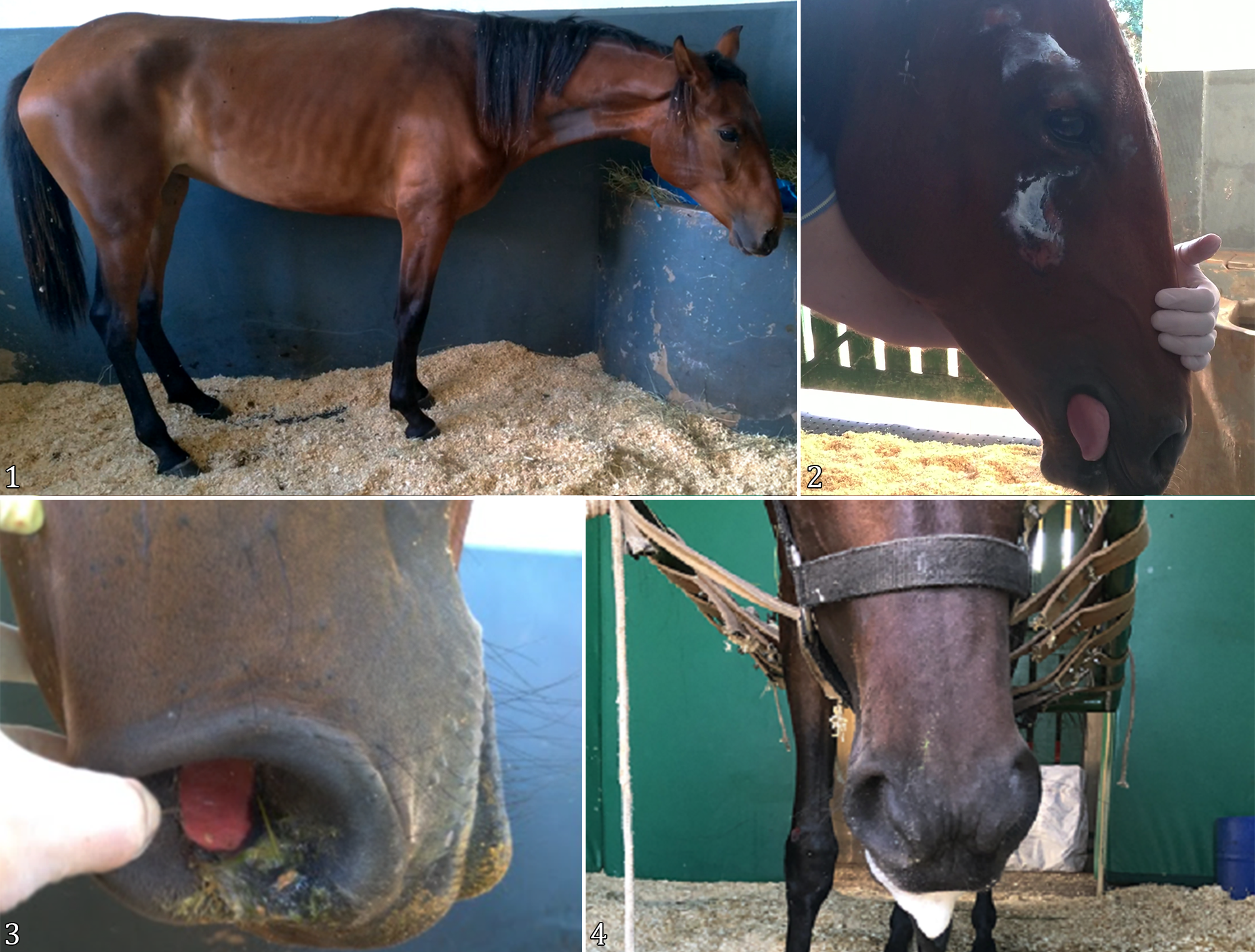
The three hospitalized Horses (4, 7, and 8) presented locomotion difficulties due to weakness (flaccid paresis), muscle tremors, difficulty standing unaided, reduced tongue and tail tone, dysphagia, nasal discharge of saliva, and difficulty in raising their heads. The clinical signs observed in all eight horses are detailed in Figure 1-4 and Table 1. Blood samples were collected for a complete blood count, serum biochemistry, upper airway endoscopy (Horses 7 and 8), blood gas analysis and CSF analysis (Horse 4).
Clinical signs observed in horses with botulism (types A and D). (1) Horse 8 extended neck (inability to raise the head). (2) Dysphagia (inability to protrude the tongue). (3) Presence of food content in the nostrils. (4) Sialorrhea.
Based on epidemiological data and clinical signs, botulism was suspected. Supportive treatment was initiated, including frequent assisted standing using a sling, fluid therapy with Ringer’s lactate for fluid replacement and maintenance, electrolyte correction, analgesia (dipyrone 25 mg/kg IV SID - Lemma-Injex Biologic, Vespasiano, Minas Gerais, Brazil), anti-inflammatory therapy (flunixin meglumine 1.1 mg/kg IV SID - JA Saúde Animal, Patrocínio Paulista, São Paulo, Brazil - or meloxicam 0.6 mg/kg IV SID - Vetnil, Louveira, São Paulo, Brazil), recumbency management with wound cleaning and frequent repositioning, as well as physiotherapy and rehabilitation. Owing to the presence of food content in both nostrils resulting from dysphagia, antibiotic therapy (ceftiofur 5 mg/kg IV SID - Vetanco, Vinhedo, São Paulo, Brazil - and metronidazole 20 mg/kg IV BID - JP Farma, Ribeirão Preto, São Paulo, Brazil) was administered to prevent pneumonia (Horse 4).
One of the referred horses (Horse 4) died after six days of hospitalization and presented severe colitis (greenish, liquid feces), persistent lateral recumbency, cyanotic mucous membranes, and fever (39.3 °C). Immediately after death, CSF was collected.
Laboratory results and pathological findings
The complete blood count revealed leukocytosis in Horse 4 and neutrophilia in all horses. Serum biochemistry analysis revealed elevated AST activity in Horses 4 and 7 and increased total bilirubin in all horses. For Horse 4, CSF analysis revealed a normal pattern: protein levels of 22 mg/dL, red blood cells (2 cells/µL), and two nucleated cells/µL. Blood gas analysis of Horse 8 revealed hypochloremia (98 mmol/L).
On endoscopy, grade three lymphoid hyperplasia was observed, along with focal laryngitis (above the opening of the guttural pouch on the left side), the presence of water and feed on the floor of the larynx (below the epiglottis), mild chondritis of the corniculate processes of the arytenoid cartilages, mild chondritis of the epiglottis, and the presence of feed in the esophagus. In Horse 7, intermittent dorsal displacement of the soft palate was observed.
During the necropsy of Horse 4, gastric mucosa showed moderate multifocal hemorrhage in the small intestine and cecum. Histology revealed a moderate diffuse mononuclear inflammatory infiltrate in the mucosa and a mild infiltrate in the submucosa. qPCR analysis detected the presence of Salmonella spp. and non-toxigenic Clostridioides difficile DNA in fecal samples from this horse. No degenerative, vascular or inflammatory abnormalities were found in the central nervous system.
Unprotected mice exposed to the trypsinized toxin-containing extract died within 24 h after inoculation with classic signs of respiratory tract musculature failure (respiratory muscle paralysis syndrome). Botulinum toxin could be detected in cecum content samples from Horse 4, and seroneutralization was positive for BoNT/A and BoNT/D.
Discussion
Botulism outbreaks in ruminants are highly relevant in Brazil (Lima et al. 2024). Equine botulism has been widely reported in both the United States and Europe (Table 2), and this outbreak represents the third documented case of botulism in horses in Brazil. Previously, two outbreaks involving the identification of BoNT/C in the states of Goiás (Coelho et al. 2000) and Rio Grande do Sul (Argenta et al. 2017) had been reported. These Brazilian outbreaks were likely caused by contamination from hay-containing carcasses (Coelho et al. 2000) or the presence of stagnant water with a large accumulation of organic matter (Argenta et al. 2017).
Among the possible differential diagnoses initially considered for the cases were botulism, hyperkalemic periodic paralysis, equine motor neuron disease (EMND), equine herpes virus-1 (EVH-1), West Nile virus, rabies, atypical myopathy and ionophore intoxication (Stratford et al. 2014, Johnson 2020). Although individual cases may present with similar signs, the collective assessment of the cases in this report, along with the observed findings, allows for the exclusion of these differential diagnoses. Briefly, hiperkalcemic periodic paralysis (HYPP) typically occurs in isolated cases, and as an inherited genetic disease is associated with Quarter Horses, and manifests as transient episodes of weakness; EMND has a chronic course characterized by muscle atrophy and specific histopathological changes in spinal cord motor neurons; EHV-1 usually presents as an outbreak, often preceded by respiratory abnormalities, and is associated with ataxia and, in some cases, tail and bladder paralysis, as well as distinct lesions in the CNS; West Nile virus infection leads to encephalic neurological signs and ataxia, with suggestive changes in both histopathology and CSF analysis. Atypical myopathy and ionophore intoxication both involve muscle lesions, elevated muscle enzymes, and characteristic histological findings. Ionophore intoxication, in particular, is linked to muscle damage and prior exposure to the toxic agent (Stratford et al. 2014, Johnson 2020). Rabies was ruled out in the necropsied animals. Considering the breed, epidemiological conditions, clinical history, number of animals affected, disease progression, laboratory results, and post mortem findings, these diseases were ruled out, and botulism was considered the primary differential diagnosis. Due to the strong epidemiological indicators and the presence of Clostridium botulinum toxins, the definitive diagnosis was confirmed.
The observation of botulism cases is correlated with the microbiological characteristics of the agent, as the bacillus is strictly anaerobic and spore-forming, allowing it to survive for long periods in the environment (Huss 1980, Espelund & Klaveness 2014). The formation of spores can lead to the contamination of forage crops intended for animal feed (Graham & Brueckner 1919, Divers et al. 1986, Whitlock & Buckley 1997). Considering that the big bale silage was the only feed offered exclusively to the animals that showed clinical signs, it is highly possible that the source of the outbreak was the contamination of this feed. Environmental food contamination of feed supplied to horses has been reported in other cases. It is associated with silage (Haagsma et al. 1990, Franzen et al. 1992, Hutchins 1994, Dietz 1998), hay (Switzer et al. 1984, Wichtel & Whitlock 1991, Szabo et al. 1994, Galey 2001, Johnson et al. 2010) and big bale silage (Ricketts et al. 1984, Divers et al. 1986, Franzen et al. 1992, Goehring & Sloet van Oldruitenborgh-Oosterbaan 2002, Goehring et al. 2005).
Frequent clinical signs in horses include dysphagia, muscle tremors, decreased tail tone, and recumbency, resulting from the interruption of nerve transmission at cholinergic synapses (Rings 2004). Dysphagia, a clinical sign usually observed in botulism cases, was present in these horses and confirmed by the presence of food material in the nostrils and endoscopy (Schoenbaum et al. 2000). Reduced palpebral, anal, tail, jaw, and hypoglossal tone, as well as neck weakness, are other common signs (Johnson et al. 2010, 2015, Argenta et al. 2017, Shnaiderman-Torban et al. 2018). The clinical signs observed were similar to those described in cases reported in Brazil (Coelho et al. 2000, Argenta et al. 2017) and other countries (Kelly et al. 1984, Ricketts et al. 1984, Divers et al. 1986, Kinde et al. 1991 Schoenbaum et al. 2000, Galey 2001, Ostrowski et al. 2012). Death occurs due to failure of the diaphragmatic and intercostal musculature, resulting in respiratory paralysis (Whitlock & Buckley 1997, Galey, 2001, Whitlock & McAdams 2006, Johnson et al. 2010, Stratford et al. 2014). The complementary exams excluded other neuromuscular or primary neurologic diseases.
A definitive diagnosis requires demonstration of toxins in the plasma, liver, or gastrointestinal contents. In this study, it was possible to identify BoNTs in the cecal contents, confirming the diagnosis. In equids, cases were associated with BoNT/A-E, with descriptions of BoNT/A (Johnson et al. 2010, Ostrowski et al. 2012, Kasap et al. 2016, Prutton et al. 2016) and BoNT/D (Chambron et al. 1971, Doutre & Toure 1978, Switzer et al. 1984, Shnaiderman-Torban et al. 2018), and BoNT/E (Kelly et al. 1984, Szabo et al. 1994). This outbreak represents, to our knowledge, the first reported co-occurrence of BoNT/A and D in horses.
Therapeutic management should be guided by physical examination findings and clinical complications, such as dehydration, which necessitates correction through the administration of balanced polyionic solutions. The presence of dysphagia is a predisposing factor for the development of pneumonia in horses with botulism (Wilkins & Palmer 2003a, 2003b, Johnson et al. 2010). Flaccid paralysis and prolonged lateral recumbency were observed in most animals studied. Under these conditions, the use of a lifting system to assist in placing horses into a quadrupedal stance is essential (Ishihara et al. 2006, Schatzmann 1998). Another therapeutic option to be considered in these cases is mechanical ventilation, which has demonstrated efficacy in foals (Wilkins & Palmer 2003a, 2003b). However, its application in adult horses is limited by technical constraints.
Horses with clinical signs of botulism should immediately be confined to a stall, and physical activity should be minimal. Muscular activity rapidly depletes acetylcholine stores, thus worsening progressive weakness. A mild laxative is indicated to promote colonic evacuation and to prevent the impact of colic. Further treatment is directed at the maintenance of hydration by oral alimentation. Therapeutic modalities include gastrointestinal catharsis to remove residual toxins and prevent impaction, antimicrobial therapy targeting secondary complications such as aspiration pneumonia, and enteral feeding via a nasogastric tube (Whitlock & Buckley 1997). If antimicrobials are used, aminoglycosides should be avoided, as they may potentiate neuromuscular weakness. Horse 4 also presented with colitis, which was probably a result of antimicrobial treatment resulting in dysbiosis.
Recovery from botulism is dependent on the toxin dose and the resulting severity of the clinical disease. Dysphagic horses that can stand will gradually regain the ability to swallow. Most adult horses can eat hay and swallow grain and water for 7-10 days following treatment with antitoxin. The use of antitoxins is a challenge in cases of botulism in horses, as in Brazil, only commercial options against BoNT/A and BoNT/B are available. In North America, both polyvalent and BoNT/B-specific botulinum antitoxins are available (Sprayberry & Carlson 1997, Whitlock & McAdams 2006, Johnson et al. 2010, 2015).
In the present study, the observed recovery rate (25%, 2/8) was higher than that reported in outbreaks where animals did not receive treatment at specialized veterinary medical centers (Swerczek 1980, Divers et al. 1986, Kinde et al. 1991, Coelho et al. 2000, Argenta et al. 2017). Compared with cases admitted to veterinary teaching hospitals, the recovery rate can range from 10% to 53%, depending on the therapeutic approach and the amount of toxin ingested (Whitlock & Buckley 1997, Wilkins & Palmer 2003a, 2003b, Johnson et al. 2015).
Prevention of botulism can be based on vaccination with C. botulinum toxoids, with horses in endemic regions requiring annual boosters to maintain immunity (Wichtel & Whitlock 1991). However, the absence of commercially available botulism vaccines for horses in Brazil represents a significant gap in disease prevention strategies, and the development of polyvalent vaccines would be necessary in order to target the different toxins involved. This limitation highlights the need for rigorous quality control measures in equine nutrition, particularly concerning feed storage and contamination risk mitigation, to reduce the incidence of toxicosis. Contamination by C. botulinum should be considered within the production chain of ensiled bales, especially when it is intended for horses (Maslanka et al. 2013). Its wide environmental distribution is a determining factor for the contamination of these foods. Measures such as acidification, reduction in water activity, high concentrations of chlorides, and the presence of sodium nitrite should be implemented to prevent botulism (Bischoff & Moiseff 2018). Proper feed preparation for horses is essential, especially when fermentation processes and the creation of an anaerobic environment are involved.
Conclusion
The horses in this study presented with flaccid paralysis, recumbency, and dysphagia as the main clinical signs. The identification of two types of botulinum neurotoxins (BoNT/A and D) in horse biological material confirmed the diagnosis of botulism. Educating horse owners and producers on appropriate silage handling practices is a key strategy to reduce the risk of feedborne intoxications and ensure animal health.
Acknowledgments
The authors are thankful for the support provided by the Brazilian government agencies, the “Conselho Nacional de Desenvolvimento Científico e Tecnológico” (CNPq) and the “Coordenação de Aperfeiçoamento de Pessoal de Nível Superior” (CAPES), Brazil, for funding this study.
References
-
Argenta FF, Konradt G, Bassuino DM, Caprioli RA, Laisse CJM, Borsanelli AC, Dutra IS, Driemeier D. Surto de botulismo tipo C em equinos no Rio Grande do Sul. Pesq Vet Bras 2017; https://doi.org/10.1590/S0100-736X2017001200002
» https://doi.org/10.1590/S0100-736X2017001200002 -
Bernard W, Divers TJ, Whitlock RH, Messick J, Tulleners E. Botulism as a sequel to open castration in a horse. J Am Vet Med Assoc 1987; https://doi.org/10.2460/javma.1987.191.01.73
» https://doi.org/10.2460/javma.1987.191.01.73 -
Bischoff K, Moiseff J. Equine feed contamination and toxicology. Transl Anim Sci 2018; https://doi.org/10.1093/tas/txy001
» https://doi.org/10.1093/tas/txy001 -
Böhnel H, Wernery U, Gesseler F. Two cases of equine grass sickness with evidence for soil-borne origin involving botulinum neurotoxin. J Vet Med 2003; https://doi.org/10.1046/j.1439-0450.2003.00655.x
» https://doi.org/10.1046/j.1439-0450.2003.00655.x -
CDC. Botulism Manual. Centers for Disease Control and Prevention, 1998. Accessed on January 15, 2025. https://www.cdc.gov/botulism/pdf/bot-manual.pdf
» https://www.cdc.gov/botulism/pdf/bot-manual.pdf -
Chambron J, Martel JL, Doutre PM. Le botulisme équin au Sénégal Premier isolement de Clostridium botulinum type D. Rev Elev Méd Vét Pays Trop 1971; https://agritrop.cirad.fr/484047/1/ID484047.pdf
» https://agritrop.cirad.fr/484047/1/ID484047.pdf -
Circella E, Camarda A, Bano L, Marzano G, Lombardi R, Onghia F, Greco G. Botulism in wild birds and changes in environmental habitat: a relationship to be considered. Animals 2019; https://doi.org/10.3390/ani9121034
» https://doi.org/10.3390/ani9121034 - Coelho HE, Carvalho FSR, Mineo JR, Silva DAP, Manzan RM, Francisco-Junior A. Surto de botulismo tipo C em equinos. Vet Not 2000;6(2):99-103.
-
Crane SA. Field management of two foals with suspected botulism. Equine Vet Educ 1991; https://doi.org/10.1111/j.2042-3292.1991.tb01516.x
» https://doi.org/10.1111/j.2042-3292.1991.tb01516.x - Dietz B. Botulism beim pferd - ein fallbericht. Pferdehiilkunde 1998;14(5):373-376.
-
Divers TJ, Bartholomew RC, Messick JB, Whitlock RH, Sweeny RW. Clostridium botulinum type B toxicosis in a herd of cattle and a group of mules. J Assoc Vet Med 1986; https://doi.org/10.2460/javma.1986.188.04.382
» https://doi.org/10.2460/javma.1986.188.04.382 -
Doutre MP, Chambron J. Le botulisme des ruminants et des équidés au Sénégal. Rev Elev Méd Vét Pays Trop 1966; https://agritrop.cirad.fr/444570/1/ID444570.pdf
» https://agritrop.cirad.fr/444570/1/ID444570.pdf -
Doutre MP, Toure BA. A propos d’un nouveau cas de botulisme hydrique de type D survenu au Sénégal. Considérations étiopathogéniques. Rev Elev Méd Vét Pays Trop 1978; https://agritrop.cirad.fr/455209/1/ID455209.pdf
» https://agritrop.cirad.fr/455209/1/ID455209.pdf -
Doutre MP. Première observation de botulisme animal de type D au Sénégal. Rev Elev Méd Vét Pays Trop 1969; https://doi.org/10.19182/remvt.7658
» https://doi.org/10.19182/remvt.7658 -
Espelund M, Klaveness D. Botulism outbreaks in natural environments - an update. Front Microbiol 2014; https://doi.org/10.3389/fmicb.2014.00287
» https://doi.org/10.3389/fmicb.2014.00287 - Franzen P, Gustafsson A, Gunnardsson A. Botulism hos hast relaterad till utfodring med rundbalsensilage. Svensk Veterinar Tidning 1992;44(11):555-559.
-
Galey FD. Botulism in the horse. Vet Clin N Am Equine Pract 2001; https://doi.org/10.1016/s0749-0739(17)30053-6
» https://doi.org/10.1016/s0749-0739(17)30053-6 -
Gerber V, Straub R, Frey J. Equine botulism and acute pasture myodystrophy: new soil-borne emerging diseases in Switzerland? Schweiz Arch Tierheilkd 2006; https://doi.org/10.1024/0036-7281.148.10.553
» https://doi.org/10.1024/0036-7281.148.10.553 -
Goehring LS, Sloet van Oldruitenborgh-Oosterbaan M.M. Botulisme bij het paard: een reele mogelijkheid in Nederland? Tijds Diergen 2002; https://scholars.uky.edu/en/publications/botulisme-bij-het-paard-een-re%C3%ABle-mogelijkheid-in-nederland
» https://scholars.uky.edu/en/publications/botulisme-bij-het-paard-een-re%C3%ABle-mogelijkheid-in-nederland -
Goehring LS, van Maanen C, Sloet van Oldruitenborgh-Oosterbaan MM. Neurological syndromes among horses in the Netherlands A 5 year retrospective survey (1999-2004). Vet Q 2005; https://doi.org/10.1080/01652176.2005.9695182
» https://doi.org/10.1080/01652176.2005.9695182 -
Graham R, Brueckner AL. Studies in forage poisoning: the relation of B. botulinus to forage poisoning or cerebrospinal meningitis in horses. J Bacteriol 1919; https://doi.org/10.1128/jb.4.1.1-21.1919
» https://doi.org/10.1128/jb.4.1.1-21.1919 -
Gudmundsson SH. Type B botulinum intoxication in horses: case report and literature review. Equine Vet Educ 1997; https://doi.org/10.1111/j.2042-3292.1997.tb01296.x
» https://doi.org/10.1111/j.2042-3292.1997.tb01296.x - Haagsma J, Haesebrouck F, Devriesse L, Bertes G. An outbreak of botulism type B in horses. Vet Rec 1990;127(8):206. PMid:2238423
-
Heath SE, Bell RJ, Chirino-Trejo M, Schuh JCL, Harland RJ. Feedtrough dirt as a source of Clostridium botulinum type C intoxication in a group of farm horses. Can Vet J 1990; https://pmc.ncbi.nlm.nih.gov/articles/PMC1480619/pdf/canvetj00074-0015.pdf
» https://pmc.ncbi.nlm.nih.gov/articles/PMC1480619/pdf/canvetj00074-0015.pdf -
Heath SE, Bell RJ, Harland RJ. Saskatchewan. Botulinum type C intoxication in a mare. Can Vet J 1988; https://pmc.ncbi.nlm.nih.gov/articles/PMC1680791/pdf/canvetj00571-0068c.pdf
» https://pmc.ncbi.nlm.nih.gov/articles/PMC1680791/pdf/canvetj00571-0068c.pdf -
Hunter LC, Miller JK, Poxton IR. The association of Clostridium botulinum type C with equine grass sickness: a toxicoinfection? Equine Vet J 1999; https://doi.org/10.1111/j.2042-3306.1999.tb03857.x
» https://doi.org//10.1111/j.2042-3306.1999.tb03857.x -
Huss HH. Distribution of Clostridium botulinum Appl Environ Microbiol 1980; https://doi.org/10.1128/aem.39.4.764-769.1980
» https://doi.org/10.1128/aem.39.4.764-769.1980 -
Hutchins R. 1994. Preliminary report on an outbreak of botulism, April 1994. Austr Equine Vet 1994; https://www.cabidigitallibrary.org/doi/full/10.5555/19942214774
» https://www.cabidigitallibrary.org/doi/full/10.5555/19942214774 -
Ishihara A, Madigan JE, Hubert JD, McConnico RS. Full body support sling in horses. Part 2: indications. Equine Vet Educ 2006; https://doi.org/10.1111/j.2042-3292.2006.tb00463.x
» https://doi.org/10.1111/j.2042-3292.2006.tb00463.x -
Jahn P, Ludvikova E, Chmelar D, Kalova L. Botulism in horses: a case report. Vet Med 2008; https://doi.org/10.17221/1971-VETMED
» https://doi.org/10.17221/1971-VETMED -
Johnson AL, McAdams SC, Whitlock RH. Type A botulism in horses in the United States: a review of the past ten years (1998-2008). J Vet Diag. Inves 2010; https://doi.org/10.1177/104063871002200201
» https://doi.org/10.1177/104063871002200201 -
Johnson AL, McAdams-Gallagher SC, Aceto H. Outcome of adult horses with botulism treated at a veterinary hospital: 92 cases (1989-2013). J Vet Intern Med 2015; https://doi.org/10.1111/jvim.12502
» https://doi.org/10.1111/jvim.12502 - Johnson AL. Differential diagnosis of muscle tremor and paresis. In: Furr M, Reed S. Equine Neurology. 2nd ed. Hoboken: Wiley-Blackwell; 2020.
-
Kasap S, Batmaz H, Kocaturk M, Gesseler F, Catik S, Topal O. Botulism (type A) in a horse - case report. Acta Vet 2016; https://doi.org/10.2754/avb201685010071
» https://doi.org/10.2754/avb201685010071 -
Kelly AP, Jones RT, Gillick JC, Sims LD. Outbreak of botulism in horses. Equine Vet Educ 1984; https://doi.org/10.1111/j.2042-3306.1984.tb02005.x
» https://doi.org/10.1111/j.2042-3306.1984.tb02005.x -
Kinde H, Bettey RL, Ardans A, Galey FD, Daft BM, Walker RL, Eklund MW, Byrd JW. Clostridium botulinum type-C intoxication associated with consumption of processed alfalfa hay cubes in horses. J Am Vet Med Assoc 1991; https://doi.org/10.2460/javma.1991.199.06.742
» https://doi.org/10.2460/javma.1991.199.06.742 - Krumholz D. A botulism-like disease of equines in Israel. Refuah Vet 1962;19(1):44-45.
-
Lanci A, Rinnovati R, Anniballi F, Auricchio B, Scalfaro C, Menchetti M, Spadari A, Mariella J. The first case of botulism in a donkey. Vet Sci 2019; https://doi.org/10.3390/vetsci6020043
» https://doi.org/10.3390/vetsci6020043 -
Liguori V, De Luis P, Fenecia L, Anniballi F, Aureli P. A case of wound botulism in a foal affected by gastric ulcers in Italy. J Equine Vet Sci 2008; https://doi.org/10.1016/j.jevs.2008.07.002
» https://doi.org/10.1016/j.jevs.2008.07.002 -
Lima SC, Paula JPL, Guizelini CC, Pupin RC, Avila LG, Gomes DC, Barros CSL, Lemos RAA. Botulism in cattle in Mato Grosso do Sul: History, current situation, and perspectives. Pesq Vet Bras 2024; https://doi.org/10.1590/1678-5150-PVB-7477
» https://doi.org/10.1590/1678-5150-PVB-7477 -
Lindtröm M, Keto R, Makkula A, Nevas M, Hielm S, Korkeala H. Multiplex PCR assay for detection and identification of Clostridium botulinum types A, B, E, and F in food and fecal material. Appl Environ Microbiol 2001; https://doi.org/10.1128/aem.67.12.5694-5699.2001
» https://doi.org/10.1128/aem.67.12.5694-5699.2001 -
Lonati D, Schichi A, Crevani M, Buscaglia E, Scaravaggi G, Maid F, Cirronis M, Petrolini VM, Locatelli CA. Foodborne botulism: clinical diagnosis and medical treatment. Toxins 2020; https://doi.org/10.3390/toxins12080509
» https://doi.org/10.3390/toxins12080509 -
Maslanka SE, Solomon HM, Sharma S, Johnson EA. Clostridium botulinum and its toxins. In: Salfinger Y, Torterello ML. Compendium of Methods for the Microbiological Examination of Foods. 2013; https://doi.org/10.2105/MBEF.0222.037
» https://doi.org/10.2105/MBEF.0222.037 -
Mayhew IG, Ricketts SW. The clinical diagnosis of botulism in foals in the United Kingdom. Equine Vet Educ 1991; https://doi.org/10.1111/j.2042-3292.1991.tb01519.x
» https://doi.org/10.1111/j.2042-3292.1991.tb01519.x -
McCann JL. A suspected case of botulism in a horse. Equine Vet Educ 2010; https://doi.org/10.1111/j.2042-3292.2000.tb00024.x
» https://doi.org/10.1111/j.2042-3292.2000.tb00024.x -
Meurens F, Carlins F, Federighi M, Filippitzi M-E, Fournier M, Fravalo P, Ganière J-P, Grisot L, Guillier L, Hilaire D, Kooh P, Bouquin-Leneveu SL, Maréchal CL, Mazuet C, Morvan H, Petit K, Vaillancourt J-P, Woudstra C. Clostridium botulinum type C, D, C/D, and D/C: An update. Front Microbiol 2023; https://doi.org/10.3389/fmicb.2022.1099184
» https://doi.org/10.3389/fmicb.2022.1099184 -
Mitten LA, Hinchcliff KW, Holocombe SJ, Reed SM. Mechanical ventilation and management of botulism secondary to an injection abscess in an adult horse. Equine Vet Educ 1994; https://doi.org/10.1111/j.2042-3306.1994.tb04413.x
» https://doi.org/10.1111/j.2042-3306.1994.tb04413.x - Muller J. Experimental type C botulism in horses. Nordisk Vet Medicin 1962;14(Supl.2):21-22.
-
Oliveira-Júnior CA, Silva ROS, Olinda RG, Lobato FCF. Botulism in non-ruminants in Brazil. Ciência Rural 2016; https://doi.org/10.1590/0103-8478cr20160394
» https://doi.org/10.1590/0103-8478cr20160394 -
Ostrowski SR, Kubiski SV, Palmero J, Reilly CM, Higgins JK, Cook-Cronin S, Tawde SN, Crossley BM, Yant P, Cazarez R, Uzal FA. An outbreak of equine botulism type A associated with feeding grass clippings. J Vet Diagn Invest 2012; https://doi.org/10.1177/1040638712440987
» https://doi.org/10.1177/1040638712440987 -
Paz MC, Moraes JTR, Molossi FA, Martins AS, Silva TA, Marques LO, Kowalski AP, Borsanelli AC, Panziera W, Driemeier D. Botulism outbreak in cattle due to ingestion of accidental deteriorated feed. Ciência Rural 2025; http://doi.org/10.1590/0103-8478cr20240180
» https://doi.org/10.1590/0103-8478cr20240180 -
Prutton JSW, Magdesin KG, Plummer A, Williams DC, Aleman M. Survival of a foal with type A botulism. J Vet Intern Med 2016; https://doi.org/10.1111/jvim.13840
» https://doi.org/10.1111/jvim.13840 -
Ricketts SW, Greet TRC, Glyn PJ, Ginnet CDR, McAlistter EP, Skinner PH, Webbon PM, Frape DL, Smith GR, Murray LG. Thirteen cases of botulism in horses fed big bale silage. Equine Vet J 1984; https://doi.org/10.1111/j.2042-3306.1984.tb02004.x
» https://doi.org/10.1111/j.2042-3306.1984.tb02004.x -
Rings D.M. Clostridial disease associated with neurologic signs: tetanus, botulism, and enterotoxemia. Vet Clin N Am Food Anim Pract 2004; https://doi.org/10.1016/j.cvfa.2004.02.006
» https://doi.org/10.1016/j.cvfa.2004.02.006 -
Roest HIJ, Bruijn CM, Picavet MTJE, Prins B, Parmentier D, Zwart GMAM, Dijkstra YE, Zijderveld FG. Twee paarden met neurologische verschijnselen: is botulisme in het spel? Tidjdschr Diergeneeskd 2009; https://www.researchgate.net/publication/38068929_Two_horses_with_neurological_symptoms_Could_this_be_Equine_Botulism
» https://www.researchgate.net/publication/38068929_Two_horses_with_neurological_symptoms_Could_this_be_Equine_Botulism -
Schatzmann U. Suspension (slinging) of horses: history, technique and indications. Equine Vet Educ 1998; https://doi.org/10.1111/j.2042-3292.1998.tb00880.x
» https://doi.org/10.1111/j.2042-3292.1998.tb00880.x -
Schoenbaum MA, Hall SM, Glock RD, Grant K, Jenny AL, Schiefer TJ, Sciglibaglio P, Whitlock RH. An outbreak of type C botulism in 12 horses and a mule. J Am Vet Med Assoc 2000; https://doi.org/10.2460/javma.2000.217.365
» https://doi.org/10.2460/javma.2000.217.365 -
Shnaiderman-Torban A, Elad D, Kelmer G, Avni G, Shalit U, Steinman A. An outbreak of equine botulism type D in Israel. Equine Vet Educ 2018; https://doi.org/10.1111/eve.12725
» https://doi.org/10.1111/eve.12725 -
Silva ROS, Oliveira Junior CA, Gonçalves LA, Lobato FCF. Botulism in ruminants in Brazil. Ciência Rural 2016; https://doi.org/10.1590/0103-8478cr20151486
» https://doi.org/10.1590/0103-8478cr20151486 - Sprayberry KA, Carlson GP. Review of equine botulism. AAEP Proceedings 1997
-
Stratford CH, Mayhem IG, Hidson NPH. Equine botulism: a clinical approach to diagnosis and management. Equine Vet Educ 2014; https://doi.org/10.1111/eve.12198
» https://doi.org/10.1111/eve.12198 -
Swerczek TW. Toxicoinfectious botulism in foals and adult horses. J Am Vet Med Assoc 1980; https://doi.org/10.2460/javma.1980.176.03.217
» https://doi.org/10.2460/javma.1980.176.03.217 -
Swink JM, Gilsenan WF. Clostridial diseases (botulism and tetanus). Vet Clin N Am Equine Pract 2022; https://doi.org/10.1016/j.cveq.2022.05.004
» https://doi.org/10.1016/j.cveq.2022.05.004 -
Switzer JW, Jensen M, Reimann HP, Airola WA. An outbreak of suspected type D botulism in horses in California. Calf Vet 1984; https://www.cabidigitallibrary.org/doi/full/10.5555/19842249976
» https://www.cabidigitallibrary.org/doi/full/10.5555/19842249976 -
Szabo EA, Pemberton JM, Desmarchelier PM. Detection of the genes encoding botulinum neurotoxin types A to E by the polymerase chain reaction. Appl Environ Microbiol 1993; https://doi.org/10.1128/aem.59.9.3011-3020.1993
» https://doi.org/10.1128/aem.59.9.3011-3020.1993 -
Szabo EA, Pemberton JM, Gibson AM, Thomas RJ, Pascoe RR, Desmarchelier PM. Application of PCR to a clinical and environmental investigation of a case of equine botulism. J Clin Microbiol 1994; https://doi.org/10.1128/jcm.32.8.1986-1991.1994
» https://doi.org/10.1128/jcm.32.8.1986-1991.1994 -
Thiongane Y, Leforban Y, Doutre MP. Le botulisme de type D au Sénégal. Un nouveau foyer d’origine hydrique responsable d’une forte mortalité. Rev Elev Méd Vét Pays Trop 1984; https://agritrop.cirad.fr/446631/1/ID446631.pdf
» https://agritrop.cirad.fr/446631/1/ID446631.pdf -
Uzal FA, Henderson E, Asin J. Botulism in fish: a review. J Vet Dign Invest 2024; https://doi.org/10.1177/10406387241236725
» https://doi.org/10.1177/10406387241236725 -
Uzal FA, Navarro MA, Asin J, Henderson EE. Clostridial diseases of horses: a review. Vaccines 2022; https://doi.org/10.3390/vaccines10020318
» https://doi.org/10.3390/vaccines10020318 - Vaala W. Diagnosis and treatment of Clostridium botulinum infection in foals: a review of 53 cases. Proc Am Vet Intern Med 1991;9:379-381.
-
Whitlock RH, Buckley C. Botulism. Vet Clin N Am Equine Pract 1997; https://doi.org/10.1016/s0749-0739(17)30259-6
» https://doi.org/10.1016/s0749-0739(17)30259-6 -
Whitlock RH, McAdams S. Equine botulism. Clin Tech Equine Pract 2006; https://doi.org/10.1053/j.ctep.2006.01.006
» https://doi.org/10.1053/j.ctep.2006.01.006 -
Wichtel JJ, Whitlock RH. Botulism associated with feeding alfalfa hay to horses. J Am Vet Med Assoc 1991; https://doi.org/10.2460/javma.1991.199.04.471
» https://doi.org/10.2460/javma.1991.199.04.471 -
Wilkins PA, Palmer JE. Botulism in foals less than 6 months of age: 30 cases (1989-2002). J Vet Intern Med 2003a; https://doi.org/10.1111/j.1939-1676.2003.tb02503.x
» https://doi.org/10.1111/j.1939-1676.2003.tb02503.x -
Wilkins PA, Palmer JE. Mechanical ventilation in foals with botulism: 9 cases (1989-2002). J Vet Intern Med 2003b; https://doi.org/10.1111/j.1939-1676.2003.tb02504.x
» https://doi.org/10.1111/j.1939-1676.2003.tb02504.x
-
Data Availability Statement
The essential data for interpreting the results have already been made available in this paper.
The essential data for interpreting the results have already been made available in this paper.