 SYNTHESIS OF STRUCTURED TRYACYLGLYCEROLS (TAGs) ENRICHED WITH OLEIC ACID FROM PALM STEARIN AND RAINBOW TROUT VISCERA OIL USING ENZYMATIC CATALYSIS
Abstract
Herein, we report the synthesis of structured triacylglycerols (TAGs) enriched with oleic acid through the enzymatic interesterification of palm stearin and unsaturated fatty acids derived from rainbow trout viscera oil. Both materials are industrial by-products with significant biotechnological potential. The research aimed to determine the percentage of oleic acid insertion of the unsaturated fatty acids (UFAs) at the sn-1 and sn-3 positions of the triacylglycerols present in palm stearin. A central composite experimental design was used with regioselective sn-1,3 enzyme, specifically Lipozyme TL IM. The effects of three variables were examined: time (8 to 30 h), the molar ratio of stearin to fatty acids (1:3.66), and temperature (45 to 80 °C). The resulting products were analyzed using high-performance liquid chromatography, achieving oleic acid insertion percentages of up to 68.32 ± 0.0114% under the optimal conditions. Additionally, a quality analysis of the starting oils and reaction products was performed. This analysis revealed changes in parameters such as the saponification index, peroxide levels, iodine values, and unsaponifiable matter, confirming the formation of new compounds. These findings highlight the potential of utilizing industrial byproducts, such as palm stearin and trout viscera oil, as starting materials for the synthesis of fatty acid-structured lipids through enzymatic interesterification.
Keywords:
trout viscera oil; palm stearin; oleic acid; structured lipids; interesterification.
INTRODUCTION
Structured triglycerides, also known as structured lipids, differ from the common fats stored in the body. They are specially obtained using enzyme technology for targeted medical and nutritional applications.1 Unlike natural triglycerides, structured triglycerides are synthesized by altering the position of fatty acids within the glycerol molecule to enhance their absorption and metabolism.2,3 These triglycerides can be modified either enzymatically or chemically, changing their physicochemical properties by altering the composition and arrangement of their fatty acids.4
These compounds play a significant role in the food industry. In recent years, researchers have explored new methods for enriching foods, and the use of structural tryacylglycerols (TAGs) has emerged as an important area of study.5,6 Lipids are a fundamental component of food.7 For instance, using structural TAGs in the production of butter and margarine, as well as in enhancing frying oils, holds significant nutritional importance.8 Modifying TAGs with shorter-chain fatty acids can decrease their caloric content without compromising their sensory qualities. This modification may potentially lower cholesterol levels, improve nitrogen balance, and help prevent coronary heart disease and cancer.5,9 One of the most crucial applications of these structural TAGs is their incorporation into infant formulas.10,11 Developing new structural TAGs, especially those that contain sn-2 palmitate, is a significant challenge but is essential for achieving this goal.12-16 Due to the need to develop a substitute that closely resembles breast milk fat, numerous studies have been conducted over the past two decades to extract important structural TAGs from natural substrates, primarily using lipases. Researchers16 have investigated how these enzymes selectively produce the derivatives essential for properly enriching infant formulas. Additionally, they have explored the synthesis mechanisms and methodologies that enable their production.
The synthesis of structural TAGs typically occurs through chemical or enzymatic interesterification reactions.17 The choice of method depends on the substrates used and the specific type of TAGs being produced. Over time, enzymatic interesterification has shown several advantages over chemical interesterification.18,19 Firstly, chemical catalysts are highly reactive and can be hazardous to handle, whereas lipases used in enzymatic interesterification are low-risk biocatalysts. Additionally, chemical interesterification is more difficult to control because of the extreme reaction conditions involved. Another significant advantage of enzymatic interesterification is its selectivity. By using regioselective lipases (sn-1,3), it is possible to obtain specific products, which reduces the formation of by-products and broadens the range of applications in the industrial sector.19,20 Chemical interesterification is a random process, which often leads to a higher production of unwanted by-products. In contrast, enzymatic interesterification is a more controlled method that can be performed using three main approaches: acidolysis, alcoholysis, and transesterification.4,21,22 Lipases, also known as triacylglycerol acyl hydrolases, are enzymes that catalyze the hydrolysis of carboxylic ester bonds. They break down triglycerides into diglycerides, monoglycerides, fatty acids, and glycerol. These enzymes belong to the serine hydrolase group and do not require cofactors to function. Lipases are involved in a variety of reactions, including esterification, interesterification, acidolysis, alcoholysis, aminolysis, thiolysis, and transesterification.23,24 They exhibit several important characteristics, such as type selectivity, regioselectivity, and stereoselectivity. Type selectivity refers to the ability of lipases to hydrolyze triglycerides based on the specific fatty acids they contain, which is influenced by the length of the fatty acid chains and their degree of saturation. Regioselectivity indicates the capacity of lipases to hydrolyze fatty acids from specific positions within triglycerides.
There are two main types of lipases: regiospecific lipases (sn-1,3), which hydrolyze fatty acids at the sn-1 and sn-3 positions of the TAGs, and non-regiospecific lipases, which hydrolyze fatty acids indiscriminately across TAGs. Additionally, lipases can exhibit stereoselectivity, allowing them to distinguish between enantiomeric species and favor one enantioselective reaction over another.25
The proposed method involves enzymatic interesterification, with the goal of incorporating unsaturated fatty acids (UFAs) from trout viscera oil into the sn-1 and sn-3 positions of palm stearin triglycerides, while retaining palmitic acid (PA) in the sn-2 position. By using palm stearin and trout viscera oil - both of which are industrial by-products - this approach could positively contribute to the circular economy by facilitating the production of natural products. Furthermore, it offers a viable alternative for creating functional compounds, which could benefit the infant formula industry.
The palm oil industry plays a vital role in the economy of Colombia, making the country the fourth largest producer of palm oil in the world and the largest in Latin America. In 2020, palm oil production of Colombia was approximately 1,632,000 tons, highlighting the significant socioeconomic impact of this industry on the nation.26 The processes of fractionation and refining palm oil results in two main products: olein, which is a liquid fraction widely used in food production, and stearin, a solid fraction often considered a by-product. However, stearin has demonstrated potential uses in both the food industry and various industrial sectors over the years. Typically, the production of palm stearin production accounts for 15 to 35% of the total output after fractionation and refining.27 Consequently, with the substantial palm oil production of Colombia, the by-product could amount to around 244,800 to 571,200 tons. Effectively utilizing this by-product could significantly contribute to the circular economy within the palm oil industry. Palm stearin is valued for its chemical composition and high thermal stability. This by-product contains a notable amount of saturated fatty acids (ca. 51.80%), with palmitic acid being the most prevalent (ca. 44.56%). It also includes monounsaturated fatty acids, which account for about 40.21%, and oleic acid, which is roughly 40.09%. Due to this composition, palm stearin is useful in producing butters, zero-trans fats, and for use in enzymatic interesterification reactions.28 Regarding the second substrate, in Colombia, aquaculture plays a significant role in the economy, contributing 0.3% to the national gross domestic product (GDP) as reported by the Ministry of Agriculture and Rural Development in 2021.29 The sector has seen considerable production growth from 2011 to 2020, with an estimated output ranging from 82,622 to 179,351 tons of various species. The primary species produced include tilapia (58%), cachama (19%), rainbow trout (16%), and others (7%). Notably, rainbow trout is the third most produced species in the country, with a national production of 20,226 tons reported in 2017. The Cauca department is particularly prominent in aquaculture, averaging between 1,000 and 2,900 tons of production.30 By 2020, the aquaculture industry had made impressive strides, with 16 certified plants authorized for export, seven of which are permitted to export to the European Union. Among these, one is a rainbow trout farm located in the department of Cauca.29 The processing of rainbow trout generates by-products that make up approximately 50-70% of the total weight of the fish. These by-products include muscle trimmings (15-20%), viscera (12-18%), bones (9-15%), heads (9-12%), scales (5%), as well as skin and fins (1-3%). Disposing of these by-products presents significant environmental challenges and results in a considerable loss of valuable biomolecules, including amino acids, proteins, and lipids.31 Among these waste products, the viscera of rainbow trout is recognized as one of the most promising by-products due to its rich nutritional composition.32
In this study, we report the extraction of oleic acid-enriched viscera oil from rainbow trout and its subsequent use in the synthesis of new structured triglyceride products (TAGs). This synthesis involved interesterification reactions with palm stearin as the second substrate, using TL IM as a regioselective sn-1,3 enzyme for catalysis. To optimize the reaction conditions, we employed a central composite experimental design combined with response surface methodology. The primary goal of this investigation was to identify the optimal parameters for the interesterification process, which included reaction time (h), the molar ratio of substrates (m/m), and temperature (°C).
EXPERIMENTAL
Materials and reagents
The reagents used in this study were sourced from various suppliers as follows: rainbow trout viscera (Oncorhynchus mykiss), which were supplied by the company Pez Puracé (Puracé, Cauca), and palm stearin was supplied by the company Alianza Team (Bogotá, Cundinamarca). Formic acid (≥ 95%), KOH (98%), sodium chloride (99.98%), isopropanol (99.9%), and oleic acid standard (≥ 99%) were obtained from Sigma-Aldrich. Ethanol (96%), U.S.P urea, butylated hydroxytoluene (BHT), and sodium benzoate were obtained from Agenchemicals. The n-hexane (99.5%) was obtained from Honeywell. 1,2-Propanediol (99.5%) was obtained from PanReac AppliChem. Acetonitrile (ACN) (99.5%) was obtained from Supelco Merck. TL IM Lipozyme was obtained from Novozymes.
Extraction of oil from rainbow trout viscera (Oncorhynchus mykiss)
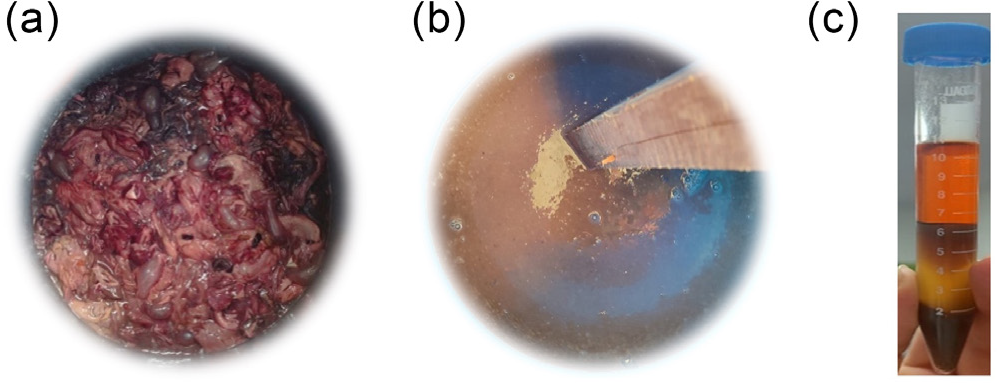
The extraction process was carried out according to the method proposed by Perea Román et al.,33 with some modifications. First, 17.45 kg of fresh rainbow trout viscera (Oncorhynchus mykiss) was weighed and placed in a hermetically sealed plastic container. Next, 365.1 mL of 85% formic acid, 17.45 g of butylated hydroxytoluene (BHT), and 43.63 g of sodium benzoate were added to the viscera. The mixture was stirred until it was fully homogenized. The hydrolysate was then agitated once a day for three consecutive days. After this agitation period, it was allowed to rest for an additional three days. Over time, clear physical changes were observed (Figure 1S, Supplementary Material), indicating the hydrolysis of all biological material, facilitated by the enzymes in the viscera and the concentrated formic acid. Subsequently, the resulting silage was centrifuged for 15 min at 3500 rpm using a Sorvall Instruments RC3B centrifuge, treating 200 g portions of silage. Finally, the oil phase of interest was separated through decantation and carefully stored in amber containers under cold conditions.
Extraction of unsaturated fatty acids (UFA) from rainbow trout viscera oil
To extract UFAs, it was followed methodologies previously reported by Thammapat et al.34 A hydrolysis process was conducted on trout viscera oil under basic conditions. For every 25 g of oil, 150 mL of 1.75 M KOH was used, and the mixture was refluxed for 4 h. After refluxing, 100 mL of water was added, and the solution was acidified to pH 1 (Figure 2S, Supplementary Material). Next, we performed liquid-liquid extractions using n-hexane. The organic phase was collected, and the free fatty acids (FFAs) were obtained from the rainbow trout viscera oil (Oncorhynchus mykiss) by evaporating the solvent under reduced pressure. The obtained FFAs were mixed with a 20% (m/v) ethanolic urea solution in a 1:4 (m/m) ratio and heated at 70 °C with constant stirring until a translucent and homogeneous solution formed. This mixture was then crystallized at -15 °C in a freezer for 24 h. After crystallization, the solution was filtered, and to the resulting liquid containing the UFAs, 50 mL of distilled water and 50 mL of n-hexane were added for each 15 g of FFAs deposited. The mixture was then acidified to a pH of 4-5, followed by additional liquid-liquid extractions using n-hexane (Figure 3S, Supplementary Material). Finally, it was collected the organic phase once more, evaporated the solvent under reduced pressure, and obtained the desired UFAs.
Chromatograms for standard oleic acid (a); unsaturated fatty acids extracted from rainbow trout visceral oil (b); palm stearin (c)
Enzymatic interesterification reaction
To determine the optimal conditions for the enzymatic interesterification reaction between palm stearin and UFAs extracted from trout viscera oil (Oncorhynchus mykiss), a central composite experimental design was implemented. This analysis was conducted using the statistical software Minitab 18 (Pennsylvania State University, Barbara Fankelbach Ryan, ©2017 by Minitab Inc. All rights reserved). In all experiments, the amount of Lipozyme TL IM enzyme was kept constant at 10% of the total substrate weight. As outlined in Table 1, the parameters evaluated in the experimental design included reaction time (8-30 h), the stearin to UFAs molar ratio (1-3.66), and temperature (45-80 °C). To comply with the conditions of the experimental design, particularly the temperature factor, the reactions were performed in an oil bath using a conventional heating process under reflux (Figure 4S, Supplementary Material).
Experimental design results of the enzymatic interesterification reaction between palm stearin and extracted unsaturated fatty acids
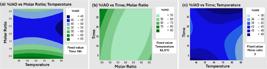
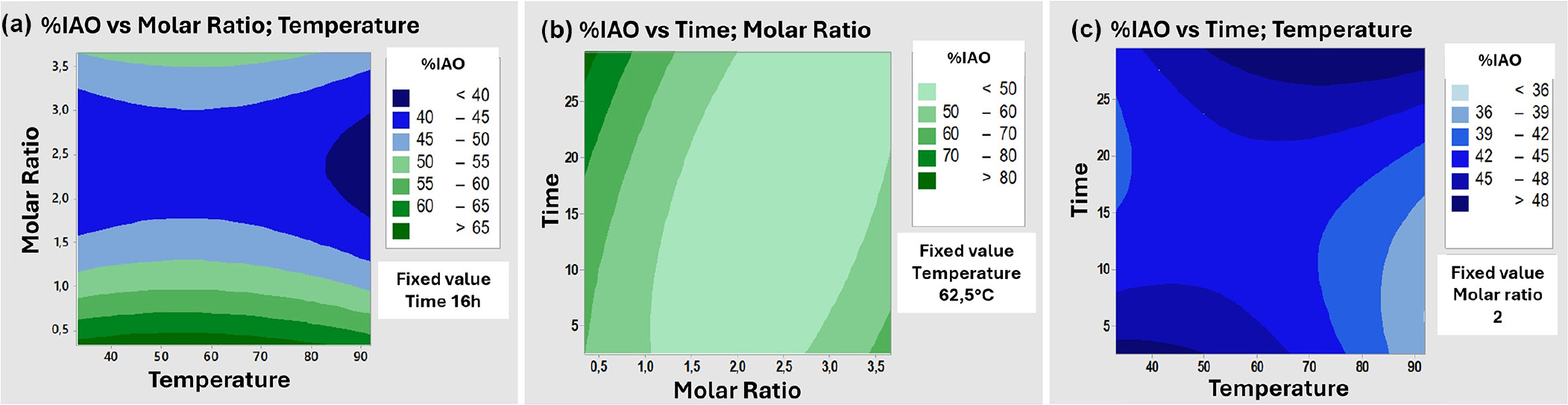
Contour plots for the best responses of the experimental design: (a) temperature and molar ratio; (b) molar ratio and time; (c) temperature and time
Response of the experimental design
To evaluate the formation of new structural triglycerides (TAGs), it was determined the percentage of oleic acid insertion (%IOA) from the UFAs found in trout viscera oil into the TAGs of palm stearin. As described in the Equation 1, this method involved analyzing the consumption of oleic acid (OA) from the UFAs in trout viscera oil, indicated by a decrease in its concentration. A reduction in oleic acid concentration would confirm its incorporation into the triglycerides present in palm stearin (Equation 1).
Analysis of oleic acid (OA) consumption in the reaction
The analysis of OA consumption during the reaction was performed using high-performance liquid chromatography coupled with a diode array detector (UHPLC-DAD). This method was adapted from the work of Carvalho et al.,35 with some modifications. The analysis equipment included an Ultimate 3000 system fitted with a Thermo Scientific Hypersil Gold C18 reverse-phase column, measuring 250 × 4.6 mm with a particle size of 5 μm. The autosampler was set to a temperature of 23 °C, while the column temperature was maintained at 60 °C. An injection volume of 10 µL was used, and the method was isocratic, employing 100% acetonitrile (ACN) at a flow rate of 1.0 mL min-1 for a duration of 8 min. The detector was programmed to perform wavelength sweeps between 190 and 400 nm, in addition to using a specific wavelength of 193 nm. For the chromatographic runs, a calibration curve was generated for oleic acid standards at concentrations of 39.6, 59, 79, 92, 300, and 500 ppm, with all calibration points prepared in isopropanol (Figure 5S, Supplementary Material). Samples of the starting substrates, including palm stearin and unsaturated fatty acids (UFAs) derived from trout viscera oil, were also analyzed. Finally, diluted samples from each of the experimental designs were examined to quantify oleic acid consumption.
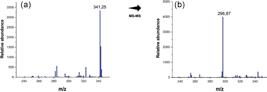
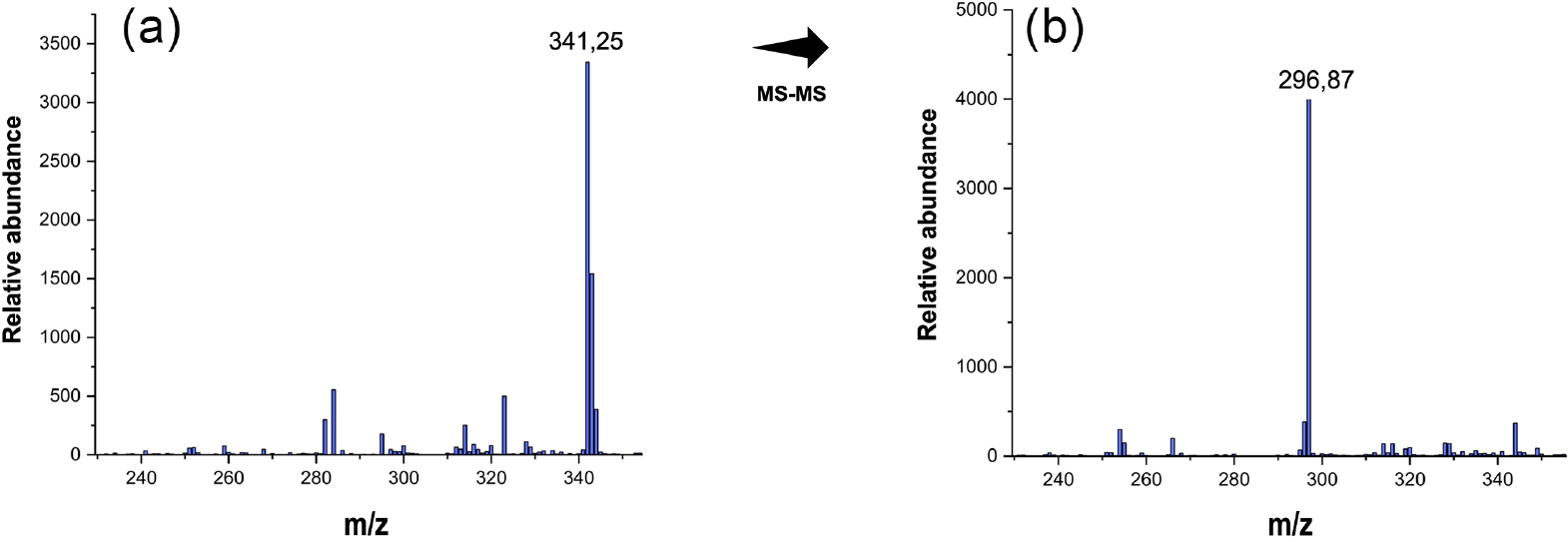
Mass spectra of reaction products from 1,2-propanediol and unsaturated fatty acids derived from trout viscera oil (a); ion fragmentation mass spectrum m/z 341.25 (b)
Enzyme selectivity analysis
A model reaction was designed to investigate the selectivity of the enzyme used in the interesterification process, specifically under the optimal conditions identified through experimental design. In this model reaction, palm stearin was substituted with a reagent of known structure, specifically 1,2-propanediol. This substitution enabled mass spectrometry (MS) analysis of the reaction product, allowing for verification of its structure and assessment of the stereospecific action of the Lipozyme TL IM enzyme. The results demonstrated that, under these conditions, the reaction produced a structural triglyceride in which the oleic fatty acid from trout viscera oil was incorporated into the sn-1 position of the 1,2-propanediol. Consequently, the resulting structure contained a palmitic acid molecule in the sn-2 position.
Quality analysis of the oils used as substrate and of the reaction products at the optimum point
The quality of the oils used as substrates for both palm stearin and trout viscera, together with the reaction products of the optimum point, was evaluated by analyzing several physicochemical parameters. These included iodine, peroxide, and saponification indices, as well as total fatty acids and unsaponifiable matter. Each index was measured in duplicate, following the methodologies outlined in AOAC standard techniques (Methods 993.20; 965.33; 920.160; 940.28; 972.28; 985.19; 921.08)36 and according to the guidelines set by the Ministry of Health and Social Protection of Colombia,37 the results obtained from the experimentally studied substrate were compared to those reported in previous research.38-40 Detailed experimental data for each physicochemical parameter can be found in the Supplementary Material (Tables 1S-2S).
RESULTS AND DISCUSSION
The importance of this research was thoroughly evaluated by analyzing both qualitative and quantitative results gathered at every stage of the methodological process as follows.
Extraction of oil from rainbow trout viscera (Oncorhynchus mykiss)
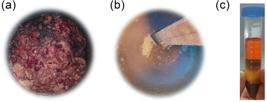
The extraction of rainbow trout viscera oil produced the results shown in Figure 1. This figure illustrates the transformation of the silage over time, beginning with fresh viscera (Figure 1a). After three days (Figure 1b), the hydrolysis of the organic material becomes evident. Finally, the rainbow trout viscera oil is obtained by centrifuging the hydrolysate, as depicted in Figure 1c, where the oil appears in the upper layer.
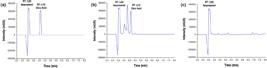
After isolating the UFAs from the viscera oil of rainbow trout, all samples were analyzed using liquid chromatography. This analysis included both an oleic acid standard and palm stearin. The chromatogram for the oleic acid standard (Figure 2a) showed a prominent signal at 4.12 min, which is characteristic of this fatty acid and served as a reference point for identifying the same fatty acid in the UFAs of the trout viscera oil. Figure 2b presents the chromatogram for the UFAs of the trout viscera oil, where a signal for oleic acid at 4.12 min is also observed, confirming its presence in the oil. In contrast, the chromatogram for palm stearin (Figure 2c) did not show the 4.12-min signal for free oleic acid. This finding indicates that palm stearin primarily consists of TAGs and does not contain free fatty acids like oleic acid. This distinction is important for analyzing the consumption of oleic acid during the reactions. The presence of oleic acid in trout viscera oil suggests that it may be incorporated into the TAGs of palm stearin. This consumption and incorporation were confirmed in all experiments using high-performance liquid chromatography as part of the experimental design. However, it is important to note that the reduction of free oleic acid may also be due to the formation of diacylglycerols, monoacylglycerols, or other intermediates and by-products.41 The literature indicates that one effective method for reducing the formation of these intermediates or by-products in an acidolysis reaction is to adjust the molar ratio of the components involved. The review by Tacias-Pascacio et al.42 suggest that increasing the molar ratio of fatty acids to triglycerides (TAG) - for example, up to 1:6 - enhances the incorporation of fatty acids. This change in equilibrium promotes the formation of structured triglycerides. In contrast to this study, this research demonstrates even more favorable results for these molar ratios, aligning more closely with the reaction equilibrium and further encouraging the formation of structural TAGs.
Experimental design results and response
The findings from the experimental design that evaluated the effects of temperature (oC), stearin to UFAs molar ratio (m/m), and time (h) are summarized in Table 1. The data collected from the 20 experiments showed significant variance, which enabled a thorough statistical analysis. The variation in results can be attributed to certain experimental limitations. All reactions were conducted using conventional methods in an oil bath under reflux, rather than in a reactor. As a result, significant deviations were observed across different reaction runs. These runs required longer reaction times and higher temperatures, which reduced enzyme activation and subsequently led to a decreased incorporation of unsaturated fatty acids. The only experiment that aligned closely with the predictive model adjusted the molar ratio to address the impact of long reaction times on enzyme activation. This adjustment was essential because a higher concentration of free unsaturated fatty acids in solution promotes the exchange right from the start of the reaction. This behavior was also reported by Wang et al.,43 which found that a higher proportion of free unsaturated fatty acids resulted in improved outcomes in the formation of target triacylglycerols (TAGs).
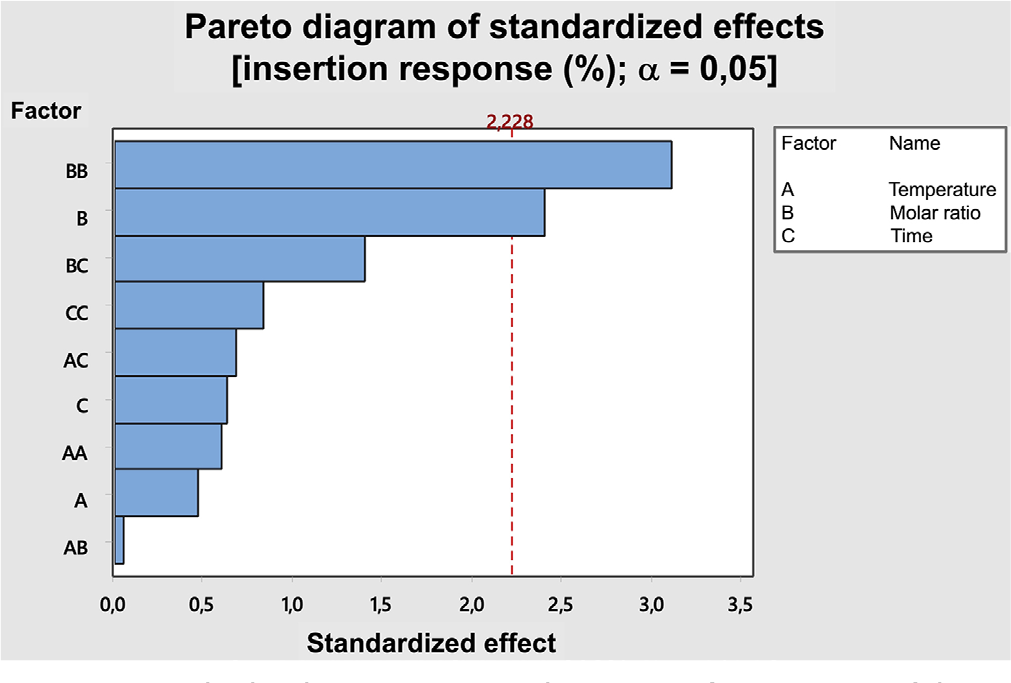
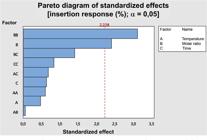
So, the results of the experimental design used in the transesterification reaction process were analyzed through statistical methods, including Pareto charts and contour plots (Figures 3 and 4). Initially, a Pareto diagram was created using specialized software to identify the variables that would significantly influence the interesterification reaction (Figure 3). This analysis involved examining the p-values of the variables and their interrelationships. It was found that the quadratic relationship of the BB molar ratio (p-value = 0.011) and the B molar ratio (p-value = 0.037) were the significant variables impacting the reaction. Both p-values considerably exceeded the threshold for significance defined by the Pareto test (2.228). The complementary ANOVA (analysis of variance) data of the response surface model are summarized in Supplementary Material (Table 3S).
Figure 4 illustrates a contour analysis used to determine the optimal reaction conditions, which reveals two types of contours. The green contours represent the best outcomes, indicating higher percentages of oleic acid insertion, while the blue contours indicate the lowest values of oleic acid insertion. In Figure 4a, which examines the relationship between temperature and molar ratio at a constant time of 16 h, it is observed that insertion percentages greater than 65% (dark green contours) occur within a temperature range of 50-70 °C and for molar ratios lower than 0.5 of stearin to unsaturated fatty acids (UFAs). Figure 4b analyzes the relationship between time and molar ratio at a constant temperature of 62.5 °C. It shows that insertion percentages higher than 70% can be achieved with times exceeding 20 h and molar ratios lower than 0.5. Finally, Figure 4c explores the relationship between time and temperature while keeping the molar ratio constant at 2. This figure reveals blue contours, indicating that the oleic acid insertion does not exceed 50%. This finding suggests that time and temperature do not significantly influence the reaction compared to the effects of the molar ratio.
After conducting these analyses, it can be concluded that the optimal reaction conditions for achieving the highest percentage of oleic acid insertion involve using the longest reaction times and highest temperatures, along with the lowest starting substrate molar ratios. Based on these findings, software predictions identified an optimal set of conditions: a temperature of approximately 75.8 °C, a molar ratio of 0.333 (stearin:UFAs), and a reaction time of around 30 h. Under these conditions, it is expected to achieve oleic acid insertion percentages (%IOA) exceeding 60%. To validate this prediction, these conditions were replicated in the laboratory, yielding a %IOA of 68.32 ± 0.0114%. The reaction was set up under optimal conditions using an oil bath. Over time, a significant change in the color of the solution was observed compared to its initial state, which qualitatively suggests a structural change in the starting oil substrates (Figure 6S, Supplementary Material). The chromatograms for the optimal points were obtained in duplicate, with the area measurements and corresponding %IAO responses for each chromatogram provided in the supporting information (Figure 7S and Table 4S, Supplementary Material). These results not only confirm the prediction but also indicate the successful formation of new structural TAGs through the incorporation of oleic acid under these reaction conditions, signifying its integration into the TAGs of palm stearin.
Analysis of the position of UFAs in structural TAGs
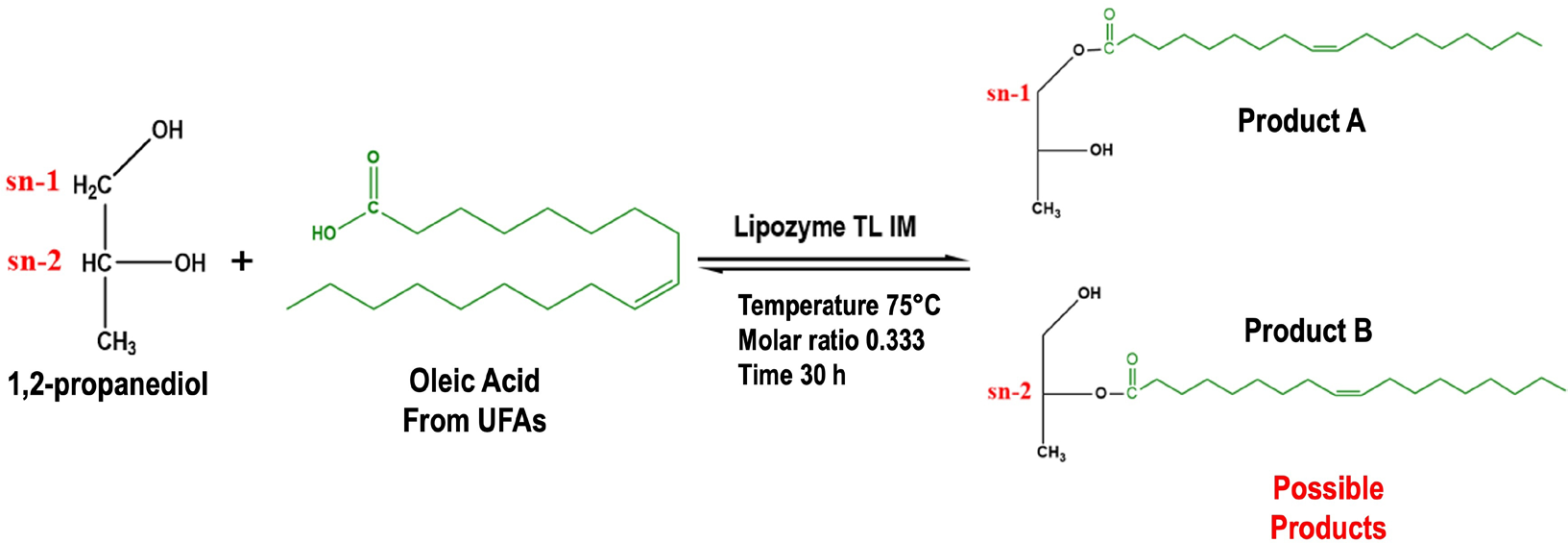
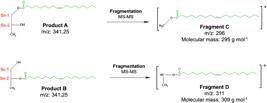
To carry out this analysis, it was essential to perform an interesterification process using a model reaction. In this process, palm stearin was replaced with a reagent of known structural composition, specifically 1,2-propanediol. This compound served as a reference to assess how the reaction favored the selective formation of structural TAGs. In this model reaction, the other conditions remained constant, as illustrated in Scheme 1.
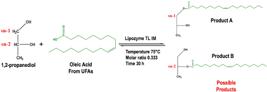
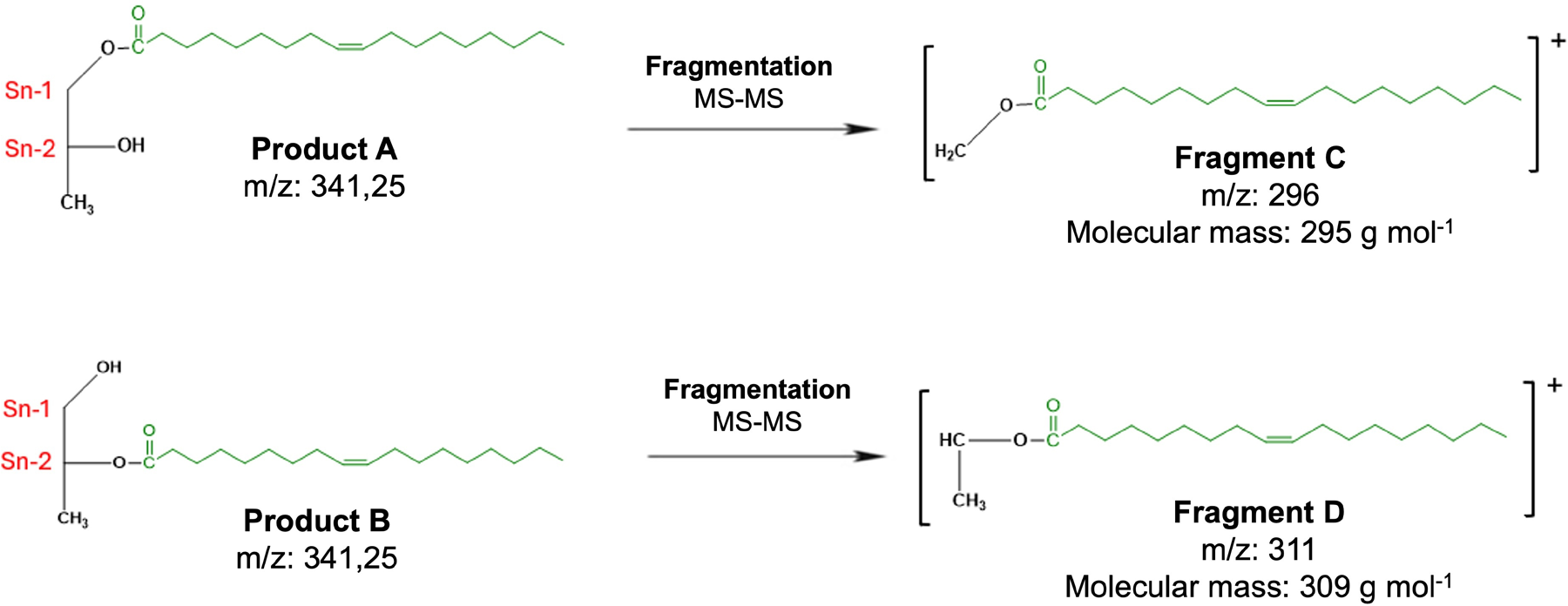
It is important to note that two possible products can be obtained from this reaction. Product A is formed when the TL IM enzyme facilitates the integration of oleic acid at the sn-1 position of 1,2-propanediol, while product B results from the incorporation of the same fatty acid at the sn-2 position. Previous studies20 have indicated that Lipozyme TL IM shows regioselectivity for the sn-1,3 position, suggesting that the majority of the product formed will be product A.
In the characterization of the products obtained through mass spectrometry, the first mass spectrum revealed a molecular ion signal with an m/z ratio of 341.25 (Figure 5a). This signal corresponds to the molecular mass of either product A or B (340 g mol-1), with the additional unit attributed to the positive mode operation of the mass spectrometer. This initial mass spectrum confirmed the formation of new products, verifying that the reaction was facilitated by the inclusion of oleic acid through the action of Lipozyme TL IM. Thus, it provided evidence for the creation of new TAGs derived from palm stearin and the UFAs extracted from rainbow trout viscera oil. To assess the selectivity of the enzyme, MS/MS fragmentation was conducted on the molecular ion at m/z 341.25 (Figure 5b).
This analysis aimed to determine which of the two products - A or B - was formed according to the fragmentation pathway outlined in Scheme 2. Figure 5b illustrates the MS/MS spectrum of the fragmentation ion at m/z 341.25. This fragment produces a corresponding ion at m/z 296.87, referred to as fragment C. This finding supports the conclusion that the reaction between 1,2-propanediol and unsaturated fatty acids results in the formation of product A. Specifically, product A has oleic acid integrated into the sn-1 position of the 1,2-propanediol. This result confirms the enzyme’s selectivity in the reaction. Furthermore, the TAGs formed from palm stearin and rainbow trout viscera oil contain the UFAs in the sn-1 and sn-3 positions, which are similar to those found in breast milk and complementary foods for children.
Finally, the reaction products obtained under optimal conditions were subjected to a quality analysis similar to that conducted on the starting substrate oils. The results of this analysis are detailed in Table 2.
The findings indicate that, at the end of the reaction, the product still meets the parameters established by both Colombian and international regulations. The only exception was in the saponification index, which measures the number of milligrams of KOH required to saponify the free and combined fatty acids present in the analyzed fat. This decrease is logical, as the reaction aimed to incorporate free unsaturated fatty acids from the trout viscera oil into the stearin triglycerides, resulting in a lower acidity index. It is important to emphasize that these results, along with the other physicochemical parameters, differ from those of the starting substrates (Tables 1S-2S). This once again confirms the transformation of the starting material and the formation of new products with different physicochemical characteristics.
To conclude this analysis, it can be highlighted that the results obtained in this study are comparable to those of other researchers who have evaluated similar reactions, particularly acidolysis-type enzymatic interesterification. For instance, the study by Wang et al.43 focused on the same substrates - palm stearin, oleic acid, and linoleic acid. Their research successfully produced the desired triglycerides, OPL (1-oleoyl-2-palmitoyl-3-linoleoylglycerol) and OPO (1,3-dioleoyl-2-palmitoglycerol), by utilizing a 1:7 molar ratio of palm stearin to oleic and linoleic acids, at a temperature of 60 °C, and a reaction time of 4 h for optimal results. In contrast, this study also found that a temperature of 60 °C yielded the best outcomes. However, while the molar ratio differs, a higher ratio of unsaturated fatty acids was used in this work (2:6, palm stearin to oleic acid). This adjustment confirms that a greater proportion of these acids enhances incorporation and exchange. Additionally, the reaction time varied from that reported by them. This discrepancy is understandable given the differing laboratory conditions: their comparative study was conducted in a reactor under isolated and more controlled conditions, while this study utilized the conventional reflux method in an oil bath. This may have influenced the time required for complete incorporation and, consequently, the formation of the expected triglyceride products.
CONCLUSIONS
In this research, we demonstrated the formation of new structural triglyceride products through the enzymatic interesterification of two agro-industrial by-products: palm stearin and trout viscera oil. By employing a statistical design, we identified the optimal conditions for this reaction, enabling us to create structural triglycerides that closely resemble those found in potential infant formula substitutes. The ideal parameters were determined to be a temperature of 76 °C, a mole ratio of 0.333, and a reaction time of 30 h. We found that the molar ratio of reactants significantly influenced product formation, indicating that a larger quantity of trout viscera oil, in comparison to palm stearin, was necessary to promote the reaction. This finding is advantageous for the food industry, as trout viscera are typically used less frequently in industrial applications compared to palm stearin. Additionally, the structural analysis of the products from a model reaction - where palm stearin was replaced with 1,2-propanediol - demonstrated the sn-1,3 regioselectivity of Lipozyme TL IM, which served as the biocatalyst. This analysis revealed that the triglycerides produced during the interesterification reaction contained unsaturated fatty acids in the sn-1 and sn-3 positions, while saturated fatty acids were found in the sn-2 position. This composition closely resembles that of infant formulas. Consequently, the proposed enzymatic interesterification reaction between palm stearin and trout viscera oil presents a promising alternative. If future studies can enhance the structural characterization of the resulting products and perform nutritional analyses, this could lead to the development of products with valuable nutritional applications.
SUPPLEMENTARY MATERIAL
Supplementary material is available free of charge at http://quimicanova.sbq.org.br in a PDF format as a free file.
Supplementary PDF
ACKNOWLEDGMENTS
The results presented in this work are part of an undergraduate research project registered under resolution No. 370 and funded by the Universidad del Cauca (501100005682). All authors would like to express their gratitude to the companies Pez Puracé (Puracé, Cauca) and Alianza Team (Bogotá, Cundinamarca). We also extend our thanks to the Chemistry of Natural Products research group at the Universidad del Cauca.
DATA AVAILABILITY STATEMENT
The authors will provide the raw data supporting this work without undue reservation.
REFERENCES
- 1 Zhu, M.; Li, X.; Nutrition 2013, 29, 833. [Crossref]
- 2 Sitompul, J.; Gusdinar, T.; Anggadiredja, K.; Rahman, H.; Tursino, T.; J. Eng. Technol. Sci. 2018, 50, 87. [Crossref]
- 3 Kim, B. H.; Akoh, C. C.; J. Food Sci. 2015, 80, C1713. [Crossref]
- 4 Ferreira, M. L.; Tonetto, G. M.; Enzymatic Synthesis of Structured Triglycerides - From Laboratory to Industry, 1st ed.; Springer: Cham, 2017. [Crossref]
- 5 More, S. B.; Gogate, P. R.; Waghmare, J. S.; Heliyon 2020, 6, 05198. [Crossref]
- 6 Jadhav, H. B.; Appl. Food Res. 2024, 4, 100372. [Crossref]
- 7 Wang, D.; Xiao, H.; Lyu, X.; Chen, H.; Wei, F.; Oil Crop Sci. 2023, 8, 35. [Crossref]
- 8 Jennings, B. H.; Shewfelt, R. L.; Akoh, C. C.; J. Food Qual. 2010, 33, 679. [Crossref]
- 9 Akoh, C. C.; Kim, B. H.; Food Lipids: Chemistry, Nutrition, and Biotechnology, 4th ed.; Akoh, C. C., ed.; CRC Press: Boca Raton, 2017. [Link] accessed in May 2026
- 10 Souza, P. M.; Santos, P. D. S.; Ponhozi, I. B.; Cruz, V. H. M.; Pizzo, J. S.; Alves, E. S.; Santos, O. O.; Visentainer, J. V.; J. Braz. Chem. Soc. 2025, 36, e-20240077. [Crossref]
- 11 Ferreira, G. C. A.; Santos, P. D.; Zangirolami, M. S.; Figueiredo, A. L.; Fernandes, C. S.; da Silva, G. A. R.; Basso, E. A.; Santos, O. O.; Quim. Nova 2025, 48, e-20250052. [Crossref]
- 12 Yao, Y.; Zhao, G.; Xiang, J.; Zou, X.; Jin, Q.; Wang, X.; Int. Dairy J. 2016, 56, 64. [Crossref]
- 13 Zou, X.; Huang, J.; Jin, Q.; Guo, Z.; Liu, Y.; Cheong, L.; Xu, X.; Wang, X.; J. Agric. Food Chem. 2013, 61, 7070. [Crossref]
- 14 Bar-Yoseph, F.; Lifshitz, Y.; Cohen, T.; Prostaglandins, Leukotrienes Essent. Fatty Acids 2013, 89, 139. [Crossref]
- 15 Innis, S. M.; Adv. Nutr. 2011, 2, 275. [Crossref]
- 16 Wei, W.; Sun, C.; Wang, X.; Jin, Q.; Xu, X.; Akoh, C. C.; Wang, X.; Engineering 2020, 6, 406. [Crossref]
- 17 Zuin, J. C.; Gandra, R. L. P.; Ribeiro, A. P. B.; Ract, J. N. R.; Macedo, J. A.; Macedo, G. A.; Food Sci. Technol. 2022, 42, e105821. [Crossref]
- 18 Norizzah, A. R.; Nur, A. K.; Azimah, K.; Zaliha, O.; Food Res. Int. 2018, 106, 982. [Crossref]
- 19 Guan, A.; Hou, Y.; Yang, R.; Qin, J.; Bioresources and Bioprocessing 2024, 11, 1. [Crossref]
- 20 Sivakanthan, S.; Madhujith, T.; LWT--Food Sci. Technol. 2020, 132, 109880. [Crossref]
- 21 Ramírez, S.; Arteaga, D.; Benítez, R.; J. Oleo Sci. 2025, 74, 971. [Crossref]
- 22 Yan, H.; Cai, H.; Wang, J.; Feng, F.; Wu, L.; Zhao, M.; Food Chem. 2026, 511, 148761. [Crossref]
- 23 Chandra, P.; Enespa; Singh, R.; Arora, P. K.; Microb. Cell Fact. 2020, 19, 169. [Crossref]
- 24 Ramos-Sánchez, L. B.; Cujilema-Quitio, M. C.; Julian-Ricardo, M. C.; Cordova, J.; Fickers, P.; J. Bioprocess. Biotech. 2015, 5, 1000203. [Crossref]
- 25 Park, J.-Y.; Park, K.-M.; J. Chem. 2022, 2022, 7609019. [Crossref]
- 26 Ministerio de Agricultura y Desarrollo Rural; Cadena de Palma de Aceite, Indicadores e Instrumentos; Bogotá, Colombia, 2020. [Link] accessed in May 2026
- 27 Chandrasekharan, N.; Sundram, K.; Palmas 1999, 20, 75. [Link] accessed in May 2026
- 28 da Silva, D. A.; Rodrigues, A. M. C.; dos Santos, A. O.; Salvador-Reyes, R.; da Silva, L. H. M.; LWT--Food Sci. Technol. 2023, 184, 114961. [Crossref]
- 29 Ministerio de Agricultura y Desarrollo Rural; Acuicultura en Colombia, Cadena de la Acuicultura; Ministerio de Agricultura y Desarrollo Rural, Bogotá, Colombia, 2021. [Link] accessed in May 2026
- 30 Ministerio de Agricultura y Desarrollo Rural; Dirección de Cadenas Pecuarias, Pesqueras y Acuicolas; Bogotá, Colombia, 2019. [Link] accessed in May 2026
- 31 Muñoz Burbano, S. M.: Determinación de la Actividad Antioxidante y Antimicrobiana de Ensilaje Químico de Vísceras de Trucha Arcoíris (Oncorhynchus mykiss); Trabajo de Grado, Universidad del Cauca, Popayán, Colombia, 2017. [Link] accessed in May 2026
- 32 Villamil, O.; Váquiro, H.; Solanilla. J. F.; Food Chem. 2017, 224, 160. [Crossref]
- 33 Perea Román, C.; Hoyos Concha, J. L.; Garcés Caicedo, Y. J.; Muñoz Arboleda, L. E.; Gómez Peñaranda, J. A.; Ciencia en Desarrollo 2017, 8, 39. [Crossref]
- 34 Thammapat, P.; Siriamornpun, S.; Raviyan, P.; Songklanakarin Journal of Science and Technology 2016, 38, 163. [Crossref]
- 35 Carvalho, M. S.; Mendonça, M. A.; Pinho, D. M. M.; Resck, I. S.; Suarez, P. A. Z.; J. Braz. Chem. Soc. 2012, 23, 763. [Crossref]
- 36 Horwitz, L. G. W.; Métodos Oficiales de Análisis de la AOAC Internacional, 17th ed.; AOAC Internacional: Gaithersburg, 2000. [Link] accessed in May 2026
- 37 Ministerio de Salud y Protección Social; Resolución 2154 de 2012, Minsalud, Requerimientos Fisicoquímicos de Aceites y Grasas; Bogotá, Colombia, 2012. [Link] accessed in May 2026
- 38 Bustamam, F. K. A.; Yeoh, C. B.; Sulaiman, N.; Saw, M. H.; OCL: Oilseeds Fats, Crops Lipids 2022, 29, 37. [Crossref]
- 39 Codex Alimentarius Commission; Standard for Fish Oils, CXS 329-2017; FAO/WHO, 2017. [Link] accessed in May 2026
- 40 Muñoz Velasco, A. F.; Bucheli Imbachi, J. E.; Bonilla Méndez, R.; Hoyos Concha, J. L.; Vitae 2016, 23, 278. [Link] accessed in May 2026
- 41 Akbaş, Ş.; Osório, N. M.; Ferreira-Dias, S.; Molecules 2025, 30, 1943. [Crossref]
- 42 Tacias-Pascacio, V. G.; Abellanas-Perez, P.; de Andrades, D.; Tavano, O.; Mendes, A. A.; Berenguer-Murcia, Á.; Fernandez-Lafuente, R.; Int. J. Biol. Macromol. 2025, 309, 142878. [Crossref]
- 43 Wang, X.; Huang, Z.; Hua, L.; Zou, F.; Cheng, X.; Wang, X.; LWT--Food Sci. Technol. 2021, 140, 110818. [Crossref]
Edited by
-
Associate Editor handled this article: Lívia Cristina R. M. da Frota