 BIOCHARS FROM SLOW PYROLYSIS OF LIGNOFORCETM LIGNINS: ENERGY ANALYSIS AND CO2 ADSORPTION
Abstract
This study presents an in-depth characterization of biochars produced by slow pyrolysis of LignoForce™ softwood (SKL) and hardwood (HKL) kraft lignins, aiming to development biomaterials for industrial and/or environmental applications. The as-received lignins were pyrolyzed under static air atmosphere in the range of 300 to 500 °C. Kraft lignin biochars were characterized by scanning electron microscope (SEM), elemental analysis, Raman spectroscopy, bomb calorimetry (for higher heating values (HHV)), and calcination. SEM micrographs showed that biochars presented important structural changes caused by the heat treatment in relation to the original samples. Biochar became more compact and friable as the pyrolysis temperature increased. In Raman spectroscopy, bands attributed to carbonaceous materials were identified, with ID/IG ratios decreasing with increasing temperature, indicating a greater ordering of the carbonaceous structure. Based on elemental analysis, HHV were estimated at 26 and 31 MJ kg–1 for HLK and SKL biochars, respectively, which were among the highest for this class of biomaterials. The CO2 adsorption capacity of the biochars increased with pyrolysis temperature, reaching 51.2 and 50.0 cm3 g–1 for HKL and SKL pyrolyzed at 500 °C, respectively. This study demonstrated that biochars with high HHVs and good CO2 adsorption capacities can be produced from kraft lignin without requiring any additional pretreatment, such as activation or doping.
Keywords:
kraft lignin; slow pyrolysis; biochar; CO2 adsorption
INTRODUCTION
Lignin is the second most abundant macromolecule in nature, accounting for 15 to 35% of the total lignocellulosic biomass (dry basis) and about 40% of its energy content.1,2 Globally, it is estimated that between 50 and 70 million tons of lignin are generated annually as a byproduct of the pulp and paper industry.3 This amount is expected to increase in the coming years with advancements in the production of sustainable biofuels and biomaterials from lignocellulosic biomass.4 Despite its widespread availability as a raw material, most lignin produced in biomass processing is used as a low-cost fuel. However, pulp mills have shown increasing interest in alternative applications for lignin, diversifying their production portfolio and generating new revenue streams.5
The growing interest in lignin chemistry has encouraged the development of strategies for its recovery from pulping liquors. Lignin can be isolated from black liquor through precipitation processes, with LignoBoost™ and LignoForce™ technologies being the most widely used for this purpose.2 Both processes involve acidifying black liquor with CO2. However, the LignoForce™ process includes a pre-oxidation step that affects the particle formation of lignin particles.6 This step improves filtration performance and eliminates the need for two filtration steps, generating a renewable lignin-based technology platform aimed at producing higher value-added materials and chemical products.5
From a structural perspective, lignin is distinguished from biomass carbohydrates by its aromatic structure and hydrophobic character, formed by the radical polymerization of phenylpropanoid units derived from p-coumaryl, coniferyl and sinapyl alcohols during lignification.5,7 Lignin structure and properties vary significantly among species.8 Based on the composition of its structural units, lignin is commonly classified in softwood (G type), hardwood (GS type), and herbaceous (GSH type) lignins.9 Lignin is also the most thermally stable component of lignocellulosic biomass. However, the presence of cellulose and hemicelluloses influences the pyrolytic behavior of lignin, introducing a more complex pyrolysis process due to the occurrence of parallel reactions involving carbonyl compounds, among others.10 The availability and multifunctionality of this macromolecule have attracted great interest, making it a possible alternative to replace petroleum derivatives in various sectors. In this context, the valorization of lignin is a key issue for the development of an integrated biorefinery based on the use of lignocellulosic biomass, as it allows an increase in profitability and product diversification towards a circular bioeconomy.11,12 Among the available valorization routes, pyrolysis has been widely explored to convert biomass into energy, chemicals, and reaction intermediates, with the advantage of being adaptable to different feedstocks and operating environments.13
In the context described above, the search for sustainable alternatives to fossil resources has become increasingly important. Population growth and industrialization have led to a significant increase in the global consumption of fossil resources. The intensive use of these resources has resulted in rising levels of carbon dioxide in the atmosphere, causing several environmental problems, including ozone depletion, acid rain, greenhouse gas emissions, and consequently climate change.14,15 Thus, the transition from a linear fossil-based to a circular bioeconomy is paramount to improve the carbon-footprint of global industrial activities.16 Mitigating the effects of CO2 accumulation in the atmosphere requires strategies for capture and storage.17 T o date, 27 direct CO2 capture facilities have been built around the world, capturing approximately 0.01 Mt CO2 per year.18 It is also important to note that, once captured, CO2 can be converted into chemicals and fuels, helping to reduce dependence on fossil energy sources.19,20
This study focused on the thermochemical conversion of hardwood and softwood kraft lignins that were isolated from black liquor using the LignoForce™ process. Slow pyrolysis was performed at different temperatures to produce biochars with improved fuel value, physicochemical properties, and CO2 adsorption capacities.
EXPERIMENTAL
Materials
Lignins were kindly provided by FPInnovations (Pointe-Claire, QC, Canada). Both softwood (SKL) and hardwood (HKL) kraft lignins were isolated from kraft pulping black liquors using the LignoForce™ process. SKL was isolated from the black liquor derived from a mixture of softwood chips consisting of 73% Pinus contorta, 2% Pseudotsuga menziesii, and 25% Abies alba. HKL was isolated from the black liquor of poplar wood (Populus sp.). SKL presented 99.0 ± 1.0% total lignin, 424.4 ppm of carbohydrates, and 0.95 ± 0.02% ash, while HKL presented 97.2 ± 0.2% total lignin, 244.0 ppm of carbohydrates, and 1.18% ash.8 A full characterization of these technical lignins can be found in the work of Suota et al.8
The lignin samples were ground in a low-speed industrial blender (Kd Eletro, 800 W). Grinding was performed with 300 g (dry basis), respecting a limit of 2 cm above the blender blade. The process was repeated until 1 kg of sample was produced. The grinding time was determined according to the lignin particle size, being 30 s for SKL and 1 min for HKL.
Lignin characterization
Particle size analysis was performed in accordance with the NBR NM 248 standard.21 Sieves of 10, 20, 60, 80, 100, 200, 325, and 400 mesh were used. The mass used in each test was defined according to the method recommendation: 300 g for aggregates with maximum nominal dimensions up to 4.75 mm. The experiments were carried out in duplicate on a vibrating sieve machine under constant agitation. Fractions were recovered from each sieve, weighed, and reserved for analysis.
The determination of surface area and pore size distribution was conducted using a Quantachrome Nova 2000e instrument (Quantachrome, Boynton Beach, USA). Samples were pretreated in situ at 90 °C for 6 h to remove moisture and volatile species adsorbed on the material surface. The textural properties were determined using liquid nitrogen adsorption isotherms recorded at –195.8 °C. Specific areas were calculated using the BET (Brunauer, Emmet, and Teller) isotherm model, while the average pore diameter was determined using the BJH (Barret, Joyner, and Halenda) method.
Thermogravimetric analyses (TGA) were conducted in a Netzsch STA 449F3 thermal analyzer (Netzsch-Gerätebau GmbH, Selb, Germany). Approximately 5 mg of sample was placed in an alumina crucible and heated from 25 to 750 °C at a heating rate of 10 °C min–1, under a nitrogen flow of 50 mL min–1.
The lignins morphology was evaluated using a Tescan, VEGA3 LMU scanning electron microscope operating at 10 or 15 kV. Samples were deposited on aluminum stubs and covered with a thin gold layer prior observation at different magnifications.
Pyrolysis experimental setup
Pyrolysis tests were performed in a muffle furnace. The samples were placed in a borosilicate glass tubular reactor (30 × 8 cm), coupled to a spherical condenser and a 100 mL round-bottom fask. For each test, around 30 g of lignin was pyrolyzed under static air atmosphere at a heating rate of 5 °C min–1, followed by an isothermal plateau of 30 min. The temperature setpoints were in the range of 300 to 500 °C, at 50 °C intervals. The temperature profile inside the muffle furnace was monitored using an Arduino temperature sensor22 to determine the actual temperature at the position where the samples were placed. Mass yield was calculated gravimetrically and expressed as percentage. Samples produced from SKL were named SKL300, SKL350, SKL400, SKL450, and SKL500, while those from HKL were named HKL300, HKL350, HKL400, HKL450, and HKL500. The condensed fraction was separated into two subfractions by liquidliquid extraction with dichloromethane (DCM) in a separation funnel. DCM was recovered from the DCM-soluble fraction (organic phase) by evaporation in an IKA rotary evaporator (RV10 digital), rendering the lignin bio-oil, whereas the DCM-insoluble fraction (aqueous phase) contained more polar components that were released from lignin by pyrolysis. Characterization of both organic and aqueous phases are not included in the present study.
Biochar characterization
Ash content was determined in triplicate using method TP-510-4262223 from the National Renewable Energy Laboratory. Elemental analysis was carried out using an Elemental Vario Micro Cube analyzer (Langenselbold, Germany). C, H, N, and S contents were measured experimentally, and the O content was calculated by difference. Higher heating values (HHV) were estimated from the elemental analysis, employing the mathematical model described by Ozyguran et al.,23 expressed in MJ kg–1, as described in Equation 1.
Sample morphology was analyzed using a scanning electron microscope (SEM, Tescan, VEGA3 LMU) operating at 10 or 15 kV. Samples were mounted on aluminum supports using copper tape. Raman spectroscopy was performed using a confocal Raman microscope (Witec, Alpha 300R), employing a green laser (λ = 520 nm), a charge-coupled device detector cooled to -59 °C, and a 50× objective. Spectra were collected with an integration time of 20 s and 10 accumulations per spectrum. The equipment allows laser power adjustment with an accuracy of 0.1 mW, and a typical laser power of 10 mW was applied to avoid sample degradation. Baseline correction and normalization (0-1) were applied to all spectra. The Raman intensity ratio of the D and G bands (ID/IG), indicative of the degree of disorder in carbonaceous structures, was determined based on peak intensities after baseline correction.
Biochar CO2 physisorption
To evaluate biochar CO2 physisorption, samples were initially dried in an oven at 100 °C for 24 h and subsequently treated at 250 °C for 4 h under vacuum to remove adsorbed moisture and volatile species from the surface. The physisorption isotherms were recorded at 0 °C using a Quantachrome Nova 2000e equipment (Quantachrome, Boyton Beach, USA).
The experimental data were fitted to Langmuir and Freundlich adsorption isotherms according to Equations 2 and 3, respectively.
where q is the adsorbate volume/adsorbent mass (cm3 g–1), P is the equilibrium pressure (atm), Qm and KL are the Langmuir isotherm parameters, and KF and n are the Freundlich isotherm parameters.
RESULTS AND DISCUSSION
Physical and morphological properties of the lignin precursors
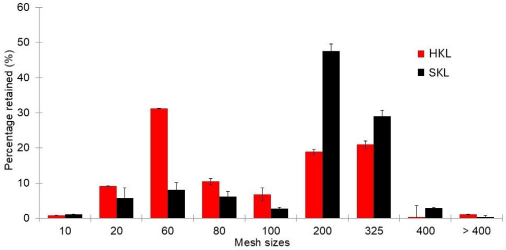
Hardwood and softwood LignoForce™ lignins were supplied as solid particles, exhibiting a wide size range. Particle size was homogenized by grinding, resulting in a bimodal distribution (Figure 1). Around 30 wt.% of HKL comprised of particles with diameters ranging from 60 to 20 mesh (0.25 to 0.85 mm), followed by ca. 21% between 200 and 100 mesh (0.149 to 0.180 mm), whereas the SKL particle size distribution revealed a major contribution (ca. 76%) of particles in the 325-100 mesh range (0.042-0.149 mm). The homogenization was required because larger particles tend to have higher thermal resistance, resulting in longer heating time or incomplete thermal conversion.24

Scanning electron microscopy images showed that both lignin samples contain nearly spherical highly polydisperse particles (Figure 2). Although SKL are larger than HKL particles, both have similar textural properties, with specific surface area of 35.3 and 37.8 m2 g–1, average pore volumes of 3.61 × 10⁻² and 4.34 × 10⁻² cm3 g–1, and average pore radii of 20 and 23 Å, respectively.

The TGA profiles of both HKL and SKL under an inert atmosphere are presented in Figure 3, along with their first derivatives (DTG). The thermal degradation of both HKL and SKL occurred in three main stages.8 The first stage (50-110 °C) is attributed to the loss of moisture and volatile components. At intermediate temperatures (200-450 °C), covalent bonds such as ß-O-4 are broken, characterizing the beginning of lignin depolymerization.25 The final stage (550-600 °C) is associated with the cleavage of the more thermally stable carbon-carbon bonds.8,26 The DTG curves facilitated the observation that HKL is less stable under heating. This factor is related to the presence of a higher proportion of aryl-ether bonds among phenylpropane units, which are easier to break.27 By contrast, guaiacyl (G) units of coniferous lignin (SKL) tend to condense at the C5 position, forming C–C bonds that are more thermally stable.8 The percentage of residue at the end of the thermal degradation curves for SKL and HKL was 37.2 and 19.9%, respectively, providing further evidence that the former is more recalcitrant than the latter.

Mass loss of HKL and SKL obtained by thermogravimetric analysis under an N2 atmosphere at a heating rate of 10 °C min–1
Slow pyrolysis results
The mass yield of pyrolytic products was comparable for both kraft lignins (Table 1). Biochar was the main product in all tests. This was also observed by Li et al.28 for lignin pyrolysis at 700 °C using heating rates of 5 and 10 °C min–1, in which biochar was recovered in proportions above 50%. The yield of solids gradually decreased with increasing temperature, while the proportion of the condensed fraction increased. Similar trends were observed by Farrokh et al.29 for a softwood hydrolysis lignin derived from a cellulosic ethanol production process. Slow pyrolysis for 8 h at 300, 500, and 600 °C resulted in biochar yields of 73.1, 45.7, and 39.3%, respectively.
The condensed fraction derived from lignin pyrolysis is often composed of two phases with different polarities, one organic (bio-oil) and another aqueous containing polar compounds, such as organic acids of low molar mass. Fu et al.30 obtained two phases that were visible to the naked eye after microwave pyrolysis of LignoForce™ softwood lignin. As this behavior was not observed for the pyrolysis products of SKL and HKL, phase separation was induced by adding DCM to the condensed fraction, yielding a less polar DCM-soluble organic phase (thereby referred to as bio-oil) and a DCM-insoluble aqueous phase. HKL pyrolysis carried out at 350 and 400 °C yielded higher proportions of bio-oil in the condensed fraction, with percentages over 50%, while the aqueous phase predominated in most SKL pyrolysis experiments. It should be noted that the bio-oil was only quantified after DCM removal by distillation. Pyrolysis at 400 °C showed comparable yields of biochar and condensates, with close ratios between organic (DCM-soluble) and aqueous phases for both kraft lignins. These results suggest a potential balance in obtaining valuable co-products, establishing lignin pyrolysis as a promising approach to producing chemicals and biobased functional materials. The gaseous phase (estimated by difference) was always found at low percentages, which gradually raised with an increase in the pyrolysis setpoint temperature.
It is worth noting the close correspondence between the TGA results and the pyrolysis yield reported in Figure 3 and Table 1, respectively. This is a clear indication that, at least for the starting material used in this study, TGA can be used for a fast and accurate estimation of biochar yields.
Biochar characterization
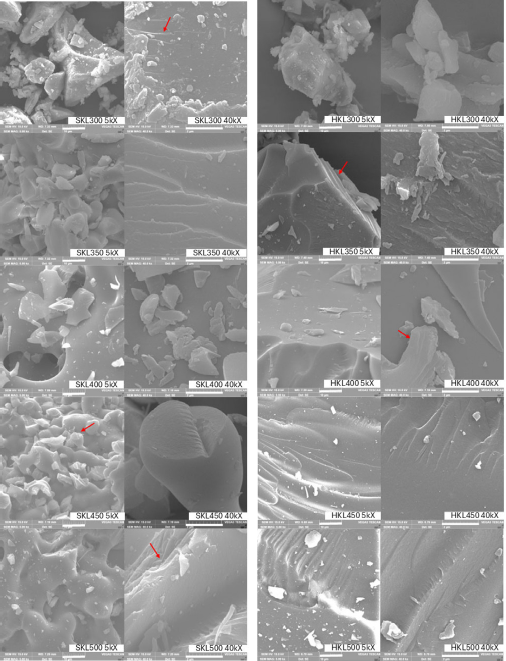
Microscopically (Figure 4), biochars appear as non-porous surfaces with different sizes and shapes, with different morphologies compared to the lignin precursors. However, some spherical flakes remained dispersed in the lignin biochars.
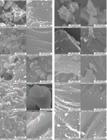
SEM images of SKL and HKL biochars pyrolyzed at 300, 350, 400, 450, and 500 °C, obtained at magnification 5 kx (scale bar: 10 ßm) and 40 kx (scale bar: 2 μm)
The heat treatment induced the aggregation of the raw particles producing smooth surfaces due to the apparent formation of a molten phase.29,31 At the lowest temperature, the morphology of the lignin was affected by the softening and adhesion of small particles, which coalesced as the material processing temperature increased. HKL biochars showed the least preservation of the original structure, reflecting intense structural changes caused by the heat treatment. Textural properties of biochars reflected the loss of lignin porosity upon thermal conversion.
Raman spectra of both SKL and HKL biochars revealed the presence of D and G carbon bands at ca. 1350 and 1580 cm–1, respectively (Figure 5). The D band is known as the disorder band and is the result of structural imperfections created by the insertion of oxygenated functional groups into the carbon plane. The G band is associated with sp2 hybridization, which represents the symmetry and crystallization of graphene materials.32,33 By calculating the intensity ratio between these two carbon bands (ID/IG), it is possible to estimate the degree of material disorder in such a way that the lower the ratio, the greater the degree of graphitization of the carbonaceous structure.34,35 In this study, biochar ID/IG ratios decreased with an increase in pyrolysis temperature, as can be seen in Table 2. Values ranging from 0.97-0.75 and 0.96-0.68 were obtained for SKL and HKL samples, respectively. These ID/IG ratios are lower than those reported by Chen et al.33 for an alkali lignin biochar obtained by microwave-assisted pyrolysis (1500 W, at 20 °C min–1, up to 400 °C), whose ID/IG ratio was 4.97. In this study, the ID/IG ratios decreased with increasing pyrolysis temperature for both SKL and HKL biochars (Table 2), indicating a progressive ordering of the carbon structure. Also, higher G-band intensities at higher pyrolysis temperatures have been associated with an increase in the aromatization of lignin biochars.36

Normalized Raman scattering of SKL and HKL biochars produced at 300, 350, 400, 450, and 500 °C
Biochar elemental compositions and ash contents are shown in Table 2. Biochars generally contained more ash contents than their original materials, with ash content rising progressively with pyrolysis temperature.37 Except for samples pyrolyzed at 500 °C, biochars produced from SKL had higher ash contents than those from HKL. However, these values were always relatively low, which is positive for process development.
LignoForce™ lignin biochars had high carbon contents, no nitrogen, and residual sulfur originated from the use of Na2S in kraft pulping. Both SKL and HKL produced biochars with similar elemental analysis composition. Elevated pyrolysis temperatures resulted in increased carbon content, indicating a greater extent of lignin carbonization.33 These structural transformations are also reflected in Raman spectra, where variations in the ID/IG ratio indicate the reorganization and growth of sp2 carbon domains.38 Also, high pyrolysis temperatures led to an apparent decrease in the oxygen content, suggesting partial loss of oxygenated functional groups. The drop in O and H contents is related to the scission of weaker bonds in the biochar structure, leading to the formation of more recalcitrant carbonaceous structures.39,40 Li et al.41 obtained a biochar with similar composition after pyrolysis of kraft lignin at 300 °C. The reported values were 66.9, 5.3, 26.5, and 0.2% for C, H, O, and N, respectively.
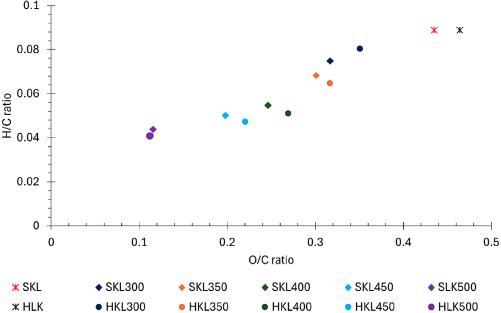
Increased pyrolysis temperatures had a significant effect on the H/C and O/C ratios of lignin biochars. As the temperature increased, both ratios progressively decreased, indicating the formation of more condensed and aromatic carbon structures.39 However, no differences were observed between SKL and HKL biochars, as both materials exhibited very similar atomic ratios. In general, materials with low H/C ratios are more stable and less prone to environmental degradation, supporting long-term carbon fixation in soil with a positive reflect on reducing greenhouse gas emissions from farming activities (carbon farming).39,42 According to the International Biochar Initiative,42 0.7 and 0.4 for H/C and O/C ratios are the upper limits to distinguish biochars from their precursors or other partially carbonized materials, respectively. All biochars produced in this study met these specifications.
The van Krevelen diagram was built to visualize the biochar atomic ratios compared to their lignin precursors (Figure 6). The effect of thermal stress on O/C ratios was five times greater than that on H/C ratios. This shift in atomic ratios, particularly at higher pyrolysis temperatures, suggests an increase in the aromaticity and unsaturation degree of lignin biochars.41 SKL was less affected by the heat treatment, having little variation in their chemical composition and in their corresponding atomic ratios. This can be attributed to its higher recalcitrancy, as already demonstrated by thermal analysis (Figure 3). A decrease in H/C ratio with an increase in pyrolysis temperature was also observed by Wu et al.43 H/C ratios varying from 1.3 to 0.4 were observed for alkaline lignin biochars produced at 300, 400, 500, and 600 °C for 20 min under an argon atmosphere.

The HHV of lignin biochars is given in Figure 7. There was a gradual increase in HHV with increasing pyrolysis temperature. This boosting effect reached around 20% compared to the lignin precursors when experiments were carried out at 500 °C, ranging from 25.90 and 26.38 MJ kg–1 to 31.30 and 31.59 MJ kg–1 for HLK and SKL, respectively. Biochars produced at 500 °C for 1 h from softwood and hardwood chips hydrolysis lignin44 and Acacia cincinnata bark,45 using similar heating rates of 24-25 °C min–1, exhibited HHV values nearing 31.36 and 25.76 MJ kg–1, respectively. Furthermore, the HHV values obtained in this study are considerably higher than those typically reported for raw lignocellulosic biomass (ca. 12-20 MJ kg–1),46 and fall within the range reported for coal-based fuels (ca. 24-26 MJ kg–1).47

CO2 adsorption by lignin biochars
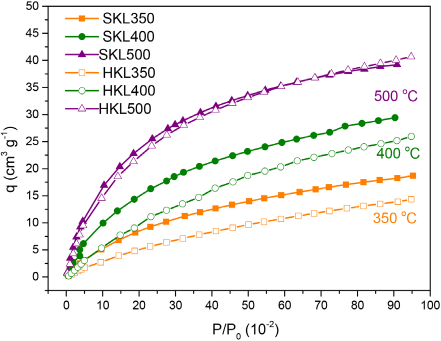
Both SKL and HKL biochars were tested for their ability to adsorb CO2. The obtained isotherms are presented in Figure 8. The data were adequately fitted to both Langmuir and Freundlich models, with coefficients of determination (R2) close to 0.99 (see Supplementary Material), although Langmuir model provided the best fit in all cases.

CO2 adsorption isotherms of SKL and HKL biochars obtained at the indicated temperatures (350, 400, and 500 °C)
The Langmuir model is based on homogeneous adsorption where each molecule has constant enthalpy and activation energy.48 The Freundlich isotherm, on the other hand, describes non-ideal and reversible adsorption that is not limited to the formation of an adsorbate surface monolayer. The fitting parameters are shown in Table 3, and the CO2 maximum adsorption capacity in Table 4.
Maximum CO2 adsorption capacity of kraft lignin biochars. The data was obtained from Langmuir isotherms
According to the Langmuir model, KL is a constant related to the energy of adsorption and Qm is the maximum monolayer coverage capacity.49 These values ranged from 0.010 to 0.047 and from 27.8 to 50.0 cm3 g–1, respectively. Both KL and Qm increased as a function of pyrolysis temperature, with the highest adsorption capacity being achieved for biochars pyrolyzed at 500 °C. A more pronounced increase of KL was observed for HKL biochars.
In the Freundlich isotherm model, the constant KF is related to adsorption capacity, while 1/n is a function of the strength of adsorption. Hence, KF and 1/n are parameters of the sorbent-sorbate system, where 1/n < 1 indicates a normal cooperative adsorption.50 Also, 1/n is interpreted as a heterogeneity parameter, whereby smaller 1/n values indicate higher surface heterogeneity. For all biochars, 1/n < 1 and 1 < n < 10, reflecting the occurrence of favorable cooperative adsorption processes. Also, with increasing pyrolysis temperatures, there was a decrease in 1/n values, indicating a slower adsorption rate and the need of higher pressures to achieve surface saturation. This fact indicates that surface heterogeneity increases with pyrolysis temperature.
For both SKL and HKL biochars, the isotherms indicate a correlation between increased pyrolysis temperature and increased adsorption capacity. Chatterjee et al.34 observed a similar trend when studying the effect of pyrolysis temperature on the CO2 adsorption capacity of different biochars. The biochars derived from pyrolysis at 500 °C showed the highest affinity for CO2.
Biochars have long been considered for CO2 capture. According to Zhang et al.35 and Guo et al.,51 pre-treated and/or functionalized biomass feedstock can yield biochars with adsorption capacity ranging from 0.7 to around 4.0 mmol g–1, at 25 °C and 1 bar. For example, N-doped biochars from wood have shown CO2 adsorption capacity of 3.17 mmol g–1 under normal pressure and 40 °C.52 Given that neither the lignin precursors nor the resulting biochars underwent any pre-treatment or chemical functionalization, the CO2 adsorption performance observed in this study can be considered competitive for non-activated biochars.
CONCLUSIONS
Pristine softwood and hardwood kraft lignins were subjected to slow pyrolysis under static air atmosphere. Both softwood and hardwood kraft lignins behaved similarly, regardless of their differences in origin and chemical composition. Biochar yields were around 50 wt.% and the obtained biochars presented a graphene like structure with HHV value and good CO2 adsorption performance. The adsorption data matched well with both the Langmuir and Freundlich models, as indicated by their high coefficients of determination (R2), with the highest adsorption capacity being achieved when pyrolysis was carried out at higher temperatures. Among the studied conditions, biochar produced at 500 °C showed the best overall performance, combining the highest CO2 adsorption capacity (up to 50 cm3 g–1), high HHV, and a more ordered carbon structure. These results suggest that kraft lignin has the potential to be transformed into advanced biomaterials suitable for industrial and technological applications.
SUPPLEMENTARY MATERIAL
Complementary material for this work is available at http://quimicanova.sbq.org.br/, as a PDF file, with free access.
Supplementary PDF
DATA AVAILABILITY STATEMENT
The datasets used and/or analyzed during the current study are available from the corresponding author upon reasonable request.
ACKNOWLEDGMENTS
The authors acknowledge CNPq (315930/2021-7) and Fundação Araucária (002/2021, process No. 17.521.887-4 - NAPI-HCR) for financial support, and CAPES (finance code 001) for partial funding.
REFERENCES
-
1 Yu, J.; Wang, D.; Sun, L.; Fuel 2021, 290, 120078. [Crossref]
» Crossref -
2 Lucaroni, A. C.; Maciel, G. M.; da Silva, C. B.; Matei, J. C.; Larsen, G. O. K.; Ferreira, L. C.; Haminiuk, C. W. I.; Next Research 2026, 6, 101429. [Crossref]
» Crossref -
3 Dias, C.; Mersmann, L.; Pires, J. R. A.; Fernando, A. L.; Ind. Crops Prod. 2025, 238, 122286. [Crossref]
» Crossref -
4 Bajwa, D. S.; Pourhashem, G.; Ullah, A. H.; Bajwa, S. G.; Ind. Crops Prod. 2019, 139, 111526. [Crossref]
» Crossref -
5 Suota, M. J.; Kochepka, D. M.; Moura, M. G. G.; Pirich, C. L.; Matos, M.; Magalhães, W. L. E.; Ramos, L. P.; BioResources 2021, 16, 6471. [Link] accessed in April 2026
» Link -
6 Argyropoulos, D. D. S.; Crestini, C.; Dahlstrand, C.; Furusjö, E.; Gioia, C.; Jedvert, K.; Henriksson, G.; Hulteberg, C.; Lawoko, M.; Pierrou, C.; Samec, J. S. M.; Subbotina, E.; Wallmo, H.; Wimby, M.; ChemSusChem 2023, 16, e202300492. [Crossref]
» Crossref -
7 Figueirêdo, M. B.; Hita, I.; Deuss, P. J.; Venderbosch, R. H.; Heeres, H. J.; Green Chem. 2022, 24, 4680. [Crossref]
» Crossref -
8 Suota, M. J.; da Silva, T. A.; Zawadzki, S. F.; Sassaki, G. L.; Hansel, F. A.; Paleologou, M.; Ramos, L. P.; Ind. Crops Prod. 2021, 173, 114138. [Crossref]
» Crossref -
9 Wang, T. P.; Li, H.; Yuan, J. M.; Li, W. X.; Li, K.; Huang, Y. B.; Xiao, L. P.; Lu, Q.; Ind. Crops Prod. 2021, 171, 113912. [Crossref]
» Crossref -
10 Lu, X.; Gu, X.; Biotechnol. Biofuels Bioprod. 2022, 15, 106. [Crossref]
» Crossref -
11 Supanchaiyamat, N.; Jetsrisuparb, K.; Knijnenburg, J. T. N.; Tsang, D. C. W.; Hunt, A. J.; Bioresour. Technol. 2019, 272, 570. [Crossref]
» Crossref -
12 Tiwari, A.; Chen, C. W.; Haldar, D.; Patel, A. K.; Dong, C. D.; Singhania, R. R.; Appl. Sci. 2023, 13, 4673. [Crossref]
» Crossref -
13 Mishra, R. K.; Kumar, D. J. P.; Narula, A.; Chistie, S. M.; Naik, S. U.; Fuel 2023, 343, 127968. [Crossref]
» Crossref -
14 Nazar, M.; Xu, Q.; Zahoor; Ullah, M. W.; Khan, N. A.; Iqbal, B.; Zhu, D.; Ind. Crops Prod. 2023, 202, 116987. [Crossref]
» Crossref -
15 Li, K.; Zhang, D.; Niu, X.; Guo, H.; Yu, Y.; Tang, Z.; Lin, Z.; Fu, M.; Sci. Total Environ. 2022, 826, 154133. [Crossref]
» Crossref -
16 Chatterjee, S.; Mohan, S. V.; Bioresour. Technol. 2022, 345, 126443. [Crossref]
» Crossref -
17 Mamaghani, Z. G.; Hawboldt, K. A.; MacQuarrie, S.; J. Environ. Chem. Eng. 2023, 11, 109643. [Crossref]
» Crossref -
18 Direct Air Capture; The International Energy Agency (IEA), 2024. [Link] accessed in April 2026
» Link -
19 Chagas, J.; Marciniak, A.; Mota, C.; J. Braz. Chem. Soc. 2022, 33, 801. [Crossref]
» Crossref -
20 Galimova, T.; Ram, M.; Bogdanov, D.; Fasihi, M.; Khalili, S.; Gulagi, A.; Karjunen, H.; Mensah, T. N. O.; Breyer, C.; J. Cleaner Prod. 2022, 373, 133920. [Crossref]
» Crossref -
21 Associação Brasileira de Normas Técnicas (ABNT); ABNT NBR NM 248 Agregados - Determinação da Composição Granulométrica; ABNT: Rio de Janeiro, 2003. [Link] accessed in April 2026
» Link -
22 Leite, J. C. S.; Suota, M. J.; Ramos, L. P.; Lenzi, M. K.; Luz, L. F. L.; ACS Omega 2024, 9, 24987. [Crossref]
» Crossref -
23 TP-510-42622: Determination of Structural Carbohydrates and Lignin in Biomass; National Renewable Energy Laboratory, 2012 [Link] accessed in April 2026; Ozyuguran, A.; Akturk, A.; Yaman, S.; Fuel 2018, 214, 640. [Crossref]
» Link» Crossref -
24 Mlonka-Medrala, A.; Magdziarz, A.; Dziok, T.; Sieradzka, M.; Nowak, W.; Fuel 2019, 252, 635. [Crossref]
» Crossref -
25 Leng, E.; Guo, Y.; Chen, J.; Liu, S.; E, J.; Xue, Y.; Fuel 2022, 309, 122102. [Crossref]
» Crossref -
26 Wang, S.; Zou, C.; Yang, H.; Lou, C.; Cheng, S.; Peng, C.; Wang, C.; Zou, H.; Bioresour. Technol. 2021, 320, 124375. [Crossref]
» Crossref -
27 Naron, D. R.; Collard, F. X.; Tyhoda, L.; Görgens, J. F.; Ind. Crops Prod. 2019, 131, 348. [Crossref]
» Crossref -
28 Li, C.; Hayashi, J.; Sun, Y.; Zhang, L.; Zhang, S.; Wang, S.; Hu, X.; J. Anal. Appl. Pyrolysis 2021, 155, 105031. [Crossref]
» Crossref -
29 Farrokh, N.; Suopajärvi, H.; Mattila, O.; Umeki, K.; Phounglamcheik, A.; Romar, H.; Sulasalmi, P.; Fabritius, T.; Energy 2018, 164, 112. [Crossref]
» Crossref -
30 Fu, D.; Farag, S.; Chaouki, J.; Jessop, P. G.; Bioresour. Technol. 2014, 154, 101. [Crossref]
» Crossref -
31 Giudicianni, P.; Cardone, G.; Ragucci, R.; J. Anal. Appl. Pyrolysis 2013, 100, 213. [Crossref]
» Crossref -
32 Li, J.; Yan, Q.; Zhang, X.; Zhang, J.; Cai, Z.; Polymers 2019, 11, 623. [Crossref]
» Crossref -
33 Chen, L.; Hu, J.; He, Y.; Wang, H.; Deng, Q.; Mi, B.; Wu, F.; Sep. Purif. Technol. 2024, 342, 127070. [Crossref]
» Crossref -
34 Chatterjee, R.; Sajjadi, B.; Chen, W. Y.; Mattern, D. L.; Hammer, N.; Raman, V.; Dorris, A.; Frontiers in Energy Research 2020, 8, article 85. [Crossref]
» Crossref -
35 Zhang, C.; Ji, Y.; Li, C.; Zhang, Y.; Sun, S.; Xu, Y.; Jiang, L.; Wu, C.; Ind. Eng. Chem. Res. 2023, 62, 17168. [Crossref]
» Crossref -
36 Fan, Y.; Zhang, Z.; Wang, Z.; Yu, H.; Kong, X.; Li, P.; Li, M.; Xiao, R.; Liu, C.; Bioresour. Technol. 2022, 360, 127648. [Crossref]
» Crossref -
37 Safarian, S.; Energy Reports 2023, 9, 4574. [Crossref]
» Crossref -
38 Zhang, C.; Zhang, Z.; Zhang, L.; Li, Q.; Li, C.; Chen, G.; Zhang, S.; Liu, Q.; Hu, X.; Bioresour. Technol. 2020, 304, 123002. [Crossref]
» Crossref -
39 Chen, J.; Wang, P.; Ding, L.; Yu, T.; Leng, S.; Chen, J.; Fan, L.; Li, J.; Wei, L.; Li, J.; Lu, Q.; Leng, L.; Zhou, W.; J. Anal. Appl. Pyrolysis 2021, 156, 105070. [Crossref]
» Crossref -
40 Imam, T.; Capareda, S.; J. Anal. Appl. Pyrolysis 2012, 93, 170. [Crossref]
» Crossref -
41 Li, W.; Wanninayake, N.; Gao, X.; Li, M.; Pu, Y.; Kim, D. Y.; Ragauskas, A. J.; Shi, J.; ACS Sustainable Chem. Eng. 2020, 8, 15843. [Crossref]
» Crossref -
42 Biochar Standards; International Biochar Initiative. [Link] accessed in April 2026
» Link -
43 Wu, F.; Chen, L.; Hu, P.; Wang, Y.; Deng, J.; Mi, B.; Bioresour. Technol. 2021, 322, 124539. [Crossref]
» Crossref -
44 Naydenova, I.; Radoykova, T.; Petrova, T.; Sandov, O.; Valchev, I.; Molecules 2023, 28, 4842. [Crossref]
» Crossref -
45 Ahmed, A.; Abu Bakar, M. S.; Hamdani, R.; Park, Y. K.; Lam, S. S.; Sukri, R. S.; Hussain, M.; Majeed, K.; Phusunti, N.; Jamil, F.; Aslam, M.; Environ. Res. 2020, 186, 109596. [Crossref]
» Crossref -
46 Aboyade, A. O.; Hugo, T. J.; Carrier, M.; Meyer, E. L.; Stahl, R.; Knoetze, J. H.; Görgens, J. F.; Waste Manage. 2017, 61, 78. [Crossref]
» Crossref -
47 Kosakowski, W.; Bryszewska, M. A.; Dziugan, P.; Materials 2020, 13, 4971. [Crossref]
» Crossref -
48 Foo, K. Y.; Hameed, B. H.; Chem. Eng. J. 2010, 156, 2. [Crossref]
» Crossref - 49 Shaw, D. J.; Introduction to Colloid and Surface Chemistry, 4th ed.; Butterworth-Heinemann: Oxford, 1992.
- 50 Goldberg, S. In Chemical Processes in Soils; Tabatabai, M.; Sparks, D., eds.; Wiley: California, 2005.
-
51 Guo, S.; Li, Y.; Wang, Y.; Wang, L.; Sun, Y.; Liu, L.; Carbon Capture Sci. Technol. 2022, 4, 100059. [Crossref]
» Crossref -
52 Ahmed, M. J.; Hameed, B. H.; J. Environ. Manage. 2025, 389, 126041. [Crossref]
» Crossref
Edited by
-
Associate Editor handled this article:
Fernanda G. Finelli