 ANALYSIS OF AUGMENTED REALITY APPLICATIONS FOR TEACHING CHEMISTRY BASED ON THE COGNITIVE THEORY OF MULTIMEDIA LEARNING
Abstract
In an increasingly digital world, education has also seen a transition to the use of innovative technologies that promise to revolutionize the teaching and learning process. Augmented reality (AR), for example, has the potential to improve the educational environment by making abstract concepts more accessible to students. In the chemistry field, a subject often considered complex, the ability to visualize and interact with phenomena can be particularly valuable. However, few research involving the use of AR applications (apps) in chemistry teaching have approached their design and application based on cognitive theories. This research addressed this gap in the literature by analyzing seven AR applications for teaching chemistry available on Google Play in 2025. The results show how cognitive theory of multimedia learning (CTML) principles are implemented in AR applications while also offering relevant considerations for developers and educators. Data points to the need to produce educational applications that include pedagogical aspects, which will allow the use of AR to be effective and inclusive. Finally, CTML has proven to be a relevant approach for developing and applying AR apps, providing important theoretical guidelines for developers and instructional designers to create applications based on learning theories.
Keywords:
augmented reality; multimedia learning; technology in education; chemistry teaching.
INTRODUCTION
Digital information and communication technologies (DICT) have significantly expanded learning opportunities in education. When effectively employed, these technologies enhance engagement, motivation, and academic outcomes.1 Although students today interact with technology from an early age,2 educational applications (apps) of these resources remain underutilized in schools.3 Technologies such as virtual reality (VR) and augmented reality (AR) are particularly valuable across disciplines, as they can address limitations of traditional teaching while aligning the interests and experiences of contemporary students.4
In chemistry teaching, the difficulty of abstraction in understanding concepts belonging to this science can be attributed to the need to articulate the three dimensions that involve chemical knowledge: submicroscopic, symbolic and macroscopic dimensions.5 In this context, DICT can contribute to the teaching and learning process, helping in the understanding of chemical phenomena through dynamic and three-dimensional visualization.6 As well as providing chemistry teaching with a better representation of the phenomena to be taught, allowing students to navigate seamlessly between these three levels of thought.7 One of the digital technologies that enables interactions with representations of these three dimensions from chemical knowledge is augmented reality, which can be accessed on smartphones and tablets used by teachers and students.
In chemistry teaching, AR can help overcome the difficulty of abstraction by enabling visualization of the three dimensions of chemical knowledge: submicroscopic, symbolic, and macroscopic.5 AR is defined as a technology that superimposes digital models on the real world through devices like smartphones or tablets, allowing users to interact with both real and virtual elements simultaneously.8,9 Its key properties include combining real and virtual objects in a real environment, working interactively in real time, and registering real and virtual objects with each other.10
The widespread adoption of AR at all levels of education11,12 demonstrates its versatility, though educational applications require specific considerations to maximize learning potential compared to applications in other fields like marketing, gaming, or entertainment.
Educational AR applications, particularly for chemistry, must balance interactive and pedagogical elements. These applications should integrate sound pedagogical principles into their design, ensuring technology enhances understanding of complex concepts rather than merely serving as an attractive element. The challenge lies in creating applications where playful elements and educational content coexist harmoniously - stimulating engagement without compromising scientific rigor or content depth.
Research shows that many studies on AR applications in education have insufficiently addressed theoretical learning foundations,13 with few investigating how affects learners cognitive load.14 The primary theoretical perspectives in AR educational research are cognitive, behaviorist, and constructivist.15
The cognitive theory of multimedia learning (CTML) offers particularly valuable parameters for developing educational resources. Though not originally designed specifically for AR applications, CTML provides crucial principles for creating effective multimedia learning experiences.16 Since its introduction, CTML has evolved significantly. The original theory of Mayer17 included six basic principles (coherence, redundancy, spatial contiguity, temporal contiguity, modality, and multimedia), primarily focused on reducing extraneous cognitive processing. The current version encompasses fifteen principles, organized into three categories: reducing extraneous processing, managing essential processing, and fostering generative processing. The most recent additions - embodiment, immersion, and generative activity - address social, affective, motivational, and metacognitive aspects of learning.
CTML is founded on three core assumptions from cognitive science: (1) humans process information through dual channels (visual and verbal), (2) each channel has limited processing capacity, and (3) learning involves active cognitive processes that construct knowledge.18,19 These assumptions emphasize the importance of selecting relevant information that can be coherently organized and integrated with existing knowledge, while recognizing human processing limitations to prevent cognitive overload.
The fifteen principles of CTML are organized into three categories of cognitive load management:
-
1. Extraneous processing reduction includes principles that eliminate unnecessary cognitive burden: coherence (excluding irrelevant content), signaling (using cues to highlight organization), spatial contiguity (placing corresponding text and images near each other), redundancy (avoiding presenting identical information in multiple formats), and temporal contiguity (synchronizing words and pictures).
-
2. Essential processing management helps learners process key material through: segmentation (presenting content in user-paced segments), pre-training (introducing key concepts before the main lesson), and modality (using narration rather than on-screen text with animations).
-
3. Generative processing promotion encourages deeper cognitive engagement through: personalization (conversational style), voice (human rather than synthetic narration), image (showing the instructor), multimedia (using words and pictures together), embodiment (incorporating human-like gestures and expressions), immersion (creating presence in virtual environments), and generative activity (encouraging activities like summarizing or explaining).
Not all CTML principles apply equally to AR applications. Studies by Keller et al.14 and Lu et al.19 demonstrate selective application of principles when developing chemistry AR applications, focusing primarily on multimedia, spatial contiguity, temporal contiguity, and occasionally segmentation and voice principles.
Research conducted by Mutlu-Bayraktar et al.20 underscores the importance of the signaling principle, showing that visual highlights in AR applications help students identify key molecular structures more easily. While CTML provides a robust framework for developing educational resources, the applicability of its principles varies in AR contexts - principles like segmentation and pre-training have moderate relevance but may be challenging to implement effectively in interactive AR environments. Furthermore, although previous studies have recognized certain limitations in applying specific principles of the CTML in AR contexts, there remain notable gaps in the literature: namely, the lack of systematic and comprehensive analyses that examine all 15 CTML principles specifically within AR applications for chemistry education. Existing studies tend to focus on isolated principles or fail to provide a structured evaluation based on a consistent analytical framework.
Thus, this research aims to fill this gap by (i) developing and applying a systematic analysis protocol grounded in the 15 principles of the CTML; (ii) identifying which principles are most frequently implemented and which are neglected in AR applications for chemistry; and (iii) offering insights into how the specific features of AR technology influence the applicability of different CTML principles. This study contributes to understanding how multimedia learning principles are implemented in chemistry AR applications, advancing theoretical knowledge at the intersection of multimedia learning and AR technology in chemistry education.
METHODOLOGY
This study employs a qualitative approach with a descriptive focus, aimed at examining and reporting the characteristics of AR applications for chemistry teaching through systematic analysis.
Accordingly, this study, conducted by the principal researcher, was carried out in two stages: the first consisted of surveying and selecting AR applications for teaching chemistry available in the official Google app store (Google Play) for the Android operating system, and the second was responsible for analyzing and discussing the characteristics of the selected applications according to the principles of the cognitive theory of multimedia learning.17
Application survey and selection
We conducted a systematic search on Google Play in January 2025 using keywords such as “augmented reality”, “AR chemistry”, “augmented reality in chemistry”, and “augmented reality and chemistry”. The latent corpus method was employed for its effectiveness in collecting publicly available internet data.21 Selection criteria included:
-
• Relevance to chemistry teaching: applications that present content explicitly related to fundamental chemical concepts, such as (i) representations of molecular and atomic structures; (ii) simulations of chemical reactions; (iii) visualization of the three levels of chemical knowledge representation (macroscopic, submicroscopic, and symbolic); (iv) properties of matter; or (v) curricular chemical concepts from secondary or higher education;
-
• Minimum threshold of 1,000 downloads;
-
• Functionality on Android version 13;
-
• Available in Portuguese or English;
-
• Free of charge.
Applications that, although mentioning chemistry in their description, focused solely on entertainment games without scientific conceptual grounding were excluded. After applying these criteria, seven applications were selected for detailed analysis, representing a range of AR tools for chemistry education.
Analysis of selected apps
To ensure systematic evaluation, we developed a protocol based on the 15 CTML principles,17 operationalizing each principle into observable criteria with a scoring system from 0-3 (Table 1). Each application was analyzed through an initial functionality test, structured exploration following the order in Table 1, and documentation of specific evidence for each CTML principle.
Validation and reliability
To ensure reliability, applications were evaluated using the analysis matrix (Table 1) with scores from 0-3 for each CTML principle. A systematic evaluation protocol was developed and applied. The researchers, who have expertise in both chemistry education and digital technology research, conducted the initial analysis of all applications. The evaluation process involved: (i) installation and functional testing of each application on an Android smartphone (version 13), ensuring technological compatibility; (ii) systematic exploration of all available features in each application; (iii) detailed documentation of specific evidence for each CTML principle observed; and (iv) assignment of scores ranging from 0 to 3 for each principle, according to the analysis matrix (Table 1).
To minimize subjective bias and increase the reliability of the evaluations, the results were reviewed by other researchers from the same research group as the authors, who independently analyzed the applications and reassessed the assigned scores. After this review, discrepancies were discussed until a consensus was reached. For example, the principle of coherence, which assesses the removal of irrelevant elements to optimize learning, received scores ranging from 0 (lack of coherence, with the presence of distracting elements) to 3 (complete compliance, presenting only content-essential elements).
After assigning scores for each principle, the results were reviewed to ensure consistency in the assessments. An example of this check can be seen in the principle of spatial contiguity, which analyzes the proximity of representative texts and images. The ModelAR app received a score of 1 since the explanatory text was not always correctly aligned with the visual representations, making it difficult for users to immediately integrate the information. Other example, AR Chemist received the highest score for coherence because its animations focused exclusively on key concepts without distractions. This systematic approach ensured consistency in assessing how each application implemented CTML principles.
RESULTS
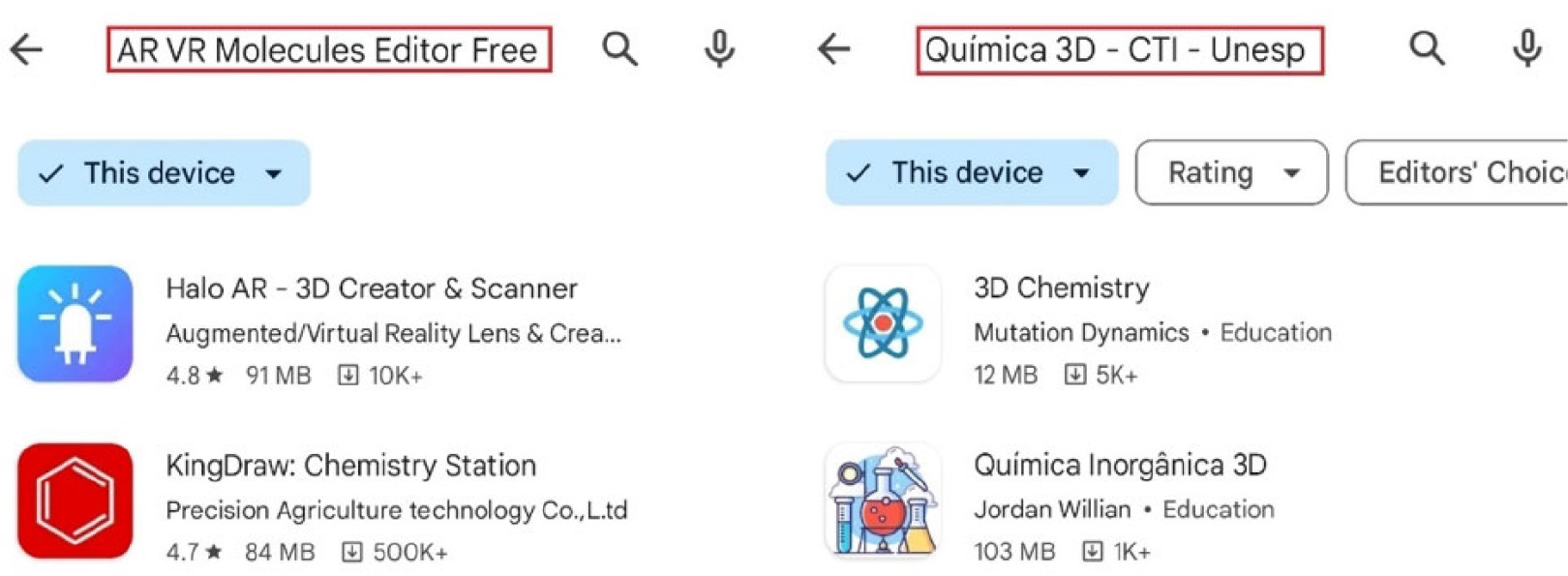
When investigating AR apps aimed at teaching chemistry on Google Play, an inconsistency was noticed in the search filter of the platform. The results found contained several apps that were not related to chemistry content and, in some cases, did not even have augmented reality features. In addition, it was found that many AR apps mentioned in the literature6,9 were no longer available for download, or appeared in the search but could not be downloaded for use, such as the “AR VR Molecules Editor Free” and “Química 3D - CTI - Unesp” apps (Figure 1).
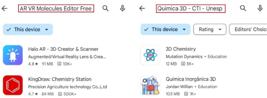
Due to the fluid nature of technology, i.e., its dynamic nature with constant updates, many apps end up no longer being identified in app stores, such as Google Play and the App Store, or in some cases apps can no longer be installed on mobile devices because the devices have outdated operating systems. In the specific case of this research, the app survey was carried out on a smartphone with Android version 13 (the most current version on the market), making apps that were developed for previous versions incompatible, as seen in the case shown in Figure 1. In addition, it is possible that some AR apps have been removed from Google Play or even had their names changed.
In the survey carried out in 2025 on Google Play, using the keywords “augmented reality”, “AR chemistry”, “augmented reality in chemistry”, and “augmented reality and chemistry”, we found seven AR apps with themes involving chemistry and science concepts. This data shows a reduction in the number of applications on the subject when compared to the results of a previous survey carried out by Nechypurenko et al.,22 and Leite9 - the search was carried out in English and Portuguese - in which they found 24 AR applications each for teaching Chemistry in their searches. In the comparative analysis carried out on augmented reality apps, it was observed that, of the total of 24 apps examined by Leite,9 ten were different from those studied by Nechypurenko et al.22 Therefore, there was a universe of 34 unique apps analyzed by both authors, disregarding overlaps. With regard to the language of the apps, there was a predominance of English with 22 apps. The Portuguese and Spanish languages were present in 8 apps, three in Portuguese and five in Spanish. There are also two apps in Indonesian, one app in Russian and one in Danish. It should be noted that no other research was found that analyzed AR applications in chemistry teaching.
The seven chemistry apps found on Google Play and analyzed were the following: AR Chemist, ModelAR, RAppChemistry: AR, QuimicAR - ChemistryAR, BT Chemistry F4 AR, TRPEV and Atom Visualizer (Table 2). When analyzed based on the principles of multimedia learning, none of the apps presented all fifteen CTML principles (Table 1), with heterogeneity in the presence and absence of the principles in the apps. Besides, even if we use CTML for analysis, the presence of some specific multimedia resources may not be possible to evaluate based on CTML principles, such as characteristics like fluidity and usability, something that would require a personal and somewhat subjective evaluation.
On the other hand, Mutlu-Bayraktar et al.20 reveal that the multimedia learning principles most studied in articles on the subject were modality principles and signaling principles, pointing out that the types of load (reduction of extraneous processing, management of essential processing and promotion of generative processing) were present.
The data shows that all seven apps analyzed were in line with the coherence principle, and almost all were in line with the signaling principle, with the exception of the QuimicAR - ChemistryAR app, which had a complete absence of key elements of prominence.
It is important to clarify that this study differs from previous investigations on AR applications for chemistry education, particularly the works of Leite,9 Mutlu-Bayraktar et al.,20 and Nechypurenko et al.22 Although these studies have contributed to the field, they present certain limitations or distinct focuses: Nechypurenko et al.22 conducted a broad survey of applications but without a structured theoretical analysis based on learning principles; Leite9 presented a descriptive review of applications but did not apply a systematic evaluation protocol grounded in CTML; Mutlu Bayraktar et al.20 carried out a systematic literature review on CTML and AR but focused on scientific articles rather than the direct analysis of applications available for educational use and did not employ all 15 CTML principles.
Therefore, our study fills some of these gaps by: (i) developing and applying a specific analytical protocol based on the 15 CTML principles; (ii) systematically analyzing applications currently available (2025) in app stores; (iii) providing an evaluation matrix that can be replicated by other researchers and used by educators in the selection of applications; and (iv) offering specific recommendations grounded in cognitive theory for developers of educational AR applications.
The next section will give a brief description of all the apps analyzed, pointing out the absence or presence of the principles found in each app.
Application analysis
This section presents the apps in ascending order of downloads. In the case of apps with the same number of downloads, we start with the app with the lowest rating on Google Play or in alphabetical order.
AR Chemist
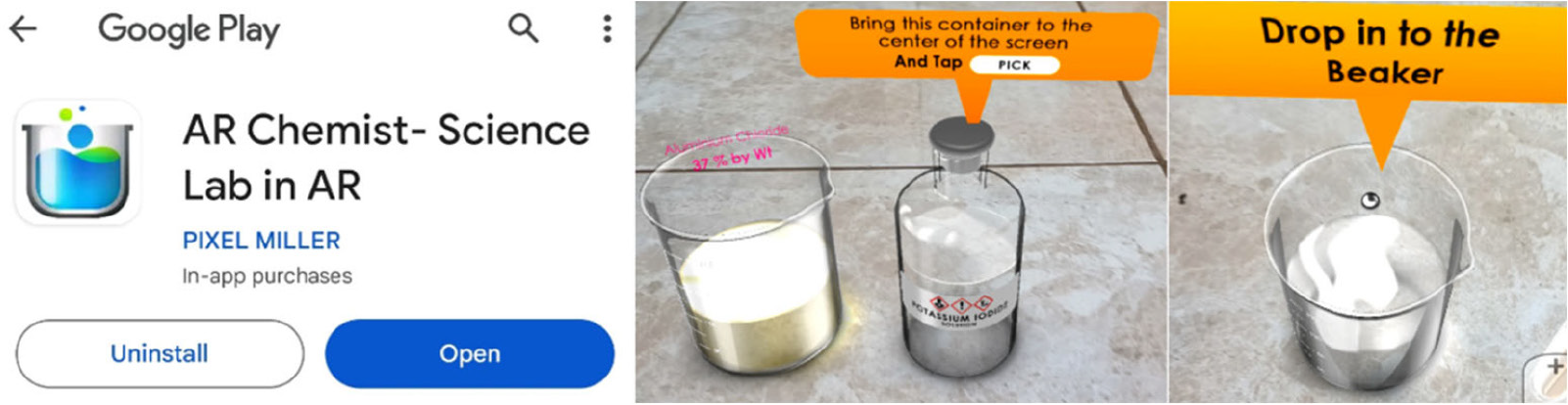
The AR Chemist app (Figure 2) features well-constructed animations covering topics like chemical solutions, laboratory safety, and chemical reactions. It fully complies with the coherence principle (score 3) by providing only relevant information without unnecessary elements. The application demonstrates high compliance with the coherence principle (score 3), as each animation includes only the visual and textual elements directly related to the specific chemical concept being addressed. For example, in the animation about chemical solutions, only the solute, the solvent, and representations of their interactions are presented - without decorative elements, unrelated sound effects, or peripheral information that could distract the attention of the learner from the core content. This approach may contribute to reducing extraneous cognitive load, allowing the user to focus cognitive resources on processing the essential information about the chemical phenomenon. The app achieves moderate immersion (score 2) through realistic three-dimensional graphics that enhance user experience.

It is worth noting that the app shows a concern for the realism of the graphics used, which results in a more immersive and authentic experience for users, which offers a moderately engaging experience, receiving a score of 2 in the immersion category. The realistic three-dimensional animations and interaction with objects in the environment increase the sense of presence, although there is room for improvement through the inclusion of more immersive scenarios or deeper interactions with the AR environment. In addition, the app has a variety of resources, enabling it to be applied in a variety of teaching situations, covering topics such as chemical solutions, laboratory safety, introduction to chemical analysis, among other content. In this context, it is of great importance that teachers carry out user tests and take ownership of the resources available in AR Chemist before applying it, in order to avoid problems and distractions during educational activities.
We found that the app complies with the principles of signaling and pre-training, as one of the features that stands out is the use of pauses and arrows when the app opens at first, providing a more user-oriented initial experience, achieving scores of 2 for signaling and 1 for pre-training respectively. The presence of arrows clearly indicates where the user must touch or interact to execute the desired tasks, which is a positive aspect of the app, making it more intuitive to use, as well as making it easier to navigate through the augmented reality environment. This feature can be particularly useful in the context of teaching chemistry, where there are various interactions and experiments that can be conducted by the user. In addition to improving the overall usability of AR Chemist, signposts also play a key role in supporting learning. By providing visual guidance, the app allows the user to pre-train and better understand how to prepare solutions and perform experiments, something that helps to enhance the process of assimilating complex chemical concepts.
The app implements signaling through directional arrows (score 2) and basic pre-training features (score 1). It excels in both temporal and spatial contiguity (score 3 each) by presenting text information synchronized and closely positioned with visual representations. The multimedia principle is well-implemented through the integration of text and visual elements (score 3).
However, AR Chemist lacks audio narration (violating the modality principle), adequate segmentation, personalized communication, and narrator presence. Consequently, it fails to implement the principles of redundancy, segmentation, personalization, image, embodiment, generative activity, and voice (score 0 for each).
BT Chemistry F4 AR
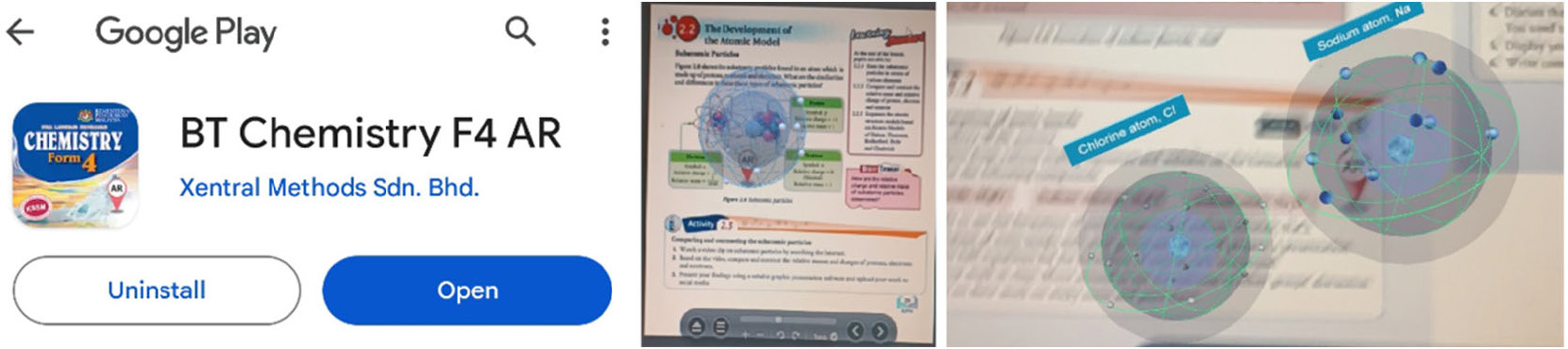
The BT Chemistry F4 AR app (Figure 3), originally designed for Malaysian textbooks, features high-quality animations of atomic models, states of matter, and chemical reactions. It fully implements nine CTML principles - the highest number among analyzed applications.
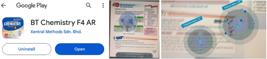
As for the analysis done, we found out the presence of the principles of spatial contiguity and multimedia, as care is taken when adding subtitles close to the animations to help explain certain concepts, leading to the attribution of a score of 3 for both principles.17 Along with this, the principles of modality were also present, with the use of audio narrations complementing the animations, the principle of voice, with the use of a clear and natural human voice, the principle of personalization, evidenced by the friendly and conversational communication style, and the principle of redundancy, with the absence of unnecessary texts that could overwhelm the learner, resulting in a score of 3 for each of them.
Thereby, the app achieves maximum scores (3) for coherence, signaling, spatial contiguity, multimedia, modality, voice, personalization, and redundancy. It is particularly effective in using audio narrations with animations (modality), employing clear human narration (voice), and adopting a conversational communication style (personalization). The app partially implements generative activity (score 1) by allowing limited interaction with AR simulations.
However, BT Chemistry F4 AR lacks implementation of temporal contiguity, segmentation, pre-training, image, embodiment, and immersion principles (score 0 for each).
ModelAR
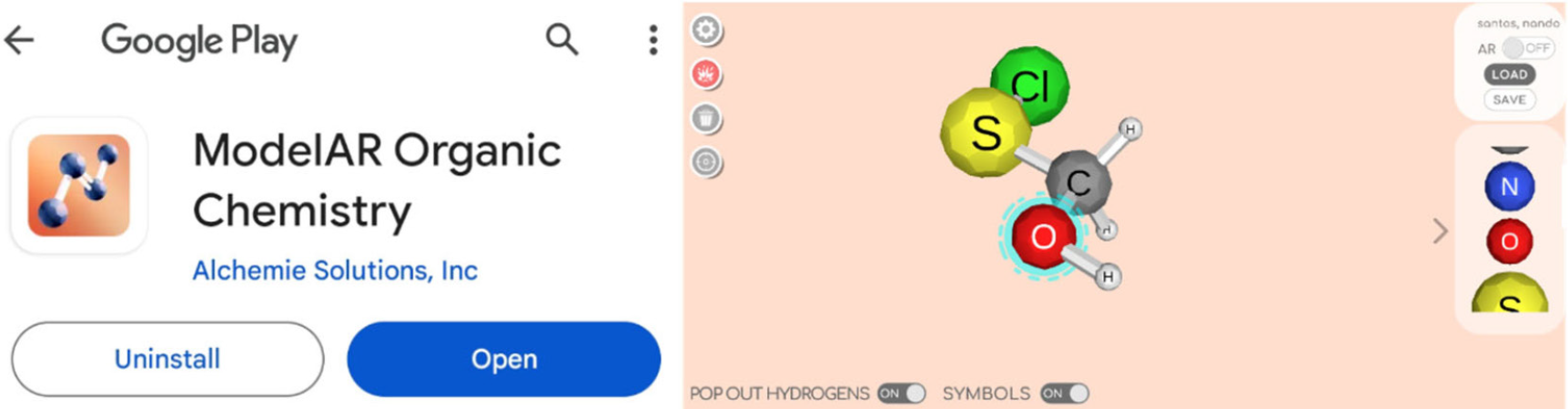
ModelAR (Figure 4) provides a minimalist interface for creating and visualizing molecules in augmented reality without markers. It fully complies with the coherence principle (score 3) through its simple, intuitive design focusing only on essential elements. The app also implements effective signposting (score 3) with clear highlighting of concepts.
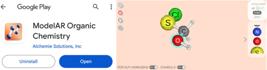
When analyzing ModelAR, we found that it adheres to the principle of signposting, offering highlights and resources that make it easier to identify the concepts presented, which justifies the award of a score of 3. However, we noticed the absence of the principles of temporal contiguity, multimedia, image, embodiment, immersion, generative activity, segmenting, and personalization in the application, resulting in a score of 0 for each of these principles. This lack is evidenced by the absence of direct conceptual explanations, with only a few brief guidelines on how to use the functionalities of the app. The spatial contiguity principle, which received a score of 1, as the explanatory text was not always properly aligned with the visual representations, hindering the immediate integration of information by the user. In addition, the principles of modality, voice, pre-training and redundancy are also absent, as there is no narration or any kind of explanation of the concepts covered, resulting in a score of 0 for each of these principles. Thus, ModelAR fails to implement the remaining fifteen CTML principles (score 0 for each), lacking explanatory content, narration, and interactive learning features. This minimalist approach prioritizes simplicity over comprehensive educational design.
TRPEV
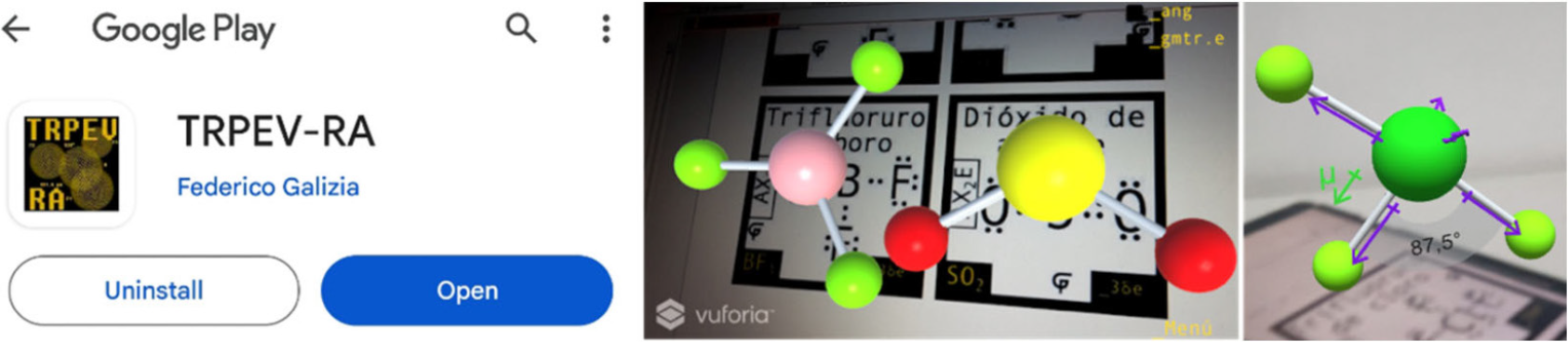
The TRPEV app (Figure 5) visualizes molecular models based on valence shell electron pair repulsion theory. It fully implements the coherence principle (score 3) through its simple interface that presents only essential information about molecular properties. The app also features effective signaling (score 3) through its intuitive navigation structure.

Icon of the application TRPEV on Google Play and how the display of three-dimensional molecules works
TRPEV does not implement the other thirteen CTML principles (score 0 for each), lacking explanatory content, sound resources, and interactive features that could enhance the learning experience. Due to the limited resources of the app, the principles of temporal contiguity, spatial contiguity, pre-training, multimedia, image, embodiment, immersion, generative activity, segmenting, and personalization were not observed, consequently receiving a score of 0 for each of these principles. In addition, there was also a total absence of sound resources, so the principles of modality, voice and redundancy were not present, leading to the assignment of a score of 0 for each of these principles.
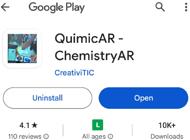
QuimicAR
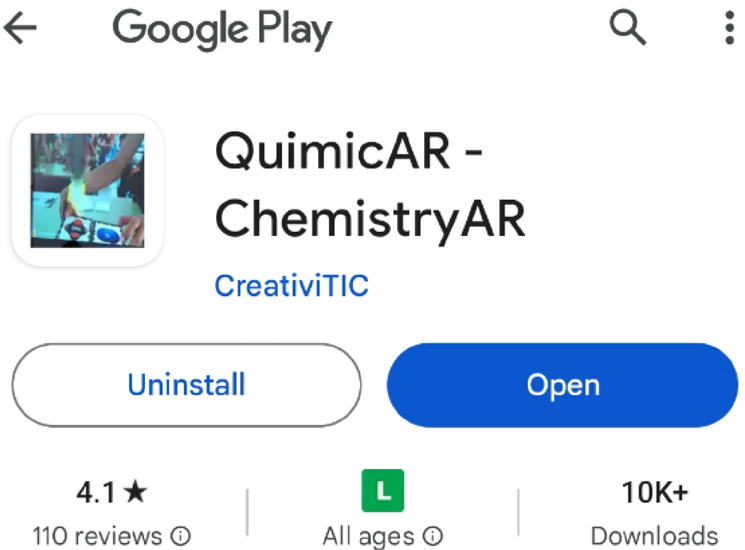
Regarding the QuimicAR app (Figure 6), we observed a clean and functional design, offering only relevant information related to the molecular structure of various chemical substances. There are no distractions or unnecessary content in the app, which contributes to a more focused and effective learning experience for users. This cohesive and targeted approach provides an environment conducive to learning, allowing the student to focus their attention on the key information, promoting a better understanding of the concepts covered, thus being aligned with the CTML principle of coherence, which justifies assigning a score of 3 to this principle.
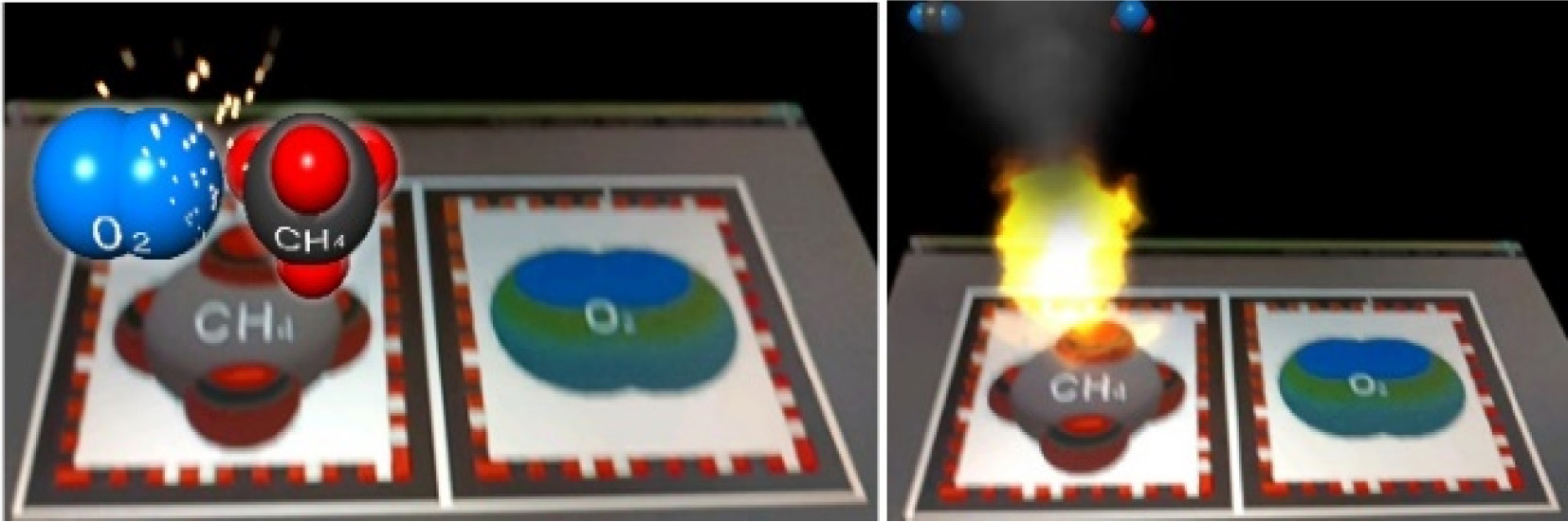
The app can be characterized as easy to use, since all you have to do to make use of its features is log in and direct the camera at the marker provided on the Google Play download page. A highlight of the app is the representation of the chemical reaction between oxygen gas (O2) and methane (CH4) that occurs when the markers are joined, accompanied by sound and animation of the release of energy in the form of heat, as well as the subsequent production of water molecules (H2O) and carbon dioxide (CO2), as shown in Figure 7. Such action is aligned with the modality principle, which postulates that learning is optimized through the combination of animation and narration, in contrast to animation and text, which tends to overload the visual channel, justifying the assignment of a score of 3 to this principle.16-18
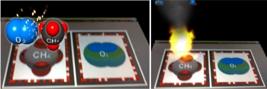
Despite the fact that the application has its advantages, a limiting factor was identified related to a conceptual misunderstanding in the representation of the reaction between O2 and CH4. The animation erroneously illustrates that this reaction occurs with only one molecule of each substance, a representation that contradicts the correct stoichiometry. As elucidated by Atkins et al.,23 the reaction involves one molecule of CH4 and two of O2. This misconception represents a significant pedagogical concern; as incorrect representations of chemical reactions can hinder the understanding of fundamental stoichiometry concepts by students. In chemistry education, accurate molecular ratios are essential for developing proper conceptual understanding. When educational tools present incorrect stoichiometric relationships, they may inadvertently reinforce misconceptions that become barriers to future learning of more complex chemical concepts.
This conceptual error, although inserted into a well-designed educational tool, can lead to a mistaken understanding, generating a perception of learning that does not correspond to reality. According to Bachelard,24 such an error can serve as a barrier to the acquisition of scientific knowledge, leading students to fail at overcoming epistemological obstacles - a set of psychological difficulties that do not allow correct access to objective knowledge. Thus, in the context of the QuimicAR app, the conceptual error that incorrectly represents the reaction between O2 and CH4 can be considered an initial epistemological obstacle. This misconception acts as a barrier on the path to understanding chemistry knowledge, preventing students from advancing to a deeper level of scientific knowledge.25 In addition, there are a limited number of markers in the app, with only four being used: one for the hydrogen atom, one for the oxygen atom, one for the methane molecule and one for the oxygen gas molecule.
Another limitation observed in the QuimicAR app is the failure to comply with the principle of signposting, presenting a score of 0 in the evaluation. When exploring the functionalities of the app, we observed the absence of elements to highlight or emphasize the concepts presented in the animations, such as molecules, atoms and chemical reactions. An example of this limitation can be seen when we try to start the animation of the chemical reaction between oxygen gas and methane. To find out if this reaction is possible, it was necessary to test all the available markers until, by chance, the reaction occurred. This seemingly random approach makes it difficult for users to understand and learn, especially those who are new to the subject. Due to that, it is clear how much the lack of signposting can hinder usability for new users who want to explore all the features of the app and get a good deal out of it in terms of learning.
In our analysis, we found that the app does not comply with several CTML principles, including signposting, multimedia, personalization, temporal contiguity, image, embodiment, immersion, generative activity, segmenting, redundancy, and spatial contiguity, inferring a score of 0 for each of these principles. This non-compliance manifests itself in the absence of textual elements integrated into the animations that could explain the concepts present in the app, as well as the lack of any form of personalization to meet the individual needs of users. In addition, the presence of the voice and pre-training principles was also not observed, leading to a score of 0 for these two principles.
RAppChemistry: AR
RAppChemistry: AR (Figure 8), with over 50,000 downloads, represents atoms in augmented reality with electrons orbiting the nucleus - useful for illustrating the atomic model proposed by Bohr. The app fully implements the coherence principle (score 3) by displaying atomic representations with vibrant colors and essential information. It also achieves maximum scores (3) for spatial contiguity, temporal contiguity, and multimedia principles through well-positioned explanatory texts synchronized with atom simulations.

In addition, its functionalities are intuitive and easy to use. To watch the animation, simply open the app and direct the camera at the marker provided in the description of the download page on Google Play, having a wide variety of atoms to be displayed. However, the app lacks signaling elements to emphasize key concepts (score 0). It also fails to implement the remaining ten CTML principles (score 0 each), including modality (no audio elements), voice, personalization, redundancy, segmentation, image, embodiment, immersion, generative activity, and pre-training.
Atom Visualizer
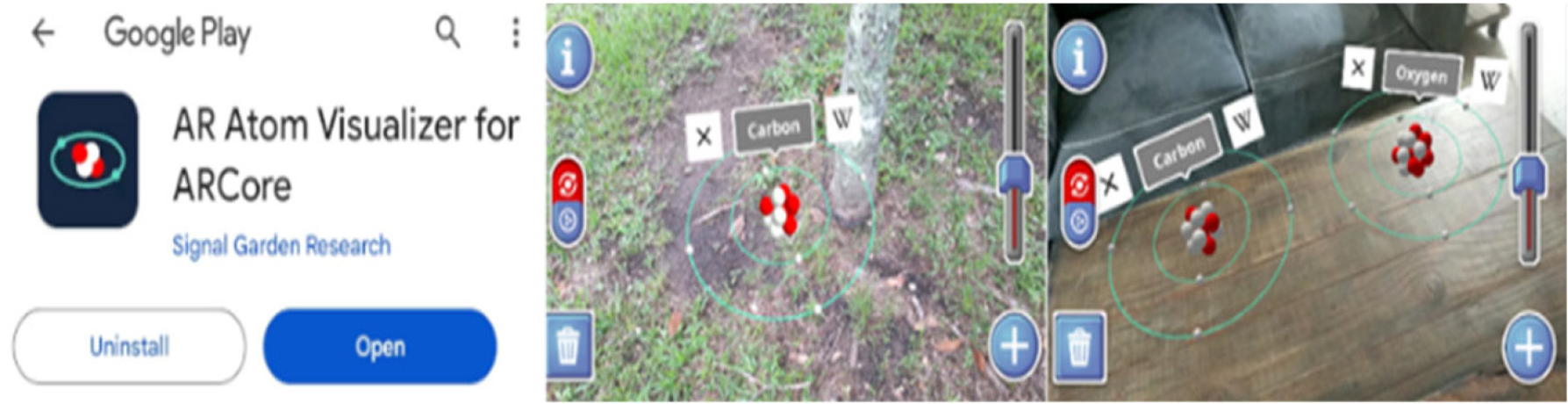
Atom Visualizer (Figure 9), the most downloaded application in our analysis, offers detailed atomic representations with options to choose between Bohr or quantum models. The app implements three CTML principles effectively: coherence, pre-training, and signaling (score 3 for each), providing an intuitive interface for exploring atomic structures.
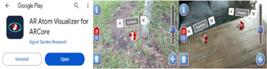
The app presents a wide range of chemical elements, allowing the visualization of molecules and offering animations of the electrons around the atomic nucleus. Upon analysis, we found that the principles of coherence, pre-training and signaling are present in the app intuitive interface, which has proven to be a relevant educational tool for exploring atomic structure and chemical interactions, making learning chemistry more engaging, reason why we give it a score of 3. However, the app does not implement the remaining thirteen CTML principles (score 0 for each), including multimedia, personalization, temporal contiguity, and modality, limiting its educational potential despite its popularity.
After analyzing each application, Table 3 presents the scores assigned to the seven applications considering the CTML principles.
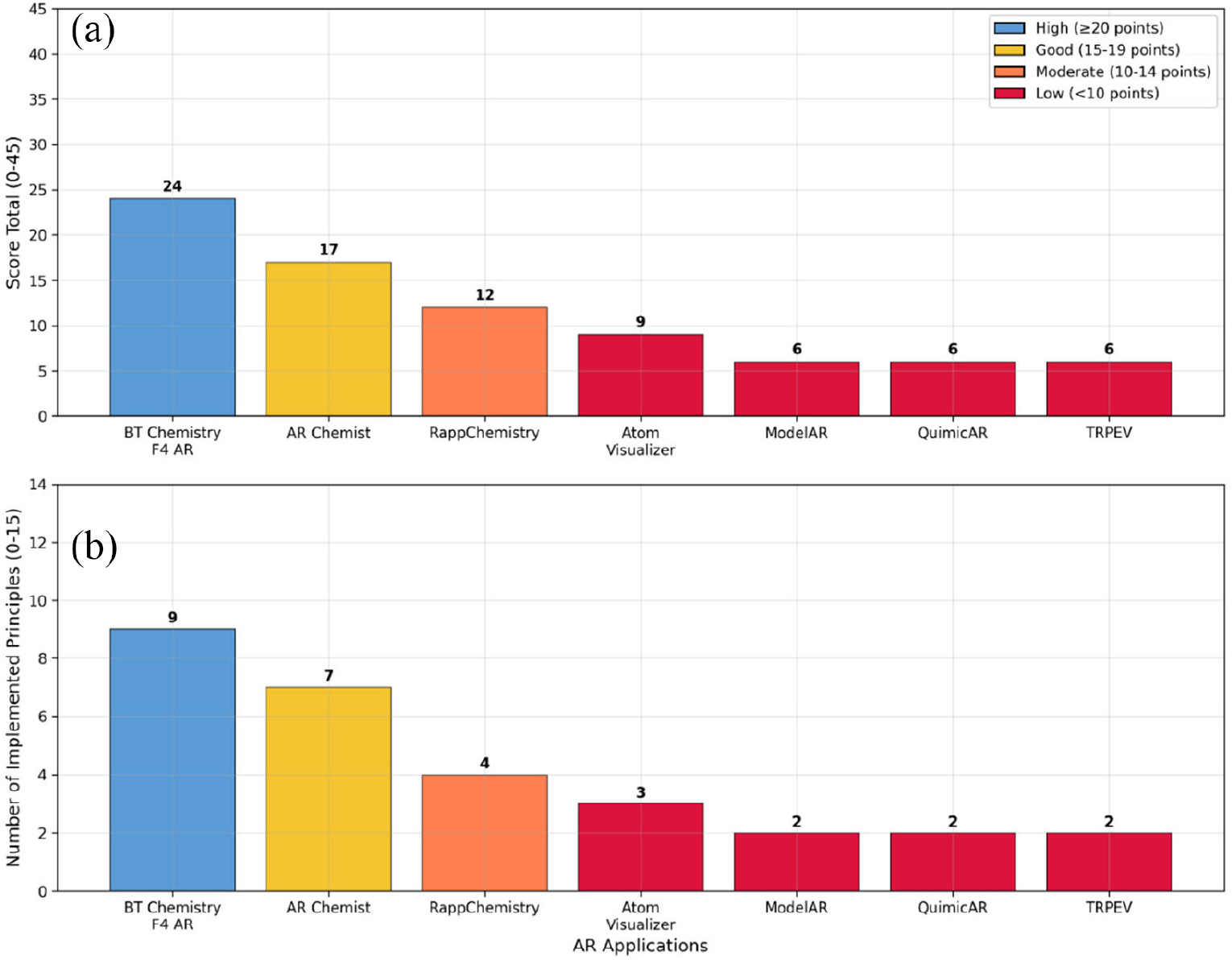
As shown in Table 3, the analysis reveals that while all applications implemented the coherence principle, they varied considerably in implementing other CTML principles. BT Chemistry F4 AR achieved the highest total score (24 points) and implemented the most principles (9), followed by AR Chemist (17 points, 7 principles), RAppChemistry (12 points, 4 principles), and Atom Visualizer (9 points, 3 principles). The applications ModelAR, TRPEV, and QuimicAR obtained identical scores (6 points each), implementing only two principles each. This heterogeneity, both in the number and in the intensity of implementation of CTML principles, suggests varying attention to pedagogical foundations in AR chemistry application development. Notably, three principles (segmentation, image, and embodiment) were completely absent in all applications, while principles related to reducing extraneous processing were more frequently implemented than those promoting generative processing.
Figure 10 provides a visual representation of these findings through two complementary perspectives: the upper panel displays the total scores obtained by each application across the 15 CTML principles (range 0-45), while the lower panel shows the number of distinct principles implemented (score ≥ 1). The color categories of the upper panel indicate: high implementation (≥ 20, blue), good (15-19, yellow), moderate (10-14, orange), and low (< 10, red). Thus, the color-coded categorization facilitates the identification of applications with high pedagogical foundations (blue), good implementation (yellow), moderate implementation (orange), and limited implementation (red) of the CTML principles.
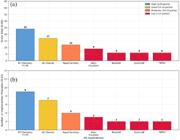
Implementation of CTML principles in AR chemistry applications: (a) total scores and (b) number of implemented principles
The visual and quantitative analysis presented in Table 3 and Figure 10 reveals heterogeneity in the implementation of CTML principles among the seven AR applications for chemistry examined. Although all applications demonstrate attention to basic interface coherence, the variation in total scores (ranging from 6 to 24 points) and in the number of principles implemented (2 to 9) indicates different pedagogical design approaches. This dual visualization reveals that BT Chemistry F4 AR not only implemented the largest number of principles (9) but also achieved the highest cumulative score (24 points), indicating both breadth and depth in its pedagogical design. On the other hand, three applications (ModelAR, QuimicAR, and TRPEV) showed minimal implementation, each scoring only 6 points across 2 principles.
This spectrum of implementation raises important questions about the factors that influence pedagogical quality in AR educational tools and the relationship between theoretical foundations and actual learning effectiveness, issues that will be explored in the following discussion.
DISCUSSION
It is important to clarify that the analysis protocol developed in this study aimed primarily to map the presence and intensity of implementation of the CTML principles in the analyzed applications, rather than to establish a definitive criterion of “appropriateness” for classroom use. The suitability of an educational application depends on multiple contextual factors that go beyond the CTML principles, including the specific pedagogical objectives of the teacher, students’ prior knowledge, available technological infrastructure, class time, and the way the application is integrated into the instructional sequence. Therefore, an application with a high score on certain principles may be suitable for some teaching contexts but not for others.
That said, our results suggest that applications implementing a greater number of CTML principles, particularly those related to reducing extraneous processing (coherence, signaling, spatial and temporal contiguity) and to modality, may offer learning experiences more consistent with the assumptions of cognitive theory. For example, BT Chemistry F4 AR, which implemented nine principles, and AR Chemist, with seven principles, exhibit features that theoretically support cognitive load management. However, we emphasize that the actual effectiveness of these applications in classroom contexts requires empirical investigations with students, which was beyond the scope of this study. Our analysis therefore provides a CTML-based starting point for educators and researchers to make informed choices about applications that meet their needs, but it does not replace the necessity of contextual evaluation or the identification of each specific educational reality.
Regarding the use of the 0-3 scoring system developed in our protocol, it is important to clarify its methodological function. The graded scores indicating the presence or absence of principles in the applications make it possible to capture nuances in their implementation, something a binary evaluation (present/absent) could not achieve. For instance, the signaling principle may be implemented at a basic level (score 1), when only a few isolated visual cues are present, or at a robust level (score 3), when the application provides a consistent and comprehensive system of visual guides that assist the user throughout the experience. These gradations are particularly relevant for developers seeking to improve their applications, as they indicate not only which principles to implement but also the degree to which they should be applied.
In practice, the scores also allow for more refined comparisons between applications and can support future research on the relationship between the degree of implementation of specific principles and learning outcomes. For example, experimental studies could investigate whether applications with higher scores on principles related to managing essential processing (such as segmentation and pre-training) produce better learning outcomes compared to those with lower scores on these same principles. Thus, the use of graded scoring is considered to provide broader and more informative insights than a purely dichotomous analysis.
All the apps analyzed met the coherence principle,17 demonstrating that the elements present in their interfaces and functionalities are relevant and contribute to the understanding of chemical concepts. However, they all failed to meet the image, segmentation, and embodiment, as they did not provide narration or narrative texts to support the augmented reality animations, nor did they present a segment of content to be covered throughout the experience. This suggests that while the apps may be visually appealing and interactive, they may not provide students with all the necessary information for a full understanding of the concepts.
The systematic review carried out by Mutlu-Bayraktar et al.20 highlights that, among the articles reviewed, the most frequently studied multimedia learning principles included modality and signaling principles. Regarding the signaling principle, it is worth noting that the AR Chemist app was highly well built in detailing signaling and many other features, providing arrows that guide users on where to click to activate animations and functionalities. This indicates that effective signposting can improve the usability of apps and, consequently, the learning experience for students. We therefore consider that the AR Chemist app was the most complete compared to the others analyzed using CTML.
We also found a gap regarding the principle of redundancy.17 In particular, six of the seven apps analyzed had no narration or narrative text following the animations used to illustrate and explain the concepts covered. Only the BT Chemistry F4 AR app had a narration explaining the concepts covered. The absence of narration in these apps may limit their educational potential, as theoretical frameworks suggest that verbal explanations complementing visual animations could support student understanding. However, empirical studies would be needed to confirm the actual impact of narration on student learning in these specific AR applications.17,18 In addition, narration can serve as a relevant support resource that complements visual information, as research17,20 indicates that combining visual and auditory presentation can reduce cognitive load and enhance information processing. This dual-channel approach to information presentation aligns with cognitive processing theories in multimedia learning,20 making the content more accessible through multiple sensory channels. It is important to note that this narration should be an optional and adaptable feature, offering students the flexibility to turn off or mute the narration if they wish. This feature makes the app even more well-built, as it recognizes the different learning preferences of students.
CTML highlights the importance of redundancy as a determining factor for more effective learning. The inclusion of narration or narrative texts alongside animations serves to provide students with an explanation of the visual content presented. This dual approach helps optimize comprehension by facilitating the association between auditory and visual information, which can lead to better knowledge construction. Without an adequate narrative to guide and connect the visual information, students may struggle to effectively process and integrate the concepts presented. This can result in a less efficient learning experience and, potentially, a superficial understanding of the topics covered.
It should be noted that during our analysis, one result was the same for all the apps: non-compliance with the image and segmentation principles. In the image principle, learning occurs better when the picture of the speaker is added to the screen.16,17,20 One possible explanation for the lack of compatibility with the image principle is that apps and videos have different dynamics. Videos are more linear, while apps involve complex user interactions, so inserting images of speakers may not be an easy task to integrate well. In addition, the limited screens on mobile devices and computers can also detract from relevant information, and another aspect that hinders the insertion of speaker images is the consequent increase in the size of the app, possibly leading to an increase in the loading time.
With regard to the segmentation principle, learning occurs better when a lesson is presented in segments rather than as a continuous unit.16,17,20 In this principle, it is possible to learn more meaningfully when new knowledge is presented sequentially, allowing the learner to set their own learning pace, respecting the idea that each person has their own time for processing information. As such, this principle is more appropriate for classes that are recorded or taught in real time, moving away from the common dynamics of how apps work, where there is a different type of interactivity. Besides, inserting fragments of segments into the app could possibly lead to restrictions on use, thus preventing student autonomy and protagonism, characteristics that are necessary for students in the 21st century.1
The limited application of principles such as embodiment, immersion, and generative activity in the AR applications analyzed may be related to technical and pedagogical challenges. The immersion principle, for example, requires rich and detailed 3D environments, which often exceed the capabilities of many mobile devices, making them difficult to implement. Similarly, the embodiment principle requires interactive avatars, which are technically complex and costly to develop. Developers are likely to prioritize more accessible and easily implemented features, such as coherence and signage, over more advanced approaches. The generative activity principle, which promotes active learning, also requires sophisticated instructional design, which presents significant challenges. If these barriers were overcome, applications that integrate these principles could offer a substantially richer and more engaging learning experience, improving knowledge retention and stimulating cognitive development of students.
AR Chemist and Atom Visualizer, by robustly implementing the coherence and signage principles, demonstrate significant progress in the visualization and understanding of complex chemical concepts. AR Chemist, for example, provides detailed simulations of chemical reactions, allowing students to observe molecular changes in real-time, potentially reducing the cognitive load associated with understanding dynamic chemical processes. Atom Visualizer, meanwhile, provides an interactive three-dimensional representation of atomic structures, facilitating the transition between the macroscopic and microscopic levels of chemical knowledge,5,9 a well-documented challenge in chemistry education.
The interactive nature of ModelAR exemplifies how applying CTML principles can promote active and engaged learning. By allowing students to manipulate and build molecules virtually, the application reinforces concepts of chemical bonding and molecular geometry, potentially increasing knowledge retention through experiential learning. BT Chemistry F4 AR, incorporating principles of personalization, adapts content to the individual learning pace of the student. This approach diversifies how a single subject is taught, while also meeting the growing demand for personalized learning experiences in Science, Technology, Engineering, and Mathematics (STEM) education.
The absence of certain CTML principles, such as chunking and generative activity, in some applications highlights a potential area for improvement in the design of educational software for chemistry. This gap is particularly significant because chunking, as demonstrated in previous studies16,20,26,27 of multimedia learning, helps students process complex information into manageable chunks, reducing cognitive overload. Generative activity, in turn, promotes the active application of knowledge, a key aspect of developing critical thinking in chemistry.
While these apps demonstrate the potential to complement traditional teaching by offering virtual hands-on experiences that are difficult to replicate in physical laboratories, their actual effectiveness in improving learning requires validation through rigorous empirical studies in classroom settings. Future research should quantify the impact of these applications on student performance and the specific influence of CTML principles, measuring, for example, long-term knowledge retention, the ability to apply chemical concepts in new contexts, and the development of critical thinking and problem-solving skills.
Furthermore, it is relevant to investigate how these applications can be effectively integrated into existing chemistry curricula, considering aspects such as teacher training, the necessary technological infrastructure, and potential barriers to large-scale adoption. Comparative studies between different AR approaches in chemistry teaching would also be valuable to identify best practices and inform the future development of educational applications.
CONCLUDING REMARKS AND FUTURE PERSPECTIVES
The aim of this research was to identify and analyze augmented reality applications for teaching chemistry based on the 15 principles of CTML. The findings obtained from the analysis of multimedia learning principles in AR applications for chemistry teaching indicate varied implementation of CTML principles across apps. While some principles may enhance learning in specific contexts, the mere quantity of implemented principles does not necessarily determine the educational effectiveness of an application. This is evidenced by apps like Atom Visualizer, which demonstrates high user adoption despite implementing fewer CTML principles. The relationship between CTML principles and AR app effectiveness requires further empirical investigation, particularly considering the unique characteristics of AR interfaces compared to traditional multimedia learning environments.
The principles of multimedia learning were developed based on the cognitive theory of multimedia learning.17,18 The results of this study indicate the use of subjective measures rather than objective measures to assess the presence of multimedia learning principles in augmented reality applications in chemistry. However, this research does not appear to be fragile, since the analysis was anchored in studies on CTML,16-18,20 and encourages future research to develop validation models established on subjective methods based on learning theories and CTML.
The research identified seven apps that met the search criteria involving augmented reality in chemistry. Of the seven apps analyzed, BT Chemistry F4 AR stood out with 9 multimedia learning principles, followed by AR Chemist with 7 principles. RAppChemistry: AR had 4 principles, while Atom Visualizer had 3. Finally, ModelAR, QuimicAR - ChemistryAR and TRPEV had only two principles each. The coherence principle was observed in all the analyzed apps. According to Mayer,17 the principle of coherence means that learning occurs best when extraneous material (words, images and sounds) is excluded. If this extraneous material is not collaborating with the multimedia material presented, it will become a source of trouble by increasing the cognitive load on the learner. On the other hand, we have observed that some principles are not very common in applications, such as the image, segmentation, and embodiment principles.
We identified the need to improve some apps, particularly by emphasizing the incorporation of visual resources and clear instructions to elucidate concepts inherent in the elements addressed. Within this context, we understand that the inclusion of zooming, captions, animations, narration or arrows represent some of the options to be considered by app designers (and app developers), thus promoting more effective learning. In addition, the implementation of tutorials or guided tours that guide users through the functionalities and features of the app, providing tips and instructions for use, emerges as a gap to be filled, since it was not identified in our analysis.
The results of this study could potentially guide developers of AR educational applications for chemistry, encouraging the incorporation of more CTML principles. This could lead to the creation of more effective and engaging digital resources for teaching chemistry. For educators, our analysis offers insights into how to select and use AR apps in line with established learning theories, by analyzing educational apps according to the analysis matrix created by the authors with adaptation to the cognitive theory of multimedia learning.17 Researchers can benefit from our methodological approach to evaluating educational apps. Although more studies are needed to confirm it, it is possible that the adoption of AR applications based on CTML could significantly improve students understanding of abstract chemical concepts. This work lays a foundation for future investigations into the integration of cognitive theories in the development of emerging educational technologies.
Finally, the overall assessment suggests that CTML can be a crucial theory for guiding the development of augmented reality applications in the educational context. Despite the scarcity of studies related to the development and application of educational augmented reality applications based on learning theories, the results of this research highlight the potential of this approach, constituting an alternative for developers not to rely exclusively on their intuitions when creating AR applications. As such, this approach provides evidence-based guidelines for the development of educational applications, complementing the intuition of designers. On the other hand, recognizing the challenges inherent in the complete mastery of CTML by designers, an interdisciplinary collaboration between designers and educational experts with knowledge of cognitive theory is suggested. Such a partnership can result in applications that effectively integrate CTML principles, combining design expertise with solid pedagogical foundations, thus enhancing the creation of more effective and theoretically grounded educational resources. It is important to note that the origin and interests of the developers can significantly influence the pedagogical quality of the proposals. Future studies could investigate whether the apps were designed specifically for teaching and whether their developers have a background or interest in the educational field, as these factors can be decisive in incorporating pedagogical principles such as those of CTML. In addition, we stress the need for further research anchored in CTML, specifically related to AR applications, in order to provide more robust analysis models and more solid foundations for the successful development and application of these resources, aiming at a truly effective learning within the use of AR.
DATA AVAILABILITY STATEMENT
The data supporting the findings of this study are available in the text.
ACKNOWLEDGMENTS
This work was supported by CNPq (grant No. 422587/2021-4) and FACEPE (grant No. APQ-0916-7.08/22).
REFERENCES
-
1 Leite, B.; Revista Internacional de Educação Superior 2018, 4, 580. [Crossref]
» Crossref -
2 Araújo, L. R.; Simões Neto, J. E.; Silva, J. R. R. T.; Leite, B. S.; Latin American Journal of Science Education 2024, 11, 12001. [Link] accessed in November 2025
» Link -
3 Munje, P. N.; Jita, T.; International Journal of Learning, Teaching and Educational Research 2020, 19, 263. [Crossref]
» Crossref -
4 Majid, N. A. A.; Majid, N. A.; International Journal on Advanced Science, Engineering and Information Technology 2018, 8, 1494. [Crossref]
» Crossref -
5 Johnstone, A. H.; Chem. Educ. Res. Pract. 2006, 7, 49. [Crossref]
» Crossref -
6 Nichele, A. G.; Canto, L. Z.; Silva, F. N.; Proceedings 14th International Technology, Education and Development Conference; Valencia, Spain, 2020. [Crossref]
» Crossref -
7 Ping, G. L. Y.; Lok, C.; Yeat, T. W.; Cherynn, T. J. Y.; Tan, E. S. Q.; Chem. Educ. Res. Pract. 2018, 19, 15. [Crossref]
» Crossref -
8 Klopfer, E.; Squire, K.; Educational Technology Research and Development 2008, 56, 203. [Crossref]
» Crossref -
9 Leite, B. S.; Educitec 2020, 6, e097220. [Crossref]
» Crossref -
10 Azuma, R.; Baillot, Y.; Behringer, R.; Feiner, S.; Julier, S.; MacIntyre, B.; IEEE Computer Graphics and Applications 2001, 21, 34. [Crossref]
» Crossref -
11 Akçayır, M.; Akçayır, G.; Pektaş, H. M.; Ocak, M. A.; Computers in Human Behavior 2016, 57, 334. [Crossref]
» Crossref -
12 Irwanto, I.; Dianawati, R.; Lukman, I.; International Journal of Emerging Technologies in Learning 2022, 17, 157. [Crossref]
» Crossref -
13 Radianti, J.; Majchrzak, T. A.; Fromm, J.; Wohlgenannt, I.; Computers & Education 2020, 147, 103778. [Crossref]
» Crossref -
14 Keller, S.; Rumann, S.; Habig, S.; Information 2021, 12, 96. [Crossref]
» Crossref -
15 Sommerauer, P.; Müller, O.; Proceedings of the European Conference on Information Systems; Portsmouth, UK, 2018. [Link] accessed in November 2025
» Link -
16 Liu, Y.; Jang, B. G.; Roy-Campbell, Z.; Computers & Education 2018, 127, 190. [Crossref]
» Crossref - 17 Mayer, R. E.; Multimedia Learning, 3rd ed.; Cambridge University Press: Cambridge, 2021.
- 18 Mayer, R. E. In The Cambridge Handbook of Multimedia Learning; Mayer, R. E., eds.; Cambridge University Press: Cambridge, 2005, ch. 3.
-
19 Lu, A.; Wong, C. S. K.; Cheung, R. Y. H.; Im, T. S. W.; Frontiers in Education 2021, 6, 623745. [Crossref]
» Crossref -
20 Mutlu-Bayraktar, D.; Cosgun, V.; Altan, T.; Computers & Education 2019, 141, 103618. [Crossref]
» Crossref -
21 Pina, A. R. B.; Souza, F. N.; Leão, M. C.; Revista Eletrônica de Educação 2013, 7, 301. [Crossref]
» Crossref -
22 Nechypurenko, P. P.; Starova, T. V.; Selivanova, T. V.; Tomilina, A. O.; Uchitel, A. D.; Proceedings of the 1st International Workshop on Augmented Reality in Education; Kryvyi Rih, Ukraine, 2018. [Link] accessed in November 2025
» Link - 23 Atkins, P.; Jones, L.; Laverman, L.; Chemical Principles: The Quest for Insight, 6th ed.; Freeman: New York, 2012.
- 24 Bachelard, G.; La Formation de l’esprit Scientifique: Contribution à Une Psychanalyse de la Connaissance; Vrin: Paris, 2004.
- 25 Hamza, A. In Althusser and Pasolini: Philosophy, Marxism, and Film, 1st ed.; Palgrave Macmillan: New York, 2016, ch. 12.
-
26 Buchner, J.; Buntins, K.; Kerres, M.; Journal of Computer Assisted Learning 2022, 38, 285. [Crossref]
» Crossref -
27 Liu, D.; BMC Psychology 2024, 12, 4. [Crossref]
» Crossref
Edited by
-
Associate Editor handled this article:
Nyuara A. S. Mesquita