 Blockchain for beef traceability: Developing an artifact using Design Science Research
Abstract
Purpose: This article aims to describe the development of a technological artifact using the Design Science Research (DSR) methodology to optimize traceability in the beef supply chain through blockchain. This article addresses a critical gap in the beef supply chain: the lack of robust technological mechanisms for effective traceability. It explores blockchain as a promising alternative to strengthen transparency and foster trust within the agri-food sector. The study details the development of a blockchain-based technological artifact, emphasizing its functionalities, document integration, and simulation results. The system demonstrates enhanced security, visibility, and reliability throughout the production chain. The explanatory core of the research rests on blockchain’s capacity to mitigate fraud and inefficiencies through its inherent decentralization, immutability, and auditability. These features underpin the observed improvements in trust and efficiency. The study describes the demand for traceability within the Brazilian context, in which beef production assumes a strategic role in agribusiness and global exports. It highlights how social and economic pressure justify the adoption of blockchain to ensure safety and credibility. The findings suggest potential scalability of the proposed solution to other food sectors and its applicability to public policies related to auditing and regulatory control, under similar conditions of transparency and traceability. The study advances beyond theoretical analysis by introducing a technological artifact capable of transforming practices in the beef supply chain, thereby improving efficiency and reliability through a scientifically rigorous design approach.
Originality/value: The study addresses a relevant problem in the agricultural supply chain, offering an innovative solution to guarantee data security, transparency, and reliability, from the source to the end consumer. The application of blockchain in the Brazilian context is an unprecedented contribution, promoting significant improvements in the visibility and control of beef production.
Design/methodology/approach: The research used the DSR methodology, which is characterized by the creation of a technological artifact to solve complex and relevant problems. The development of the artifact followed seven main guidelines, including the relevance of the problem, methodological rigor, and design evaluation. For data analysis, traceability simulations and validation of the integrated system were used in order to test the practical feasibility of the proposed solution.
Findings: The results show an advance in automation and data security, from the identification of animals to the issuing of tax documents, reinforcing consumer confidence and efficiency of the process. The findings advance a practical solution for enhancing traceability across the food chain, with scalability potential to other sectors and applicability to public policy and auditing frameworks.
Keywords:
blockchain; performance; visibility; reliability; security
Resumo
Objetivo: Este artigo visa a descrever o desenvolvimento de um artefato tecnológico utilizando a metodologia Design Science Research (DSR) para otimizar a ras-treabilidade na cadeia de suprimentos da carne bovina, por meio da tecnologia blockchain. O artigo identifica um problema na cadeia de suprimentos da carne bovina: a falta de mecanismos tecnológicos robustos para rastreabilidade. A proposta é investigar a blockchain como alternativa para otimizar a transparência e a confiança no setor agropecuário. A pesquisa descreve o desenvolvimento de um artefato tecnológico com blockchain, detalhando funcionalidades, integração documental e simulações. O sistema apresenta segurança, visibilidade e con-fiabilidade ao longo da cadeia produtiva. A explicação central está na capacidade da blockchain de superar fraudes e ineficiências por meio da descentralização, da imutabilidade e da auditabilidade dos dados. Esses fatores sustentam os avanços em níveis de confiança e eficiência. O estudo relaciona a necessidade de rastreabilidade ao contexto brasileiro, em que a carne bovina é estratégia no agronegócio e suas exportações. Mostra como pressões sociais e econômicas justificam a adoção de blockchain para garantir segurança e credibilidade. Os resultados indicam potencial de expansão da solução para outros setores alimentícios e políticas públicas de auditoria e controle, sob condições semelhantes de transparência e rastreabilidade. O trabalho propõe não apenas análise, mas intervenção: a introdução de um artefato tecnológico que transforma práticas na cadeia bovina, aumentando eficiência e confiabilidade com base em design científico rigoroso.
Originalidade/valor: O estudo aborda um problema relevante na cadeia de suprimentos agropecuária, oferecendo uma solução inovadora para garantir segurança, transparência e confiabilidade dos dados, desde a origem até o consumidor final. A aplicação de blockchain no contexto brasileiro é uma contribuição inédita, promovendo melhorias significativas na visibilidade e no controle da produção de carne bovina.
Design/metodologia/abordagem: A pesquisa utilizou a metodologia DSR, que se caracteriza pela criação de um artefato tecnológico para resolver problemas complexos e relevantes. O desenvolvimento do artefato seguiu sete diretrizes principais, incluindo a relevância do problema, rigor metodológico e avaliação do design. Para análise de dados, foram utilizadas simulações de rastreabilidade e validação do sistema integrado, com o objetivo de testar a viabilidade prática da solução proposta.
Resultados: Os resultados demonstram um avanço na automação e na segurança dos dados, desde a identificação dos animais até a emissão de documentos fiscais, reforçando a confiança dos consumidores e a eficiência do processo. Este estudo propõe uma solução prática para melhorar a rastreabilidade na cadeia alimentícia, com potencial de expansão para outros setores e aplicações futuras em políticas públicas de controle e auditoria.
Palavras-chave:
blockchain; desempenho; visibilidade; confiabilidade; segurança
INTRODUCTION
Rapid technological advancement has spurred the development of innovative solutions to address pressing challenges, particularly in supply chain management (Saberi et al., 2019; Wang et al., 2022). In the food sector, growing demands for transparency, security, and efficiency have catalyzed the adoption of emerging technologies, such as blockchain, particularly for the traceability of high-value products, such as beef (Rejeb et al., 2020; Saurabh & Dey, 2021; Tanwar et al., 2022). This application becomes increasingly relevant amid consumers’ rising concern about food origin and quality, which demands higher levels of visibility and reliability throughout the production chain (Feitosa e Silva & Machado, 2025).
Blockchain technology offers features such as decentralization, immutability, and auditability, which are key to ensuring data integrity and product traceability. However, its large-scale adoption still faces challenges, such as scalability issues, implementation costs, and technical complexity (Feitosa e Silva & Machado, 2025; Lopes et al., 2024). These obstacles highlight the need for research that explores solutions that are adjustable to different market realities.
In this context, Design Science Research (DSR) emerges as a suitable methodological approach for developing technological artifacts aimed at addressing practical and complex problems. DSR combines iterative cycles of understanding the problem, developing the artifact, evaluating, and communicating the results, integrating theory and practice in a robust way (Miah et al., 2014; Braun et al., 2015; Goldkuhl & Sjöström, 2018; Vom Brocke et al., 2020). This approach allows not only for the creation of innovative solutions, but also the generation of applicable knowledge, differen-tiating itself from traditional methods focused exclusively on theory.
Regarding the limitation of the scope of the study on the beef supply chain, it should be noted that Brazil has the largest cattle herd in the world, with 234.4 million heads in 2022, representing 14.3% of the world herd. In addition, the country is the largest exporter of beef globally, having exported 2.2 million tons in 2020, corresponding to 14.4% of the international market (Feitosa e Silva, 2022).
Against this backdrop, the present study seeks to develop a blockchain-enabled technological artifact, employing the DSR methodology to optimize traceability within the beef supply chain. The choice of blockchain as the base technology is justified by its intrinsic characteristics, which guarantee the integrity, transparency, and security of data throughout the production chain. In addition, the study seeks to address gaps such as scalability, technical challenges, and economic viability, contributing to the evolution of traceability practices in the food sector.
THEORETICAL FRAMEWORK
DSR centers on the creation of artifacts to address practical problems, with a deliberate emphasis on applicability and effectiveness (Dresch et al., 2015; Weigand et al., 2021). The DSR process is structured to ensure that the artifacts developed fulfill a practical role, requiring a rigorous evaluation to confirm that they meet the proposed objectives (Dresch et al., 2015).
The primary outcome of DSR-driven research is an artifact that addresses a salient organizational problem, described with sufficient clarity and precision to enable implementation across appropriate domains (Hevner et al., 2004; Daeuble et al., 2015). These artifacts can be prototypes or conceptual models, serving as a basis for future innovations (Souza et al., 2020).
DSR does not pursue an ideal solution but, rather, a satisfactory, genera-lizable answer, suitable for a broader class of problems (Dresch et al., 2015). Artifacts developed within DSR seldom constitute complete systems; instead, they represent innovations that underpin the analysis, design, implementation, and effective use of information systems (Hevner et al., 2004; Goldkuhl & Sjöström, 2018; Vom Brocke et al., 2020; Schoormann et al., 2022). This approach allows researchers and practitioners to utilize methods and knowledge generated to solve practical problems effectively.
Types of artifacts
DSR artifacts are commonly divided into five types - constructs, frameworks, models, methods, and instantiations - each mediating theory and practice within specific organizational or technological domains (Peffers et al., 2012; Goldkuhl & Sjöström, 2018; Vom Brocke et al., 2020).
Constructs represent the specific vocabulary of a domain, used to describe and formalize problems and possible solutions. They are necessary in defining the terms and concepts that will be used to formulate and address the problem in question (Peffers et al., 2012; Goldkuhl & Sjöström, 2018; Vom Brocke et al., 2020; Goecks et al., 2021).
Frameworks offer an integrative structure that organizes key elements of the problem - solution space, guiding decision-making, and implementation (Peffers et al., 2012; Goldkuhl & Sjöström, 2018; Vom Brocke et al., 2020; Goecks et al., 2021).
Models establish relationships between constructs and allow for a simplified form of interaction and interdependence between the elements of the problem. They are essential for understanding and communicating the functioning of a system or phenomenon (Peffers et al., 2012; Goldkuhl & Sjöström, 2018; Vom Brocke et al., 2020; Goecks et al., 2021).
Methods are a set of steps or procedures needed to carry out an activity. They guide the development, implementation, and validation of artifacts, ensuring that solutions are executed in a systematic and replicable manner (Peffers et al., 2012; Goldkuhl & Sjöström, 2018; Vom Brocke et al., 2020; Goecks et al., 2021).
Instantiations refer to the practical execution of artifacts in specific environments, demonstrating the feasibility of the proposed models and methods and evaluating the effectiveness of the solutions to solve real problems (Peffers et al., 2012; Goldkuhl & Sjöström, 2018; Vom Brocke et al., 2020; Goecks et al., 2021).
DSR is a viable possibility in the construction of artifacts, as it transforms theoretical knowledge into practical and applicable forms. This conversion is essential for artifacts to have relevance and impact in solving real problems (Hevner & Chatterjee, 2010). As highlighted by Lacerda et al. (2013), artifacts need to be effective in solving existing problems to fulfill their role of generating applicable knowledge.
Artifact development stage
In design activities, models represent situations as a problem and solution, serving as a description or representation of how things are (Lacerda et al., 2013). These models use constructs to represent a real-world situation, helping to understand the problem and proposed solution (Hevner et al., 2004).
In the context of this study, the developed model demonstrates how blockchain technology can be used for beef traceability in Brazil, identifying which complementary technologies can improve this supply chain. While models may be inaccurate in detail, they need to capture the structure of reality in order to be useful representations (Lacerda et al., 2013).
METHODOLOGY
Design Science Research (DSR) for artifact development
DSR is a methodological approach that is dedicated to the development of research oriented to the design, construction, and prescription of artifacts (Goecks et al., 2021). Unlike the natural sciences, DSR focuses on the “artificial” domain, i.e., the creation of human-designed solutions to meet specific needs (Dresch et al., 2015). This methodology offers a robust framework for operationalizing studies whose main focus is to develop innovative artifacts or applicable solutions, capable of addressing practical and complex problems in both academic and organizational contexts (Feitosa e Silva & Machado, 2025).
DSR guidelines and application in the study
DSR transcends the simple understanding of problems, as its emphasis is on identifying and implementing effective and workable solutions to concrete challenges. This is especially relevant for areas such as management and administration, in which the application of DSR helps researchers to conduct more practical studies oriented to organizational demands. By bridging the gap between theory and practice, DSR addresses issues that are relevant to both practitioners and academics (Dresch et al., 2015).
In this study, DSR was chosen for its suitability to guide the process of creating technological artifacts that respond to complex and relevant challenges. The research was conducted based on seven main DSR guidelines, which include design as an artifact, problem relevance, design evaluation, research contributions, methodological rigor, design as a research process, and communication of results (Lacerda et al., 2013; Van der Merwe et al., 2019; Goecks et al., 2021). These guidelines guided every step of the project, from conception to final artifact evaluation.
Question of research and selection of actors
This study seeks to answer the following research question: how can the implementation of blockchain technology improve traceability of beef along the supply chain, ensuring transparency and security? To this end, six key supply chain actors were selected, which made it possible to map the flow of information and identify how each participant could benefit from the application of blockchain. The initial focus was to ensure that the artifact developed met the needs of these actors, promoting a secure, transparent, and reliable network, with improved traceability.
Artifact construction: Integration of technologies
The construction of the system used a combination of emerging technologies, including blockchain, radio-frequency identification (RFID) sensors, the internet of things (IoT), cloud computing, smart contracts, and cryptography (Feitosa e Silva & Machado, 2025). These components have been integrated to create a system capable of monitoring and tracking the movement of beef at all stages of the supply chain, from production to final consumption. Blockchain technology has ensured that data travel in a safe and tamper-proof manner, providing transparency and reliability to processes.
Phases of DSR in artifact development
The use of the DSR method was essential to ensure scientific rigor at all stages of the project. The process followed the five main phases of the DSR:
-
1. Understanding the problem: identifying the challenges faced by actors in the beef supply chain, such as lack of transparency, difficulties in traceability, and high operational costs.
-
2. Artifact development: creation of the Beef Traceability with Blockchain (BTWB) model, integrating technologies such as blockchain, RFID, and IoT to ensure traceability and data security.
-
3. Evaluation: testing of the artifact in a controlled environment, with the participation of the six key actors, to validate its effectiveness and applicability.
-
4. Communication: dissemination of results through scientific publications and presentations at events, ensuring the transparency and replicability of the study.
-
5. Refinement: adjustments to the artifact based on the feedback obtained during the evaluation phase, aiming to improve its efficiency and adaptability.
Artifact validation
The combination of blockchain with other emerging technologies has resulted in a system that offers a practical and viable solution to the challenges faced in the beef supply chain. The integration of RFID and IoT has enabled automatic and accurate data collection, while smart contracts have automated critical processes, such as the issuance of invoices and Animal Transit Guide (GTA). Encryption ensured the security and immutability of data, while cloud computing provided scalability and accessibility to the system.
The validation of the artifact was carried out through empirical studies and comparative analyses with existing solutions, demonstrating its effectiveness in improving transparency, safety, and operational efficiency (Wang & Scrimgeour, 2023). In addition, the participation of government agencies, such as the Federal Inspection Service (Serviço de Inspeção Federal [SIF]) and the Department of Inspection of Products of Animal Origin (Departamento de Inspeção de Produtos de Origem Animal [DIPOA]), ensured the system’s compliance with sanitary and quality standards, increasing its credibility and relevance to policymakers (Kamble et al., 2020).
RESULTS AND ANALYSIS
Artifact development
The development of the artifact involved the integration of six key actors in the beef supply chain: the Brazilian Federal Government, rural producers, the meatpacking industry, retailers, consumers, and technology providers. The structuring of the research was based on the survey of specific problems faced by each of these actors, followed by the proposition of customized solutions that meet their demands and characteristics.
In the problem survey phase, critical challenges were identified for each actor:
-
1. Federal Government: the lack of effective participation in a blockchain network for auditing and inspection of the production chain limits its monitoring and control capacity.
-
2. Rural producers: difficulties in acquiring technological solutions and qualified labor, in addition to limited use of the protocol of the Brazilian System of Identification of Bovine and Buffalo Origin (Sistema Brasileiro de Identificação Individual de Bovinos e Búfalos [SISBOV]), essential for animal traceability.
-
3. Meatpacking industry: the absence of a differentiated remuneration system for producers who adhere to SISBOV and difficulty in identifying all producers involved in the breeding, rearing, and fattening phases of animals.
-
4. Retailers: competitive pressure to meet consumer expectations, who demand transparency in production processes and compliance with social and environmental standards.
-
5. Technology providers: lack of integration and collaboration with rural producers, resulting in blockchain solutions that do not fully consider the demands and limitations of the rural sector.
Based on these problems, specific solutions were developed for each actor:
-
1. Federal Government: improvement of inspection and auditing through participation in the blockchain network, promoting greater security and transparency.
-
2. Rural producers: development of technologies and processes that facilitate the implementation of traceability, adoption of SISBOV as a standard tool, and creation of management systems integrated with blockchain.
-
3. Meatpacking industry: investment in SISBOV as an exclusive traceability protocol, combined with the BTWB framework, including differentiated payment for producers who adopt the unique identification of animals.
-
4. Retailers: investment in sustainable and traceable product lines, using blockchain as a competitive differential.
-
5. Consumers: advertising campaigns that promote transparency and demonstrate the use of traceability technologies, such as blockchain.
-
6. Technology providers: construction of a blockchain network that integrates several traceability solutions for beef in Brazil, in addition to developing new functionalities specific to the rural sector.
Proposal of the BTWB framework
The BTWB framework was developed with the participation of the six actors, demonstrating the flow of information along the supply chain. The structural model was developed on the Hyperledger Fabric platform, one of the most widely used enterprise blockchain solutions. The data that travels on the blockchain network has guarantees of security and immutability, ensured by cryptography, in addition to being associated with digital certificates that allow the identification of the actors involved.
Beef traceability system with blockchain
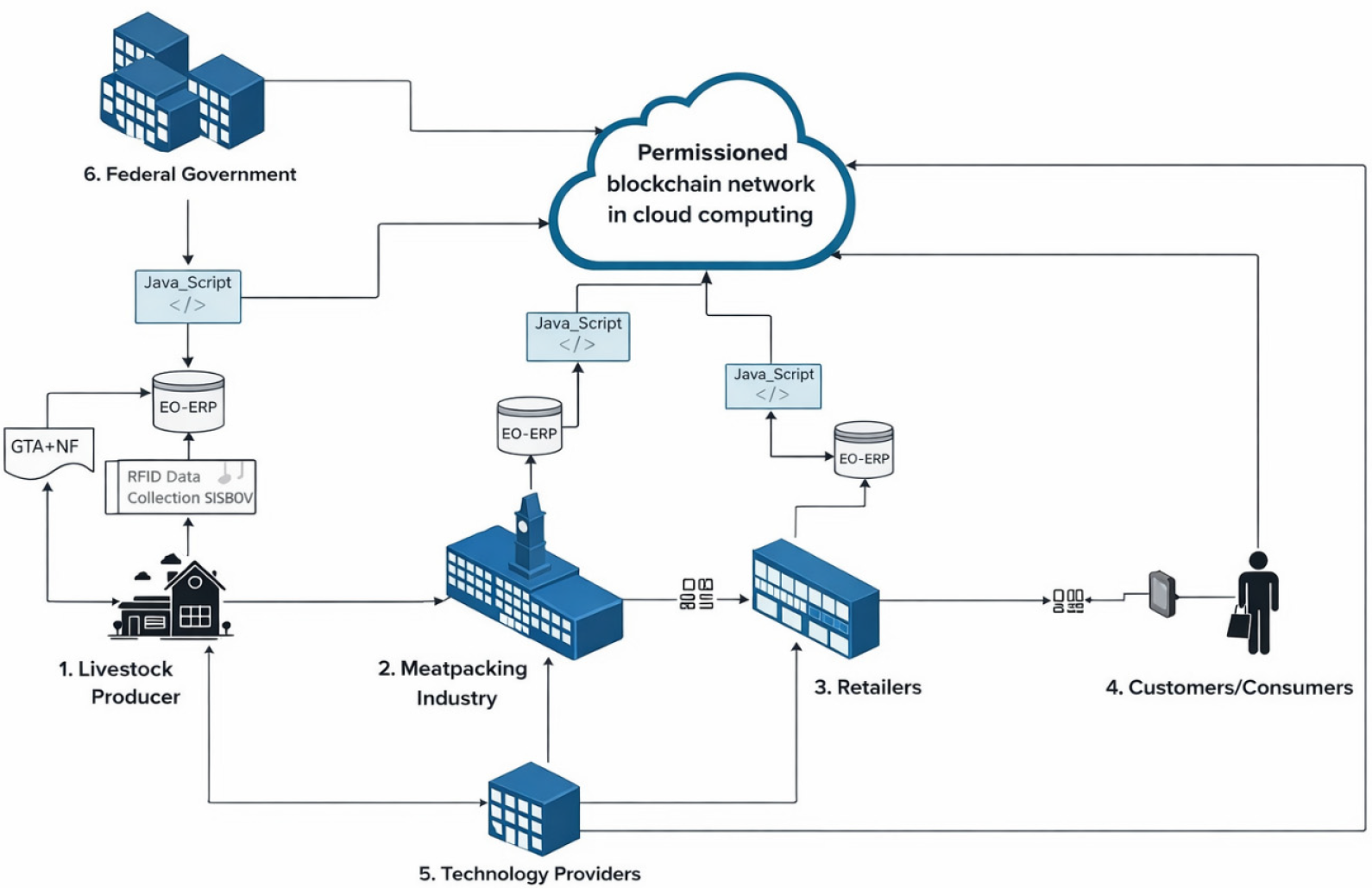
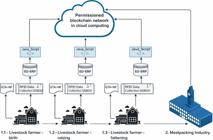
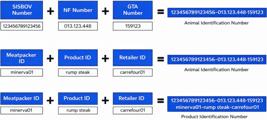
The development of the BTWB artifact involved the integration of data and processes along the entire production chain. The data of each animal are initially stored in a database integrated with a rural property management system, playing a fundamental role in the organization and control of information. Each animal receives a unique identification number, according to the SISBOV, which is linked to the respective GTA numbers and electronic invoices (Nota Fiscal eletrônica [NF-e]). Figure 1 illustrates the steps of this process, focusing on the animal rearing phase and data entry and management.
Traceability flow and data integration
The proposed traceability flow covers all actors involved in the production chain, as shown in Figure 2. The process begins with the rural producer, who sends the animals to the meatpacking industry. At this point, the blockchain system records all pertinent information, ensuring traceability from the origin to the final consumer.

In Step 1, the animals’ traceability data is captured through Radio Frequency Identification (RFID) devices, such as buttons and reading sticks, which ensure the accuracy and integrity of the data. This data is stored in an Enterprise enterprise resource planning (ERP) system and subsequently transmitted to the blockchain network. When animals are transported from the farm, the SISBOV, NF-e, and GTA numbers are associated and registered on the blockchain, providing transparency and reliability to the process.
In stage 2, within the meat processing industry, the identification received from the rural producer for each animal must be maintained, and a new identifier for that industry must be created.
The industry must add an identifier to each byproduct of the animal. Therefore, an identity trail will be created at the origin of the animal breeding process and at each actor through whom the meat passes. It is at this stage that the QR code must be inserted into the beef packaging, already identi-fying which retailer the product will be sent to. If this is not possible, then a temporary identification must be associated with the product so that it can be definitively identified in the future.
Complete identification and traceability structure
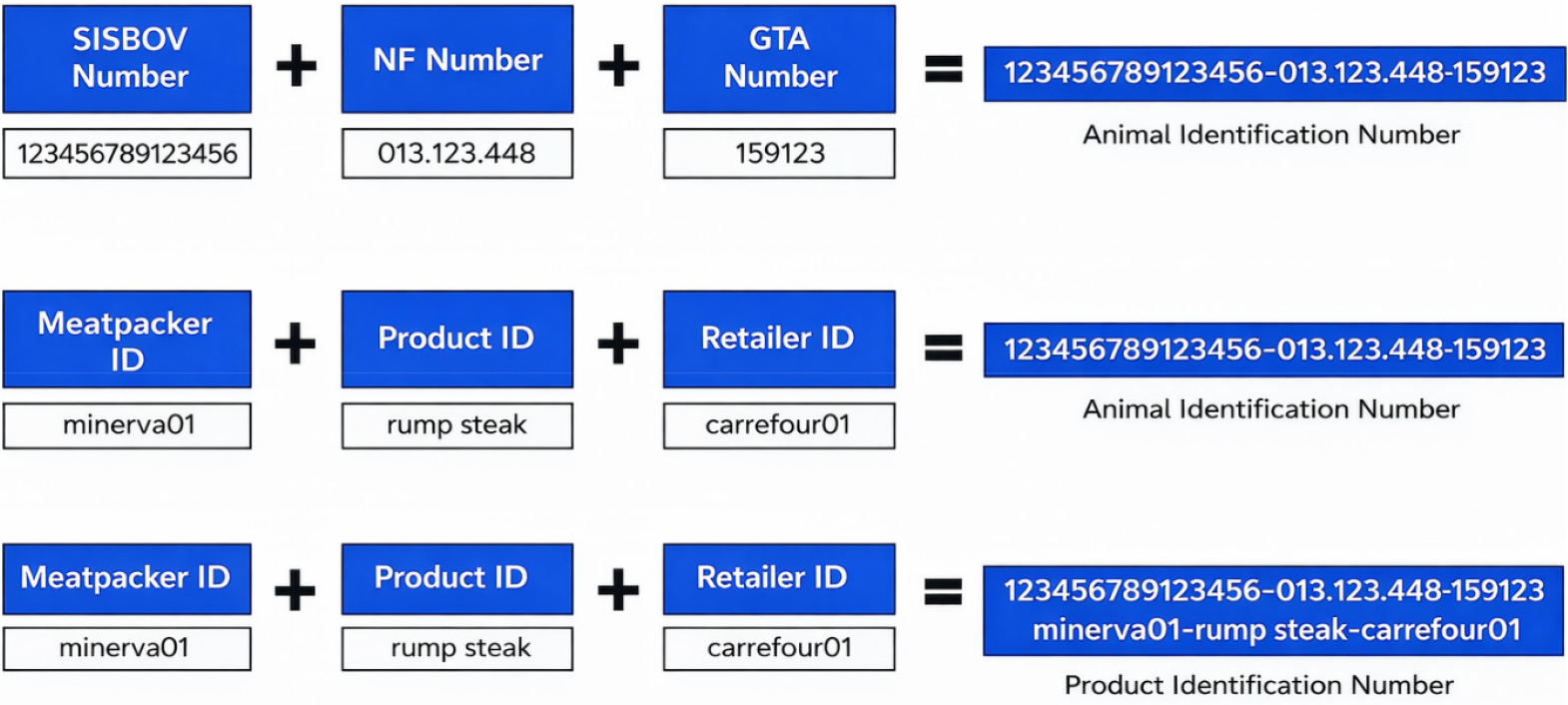
Figure 3 presents the proposed identification structure, based on the use of the SISBOV and BTWB traceability model. At each stage of the production process (breeding, rearing, and fattening), a new sequence of data is inserted into the blockchain network, associating each agent involved with the respective production stage. This integration ensures complete traceability of animals, allowing each actor in the chain to be identified and linked to its specific function.
Role of retailers and end consumers
In step 3, retailers are responsible for ensuring the maintenance and integrity of the QR code, which serves as the product’s digital identifier. This step is essential so that, in step 4, the end consumer can read the QR code available on the product packaging, accessing detailed information about the beef production chain. This functionality provides the consumer with full visibility of the product’s history from its origin to commercialization, ensuring reliability and security in the traceability process.
Participation of technology providers
Step 5 involves technology providers, who offer management solutions based on blockchain technology or connect existing management systems to blockchain infrastructure. These actors allow for the insertion of data both by rural producers and meatpacking and retail industries, ensuring the integration and continuous updating of information in the network.
Inspection and audit by the Federal Government
Stage 6 covers access to the blockchain network by the Federal Government, which uses the technology for consultations and audits within the scope of inspection and production control, carried out by the SIF and DIPOA. The use of blockchain for this purpose offers transparency and facili-tates the verification of production data, contributing to a more rigorous and efficient control of beef production in Brazil, in addition to ensuring compliance with established sanitary and quality standards.
Technical implementation and automation
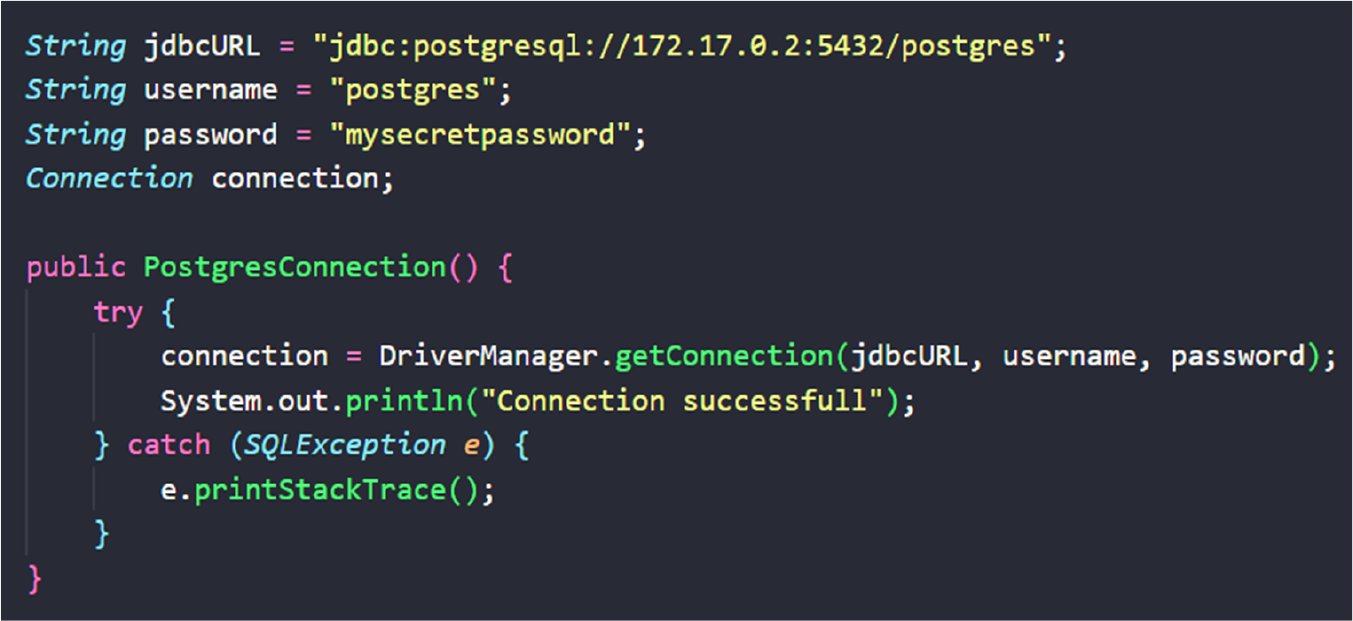
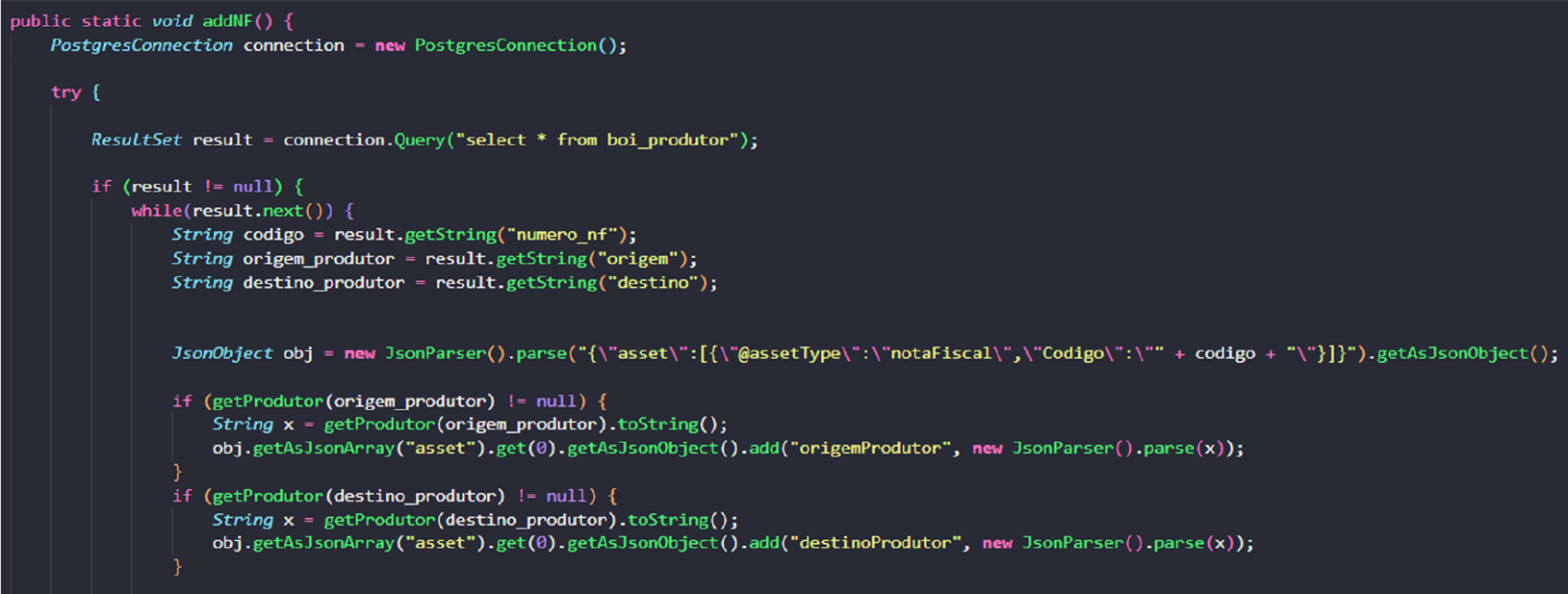
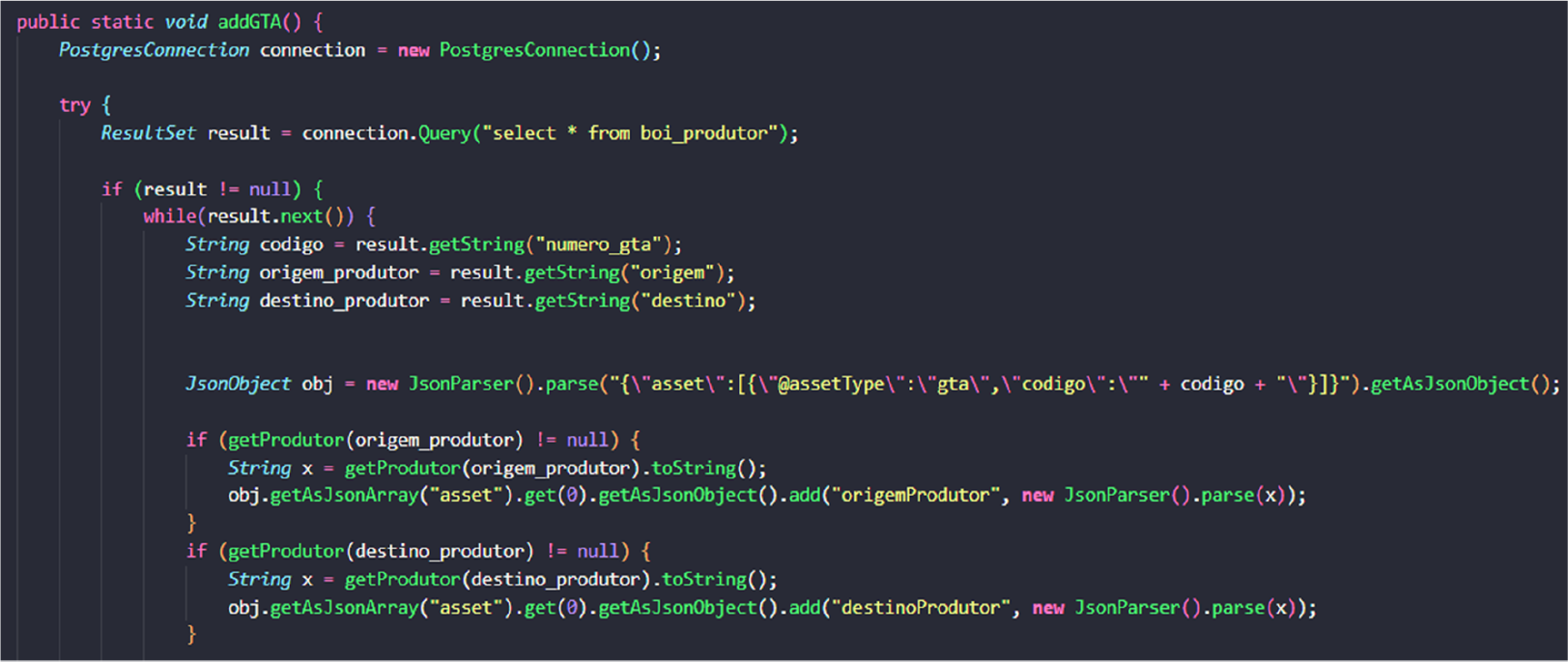
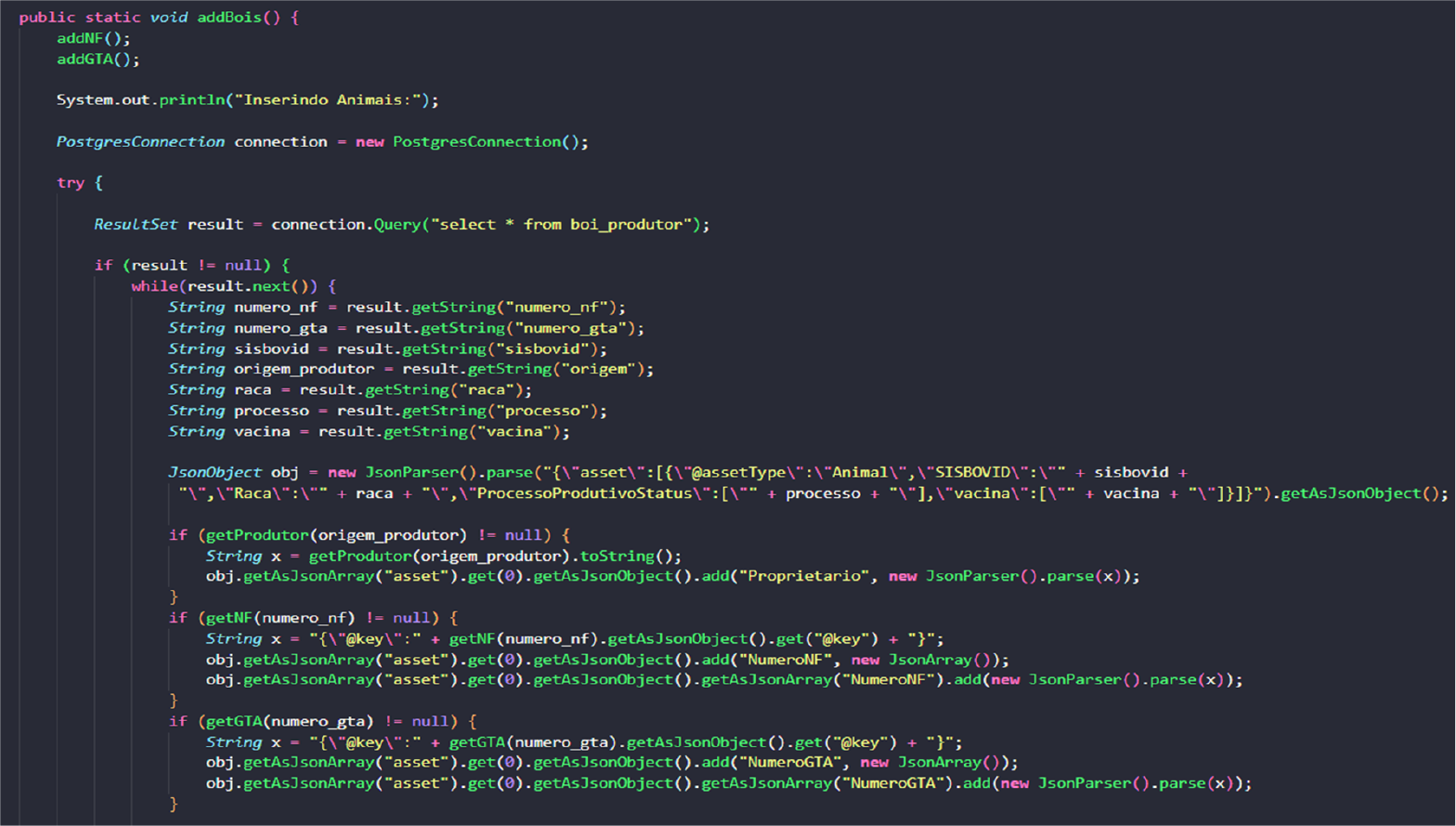
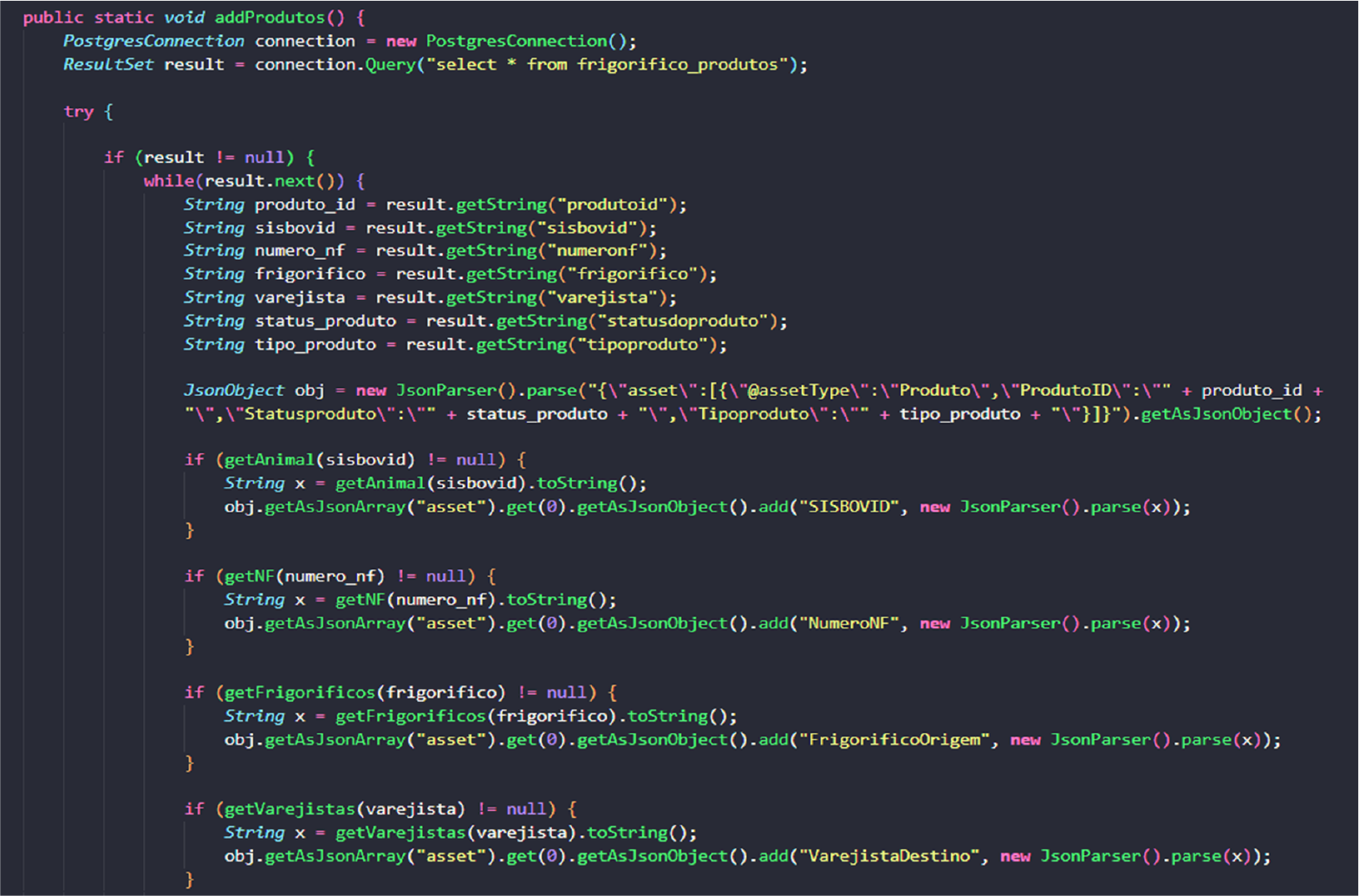
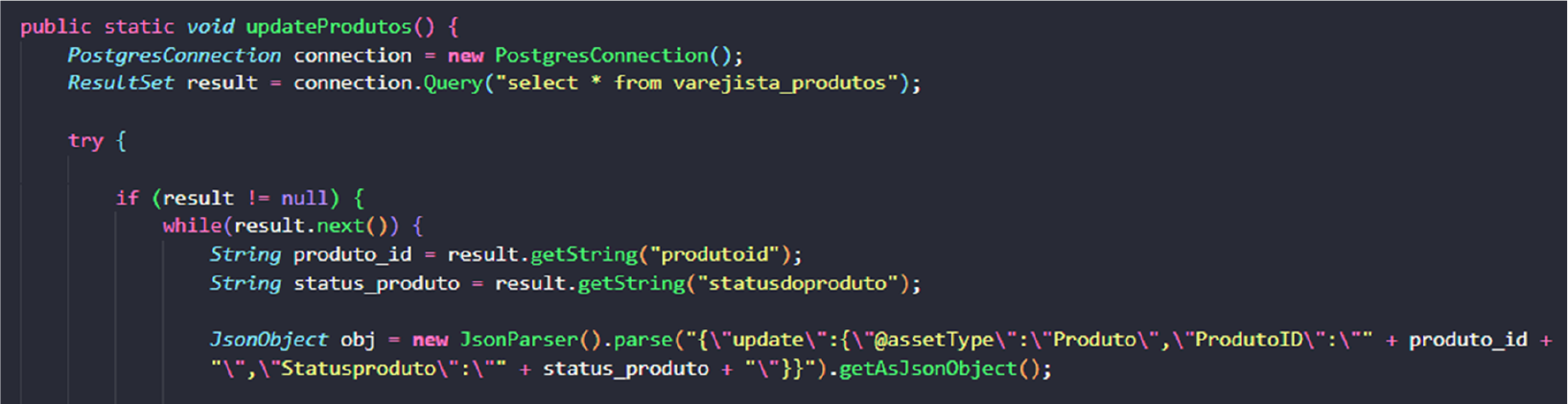
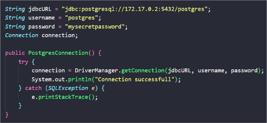
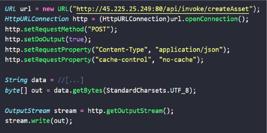
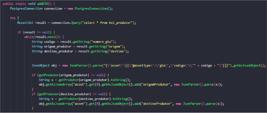
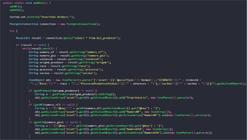
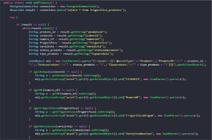
For the development of the traceability artifact, GoLedger’s blockchain platform was used, with data extraction carried out through a script developed in Java. The script automates the integration of information from farmers’ ERP systems to the blockchain network, using communication application programming interfaces (APIs). ANNEX 1 Figure 4 (Appendix) illustrates the automation process, which includes Figure 4 (a): connection to the ERP system database, using the Postgres database, version 14.3; Figure 4 (b): connection of the Java code with the API of the GoLedger platform, responsible for inserting the assets into the blockchain network; Figure 4 (c): insertion of the rural producer’s invoice (Nota Fiscal [NF]) data, using the “AddNF” function; Figure 4 (d): insertion of GTA data, linking them to the producer’s animals, with the “AddGTA” function; Figure 4 (e): relationship between the SISBOV number and the information of each animal, using the “AddBois” function; Figure 4 (f): entering data on animal products with the “AddProducts” function; Figure 4 (g): update of the status of products by the retailer, using the products update function.
The automation of this process is essential to ensure the accuracy, security, and efficiency in sending information to the blockchain network, mitigating human errors and ensuring the integrity and reliability of the data.
Implementation of the cloud computing and blockchain environment for the BTWB model
Cloud computing environment configuration
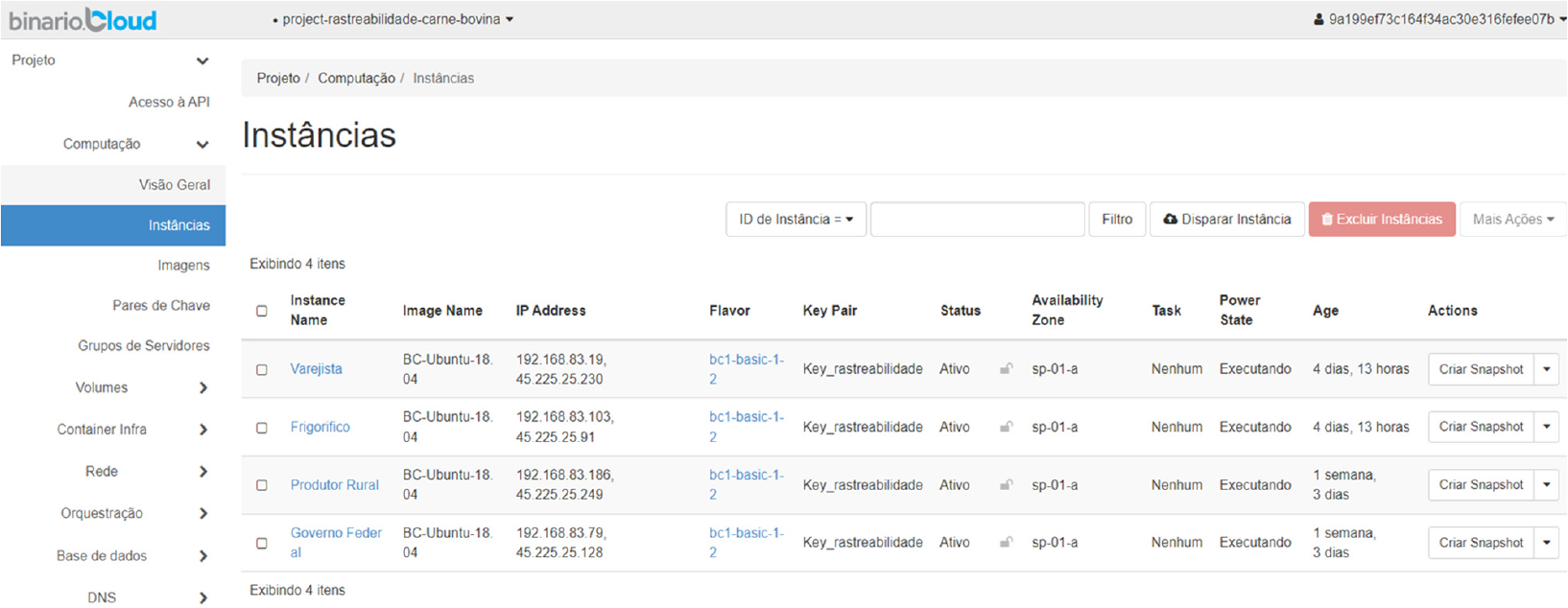
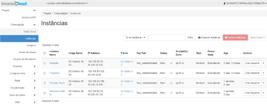
For the development of the cloud computing environment of the BTWB traceability model, the GoFabric platform, based on Hyperledger Fabric, was used. Four virtual machines were configured and hosted on the company’s cloud computing infrastructure, Binary Cloud. The choice of four virtual machines was necessary to support the different functions of each participant in the traceability process: one server was assigned to the retailer, another to the slaughterhouse, a third to the rural producer, and a fourth to the Federal Government, as shown in Figure 4.
Each virtual machine was configured as follows: one single-core CPU, x64-bit architecture; 02 GB of RAM; 50 GB of SSD storage; Ubuntu server 18.04 operating system; a public IPv4 address.
Figure 5 illustrates the cloud computing environment, demonstrating the name of each participant in the process and their internet protocol (IP) address. This configuration allowed the operation of the Hyperledger Fabric-based blockchain network, hosted on the Binary Cloud, ensuring the necessary infrastructure for beef traceability.

GoFabric development framework
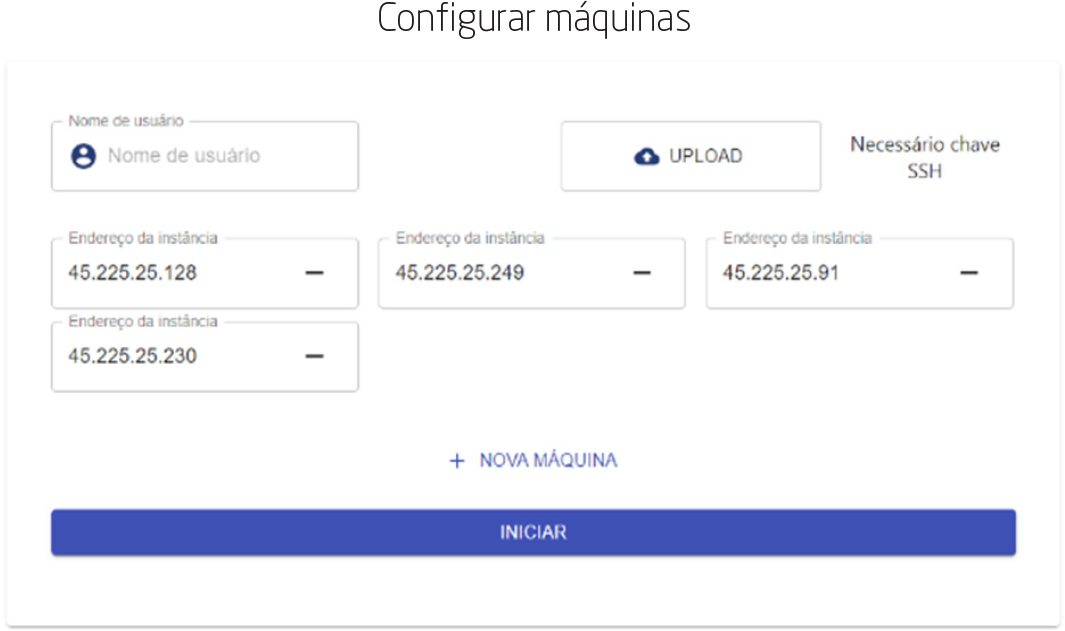
The development of the BTWB model was carried out using GoFabric, a GoLedger framework that facilitated the creation of the blockchain network and the assets of each participant in the traceability process. The creation process began with the configuration of each virtual machine, which represented the different actors in the production chain. Figure 5 shows the relationship between the virtual machines and their IP addresses, all hosted on the Binary Cloud infrastructure.
Creating the organizations and configuring the network
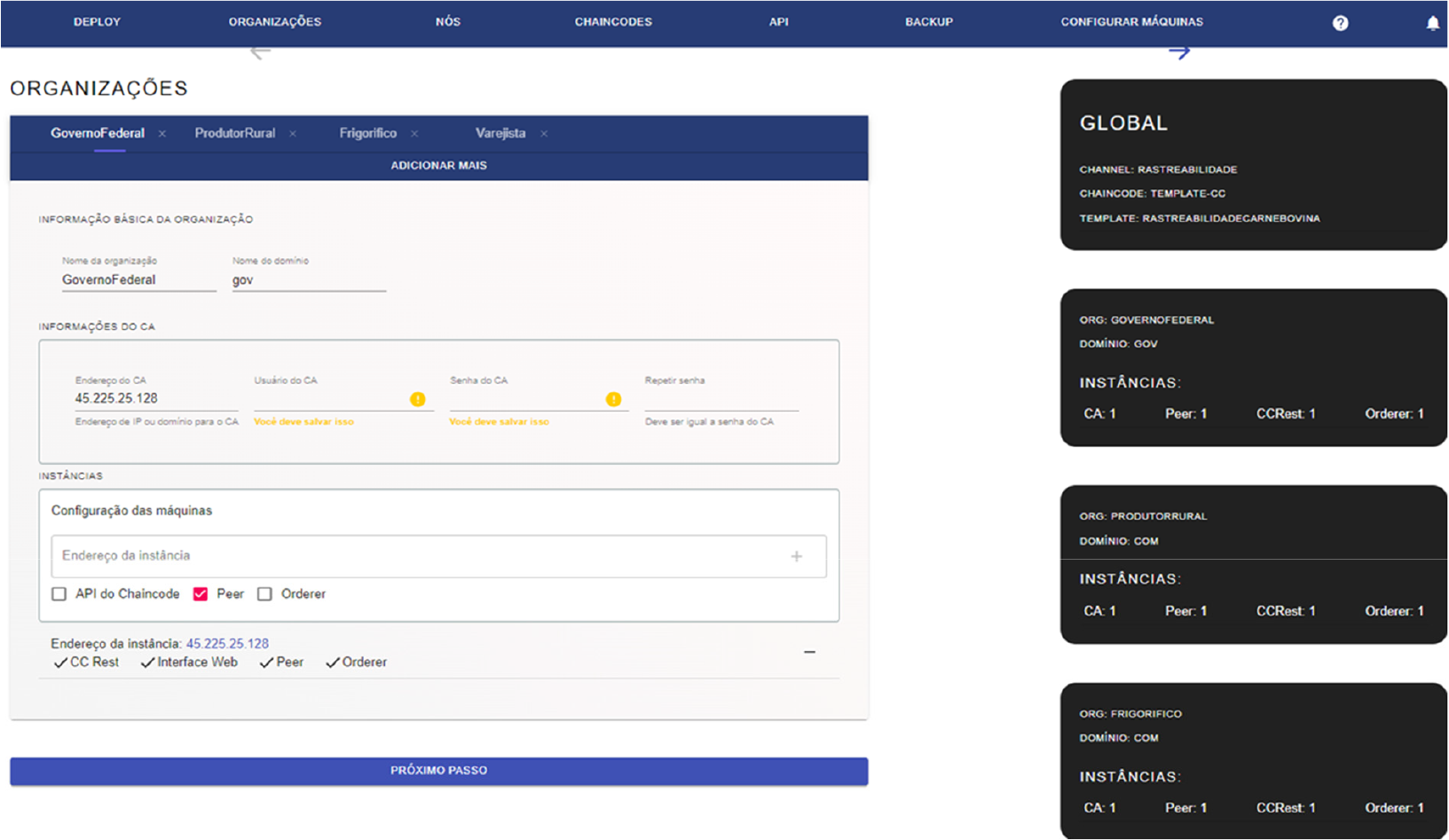
After the configuration of the machines, the stage of creating the organizations was implemented, representing the actors of the traceability process in the blockchain network, as shown in Figure 6. Each organization was assigned a domain name and associated with its respective IP address. This configuration simulates a business network, enabling interaction between the different actors in a safe and organized way.

Channel structure and permissions
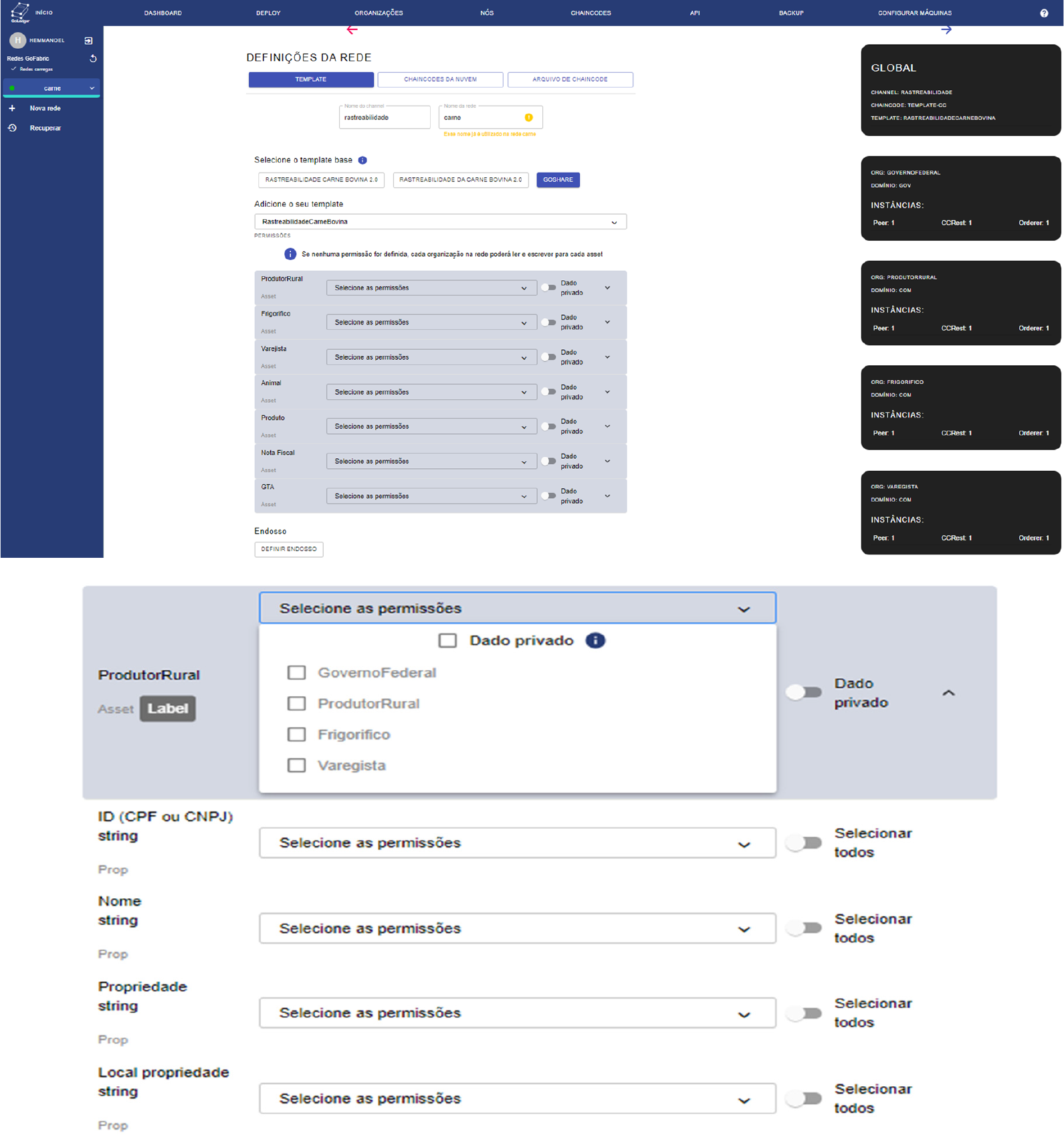
Next, the structure of channels and permissions within the network was created, as illustrated in Figure 7. The definition of data recording permissions for each actor allows for the control and security of the data entered into the blockchain, meeting the specific needs of each organization involved in the production and marketing of beef. The configuration of a permissioned blockchain ensures that only authorized participants can carry out transactions and queries, according to the established business rules.

Completion of the deployment process
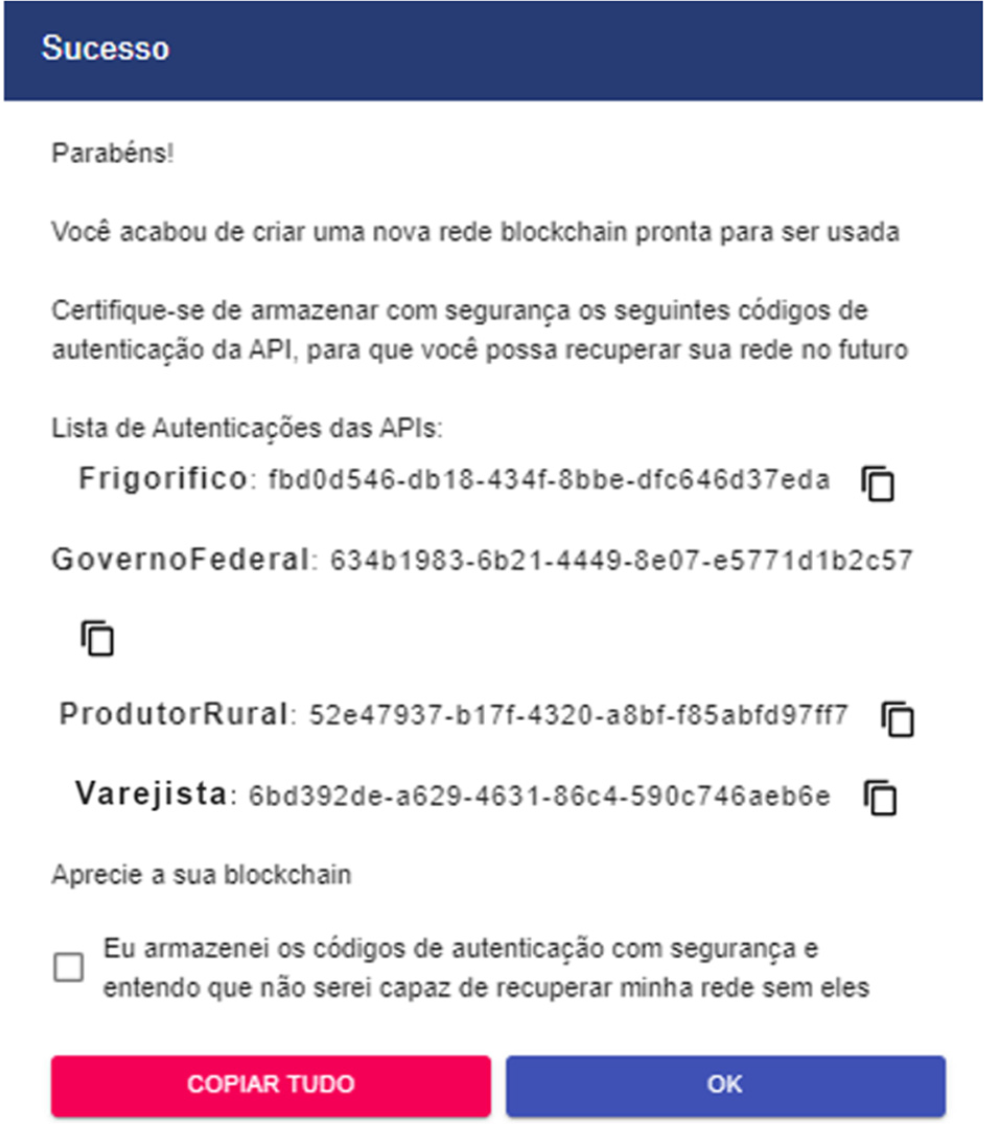
After the installation and configuration of the blockchain network, a success message was displayed (Figure 8), indicating the completion of the deployment process. From this point on, APIs can be used to automate data integration between the systems of the participants in the production chain and the blockchain, ensuring efficiency and accuracy in the flow of information.

BTWB traceability network dashboard
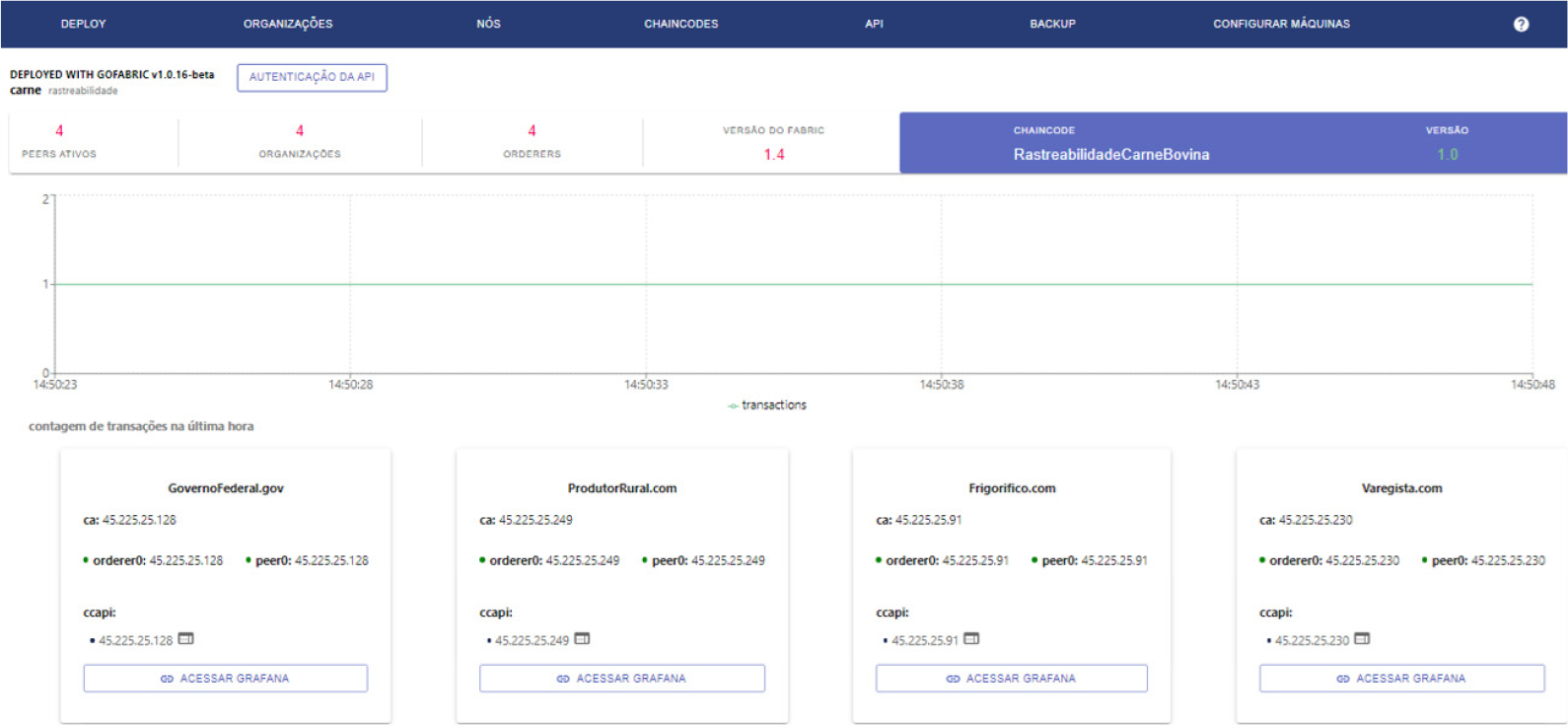
Figure 9 presents the dashboard of the BTWB traceability network, highlighting the actors in the process, including the Federal Government, whose inclusion allows for the inspection and auditing of data from the production chain. The dashboard also provides information about the IP addresses and access link to each participant’s servers, making it easier to monitor and manage the network.

Smart contracts (chaincode) in the BTWB model
The implementation of the BTWB model was carried out through smart contracts, which defined the business rules and permissions of each participant within the network. These codes specify the creation of actors, permissions, and types of data necessary to ensure the traceability of animals throughout the production process. The SISBOV, NF, and GTA numbers were defined as primary keys within the network, allowing for a unique identification of each animal in all phases of the production chain. This enables the rural producer to be identified from the beginning of the process to the commercialization of the final product, as illustrated in Figure 10.

In addition, smart contracts allow for the identification of rural producers through the Individual Taxpayer Registration (Cadastro de Pessoa Física [CPF]) or National Registry of Legal Entities (Cadastro Nacional da Pessoa Jurídica [CNPJ]), facilitating the application of differentiated payment policies for those who adhere to the SISBOV traceability protocol or adopt sustainable management practices, as shown in Figure 11.

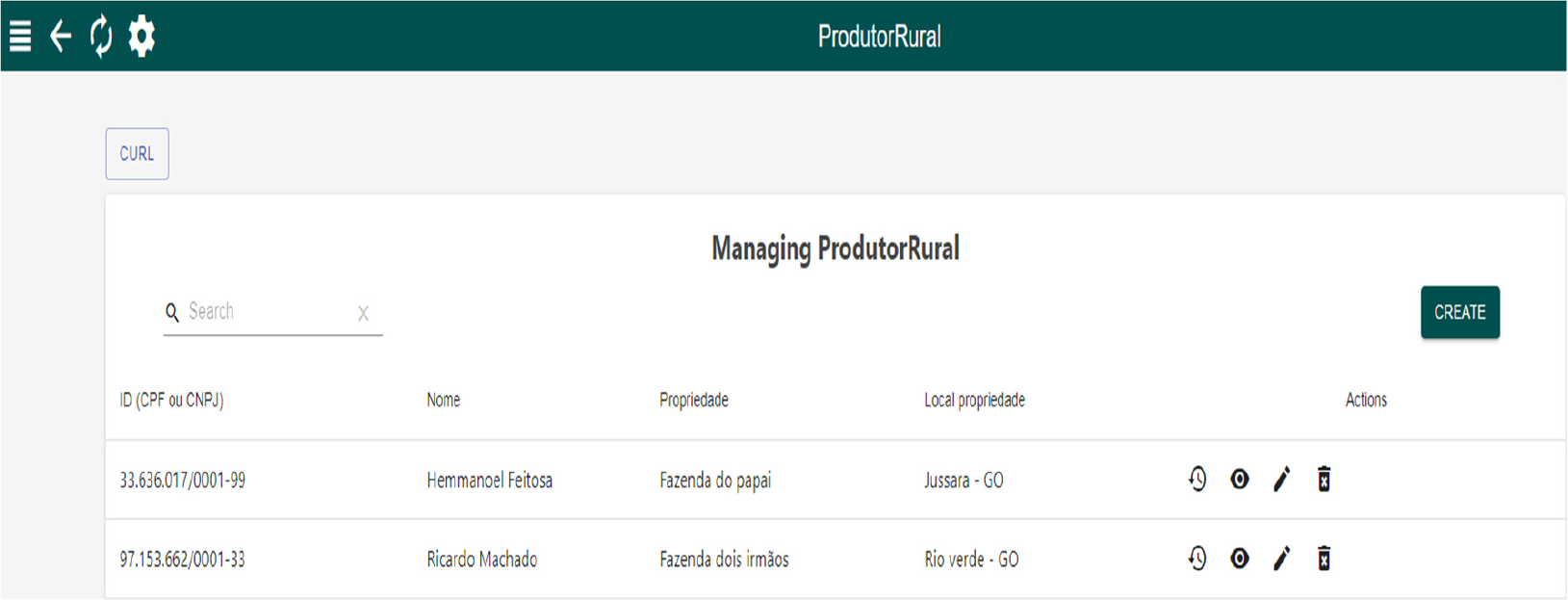
Figure 12 shows the list of producers accessed by retailers in the BTWB system, providing detailed information, such as the SISBOV number of each animal, name of the owner, responsible slaughterhouse, and time of slaughter. This information ensures the traceability and certification of beef products, ensuring compliance with sustainability regulations and standards.

The results showed that the system was able to ensure the integrity, immutability, and transparency of the data, meeting the expectations of traceability and food safety (Feitosa e Silva & Machado, 2025; Lopes et al., 2024).
Compared to international initiatives, such as the beef traceability system in Australia, which uses blockchain to ensure the origin and quality of products (Demestichas et al., 2020), the BTWB model stands out for its approach, which includes the participation of multiple actors, from farmers to government agencies.
In addition, the integration of IoT and RFID devices in the BTWB also promotes traditional solutions, such as those adopted in the United States, where the focus has been mainly on traceability through barcodes and centrali-zed systems (Kumar et al., 2015). This innovative approach places Brazil in a leading position in the use of emerging technologies for food traceability.
The participation of the Federal Government, through the SIF and DIPOA, in the process of inspecting beef production, is a direct application of the recommendations of studies that suggest that regulatory bodies integrate their operations with blockchain solutions to ensure compliance with sanitary and quality standards (Kamble et al., 2020). This approach is similar to that taken in New Zealand, where the government uses blockchain to monitor the beef supply chain and ensure compliance with international export standards (Wang & Scrimgeour, 2023).
Additional empirical studies, such as those conducted by Wang et al. (2022) and Tanwar et al. (2022), corroborate the effectiveness of blockchain in improving transparency and reducing fraud in food supply chains. The application of BTWB in a real-world scenario has demonstrated significant reductions in operational costs and response time for audits, validating its potential as a scalable and economically viable solution.
Integration with emerging technologies
The integration of emerging technologies, such as blockchain, RFID, and IoT, into the BTWB model represents a significant advance in food traceability, aligning with global trends in food transparency and safety. The code developed allows technology providers to create solutions adapted to the needs of rural producers, facilitating traceability in an efficient and automated way. This integration provides greater accuracy in data collection, ensuring reliability and immutability of information throughout the pro-duction chain (Li et al., 2020; Kayikci et al., 2020; Lim et al., 2021; Kamran et al., 2021).
Transparency and food safety
The implementation of the beef traceability artifact utilizing blockchain reflects the global trends of increasing demand for transparency and food safety. Blockchain technology has been widely discussed as an effective solution to ensure the integrity, immutability, and traceability of information along supply chains (Azevedo et al., 2023; Papa et al., 2024). This study corroborates previous research that highlights how utilizing emerging technologies can significantly improve consumer trust (Saberi et al., 2019; Rejeb et al., 2020; Saurabh & Dey, 2021; Wang et al., 2022; Tanwar et al., 2022; Feitosa e Silva & Machado, 2025; Lopes et al., 2024).
However, a gap identified in the literature is the lack of systems that integrate multiple technologies, such as blockchain, IoT, and RFID, into a single framework. The BTWB model addresses this gap by proposing an integrated solution that combines these technologies, ensuring greater accuracy and reliability in data collection and transmission. In addition, the use of QR codes in the BTWB, as proposed, is in line with international practices, such as those adopted in the European Union, where QR codes are used to provide detailed information about the origin and production process of food (Tran et al., 2024).
Operational efficiency and cost reduction
The application of blockchain contributes significantly to organizational transparency, providing secure information to stakeholders and fostering an environment of trust between investors, customers, and suppliers. In addition, blockchain technology expands visibility at executive and operational levels, strengthening customer retention and loyalty and, consequently, the economic sustainability of organizations (Tian et al., 2020; Giesel & Nobre, 2021). Reducing the need for interim audits, controlling inventories, and reducing losses, fraud, and defects are additional benefits evidenced by the results (Bodkhe et al., 2020).
Comparatively, initiatives such as Walmart, which uses blockchain to track food products in its supply chain, demonstrate significant reductions in tracking time and operational costs (Tan et al., 2018). The BTWB model follows this trend, but it advances by including the participation of small and medium-sized rural producers, who are often excluded from large-scale traceability systems due to high implementation costs. This inclusion is an important differential, especially in developing countries, where family farming is vital in food production.
Use of the Hyperledger Fabric platform
The Hyperledger Fabric platform was chosen for the development of BTWB for its ability to support permissioned networks, in which only authori-zed participants can access and write data (Androulaki et al., 2018; Li et al., 2020; Kumar & Dakshayini, 2020; Honar Pajooh et al., 2021; Surjandari et al., 2021). This characteristic is particularly relevant for food supply chains, in which data privacy and security are critical. The implementation of smart contracts in the BTWB system aligns with recommendations that suggest the use of these contracts to ensure the application of business rules in an automated manner, without the need for intermediaries (Rouhani & Deters, 2019; Abd Ali et al., 2023).
Compared to other blockchain platforms, such as Ethereum, which are widely used in traceability projects in Europe and the United States, Hyperledger Fabric offers advantages in terms of scalability and reduced operational costs (Zheng et al., 2018). This choice positions BTWB as a viable solution for the Brazilian context, in which scalability and adaptability are essential for large-scale adoption.
The BTWB advances by proposing a deeper integration between public and private sectors, allowing traceability data to be accessed by both regulatory bodies and end consumers. This increased transparency is a key dif-ferentiator, especially in a global context, in which the demand for detailed information about the origin of food is constantly growing.
Scalability, economic viability, and contributions to sustainability
The scalability of the BTWB model is a critical aspect for its large-scale adoption. Recent studies highlight that a blockchain solution’s ability to support an increasing volume of transactions and participants is essential to its viability in complex supply chains, such as the beef one (Wang & Scrimgeour, 2023).
Therefore, the use of the Hyperledger Fabric platform in the BTWB allows for the scalability needed to include thousands of rural producers, meatpackers, and retailers without compromising the system’s performance (Androulaki et al., 2018; Li et al., 2020). In addition, integration with complementary technologies such as IoT and RFID optimizes data collection and processing, reducing the burden on the blockchain network and facilitating its expansion (Kayikci et al., 2020).
The economic viability of the BTWB was evaluated considering the implementation costs and the benefits generated. Although blockchain adoption involves initial investments in infrastructure and training, studies show that reducing operational costs, such as reducing fraud, losses, and manual audits, pays off these investments in the medium term (Bodkhe et al., 2020; Giesel & Nobre, 2021). In addition, process automation through smart contracts reduces the need for intermediaries, decreasing transactional costs and increasing efficiency (Rouhani & Deters, 2019; Abd Ali et al., 2023). Economic viability is even more evident when considering the competitive gains associated with the transparency and trust generated by the system, which can open new markets and increase the valuation of the final product (Tian et al., 2021).
In the context of sustainability, the BTWB contributes significantly to the environmental, social, and governance (ESG) pillars. From an environmental point of view, traceability needs to make it possible to identify and promote sustainable management practices, such as reducing deforestation and adopting low-carbon production systems (Feitosa e Silva & Machado, 2025; Lopes et al., 2024). In the social aspect, the system strengthens the inclusion of small and medium-sized rural producers, who are often excluded from traditional traceability systems due to high costs, promoting equity and rural development (Sharma et al., 2023). Finally, in the scope of governance, the Federal Government’s participation in the BTWB ensures compliance with sanitary and quality standards, strengthening the credibility of the system and consumer confidence (Kamble et al., 2020).
These contributions align with global trends in the adoption of blockchain technologies to promote sustainable practices in supply chains. For example, similar initiatives in Europe and Australia have demonstrated that blockchain-based traceability can improve compliance with ESG standards, increasing competitiveness in the international market (Demestichas et al., 2020; Centobelli et al., 2022). Therefore, BTWB not only addresses existing gaps in the literature, but also positions itself as a solution aligned with contemporary demands for transparency, efficiency, and sustainability.
Limitations and alignment with public policies and regulations
Although the BTWB model presents significant advances in terms of transparency, efficiency, and sustainability, some limitations need to be considered for its large-scale implementation. One of the main barriers is scalability in scenarios with thousands of farmers and daily transactions, which can overwhelm blockchain infrastructure and increase operational costs (Wang & Scrimgeour, 2023). In addition, technological adoption by smallholder farmers, often with limited resources and low familiarity with digital technologies, poses a significant challenge (Nandhini et al., 2023). Interope-rability with legacy systems and the need for data standardization are also obstacles that require attention (Kayikci et al., 2020).
To overcome these limitations, the alignment of the BTWB with public policies and regulations is essential. The integration of the model with government initiatives, such as the ABC+ Plan (for low carbon agriculture), can facilitate the adoption of sustainable practices and traceability of beef produced with less environmental impact (Reis et al., 2016). In addition, collaboration with regulatory bodies, such as the SIF and DIPOA, can ensure compliance with sanitary and quality standards, increasing the credibility of the system (Kamble et al., 2020).
The combination of the BTWB with international regulations, such as the European Union guidelines for food traceability (Wünsche & Fernqvist, 2022), is also essential to facilitate the export of Brazilian beef, which is one of the main products in the country’s export basket. The adoption of global standards, such as those proposed by GS1 for product identification and traceability, can strengthen the system’s interoperability and its acceptance in the international market (Keogh et al., 2020).
Another relevant aspect is the need for government incentives for the adoption of the technology by small and medium-sized producers. Funding programs, technical capacity building, and grants for the acquisition of IoT and RFID devices can reduce barriers to entry and promote digital inclusion in the rural sector (Sharma et al., 2023). The creation of a specific regulatory framework for the use of blockchain in agriculture, with clear guidelines on data privacy, cybersecurity, and the responsibilities of the actors involved, is also key to increasing trust in the system (Li et al., 2020).
CONCLUSION
The developed traceability system, based on blockchain technology and integrated with RFID devices and ERP systems, offers a robust and efficient solution for the beef production chain. The automation of processes and participation of all actors ensure transparency, safety, and reliability, from the rural producer to the final consumer. The use of blockchain as a strategic tool validates the DSR potential for the development of innovative technological artifacts applicable to complex problems.
The implementation of the cloud computing and blockchain environment in the BTWB model demonstrated technical and operational feasibility. The configuration of virtual machines, definition of organizations, channels, and permissions, in addition to automation via APIs, ensured a secure and efficient system. The use of Hyperledger Fabric and the GoFabric framework validated blockchain’s potential in food traceability.
The BTWB model monitors and traces beef from its origin, ensuring data integrity and meeting the demand for transparency. The integration of RFID, IoT, and smart contracts made it possible to track each production step in detail, providing a complete and secure view of the data flow.
The DSR methodology was essential in the construction and validation of the artifact, allowing for iterative adjustments that aligned theory and practice. The continuous development cycle has made the model more adaptable to the needs of the sector. The results obtained reinforce DSR as an effective approach to complex technological solutions, consolidating blockchain as a strategic tool for risk management, operational efficiency, and traceability.
The study reinforces the importance of traceability in the food production chain, especially in beef, contributing to the transparency of the pro-duction cycle and strengthening consumer confidence. The findings validate previous research and point to relevant advances in Brazil. Large-scale adoption, however, requires attention to scalability, costs, and existing systems. The need for collaboration between government, industry, and retail is highlighted. Future research should address smallholders, integration with sustainable certifications, consumer perception, and expansion of the use of BTWB in other food chains.
FINAL CONSIDERATIONS
The limitations of this model are mainly focused on the scalability of the model in scenarios with thousands of producers and daily transactions, which can lead to high costs and overload on the infrastructure of the blockchain. In addition, there is a difficulty of technological adoption by small and medium-sized producers, who often face constraints in resources and digital knowledge, as well as the challenge of interoperability with legacy systems. These factors indicate that, although the results are promising, full implementation requires public incentive policies, data standardization, and regulatory mechanisms that enable its sustainable expansion.
-
All relevant data is contained in the manuscript or its supplementary materials.
-
RAM does not have permission from the authors or evaluators to publish this article’s review.
RAM
does not have information about open data regarding this manuscript.
REFERENCES
-
Abd Ali, S. M., Yusoff, M. N., & Hasan, H. F. (2023). Redactable blockchain: Comprehensive review, mechanisms, challenges, open issues and future research directions. Future Internet, 15(1), 35. https://doi.org/10.3390/fi15010035
» https://doi.org/10.3390/fi15010035 -
Androulaki, E., Barger, A., Bortnikov, V., Cachin, C., Christidis, K., De Caro, A., & Yellick, J. (2018). Hyperledger Fabric: A distributed operating system for permissioned blockchains. Proceedings of the Thirteenth EuroSys Conference, 30. https://doi.org/10.1145/3190508.3190538
» https://doi.org/10.1145/3190508.3190538 -
Azevedo, P., Gomes, J., & Romão, M. (2023). Supply chain traceability using blockchain. Operations Management Research, 16(3), 1359-1381. https://doi.org/10.1007/s12063-023-00359-y
» https://doi.org/10.1007/s12063-023-00359-y -
Bodkhe, U., Mehta, D., Tanwar, S., Bhattacharya, P., Singh, P. K., & Hong, W. C. (2020). A survey on decentralized consensus mechanisms for cyber physical systems. IEEE Access, 8, 54371-54401. https://doi.org/10.1109/ACCESS.2020.2981415
» https://doi.org/10.1109/ACCESS.2020.2981415 -
Braun, R., Benedict, M., Wendler, H., & Esswein, W. (2015). Proposal for requirements driven Design Science Research. In B. Donnellan, M. Helfert, J. Kenneally, D. VanderMeer, M. Rothenberger, & R. Winter (Eds.), New horizons in design science: Broadening the research agenda (Vol. 9073, pp. 135-151). Springer. https://doi.org/10.1007/978-3-319-18714-3_9
» https://doi.org/10.1007/978-3-319-18714-3_9 -
Centobelli, P., Cerchione, R., Del Vecchio, P., Oropallo, E., & Secundo, G. (2022). Blockchain technology for bridging trust, traceability and transparency in circular supply chain. Information & Management, 59(7), 103508. https://doi.org/10.1016/j.im.2021.103508
» https://doi.org/10.1016/j.im.2021.103508 -
Daeuble, G., Werner, M., & Nuettgens, M. (2015). Artifact-centered planning and assessing of large Design Science Research projects - A case study. In B. Donnellan, M. Helfert, J. Kenneally, D. VanderMeer, M. Rothenberger, & R. Winter (Eds.), New horizons in design science: Broadening the research agenda (Vol. 9073, pp. 343-357). Springer. https://doi.org/10.1007/978-3-319-18714-3_22
» https://doi.org/10.1007/978-3-319-18714-3_22 -
Demestichas, K., Peppes, N., Alexakis, T., & Adamopoulou, E. (2020). Blockchain in agriculture traceability systems: A review. Applied Sciences, 10(12), 4113. https://doi.org/10.3390/app10124113
» https://doi.org/10.3390/app10124113 -
Dresch, A., Lacerda, D. P., & Miguel, P. A. C. (2015). A distinctive analysis between case study, action research and Design Science Research. Brazilian Journal of Business Management, 17(56), 1116-1133. https://doi.org/10.7819/rbgn.v17i56.2069
» https://doi.org/10.7819/rbgn.v17i56.2069 -
Feitosa e Silva, H. (2022). Development of a blockchain-based framework for beef supply chain traceability in Brazil (Master’s thesis, Pontifical Catholic University of Goiás). Biblioteca Digital de Teses e Dissertações. https://tede2.pucgoias.edu.br/handle/tede/5078
» https://tede2.pucgoias.edu.br/handle/tede/5078 -
Feitosa e Silva, H., & Machado, R. L. (2025). Blockchain in the supply chain: Systematic review of the literature for a performance improvement proposal based on a conceptual framework. Engineering Management Journal, 37(1), 3-24. https://doi.org/10.1080/10429247.2024.2345527
» https://doi.org/10.1080/10429247.2024.2345527 -
Giesel, H. D., & Nobre, F. S. (2021). Implications of blockchain and transparency for business sustainability: An integrative review. Revista de Adminis-tração Mackenzie, 22(6), 1-30. https://doi.org/10.1590/1678-6971/eRAMD210033
» https://doi.org/10.1590/1678-6971/eRAMD210033 -
Goecks, L. S., Souza, M. D., Librelato, T. P., & Trento, L. R. (2021). Design Science Research in practice: Review of applications in industrial engi-neering. Management & Production, 28(4), e5811. https://doi.org/10.1590/1806-9649-2021v28e5811
» https://doi.org/10.1590/1806-9649-2021v28e5811 -
Goldkuhl, G., & Sjöström, J. (2018). Design science in the field: Practice design research. In S. Chatterjee, K. Dutta, & R. Sundarraj (Eds.), Designing for a digital and globalized world (Vol. 10844, pp. 67-81). Springer. https://doi.org/10.1007/978-3-319-91800-6_5
» https://doi.org/10.1007/978-3-319-91800-6_5 -
Hevner, A., & Chatterjee, S. (2010). Design research in information systems: Theory and practice Springer. https://doi.org/10.1007/978-1-4419-5653-8_2
» https://doi.org/10.1007/978-1-4419-5653-8_2 -
Hevner, A. R., March, S. T., Park, J., & Ram, S. (2004). Design science in information systems research. MIS Quarterly, 28(1), 75-106. https://doi.org/10.2307/25148625
» https://doi.org/10.2307/25148625 -
Honar Pajooh, H., Rashid, M., Alam, F., & Demidenko, S. (2021). Hyperledger Fabric blockchain for securing the edge internet of things. Sensors, 21(2), 359. https://doi.org/10.3390/s21020359
» https://doi.org/10.3390/s21020359 -
Kamble, S. S., Gunasekaran, A., & Sharma, R. (2020). Modeling the blockchain enabled traceability in agriculture supply chain. International Journal of Information Management, 52(22), 101967. https://doi.org/10.1016/j.ijinfomgt.2019.05.023
» https://doi.org/10.1016/j.ijinfomgt.2019.05.023 -
Kamble, S. S., Gunasekaran, A., & Gawankar, S. A. (2020). Achieving sustainable performance in a data-driven agriculture supply chain: A review for research and applications. International Journal of Production Economics, 219(May 2019), 179-194. https://doi.org/10.1016/j.ijpe.2019.05.022
» https://doi.org/10.1016/j.ijpe.2019.05.022 -
Kamran, R., Khan, N., & Sundarakani, B. (2021). Blockchain technology development and implementation for global logistics operations: A referen-ce model perspective. Journal of Global Operations and Strategic Sourcing, 14(2), 360-382. https://doi.org/10.1108/JGOSS-08-2020-0047
» https://doi.org/10.1108/JGOSS-08-2020-0047 -
Kayikci, Y., Subramanian, N., Dora, M., & Bhatia, M. S. (2020). Food supply chain in the era of Industry 4.0: blockchain technology implementation opportunities and impediments from the perspective of people, process, performance, and technology. Production Planning and Control https://doi.org/10.1080/09537287.2020.1810757
» https://doi.org/10.1080/09537287.2020.1810757 -
Keogh, J. G., Rejeb, A., Khan, N., Dean, K., & Hand, K. J. (2020). Optimizing global food supply chains: The case for blockchain and GS1 standards. Building the Future of Food Safety Technology, 171-204. https://doi.org/10.1016/B978-0-12-818956-6.00017-8
» https://doi.org/10.1016/B978-0-12-818956-6.00017-8 -
Kumar, N., & Dakshayini, M. (2020). Secure sharing of health data using Hyperledger Fabric based on blockchain technology. In 2020 International Conference on Mainstreaming Block Chain Implementation (ICOMBI) (pp. 1-5). IEEE. https://doi.org/10.23919/ICOMBI48604.2020.9203442
» https://doi.org/10.23919/ICOMBI48604.2020.9203442 -
Kumar, S., Heustis, D., & Graham, J. M. (2015). The future of traceability within the U. S. food industry supply chain: A business case. International Journal of Productivity and Performance Management, 64(1), 129-146. https://doi.org/10.1108/IJPPM-03-2014-0046
» https://doi.org/10.1108/IJPPM-03-2014-0046 -
Lacerda, D. P., Dresch, A., Proença, A., & Antunes, J. A. V., Júnior. (2013). Design Science Research: A research method to production engineering. Management & Production, 20, 741-761. https://doi.org/10.1590/S0104-530X2013005000014
» https://doi.org/10.1590/S0104-530X2013005000014 -
Li, J., Maiti, A., Springer, M., & Gray, T. (2020). Blockchain for supply chain quality management: Challenges and opportunities in context of open manufacturing and industrial internet of things. International Journal of Computer Integrated Manufacturing, 33(12), 1321-1355. https://doi.org/10.1080/0951192X.2020.1815853
» https://doi.org/10.1080/0951192X.2020.1815853 -
Li, D., Wong, W. E., & Guo, J. (2020). A survey on blockchain for enterprise using Hyperledger Fabric and Composer. In 2019 6th International Conference on Dependable Systems and Their Applications (DSA) (pp. 71-80). IEEE. https://doi.org/10.1109/DSA.2019.00017
» https://doi.org/10.1109/DSA.2019.00017 - Lim, M. K., Li, Y., Wang, C., & Tseng, M. L. (2021). A literature review of blockchain technology applications in supply chains: A comprehensive analysis of themes, methodologies and industries. Computers and Industrial Engineering, 154(9), 107133.
-
Lopes, D. C. F., Castro, A. L. D., & Russo, L. X. (2024). Blockchain technology: Challenges and opportunities in public finance. Revista de Administração Mackenzie, 25(3), 1-29. https://doi.org/10.1590/1678-6971/eRAMR240208
» https://doi.org/10.1590/1678-6971/eRAMR240208 -
Miah, S. J., Kerr, D., & von Hellens, L. (2014). A collective artefact design of decision support systems: Design Science Research perspective. Information Technology & People, 27(3), 259-279. https://doi.org/10.1108/ITP-04-2012-0041
» https://doi.org/10.1108/ITP-04-2012-0041 -
Nandhini, S., Sivakumar, S. D., Parasuraman, B., Venkatesa Palanichamy, N., Anandhi, V., Balasubramanian, P., Vasanthi, R., & Kumar, A. (2023). Impact of blockchain technology adoption in farms of FPO members. Indian Journal of Agricultural Sciences, 93(9), 1045-1048. https://doi.org/10.56093/ijas.v93i9.139484
» https://doi.org/10.56093/ijas.v93i9.139484 -
Papa, M., Oliveira, S. R. de M., & Bergier, I. (2024). Technologies in cattle traceability: A bibliometric analysis. Computers and Electronics in Agriculture, 227, 109459. https://doi.org/10.1016/j.compag.2024.109459
» https://doi.org/10.1016/j.compag.2024.109459 -
Peffers, K., Rothenberger, M., Tuunanen, T., & Vaezi, R. (2012). Design Science Research evaluation. In K. Peffers, M. Rothenberger, & B. Kuechler (Eds.), Design Science Research in information systems: Advances in theory and practice (Vol. 7286, pp. 398-410). Springer. https://doi.org/10.1007/978-3-642-29863-9_29
» https://doi.org/10.1007/978-3-642-29863-9_29 -
Reis, J. C., Rodrigues, R. D. A. R., Conceição, M. C. G., & Martins, C. M. S. (2016). Crop-livestock-forest integration in Brazil: A sustainable agriculture strategy based on the concepts of the Green Economy Initiative. Sustainability in Debate, 7(1), 58-73. https://doi.org/10.18472/SustDeb.v7n1.2016.18061
» https://doi.org/10.18472/SustDeb.v7n1.2016.18061 -
Rejeb, A., Keogh, J. G., Zailani, S., Treiblmaier, H., & Rejeb, K. (2020). Blockchain technology in the food industry: A review of potentials, challenges and future research directions. Logistics, 4(4), 27. https://doi.org/10.3390/logistics4040027
» https://doi.org/10.3390/logistics4040027 -
Rouhani, S., & Deters, R. (2019). Security, performance, and applications of smart contracts: A systematic survey. IEEE Access, 7, 50759-50779. https://ieeexplore.ieee.org/document/8689026
» https://ieeexplore.ieee.org/document/8689026 -
Saberi, S., Kouhizadeh, M., Sarkis, J., & Shen, L. (2019). Blockchain tech-nology and its relationships to sustainable supply chain management. International Journal of Production Research, 57(7), 2117-2135. https://doi.org/10.1080/00207543.2018.1533261
» https://doi.org/10.1080/00207543.2018.1533261 -
Saurabh, S., & Dey, K. (2021). Blockchain technology adoption, architecture, and sustainable agri-food supply chains. Journal of Cleaner Production, 284, 124731. https://doi.org/10.1016/j.jclepro.2020.124731
» https://doi.org/10.1016/j.jclepro.2020.124731 -
Schoormann, T., Stadtländer, M., & Knackstedt, R. (2022). Designing business model development tools for sustainability - A design science study. Electronic Markets, 32(2), 645-667. https://doi.org/10.1007/s12525-021-00466-3
» https://doi.org/10.1007/s12525-021-00466-3 -
Sharma, A., Sharma, A., Singh, R. K., & Bhatia, T. (2023). Blockchain adoption in agri-food supply chain management: An empirical study of the main drivers using extended UTAUT. Business Process Management Journal, 29(3), 737-756. https://doi.org/10.1108/BPMJ-10-2022-0543
» https://doi.org/10.1108/BPMJ-10-2022-0543 -
Souza, D. L. D., Souza, T. A. D., & Zambalde, A. L. (2020). Aligning academic research and science, technology, and innovation (ST&I): A proposal using design science. Cadernos EBAPE.BR, 18(3), 459-472. https://doi.org/10.1590/1679-395120190039x
» https://doi.org/10.1590/1679-395120190039x -
Surjandari, I., Yusuf, H., Laoh, E., & Maulida, R. (2021). Designing a permissioned blockchain network for the halal industry using Hyperledger Fabric with multiple channels and the raft consensus mechanism. Journal of Big Data, 8, 10. https://doi.org/10.1186/s40537-020-00405-7
» https://doi.org/10.1186/s40537-020-00405-7 -
Tan, B., Yan, J., Chen, S., & Liu, X. (2018). The impact of blockchain on food supply chain: The case of Walmart. In M. Qiu (Ed.), Smart Blockchain: First International Conference, SmartBlock 2018, Tokyo, Japan, December 10-12, 2018, Proceedings (Vol. 11373, pp. 167-177). Springer. https://doi.org/10.1007/978-3-030-05764-0_18
» https://doi.org/10.1007/978-3-030-05764-0_18 -
Tanwar, S., Parmar, A., Kumari, A., Jadav, N. K., Hong, W. C., & Sharma, R. (2022). Blockchain adoption to secure the food industry: Opportunities and challenges. Sustainability, 14(12), 7036. https://doi.org/10.3390/su14127036
» https://doi.org/10.3390/su14127036 -
Tian, Z., Zhong, R. Y., Vatankhah Barenji, A., Wang, Y. T., Li, Z., & Rong, Y. (2021). A blockchain-based evaluation approach for customer delivery satisfaction in sustainable urban logistics. International Journal of Production Research, 59(7), 2229-2249. https://doi.org/10.1080/00207543.2020.1809733
» https://doi.org/10.1080/00207543.2020.1809733 -
Tran, D., De Steur, H., Gellynck, X., Papadakis, A., & Schouteten, J. J. (2024). Consumers’ valuation of blockchain-based food traceability: Role of consumer ethnocentrism and communication via QR codes. British Food Journal, 126(13), 72-93. https://doi.org/10.1108/BFJ-09-2023-0812
» https://doi.org/10.1108/BFJ-09-2023-0812 -
Van der Merwe, A., Gerber, A., & Smuts, H. (2019). Guidelines for conducting Design Science Research in information systems. In B. Tait, J. Kroeze, & S. Gruner (Eds.), 48th Annual Conference of the Southern African Computer Lecturers’ Association (Vol. 1136, pp. 163-178). Springer. https://doi.org/10.1007/978-3-030-35629-3_11
» https://doi.org/10.1007/978-3-030-35629-3_11 -
Vom Brocke, J., Hevner, A., & Maedche, A. (2020). Introduction to Design Science Research. In J. vom Brocke, A. Hevner, & A. Maedche (Eds.), Design Science Research: Cases (pp. 1-13). Springer. https://doi.org/10.1007/978-3-030-46781-4_1
» https://doi.org/10.1007/978-3-030-46781-4_1 -
Wang, X., Kumar, V., Kumari, A., & Kuzmin, E. (2022). Impact of digital technology on supply chain efficiency in manufacturing industry. In V. Kumar, J. Leng, V. Akberdina, & E. Kuzmin (Eds.), Digital transformation in industry: Digital twins and new business models (Vol. 54, pp. 347-371). Springer. https://doi.org/10.1007/978-3-030-94617-3_25
» https://doi.org/10.1007/978-3-030-94617-3_25 -
Wang, O., & Scrimgeour, F. (2023). Consumer adoption of blockchain food traceability: Effects of innovation-adoption characteristics, expertise in food traceability and blockchain technology, and segmentation. British Food Journal, 125(7), 2493-2513. https://doi.org/10.1108/BFJ-06-2022-0466
» https://doi.org/10.1108/BFJ-06-2022-0466 -
Weigand, H., Johannesson, P., & Andersson, B. (2021). An artifact ontology for Design Science Research. Data & Knowledge Engineering, 133, 101878. https://doi.org/10.1016/j.datak.2021.101878
» https://doi.org/10.1016/j.datak.2021.101878 -
Wünsche, J. F., & Fernqvist, F. (2022). The potential of blockchain technology in the transition towards sustainable food systems. Sustainability, 14(13), 7739. https://doi.org/10.3390/su14137739
» https://doi.org/10.3390/su14137739 -
Zheng, Z., Xie, S., Dai, H. N., Chen, X., & Wang, H. (2018). Blockchain challenges and opportunities: A survey. International Journal of Web and Grid Services, 14(4), 352-375. https://doi.org/10.1504/IJWGS.2018.095647
» https://doi.org/10.1504/IJWGS.2018.095647
Edited by
-
EDITORIAL PRODUCTION
Publishing coordinationAndreia Ferreira CominettiLanguage editorPaula Di Sessa VavlisLayout designerEmapGraphic designerEmap
-
EDITORIAL BOARD
Editor-in-chiefAlmir Martins VieiraAssociated editorIgor Bernardi SonzaTechnical supportVitória Batista Santos Silva

 Thumbnail
 Thumbnail
 Thumbnail
 Thumbnail
 Thumbnail
 Thumbnail
 Thumbnail