 Association between group B beta-hemolytic Streptococcus screening during pregnancy and the prevalence of early-onset neonatal sepsis
OBJECTIVE: The aim of the study was to evaluate the incidence of early-onset neonatal sepsis and other perinatal adverse outcomes associated with not screening for group B beta-hemolytic Streptococcus.
METHODS: A retrospective cohort study was conducted by searching electronic medical records from 2018 to 2022. Group B beta-hemolytic Streptococcus culture was performed after routine collection of vaginal and anal swabs from pregnant women at any time of pregnancy..
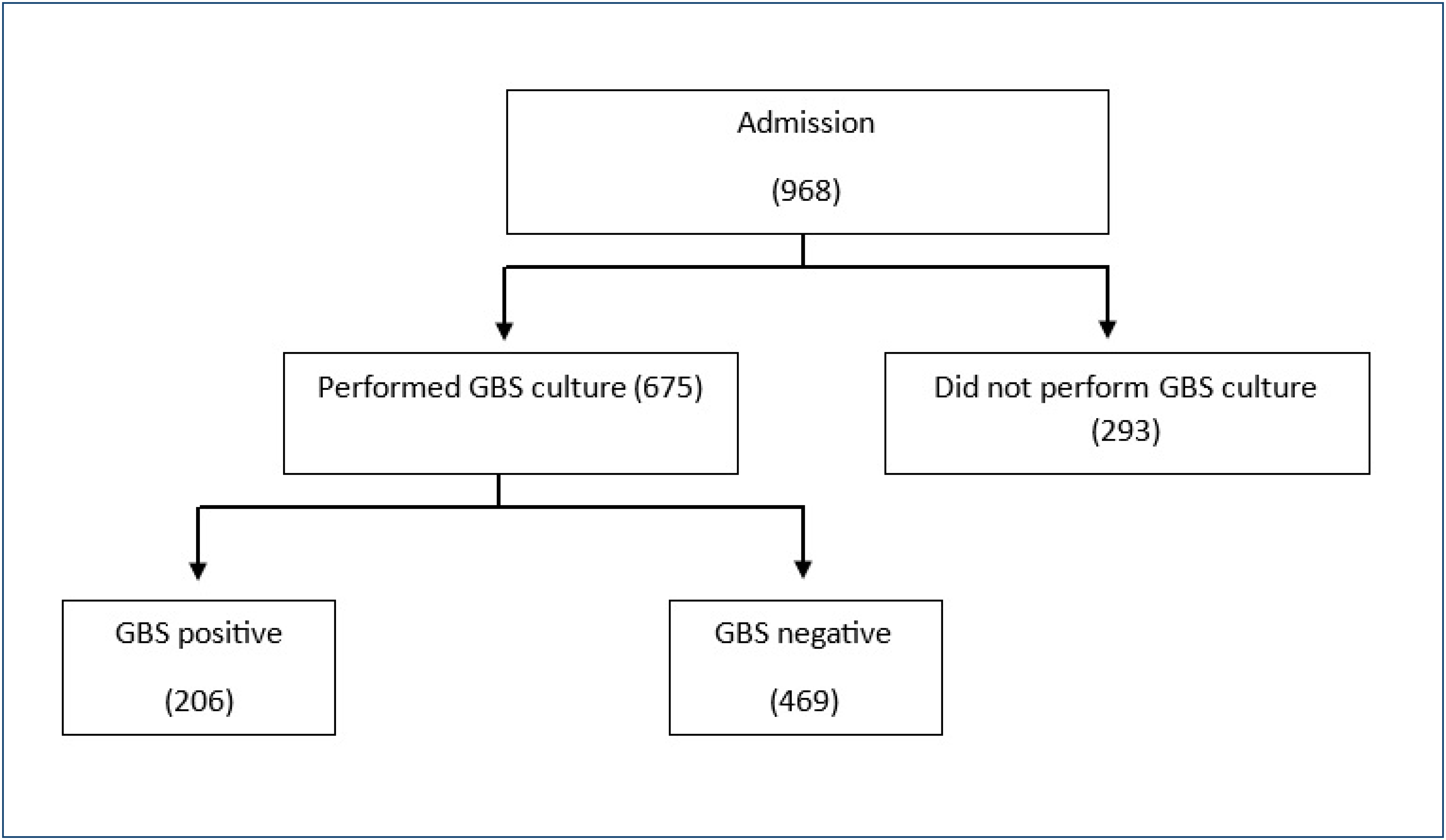
RESULTS: A total of 968 pregnant women were included; 69.3% (675/968) were screened for group B beta-hemolytic Streptococcus, and 30.3% were not screened for group B beta-hemolytic Streptococcus. Of the pregnant women who were screened, 30.5% (206/675) had positive cultures and 69.5% (469/675) had negative cultures for group B beta-hemolytic Streptococcus. Pregnant women who underwent group B beta-hemolytic Streptococcus screening had a lower prevalence of preterm birth (p<0.0001), neonatal intensive care unit (NICU) admission (p=0.001), and neonatal death within 48 h (p=0.002). Group B beta-hemolytic Streptococcus screening was an independent predictor of preterm birth (p<0.0001). The best model for neonatal death in the first 48 h included group B beta-hemolytic Streptococcus screening (p=0.035) and NICU admission (p=0.016). Antibiotic use (p=0.040), preterm birth (p<0.0001), premature rupture of ovular membranes (p=0.047), premature delivery (p<0.0001), and chorioamnionitis (p=0.001) were associated with an increased risk of early-onset neonatal sepsis.
CONCLUSIONS: Screening for group B beta-hemolytic Streptococcus was not significantly associated with early-onset neonatal sepsis, but it was an independent predictor of preterm birth.
KEYWORDS:
Screening; Streptococcus; Neonatal sepsis; Preterm birth; Preterm premature rupture of the membranes; Chorioamnionitis
 Thumbnail