 Independent prognostic ımpact of perineural ınvasion in breast cancer patients with residual disease after neoadjuvant chemotherapy
OBJECTIVE: Perineural invasion is a well-established adverse prognostic factor in several malignancies, yet its prognostic role in breast cancer remains controversial.
METHODS: We retrospectively analyzed 400 breast cancer patients treated with neoadjuvant chemotherapy between 2012 and 2025 who had residual disease (non-pCR) at surgery. Clinicopathological variables, recurrence-free survival, and overall survival were evaluated using Cox proportional hazards models.
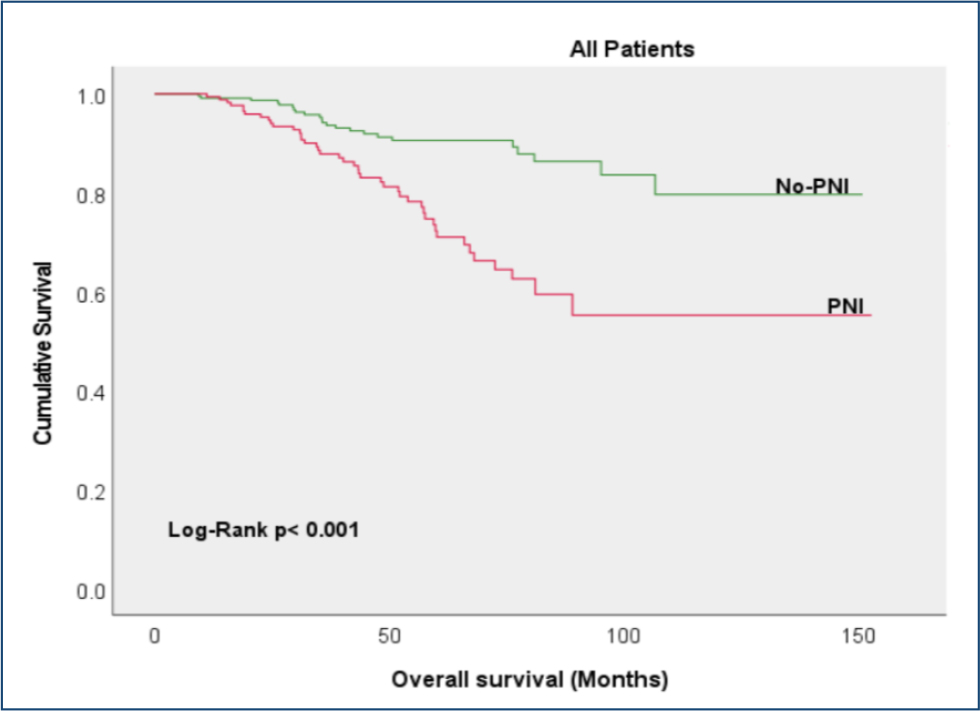
RESULTS: Perineural invasion was identified in 42.5% of the cohort and associated with larger tumor burden, lymphovascular invasion, and nodal metastasis (p<0.01). Perineural invasion-positive status correlated with significantly inferior median recurrence-free survival (100.5 vs. 120.4 months; HR 1.77, p=0.008) and overall survival (108.5 vs. 133.6 months; HR 3.11, p<0.001). Multivariate analysis confirmed perineural invasion as a robust independent predictor of shorter recurrence-free survival and overall survival. The adverse impact was evident across all molecular subtypes, particularly HR+/HER2- and HER2+ groups.
CONCLUSION: Perineural invasion is a strong independent prognostic factor for recurrence-free survival and overall survival in breast cancer patients with residual disease after neoadjuvant chemotherapy. Reporting perineural invasion status in routine pathology evaluations may aid in risk stratification for this high-risk population.
KEYWORDS:
Breast neoplasms; Neoplasm invasiveness; Prognosis; Neoadjuvant therapy; Survival analysis
 Thumbnail