 National insights from local policy agendas: emerging patterns in municipal currencies in Brazil
Abstract
This paper examines the emerging landscape of municipal currencies in Brazil using government program documents submitted by mayoral candidates to Brazil’s Superior Electoral Court (TSE) during the 2024 elections. We employ computational text analysis to identify and classify municipal currency proposals. Our findings reveal 98 elected mayors proposing such initiatives: 61 “social currencies” connected to municipal basic income programs, 40 “green currencies” linked to recycling schemes, and three hybrid cases. The results reveal important regional and partisan dynamics shaping municipal monetary innovation in Brazil and open a broader discussion about the rise of local-level policymaking. These initiatives are strongly concentrated in the Southeast and Northeast regions, supporting policy diffusion theories that emphasize neighborhood effects and the role of pioneering municipalities such as Maricá (RJ). Local-level analysis indicates that, once major outliers are excluded, the adoption of municipal currencies is not restricted to wealthier municipalities, suggesting that fiscal capacity alone does not explain their diffusion. From a political perspective, the findings challenge conventional expectations by showing that municipal currencies are not confined to left-wing agendas: most proposals originate from right-wing and center-right parties, particularly in the case of green currencies. This points to a reframing of these instruments as tools of local economic management rather than purely redistributive policies. Finally, the article suggests that municipal currencies in Brazil have evolved from isolated experiments into a diversified and cross-cutting policy instrument. The study also provides a basis for monitoring the implementation of these commitments during the 2025-2028 municipal terms.
Keywords:
municipal currency; green currency; local economy; solidary economy; cash transfers; municipal elections; regional policymaking
Resumo
Este artigo examina o cenário emergente das moedas municipais no Brasil, utilizando os programas de governo submetidos pelos candidatos a prefeito ao Tribunal Superior Eleitoral (TSE) durante as eleições de 2024. Empregamos análise computacional de texto para identificar e classificar as propostas de moedas municipais, e nossos achados revelam 98 prefeitos eleitos propondo tais iniciativas: 61 “moedas sociais” vinculadas a programas de renda básica municipal, 40 “moedas verdes” associadas a esquemas de reciclagem e três casos híbridos. Os resultados revelam dinâmicas regionais e partidárias importantes, que moldam esta inovação monetária municipal no Brasil e abrem uma discussão mais ampla sobre o crescimento da formulação de políticas em nível municipal. Essas iniciativas estão fortemente concentradas nas regiões Sudeste e Nordeste, corroborando as teorias de difusão de políticas que enfatizam os efeitos de vizinhança e o papel de municípios pioneiros, como Maricá (RJ). A análise no nível municipal indica que, uma vez excluídos os principais valores atípicos, a adoção de moedas municipais não se restringe aos municípios mais ricos, sugerindo que a capacidade fiscal por si só não explica a sua difusão. Politicamente, as conclusões desafiam as expectativas convencionais ao mostrar que as moedas municipais não se limitam às agendas de esquerda: a maioria das propostas provém de partidos de direita e centro-direita, particularmente no caso das moedas verdes, apontando para uma reformulação destes instrumentos como ferramentas de gestão econômica local, em vez de políticas puramente redistributivas. Por fim, o artigo sugere que as moedas municipais no Brasil evoluíram de experiências isoladas para um instrumento político diversificado e transversal. O estudo também fornece uma base para monitorar a implementação desses compromissos durante os mandatos municipais de 2025 a 2028.
Palavras-chave:
moeda municipal; moeda verde; economia local; economia solidária; transferência de renda; eleições municipais; políticas regionais
Resumen
Este artículo examina el panorama emergente de las monedas municipales en Brasil, utilizando los programas de gobierno presentados por los candidatos a la alcaldía ante el Tribunal Superior Electoral (TSE) durante las elecciones de 2024. Empleamos análisis computacional de texto para identificar y clasificar las propuestas de monedas municipales, y nuestros hallazgos revelan que 98 alcaldes propusieron tales iniciativas: 61 “monedas sociales” vinculadas a programas de renta básica municipal, 40 “monedas verdes” asociadas a esquemas de reciclaje y tres casos híbridos. Los resultados revelan importantes dinámicas regionales y partidarias que dan forma a esta innovación monetaria municipal en Brasil y abren un debate más amplio sobre el crecimiento de la formulación de políticas a nivel municipal. Estas iniciativas se concentran principalmente en las regiones sudeste y noreste, lo que respalda las teorías de difusión de políticas que enfatizan los efectos de vecindad y el papel de municipios pioneros como Maricá (RJ). El análisis a nivel municipal indica que, una vez excluidos los valores atípicos más importantes, la adopción de monedas municipales no se limita a los municipios más ricos, lo que sugiere que la capacidad fiscal por sí sola no explica su difusión. Desde el punto de vista político, los resultados desafían las expectativas convencionales al demostrar que las monedas municipales no se limitan a las agendas de izquierda: la mayoría de las propuestas provienen de partidos de derecha y de centro-derecha, especialmente en el caso de las monedas verdes, lo que apunta a una reformulación de estos instrumentos como herramientas de gestión económica local en lugar de políticas puramente redistributivas. Por último, el documento sugiere que las monedas municipales en Brasil han pasado de ser experimentos aislados a convertirse en un instrumento político diversificado y transversal. El estudio también proporciona una base para supervisar la aplicación de estos compromisos durante los mandatos municipales de 2025-2028.
Palabras clave:
moneda municipal; moneda verde; economía local; economía solidaria; transferencias monetarias; elecciones municipales; políticas regionales
1. INTRODUCTION
Cash transfer programs have been central to social policy worldwide for over two decades, with strong evidence of their effectiveness in reducing poverty, improving food security, expanding access to education, reducing child labor, and improving health outcomes (Bastagli et al., 2018). The Brazilian national initiative Bolsa Família (BF) played a decisive role in lifting millions out of extreme poverty, becoming an international reference for this type of social program and establishing cash transfers as a key social protection strategy (Neves et al., 2022; World Bank, 2005).
Emerged as a local version of national programs, but with locally administered benefits, municipal cash transfer programs expanded globally as municipal governments sought to mitigate the socio-economic impacts of the COVID-19 crisis (Kline, 2022). Unlike national programs focused primarily on poverty alleviation, municipal initiatives pursue a dual objective: reducing inequality and poverty while simultaneously stimulating the local economy. The municipalization of cash transfers has become a hallmark of the “new municipalism” (Thompson, 2021), enabling local responses to income insecurity (Sloman, 2019) and supporting economic recovery (Belmonte et al., 2021).
The design of BF, which relied on municipal partnerships, both expanded local administrative capacity and reinforced federal legitimacy. Between 2007 and 2022, the number of Social Assistance Reference Centers (CRAS) increased from 4,182 to 8,557 (Ministério do Desenvolvimento e Assistência Social, Família e Combate à Fome, 2022), supported by 200,000 municipal employees, making local governments the de facto implementers of BF (Capano & Elias de Oliveira, 2025). The program’s success not only highlighted the electoral relevance of cash transfers (Simoni, 2022) but also fostered local capacity that later enabled the creation of municipal initiatives.
An important innovation within some municipal cash transfer programs is the use of local currencies to distribute benefits (Howitt, 2019). By restricting spending to specific territories, these instruments stimulate local economies and strengthen resilience (Escobar et al., 2020; Roca et al., 2024). When benefits are distributed through local currencies or linked to recycling policies, municipal governments create mechanisms that keep resources circulating within their territories, fostering both inclusive development and local economic stability. The use of financial incentives to encourage recycling also has precedents, such as Curitiba’s pioneering “Lixo que não é Lixo” program of the 1990s (Soltani & Sharifi, 2012). Over the past two decades, the spread of community currencies has further enabled the rise of “green currencies”, which link recycling practices to social and economic development (Seyfang, 2006), a model recently extended through cryptocurrencies (Mora et al., 2021).
The terminology surrounding alternative monetary arrangements is highly contested, with no stable consensus on the boundaries or meanings of these concepts (see Blanc, 2011; Blanc & Fare, 2013). Complementary currency is often used as an umbrella term for monetary schemes operating alongside national currencies (Seyfang, 2009) and is frequently associated with economic objectives (Blanc, 2011), while local currencies are typically defined by their territorially bounded circulation and their role in stimulating local economic activity and strengthening local production networks (Seyfang & Longhurst, 2013). Community currencies, in turn, tend to facilitate the construction of well-being, empowerment, autonomy, and social exchanges within a given community and are usually promoted by non-profit organizations and informal groups; they have also been proposed as tools for promoting sustainable development (Blanc, 2011; Lietaer, 2001). Notably, the term social money is especially prevalent in Latin-language countries (Blanc, 2011). Given these overlaps and the absence of a shared typology, this paper uses local currency and municipal currency interchangeably, while noting that municipal currencies generally involve some degree of formal local-government participation (Oliveira et al., 2022).
This study aims to describe the level of presence of the emergent phenomenon of municipal currencies in Brazil by investigating the inclusion of this topic in the government proposals of elected mayors in the municipal elections of 2024. We also intend to investigate the main characteristics of these proposals for municipal currencies according to the geographic and socioeconomic profile of the cities and the political orientation of the mayors.
Focusing on the role of municipal governments in monetary redesign (Barinaga, 2024; Diniz et al., 2024a), we examine the integration of cash transfers, local currencies, and recycling policies. Our analysis draws on government program documents submitted by mayoral candidates to the Brazilian Electoral Court (TSE), which formalize commitments for the 2025-2028 mandates. Of the 98 mayors elected in 2024 proposing such initiatives, 61 focused on social currencies, 40 on green currencies, and three adopted hybrid models. City-level analysis shows that municipalities proposing green currencies tend to have higher literacy rates, slightly higher female representation, and different racial compositions compared to social currency cases, while GDP per capita does not appear to strongly influence project type. Population density also plays a role, with most initiatives concentrated in the densely populated Northeast and Southeast. These findings suggest that regional dynamics and socio-demographic contexts influence the adoption of different models, offering insights into the future trajectory of municipal currencies in Brazil.
2. BACKGROUND AND RESEARCH SETTING
Since the pioneering experiment of the early 1930s known as the Wörgl Miracle in a small town in Austria, inspired by the ideas of economist Silvio Gesell, the concept of municipal currency has been associated with the use of localized payment systems to address social and economic challenges in subnational territories (Barinaga, 2024). This experiment famously inspired the American economist Irving Fisher to advocate for the use of stamp scrip as a monetary instrument to counter hoarding, increase the velocity of money, and stimulate economic recovery during the Great Depression (Fisher & Cohrssen, 1933). Early experiments of complementary currencies highlight a central insight of monetary theory: economic crises are not solely the result of scarcity, but also of failures in monetary circulation.
From a theoretical perspective, the analysis of municipal currencies benefits from a broader engagement with classical and institutionalist approaches that conceptualize money as a social institution rather than a neutral medium of exchange. While money conventionally fulfills three core functions (unit of account, medium of exchange, and store of value), its dominance as a store of value during periods of uncertainty may undermine its role in facilitating exchange and sustaining economic activity (Keynes, 1937). As both Keynes and Silvio Gesell observed, what constitutes rational behavior for individuals, such as hoarding money in times of crisis, can become collectively destructive by reducing circulation, investment, and employment (Gesell, 1958).
Keynesian monetary theory further contributes by emphasizing the role of uncertainty and liquidity preference. In contexts of heightened uncertainty, the demand for money as a store of value increases, leading to reduced spending and economic contraction (Keynes, 1937). Hyman Minsky (1986) financial instability hypothesis complements this view by framing monetary and financial systems as inherently unstable and endogenously prone to crises. From this perspective, community and municipal currencies can be understood as alternative monetary systems operating in the “inferior circuits” alongside the conventional financial system and remain less exposed to speculative dynamics (Santos, 2013).
The adoption of local currencies can be understood as a process of “re-embedding” economic activity within social relations, counteracting the exclusionary logic of the formal monetary system Polanyi (1957). This institutional reading is reinforced by Georg Simmel (1900) conception of money as a social form that mediates economic interactions and reshapes social relations (Simmel et al., 2011). In this sense, local currencies reconnect money to place-based social and economic dynamics rather than abstract market mechanisms. This perspective aligns with Lietaer (2001) argument that strengthening local control over monetary systems can foster endogenous economic development, enhance community resilience, and support more inclusive forms of economic organization.
Contemporary institutionalist approaches further clarify the monetary nature of these arrangements. For Geoffrey Ingham (2004), money is fundamentally a social relation of credit, validated by an authority that defines and guarantees a unit of account. Moreover, Bernard Lietaer (2001) emphasizes the importance of monetary diversity for economic resilience. Systems reliant on a single currency tend to be more fragile, whereas the coexistence of complementary currencies can enhance adaptability and local stability. The debate on monetary plurality also finds resonance in Friedrich Hayek’s 1976 critique of the monopoly of national currencies (Hayek, 2009). Although Hayek’s proposal for competing private monies differs fundamentally from territorially bounded municipal and community currencies, his argument underscores that monetary arrangements are institutional and political choices rather than technical necessities.
If for decades the concept of municipal currency remained limited to isolated cases, the post-pandemic changed this scenario powered by the establishment of municipal cash transfer programs. During the COVID-19 pandemic, governments worldwide deployed emergency cash transfer programs using digital platforms, accelerating the adoption of account-based payments, mobile wallets, and programmable disbursement systems (Gentilini, 2022; Mazzucato et al., 2021). Some of those cash transfer programs were introduced by city governments and use local currencies to deliver benefits, ensuring that city public resources circulated within the sponsoring municipality. International cases in Spain (Belmonte et al., 2021) and South Korea (Chung, 2020) are noticeable by the academic literature. In Brazil, the concept aligns with traditions of community banking and solidarity economy practices (Melo, 2023) and global currents of new municipalism (Thompson, 2022).
One of the pioneers of cash transfer implementation, Brazilian programs originated at the municipal level before becoming federal policy. While three pioneering initiatives were launched in 1995, between 1997 and 1998 another 25 cities created their own municipal cash transfer schemes (Soares & Sátyro, 2009). The first major federal initiative, Bolsa Escola, was introduced only in 2001, inspired by the program in Brasília, with a focus on school attendance (Lavinas, 1998).
The success of BF, launched in 2004, curtailed local initiatives, as the federal program became the dominant framework for cash transfers. Under its collaborative implementation model, municipalities were responsible for providing local infrastructure, primarily through the maintenance of CRAS, while the federal government supplied two key resources: the Cadastro Único database and financial transfers. Although this consolidation initially prioritized federal agendas and limited municipal experimentation, over time it strengthened local capacity for managing social programs (Capano & Elias de Oliveira, 2025) while positive electoral effects were verified (Corrêa, 2015).
Today, in Brazil, 20 of the 27 federal units have local income transfer programs, which together invested at least R$ 4.2 billion in 2023 (Mali, 2024). Although consolidated statistics are not yet available, many municipalities have also adopted similar initiatives. According to Mali (2024), 7 of the 26 state capitals maintain their own municipal programs.
The first community currency in Brazil, Palmas, was created in Conjunto Palmeira, a settlement of poor fishermen who were evicted from their humble beachside shacks to make way for large hotels in the upscale area of the city of Fortaleza, capital of the Brazilian state of Ceará. By 2024, two decades and a half later, the Brazilian moeda social (social currency) scenario had expanded significantly, with over 180 different currencies, with at least three hundred thousand users exchanging the equivalent of half a billion US dollars per year (Lopes, 2024; Queiroz, 2025).
The most prominent Brazilian case of municipal currency is in Maricá (RJ), which since 2013 has operated a municipal basic income program paid in a local currency that can only be spent within the city (Waltenberg & Katz, 2023). Created with support from the previous experience of the Palmas, During the pandemic, Maricá’s municipal currency sustained its economy, expanded formal employment, and accelerated recovery relative to other cities in the state (Rodrigues & Neumann, 2021). By 2024, at least 13 other Brazilian municipalities had launched or were implementing similar models, supported by tools such as the Cadastro Único and the E-Dinheiro mobile platform for local currency payments (Diniz & Pitarello, 2024).
The 2020 municipal elections further underscored the trend of expansion of this type of public policy: analysis of electoral proposals in Brazil’s 95 largest cities revealed that discussions on municipal income transfer programs appeared in debates of 80% of the major cities (Diniz, 2021). By the end of that electoral cycle, in 2024, at least 13 initiatives related to basic income distribution were already known (Diniz & Pitarello, 2024), mostly concentrated in the state of Rio de Janeiro, drawing on the neighboring experience of Maricá (Diniz et al., 2024b; Gonzalez et al., 2020).
In parallel, green currencies have emerged as instruments linking environmental policy with local economies. Curitiba’s 1990s initiative, which exchanged recyclables for goods and services, serves as a landmark precedent (Soltani & Sharifi, 2012). Among these are green currencies that, far from being just a phenomenon localized in a single country, have produced cases in Europe (e.g., Pago em Lixo), Asia (e.g., Green$), and the US (e.g., Cash for Trash), demonstrating that Brazil is aligned with a global trend of ecological financial experimentation (Diniz & Lorenzo, 2025). Cases in Igarapé-Açu, PA, and Santiago, RS (Lacerda, 2024; Mello et al., 2022) exemplify how these programs reward ecological practices such as recycling and organic waste management, generating income, reducing environmental impact, and promoting environmental education.
The digitalization of these local currencies has facilitated their adoption through apps and cards, ensuring greater transparency and efficiency in transactions (Diniz et al., 2016), with potential implications in their governance process (Faria et al., 2022). By uniting environmental justice, social innovation, and solidarity economy, these currencies point to more equitable, sustainable, and just social policies territorially grounded (Ansorena et al., 2021).
We propose an original approach to trace the emergence of municipal currencies propositions, distinguishing social and green models. Using web-scraped government proposals from the Brazilian Electoral Court (TSE) and text analysis, we map policy agendas to reveal commitments and anticipate the evolution of municipal currency initiatives for 2025-2028.
3. METHODOLOGY
We collected and analyzed the government-program documents deposited by candidates in Brazil’s 2024 municipal elections, as published on the TSE website. The research design combines automated keyword-based retrieval with manual coding. At this stage of the study, we did not check the existence of the currencies themselves, but only the mention of them in candidates’ government proposals.
The data extraction code used to collect the proposals of elected mayors in Brazil was developed in Python (Mitchell, 2018). It relies primarily on the Selenium library to automate and simulate human actions within a web browser and on the Pandas library for the analysis and manipulation of the extracted data.
With the PDF extracted and stored locally, all data are consolidated into a single text, upon which a scanning method is applied. To employ this method, we define the target words representing the research objective. During the scanning process, the consolidated text extracted from the proposal’s PDF is searched for each of the predefined keywords.
The keyword list included the following terms: “moeda”, “moedas”, “moeda social”, “moedas sociais”, “moeda local”, “moedas locais,” “moeda municipal”, “moedas municipais”, “moeda comunitária,” “moedas comunitárias,” “banco comunitário”, “bancos comunitários”, “banco social”, “bancos sociais”, “banco popular”, “bancos populares” When identifying one these keywords in an specific document, 450 characters before and 450 characters after the keyword is copied to a database associated with the metadata of the elected mayor: name, political party, city and state. The resulting excerpt allowed for the analysis of the most relevant element: the context in which the word was introduced, thereby making the analysis more reliable and accurate.
After extracting data from the Electoral Court website, we coded the information using the Gioia method typical three stage process of data aggregation (Gioia et al., 2013), however within an abductive analytical logic, moving iteratively between empirical data and theoretical framing to refine existing concepts (Díaz Andrade, 2023).
In the first stage of data collection, one researcher transcribed literal excerpts from municipal government programs exactly as retrieved, without interpretation, producing first-order data. In the second stage, a second researcher validated these excerpts contextually by downloading and reading each one of the identified proposals. Reading the proposals directly helped to identify false positives (such is the case of a city called Moeda, in Minas Gerais which had been captured in the web scraping but did not have a proposal to create any municipal currency). Manual validation led to the exclusion of 28 false positives, yielding 95 relevant cases. To address the risk of false negatives inherent in keyword-based approaches, three additional municipalities were identified in the literature and included through manual review - Carioquinha in Rio de Janeiro (RJ), Câmbio Verde in Itapetininga (SP) and Lixo que Vale Umuarama (PR) - resulting in a final sample of 98 municipalities.
In this second stage, summarized codes were produced to capture the core meaning of each extracted excerpt, standardizing heterogeneous expressions into comparable categories, thus creating second-order themes. In the third stage, a third researcher aggregated these second-order categories into two higher-order dimensions aligned with theory: “social” currencies, typically funded by municipal budgets and directed to vulnerable populations in cash transfer form, and “green” currencies, which reward environmentally desirable behaviors, such as recycling or organic waste exchange, often in return for goods, services, or tax rebates.
Identifying false negatives is inherently more challenging in keyword-based approaches, as some initiatives may be described using alternative terminologies that do not explicitly include the predefined keywords. To assess the potential risk of omission, we conducted an exploratory manual validation of a random 2% sample of Brazilian municipalities (n = 111), drawn from the official Instituto Brasileiro de Geografia e Estatística (IBGE) list of municipalities using a fixed random seed (seed = 12345) to ensure replicability. This procedure allowed us to evaluate whether relevant municipal currency-like proposals were systematically excluded by the keyword-based strategy. This exploratory validation identified one additional case in which a social currency-related initiative was mentioned indirectly by mentioning the Community Organization and Social Inclusion Support (Cocal) Center, without explicit reference to a social or community currency. Because the proposal did not directly address a currency instrument and used alternative terminology focused on the managing institution rather than the currency itself, its exclusion by the keyword-based approach is substantively consistent with the study’s scope.
Managing each stage with a different researcher ensured transparency and rigor in how raw excerpts were transformed into analytical categories, while discrepancies were resolved collaboratively by all the researchers. This procedure reflects abductive reasoning that ensured fidelity to the evidence while contributing to a deeper theoretical understanding of municipal currency design and governance.
To situate the proposals within broader municipal profiles, we incorporated municipal-level socio-economic and demographic indicators from official databases. From the 2022 IBGE Census, we extracted variables on average population, racial composition (black majority), gender composition (female majority), literacy rate, median age, degree of urbanization, and population density. Complementary data on GDP per capita were obtained from IBGE (2021), and information on the principal economic activity of each municipality came from the database (Ministério do Desenvolvimento e Assistência Social, Família e Combate à Fome, 2022). Data on mayors and their political parties were automatically retrieved by the algorithm from the TSE’s official repository. Party affiliations were then categorized into left, right, and center blocs following the classification criteria established by (Caltabiano, 2024). Finally, information on mayoral gender was collected manually, municipality by municipality, using the TSE’s Divulgação de Candidaturas e Contas Eleitorais - Eleições Municipais 2024 portal, where gender is self-declared by candidates at the time of registration.
After classifying the municipal currency proposals into the “social” and “green” categories, we conducted a four-dimensional analysis. First, we mapped the geographical distribution of the 98 municipalities where such initiatives were identified. Second, we examined the key characteristics of the municipal currency proposals. Third, we compared local socio-economic indicators, demographic profiles, and administrative capacities of these municipalities. Fourth, we classified the political affiliation and gender of the elected mayors who proposed municipal currencies. The following section presents the results of this analysis in detail.
4. RESULTS
Our findings reveal that 98 elected Brazilian mayors in 2024 proposed creation or expansion of municipal currency initiatives. Of these, 62% involve social currencies financed by municipal budgets for vulnerable groups or specific segments of the population, while 41% are green currencies exchanged for recyclable or organic materials. The total exceeds 100% because three municipalities proposed both types simultaneously: Aiuaba (CE), Sabará (MG), and Peruíbe (SP).
4.1 Geographic distribution of municipal currencies’ proposals
Analyzing the national distribution of these initiatives, we found that most proposals are concentrated in the Southeast (49.5%), followed by the Northeast (28.7%), the two regions that also account for the largest share of Brazilian municipalities (30% and 32%, respectively). The South represents 13.9% of the initiatives, despite comprising 21% of the country’s municipalities. By contrast, very few proposals are located in the Central-West (3%) and the North (5%), each of which contains roughly 8% of Brazil’s municipalities. Figure 1 illustrates this distribution, highlighting the concentration of initiatives along the country’s Atlantic coast where the majority of cities are located.
Three southeastern states lead in municipal currency proposals, albeit with distinct priorities. In Minas Gerais, 17 municipalities propose municipal currencies, 11 of which are social currencies and seven are green currencies. In Rio de Janeiro, all 13 municipal currency proposals pertain to social currencies. São Paulo presents projects of ten green currencies and four social currencies across 13 cities in this state.
A total of 61 social currency proposals were identified across the five Brazilian regions. The Southeast concentrates the largest number, with 29 proposals, followed by the Northeast with 24. The South registered 5 initiatives, while the North and Central-West showed the lowest counts, with 2 and 1 proposal, respectively. At the state level, the concentration of social currency proposals is highest in Rio de Janeiro, with 13 initiatives, followed by Minas Gerais with 11, and Sergipe with 5. The prominence of Rio de Janeiro is noteworthy: the state already hosts several municipal currencies in operation, inspired by Maricá, the pioneer, and Niterói, which today runs the largest local initiative of this kind. Moreover, the announcement of the “Carioquinha” project positions Rio de Janeiro as the first state capital to formally adopt a municipal currency, further consolidating its leadership in this field (Pitasse, 2024).
On the other hand, a total of 40 green currency proposals were identified across the five Brazilian regions. The Southeast recorded the largest number, with 21 proposals, followed by the South with 9 and the Northeast with 5. The North registered 3 initiatives, while the Central-West showed the lowest count, with 2 proposals. At the state level, São Paulo leads with 10 proposals, followed by Minas Gerais with 7.
4.2 Profile of the municipal currency proposals
Table 1 summarizes the profile of the proposed municipal currencies according to: the intention of expanding an existent program or creating a new one, and the main declared objective of the currency.
Social currencies, while diverse in design, models, and approaches, share two overarching objectives: reducing social inequality and strengthening the local economy. A total of 61 municipalities included proposals of this kind, though with variation in scope and goals. Thirteen elected mayors expressed intentions to maintain or expand existing social currency programs, while 47 proposed creating new ones without reference to prior local experiences. In one notable case, a mayor plans to incorporate an existing community currency originally developed by civil society into the municipal basic income program, thereby institutionalizing a private initiative as public policy.
Regarding targeted beneficiaries, 36 municipalities proposed supporting vulnerable families, 11 of which already operate social currency programs. Eight initiatives identified specific groups: two focused on students, two on public servants, and four designed as cash-back models, refunding part of municipal fees in local currency for use in local commerce, two of which are already functioning. Beneficiaries of these programs may include rural producers, compliant taxpayers, participants in donation or vaccination campaigns, or residents receiving refunds of waste collection fees. The remaining proposals adopt broader frameworks, aiming simultaneously to support vulnerable households and stimulate local economic activity.
Regarding green currencies, the 40 proposals identified vary considerably in scope. The majority suggest creating an exchange mechanism to encourage environmentally responsible behavior, though without detailing implementation strategies. In nine municipalities, such programs already exist, and elected mayors expressed intentions to maintain or expand them. In 31 initiatives the focus is primarily on recyclables, while only five prioritize organic waste; three existing programs incorporate both.
The majority of green currency initiatives involve exchanging recyclable or organic waste for food sourced from local family farming markets. Eleven proposals specifically adopt this model, simultaneously supporting small local farmers. Fourteen initiatives address recycling more broadly, while one focuses on distributing tree seedlings. Other projects link environmentally responsible behavior to fiscal incentives or discounts: one offers a reduction on water bills for households that recycle correctly, another rewards sustainable actions and climate change mitigation practices through credits redeemable for goods or services, and two provide other fiscal benefits. Additionally, two cases implement a “pet currency” model, in which PET bottles are exchanged for pet food.
Green currencies connections to social policies appear in eight proposals that explicitly prioritize vulnerable families, particularly when recyclables are exchanged for food or used as credits for food discounts. Two initiatives specifically incorporate community or educational gardens, further demonstrating the integration of environmental and social objectives. Notably, four proposals involve community banks in operating green currencies, highlighting their dual role in promoting both socio-economic development and environmental sustainability.
4.3 Profile of the cities proposing municipal currencies
The demographic and socio-economic profiles of the municipalities proposing green or social currencies reveal both similarities and divergences when compared to the broader benchmark of all Brazilian municipalities. Table 2 presents a comparative overview of the social characteristics of these cities, highlighting the contexts in which municipal currency initiatives are more likely to emerge.
On average, municipalities with green currency proposals are medium-sized, with a population of 70.666 inhabitants, above the national benchmark of 36,469 but far below the average of municipalities proposing social currencies (166,360). Population density is higher in green currency municipalities (526 inhab/km²) than in social currency municipalities (486 inhab/km²) or the national average (116 inhab/km²). Economically, GDP per capita of cities with green currency proposals (R$ 30,764) is close to the national average (R$ 33,880) but significantly lower than that of municipalities with social currency proposals (R$ 45,894). However, this average is influenced by three municipalities with exceptionally high GDP per capita: Rio de Janeiro, Niterói, and Maricá, which distort the overall picture. For instance, Maricá had a GDP per capita of R$ 511,810.82 in 2021 (more than ten times the national average) driven by unique local economic factors such as oil revenues. Niterói’s GDP per capita was R$ 128,333.01, while the city of Rio de Janeiro registered R$ 53.078,23.
Excluding these three cities, the average GDP per capita of municipalities with social currency proposals drops to R$ 36,600.36, much closer to the national average and comparable to the municipalities with green currencies. This adjustment shows that, outside these outliers, cities proposing social currencies are not substantially wealthier than those proposing green currencies, highlighting that the adoption of social currencies is not limited to economically prosperous municipalities.
Cities with green currency proposals show a slightly higher average literacy rate (91.4%) compared to social currency cases (88.2%) and the national benchmark for all cities (88.2%). Interestingly, these cities also tend to have a higher proportion of female residents, with 77% of green currency municipalities having a female majority and 72% among social currency municipalities, compared to 53% nationally. Regarding racial composition, 72% of social currency municipalities have a black majority, slightly higher than green currency municipalities (52%) and the national average (64%).
Building on these socio-demographic patterns, Table 3 below reports the share of municipalities in which each economic activity represents the largest gross value added sector. Among municipalities with green currency initiatives, “Other Services” dominate as the leading activity in half of the cases (53%), followed by “Public administration, defense, education, health, and social security” (28%). “Agriculture” also emerges as the largest sector in 10% of cases, while “Industry” and “Utilities” appear only marginally. In municipalities with social currency initiatives, “Public administration, defense, education, health, and social security” is even more predominant (44%), whereas “Other Services” (28%) and “Agriculture” (10%) are less frequently the main contributors. “Extractive Industries” (7%) and “Utilities” (5%) also appear more often as leading sectors than in the green currency group, suggesting a slightly broader economic base.
The national benchmark shows a more diversified pattern. While “Public Administration” still represents the largest sector in 43% of municipalities, “Agriculture” leads in 18% and “Other services” in 22%. “Manufacturing Industries” (6%) and “Livestock” (4%) appear more frequently than in either of the two initiative groups, reflecting a more heterogeneous distribution of economic specialization across the country.
4.4 Profile of the elected mayors
The data from the 2024 municipal elections indicate that the majority of mayors who proposed local or green currencies are affiliated with right-leaning parties. Over 53% of municipal currency initiatives are proposed by right-wing and center-right mayors, encompassing both social and green currency models. In contrast, left-wing and center-left mayors account for 26% of projects, while centrist politicians are responsible for 21%. Table 4 compares the political profile of the elected mayors’ parties.
Of the 61 social currency proposals, nearly half (49.18%, 30 proposals) come from right-wing parties, 18.03% from centrist parties (11 proposals), and 32.79% (20 proposals) from left-wing parties. This distribution suggests that social currencies are not exclusively tied to left-wing political agendas, original supporters of redistributive policies. In terms of party affiliation, proposals are quite diverse. The party with the most proposals is PT (13.11%, 8 proposals), followed by Republicanos and PL (9.84% each, 6 proposals per party). This pattern indicates that social currency initiatives transcend traditional left-right divides, with both left-leaning (PT) and right-leaning parties (Republicanos and PL) actively proposing such programs.
For the green currencies, 60% of the proposals come from right-leaning parties (24 proposals), 25% from centrist parties (10 proposals), and 15% from left-leaning parties (6 proposals), which surprises expectations that environmental or sustainability initiatives would not have shelter among the right wing politicians. In terms of party affiliation, the majority of proposals were presented by PSD (17.5%, 7 proposals), followed by MDB and Republicanos (15% each, 6 proposals).
In terms of gender, 18% of mayors proposing green currencies are women (7 proposals), compared to 11% among social currency proponents (7 proposals). When contextualized within the broader 2024 municipal elections, these patterns align with overall electoral trends. According to Caltabiano (2024), the average profile of elected mayors reveals weak participation of women (13% of the total) and black/brown (33%) reflecting the general persistent gender and race disparities in municipal politics.
5. DISCUSSION
Aligned with the four subtopics of the discussion section, we explain the emergence of municipal currency proposals in the government programs of elected mayors following the analysis of the four dimensions: geographic distribution, profile of the proposal, profile of the cities and of the elected mayors. Although still fully descriptive, those results brings interesting elements for discussing the evolution of municipal currencies in Brazil. Another important aspect to be noted is that our research only collected information on proposals to create municipal currencies, not concerning their implementation. Thus, from our results it is not possible to evaluate their effect in the cities.
5.1 Geographic distribution
As expected, most municipal currency initiatives are concentrated in the country’s most populous regions, reflecting the origins of the movement: community currencies in the Northeast (e.g., Palmas in Fortaleza) and municipal currencies in the Southeast (e.g., Mumbuca in Maricá). Maricá, in particular, has strongly influenced the spread of municipal currencies, with explicit references to the pioneer city in other cities’ proposals. This pattern aligns with cumulative adoption and diffusion theory, where early adopters serve as demonstrative cases, encouraging replication in neighboring or socio-economically similar municipalities (Elkins & Simmons, 2005; Rogers, 1995; Sizukusa et al., 2023).
This geographic concentration reflects the “neighbor effect” in policy diffusion, where municipalities emulate successful policies from geographically proximate jurisdictions, particularly when these demonstrate feasibility and political acceptance (Oliveira, 2023). As Batista et al. (2022) show in their analysis of access to information laws, local governments often adopt innovations not only for political strategy but also by learning from their neighbors, which reduces uncertainty and implementation costs.
This distribution of cases suggests that, beyond the neighborhood effect, where public policies spread through geographic or regional proximity, successful experiences also inspire replication across municipalities with similar socio-economic characteristics. In contrast, regions with fewer exemplary cases, such as the South, North, and Central-West, exhibit a proportion of municipal currency initiatives well below their relative share of municipalities. This supports the notion that diffusion is influenced both by spatial proximity and by the presence of internally credible examples, illustrating the interaction of external determinants (neighboring models) and internal determinants - municipal capacity, political will, and socio-demographic characteristics (F. Berry & W. Berry, 1990; Coêlho et al., 2016).
5.2 Two main types of projects proposed
Cash transfer programs with local currency can have a number of potential benefits, such as stimulating local economies and improving resilience to inflation and other economic shocks compared to programs that pay out in national currency (Belmonte et al., 2021). However, there are also challenges to implementing basic income programs using local currency, such as the need to establish and maintain a local currency system and controlling both sides of the payment (i.e., the beneficiaries and the businesses that accept the currency). Some of these administrative processes can be delegated by local governments to civil society organisations experienced in managing local currencies (Gonzalez et al., 2020). At the same time, public local authorities can help coordinate the variety of actors necessary to make a local currency to influence the territorial development processes (Blanc & Fare, 2022) and foster local consumption (Seyfang, 2006).
There are at least four significant initiatives of municipal currencies around the world documented in the literature, which demonstrate the global interest in and diversity of cash transfer using local currencies, and illustrate their differences in purpose, design, scale, and scope. These initiatives in Spain, (Belmonte et al., 2021), French speaking regions in France, Belgium, Switzerland and Canada (Blanc & Fare, 2022) and South Korea (Chung, 2020; Oh et al., 2025), are connected with the fast spread of municipal cash transfer in developed and developing countries (Chrisp & Martinelli., 2022; Gentilini et al., 2021; Johnson & Noggle, 2020) and with the growing number of local currencies worldwide in the last decade (Larue et al., 2022). The emergence of cases in Brazil is in line with the multiplication of these initiatives in other countries and shows the relevance of more research investigations on their implications for regional development.
Historical cases of green currencies, such as Curitiba (PR) and Santo André (SP), along with isolated experiences in the interior of São Paulo and Paraná states (França et al., 2020; Neves, 2020), indicate that these initiatives may have played an important role in the dissemination observed in the 2024 electoral proposals analyzed in this study.
More recent initiatives reinforce this trend: the Movimento Moeda Verde in Igarapé-Açu (PA), launched in 2018 (Coelho, 2024), and the Pila Verde in Santiago (RS), created in 2020 (Pires, 2024), illustrate how municipalities across very different socio-economic and geographic contexts have successfully adapted the green currency model. These examples underscore that diffusion occurs not only through proximity but also via networks of policy learning, where municipalities observe and replicate innovative solutions from others with similar institutional capacities or socio-environmental pressures (Mintrom & Vergari, 1998). Moreover, diffusion processes are not merely technical replications but involve translation, resistance, and adaptation to local realities, which helps explain the heterogeneity of municipal currency projects across regions (Porto de Oliveira & Pal, 2018), a phenomenon nominated by Barinaga et al. (2024) as “standardized malleability” in a previous study on the dissemination of city currencies.
5.3 Profile of the cities
The impacts community currencies are highly context-dependent and shaped by specific local social, economic, and institutional configurations (Michel & Hudon, 2015; Seyfang, 2006). At our city-level analysis, municipalities proposing green currency projects tend to have slightly higher literacy rates than those opting for social currencies. By contrast, municipal GDP per capita - excluding previously noted outliers - does not show a clear influence on project type. In relation to economic activity, some differences emerge between the two groups of initiatives. Green currency municipalities are strongly concentrated in “Other Services” (53%), a share much higher than both social currencies (28%) and the national benchmark (22%). Social currency municipalities, in turn, resemble the national pattern, with “Public administration, defense, education, health, and social security” as the leading sector in 44% of cases, close to the country’s average (43%).
An initial discussion on the data may indicate that municipalities where “other services” lead tend to be more urban and have higher revenues (Araújo, 2026; Ferreira, 2021), and in this sense, their “preference” for green currencies may indicate a perception of environmental issues as more problematic than issues such as income distribution in these locations. These and other socio-demographic indicators, such as population density, gender composition and race characteristics of the population, although reveal intriguing patterns, should be interpreted cautiously, as they require further investigation before being considered determinants for understanding as reasons for a municipal currency adoption. On the other hand, it is also necessary to investigate the effects of such municipal policies on the social indicators of the cities that adopt them, particularly because municipal currency schemes may stimulate inter-city migration. Local social protection programmes can differentiate a city from its neighbouring municipalities and attract low-income migrants from surrounding areas toward jurisdictions offering more generous benefits, potentially exacerbating urban inequalities (Glaeser et al., 2009). Evidence of this dynamic has been documented in China (Howell, 2023) and appears to be emerging in the Brazilian context as well, notably in the case of Maricá, the country’s most prominent example of municipal social policies based on local currencies (Diniz et al., 2026).
5.4 Profile of the elected mayors with proposals for creating municipal currencies
Taking the profile of the elected mayors, when contextualized within the broader 2024 municipal elections, these patterns align with overall electoral trends. Female representation remains notably low, although slightly higher than the country’s average, and right-wing candidates predominate, particularly in municipalities implementing green currencies, where their share is approximately ten percentage points higher. The dimension of political dominance is particularly relevant: as Bianchi (2018) emphasizes, when a political group predominates, pluralistic arenas may become “post-political,” with manufactured consensus and minimized dissent. In the case of municipal currencies, the predominance of right-leaning initiatives tends to reframe them from redistributive instruments to tools of local economic management aligned with partisan agendas. This dynamic may lead to two distinct trajectories: institutional consolidation or a narrowing of their emancipatory potential, with experimentation curtailed and governance subordinated to electoral strategies.
6. FINAL CONSIDERATIONS
Based on an original approach for analysing TSE public data, this study shows that around 12.5 million Brazilians may experience or come into contact with a municipal currency by 2028. Although we can not confirm if these currencies will be implemented or not, since we could only evaluate if the idea of municipal currency is in the government proposal of the candidates, it is expected that the use of municipal currencies as a public policy instrument, whether focused on social assistance, environmental protection, or local economic development, at this scale highlights the growing effort of Brazilian municipalities to assume a leading role in domains previously managed primarily by higher levels of government, with some cities emerging as pioneers and others following their path.
For the exploratory purpose of this study, no statistical modeling was undertaken, though the dataset produced suggests that a more quantitative approach is both feasible and promising. Even so, descriptive analysis generated meaningful insights. Beyond identifying the cities proposing to expand or create municipal currencies, we conducted a four-dimensional analysis of geographic distribution, project profiles, municipal socio-economic conditions, and mayoral characteristics. This approach allowed us to highlight factors that appear to favor the emergence of municipal currencies. While these findings do not establish causal relationships, they raise a set of questions for future research.
Although we analyse the full database of the TSE related to government proposals of mayors elected in 2024, the breadth of the dataset enables extensions beyond what is presented here. Future studies could deepen regional analyses, examine party affiliation more systematically, and track the evolution of these programs over the 2025-2028 mandates. The methodology employed also allows for expansion to other policy areas. Using a similar algorithmic approach, one could examine how municipalities plan to address health, education, climate change, renewable energy, and other issues, simply by changing the keywords applied to the TSE database search. This demonstrates the potential of our approach not only for studying municipal currency proposals but also as a versatile tool that other researchers can apply to systematically map a wide range of municipal policy agendas.
Limitations must also be reported to clarify the extent to which the conclusions of this study can be supported. Regarding data collection, our reliance on a predefined set of keywords to identify municipal government proposals mentioning local currencies creates the risk of “false negatives”, missing initiatives that employed alternative terminology to describe or market similar policies. Candidate programs often used idiosyncratic labels that escaped our automated searches. Some cases were recovered manually because they had been previously documented in the media or academic literature, such as the Carioquinha in Rio de Janeiro (RJ), supported by a bill in the Municipal Chamber and covered by the press (Sampaio, 2024), the Câmbio Verde program in Itapetininga (SP), which promotes sustainability and food security by exchanging recyclable materials for food; and the Lixo que Vale initiative in Umuarama (PR), which has been analyzed in at least four academic papers (Kuhn et al., 2019; Macinell et al., 2013; Neves, 2020; Oliveira, 2020). Future studies should find strategies to minimize such data collection limitations, for example by investigating municipalities with community banks to assess whether currency-related initiatives are systematically framed in nonstandard terminology.
Another limitation of the data collection lies in the keyword selection, as we did not directly search for terms such as “green currency” or related concepts like “recycling” and “waste.” However, this choice was intentional, as our aim was to capture proposals explicitly engaging with the concept of “currency” itself. Future research could expand the scope by examining initiatives that do not mention “currency” or “green currency” directly, but which nevertheless address similar objectives.
The limitations of the data analysis relate to the manual nature of the procedure. Each program was downloaded and examined to identify the context in which keywords appeared. Cases were then validated or excluded through human reading, and a categorization was developed to ensure comparability while remaining faithful to the objectives and characteristics of the proposals. Despite careful attention, particularly through collaborative discussion among researchers across the three category aggregation stages, the process is inherently time-consuming and subjective, leaving room for interpretive errors. Incorporating generative artificial intelligence tools could help refine this procedure and reduce potential human bias.
These limitations do not weaken our findings but rather illuminate a fertile research agenda. By refining data collection methods and deepening analytical strategies, future studies can closely track how these proposals unfold throughout the 2025-2028 cycle or comparative qualitative case studies between different types of local currencies, such as what was done (Barinaga et al., 2025). As Brazil’s municipal currency landscape continues to evolve, pursuing this line of research offers a unique opportunity to capture ongoing innovations in local social and environmental policy, advancing both academic understanding and practical policymaking.
REFERENCES
- Ansorena, A., Diniz, E. H., Siqueira, E. S., & Pozzebon, M. (2021). From Community Bank to Solidarity Fintech: The Case of Palmas e-Dinheiro in Brazil. In T. Walker, J. McGaughey, S. Goubran & N. Wagdy (Eds.), Innovations in Social Finance: Transitioning Beyond Economic Value (pp. 251-268). Palgrave Macmillan.
-
Araújo, M. (2026, janeiro 19). Serviços lideram como principal setor entre os municípios bilionários do Brasil https://brasil61.com/n/servicos-lideram-como-principal-setor-entre-os-municipios-bilionarios-do-brasil-bras2615587
» https://brasil61.com/n/servicos-lideram-como-principal-setor-entre-os-municipios-bilionarios-do-brasil-bras2615587 - Barinaga, E. (2024). Remaking money for an inclusive and sustainable future Bristol University Press.
-
Barinaga, E., Diniz, E. H., & Ocampo, J. (2024). Overcoming the trans-local paradox of New Municipalism: The “standardized malleability” of basic income with digital municipal currencies. In Proceedings of the Cash Transfers and Guaranteed Minimum Income Programs: Research, Evaluation, and Policy: International Conference, Prague, Czech Republic. https://cipe.umd.edu/conferences/CashTransfersAndMinimumIncome/abstract_Diniz-Barinaga.html
» https://cipe.umd.edu/conferences/CashTransfersAndMinimumIncome/abstract_Diniz-Barinaga.html -
Barinaga, E., Diniz, E., & Ocampo, J. (2025). Digital municipal currencies as a new municipalist instrument for trans-local transformation: The case of the state of Rio de Janeiro, Brazil. Urban Studies, 63(6), 1156-1177. https://doi.org/10.1177/00420980251387938
» https://doi.org/10.1177/00420980251387938 - Bastagli, F., Hagen-Zanker, J., Harman, L., Barca, V., Sturge, G., & Schmidt, T. (2018). The Impact of Cash Transfers: A Review of the Evidence from Low- and Middle-income Countries. Journal of Social Policy, 48(03), 569-594.
-
Batista, M., Rocha, V., & Nascimento, P. (2022). Tying the successor’s hands or following the neighbor? Diffusion of access to information in Brazilian municipalities. Revista de Administração Pública, 56(3), 393-412. https://doi.org/10.1590/0034-761220220069x
» https://doi.org/10.1590/0034-761220220069x - Belmonte, S. M., Puig, J., Roca, M., & Segura, M. (2021). Crisis Mitigation through Cash Assistance to Increase Local Consumption Levels - A Case Study of a Bimonetary System in Barcelona, Spain. Journal of Risk and Financial Management, 14(9), 1-17.
- Berry, F. S., & Berry, W. D. (1990). State lottery adoptions as policy innovations: An event history analysis. American political science review, 84(2), 395-415.
- Bianchi, I. (2018). The post-political meaning of the concept of commons: the regulation of the urban commons in Bologna. Space and Polity, 22(3), 287-306.
- Blanc, J. (2011). Classifying “CCs”: Community, complementary and local currencies’ types and generations. International Journal of Community Currency Research, 15, 4-10.
-
Blanc, J., & Fare, M. (2013). Understanding the role of governments in the implementation of community and complementary currencies. Annals of Public and Cooperative Economics, 84(1), 63-81. https://doi.org/10.1111/apce.12003
» https://doi.org/10.1111/apce.12003 - Blanc, J., & Fare, M. (2022, October 27-29). Solidarity and territorial resilience: local currency experiments during the Covid-19 pandemic. 6th RAMICS International Congress, Sofia, Bulgaria.
-
Caltabiano, M. (2024, outubro 28). Homem, branco, de centro-direita: veja o perfil predominante dos prefeitos eleitos em 2024 https://www.cnnbrasil.com.br/eleicoes/homem-branco-de-centro-direita-veja-o-perfil-predominante-dos-prefeitos-eleitos-em-2024/
» https://www.cnnbrasil.com.br/eleicoes/homem-branco-de-centro-direita-veja-o-perfil-predominante-dos-prefeitos-eleitos-em-2024/ -
Capano, G., & Elias de Oliveira, V. (2025). Do Policy Capacities Matter for Federal Policy Design? Evidence From the Implementation of Three Social Policies in Brazil. Public Administration and Development https://doi.org/10.1002/pad.2104
» https://doi.org/10.1002/pad.2104 - Chung, S. (2020). The impact of the Covid-19 pandemic on the universal basic income debate. Technium Soc. Sci. J., 14, 593.
- Chrisp, J., & Martinelli, L. (2022). The case for a basic income in the emergent digitalized economy. Digitalization and the welfare state, 174-191.
- Coêlho, D. B., Cavalcante, P., & Turgeon, M. (2016). Mecanismos de difusão de políticas sociais no Brasil: uma análise do Programa Saúde da Família. Revista de Sociologia e Política, 24(58), 145-165.
-
Coelho, M. (2024, agosto 16). Empreendedora troca lixo por moeda verde, aquece comércio e já reciclou 690 toneladas de materiais https://www.terra.com.br/planeta/meio-ambiente/empreendedora-troca-lixo-por-moeda-verde-aquece-comercio-e-ja-reciclou-690-toneladas-de-materiais,7d8e4462f621c2841503fed8ef06890er316634n.html
» https://www.terra.com.br/planeta/meio-ambiente/empreendedora-troca-lixo-por-moeda-verde-aquece-comercio-e-ja-reciclou-690-toneladas-de-materiais,7d8e4462f621c2841503fed8ef06890er316634n.html - Corrêa, D. S. (2015). Cash Transfers and Mayoral Elections: The Case of Sao Paulo’s Renda Mínima. Brazilian Political Science Review, 9(2), 109-120.
- Díaz Andrade, A. (2023). Dancing between theory and data: Abductive reasoning. In R. M. Davison (Ed.), Handbook of qualitative research methods for information systems (pp. 274-287). Edward Elgar.
-
Diniz, E., Albuquerque, J. P., Campos, J., Figueiredo, B. A., Yamaguchi, J. A. R., & Fazito, M. (2024b). Assessing implications of cash transfer programmes with local currency to intra urban development: the case of Maricá. SSRN https://doi.org/10.2139/ssrn.4943442
» https://doi.org/10.2139/ssrn.4943442 -
Diniz, E. H., Albuquerque, J. P., Campos, J., Figueiredo, B. A., Yamaguchi, J. A. R., & Fazito, M. (2026). Tracing the flow of money to reveal spatial effects and inequalities in cash transfer programmes. Environment and Planning A: Economy and Space, 1-24. https://doi.org/10.1177/0308518X251413928
» https://doi.org/10.1177/0308518X251413928 -
Diniz, E. H., & Lorenzo, M. (2025, Junho 26). Moedas Verdes e Solares no Brasil: Inovações Financeiras para Justiça Ambiental e Inclusão Energética https://portal.fgv.br/artigos/moedas-verdes-e-solares-no-brasil-inovacoes-financeiras-para-justica-ambiental-e-inclusao
» https://portal.fgv.br/artigos/moedas-verdes-e-solares-no-brasil-inovacoes-financeiras-para-justica-ambiental-e-inclusao -
Diniz, E. H., & Pitarello, D. (2024, abril 25). As eleições e o debate sobre os programas de renda básica https://oglobo.globo.com/opiniao/artigos/coluna/2024/04/as-eleicoes-e-o-debate-sobre-os-programas-de-renda-basica.ghtml
» https://oglobo.globo.com/opiniao/artigos/coluna/2024/04/as-eleicoes-e-o-debate-sobre-os-programas-de-renda-basica.ghtml - Diniz, E. H., Araujo, M. H., Alves, M. A., & Gonzalez, L. (2024a). Design principles for sustainable community currency projects. Sustainability Science, 20, 1169-1183.
-
Diniz, E. H. (2021, janeiro 4). Programas de renda básica municipal: o que podemos esperar em 2021?https://www.estadao.com.br/politica/gestao-politica-e-sociedade/programas-de-renda-basica-municipal-o-que-podemos-esperar-em-2021/
» https://www.estadao.com.br/politica/gestao-politica-e-sociedade/programas-de-renda-basica-municipal-o-que-podemos-esperar-em-2021/ - Diniz, E. H., Cernev, A. K., & Nascimento, E. (2016). Mobile social money: an exploratory study of the views of managers of community banks. Revista de Administração, 51(3), 299-309.
- Elkins, Z., & Simmons, B. (2005). On waves, clusters, and diffusion: A conceptual framework. The Annals of the American Academy of Political and Social Science, 598(1), 33-51.
- Escobar, A. L., Rueda López, R., Solano-Sánchez, M. Á., & García-Moreno, M. D. L. B. (2020). The role of complementary monetary system as an instrument to innovate the local financial system. Journal of Open Innovation: Technology, Market, and Complexity, 6(4), 141.
-
Faria, L. A. S., Ribeiro, B. C., Cukierman, H. L., & Diniz, E. H. (2022). Centralizing or sharing the digital community currencies governances? Proposing ways of thinking DCCs from the Mumbuca case. International Journal of Community Currency Research, 26(2), 1-17. https://doi.org/10.15133/j.ijccr.2022.004
» https://doi.org/10.15133/j.ijccr.2022.004 -
Ferreira, I. (2021, dezembro 15). PIB dos municípios mostra que economia do país continuou a se desconcentrar em 2021 https://agenciadenoticias.ibge.gov.br/agencia-noticias/2012-agencia-de-noticias/noticias/38683-pib-dos-municipios-mostra-que-economia-do-pais-continuou-a-se-desconcentrar-em-2021
» https://agenciadenoticias.ibge.gov.br/agencia-noticias/2012-agencia-de-noticias/noticias/38683-pib-dos-municipios-mostra-que-economia-do-pais-continuou-a-se-desconcentrar-em-2021 - Fisher, I., & Cohrssen, H. (1933). Stamp Scrip Adelphi Company.
- França, A. S. L., Amato, J., Gonçalves, R. F., Neto, & Almeida, C. M. V. B. (2020). Proposing the use of blockchain to improve the solid waste management in small municipalities. Journal of Cleaner Production, 244, 118529.
-
Garcia, A., Mali, T. (2024). Direita e centro dominam prefeituras no Brasil em 2024 https://www.poder360.com.br/poder-eleicoes/direita-e-centro-dominam-prefeituras-no-brasil-em-2024/
» https://www.poder360.com.br/poder-eleicoes/direita-e-centro-dominam-prefeituras-no-brasil-em-2024/ - Gentilini, U., Almenfi, M., Orton, I., & Dale, P. (2021). Social protection and jobs responses to COVID-19: a real-time review of country measures. World Bank Group..
- Gentilini, U. (2022). Cash Transfers in Pandemic Times: Evidence, Practices, and Implications from the Largest Scale Up in History. World Bank.
- Gesell, S. (1958). The natural economic order Owen.
- Gioia, D. A., Corley, K. G., & Hamilton, A. L. (2013). Seeking qualitative rigor in inductive research: Notes on the Gioia methodology. Organizational research methods, 16(1), 15-31.
- Glaeser, E. L., Resseger, M., & Tobio, K. (2009). Inequality in cities. Journal of regional science, 49(4), 617-646.
- Gonzalez, L., Cernev, A. K., Araujo, M. H. D., & Diniz, E. H. (2020). Digital complementary currencies and public policies during the COVID-19 pandemic. Revista de Administração Pública, 54(4), 1146-1160.
- Hayek, F. A. von. (2009). Denationalisation of money: The argument refined The Institute of Economic Affairs.
- Howell, A. (2023). Impact of a guaranteed minimum income program on rural-urban migration in China. Journal of Economic Geography, 23(1), 1-21.
-
Howitt, A. (2019, February). Roadmap to a Government-Independent Basic Income (UBI) Digital Currency https://basicincome.org/wp-content/uploads/2020/03/UBI-ROADMAP-v1.2.1.pdf
» https://basicincome.org/wp-content/uploads/2020/03/UBI-ROADMAP-v1.2.1.pdf - Ingham, G. (2004). The nature of money. Economic Sociology: European Electronic Newsletter, 5(2), 18-28.
- Keynes, J. M. (1937). The general theory of employment. The quarterly journal of economics, 51(2), 209-223.
-
Kline, S. (2022, September). Basic Income and Local Government; A Guide to Municipal Pilots https://basicincome.stanford.edu/research/papers/basic-income-and-local-government-a-guide-to-municipal-pilots/
» https://basicincome.stanford.edu/research/papers/basic-income-and-local-government-a-guide-to-municipal-pilots/ - Kuhn, A. D., & Neves, F. de O. (2019). Resíduos sólidos e a solução de problemas locais em bairros periféricos: o caso do Programa Lixo Que Vale de Umuarama-PR. Geografia (Londrina), 28(2), 165-184.
- Lacerda, T. G. (2024). Pila Verde e Azul: Transformando resíduos em alimento e qualidade de vida. In Anais do 7º Congresso Sul-americano de Resíduos Sólidos e Sustentabilidade, Curitiba, PR, Brasil.
- Larue, L., Meyer, C., Hudon, M., & Sandberg, J. (2022). The ethics of alternative currencies. Business Ethics Quarterly, 32(2), 299-321.
- Lavinas, L. (1998). Programas de garantia de renda mínima: perspectivas brasileiras (Texto para Discussão No. 596). Instituto de Pesquisa Econômica Aplicada.
- Lietaer, B. A. (2001). The future of money: Creating new wealth, work and a wiser world Random House Business.
-
Lopes, L. (2024, julho 30). Moeda social garante renda e fortalece a economia local https://valor.globo.com/brasil/g20-no-brasil/noticia/2024/07/30/moeda-social-garante-renda-e-fortalece-a-economia-local.ghtml
» https://valor.globo.com/brasil/g20-no-brasil/noticia/2024/07/30/moeda-social-garante-renda-e-fortalece-a-economia-local.ghtml - Macinell, N. B., Takeda, A. K., Takeda, I. J., Botari, J. C., & Botari, A. (2013, October). A coleta seletiva da cidade de Umuarama com abordagem na economia dos espaços no aterro sanitário. 13th Safety, Health and Environment World Congress, Porto, Portugal.
-
Mali, T. (2024). 20 das 27 unidades da Federação têm transferência de renda local https://www.poder360.com.br/poder-economia/20-das-27-unidades-da-federacao-tem-transferencia-de-renda-local/
» https://www.poder360.com.br/poder-economia/20-das-27-unidades-da-federacao-tem-transferencia-de-renda-local/ -
Mazzucato, M., Kattel, R., Quaggiotto, G., & Begovic, M. (2021). COVID-19 and the Need for Dynamic State Capabilities: An International Comparison (Development Futures Series No. 9). United Nations Development Programme. https://www.un-ilibrary.org/content/papers/10.18356/30053307-9
» https://www.un-ilibrary.org/content/papers/10.18356/30053307-9 - Melo, J. (2023). As moedas sociais do Brasil: do palmacard ao e-dinheiro Arte Visual.
- Mello, M. N. C., Magalhães, C. D. S. F., & Lima, A. A. (2022). Economia solidária e moeda social: relato de experiência da criação do Movimento Moeda Verde, Igarapé-Açu (Pará). Novos Cadernos NAEA, 25(1), 247-259.
-
Michel, A., & Hudon, M. (2015). Community currencies and sustainable development: A systematic review. Ecological Economics, 116, 160-171. https://doi.org/10.1016/j.ecolecon.2015.04.023
» https://doi.org/10.1016/j.ecolecon.2015.04.023 -
Ministério do Desenvolvimento e Assistência Social, Família e Combate à Fome. (2022). CENSO SUAS 2022: análise dos componentes sistêmicos da Política Nacional de Assistência Social https://sagicad-mds.github.io/Publicacoes-Censo-SUAS/unidades.html?utm_source=chatgpt.com
» https://sagicad-mds.github.io/Publicacoes-Censo-SUAS/unidades.html?utm_source=chatgpt.com -
Minsky, H. P. (1986). Stabilizing an Unstable Economy. Hyman P. Minsky Archive, 144, 1-15. https://digitalcommons.bard.edu/hm_archive/144/
» https://digitalcommons.bard.edu/hm_archive/144/ - Mintrom, M., & Vergari, S. (1998). Policy networks and innovation diffusion: The case of state education reforms. The Journal of Politics, 60(1), 126-148.
- Mitchell, R. (2018). Web scraping with Python: Collecting more data from the modern web O’Reilly Media, Inc.
- Mora, H., Morales-Morales, M. R., Pujol-López, F. A., & Mollá-Sirvent, R. (2021). Social cryptocurrencies as model for enhancing sustainable development. Kybernetes, 50(10), 2883-2916.
- Neves, F. de O. (2020). Inovações sociais e territoriais na gestão de resíduos sólidos urbanos: os programas de troca de lixo reciclável por alimentos. Sociedade e Território, 32(1), 132-151.
- Neves, J. A., Vasconcelos, F. D. A. G. D., Machado, M. L., Recine, E., Garcia, G. S., & Medeiros, M. A. T. D. (2022). The Brazilian cash transfer program (Bolsa Família): a tool for reducing inequalities and achieving social rights in Brazil. Global Public Health, 17(1), 26-42.
-
Noggle, E., Johnson, T. (2020). Designing Municipal Cash Transfer Programs to Mitigate the Economic Impact of COVID-19. Center for Financial Inclusion. https://www.centerforfinancialinclusion.org/report/designing-municipal-cash-transfer-programs-to-mitigate-the-economic-impact-of-covid-19/
» https://www.centerforfinancialinclusion.org/report/designing-municipal-cash-transfer-programs-to-mitigate-the-economic-impact-of-covid-19/ - Oliveira, L. M., Sanches, B. H., & Gonzalez, L. (2022). The emergence of socio-municipal currencies: an institutional change perspective in cash transfer policies. International Journal of Community Currency Research, 26(2), 18-35.
- Oliveira, V. F. D. (2023). A Estratégia Saúde da Família no estado de São Paulo: mecanismos e determinantes de difusão da política pública. Revista de Sociologia e Política, 31, e009.
- Oliveira, W. C. (2020). Projeto Lixo que Vale: Reciclar com Sustentabilidade. Revista de Ciências Empresariais da UNIPAR, 21(2), 311-329.
- Oh, M., Lee, G., Lee, D., Ahn, J., & Shin, J. (2025). Enhancing Small-Business Ecosystems Through Local Currency Designs in South Korea: A Choice Experiment Approach. Systems, 13(5), 339.
-
Pitasse, M. (2024, março 20). Inspirado em Maricá, Eduardo Paes propõe criação de moeda social “Carioquinha” para o Rio. Brasil de Fato. https://www.brasildefato.com.br/2024/03/20/inspirado-em-marica-eduardo-paes-propoe-criacao-de-moeda-social-carioquinha-para-o-rio/
» https://www.brasildefato.com.br/2024/03/20/inspirado-em-marica-eduardo-paes-propoe-criacao-de-moeda-social-carioquinha-para-o-rio/ -
Pires, T. (2024, outubro 2). Conheça ‘pila’, moeda social que transforma resíduos em alimentação saudável na cidade de Santiago (RS) https://www.brasildefato.com.br/colunista/articulacao-nacional-de-agroecologia/2024/10/02/conheca-pila-moeda-social-que-transforma-residuos-em-alimentacao-saudavel-na-cidade-de-santiago-rs/
» https://www.brasildefato.com.br/colunista/articulacao-nacional-de-agroecologia/2024/10/02/conheca-pila-moeda-social-que-transforma-residuos-em-alimentacao-saudavel-na-cidade-de-santiago-rs/ - Polanyi, K. (1957). The Great Transformation Beacon Press.
-
Porto de Oliveira, O., & Pal, L. A. (2018). New frontiers and directions in policy transfer, diffusion and circulation research: Agents, spaces, resistance, and translations. Revista de Administração Pública, 52(2), 199-220. https://doi.org/10.1590/0034-761220180078
» https://doi.org/10.1590/0034-761220180078 -
Queiroz, C. (2025, setembro 17). Bancos comunitários impulsionam o desenvolvimento local https://revistapesquisa.fapesp.br/bancos-comunitarios-impulsionam-o-desenvolvimento-local/
» https://revistapesquisa.fapesp.br/bancos-comunitarios-impulsionam-o-desenvolvimento-local/ - Roca, M., Segura, M., Puig, J., & Martín Belmonte, S. (2024). The local multiplier of income support paid in a complementary currency: Comparative evaluation in the city of Barcelona. Urban Studies, 61(1), 95-111.
-
Rodrigues, D. P., & Neumann, D. M. (2021). Moeda social e desenvolvimento local em Maricá (RJ) (Dissertação, Fundação Getulio Vargas). FGV Repositório Institucional Acadêmico. https://repositorio.fgv.br/items/1135ecbd-8b28-41cd-a96a-96b6fcd4d98e
» https://repositorio.fgv.br/items/1135ecbd-8b28-41cd-a96a-96b6fcd4d98e - Rogers, E. M. (1995). Diffusion of innovations The Free Press.
-
Sampaio, R. (2024, Março 21). Moeda social no Rio pode movimentar economia em localidades de baixa renda, apontam especialistas https://odia.ig.com.br/rio-de-janeiro/2024/03/6813495-moeda-social-no-rio-pode-movimentar-economia-em-localidades-de-baixa-renda-apontam-especialistas.html
» https://odia.ig.com.br/rio-de-janeiro/2024/03/6813495-moeda-social-no-rio-pode-movimentar-economia-em-localidades-de-baixa-renda-apontam-especialistas.html - Santos, M. (2013). Por uma outra globalização: do pensamento único à consciência universal Record.
- Seyfang, G. (2006). Sustainable consumption, the new economics and community currencies: Developing new institutions for environmental governance. Regional Studies, 40(7), 781-791.
- Seyfang, G. (2009). The New Economics of Sustainable Consumption: Seeds of Change Palgrave Macmillan.
- Seyfang, G., & Longhurst, N. (2013). Growing green money? Mapping community currencies for sustainable development. Ecological Economics, 86, 65-77.
- Simmel, G., Frisby, D., Bottomore, T., & Lemert, C. (2011). The philosophy of money Routledge.
- Simoni, S., Jr. (2022). Electoral dividends from programmatic policies: a theoretical proposal based on the Brazilian case. Brazilian Political Science Review, 16(1), e0006.
-
Sizukusa, L. O., Fontoura, Y., & Krieger, M. G. M. (2023). Policy diffusion in practice: The case of Brazilian medicinal products regulation. Revista de Administração Pública, 57(3), e2022-0215. https://doi.org/10.1590/0034-761220220125x
» https://doi.org/10.1590/0034-761220220125x - Sloman, P. (2019). Transfer state: The idea of a guaranteed income and the politics of redistribution in modern Britain Oxford University Press.
- Soares, S., & Sátyro, N. (2009). O Programa Bolsa Família: Desenho institucional, impactos e possibilidades futuras (Texto para Discussão No. 1424). Instituto de Pesquisa Econômica Aplicada.
- Soltani, A., & Sharifi, E. (2012). A case study of sustainable urban planning principles in Curitiba (Brazil) and their applicability in Shiraz (Iran). International Journal of Development and Sustainability, 1(2), 120-134.
- Thompson, M. (2021). What’s so new about New Municipalism? Progress in human geography, 45(2), 317-342.
- Thompson, M. (2022). Money for everything? Universal basic income in a crisis. Economy and Society, 51(3), 353-374.
- Waltenberg, F., & Katz, P. (2023). Renda básica e economia solidária: o exemplo de Maricá Cortez Editora.
-
World Bank. (2005, December 13). Lifting families out of poverty in Brazil: Bolsa Familia Program http://documents.worldbank.org/curated/en/253131468237869685
» http://documents.worldbank.org/curated/en/253131468237869685
-
1
[Original version]
-
Reviewers:
Adilson Giovanini, Universidade do Estado de Santa Catarina, Florianópolis, SC, Brazil
-
Reviewers:
One reviewer did not authorize the disclosure of their identity.
-
Peer review report:
The peer review report is available at https://periodicos.fgv.br/rap/article/view/97069/90457
-
RESEARCH DATA AVAILABILITY
The data underlying this study consist of publicly available municipal government program documents (PDFs) submitted by candidates in Brazil’s 2024 municipal elections and retrieved from the Brazilian Electoral Court (TSE) website. The processed dataset, including the extracted excerpts and coding procedures, is available from the authors upon reasonable request.
-
ARTIFICIAL INTELLIGENCE USAGE
The ChatGPT artificial intelligence tool was used to assist with the technical and grammatical review of the text and the standardization of references.
The data underlying this study consist of publicly available municipal government program documents (PDFs) submitted by candidates in Brazil’s 2024 municipal elections and retrieved from the Brazilian Electoral Court (TSE) website. The processed dataset, including the extracted excerpts and coding procedures, is available from the authors upon reasonable request.

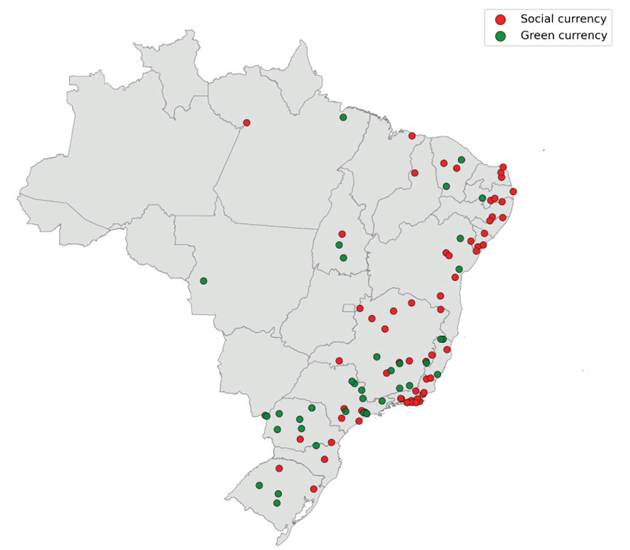 Source: Elaborated by the authors.