 DOES THE REMOVAL OF RESIDUAL BIOMASS FROM Pinus taeda L. ALTER THE PHYSICAL QUALITY OF A DYSTROFERRIC RED LATOSOL (OXISOL)?
ABSTRACT
Economic development and environmental concerns have progressed jointly in recent years, increasing the need to mitigate the negative impacts of mechanized forest harvesting, particularly on soil physical quality. In this context, this study aimed to evaluate changes in soil physical properties before and after forest harvesting by simulating machine traffic over different amounts of harvest residues. The experiment was conducted in the municipality of Quedas do Iguaçu, Paraná, Brazil, in a 25-year-old Pinus taeda L. stand owned by the company Araupel S.A. The soil was classified as Dystroferric Red Latosol (Oxisol). A randomized block design was employed, with a split-plot arrangement over time and four replications. The treatments consisted of five levels of harvest-residue cover (0%, 25%, 50%, 75%, and 100%), over which harvester and forwarder traffic was simulated to represent cutting and wood extraction operations. Soil samples were collected before and after machine traffic within the subplots. The results showed that machine traffic caused compaction in the soil surface layer (0–10 cm), regardless of the amount of surface residue. However, the observed compaction levels did not reach critical thresholds that would impair the development of the pine root system.
Keywords:
Forest soil; Soil properties; Physical attributes
RESUMO
O desenvolvimento econômico e a agenda ambiental têm avançado de forma conjunta nos últimos anos, o que tem ampliado a necessidade de mitigar os impactos negativos associados à mecanização da colheita florestal, especialmente sobre a qualidade física do solo. Diante disso, este estudo teve como objetivo avaliar as alterações nas propriedades físicas do solo antes e após a colheita florestal, simulando o tráfego de máquinas sobre diferentes quantidades de resíduos. O experimento foi conduzido no município de Quedas do Iguaçu – PR, em um povoamento de Pinus taeda L. com 25 anos de idade, pertencente à empresa Araupel S.A. O solo foi classificado como Latossolo Vermelho Distroférrico. Adotou-se o delineamento em blocos ao acaso, em parcelas subdivididas no tempo, com quatro repetições. Os tratamentos consistiram em cinco níveis de cobertura por resíduos da colheita (0%, 25%, 50%, 75% e 100%), sobre os quais houve o tráfego simulado de harvester e forwarder, representando as operações de corte e baldeio da madeira. As amostragens do solo foram realizadas antes e após o tráfego, compondo as subparcelas. Os resultados indicaram que o tráfego das máquinas promoveu compactação na camada superficial do solo (0-10 cm), independentemente da quantidade de resíduo na superfície. No entanto, os níveis de compactação observados não atingiram limites críticos que comprometessem o desenvolvimento do sistema radicular do Pinus.
Palavras-Chave:
Solo florestal; Propriedades do solo; Atributos físicos
1. INTRODUCTION
In Brazil, the area of planted forests totals approximately 10.2 million hectares, comprising mainly eucalyptus (76.76%) and, to a lesser extent, pine (18.82%) (IBA, 2024).
Pinus taeda L. is the most widely cultivated pine species in South America, notable for its high-quality wood and wide versatility of use (Castor Neto et al., 2024). In southern Brazil, plantations of this species are among the most productive in the world due to a combination of favorable climatic conditions and its remarkable adaptation to low-fertility soils (Consalter et al., 2021).
Traditionally, residues from forest harvesting were left on the ground to preserve soil fertility. However, in recent years, these materials have gained value as a source of renewable energy. However, this change in use raises concerns about the potential adverse effects of removing residues on the soil’s physical and chemical properties (Vries et al., 2021).
According to Martins (2024), harvesting in these forests has been conducted with increasingly heavy machinery, thereby increasing the risk of soil degradation. Among the negative impacts associated with forest mechanization, soil compaction is a major global threat to the quality of agricultural and forest soils (Pierzynski & Parmar, 2017). This is because compaction directly affects essential soil attributes such as density, penetration resistance, and porosity, compromising root growth and water and air storage (Shaheb et al., 2021).
Given this scenario, it is essential to adopt machine traffic management strategies to mitigate physical damage to the soil and conserve water and soil resources, thereby enabling more rational and sustainable mechanization (Martins, 2024).
This study aimed to evaluate the physical properties of a Dystroferric Red Latosol (Oxisol) before and after forest harvesting by simulating machine traffic over different amounts of Pinus taeda L. woody residues left on the soil surface.
2. MATERIAL AND METHODS
2.1 Study area location
The study area is located in the municipality of Quedas do Iguaçu, Paraná, with geographic coordinates 52°54'39” W and 25°27'22” S, in forests owned by the company Araupel SA.
The region is classified on the phytogeographic map of the state of Paraná as a semi-deciduous seasonal forest (Roderjan et al., 2002). According to Köppen, the climate is classified as Cfa, a humid subtropical climate, characterized by hot summers and an average annual temperature of 19°C. The average yearly rainfall is 1,875 mm (Alvares et al., 2014).
2.2 Soil and history of the area
Based on a survey of Brazilian soils (Embrapa, 2006), the soil in the study area was classified as Dystroferric Red Latosol (Oxisol), with an average clay content of 66% (Table 1).
Granulometry and density of soil particles under a 25-year-old Pinus taeda L. plantation in Quedas do Iguaçu, PR
Tabela 1
Granulometria e densidade de partículas do solo sob plantio de Pinus taeda L. de 25 anos de idade, em Quedas do Iguaçu, PR
This type of soil is characterized by good drainage and an intense, homogeneous, and highly weathered profile with a predominance of kaolinite and iron oxides. It has low base saturation (<50%) and low natural fertility.
2.3 Traffic simulation and soil compaction experiment
For the simulation of traffic and soil compaction, the company’s harvesting system was considered, in which only commercial wood with bark is used as the raw material. The remaining compartments, needles, branches, and tips remain on the ground and are the subject of this study. Thus, five treatments were implemented to simulate harvesting-machine traffic and to infer soil compaction. These were:
-
- T1 – 100% of residual forest biomass on the ground at the time of passage of forest harvesting machines;
-
- T2 – 75% of residual forest biomass on the ground at the time of passage of forest harvesting machines;
-
- T3 – 50% of residual forest biomass on the ground at the time of passage of forest harvesting machines;
-
- T4 – 25% of residual forest biomass on the ground at the time of passage of forest harvesting machines;
-
- T5 – 0% of residual forest biomass on the ground at the time of passage of forest harvesting machines.
The experiment was conducted using a randomized block design with four replicates per treatment in 3 m × 3 m plots.
For traffic simulation, the entire experimental area was harvested using a harvester, without entering the plots, to avoid interfering with the compaction data. Subsequently, the residue from this step was used to formulate the treatments. The residue was weighed for each plot and manually distributed across the plot.
After that, the harvester traveled once, and the forwarder traveled three times fully loaded. The average soil moisture in the 0-30 cm depth at the time the machines passed was 31%.
In each plot, a trench was excavated to collect soil samples with preserved structure at depths of 0-5 cm, 5-10 cm, 10-20 cm, and 20-30 cm, with collections made before and after the passage of forest harvesting machines. The decision to study compaction to a depth of 30 cm was based on the results of Szymczak et al. (2014), who used the same soil type and management situation. In that study, soil compaction was observed only in the surface layer (0-10 cm) due to harvesting machines.
2.4 Physical analyses of the soil
2.4.1 Mechanical resistance of soil to penetration
Soil resistance to penetration (RP) was assessed using a Falker digital penetrometer with a maximum penetration depth of 60 cm, readings in cm increments, configurable resolution, and a cone diameter of 12.83 mm.
As a result, the average readings from the 0-5 cm, 5-10 cm, 10-20 cm, and 20-30 cm layers were used. Before harvesting, sampling was done in the plot’s center. After harvesting, sampling was targeted at the center of the track left by the harvester and forwarder. Longitudinal sampling was performed at intervals of 10 cm up to 30 cm on both sides, with the center of the machine’s track as the reference point. The track width is 50 cm for both machines.
At the time of RP assessment, the gravimetric moisture content per layer was measured by collecting soil samples with a Dutch auger. These samples were weighed at the time of collection (fresh mass) and then dried in an air-circulation oven at 105 °C for 48 hours, after which they were weighed again (dry mass). The moisture content was then determined.
2.4.2 Particle size distribution and density
Soil particle-size analysis was performed using the pipette method (Embrapa, 1997), with samples having altered structure, collected at depths of 0-5 cm, 5-10 cm, 10-20 cm, and 20-30 cm with a Dutch auger. The soil samples were dispersed using a horizontal agitator at 120 rpm for 4 hours, using 100-mL glasses containing 20 g of soil, 10 mL of 6% NaOH (chemical dispersant), 50 mL of distilled water, and two 3.04-g nylon balls with a diameter of 1.71 cm, and a density of 1.11 g cmr3 (Suzuki et al., 2004a; Suzuki et al., 2004b). Particle density was determined using the Modified Volumetric Balloon method proposed by Gubiani et al. (2006).
2.4.3 Soil porosity and density
The samples with preserved structure, previously saturated and weighed, were transferred to the sand column (Reinert & Reichert, 2006), where a tension of 6 kPa was applied until equilibrium was reached between the water extracted from the sample and the applied tension. The water content retained in the sample reflects the soil’s microporosity. Subsequently, the samples were taken to the oven until they reached a constant weight. The weight of the oven-dried soil divided by the cylinder’s volume determined the soil density. Subtracting the weight of the saturated soil from the dry weight yielded the total porosity. The difference between total porosity and microporosity corresponds to the soil’s macroporosity.
The distribution of soil pores was determined using the capillary-tube water-retention method at tensions of 0, 1, 6, 10, and 100 kPa. The calculation was based on Equation 1 presented by Hillel (1980):
Where: h = height of water rise in the capillary tube; τ = surface tension of water; θ = contact angle of water and capillary walls; p = density of water; g = acceleration due to gravity (9.81 m s−2); r = radius of the capillary tube.
2.4.4 Maximum density and optimum moisture content for compaction
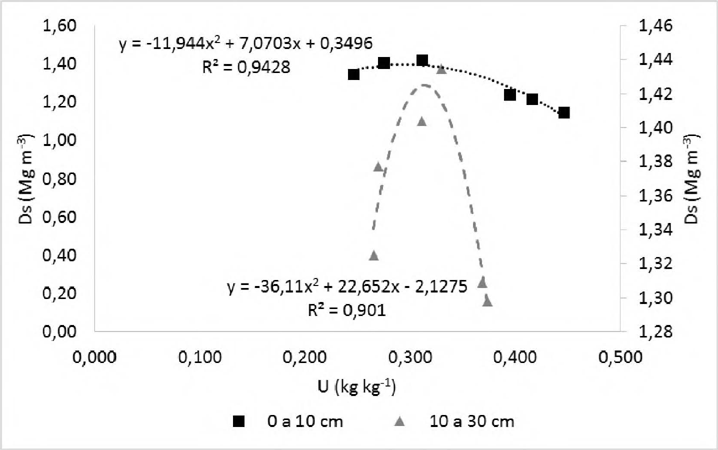
Maximum soil density (Dsmax) and optimum moisture content for compaction (U oc) were determined by the Normal Proctor test, which followed the standard established by ABNT/NBR 7182 MB 33, where the compaction curve is obtained by compacting the soil in three layers with five or six moisture contents, attempting to achieve intervals of 2.5% moisture between points. For this purpose, soil samples with altered structure were collected at depths of 0-10 cm and 10-30 cm and sent to the Soil Physics Laboratory at the Federal University of Santa Maria. The coordinates of the point of maximum density and the optimum moisture content for compaction were determined by fitting a second-degree polynomial to the data (Figure 1).
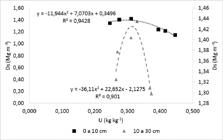
Compaction curve of a Dystroferric Red Latosol (Oxisol) under a 25-year-old Pinus taeda L. plantation in Quedas do Iguaçu – PR
Figura 1
Curva de compactação de um Latossolo Vermelho Distroférrico sob plantio de Pinus taeda L. de 25 anos de idade em Quedas do Iguaçu – PR
In the 0-10 cm layer, the maximum density ranged from 0.20 to 1.40 g cm−3, and the optimum moisture content for compaction ranged from 0.25 to 0.39 kg kg−1. In the 20-30 cm soil layer, the maximum density was higher than in the first layer, ranging from 1.41 to 1.45 g cm−3, and the optimum moisture content for compaction ranged from 0.23 to 0.45 kg kg−1.
2.5 Statistical analyses
The experiment was analyzed using a randomized block design (RBD), applying a two-factor scheme. The residue treatments were the first factor (main plot), and the collection times before and after harvest were the second factor (subplot). The data were submitted to analysis of variance (ANOVA), and the means were compared using Tukey’s test (5%). The data were tested for normality using the Shapiro-Wilk test and analyzed using Sisvar software (Ferreira, 2011).
3. RESULTS
In the two-factor analysis of the evaluated variables, no significant effects of the blocks or treatments on residue percentages were detected. There was also no significant interaction between the factors “residue” and “time of machine passage.” However, a substantial effect of the variable “time” (before and after traffic) was observed within each residue treatment.
Regarding soil density, compaction was observed in the surface layer (0-10 cm) across all treatments (Table 2).
Average values of soil density (g cm−3) in a Dystroferric Red Latosol (Oxisol) under a 25-year-old Pinus taeda L. plantation
Tabela 2
Valores médios da densidade do solo (g cm−3) em um Latossolo Vermelho Distroférrico sob plantio de Pinus taeda L. com 25 anos de idade
In the 10-20 cm layer, compaction was recorded only in treatments with lower residue coverage (0% and 25%). In the deeper layer (20-30 cm), no significant changes in soil density were observed before and after mechanized harvesting. The highest value recorded was 1.28 g cm−3 in the treatment without residue, at a depth of 0-10 cm and with 31% moisture. In the Proctor test, the maximum soil density was 1.40 g cm−3, with an optimum moisture content of 30%.
Regarding macroporosity, the data showed a significant reduction in the 0-10 cm layer, regardless of the amount of residue present during machine traffic, except for the treatment with 75% coverage, which maintained adequate values in the 5-10 cm sublayer (Table 3). Before harvest, values ranged from 0.140 to 0.300 m3 m−3.
Average values of soil macroporosity (m3 m−3) in a Dystroferric Red Latosol (Oxisol) under a 25-year-old Pinus taeda L. plantation
Tabela 3
Valores médios da macroporosidade do solo (m3 m−3) em um Latossolo Vermelho Distroférrico sob plantio de Pinus taeda L. com 25 anos de idade
In the 0-5 cm sublayer, the average reduction in macroporosity was 71%, while in the 5-10 cm sublayer it was 55%. Between 10 and 20 cm deep, the reduction occurred only in treatments with 0% and 25% residue. In the 20-30 cm layer, there were no significant variations among the treatments.
Soil microporosity followed the opposite trend to macroporosity, increasing in the 0-10 cm layer in all treatments (Table 4). In the 10-20 cm interval, only the treatment with 25% residue showed a significant increase. On average, microporosity in the 0-5 cm layer increased by 35% after the passage of the machines.
Average values of soil microporosity (m3 m−3) in a Dystroferric Red Latosol (Oxisol) under a 25-year-old Pinus taeda L. plantation
Tabela 4
Valores médios da microporosidade do solo (m3 m−3) em um Latossolo Vermelho Distroférrico sob plantio de Pinus taeda L. com 25 anos de idade
Total soil porosity (Table 5) was little influenced by residue management. Significant reductions occurred only in the 0-5 cm layer in treatments with 0%, 25%, and 50% residue. At other depths, there were no statistically significant differences before and after harvest.
Average values of Total Soil Porosity (m3 m−3), in a Dystroferric Red Latosol (Oxisol) under a 25-year-old Pinus taeda L. plantation
Tabela 5
Valores médios de Porosidade Total do Solo (m3 m−3), em um Latossolo Vermelho Distroférrico sob plantio de Pinus taeda L. com 25 anos de idade
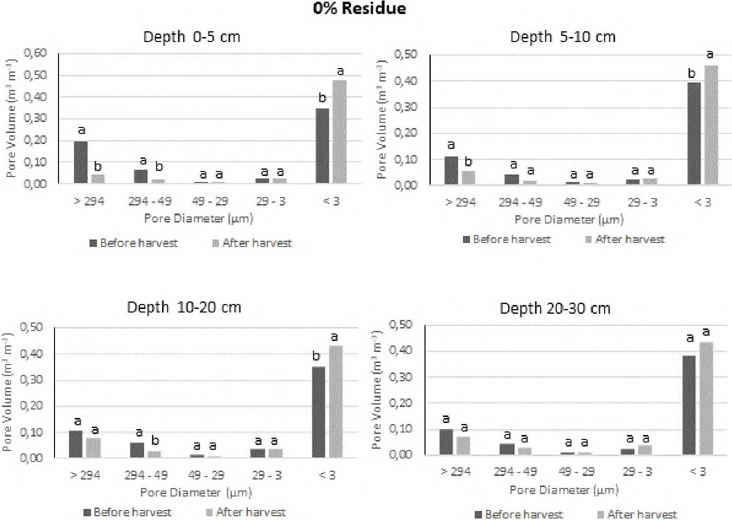
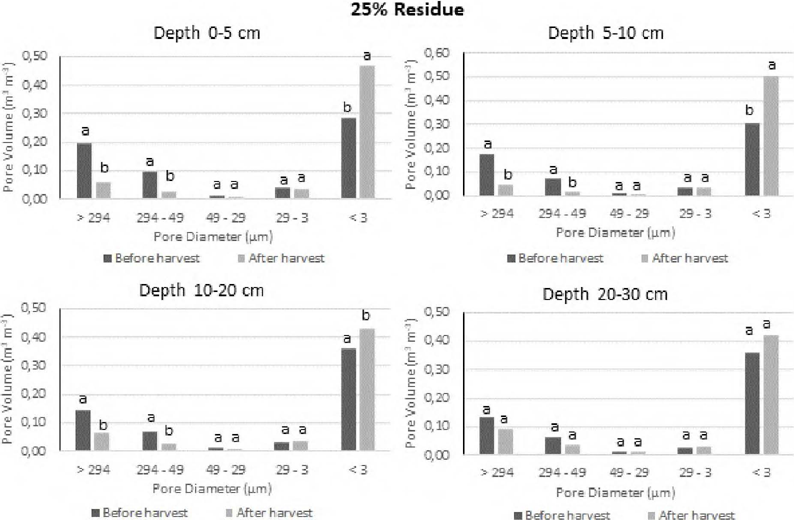
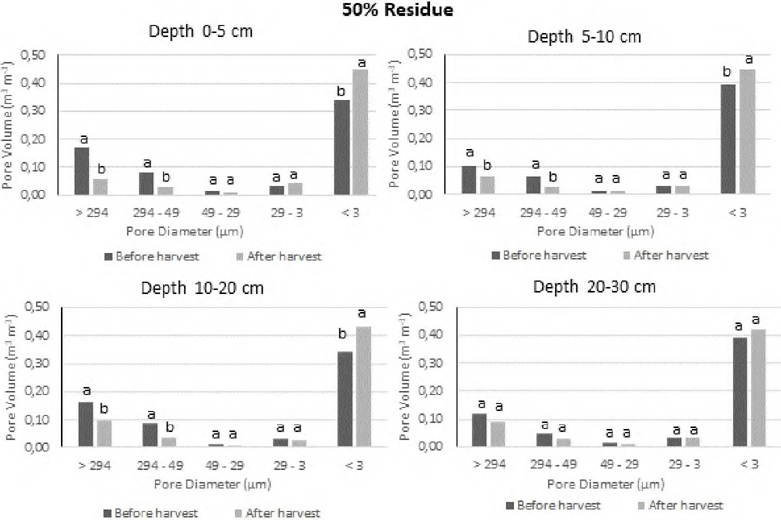
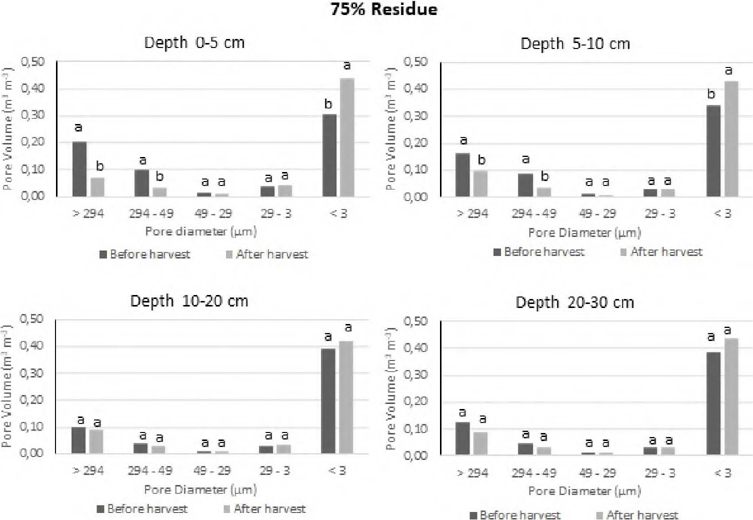
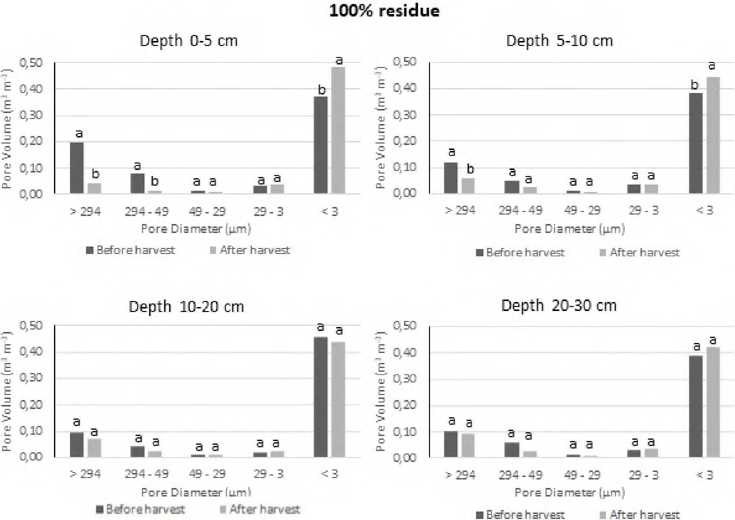
The reduction in total porosity after traffic was 11% in plots without residue (0%), 5.5% with 25% residue, and 8% with 50% residue. Overall, harvesting had an adverse effect on macroporosity in the 0-5 cm and 5-10 cm layers across all treatments (Figures 2, 3, 4, 5, 6).
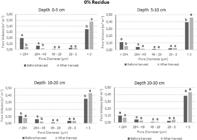
Pore diameter distribution in the 0% residue treatment on the soil as a function of the passage of the harvester and forwarder
Figura 2
Distribuição do diâmetro de poros no tratamento com 0% de resíduo sobre o solo, em função da passagem do harvester e do forwarder
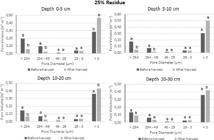
Pore diameter distribution in the 25% residue treatment on the soil as a function of the passage of the harvester and forwarder
Figura 3
Distribuição do diâmetro de poros no tratamento com 25% de resíduo sobre o solo, em função da passagem do harvester e do forwarder
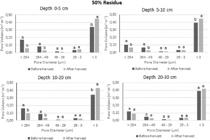
Pore diameter distribution in the 50% residue treatment on the soil as a function of the passage of the harvester and forwarder
Figura 4
Distribuição do diâmetro de poros no tratamento com 50% de resíduo sobre o solo, em função da passagem do harvester e do forwarder
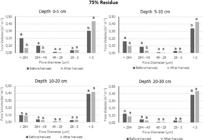
Pore diameter distribution in the 75% residue treatment on the soil as a function of the passage of the harvester and forwarder
Figura 5
Distribuição do diâmetro de poros no tratamento com 75% de resíduo sobre o solo, em função da passagem do harvester e do forwarder
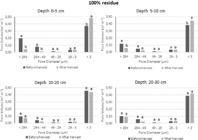
Pore diameter distribution in the 100% residue treatment on the soil as a function of the passage of the harvester and forwarder
Figura 6
Distribuição do diâmetro de poros no tratamento com 100% de resíduo sobre o solo, em função da passagem do harvester e do forwarder
In the pore class with diameters less than 3 μm, a significant difference was observed before and after harvesting across all treatments in both the 0-5 cm and 5-10 cm layers. In the 10-20 cm layer, compaction was evident only in treatments with 0%, 25%, and 50% residue. No significant changes were observed in the 20-30 cm layer.
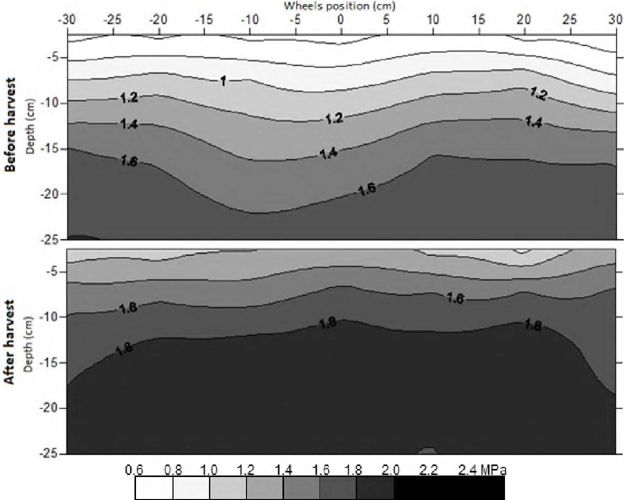
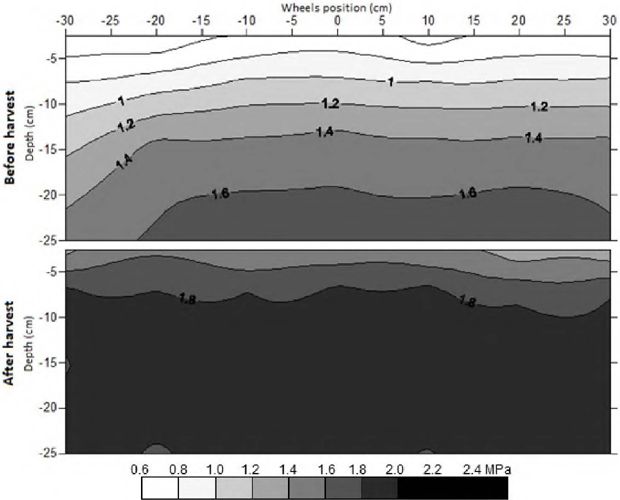
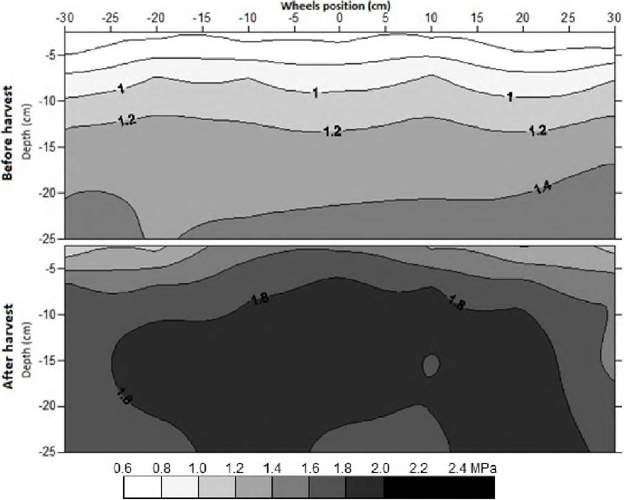
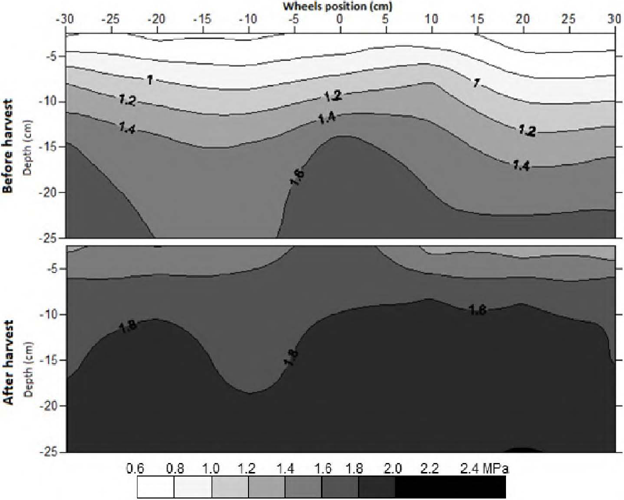
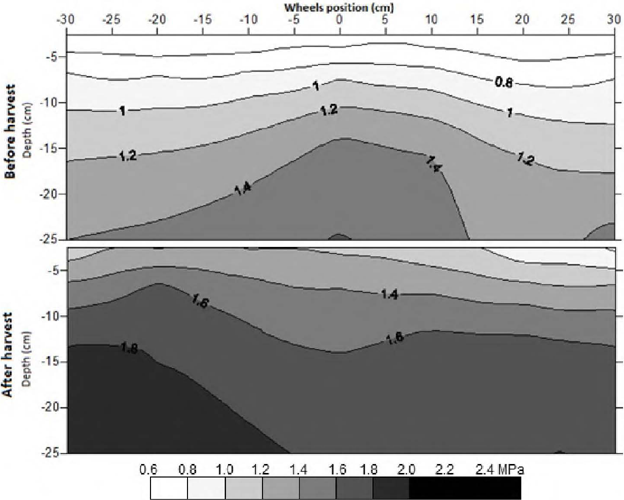
As for soil resistance to penetration (RP), an increase was observed in the first 10 cm in all treatments, with compaction reaching the 10-20 cm layer in treatments with 0%, 25%, and 50% residue (Table 6).
Average values of Soil Penetration Resistance (Mpa), in a Dystroferric Red Latosol (Oxisol) under a 25-year-old Pinus taeda L. plantation
Tabela 6
Valores médios de Resistência a Penetração do Solo (MPa) em um Latossolo Vermelho Distroférrico sob plantio de Pinus taeda L. com 25 anos de idade
Despite these increases, the values did not exceed the critical limit of 2 MPa, indicating that the trees’ root systems are not subject to severe impediments. Nevertheless, the increases in RP were statistically significant. In the 0-5 cm layer, RP increased by an average of 158% after harvest; in the 5-10 cm layer, the increase was 76%.
Analysis of RP across the soil profile revealed a progressive increase in values up to the 10-20 cm layer, approaching the critical limit. When analyzed laterally, RP was higher near the center of the machine’s wheel track on both the left and right sides across all evaluated residue percentages. After harvest, compaction was more intense in plots with 0% and 25% residue, whereas it was attenuated in plots with 100% coverage (Figures 7,8,9,10,11).

Mechanical Penetration Resistance Profile in the 0% residue treatment on the soil as a function of the passage of the harvester and forwarder
Figura 7
Perfil da Resistência a Penetração Mecânica no tratamento com 0% de resíduo sobre o solo em função da passagem do harvester e do forwarder
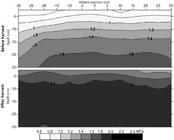
Mechanical Penetration Resistance Profile in the 25% residue treatment on the soil as a function of the passage of the harvester and forwarder
Figura 8
Perfil da Resistência a Penetração Mecânica no tratamento com 25% de resíduo sobre o solo em função da passagem do harvester e do forwarder

Mechanical Penetration Resistance Profile in the 50% residue treatment on the soil as a function of the passage of the harvester and forwarder
Figura 9
Perfil da Resistência a Penetração Mecânica no tratamento com 50% de resíduo sobre o solo em função da passagem do harvester e do forwarder
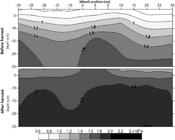
Mechanical Penetration Resistance Profile in the 75% residue treatment on the soil as a function of the passage of the harvester and forwarder
Figura 10
Perfil da Resistência a Penetração Mecânica no tratamento com 75% de resíduo sobre o solo em função da passagem do harvester e do forwarder
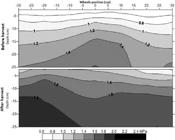
Mechanical Penetration Resistance Profile in the 100% residue treatment on the soil as a function of the passage of the harvester and forwarder
Figura 11
Perfil da Resistência a Penetração Mecânica no tratamento com 100% de resíduo sobre o solo em função da passagem do harvester e do forwarder
4. DISCUSSION
Previous studies corroborate the results reported here, particularly regarding soil compaction induced by forestry machinery traffic. Sampietro et al. (2015) reported greater compaction in the 0-10 cm layer of Regolitic Neosol subjected to Feller Buncher and Skidder traffic. In the present study, an increase in soil density was observed in this same layer, regardless of the amount of harvest residue. Although compaction also affected the 10-20 cm layer in the 0% and 25% residue treatments, there were no significant changes in the 20-30 cm layer. Considering the density values reported by Reichert et al. (2003) of 1.30-1.40 g cm−3 as the critical limit, the values recorded in this study did not exceed this range, indicating a low probability of root growth restriction.
The reduction in soil macroporosity was evident in the surface layers, with decreases of up to 71% in the 0-5 cm layer and 55% in the 5-10 cm layer, regardless of residue amount, except for the 75% treatment, which showed greater resilience. Ferreira (2010) highlights the importance of macropores for water infiltration, aeration, and gas exchange in the soil. Compaction, by reducing pore size, impairs root respiration and microbial activity, thereby compromising plant establishment. Ferreira et al. (1999) observed that Latossols with clayey texture, although dense, can maintain high macroporosity and good permeability, provided they are not compacted.
The decrease in macroporosity must be carefully considered when planning the next planting cycle, since approximately 60% of pine roots are concentrated in the top 10 cm of soil (Lopes et al., 2010). These structural impacts were similar to those reported by Silva et al. (2006), who observed a 53% reduction in macroporosity in a Red-Yellow Latosol compacted to 900 kPa. The same authors also reported an increase in microporosity of up to 35%, a pattern also observed in this study in the 0–5 cm layer, indicating the conversion of macropores into micropores, a phenomenon already described by Secco et al. (2004) as common in soils compacted by intensive agricultural or forestry use.
Although the total soil porosity decreased in the surface layer, it remained within the range considered adequate for clay soils, according to the criteria established by Pedrosa (2021), who proposes values between 0.300 and 0.600 m3 m−3 as ideal. The average values observed in this study, before and after harvest, ranged from 0.567 to 0.697 m3 m−3 and from 0.563 to 0.610 m3 m−3, respectively. These data suggest that, despite compaction, the soil still maintains a functional level of total porosity. However, Machado et al. (2023) caution that increasing the number of machine passes can exacerbate this situation, directly affecting soil structure and reducing its water retention and transmission capacities.
Soil resistance to penetration (RP) increased significantly in the 0-5 cm and 5-10 cm layers, particularly in treatments with lower residue levels (0%, 25%, and 50%).
Even so, the average values did not exceed the critical limit of 2 MPa, as indicated by Bellote & Dedecek (2006), suggesting that the trees’ root systems do not encounter severe physical impediments. However, the increase in RP in the 0-5 cm layer reached 158%, and in the 5-10 cm layer it was 76%, which may indicate progressive limitation over time if compaction persists in future cycles.
Rodrigues et al. (2015), in a study of harvester and forwarder traffic, found an RP increase of about 67.9% in the 0-10 cm layer, results consistent with those of this study. When analyzing the distribution of RP along the soil profile, a gradual increase in values is observed up to the 10-20 cm layer, which can be partially attributed to pedogenetic evolution and the transport of fine particles, as discussed by Camargo & Alleoni (2006).
In addition to the directly affected physical attributes, compaction intensity is influenced by the harvesting system employed. According to Fenner (2002), the harvester-forwarder module concentrates traffic on extraction roads, thereby restricting compaction to specific strips. On the other hand, systems with feller bunchers and skidders promote traffic across virtually the entire area, increasing the risk of widespread degradation.
Szymczak (2013) also found that pine cultivation reduces soil physical quality compared to native forest, with losses of 11% in total porosity, 42% in macroporosity, and a 13% increase in microporosity in the 0–5 cm layer. These results reinforce the findings of the present study, showing that although mechanized harvesting inevitably causes impacts, technological advances in machinery and the strategic use of forest residues can mitigate compaction. Reichert et al. (2007) argue that although compaction caused by forest harvesting can reach greater depths than those observed in agricultural areas, the current trend is toward more superficial impacts, especially when adequate management and protective soil cover from residues are in place.
Thus, the presence of crop residues in the soil mitigates compaction caused by forestry machinery traffic and is a recommended practice for conserving soil structure and promoting the success of subsequent forest rotations.
5. CONCLUSION
Short-log harvesting resulted in significant compaction in the surface layer of the Dystroferric Red Latosol (Oxisol) (0-10 cm) along the machine traffic line, regardless of the amount of residual biomass remaining on the soil. However, the observed values of soil density and penetration resistance did not exceed critical levels that would restrict root growth in Pinus taeda L., indicating that, despite the physical alteration, the soil maintained conditions suitable for root system development.
In the subsurface layer (10-20 cm), compaction effects were more pronounced in treatments with lower residue contents (0%, 25%, and 50%), reinforcing the protective role of residual biomass in preserving soil structure from machine traffic. The absence of significant changes in the 20-30 cm layer confirms that the effects of mechanized harvesting, under the conditions studied, are predominantly superficial.
Therefore, the removal of residual biomass from Pinus taeda L. alters the physical quality of the Dystroferric Red Latosol (Oxisol), especially in the more superficial layers. However, leaving part of the residues on the soil helps mitigate the effects of machine traffic and should be considered a soil conservation practice in forest plantations.
DATA AVAILABILITY
The entire dataset supporting the findings of this study has been published within the article.
6. REFERENCES
-
Alvares, C. A., Stape, J. L., Sentelhas, P. C., Gonçalves, J. L. M., & Sparovek, G. (2014). Kόppen’s climate classification map for Brazil. Meteorologische Zeitschrift, 22(6), 711–728. https://doi.org/10.1127/0941-2948/2013/0507
» https://doi.org/10.1127/0941-2948/2013/0507 - Bellote, A. F. J., & Dedecek, R. A. (2006). Atributos físicos e químicos do solo e suas relações com o crescimento e a produtividade do Pinus taeda. Boletim de Pesquisa Florestal, 53, 21–38.
-
Camargo, O. A., & Alleoni, L. R. (2006). Causas da compactação do solo. Infobibos. https://www.infobibos.com/Artigos/CompSolo/C3/Comp3.htm
» https://www.infobibos.com/Artigos/CompSolo/C3/Comp3.htm -
Castor Neto, T. C., Santos, V. B., Kulmann, M. S. S., Cirilo, N. R. M., Schumacher, M. V., Stape, J. L., & Vidaurre, G. B. (2024). The impact of age and forestry practices on the wood quality of Pinus taeda L. grown in different sites in Southern Brazil. Forest Ecology and Management, 562, Article 121898. https://doi.org/10.1016/j.foreco.2024.121898
» https://doi.org/10.1016/j.foreco.2024.121898 -
Consalter, R., Motta, A. C. V., Barbosa, J. Z., Vezzani, F. M., Rubilar, R. A., Prior, S. A., Nisgoski, S., & Bassaco, M. V. M. (2021). Fertilization of Pinus taeda L. on an acidic oxisol in southern Brazil: Growth, litter accumulation, and root exploration. European Journal of Forest Research, 140(5), 1095–1112. https://doi.org/10.1007/s10342-021-01390-z
» https://doi.org/10.1007/s10342-021-01390-z - Empresa Brasileira de Pesquisa Agropecuária – EMBRAPA. (1997). Manual de métodos de análise de solo (2ª ed.). Embrapa – CNPS.
- Empresa Brasileira de Pesquisa Agropecuária – EMBRAPA. (2006). Sistema brasileiro de classificação de solos (2ª ed.). Embrapa – SPI.
- Fenner, P. T. (2002). Compactação do solo. In C. C. Machado (Ed.), Colheita florestal (pp. 375–396). UFV.
-
Ferreira, D. F. (2011). Sisvar: A computer statistical analysis system. Ciência e Agrotecnologia, 35(6), 1039–1042. https://doi.org/10.1590/S1413-70542011000600001
» https://doi.org/10.1590/S1413-70542011000600001 - Ferreira, M. M. (2010). Caracterização do solo. In Q. Van Lier (Ed.), Física do solo (pp. 1–27). Sociedade Brasileira de Ciência do Solo.
-
Ferreira, M. M., Fernandes, B., & Curi, N. (1999). Mineralogia da fração argila e estrutura de latossolos da região Sudoeste do Brasil. Revista Brasileira de Ciência do Solo, 23(3), 507–514. https://doi.org/10.1590/S0100-06831999000300003
» https://doi.org/10.1590/S0100-06831999000300003 -
Gubiani, P. I., Reinert, D. J., & Reichert, J. M. (2006). Método alternativo para a determinação da densidade de partículas do solo: exatidão, precisão e tempo de processamento. Ciência Rural, 36(2), 664–668. https://doi.org/10.1590/S0103-84782006000200049
» https://doi.org/10.1590/S0103-84782006000200049 - Hillel, D. (1980). Fundamentals of soil physics. Academic Press.
-
Indústria Brasileira de Árvores – IBA. (2024). Relatório anual. https://iba.org/publicacoes
» https://iba.org/publicacoes -
Lopes, V. G., Schumacher, M. V., Calil, F. N., Vieira, M., & Witschoreck, R. (2010). Quantificação de raízes finas em um povoamento de Pinus taeda L. e uma área de campo em Cambará do Sul, RS. Ciência Florestal, 20(4), 569–578. https://doi.org/10.5902/198050982415
» https://doi.org/10.5902/198050982415 -
Machado, T. M., Souza, C. M. A., Arcoverde, S. N. S., Chagas, A., Olszevski, N., & Cortez, J. W. (2023). Níveis de compactação e sistemas de preparo sobre atributos físicos do solo e componentes de produção da soja. Agrarian, 16(56) e17037. https://doi.org/10.30612/agrarian.v16i56.17037
» https://doi.org/10.30612/agrarian.v16i56.17037 -
Martins, R. P. (2024). Modelagem da resistência do solo à penetração e risco de compactação sob cultivo florestal [Doctoral dissertation, Universidade Estadual Paulista “Júlio de Mesquita Filho” – UNESP]. https://repositorio.unesp.br/entities/publication/35959a09-02cf-40d4-b31d-5707c33974b8
» https://repositorio.unesp.br/entities/publication/35959a09-02cf-40d4-b31d-5707c33974b8 -
Pedrosa, G. M. (2021). Variabilidade espacial dos atributos físicos do solo e sua relação com a produtividade do sorgo [Undergraduate thesis, Universidade Federal de Uberlândia]. https://repositorio.ufu.br/handle/123456789/31874
» https://repositorio.ufu.br/handle/123456789/31874 - Pierzynski, G., & Parmar, B. (2017). Threats to soils: global trends and perspectives. (Global Land Outlook Working Paper). United Nations Convention to Combat Desertification.
- Reichert, J. M., Reinert, D. J., & Braida, J. A. (2003). Qualidade dos solos e sustentabilidade de sistemas agrícolas. Ciência e Ambiente, 27, 29–48.
- Reichert, J. M., Suzuki, L. E. A. S., & Reinert, D. J. (2007). Compactação do solo em sistemas agropecuários e florestais: identificação, efeitos, limites críticos e mitigação. In C. A. Ceretta, L. S. Silva & J. M. Reichert (Eds.), Tópicos em ciência do solo (Vol. 5, pp. 49–134). Sociedade Brasileira de Ciência do Solo.
-
Reinert, D. J., & Reichert, J. M. (2006). Coluna de areia para medir a retenção de água no solo – protótipos e teste. Ciência Rural, 36(6), 1931–1935. https://doi.org/10.1590/S0103-84782006000600044
» https://doi.org/10.1590/S0103-84782006000600044 - Roderjan, C. V., Galvão, F., Kuniyoshi, Y. S., & Hatschbach, G. G. (2002). As unidades fitogeográficas do estado do Paraná. Ciência e Ambiente, 24, 75–92.
- Rodrigues, C. K., Lopes, E. S.. Müller, M. M. L., Genú, A. M. (2015). Variabilidade espacial da compactação de um solo submetido ao tráfego de harvester e forwarder. Scientia Forestalis, 43(106), 387–394.
-
Sampietro, J. A., Lopes, E. S., & Reichert, J. M. (2015). Compactação causada pelo tráfego de Feller Buncher e Skidder em um Neossolo Regolítico sob distintas umidades. Ciência Florestal, 25(1), 239–248. https://doi.org/10.1590/1980-509820152505239
» https://doi.org/10.1590/1980-509820152505239 -
Secco, D., Reinert, D. J., Reichert, J. M., & Ros da, C. O. (2004). Produtividade de soja e propriedades físicas de um Latossolo submetido a sistemas de manejo e compactação. Revista Brasileira de Ciência do Solo, 28(5), 797–804. https://doi.org/10.1590/S0100-06832004000500001
» https://doi.org/10.1590/S0100-06832004000500001 -
Shaheb, M. R., Venkatesh, R., & Shearer, S. A. (2021). A review on the effect of soil compaction and its management for sustainable crop production. Journal of Biosystems Engineering, 46(4), 417–429. https://doi.org/10.1007/s42853-021-00117-7
» https://doi.org/10.1007/s42853-021-00117-7 -
Silva, S. R., Barros, N. F., & Costa, L. M. (2006). Atributos físicos de dois Latossolos afetados pela compactação do solo. Revista Brasileira de Engenharia Agrícola e Ambiental, 10(4), 842–847. https://doi.org/10.1590/S1415-43662006000400009
» https://doi.org/10.1590/S1415-43662006000400009 - Suzuki, L. E. A. S., Reinert, D. J., Kaiser, D. R., Kunz, M., Pellegrini, A., Reichert, J. M., & Albuquerque, J. A. (2004a). Teor de argila de solos sob diferentes tempos de agitação horizontal, tempo de contato do dispersante químico e dispersão mecânica. In: Anais da Reunião Brasileira de Manejo e Conservação do Solo e da Agua (p. 15). Santa Maria: Sociedade Brasileira de Ciências do Solo.
- Suzuki, L. E. A. S., Reinert, D. J., Kaiser, D. R., Kunz, M., Pellegrini, A., Reichert, J. M., & Albuquerque, J. A. (2004b). Areia total de solos sob diferentes tempos de agitação horizontal, tempo de contato do dispersante químico e dispersão mecânica. In: Anais da Reunião Brasileira de Manejo e Conservação do Solo e da Agua (p. 15). Santa Maria: Sociedade Brasileira de Ciências do Solo.
-
Szymczak, D. A. (2013). Compactação do solo causada pelos tratores florestais harvester e forwarder na colheita de Pinus taeda L. [Master’s thesis, Universidade Federal de Santa Maria]. https://repositorio.ufsm.br/handle/1/8710
» https://repositorio.ufsm.br/handle/1/8710 -
Szymczak, D. A., Brun, E. J., Reinert, D. J., Frigotto, T., Mazzalira, C. C., Lúcio, A. D., & Marafiga, J. (2014). Compactação do solo causada por tratores florestais na colheita de Pinus taeda L. na região sudoeste do Paraná. Revista Árvore, 38(4), 641–648. https://doi.org/10.1590/S0100-67622014000400007
» https://doi.org/10.1590/S0100-67622014000400007 -
Vries, W., Jong, A., Kros, J., & Spijker, J. (2021). The use of soil nutrient balances in deriving forest biomass harvesting guidelines specific to region, tree species and soil type in the Netherlands. Forest Ecology and Management, 479, Article 118591. https://doi.org/10.1016/j.foreco.2020.118591
» https://doi.org/10.1016/j.foreco.2020.118591
Edited by
-
Editors:
Sílvio Nolasco de Oliveira Neto and Rodolfo Soares de Almeida.