 RELATIONSHIP BETWEEN GROWTH, RESIN DUCTS, AND GUM-RESIN PRODUCTIVITY IN Pinus caribaea var. hondurensis BARR. & GOLF.
ABSTRACT
The genus Pinus has broad economic relevance in Brazil, both for timber production and for oleoresin extraction, an activity in which the country ranks among the world’s leading producers. Pinus caribaea var. hondurensis Barr. & Golf. is one of the tropical species with the greatest potential for multiple uses, distinguished by its vigorous growth and resin-producing viability. This study aimed to evaluate its growth in diameter at breast height (DBH), the number of resin canals (NRC), gum resin productivity (GRP), and the relationship among these traits in 31 half-sib progenies of this species, aiming to identify materials with potential for breeding programs. The experiment was established in a randomized complete block design, with thirty replications and one plant per plot, in Lavras, Minas Gerais state, Brazil. For the evaluation of DBH (cm), NRC, and GRP (kg tree⁻1), only three replications were considered in this study, with DBH and NRC assessed at eight years and GRP at nine years after planting. The data were subjected to analysis of variance (ANOVA) and the Scott-Knott test (p < 0.10), in addition to Pearson correlation analysis. The results revealed significant phenotypic variability among the progenies for all the analyzed traits. The superior progenies were identified for DBH, NRC, and GRP, highlighting the potential for genetic gains. The correlation between DBH and NRC was moderate (0.74), while correlations with GRP were low (<0.32), indicating its multifactorial nature. The study demonstrates phenotypic variability among progenies and low correlation among the evaluated traits, indicating the need for independent selection strategies to maximize gains in a breeding program.
Keywords:
Forest breeding; Progeny; Phenotypic variability
RESUMO
O gênero Pinus possui ampla relevância econômica no Brasil, tanto para produção de madeira quanto para extração de goma-resina, atividade em que o país se destaca como um dos principais produtores mundiais. Pinus caribaea var. hondurensis Barr. & Golf. é uma das espécies tropicais com maior potencial para uso múltiplo, destacando-se pelo crescimento vigoroso e viabilidade resinífera. Este estudo teve como objetivo avaliar o crescimento em diâmetro à altura do peito (DAP), o número de canais resiníferos (NCR), a produtividade de goma-resina (PGR) e a relação entre eles, em 31 progênies de meios-irmãos dessa espécie, visando identificar materiais com potencial para programas de melhoramento. O experimento foi instalado em delineamento de blocos completos casualizados, com trinta repetições e uma planta por parcela, em Lavras, estado de Minas Gerais. Para a avaliação do DAP (cm), do NCR e da PGR (kg árvore-1) neste estudo, foram consideradas apenas três repetições, sendo DAP e NCR avaliados aos oito anos e PGR aos nove anos após o plantio. Os dados foram submetidos à análise de variância (ANAVA) e ao teste de Scott-Knott (p < 0,10), além da análise de correlação de Pearson. Os resultados revelaram variabilidade fenotípica significativa entre as progênies em todas as características analisadas. Foram identificadas progênies superiores para DAP, NCR e PGR, destacando o potencial para ganhos genéticos. A correlação entre DAP e NCR foi moderada (0,74), enquanto as correlações com PGR foram baixas (<0,32), indicando seu caráter multifatorial. O estudo aponta variabilidade fenotípica entre as progênies e baixa correlação entre as variáveis em estudo, demonstrando a necessidade de estratégias de seleção independentes para maximização de ganhos com a seleção em um programa de melhoramento.
Palavras-Chave:
Melhoramento florestal; Variabilidade fenotípica; Resinagem
1. INTRODUCTION
In Brazil, the cultivation of species from the Pinus genus gained prominence from the second half of the 20th century onward, driven by public reforestation policies and tax incentives aimed at the forestry sector (SFB, 2025). Among the main factors that contributed to the widespread adoption of these species are their rapid growth, high wood productivity, and ability to adapt to different edaphoclimatic conditions (dos Santos et al., 2021).
Currently, species of the genus Pinus are widely used in the timber, pulp, and paper industries, reflecting their well-established economic importance in Brazil. In parallel with these uses, some species also show potential for gum resin extraction, an activity considered secondary, but which places Brazil as the world’s largest exporter and second-largest producer, surpassed only by China (ARESB, 2025; Candaten et al., 2021; Zhang et al., 2023). The species Pinus caribaea var. hondurensis Barr. & Golf. is one of the most cultivated in tropical regions, being commercially valued for the combination of high wood yield and resin production potential (de Lima et al., 2021; dos Santos et al., 2021). Its gum resin is used in the production of rosin, turpentine, and other raw materials for the chemical, pharmaceutical, and biofuel industries (Brito et al., 1980; ARESB, 2025).
The diameter growth of P. caribaea var. hondurensis is influenced by genetic, climatic, and management factors, and may reach annual increments between 2 and 3 cm in diameter at breast height (Silva et al., 2019; Oliveira et al., 2024). This growth directly reflects cambial activity and is associated with tree vigor, favoring, for example, the formation of resiniferous structures - resin canals - responsible for the transport and exudation of gum resin, which constitutes a defense mechanism in conifers (Ananías et al., 2010; Ferreira & Tomazello-Filho, 2012). Studies indicate that diameter growth may be positively correlated with resin canal density and gum resin yield (Ferreira & Tomazello-Filho, 2012; Leggate et al., 2020; López-Alvarez et al., 2023).
Despite the recognized economic and biological importance of this species, studies that simultaneously integrate morphometric, anatomical, and productive variables at the progeny level under tropical conditions are still scarce. The development of research addressing these variables is relevant to tropical forestry, as the identification of progenies with superior morphometric, anatomical, and productive performance may support the selection of more suitable genetic materials for resin exploitation in commercial plantations. Therefore, the objective of this study was to evaluate the diameter at breast height (cm), the number of resin canals, the gum resin productivity (kg tree⁻1), and the relationship among these traits in thirty-one progenies of P. caribaea var. hondurensis under field conditions.
2. MATERIAL AND METHODS
2.1 Experimental characterization
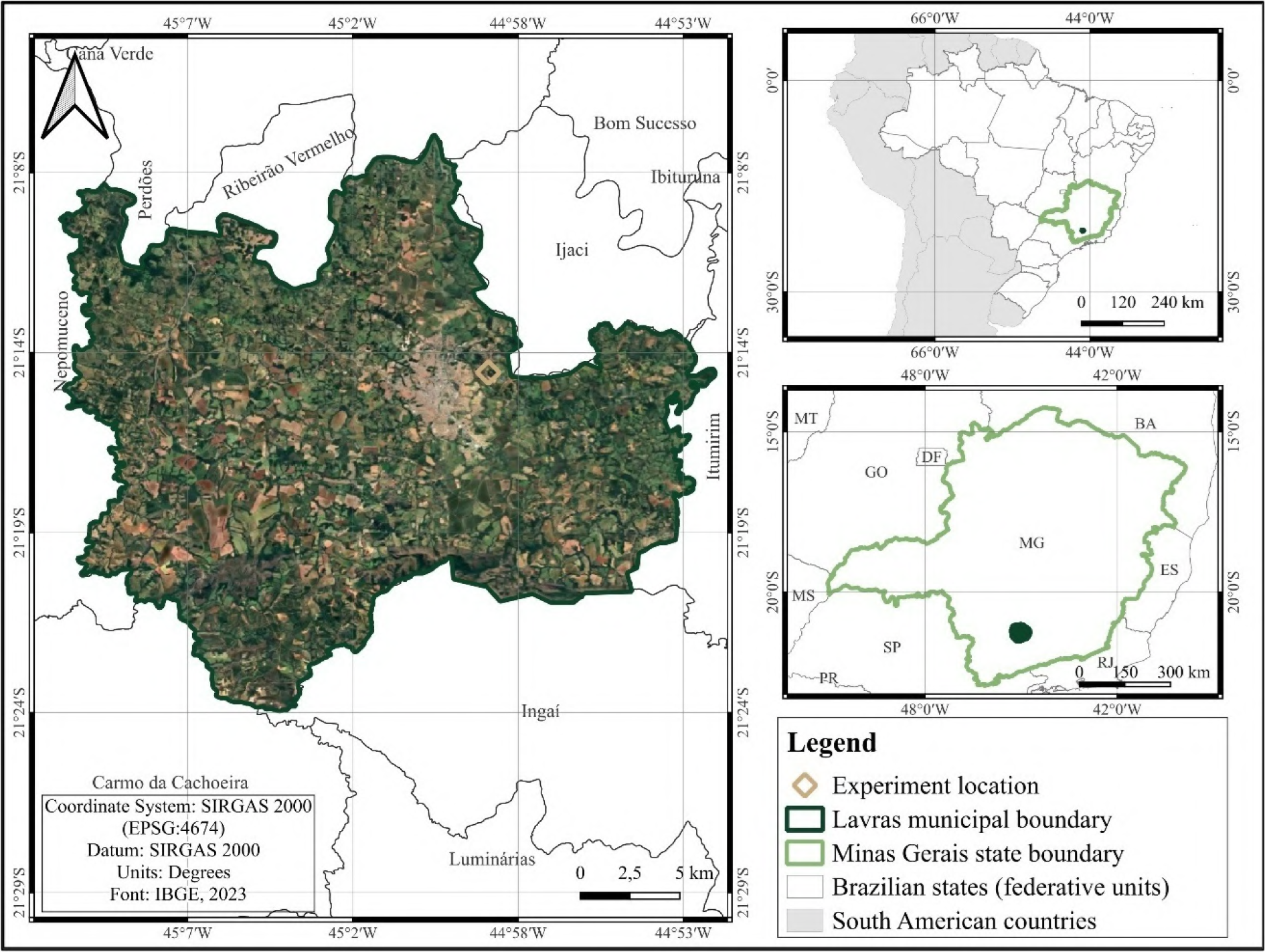
The experiment was established in September 2015 in Lavras, state of Minas Gerais, Brazil (21°14'19.6"S; 44°58'28.5"W) (Figure 1). The area is located in an ecotone region between the Cerrado and the Atlantic Forest and has dystrophic Haplic Cambisol soil (Embrapa, 2018). The climate is classified as high-altitude tropical with mild summers (Cwb), according to the Köppen-Geiger classification, with a mean annual temperature of 19.6°C and mean annual precipitation of 1,511 mm (INMET, 2025).
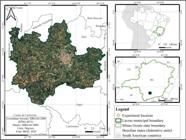
Map of the experimental area with the half-sib progenies of P. caribaea var. hondurensis, in Lavras, MG, Brazil
Figura 1
Mapa da área experimental com as progênies de meios-irmãos de P. caribaea var. hondurensis, em Lavras - MG
The progenies of P. caribaea var. hondurensis were obtained from open-pollinated parent trees located in commercial plantations of Resineves Agronegócios, in Itapeva. The company itself produced the seedlings in 55 cm3 tubes filled with commercial substrate. The progeny test was established following the methodology described by Nieri et al. (2022), using a randomized complete block design composed of thirty-one half-sib progenies of P. caribaea var. hondurensis (P18, P19, P20, P21, P22, P24, P25, P26, P28, P30, P33, P34, P35, P37, P39, P40, P41, P43, P44, P46, P49, P50, P52, P54, P55, P57, P58, P59, P61, P63, and P68), with thirty replications containing one plant per plot. However, due to operational constraints, only data from three replications were considered for the evaluations performed in this study.
2.2 Evaluation of DBH, number of resin canals, and gum resin production
The diameter at breast height (DBH) and the number of resin canals (NRC) were evaluated eight years after planting. DBH (cm) was measured using a tree caliper. The number of resin canals per mm2 was determined according to the following procedure:
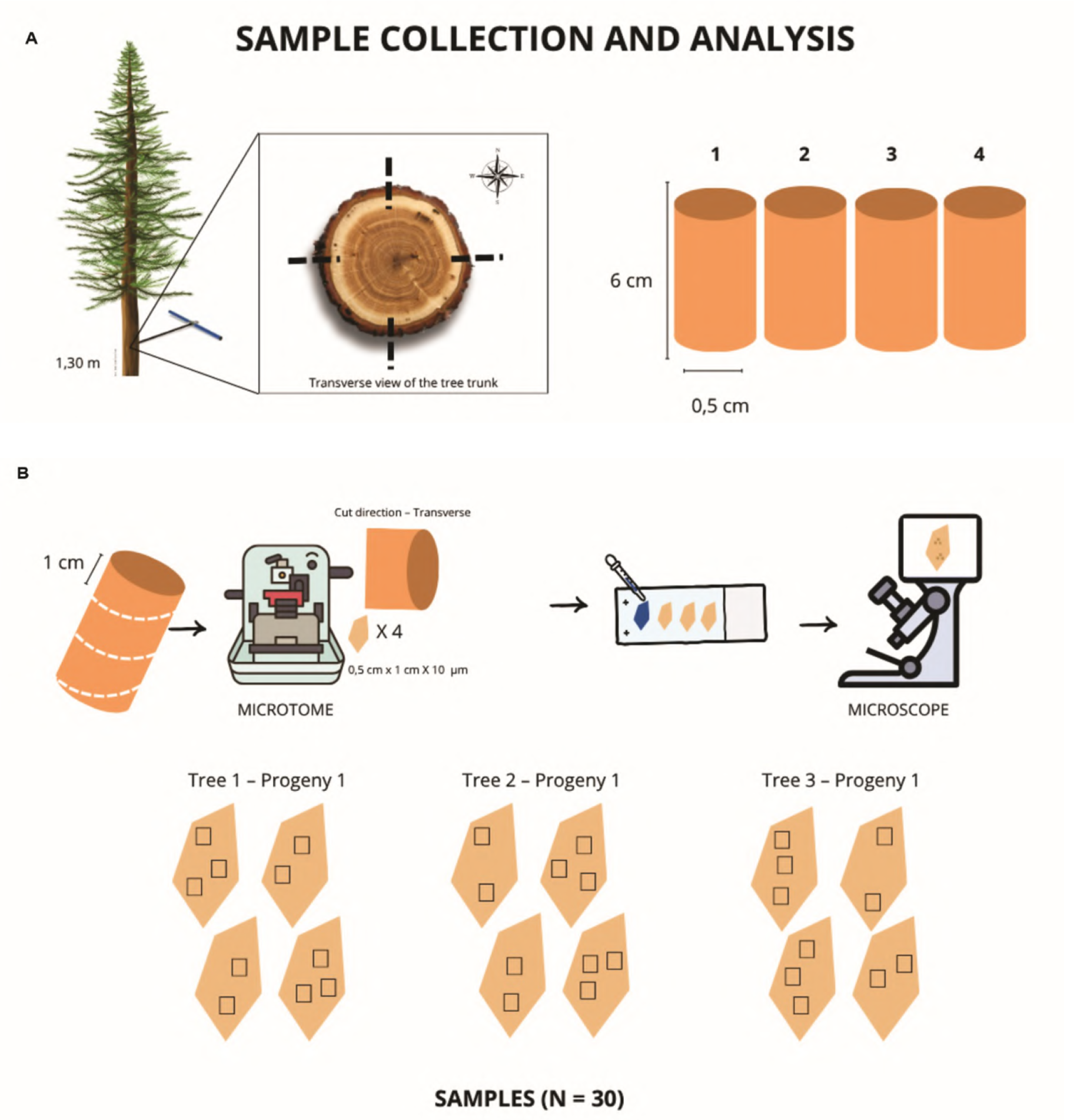
Sample collection - Four samples were collected from the trunk of each tree at breast height (1.30 m). Cylindrical samples measuring 0.5 cm in diameter × 6 cm in length were obtained using an increment borer inserted perpendicular to the main axis of the trunk. For the sample collection, the north, south, east, and west positions of the trunk were considered, maintaining standardization for all the trees used in the experiment. The collected samples were placed in properly identified permeable containers and kept immersed in distilled water until the laboratory processing (Figure 2A).
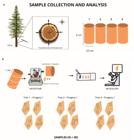
Characterization of the collection and processing stages of P. caribaea var. hondurensis samples for quantification of the number of resin canals. A - Field sample collection. B - Sample processing and slide preparation
Figura 2
Caracterização das etapas de coleta e processamento das amostras de P. caribabea var. hondurensis para quantificação do número de canais resiníferos. A - Coleta das amostras em campo. B - Processamento das amostras e preparo das lâminas
Sample processing - The samples were processed at the Wood Anatomy Laboratory of the Federal University of Lavras, Minas Gerais state, Brazil. Fragments measuring 1 cm were removed from each cylindrical sample (from the first centimeter immediately after the bark) and sectioned into 10 µm thick transverse sections using a Leica SM 2010R sliding microtome (Leica Biosystems, Wetzlar, Germany). To characterize each tree, four fragments (one from each position - north, south, east, and west) measuring 0.5 cm × 1 cm were arranged on a microscope slide (Figure 2B).
Staining of the sections - The sections were cleared with a sodium hypochlorite solution, stained with safranin, dehydrated through an ethanol series (20%, 50%, 70%, 80%, and 100%) combined with n-butyl acetate (25%, 50%, 75%, and 100%) (Johansen, 1940), and mounted with Entellan® synthetic resin.
Image acquisition - The images were obtained and analyzed using a Zeiss Primo Star HAL/LED light microscope (Carl Zeiss, Oberkochen, Germany) coupled to an Opton digital camera at 4× magnification.
Photographs - Vectorized images were produced using CorelDRAW 3.0 software to illustrate the resin canals in the obtained sections.
Canal quantification - In the photographs, the number of canals per mm2 was randomly quantified within the fragment without overlap using a 1 mm × 1 mm template. For each tree, 30 samples were collected, and the mean number of canals per mm2 was subsequently calculated.
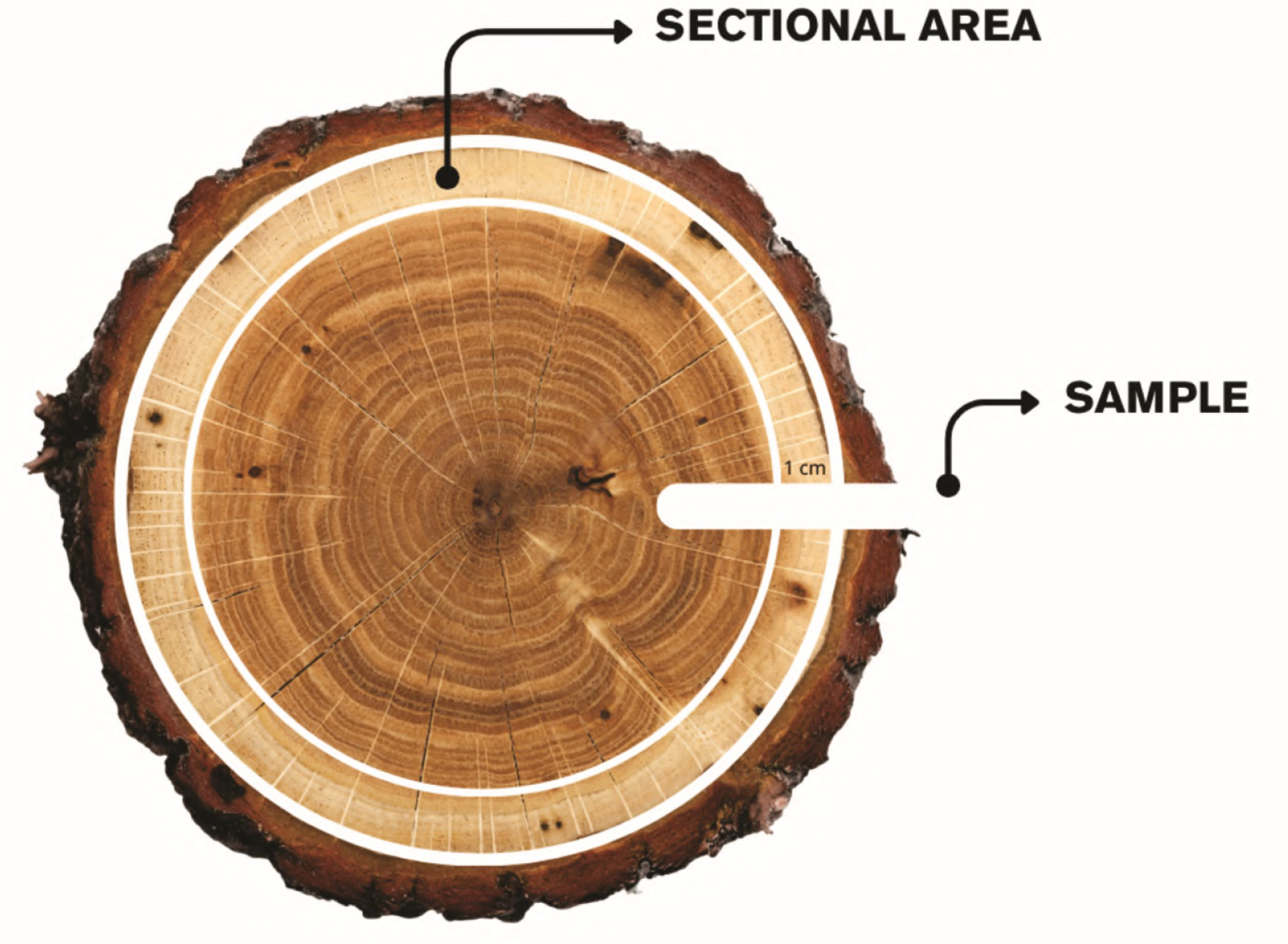
The mean number of canals per mm2 was extrapolated considering the sectional area (Equation 1) of the first centimeter surrounding the tree trunk immediately beneath the bark (Figure 3), given by:
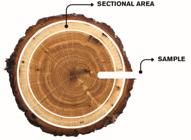
Characterization of the sectional area of the first centimeter surrounding the tree trunk, immediately beneath the bark, for quantification of the number of resin canals in P. caribaea var. hondurensis
Figura 3
Caracterização da área seccional do primeiro centímetro que circunda o tronco da árvore, imediatamente após a casca, para quantificação do número de canais resiníferos em P. caribaea var. hondurensis
Where: Ac = sectional area of the ring (mm2); π = 3.1416; R = outer radius; r = inner radius.
Subsequently, the number of resin canals (NRC) for the respective sectional area was obtained using Equation 2:
The evaluation of gum resin productivity (GRP - kg tree⁻1) was carried out at nine years of age over six months (November 2024 to May 2025). The trees with a diameter equal to or greater than 15 cm were selected for resin tapping on one side of the trunk, following the methodology adapted from Lazarotto et al. (2023).
2.3 Statistical analyses
After obtaining the data, the analysis of variance (ANOVA) was performed and, when significant differences among progenies were detected, mean comparisons were carried out using the Scott-Knott test (p < 0.10).
The percentage of coincidence among progenies (considering the variables GRP and DBH; GRP and NRC) within the best-performing group(s) was determined using Equation 3:
Pearson’s correlation was determined for the variables under study. All statistical procedures were performed using the R software (R Core Team, 2024), and the graphs were generated using the ggplot2 package (Wickham et al., 2026).
3. RESULTS
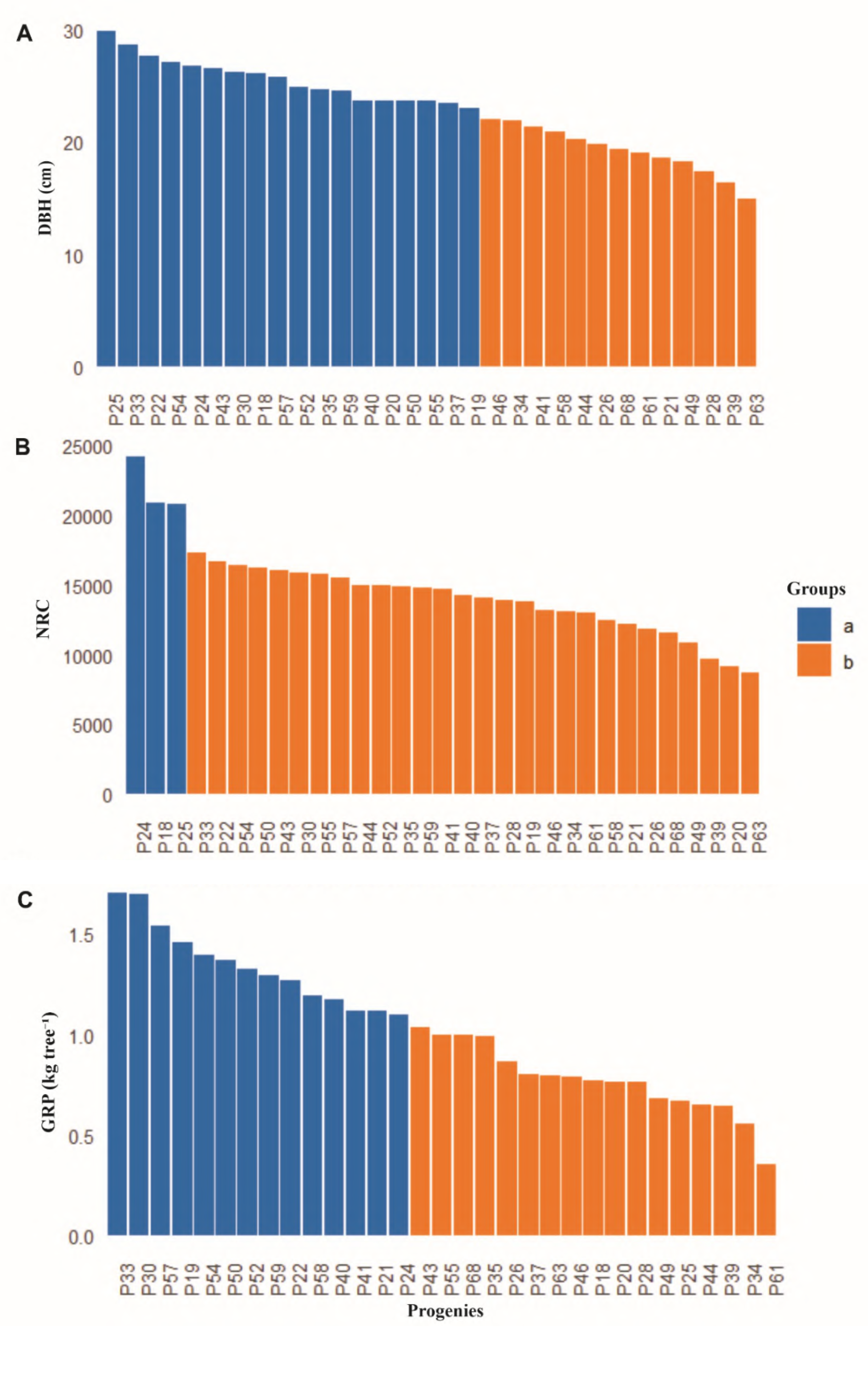
The analysis of variance revealed statistically significant differences among the progenies of P. caribaea var. hondurensis for the evaluated traits: DBH (cm), NRC, and GRP (kg tree⁻1). The observed significance (p < 0.05 for DBH and NRC; p < 0.10 for GRP) indicates the presence of relevant phenotypic variability among the progenies, highlighting the potential for gains through selection in genetic improvement programs. The mean values of 22.9 cm for DBH (Table 2), 14,582.12 for NRC, and 1.03 kg tree⁻1 for GRP were observed (Table 1).
Summary of the analysis of variance for DBH (cm), NRC (in sectional area), and GRP (kg tree⁻1) of P. caribaea var. hondurensis progenies, in Lavras, MG, Brazil
Tabela 1
Resumo da análise de variância para o DAP (cm), NCR (em área seccional) e PGR (kg árvore-1) de progênies de P. caribaea var. hondurensis, em Lavras - MG
Based on the detected differences, it was possible to form two homogeneous groups among the 31 progenies of P. caribaea var. hondurensis evaluated for DBH (cm), NRC, and GRP (kg tree⁻1). For DBH (Figure 4A), the mean values ranged from approximately 17 cm to 30 cm, with emphasis on progenies P18, P19, P20, P22, P24, P25, P30, P33, P35, P37, P40, P43, P50, P52, P54, P55, P57, and P59, which composed the superior group (“group a”), demonstrating the potential of these families for the growth increase.
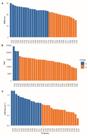
Mean values of DBH (cm), NRC, and GRP (kg tree⁻1) of P. caribaea var. hondurensis progenies, in Lavras, MG, Brazil
Figura 4
Valores médios do DAP (cm), NCR e PGR (kg árvore⁻1) das progênies de P. caribaea var. hondurensis, em Lavras - MG
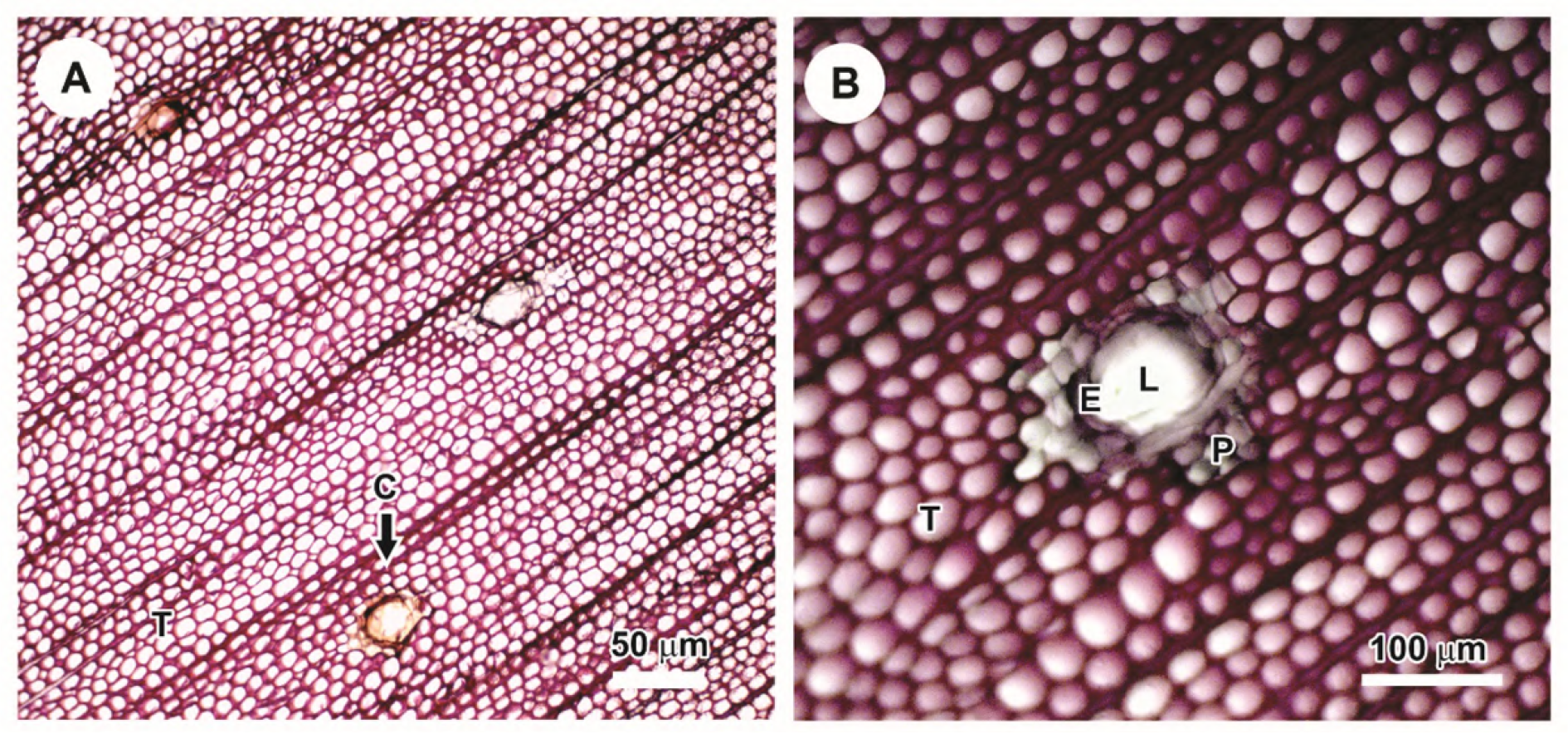
The anatomical visualization of the transverse wood sections allowed the identification of longitudinal resin canals, associated epithelial cells, and other xylem structures (Figure 5). Regarding NRC (Figure 4B), the mean values showed wide variation, with progenies P18, P24, and P25 composing the superior group, presenting values greater than 20,000 canals in the sectional area of the first centimeter surrounding the trunk immediately beneath the bark, reinforcing the existence of anatomical variability with functional relevance for gum resin production.

Microscopic structure of the cross-section of P. caribaea var. hondurensis wood from progenies P63 (A) and P18 (B). C = longitudinal resin canal, T = tracheids, L = lumen, E = epithelial cells, P = parenchyma cells (subsidiaries)
Figura 5
Estrutura microscópica da seção transversal da madeira de P. caribaea var. hondurensis oriunda das progênies P63 (A) e P18 (B). C = canal resinífero longitudinal, T = traqueídes, L = lúmen, E = células epiteliais, P = células de parênquima (subsidiárias)
For GRP (Figure 4C), a wide range of responses was also observed, with mean values varying from less than 0.5 kg tree⁻1 to more than 1.5 kg tree⁻1 over six months. Progenies P19, P21, P22, P24, P30, P33, P40, P41, P50, P52, P54, P57, P58, and P59 composed the group with the highest resin yield, demonstrating their productive superiority.
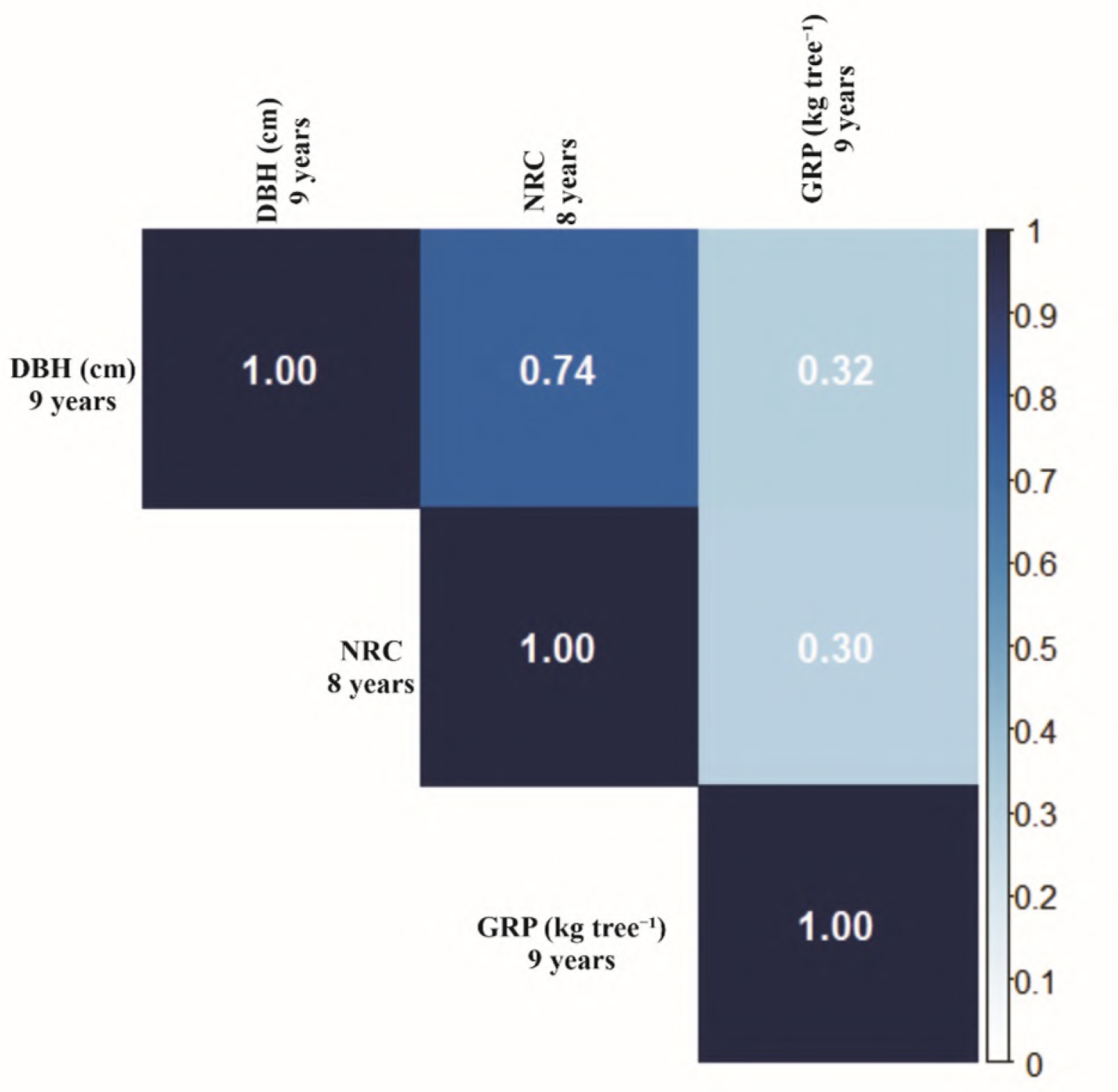
The coincidence analysis among progenies classified in the superior group (“a”) for the different evaluated traits revealed distinct levels of overlap between groups, which complement the results obtained by Pearson’s correlation analysis. It was observed that 100% of the progenies with the highest NRC also exhibited the highest DBH values (cm), a result consistent with the positive and moderately high correlation between these variables (0.74) (Figure 6). However, only 16.67% of the progenies with the highest DBH values (cm) coincided with those presenting the highest NRC, suggesting that although a high canal density may occur in individuals with good growth performance, it is not a mandatory condition.
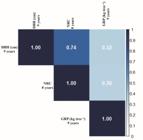
Pearson correlation for DBH (cm), NRC, and GRP (kg tree⁻1) of P. caribaea var. hondurensis progenies, in Lavras, MG, Brazil
Figura 6
Correlação de Pearson para DAP (cm), NCR e PGR (kg árvore-1) das progênies de P. caribaea var. hondurensis, em Lavras - MG
Regarding GRP (kg tree⁻1), 61.11% of the progenies with the highest DBH values (cm) were also among the most productive for resin yield, and 78.57% of the progenies with the highest GRP (kg tree⁻1) coincided with those presenting the highest DBH values (cm), reflecting a trend of positive association between growth and resin production, although the correlation between these variables was of low magnitude (0.32) (Figure 6). In contrast, the relationship between NRC and GRP (kg tree⁻1) showed even lower coincidence: only 33.33% of the progenies with the highest NRC were among the most productive ones, and only 7.14% of the most productive progenies coincided with those presenting the highest NRC. This low coincidence is consistent with the weak correlation observed between NRC and GRP (kg tree⁻1) (0.30) (Figure 6).
These results indicate significant phenotypic variability among the progenies for all analyzed traits, supporting the adoption of specific or combined selection strategies, depending on the objectives of the breeding programs, whether focused on growth, gum resin production, or multiple-use purposes.
4. DISCUSSION
ANOVA revealed significant differences among the progenies of P. caribaea var. hondurensis for all evaluated traits, indicating broad phenotypic variability among the analyzed genetic materials (Bhering et al., 2008; Presotti & Barreto, 2009). Grouping by the Scott-Knott test allowed the discrimination of superior progenies with greater efficiency, especially considering the large number of evaluated treatments, favoring the identification of promising materials for breeding and selection programs (Jelihovschi et al., 2014; Conrado et al., 2017).
Among the evaluated traits, DBH stood out due to its ease of measurement and its potential association with anatomical characteristics (r = 0.74) and productive traits related to gum resin production (r = 0.32), as also reported in other studies (Neis et al., 2019; dos Santos et al., 2016; Yi et al., 2021; López-Alvarez et al., 2023). In this context, high correlations between diameter growth, resin system anatomy, and gum resin production are desirable in genetic trials, as they enable the selection of superior individuals with lower operational effort when compared to direct measurements of gum resin production (Kane & Kolb, 2010).
The moderately high association observed between DBH and NRC (0.74), together with the fact that all progenies with higher NRC were also among those with higher DBH values, suggests that individuals with greater diameter growth tend to exhibit greater development of the resiniferous system. Studies involving Pinus species have reported similar behavior, indicating a positive correlation between growth and the number of resin canals (Kane & Kolb, 2010; Ferrenberg et al., 2014; Hood & Sala, 2015; Mason et al., 2019). This pattern may be related to the greater capacity of more vigorous trees to allocate carbon reserves to defense mechanisms, favoring gum resin biosynthesis and the formation of secretory structures (Gaylord et al., 2011).
In this context, vertical and radial resin canals may act as indirect indicators of carbon allocation to defense mechanisms (Hodges et al., 1985; Franceschi et al., 2005), since secondary metabolism in pines is directly related to the availability of remaining carbohydrates (Ruel et al., 1998; Lombardero et al., 2000; Kane & Kolb, 2010). However, the relationship between growth and defense is not linear and may vary under stress conditions, in which physiological trade-offs between these functions may occur (Lorio & Sommers, 1986; Krokene & Nagy, 2012). In addition, contrasting results have also been reported in the literature, as observed by Garcia-Forner et al. (2021), who found greater investment in resin canals in P. pinaster trees with lower growth, although under the influence of resin tapping.
In contrast, the low correlation observed between NRC and GRP (0.30), associated with the reduced coincidence among superior progenies for both traits, indicates that a higher density of resin canals does not necessarily imply greater gum resin production. Previous studies have already demonstrated that anatomical characteristics of resin canals do not always exert a direct influence on resin yield in Pinus species (Zamski, 1972; Hodges et al., 1981). Similarly, when evaluating P. elliottii, Yi et al. (2021) observed that gum resin production did not show a consistent association with resin canal frequency.
Although a positive association trend was observed between DBH and GRP, the low magnitude of the correlation between these variables (0.32) reinforces the multifactorial nature of resin production. Productive efficiency appears to be more associated with tree vigor, expressed by traits such as DBH, crown area, and basal area increment, as well as with the functional capacity for transport and exudation of gum resin through resin canals, rather than with the numerical density of these structures themselves (McDowell et al., 2007; Rodrigues et al., 2008; Garcia-Forner et al., 2021; Neis et al., 2019; Rodríguez-García et al., 2014). Thus, more vigorous trees tend to present greater productive potential, although this response remains conditioned by the interaction among genetic, physiological, environmental, and silvicultural factors (Vázquez-González et al., 2021).
The phenotypic variability identified in the present study indicates potential gains through selection, especially considering that gum resin production is highly dependent on genotype and its interaction with the environment (Li et al., 2022; Tsaktsira et al., 2023). Trees with a greater number and size of stomata, higher nutritional status, and more advanced age tend to produce larger volumes of gum resin, although these characteristics are subject to modulation by factors such as climate, water availability, competition, and extraction techniques (Lema et al., 2024; López-Alvarez et al., 2023).
5. CONCLUSION
The present study revealed broad phenotypic variability among the progenies of P. caribaea var. hondurensis for diameter growth, number of resin canals, and gum resin production, demonstrating the potential of the evaluated materials for breeding programs focused on resin production in tropical regions. The identification of superior progenies for the different analyzed traits reinforces the possibility of selecting more promising materials based on dendrometric, anatomical, and productive attributes.
The positive association between diameter growth and the number of resin canals indicates that more vigorous trees tend to exhibit greater development of the resiniferous system, highlighting the potential of diameter at breast height as an auxiliary criterion for the selection of superior materials. However, the low association of these variables with gum resin production confirms the multifactorial nature of resin productivity, influenced by the interaction among anatomical, physiological, and environmental factors. Therefore, the results contribute to advancing the understanding of the determinants of gum resin production in P. caribaea var. hondurensis and provide support for improving selection strategies in breeding programs.
6. ACKNOWLEDGEMENTS
To the Federal University of Lavras and the Graduate Program in Forest Engineering for the opportunity to complete my doctorate and for all the technical and structural support. To Resineves Agronegócios for the partnership, research funding, and provision of genetic material. The Coordenação de Aperfeiçoamento de Pessoal de Nível Superior (Capes - 001) for financial support.
DATA AVAILABILITY
The entire dataset supporting the findings of this study has been published within the article.
7. REFERENCES
-
Ananías, R. A., Lastra, J., Salvo, L., Contreras, H., Barría, C., & Peredo, M. (2010). Estudio exploratorio de la variabilidad radial y apical del tamaño y frecuencia de los canales resiníferos en pino radiata. Maderas. Ciencia y Tecnología, 12, 135-142.http://dx.doi.org/10.4067/S0718-221X2010000200008
» http://dx.doi.org/10.4067/S0718-221X2010000200008 -
Associação dos Resinadores do Brasil (AREBS). (2025). Estatísticas Rio de Janeiro. https://www.aresb.com.br/portal/estatisticas/
» https://www.aresb.com.br/portal/estatisticas/ - Bhering, L.L., Cruz, C. D., Vasconcelos, E. S. de, Ferreira, A., & Resende Jr., M. F. R. de. (2008). Alternative methodology for Scott-Knott test. Crop Breeding and Applied Biotechnology, 8, 9-16.
-
Brito, J. O., Barrichelo, L. E. G., & Gutierrez, L. E. (1980). Qualidade do breu e terebintina de pinheiros tropicais. Scientia Forestalis, 21, 55-63. https://www.ipef.br/publicacoes/scientia/nr21/cap04.pdf
» https://www.ipef.br/publicacoes/scientia/nr21/cap04.pdf - Candaten, L., Lazarotto, S., Zwetsch, A. P. R., Rieder, E., Silva, M. D. D., Balbinot, R., & Trevisan, R. (2021). Resinagem de Pinus no Brasil: Aspectos gerais, métodos empregados e mercado. In W. V. Evangelista (Org.), Produtos florestais não madeireiros: Tecnologia, mercado, pesquisas e atualidades (pp. 1-407). Científica.
-
Conrado, T. V., Ferreira, D. F., Scapim, C. A., & Maluf, W. R. (2017). Adjusting the Scott-Knott cluster analyses for unbalanced designs. Crop Breeding and Applied Biotechnology, 17, 1-9. https://doi.org/10.1590/1984-70332017v17n1a1
» https://doi.org/10.1590/1984-70332017v17n1a1 -
de Lima, I. L. D., de Oliveira, I. R., Barbosa, J. D. A., & Ranzini, M. (2021). Variação em propriedades da madeira de Pinus caribaea var. hondurensis e Pinus tecunumanii. Advances in Forestry Science 7(4). https://doi.org/10.34062/afs.v7i4.10262
» https://doi.org/10.34062/afs.v7i4.10262 -
dos Santos, M. P., de Araujo, M. J., & da Silva, P. H. M. (2021). Natural establishment of Pinus spp. around seed production areas and orchards. Forest Ecology and Management, 494, 119333. https://doi.org/10.1016/j.foreco.2021.119333
» https://doi.org/10.1016/j.foreco.2021.119333 -
dos Santos, W., Souza, D. C. L., de Moraes, M. L. T., & de Aguiar, A. V. (2016). Genetic variation of wood and resin production in Pinuscaribaeavar. hondurensis Barret &Golfari. Silvae Genetica, 65(1), 31-37. https://reference-global.com/download/article/10.1515/sg-2016-0004.pdf
» https://reference-global.com/download/article/10.1515/sg-2016-0004.pdf - Empresa Brasileira de Pesquisa Agropecuária (EMBRAPA). (2018). Manual de classificação dos solos (3. ed. rev. ampl.). Brasília, DF: Embrapa.
- Ferreira, A. T. B., & Tomazello-Filho, M. (2012). Anatomical aspects of resin canals and oleoresin production in pine trees. In A. G. Fett-Neto (Org.), Pine resin: Biology, chemistry and applications (pp. 9-24). Research Signpost
-
Ferrenberg, S., Kane, J. M., & Mitton, J. B. (2014). Resin duct characteristics associated with tree resistance to bark beetles across lodgepole and limber pines. Oecologia, 174(4), 1283-1292.https://doi.org/10.1007/s00442-013-2841-2
» https://doi.org/10.1007/s00442-013-2841-2 -
Franceschi, V. R., Krokene, P., Christiansen, E., & Krekling, T. (2005). Anatomical and chemical defenses of conifer bark against bark beetles and other pests. New Phytologist, 167(2), 353-376.https://doi.org/10.1111/j.1469-8137.2005.01436.x
» https://doi.org/10.1111/j.1469-8137.2005.01436.x -
Garcia-Forner, N., Campelo, F., Carvalho, A., Vieira, J., Rodriguez-Pereiras, A., Ribeiro, M., Salgueiro, A., Silva, M. E. & Louzada, J. L. (2021). Growth-defence trade-offs in tapped pines on anatomical and resin production. Forest Ecology and Management, 496, 119406. https://doi.org/10.1016/j.foreco.2021.119406
» https://doi.org/10.1016/j.foreco.2021.119406 -
Gaylord, M. L., Hofstetter, R. W., Kolb, T. E., & Wagner, M. R. (2011). Limited response of ponderosa pine bole defenses to wounding and fungi. Tree Physiology, 31(4), 428-437. https://doi.org/10.1093/treephys/tpr025
» https://doi.org/10.1093/treephys/tpr025 -
Hodges, J. D., Elam, W. W., & Bluhm, D. R. (1981). Influence of resin duct size and number on oleoresin flow in the southern pines (Research Note SO-266). U.S. Department of Agriculture, Forest Service, Southern Forest Experiment Station.https://doi.org/10.2737/SO-RN-266
» https://doi.org/10.2737/SO-RN-266 -
Hodges, J. D., Nebeker, T. E., DeAngelis, J. D., Karr, B. L., & Blanche, C. A. (1985). Host resistance and mortality: A hypothesis based on the southern pine beetle-microorganism-host interactions. Bulletin of the ESA, 31(1), 31-35.https://doi.org/10.1093/besa/31.1.31
» https://doi.org/10.1093/besa/31.1.31 -
Hood, S., & Sala, A. (2015). Ponderosa pine resin defenses and growth: Metrics matter. Tree Physiology, 35(11), 1223-1235.https://doi.org/10.1093/treephys/tpv098
» https://doi.org/10.1093/treephys/tpv098 -
Instituto Nacional de Meteorologia (INMET).(2025).Boletins agroclimatológicos.Ministérioda Agricultura, Pecuária e Abastecimento, 2026. https://portal.inmet.gov.br/boletinsagro
» https://portal.inmet.gov.br/boletinsagro -
Jelihovschi, E., Faria, J., & Allaman, I. (2014). ScottKnott: A package for performing the Scott-Knott clustering algorithm in R. Trends in Applied and Computational Mathematics, 15, 003-017. https://doi.org/10.5540/TEMA.2014.015.01.0003
» https://doi.org/10.5540/TEMA.2014.015.01.0003 - Johansen, D.A. (1940) Plant Microtechnique McGraw-Hill, New York, 523 p.
-
Kane, J. M., & Kolb, T. E. (2010). Importance of resin ducts in reducing ponderosa pine mortality from bark beetle attack. Oecologia, 164(3), 601-609.https://doi.org/10.1007/s00442-010-1683-4
» https://doi.org/10.1007/s00442-010-1683-4 - Krokene, P., & Nagy, N. E. (2012). Anatomical aspects of resin-based defences in pine. In A. G. Fett-Neto (Org.), Pine resin: Biology, chemistry and applications (pp. 67-86). Research Signpost.
-
Lazarotto, S., Candaten, L., & Balbinot, R. (2023). Brazilian resin method: Handmade, sustainable and profitable. In E. C. Souza & S. S. Muthu (Orgs.), Forest science: Sustainable processes and wood products (pp. 183-205). Springer Nature Singapore.. https://doi.org/10.1007/978-981-99-2846-0_9
» https://doi.org/10.1007/978-981-99-2846-0_9 -
Leggate, W., Shirmohammadi, M., McGavin, R. L., Chandra, K. A., Knackstedt, M., Knuefing, L., & Turner, M. (2020). Influence of wood’s anatomical and resin traits on the radial permeability of the hybrid pine (Pinus elliottii × Pinus caribaea) wood in Australia. BioResources, 15(3), 6851-6873. https://era.dpi.qld.gov.au/id/eprint/7635/
» https://era.dpi.qld.gov.au/id/eprint/7635/ -
Lema, M., Touza, R., Feijoo, D., Bustingorri, G., Martínez, É., & Zas, R. (2024). Resin tapping of Atlantic pine forests: Towards an optimized use of stimulant pastes over the season. European Journal of Forest Research, 143(4), 1213-1224. https://doi.org/10.1007/s10342-024-01684-y
» https://doi.org/10.1007/s10342-024-01684-y -
Li, Z., Shen, L., Hou, Q., Zhou, Z., Mei, L., Zhao, H., & Wen, X. (2022). Identification of genes and metabolic pathways involved in resin yield in masson pine by integrative analysis of transcriptome, proteome and biochemical characteristics. International Journal of Molecular Sciences, 23(19), 11420. https://doi.org/10.3390/ijms231911420
» https://doi.org/10.3390/ijms231911420 -
Lombardero, M. J., Ayres, M. P., Lorio Jr., P. L., & Ruel, J. J. (2000). Environmental effects on constitutive and inducible resin defences of Pinus taeda. Ecology Letters, 3(4), 329-339. https://doi.org/10.1046/j.1461-0248.2000.00163.x
» https://doi.org/10.1046/j.1461-0248.2000.00163.x -
López-Álvarez, Ó., Zas, R., & Marey-Perez, M. (2023). Resin tapping: A review of the main factors modulating pine resin yield. Industrial Crops and Products, 202, 117105. https://doi.org/10.1016/j.indcrop.2023.117105
» https://doi.org/10.1016/j.indcrop.2023.117105 -
Lorio Jr., P. L., & Sommers, R. A. (1986). Evidence of competition for photosynthates between growth processes and oleoresin synthesis in Pinus taeda L. Tree Physiology, 2(1-2-3), 301-306.https://doi.org/10.1093/treephys/2.1-2-3.301
» https://doi.org/10.1093/treephys/2.1-2-3.301 -
Mason, C. J., Keefover-Ring, K., Villari, C., Klutsch, J. G., Cook, S., Bonello, P., Erbilgin, N., Raffa, K. F., & Townsend, P. A. (2019). Anatomical defenses against bark beetles relate to degree of historical exposure between species and are allocated independently of chemical defenses within trees. Plant, Cell & Environment, 42(2), 633-646. https://doi.org/10.1111/pce.13449
» https://doi.org/10.1111/pce.13449 -
McDowell, N. G., Adams, H. D., Bailey, J. D., & Kolb, T. E. (2007). The role of stand density on growth efficiency, leaf area index, and resin flow in southwestern ponderosa pine forests. Canadian Journal of Forest Research, 37(2), 343-355.https://doi.org/10.1139/X06-233
» https://doi.org/10.1139/X06-233 -
Neis, F. A., de Costa, F., de Almeida, M. R., Colling, L. C., de Oliveira Junkes, C. F., Fett, J. P., & Fett-Neto, A. G. (2019). Resin exudation profile, chemical composition, and secretory canal characterization in contrasting yield phenotypes of Pinus elliottii Engelm. Industrial Crops and Products, 132, 76-83. https://doi.org/10.1016/j.indcrop.2019.02.013
» https://doi.org/10.1016/j.indcrop.2019.02.013 -
Nieri, É. M., Porto, A. C., de Almeida, R. S., de Melo, L. A., Resende, E. W., Neves, G. A., Santos, L. M. dos & Faria, J. C. T. (2022). Selection of Pinus spp. progenies in Lavras (Minas Gerais, Brazil) at 36 months of age. New Zealand Journal of Forestry Science, 52 https://doi.org/10.33494/nzjfs522022x116x
» https://doi.org/10.33494/nzjfs522022x116x -
Oliveira, R. F. S., Gomes, N. S. B., Figueiredo Filho, A., Amaro, M. A., Cunha, T. A., Souza, F. C., & Carvalho, C. A. (2024). Crescimento e produção de um plantio jovem de Pinus caribaea var. hondurensis na Amazônia Ocidental. Scientia Naturalis, 6(2) https://doi.org/10.29327/269504.6.2-20
» https://doi.org/10.29327/269504.6.2-20 - Presotti, C. V., & Barreto, M. C. M. (2009). Uma modificação da extensão do algoritmo AID e do teste Scott-Knott para modelos lineares generalizados usando re-amostragem bootstrap. Revista Brasileira de Biometria, 27(4), 548-585.
-
R Core Team. (2024). R: A language and environment for statistical computing. https://www.R-project.org/
» https://www.R-project.org/ -
Rodrigues, K. C. S., Azevedo, P. C. N., Sobreiro, L. E., Pelissari, P., & Fett-Neto, A. G. (2008). Oleoresin yield of Pinus elliottii plantations in a subtropical climate: Effect of tree diameter, wound shape and concentration of active adjuvants in resin stimulating paste. Industrial Crops and Products,27(3),322-327.10.1016/j.indcrop.2007.11.010
» https://doi.org/10.1016/j.indcrop.2007.11.010 -
Rodríguez-García, A., López, R., Martín, J. A., Pinillos, F., & Gil, L. (2014). Resin yield in Pinus pinaster is related to tree dendrometry, stand density and tapping-induced systemic changes in xylem anatomy. Forest Ecology and Management, 313, 47-54.10.1016/j.foreco.2013.10.038
» https://doi.org/10.1016/j.foreco.2013.10.038 -
Ruel, J. J., Ayres, M. P., & Lorio Jr., P. L. (1998). Loblolly pine responds to mechanical wounding with increased resin flow. Canadian Journal of Forest Research, 28(4), 596-602.https://doi.org/10.1139/x98-030
» https://doi.org/10.1139/x98-030 -
Serviço Florestal Brasileiro (SFB). (2025). Sistema Nacional de Informações Florestais (SNIF). As florestas plantadas.https://snif.florestal.gov.br/pt-br/florestas-plantadas/405-as-florestas-plantadas
» https://snif.florestal.gov.br/pt-br/florestas-plantadas/405-as-florestas-plantadas -
Silva, V. E., Silva, P. R. T. D., Montanari, R., Lisboa, S. D. D. S., Batello, E. R. B., Aguilar, J. V., Lisboa, L. A. M. & Albertini, M. M. (2019). Produtividade de Pinus caribaea var. hondurensis e suas relações com atributos químicos dos solos em região de Cerrado brasileiro. Ciência Florestal, 29(1), 292-306. https://doi.org/10.5902/1980509829367
» https://doi.org/10.5902/1980509829367 -
Tsaktsira, M., Tsoulpha, P., Economou, A., & Scaltsoyiannes, A. (2023). Mitigation of global climate change through genetic improvement of resin production from resinous pines: The case of Pinus halepensis in Greece. Sustainability, 15(10), 8052. https://doi.org/10.3390/su15108052
» https://doi.org/10.3390/su15108052 -
Vázquez-González, C., López-Goldar, X., Alía, R., Bustingorri, G., Lario, F. J., Lema, M., de la Mata, R., Sampedro, L., Touza, R., & Zas, R. (2021). Genetic variation in resin yield and covariation with tree growth in maritime pine. Forest Ecology and Management, 482, 118843. https://doi.org/10.1016/j.foreco.2020.118843
» https://doi.org/10.1016/j.foreco.2020.118843 -
Wickham, H., Navarro, D., & Pedersen, T. L. (2026). ggplot2: Elegant graphics for data analysis (3rd ed.). Springer. https://ggplot2-book.org/
» https://ggplot2-book.org/ -
Yi, M., Jia, T., Dong, L., Zhang, L., Leng, C., Liu, S., & Lai, M. (2021). Resin yield in Pinus elliottii Engelm. is related to the resin flow rate, resin components and resin duct characteristics at three locations in southern China. Industrial Crops and Products, 160, 113141.10.1016/j.indcrop.2020.113141
» https://doi.org/10.1016/j.indcrop.2020.113141 - Zamski, E. (1972). Temperature and photoperiodic effects on xylem and vertical resin duct formation in Pinus halepensis Mill Israel Journal of Botany 21. 99-107.
-
Zhang, G., Zhang, X., Yu, S., & Sun, H. (2023). Novel insights on genes and pathways involved in Pinus elliottii response to resinosis. Tree Physiology, 43(2), 351-362. https://doi.org/10.1093/treephys/tpac118
» https://doi.org/10.1093/treephys/tpac118
Edited by
-
Editors:
Sílvio Nolasco de Oliveira Neto and Rodolfo Soares de Almeida