National overview of infrastructure for active commuting: a territorial analysis of Brazil’s 5,570 municipalities
ABSTRACT
Objective: This study presents a territorial analysis of urban infrastructure aimed at active commut-ing -sidewalks, sidewalk obstacles, wheelchair ramps, lighting, trees, and bike-signaled roads -across Brazil’s 5,570 municipalities, based on data from the 2022 Urban Survey of Household Surroundings conducted by the Brazilian Institute of Geography and Statistics.
Methods: Descriptive statistical analyses of these elements were performed for all municipalities, further stratified by municipality size, region of Brazil, population growth, per capita Gross Domestic Product (GDP), and urban hierarchy, as well as specifically for each of the 27 Brazilian capitals.
Results: The results reveal signif-icant territorial disparities. Cities with larger populations, capital status, and higher per capita GDP displayed better indicators such as the presence of wheelchair ramps, tree coverage, and sidewalks. Bike-signaled roads were consistently low across most Brazilian municipalities, while street lighting showed consistently high coverage nationwide.
Conclusion: These findings also support the planning of cities that are more equitable, resilient, and sustainable. These results, disaggregated for all 5,570 municipalities and aggregated for comparison groups, provide valuable input for the development and revision of master plans, urban mobility strategies, and initiatives focused on territorial equity, aligning with the targets of Sustainable Development Goal 11 and the principles of the Brazilian City Statute.
Keywords:
Infrastructure; Walking; Cycling; Census; City planning.
RESUMO
Objetivo: Este estudo apresenta uma análise territorial da infraestrutura urbana voltada ao desloca-mento ativo - calçadas, obstáculos nas calçadas, rampa para cadeirantes, iluminação, arborização e vias com sinalização para bicicletas - nos 5.570 municípios brasileiros, a partir dos dados da Pesquisa Urbanística do Entorno dos Domicílios 2022, realizada pelo Instituto Brasileiro de Geografia e Es-tatística.
Métodos: Foram realizadas análises estatísticas descritivas desses elementos, para todos os municípios brasileiros e estratificadas por porte populacional, região do Brasil, crescimento popula-cional, produto interno bruto (PIB) per capita e hierarquia urbana e, especificamente, para cada uma das 27 capitais brasileiras.
Resultados: Revelam um cenário de grandes desigualdades territoriais. Cidades com maior porte populacional, capitais e com maior PIB per capita apresentaram melhores indicadores, como a presença de rampas para cadeirantes, arborização e calçadas. Vias sinalizadas para bicicletas apresentaram valores consistentemente baixos na grande parte dos municípios bra-sileiros, enquanto a iluminação foi consistentemente alta em todo o país.
Conclusão: Esses achados contribuem ainda para embasar o planejamento de cidades mais equitativas, resilientes e sustentáveis. Esses resultados, desagregados para os 5.570 e agregados para os grupos de comparação, oferecem subsídios valiosos para formulação e revisão de planos diretores, estratégias de mobilidade urbana e ações voltadas à equidade territorial, alinhando-se às metas dos Objetivos de Desenvolvimento Sustentável 11 e aos princípios do Estatuto da Cidade.
Palavras-chave:
Infraestrutura; Caminhada; Ciclismo; Censo; Planejamento de cidades.
Introduction
Cities are spaces of intense social, economic, and environmental transformations, concentrating opportu-nities and challenges that directly affect the lives and health of urban populations1,2. Accelerated urbanization has generated environments that, although dynamic, often reproduce territorial inequalities and compromise collective well-being1,2.
In 2018, the World Health Organization published the Global Action Plan on Physical Activity 2018-2030, one of whose main objectives is to create active environments as an effective strategy to promote phys-ical activity3. These environments include well-planned cities that encourage the use of public transportation, walking, and cycling, contributing to the reduction of non-communicable diseases, improvements in mental health, strengthening of social cohesion, and mitiga-tion of environmental impacts, thereby promoting pop-ulation health and well-being4,5. In addition, there are growing efforts to reduce environmental inequalities in access to and opportunities for physical activity3,6,7.
The way that urban centers are planned and managed directly influences physical activity levels, expo-sure to environmental risks, access to essential services, and overall quality of life8,9. In this context, active com-muting, especially walking and cycling, has been recog-nized as an effective strategy to promote health, social inclusion, and urban sustainability10. However, there is an ongoing debate about active commuting, particular-ly in lowand middle-income countries such as Brazil, where walking and cycling often do not result from free choice but rather from the absence of alternatives, characterizing situations of “mobility by necessity”11. In such cases, more favorable environments could offer greater safety and comfort, while for those who can choose whether or not to commute actively, better en-vironments could make this choice more likely and increase the time dedicated to these activities, also en-hancing safety and comfort.
Urban infrastructure, such as accessible sidewalks, trees, public lighting, and cycling facilities, plays a cen-tral role in promoting healthy and equitable cities12,13. Numerous national and international studies have sought to map and evaluate these urban and socioeco-nomic conditions, aligning with the Sustainable De-velopment Goals (SDGs), particularly SDG 11, which aims to “make cities and human settlements inclusive, safe, resilient, and sustainable”14-19.
In this context, however, an important conceptual challenge remains. Recent literature shows that, al-though there is a growing body of scientific work ded-icated to measuring urban inequalities, there is still a lack of clarity in the definition and use of spatial indi-cators related to inequity in urban health. As highlight-ed by Leão et al.20, many studies show a misalignment between the concept of inequity they intend to analyze and the indicators or methods actually applied, which limits the ability to adequately interpret structural ter-ritorial inequalities. These authors argue for the need for more robust analytical methods and for expanding these approaches in lowand middle-income settings, where inequalities tend to be more pronounced and empirical evidence remains scarce.
In Brazil, the Urban Survey of Household Sur-roundings conducted by the Brazilian Institute of Ge-ography and Statistics (Instituto Brasileiro de Geografia e Estatística - IBGE) as part of the 2022 Census rep-resents a major methodological advance by incorpo-rating observational attributes of urban infrastructure, providing an unprecedented and robust basis for ana-lyzing active commuting and territorial equity across all Brazilian municipalities21. In this sense, quantifying and understanding the distribution of attributes such as sidewalks, sidewalk obstacles, wheelchair ramps, lighting, trees, and bicycle-designated roads at the national level can support evidence-based urban plan-ning, promoting healthier, more accessible, and more sustainable cities.
Thus, the present study aims to analyze the distri bution of urban attributes that favor active commut-ing, such as sidewalks, sidewalk obstacles, wheelchair ramps, lighting, trees, and bicycle-designated roads, across Brazil’s 5,570 municipalities, based on the Ur-ban Survey of Household Surroundings21. The study also seeks to compare these attributes by municipali-ty size, region of Brazil, population growth, per capita Gross Domestic Product (GDP), and urban hierarchy, identifying the most critical and the most favorable scenarios for active commuting.
The results of this study may have multiple applications. They can support diagnoses of urban and re-gional inequalities, guide public policies aimed at sus-tainable mobility, inform the development and revision of municipal master plans, and foster investments in inclusive urban infrastructure, in accordance with the principles of Brazil’s City Statute for more equitable and sustainable urban development22. In addition, the data can be integrated into intersectoral strategies in public health, education, environmental policy, and road safety.
Methods
The Urban Survey of Household Surroundings, conducted by IBGE during the 2022 Census, goes be-yond traditional household data collection. It aims to characterize urban conditions surrounding Brazilian dwellings using a standardized observational approach focused on visible elements of urban infrastructure. The survey was carried out during the reconnaissance phase of the 340,965 census tracts by Census Supervi-sory Agents prior to the main 2022 Census data col-lection23. Because each census tract contains multiple blocks and each block has several sides (street faces), the total number of evaluated faces is much larger than the number of census tracts.
Therefore, using the face of the blocks (each side of the block/city block, whether or not it contains buildings) as the unit of observation, eleven attributes were evaluated by the Urban Survey of Household Surroundings, with 3 different categorization methods applied depending on the attribute. These are:
-
1) Minimum existence criterion - whether specific el-ements are present:
-
Public lighting;
-
Road paving;
-
Sidewalk;
-
Curb;
-
Storm drain;
-
Wheelchair ramp;
-
Presence of open sewage;
-
Accumulated garbage in public spaces;
-
-
2) Predominance criterion - what is most common in the observed area:
-
Road circulation capacity (whether it allows vehi-cle and pedestrian traffic);
-
Type and quality of paving;
-
-
3) Counting criterion - quantifies elements:
-
Number of trees on block faces (degree of tree coverage).
-
For this study, only attributes most directly related to active commuting, especially walking and cycling, were used. Their definitions follow the IBGE manual24:
-
Presence of sidewalk - identify if there is available space for the circulation of at least one pedestrian - approximately 80 cm - separated from the area intended for vehicle circulation, using the curb as an indicator of the presence of a sidewalk;
-
Obstacles on the sidewalk - identify the existence of obstacles and fixed unevenness that compromise circulation, especially for people with disabilities, the elderly, or people with some degree of impair-ment in walking;
-
Wheelchair ramp - identify the existence of a wheelchair ramp on the sidewalk. A wheelchair ramp is considered a lowered sidewalk or curb/guide. Generally, the ramp is located near corners, specifically intended to provide access for people who use wheelchairs;
-
Tree - identify the existence of tree(s) on the side-walk being traversed and/or in the central median. Only vegetation taller than the average height of a person, approximately 1.70m, is considered;
-
Lighting - identify at least one fixed point that provides lighting for the public space, which must be located in a public area. Even broken lighting points are considered to exist;
-
Bicycle-designated roads - identify the lanes des-ignated for bicycle traffic. These include cycle lanes, bike paths, or shared lane markings.
According to IBGE, during the data acquisition and processing phase, two data quality control proce-dures were applied: 1: Pre-checking, which generated alerts for missing mandatory fields or for inconsistent or potentially erroneous entries (e.g., completion time longer than 10 minutes; unpaved street with a storm drain; street allowing pedestrian/motorcycle circu-lation and a bus stop); and 2: Consistency checking, which involved comparison with the 2010 survey re-sults (only for items that were comparable between surveys, namely lighting, storm drains, sidewalks, and road capacity), comparison with satellite images and Google Street View, identification of municipalities with outlying values when compared with municipali-ties of the same region and municipality size, detection of municipalities with zero values for specific items, and comparison of opposite street faces (e.g., both sides of the same street segment should have the same value for “bicycle-designated road,” for example)23.
The attributes described above were compiled for each of Brazil’s 5,570 municipalities and were subse-quently grouped into five comparison categories: 1) Municipality size (Small - up to 50,000 inhabitants; Medium - 50,001 to 100,000 inhabitants; Large - more than 100,000 inhabitants); 2) Region of Brazil (Central-West, Northeast, North, Southeast, South); 3) Population growth between 2010 and 2022 (Negative growth: -45.6% to -0.01%; 1st growth tertile: 0% to 4.730%; 2nd growth tertile: 4.731% to 12.20%; 3rd growth tertile: 12.21% to 188.5%); 4) Per capita GDP quartiles (1st quartile: R$ 5,407.70 to R$ 12,820.40; 2nd quartile: R$ 12,820.41 to R$ 24,441.00; 3rd quar-tile: R$ 24,441.01 to R$ 40,772.30; 4th quartile: R$ 40,772.31 to R$ 920,834.00); and 5) Urban hierarchy (state capital vs. non-capital municipalities).
To compare the magnitude of differences in at-tribute percentages across the city groupings, the Equiplot graphical method, developed by the Inter-national Center for Equity in Health (www.equidade.org) was used. To enable future analyses, comparisons, and ecological studies involving Surveillance System for Risk and Protective Factors for Chronic Diseases by Telephone Survey (Vigilância de Fatores de Risco ou Proteção para Doenças Crônicas por Inquérito Telefônico - VIGITEL) data, a stratified analysis was also con-ducted for each of the 27 Brazilian state capitals. In the supplementary material (Tables S1 and S2), in addition to mean values, standard deviations, minimum values, and maximum values are reported for each attribute within each grouping of municipalities. Furthermore, a map showing the percentage values for each of Brazil’s 5,570 municipalities was produced using QGIS soft-ware, version 3.30.0.
Results
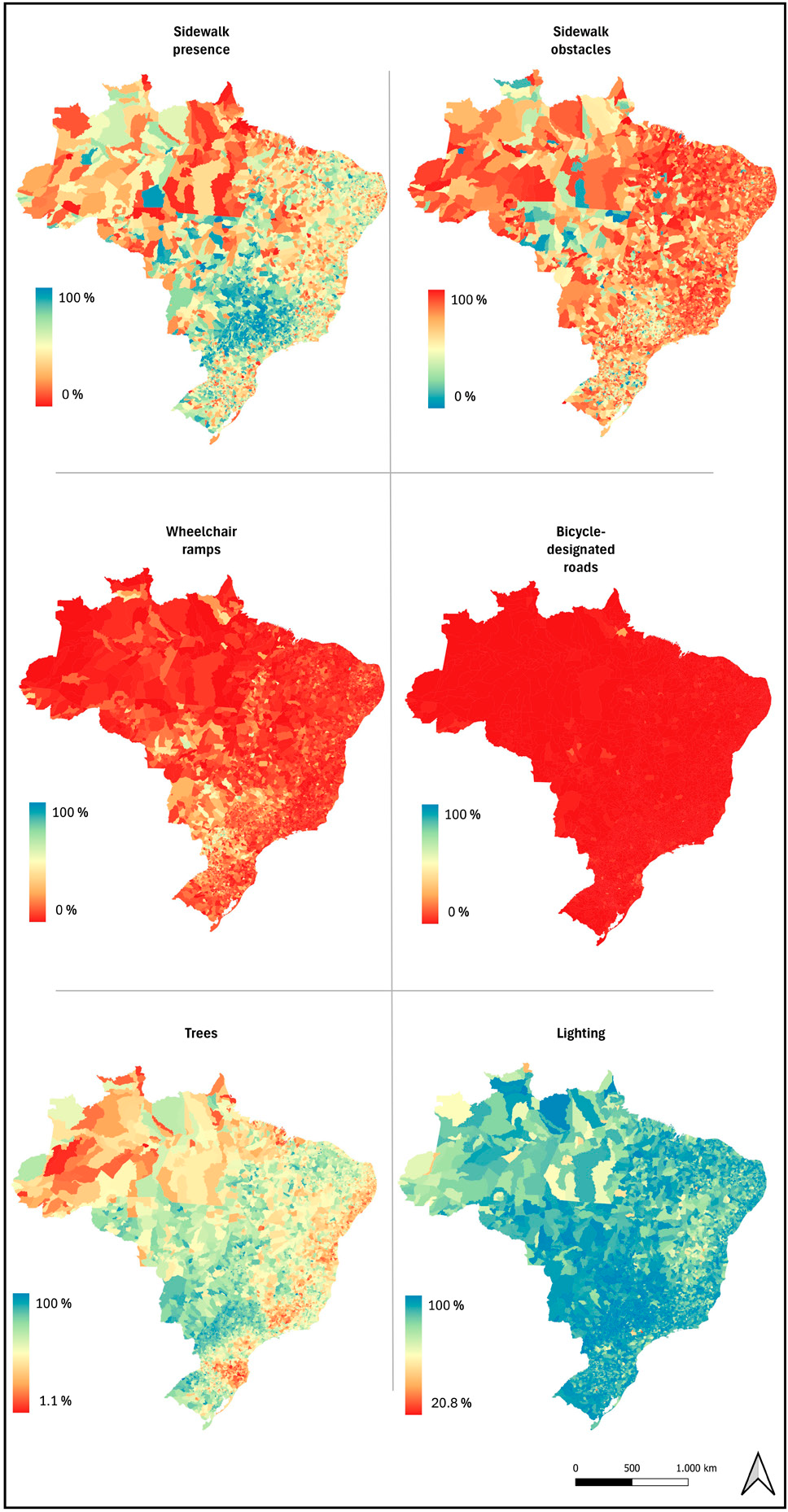
The map shown in Figure 1 displays the percentages of sidewalk presence, sidewalk obstacles, wheelchair ramps, bicycle-designated roads, trees, and lighting on all block faces assessed in the Urban Survey of House-hold Surroundings for each of Brazil’s 5,570 munic-ipalities. Marked territorial disparities are evident across municipalities, except for bicycle-designated roads and wheelchair ramps (which are consistently low) and lighting (which is consistently high). Higher percentages of sidewalks are observed in the Southeast and Central-West regions, while higher tree coverage is found in the Central-West and South. For a more detailed view, the same dataset shown in Figure 1 can be accessed for each of the 5,570 municipalities at the provided link.
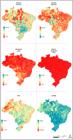
Percentage presence of sidewalks, sidewalk obstacles, wheelchair ramps, bicycle-designated roads, trees, and lighting on all block faces evaluated in the Urban Survey of Household Surround-ings in each of Brazil’s 5,570 municipalities (Brazilian Institute of Geography and Statistics, 2022).
Considering all 5,570 Brazilian municipalities, on average 63.3% (SD = 19.2%) of block faces have side-walks. However, some municipalities have 0% sidewalk coverage, such as Chaves in the North region, while two municipalities, Santa Cruz do Xingu/Mato Gros-so and Godoy Moreira/Paraná, have 100% of their block faces with sidewalks. Regarding sidewalk obsta-cles, the mean value was 46.8% (SD = 18.4%), with nine municipalities reporting no block faces with ob-stacles (Rio Fortuna/Santa Catarina; Santa Rosa de Lima/Santa Catarina; Gouvelândia/Goiás; Urupema/ Santa Catarina; Paial/Santa Catarina; Centenário/Rio Grande do Sul; Mampituba/Rio Grande do Sul; Itanhangá/Mato Grosso; Amaturá/Amazonas). The three municipalities with the worst conditions were Lunar-delli/Paraná, where 98.3% of sidewalks presented ob-stacles, followed by Borrazópolis/Paraná and Aspásia/ São Paulo, with 96.5% and 95.2%, respectively.
With respect to wheelchair ramps, the situation re-mains highly critical. On average, only 11.2% (SD = 11.2%) of block faces have this structure, and in 91 mu-nicipalities (1.6%) no ramps exist at all. In contrast, the three best-performing municipalities were Jaguaribara/ Ceará, Maringá/Paraná, and Boa Esperança do Iguaçu/Paraná, with 78.2%, 71.8%, and 69.6% of block faces, respectively, having sidewalks with wheelchair ramps.
Another important factor for pedestrian safety is street and sidewalk lighting, which was the most prev-alent of the six attributes analyzed. On average, 89.5% (SD = 8.1%) of block faces have lighting. The three municipalities with the lowest values were Quadra/ São Paulo (20.8%), Passa Sete/Rio Grande do Sul (34.8%), and Porangaba/São Paulo (39.5%), while 23 municipalities reported 100% lighting coverage (Rio do Oeste/Santa Catarina; Pedra Mole/Sergipe; Salga-dinho/Pernambuco; Novo Tiradentes/Rio Grande do Sul; Belo Monte/Alagoas; Rosário da Limeira/Minas Gerais; Olivedos/Paraíba; João Dias/Rio Grande do Norte; Pinhal/Rio Grande do Sul; Pedras Altas/Rio Grande do Sul; Riachão/Paraíba; Canudos do Vale/ Rio Grande do Sul; Platina/São Paulo; Santa Clara d’Oeste/São Paulo; Novo Itacolomi/Paraná; Santa Rita d’Oeste/São Paulo; Ribeirão dos Índios/São Pau-lo; Cachoeira Dourada/Minas Gerais; Nova Castilho/ São Paulo; Jaborandi/São Paulo; Trabiju/São Paulo; Oscar Bressane/São Paulo; Aspásia/São Paulo).
Trees are another important attribute for comfort, particularly thermal comfort, and for pedestrian at-tractiveness. On average, 53.8% (SD = 20.1%) of block faces in Brazilian municipalities have at least one tree. The three municipalities with the lowest values were Paial/Santa Catarina (1.1%), Careiro da Várzea/Am-azonas (2%), and Arapeí/São Paulo (2.7%), while the three highest were São Pedro das Missões/Rio Grande do Sul, União Paulista/São Paulo, and Garruchos/Rio Grande do Sul, with 99%, 98.3%, and 97.3%, respec-tively.
Among all attributes, bicycle-designated roads were the least prevalent. On average, only 0.7% (SD = 1.5%) of block faces have this type of infrastructure. In 2,734 municipalities (49.1%), no bicycle-designated roads ex-ist; 278 municipalities (5%) have only 0.1%, and 290 municipalities (5.2%) only 0.2%. The municipalities with the highest values were Abdon Batista/Santa Ca-tarina (28.1%), Afuá/Pará (24.7%), Lauro Müller/Santa Catarina (20.4%), Balneário Camboriú/Santa Catarina (20.4%), and São Lourenço do Oeste/Santa Catarina (16.7%). In absolute terms, however, the municipalities with the largest number of block faces with bicycle-des-ignated roads were the capitals São Paulo (n = 247,393), Rio de Janeiro (n = 155,636), Salvador (n = 92,859), Fortaleza (n = 80,192), and Goiânia (n = 74,693).
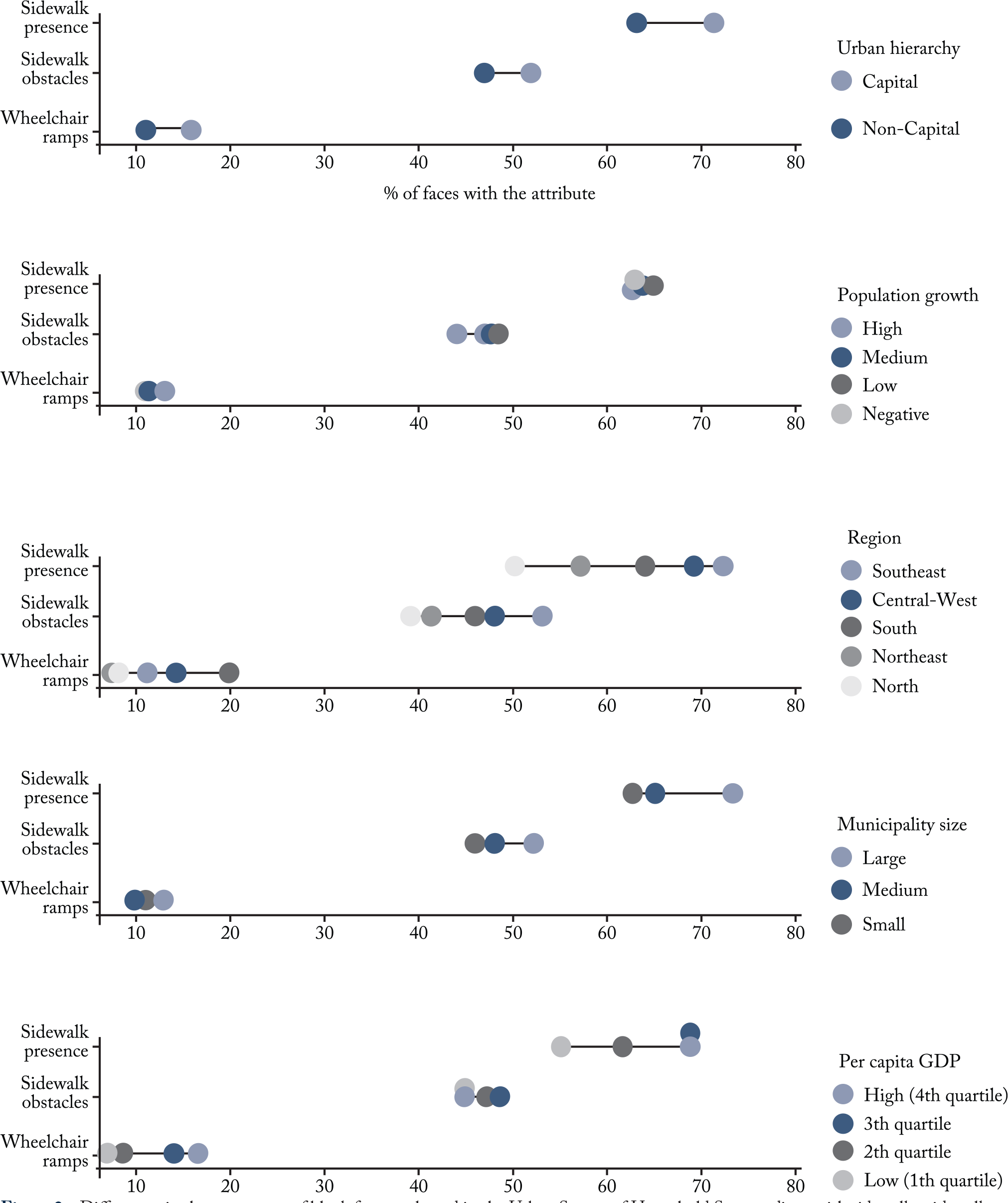
When the six attributes were analyzed across the five municipal groupings, wide variation was observed. For example, sidewalk presence averaged 72.4% in the Southeast compared with 49.9% in the North (Figure 2). Figure 2 also shows that for sidewalks, sidewalk ob-stacles, and wheelchair ramps, the highest values were observed in capitals, large cities, and municipalities with high per capita GDP. Notably, per capita GDP was the only stratification in which the best-perform-ing municipalities simultaneously had higher propor-tions of sidewalks and wheelchair ramps and lower levels of sidewalk obstacles, thus representing the most favorable scenario for pedestrians and wheelchair users.
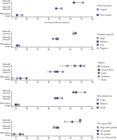
Differences in the percentage of block faces evaluated in the Urban Survey of Household Surroundings with sidewalks, sidewalk obstacles, and wheelchair ramps, stratified by municipality size, Brazilian region, population growth profile, per capita income, and urban hierarchy (Brazilian Institute of Geography and Statistics, 2022).
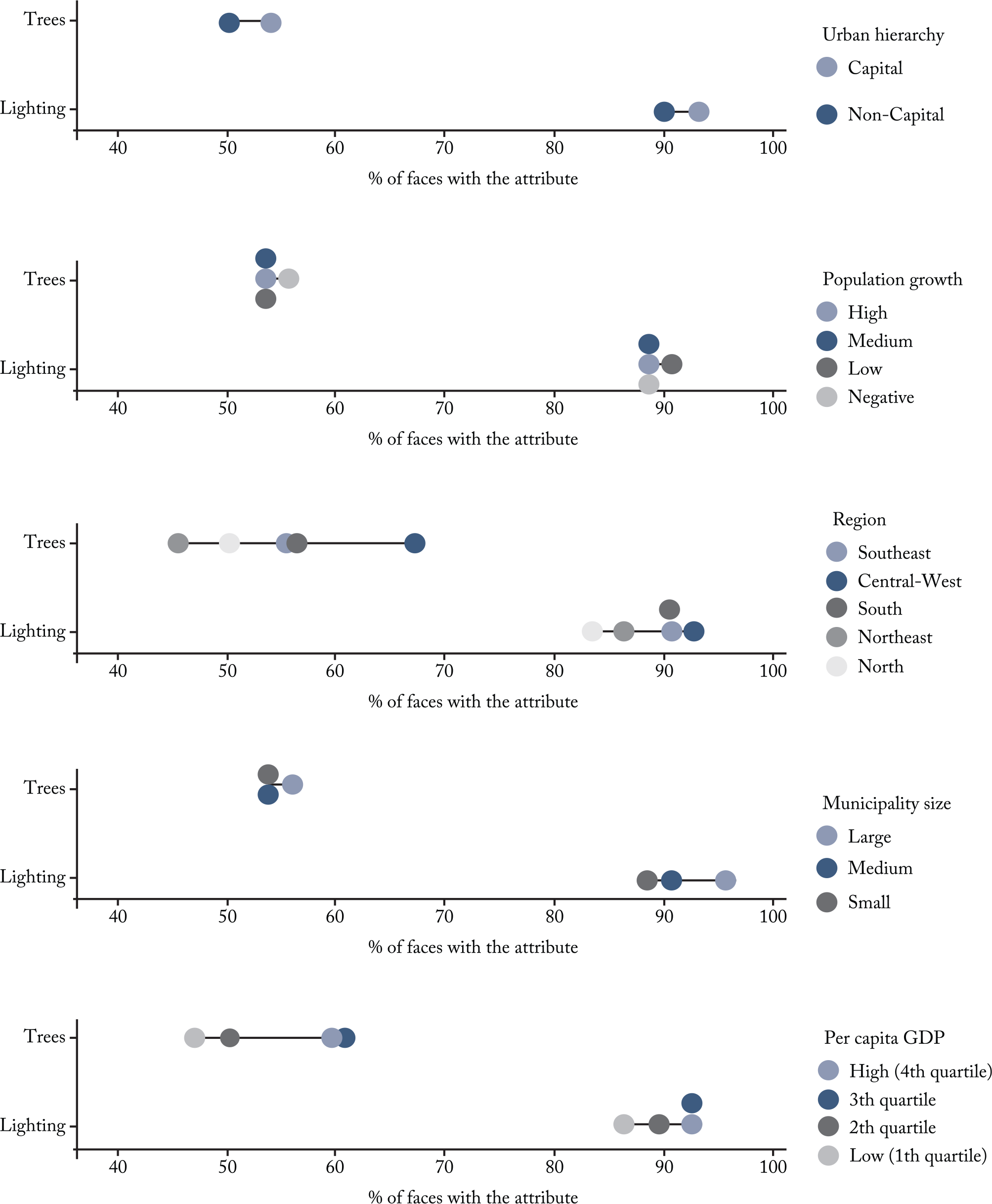
Regarding tree coverage, the results reveal a coun-terintuitive pattern: capitals and large cities showed higher values than non-capital, small, and medi-um-sized municipalities (Figure 3). Another coun-terintuitive finding concerns the North region, home to the Amazon Forest, the largest, most diverse, and densest forest on the planet, yet only 50.7% of block faces in northern cities had one or more trees. Con-versely, cities with negative population growth showed a higher proportion of block faces with trees compared with all municipalities experiencing positive growth (1st, 2nd, and 3rd growth quartiles). For lighting, varia-tion across city groups was small regardless of the met-ric used, with high mean values such as 84.5% in the North and 92.6% in the Central-West (a difference of 8.1 percentage points).
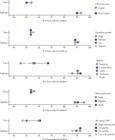
Differences in the percentage of block faces evaluated in the Urban Survey of Household Surroundings with trees and lighting, stratified by municipality size, Brazilian region, population growth profile, per capita income, and urban hierarchy (Brazilian Institute of Geography and Statistics, 2022).
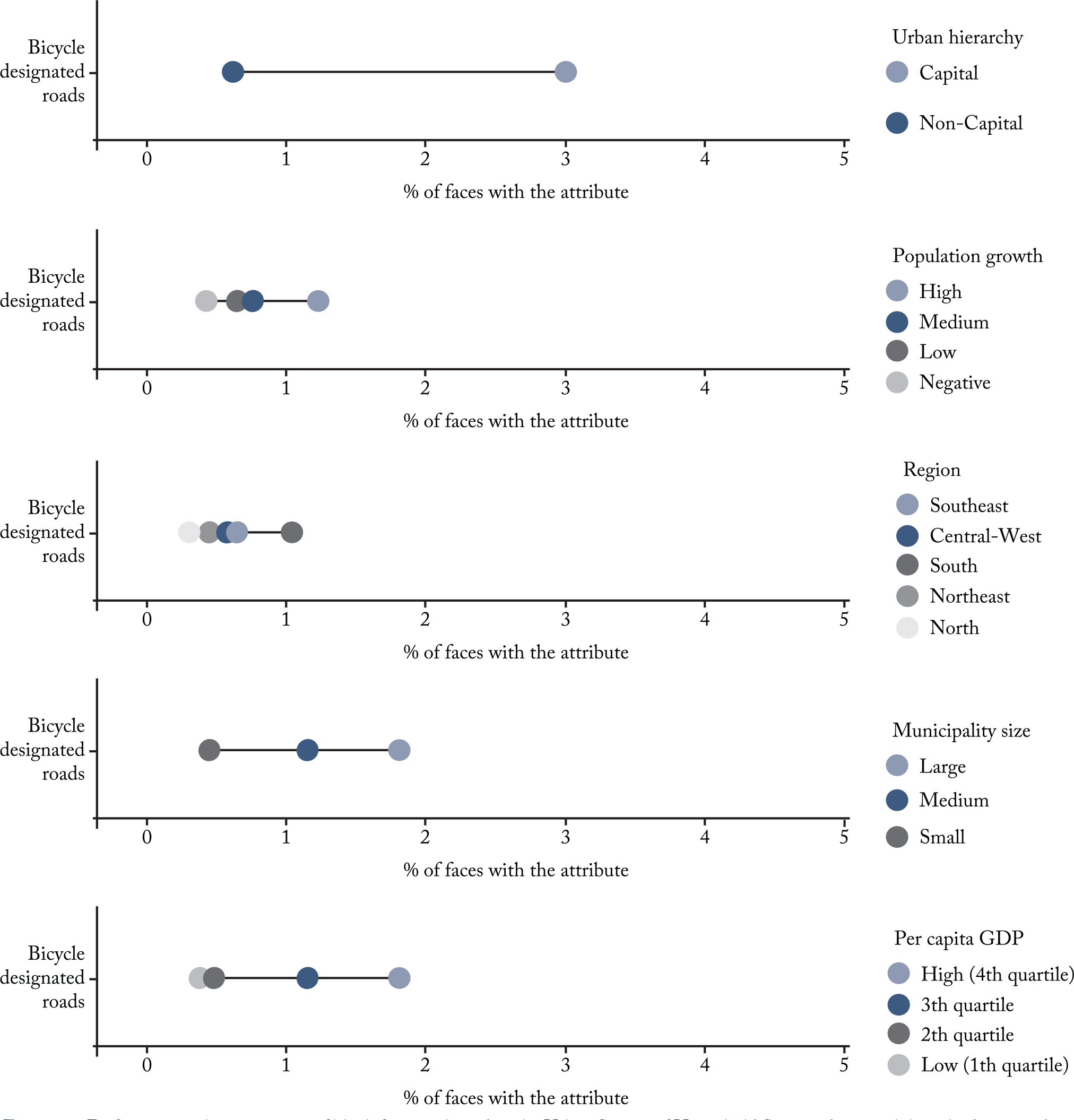
In contrast, for bicycle-designated roads, the mean values across comparison groups were extremely low, ranging, for example, from 0.36% of block faces in low-GDP municipalities to 1.02% in high-GDP mu-nicipalities (Figure 4). Capitals, municipalities with high population growth, high per capita GDP, large municipality size, and those in the South region ex-hibited the highest proportions of this type of cycling infrastructure (Figure 4).
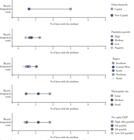
Differences in the percentage of block faces evaluated in the Urban Survey of Household Surroundings with bicycle-designated roads, stratified by municipality size, Brazilian region, population growth profile, per capita income, and urban hierarchy (Brazilian Institute of Geography and Statistics, 2022).
Table 1 presents the percentage of block faces with the six attributes for each of the 27 Brazilian capitals. For sidewalk presence, the lowest proportions were observed in Salvador (40%), Macapá (52.8%), and Vitória (56.7%), whereas the highest were in Curiti-ba (88.1%), Brasília (87.7%), and Goiânia (87.3%). Salvador also performed poorly for wheelchair ramps, with only 3.2% of block faces having this structure. The best-performing capitals were Campo Grande (49%), Curitiba (33.8%), and Brasília, which not only ranked among the top three for sidewalk presence but also had 27.4% of sidewalks equipped with wheelchair ramps.
Percentage values of the presence of sidewalks, sidewalk obstacles, wheelchair ramps, bicycle-designated roads, trees, and lighting on all block faces evaluated in the Urban Survey of Household Surroundings for each of the 27 Brazilian state capitals (Brazilian Institute of Geography and Statistics, 2022).
For sidewalk obstacles, 90.8% of sidewalk faces in São Luís had at least one obstacle, with Teresina (88.6%) and Manaus (86.8%) also showing very high values. The lowest, though still high, levels of sidewalk obsta-cles were observed in Porto Alegre (47.8%), Vitória (51.8%), and Campo Grande (57.1%).
Regarding tree coverage, the worst-performing cap-itals were Salvador (24.7%), São Luís (32.1%), and Rio Branco (32.2%), while the best were Brasília (81.8%), Campo Grande (80.5%), and Curitiba (76.8%).
For lighting, the lowest values were in Porto Alegre (84.5%), Macapá (84.8%), and Rio Branco (86.7%), and the highest in Vitória (98%), Goiânia (97.6%), and Campo Grande (96.8%). For bicycle-designated roads, capital city values were low, ranging from 0.87% in Porto Velho to 7.92% in Fortaleza. São Paulo and Rio de Janeiro, which have the highest absolute num-bers of such streets (247,393 and 155,636, respective-ly), showed intermediate relative values of 4.17% and 2.53%, respectively.
Discussion
The analysis of urban attributes that support active commuting across all Brazilian municipalities revealed a scenario of substantial territorial inequalities, direct-ly reflecting the challenges faced by the population in terms of accessibility, road safety, and pedestrian and cycling infrastructure. These findings reinforce evidence previously reported in the national and international literature on the importance of the built environment for promoting physical activity9,10. Cities with larger populations, capital status, and higher per capita GDP showed better indicators, such as the presence of wheel-chair ramps, trees, and sidewalks, suggesting a concen-tration of investments in more developed areas.
The low prevalence of wheelchair ramps, with an average of only 11.2% of block faces having this struc-ture and the alarming situation of 91 municipalities (1.6%) with none at all, highlights a critical weakness in urban accessibility policies. Although 1.6% rep-resents a small proportion of Brazilian municipali-ties, this corresponds to 91 municipalities in which all sidewalks are unsuitable for wheelchair users. This gap compromises not only the right to mobility for people with disabilities but also their opportunity to engage in physical activity. Florindo et al.10 emphasize that the promotion of active commuting through walking re-quires high-quality sidewalks that allow all individuals, regardless of their personal condition, to use them fully. The presence of sidewalk obstacles, which exceeds 90% in some capitals, constitutes a direct barrier to active commuting and exposes pedestrians to accident risks. These findings corroborate the urban safety literature, which stresses the need for infrastructure that goes be-yond lighting alone, including adequate paving, uni-versal accessibility, and horizontal signage for pedestri-ans and cyclists9.
Although public lighting was the most prevalent attribute identified in this study, it may not be sufficient to ensure truly active environments. This is because the surroundings survey evaluates the existence of lighting points, not their actual functioning (e.g., whether bulbs are present or operational). Therefore, these data must be interpreted with caution, as there are no national estimates of the proportion of non-functioning light-ing points, and the data produced and disseminated by IBGE may not fully reflect the reality of well-lit and safe environments. As a mitigating factor, Brazil has robust legislation on public lighting that establishes: a) mu-nicipal responsibility for providing public lighting ser-vices, as defined in Articles 30(I) and 149-A of the 1988 Federal Constitution; b) mandatory technical standards issued by the Brazilian Association of Technical Stan-dards, with specific parameters for illuminance, unifor-mity, and energy efficiency (Brazilian standards - NBR 5101/2012); and c) mechanisms for funding the imple-mentation and maintenance of public lighting services25.
Bicycle-designated roads showed the worst indi-cators, with a national average of only 0.7% of streets designated for bicycles and nearly half of municipal-ities lacking any cycling infrastructure. This absence runs counter to the World Health Organization Global Action Plan on Physical Activity (2018-2030), which identifies cycling infrastructure as a central element for promoting health, reducing chronic diseases, and com-bating physical inactivity. Moreover, the limited expan-sion of cycling facilities in smaller or less developed cities reinforces a pattern of infrastructural inequality, also documented in a longitudinal study using ISA-SP data, which showed that in São Paulo, most bicycle lanes were installed in central areas with higher income and education levels15. Beyond their low prevalence and unequal spatial distribution, the type of cycling facility also matters. Although the Urban Survey of House-hold Surroundings groups cycle paths, bike lanes, and shared routes, these facilities differ substantially: cycle paths are physically separated from motor traffic; bike lanes share the same level as traffic lanes and are usual-ly painted red; and shared routes (bike routes) share the roadway with motor vehicles and are identified only by horizontal and vertical signage. These differences affect not only cyclists’ level of protection but also the level of stress experienced during travel, which can influence the attractiveness of cycling as a mode of commuting or leisure activity26.
The relationship between population growth and attributes such as tree coverage displayed counter-intuitive patterns, suggesting that cities with nega-tive population growth retain a higher proportion of tree-covered areas. This may reflect less intensive land-use dynamics, preserving green spaces due to lower real estate pressure. Although tree cover is essential for thermal comfort and street attractiveness, it must be accompanied by integrated urban mobility policies and incentives for active use of public spaces. According to Rocha et al.27, tree-lined cities offer better thermal comfort, improve individual well-being, and enhance visual quality. In addition, trees increase humidity lev-els, vegetated areas can raise local atmospheric humid-ity by up to 50%, and help regulate solar radiation28. However, given the survey’s threshold (at least one tree 1.7 m tall), it is not possible to guarantee that all these benefits are present on the 53.8% of block faces that have at least one tree. More alarmingly, 46.2% of block faces have no trees at all.
Despite its national scope and the unprecedented nature of the Urban Survey of Household Surround-ings23, this study has some limitations. Observational data may be subject to variation in census agents’ in-terpretation, and the lack of information on actual use of infrastructure (e.g., walking or cycling frequency) prevents direct correlation with physical activity levels. Moreover, analyses at the aggregated municipal scale may mask important intra-city inequalities. Neverthe-less, as a nationwide study in a developing country, it has strong transformative potential by providing an unprec-edented empirical basis for intersectoral policymaking, master plan revisions, and investments in inclusive in-frastructure, aligned with Sustainable Development Goal 11 and the principles of Brazil’s City Statute.
This study revealed important territorial inequalities in the distribution of urban attributes that support active commuting across Brazilian municipalities. Data from the Urban Survey of Household Surroundings showed that larger, wealthier, and capital cities have better urban infrastructure, whereas smaller, lower-in-come, and demographically declining municipalities face serious limitations, especially in Bicycle-desig-nated roads. These findings reinforce the need for in-tersectoral public policies and evidence-based urban planning aimed at promoting health, social inclusion, and sustainable mobility. Ultimately, the results pro-vide valuable input for the formulation and revision of master plans, urban mobility strategies, and actions fo-cused on territorial equity, aligning with the targets of Sustainable Development Goal 11 and the principles of the City Statute, and contributing to the planning of more equitable, resilient, and sustainable cities.
-
Funding
This work was carried out with the support of the State University of Minas Gerais (Universidade do Estado de Minas Gerais - UEMG) and the Minas Gerais State Research Support Foun-dation (Fundação de Amparo à Pesquisa do Estado de Minas Gerais - FAPEMIG) - Research and Technological Development In-centive Grants (BIPDT).
Declaration regarding the use of artificial intelligence tools in the article writing process
The author used the Artificial Intelligence (AI) tools Chat GPT 5.2 and Grammarly Edu exclusively to assist in the verification and linguistic improvement of the English text of the manuscript.
Acknowledgments
The author thanks the Brazilian Institute of Geography and Statistics for conducting and providing the data from the Urban Planning Survey of the Surroundings of Dwellings for the 2022 Census.
Availability of research data and other materials
The contents underlying the research text are contained in the manuscript.
References
-
1 Nabiyeva GN, Wheeler SM, London JK, Brazil N. Implementation of SDG 11: initial good practices. Sustainability. 2023;15(20):14810. doi: https://doi.org/10.3390/su152014810
» https://doi.org/10.3390/su152014810 -
2 Elsey H, Thomson D, Lin R, Maharjan U, Agarwal S, Newell J. Addressing inequities in urban health: do decision-makers have the data they need? J Urban Health. 2016;93:526-37. doi: https://doi.org/10.1007/s11524-016-0046-9
» https://doi.org/10.1007/s11524-016-0046-9 -
3 Organização Mundial da Saúde (OMS). Global action plan on physical activity 2018-2030: more active people for a healthier world. World Health Organization. 2018. Available from: <https://apps.who.int/iris/handle/10665/272722> [2025 July].
» https://apps.who.int/iris/handle/10665/272722 -
4 Jáuregui A, Lambert EV, Panter J, Moore C, Salvo D. Scaling up urban infrastructure for physical activity in the COVID-19 pandemic and beyond. Lancet. 2021;398(10298):370-2. doi: https://doi.org/10.1016/S0140-6736(21)01599-3
» https://doi.org/10.1016/S0140-6736(21)01599-3 -
5 Papageorgiou GN, Tsappi E. Development of an active transportation framework model. Sustainability. 2024;16(17):7546. doi: https://doi.org/10.3390/su16177546
» https://doi.org/10.3390/su16177546 -
6 Edwards P, Tsouros AD. A healthy city is an active city: a physical activity planning guide. Copenhagen: WHO Regional Office for Europe; 2012. Available from: <https://iris.who.int/handle/10665/341088> [2025 July].
» https://iris.who.int/handle/10665/341088 -
7 Jacobs J, Alston L, Needham C, Backholer K, Strugnell C, Allender S, et al. Variation in the physical activity environment according to area-level socio-economic position-a systematic review. Obes Rev. 2019;20:686-700. doi: https://doi.org/10.1111/obr.12818
» https://doi.org/10.1111/obr.12818 - 8 Duhl LJ, Sanchez AK. Healthy cities and the city planning process. Copenhagen: WHO Regional Office for Europe; 1999.
- 9 Corburn J. Toward the healthy city: people, places, and the politics of urban planning. Cambridge: MIT Press; 2009.
-
10 Florindo AA, Goulardins GS, Andrade DR, Knebel MTG, Santos MP, Hallal PC, et al. Em defesa da caminhada e do uso de bicicleta como deslocamento no Brasil. Cad Saúde Pública. 2025;41(2):e00099324. doi: https://doi.org/10.1590/0102-311XPT099324
» https://doi.org/10.1590/0102-311XPT099324 -
11 Salvo D, Jáuregui A, Adlakha D, Sarmiento OL, Reis RS. When Moving Is the Only Option: The Role of Necessity Versus Choice for Understanding and Promoting Physical Activity in Lowand Middle-Income Countries. Annu Rev Public Health. 2023;44:151-69. doi: https://10.1146/annurev-publhealth-071321-042211
» https://10.1146/annurev-publhealth-071321-042211 -
12 Jia B, Chen Y, Wu J. Bibliometric analysis of healthy urban planning. Int J Environ Res Public Health. 2021;18(18):9444. doi: https://doi.org/10.3390/ijerph18189444
» https://doi.org/10.3390/ijerph18189444 -
13 World Resources Institute. Invest in walking and cycling for sustainable, safe cities. Washington, DC: WRI; 2022. Available from: <https://www.wri.org> [2025 July].
» https://www.wri.org -
14 Instituto de Políticas de Transporte e Desenvolvimento. MobiliDADOS. Available from: <https://mobilidados.org.br> [2025 July].
» https://mobilidados.org.br -
15 Teixeira IP, Barbosa JPAS, Barrozo LV, Hino AAF, Nakamura PM, Andrade DR, et al. Built environments for physical activity: a longitudinal descriptive analysis of São Paulo city, Brazil. Cities Health. 2023;7:137-47. doi: https://doi.org/10.1080/23748834.2022.2127173
» https://doi.org/10.1080/23748834.2022.2127173 -
16 Pereira RHM, Braga CK, Serra B, Nadalin, VG. Desigualdades socioespaciais de acesso a oportunidades nas cidades brasileiras. 2019. Available from: <https://repositorio.ipea.gov.br/bitstream/11058/9586/1/td_2535.pdf> [2025 July].
» https://repositorio.ipea.gov.br/bitstream/11058/9586/1/td_2535.pdf -
17 Madeira MC, Siqueira FCV, Facchini LA, Silveira DS, Tomasi E, Thumé E, et al. Atividade física no deslocamento em adultos e idosos do Brasil: prevalências e fatores associados. Cad Saúde Pública. 2013;29:165-74. doi: https://doi.org/10.1590/S0102-311X2013000100019
» https://doi.org/10.1590/S0102-311X2013000100019 - 18 Nações Unidas. Transforming our world: the 2030 agenda for sustainable development. New York: UN; 2015.
-
19 SpringerLink. SDG-11: sustainable cities and communities. Cham: SpringerLink; 2024. Available from: <https://link.springer.com/collections/jhhcjfdifg> [2025 July].
» https://link.springer.com/collections/jhhcjfdifg -
20 Favarão Leão AL, Gierbolini-Rivera RD, Franco Silva M, Shaw C, O’Connor A, Salvo D, et al. Spatial indicators of inequity in urban health research: a scoping review. Discov Public Health. 2025;22:27. doi: https://doi.org/10.1186/s12982-025-00421-z
» https://doi.org/10.1186/s12982-025-00421-z - 21 IBGE. Pesquisa urbanística do entorno dos domicílios. Rio de Janeiro: IBGE; 2022.
- 22 Câmara JA. Plano diretor. In: Ferraz S, Dallari AA, editors. Estatuto da Cidade (Comentários à Lei federal 10.257/2001). 4th ed. São Paulo: Malheiros; 2010. p. 318-34.
-
23 IBGE. Pesquisa urbanística do entorno dos domicílios. Available from: <https://biblioteca.ibge.gov.br/visualizacao/livros/liv102168.pdf> [2025 August].
» https://biblioteca.ibge.gov.br/visualizacao/livros/liv102168.pdf -
24 IBGE. Treinamento da Pesquisa Urbanística do Entorno dos Domicílios. n.d. Available from: <https://censo2022.ibge.gov.br/treinamento-entorno/capa.php> [2025 July].
» https://censo2022.ibge.gov.br/treinamento-entorno/capa.php -
25 Leite DS, Alves WF. Iluminação pública: sua relevância para a segurança e qualidade de vida do cidadão. Rev. Contemp. 2023;3(7): 8223-47. doi: https://doi.org/10.56083/RCV3N7-046
» https://doi.org/10.56083/RCV3N7-046 -
26 Teixeira IP, Rodrigues da Silva AN, Schwanen T, Manzato GG, Dörrzapf L, et al. Does cycling infrastructure reduce stress biomarkers in commuting cyclists? A comparison of five European cities. J. Transp. Geogr. 2020;88:102830. doi: https://doi.org/10.1016/j.jtrangeo.2020.102830
» https://doi.org/10.1016/j.jtrangeo.2020.102830 -
27 Rocha CA, Marques EV, Mendonça KV de, Zanella ME, Cavalcante RM. Percepção ambiental dos usuários de locais utilizados para a prática de atividade física e lazer na cidade de Fortaleza (CE). Rev Bras Educ Ambient. 2023;18(7):42-54. doi: https://doi.org/10.34024/revbea.2023.v18.15445
» https://doi.org/10.34024/revbea.2023.v18.15445 -
28 Carvalho JP. A árvore no espaço urbano. Rev Agrotecnologia - Agrotec. 2013;9. Disponível em: <https://www.researchgate.net/publication/344954916_A_Arvore_no_Espaco_Urbano>. [2025 July].
» https://www.researchgate.net/publication/344954916_A_Arvore_no_Espaco_Urbano
Edited by
-
Editor in Chief
Átila Alexandre Trapé University of São Paulo, Ribeirão Preto, São Paulo, Brazil.
-
Section editor
Luiz Guilherme Grossi Porto University of Brasília, Brasília, Federal District, Brazil.
Reviewers’ assessment
The reviews of this article were originally conducted in Portuguese. This version has been translated using ChatGPT and subsequently reviewed by the Chief Editors.About the reviewerReviewer A
Format
-
Does the article comply with the manuscript prepa-ration rules for submission to the Revista Brasileira de Atividade Física e Saúde?
Yes
-
Regarding formal aspects, is the manuscript well structured, containing the sections: introduction, methods, results, and discussion (with the conclu-sion as part of the discussion)?
Yes
-
Is the language appropriate, and is the text clear, precise, and objective?
Yes
-
Was any indication of plagiarism observed in the manuscript?
No
Suggestions/Comments:
-
The article is well structured and clearly organized. The language is appropriate, and no writing correc-tions are necessary.
Abstract
-
Are the abstract and the abstract in English ade-quate (containing: objective, information about the study participants, variables studied, main results, and a conclusion) and do they reflect the content of the manuscript?
Yes
Suggestions/Comments:
-
The abstract and the English abstract are adequate.
Introduction
-
Was the research problem clearly stated and delim-ited?
Partly
-
Is the research problem adequately contextualized in relation to the existing knowledge, moving from the general to the specific?
Partly
-
Are the reasons justifying the need for the study (including the authors’ assumptions about the problem) well established in the writing?
Yes
-
Are the references used to support the presentation of the research problem current and relevant to the topic?
Partly
-
Was the objective clearly presented?
Yes
Suggestions/Comments:
-
This article makes an important contribution to the topic of active mobility in the Brazilian context. The theme and the problem are partially explored in depth, although they are highly relevant. I present some suggestions so that the authors can further deepen the themes in the national context and in light of the current scientific literature:
-
The importance of active mobility is presented as a strategy for promoting human and planetary health. However, there is an important ethical issue under debate in the field. People move actively either out of necessity or by choice, depending on structural and social conditions. Therefore, it must be consid-ered that not all active travel occurs under favorable and safe conditions-for example, walking, cycling, or using public transportation in areas exposed to crime, traffic accidents, and environmental pollu-tion. By proposing the topic in a context of environ-mental inequality, the authors seem to neglect this issue. Thus, this problematization should be further developed. To this end, I suggest the article:
-
Salvo D, Jáuregui A, Adlakha D, Sarmiento OL, Reis RS. When Moving Is the Only Option: The Role of Necessity Versus Choice for Un-derstanding and Promoting Physical Activity in Lowand Middle-Income Countries. Annu Rev Public Health. 2023;44:151-169. doi:10.1146/an-nurev-publhealth-071321-042211.
-
Another aspect that appears to be insufficiently contextualized is the theme of inequity and spatial inequality. The topic does not seem to be well posi-tioned or clearly defined. There are important gaps regarding these themes and how they are measured. Here is a suggested reading to support the context:
-
Avarão Leão, A.L., Gierbolini-Rivera, R.D., Franco Silva, M. et al. Spatial indicators of inequity in ur-ban health research: a scoping review. Discov Pub-lic Health 22, 27 (2025). https://doi.org/10.1186/s12982-025-00421-z.
-
The intersection between active mobility and cit-ies is intrinsically related to urban design and pol-icies that promote changes to facilitate this mode of transportation. This theme is also largely absent from the introduction. Here is a reading on the top-ic that may be useful:
-
Nice KA, Thompson J, Zhao H, et al. Effects of city design on transport mode choice and expo-sure to health risks during and after a crisis: a ret-rospective observational analysis. Lancet Planet Health. 2025;9(6):e467-e479. doi:10.1016/S2542-5196(25)00088-9.
-
Finally, a minor detail: the authors use the terms ac-tive mobility and active travel throughout the title and the text. These terms should be standardized, and it should be clearly defined which term will be used.
Methods
-
Are the methodological procedures, in general, ap-propriate for studying the research problem?
Yes
-
Are the methodological procedures adopted for conducting the study sufficiently detailed?
Yes
-
Was the procedure adopted for selecting or recruit-ing participants appropriate to the problem studied and described in a sufficient, clear, and objective manner?
Not applicable
-
Were information provided about the instruments used for data collection, their psychometric proper-ties (e.g., reproducibility, internal consistency, and validity), and, when relevant, about the operational definition of variables?
Partly
-
Is the data analysis plan appropriate and adequately described?
Yes
-
Were the inclusion and/or exclusion criteria for sample participants described and appropriate for the study?
Not applicable
-
Did the authors provide clarification about the ethi-cal procedures adopted for conducting the research?
Partly
Suggestions/Comments:
-
The methods are well detailed. However, there is a lack of information about the quality of the instru-ment used by IBGE. There is abundant literature on street-segment audits that consistently reports acceptable reliability of the method; however, this information is not included in the methods, nor is information about the instrument used. Likewise, the procedures adopted by IBGE observers when recording data, controlling quality, and other relat-ed aspects are not described.
Results
-
Is the use of tables and figures appropriate and does it facilitate adequate presentation of the study re-sults?
Partly
-
Is the number of illustrations in the article in ac-cordance with the journal’s manuscript submission guidelines?
Yes
-
Are the number of participants at each stage of the study, as well as the number and reasons for losses and refusals, presented in the manuscript?
Not applicable
-
Are the characteristics of the participants presented and sufficient?
Not applicable
-
Are the results presented appropriately, highlight-ing the main findings and avoiding unnecessary repetition?
Yes
Suggestions/Comments:
-
Some details may help improve the readability of the figures:
-
a) The color palette makes it difficult to clearly dis-tinguish some points. Greater contrast should be created to allow visual distinction.
-
b) Figures 2-4 do not facilitate natural reading and visualization of the results. I suggest reorganizing them so that all study variables are represented within each category of analysis-for example, sidewalks, ramps, roads, lighting, bicycle signage according to urban hierarchy, and so on.
-
Discussion
-
Are the main findings of the study presented?
Partly
-
Are the study limitations and strengths presented and discussed?
Partly
-
Are the results discussed in light of the study lim-itations and the existing knowledge on the topic?
Partly
-
Are the potential contributions of the main study findings to scientific development, innovation, or real-world intervention discussed by the authors?
Partly
Suggestions/Comments:
-
The discussion overlooks the issues raised for re-flection in the introduction (necessity versus choice, inequity and spatial inequalities, urban design and active mobility), and it also fails to reflect on limita-tions in light of the quality of the study instrument and the implications for policy and practice. I feel that the discussion in these aspects falls consider-ably short.
Conclusion
-
Was the study conclusion presented appropriately and is it consistent with the study objective?
Yes
-
Is the study conclusion original?
Yes
Suggestions/Comments:
-
No comments.
References
-
Are the references up to date and sufficient?
Partly
-
Is most of the reference list composed of original research articles?
Partly
-
Do the references comply with the journal’s stan-dards (quantity and format)?
Yes
-
Is citation in the text adequate, that is, do the state-ments in the text cite references that actually sub-stantiate such statements?
Yes
Suggestions/Comments:
-
The references presented do not reflect the most re-cent discussions on the topic.
Comments to the authors
-
I congratulate the authors on an excellent study. The topic is relevant and the analysis is original. However, the findings could be even more relevant if there were greater scientific and thematic depth in the introduction and discussion.
Final recommendation (decision)
-
Major revisions required
- peer review recommendation: major-revision
Reviewer B
About the reviewerReviewer B
Format
-
Does the article comply with the manuscript prepa-ration rules for submission to the Revista Brasileira de Atividade Física e Saúde?
Yes
-
Regarding formal aspects, is the manuscript well structured, containing the sections: introduction, methods, results, and discussion (with the conclu-sion as part of the discussion)?
Yes
-
Is the language appropriate, and is the text clear, precise, and objective?
Yes
-
Was any indication of plagiarism observed in the manuscript?
-
No
Suggestions/Comments:
-
First, I would like to congratulate the authors. This is a very well-written article, with fluent and en-gaging reading. Some points could be expanded, especially in the discussion section, which will be addressed in this review.
Abstract
-
Are the abstract and the abstract in English ade-quate (containing: objective, information about the study participants, variables studied, main results, and a conclusion) and do they reflect the content of the manuscript?
Yes
Suggestions/Comments:
-
Once again, congratulations to the authors. The ab-stract and the English abstract are adequate, direct, and concise, and provide the necessary information about the study.
Introduction
-
Was the research problem clearly stated and delim-ited?
Yes
-
Is the research problem adequately contextualized in relation to the existing knowledge, moving from the general to the specific?
Yes
-
Are the reasons justifying the need for the study (including the authors’ assumptions about the problem) well established in the writing?
Yes
-
Are the references used to support the presentation of the research problem current and relevant to the topic?
Yes
-
Was the objective clearly presented?
Yes
Suggestions/Comments:
-
The introduction is well written and clearly pres-ents the research problem. The paragraph on page 4, lines 6-9, and the paragraph on lines 17-23 seem to complement each other; I believe they could be merged into a single paragraph to improve text flow, which would also allow for expanding some discussions later.
Methods
-
Are the methodological procedures, in general, appropriate for studying the research problem?
Yes
-
Are the methodological procedures adopted for conducting the study sufficiently detailed?
Partly
-
Was the procedure adopted for selecting or recruit-ing participants appropriate for the problem stud-ied and described in a sufficient, clear, and objective manner?
Yes
-
Were information provided about the instruments used for data collection, their psychometric proper-ties (e.g., reproducibility, internal consistency, and validity), and, when relevant, about the operational definition of variables?
Yes
-
Is the data analysis plan appropriate and adequately described?
Yes
-
Were the inclusion and/or exclusion criteria for sample participants described and appropriate for the study?
Yes
-
Did the authors provide clarification about the ethi-cal procedures adopted for conducting the research? Not applicable
Suggestions/Comments:
-
The methods are well described; however, I have a few questions:
-
Regarding the classification of municipality size, what was this criterion based on? I ask because the classification of large municipalities is very broad, since those with more than 100,000 inhabitants in-clude very diverse municipalities, such as São Paulo and many others with around 100,000 inhabitants that differ substantially. It may be helpful to explain the basis for this classification and why it is suffi-cient, or alternatively to adopt a less broad classi-fication.
-
In the supplementary tables, were any tests performed in addition to reporting means to assess possible differences? If not, why?
-
In the supplementary tables, there are columns con-taining only zeros; these should be removed.
-
In the results, there is a table presenting data from capital cities; however, I did not find in the meth-ods what was done regarding this analysis, nor any reference to it.
Results
-
Is the use of tables and figures appropriate and does it facilitate adequate presentation of the study re-sults?
Yes
-
Is the number of illustrations in the article in ac-cordance with the journal’s manuscript submission guidelines?
Yes
-
Are the number of participants at each stage of the study, as well as the number and reasons for losses and refusals, presented in the manuscript?
Not applicable
-
Are the characteristics of the participants presented and sufficient?
Not applicable
-
Are the results presented appropriately, highlight-ing the main findings and avoiding unnecessary repetition?
Yes
Suggestions/Comments:
-
The results are very well described; the figures and tables are well prepared and easy to visualize. I believe this is the best-written and most detailed sec-tion of the article, with no major additional contri-butions needed.
-
On line 10 of page 11, correct “baixo” to “baixos.”
Discussion
-
Are the main findings of the study presented?
Yes
-
Are the study limitations and strengths presented and discussed?
Yes
-
Are the results discussed in light of the study lim-itations and the existing knowledge on the topic?
Yes
-
Are the potential contributions of the main study findings to scientific development, innovation, or real-world intervention discussed by the authors?
Yes
Suggestions/Comments:
-
The discussion is well presented and well written; once again, congratulations to the authors.
-
Only a few suggestions and reflections:
-
In the strengths section, explicitly state that this is a very large study conducted in a developing country; check the literature to see whether there is some-thing similar elsewhere, as this is likely a major strength given the size and diversity of Brazil.
-
One reflection regarding Table 1 is that, consid-ering the data found in Vigitel, it may be possible to draw some relationships and propose hypothe-ses about their impact. Expanding this discussion could be interesting.
-
Based on national and international studies, it may be possible to further emphasize the importance of studying and implementing public policies that im-prove these structures-for example, how improved walkability increases physical activity levels, or studies in São Paulo showing that living near bike lanes and cycle paths is important for protection against arterial hypertension, and so on.
-
On line 9 of page 13, there is a minor Portuguese error: “.. a existência calçadas ...”; add the word “de.”
Conclusion
-
Was the study conclusion presented appropriately and is it consistent with the study objective?
Yes
-
Is the study conclusion original?
Yes
Suggestions/Comments:
-
Once again, congratulations to the authors. This section is well presented and well written.
References
-
Are the references up to date and sufficient?
Yes
-
Is most of the reference list composed of original research articles?
Yes
-
Do the references comply with the journal’s stan-dards (quantity and format)?
Yes
-
Is citation in the text adequate, that is, do the state-ments in the text cite references that actually sub-stantiate such statements?
Yes
Suggestions/Comments:
-
With the suggestions I have made, the authors could consider expanding the reference list slightly, since the journal’s guidelines have not yet reached the maximum limit.
Comments to the authors
-
First, I would like to congratulate the authors on this work-a very well-written study addressing a relevant topic, with timely research and extremely reliable and important data. The writing is clear and makes the manuscript easy to read. However, some sections could be improved, such as the introduc-tion and a slight expansion of the discussion, bring-ing more reflection on the topic and on the impact of these facilities on physical activity. I recommend a few minor corrections and suggestions as outlined above.
Final recommendation (decision)
-
Minor revisions required
- peer review recommendation: minor-revision
Avaliação dos pareceristas
About the reviewerAvaliador A
Formato
-
O artigo atende às regras de preparação de manus-critos para submissão à Revista Brasileira de Ativi-dade Física e Saúde?
Sim
-
Em relação aos aspectos formais, o manuscrito está bem estruturado, contendo as seções: introdução, métodos, resultados e discussão (conclusão como parte da discussão)?
Sim
-
A linguagem é adequada, o texto é claro, preciso e objetivo?
Sim
-
Foi observado algum indício de Plágio no manus-crito?
-
Não
Sugestões/comentários:
-
O artigo é bem estruturado e claramente organiza-do. A linguagem é apropriada e não há correções de escrita que sejam necessárias.
Resumo/abstract
-
O resumo e o abstract são adequados (contendo: objetivo, informações sobre os participantes do estudo, variáveis estudadas, principais resultados e uma conclusão) e retratam o conteúdo do manus-crito?
Sim
Sugestões/comentários:
-
Resumo e Abstract são adequados.
Introdução
-
O problema de pesquisa foi claramente explicitado e delimitado?
Em parte
-
O problema de pesquisa está adequadamente con-textualizado em relação ao conhecimento já dispo-nível, partindo do geral para o específico?
Em parte
-
As razões que justificam (incluindo as pressuposi-ções dos autores sobre o problema) as necessidades do estudo estão bem estabelecidas na redação?
Sim
-
As referências utilizadas para apoiar a apresentação do problema de pesquisa são atuais e pertinentes à temática?
Em parte
-
O objetivo foi claramente apresentado?
Sim
Sugestões/comentários:
-
Este artigo apresenta uma importante contribuição ao tema de mobilidade ativa no contexto brasileiro. A temática e o problema estão parcialmente apro-fundados, ainda que muito relevantes. Apresento algumas sugestões para que os(as) autores(as) pos-sam aprofundar os temas no contexto nacional e à luz da literatura científica atual:
-
A importância da mobilidade ativa é apresentada como estratégia de promoção de saúde humana e planetária. No entanto, há uma questão ética im-portante em debate na área. As pessoas deslocam-se de maneira ativa por necessidade ou escolha, dependendo das condições estruturais e sociais. Sendo assim, há que se considerar que nem todo deslocamento ativo ocorre em condições favoráveis e seguras, por exemplo, ao caminhar, pedalar ou usar transporte público em áreas com exposição ao cri-me, acidentes de trânsito e poluição ambiental. Ao propor o tema em um contexto de desigualdade am-biental, os autores parecem negligenciá-lo. Portan-to, há que se aprofundar esta problematização. Para tanto sugiro a artigo: Salvo D, Jáuregui A, Adlakha D, Sarmiento OL, Reis RS. When Moving Is the Only Option: The Role of Necessity Versus Choice for Understanding and Promoting Physical Activ-ity in Lowand Middle-Income Countries. Annu Rev Public Health. 2023;44:151-169. doi:10.1146/ annurev-publhealth-071321-042211.
-
Um outro aspecto que parece pouco contextualizado é a temática de inequidade e desigualdade espacial. O assunto não parece bem posicionado e definido. Há importantes lacunas sobre os temas e como os mesmos são mensurados. Aqui uma su-gestão de leitura para subsidiar o contexto: Avarão Leão, A.L., Gierbolini-Rivera, R.D., Franco Sil-va, M. et al. Spatial indicators of inequity in urban health research: a scoping review. Discov Public Health 22, 27 (2025). https://doi.org/10.1186/s12982-025-00421-z.
-
A intersecção ente mobilidade ativa e cidades tem intrínseca relação com o desenho das cidades e as políticas que promovem alterações que facilitem este modal de transporte. Este tema também pas-sa ao largo na introdução. Aqui uma leitura sobre o tema que pode ser util: Nice KA, Thompson J, Zhao H, et al. Effects of city design on transport mode choice and exposure to health risks during and after a crisis: a retrospective observational anal-ysis. Lancet Planet Health. 2025;9(6):e467-e479. doi:10.1016/S2542-5196(25)00088-9.
-
Finalmente, um detalhe menor, os(as) autores(as) usamos os termos mobilidade ativa e deslocamento ativo ao longo do título e texto. Há que se padro-nizar e definir claramente qual o termo a ser em-pregado.
Métodos
-
Os procedimentos metodológicos são, de modo ge-ral, adequados ao estudo do problema de pesquisa?
Sim
-
Os procedimentos metodológicos adotados para a realização do estudo estão suficientemente detalha-dos?
Sim
-
O procedimento adotado para seleção ou recruta-mento dos participantes foi adequado para o pro-blema estudado e está descrito de forma suficiente, clara e objetiva?
Não se aplica
-
Foram apresentadas informações sobre os instru-mentos utilizados na coleta de dados, suas qualida-des psicométricas (por exemplo, reprodutibilidade, consistência interna e validade) e, quando pertinen-te, sobre a definição operacional das variáveis?
Em parte
-
O plano de análise de dados é adequado e está ade-quadamente descrito?
Sim
-
Os critérios de inclusão e/ou exclusão de partici-pantes da amostra foram descritos e estão adequa-dos para o estudo?
Não se aplica
-
Os autores forneceram esclarecimentos sobre os procedimentos éticos adotados para a realização da pesquisa?
Em parte
Sugestões/comentários:
-
Os métodos estão bem detalhados. Porém, há ausência de informações sobre a qualidade do ins-trumento empregado pelo IBGE. Há abundante literatura sobre auditagem de segmentos de rua que consistentemente reporta fidedignidade aceitável do método, porém nos métodos não há esta infor-mação e tampouco sobre o instrumento empregado. Tão pouco os procedimentos adotados pelos obser-vadores do IBGE ao registrar os dados, ao controlar a qualidade e a outros.
Resultados
-
O uso de tabelas e figuras é apropriado e facilita a adequada veiculação dos resultados do estudo?
Em parte
-
A quantidade de ilustrações no artigo está de acor-do com o que é estabelecido pelas normas para sub-missão de manuscritos à revista?
Sim
-
O número de participantes em cada etapa do estu-do, assim como o número e as razões para as perdas e recusas estão apresentadas no manuscrito?
Não se aplica
-
As características dos participantes estão apresenta-das e são suficientes?
Não se aplica
-
Os resultados estão apresentados de forma adequa-da, destacando-se os principais achados e evitandose repetições desnecessárias?
Sim
Sugestões/comentários:
-
Alguns detalhes podem auxiliar a leitura das figuras:
-
a) A paleta de cores dificulta distinguir alguns pon-tos com clareza. Há que se criar um maior contraste para que a distinção visual seja possível.
-
b) As figuras 2-4 não facilitam a leitura e visuali-zação natural dos resultados. Sugiro reorganizar as mesmas de maneira que todas as variáveis de estudo estejam representadas em cada categoria de análise. Por exemplo, calçadas, rampas, vias, iluminação, si-nalização para bicicletas segundo hierarquia urbana, e assim por diante.
Discussão
-
Os principais achados do estudo são apresentados?
Em parte
-
As limitações e os pontos fortes do estudo são apre-sentados e discutidos?
Em parte
-
Os resultados são discutidos à luz das limitações do estudo e do conhecimento já disponível sobre o as-sunto?
Em parte
-
As contribuições potenciais dos principais achados do estudo para o desenvolvimento científico, inova-ção ou intervenção na realidade são discutidas pelos autores?
Em parte
Sugestões/comentários:
-
A discussão passa ao largo das questões que apre-sento para reflexão na introdução (necessidade ver-sus escolha, inequidade e desigualdades espaciais, desenho urbano e mobilidade ativa), além de não refletir sobre limitações à luz das qualidades do ins-trumento de estudo e implicações para política e prática. Sinto que a discussão nestes aspectos fica muito a desejar.
Conclusão
-
A conclusão do estudo foi apresentada de forma adequada e é coerente com o objetivo do estudo?
Sim
-
A conclusão do estudo é original?
Sim
Sugestões/comentários:
-
Sem comentários
Referências
-
As referências são atualizadas e suficientes?
Em parte
-
A maior parte é composta de referências de artigos originais?
Em parte
-
As referências atendem as normas da revista [quan-tidade e formato]?
Sim
-
A citação no texto é adequada, ou seja, as afirmações no texto citam referências que de fato substanciam tais afirmações?
Sim
Sugestões/comentários:
-
As referências apresentadas não refletem as discus-sões mais recentes sobre o tema.
Comentários ao autor
-
Parabenizo os(as) autores(as) pelo ótimo estudo. A temática é relevante e a análise original. No entan-to, os achados podem ser ainda mais relevantes se houver maior densidade científica e temática na introdução e discussão.
Parecer final (decisão)
-
Revisões substanciais necessárias
- peer review recommendation: major-revision
Avaliador B
About the reviewerAvaliador B
Formato
-
O artigo atende às regras de preparação de manus-critos para submissão à Revista Brasileira de Ativi-dade Física e Saúde?
Sim
-
Em relação aos aspectos formais, o manuscrito está bem estruturado, contendo as seções: introdução, métodos, resultados e discussão (conclusão como parte da discussão)?
Sim
-
A linguagem é adequada, o texto é claro, preciso e objetivo?
Sim
-
Foi observado algum indício de Plágio no manus-crito?
-
Não
Sugestões/comentários:
-
Primeiramente parabenizar os autores, é um artigo muito bem escrito e redigido com uma leitura fluída e interessante. Alguns pontos podem ser expandi-dos, principalmente no tópico da discussão que será apontado nesse parecer.
Resumo/abstract
-
O resumo e o abstract são adequados (contendo: objetivo, informações sobre os participantes do estudo, variáveis estudadas, principais resultados e uma conclusão) e retratam o conteúdo do manus-crito?
Sim
Sugestões/comentários:
-
Novamente parabéns aos autores, o resumo e o abs-tract são adequados, diretos e sucinto e trazem as informações necessárias do estudo.
Introdução
-
O problema de pesquisa foi claramente explicitado e delimitado?
Sim
-
O problema de pesquisa está adequadamente con-textualizado em relação ao conhecimento já disponível, partindo do geral para o específico?
Sim
-
As razões que justificam (incluindo as pressuposi-ções dos autores sobre o problema) as necessidades do estudo estão bem estabelecidas na redação?
Sim
-
As referências utilizadas para apoiar a apresentação do problema de pesquisa são atuais e pertinentes à temática?
Sim
-
O objetivo foi claramente apresentado?
Sim
Sugestões/comentários:
-
A introdução está nem escrita e apresenta bem o problema de pesquisa. O parágrafo da página 4 das linhas 6-9 e o parágrafo da linha 17-23 me pare-cem se complementar, acredito que poderia agregar os dois em um único paragrafo para deixar o texto mais fluído e com isso pode expandir algumas dis-cussões posteriormente.
Métodos
-
Os procedimentos metodológicos são, de modo ge-ral, adequados ao estudo do problema de pesquisa?
Sim
-
Os procedimentos metodológicos adotados para a realização do estudo estão suficientemente detalha-dos?
Em parte
-
O procedimento adotado para seleção ou recruta-mento dos participantes foi adequado para o pro-blema estudado e está descrito de forma suficiente, clara e objetiva?
Sim
-
Foram apresentadas informações sobre os instru-mentos utilizados na coleta de dados, suas qualida-des psicométricas (por exemplo, reprodutibilidade, consistência interna e validade) e, quando pertinen-te, sobre a definição operacional das variáveis?
Sim
-
O plano de análise de dados é adequado e está ade-quadamente descrito?
Sim
-
Os critérios de inclusão e/ou exclusão de partici-pantes da amostra foram descritos e estão adequa-dos para o estudo?
Sim
-
Os autores forneceram esclarecimentos sobre os procedimentos éticos adotados para a realização da pesquisa?
Não se aplica
Sugestões/comentários:
-
Os métodos estão bens descritos, só tenho algumas dúvidas:
-
1) Na classificação do tamanho dos municípios, esse critério foi baseado em que? Digo isto, pois a classi-ficação de grandes municípios é muito ampla, uma vez que acima de 100.000 habitantes inclui municí-pios muito diversos como por exemplo São Paulo e vários outros municípios de 100 mil habitantes que possuem muitas diferenças, talvez explicar onde se baseou e porque seja suficiente, ou então uma clas-sificação menos branda.
-
2) Nas tabelas suplementares, além das médias foi realizado algum teste para verificar possíveis dife-renças? Se não, porque?
-
3) Nas tabelas suplementares, existem colunas ape-nas com números 0, excluir as mesmas.
-
4) Nos resultados, possui a tabela das capitais, não encontrei nos métodos o que foi realizado e nenhu-ma citação a essa análise.
Resultados
-
O uso de tabelas e figuras é apropriado e facilita a adequada veiculação dos resultados do estudo?
Sim
-
A quantidade de ilustrações no artigo está de acor-do com o que é estabelecido pelas normas para sub-missão de manuscritos à revista?
Sim
-
O número de participantes em cada etapa do estu-do, assim como o número e as razões para as perdas e recusas estão apresentadas no manuscrito?
Não se aplica
-
As características dos participantes estão apresenta-das e são suficientes?
Não se aplica
-
Os resultados estão apresentados de forma adequa-da, destacando-se os principais achados e evitando-se repetições desnecessárias?
Sim
Sugestões/comentários:
-
Resultados muito bem descritos, figuras e tabela muito bem elaboradas e de fácil visualização. Acre-dito que é o tópico mais bem escrito e detalhado do artigo, sem maiores contribuições para esse tópico.
-
Na linha 10 página 11, corrigir baixo por baixos.
Discussão
-
Os principais achados do estudo são apresentados?
Sim
-
As limitações e os pontos fortes do estudo são apre-sentados e discutidos?
Sim
-
Os resultados são discutidos à luz das limitações do estudo e do conhecimento já disponível sobre o as-sunto?
Sim
-
As contribuições potenciais dos principais achados do estudo para o desenvolvimento científico, inova-ção ou intervenção na realidade são discutidas pelos autores?
Sim
Sugestões/comentários:
-
Discussão bem apresentada e bem redigida, nova-mente parabéns aos autores.
-
Apenas algumas sugestões e reflexões.
-
1) Nos pontos fortes deixar explícito que é um estu-do muito grande realizado em um país em desen-volvimento, verificar na literatura se há algo pare-cido em outro local, acredito que seja um ponto muito forte devido as dimensões do Brasil.
-
2) Algo que refleti sobre a tabela 1, é que diante dos dados que encontramos no Vigitel, podemos fazer algumas relações e possíveis hipóteses do quanto isso afeta. Talvez expandir essa discussão seja interessante.
-
3) Com base em estudos nacionais e internacionais, acredito que possa deixa ainda mais claro a im-portância de se estudar e de políticas públicas que melhorem essas estruturas, como por exemplo melhora de walkability aumenta os níveis de ati-vidade física, ou então estudo em São Paulo que mostrou que residir perto de ciclovias e ciclofaixas é importante contra a hipertensão arterial e assim por diante.
-
4) Na linha 9 página 13 possui um pequeno erro de português, “.. a existência calçadas ...” acrescentar a palavra “de”
-
Conclusão
-
A conclusão do estudo foi apresentada de forma adequada e é coerente com o objetivo do estudo?
Sim
-
A conclusão do estudo é original?
Sim
Sugestões/comentários:
-
Novamente parabéns aos autores, tópico bem apre-sentado e bem redigido.
Referências
-
As referências são atualizadas e suficientes?
Sim
-
A maior parte é composta de referências de artigos originais?
Sim
-
As referências atendem as normas da revista [quan-tidade e formato]?
Sim
-
A citação no texto é adequada, ou seja, as afirmações no texto citam referências que de fato substanciam tais afirmações?
Sim
Sugestões/comentários:
-
Com as sugestões que realizei poderia apenas ex-pandir algumas referências, já que pelas normas da revista ainda não atingiu o limite.
Comentários ao autor
-
Primeiramente gostaria de parabenizar os autores do trabalho, um trabalho muito bem redigido e uma temática relevante e pesquisa é oportuna e atual com dados extremamente confiáveis e importantes. A redação é clara e deixa a leitura fluída. Entretanto, alguns trechos podem ser melhorados, como na in-trodução e uma pequena expansão na discussão, tra-zendo maiores reflexões acerca do tema e do impac-to dessas instalações na atividade física. Recomendo algumas poucas correções e sugestões a seguir.
Parecer final (decisão)
-
Pequenas revisões necessárias
- peer review recommendation: minor-revision