Public sports policies in Amazonas: The Sports and Leisure Program in the Capital and Interior
ABSTRACT
Introduction: The Sports and Leisure Program in the Capital and Interior (Programa de Esporte e Lazer na Capital e Interior +PELCI) in the state of Amazonas, Brazil, is a public policy with the aim of promoting sports and social inclusion. +PELCI seeks to democratize access to sports for children and young people, offering Olympic and non-Olympic sports in centers in the capital and centers in the interior.
Objective: To describe the +PELCI and its potential, barriers, opportunities, and future possibilities of the program.
Method: Qualitative descriptive study, using document analysis of 52 reports produced between 2021 and 2025.
Results: The data revealed significant growth of the pro-gram, with 11,336 enrolled and more than 44,000 services provided. However, there are challenges such as the discontinuation of centers in some municipalities, logistical barriers, travel difficulties, and budgetary limitations. The data also indicated that the program has great potential to reduce regional and social inequalities, especially in areas with low human development indexes, by promoting access to leisure and sports. In addition, +PELCI can positively influence the socio-emotional development of participants, providing a possible path to professionalization and social mobility.
Conclusion: De-spite its limitations, +PELCI has proven to be an important tool for inclusion and social transforma-tion through sports, with the potential to serve as a model for other regional public sports policies.
Keywords:
Public policies; Socio-sports; Children; Youth.
RESUMO
Introdução: O Programa de Esporte e Lazer na Capital e Interior (+PELCI) no estado do Ama-zonas, Brasil, é uma política pública voltada à promoção do esporte e inclusão social. O +PELCI busca democratizar o acesso ao esporte para crianças e jovens, oferecendo modalidades olímpicas e não olímpicas em núcleos na capital e polos no interior.
Objetivo: Descrever o +PELCI, suas poten-cialidades, barreiras, pontos de oportunidade e possibilidades futuras do programa.
Método: Estudo qualitativo descritivo, utilizando a análise documental de 52 relatórios produzidos entre os anos de 2021 e 2025.
Resultados: Os dados revelaram crescimento significativo do programa, com 11.336 matriculados e mais de 44 mil atendimentos. No entanto, há desafios como a descontinuidade de polos em alguns municípios, barreiras logísticas, dificuldades de deslocamento e limitação orçamen-tária. Os dados também indicaram que o programa tem grande potencial para reduzir desigualdades regionais e sociais, principalmente em localidades com baixo índice de desenvolvimento humano, promovendo acesso ao lazer e à prática esportiva. Para além disso, o +PELCI pode influenciar posi-tivamente o desenvolvimento socioemocional dos participantes, sendo um caminho possível para a profissionalização e mobilidade social.
Conclusão: Apesar das limitações, o +PELCI mostra-se uma importante ferramenta de inclusão e transformação social por meio do esporte, com potencial para servir de modelo a outras políticas públicas esportivas regionalizadas.
Palavras-chave:
Políticas públicas; Sócio esportivo; Crianças; Jovens.
Introduction
According to the United Nations, a public policy is a set of decisions, actions, and programs by the govern-ment (or other social actors) that aim to address public problems, enhance citizens’ lives, and achieve socially relevant objectives. In fact, the United Nations does not have a single official definition of public policy applicable to all its bodies. However, several United Nations documents and agencies address the concept in the context of formulating and implementing gov-ernment strategies to address social, economic, and en-vironmental challenges1.
Public policies are instruments through which the State, at different levels (national, state, and municipal), intervenes in specific sectors of society (e.g., sports) to promote collective well-being. In the context of sports, this refers to any form of predominantly physical activ-ity, whether informal or organized, intended for leisure, health promotion, high performance, or entertain-ment, as established in the Brazilian General Sports Law (Law No. 14,597/2023)2.
An example of a current national sports policy is the City Sports and Leisure Program, created in 2003 under the responsibility of the National Secretariat for Amateur Sports, Education, Leisure, and Social Inclu-sion of the Ministry of Sports of Brazil. The program promotes physical, cultural, and leisure activities, pri-marily in areas where there are gaps in the national scenario, in pursuit of democratizing sports and leisure activities3. According to the Ministry of Sport, the pro-gram was in force from 2003 to 2015, ended between 2016 and 2022, and resumed in 2023, with a specific call for proposals for 2023-2026.
However, previous studies indicate that the program has not fully achieved its goals. Santos et al.3 state that although the program aims to reduce inequalities, its implementation is influenced by institutional factors, including program design, incentives, and political in-terests. The study also points to low adherence to the program by municipalities in the North region, possi-bly due to the bureaucratization of the formalization process for agreements with the Ministry of Sports. Furthermore, other studies4,5 suggest that difficulties in proving technical, administrative, and budgetary feasi-bility, as well as the geoeconomic conditions found in the Brazilian context, mean that smaller municipalities have less fiscal capacity to develop their own public sports policies.
Faced with these challenges, regional programs emerge as more accessible and viable alternatives for public sports policy, considering local particularities and coordination with the real needs of the popula-tion3. In the state of Amazonas, state sports policy has prioritized the development of community sports and recreational physical activities through programs implemented both in the capital Manaus, and in mu-nicipalities in the interior. Among the main programs are + Breathe, Champions of the Village (+Respirar, Campeões da Vila), +Footvolley, Champion’s Flight (+Futevôlei, Voo Campeão), and the Sports and Leisure Program in the Capital and Interior (Programa de Es-porte e Lazer na Capital e Interior - +PELCI), each with specific objectives aimed at promoting sports and leisure.
The +PELCI Program aims to encourage and pro-mote sports and leisure activities among children, ado-lescents, young people, and adults aged between eight and 29, both in the capital and in the interior of the state. It also seeks to provide a healthy and competitive experience that values collective coexistence, recogni-tion of individual skills, and the discovery of potential in various sports, both Olympic and non-Olympic6. Created in 2021 and implemented in 2022 under the now defunct Amazonas High Performance Founda-tion - currently the Amazonas Department of Sports and Leisure - the program develops four Olympic sports (soccer, basketball, volleyball, and handball) and three non-Olympic sports (futsal, jiu-jitsu, and foot-volley) with 33 centers in the state capital, Manaus and five centers in the interior of the state6. At the time of its implementation, the Amazonas state government contributed approximately R$700.000,00 for the first 15 months to the project (+PELCI), which could reach about 5,000 children and adolescents through sports7.
The objectives of +PELCI are in line with the con-cept of sport as a type of physical activity that pro-motes social interaction and positive use of free time8. In addition, they are aligned with the role of the State in creating conditions that favor the inclusion of physi-cal activity in the daily lives of the population, ensuring access to safe, enjoyable, inclusive, and socially relevant practices9.
Considering the size of the Amazonas State, +PELCI is the largest social sports program in the state - and possibly in the country. However, it faces challenges of equal magnitude. Access to sports opportunities is still unequal between regions and social groups, be-ing less common in communities far from large urban centers9,10. Another obstacle is the program’s financial sustainability, which depends on significant budgetary allocations for its maintenance and expansion, as well as for its efforts to comply with the United Nations 2030 Agenda, especially with regard to the Sustainable Development Goals, by seeking long-term positive so-cial, economic, and environmental impacts1.
Despite these advances, the Working Group on Public Policy and Physical Activity of the Brazilian Society of Physical Activity and Health warns of the limited number of scientific publications on public pol-icies promoting physical activity in Brazil11. The group emphasizes that scientific evidence on a wide range of physical activity topics (i.e., sports) can inform the development of plans and policies to promote physical activity and reduce sedentary behavior. This research addresses this gap by producing the necessary evidence on this topic at the national level.
Given this context, this research seeks to contribute to the production of scientific evidence in the area, de-scribing the +PELCI program in the state of Amazonas. The study analyzes its potential, barriers, opportunities, and future possibilities to support strategic decisions and strengthen regionalized public sports policies.
Methods
This study employed a qualitative approach of a descriptive9 nature to describe the +PELCI in the state of Amazonas, Brazil. The method adopted was docu-mentary research, which consists of materials that have not yet undergone any type of analysis, or that can be reanalyzed in search of other interpretations or com-plementary information12.
Data collection in this method is carried out through the analysis of written documents and may resemble bibliographic research. However, while doc-umentary research uses primary sources (documents that have not undergone any analytical treatment), bibliographic research uses secondary sources, thus in-cluding the contributions of various authors that have already been made public in relation to the theme13. That said, it is reasonable to infer that documentary research seeks to understand the phenomenon strictly based on data from original documents14.
This research began with a search of the program’s official documents found in the archives of the Am-azonas Secretariat of Sports and Leisure. After col-lecting these materials, a thorough analysis of all the documents found was conducted based on the fol-lowing variables: estimated number of people served in the capital Manaus and in the interior of the state of Amazonas, historical evolution of the program and its potential for expansion, and identifying the barriers that limit its growth.
The +PELCI is an institutional program that begins with a work plan submitted to the Amazonas Agency for Economic, Social, and Environmental Develop-ment, whose main function is to support the public policies of the state of Amazonas through the execu-tion and management of public and private projects15. The Amazonas Economic, Social, and Environmental Development Agency adopts activity reports and indi-cator reports to monitor projects.
The Activity Report is a document sent monthly by the project manager to the Amazonas Economic, Social, and Environmental Development Agency, in-tending to report on the actions carried out during the period, detailing the activities performed, those re-sponsible, the products delivered, and the operational progress within the scope of the project (i.e., meetings held, professionals hired, materials purchased, training, integrations, publicity, enrollments, and services pro-vided). Given the objectives of this study, only enroll-ments and services provided were analyzed. The num-ber of services is the result of multiplying the number of enrollments by the individual attendance of each child/adolescent.
The Indicators Report aims to present the performance of the indicators agreed upon in the work plan, demonstrating the evolution of results, the fulfillment of established goals, and the effectiveness of the actions implemented (i.e., whether the enrollment forecast was achieved after the stipulated time). The authors (MM, PT, AA, and ET) reviewed 52 documents covering the years 2021 to 2025, and the data were extracted and or-ganized into new spreadsheets (PT and AA) for better analysis and construction of the results (PT and AA).
Results
The authors were granted free access to the archives of the Amazonas Secretariat of Sports and Leisure, where all documents relating to institutional projects and programs are located. Over a period of five years, the Amazonas Secretariat of Sports and Leisure deliv-ered 22 activity reports and 30 indicator reports to the Amazonas Agency for Economic, Social, and Environ-mental Development (2021/2025). It is important to note that this public policy, like others, does not aim to organize data scientifically, which often makes it im-possible to perform more assertive analyses of the data available in the archives. Currently, the +PELCI pro-gram has 178 employees, including administrative staff, managers, teachers, monitors, interns, and apprentices. The activities are held twice a week at each center and hub, lasting 1 hour each. The reports do not indicate the capacity of each center or hub, but for each year of the program, they indicate a target of 5,040 children/ young people to be enrolled. The other activities inher-ent to the project are carried out by appointment (i.e., meetings, training, and enrollment). Table 1 details the files available and analyzed by the authors. The authors did not access the data from the 2023 activity reports; therefore, the indicator reports for that year will not be explored in this study.
The initial work plan called for 15 months of imple-mentation (August 2021 to November 2022). The first six months (August 2021 to January 2022) were spent developing the program’s documentation, negotiating with stakeholders, defining the project scope, and as-sembling teams by hiring personnel.
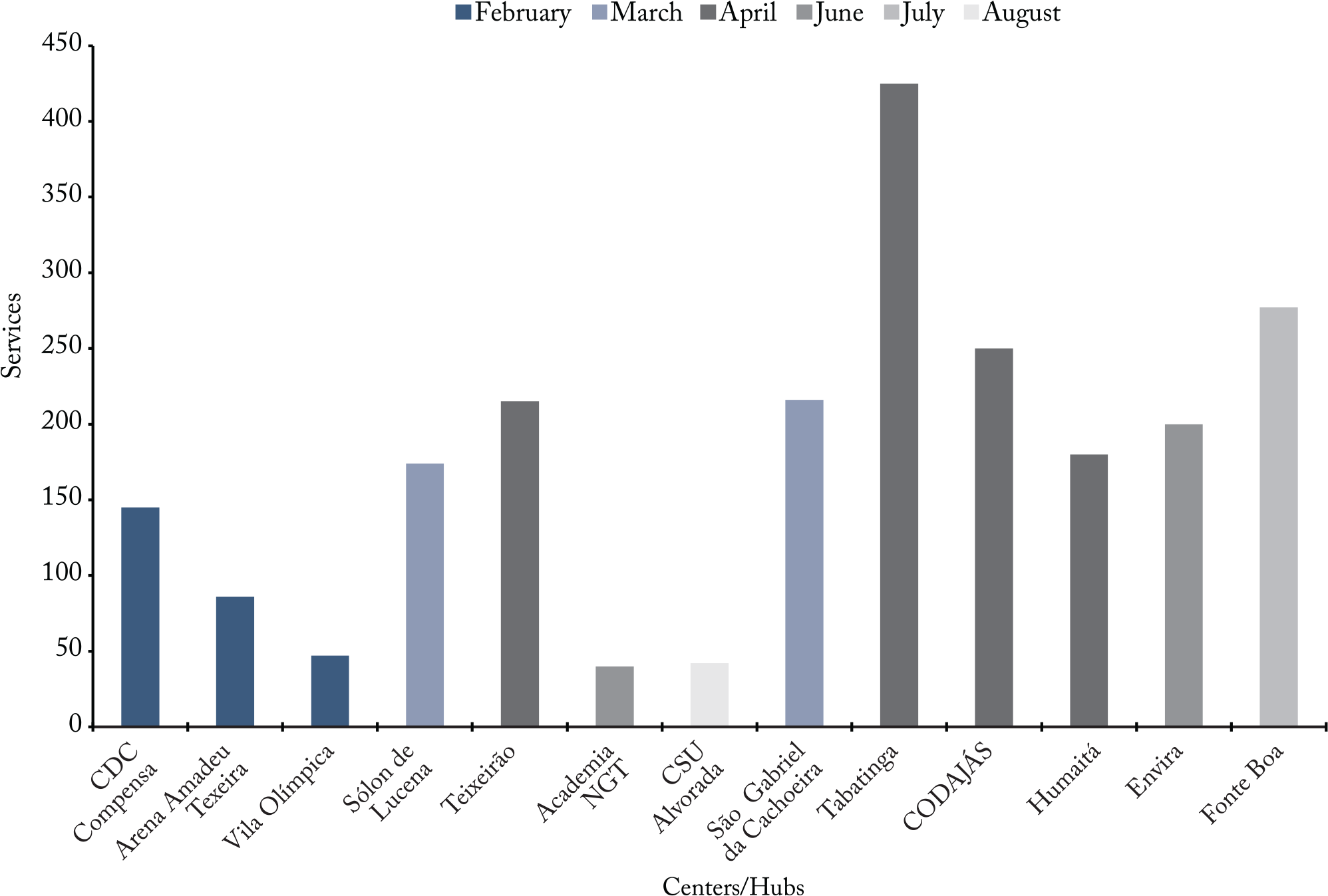
Figure 1 shows the number of students enrolled in the first months of +PELCI implementation, from February to August 2022. Data for May was not found in the documents. The locations chosen in the capital city of Manaus are known as centers, with the first lo-cations being the soccer field at the Community Cen-ter in the Compensa neighborhood (west zone), the multi-sport court at the Amadeu Teixeira Multi-Sport Arena (south-central zone), the multi-sport court at the Manaus Olympic Village (south-central zone), the multi-sports court at the Sólon de Lucena State School Gymnasium (south-central zone), the soccer field at Campo do Teixeirão (east zone), the mats at the Norte Gold Team martial arts academy (north zone), and the soccer field at the Alvorada neighborhood Urban So-cial Center (west zone). The locations where +PELCI is implemented in the interior of the state are called hubs, with the courts of the multi-sport gyms located in the municipalities of São Gabriel da Cachoeira (852 km from the capital Manaus; northwest of Amazo-nas), Tabatinga (1,114 km from the capital Manaus; west of Amazonas), Codajás (250 km from the capital Manaus; center of Amazonas), Humaitá (697 km from the capital Manaus; southwest of Amazonas), Envi-ra (1,206 km from the capital Manaus; southwest of Amazonas), and Fonte Boa (678 km from the capital Manaus; southwest of Amazonas). In total, 2,297 children and young people were enrolled in the first months of +PELCI. The graph also highlights that the hubs seem to have a higher average number of enrol-ments than the centers [mean ± standard deviation [(m ± sd) = 258 ± 89 vs. 107 ± 71, respectively)].
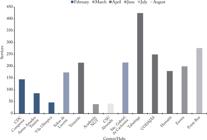
Enrolled in the +PELCI program in 2022. Legend: CDC = Community Center; NGT = North Gold Team; CSU = Urban Social Center.
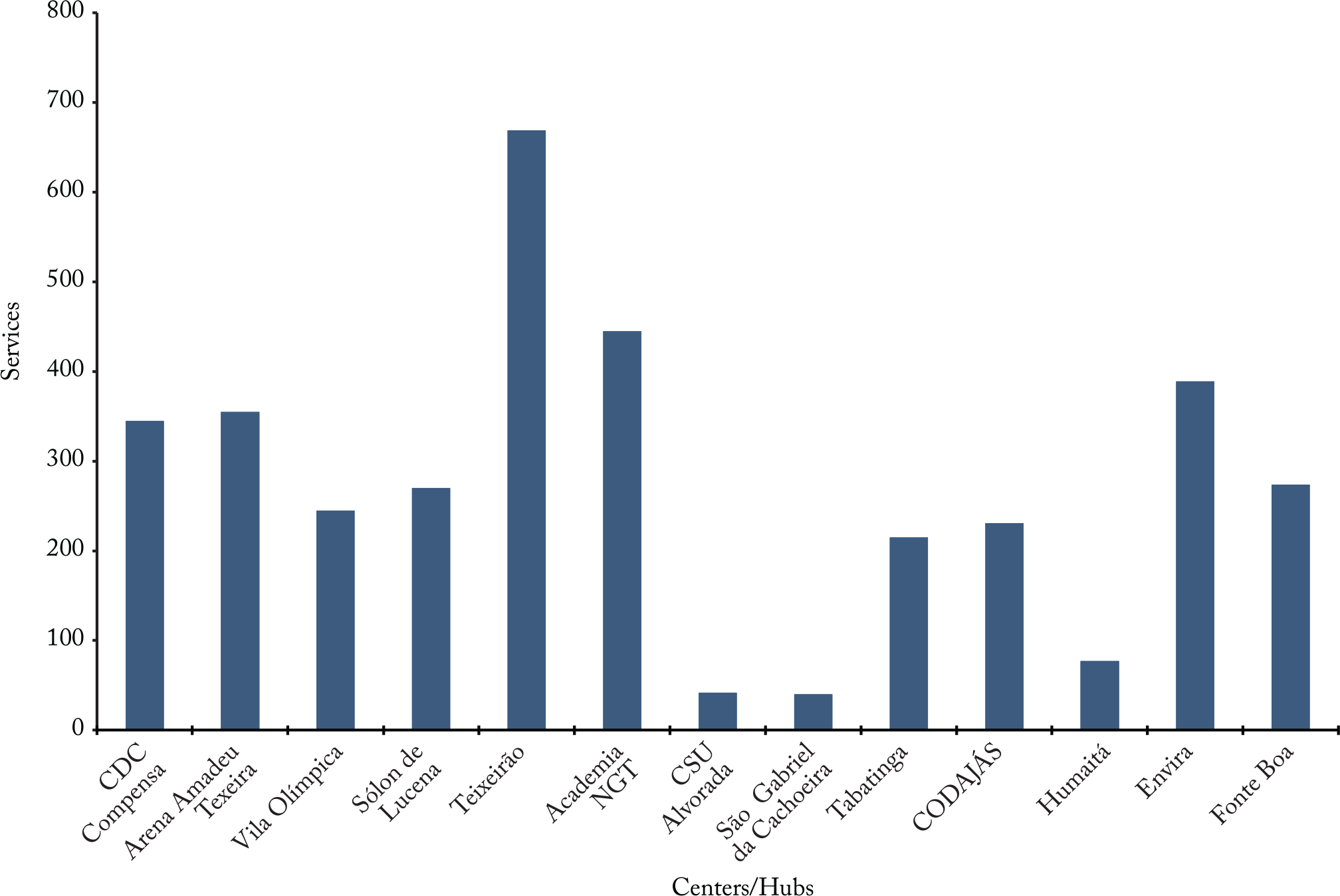
Figure 2 shows the distribution of the 3,597 ser-vices carried out in each center/hub between February and October 2022. The hubs appear to have a higher average number of services than the centers (m ± sd = 388 ± 155 vs. 181 ± 133, respectively).
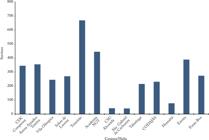
Number of services per center/hub of the +PELCI Program in 2022. Legend: CDC = community center; NGT = north gold team; CSU = urban social center.
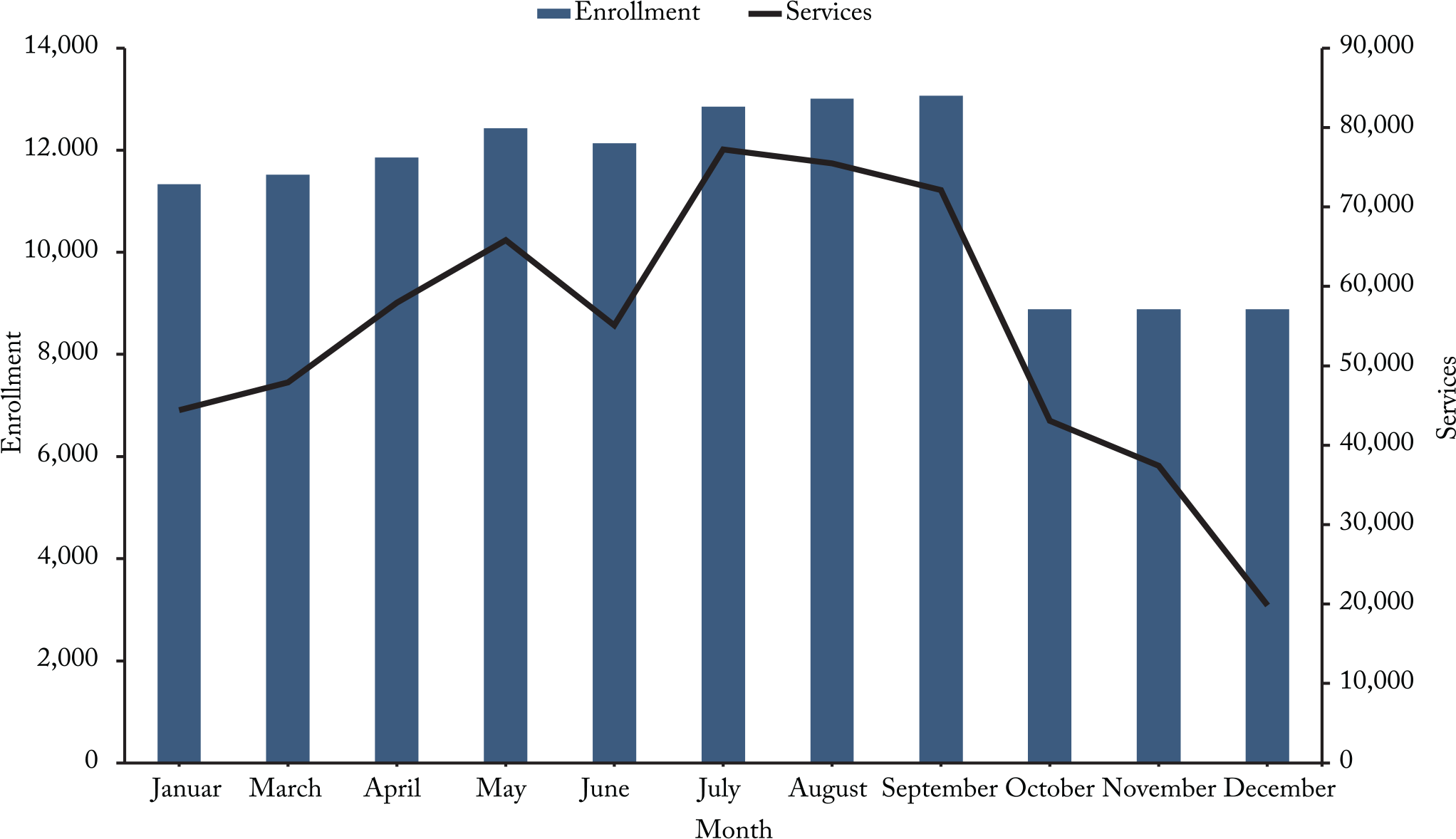
Starting in 2024, activity and indicator reports no longer presented the number of enrollments and ser-vices provided per center/hub, but rather the total value for each month (Figure 3).
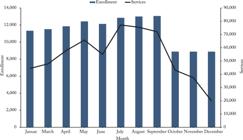
Number of students enrolled and number of services provided at the centers and hubs of the +PELCI Program in 2024.
In January 2024, the program will see a significant jump to 11,336 children and young people enrolled and 44,431 visits (Figure 3). The service curve tends to follow enrollment growth and decline over the year, both in the capital and in the interior of Amazonas.
The two 2025 reports presented impressive num-bers: 265 new enrollments and 26,381 services in the first two months of the year. The goal for each year was to enroll around 5,040 children and young people, both in the capital and in the interior.
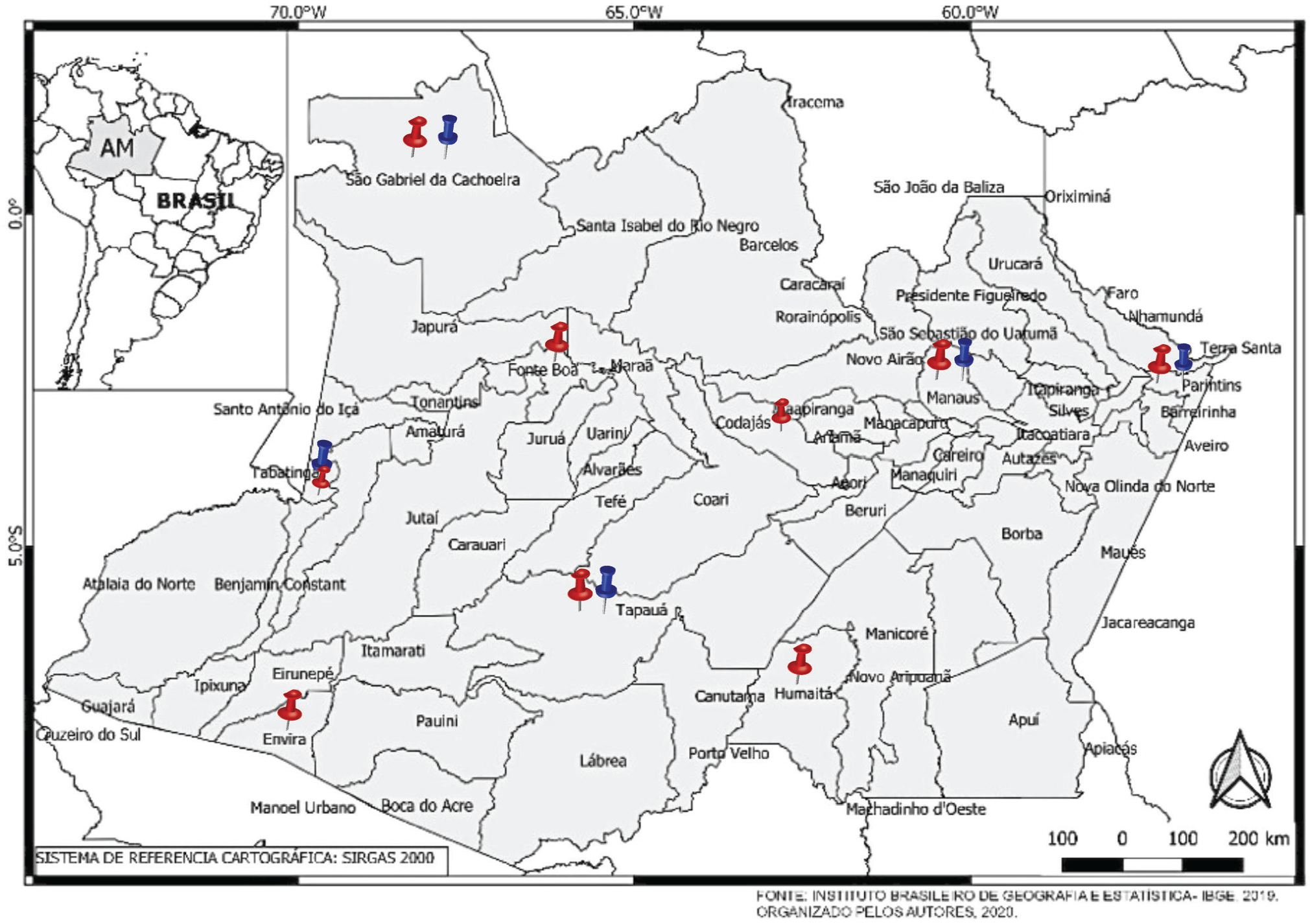
Figure 4 shows the municipalities in the state where the first +PELCI centers were established and the cur-rent centers, illustrating the size of the state and the program’s capillarity strategy.
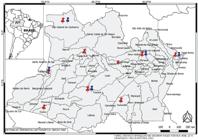
Map of the State of Amazonas showing extinct and current centers of the Sports and Leisure Program in the Capital and Interior. Legend: Red marker = inaugural centers of the program; Blue marker = active centers in 2025.
Discussion
The objective of this study was to describe the +PELCI program in the state of Amazonas and analyze its po-tential, barriers, opportunities, and future possibilities. After accessing and analyzing 52 official documents (22 activity reports and 30 indicator reports), the influ-ence of this public policy on children and young people in Amazonas, especially in the small cities in the inte-rior of the state, is clear. +PELCI enrolled more than 11,000 citizens and provided more than 44,000 ser-vices in various cities in the state in its nearly five years of existence. On the other hand, the documents do not make clear how the year 2023 went, nor do they detail enrollments and services by municipality in 2024.
Community participation in sports involves demo-graphic, social, and even economic aspects16,17. Public policies are the gateway to strengthening the popula-tion’s participation in sports, given that municipalities can develop them or even adopt those created at the federal level18. Both in the capital and in the interior, it is possible to observe difficulties for low-income fami-lies to access the program’s centers, due to issues related to transportation from the community where they live to the location of the activity. In the interior, for exam-ple, some children travel from riverside communities. Soares, Liberato, and Cardoso19 point out that the Am-azon region has different rhythms and characteristics of life, considering the distances and transportation used on the rivers, in addition to the difficulties of survival.
In this sense, one potential benefit of +PELCI seems to be reducing the distance barrier to encourage sports participation within institutionalized programs. When analyzing factors associated with individuals’ participa-tion in community physical activity programs, Alves et al.20 identified that the presence of public leisure facil-ities near homes had the greatest impact on participa-tion. In this sense, +PELCI seems to be aligned with this agenda of reducing distances for sports practice during leisure time, promoting municipalities more than 1,000 kilometers away from the state capital.
Another factor that seems to make this program a successful public policy is the number of socially vul-nerable children and young people enrolled and served. In conducting an integrative review of the social and programmatic vulnerability of overweight Brazilian children, Brazilian researchers concluded that, among other factors, the weakness of specific public policies to encourage actions that allow children to exercise their right to leisure in sports contributes negatively to health promotion. Thus, by implementing +PELCI in municipalities with low Human Development Indexes (Envira = 0.50; Fonte Boa = 0.53), the program appears to be tackling a chronic national problem on a massive scale21,22. Finally, the creation of opportunities for prac-tice by the government (programmatic), as well as the promotion of events, are stimuli to raise awareness in those who have not yet realized the need for lifestyle changes10,23, such as children and young people.
With regard to the barriers to the +PELCI Program, the reports analyzed point to logistical challeng-es and a lack of trained human resources. The state of Amazonas is continental in size and has many munic-ipalities with limited or even no access, depending on the summer season. Despite having opened centers in six municipalities in 2021 and two more in 2024 (Parintins and Tapauá), +PELCI currently operates in only four municipalities (São Gabriel da Cachoeira, Tabatinga, Parintins, and Tapauá), suggesting a lack of continuity in some locations in the state. Despite ar-guments suggesting that a public policy is not eternal, given that it must achieve a goal set out in the work plan and budget authorized by law24, children and young people involved in programs such as +PELCI need continuity to reap the benefits of regular sports practice. In this sense, to achieve the objectives of suc-cess and positive development outcomes through the acquisition of socio-emotional skills for practitioners, the project must provide progressively more complex and continuous social interactions25.
For the athlete’s journey, the program provides opportunities for growth in the sport they practice. In 2024, for example, female soccer players from +PELCI stood out in soccer. They received an invitation to join the under-20 team of a women’s soccer team in the state of Amazonas, making them more skilled to then move up to the professional level of the team. In soci-ety’s view, sport acts as a “passport” to social advance-ment, showing that it creates an opportunity to change the athlete’s family’s circumstances26.
Through sports, athletes can develop an interest in other aspects of the sport, such as its educational role, and move on to professional careers. Several proj-ects centered on sports are created with the intention of promoting social inclusion26. The author Tabares27 views physical education, sports, and leisure as “medi-ators of human development,” thus revealing the ca-pacity that physical education professionals may have to change the situation of one or more communities through their work in sports. With this identification, there is the possibility that many +PELCI athletes will pursue a degree at various levels as a result of their par-ticipation in a program run by the Amazonas state gov-ernment. Through the techniques and incentives pro-vided by social projects, children and adolescents have the chance to pursue professional training through the project in which they participate28.
In the future, +PELCI may provide data on how the program’s modalities influence the academic per-formance of its athletes. Soares et al.29 point out that practicing sports improves student performance, reduc-ing behaviors that would distract them from their stud-ies and, on the other hand, increasing students’ dedication and responsibility toward their commitments. We know that student grades alone would not be enough to declare sports as the most important and sole factor for this performance improvement; more data is needed to promote and justify this improvement. The literature shows that social, family, and cultural contexts directly influence learning and dedication to studies30. There-fore, +PELCI can be a source for future studies on the implications of sports on the academic, social, and even economic aspects of the athlete’s support network, since it has more than 11,000 students enrolled in various areas of the capital and the state of Amazonas.
It is important to analyze the limitations of this study and the program to inform future studies and improve them. The lack of access to some data compromises the completeness of the analysis (2023 reports). This is a common reflection in public policies that lack efficient monitoring and evaluation mechanisms. The absence of data from 2023, for example, creates a gap that hinders understanding of the project’s evolution that year. It is therefore suggested that public managers prioritize the organization of data so that the scientific structure of institutional archives enables longitudinal and system-atic analysis of programs. Future studies could apply questionnaires or even conduct longitudinal studies of children and young people served by programs similar to +PELCI, which could provide more reliable data on the social impacts of this type of public policy.
According to the findings of this study, +PELCI is a program that plays an important role in promot-ing sports for children and young people, thereby pro-moting the social inclusion of this population, which is often socially vulnerable. Even with a shortage of public spaces for practice and the issue of geograph-ic distance, it became clear that the program aims to occupy spaces that are often forgotten by the govern-ment and even by civil society. Despite challenges (e.g., geography and budget), the program seeks to expand and generate positive impacts on the lives of those who participate. Thus, +PELCI has a public policy configu-ration that aims to promote inclusion and physical and social well-being through sport, making it a tool for transformation.
Statement regarding the use of artificial intelligence tools in the writing process of the article
The authors used @DeepL artificial intelligence tools to assist in the translation process of the manuscript.
Acknowledgments
The authors would like to thank the entire team of collaborators from the Sports and Leisure Program in the Capital and Interior for providing access to the documents analyzed.
Availability of research data and other materials
The database (indicator and activity reports) that underpin the conclusions of this study belongs to the archives of the State Sec-retariat of Sport and Leisure of the State of Amazonas and is available upon reasonable request to the corresponding author. Due to ethical guidelines and privacy restrictions related to the secretariat, the data is not publicly available, however can be ac-cessed for verification purposes upon signing a confidentiality agreement regarding the use of the data.
References
-
1 United Nations. Documents. Available from: <https://www.un.org/en/our-work/documents> [2025 April].
» https://www.un.org/en/our-work/documents -
2 Brasil. Lei nº 14.597, de 14 de junho de 2023. Instituiu a Lei Geral do Esporte. Available from: <https://www.planalto.gov.br/ccivil_03/_ato2023-2026/2023/lei/l14597.htm> [2025 April].
» https://www.planalto.gov.br/ccivil_03/_ato2023-2026/2023/lei/l14597.htm -
3 Santos ES, Starepravo FA, Hirata E. Perfil das Prefeituras que Descentralizaram o PELC de 2003 a 2012. Licere. 2018;21(1):71-88. doi: https://doi.org/10.35699/1981-3171.2018.1768
» https://doi.org/10.35699/1981-3171.2018.1768 -
4 Santos ES, Starepravo FA, Neto MSS. Programa “Segundo Tempo” e o vazio assistencial na região nordeste. Movimento. 2015;21(3):759-71. doi: https://doi.org/10.22456/1982-8918.50648
» https://doi.org/10.22456/1982-8918.50648 -
5 Ordonhes MT, Zamboni KJ, Souza JVM, Mezzadri FM, Cavichiolli FR. A participação da comunidade na elaboração de políticas de práticas esportivas no estado do Paraná. Rev Bras Ativ Fis Saúde. 2024;29:e0339. doi: https://doi.org/10.12820/rbafs.29e0339
» https://doi.org/10.12820/rbafs.29e0339 -
6 Secretaria de Estado de Desporto e Lazer. Pelci. Available from: <https://www.sedel.am.gov.br/category/pelci/> [2025 April].
» https://www.sedel.am.gov.br/category/pelci/ -
7 Secretaria de Estado de Desporto e Lazer. Wilson Lima entrega R$ 700 mil em fomento ao esporte e lança projeto para alcançar 5 mil crianças e adolescentes. Available from: https://www.sedel.am.gov.br/wilson-lima-entrega-r-700-mil-em-fomento-ao-esporte-e-lanca-projeto-para-alcancar-5-mil-criancas-e-adolescentes/> [2025 August].
» https://www.sedel.am.gov.br/wilson-lima-entrega-r-700-mil-em-fomento-ao-esporte-e-lanca-projeto-para-alcancar-5-mil-criancas-e-adolescentes/ -
8 Bernardo D, Alecrim JV, Ferreira QR, Andrade DR. Políticas públicas de atividade física no Brasil: quais caminhos já percorremos?. Rev Bras Ativ Fis Saúde. 2024;29:e0372. doi: https://doi.org/10.12820/rbafs.29e0372
» https://doi.org/10.12820/rbafs.29e0372 - 9 Lima AA, Aguiar DM, Oliveira JE, Marques, MS, Araújo-Junior NS. A efetivação de políticas públicas para os povos indígenas no Amazonas: uma abordagem governamental do Programa de Esporte e Lazer na Capital e Interior (PELCI). In: O poder na política global. 1ª ed. Manaus: Faculdade La Salle. 2024. p. 125-38.
-
10 Hallal PC, Pratt M. Physical activity: moving from words to action. Lancet Glob Health. 2020;8(7):e867-e868. doi: https://doi.org/10.1016/S2214-109X(20)30256-4
» https://doi.org/10.1016/S2214-109X(20)30256-4 -
11 Sandreschi PF, Petreça DR, Alecrim JVC, Bernardo D, Silva PSC, Reis RS, et al. Grupo de Trabalho em Políticas Públicas e Atividade Física da SBAFS: concepção, atividades e perspectivas. Rev Bras Ativ Fis Saúde. 2024;29:e0360. doi: https://doi.org/10.12820/rbafs.29e0360
» https://doi.org/10.12820/rbafs.29e0360 - 12 Guba E, Licoln Y. Effective evaluation. 1a ed. São Francisco: Jossey-Bass, 1981.
- 13 Lakatos EM, Marconi MA. Fundamentos de Metodologia Científica. 4ª ed. São Paulo: Atlas, 2001.
- 14 Henrique, NR. Ginástica no Amazonas: precursores e legado [tese de doutorado]. São Paulo: Universidade de São Paulo; 2024.
-
15 Agência Amazonense de Desenvolvimento Econômico, Social e Ambiental. Somos AADESAM. Available from:: <https://aadesam.org.br/sobre/> [2025 May].
» https://aadesam.org.br/sobre/ -
16 Werle V. Reflexões sobre a participação nas políticas públicas de esporte e lazer. Motriz. 2010;16(1):135-42. doi: https://doi.org/10.5016/1980-6574.2010v16n1p135
» https://doi.org/10.5016/1980-6574.2010v16n1p135 - 17 Saldanha Filho M. Formulando políticas públicas do esporte e lazer no âmbito da cidade. In: Anais do 13º Congresso Brasileiro de Ciências do Esporte (CBCE); Caxambu: Caxambu; 2003. p. 01-07.
-
18 Côté J, Macdonald DJ, Baker J, Abernethy B. When “where” is more important than “when”: Birthplace and birthdate effects on the achievement of sporting expertise. J Sports Sci. 2006;24(10):1065-73. doi: https://doi.org/10.1080/02640410500432490
» https://doi.org/10.1080/02640410500432490 - 19 Soares A, Liberato A, Lima PC, Silva AC, Cardoso J (Org.). Diagnóstico do esporte e lazer na Região Norte Brasileira: o existente e o necessário. Manaus: Edua; 2011. p. 9-170.
-
20 Alves MS, Silva RJS, Santana CM, Martins HL, Menezes LS, Simões VA. Fatores associados à participação em programas comunitários de atividade física: Pesquisa Nacional de Saúde 2019. Rev Bras Ativ Fis Saúde. 2024;29:e0353. doi: https://doi.org/10.12820/rbafs.29e0353
» https://doi.org/10.12820/rbafs.29e0353 -
21 Dratch CB, Simão-Silva DP, Rosaneli CF. Excesso de peso em crianças brasileiras e seus fatores de vulnerabilidade: uma revisão integrativa. Rev. Direito Sanit. 2020;20(3):173-97. doi: https://doi.org/10.11606/issn.2316-9044.v20i3p173-197
» https://doi.org/10.11606/issn.2316-9044.v20i3p173-197 -
22 PNUD. United Nations Development Program. Atlas do Desenvolvimento Humano no Brasil. Available from: http://www.atlasbrasil.org.br/consulta/map> [2025 May].
» http://www.atlasbrasil.org.br/consulta/map -
23 Martinez A, Martinez JE, Lanza LB. Há correlação entre classe social e a prática de atividade física?. Acta Fisiatr. 2011;29(1):27-31. doi: https://doi.org./10.11606/issn.2317-0190.v18i1a103496
» https://doi.org./10.11606/issn.2317-0190.v18i1a103496 -
24 Mastrodi J, Ifanger F. Sobre o conceito de políticas públicas. Rev. Direito Bras. 2019; 24(9):03-16. doi: http://orcid.org/0000-0003-4834-0170
» http://orcid.org/0000-0003-4834-0170 - 25 Silveira J. Desenvolvimento humano, responsabilidade social e educação no capitalismo: investigando o programa “Educação pelo Esporte” do Instituto Ayrton Senna. [dissertação de mestrado]. Florianópolis, Santa Catarina: Universidade Federal de Santa Catarina; 2007.
- 26 Gaya A. Programa Segundo Tempo: introdução. In: Oliveira AAB, Perim GL. (Org.) Fundamentos Pedagógicos para o programa segundo tempo. Brasília: Ministério do Esporte. Maringá: Eduem; 2008. p. 9-12.
- 27 Tabares JF. O esporte e a recreação como dispositivos para a atenção da população em situação de vulnerabilidade social. In: Mello VA, Tavares C. O exercício reflexivo do movimento: educação física, lazer, e inclusão social. Rio de Janeiro: Shape; 2006. p. 212-224.
- 28 Guedes SL, Davies JD, Rodrigues MA, Santos RM. Projetos sociais esportivos: notas de pesquisa. Anais do XII Encontro Regional de História - Anpuh-Rio Rio de Janeiro: ANPUH; 2006. p. 92-92.
-
29 Soares JAP, Antunes HRL, Aguiar CFS. Prática desportiva e sucesso escolar de moças e rapazes no ensino secundário. Rev. Bras. Ciênc. Esporte. 2015;37(1):20-8. doi: https://doi.org/10.1016/j.rbce.2013.06.002
» https://doi.org/10.1016/j.rbce.2013.06.002 - 30 Marchesi Á, GIL CH. Fracasso escolar: uma perspectiva multicultural. Porto Alegre: Artmed, 2004.
Edited by
-
Editor in Chief
Átila Alexandre Trapé University of São Paulo, Ribeirão Preto, São Paulo, Brazil.
-
Section editor
Inácio Crochemore Mohnsam da Silva Federal University of Pelotas, Pelotas, Rio Grande do Sul, Brazil.
Reviewers’ assessment
The reviews of this article were originally conducted in Portuguese. This version has been translated using ChatGPT and subsequently reviewed by the Chief Editors.About the reviewerReviewer A
-
Was any indication of plagiarism observed in the manuscript?
No
-
Did the authors provide clarification regarding the ethical procedures adopted in the research?
Not applicable
Comments to the author
-
The article “Sports Public Policies in Amazonas: The Sports and Leisure Program in the Capital and Interior” presents a relevant topic by proposing an evaluation of a sports and leisure program of great importance for promoting leisure and active life-styles. However, some key points need to be better described to highlight the program’s potential and its contribution to the state of Amazonas. It is nec-essary to specify the year in which the policy was implemented and clarify whether the evaluation covers the program’s origin through a Ministry of Sports call for proposals or only its self-managed phase, as well as indicate who currently oversees its management in the state. The modalities are listed, but the program’s routine-considering both sys-tematic and unsystematic activities-lacks detail, as does the size of the team involved. It would also be important to present how the program’s centers are distributed across the territory, preferably with the support of a map, indicate the attendance tar-gets for each center, and describe the types of spaces in which they operate. In addition, the body of the article does not clearly explain the information ex-tracted from the indicator reports; it would be rel-evant to specify which data were analyzed, how the analysis was conducted, and what differentiates the number of enrolled participants from the number of attendances. Including and clarifying these as-pects would significantly strengthen the manuscript and its contribution to the field.
Final decision
-
Reject
- peer review recommendation: reject
Reviewer B
Reviewer B
-
The publication of the review was not authorized.
- peer review recommendation:
Reviewer C
Reviewer C
-
The publication of the review was not authorized.
- peer review recommendation:
Avaliação dos pareceristas
About the reviewerAvaliador A
-
Foi observado algum indício de Plágio no manus-crito?
Não
-
Os autores forneceram esclarecimentos sobre os procedimentos éticos adotados para a realização da pesquisa?
Não se aplica
Comentários ao autor
-
O artigo “Políticas Públicas de Esporte no Ama-zonas: O Programa de Esporte e Lazer na Capital e Interior” apresenta um tema relevante ao propor a avaliação de um programa de esporte e lazer de grande importância para a promoção do lazer e de estilos de vida ativos. No entanto, alguns pontos fundamentais precisam ser melhor descritos para evidenciar o potencial e a contribuição do programa no estado do Amazonas. É necessário especificar o ano de implantação da política e esclarecer se a ava-liação contempla a origem do programa por meio de edital do Ministério do Esporte ou apenas sua fase de autogestão, bem como indicar quem atualmente garante sua gestão no estado. As modalidades são listadas, mas a rotina do programa - considerando atividades sistemáticas e assistemáticas - carece de detalhamento, assim como o tamanho da equipe envolvida. Também seria importante apresentar a distribuição dos núcleos no território, preferencial-mente com o apoio de um mapa, indicar as metas de atendimento por núcleo e os tipos de espaços onde funcionam. Além disso, o corpo do artigo não expli-cita com clareza as informações extraídas dos rela-tórios de indicadores; seria pertinente indicar quais dados foram analisados, como a análise foi conduzi-da e o que diferencia o número de matriculados do número de atendimentos. A inclusão e clarificação desses aspectos fortaleceriam significativamente o texto e sua contribuição para o campo.
Parecer final (decisão)
-
Rejeitar
- peer review recommendation: reject
Avaliador B
Avaliador B
-
Não autorizou a publicação do parecer.
- peer review recommendation:
Avaliador C
Avaliador C
-
Não autorizou a publicação do parecer.
- peer review recommendation: