
 Aquatic and land training on functional and glycemic outcomes in people with type 2 diabetes: preliminary data from Aquatic and Land Exercise for Diabetes randomized clinical trial
ABSTRACT
Introduction: People with type 2 diabetes (T2DM) exhibit poor adherence and discomfort associat-ed with traditional exercise practices; therefore, alternative modalities such as aquatic exercise should be investigated.
Objective: Investigating the effects of 11 weeks of combined training (aerobic and resistance) performed in different environments (aquatic and land-based) on functional and glyce-mic outcomes in patients with T2DM.
Methods: These are preliminary data from a randomized controlled trial with two parallel groups. The study included adults and older adults of both genders, aged between 45 and 80 years, with T2DM. The training program was conducted three times per week on non-consecutive days, with participants assigned to combined training in either the aquatic (AQUA) or land-based (LAND) environment. Assessments were conducted at baseline and after 12 weeks, including the 6-minute walk test (6 MWT), Sit-to-Stand test (STS), Sit-and-Reach test us-ing the Wells bench (Flex), Timed Up and Go at habitual (TUG-h) and maximal speed (TUG-m), and glycemic control markers (fasting glucose and insulin, HOMA-IR, and HbA1c).
Results: A total of 37 individuals (18 women; 60.45 ± 8.72 years) participated in the study. Adherence to the training program was 87.1 ± 12.9% in the AQUA group and 81.8 ± 15.5% in the LAND group (p = 0.231). Both groups showed significant improvements in the 6MWT, TUG-h, TUG-m, and Flex tests (p < 0.001), while improvements in the STS were observed only in the AQUA group (p < 0.001). No significant changes were observed in glycemic control.
Conclusion: Both aquatic and land-based combined training improved functional capacity in patients with T2DM, with specific gains in lower-limb strength observed only in the AQUA group. Furthermore, 11 weeks of training did not induce significant changes in glycemic control in this population.
Keywords:
Type 2 diabetes mellitus; Combined training; Physical fitness; Aquatic exercise; Glyce-mic control.
RESUMO
Introdução: Pessoas com diabetes tipo 2 (DM2) apresentam baixa aderência e desconforto associado às práticas de exercício tradicionais, por isso, modalidades alternativas como exercício em meio aquático devem ser investigadas.
Objetivos: Verificar os efeitos de 11 semanas do treinamento combinado (ae-róbio e força) em diferentes meios (aquático e terrestre) sobre desfechos funcionais e glicêmicos de pa-cientes com DM2.
Métodos: Dados preliminares de um ensaio clínico randomizado comparador, com dois grupos em paralelo. Participaram adultos e idosos com DM2 de ambos os gêneros, com idade entre 45 e 80 anos. O programa de treinamento foi aplicado três vezes por semana, em dias alternados, sendo realizado treinamento combinado no meio aquático (AQUA) ou terrestre (LAND). Foram avaliados, na linha de base e na 12ª semana, o desempenho nos testes: caminhada de 6 minutos (TC6M), Sentar e Levantar (SL), Sentar e Alcançar pelo Banco de Wells (Flex), TUG em velocidade habitual (TUG-h) e máxima (TUG-m) e controle glicêmico (glicose e insulina em jejum, HOMA-IR e HbA1c). Resulta-dos: Participaram 37 pessoas (18 mulheres, 60,45 ± 8,72 anos). A aderência ao treinamento foi de 87,1 ± 12,9% no AQUA e 81,8 ± 15,5% no LAND (p = 0,231). Ambos os grupos apresentaram melhoras no TC6M, TUG-h, TUG-m e Flex (p < 0,001), enquanto apenas o AQUA apresentou melhoras no SL (p < 0,001). Não houve diferença significativa no controle glicêmico.
Conclusão: Os treinamentos, aquático e terrestre melhoraram a capacidade funcional de pacientes com DM2, com destaque para melhora apenas no no AQUA na força dos membros inferiores. Ainda, 11 semanas não modificaram significativamente o controle glicêmico destes pacientes.
Palavras-chave:
Diabetes melittus tipo 2; Exercício físico; Desempenho físico funcional; Controle glicêmico.
Introduction
Type 2 diabetes mellitus (T2D) is a chronic endocrine and metabolic disease characterized by absolute or relative insulin secretion deficiency, as well as de-creased sensitivity of target organs to the hormone, with hyperglycemia (high blood glucose levels) as its main clinical feature1. The treatment of T2D involves the adoption of healthy eating habits, lifestyle mod-ifications, and pharmacological approaches2. In this context, exercise, in addition to being recognized as an important preventive strategy3, is widely recommended as a cost-effective therapeutic strategy for disease man-agement, as it reduces insulin resistance by improving glucose uptake by skeletal muscles4-6. Accordingly, ad-aptations resulting from regular exercise contribute to reductions in glycated hemoglobin (HbA1c) levels, which represent the primary therapeutic target in the treatment of T2D3.
In this regard, exercise has been shown to reduce HbA1c levels by approximately 0.5% to 0.7%, magni-tudes comparable to those achieved with hypoglyce-mic medications3,7. Combined training (aerobic and resistance) has been emphasized in clinical guidelines, as it integrates the benefits of both modalities. The ex-ercise prescription guidelines of the American College of Sports Medicine recommend combined training for overall health improvement in individuals with metabol-ic diseases3,8, and studies indicate that combined training is as effective as, or even more effective than, aerobic or resistance training alone in reducing HbA1c levels9-11.
As a chronic condition, T2D is also associated with accelerated metabolic aging, leading to functional de-cline12, reduced muscle strength13, impaired functional mobility14, and decreased cardiorespiratory capaci-ty15,16. These functional limitations compromise a wide range of activities, negatively affecting independence in activities of daily living17. In this context, physical ex-ercise has been associated with improvements in func-tional outcomes in individuals with T2D18-20.
Despite the robust literature on the beneficial ef-fects of exercise, most studies involving individuals with T2D have focused on land-based training envi-ronments. However, land-based exercise often impos-es considerable stress on the musculoskeletal system, which can be attenuated in an aquatic environment due to buoyancy, allowing exercises to be performed with reduced ground reaction forces21. In addition to this biomechanical advantage, aquatic exercise may combine the general benefits of physical training with specific effects of water immersion, which can induce acute neuroendocrine adjustments, such as sympathet-ic nervous system suppression and reduced activation of the renin-angiotensin system.
In recent years, clinical trials and systematic reviews have demonstrated the benefits of aquatic training for functional capacity, glycemic control, and quality of life in individuals with T2D22-26. Nevertheless, although aquatic training shows promising results, the few studies that have compared water-based and land-based train-ing in this population have predominantly focused on aerobic exercise. To date, there are no consistent studies evaluating the effects of combined training across dif-ferent environments25,26. Therefore, the aim of this study was to investigate the effects of 11 weeks of combined training (aerobic and resistance) performed in different environments (aquatic and land-based) on functional and glycemic outcomes in patients with T2D.
Methods
Study Design
This study reports preliminary and mid-term (11-week) functional and glycemic outcomes from a ran-domized, comparative, single-center, two-arm parallel clinical trial with a superiority hypothesis, registered under the acronym ALED (Aquatic and Land Exer-cise for Diabetes). It should be noted that the present manuscript addresses only a subset of the outcomes investigated in the overarching project. The study was conducted at Sports Center of the Federal University of Santa Catarina, approved by the Human Research Ethics Committee of the host institution (protocol number 6.735.640) and was registered in the Brazil-ian Clinical Trials Registry (RBR-10fwqmfy). All par-ticipants provided written informed consent. Further details of the study design and methodology can be found in the published protocol article27.
Participants
Participants were selected non-randomly, on a volun-tary basis, using the following eligibility criteria: adults and older adults with T2D, of both gender, aged be-tween 45 and 80 years, with a confirmed medical di-agnosis of T2D (HbA1c: 6.5-10%) and/or use of hy-poglycemic drugs (except exogenous insulin); exempt from regular exercise (defined as performing any type of physical training for at least 20 minutes on two or more days per week) for at least three months; absence of uncontrolled hypertension, autonomic neuropathy, severe peripheral neuropathy, severe proliferative and non-proliferative retinopathy, uncompensated heart failure, peripheral amputation, chronic renal failure; joint and/or muscle impairments that prevent physical exercise; and body mass index ≥ 40 kg/m2.
Randomization
Participants were randomly assigned in blocks, in a 1:1 ratio, stratified by gender and HbA1c level, to one of two combined training groups: water-based (AQUA) and land-based (LAND). The allocation list was con-cealed from all outcome assessors. The randomization process was performed using the online software www.randomizer.org by a researcher not involved in the oth-er study procedures.
Intervention
The training programs (waterand land-based) lasted 11 weeks, with three sessions per week on non-con-secutive days (Mondays, Wednesdays, and Fridays) in the evening. The combined training was carried out in an aquatic environment through hydrogymnastics, and in the land-based program through walking/running on a treadmill and resistance training. The training ses-sions lasted a maximum of 60 minutes, consisting of a 5-minute warm-up, 30 to 47 minutes of main training (aerobic and resistance training), and 5 to 10 minutes of cool-down (stretching for the main muscle groups).
The first week of the intervention was dedicated to familiarizing participants with the environment, exercis-es, and scales used during training. The three sessions were conducted at the same time and with the same expected duration, with special attention given to in-structing participants on proper exercise execution, fa-miliarizing participants in the AQUA group with the aquatic environment and identifying the target zone of the prescribed rate of perceived exertion (RPE) and the maximum number of repetitions for strength exercises in the LAND group. Initial familiarization with the Borg Scale was conducted through oral explanation and practical experimentation at different exercise intensities.
The intervention was supervised by physical edu-cation professionals, with a ratio of two professionals for every four participants. Aerobic training was pre-scribed using the continuous method and monitored using the RPE scale (Borg 6-20 points), with the target zone varying according to the mesocycle. Re-sistance training consisted of exercises targeting the main muscle groups, using multiple sets, and intensity (exercise load) was modulated by water resistance in the aquatic environment and by equipment load in the terrestrial environment. Participants were instructed to perform movements at maximum speed (RPE 19) in the aquatic environment and to remain within the target zone of maximum repetitions in the terrestrial environment. Both training programs were similar in volume and intensity, with one progression in volume and another in intensity throughout the periodization (Figure 1).

Aerobic training in the aquatic environment consisted of five exercises: backward running, front kick, backward lift, front slide, and stationary running, ac-companied by upper limb movements. Resistance training consisted of two exercise blocks: block 1 (hor-izontal shoulder flexion and extension, unilateral hip flexion and extension with knee flexion and extension); and block 2 (horizontal shoulder flexion and exten-sion crossing the front and unilateral knee flexion and extension), progressing from one set of 30 seconds to three sets of 20 seconds per exercise, with a 1-minute rest between sets and blocks and 10 seconds between exercises. Aerobic training on land was performed on a treadmill and followed the same periodization as the AQUA group. Resistance training consisted of four exercises (rowing machine, horizontal leg press, chest fly machine, and seated knee flexion machine), initially performed with one set of 12 to 15 repetitions and pro-gressing to two sets of 10 to 12 repetitions per exercise, with a 1-minute rest between sets and exercises. Figure 1 provides further details regarding the progression of the training program.
Outcome assessment
The primary outcome, the 6-Minute Walk Test (6MWT), and secondary outcomes, including other functional capacity tests and glycemic control indica-tors, were assessed before participant allocation and after 11 weeks of training. Assessments were per-formed by experienced evaluators who were blinded to participant allocation. The primary and secondary endpoints of the present study are not the same as those of the main project, which has HbA1c level as its primary outcome. Functional capacity outcomes were assessed at the Sports Center of the Federal University of Santa Catarina, while blood samples were collected and analyzed by specialized professionals at a clinical analysis laboratory. To participant characterization, data on personal identification, demographic and lifestyle characteristics, and health status were collected through interviews.
To assess functional capacity, flexibility (Flex) was measured using the Sit-and-Reach test28; lower limb strength and endurance were measured using the 30-second Sit-to-Stand (STS) test29; functional mobil-ity was assessed using the Timed Up-and-Go test30 at usual speed (TUG-u) and maximum speed (TUG-m); and cardiorespiratory fitness was evaluated using the 6MWT29. The tests were performed in the order list-ed. Flexibility was assessed in three attempts, with the highest value recorded. All tests were conducted after explanation and demonstration by the evaluator. The TUG test was performed in two attempts, with the lowest value recorded. The 6MWT and the STS test were performed in a single attempt.
To assess glycemic control and insulin resistance indicators, venous blood samples were collected after an 8- to 12-hour fast at a clinical laboratory by trained professionals. Samples were processed and stored ac-cording to laboratory standards for subsequent analysis of the following parameters:
-
HbA1c: measured by high-performance liquid chromatography (HPLC) and expressed as a per-centage (%);
-
Fasting blood glucose: determined by a colorimet-ric enzymatic method (glucose oxidase), with values expressed in mg/dL;
-
Fasting insulin: quantified by chemiluminescence, with results expressed in µU/mL.
Based on fasting blood glucose and insulin values, the Homeostasis Model Assessment of Insulin Resis-tance (HOMA-IR) index was calculated using the fol-lowing formula:
All laboratory procedures followed current tech-nical and biosafety standards. Blood analyses were performed in a certified laboratory with internal and external quality control.
Adherence to the training program, as well as the monitoring of adverse events, was assessed throughout the 11-week intervention. To this end, attendance at training sessions was recorded, and dropouts and rea-sons for dropout were documented. Adverse events were collected weekly using a standard questionnaire, completed every Friday and referring to the previous seven days. The questions aimed to identify general ad-verse events related to participants’ health, as well as to determine whether these events were associated with the training program.
Participants were also instructed to maintain their usual eating habits and medication use after the start of the study. Data on eating behavior were collected at baseline and after 24 weeks but will be analyzed only after completion of the trial with the full sample.
Statistical Analysis
The sample size calculation for the 24-week study con-sidered a significance level of 5%, statistical power of 80%, and an effect size (f ) of 0.129, which corresponds to a difference of -0.4% in HbA1c for the AQUA group compared with the LAND group, with a 1:1 al-location ratio between groups. Thus, the sample size was calculated to require a minimum of 25 participants per group. Considering a sample loss similar to that reported by Delevatti et al.21 (30%), the objective was to recruit 32 participants per group, totaling 64 par-ticipants in the study. The sample size was determined using the G*Power software, version 3.1.6 (University of Düsseldorf, Düsseldorf, Germany).
The normality and homogeneity of continuous variables used for sample characterization were tested using the Shapiro-Wilk and Levene tests, respectively. Continuous variables classified as normally distributed are presented as mean and standard deviation, where-as non-normally distributed variables are presented as median and interquartile range. Categorical variables characterizing the sample are presented as absolute frequency (n) and relative frequency (%). For comparisons between groups, the independent t-test or its nonparametric equivalent was used for continuous variables, and Fisher’s exact test was used for categor-ical variables.
Outcomes are presented as mean and standard error. Analyses were performed using generalized estimat-ing equations, adopting the intention-to-treat (ITT) principle and the Bonferroni post hoc test. The ITT analysis included all participants who completed base-line assessments, regardless of attendance at training sessions or participation in the 12-week assessments. Data were analyzed using the SPSS statistical package, version 23.0, and the significance level was set at 5%.
Results
Thirty-seven participants started the study (AQUA = 19; LAND = 18), and 32 participants completed the intervention, with a sample loss of 5% in the AQUA group (n = 1) due to family problems and 22% in the LAND group (n = 4), including three due to health problems unrelated to exercise and one due to personal reasons (p = 0.132). The analysis was performed with the 37 participants who completed the baseline assessments, in accordance with the ITT principle. Overall, the sample consisted of 18 women (48.65%), diag-nosed with T2D for more than nine years, and most participants used medications from the biguanide and statin classes (Table 1).
Adherence to the training program was 87.07 ± 12.86% in the AQUA group and 81.81 ± 15.54% in the LAND group, with no difference between groups (p = 0.231). No serious adverse events were reported by the participants.
Functional tests conducted preand post-interven-tion revealed a time effect, indicating significant im-provements in both groups in the 6MWT (p <0.001), Flex (p <0.001), TUG-u (p <0.001), and TUG-m (p <0.001), and a significant improvement only in the AQUA group in the STS test (p <0.001) (Table 2). No differences were observed in HbA1c, fasting glucose, in-sulin, or HOMA-IR after 11 weeks of training (Table 3).
Effects of 11 weeks of combined training on functional capacity of people with type 2 diabetes mellitus (Aquatic = 19; Land = 18)
Effects of 11 weeks of combined training on glycemic control in people with T2D. (Aquatic = 19; Land =18)
Discussion
The present study aimed to verify the effects of 11 weeks of combined training performed in different environments (waterand land-based) on functional and glycemic outcomes in patients with T2D. These are preliminary data from the ALED clinical trial, and the main findings demonstrate improvements in func-tional capacity in both training groups, with superior effects in the STS test for the AQUA group. On the other hand, no significant changes in glycemic control variables were observed.
The positive results observed in most functional capacity outcomes in both groups were expected and are consistent with findings reported in the literature demonstrating the benefits of combined training in different environments in adults and older adults9,10,25,26. It is noteworthy that there were no differences in the magnitude of improvement between groups, with similar gains in the 6MWT, TUG-u, TUG-m, and Flex tests. Somewhat unexpectedly, the AQUA group showed superiority in lower limb muscle strength and endurance, as assessed by the STS test.
The superiority of the AQUA group in the STS test suggests that aquatic training prescribed at maximal movement speed, as applied in the present study, may promote greater gains in muscle strength and endur-ance than traditional land-based strength training in individuals with T2D. This finding may be explained primarily by training specificity and similarity to the test performed, which involves a substantial muscle power component. Additionally, it should be noted that the LAND group included only one strength exercise targeting knee and hip extensors (leg press), whereas the AQUA group performed two exercises in-volving these muscle groups. As this was a combined training program, it is also necessary to consider the potential influence of the aerobic component on mus-cle strength. While land-based aerobic training was performed on a treadmill without incline and therefore with minimal resistance, training in the aquatic envi-ronment required lower limb movements in multiple planes against water resistance, which is substantially greater than air resistance.
Regarding functional improvements observed in both groups, the improvement in the 6MWT is partic-ularly noteworthy. The AQUA group showed an aver-age increase of 30.30 ± 11.84 meters, while the LAND group demonstrated an average increase of 29.16 ± 8.79 meters. The 6MWT is a submaximal exercise test widely used to assess functional exercise capacity in clinical populations, and studies indicate that improve-ments between 14.0 and 30.5 meters can already be considered clinically relevant32, being associated with improved quality of life and reduced mortality.
The absence of a significant reduction in HbA1c levels may be related to the relatively short duration of the intervention (11 weeks). Evidence suggests that exercise interventions lasting less than 12 weeks tend to have limited effects on glycemic control in indi-viduals with T2D, particularly in samples with vari-ability in medication use and baseline HbA1c values between 6.5% and 8.0%33,34. Systematic reviews and meta-analyses indicate that most studies reporting significant reductions in HbA1c employ interventions lasting longer than 12 weeks, with longer durations be-ing associated with more consistent improvements in HbA1c and fasting glucose35-37. One possible explana-tion is the approximately 120-day lifespan of red blood cells, suggesting that training programs need to exceed 11 weeks to elicit measurable changes in HbA1c.
In addition to intervention duration, the magnitude of glycemic responses may also be related to exercise volume and intensity. Evidence suggests that weekly exercise volumes exceeding 170 minutes are associated with more pronounced improvements in insulin sen-sitivity and glycemic control, regardless of the exercise modality used38. Furthermore, programs incorporating higher intensities, such as high-load resistance training or interval aerobic exercise, tend to promote greater re-ductions in insulin and HOMA-IR levels, particularly when performed for at least 12 weeks39. In the present study, although progression in both volume and inten-sity was implemented, the training stimulus remained within a moderate range for most participants. This may have been sufficient to induce functional adaptations but not substantial metabolic changes. Higher-inten-sity training modalities, such as high-intensity interval training or high-load resistance training, have been as-sociated with more significant improvements in insulin resistance, even with lower total training volume40.
Although the proposed training program allowed for progression in volume and intensity, particularly in the aerobic component, which is essential for improv-ing HbA1c levels, variability in medication use among participants may have limited the detection of exer-cise-induced effects in a short-term intervention, as the effects of exercise may be masked or potentiated by pharmacological adjustments34,35. Thus, studies suggest that in heterogeneous populations regarding medica-tion use, longer interventions are required to observe independent effects of exercise on glycemic control.
From a practical perspective, the findings suggest that combined training performed in different envi-ronments is feasible and effective in promoting relevant functional improvements in adults with T2D, regard-less of the environment. For individuals with osteoar-ticular limitations or low physical fitness, the aquatic environment represents an accessible and comfortable alternative, yielding functional outcomes comparable to those of land-based training and, in some aspects, superior, in addition to demonstrating good adherence and lower dropout rates. However, to optimize met-abolic effects-particularly on insulin resistance and HbA1c-training programs with higher intensity and/ or longer duration should be considered.
As a limitation, the present study has a small sample size; however, these data represent a preliminary analysis from a larger project designed to evaluate at least 25 participants per group over a 24-week period. Strengths of the study include being the first clinical trial to compare combined training performed in dif-ferent environments (aquatic and land-based) using similar periodization while assessing different out-comes in patients with T2D.
Future studies should investigate the effects of ex-ercise in different environments using equivalent pre-scriptions in other chronic diseases, beyond T2D.
In conclusion, the findings of this study, which con-sists of preliminary data from the ALED clinical trial, suggest that 11 weeks of combined aquatic training is superior to combined land training in lower limb muscle strength and endurance and that both modalities (aquat-ic and land) promote improvements in cardiorespiratory fitness, functional mobility, and flexibility in people with T2D. Furthermore, 11 weeks of combined training in different environments does not appear to be sufficient to modify markers of glycemic control and insulin resistance in people with T2D.
-
Funding
Foundation for Research and Innovation Support of Santa Catarina (Fundação de Amparo à Pesquisa e Inovação de Santa Catarina - FAPESC) and Coordination for the Improvement of Higher Education Personnel (Coordenação de Aperfeiçoamento de Pessoal de Nível Superior - CAPES).
Declaration regarding the use of artificial intelligence tools in the article writing process
The authors used Chat GPT Translate artificial intelligence tools to assist in the translation process of the manuscript.
Availability of research data and other materials
After publication, the data will be available to the authors upon request.
References
-
1 Banday MZ, Sameer AS, Nissar S. Pathophysiology of diabetes: An overview. Avicenna J Med. 2020;10(4):174-88. doi: https://doi.org/10.4103/ajm.ajm_53_20
» https://doi.org/10.4103/ajm.ajm_53_20 - 2 Riebe D, Ehrman JK, Liguori G, Magal M. ACSM’s guidelines for exercise testing and prescription. 10th ed. Philadelphia: Wolters Kluwer; 2018.
- 3 American Diabetes Association. Standards of medical care in diabetes-2023. Diabetes Care. 2023;44(Suppl 1):S1-S291.
-
4 Tokmakidis SP, Zois CE, Volaklis KA, Kotsa K, Touvra AM. The effects of a combined strength and aerobic exercise program on glucose control and insulin action in women with type 2 diabetes. Eur J Appl Physiol. 2004;92(4-5):437-42. doi: https://doi.org/10.1007/s00421-004-1174-6
» https://doi.org/10.1007/s00421-004-1174-6 -
5 Evans P, McMillin S, Weyrauch L, Witczak C. Regulation of skeletal muscle glucose transport and glucose metabolism by exercise training. Nutrients. 2019;11(10):2432. doi: https://doi.org/10.3390/nu11102432
» https://doi.org/10.3390/nu11102432 -
6 Colberg SR, Sigal RJ, Yardley JE, Riddell MC, Dunstan DW, Dempsey PC, et al. Physical activity/exercise and diabetes: a position statement of the American Diabetes Association. Diabetes Care. 2016;39(11):2065-79. doi: https://doi.org/10.2337/dc16-1728
» https://doi.org/10.2337/dc16-1728 -
7 Maloney A, Rosenstock J, Fonseca V. A model-based meta-analysis of 24 antihyperglycemic drugs for type 2 diabetes: comparison of treatment effects at therapeutic doses. Clin Pharmacol Ther. 2019;105(5):1213-23. doi: https://doi.org/10.1002/cpt.1307
» https://doi.org/10.1002/cpt.1307 - 8 Liguori G, American College of Sports Medicine. ACSM’s guidelines for exercise testing and prescription. 11th ed. Philadelphia: Wolters Kluwer; 2020.
-
9 Mannucci E, Bonifazi A, Monami M. Comparison between different types of exercise training in patients with type 2 diabetes mellitus: a systematic review and network meta-analysis of randomized controlled trials. Nutr Metab Cardiovasc Dis. 2021;31(7):1985-92. doi: https://doi.org/10.1016/j.numecd.2021.02.030
» https://doi.org/10.1016/j.numecd.2021.02.030 -
10 Pan B, Ge L, Xun Y, Chen C, Yang K, Guo Y, et al. Exercise training modalities in patients with type 2 diabetes mellitus: a systematic review and network meta-analysis. Int J Behav Nutr Phys Act. 2018;15(1):72. doi: https://doi.org/10.1186/s12966-018-0703-3
» https://doi.org/10.1186/s12966-018-0703-3 -
11 Umpierre D, Ribeiro PA, Kramer CK, Leitão CB, Zucatti AT, Azevedo MJ, et al. Physical activity advice only or structured exercise training and association with HbA1c levels in type 2 diabetes: a systematic review and meta-analysis. JAMA. 2011;305(17):1790-9. doi: 10.1001/jama.2011.576
» https://doi.org/10.1001/jama.2011.576 -
12 Ahmad E, Sargeant JA, Yates T, Webb DR, Davies MJ. Type 2 diabetes and impaired physical function: a growing problem. Diabetology. 2022;3(1):30-45. doi: https://doi.org/10.3390/diabetology3010003
» https://doi.org/10.3390/diabetology3010003 -
13 Leenders M, Verdijk LB, van der Hoeven L, Adam JJ, van Kranenburg J, Nilwik R, et al. Patients with type 2 diabetes show a greater decline in muscle mass, muscle strength, and functional capacity with aging. J Am Med Dir Assoc. 2013;14(8):585-92. doi: 10.1016/j.jamda.2013.02.006
» https://doi.org/10.1016/j.jamda.2013.02.006 -
14 Volpato S, Bianchi L, Lauretani F, Bandinelli S, Guralnik JM, Zuliani G, et al. Role of muscle mass and muscle quality in the association between diabetes and gait speed. Diabetes Care. 2012;35(8):1672-9. doi: https://doi.org/10.2337/dc11-2202
» https://doi.org/10.2337/dc11-2202 -
15 Alvares TS, Pires FO, Vieira DE, Umpierre D, Balducci S, Boule NG, et al. Cardiorespiratory fitness is impaired in type 1 and type 2 diabetes: a systematic review, meta-analysis, and meta-regression. Med Sci Sports Exerc. 2024;56(9):1553-62. doi: https://doi.org/10.1249/MSS.0000000000003451
» https://doi.org/10.1249/MSS.0000000000003451 -
16 Macedo ACP, Silveira JS, de Almeida JC, Porto LGG. Cardiorespiratory fitness in individuals with type 2 diabetes mellitus: a systematic review and meta-analysis. Arch Endocrinol Metab. 2023;67(5):e230040. doi: https://doi.org/10.20945/2359-4292-2023-0040
» https://doi.org/10.20945/2359-4292-2023-0040 -
17 Bhatt PP, Sheth MS. Comparison of fatigue and functional status in elderly type 2 diabetes patients versus age and gender matched individuals. Aging Med (Milton). 2024;7(1):84-9. doi: https://doi.org/10.1002/agm2.12289
» https://doi.org/10.1002/agm2.12289 -
18 Pfeifer LO, De Nardi AT, da Silva LXN, et al. Association between physical exercise interventions participation and functional capacity in individuals with type 2 diabetes: a systematic review and meta-analysis of controlled trials. Sports Med Open. 2022;8(1):34. doi: https://doi.org/10.1186/s40798-022-00422-1
» https://doi.org/10.1186/s40798-022-00422-1 -
19 Rijal A, Adhikari TB, Dhakal S, Maagaard M, Piri R, Nielsen EE, et al. Effect of exercise on functional capacity and body weight for people with hypertension, type 2 diabetes, or cardiovascular disease: a systematic review with meta-analysis and trial sequential analysis. BMC Sports Sci Med Rehabil. 2024;16(1):38. doi: https://doi.org/10.1186/s13102-024-00829-1
» https://doi.org/10.1186/s13102-024-00829-1 -
20 Pasanen T, Tolvanen S, Heinonen A, Kujala UM. Exercise therapy for functional capacity in chronic diseases: an overview of meta-analyses of randomised controlled trials. Br J Sports Med. 2017;51(20):1459-65. doi: https://doi.org/10.1136/bjsports-2016-097132
» https://doi.org/10.1136/bjsports-2016-097132 -
21 Delevatti RS, Kanitz AC, Alberton CL, Marson EC, Lisboa SC, Pinho CD, et al. Glucose control can be similarly improved after aquatic or dry-land aerobic training in patients with type 2 diabetes: a randomized clinical trial. J Sci Med Sport. 2016;19(8):688-93. doi: https://doi.org/j.jsams.2015.10.008
» https://doi.org/j.jsams.2015.10.008 - 22 Delevatti RS, Dal Pupo J, Messias LP, Giacomini F, Kanitz AC, Alberton CL, et al. Vertical ground reaction force during landand water-based exercise performed by patients with type 2 diabetes. Medicina Sportiva. 2015;8(4):2550-7.
- 23 Kruel LFM, Posser MS, Alberton CL, Pinto SS, Araujo CL. Alterações fisiológicas e biomecânicas em indivíduos praticando exercícios de hidroginástica dentro e fora d’água. Kinesis. 2001;25(1):33-47.
-
24 Pendergast DR, Moon RE, Krasney JJ, Held HE, Zamparo P. Human physiology in an aquatic environment. Compr Physiol. 2015;5(4):1705-50. doi: https://doi.org/10.1002/cphy.c140018
» https://doi.org/10.1002/cphy.c140018 -
25 Leonel LDS, Fernandes PTA, Peres DS, Oliveira DS, Silva RA, Pontes JR, et al. Aquatic training improves HbA1c, blood pressure and functional outcomes of patients with type 2 diabetes: a systematic review with meta-analysis. Diabetes Res Clin Pract. 2023;197:110575. doi: 10.1016/j.diabres.2023.110575
» https://doi.org/10.1016/j.diabres.2023.110575 -
26 Rees JL, Johnson ST, Boulé NG. Aquatic exercise for adults with type 2 diabetes: a meta-analysis. Acta Diabetol. 2017;54(10):895-904. doi: https://doi.org/10.1007/s00592-017-1023-9
» https://doi.org/10.1007/s00592-017-1023-9 -
27 Leonel LDS, Wolin IAV, Danielevicz A, Diesel M, Constantini MI, de Oliveira Junior JB, et al. Twenty-four weeks of combined training in different environments, aquatic and land, in the type 2 diabetes management (Aquatic and Land Exercise for Diabetes-ALED): protocol of a randomized clinical trial. Trials. 2025;26(1):12. doi: https://doi.org/10.1186/s13063-024-08660-2
» https://doi.org/10.1186/s13063-024-08660-2 -
28 Wells KF, Dillon EK. The sit and reach-a test of back and leg flexibility. Res Q. 1952;23(1):115-8. doi: https://doi.org/10.1080/10671188.1952.10761965
» https://doi.org/10.1080/10671188.1952.10761965 - 29 Rikli RE, Jones CJ. Senior fitness test manual. Champaign: Human Kinetics; 2013.
-
30 Podsiadlo D, Richardson S. The timed “Up & Go”: a test of basic functional mobility for frail elderly persons. J Am Geriatr Soc. 1991;39(2):142-8. doi: https://doi.org/10.1111/j.1532-5415.1991.tb01616.x
» https://doi.org/10.1111/j.1532-5415.1991.tb01616.x - 31 Sova R. Aquatics: the complete reference guide for aquatic fitness professionals. Boston: Jones & Bartlett; 1992.
-
32 Bohannon RW, Crouch R. Minimal clinically important difference for change in 6-minute walk test distance of adults with pathology: a systematic review. J Eval Clin Pract. 2017;23(2):377-81. doi: https://doi.org/10.1111/jep.12629
» https://doi.org/10.1111/jep.12629 -
33 Colberg SR, Sigal RJ, Yardley JE, Riddell MC, Dunstan DW, Dempsey PC, et al. Exercise and type 2 diabetes: the American College of Sports Medicine and the American Diabetes Association: joint position statement. Diabetes Care. 2016;39(11):2065-79. doi: https://doi.org/10.2337/dc16-1728
» https://doi.org/10.2337/dc16-1728 -
34 Ishiguro H, Kodama S, Horikawa C, Fujihara K, Hirose AS, Hirasawa R, et al. In search of the ideal resistance training program to improve glycemic control and its indication for patients with type 2 diabetes mellitus: a systematic review and meta-analysis. Sports Med. 2016;46(1):67-77. doi: https://doi.org/10.1007/s40279-015-0379-7
» https://doi.org/10.1007/s40279-015-0379-7 -
35 Ribeiro AKPL, Carvalho JPR, Bento-Torres NVO. Physical exercise as treatment for adults with type 2 diabetes: a rapid review. Front Endocrinol (Lausanne). 2023;14:1233906. doi: https://doi.org/10.3389/fendo.2023.1233906
» https://doi.org/10.3389/fendo.2023.1233906 -
36 Opazo-Díaz E, Montes-de-Oca-García A, Galán-Mercant A, Marín-Galindo A, Corral-Pérez J, Ponce-González JG. Characteristics of high-intensity interval training influence anthropometrics, glycemic control, and cardiorespiratory fitness in type 2 diabetes mellitus: a systematic review and meta-analysis of randomized controlled trials. Sports Med. 2024;54(13):3127-49. doi: https://doi.org/10.1007/s40279-024-02114-0
» https://doi.org/10.1007/s40279-024-02114-0 -
37 Wan Y, Su Z. The impact of resistance exercise training on glycemic control among adults with type 2 diabetes: a systematic review and meta-analysis of randomized controlled trials. Biol Res Nurs. 2024;26(4):597-623. doi: https://doi.org/10.1177/10998004241246
» https://doi.org/10.1177/10998004241246 -
38 Houmard JA, Tanner CJ, Slentz CA, Duscha BD, McCartney JS, Kraus WE. Effect of the volume and intensity of exercise training on insulin sensitivity. J Appl Physiol. 2004;96(1):101-6. doi: https://doi.org/10.1152/japplphysiol.00707.2003
» https://doi.org/10.1152/japplphysiol.00707.2003 -
39 Silva FM, Duarte-Mendes P, Teixeira AM, Soares CM, Ferreira JP. The effects of combined exercise training on glucose metabolism and inflammatory markers in sedentary adults: a systematic review and meta-analysis. Sci Rep. 2024;14(1):1936. doi: https://doi.org/10.1038/s41598-024-51832-y
» https://doi.org/10.1038/s41598-024-51832-y -
40 Lu Y, Baker JS, Ying S, Lu Y. Effects of practical models of low-volume high-intensity interval training on glycemic control and insulin resistance in adults: a systematic review and meta-analysis of randomized controlled studies. Front Endocrinol (Lausanne). 2025;16:1234567. doi: https://doi.org/10.3389/fendo.2025.1481200
» https://doi.org/10.3389/fendo.2025.1481200
Edited by
-
Editor in Chief
Raphael Ritti-DiasUniversidade Nove de Julho, São Paulo, São Paulo, Brazil.
-
Section editor
Marilia de Almeida Correia https://orcid.org/0000-0002-8983-3433Universidade Nove de Julho, São Paulo, São Paulo, Brazil.
Reviewers’ assessment
About the reviewerOne of the reviews was not authorized for publication by the reviewer.
- peer review recommendation: accept

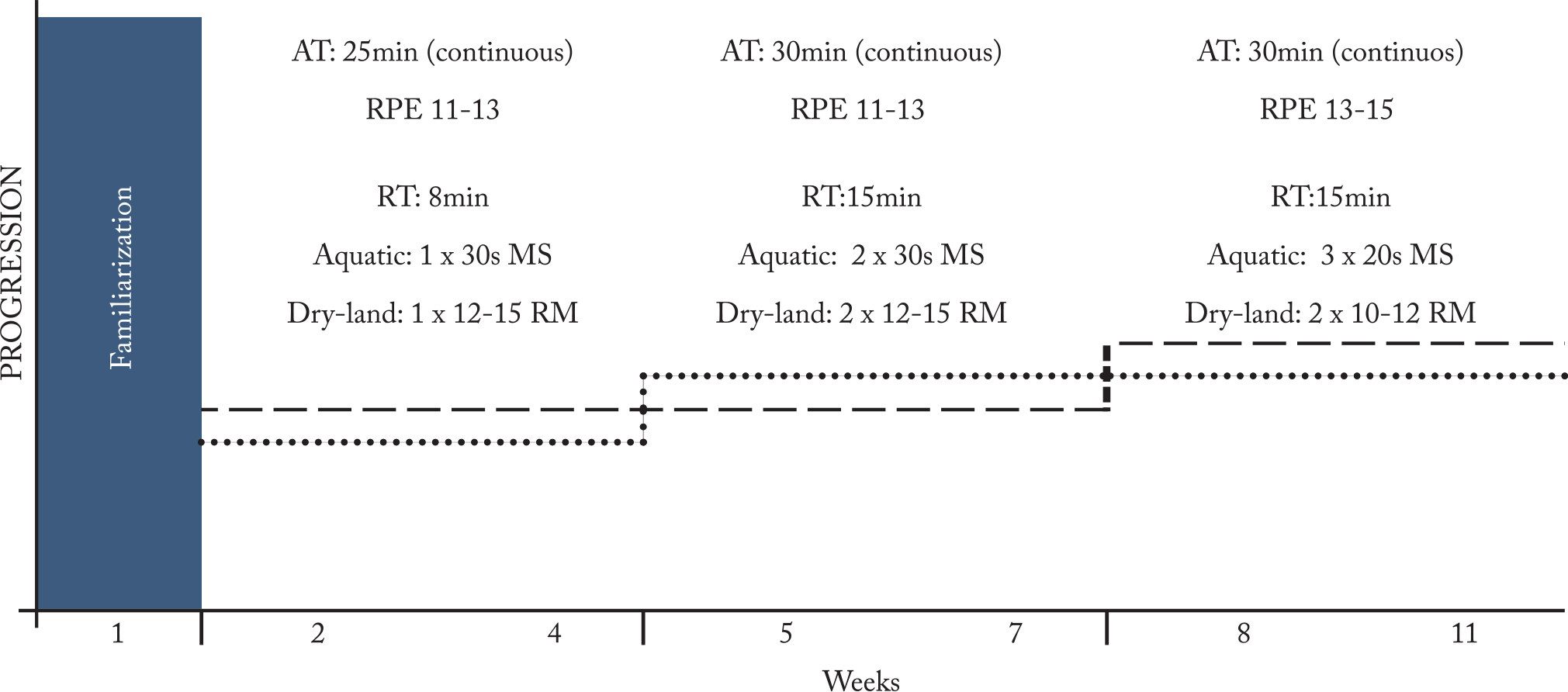 ....: progression in duration; ---: progression of intensity and density; AT: aerobic training; Min: minutes; MS: maximum speed; RPE: rating of perceived exertion (Borg 6-20); RM: repetitions maximum; RT: resistance training; S: seconds; x: sets.