Sex-based differences after 12-weeks of recreational beach tennis training on blood pressure in middle-aged adults with hypertension
ABSTRACT
Introduction: Recreational sport is an interesting exercise strategy for controlling blood pressure (BP), but sex-specific responses remain unclear.
Objective: To explore potential differences in blood pressure and physical fitness between men and women with treated hypertension after a 12-week recreational beach tennis program.
Methods: Forty-two participants (21 men) aged 35-65 years with a previous diagnosis of hypertension were randomized (2:1 ratio) into 12 weeks of beach tennis training group (two sessions per week lasting 45-60 min) or a no-exercise control group. Office BP, cardiorespiratory fitness, and muscle strength were analyzed at baseline and after the intervention period. Generalized estimating equations analyses were employed to examine the main effects of the intervention between the sexes.
Results: In the beach tennis group, men demonstrated improvements in systolic and diastolic BP (-10 ± 2 and -7 ± 2 mmHg, respectively; p < 0.001), handgrip test, and the 30s and five-time Chair-stand test after training. Women exhibited a significant improvement in systolic BP (-7 ± 4 mmHg, p = 0.031) and 30s Chair-stand test. No significant changes in BP and physical fitness were found in the control group. In the comparison between groups, both men and women of the beach tennis group showed greater reductions in systolic BP compared with men and women in the control group (∆ -18 ± 6 mmHg; p = 0.014 and -16 ± 5 mmHg; p = 0.017, respective-ly). No significant differences between men and women in the beach tennis group were found for any variable.
Conclusion: A 12-week recreational beach tennis training promotes similar improvements in BP and physical fitness in men and women with hypertension.
Keywords:
Cardiovascular risk; Racquet sports; Exercise therapy; Cardiorespiratory fitness; Physical fitness.
RESUMO
Introdução: Esportes recreacionais são uma estratégia interessante de exercício para o controle da pressão arterial (PA), mas as respostas específicas entre os sexos ainda não estão claras.
Objetivo: Explorar possíveis diferenças na pressão arterial e na aptidão física entre homens e mulheres com hipertensão tratada após 12 semanas de um programa recreacional de beach tennis.
Métodos: Quarenta e dois participantes (21 homens), com idade entre 35 e 65 anos e diagnóstico prévio de hipertensão, foram randomizados (proporção 2:1) para 12 semanas de treinamento de beach tennis (duas sessões semanais de 45-60 min) ou para um grupo controle sem exercícios. A PA de consultório, a aptidão cardiorrespiratória e a força muscular foram avaliadas no início e após o período de intervenção. Modelos de equações de estimativas generalizadas foram utilizados para avaliar os efeitos principais da intervenção entre os sexos.
Resultados: No grupo de beach tennis, os homens apresentaram reduções na PA sistólica e diastólica (-10 ± 2 e -7 ± 2 mmHg, respectivamente; p < 0.001), além de melhorias no teste de preensão manual e nos testes de sentar-levantar de 30 segundos e de cinco repetições. As mulheres apresentaram melhora significativa na PA sistólica (-7 ± 4 mmHg, p = 0,031) e no teste de sentar-levantar de 30 segundos. Nenhuma alteração significativa na PA ou na aptidão física foi observada no grupo controle. Na comparação entre grupos, tanto homens quanto mulheres do grupo de beach tennis apresentaram maiores reduções na PA sistólica em comparação as mulheres do grupo controle (∆ -18 ± 6 mmHg; p = 0,014 e -16 ± 5 mmHg; p = 0,017, respectivamente). Não foram encontradas diferenças significativas entre homens e mulheres do grupo de beach tennis para nenhuma variável.
Conclusão: Doze semanas de beach tennis recreacional promovem melhorias similares na PA e na aptidão física em homens e mulheres com hipertensão.
Palavras-chave
Risco cardiovascular; Esportes com raquete; Terapia com exercícios; Aptidão cardiorrespi-ratória; Aptidão física
Introduction
Sex-based differences in the prevalence and management of hypertension have received increasing atten-tion in recent years1. While men exhibit a higher prev-alence of hypertension than women until middle age (59% vs. 50%)2, women show a sharp increase in preva-lence after menopause, reaching similar blood pressure (BP) values from the age of 60 onwards (74% vs. 75%, respectively)2. Furthermore, treatment and control rates remain unsatisfactory for both sexes, with slightly higher treatment rates in men (47% vs. 36% in women) but still low levels of adequate BP control (18% in men and 13% in women)3, requiring personalized strategies for hypertension management.
Regular physical activity contributes positively to BP control, with BP reductions after exercise programs comparable to those achieved with antihypertensive medications4. To be effective, exercise training pro-grams must be carried out continuously and regularly, but fewer than one-quarter of adults meet the min-imum physical activity recommendations to achieve BP benefits5. Participation in physical activities tends to differ between sexes6, with studies indicating that women often report lower adherence rates due to var-ied and complex barriers, such as less enjoyment and reduced confidence in their sports abilities compared to men of the same age group7. Therefore, exploring physical activity strategies that promote high adher-ence is relevant, especially for women.
Recreational sports have the potential to retain participants for longer periods when compared to tradi-tional exercise interventions8. Beach tennis emerges as an interesting and accessible option for men and women at various ages and physical/technical abilities, requiring only 4 players per game. This sport is safe and feasible for patients with arterial hypertension9,10, pre-senting a lower risk of injuries compared to tradition-al invasiveon sports11,12 and a high rate of enjoyment among its practitioners9,10. Other intermittent sports, such as soccer and rugby, are able to improve multiple physical capacities, including cardiovascular endurance, strength, and coordination, and also report marked decreases in BP after only 12-16 weeks of training13. Scarce data comparing the BP adaptations in men and women after exercise are controversial. A recreational soccer intervention seems to reduce BP in men and women with prediabetes14. However, post-exercise hypotension, a physiological phenomenon associated with chronic BP adaptations after training15, seems to be more pronounced in men than women (∆-17 vs. -10 mmHg)16. Thus, further studies are warranted to clarify sex-specific adaptations to different exercise modalities, particularly in emerging sports such as beach tennis.
Therefore, the primary objective of this exploratory study was to compare the effect of 12-weeks of beach tennis training on the BP of men and women with hy-pertension. As a secondary objective, we compared sex-based differences in physical fitness parameters.
Methods
Study design
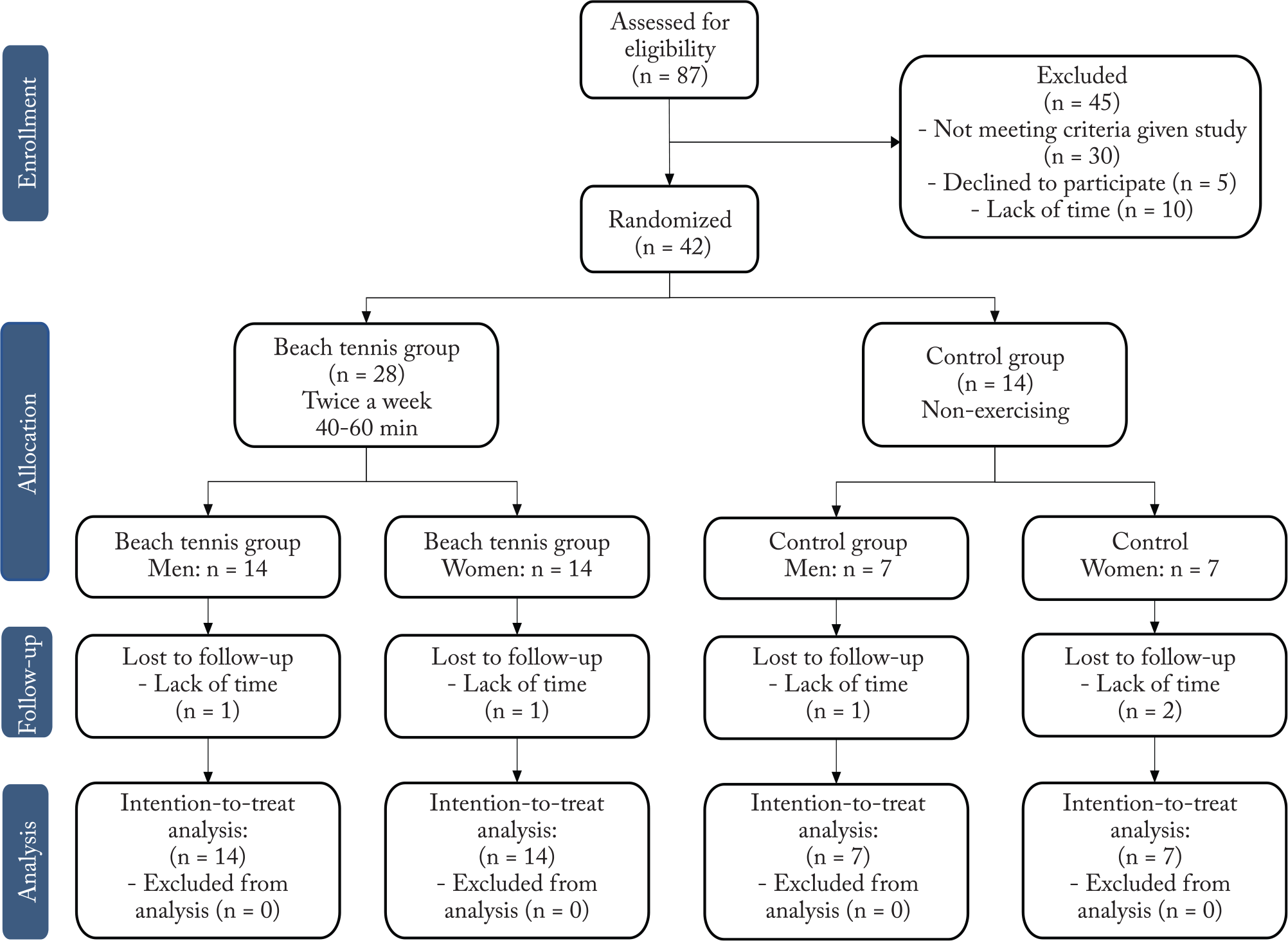
This study is a post-hoc analysis of the Beach Tennis and Hypertension Study (BAH Study), a superior-ity, randomized parallel-group clinical trial with an unequal allocation ratio (2:1)10 and was conducted in order to compare the sex-based differences after a 12-week of beach tennis training in men and women with hypertension.
Participants
The original sample size was estimated based on the original hypothesis, considering an initial sample size of 42 individuals with hypertension. They were ran-domized in a 2 : 1 ratio (Beach Tennis, n = 28; Non-ex-ercising control, n = 14) to be able to detect a difference of 4 ± 6 mmHg in systolic BP between groups10. The detailed inclusion criteria are described in the origi-nal study10. In summary, men and women aged 35-65 years with a diagnosis of hypertension, taking up to three anti-hypertensive medications, and not engaged in structured exercise programs in the past 3 months were eligible. Exclusion criteria were: cardiovascular disease diagnosed in the last 24 months, as well as other chronic diseases, and diabetic proliferative ret-inopathy. The recruitment was through social media, personal references, and phone calls. All participants provided written informed consent before participa-tion. Randomization procedures have been described elsewhere10. The beach tennis instructors were blinded to the randomization list until assignment. The study protocol was conducted according to the principles of the Declaration of Helsinki and in compliance with the Brazilian legal and regulatory framework for research involving human beings (resolution number 466/12). The study protocol was approved by the Institutional Review Board of Porto Alegre Clinical Hospital, Bra-zil (GPPG-FIPE registry: 2018-0642). This study was reported in accordance with the Consolidated Standards of Reporting Trials (CONSORT) guidelines for non-pharmacological treatment17.
Procedures
Participants were instructed to avoid any physical exer-cise in the 24 hours prior to the assessments, maintain their usual diet, and avoid alcohol, coffee, and other stimulants on the same day as the assessments. Partic-ipants with hypertension continued to take their an-tihypertensive medications. Baseline assessment con-sisted of three morning visits (8:00-11:00 AM) to the laboratory at Porto Alegre Clinical Hospital. During the first visit, office BP was obtained after 20 minutes of seated rest, following standardized guidelines18. Participants then completed a standardized interview and underwent a comprehensive clinical evaluation, including clinical history, anthropometric assessment, resting electrocardiogram, and a sit-to-stand test to assess lower-limb muscle strength and functional per-formance. On the second visit, BP was reassessed, and participants completed functional capacity assessments (handgrip strength and cardiorespiratory fitness). All evaluations were performed by two independent asses-sors blinded to the interventions. The participants with hypertension maintained their current antihyperten-sive medications. The same assessments were repeated at the end of the intervention.
Primary outcome measure
Office BP and heart rate (HR) were measured af-ter 20-min of seated rest, according to standardized guidelines18. The participants were instructed to avoid physical exercises and alcohol ingestion 24-h prior to the exam. The measures were taken using a validated automatic oscillometric device (HBP-1100, OMRON Healthcare) and performed on both arms with a 1-min interval between measures. Then, measurements were performed twice on the arm with the highest systolic BP value. The mean of these two values was used to represent baseline BP. The lowest HR value was used to describe HR at rest and used to calculate rate-pressure product (RPP = systolic BP*HR), and the arm with the highest systolic BP value was used in post-interven-tion assessment for comparisons. Mean arterial pres-sure was calculated as (diastolic BP + 1/3(systolic BP - diastolic BP)).
Secondary outcome measures
Secondary outcomes, including cardiorespiratory fitness, the chair-stand test, and isometric handgrip strength, are thoroughly described in the original study’s assessment procedures10.
Intervention
The intervention took place on an outdoor beach ten-nis court at the School of Physical Education of the Federal University of Rio Grande do Sul (Universidade Federal do Rio Grande do Sul - UFRGS), Porto Alegre, Rio Grande do Sul, Brazil. Participants attended two sessions per week (either Monday/Wednesday or Tuesday/Thursday), with Friday reserved for make-up sessions.
The sessions were in pairs (i.e., 2 versus 2), lasting 45-60min each, and was composed of an initial period of 10min of warm-up using basic technical exercises (i.e., serve, volley, forehand, and backhand) followed by 3 sets of matches lasting 10-15min each (weeks 1-4: 3x10min; weeks 5-8: 3x12min; and weeks 9-12: 3x15min) with an interval of 2min between the sets. The matches were time-based rather than point-based to ensure that all participants played the same total time (min per session) throughout the intervention. The first week served as familiarization, during which basic rules and techniques were introduced. Based on these familiarization sessions, two research team mem-bers with previous experience in beach tennis classified each participant into three categories: beginner (poorly coordinated racket movements and little movement on the court), intermediate (more agile and coordinated movements), or advanced (broad dominance in all as-pects of the game). Matches were scheduled based on performance level to ensure motivation and training intensity. The same two researcher team members su-pervised all training sessions and did not participate in further assessments and data analysis.
To assess training intensity, HR and rating of perceived exertion (RPE) were recorded during the first (week-1) and the last (week-12) week of training. The HR was monitored using a chest monitor (Polar H10, Kempele, Finland) and analyzed via PolarFlow soft-ware (Polar company, Kempele, Finland). The individ-ual HRmax was estimated through Tanaka’s Equation (=208-0.7×age)19. The HRreserve was calculated using the following formula: (exercise HR-HR at rest/HR-reserve)*100. For RPE, the participant answered a simple question: “How was your training?” using the CR-10 Borg RPE-scale20.
Enjoyment levels were measured in the same weeks using the Physical Activity Enjoyment Scale (PACES) questionnaire, completed 30 min post-exercise. The questionnaire includes 18 items rated on a 7-point bi-polar scale, yielding scores from 18 to 126, with higher scores indicating greater enjoyment21.
Adherence was calculated as the number of attend-ed sessions over the follow-up period.
Classification of responders and non-responders To assess inter-individual variability, participants were categorized as responders and non-responders based on the typical error of BP measurement (a measure of the variability or precision of repeated measure-ments). It was a measurement between BP test-retest, following the equation: SDdifference/√2, where SDdifference: in which the standard deviation of the differences in scores was calculated for the two tests performed with-in 24h at baseline22,23. Participants who showed reduc-tions greater than the typical error were classified as responders.
Statistical analyses
All randomized participants were included in a full analysis set, enabling intention-to-treat analyses. Par-ticipants who did not complete the study were also in-cluded in the analysis, with baseline assessment data carried forward to the outcome measures, except in the analysis of responders, for which both time points were required for calculation. Data were independent-ly entered by two researchers and cross-verified. The statistician did not participate in the recruitment or as-signment to the experimental sessions and was blinded to the interventions. Data distributions were analyzed using the Shapiro-Wilk test, which was combined with an analysis of histogram and Q-Q plots. Data were ex-pressed as means and standard error for variables with normal distribution and delta values as means and 95% confidence intervals (95% CI). Generalized estimating equation analyses were used to assess the main effects for all outcomes across experimental interventions (beach tennis and control) over time in men and wom-en (intervention*time*sex), adjusted for baseline values, diuretic use, height, body weight, and age, given the ob-served pre-intervention differences that may influence BP outcomes. Additionally, a complementary Gen-eralized estimating equation analysis was performed to compare delta changes between groups (interven-tion*sex), using the same set of covariates to ensure consistent adjustment for baseline differences and potential confounding factors. Adjustment for multiple comparisons was accomplished using the Sequential Bonferroni test. Chi-square or Fisher’s exact test to verify the association with the use of antihypertensive medication, sex, ethnicity, comorbidities, and rate of re-sponders. Effect sizes were calculated using Cohen’s dz for within-group comparisons, and the interpretation of the effect size adopted was based on the following criteria: < 0.50, small; 0.50 to 0.79, medium; and ≥ 0.80, large24. Statistical significance was accepted at p < 0.05. All analyses were conducted using SPSS Statistics for Windows, version 22.0 (IBM, Armonk, NY, USA).
Results
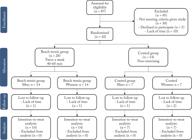
Figure 1 shows the participant flowchart. A total of 42 participants (men, n = 21; women, n = 21) were ana-lyzed. The recruiting and follow-up ranged from Feb-ruary 2023 to March 2024. Five participants did not complete the post assessments (beach tennis group: men n = 1; women n = 1, and control group: men n = 1; women n = 2). For the beach tennis groups, intervention attendance was similar between sexes, with 79% (18 ± 5 sessions) in men and 75% (18 ± 5 sessions) in women (p = 0.970), of the 24 sessions offered. All participants were included in the intention-to-treat analysis.
Characteristics of the participants are presented in Table 1. Some baseline differences were observed be-tween groups. In the control group, men had greater body mass than women (p = 0.012). Within the beach tennis group, men were older (p = 0.036), reported low-er diuretic use (p = 0.006) a pattern that is consistent with previous findings in the literature25, and exhibited lower resting HR values (p = 0.026) compared with women. Men presented higher handgrip strength than women (p > 0.05). And women demonstrated lower VO₂peak values than men (p = 0.017).
Baseline characteristics of men and women in the beach tennis and control groups before the 12-week intervention program.
Beach tennis training sessions
During the 12-week beach tennis training period, matches were scheduled based on participants’ perfor-mance level (beginners, n = 7%; intermediate, n = 57%; and advanced n=37%). Exercise intensity as indicated by average HR loading was greater during the first week than in the last week of training in men (124 ± 5 vs. 111 ± 5 bpm, p = 0.001) with tendency in women (134 ± 5 vs. 121 ± 4 bpm, p = 0.084). The participants reported a similar RPE (Borg scale CR-10) in Week 1 and Week 12 (Men: 4 ± 0AU [moderate] / 4 ± 0AU [moderate], p = 0.469; Women: 3 ± 0AU [light] / 3 ± 0AU [light], p = 0.517). Moreover, enjoyment level (PACES scale) during beach tennis sessions remained consistent between the initial and final weeks of in-tervention (Men: 119 ± 3 [94%] vs. 121 ± 3 [96%], p = 0.428; Women: 125 ± 1 [99%] vs. 126 ± 1 [100%], p = 0.195). There were no reported neither injuries nor adverse events during the beach tennis sessions.
Blood pressure, heart rate at rest, and rate pressure product
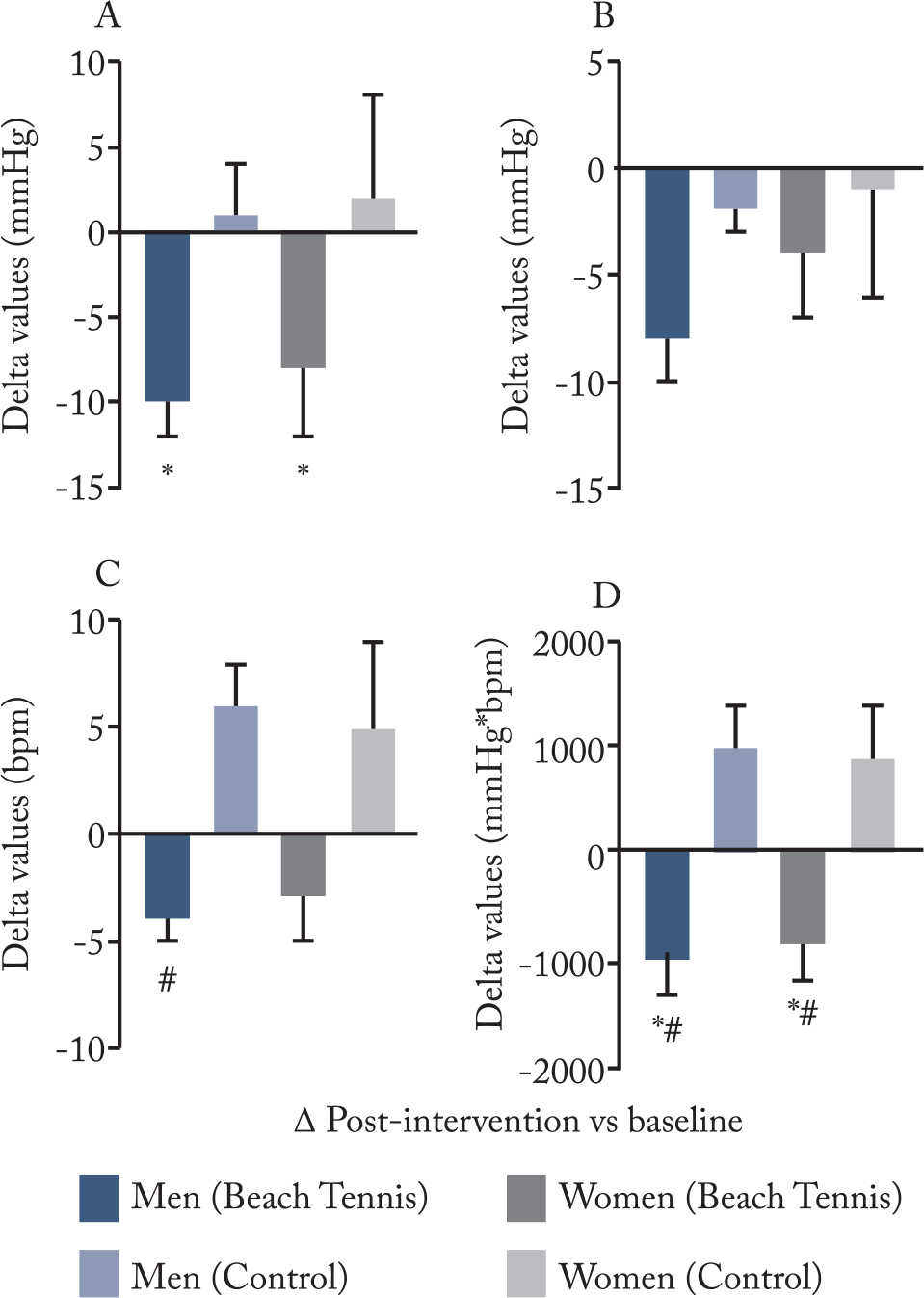
After the 12-week of beach tennis intervention, men demonstrated significant reductions across all hemo-dynamic variables (p < 0.001), whereas women showed reductions in systolic BP (p = 0.036), and RPP (p = 0.005) when compared with baseline. Men in the control group showed an increase in resting HR (p = 0.001), and both men and women in the control group exhibited increases in RPP (p = 0.013 / p = 0.044, re-spectively) (Table 2). The delta BP values demonstrat-ed that men and women of the beach tennis group showed greater reductions in systolic BP, but only when compared with women in the control group (p = 0.014 / p = 0.017, respectively) (Figure 2).
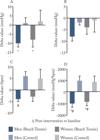
Differences in values between post-training and baseline (∆) in men and women participating in the beach tennis and control groups. (A) Systolic blood pressure; (B) Diastolic blood pressure; (C) Heart rate; (D) Rate-pressure product. Data are pre-sented as mean ± standard error. *Indicates difference from women of the control group (p < 0.05). #Indicates difference from men of the control group (p < 0.05).
Responders and non-responders to blood pressure
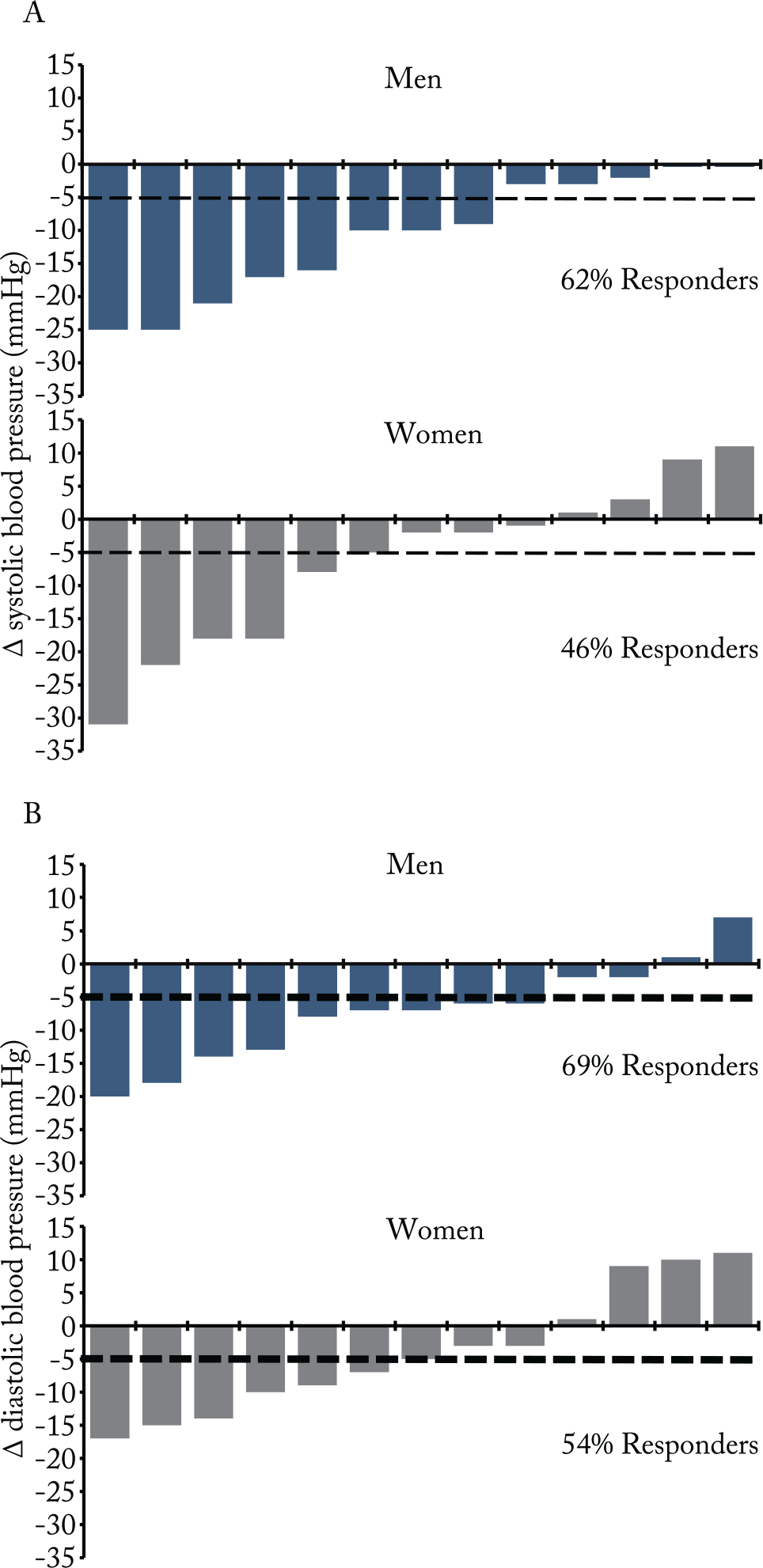
In the present study, considering the above-mentioned typical error calculation, we found a reduction of -5 mmHg as the threshold for both systolic and diastolic BP responsiveness. For systolic BP, 62% of men and 46% of women were classified as responders, whereas 69% men and 54% of women for diastolic BP (Figure 3). No significant differences in rates of responders were observed between sexes for either systolic (p = 0.431) or diastolic BP (p = 0.420).
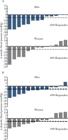
Individual changes in systolic (A) and diastolic (B) blood pressure (final minus baseline) in 13 men and 13 women who underwent preand post-intervention assessments. Dashed line: minimal detectable change (5 mmHg).
Physical fitness
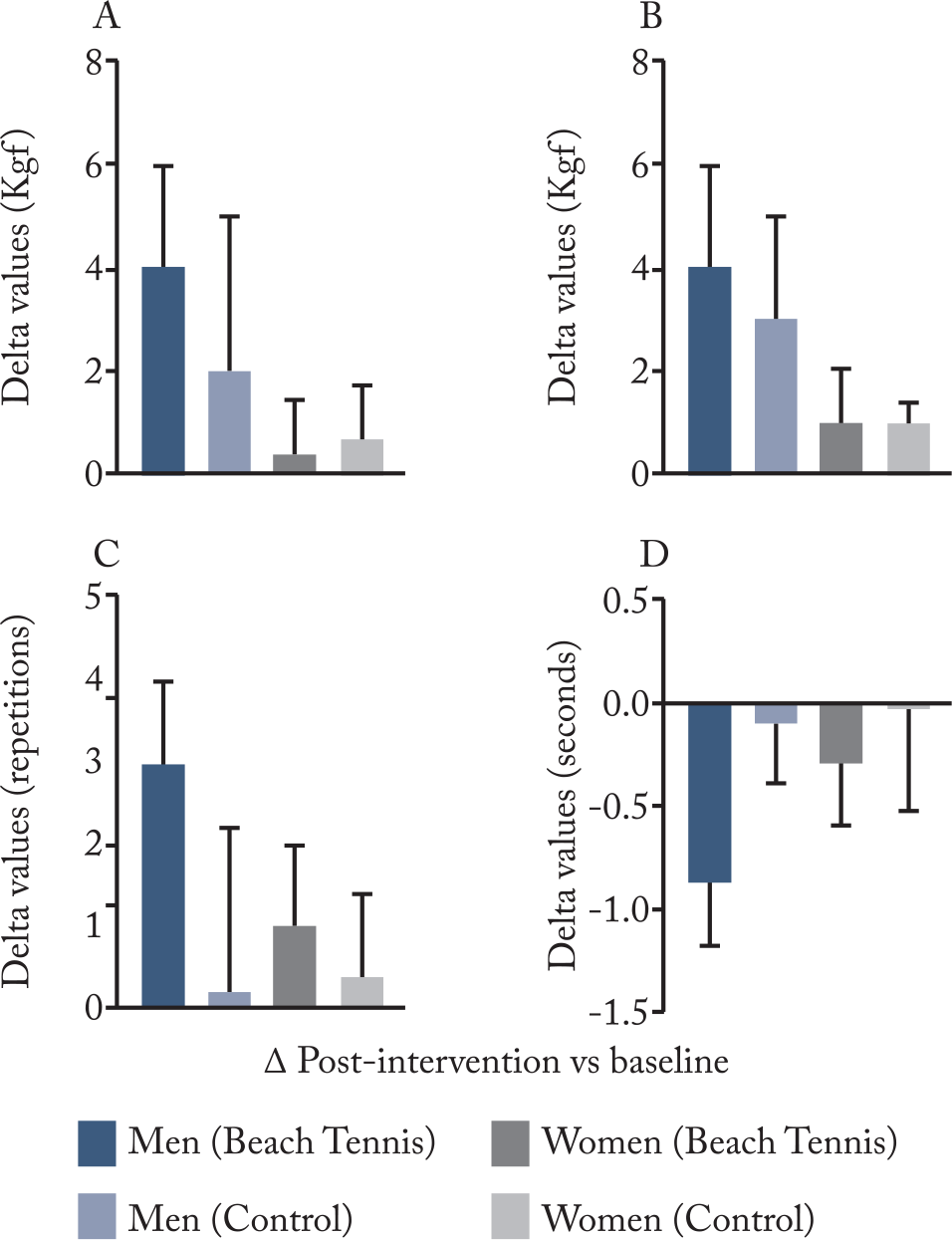
After training, a significant improvement in hand-grip strength was observed in men (p = 0.038) but not in women in the beach tennis group. Lower-limb strength also improved in the beach tennis group, with men presenting positive results in the time required to complete the first five repetitions (p = 0.012) and the total number of repetitions performed in 30 seconds (p = 0.003), and women improvements only in the 30-second chair-stand test (p = 0.039). Participants in the control group of both sexes did not show improve-ment in the neuromuscular outcomes. For cardiorespi-ratory fitness, no significant differences were observed between groups Table 3. Figure 4 presents the comparison of delta values between the groups, indicating no significant differences.
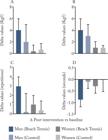
Differences in values between post-training and baseline (∆) in men and women participating in the beach tennis and control groups. (A) Handgrip strength in the dominant arm; (B) Hand-grip strength in the non-dominant arm; (C) 30-s chair stand; (D) 5-times chair stand. Data are presented as mean ± standard error.
Discussion
The main finding of this exploratory study is the observation that a 12-week beach tennis program appeared to lower BP in men and women patients with treated hypertension. This preliminary finding underscores the potential of beach tennis as a feasible, easy-to-learn, and accessible exercise modality for lowering BP in both men and women. Interestingly, some potential sex-based differences were noted since men exhibited a higher responder rate and showed improvement across all neuromuscular outcomes. Given the exploratory na-ture of these data, robust, prospective studies with larger sample sizes and designs specifically powered to inves-tigate this potential discrepancy are warranted to either confirm or refute this hypothesized differential effect.
A 12-week recreational beach tennis intervention reduced systolic (-10 mmHg) and diastolic BP (-8 mmHg) in men with treated hypertension. Among women, systolic BP decreased (-7 mmHg), and values were 13 mmHg lower at the end of the study compared with those in the control group. The magnitude of BP reduction is comparable to the effects reported in a me-ta-analysis of 17 studies on recreational football with a similar training volume and duration26. In contrast, other recent studies evaluating recreational football27 and futsal28 fail to show reductions on BP in partici-pants using antihypertensive medication. Importantly, a reduction of approximately 10 mmHg in systolic BP is clinically meaningful, being associated with a 20% lower risk of major cardiovascular events, a 17% re-duction in coronary heart disease, and a 27% decrease in stroke risk29. This finding is particularly noteworthy given that the cohort consisted of patients already un-dergoing pharmacological treatment for hypertension.
We found only one previous investigation that compared the BP responses between sexes after a rec-reational sport intervention. In that study, men and women with prediabetes engaged in recreational foot-ball twice weekly combined with dietary counseling for 16 weeks. Similarly to our study, men and women presented similar BP reductions30. The magnitude of physiological adaptations to exercise varies across in-dividuals and sexes undergoing the same training pro-gram31. Some individuals (responders) exhibit a reduc-tion in BP, while others maintain or even increase their BP (non-responders)32,33. In our study, 62% of men and 46% of women were classified as responders for systolic BP, corresponding to 38% of men and 54% of wom-en as non-responders. These results align with a recent study showing that after 12-weeks of continuous aer-obic training, 67% of women were considered non-re-sponders for systolic BP34. In the same study, women classified as non-responders after more 12-weeks of training became responders when exercise volume was increased (60%) or when high-intensity interval train-ing was applied (100%), suggesting that women may require greater training loads to achieve BP reductions. However, considering the exploratory characteristic of these studies, a larger randomized controlled trial, with the primary focus on the potential differences between men and women, is mandatory.
The RPP, which is a reliable surrogate measure of myocardial oxygen consumption and cardiac workload, is strongly associated with left ventricular mass and ischemic events, including myocardial infarction35. The literature suggests that the threshold for cardiovascu-lar disease and all-cause mortality is higher than 9,488 mmHg*bpm35. In our study, men and women allocated to the beach tennis group began the training interven-tion with RPP above the cardiovascular risk thresh-old (9,515 and 10,246 mmHg*bpm, respectively). Af-ter training, both groups presented values below this threshold, with reductions of 1,013 and 886 mmH-g*bpm for men and women, respectively. In contrast, participants in the control group showed a significant worsening in RPP, with men increasing by 982 mmH-g*bpm and women by 968 mmHg*bpm, in this way re-maining above the cardiovascular risk threshold. These findings highlight the potential of recreational beach tennis as an effective non-pharmacological strategy to reduce cardiac workload and mitigate cardiovascular risk in men and women with treated hypertension.
Higher levels of upperand lower-body muscular strength are associated to lower mortality risk in adults, regardless of age and follow-up period36. A recent study utilizing multicomponent exercises performed twice weekly over 10-weeks demonstrated improvements in the 30” chair stand test (lower-body strength) and handgrip strength (upper-body strength) in adults with cardiovascular disease37. These findings are consistent with our results, where both men and women improved their performance on the chair stand test after 12-weeks of beach tennis. However, only men demonstrated sig-nificant improvements in handgrip strength in both arms. This is consistent with a study on multicompo-nent recreational team handball training, which did not report improvements in handgrip strength among women after 16-weeks of training38. Regarding VO-2max, it was expected that improvements would follow the 12-week program, given the aerobic and anaerobic demands of the sport39. However, contrary to expecta-tions, no significant increases in VO2max were observed after training, suggesting that the intensity and volume of training may not have been sufficient to elicit car-diorespiratory fitness adaptations in men and women. Another important aspect to consider in sports training is an individual’s motivation and enjoyment, as these are significant factors influencing their par-ticipation in sporting activities and the feasibility of a training concept40. Although motivation was not di-rectly assessed in the present study, a previous study suggested that women often report lower interest and enjoyment compared to men7. A noteworthy result of this study is the high enjoyment level reported from the first week of beach tennis training, with continued improvement over time, culminating in 100% enjoy-ment levels reported by women in the final session. These results indicate that beach tennis may serve as an effective strategy for increasing long-term engagement in physical activity, particularly among women.
This study presents limitations that should be con-sidered. The exploratory, post-hoc nature of this specific analysis constitutes a primary limitation. The small sam-ple size reflects the scope of the original trial10, reducing the statistical power of the current analyses. Nonethe-less, the study also has strengths. The absence of injuries or adverse effects during the beach tennis program and the assessment of cardiovascular demand during the practice indicate the safety and feasibility of the inter-vention for men and women with hypertension. Fur-thermore, the high enjoyment reported by participants, combined with measurable cardiovascular benefits, un-derscores the feasibility and potential long-term adher-ence to beach tennis training, especially among women.
In summary, a 12-week recreational beach tennis training seems to induce similar BP reductions in men and women with hypertension. Nonetheless, the prelim-inary findings regarding distinct neuromuscular and he-modynamic responses between sexes highlight the need for further, well-powered studies designed to either con-firm or refute these potential sex-based differences and guide the optimal prescription of beach tennis as an exer-cise intervention for men and women with hypertension.
-
Funding
This study was partially funded by the Research and Education Fund of the Porto Alegre Clinical Hospital (https://ror.org/010we4y38)(FIPE/HCPA, grant number 2018-0642).. Carpes LO, Jung N and Domingues LB received a scholarship from Coordination for the Improvement of Higher Education Personnel (Coordenação de Aperfeiçoamento de Pessoal de Nível Superior - CAPES) - finance code 001. Ferrari R received a grant from Research Support Foundation of the State of Rio Grande do Sul (Fundação de Amparo à Pesquisa do Estado do Rio Grande do Sul - FAPERGS) for the development of this research. The funders did not have a role in the study design, data collection, analysis, interpretation of results, or the manuscript.
Declaration regarding the use of artificial intelligence tools in the article writing process
The authors did not use artificial intelligence tools for preparation of the manuscript.
Acknowledgments
We would like to thank Gabriela Kothe, Patricia Piasson, and the Beach Company Club for their support related to the structure to conduct the experimental sessions (beach tennis courts, rackets, and balls, among others). We also thank Vinícius Schneider, Rodrigo Abreu, and Paula Frank for their support related to data assessment.
Availability of research data and other materials
After publication the data will be available on demand to authors
References
-
1 Connelly PJ, Delles C. Journal of Human Hypertension special issue on sex and gender differences in hyper-tension. J Hum Hypertens. 2023;37(8):587-8. doi: https://doi.org/10.1038/s41371-023-00847-5
» https://doi.org/10.1038/s41371-023-00847-5 - 2 Ostchega Y,Fryar CD,Nwankwo T,Nguyen DT.Hypertension Prevalence Among Adults Aged 18 and Over: United States, 2017-2018. NCHS Data Brief. 2020;(364):1-8.
-
3 Zhou B, Perel P, Mensah GA, Ezzati M. Global epidemiology, health burden and effective interventions for elevated blood pressure and hypertension. Nat Rev Cardiol. 2021;1-18. doi: https://doi.org/10.1038/s41569-021-00559-8
» https://doi.org/10.1038/s41569-021-00559-8 -
4 Naci H, Salcher-Konrad M, Dias S, Blum MR, Sahoo SA, Nunan D, et al. How does exercise treatment com-pare with antihypertensive medications? A network meta-analysis of 391 randomised controlled trials assessing exercise and medication effects on systolic blood pressure. Br J Sports Med. 2019;53(14):859-69. doi: https://doi.org/10.1136/bjsports-2018-099921
» https://doi.org/10.1136/bjsports-2018-099921 -
5 Arnett DK, Blumenthal RS, Albert MA, Buroker AB, Goldberger ZD, Hahn EJ, et al. 2019 ACC/AHA Guideline on the Primary Prevention of Cardiovascular Disease: Executive Summary: A Report of the Ameri-can College of Cardiology/American Heart Association Task Force on Clinical Practice Guidelines. J Am Coll Cardiol. 2019;74(10):1376-1414. doi: https://doi.org/10.1016/j.jacc.2019.03.009
» https://doi.org/10.1016/j.jacc.2019.03.009 -
6 Ji H, Gulati M, Huang TY, Kwan AC, Ouyang D, Ebinger JE, et al. Sex Differences in Association of Physi-cal Activity With All-Cause and Cardiovascular Mortality. J Am Coll Cardiol. 2024;83(8):783-93. doi: https://doi.org/10.1016/j.jacc.2023.12.019
» https://doi.org/10.1016/j.jacc.2023.12.019 -
7 Health TLP. Time to tackle the physical activity gender gap. Lancet Public Health. 2019;4(8):e360. doi: https://doi.org/10.1016/S2468-2667(19)30135-5
» https://doi.org/10.1016/S2468-2667(19)30135-5 -
8 Krustrup P, Hansen PR, Andersen LJ, Jakobsen MD, Sundstrup E, Randers MB, et al. Long-term musculo-skeletal and cardiac health effects of recreational football and running for premenopausal women. Scand J Med Sci Sports. 2010;20 Suppl 1:58-71. doi: https://doi.org/10.1111/j.1600-0838.2010.01111.x
» https://doi.org/10.1111/j.1600-0838.2010.01111.x -
9 Carpes L, Jacobsen A, Domingues L, Jung N, Ferrari R. Recreational beach tennis reduces 24-h blood pres-sure in adults with hypertension: a randomized crossover trial. Eur J Appl Physiol. 2021;121(5):1327-36. doi: https://doi.org/10.1007/s00421-021-04617-4
» https://doi.org/10.1007/s00421-021-04617-4 -
10 Ferrari R, de Oliveira Carpes L, Betti Domingues L, Mallmann Schneider V, Leal R, Tanaka H, et al. Recre-ational beach tennis training reduces ambulatory blood pressure in adults with hypertension: a randomized clinical trial. J Hypertens. 2024;42(12):2122. doi: https://doi.org/10.1097/HJH.0000000000003850
» https://doi.org/10.1097/HJH.0000000000003850 -
11 Kujala UM, Taimela S, Antti-Poika I, Orava S, Tuominen R, Myllynen P. Acute injuries in soccer, ice hock-ey, volleyball, basketball, judo, and karate: analysis of national registry data. BMJ. 1995;311(7018):1465-68. doi: https://doi.org/10.1136/bmj.311.7018.1465
» https://doi.org/10.1136/bmj.311.7018.1465 -
12 Berardi M, Lenabat P, Fabre T, Ballas R. Beach tennis injuries: a cross-sectional survey of 206 elite and rec-reational players. Phys Sportsmed. 2020;48(2):173-8. doi: 10.1080/00913847.2019. 1650307
» https://doi.org/10.1080/00913847.2019.1650307 -
13 Schneider VM, Frank P, Fuchs SC, Ferrari R. Effects of recreational sports and combined training on blood pressure and glycated hemoglobin in middle-aged and older adults: A systematic review with meta-analysis. Exp Gerontol. 2021;154:111549. doi: https://doi.org/10.1016/j.exger.2021.111549
» https://doi.org/10.1016/j.exger.2021.111549 -
14 Skoradal M-B, Weihe P, Patursson P, Mortensen J, Connolly L, Krustrup P, et al. Football training improves metabolic and cardiovascular health status in 55- to 70-year-old women and men with prediabetes. Scand J Med Sci Sports. 2018;28 Suppl 1:42-51. doi: https://doi.org/10.1111/sms.13081
» https://doi.org/10.1111/sms.13081 -
15 Wegmann M, Hecksteden A, Poppendieck W, Steffen A, Kraushaar J, Morsch A, et al. Postexercise Hypoten-sion as a Predictor for Long-Term Training-Induced Blood Pressure Reduction: A Large-Scale Randomized Controlled Trial. Clin J Sport Med. 2018;28(6):509-15. doi: https://doi.org/10.1097/JSM.0000000000000475
» https://doi.org/10.1097/JSM.0000000000000475 -
16 de Oliveira Carpes L, Domingues LB, Schimitt R, Fuchs SC, Alhalimi T, Tanaka H, et al. Sex Differences in Post-exercise Hypotension, Ambulatory Blood Pressure Variability, and Endothelial Function After a Power Training Session in Older Adults. Front Physiol. 2021;12:657373. doi: https://doi.org/10.3389/fphys.2021.657373
» https://doi.org/10.3389/fphys.2021.657373 -
17 Boutron I, Altman DG, Moher D, Schulz KF, Ravaud P; CONSORT NPT Group. CONSORT Statement for Randomized Trials of Nonpharmacologic Treatments: A 2017 Update and a CONSORT Extension for Nonpharmacologic Trial Abstracts. Ann Intern Med. 2017;167(1):40-7. doi: https://doi.org/10.7326/M17-0046
» https://doi.org/10.7326/M17-0046 -
18 Feitosa ADM, Barroso WKS, Mion Junior D, Nobre F, Mota-Gomes MA, Jardim PCBV, et al. Brazilian Guidelines for In-office and Out-of-office Blood Pressure Measurement - 2023. Arq Bras Cardiol. 2024;121(4):e20240113. doi: https://doi.org/10.36660/abc.20240113
» https://doi.org/10.36660/abc.20240113 -
19 Tanaka H, Monahan KD, Seals DR. Age-predicted maximal heart rate revisited. J Am Coll Cardiol. 2001;37(1):153-6. doi: https://doi.org/10.1016/S0735-1097(00)01054-8
» https://doi.org/10.1016/S0735-1097(00)01054-8 -
20 Haddad M, Stylianides G, Djaoui L, Dellal A, Chamari K. Session-RPE Method for Training Load Monitor-ing: Validity, Ecological Usefulness, and Influencing Factors. Front Neurosci. 2017;11:612. doi: https://doi.org/10.3389/fnins.2017.00612
» https://doi.org/10.3389/fnins.2017.00612 -
21 Teques P, Calmeiro L, Silva C, Borrego C. Validation and adaptation of the Physical Activity Enjoyment Scale (PACES) in fitness group exercisers. J Sport Health Sci. 2017. doi: https://doi.org/10.1016/j.jshs.2017.09.010
» https://doi.org/10.1016/j.jshs.2017.09.010 -
22 Hopkins WG. Measures of reliability in sports medicine and science. Sports Med. 2000;30(1):1-15. doi: https://doi.org/10.2165/00007256-200030010-00001
» https://doi.org/10.2165/00007256-200030010-00001 -
23 Swinton PA, Hemingway BS, Saunders B, Gualano B, Dolan E. A Statistical Framework to Interpret Individ-ual Response to Intervention: Paving the Way for Personalized Nutrition and Exercise Prescription. Front Nutr. 2018;5:41. doi: https://doi.org/10.3389/fnut.2018.00041
» https://doi.org/10.3389/fnut.2018.00041 -
24 Lakens D. Calculating and reporting effect sizes to facilitate cumulative science: a practical primer for t-tests and ANOVAs. Front Psychol. 2013;4:863. doi: https://doi.org/10.3389/fpsyg.2013.00863
» https://doi.org/10.3389/fpsyg.2013.00863 -
25 Bager JE, Manhem K, Andersson T, Hjerpe P, Bengtsson-Boström K, Ljungman C, et al. Hypertension: sex-related differences in drug treatment, prevalence and blood pressure control in primary care. J Hum Hyper-tens. 2023;37(8):662-70. doi: https://doi.org/10.1038/s41371-023-00801-5
» https://doi.org/10.1038/s41371-023-00801-5 -
26 Milanović Z, Pantelić S, Čović N, Sporiš G, Mohr M, Krustrup P. Broad-spectrum physical fitness benefits of recreational football: a systematic review and meta-analysis. Br J Sports Med. 2019;53(15):926-39. doi: https://doi.org/10.1136/bjsports-2017-097885
» https://doi.org/10.1136/bjsports-2017-097885 -
27 Skoradal MB, Sjúrðarson T, Olsen HW, Leifsson EN, Pelikan V, Mohr M, et al. Evaluation of a football fit-ness implementation initiative for an older adult population in a small-scale island society. Front Public Health. 2024;12:1406601. doi: https://doi.org/10.3389/fpubh.2024.1406601
» https://doi.org/10.3389/fpubh.2024.1406601 -
28 Teixeira J, Krustrup P, Castagna C, Mohr M, Ascensão A, Pereira R, et al. Recreational futsal provides broad-spectrum fitness and health benefits but no blood pressure effects in men with treated hypertension - a ran-domised controlled trial. J Sports Sci. 2023;41(20):1824-36. doi: https://doi.org/10.1080/02640414.2023.2300568
» https://doi.org/10.1080/02640414.2023.2300568 -
29 Ettehad D, Emdin CA, Kiran A, Anderson SG, Callender T, Emberson J, et al. Blood pressure lowering for prevention of cardiovascular disease and death: a systematic review and meta-analysis. Lancet. 2016;387(10022):957-67. doi: https://doi.org/10.1016/S0140-6736(15)01225-8
» https://doi.org/10.1016/S0140-6736(15)01225-8 -
30 Mohr M, Skoradal MB, Andersen TR, Krustrup P. Gender-dependent evaluation of football as medicine for prediabetes. Eur J Appl Physiol. 2019;119(9):2011-24. doi: https://doi.org/10.1007/s00421-019-04188-5
» https://doi.org/10.1007/s00421-019-04188-5 -
31 Ansdell P, Thomas K, Hicks KM, Hunter SK, Howatson G, Goodall S. Physiological sex differences affect the integrative response to exercise: acute and chronic implications. Exp Physiol. 2020;105(12):2007-21. doi: https://doi.org/10.1113/EP088548
» https://doi.org/10.1113/EP088548 -
32 de Oliveira Carpes L, Domingues LB, Fuchs SC, Ferrari R. Rate of Responders for Post-Exercise Hypotension after Beach Tennis, Aerobic, Resistance and Combined Exercise Sessions in Adults with Hypertension. Sports. 2023;11(3):58. doi: https://doi.org/10.3390/sports11030058
» https://doi.org/10.3390/sports11030058 -
33 Carpes LO, Domingues LB, Bertoletti O, Fuchs SC, Ferrari R. Inter-individual responses of post-exercise hy-potension in older adults with hypertension: An exploratory analysis of different exercise modalities. Front Physiol. 2022;13:1050609. doi: https://doi.org/10.3389/fphys.2022.1050609
» https://doi.org/10.3389/fphys.2022.1050609 -
34 Ferreira MLV, Castro A, de Oliveira Nunes SG, Dos Santos MVMA, Cavaglieri CR, Tanaka H, et al. Hypo-tensive effects of exercise training: are postmenopausal women with hypertension non-responders or respond-ers? Hypertens Res. 2024;1-11. doi: 10.1038/s41440-024-01721-8
» https://doi.org/10.1038/s41440-024-01721-8 -
35 Inoue R, Ohkubo T, Kikuya M, Metoki H, Asayama K, Kanno A, et al. Predictive value for mortality of the double product at rest obtained by home blood pressure measurement: the Ohasama study. Am J Hypertens. 2012;25(5):568-75. doi: https://doi.org/10.1038/ajh.2012.3
» https://doi.org/10.1038/ajh.2012.3 -
36 García-Hermoso A, Cavero-Redondo I, Ramírez-Vélez R, Ruiz JR, Ortega FB, Lee DC, et al. Muscular Strength as a Predictor of All-Cause Mortality in an Apparently Healthy Population: A Systematic Review and Meta-Analysis of Data From Approximately 2 Million Men and Women. Arch Phys Med Rehabil. 2018;99(10):2100-13. e5. doi: https://doi.org/10.1016/j.apmr.2018.01.008
» https://doi.org/10.1016/j.apmr.2018.01.008 -
37 Poli L, Greco G, Cataldi S, Ciccone MM, De Giosa A, Fischetti F. Multicomponent versus aerobic exercise intervention: Effects on hemodynamic, physical fitness and quality of life in adult and elderly cardiovascular disease patients: A randomized controlled study. Heliyon. 2024;10(16):e36200. doi: https://doi.org/10.1016/j.heliyon.2024.e36200
» https://doi.org/10.1016/j.heliyon.2024.e36200 -
38 Pereira R, Krustrup P, Castagna C, Coelho E, Helge EW, Jørgensen NR, et al. Multicomponent recreational team handball training improves global health status in postmenopausal women at the long term - A random-ised controlled trial. Eur J Sport Sci. 2023;23(8):1789-99. doi: https://doi.org/10.1080/17461391.2023.2184725
» https://doi.org/10.1080/17461391.2023.2184725 -
39 Bellissimo MP, Galaviz KI, Paskert MC, Lobelo F. Cardiometabolic Risk Reduction Through Recreational Group Sport Interventions in Adults: A Systematic Review and Meta-analysis. Mayo Clin Proc. 2018;93(10):1375-96. doi: https://doi.org/10.1016/j.mayocp.2018.03.014
» https://doi.org/10.1016/j.mayocp.2018.03.014 -
40 Castagna C, de Sousa M, Krustrup P, Kirkendall DT. Recreational team sports: The motivational medicine. J Sport Health Sci. 2018;7(2):129-31. doi: https://doi.org/10.1016/j.jshs.2017.12.001
» https://doi.org/10.1016/j.jshs.2017.12.001
Edited by
-
Editor in Chief
Raphael Ritti-DiasNove de Julho University. São Paulo, São Paulo, Brazil.
-
Section editor
Marilia de Almeida Correia https://orcid.org/0000-0002-8983-3433Nove de Julho University. São Paulo, São Paulo, Brazil.
Reviewers’ assessment
The reviews of this article were originally conducted in Portuguese. This version has been translated using ChatGPT and subsequently reviewed by the Chief Editors.About the reviewerReviewer A
Format
-
Does the article comply with the manuscript prepa-ration rules for submission to the Revista Brasileira de Atividade Física & Saúde?
Yes
-
Regarding formal aspects, is the manuscript well structured, containing the sections: introduction, methods, results, and discussion (with the conclu-sion as part of the discussion)?
Yes
-
Is the language appropriate, and is the text clear, precise, and objective?
Yes
-
Was any indication of plagiarism observed in the manuscript?
No
Suggestions/Comments:
-
No suggestions.
Abstract
-
Are the abstract and the abstract in English ade-quate (including: objective, information about the study participants, variables studied, main results, and a conclusion) and do they reflect the content of the manuscript?
No
Suggestions/Comments:
-
The abstract presents some flaws in its construction. First, there is an absence of an introduction; the text begins directly with the objective. Another import-ant point concerns the journal’s guidelines: the sec-tions should be clearly demarcated as Introduction, Objective, Methodology, Results, and Conclusion. However, this structure is not present in the text.
-
In addition, the descriptors need adjustments. The descriptor racket sports should be correctly written as racquet sports. It is suggested to replace recre-ational sports, as this description does not appear in DeCS and is only presented as recreational fa-cilities. The same applies to sand sports, a term that does not have a corresponding descriptor. Therefore, it is recommended that this descriptor be replaced or removed.
Introduction
-
Was the research problem clearly stated and delim-ited?
Yes
-
Is the research problem adequately contextualized in relation to existing knowledge, moving from the general to the specific?
Yes
-
Are the reasons justifying the need for the study (including the authors’ assumptions about the problem) well established in the text?
Yes
-
Are the references used to support the presentation of the research problem current and relevant to the topic?
Yes
-
Was the objective clearly presented?
Yes
Suggestions/Comments:
-
Page 2, lines 6 and 7: the percentages related to treatment seem confusing. The text itself already conveys the main idea; therefore, I suggest revising this excerpt to make it clearer and easier to under-stand.
-
Between lines 10 and 17, the text states that wom-en show lower adherence, which may give the im-pression that the study is directed exclusively at this population. It is recommended to reassess this sec-tion to avoid such an interpretation.
-
Was a sample size calculation performed specifical-ly for this study?
-
Page 3, line 2 introduces the term “hybrid sports.” I suggest including an example of a hybrid sport to facilitate reader understanding.
Methods
-
Are the methodological procedures, in general, ap-propriate for studying the research problem?
Partially
-
Are the methodological procedures adopted for conducting the study sufficiently detailed?
Yes
-
Was the procedure used for participant selection or recruitment appropriate for the problem stud-ied and described in a sufficient, clear, and objective manner?
Partially
-
Were information about the instruments used for data collection, their psychometric properties (e.g., reproducibility, internal consistency, and validity), and, when relevant, the operational definition of variables presented?
Yes
-
Is the data analysis plan appropriate and adequately described?
Yes
-
Were the inclusion and/or exclusion criteria for par-ticipants described and appropriate for the study?
Partially
-
Did the authors provide clarification regarding the ethical procedures adopted for conducting the re-search?
Partially
Suggestions/Comments:
-
Page 4, line 7 contains the text Institutional Re-view Board of XXXX, Brazil (GPPG-FIPE regis-try: XXXX). If the approval number does not exist or was not provided, this gives the impression that the project was not approved to conduct the study. I suggest adding the corresponding approval number.
-
Page 4, line 19 mentions the sit-to-stand test. However, it is not clear for what purpose this test was used. It is recommended to clarify its objective within the study.
-
Page 5, between lines 20 and 24, the duration of the sessions is explained. Why was this session duration and its progression chosen instead of a match-based model with point counting, which is the usual for-mat of the modality?
-
Page 7, line 4 presents the study sample size. It is recommended to include this information at the beginning of the Methods section, together with the description of the study design and the inclu-sion and exclusion criteria.
-
Page 7, line 21, I suggest replacing the term “sex” with “gender.”
Results
-
Is the use of tables and figures appropriate and does it facilitate the adequate presentation of the study results?
Yes
-
Is the number of illustrations in the article consis-tent with the journal’s submission guidelines?
Yes
-
Are the number of participants at each stage of the study, as well as the number and reasons for losses and refusals, presented in the manuscript?
Partially
-
Are participant characteristics presented and suffi-cient?
Yes
-
Are the results adequately presented, highlighting the main findings and avoiding unnecessary repe-tition?
Yes
Suggestions/Comments:
-
In Figure 1, I suggest specifying what is included under the category “other reasons,” as this classi-fication is very generic. Detailing the reasons for dropout may be relevant and open possibilities for future research to explore these factors within the context of the modality.
-
In the tables, delta values are presented for some variables, accompanied by the term in parentheses “(value to value).” However, this notation is not clear. I question whether these refer to mean and standard deviation values. If so, I recommend us-ing the conventional notation applied to variables (e.g., mean ± SD) to maintain standardization and facilitate understanding. If this is not the intention, I suggest clarifying more objectively what this form of presentation aims to convey.
Discussion
-
Are the main findings of the study presented?
Yes
-
Are the limitations and strengths of the study pre-sented and discussed?
Yes
-
Are the results discussed in light of the study’s lim-itations and the existing knowledge on the subject?
Partially
-
Are the potential contributions of the main findings to scientific development, innovation, or real-world intervention discussed by the authors?
Partially
Suggestions/Comments:
-
Why do the authors believe that men were more re-sponsive than women to the practice of the modal-ity? I recommend discussing possible physiological, behavioral, or methodological factors that may have influenced this result.
-
When stating that Beach Tennis is an accessible modality, considering the context of the country where the study was conducted, how was this claim controlled or substantiated? Was there any eco-nomic, demographic, or social criterion or analysis supporting this statement?
-
On page 10, line 17, it is mentioned that there is a reduction of 10 mmHg for men and 8 mmHg for women. However, the wording suggests an increase in these blood pressure values. I suggest changing this to “-10 mmHg” and “-8 mmHg,” or using clearer wording such as “a reduction of 10 mmHg” and “a reduction of 8 mmHg.” The same adjustment is recommended for line 19.
-
The discussion addresses the use of antihyperten-sive medications. In this regard, it is questioned how the authors controlled this variable. Was there any stratification of participants according to med-ication class? Was the statistical model (GEE) adjusted considering the type of medication? The statistical description does not specify this factor. Additionally, how do the authors justify that the observed blood pressure reduction is exclusively due to training, rather than the isolated effect of medication or the combined effect of training and pharmacological treatment?
-
On page 12, line 21, the authors mention that motivation is a relevant factor for adherence to the mo-dality. However, was this factor actually measured or methodologically considered in the study? The ar-gument is pertinent, but it was not evaluated within the scope of the research. Therefore, it is suggested to clarify the purpose of this point in the discussion, since it is not a variable directly analyzed.
Conclusion
-
Was the study conclusion presented appropriately and is it consistent with the study objective?
Yes
-
Is the study conclusion original?
Yes
Suggestions/Comments:
-
No suggestions.
References
-
Are the references current and sufficient?
Yes
-
Is most of the reference list composed of original research articles?
Yes
-
Do the references comply with the journal’s guide-lines (quantity and format)?
Yes
-
Are in-text citations appropriate, meaning that the statements in the text cite references that actually support those statements?
Yes
Suggestions/Comments:
-
No suggestions.
Comments to the author
-
The study proposal is relevant and contributes to the discussion of a modality that is highly popular in Brazil. However, there are still important gaps in the abstract, methodology, and discussion that need to be clarified so that the study achieves greater ro-bustness and is better understood.
-
In particular, it is essential to detail how the clas-sification of antihypertensive medications was per-formed and how this variable was incorporated or controlled in the statistical analysis, especially in the GEE model. In addition, it is crucial to include the sample size calculation in the methodology sec-tion, clearly informing the parameters used for its determination.
-
It would also be important to further deepen the dis-cussion regarding the reasons why men were more responsive than women in the analyzed outcomes.
-
Finally, although motivation is mentioned in the discussion as a relevant factor, it was not directly assessed in the study. This requires better contextu-alization of its inclusion in the text or, alternatively, a clear delimitation that it represents only a theo-retical reflection, not a finding of the present study.
Final decision
-
Substantial revisions required
- peer review recommendation: revision
Reviewers’ assessment
The reviews of this article were originally conducted in Portuguese. This version has been translated using ChatGPT and subsequently reviewed by the Chief EditorsAbout the reviewerSCIMAGO INSTITUTIONS RANKINGSReviewer B
This manuscript addresses an interesting and timely question regarding the effects of recreational sport on blood pressure and fitness in individuals with hyper-tension. However, upon closer examination, there are substantial methodological and reporting issues that limit the validity and transparency of the findings. In particular, the study is presented as a secondary anal-ysis of a randomized controlled trial, but the design more closely resembles a post-trial, uncontrolled fol-low-up intervention that was not pre-registered. Addi-tional concerns include unclear participant recruitment and assessment procedures, lack of detail in outcome reporting, and unregistered subgroup analyses. My de-tailed comments are provided below.
Major concerns
-
Although the manuscript frames this work as a “sec-ondary analysis,” the description of participant flow indicates that it is essentially a post-trial, single-arm follow-up intervention. After the original trial, only two control participants completed the intervention alongside the initial intervention group, leaving no valid comparator group. Importantly, this extension phase does not appear in the original clinical trial registration, raising concerns about transparency and selective reporting. Furthermore, the analyses comparing men and women were not pre-spec-ified in the trial registry, suggesting they may be exploratory and unplanned. Introducing unregis-tered analyses, especially subgroup comparisons, without clear justification undermines confidence in the results and raises ethical concerns regarding adherence to pre-registered protocols and reporting standards (CONSORT, ICMJE). For clarity and integrity, the authors should explicitly acknowledge that this study is a non-randomized follow-up, not a secondary analysis of the RCT, and should discuss the absence of trial registration for this phase and for the sex-based comparisons.
Specific comments
-
In the original trial, there were two groups: beach tennis (n=28) and control (n=14).
-
After the trial ended, the control group was invited to also try the intervention. However, only 2 con-trols actually completed it.
-
The “current study” then combines those 2 with the 28 originally assigned to the intervention → effec-tively a single-arm intervention study with n=30.
-
There is no remaining comparator group and no randomization preserved.
-
Calling it a “secondary analysis” is misleading, because the design is closer to an open-label fol-low-up intervention study or a post-trial extension, not a re-analysis of the RCT data.
-
This has big implications:
-
- Internal validity: Without a control group, any observed effects cannot be attributed to the in-tervention alone.
-
- Terminology: The methods section should not frame this as a “secondary analysis of the RCT,” but rather as an extension study (or “post-trial intervention study”).
-
- Transparency: The authors should explicitly state that this analysis lacks a randomized control group and is exploratory in nature.
-
Final decision
-
Resubmit for Review
- peer review recommendation: resubmit
Reviewers’ assessment
The reviews of this article were originally conducted in Portuguese. This version has been translated using ChatGPT and subsequently reviewed by the Chief Editors.About the reviewerSCIMAGO INSTITUTIONS RANKINGSReviewer C
Format
-
Does the article meet the manuscript preparation rules for submission to the Revista Brasileira de Atividade Física e Saúde?
Yes
-
Regarding formal aspects, is the manuscript well structured, containing the sections: introduction, methods, results, and discussion (with the conclu-sion as part of the discussion)?
Yes
-
Is the language appropriate, and is the text clear, precise, and objective?
Yes
-
Was any indication of plagiarism observed in the manuscript?
No
Suggestions/Comments:
-
The manuscript is in the format required for pub-lication in this journal. However, I would like to suggest that the authors make one more revision before publication. For example, on line 13 of page 12, “both men and ?? improved...”. I think “women” is missing.
Abstract
-
Are the abstract and the abstract in English ade-quate (containing: objective, information about the study participants, variables studied, main results, and a conclusion) and do they reflect the content of the manuscript?
Partially
Suggestions/Comments:
-
It’s confusing to read the title “middle-aged” and then look at the summary and see “aged 35-65 years”.
Introduction
-
Was the research problem clearly stated and delim-ited?
Yes
-
Is the research problem adequately contextualized in relation to existing knowledge, moving from the general to the specific?
Yes
-
Are the reasons justifying the need for the study (including the authors’ assumptions about the problem) well established in the text?
Yes
-
Are the references used to support the presentation of the research problem current and relevant to the topic?
Yes
-
Was the objective clearly presented?
Yes
Suggestions/comments:
-
None.
Methods
-
Are the methodological procedures, in general, ap-propriate for studying the research problem?
Partially
-
Are the methodological procedures adopted for conducting the study sufficiently detailed?
Partially
-
Was the procedure used for participant selection or recruitment appropriate for the problem stud-ied and described in a sufficient, clear, and objective manner?
Yes
-
Were information about the instruments used for data collection, their psychometric properties (e.g., reproducibility, internal consistency, and validity), and, when relevant, the operational definition of variables presented?
Yes
-
Is the data analysis plan appropriate and adequately described?
Yes
-
Were the inclusion and/or exclusion criteria for par-ticipants described and appropriate for the study?
Yes
-
Did the authors provide clarification regarding the ethical procedures adopted for conducting the re-search?
Yes
Suggestions/Comments:
-
Usually, 3 blood pressure measurements are tak-en to obtain the average and an error of 4 mmHg between measurements. Why did the authors take only 2 measurements and adopt an error of 5 mmHg?
Results
-
is the use of tables and figures appropriate and does it facilitate the adequate presentation of the study results?
Partially
-
Is the number of illustrations in the article consis-tent with the journal’s submission guidelines?
Yes
-
Are the number of participants at each stage of the study, as well as the number and reasons for losses and refusals, presented in the manuscript?
Yes
-
Are participant characteristics presented and suffi-cient?
Yes
-
Are the results adequately presented, highlighting the main findings and avoiding unnecessary repe-tition?
Yes
Suggestions/Comments:
-
Figures 2 and 3 do not have the title of the Y axis. There are 14 bars, and it’s confusing to know whether each bar represents a BP measurement or a week of training.
-
Under Limitations, you mention adherence. I hav-en’t seen any results/frequency regarding adherence. I would like to see this data. For example: “Adher-ence to training sessions was similar/different and greater/less than xx% in both training groups and training intensity increased/decreased similarly/ differently and as planned in both groups. ”
Discussion
-
Are the main findings of the study presented?
Yes
-
Are the limitations and strengths of the study pre-sented and discussed?
Yes
-
Are the results discussed in light of the study’s lim-itations and the existing knowledge on the subject?
Yes
-
Are the potential contributions of the main findings to scientific development, innovation, or real-world intervention discussed by the authors?
Yes
Suggestions/Comments:
-
I would like to suggest removing lines 6 to 8 on page 9: “There was no sex difference in terms of heart rate and RPE during both Week 1 and Week 12. None-theless, there was a tendency for women to exhib-it higher levels of enjoyment compared to men in both Week-1 (P=0.088) and Week-12 (P=0.072).” I think this is far from being a “tendency”.
Conclusion
-
Was the study conclusion presented appropriately and is it consistent with the study objective?
Yes
-
Is the study conclusion original?
Yes
Suggestions/comments:
-
None.
References
-
Are the references current and sufficient?
Yes
-
Is most of the reference list composed of original research articles?
Yes
-
Do the references comply with the journal’s guide-lines (quantity and format)?
Yes
-
Are in-text citations appropriate, meaning that the statements in the text cite references that actually support those statements?
Yes
Suggestions/comments:
None.
Comments to the author
-
Congratulations on your work. My suggestions are attached and I hope I can make a positive contribu-tion to this work.
Final decision
-
Minor revisions required
- peer review recommendation: minor-revision
Reviewers’ assessment
The reviews of this article were originally conducted in Portuguese. This version has been translated using ChatGPT and subsequently reviewed by the Chief Editors.About the reviewerSCIMAGO INSTITUTIONS RANKINGSAbout the reviewerSCIMAGO INSTITUTIONS RANKINGSSection Editor’s considerations
Dear Authors,
Please find below additional comments to those provided by the reviewers:
Methods
-
It is requested that, in the revised version of the manuscript, a review be carried out in accordance with the CONSORT items, ensuring that all of them are addressed. In addition, it is necessary to attach the completed checklist as a separate doc-ument.
-
In the manuscript submission form, it is stated that the study protocol was not registered. However, the article cited as “primary” refers to a registration in ClinicalTrials (NCT03909321) and to a protocol paper (DOI: 10.1186/s12889-020-10117-5). We would like clarification as to whether these records refer to the same dataset used in the present manu-script. If so, it is suggested that this information be explicitly stated to ensure greater transparency.
-
In the “Procedures” item of the Methods section, it is mentioned that “All evaluations were performed by two independent assessors blinded to the inter-ventions.” However, the manuscript gives the im-pression that only the intervention group (beach tennis) was evaluated, with exclusion of the control group. Is this interpretation correct?
-
In the “Sample size” item, it is not clear why data from the control group were not considered. Ex-cluding this group may generate important biases in the interpretation of the results, since without the inclusion of a control group, uncertainty remains as to whether the observed effects are truly due to the training or to other factors, such as natural variabil-ity, time effects, or participants’ expectations. The control group is essential to provide a valid basis for comparison and to ensure greater robustness of the study’s conclusions.
-
Still within this item, it is important to highlight that the use of data from the control group after of-fering the intervention may introduce bias, since at this second moment there is no longer maintenance of randomization or blinding and participants pres-ent different exposure times. Therefore, it is recom-mended that the authors reconsider this choice or, at least, clearly state this limitation in the analysis.
-
In the “Statistical analyses” item, I had doubts re-garding two points: (i) it is mentioned that the stat-istician was blinded to the intervention, but consid-ering that the study presents only one intervention group, would this information not be inconsistent?; and (ii) the use of the GEE model with an inter-vention factor is mentioned, but it was not clear how this was applied within the described design. Could these aspects be clarified?
-
Still in the “Statistical analyses” item, it is not clear which method was used for the intention-to-treat analysis.
Results
-
Differences were observed in baseline sample char-acteristics, which should be taken into account when interpreting response comparisons. In partic-ular, variables such as age, height, and use of diuret-ics stand out, as they are directly related to blood pressure values and their responses to physical ex-ercise. The most appropriate approach would be to weight or adjust the analyses for these differences in order to reduce possible biases in the interpretation of the results.
-
The figures present a ‘net effect’ on the Y axis, but there is no description in the Methods section of how this net effect was calculated. Is it possible that the figures are actually showing only the deltas (post-pre differences) of blood pressure responses?
-
In addition, the figures present 14 bars for wom-en and 14 for men; however, the Methods section states that the analysis would follow the inten-tion-to-treat principle. For these figures, were par-ticipants who dropped out of the study not includ-ed? If they were excluded, this information needs to be explicitly stated in the text.
-
Based on the organization of the tables presented, it can be inferred that paired-sample mean comparison tests were performed for within-group analyses (women pre vs. women post; men pre vs. men post) and independent-sample mean comparison tests were performed for between-group analyses (men’s delta vs. women’s delta). Is this interpretation cor-rect? If so, please clarify to which data the GEE was applied, as mentioned in the statistical analysis section. It is also requested that this section be ad-justed to accurately reflect the statistical procedures that were actually used.
Discussion
-
The first paragraph of the discussion begins with the statement: “The main finding of the present study is that a 12-week beach tennis program ef-fectively lowered BP in men and women patients with treated hypertension, with more men classified as responders, and a higher effect size in men com-pared to women.” As a researcher, I consider that greater caution is necessary in these conclusions.
-
First, the statement that there was a reduction in blood pressure should be interpreted with great caution, as the absence of a control group makes it impossible to ensure that the observed decrease resulted exclusively from the intervention. With-out this comparison group, the influence of exter-nal factors, such as time effects, spontaneous blood pressure variations, or even a placebo effect, cannot be ruled out.
-
Second, the conclusion that men were more re-sponsive than women also requires caution. It is essential to clarify whether a specific statistical analysis was performed to support this statement. Otherwise, the interpretation may be weak. In this regard, it is suggested that a test (for example, a chi-square test) be applied to compare the proportions of responders between sexes, which would provide greater robustness and transparency to the conclu-sion presented.
-
In the fourth paragraph of the discussion, there appears to be an error in the statement: “In our study, 43% of men were classified as non-respond-ers, compared to 57% of women.” Please review this excerpt.
- peer review recommendation: revision