
 Effects of a physical exercise program in children with Autism Spectrum Disorder
Objective: The study investigate study was to investigate the effects of a physical exercise program on the motor skills and physical activity levels of children with Autism Spectrum Disorder (ASD).
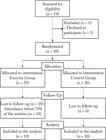
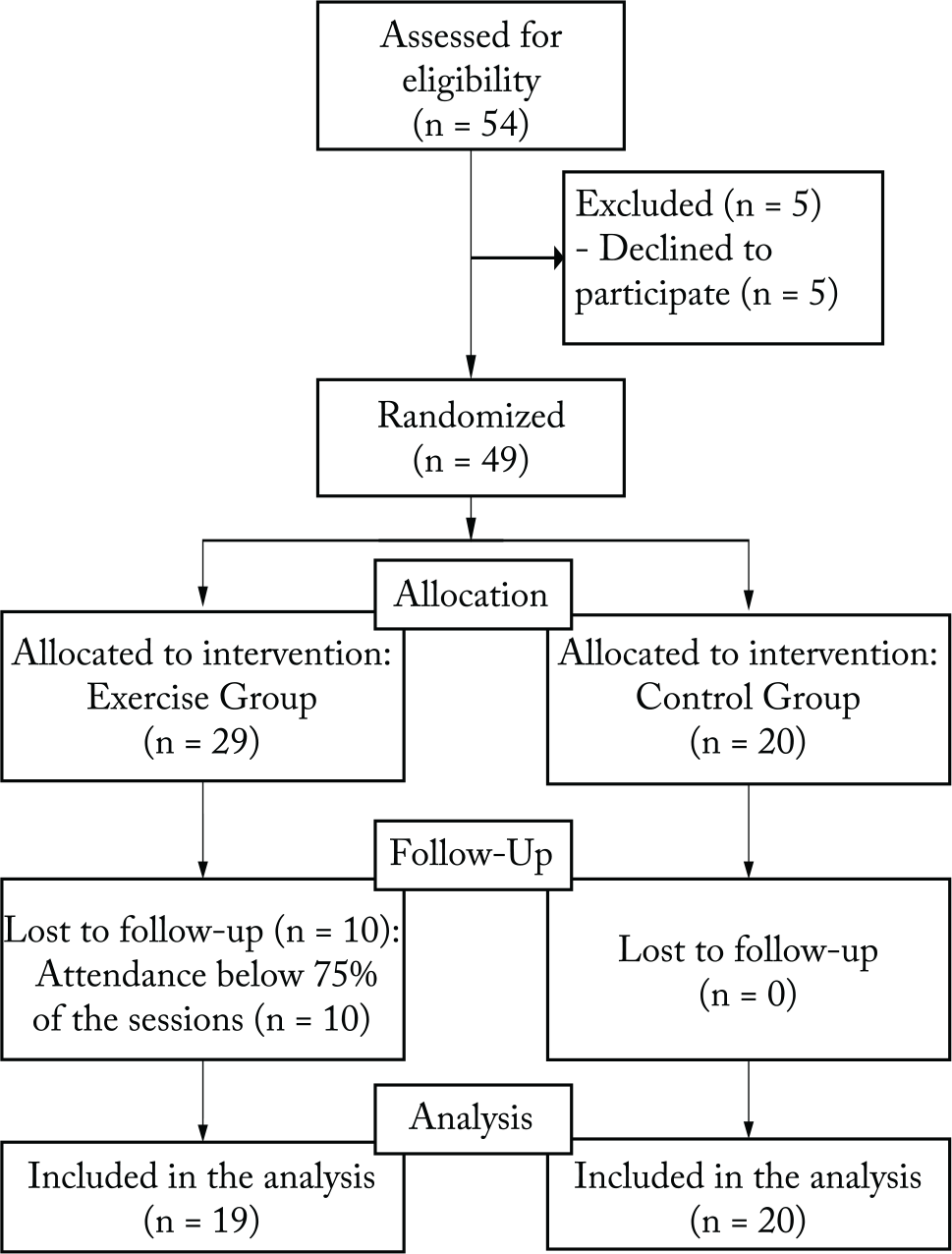
Methods: Forty-nine children, aged 8 to 10 years, were randomly assigned to an exercise group (EG; n = 29) and a control group (CG; n = 20). The EG participated in a 16-week program, with three weekly sessions of 50 minutes each, consisting of both aerobic and strength exercises. Motor skills were measured by the Test of Gross Motor Development-2. Physical activity was assessed by accelerometry before the intervention, after 8 weeks, and after 16 weeks. Data analysis was conducted using Generalized Estimating Equations and Bonferroni post-hoc tests (α = 0.05).
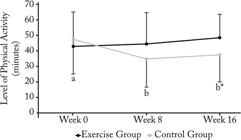
Results: 39 children completed the intervention. The results showed that the EG had higher scores related to motor skills compared to the CG after the intervention. Additionally, significant improvements in motor skills were observed in the EG from week 0 to week 8 and from week 8 to week 16, with no changes over time in the CG. The CG reduced physical activity levels from week 0 to week 8, and the EG remained stable.
Conclusion: Children with ASD benefited from the physical exercise program, showing improvements in motor skills and maintenance of physical activity levels. Exercise programs should be used to promote inclusion in physical exercise promotion, mitigating disparities in access to physical activity and its associated benefits.
Keywords:
Autism Spectrum Disorder; Test of Gross Motor Development-2; Accelerometry; Cir-cuit-based exercise; Equity; Inclusion.
 Thumbnail
 Thumbnail
 Thumbnail
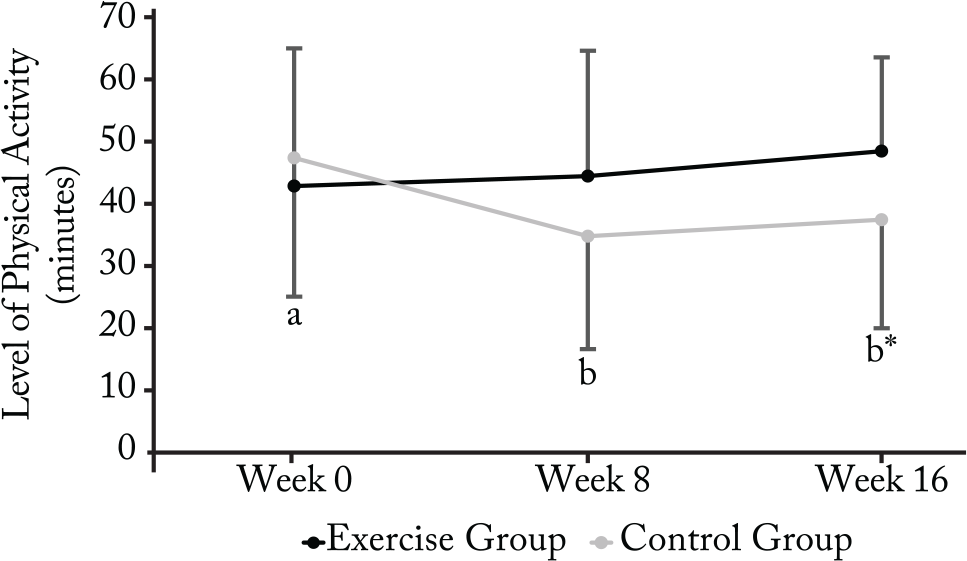 *indicates significant difference between groups. Different letters indi-cate a significant difference between moments for the control group.
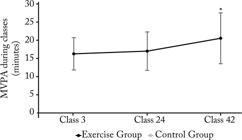
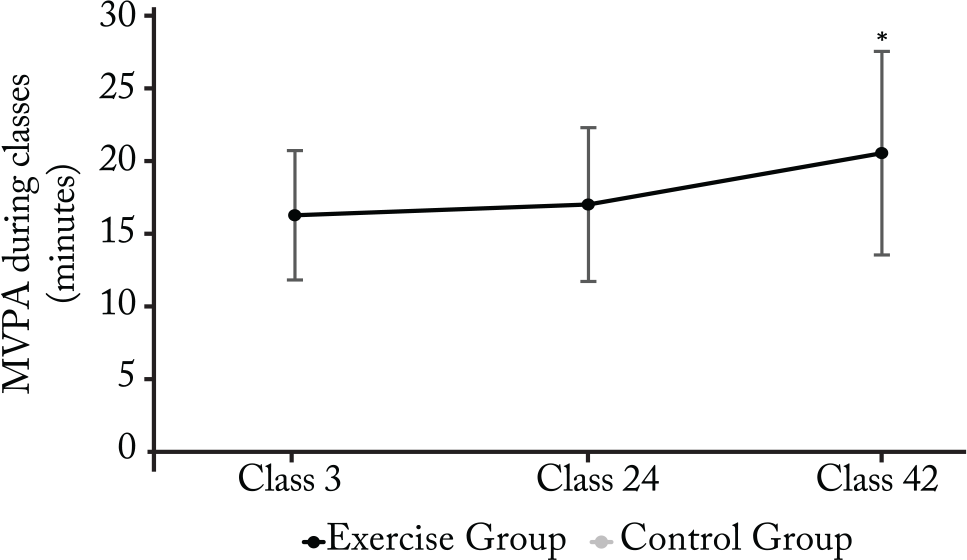 * indicates a significant difference between classes 3 and 42.