
 Physical Education and cognitive functions in adolescents: a randomized community trial
ABSTRACT
Objective: To analyze the effects of an intervention with Physical Education classes on cognitive functions in adolescents.
Methods: School-based randomized community trial, in which three groups of full-time schools were exposed to interventions: (A) schools with two extra Physical Ed-ucation classes per week; (B) schools with workshop with the Physical Education teachers; (C) schools with a combination of strategies A and B; and (D) control group. A total of 1,027 high school students from Pernambuco were evaluated. Attention was measured by the d2 Test, and ex-ecutive functions by the Wisconsin Card Sorting Test. Differences in change between groups were analyzed using mixed-effects linear multilevel regression for repeated measures.
Results: An increase in the averages of attention and a reduction in the averages of low cognitive flexibility were observed in all evaluated groups; however, the adjusted analyses showed no significant effects of any of the strategies on the adolescents’ attention. After stratification by biological sex, effects were observed in the executive functions of the girls who participated in intervention C (β = -1.70, CI95% -3.10: -0.29).
Conclusion: The combination of actions in Physical Education classes is effective in improv-ing executive functions in girls.
Keywords:
Physical Education; Attention; Executive function; Adolescent.
RESUMO
Objetivo: Analisar os efeitos de uma intervenção nas aulas de Educação Física sobre funções cogniti-vas em adolescentes.
Métodos: Ensaio comunitário randomizado de base escolar, no qual três grupos de escolas de tempo integral foram expostos a situações de intervenção: (A) escolas com duas aulas extras de Educação Física por semana; (B) escolas com ações de treinamento e engajamento dos professores dessa disciplina; (C) escolas com a união das estratégias A e B; e (D) um grupo de escolas controle. Foram avaliados 1.027 estudantes do Ensino Médio de Pernambuco. A atenção foi medida pelo Teste d2 e as funções executivas pelo Teste Wisconsin de Classificação de Cartas. As diferenças de mudança entre os grupos foram analisadas usando regressão multinível linear de efeitos mistos para medidas repetidas.
Resultados: Houve aumento nas médias de atenção e redução nas médias da baixa flexibilidade cognitiva em todos os grupos avaliados, no entanto, análises ajustadas mostraram que não houve efeitos significativos de nenhuma das estratégias sobre a atenção dos adolescentes. Após estratificação por sexo, foram observados efeitos nas funções executivas das moças que parti-ciparam da intervenção C (β = -1,70, IC 95% -3,10: -0,29).
Conclusão: A combinação de ações em aulas de Educação Física é efetiva na melhoria das funções executivas em meninas.
Palavras-chave:
Educação Física; Atenção; Função executiva; Adolescente.
Introduction
Adolescence is a phase in which significant alterations occur in the functional and structural development of the brain; during this time, the maximum density of gray matter is reached, and high plasticity allows envi-ronmental influences to affect cortical circuits, making intellectual and emotional development possible1. Also during this phase, changes occur in social interactions, increased experimentation, and cognitive develop-ment that will contribute to the acquisition of skills necessary for survival and independence in adulthood2. Therefore, it is important that adolescents have access to resources that contribute to their development, and physical activity could represent a way to achieve this3.
One way to promote physical activity among ado-lescents is through Physical Education (PE) classes at school. These classes have been proven to be effective in increasing levels of physical activity4, the development of physical fitness5, reducing the body mass index6, re-ducing the risk of cardiovascular disease7, and improv-ing motor skills8, in addition to having positive effects on students’ cognition9,10.
Recently, García-Hermoso et al.11 investigated the effects of interventions aimed at optimizing the quan-tity and quality of PE classes on the cognition and ac-ademic performance of children and adolescents. The results demonstrated that quality-based interventions (increasing participation in physical activities during classes) improved students’ cognition and academic performance. Regarding interventions based on quan-tity or a combination of both (quality and quantity), the authors state that the findings should be interpreted with caution, as the number of studies is small; howev-er, their results are generally positive.
Despite the beneficial effects that PE classes can provide to students, schools have faced difficulties in allocating time for them. In Brazil, although the mandatory annual teaching hours for students have increased from 800 to 1,000, PE classes have been re-duced in some Brazilian states12. This reduction is not only misguided, but it can also be detrimental to the adolescent’s development and the promotion of phys-ical activity and health, especially since these classes may be the only opportunity for physical activity in this life stage.
International studies10,11 indicate that PE classes can have positive effects on students’ cognition; however, it is necessary to understand which interventions can be developed in the context of Brazilian public schools, since cultural, socioeconomic, curricular, and structur-al differences can generate distinct results. This makes it essential to evaluate how PE classes impact students’ cognition in the real conditions of the country. The re-sults obtained from this study will generate national scientific data that can be used to justify investments, structure curricula that value PE, and train teachers based on evidence.
Therefore, the objective of the current study was to analyze the effectiveness of a school-based interven-tion, focusing on actions related to PE classes, in im-proving cognitive functions in adolescent high school students.
Methods
This study is a school-based randomized community trial with a factorial design, and is part of the project called Intervention for Reducing Sedentary Behavior and Improving Cognitive Function through PE classes (Intervenção para Redução do Comportamento Sedentário e Melhoria da Função Cognitiva a partir das aulas de Ed-ucação Física - SACODE) in which three groups of schools performed interventions, and one group was followed up in the control condition.
The SACODE Project was approved by the Research Ethics Committee for Human Beings (Opinion No. 1,577,906 of 07/06/2016) and is registered on the Bra-zilian Clinical Trials Registry Platform (RBR-88tgky).
The target population consisted of adolescent high school students regularly enrolled in public schools designated as Reference High Schools that operate on a full-time schedule (9 classes of 50 minutes each daily). For logistical and operational reasons defined together with the Department of Education, the ac-tivities planned in the SACODE Project intervention plan were developed only in schools that are part of the Vale do Capibaribe Regional Education Management, which is composed of 16 municipalities, 11 of which have a Reference High School considered eligible to participate in the study.
For the purposes of the draw, the 11 Reference High Schools were classified into groups considering: a) physical spaces for PE classes (covered or uncov-ered); b) number of PE teachers; c) number of classes; and d) mean number of students per class. In the end, three groups of schools with homogeneous characteris-tics were obtained, two with four schools and one with three. Subsequently, the schools in each group were randomly selected for the control condition and the planned experimental conditions. Since there were only three schools in the third group, one of the experimen-tal conditions could not be included. After the schools in the first group were randomly selected for each con-dition, the schools in group 2 were randomly selected, and finally, those in group 3 were randomly selected.
Initially, a total of 1,474 first-year high school stu-dents were invited to participate in the study, but only those authorized by their parents or legal guardians were included, resulting in 1,290 adolescents with a mean age of 14.9 years (±1.0 year). The decision was made to only include first-year students due to the intention to conduct a follow-up evaluation one year after the end of the intervention.
After randomization and initial assessment at the beginning of the school year, one school in interven-tion C dropped out of the study, resulting in the loss of 90 adolescents. At the end of the intervention, after ac-counting for losses and refusals, 1,027 adolescents were analyzed, representing approximately 85% of those who participated in the baseline assessment (Figure 1).

The sample size was determined a priori using the G*Power test, considering the F-test family with anal-ysis of variance for repeated measures. The study design was defined considering the preand post-interven-tion assessments and the four study conditions (one control condition and three intervention groups). The statistical power was set at 90%, with an alpha error of 0.05, estimating effect sizes of 0.20 or higher as signif-icant, and assuming that the variables under analysis have an approximate tracking coefficient of 0.25. Based on these parameters, a minimum sample size of 100 cases per group was estimated. Considering that clus-ter sampling would be used, this initial sample size was doubled (deff = 2).
Intervention
The intervention took place from April to October 2017, with a three-week break in July, corresponding to the school recess. The actions consisted of: A - In-creasing the number of PE classes; B - Conducting workshop with the PE teachers; C - A combination of A + B.
In intervention A, schools increased the number of weekly PE classes from two to four, each lasting 50 minutes. The extra classes were included at any time of the school day, distributed according to the reality of each school, and taught by the PE teacher, who also had autonomy in organizing the content.
Intervention B consisted of offering workshop with the PE teachers. A 120-hour professional devel-opment course was conducted, with 30 hours divided into 6 in-person sessions. Each meeting was structured in two parts; the first part dealt with topics related to health and the outcomes evaluated in the project, such as: physical activity, sedentary behavior, physical fitness, adolescent brain function, mental health, re-lationships and social isolation, and sleep quality. The second part covered didactic-pedagogical content: PE in High School, development of objectives, content se-lection, methodological strategies, evaluation, and mo-tivation of teachers and students. At each meeting, the teachers received supporting material with texts related to the topics, which were defined by the researchers responsible for the project and presented by members of a research group, master’s or doctoral students, with experience in the subject matter.
The remaining hours were dedicated to carrying out community action projects developed by the PE teach-ers in conjunction with the first-grade students from their schools. The results of these projects were shared at the group’s final meeting.
In intervention C, the schools received a combina-tion of strategies A and B.
Measures
The pre-intervention assessment was conducted in March 2017, and the post-intervention assessment in November 2017, at the school itself. All measurements were collected by a trained team comprising master’s or doctoral students.
The cognitive elements assessed were attention and executive functions. To assess attention, the d2 Test was used13. This instrument assesses focused visual at-tention and the ability to concentrate under time-in-duced stress, and was validated for use with Brazilian adolescents according to the Psychological Tests As-sessment System (Sistema de Avaliação dos Testes Psi-cológicos - SATEPSI). The total test time is 8 minutes, including instructions. The test was administered col-lectively in the classroom, following the instructions in the manual. The analysis used the mean net scores of the test, which is a numerical variable with a positive outcome; that is, the greater the number of correctly marked “d”s, the better the performance on the test.
Executive functions were assessed using the com-puterized version of the Wisconsin Card Sorting Test (WCST), run on the Insquist 5 program, both obtained from the website https://www.millisecond.com. The WCST is an internationally recognized in-strument, considered the gold standard in the evalua-tion of these functions14, valid for Brazilian adolescents according to SATEPSI. The test was administered to five students at a time, and no instructions were giv-en regarding the rules for categorizing the cards, but a brief text appeared on the screen before the start of the test explaining how to select them. The analysis used the mean of perseverative errors, which indicates low cognitive flexibility, a function considered a central as-pect of executive functioning15.
In addition to these variables, others were used to verify differences between the groups. Physical activ-ity was assessed based on responses to the questions: “During a typical (normal) week, on how many days do you engage in physical activity that, when added together, totals at least 60 minutes per day?”“In the last seven days, on how many days did you do physical ac-tivities that, added together, totaled at least 60 minutes per day?” The answers were added together and divided by two to give the final score used in the analyses.
Cardiorespiratory fitness was measured using the Progressive Aerobic Cardiovascular Endurance Run (PACER) test. The result was given based on the final completed stage, and maximum oxygen consumption (VO2max) was predicted using the formula: VO2max = distance (in meters) x 0.0084 + 36.416.
The Pittsburgh Sleep Quality Index questionnaire was used to assess sleep quality17. This instrument assesses sleep quality and disturbance over a one-month period, and was validated and translated into Portuguese by Bertolazi18. It consists of 19 questions, grouped into seven components, with scores ranging from zero (no difficulty) to three (severe difficulty). The scores of these components are added together to arrive at a total score of 0 to 21, and indicate that the higher the number, the worse the sleep quality.
The presence of depressive symptoms was determined using the Center for Epidemiologic Studies Depression Scale19. The questionnaire consists of 20 items related to the frequency of symptoms experi-enced in the week prior to the instrument’s application. The final score ranges from 0 to 60, and the cut-off point for the presence of depressive symptoms is > 16 points. The presence or absence of these symptoms was used in the analyses.
Waist circumference was measured using an inex-tensible measuring tape from the level of the navel to within 0.5 centimeters. Two measurements were taken, and if the difference between them was greater than one centimeter, a third measurement was taken. The result was given as the median.
The following confounding factors were analyzed: age, baseline, and maternal education. Sex was consid-ered a moderating variable.
Data analysis
The data were analyzed using STATA 14 for Windows. Descriptive analysis included measures of central ten-dency (mean) and dispersion (standard deviation). The variation in the estimates of cognitive test scores was assessed using the delta. For variables on a nominal or ordinal scale, frequency distribution was used. Compar-isons between means were performed using the t-test or analysis of variance. Bivariate analysis between qualita-tive variables was performed using the Chi-square test. For comparisons of means between allocation groups at baseline, a one-way ANOVA test was used.
Differences in change between groups were analyzed using repeated measures linear multilevel mixed-ef-fects regression with three hierarchical levels. Analy-ses were adjusted for age, maternal education, presence of a sports court at school, and baseline, and stratified by sex. Level 1 corresponded to the students, includ-ing individual variables such as sex, age, and cognitive indicators. Level 2 represented the classes, and level 3 comprised the schools, encompassing variables related to the intervention and institutional characteristics.
The analyses did not follow the intention-to-treat principle, since the objective of the study was to evalu-ate the observed effects among participants with com-plete data. The quality of the model fit was assessed using the Akaike Information Criterion (AIC) and Bayesian Information Criterion (BIC), as well as the intraclass correlation coefficient (ICC), which indi-cates the fraction of variance attributed to differenc-es between schools and classes. The ICC values found were low (equal to or less than 0.10), suggesting little variation between schools and classes. The significance level was set at p < 0.05.
Analyses regarding the adolescents who participated in the intervention and those who dropped out can be found in Lima et al.20.
Results
Among the 1,027 adolescents included in this study, 585 (57%) were female, with a mean age of 15.5 ± 1.0 years. There were no significant differences between those who remained in the intervention and those who dropped out20. Figure 1 presents the reasons for the losses.
When stratified by groups, similar characteristics were observed at baseline regarding the variables: sex, maternal education, sleep quality, physical activity, and waist circumference. However, there was a statistically significant difference in the variables depressive symp-toms (p < 0.001) and cardiorespiratory fitness (p < 0.001) (Table 1).
Demographic characteristics and health variables of students included in the project at baseline, stratified by allocation group, Pernambuco, Brazil, 2017.
Results from the d2 Test for attention assessment indicated an increase in the mean net score in all groups, with the largest increase among students in in-tervention B. The observed increases were 25.3% in the control group and 22.2%, 29.7%, and 24.2% in inter-ventions A, B, and C, respectively. When stratified by sex, an increase in mean net score was observed among students in all groups (Figure 2). However, analyses ad-justed for maternal education, age, presence of a sports court at school, and baseline showed that there were no significant effects of any of the strategies on adolescent attention (Table 2).
Comparisons of mean cognitive test scores among groups of adolescent participants in the project, stratified by sex., Pernambuco, Brazil, 2017.

Estimates of the marginal means of net outcomes in adolescents by project group: a) male; b) female, Pernambuco, Brazil, 2017.
Regarding executive functions, the WCST results demonstrated a reduction in the mean perseverative errors in all groups, but this reduction was greater among students who participated in intervention A. The reductions were 10.2% in the control group and 19.1%, 16.1%, and 15.8% in interventions A, B, and C, respectively.
When the sample was stratified by sex, a reduction in the mean perseverative errors was observed among male students in all groups. Similarly, a reduction in these mean errors was also observed among female students in interventions A, B, and C; however, there was a slight increase among the adolescent girls in the control group (Figure 3).
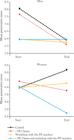
Estimates of marginal means of perseverative errors in adolescents by project group: a) male; b) female, Pernambuco, Brazil, 2017.
Analyses adjusted for maternal education, age, pres-ence of a sports court at school, and baseline showed that there were no significant differences in executive function and attention scores in any of the intervention groups compared to the control group among male students. Among female students, no significant dif-ference was observed in intervention groups A and B; however, in those who participated in intervention C, a reduction of approximately 1.7 in the mean number of perseverative errors was identified when compared to the control group (Table 2).
Discussion
To the best of our knowledge, this is the first study conducted in Brazil that sought to analyze the effect of an intervention focused on modifications to PE classes on the improvement of cognitive functions in high school students from full-time schools. The results demonstrate that none of the strategies had significant effects on the participants’ attention, but effects were observed on the executive functions of the adolescent girls who participated in intervention C.
Similar to the current study, other research has also found no effect of interventions carried out in PE class-es on attention. For example, Gall et al.21 reported no effects of a twenty-week intervention program on the attention of participants (8-13 years of age). The inter-vention group was exposed to the following activities: two PE classes per week, one weekly dance class, and active breaks in the classroom incorporated into the school curriculum. In the study conducted by Ericsson22 it was observed that an intervention (five PE classes and one motor training class) carried out over three years did not show any effects on attention in children.
It is probable that some aspects, such as intensity, duration, and type of physical activity performed, need to be considered when planning an intervention that aims to improve students’ attention, since studies that considered these variables demonstrated the effects of just one acute session of physical activity on the attention of children and adolescents. Furthermore, these effects may be perceived immediately after the activity was completed or could last for several minutes after the session ended23,24.
Regarding executive functions, among male stu-dents, there was no significant difference in results in any of the intervention groups compared to the con-trol group. However, among the adolescent girls who participated in intervention C, a reduction of approxi-mately 1.7 in the mean number of perseverative errors was identified when compared to the control group.
The reason why female students obtained better results than male students is unclear and should be investigated in future studies. This may have occurred because females begin puberty earlier than males, and exposure to sex hormones influences brain develop-ment25. A study conducted by Mertens et al.26 showed that, during working memory, higher testosterone lev-els are associated with greater deactivation in the an-terior cingulate cortex in younger women (<19 years) and with increased activation in the precentral gyrus in men, regardless of age. This indicates that the hormon-al impact on brain activity may vary by sex and age.
In the current study, only the intervention that combined two strategies (weekly offer of two extra PE classes + workshop with the PE teachers) was effective in improving executive functions in adolescents when compared to the control group. This suggests that sim-ply doubling the number of PE classes per week is not enough to produce effects on executive functions. These results are in line with those presented by Ardoy et al.10, who demonstrated that increasing the number of PE classes per week did not affect the cognitive performance of adolescents; however, when increasing the volume of classes was associated with increasing the intensity of the physical activities performed in the classes, the effect on cognitive performance was significant.
The current study did not verify the intensity of physical activities practiced during classes; however, workshop with the PE teachers may have contributed to changes in how they taught the classes, since the re-sults of the process evaluation showed that 98.5% of the participants in intervention C stated that the PE class-es were more active (40% - slightly more active; 43.1% - more active; and 15.4% - much more active) during the semester in which the intervention was being de-veloped in their school.
There are difficulties in comparing these results with those presented in other research, given the lack of studies that evaluated the effect of combining in-creased PE classes and workshop with the PE teachers on executive functions in adolescents. However, the lit-erature indicates that offering extra classes in this sub-ject has positive effects on the academic performance of children and adolescents27 and other intervention strategies conducted in these classes have been effec-tive in improving executive functions in children 28,29. Furthermore, an intervention involving some type of teacher training combined with other strategies (incor-porating physical activity in short breaks, in schoolwork across various subjects, and in homework) was also ef-fective in improving executive functions in children30.
Although the provision of extra PE classes or workshop with the PE teachers was not sufficient to produce effects on adolescent attention in the current study, the intervention with the combination of actions produced effects on the executive functions of female students, demonstrating promising results and indicat-ing that efforts should be made to implement public policies that guarantee at least three weekly PE classes that prioritize movement and are included in the cur-ricular proposals of states, municipalities, and schools. It is also necessary to create continuing education pro-grams for teachers of this subject through partnerships with Higher Education Institutions, in order to pro-vide them with an expanded pedagogical repertoire.
Some limitations should be considered in interpreting the results. It should be noted that no evaluations were conducted on the activities performed in the PE classes. Although the process evaluation results indi-cated that most classes were practical, no information was collected regarding the type, intensity, and dura-tion of the physical activities performed. Furthermore, although female students showed positive effects on executive functions after just six months of interven-tion, it is possible that a longer-term investigation could also be effective in improving these functions among male students, and could demonstrate the effect of the strategies evaluated in isolation.
Despite these limitations, there are strengths in this study that need to be highlighted. The regional scope is noteworthy, as it was conducted in all full-time schools within a Regional Education Management area. The study was carried out in ten schools located in ten mu-nicipalities, representing distinct sociocultural and de-velopmental characteristics. This is a randomized study conducted in a real-world context, without researcher interference, where teachers had the freedom to develop their lessons according to the school’s reality and the characteristics of their students. This represents an emphasis on external validity and the replication of the intervention in other schools.
Finally, it is worth highlighting that the project constitutes an innovative, simple, low-cost interven-tion that is feasible to be replicated in other schools, provided it has the support of the agents involved, such as the education department and the managers of the educational institutions, and the willingness of teach-ers and students to participate.
-
Funding
National Council for Scientific and Technological Development (Conselho Nacional de Desenvolvimento Científico e Tecnológico - CNPq) (N: 428203/2016-7 and 310586/2016-0); Coordination for the Improvement of Higher Education Personnel (Coorde-nação de Aperfeiçoamento de Pessoal de Nível Superior - CAPES) (N: 88881.159230/2017-01); Foundation for the Support of Sci-ence and Technology of the State of Pernambuco (Fundação de Amparo à Ciência e Tecnologia do Estado de Pernambuco - FACEPE - FACEPE) (BCT 0233-4.09/17 and BFP0029-4.09/16)
Statement regarding the use of artificial intelligence tools in the article writing process
The authors did not use artificial intelligence tools to prepare the manuscript.
Acknowledgements
The authors thank the National Council for Scientific and Technological Development (Conselho Nacional de Desenvolvimento Científico e Tecnológico - CNPq), the Coordination for the Im-provement of Higher Education Personnel (Coordenação de Aper-feiçoamento de Pessoal de Nível Superior - CAPES), and the Foun-dation for Support of Science and Technology of the State of Pernambuco (Fundação de Amparo à Ciência e Tecnologia do Estado de Pernambuco - FACEPE) for granting financial aid or scholar-ships for the development of the project.
Availability of research data and other materials
After publication, the data will be available from the authors upon request.
References
-
1 Konrad K, Firk C, Uhlhaas P J. Brain development during adolescence. Dtsch Arztebl Int. 2013;110(25):425-31. doi: https://doi.org/10.3238%2Farztebl.2013.0425
» https://doi.org/10.3238%2Farztebl.2013.0425 -
2 Spear LP. The adolescent brain and age-related behavioral manifestations. Neurosci Biobehav Rev. 2000;24(4):417-63. doi: https://doi.org/10.1016/s0149-7634(00)00014-2
» https://doi.org/10.1016/s0149-7634(00)00014-2 -
3 Esteban-Cornejo I, Tejero-Gonzalez CM, Sallis JF, Veiga OL. Physical activity and cognition in adolescents: a systematic review. J Sci Med Sport. 2015;18(5):534-9. doi: https://doi.org/10.1016/j.jsams.2014.07.007
» https://doi.org/10.1016/j.jsams.2014.07.007 -
4 Ribeiro IC, Parra DC, Hoehner CM, Soares J, Torres A, Pratt M, et al. School-based physical education programs: evidence-based physical activity intervention for youth in Latin America. Glob Health Promot. 2010;17(2):5-15. doi: https://doi.org/10.1177%2F1757975910365231
» https://doi.org/10.1177%2F1757975910365231 -
5 Rexen CT, Ersbøll AK, Møller NC, Klakk H, Wedderkopp N, Andersen LB. Effects of extra school-based physical education on overall physical fitness development - the CHAMPS study DK. Scand J Med Sci Sports. 2015;25(5):706-15. doi: https://doi.org/10.1111/sms.12293
» https://doi.org/10.1111/sms.12293 -
6 Ługowska K, Krzęcio-Nieczyporuk E,Trafiałek J, Kolanowski W. The Impact of Increased Physical Activity at School on the Nutritional Behavior and BMI of 13-Year-Olds. Nutrients. 2024;16(24):4329. doi: https://doi.org/10.3390/nu16244329
» https://doi.org/10.3390/nu16244329 -
7 Klakk H, Andersen LB, Heidemann M, Møller NC, Wedderkopp N. Six physical education lessons a week can reduce cardiovascular risk in school children aged 6-13 years: A longitudinal study. Scand J Public Health. 2014;42(2):128-36. doi: https://doi.org/10.1177/140349481350572
» https://doi.org/10.1177/140349481350572 -
8 Lorås H. The Effects of Physical Education on Motor Competence in Children and Adolescents: A System-atic Review and Meta-Analysis. Sports. 2020;8(6):88. doi: https://doi.org/10.3390/sports8060088
» https://doi.org/10.3390/sports8060088 -
9 Cho O, Choi W, Shin Y. The effectiveness of school physical education on students’ cognitive competence: a systematic review and meta-analysis. J Sports Med Phys Fitness. 2022;62(4):575-84. doi: https://doi.org/10.23736/S0022-4707.21.11796-7
» https://doi.org/10.23736/S0022-4707.21.11796-7 -
10 Ardoy DN, Fernández-Rodríguez JM, Jiménez-Pavón D, Castillo R, Ruiz JR, Ortega FB. A Physical Education trial improves adolescents’ cognitive performance and academic achievement: the EDUFIT study. Scand J Med Sci Sports. 2014;24(1):e52-61. doi: https://doi.org/10.1111/sms.12093
» https://doi.org/10.1111/sms.12093 -
11 García-Hermoso A, Ramírez-Vélez R, Lubans DR, Izquierdo M. Effects of physical education interventions on cognition and academic performance outcomes in children and adolescents: a systematic review and meta-analysis. Br J Sports Med. 2021;55(21):1224-32. doi: https://doi.org/10.1136/bjsports-2021-104112
» https://doi.org/10.1136/bjsports-2021-104112 -
12 Beltrão JÁ, Teixeira DR, Taffarel CNZ. A supressão da Educação Física nas matrizes curriculares do novo Ensino Médio. Rev. Ponto Vista. 2024;13(2):1-20. doi: https://doi.org/10.47328/rpv.v13i2.17037
» https://doi.org/10.47328/rpv.v13i2.17037 - 13 Brickenkamp R. Teste d2: atenção concentrada: manual: instruções, avaliação, interpretação. São Paulo: Centro Editor de Testes e Pesquisas em Psicologia, 2000.
-
14 Rzezak P, Fuentes D, Guimarães CA, Thome-Souza S, Kuczynski E, Guerreiro M, et al. Executive dysfunction in children and adolescents with temporal lobe epilepsy: Is the Wisconsin Card Sorting Test enough?. Epilepsy Behav. 2009;15(3):376-81. doi: https://doi.org/10.1016/j.yebeh.2009.04.014
» https://doi.org/10.1016/j.yebeh.2009.04.014 -
15 Lange F, Seer C, Müller-Vahl K, Kopp B. Cognitive flexibility and its electrophysiological correlates in Gilles de la Tourette syndrome. Dev Cogn Neurosci. 2017;27:78-90. doi: https://doi.org/10.1016/j.dcn.2017.08.008
» https://doi.org/10.1016/j.dcn.2017.08.008 -
16 Wood R. “Scoring the Yo-Yo Test”. The Complete Guide to the Yo-Yo Test. 2018. Available from: <https://www.theyoyotest.com/scoring.htm> [2019 June].
» https://www.theyoyotest.com/scoring.htm -
17 Buysse D J, Reynolds 3rd CF, Monk TH, Berman SR, Kupfer DJ. The Pittsburgh Sleep Quality Index: a new instrument for psychiatric practice and research. Psychiatry Res. 1989;28(2):193-213. doi: https://doi.org/10.1016/0165-1781(89)90047-4
» https://doi.org/10.1016/0165-1781(89)90047-4 - 18 Bertolazi AN. Tradução, adaptação cultural e validação de dois instrumentos de avaliação do sono: escala de sonolência de Epworth e Índice de qualidade de sono de Pittsburgh [dissertação de mestrado]. Porto Alegre: Faculdade de Medicina da Universidade Federal do Rio Grande do Sul (UFRGS); 2008.
-
19 Radloff L, Locke B. The CES-D scale: a self-report depression scale for research in the general population. Appl Psychol Meas. 1977;1:385-401. doi: https://doi.org/10.1177/014662167700100306
» https://doi.org/10.1177/014662167700100306 -
20 Lima RA, Barros MVG, Bezerra J, Santos SJ, Monducci E, Rodriguez-Ayllon M, Soares FC. Universal school-based intervention targeting depressive symptoms in adolescents: A cluster randomized trial. Scand J Med Sci Sports. 2022;32(3):622-31. doi: https://doi.org/10.1111/sms.14115
» https://doi.org/10.1111/sms.14115 -
21 Gall S, Adams L, Joubert N, Ludyfa S, Müller I, Nqweniso S, et al. Effect of a 20-week physical activity intervention on selective attention and academic performance in children living in disadvantaged neighbor-hoods: a cluster randomized control trial. PLos One. 2018; 13(11):e0206908. doi: https://doi.org/10.1371/journal.pone.0206908
» https://doi.org/10.1371/journal.pone.0206908 -
22 Ericsson I. Motor skills, attention and academic achievement. An intervention study in school years 1-3. Br Educ Res J. 2008;34(3):301-13. doi: https://doi.org/10.1080/01411920701609299
» https://doi.org/10.1080/01411920701609299 -
23 Altenburg TM; Chinapaw M JM; Singh A S. Effects of one versus two bouts of moderate intensity physical activity on selective attention during a school morning in Dutch primary school children: A randomized con-trolled trial. J Sci Med Sport. 2016;19(10):820-4. doi: https://doi.org/10.1016/j.jsams.2015.12.003
» https://doi.org/10.1016/j.jsams.2015.12.003 -
24 Kulinna PH, Stylianou M, Dyson B, Banville D, Dryden C, Colby R. The effect of an authentic acute physical education session of dance on elementary students’ selective attention. Biomed Res Int. 2018;2018:8790283. doi: https://doi.org/10.1155/2018/8790283
» https://doi.org/10.1155/2018/8790283 -
25 Neufang S, Specht K, Hausmann M, Güntürkün O, Herpertz-Dahlmann B, Fink GR, Konrad K.Sex differ-ences and the impact of steroid hormones on the developing human brain. Cereb. Cortex 2009. 19(2):464-73. doi: https://doi.org/10.1093/cercor/bhn100
» https://doi.org/10.1093/cercor/bhn100 -
26 Mertens AT, Myers K, Sherman D, Ladouceur CD, Doucet GE. Sex and age differences on how testosterone relates to brain activity during working memory among adolescents and young adults. Cereb Cortex. 2025;35(8):bhaf218. doi: https://doi.org/10.1093/cercor/bhaf218
» https://doi.org/10.1093/cercor/bhaf218 -
27 Cöster ME, Fritz J, Karlsson C, Rosengren BE, Karlsson MK. Extended physical education in children aged 6-15 years was associated with improved academic achievement in boys. Acta Paediatr. 2018;107(6):1083-7. doi: https://doi.org/10.1111/apa.14278
» https://doi.org/10.1111/apa.14278 -
28 Pesce C, Masci I, Marchetti R, Vazou S, Sääkslahti A, Tomporowski PD. Deliberate play and preparation jointly benefit motor and cognitive development: mediated and moderated effects. Front Psychol. 2016;7:349. doi: https://doi.org/10.3389%2Ffpsyg.2016.00349
» https://doi.org/10.3389%2Ffpsyg.2016.00349 -
29 Schmidt M, Jäger K, Egger F, Roebers CM, Conzelmann A. Cognitively engaging chronic physical activity, but not aerobic exercise, affects executive functions in primary school children: a group-randomized controlled trial. J Sport Exerc Psychol. 2015;(6):575-91. doi: https://doi.org/10.1123/jsep.2015-0069
» https://doi.org/10.1123/jsep.2015-0069 -
30 Aadland KN, Ommundsen Y, Anderssen SA, Brønnick KS, Moe VF, Resaland GK, et al. Effects of the Active Smarter Kids (ASK) physical activity school-based intervention on executive functions: a cluster-randomized controlled trial. Scand J Educ Res. 2019;63(2):214-28. doi: https://doi.org/10.1080/00313831.2017.1336477
» https://doi.org/10.1080/00313831.2017.1336477
Edited by
-
Editor in Chief
Raphael Ritti-Dias Nove de Julho University. São Paulo, São Paulo, Brazil.
-
Section editor
Valter Cordeiro Barbosa Filho State University of Ceará, Fortaleza, Ceará, Brazil.
Reviewers’ assessment
The reviews of this article were originally conducted in Portuguese. This version has been translated using ChatGPT and subsequently reviewed by the Chief Editors.About the reviewerReviewer A
-
Was any indication of plagiarism observed in the manuscript?
No
-
Did the authors provide clarification regarding the ethical procedures adopted for conducting the re-search?
Yes
Comments to the Author
Dear Editor(s) and Author(s),
-
I appreciate the opportunity to review this relevant study that investigated the effects of different Phys-ical Education (PE) strategies on executive function in adolescents from full-time schools. I would like to highlight the relevance of the topic, the method-ological rigor adopted, and the robust sample size (n = 1,027), which lend solidity to the findings.
-
Below, I present suggestions for improvement for each section of the manuscript:
Introduction
-
The most recent reference in the introduction dates from 2021. With this exception, all other references are at least 10 years old. Has nothing else been pub-lished since then? Or has no new knowledge been produced on this topic? Updating the references could even change the entire logic of the introduction.
-
On page 4, lines 1-8, the authors mention statistics related to PE classes, the New Upper Secondary Education Reform, and the exclusive role of schools in physical activity practice, but these statements lack references. Moreover, as data collection preced-ed the reform, I suggest removing or reformulating references to the New Upper Secondary Education, keeping the focus on the context in force during the data collection period.
-
Stating that the study is justified solely because there are no studies on this topic among adolescents in Brazil does not seem sufficient. What is so differ-ent in Brazil compared to the rest of the world that justifies this study? The authors need to explicitly present which gaps they intend to fill.
Methods
-
Statistical details:
-
Describe which model fit statistics were calculated (AIC, BIC, ICC, log-likelihood).
-
Specify the composition of each level of analysis (level 1: student - sex, age, cognitive indicators; lev-el 2: school - intervention, institutional character-istics).
-
Indicate whether an intention-to-treat analysis was conducted, even if reported in supplementary ma-terial.
-
More robust models: I recommend considering Generalized Linear Mixed Models (GLMM) in-stead of ANOVA when the outcome is not strict-ly continuous or when there are hierarchical data structures, as GLMM offers greater flexibility and better correction of standard errors.
Results
-
Please report the AIC/BIC of the models and the percentage of variance explained at each level (school and individual). In addition, it is necessary to clearly state how missing data were handled.
Discussion
-
Terms and language: Replace the term “girls” with “adolescents” or “female students,” reinforcing the distinction between biological sex and gender.
-
Physiological mechanisms: Provide more detail on the processes that may explain the findings, ad-dressing aspects such as:
-
Hormonal fluctuations and brain maturation during adolescence.
-
Modulation of neurotrophic factors (BDNF, IGF-1) and cortical perfusion.
-
Practical implications: Explore how the results can inform public policies and school guidelines, sug-gesting specific recommendations for the imple-mentation of additional classes and teacher training.
Final recommendation (decision)
-
Major revisions required.
- peer review recommendation: major-revision
Reviewer B
About the reviewerSCIMAGO INSTITUTIONS RANKINGSReviewer B
-
Was any indication of plagiarism observed in the manuscript?
Not applicable
-
Did the authors provide clarification regarding the ethical procedures adopted for conducting the re-search?
Yes
Comments to the author
-
The manuscript presents a proposal of great scien-tific and social relevance, addressing a current and necessary topic. The study demonstrates rigorous planning and careful execution, especially consider-ing the logistical complexity of school-based inter-ventions with multiple groups and follow-up stages. The methodological description is detailed, allow-ing good reproducibility. The experimental design adopted is robust and appropriate to the proposed objectives. The results are presented clearly, with ap-propriate use of statistical analyses and interpreta-tions consistent with the findings. The discussion is well grounded, up to date, and engages appropriately with the national and international literature, high-lighting the practical and scientific implications of the results. This is a work of high scientific merit, with excellent quality of writing and structure. The article reflects the effort of a team committed to re-search with practical applicability, which reinforces its relevance and originality.
Abstract
-
Line 8: According to the author guidelines avail-able on the RBAFS website: “In the case of original studies, the abstract should include the following sections: introduction, objective, methods, results, and conclusion.”
-
Line 21: Sex is the more appropriate term; gender reflects social, cultural, and psychological character-istics, which were not considered here.
-
Line 22: The conclusion should address the objec-tive; it was not a general objective to investigate dif-ferences between sexes.
-
Line 25: It would be important for the keywords not to include terms already present in the article title.
Abstract
-
Revise after finalizing the abstract in Portuguese.
Methods
-
Page 8, line 5: What is the unit of measurement of this numerical variable? Is it a score?
-
Page 8, line 16: Is this a validated assessment? If not, what was the rationale for choosing it?
Results
-
Page 10, line 20: Use sex.
Discussion
-
Page 12, line 6: https://link.springer.com/arti-cle/10.1186/1471-2458-13-307
-
the PAAC study showed positive results; it would be important to mention this.
-
Page 13, line 18: https://doi.org/10.1037/bul0000200
-
In this study by Tomporowski & Pesce, the bene-fits of exercise on cognition can also be explained by motor and cognitive complexity, motivation, and affect; see Figure 2 of the article.
Final Decision
-
Accept
- peer review recommendation: accept
Avaliação dos pareceristas
About the reviewerAvaliador A
-
Foi observado algum indício de Plágio no manus-crito?
Não
-
Os autores forneceram esclarecimentos sobre os procedimentos éticos adotados para a realização da pesquisa?
Sim
Comentários ao autor
Prezado(s) Editor(a) e Autor(es),
-
Agradeço a oportunidade de revisar este relevante trabalho que investigou os efeitos de diferentes es-tratégias de Educação Física (EF) sobre a função executiva em adolescentes de escolas de tempo in-tegral. Destaco a pertinência do tema, o rigor me-todológico adotado e o robusto tamanho amostral (n = 1.027), que conferem solidez aos achados.
-
A seguir, apresento sugestões de aprimoramento para cada seção do manuscrito:
Introdução
-
A referência mais atual da introdução é de 2021. Com essa exceção, todas as outras tem pelo menos 10 anos de publicação, será que mais nada tem sido publicado? Ou que não há nenhum novo conhe-cimento sendo produzido acerca dessa temática? Atualizar as referências poderá, inclusive, mudar toda a lógica da sua introdução.
-
Na página 4, linhas 1-8, os autores mencionam es-tatísticas de aulas de EF, a reforma do Novo Ensino Médio e o papel exclusivo da escola na prática de atividade física, mas carecem de referências. Além disso, como a coleta de dados precedeu a reforma, sugiro remover ou reformular as referências ao Novo Ensino Médio, mantendo o foco no contexto vigente durante o período de coleta.
-
Dizer que o estudo se justifica unicamente porque no Brasil não há estudos sobre a temática em adolescen-tes não me parece ser suficiente. O que há no Brasil de tão diferente no restante do mundo que justifique o estudo. Os autores precisam apresentar explicita-mente quais lacunas eles pretendem preencher.
Métodos
-
Detalhamento estatístico: - Descrever quais estatísticas de ajuste do modelo foram cal-culadas (AIC, BIC, ICC, loglikelihood).
-
Explicitar a composição de cada ní-vel da análise (nível 1: aluno - sexo, ida-de, indicadores cognitivos; nível 2: esco-la - intervenção, características institucionais). - Informar se houve análise por intenção de tratar (in-tentiontotreat),mesmo que em material suplementar. - Modelos mais robustos: Recomendo considerar Modelos Mistos Generalizados (GLMM) em vez de ANOVA quando o desfecho não for estritamen-te contínuo ou quando houver hierarquias nos da-dos, pois o GLMM oferece maior flexibilidade e correção de errospadrão.
Resultados
-
Por favor, Informe AIC/BIC dos modelos e o per-centual de variância explicado em cada nível (esco-la e indivíduo). Além disso, é preciso deixar claro como os missing foram tratados.
Discussão
-
Termos e linguagem: Substituir o termo “moças” por “adolescentes” ou “estudantes do sexo femini-no”, reforçando a distinção entre sexo biológico e gênero.
-
Mecanismos fisiológicos: Detalhar os processos que podem justificar os achados, abordando aspectos como:
-
Flutuações hormonais e maturação cerebral na ado-lescência.
-
Modulação de fatores neurotróficos (BDNF, IGF1) e perfusão cortical.
-
Implicações práticas: Explorar como os resultados podem orientar políticas públicas e diretrizes escola-res, sugerindo recomendações específicas para a im-plementação de aulas extras e capacitação docente.
Parecer final (decisão)
-
Revisões substanciais necessárias
- peer review recommendation: major-revision
Avaliador B
About the reviewerSCIMAGO INSTITUTIONS RANKINGSAvaliador B
-
Foi observado algum indício de Plágio no manus-crito?
Não se aplica
-
Os autores forneceram esclarecimentos sobre os procedimentos éticos adotados para a realização da pesquisa?
Sim
Comentários ao autor
-
O manuscrito apresenta uma proposta de gran-de relevância científica e social, abordando uma temática atual e necessária. O estudo demonstra planejamento rigoroso e execução cuidadosa, espe-cialmente considerando a complexidade logística de intervenções escolares com múltiplos grupos e etapas de acompanhamento. A descrição metodoló-gica é detalhada, permitindo boa reprodutibilidade. O delineamento experimental adotado é robusto e adequado aos objetivos propostos. Os resultados foram apresentados de forma clara, com uso apro-priado das análises estatísticas e interpretação coe-rente com os achados. A discussão é bem funda-mentada, atualizada e dialoga adequadamente com a literatura nacional e internacional, destacando as implicações práticas e científicas dos resultados. É um trabalho de elevado mérito científico, com ex-celente qualidade de redação e estrutura. O artigo evidencia o esforço de uma equipe comprometida com a pesquisa que possui aplicabilidade prática, o que reforça sua relevância e originalidade.
Resumo
-
Linha 8: Orientações aos autores disponíveis no site da RBAFS: “”No caso dos estudos originais o resu-mo deverá incluir os tópicos introdução, objetivo, métodos, resultados e conclusão.
-
Linha 21: sexo é o melhor termo, gênero reflete ca-racterísticas sociais, culturais e psicológicas, o que não foi considerado aqui.
-
Linha 22: a conclusão deve responder o objetivo, não era objetivo geral investigar diferença entre os sexos.
-
Linha 25: seria importante que as palavras-chave não contemplassem termos do título do artigo.
Abstract
-
Ajustar após finalizar o resumo em português.
Métodos
-
Página 8, linha 5: qual a unidade de medida desta variável numérica? um escore?.
-
Página 8, linha 16: Esta é uma avaliação validada? Se não, qual a razão de ter sido escolhida?
Resultado
-
Página 10, linha 20: sexo.
Discussão
-
Pagina 12, linha 6: https://link.springer.com/arti-cle/10.1186/1471-2458-13-307, o PAAC apresen-tou resultados positivos, seria importante mencionar.
-
Página 13, linha 18: https://doi.org/10.1037/bul0000200. Este estudo de Tomporowski & Pes-ce, os benefícios do exercício na cognição também podem ser explicados pela complexidade motora e cognitiva, amotivação e o afeto, vejam a figura 2. do artigo acima.
Parecer final (decisão)
-
Aceitar
- peer review recommendation: accept


