 Feasibility of an Intervention Program to Encourage Physical Activity and Healthy Eating for Endometrial Cancer Survivors
ABSTRACT
Introduction: Cancer survivors have a higher risk of developing chronic non-communicable diseases (NCDs) and could benefit from interventions focused on lifestyle changes, which are still scarce in developing countries.
Objective: To evaluate the feasibility of a program to encourage healthy eating and physical activity for endometrial cancer (EC) survivors.
Method: A randomized clinical trial was conducted within a prospective cohort and included women with EC aged 20-69 years old, surgically treated, and randomized into a control group (CG) and an intervention group (IG) after the procedure. Feasibility was assessed by recruitment, adherence, and retention rates. Effectiveness was tested through anthropometric, laboratory, dietary intake assessment, functional capacity tests, and physical activity levels. For statistical analysis, linear mixed models were adjusted to evaluate the effect of the intervention on the groups, considering the different repeated measures of the outcomes over time. P<0.05 was considered statistically significant.
Results: The IG showed a statistically significant reduction in serum insulin, ‘timed up and go’ test, and total daily energy intake. There was a statistically significant difference between groups for anthropometric variables, with positive variation observed between time 0 and time 3 in the CG and negative in the IG. Recruitment, adherence, and retention rates were 52.1%, 64.5%, and 90.3%, respectively.
Conclusion: The intervention proved feasible in this population, although adjustments to the intervention format are needed. However, despite modest results in anthropometric and dietary intake parameters, studies with larger sample sizes are required to properly assess its effectiveness.
Key words:
Obesity; Endometrial Neoplasms; Cancer Survivors; Life Style
RESUMO
Introdução: Sobreviventes de câncer apresentam maior risco de desenvolver doenças crônicas não transmissíveis (DCNT) e podem se beneficiar de intervenções focadas em mudanças no estilo de vida, escassas nos países em desenvolvimento.
Objetivo: Avaliar a viabilidade de um programa de aconselhamento para alimentação saudável e atividade física em sobreviventes de câncer de endométrio.
Método: Ensaio clínico randomizado aninhado à coorte prospectiva que incluiu mulheres com câncer de endométrio entre 20-69 anos, tratadas cirurgicamente e randomizadas em grupo controle (GC) e grupo intervenção (GI), após o procedimento. A viabilidade foi avaliada pelas taxas de recrutamento, adesão e retenção. A eficácia foi testada pela avaliação antropométrica, laboratorial, ingestão alimentar, testes de capacidade funcional e nível de atividade física. Para análise estatística, foram ajustados os modelos lineares mistos para avaliar o efeito da intervenção nos grupos, considerando as diferentes medidas repetidas dos desfechos ao longo do tempo. Foi considerado estatisticamente significativo p<0,05.
Resultados: O GI apresentou redução estatisticamente significante na insulina sérica, no teste "levantar e caminhar", e no consumo energético diário. Houve diferença estatisticamente significante entre os grupos para variáveis antropométricas, para as quais se observou variação positiva entre o tempo 0 e tempo 3 no GC e negativa no GI. Taxas de recrutamento, adesão e retenção foram de 52,1%, 64,5% e 90,3%, respectivamente.
Conclusão: A intervenção mostrou-se viável nessa população, embora sejam necessários ajustes no formato da intervenção. No entanto, com resultados modestos nos parâmetros antropométricos e de ingestão alimentar, estudos com maior tamanho amostral são necessários para adequada avaliação da sua eficácia.
Palavras-chave:
Obesidade; Neoplasias do Endométrio; Sobreviventes de Câncer; Estilo de Vida
RESUMEN
Introducción: Los sobrevivientes de cáncer tienen un mayor riesgo de desarrollar enfermedades crónicas no transmisibles (ENT) y podrían beneficiarse de intervenciones centradas en cambios en el estilo de vida, que siguen siendo escasas en los países en desarrollo.
Objetivo: Evaluar la viabilidad de un programa de asesoramiento sobre alimentación saludable y actividad física en sobrevivientes de cáncer de endometrio (CE).
Método: Ensayo clínico aleatorizado anidado en una cohorte prospectiva que incluyó a mujeres con CE de entre 20 y 69 años, tratadas quirúrgicamente y asignadas al azar a grupo control (GC) y grupo de intervención (GI) después del procedimiento. La viabilidad fue evaluada mediante tasas de reclutamiento, compromiso y retención. La eficacia se probó mediante evaluación antropométrica, de laboratorio, de ingesta alimenticia, pruebas de capacidad funcional y nivel de actividad física. Para el análisis estadístico, se ajustaron modelos lineales mixtos para evaluar el efecto de la intervención en los grupos, teniendo en cuenta las diferentes medidas repetidas de los resultados a lo largo del tiempo. Se consideró estadísticamente significativo un valor p<0,05.
Resultados: El GI mostró una reducción estadísticamente significativa en la insulina sérica, en la prueba de ‘levantarse y sentarse’ y en el consumo energético total diario. Hubo una diferencia estadísticamente significativa entre los grupos para las variables antropométricas, con una variación positiva entre tiempo 0 y tiempo 3 en el GC y negativa en el GI. Las tasas de reclutamiento, compromiso y retención fueron del 52,1%, 64,5% y 90,3%, respectivamente.
Conclusión: La intervención resultó viable en esta población, aunque se necesitan ajustes en el formato de la intervención. Sin embargo, a pesar de los resultados modestos en los parámetros antropométricos y de ingesta alimenticia, se necesitan estudios con un tamaño muestral mayor para una evaluación adecuada de su eficacia.
Palabras clave:
Obesidad; Neoplasias Endometriales; Supervivientes de Cáncer; Estilo de Vida
INTRODUCTION
Endometrial cancer is one of the most frequent in the female population, with 420,368 new cases and 97,723 deaths worldwide estimated in 20221. In Brazil, 7,840 new cases are expected for each year of the 2023-2025 triennium2.
Despite the high incidence, when this cancer is diagnosed at an early stage, it presents a five-year survivor rate of 80.8%, resulting in a high number of survivors3. Obesity and a sedentary lifestyle may be connected to worse outcomes in the antineoplastic treatment and quality of life of women with endometrial cancer4-7. Thus, health promotion strategies may have positive impacts, especially in the post-treatment period.
The post-treatment period seems to be more crucial for interventions focused on behavioral changes, like adhering to a healthier diet and an active lifestyle8,9, given that the desire to participate in health promotion programs among cancer survivors progressively reduces from the date of diagnosis onwards, being lower in patients with over five-year follow-up10. Data on the effects of dieting, nutrition, and physical activity on the prognosis and quality of life of cancer survivors are still limited, given the elevated cost and complexity of conducting intervention studies11,12. Moreover, studies focused on behavioral changes are even more complex, given that adherence depends on the participant's motivation13.
Some previous clinical trials, conducted in developed countries, assessed healthy lifestyle counseling programs in endometrial cancer survivors14-16. Those cannot be applied to the Brazilian population, especially those assisted by the National Health System (SUS), whose majority of users are less educated and are in poorer socioeconomic conditions17-19. Moreover, lifestyle-changing interventions are considered overly complex, and their viability must be assessed before studies on effectiveness are conducted, given that the adherence to intervention rate directly influences the study's results9.
The primary objective of the present study is to assess the viability of a healthy eating and physical activity guidance program targeted at women survivors of endometrial cancer, treated at a SUS cancer treatment reference hospital. The secondary objective is to perform an exploratory analysis of the effectiveness of the intervention on the anthropometric nutritional state, physical activity level, functional ability, and laboratory tests.
METHOD
Randomized clinical trial within a prospective cohort registered in Clinical Trials under report number NCT03095664, conducted in a cancer treatment reference hospital in the city of Rio de Janeiro.
The eligible participants were diagnosed with endometrial cancer, aged 20 to 69 years old, with an offer of healing surgical treatment, enrolled from October 2016 to January 2019. They agreed to participate in the study by signing the Informed Consent Form (ICF).
Participants with advanced staging (III-IV), with an offer of palliative treatment, who reported practicing moderate to vigorous physical activity for over 150 minutes a week, who had uncompensated diabetes mellitus (DM) or systemic hypertension (SH), or were advised against performing light to moderate physical activity were excluded. Figure 1 details the data collection flowchart.
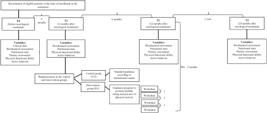
After the surgical procedure, the participants who were eligible for the intervention and who accepted to participate were randomized into two groups: the intervention group (IG), composed of women who participated in a healthy eating and physical activity guidance program; and the control group (CG), in which the participants received the standard institutional guidance. The groups were randomly arranged in the 1:1 proportion, by using a table with random numbers. Regardless of the allocated group, the women invited participated in four consultations with the responsible researchers, one before surgical treatment (T0) and the others 6 months (T1), 12 months (T2), and 24 months (T3) after the date of procedure. The workshops with participants allocated in the IG occurred immediately after T1. For analysis purposes, the measures considered for the present study excluded data obtained in T1, given that the recently performed surgery could have affected the results.
The guidance program consisted of four workshops held monthly. The sessions were conducted by nutritionists and physiotherapist researchers and the content addressed in each one is listed in Chart 1 of the supplementary material. A pilot test of the guidance program was conducted with two groups of eight women with endometrial cancer, randomly selected. At the end of the pilot workshops, necessary adjustments were performed.
Definition of SMART goals: At the end of each session, from the themes addressed, the participants in the intervention were invited to define reachable goals, aimed at changing eating habits or related to the practice of physical activity in their daily lives, with the aid of researchers responsible by conducting the guidance program20.
At the end of the last guidance program session, participants anonymously filled out a ten-question assessment form about the meetings whose answer options were based on the Likert scale (adequacy of dates, hours and duration, contents addressed, how easy it was to understand the information given, and how much of the acquired learning and goals established helped them achieve healthier life habits). A participant learning assessment was also conducted, through a ten-affirmative form on the subjects related to health and their relationship with eating habits and physical activity practice during the workshops. They also performed a self-assessment, critically analyzing how much participating in the program had influenced positive changes in their life habits.
To assess the viability of the intervention, recruitment, adhesion, and retention rates were calculated as follows.
The recruitment rate was calculated by the proportion of eligible women who agreed to participate in the guidance program. A recruitment rate of 30% or more is desirable for the study to be considered viable9,21,22.
The rate of adhesion to the intervention was calculated considering the proportion of randomized participants who attended at least three of the four workshops offered. In an intervention program, 60% or more of the participants should be able to adhere23. A rate of 85% or more is desirable.
The retention rate was calculated based on the proportion of randomized participants who attended the second and third guidance appointments with researchers (12 and 24 months after the surgical procedure). A 75% or more rate is desirable while a 60% or less rate is considered undesirable9.
To analyze the effectiveness of the intervention, an anthropometric assessment was conducted – body mass (BM) and body mass index (BMI), waist circumference (WC), and hip circumference (HC); laboratory – lipid, inflammatory, hormonal, glycemic and insulin profile; diet was assessed through the semi-quantitative Food Frequency Questionnaire (FFQ); and the level of physical activity was assessed through the International Physical Activity Questionnaire (IPAQ). The detailed methodology for collecting the referred parameters is described in previous publications by the group related to this study24,25. In addition, physical-functional ability tests were performed, as described below.
Hand grip strength (HGS) was assessed following recommendations by the American Society of Hand Therapists (ASHT). Two attempts were conducted, in addition to a pre-test, with a 60-second break between each attempt. The average of the two tests was considered for the final score26.
The 30-second sit-to-stand test27 was conducted in an armless chair with a straight backrest. After a pre-test, the number of full sit-to-stand cycles within 30 seconds was accounted for.
The Timed Up and Go (TUG)28 test requires the participant to stand up from the chair, walk three meters, surround the marking, and return to the chair. The clock is stopped when the volunteer returns and sits on the chair. The test was conducted once for familiarization and a second time to record the time29.
The six-minute walk test (T6M)30-32 aims to cover the greatest possible distance in 6 minutes at a regular walking speed. After the test was timed, the distance traveled in meters was accounted for.
The criteria were: vaginal bleeding in progress, orthopedic lesions, pain, uncompensated cardiovascular diseases, inappropriate shoes, or any other explicit contraindication.
The present study used the IPAQ long version (IPAQ-L) as an instrument for assessing physical activity in a regular week33,34. The energy expenditure in metabolic equivalent (MET) was obtained by multiplying the time in minutes by the intensity of the physical activity: moderate (3.3 to 4 MET) and vigorous (5.5 to 8 MET). The result was expressed in MET/min/week.
According to the sample calculation performed, considering the results obtained by von Gruenigen et al.14, who evaluated similar outcomes in a population of women with endometrial cancer, 55 patients would need to be included in each group to detect an average difference in body weight over 4 kg with 80% power, 5% alpha error, 6 kg standard deviation. This calculation would also meet the outcomes 25% reduction in highly processed food intake and 20% increase in the physical activity score scale (MET). However, recruitment was interrupted due to the COVID-19 pandemic, which, despite impairing the intervention's efficacy assessment, did not hinder this research effort to present the comparison results between the groups in an exploratory manner, given the scarcity of similar studies in Brazil.
The collected data was stored in the online OpenClinica platform to ensure the quality and safety of information. The statistical analyses were conducted on the statistical program SPSS version 22.035 (Chicago, USA). Proportions were calculated for categorical variables and measures of central tendency and dispersion (mean and standard deviation) for continuous variables. The delta (Δ) calculation was performed for each independent variable, by subtracting the value obtained in T3 from the T0 value to obtain the mean variation of the assessed parameters over time for each group.
Linear mixed models were adjusted to evaluate the effect of the intervention on the randomized groups, considering the different repeated measures of the outcomes over time. Thus, a fixed effect was included for the variable representing the study intervention (two groups), a random effect for the variable representing time (three groups), and an interaction term between the intervention and time variables.
The model adjustment was verified through a residues analysis and the Restricted Maximum Likelihood and Akaike Information Estimation criteria. These analyses were performed on R software, version 4.2.336, using the lme4 and lmerTest packages. For all analyses, p<0.05 was considered statistically significant.
This project has been approved by the Research Ethics Committee, report number 2102089 (CAAE (submission for ethical review): 55155116.9.0000.5274), in compliance with Resolution No. 466/201237 of the National Health Council.
RESULTS
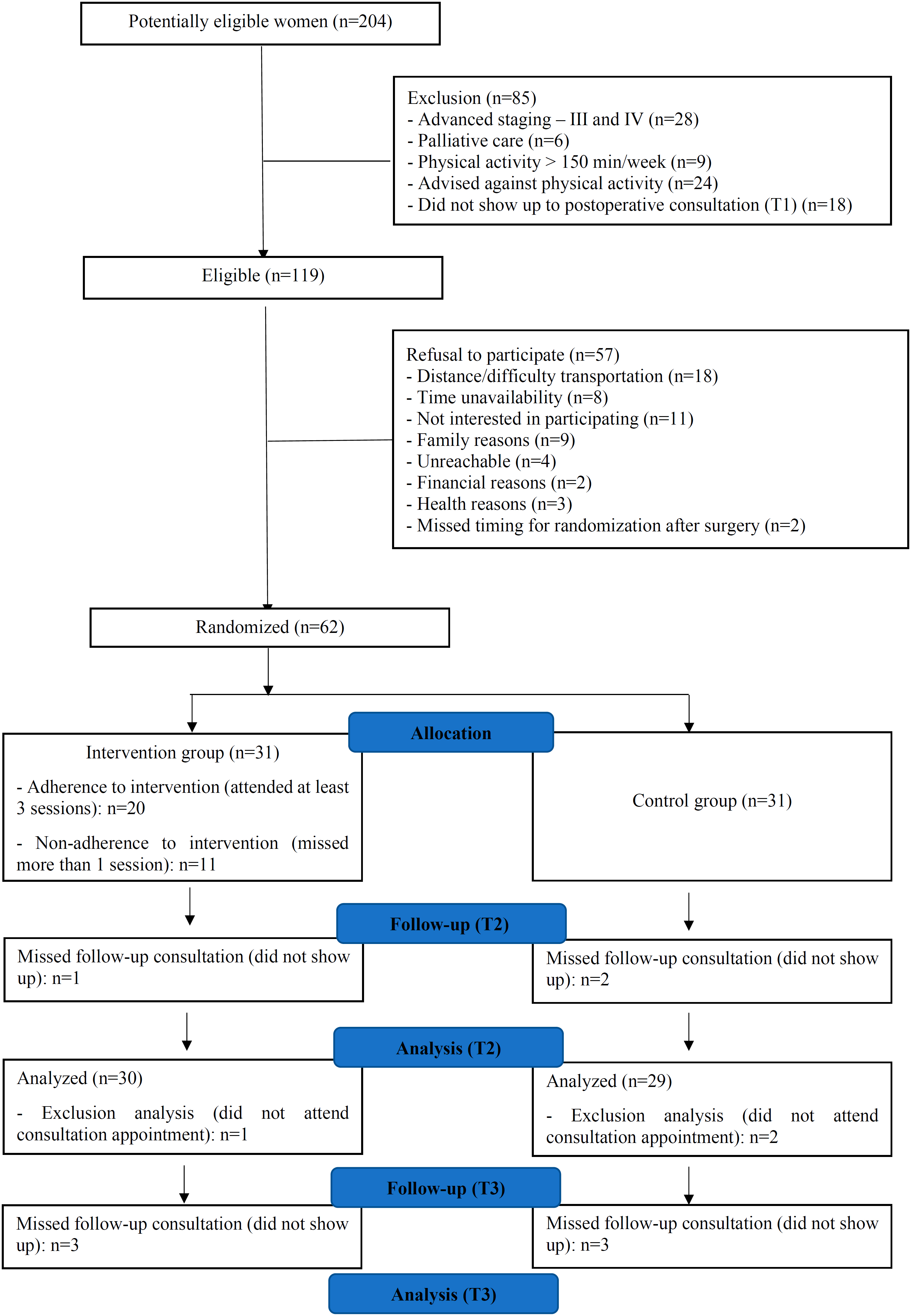
Of the 204 participants eligible for randomization, 85 had some exclusion criteria. This study's recruitment rate was 52.1%, that is, of the 119 patients eligible for the intervention, 57 refused to participate.
Of the 31 participants in the intervention, 20 adhered to at least three workshop sessions (64.5% adherence rate). The number of participants who attended none, one, two, three, and four (all) sessions was 3, 2, 6, 7 and 13, respectively.
Regarding attendance at T2 consultation, of the 62 randomized participants, 59 attended. Retention rate was 95.2%. Whereas at T3 consultation, of the 62 randomized participants, 56 attended. Thus, the retention rate was 90.3%.
Regarding the assessment of knowledge acquired during the workshops, the participants scored, on average, 77.14% correct and 22.86% incorrect answers. The greatest percentage of correct answers was observed on the "Sitting down all day is bad for your health" and "Healthy eating and physical activity prevent several illnesses" affirmations, whereas the affirmations with the greatest percentage of incorrect answers were "Rice and pasta belong to the fruits, vegetables, and legumes group" and "When I start a physical activity, I should choose the one that's hardest for me".
Finally, the participants answered a self-assessment regarding the knowledge acquired and their self-perception of behavioral changes. Regarding the knowledge acquired, 100% of them reported having understood the importance of healthy eating and physical activity in preventing diseases, and that these habits should be maintained throughout life; 95.24% of participants recognized that excess weight could cause many diseases, including cancer. Regarding behavioral aspects, participants reported adopting regular times for eating and exercising (95.24%), eating fruits and vegetables more often during the week (95.24%), and consuming less processed foods (85.71%).
Sixty-two participants were randomized through simple randomization in a 1:1 ratio, using the random number table. For each group of at least three and at most five participants who had completed six months of surgical treatment, a new workshop cycle was started. In total, eight cycles were conducted with the 31 randomized women in the IG.
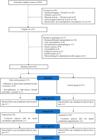
The reasons for exclusion from randomization, as well as the reasons for refusal by eligible participants and the allocation scheme of randomized participants are shown in Figure 2.
Regarding the physical tests in T0, T2, and T3, the sit-to-stand test was not performed by 14, 17, and 24 participants, respectively. TUG by 11, 13, and 21, respectively. T6M by 14, 13, and 23, respectively. HGS was not performed by 2 participants in T2, and by 10 in T3.
Table 1 shows the sociodemographic and clinical characteristics of the study's participants. There was no statistical difference between the two groups. Most participants were aged 65 or under, had studied for eigth years or over, were married, and performed some kind of paid activity. Regarding their health status, the more prevalent comorbidities were SH and DM.
Table 2 shows the IG and CG anthropometric, biochemical, functional ability, and food intake data in T0, T2, and T3. For the anthropometric indicators of BM, BMI, and HC, there was a statistically significant difference in the group*time interaction, but no significant intragroup differences over time. Thus, although an improvement was found in the IG and a worsening in the CG for the three variables, it is not possible, with this sample size, to guarantee that this effect was due to the intervention.
Changes in anthropometric data, functional ability, physical activity, biochemicals, and food intake through time (T0, T1, and T3) in control and intervention groups (effects among groups, time, and interaction group *time)
There were also no statistically significant changes observed in either group for the functional capacity tests, except for the TUG test, for which a statistically significant reduction in test time was observed in the IG. A reduction and increase in the Δ mean values of the HGS were also observed in the IG and CG, respectively, with this difference being statistically significant only in the intergroup analysis.
Regarding physical activity, though no differences were observed in total energy expenditure in the IG, this group had a 25.54% increase between T0 and T2, returning to initial levels in T3. On the other hand, CG presented a statistically significant reduction in total energy expenditure throughout the study.
Regarding laboratory parameters, a statistically significant reduction in serum insulin was observed in IG. As to the dietary profile, although the difference has not reached statistical significance, an increase in the energy percentage coming from in natura food was observed in the IG, in addition to a reduction in the percentage of energy coming from processed and highly processed food, when compared to the study's initial and final values (Δ). The two groups presented a significant reduction in the total energy consumed.
DISCUSSION
This program was adapted to the sociodemographic particularities of the Brazilian population contemplated by SUS: low-cost, using active teaching methodologies, with easy-to-understand language. Another advantage of the proposal was, in addition to using international prevention recommendations for cancer survivors, using recommendations from The Dietary Guidelines for the Brazilian Population38.
The recruitment rate for this study was 52.1%, superior to the 30% intervention viability threshold adopted by the scientific literature9,21,22. This recruitment rate was similar to the previous study that organized focus groups with cancer survivors to propose a lifestyle intervention through a web tool39. Other studies, however, presented lower recruitment rates than this research40,41.
The main reasons for refusing to participate in the study were related to the distance between the participant's residence and the workshop location, family issues, lack of time and interest in participating. Health problems and lack of interest were the main complications related to recruitment and retention in intervention studies42. In this context, distance education may be a strategic alternative aiming to favor adherence to these interventions. Scientific literature points out that the application of questionnaires through telegrams or the web may improve engagement9. However, the COVID-19 pandemic is known to have accelerated new communication media and use of questionnaires, especially web surveys.
The adherence rate was 64.5%, more than the 60% or over threshold defined in the scientific literature for the willingness to adhere to intervention programs23, although lower than that observed by Crane et al.43, in which 86% of cancer survivors and informal caregivers attended at least 75% of sessions. In the study by Edbrooke et al.41, adherence was also elevated, with 79% of endometrial cancer participants attending over 70% of scheduled appointments. The lower adherence rate verified in the study may be related to financial and mobility difficulties faced by participants, since sessions and follow-up appointments were in-person, in contrast with the other mentioned studies, conducted in the context of developed countries and the ability to follow-up through phone or video calls.
The retention rates observed in T2 and T3 appointments were 95.2% and 90.3%, respectively, which were more than that observed in the studies by Williams et al.39 and Edbrooke et al.41, who obtained 91% and 85.4% retention rates, respectively. One explanation for the high retention rate is that follow-up consultations were scheduled, whenever possible, according to the Gynecology Service annual consultation control, which avoided additional expenses with displacement to the hospital unit and skipping work. It is worth mentioning that this study was one of the first to assess the viability of interventions aimed at lifestyle changes of cancer survivors in the context of a developing country and a high-complexity oncology center bound to the SUS. Regarding its limitations, the impact of the COVID-19 pandemic resulted in the suspension of in-person consultations at first, with later adaptation to data collection through the phone, when asked by the participants, which hindered the acquisition of anthropometric, laboratory parameters, and functional ability tests in every moment of the study, as well as impaired reaching the calculated sample size.
The socioeconomic and health profile of the participants in this study is similar to those of other interventions, diverging in education level, considering that most previous studies were conducted in developed countries where the population is usually more educated40,41,44,45.
The efficacy of the intervention was assessed by the variations in anthropometric, biochemical, dietary, functional, and physical activity level parameters.
A significant reduction in the total calorie intake was observed in both groups, with a non-significant increase in the percentage of in natura food intake in the IG, in addition to a greater variation in the percentage of energy from processed and highly processed foods observed in this group. Similar previous studies did not show significant changes in improving the dietary profile of the studied groups, regardless of the intervention format14,16,39,40. This may partly be explained by the small sample size obtained by most of the referred studies.
Another interesting finding of this study is the calorie intake from highly processed foods. In both groups, though with no statistical significance, there was a reduction in the energy intake of this food group, with a greater variation observed in the IG; a drop between T0 and T2 was observed in the CG, which did not sustain in T3, returning to mean values close to those observed in T0.
Those results, although not statistically significant, suggest that the intervention may have been important in broadening the knowledge of healthy eating habits, which contributes to different food choices that enable more positive changes over time. The viability of conducting an intervention to change eating habits among cancer survivors tends to improve the self-care ability46.
No changes in the functionality parameter were observed over the moments assessed, except for the TUG test. Significant changes in the functional ability in studies with unsupervised intervention in endometrial cancer survivors are controversial. Gorzelitz et al.47 observed significant improvement only in the sit-to-stand and TUG tests, with no changes in HGS or T6M, though. A systematic review assessed the effect of interventions with unsupervised isolated exercises in functional parameters of gynecological cancer survivors and concluded that the average gain for the strength tests varied heterogeneously among the study's participants48.
Regarding physical activity, contrary to IG, which maintained their total energy expenditure, the CG presented a reduction in the physical activity levels between T0 and T3. Maintaining physical activity levels after surgical treatment in IG is a relevant result of this intervention. A systematic review study with patients who survived gynecological cancer showed that 58% of survivors reported being less active three years after the diagnosis40. In another prospective study, only 20% of the women were able to increase or maintain their physical activity levels throughout the 24 months after surgery48.
CONCLUSION
The format of the healthy eating and physical activity guidance program seems adequate to the socioeconomic characteristics and the period of execution in a developing country context, given that there was an adherence rate higher than the 60% threshold stipulated as satisfactory by the scientific literature. The elevated retention rates of the study should also be highlighted (95.2% in T2 and 90.3% in T3).
The intervention produced preliminary results that potentially favored prevention of central fat gain, improvement in at least one functional ability parameter, and decrease in energy intake, with the increase of in natura food intake. However, since it was not possible to reach the previously calculated sample size due to the intervention's interruption during the COVID-19 pandemic, it was not possible to assess the efficacy of the intervention, reiterating the need for further studies with this objective targeted at cancer survivors.
ACKNOWLEDGMENTS
To the team of researchers fondly nicknamed "survivors," for their valuable contribution to the data collection of this study: Nathália de Paula, Amanda Mota, João Paulo Fernandes, Taiara Poltronieri, Gian Pietro, Fernanda Maciel.
References
-
1 Ferlay J, Ervik M, Lam F, et al. Global Cancer Observatory [Internet]. Lyon: International Agency for Research on Cancer; 2020. Cancer today [acesso 2025 jan 28]. Disponível: https://gco.iarc.fr/today
» https://gco.iarc.fr/today -
2 Instituto Nacional de Câncer. Estimativa 2023: incidência de câncer no Brasil [Internet]. Rio de Janeiro: INCA; 2022. [acesso 2025 jan 28]. Disponível em: https://www.inca.gov.br/sites/ufu.sti.inca.local/files//media/document//estimativa-2023.pdf
» https://www.inca.gov.br/sites/ufu.sti.inca.local/files//media/document//estimativa-2023.pdf -
3 National Institute of Health [Internet]. Whasitgton, D. C.: NIH; [Sem data]. Cancer stat facts: uterine cancer. [acesso 2024 jun 1]. Disponível em: https://seer.cancer.gov/statfacts/html/corp.html
» https://seer.cancer.gov/statfacts/html/corp.html -
4 Everett E, Tamimi H, Greer B, et al. The effect of body mass index on clinical/pathologic features, surgical morbidity, and outcome in patients with endometrial cancer. Gynecol Oncol. 2003;90(1):150-7. doi: https://www.doi.org/10.1016/S0090-8258(03)00232-4
» https://www.doi.org/10.1016/S0090-8258(03)00232-4 -
5 Arem H, Chlebowski R, Stefanick ML, et al. Body mass index, physical activity, and survival after endometrial cancer diagnosis: results from the Women's Health Initiative. Gynecol Oncol. 2013;128(2):181-6. doi: https://www.doi.org/10.1016/j.ygyno.2012.11.041
» https://www.doi.org/10.1016/j.ygyno.2012.11.041 -
6 Kuiper JG, Phipps AI, Neuhouser ML, et al. Recreational physical activity, body mass index, and survival in women with colorectal cancer. Cancer Causes Control. 2012;23(12):1939-48. doi: https://www.doi.org/10.1007/s10552-012-0071-2
» https://www.doi.org/10.1007/s10552-012-0071-2 -
7 Nelson SH, Marinac CR, Patterson RE, et al. Impact of very low physical activity, BMI, and comorbidities on mortality among breast cancer survivors. Breast Cancer Res Treat. 2016;155(3):551-7. doi: https://www.doi.org/10.1007/s10549-016-3694-2
» https://www.doi.org/10.1007/s10549-016-3694-2 -
8 Demark-Wahnefried W, Aziz NM, Rowland JH, et al. Riding the crest of the teachable moment: promoting long-term health after the diagnosis of cancer. J Clin Oncol. 2005;23(24):5814-30. doi: https://www.doi.org/10.1200/JCO.2005.01.230
» https://www.doi.org/10.1200/JCO.2005.01.230 -
9 Koutoukidis DA, Beeken RJ, Manchanda R. et al. Diet and exercise in uterine cancer survivors (DEUS pilot) - piloting a healthy eating and physical activity program: study protocol for a randomized controlled trial. Trials. 2016;17(1):130. doi: https://www.doi.org/10.1186/s13063-016-1260-1
» https://www.doi.org/10.1186/s13063-016-1260-1 -
10 Adams SA, Choi SK, Khang L, et al. Decreased cancer mortality-to-incidence ratios with increased accessibility of federally qualified health centers. J Community Health. 2015;40(4):633-41. doi: https://www.doi.org/10.1007/s10900-014-9972-9
» https://www.doi.org/10.1007/s10900-014-9972-9 -
11 Clinton SK, Giovannucci EL, Hursting SD. The world cancer research fund/American Institute for Cancer research third expert report on diet, nutrition, physical activity, and cancer: impact and future directions. J Nutr. 2020;150(4):663-71. doi: https://www.doi.org/10.1093/jn/nxz268
» https://www.doi.org/10.1093/jn/nxz268 -
12 Silva GA, Rezende LFMD, Gomes FDS, et al. Modos de vida entre pessoas que tiveram câncer no Brasil em 2013. Ciênc saúde coletiva. 2016;21(2):379-88. doi: https://www.doi.org/10.1590/1413-81232015211.24722015
» https://www.doi.org/10.1590/1413-81232015211.24722015 -
13 Hoedjes M, Kruif A, Mols F, et al. An exploration of needs and preferences for dietary support in colorectal cancer survivors: a mixed-methods study. PLoS One. 2017;12(12):e0189178. doi: https://www.doi.org/10.1371/journal.pone.0189178
» https://www.doi.org/10.1371/journal.pone.0189178 -
14 Von Gruenigen VE, Courneya KS, Gibbons HE, et al. Feasibility and effectiveness of a lifestyle intervention program in obese endometrial cancer patients: a randomized trial. Gynecol Oncol. 2008;109(1):19-26. doi: https://www.doi.org/10.1016/j.ygyno.2007.12.026
» https://www.doi.org/10.1016/j.ygyno.2007.12.026 -
15 Basen-Engquist K, Carmack C, Brown J, et al. Response to an exercise intervention after endometrial cancer: differences between obese and non-obese survivors. Gynecol Oncol. 2014;133(1):48-55. doi: https://www.doi.org/10.1016/j.ygyno.2014.01.046
» https://www.doi.org/10.1016/j.ygyno.2014.01.046 -
16 McCarroll ML, Armbruster S, Pohle-Krauza RJ, et al. Feasibility of a lifestyle intervention for overweight/obese endometrial and breast cancer survivors using an interactive mobile application. Gynecol Oncol. 2015;137(3):508-15. doi: https://www.doi.org/10.1016/j.ygyno.2014.12.025
» https://www.doi.org/10.1016/j.ygyno.2014.12.025 -
17 Guibu IA, Moraes JC, Guerra Junior AA, et al. Características principais dos usuários dos serviços de atenção primária à saúde no Brasil. Rev Saude Publica. 2017;51(Supl 2):17s. doi: https://www.doi.org/10.11606/S1518-8787.2017051007070
» https://www.doi.org/10.11606/S1518-8787.2017051007070 -
18 Viacava F, Oliveira RADD, Carvalho CDC, et al. SUS: oferta, acesso e utilização de serviços de saúde nos últimos 30 anos. Ciênc saúde coletiva. 2018;23(6):1751-62. doi: https://www.doi.org/10.1590/1413-81232018236.06022018
» https://www.doi.org/10.1590/1413-81232018236.06022018 -
19 Lima Júnior JCC, Santos SMS, Silva KT, et al. Perfil sociodemográfico e clínico de usuários assistidos por uma Estratégia Saúde da Família. RSD. 2022;11(13):e06111335071. doi: https://www.doi.org/10.33448/rsd-v11i13.35071
» https://www.doi.org/10.33448/rsd-v11i13.35071 -
20 Dombrowski SU, Endevelt R, Steinberg DM, et al. Do more specific plans help you lose weight? Examining the relationship between plan specificity, weight loss goals, and plan content in the context of a weight management programme. Br J Health Psychol. 2016;21(4):989-1005. doi: https://www.doi.org/10.1111/bjhp.12212
» https://www.doi.org/10.1111/bjhp.12212 -
21 Daley AJ, Crank H, Mutrie N, et al. Patient recruitment into a randomised controlled trial of supervised exercise therapy in sedentary women treated for breast cancer. Contemp Clin Trials. 2007;28(5):603-13. doi: https://www.doi.org/10.1016/j.cct.2007.02.009
» https://www.doi.org/10.1016/j.cct.2007.02.009 -
22 Korde LA, Micheli A, Smith AW, et al. Recruitment to a physical activity intervention study in women at increased risk of breast cancer. BMC Med Res Methodol. 2009;9:27. doi: https://www.doi.org/10.1186/1471-2288-9-27
» https://www.doi.org/10.1186/1471-2288-9-27 -
23 Department of Health (UK). Developing a specification for lifestyle weight management services [Internet]. London: Obesity and Food Policy Branch; 2013. [Acesso 2024 dez 10]. Disponível em: https://assets.publishing.service.gov.uk/media/5a75911f40f0b6360e475174/Weight_Management_Service_Spec_FINAL_with_IRB.pdf
» https://assets.publishing.service.gov.uk/media/5a75911f40f0b6360e475174/Weight_Management_Service_Spec_FINAL_with_IRB.pdf -
24 Silva CL, Costa AF, Camara AO, et al. Association between ultra-processed food consumption and excess of weight in women with endometrial cancer. Nutr Cancer. 2022;74(3):927-37. doi: https://www.doi.org/10.1080/01635581.2021.1944230
» https://www.doi.org/10.1080/01635581.2021.1944230 -
25 Fernandes JPA, Camara AO, Frajacomo FT, et al. Metabolic profile of patients with endometrial adenocarcinoma and association with tumor grade. Int J Gynecol Cancer. 2022;32(5):626-32. doi: https://www.doi.org/10.1136/ijgc-2021-003245
» https://www.doi.org/10.1136/ijgc-2021-003245 -
26 Roberts HC, Denison HJ, Martin HJ, et al. A review of the measurement of grip strength in clinical and epidemiological studies: towards a standardised approach. Age Ageing. 2011;40(4):423-9. doi: https://www.doi.org/10.1093/ageing/afr051
» https://www.doi.org/10.1093/ageing/afr051 -
27 Jones CJ, Rikli RE, Beam WC. A 30-s chair-stand test as a measure of lower body strength in community-residing older adults. Res Q Exerc Sport. 1999;70(2):113-9. doi: https://www.doi.org/10.1080/02701367.1999.10608028
» https://www.doi.org/10.1080/02701367.1999.10608028 -
28 Podsiadlo D, Richardson S. The timed "Up & Go": a test of basic functional mobility for frail elderly persons. J Am Geriatr Soc. 1991;39(2):142-8. doi: https://www.doi.org/10.1111/j.1532-5415.1991.tb01616.x
» https://www.doi.org/10.1111/j.1532-5415.1991.tb01616.x -
29 Rikli R, Jones C. Functional fitness normative scores for community-residing older adults, ages 60-94. J Aging Phys Act. 1999;7(1):162-81. doi: https://www.doi.org/10.1123/japa.7.2.162
» https://www.doi.org/10.1123/japa.7.2.162 -
30 Schmidt K, Vogt L, Thiel C, et al. Validity of the six minute walk test in cancer patients. Int J Sports Med. 2013;34(7):631-6. doi: https://www.doi.org/10.1055/s-0032-1323746
» https://www.doi.org/10.1055/s-0032-1323746 -
31 American Thoracic Society. ATS Committee on Proficiency Standards for Clinical Pulmonary Function Laboratories. ATS statement: guidelines for the six-minute walk test. Am J Respir Crit Care Med. 2002;166(1):111-7. doi: https://www.doi.org/10.1164/ajrccm.166.1.at1102
» https://www.doi.org/10.1164/ajrccm.166.1.at1102 -
32 Burnetto AF, Paulin E, Yamaguti WPS. Comparação entre a escala modificada de Borg e a escala de Borg modificada analógico visual aplicadas em pacientes com dispneia. Braz j phys ther (Impr.). 2002;6(1):41-5. Disponível em: https://pesquisa.bvsalud.org/portal/resource/pt/lil-315309
» https://pesquisa.bvsalud.org/portal/resource/pt/lil-315309 -
33 Craig CL, Marshall AL, Sjöström M, et al. International physical activity questionnaire: 12-country reliability and validity. Med Science in Sports Exerc. 2003;35(8):1381-95. doi: https://www.doi.org/10.1249/01.MSS.0000078924.61453.FB
» https://www.doi.org/10.1249/01.MSS.0000078924.61453.FB -
34 Matsudo S, Araújo T, Matsudo V, et al. International physical activity questionnaire (IPAQ): study of validity and reliability in Brazil. Rev Bras ativ fis saúde. 2001;6(2):5-18. doi: https://www.doi.org/10.12820/rbafs.v.6n2p5-18
» https://www.doi.org/10.12820/rbafs.v.6n2p5-18 -
35 SPSS®: Statistical Package for Social Science (SPSS) [Internet]. Versão 20.0. [Nova York]. International Business Machines Corporation. [acesso 2024 mar 9]. Disponível em: https://www.ibm.com/br-pt/spss?utm_content=SRCWW&p1=Search&p4=43700077515785492&p5=p&gclid=CjwKCAjwgZCoBhBnEiwAz35Rwiltb7s14pOSLocnooMOQh9qAL59IHVc9WP4ixhNTVMjenRp3-aEgxoCubsQAvD_BwE&gclsrc=aw.ds
» https://www.ibm.com/br-pt/spss?utm_content=SRCWW&p1=Search&p4=43700077515785492&p5=p&gclid=CjwKCAjwgZCoBhBnEiwAz35Rwiltb7s14pOSLocnooMOQh9qAL59IHVc9WP4ixhNTVMjenRp3-aEgxoCubsQAvD_BwE&gclsrc=aw.ds -
36 R: The R Project for Statistical Computing [Internet]. Version 4.2.3 Chicago: The R foundation. 2021 Nov 2 - [acesso 2024 set 6]. Disponível em: https://www.r-project.org/
» https://www.r-project.org/ - 37 Conselho Nacional de Saúde (BR). Resolução n° 466, de 12 de dezembro de 2012. Aprova as diretrizes e normas regulamentadoras de pesquisas envolvendo seres humanos. Diário Oficial da União, Brasília, DF. 2013 jun 13; Seção I:59.
-
38 Ministério da Saúde (BR). Guia alimentar para a população brasileira [Internet]. Brasília, DF: MS; 2014. [acesso 2024 set 6]. Disponível em: https://bvsms.saude.gov.br/bvs/publicacoes/guia_alimentar_populacao_brasileira_2ed.pdf
» https://bvsms.saude.gov.br/bvs/publicacoes/guia_alimentar_populacao_brasileira_2ed.pdf -
39 Williams VA, Brown NI, Johnson R, et al. A web-based lifestyle intervention for cancer survivors: feasibility and acceptability of SurvivorSHINE. J Cancer Educat. 2022;37(6):1773-81. doi: https://www.doi.org/10.1007/s13187-021-02026-x
» https://www.doi.org/10.1007/s13187-021-02026-x -
40 Lucas AR, Focht BC, Cohn DE, et al. A Mindfulness-based lifestyle intervention for obese, inactive endometrial cancer survivors: a feasibility study. Integrative cancer therapies. 2017;16(3):263-75. doi: https://www.doi.org/10.1177/1534735416668257
» https://www.doi.org/10.1177/1534735416668257 -
41 Edbrooke L, Khaw P, Freimund A, et al. EnhAncing lifestyle behaviors in endometrial cancer (ENABLE): a pilot randomized controlled trial. Integr Cancer Ther. 2022:21. doi: https://www.doi.org/10.1177/15347354211069885
» https://www.doi.org/10.1177/15347354211069885 -
42 Cooley ME, Sarna L, Brown JK, et al. Challenges of recruitment and retention in multisite clinical research. Cancer Nurs. 2003;26(5):276-86. doi: https://www.doi.org/10.1097/00002820-200310000-00006
» https://www.doi.org/10.1097/00002820-200310000-00006 -
43 Crane TE, Badger TA, O’Connor P. Lifestyle intervention for Latina cancer survivors and caregivers: the nuestra salud randomized pilot trial. J Cancer Surviv. 2021;15(4):607-19. doi: https://www.doi.org/10.1007/s11764-020-00954-z
» https://www.doi.org/10.1007/s11764-020-00954-z -
44 Lynch BM, Nguyen NH, Moore MM, et al. A randomized controlled trial of a wearable technology-based intervention for increasing moderate to vigorous physical activity and reducing sedentary behavior in breast cancer survivors: the ACTIVATE Trial. Cancer. 2019;125(16):2846-55. doi: https://www.doi.org/10.1002/cncr.32143
» https://www.doi.org/10.1002/cncr.32143 -
45 Rees-Punia E, Leach CR, Westmaas JL, et al. Pilot randomized controlled trial of feasibility, acceptability, and preliminary efficacy of a web-based physical activity and sedentary time intervention for survivors of physical inactivity-related cancers. Int J Behav Med. 2022;29(2):220-9. doi: https://www.doi.org/10.1007/s12529-021-09999-5
» https://www.doi.org/10.1007/s12529-021-09999-5 -
46 Lawn S, Zrim S, Leggett S, et al. Is self-management feasible and acceptable for addressing nutrition and physical activity needs of cancer survivors? Health Expect. 2015;18(6):3358-73. doi: https://www.doi.org/10.1111/hex.12327
» https://www.doi.org/10.1111/hex.12327 -
47 Gorzelitz J, Costanzo E, Gangnon R, et al. Feasibility and acceptability of home-based strength training in endometrial cancer survivors. J Cancer Surviv. 2023;17(1):120-9. doi: https://www.doi.org/10.1007/s11764-021-00990-3
» https://www.doi.org/10.1007/s11764-021-00990-3 -
48 Fleming S, Jones T, Janda M, et al. Physical activity trajectories following gynecological cancer: results from a prospective, longitudinal cohort study. Inter J Gynecol Cancer. 2020;30(11):1784-90. doi: https://www.doi.org/10.1136/ijgc-2020-001543
» https://www.doi.org/10.1136/ijgc-2020-001543
Edited by
-
Scientific-Editor:
Anke Bergmann. Orcid iD: https://orcid.org/0000-0002-1972-8777