
 Correlation Between Length of Hospital Stay, Muscle Strength and Functionality in Patients with Gynecological Cancer: Cross-Sectional Study
ABSTRACT
Introduction: Gynecological cancers include malignancies of the uterus, ovaries, endometrium, vagina, and vulva. Hospitalization can interfere with the strength and functionality of cancer patients.
Objective: To evaluate muscle strength (MS) and functional status in patients with gynecological cancer, correlating them with length of hospital stay.
Method: Analytical cross-sectional study with data collected at Hospital Regional do Agreste, Pernambuco, over a ten-month period. The degree of MS was evaluated by the Medical Research Council (MRC) criteria, and the functional status, by the Functional Independence Measure (FIM). The IBM SPSS Statistics software was utilized to tabulate and analyze the data. Correlation was performed using Spearman and Kendall tests.
Results: The 18 study participants had a mean age of 56 years (±8.8) and predominance of cervical cancer (67%). The most common treatment was chemotherapy (50%) and the average length of hospital stay was five days (±8.5). The average FIM score was 111 points. The average total MRC score was 48 points. The correlation between peripheral MS and functional status (ρ=0.954; r=0.891), between MS and length of hospital stay (ρ=0.953, r=0.886) and between functional status and length of hospital stay (ρ=0.917, r=0.869) was obtained using Spearman's (ρ) and Kendall's (r) correlations, with p≤ 0.01.
Conclusion: The longer the hospital stay, the greater the functional losses. In this context, the importance of understanding the profile of patients to reduce functional limitations is emphasized.
Key words:
Genital Neoplasms, Female; Hospitalization; Muscle Strength; Functional Status
RESUMO
Introdução: Os cânceres ginecológicos abrangem malignidades do útero, ovários, endométrio, vagina e vulva. A hospitalização pode interferir na força e na funcionalidade de pacientes com câncer.
Objetivo: Avaliar a força muscular (FM) e o estado funcional em pacientes com câncer ginecológico, correlacionando-os com o tempo de internamento.
Método: Estudo transversal analítico com coleta de dados realizada no Hospital Regional do Agreste, Pernambuco, durante dez meses. O grau de FM das voluntárias foi avaliado de acordo com os critérios do Medical Research Council (MRC), e o estado funcional, pela medida de independência funcional (MIF). O software IBM SPSS Statistics foi utilizado para tabular e analisar os dados. A correlação foi realizada pelos testes de Spearman e Kendall.
Resultados: As 18 participantes do estudo apresentaram média de idade de 56 anos (±8,8) e houve predominância de câncer do colo do útero (67%). O tratamento mais realizado foi a quimioterapia (50%) e a média de dias de internação foi cinco dias (±8,5). A pontuação média da MIF foi de 111 pontos. A pontuação média do MRC total foi de 48 pontos. A correlação entre a FM periférica e o estado funcional (ρ=0,954; r=0,891), entre FM e dias de internação (ρ=0,953, r=0,886) e entre estado funcional e dias de internamento (ρ=0,917, r=0,869) foi obtida por meio da correlação de Spearman (ρ) e de Kendall (r), com p≤0,01.
Conclusão: Quanto maior o tempo de hospitalização, maiores as perdas funcionais. Nesse contexto, enfatiza-se a importância de compreender o perfil dos pacientes para reduzir as limitações funcionais.
Palavras-chave:
Neoplasias dos Genitais Femininos; Hospitalização; Força muscular; Estado funcional
RESUMEN
Introducción: Los cánceres ginecológicos incluyen tumores malignos del útero, los ovarios, el endometrio, la vagina y la vulva. La hospitalización puede interferir en la fuerza y la funcionalidad de los pacientes con cáncer.
Objetivo: Evaluar la fuerza muscular (FM) y el estado funcional en pacientes con cáncer ginecológico, correlacionándolos con la duración de la estancia hospitalaria.
Método: Estudio transversal analítico con recolección de datos realizada en el hospital regional de Agreste, Pernambuco, durante un período de diez meses. Los voluntarios fueron evaluados para el grado de FM utilizando los criterios del Consejo de Investigación Médica (MRC) del Reino Unido y el estado funcional utilizando la Medida de Independencia Funcional (MIF). Tabulación y análisis de datos realizados mediante el software IBM SPSS Statistics. La correlación se realizó mediante las pruebas de Spearman y Kendall.
Resultados: Las 18 participantes del estudio tenían una edad media de 56 años (±8,8) y hubo predominio de cáncer de cuello uterino (67%). El tratamiento más común fue la quimioterapia (50%) y el promedio de días de hospitalización fue de cinco días (±8,5). La puntuación media del MIF fue de 111 puntos. La puntuación media del MRC total fue de 48 puntos. La correlación entre FM periférica y estado funcional (ρ=0,954; r=0,891), entre FM y días de hospitalización (ρ=0,953; r=0,886) y entre estado funcional y días de hospitalización (ρ=0,917; r=0,869) se obtuvo mediante la correlación de Spearman (ρ) y Kendall (r), con p≤0,01.
Conclusión: Cuanto mayor sea la estancia hospitalaria mayores serán las pérdidas funcionales. En este contexto, se enfatiza la importancia de comprender el perfil de los pacientes para reducir las limitaciones funcionales.
Palabras clave:
Neoplasias de los Genitales Femeninos; Hospitalización; Fuerza Muscular; Estado Funcional
INTRODUCTION
Gynecological cancers comprehend uterus, ovary, endometrium, vagina and vulva malignancies and are among the most frequent malignant neoplasms of the female population1. There are many risk factors, standing out advanced age, repeated infections, indiscriminate use of hormones/hormone replacement, diet, obesity, tobacco use, early sexual initiation and multiplicity of sexual partners2. Single or combined therapies to treat gynecological cancers vary according to the characteristics of each neoplasm, however, the most common are surgery, chemotherapy, hormone therapy, and radiotherapy3.
Hospitalization can be part of the journey of patients with cancer, required to treat the disease and its complications or management of radiotherapy and chemotherapy adverse effects4,5. Inpatients are usually bedridden for longer periods, suffering the effects of immobilization with negative effects over cardiorespiratory fitness, psychological and metabolic issues6–8. Prolonged immobilization and muscle inactivity caused by body disuse promote a decline of trophism, leading to reduced muscle strength and endurance, due to decompensation of the fragile homeostasis after significant reduction of their daily functional activities as self-care, mobility and locomotion7.
Strength and functionality are closely related because a fully able adult needs some level of muscle strength to perform his/her daily activities9. Functionality is connected to the level of preservation of the individual in regard to its ability to perform activities of the daily life as feeding, dressing and personal hygiene10. Only seven days at hospital bed reduce 30% of the muscle strength with additional loss of 20% of the remaining strength for each week at bed11.
Despite the negative impacts and the context of clinical practice, no studies were found in the literature that correlated the outcomes of peripheral muscle strength and functional status, peripheral muscle strength and length of hospital stay, functional status and length of hospital stay for inpatients with gynecological cancer. The objective of the present study was to evaluate peripheral muscle strength and functional status and correlate with length of hospital stay for this population, because of the relevance of identifying functional losses caused by length of hospital stay of inpatients in treatment of gynecological cancer and encourage future studies to stimulate targeted physiotherapy treatment at the hospital and modifying the negative impact during hospitalization.
METHOD
Analytical cross-sectional study conducted at "Hospital Regional do Agreste", Caruaru, state of Pernambuco; patients were enrolled and data collected between November 2023 and September 2024.
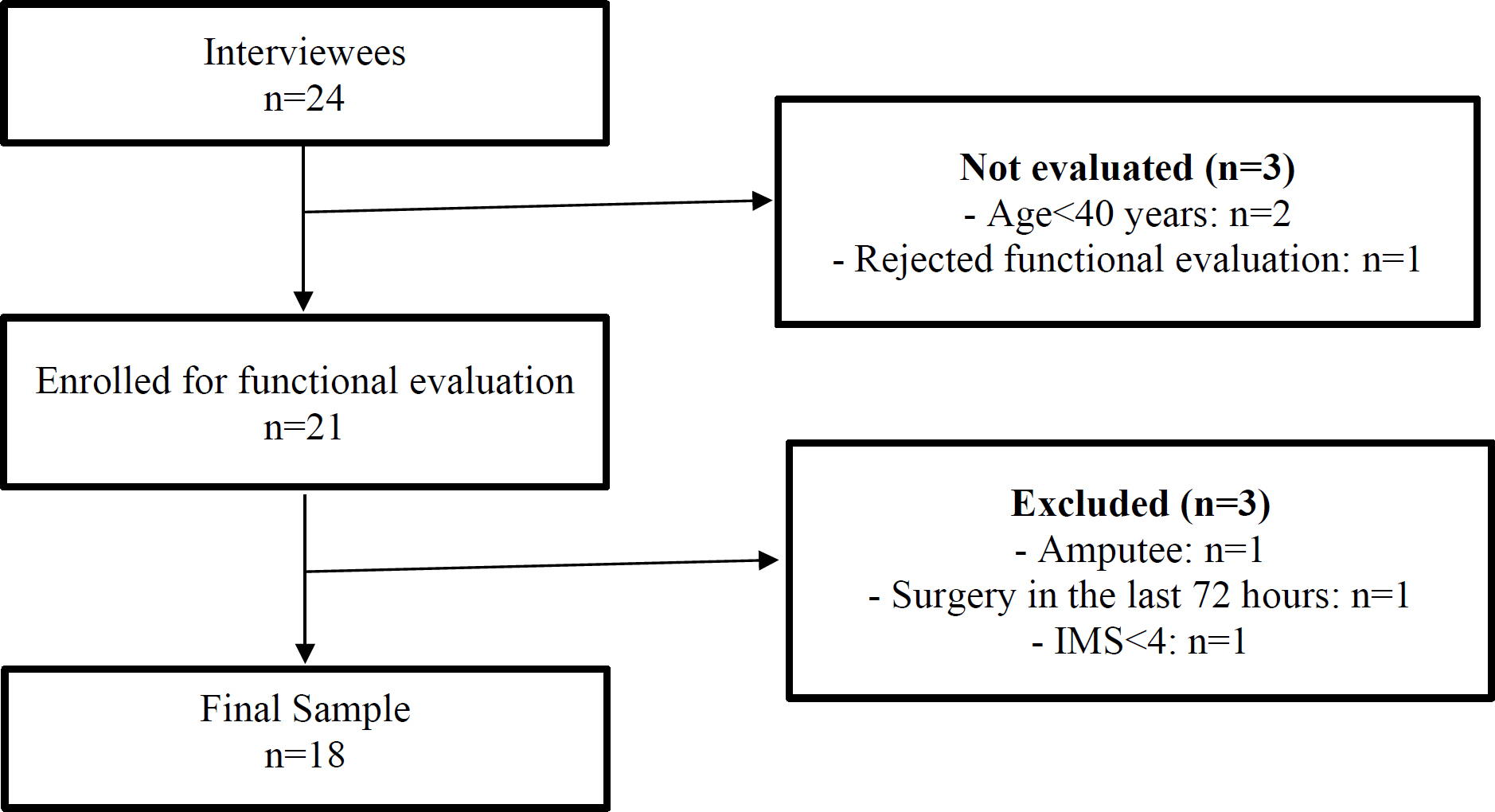
Women admitted to the hospital, older than 40 years of age, diagnosed with gynecological cancer confirmed by biopsy, able to communicate and understand have been enrolled in the study. Exclusionary criteria were patients with neuromuscular diseases, those who refused to submit to functional evaluation, amputees, no trunk control (Intensive Care Unit Mobility Scale – IMS<4)12, and submitted to surgery in the last 72 hours.
The sample size (32 patients) was based on the epidemiological study of Vieira et al.13 that addressed the incidence of gynecological cancer in the Brazilian population, with level of significance of 95%, statistical power of 80% (likelihood of detection), 98% of positive exposed and risk/prevalence difference of 48.
Data were collected from active search of medical charts, potential participants were approached at the hospital facilities. Those who accepted to join signed the Informed Consent Form (ICF) and were submitted to a single physical exam to evaluate the muscle strength according to the Medical Research Council (MRC) criteria, an evaluation method validated by Kovelis et al.14, where 12 muscle groups were tested. No changes of muscle strength is scored as 60/60, below 48/60, significant muscle weakness and below 36/60, severe muscle weakness14.
The questionnaire of the Functional Independence Measure (FIM)15 validated for Brazil was applied to evaluate the functional status, it measures the functional and independence capacity and estimates the degree of difficulty or limitations attributed to each individual. The performance of the domains motor, cognitive and social was evaluated for the individual. Each item varies in seven levels with the respective measurements, being 7, total independence and 1, total assistance. Total FIM score is given by the sum of the levels of each dimension and can range between 18 and 126 grades. The levels of dependence are classified according to FIM total score – 18: complete assistance; 19 to 60: modified assistance (up to 50% of the tasks); 61 to 103: modified assistance (up to 25% of the tasks) and 104 to 126: complete/modified independence16.
The data were tabulated and analyzed with the software IBM SPSS Statistics17 (version 29.0.2.0). Continuous variables were analyzed through measures of central tendency (mean and standard deviation). Spearman and Kendall18 tests were utilized to verify the correlation among the variables analyzed. The following classification of correlation was utilized for the analyzes: values between 0 and 0.3 are considered biologically negligible; between 0.31 and 0.5 indicate weak correlations, between 0.51 and 0.7, moderate correlations; between 0.71 and 0.9, strong correlations and values above 0.9, very strong correlation according to Mukaka19.
The Institutional Review Board of "Centro Universitário Tabosa de Almeida (Asces-Unita)" approved the study, report number 6,498,356 (CAAE (submission for ethical review): 75182023.7.0000.5203) in compliance with Directive 466/1220, in regard to anonymity, privacy, protection of the image and non-stigmatization of the participants.
RESULTS
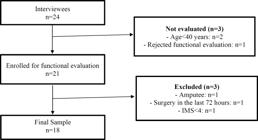
Initially, 24 women were interviewed, of which 6 were excluded for not meeting the eligibility criteria, eventually the final sample consisted of 18 participants (Figure 1)21. The volunteer participants diagnosed with gynecological cancer with mean age of 56 (±8.8) years were evaluated in the present study, whose main characteristics are presented in Table 1. Cervical cancer was the most prevalent accounting for 67% of the sample. The most common treatment was chemotherapy (50%) and mean length of hospital stay of 5 (±8.5) days.
The mean score of the six dimensions of FIM is presented in Table 2. The mean total score of FIM which includes the dimension motor and cognitive was 111, meaning complete/modified independence level. Within the domain motor, the highest mean score was attributed to the dimension selfcare (35 points) and the lowest score, to the dimension locomotion (5.5 points).
The mean score of total MRC was 48 (±5.8). The mean score of the upper and lower limbs is similar (24) as shown in Table 3.
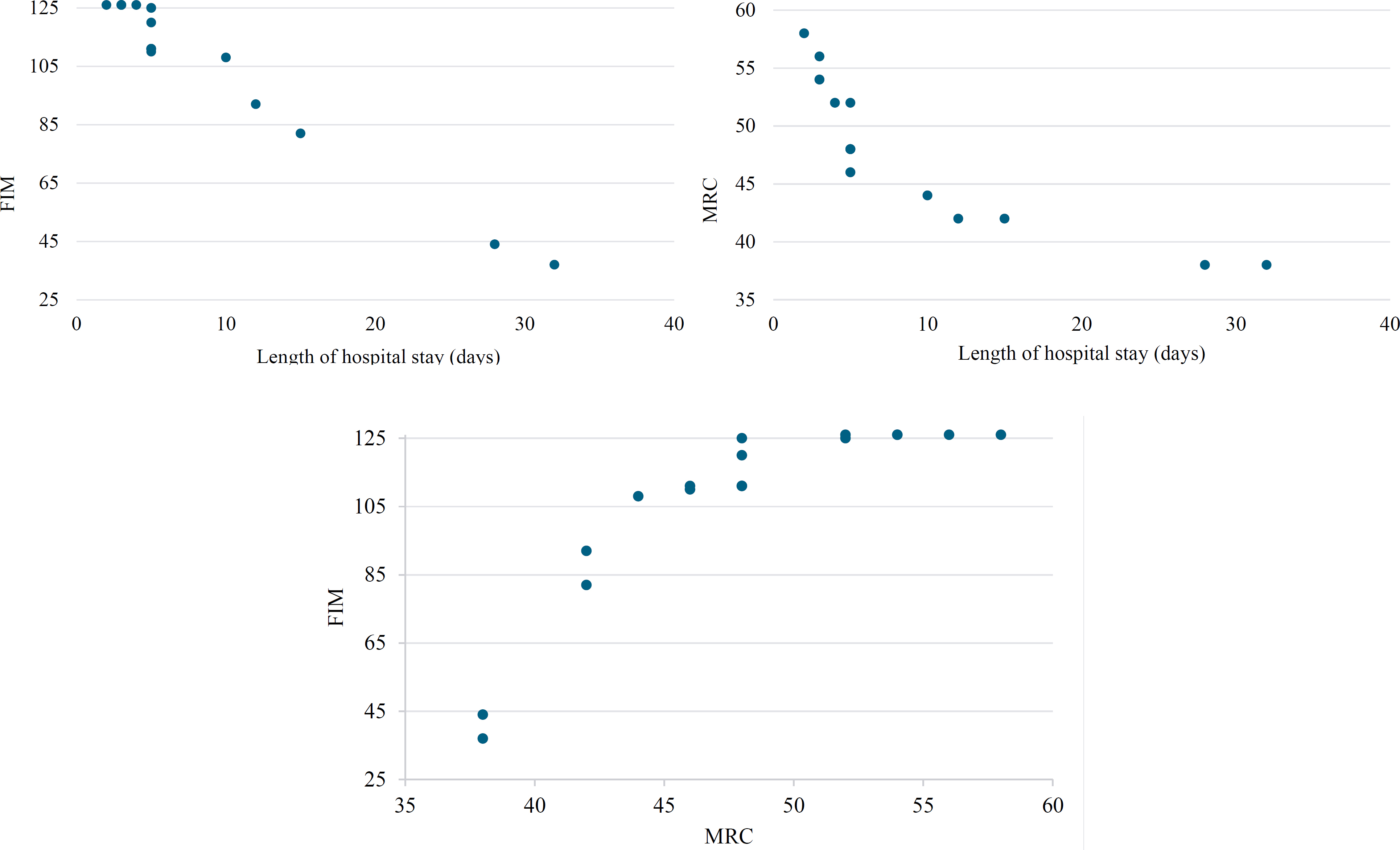
Spearman (ρ) and Kendall (r) methods were utilized to correlate the variables peripheral muscle strength and functional status and for other correlations between functional status and length of hospital stay and peripheral muscle strength and length of hospital stay (Figure 2).
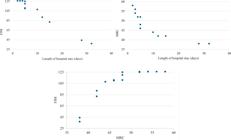
Correlation among variables length of hospital stay and functional status, length of hospital stay and peripheral muscle strength, peripheral muscle strength and functional status, respectively
The plot created by the correlation reveals a strong and positive correlation between peripheral muscle strength and functional status (ρ=0.954; r = 0.891; p< 0.01), as high the muscle strength, better is the functional independence of the individual (Figure 2). The correlation between the variables length of hospital stay and peripheral muscle strength (ρ=0.953; r=0.886; p≤ 0.01), and length of hospital stay and functional status (ρ=0.917; r=0.869; p≤ 0.01) reveals a strong and negative relation, the longer the hospital stay, lower is the peripheral muscle strength and functional independence of the individual (Figure 2).
DISCUSSION
Publications on functional status of patients with gynecological cancer are scarce in Brazil, reason for which, the impacts of length of hospital stay over peripheral muscle strength and functional status are being investigated because they are still unknown. The analyzes of the outcomes is relevant to best understand the factors beyond the oncological process, including activities of the daily life which allows a broad approach to the treatment.
Cervical cancer was the most prevalent among the types of gynecological cancer in the sample investigated, similar to the estimates of the National Cancer Institute (INCA) of 17,010 new cases of cancer in the triennium 2023-202522. Radiotherapy is the most recommended treatment option based on disease staging and individual factors, which was not confirmed for the study sample, where only 39% of the women have chosen this treatment.
Although the ideal treatment of choice is an important step in the curative process of the disease, it causes physical, psychological and social impacts, directly interfering on the functional status of these individuals. The evaluation of the functional status comprehends the practical aspects of self-are and ability to perform basic and complex activities of the daily life24. FIM is an assessment tool that aims to evaluate the levels of independence or assistance to perform activities of the daily life. It was applied to the study sample, revealing that the patients presented mean of complete or modified independence (FIM=111), i.e., they do not need assistance to perform activities of the daily life
The results of the present investigation suggest that the functional status of the individuals declined as longer the length of hospital stay was, specifically after the fifth day when they needed assistance of up to 25% to perform the task. These data are similar to the study of Nascimento et al.25, where the individuals had best functional level at hospital admission and declined between the fifth and tenth days. The damage of the physical function may be related to the level of assistance provided and the impact of the oncologic treatment.
The domain locomotion – ambulate or wheel chair – reached the lowest score (FIM =5.5). The inpatients needed maximal assistance, they perform from 25% to 49% of the effort of locomotion to walk at least 15 meters requiring assistance from anyone else. This result can be the consequence of weakness of muscle strength of the lower limbs of the inpatients whose MRC score was 24. The study of Nikiforos26 highlights that the decline of muscle strength during hospital stay is proportionally higher on lower limbs, mainly ankles and hips, which was not possible to confirm for the study sample where muscle weakness was similar in upper and lower limbs.
Most of the studies that adopt FIM for evaluation of the functional status measured twice, the first at admission and the other at discharge, showing lower functional status at hospital discharge similar to the study of Ramos et al.27. It was not possible to make this evaluation for the study sample since the tool utilized did not allow a longitudinal comparison between the decline of the functionality and days of hospital stay, failing to provide the comparison of the individual in two moments as the individuals were evaluated only once. Future longitudinal studies are suggested for a more comprehensive analysis of the individuals evaluated.
In 2022, Silva et al.28 conducted a study to evaluate muscle strength with dynamometry in 43 individuals with cancer. However, MRC was utilized in the present study, a validated scale that assesses six pairs of bilateral muscle groups to check the peripheral muscle strength16. The evaluation revealed that the individuals presented significant muscle weakness with mean MRC=48. Since chemotherapy was the treatment utilized at the most, muscle weakness may have been caused as part of the side effects, causing functional damages and hampering the performance of physical activities because of oncologic fatigue, a symptom frequently reported by these patients. This can cause a decline of the functional level as suggested by the current investigation, reinforcing the findings of the literature which show significant correlation between muscle strength and functionality24.
Orell et al.29 conducted a study with patients with head and neck cancer submitted to radiotherapy and concluded that the muscle strength was impacted by the oncologic treatment where the patients presented muscle weakness after the treatment began. Muscle strength can be a marker to evaluate the impact of the treatment over the functionality. As the present study sample was not submitted to follow up, the results are not similar.
The data of the current analysis suggest a strong and positive correlation between muscle strength and functional status, different from the literature, that suggests a moderate and positive correlation. Different results can be associated with the evaluation tool utilized by the studies that usually adopt physical tests as the 6-minute walk test (6MWT)30, sit to stand test31 and the Timed Up and Go (TUG) test32. The study sample evaluated the performance while performing a certain activity through FIM.
After the analysis of the correlation between the length of hospital stay and peripheral muscle strength, the results of the present study were similar to Cordeiro et al.33, who reported a negative impact on muscle strength in patients with longer hospitalization, being immobilization at bed one of the reasons, the longer the hospital stay, higher was the loss of muscle strength.
Käfer et al.34 evaluated the functional status of 42 oncologic patients at an intensive care unit and reached similar results of the present study. They noticed an inversely proportional relation between functional status and length of hospital stay, the patients admitted had a lower functionality score at hospital discharge compared with admission and this score declines as long as the patient remains at the hospital. As longer the length of hospital stay, greater is the functional damage like other authors have also concluded35,36.
The results herein suggest a negative correlation between length of hospital stay and functional status impacting more as hospital stay prolongs. In this context, early physiotherapy treatment at the hospital is important to minimize the impact of hospitalization as shown by Santos et al.37, where the investigators report that patients submitted to physiotherapy had their functionality improved when evaluation is compared with the results at hospital discharge. Physiotherapy at the hospital aims to mobilize the patient as a whole with his/her own resources for muscle strength, articular mobility and functional independence whose main objective is to reduce the levels of physical inactivity and bed immobilization38.
CONCLUSION
Based on the literature and the current investigation, the longer the hospital stay, greater are the functional losses. It is important to understand the profiles of inpatients to develop preventive strategies for treatment-associated comorbidities to reduce functional limitations.
References
-
1 Luciana MR, Érica BD, Maria EH, et al. Mulheres com câncer ginecológico: significado da braquiterapia. Ciênc cuid saúde. 2021;20:e56295. doi: http://dx.doi.org/10.4025/cienccuidsaude.v20i0.56295
» http://dx.doi.org/10.4025/cienccuidsaude.v20i0.56295 - 2 Instituto Nacional de Câncer José Alencar Gomes da Silva. Estimativa 2020: incidência de câncer no Brasil. 3. ed. Rio de Janeiro: INCA; 2019.
-
3 Šarenac T, Mikov M. Cervical cancer, different treatments and importance of bile acids as therapeutic agents in this disease. Front Pharmacol. 2019;10:484. doi: https://doi.org/10.3389/fphar.2019.00484
» https://doi.org/10.3389/fphar.2019.00484 -
4 Machado AS, Machado AS, Guilhem DB. Profile of hospitalizations for neoplasms in the Brazilian Unified Health System: a time-series study. Rev Saúde Pública. 2021;55:83. doi: https://doi.org/10.11606/s1518-8787.2021055003192
» https://doi.org/10.11606/s1518-8787.2021055003192 -
5 Ministério da Saúde (BR), Secretaria de Atenção à Saúde. SIA/SUS - Sistema de Informações Ambulatoriais. Manual de bases técnicas da oncologia [Internet]. 25. ed. Brasília, DF: MS; 2019. [acesso 2024 jul 23]. Disponível em: http://sbradioterapia.com.br/wp-content/uploads/2019/05/Manual-Oncologia_25a_edicao.pdf
» http://sbradioterapia.com.br/wp-content/uploads/2019/05/Manual-Oncologia_25a_edicao.pdf -
6 Campos A, Cortés E, Martins D, et al. Development of a flexible rehabilitation system for bedridden patients. J Braz Soc Mech Sci Eng. 2021;43(361). doi: https://doi.org/10.1007/s40430-021-03073-7
» https://doi.org/10.1007/s40430-021-03073-7 -
7 Cardoso R, Parola V, Neves H, et al. Physical rehabilitation programs for bedridden patients with prolonged immobility: a scoping review. Int J Environ Res Public Health. 2022;19(11):6420. doi: https://doi.org/10.3390/ijerph19116420
» https://doi.org/10.3390/ijerph19116420 -
8 Carvalho TC, Valle AP, Jacinto AF, et al. Impact of hospitalization on the functional capacity of the elderly: a cohort study. Rev Bras Geriatr Gerontol. 2018;21(2):134-42. doi: https://doi.org/10.1590/1981-22562018021.170143
» https://doi.org/10.1590/1981-22562018021.170143 -
9 Robinson CC, Rosa RG, Kochhann R, et al. Qualidade de vida pós-unidades de terapia intensiva: protocolo de estudo de coorte multicêntrico para avaliação de desfechos em longo prazo em sobreviventes de internação em unidades de terapia intensiva brasileiras. Rev Bras Ter Intensiva. 2018;30(4):405-13. doi: https://doi.org/10.5935/0103-507X.20180063
» https://doi.org/10.5935/0103-507X.20180063 -
10 Borges VM, Oliveira LRC, Peixoto E, et al. Fisioterapia motora em pacientes adultos em terapia intensiva. Rev Bras Ter Intensiva. 2009;21(4):446-52. doi: https://doi.org/10.1590/S0103-507X2009000400016
» https://doi.org/10.1590/S0103-507X2009000400016 -
11 Sibinelli M, Maioral DC, Falcão ALE, et al. Efeito imediato do ortostatismo em pacientes internados na unidade de terapia intensiva de adultos. Rev Bras Terap Intens. 2012;24(1):64-70. doi: https://doi.org/10.1590/S0103-507X2012000100010
» https://doi.org/10.1590/S0103-507X2012000100010 -
12 Kawaguchi YMF, Nawa RK, Figueiredo TB, et al. Perme intensive care unit mobility score and icu mobility scale: translation into portuguese and cross-cultural adaptation for use in Brazil. J Bras Pneumol. 2016;42(6):429-34. doi: https://doi.org/10.1590/S1806-37562015000000301
» https://doi.org/10.1590/S1806-37562015000000301 -
13 Vieira WS, Diniz MBC, Comel JC. Perfil do atendimento ao paciente oncológico em unidade hospitalar de referência regional de urgência e emergência do interior do Rio Grande do Sul, Brasil. Mundo Saúde. 2020;44:193-206. doi: https://doi.org/10.15343/0104-7809.202044193206
» https://doi.org/10.15343/0104-7809.202044193206 -
14 Kovelis D, Segretti NO, Probst VS, et al. Validação do modified pulmonary functional status and dyspnea questionnaire e da escala do medical research council para o uso em pacientes com doença pulmonar obstrutiva crônica no Brasil. J bras pneumol. 2008;34(12):1008-18. doi: https://doi.org/10.1590/S1806-37132008001200005
» https://doi.org/10.1590/S1806-37132008001200005 -
15 Riberto M, Miyazaki MH, Jucá SSH, et al. Validação da versão brasileira da medida de independência funcional. Acta Fisiátrica. 2004;11(2):72-6. doi: https://doi.org/10.5935/0104-7795.20040003
» https://doi.org/10.5935/0104-7795.20040003 -
16 Latronico N, Gosselink R. Abordagem dirigida para o diagnóstico de fraqueza muscular grave na unidade de terapia intensiva. Rev Bras Ter Intensiva. 2015;27(3):199-201. doi: https://doi.org/10.5935/0103-507X.20150036
» https://doi.org/10.5935/0103-507X.20150036 -
17 SPSS®: Statistical Package for Social Science (SPSS) [Internet]. Versão 29.0.2.0. [Nova York]. International Business Machines Corporation. [acesso 2024 mar 9]. Disponível em: https://www.ibm.com/br-pt/spss?utm_content=SRCWW&p1=Search&p4=43700077515785492&p5=p&gclid=CjwKCAjwgZCoBhBnEiwAz35Rwiltb7s14pOSLocnooMOQh9qAL59IHVc9WP4ixhNTVMjenRp3-aEgxoCubsQAvD_BwE&gclsrc=aw.ds
» https://www.ibm.com/br-pt/spss?utm_content=SRCWW&p1=Search&p4=43700077515785492&p5=p&gclid=CjwKCAjwgZCoBhBnEiwAz35Rwiltb7s14pOSLocnooMOQh9qAL59IHVc9WP4ixhNTVMjenRp3-aEgxoCubsQAvD_BwE&gclsrc=aw.ds -
18 Miot HA. Correlation analysis in clinical and experimental studies. J Vasc Bras. 2018;17(4):275-9. doi: https://doi.org/10.1590/1677-5449.174118
» https://doi.org/10.1590/1677-5449.174118 - 19 Mukaka MM. Statistics corner: a guide to appropriate use of correlation coefficient in medical research. Malawi Med J. 2012;24(3):69-71.
- 20 Conselho Nacional de Saúde (BR). Resolução n° 466, de 12 de dezembro de 2012. Aprova as diretrizes e normas regulamentadoras de pesquisas envolvendo seres humanos. Diário Oficial da União, Brasília, DF. 2013 jun 13; Seção I:59.
-
21 Page MJ, McKenzie JE, Bossuyt PM, et al. A declaração PRISMA 2020: diretriz atualizada para relatar revisões sistemáticas. Rev Panam Salud Publica. 2022;46:e112. doi: https://doi.org/10.26633/RPSP.2022.112
» https://doi.org/10.26633/RPSP.2022.112 -
22 Santos MO, Lima FCS, Martins LFL, et al. Estimativa de incidência de câncer no Brasil, 2023-2025. Rev Bras Cancerol. 2023;69(1):e-213700. doi: https://doi.org/10.32635/2176-9745.RBC.2023v69n1.3700
» https://doi.org/10.32635/2176-9745.RBC.2023v69n1.3700 -
23 Canary PC, Almeida CE. A radioterapia do colo do útero no Brasil. Rev Bras Cancerol. 1998;44(2):101-7. doi: https://doi.org/10.32635/2176-9745.RBC.1998v44n2.2802
» https://doi.org/10.32635/2176-9745.RBC.1998v44n2.2802 -
24 Pires PA, Medeiros RA, Alves KD, et al. Impacto da pandemia da COVID-19 no estado funcional dos idosos: revisão de escopo. Fisioter Bras. 2023;24(2):231-48. doi: https://doi.org/10.33233/fb.v24i2.5255
» https://doi.org/10.33233/fb.v24i2.5255 -
25 Nascimento NS, Mattos NDCPM, Marques SS, et al. Influência do tempo de internamento sobre a força muscular respiratória e nível funcional de adultos com leucemia e linfoma. Rev Bras Cancerol. 2018;64(4):533-9. doi: https://doi.org/10.32635/2176-9745.RBC.2018v64n4.202
» https://doi.org/10.32635/2176-9745.RBC.2018v64n4.202 -
26 Nikiforos MN, Malakopoulou M, Exarchos T. Development of a diagnostic tool for balance disorders based on machine learning techniques. advances in experimental medicine and biology. 2021;1338:47-54. Doi: https://doi.org/10.1007/978-3-030-78775-2_7
» https://doi.org/10.1007/978-3-030-78775-2_7 - 27 Ramos SM, Vaceli JVS, Cavenaghi OM, et al. Associação entre funcionalidade e tempo de permanência de pacientes críticos em UTI. Fisioterapia Brasil. 2021;22(2):120-31.
-
28 Silva IL, Ribeiro TG, Borges KWC. Análise de força muscular e mobilidade de pacientes com câncer hematológico atendidos pela fisioterapia em um centro de assistência de alta complexidade em oncologia. Rev Bras Cancerol. 2022;68(4):e-052548. doi: https://doi.org/10.32635/2176-9745.RBC.2022v68n4.2548
» https://doi.org/10.32635/2176-9745.RBC.2022v68n4.2548 -
29 Orell H, Schwab U, Saarilahti K, et al. Nutritional counseling for head and neck cancer patients undergoing (chemo) radiotherapy-a prospective randomized trial. Front Nutr. 2019;6:22. doi: https://doi.org/10.3389/fnut.2019.00022
» https://doi.org/10.3389/fnut.2019.00022 -
30 Soares VP, Dias AF, Jesus DM, et al. Correlação entre força muscular e capacidade funcional em hipertensos. Rev Pesq Fisio. 2016;6(1):6-15. Disponível em: https://doi.org/10.17267/2238-2704rpf.v6i1.796
» https://doi.org/10.17267/2238-2704rpf.v6i1.796 - 31 Sousa JL, Silva IA, Ferreira LGF. Fadiga e nível de capacidade funcional em pacientes oncológicos. Rev Pesq Saúde. 2020;21(1):26-9.
-
32 Nakano J, Fukushima T, Tanaka T, et al. Physical function predicts mortality in patients with cancer: a systematic review and meta-analysis of observational studies. Supportive Care in Cancer. 2021;29(10):5623-34. doi: https://doi.org/10.1007/s00520-021-06171-3
» https://doi.org/10.1007/s00520-021-06171-3 - 33 Cordeiro ALL, Queiroz GO, Souza MM, et al. Tempo de ventilação mecânica e força muscular periférica na pós-cirurgia cardíaca. Int J Cardiovasc Sci (Impr). 2016;29(2):134-8.
-
34 Käfer DC, Matos EO, Cesaro D, et al. Funcionalidade de indivíduos com doença oncológica internados em unidades de terapia intensiva. Rev Bras Cancerol. 2024;70(2):e-234605. Disponível em: https://doi.org/10.32635/2176-9745.RBC.2024v70n2.4605
» https://doi.org/10.32635/2176-9745.RBC.2024v70n2.4605 -
35 Luna ECW, Perme C, Gastaldi AC. Relationship between potential barriers to early mobilization in adult patients during intensive care stay using the Perme ICU Mobility score. Can J Respir Ther. 2021;57(1):148-53. doi: https://doi.org/10.29390/cjrt-2021-018
» https://doi.org/10.29390/cjrt-2021-018 -
36 Pereira CS, Carvalho AT, Bosco AD, et al. The Perme scale score as a predictor of functional status and complications after discharge from the intensive care unit in patients undergoing liver transplantation. Rev Bras Ter Intensiva. 2019;31(1):57-62. doi: https://doi.org/10.5935/0103-507x.20190016
» https://doi.org/10.5935/0103-507x.20190016 - 37 Santos S, Marques J, Gabrielle L. Funcionalidade e nível de dor de pacientes atendidos pela fisioterapia em um hospital público. Rev CPAQV. 2023;14(2):1.
-
38 Lodi MKPL, Roussenq SC, Dubón AP, et al. Importância da atuação fisioterapêutica hospitalar e ambulatorial ao paciente onco-hematológico: uma revisão de literatura. Braz J Desenvolver. 2021;7(10):97974-89. doi: https://doi.org/10.34117/bjdv7n10-220
» https://doi.org/10.34117/bjdv7n10-220
Edited by
-
Scientific-editor:
Anke Bergmann. Orcid iD: https://orcid.org/0000-0002-1972-8777

 Source: The Authors, based on PRISMA
 Caption: MRC = Medical Research Council.