
 Community and built environment for physical activity in Brazilian children and adolescents: an updated systematic review for the 2026 Report Card Brazil
Abstract
Abstract The built and community environment is a key determinant of physical activity (PA) in youth. This study updated evidence on environmental indicators associated with PA among Brazilian children and adolescents to inform the 2025 Brazil Report Card. A systematic review was conducted following PRISMA guidelines. LILACS, SciELO, and MEDLINE/PubMed were searched for studies published between January 1, 2020, and December 31, 2024. Eligible studies included Brazilian samples aged 0–19 years assessing at least one community or built environment indicator related to PA. Two reviewers independently screened, selected, and extracted data. Environmental domains comprised access and availability, infrastructure quality, proximity, safety, environmental quality, and social environment. Fourteen studies met inclusion criteria, including one nationally representative study. Evidence was concentrated in the South, Southeast, and Northeast, with no studies from the North or Center-West. Most studies combined perceived and objective measures (e.g., GIS, MAPS, PARA, NEWS-Y). Findings identified structural barriers: limited active transport infrastructure (e.g., low prevalence of bike lanes), long home–school distances, insufficient public spaces within 500 meters of residence, and poor-quality facilities. School environments often lacked specialized PA infrastructure. Perceived neighborhood safety was a consistent barrier, especially among girls. Despite methodological advances, environmental inequalities persist across Brazilian regions. Inadequate infrastructure, poor accessibility, and safety concerns remain major barriers to youth PA. Policies improving the built environment are essential to promote equitable opportunities for active living.
Key words:
Built environment; Physical activity; Youth; School environment
Resumo
Resumo O ambiente construído e comunitário é determinante da atividade física (AF) em crianças e adolescentes. Este estudo atualizou evidências sobre indicadores ambientais associados à AF entre jovens brasileiros para subsidiar o Report Card Brasil 2025. Realizou-se revisão sistemática seguindo as diretrizes PRISMA. LILACS, SciELO e MEDLINE/PubMed foram pesquisados para estudos publicados entre 1º de janeiro de 2020 e 31 de dezembro de 2024. Foram incluídos estudos com amostras brasileiras de 0 a 19 anos que avaliaram ao menos um indicador do ambiente comunitário ou construído relacionado à AF. Dois revisores realizaram independentemente a triagem, seleção e extração dos dados. Os domínios ambientais incluíram acesso e disponibilidade, qualidade da infraestrutura, proximidade, segurança, qualidade ambiental e ambiente social. Quatorze estudos atenderam aos critérios, incluindo um estudo com representatividade nacional. As evidências concentraram-se nas regiões Sul, Sudeste e Nordeste, sem estudos no Norte ou Centro-Oeste. A maioria combinou medidas percebidas e objetivas (por exemplo, GIS, MAPS, PARA, NEWS-Y). Os achados identificaram barreiras estruturais: infraestrutura limitada para transporte ativo (baixa prevalência de ciclovias), longas distâncias entre casa e escola, acesso insuficiente a espaços públicos em até 500 m da residência e instalações de baixa qualidade. Ambientes escolares frequentemente careciam de infraestrutura específica para AF. A percepção de insegurança no bairro foi barreira consistente, especialmente entre meninas. Apesar de avanços metodológicos, persistem desigualdades ambientais no Brasil. Infraestrutura inadequada, baixa acessibilidade e insegurança permanecem barreiras importantes à AF entre jovens. Políticas de melhoria do ambiente construído são essenciais para promover oportunidades equitativas de vida ativa.
Palavras-chave:
Ambiente construído; Atividade física; Jovens; Ambiente escolar
INTRODUCTION
Promoting physical activity in childhood and adolescence is a global public health priority; however, recent data remain alarming1,2. Globally, more than 80% of adolescents do not meet the physical activity guidelines recommended by the World Health Organization (WHO), and this prevalence increases with age, leading to significant lifelong health consequences3,4. These findings underscore the urgent need to promote daily moderate-to-vigorous physical activity within supportive environments that facilitate active behaviors5.
To understand the multiple factors influencing these behaviors, ecological models, such as the one proposed by Sallis et al.6, offer a robust theoretical framework. This model posits that physical activity is determined by a complex interplay of factors at multiple levels, ranging from individual (psychological, biological) and social (family, friends) to environmental and policy factors6,7. Within this framework, increasing attention has been directed toward structural and contextual determinants embedded in community settings1,6. Accordingly, the built environment, which includes urban design, transportation infrastructure, the availability and quality of public spaces, and perceived safety, emerges as a critical structural determinant capable of either facilitating or inhibiting an active lifestyle8,9. Environments that provide access to parks, safe sidewalks, bike lanes, and quality recreational spaces are consistently associated with higher levels of physical activity in youth10,11.
In Brazil, pronounced social and regional inequalities, urban heterogeneity, unequal distribution of resources, and high levels of violence exacerbate structural barriers to physical activity, particularly among vulnerable populations. Previous systematic reviews for the Report Card – Brazil, conducted by Manta et al.12 and Victo et al.13 had already mapped this landscape. The work by Manta et al.12 consolidated evidence up to 2018, identifying a concentration of studies in the South and Southeast regions and a lack of data from the North and Center-West regions, while also noting the predominance of self-reported perception instruments and a lack of standardization in environmental measures12. The update by Victo et al.13 covering the period 2018-2019, confirmed the persistence of these regional gaps and the importance of indicators such as road safety and school environment characteristics, while also highlighting a methodological advancement with the inclusion of studies combining perceived and objective measures13.
Given the rapid transformation of environments and the continued growth of research in this field, periodic updates are essential to monitor progress and identify persistent gaps. Tracking the evolution of scientific evidence not only highlights emerging trends but also supports the development of more effective and equitable public health policies aimed at promoting physical activity among Brazilian youth. Therefore, this study aims to update evidences regarding the built environment and physical activity, with data from 2020 to 2024.
METHODS
Study design
The review updates previous systematic reviews conducted as part of the Brazil Report Card initiative, specifically building on the work of Manta et al.12 and Victo et al.13. The review was conducted in accordance with the Preferred Reporting Items for Systematic Reviews and Meta-Analyses (PRISMA) guidelines. The protocol for this review was developed a priori and follows established methodological standards for systematic reviews of observational studies. This study updates the systematic review of community and built environment indicators of physical activity among Brazilian children and adolescents (2020–2024) to inform the 2026 Brazil Report Card.
Outcome definition
For this review, community and built environment outcomes were defined as environmental attributes associated with opportunities for and participation in physical activity within community settings. Following the framework established in previous reviews, we considered the following environmental domains: access and availability; infrastructure quality; proximity; safety; environmental quality; and social environment.
Indicators were assessed using either perceived (subjective) or objective measures. As in previous reviews, we excluded studies examining social indicators (eg, socioeconomic status or educational level) or social support variables (eg, encouragement from family or friends) when assessed in isolation and not in conjunction with environmental factors.
Search strategy
A comprehensive search was conducted in three electronic databases: LILACS (Literatura Latino-Americana em Ciências da Saúde), SCIELO (Scientific Electronic Library Online), and MEDLINE/PubMed. The search was conducted on July 4, 2025, and was limited to studies published between January 1, 2020, and December 31, 2024, to update the evidence base from the previous reviews.
The search strategy employed three main blocks of descriptors combined using Boolean operators: Block 1 (Environment): "environment" OR "community" OR "built environment" OR "ambiente" OR "comunidade" OR "ambiente construído"; block 2 (Physical Activity): "physical activity" OR "motor activity" OR "atividade física" OR "atividade motora"; block 3 (Population): "child" OR "adolescent" OR "preschool" OR "criança" OR "adolescente" OR "pré-escolar"; and geographic Filter: "Brazil" OR "Brasil". The Boolean operator "AND" was used to combine the three main blocks and the geographic filter. Database-specific truncation symbols were applied as appropriate. Searches were conducted using descriptors in both English and Portuguese to ensure comprehensive coverage of the literature.
Eligibility criteria
Studies were eligible if they met all of the following criteria: (i) original research articles published in peer-reviewed journals; (ii) included children and/or adolescents aged 0–19 years; (iii) studies should have been conducted with Brazilian populations or in Brazilian settings; (iv) the health status of samples should not have specific diseases or clinical conditions as primary inclusion criteria; (v) the publication period should be between January 1, 2020, and December 31, 2024; (vi) studies should have been published in Portuguese or English; and (vii) outcome measures should assess at least one community or built environment indicator related to physical activity as defined above.
The exclusion criteria eliminated (i) theses, dissertations, monographs, conference abstracts, editorials, commentaries, or review articles; (ii) studies conducted exclusively with adult populations (≥20 years) or with populations outside of Brazil; (iii) studies that examined only social indicators (e.g., socioeconomic status, education level) or social support variables in isolation, without assessment of built environment factors; and (iv) studies for which full text could not be obtained after reasonable efforts to contact authors or access through institutional resources.
Study selection process
The study selection process was conducted in two phases by pairs of independent reviewers. In the first phase, two reviewers independently screened all titles and abstracts identified through the database searches against the eligibility criteria using the systematic review management software Rayyan14. Studies were included for full-text review if they appeared to meet the inclusion criteria or if there was insufficient information in the title and abstract to make a definitive decision.
In the second phase, the same pairs of reviewers independently assessed the full texts of all studies included from the first phase. Disagreements at both phases were resolved through discussion between the reviewers, and when consensus could not be reached, a third reviewer was consulted to make the final decision. Before beginning the selection process, all reviewers participated in a calibration exercise using a sample of studies to ensure consistent application of the eligibility criteria.
Data extraction
The extracted data included: study name, location (city), sample, sampling strategy, age group, percentage of girls, instrument used to assess the environment, environmental indicators, and prevalence of each indicator. Data were extracted for the total sample and all reported subgroups. Two authors (DO; LA) independently conducted data extraction, with disagreements resolved by two additional reviewers (DS; RS).
The included studies were organized, and results were grouped according to the following indicators: facilities, programs or spaces available for physical activity; presence of sidewalks or bike lanes; residential proximity; quality and physical activity-related attributes of public open spaces; and safety.
RESULTS
A total of 81 duplicates were identified, and 48 records were excluded. The remaining 381 titles and abstracts were screened for inclusion, with 19 articles selected for full-text review. After full-text screening, duplicate papers and studies lacking relevant information were removed. Reasons for exclusion are detailed in Figure 1. Ultimately, 14 articles were included in this systematic review.
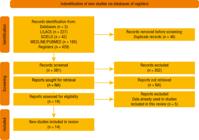
The synthesis of recent data (2020–2024) revealed 14 studies with the following characteristics: Nationally representative (n=1)15. South: Curitiba, PR (n=2)16,17; Porto Alegre, RS (n=2)18,19; Jacarezinho, PR (n=1)20. Northeast: Feira de Santana, BA (n=1)21; Recife, PE (n=1)22, Fortaleza, CE (n=1)23; Lagoa do Carro, PE (n=1)24. Southeast: São Paulo, SP (n=1)25; Viçosa, MG (n=1)26; Diamantina, MG (n=1)27; São Caetano do Sul, SP (n=1)28.
The age groups investigated varied, including preschoolers (3–5 years), children (5–11 years), and adolescents (10–20 years). Sample sizes ranged widely, from 51 preschool children in one study to more than 61,000 adolescents in a study based on PeNSE data (Table 1).
Description of studies on the environment for physical activity (PA) among Brazilian adolescents (n=14).
It is important to note that one study used nationally representative data (Brazil) from the National School Health Survey (PeNSE), with 61,145 adolescents. Most studies used the school environment to recruit and/or assess youth, focusing on students or the surroundings of schools, although some relied on large population-based datasets or objectively measured urban factors.
-
School-based Studies / School Environment (n = 9): Nine of the 14 studies had a clear focus on the school environment or the surroundings of schools, using students as participants. These include studies conducted in São Paulo, SP25, Feira de Santana, BA21, Recife, PE22, Curitiba, PR16,17, Fortaleza, CE23, São Caetano do Sul, SP28, Viçosa, MG26, and Diamantina, MG27 that evaluated individual, family, school, and neighborhood factors.
-
Population-based / Urban / National Studies (n = 5): Five studies were classified as having a population, urban, or national focus, without relying exclusively on the immediate school context; including the study with 61,145 adolescents using PeNSE data and geoprocessing; and studies that assessed urban environmental and biological variables in Porto Alegre, RS18, as well as public facilities using GIS in Lagoa do Carro, PE24.
The studies combined perceived and objective measurements of the environment. Objective assessment was conducted using tools such as Geographic Information Systems (GIS), frequently associated with ArcGIS and Brazilian Census (IBGE) data, to map built and social environments. Field audit protocols, such as the MAPS (micro-scale) and PARA (physical resources) instruments, complemented these approaches by providing concrete data on infrastructure quality. In parallel, perceived environmental assessment, using scales such as NEWS-Y and the ISCOLE questionnaire, captured subjective barriers such as safety and aesthetics, which have a direct impact on the use of public spaces (Table 2).
Results of studies on the environment for physical activity (PA) among Brazilian youth (n = 14).
The school environment, often a focal point for youth PA, presents significant structural limitations. In neighborhood environments, the prevalence of basic recreational facilities, such as public squares sports courts, and soccer fields, is high in some localities. However, analyses of access and quality reveal serious weaknesses in active mobility infrastructure.
Additionally, accessibility to spaces is a major obstacle: approximately 60% of adolescents in Porto Alegre18 did not have a public space within 500 meters of their homes. In Lagoa do Carro24, 76.4% of the sample reporting no built environment for PA.
Safety emerges as a crucial negative environmental indicator, with clear sex-based differences in perception. Perceived crime risk was significantly higher among girls. Likewise, perceived neighborhood unsafety was about twice as high among girls as among boys. The main negative prevalence indicator in school environments highlights the scarcity of specialized facilities for PA practice, such as running/athletics tracks, swimming pools; and usable locker rooms.
The regional distribution of studies reveals an asymmetrical pattern of scientific production regarding the built environment and physical activity among Brazilian youth, with a greater concentration of evidence in the South, Southeast, and Northeast regions, in addition one nationally representative surveys (Table 3).
Regional distribution of studies on the environment for physical activity among Brazilian youth (n=14).
DISCUSSION
This systematic review updated the evidence on community and built environment indicators associated with physical activity among Brazilian children and adolescents, incorporating 14 studies published between 2020 and 2024. The findings confirm and extend prior reviews12,13, demonstrating increased scientific attention to the topic while highlighting persistent structural challenges, including regional disparities in research coverage, methodological heterogeneity, and inadequate environments that do not adequately support physical activity.
The distribution of studies included in this update remained concentrated in the South (n=5), Southeast (n=4), and Northeast (n=4) regions, a pattern consistent with the reviews by Manta et al.12 and Victo et al.13. The absence of research from the North and Center-West regions remains a critical gap, limiting the generalizability of the findings to the entire national territory and masking distinct environmental realities, such as those in rural and Amazonian contexts. This centralization of scientific production may perpetuate inequities in public policymaking by excluding regional specificities29. International literature also documents this phenomenon, with systematic reviews in middle-income countries pointing to a concentration of research in urban centers30, suggesting this is not just a Brazilian challenge but a structural one in contexts of inequality.
From a methodological standpoint, a positive advancement was observed. Compared to previous reviews, which noted a predominance of self-reported perception instruments, this update revealed a greater combination of subjective and objective measures. The use of Geographic Information Systems (GIS), field audit protocols like MAPS (Microscale Audit of Pedestrian Streetscapes) and PARA (Physical Activity Resource Assessment), and the geoprocessing lend greater robustness to the evidence. This progress aligns national research with an international trend that recognizes the importance of multidimensional approaches to capture the complexity of the person-environment interaction10. However, the diversity of instruments and the lack of standardized indicators still hinder direct comparisons between studies and the performance of meta-analyses, a challenge already noted in international reviews and which remains a significant barrier to more robust syntheses11.
The school environment continues to be the most investigated context, reflecting its potential as a strategic space for physical activity promotion. However, the findings are concerning. Studies such as Ferrari et al.25 in São Paulo (SP) reveal a critical lack of support infrastructure, with 92% of schools lacking swimming pools and 74% without adequate changing rooms. The absence of these facilities, combined with the underutilization of spaces like courtyards and a lack of diverse materials, transforms the school into an environment that can reinforce sedentary behavior. Such deficiencies are even more pronounced in public schools, deepening inequalities in access to practice opportunities13. International literature corroborates that the quality and diversity of school facilities are significant predictors of physical activity in youth31, highlighting that infrastructure is a fundamental structural determinant.
The studies also reflected marked socioeconomic heterogeneity, including municipalities with contrasting Human Development Index (HDI) levels, such as São Caetano do Sul (SP)28, one of the highest in Brazil, and Lagoa do Carro (PE)24, classified as medium HDI. These disparities likely influence the availability and quality of school and community infrastructure, reinforcing the role of structural inequalities in shaping environmental support for physical activity.
Outside the school walls, infrastructure for active transport and access to public leisure spaces remain structurally inadequate. Data from PeNSE, analyzed by Silva et al.15, indicate that 60% of adolescents live more than 1,500 meters from school, a distance that in itself discourages walking or cycling. When combined with precarious routes such as the low presence of bike lanes (11.9%) in contrast to sidewalks (81.9%) in Porto Alegre (RS)18, active transport becomes unfeasible or dangerous. Inaccessibility is another critical factor: in Porto Alegre, 60% of adolescents did not have a public space within a 500-meter radius of their homes, and in Lagoa do Carro (PE)24, 76% of the sample had no built environment for practice. These data suggest that the physical inactivity of many young people is not an individual choice but a rational response to hostile environments devoid of opportunities8. This finding aligns with international literature, which demonstrates that proximity to quality public spaces is a consistent predictor of physical activity in children and adolescents32, and that lack of access functions as a structural barrier that cannot be overcome by isolated individual interventions.
Safety emerged as a consistent determinant of public space utilization, particularly among girls. Studies conducted in Viçosa (MG)26 and Lagoa do Carro (PE)24 substantially higher perceptions of neighborhood crime among girls, in some cases nearly double those of boys. Perceived insecurity operates as a gendered barrier to mobility and physical activity, limiting independence and access to public spaces33,34. Similar patterns have been reported in other settings characterized by urban violence35, underscoring the importance of safety as both a public health and equity issue.
Collectively, these findings support a critical interpretation: physical inactivity among Brazilian youth should not be framed solely as an issue of individual motivation or knowledge, but as a response to structurally constrained environments. Barriers such as inadequate infrastructure, excessive distance, and perceived insecurity operate independently of individual agency. Accordingly, interventions focused exclusively on education or behavior change are unlikely to be effective without concurrent improvements in the built environment.
This review has limitations. The regional concentration of studies, the predominance of cross-sectional designs that prevent causal inference, and methodological variability are factors that restrict the generalization of the results. The absence of studies from the North and Center-West regions also limits the ability to make specific recommendations for these populations. Nevertheless, the study has strengths, such as the systematic and rigorous search across multiple databases, and the recent update of the evidence base, contributing to a current and contextualized overview of national scientific production on the topic.
CONCLUSION
In summary, proximity, infrastructure quality, active mobility conditions, safety, and school environment remain central determinants of physical activity among Brazilian youth. Advances in methodological approaches reflect greater sophistication in examining environment–behavior relationships; however, regional gaps and inequities in access to supportive environments persist. The built environment should not be understood merely as a backdrop to urban life, but as a structural determinant that shapes opportunities for an active life and, therefore, for health and well-being.
-
How to cite this article
Oliveira DN, Nascimento LA, Leite RNO, Figueiredo TKF, Victo ER, Ferrari G, Silva DRP, Sampaio RAC. Community and built environment for physical activity in Brazilian children and adolescents: an updated systematic review for the 2026 Report Card Brazil. Rev Bras Cineantropom Desempenho Hum 2026, 28: e111202. DOI: https://doi.org/10.1590/1980-0037.2026v28e111202
-
Funding
ERV and this study were financed, in part, by the São Paulo Research Foundation (FAPESP), Brazil. Process Number #2024/14428-7.
-
Ethical approval
This research is in accordance with the standards set by the Declaration of Helsinki.
Data Availability Statement
All data are available from the corresponding author upon reasonable request.
REFERENCES
- 1 WHO: World Health Organization. Global status report on physical activity 2022. 1st ed. Geneva: WHO; 2022.
-
2 Araujo RHO, Werneck AO, Martins CL, Barboza LL, Tassitano RM, Aguilar-Farias N, et al. Global prevalence and gender inequalities in at least 60 min of self-reported moderate-to-vigorous physical activity 1 or more days per week: an analysis with 707,616 adolescents. J Sport Health Sci. 2024;13(5):709-16. https://doi.org/10.1016/j.jshs.2023.10.011 PMid:37923057.
» https://doi.org/10.1016/j.jshs.2023.10.011 -
3 Guthold R, Stevens GA, Riley LM, Bull FC. Global trends in insufficient physical activity among adolescents: a pooled analysis of 298 population-based surveys with 1.6 million participants. Lancet Child Adolesc Health. 2020;4(1):23-35. https://doi.org/10.1016/S2352-4642(19)30323-2 PMid:31761562.
» https://doi.org/10.1016/S2352-4642(19)30323-2 -
4 Pechtl SML, Kim LP, Jacobsen KH. Physical inactivity and sedentariness: languorous behavior among adolescents in 80 countries. J Adolesc Health. 2022;70(6):950-60. https://doi.org/10.1016/j.jadohealth.2021.12.017 PMid:35177343.
» https://doi.org/10.1016/j.jadohealth.2021.12.017 -
5 Chaput JP, Willumsen J, Bull F, Chou R, Ekelund U, Firth J, et al. 2020 WHO guidelines on physical activity and sedentary behaviour for children and adolescents aged 5-17 years: summary of the evidence. Int J Behav Nutr Phys Act. 2020;17(1):141. https://doi.org/10.1186/s12966-020-01037-z PMid:33239009.
» https://doi.org/10.1186/s12966-020-01037-z -
6 Sallis JF, Cerin E, Conway TL, Adams MA, Frank LD, Pratt M, et al. Physical activity in relation to urban environments in 14 cities worldwide: a cross-sectional study. Lancet. 2016;387(10034):2207-17. https://doi.org/10.1016/S0140-6736(15)01284-2 PMid:27045735.
» https://doi.org/10.1016/S0140-6736(15)01284-2 -
7 Giles-Corti B, Timperio A, Bull F, Pikora T. Understanding physical activity environmental correlates: increased specificity for ecological models. Exerc Sport Sci Rev. 2005;33(4):175-81. https://doi.org/10.1097/00003677-200510000-00005 PMid:16239834.
» https://doi.org/10.1097/00003677-200510000-00005 -
8 Smith M, Hosking J, Woodward A, Witten K, MacMillan A, Field A, et al. Systematic literature review of built environment effects on physical activity and active transport: an update and new findings on health equity. Int J Behav Nutr Phys Act. 2017;14(1):158. https://doi.org/10.1186/s12966-017-0613-9 PMid:29145884.
» https://doi.org/10.1186/s12966-017-0613-9 -
9 Ding D, Gebel K. Built environment, physical activity, and obesity: what have we learned from reviewing the literature? Health Place. 2012;18(1):100-5. https://doi.org/10.1016/j.healthplace.2011.08.021 PMid:21983062.
» https://doi.org/10.1016/j.healthplace.2011.08.021 -
10 Nordbø ECA, Nordh H, Raanaas RK, Aamodt G. Promoting activity participation and well-being among children and adolescents: a systematic review of neighborhood built-environment determinants. JBI Evid Synth. 2020;18(3):370-458. https://doi.org/10.11124/JBISRIR-D-19-00051 PMid:32197008.
» https://doi.org/10.11124/JBISRIR-D-19-00051 -
11 Andersen OK, Gebremariam MK, Kolle E, Tarp J. Socioeconomic position, built environment and physical activity among children and adolescents: a systematic review of mediating and moderating effects. Int J Behav Nutr Phys Act. 2022;19(1):149. https://doi.org/10.1186/s12966-022-01385-y PMid:36510203.
» https://doi.org/10.1186/s12966-022-01385-y -
12 Manta S, Silva K, Minatto G, Lopes M, Mello G, Barbosa V Fo. Community and environment for physical activity among young people: a systematic review of the Report Card Brazil 2018. Rev Bras Cineantropom Desempenho Hum. 2018;20(4):543-62. https://doi.org/10.5007/1980-0037.2018v20n4p543
» https://doi.org/10.5007/1980-0037.2018v20n4p543 -
13 Victo ERD, Solé D, Ferrari G. Systematic review of the community environment for physical activity in young people: an update to the Report Card Brazil. Rev Bras Cineantropom Desempenho Hum. 2021;23:e83464. https://doi.org/10.1590/1980-0037.2021v23e83464
» https://doi.org/10.1590/1980-0037.2021v23e83464 -
14 Ouzzani M, Hammady H, Fedorowicz Z, Elmagarmid A. Rayyan: a web and mobile app for systematic reviews. Syst Rev. 2016;5(1):210. https://doi.org/10.1186/s13643-016-0384-4 PMid:27919275.
» https://doi.org/10.1186/s13643-016-0384-4 -
15 Silva JID, Condessa LA, Costa DAS, Célio FA, Malta DC, Andrade ACS, et al. Which physical and social characteristics of Brazilian cities contribute to physical activity of adolescents? Cien Saude Colet. 2023;28(11):3333-45. https://doi.org/10.1590/1413-812320232811.15612022 PMid:37971015.
» https://doi.org/10.1590/1413-812320232811.15612022 -
16 Silva AADP, Lopes AADS, Silva JSB, Prado CV, Reis RS. Características do ambiente no entorno de escolas, distância da residência e deslocamento ativo em adolescentes de Curitiba, Brasil. Rev Bras Epidemiol. 2020;23:e200065. https://doi.org/10.1590/1980-549720200065 PMid:32667463.
» https://doi.org/10.1590/1980-549720200065 -
17 Antoniassi SG, Machado CO, Santos DSD, Santos LD, Höfelmann DA. Tempo de tela, qualidade da dieta de adolescentes e características do entorno escolar. Cien Saude Colet. 2024;29(1):e00022023. https://doi.org/10.1590/1413-81232024291.00022023 PMid:38198315.
» https://doi.org/10.1590/1413-81232024291.00022023 -
18 Dias AF, Gaya AR, Santos MP, Brand C, Pizarro AN, Mota J, et al. Neighborhood environmental factors associated with leisure walking in adolescents. Rev Saude Publica. 2020;54:61. https://doi.org/10.11606/s1518-8787.2020054002222 PMid:32491115.
» https://doi.org/10.11606/s1518-8787.2020054002222 -
19 Mello JB, Mi D, Dias A, Bergmann G, Gaya A, Gaya A. Biological and urban environmental variables as correlates of adolescents’ physical activity. Ativ Fis Saude. 2020;25:1-10. https://doi.org/10.12820/rbafs.25e0134
» https://doi.org/10.12820/rbafs.25e0134 -
20 Oliveira Barbosa R, Castilho dos Santos G, Silva JM, Souza Silva TM, Dias PHG, Correa RC, et al. Does autonomous motivation and self-efficacy mediate associations between environmental factors and physical activity in adolescents? BMC Psychol. 2024;12(1):548. https://doi.org/10.1186/s40359-024-02055-3 PMid:39394162.
» https://doi.org/10.1186/s40359-024-02055-3 -
21 Dias LA, Jesus GMD, Barros AKC, Vieira GO. Ambiente do bairro e da escola e sua associação com atividade física diária e uso de telas. Ativ Fis Saude. 2023;28:1-10. https://doi.org/10.12820/rbafs.28e0300
» https://doi.org/10.12820/rbafs.28e0300 -
22 Queiroz DDR, Aguilar JA, Martins Guimarães TG, Hardman CM, Lima RA, Duncan MJ, et al. Association between body mass index, physical activity and motor competence in children: moderation analysis by different environmental contexts. Ann Hum Biol. 2020;47(5):417-24. https://doi.org/10.1080/03014460.2020.1779815 PMid:32613892.
» https://doi.org/10.1080/03014460.2020.1779815 -
23 Silva JAD, Barbosa VC Fo, Bandeira ADS, Silva KSD, Mota J. Pathways of physical activity behavior after an intervention with students from vulnerable areas: a cluster randomized controlled trial based on a socioecological approach. Cad Saude Publica. 2024;40(9):e00138023. https://doi.org/10.1590/0102-311xen138023 PMid:39536223.
» https://doi.org/10.1590/0102-311xen138023 -
24 Correia MGA Jr, Prazeres TMPD, Henrique RDS, Alarcon J, Nobre IG, Pinto BCP, et al. Ambiente construído e atividade física de adolescentes: uma abordagem com redes neurais artificiais. Ativ Fis Saude. 2024;29:1-12. https://doi.org/10.12820/rbafs.29e0346
» https://doi.org/10.12820/rbafs.29e0346 -
25 Ferrari G, Rezende LFM, Florindo AA, Mielke GI, Peres MFT. School environment and physical activity in adolescents from São Paulo city. Sci Rep. 2021;11(1):18118. https://doi.org/10.1038/s41598-021-97671-z PMid:34518611.
» https://doi.org/10.1038/s41598-021-97671-z -
26 Caetano IT, Santos FK, Andaki ACR, Gomes TNQF, Amorim PRDS. Individual, family, school and neighborhood predictors related to different levels of physical activity in adolescents: a cross-sectional study. PLoS One. 2024;19(8):e0304737. https://doi.org/10.1371/journal.pone.0304737 PMid:39178190.
» https://doi.org/10.1371/journal.pone.0304737 -
27 Nobre JNP, Morais RLDS, Prat BV, Fernandes AC, Viegas AA, Figueiredo PHS, et al. Physical environmental opportunities for active play and physical activity level in preschoolers: a multicriteria analysis. BMC Public Health. 2022;22(1):340. https://doi.org/10.1186/s12889-022-12750-8 PMid:35177034.
» https://doi.org/10.1186/s12889-022-12750-8 -
28 Sales D, Silva JP Jr, Bergamo RR, Oliveira LC, Ferrari G, Matsudo V. Association between school environment with sedentary behavior and physical activity intensity in children. Sci Rep. 2023;13(1):6995. https://doi.org/10.1038/s41598-023-33732-9 PMid:37117328.
» https://doi.org/10.1038/s41598-023-33732-9 -
29 Werneck AO, Oyeyemi AL, Fernandes RA, Romanzini M, Ronque ERV, Cyrino ES, et al. Regional socioeconomic inequalities in physical activity and sedentary behavior among Brazilian adolescents. J Phys Act Health. 2018;15(5):338-44. https://doi.org/10.1123/jpah.2017-0338 PMid:29485919.
» https://doi.org/10.1123/jpah.2017-0338 -
30 Adebusoye B, Chattopadhyay K, Ekezie W, Phalkey R, Leonardi-Bee J. Association of built environment constructs and physical activity among children and adolescents in Africa: a systematic review and meta-analysis. JBI Evid Synth. 2022;20(10):2410-44. https://doi.org/10.11124/JBIES-21-00295 PMid:36081385.
» https://doi.org/10.11124/JBIES-21-00295 -
31 Loon JV, Frank L. Urban form relationships with youth physical activity: implications for research and practice. J Plann Lit. 2011;26(3):280-308. https://doi.org/10.1177/0885412211400978
» https://doi.org/10.1177/0885412211400978 -
32 Badland H, Schofield G. Transport, urban design, and physical activity: an evidence-based update. Transp Res Part D Transp Environ. 2005;10(3):177-96. https://doi.org/10.1016/j.trd.2004.12.001
» https://doi.org/10.1016/j.trd.2004.12.001 -
33 Mendonça G, Florindo AA, Rech CR, Freitas DKSD, Farias JCD Jr. Perceived neighborhood environmental characteristics and different types of physical activity among Brazilian adolescents. J Sports Sci. 2018;36(9):1068-75. https://doi.org/10.1080/02640414.2017.1356024 PMid:28741451.
» https://doi.org/10.1080/02640414.2017.1356024 -
34 Weir LA, Etelson D, Brand DA. Parents’ perceptions of neighborhood safety and children’s physical activity. Prev Med. 2006;43(3):212-7. https://doi.org/10.1016/j.ypmed.2006.03.024 PMid:16712912.
» https://doi.org/10.1016/j.ypmed.2006.03.024 -
35 Hermosillo-Gallardo ME, Sebire SJ, Jago R. Perception of safety and its association with physical activity in adolescents in Mexico. Am J Prev Med. 2020;58(5):748-55. https://doi.org/10.1016/j.amepre.2019.12.007 PMid:32063387.
» https://doi.org/10.1016/j.amepre.2019.12.007
Edited by
-
Scientific Editor:
Diego Augusto Santos Silva

