
 The dynamics of the Brazilian digital public space on Twitter
Abstract:
This paper investigates the state of the Brazilian digital public space in 2022 on Twitter, focusing on the impact of digital communication technologies. Our study employs exploratory descriptive analysis with two main layers. Firstly, we map the Brazilian media digital space using hyperlinks from articles by journalists. Secondly, we analyze the influence of these media sites on Twitter by studying how URLs circulate among tweets from federal legislators of the 56th legislature. Through this research, we aim to understand how traditional media, native digital news sites, political elites, and their challengers engage in and contest this space for visibility and influence. Additionally, we examine legislators’ perceptions of these information sites, considering their parties’ ideological leanings. The results indicate that right-wing and far-right actors share more cohesive and ideologically aligned sources, often from hyperpartisan or disinformative outlets, while the left and center-left display a more dispersed and hybrid pattern.
Keywords:
Public space; Brazil; digital media; legislators; ideology
Resumo:
Este trabalho investiga o estado do espaço público digital brasileiro no ano de 2022 no Twitter, focando no impacto das tecnologias de comunicação digital. Nosso estudo utiliza análise exploratória descritiva com dois principais enfoques. Primeiramente, mapeamos o espaço digital midiático brasileiro utilizando hiperlinks de artigos de jornalistas. Em seguida, analisamos a influência desses sites de mídia no Twitter, estudando como URLs circulam entre tweets de parlamentares federais da 56ª legislatura. Através desta pesquisa, buscamos compreender como a mídia tradicional, sites de notícias digitais nativos, elites políticas e seus desafiantes se envolvem e disputam esse espaço por visibilidade e influência. Adicionalmente, examinamos as percepções dos parlamentares sobre esses sites de informação, considerando as inclinações ideológicas de seus partidos. Os resultados indicam que atores de direita e extrema-direita compartilham fontes mais coesas e ideologicamente alinhadas, frequentemente oriundas de veículos hiperpartidários ou desinformativos, enquanto a esquerda e a centro-esquerda exibem um padrão mais disperso e híbrido.
Palavras-chave:
Espaço público; Brasil; mídia digital; parlamentares; ideologia
Resumen:
Este artículo investiga el estado del espacio público digital brasileño en 2022 en Twitter, con énfasis en el impacto de las tecnologías de comunicación digital. Nuestro estudio emplea un análisis descriptivo exploratorio con dos capas principales. En primer lugar, mapeamos el espacio digital mediático brasileño a partir de los hipervínculos de artículos periodísticos. En segundo lugar, analizamos la influencia de estos sitios mediáticos en Twitter, examinando cómo circulan las URL en los tuits de los parlamentarios federales de la 56ª legislatura. A través de esta investigación, buscamos comprender cómo los medios tradicionales, los sitios nativos digitales de noticias, las élites políticas y sus desafiantes participan y disputan este espacio de visibilidad e influencia. Asimismo, examinamos las percepciones de los parlamentarios sobre estos sitios de información, considerando las orientaciones ideológicas de sus partidos. Los resultados indican que los actores de derecha y extrema derecha comparten fuentes más cohesionadas y alineadas ideológicamente, a menudo provenientes de portales hiperpartidistas o desinformativos, mientras que la izquierda y centroizquierda exhiben un patrón más disperso e híbrido.
Palabras clave:
Espacio público; Brasil; medios digitales; parlamentarios; ideología
Introduction
In contemporary democratic societies, the digital public space is a contested domain shaped by interactions between established and emerging media paradigms (Cardon, 2019; Chadwick, 2017). Traditional mass media, digital-native platforms, and a wide range of social actors - including political elites, celebrities, and social movements - compete for visibility by producing and disseminating narratives that frame the public understanding of the world. Platforms such as Twitter have emerged as key arenas of symbolic struggle, where diverse informational and political forces contend to shape public opinion.
The evolving media landscape has redefined the public space, prompting inquiries into the legitimacy of mainstream media (Bennett; Livingston, 2021; Carlson; Robinson; Lewis, 2021; Napoli, 2019), the prominence of new actors in the digital space (Hindman, 2008 Jungherr; Schroeder, 2021), and the challenges of pluralism that can lead to democratic dysfunction (Rossini, 2020; Russell, 2020; Tucker et al., 2018) through polarization and radicalization (Benkler; Faris; Roberts, 2018; Recuero; Soares; Gruzd, 2020; Tucker et al., 2018).
A comprehensive analysis of shifts in public spaces resulting from digital technology development must not only consider technological roles but also explore historical processes and national media field configurations and their evolving dynamics. Understanding the production of complex information and the circulation of networks in digitalized contexts requires insights into social and economic relationships among various stakeholders. Studies have examined the impact of digital technologies on national public spaces in different contexts such as the United States (Benkler; Faris; Roberts, 2018), France (Cointet et al., 2021), and the US, Germany, and China (Jungherr; Schroeder, 2021) to comprehend transformations and continuities from the pre-digital era.
This article investigates the structure of the Brazilian digital public space on Twitter in 2022, focusing on the interaction between legislators and journalistic sources. We hypothesize that different ideological spectrums engage with distinct media blocs, reinforcing patterns of informational polarization.
Our central research question is: How is the structure of the Brazilian digital public space on Twitter organized around the circulation of media links by members of congress, and what does this organization reveal about the relationship between political elites and the informational ecosystem?
To address this question, this study investigates the dynamics of Brazil’s contemporary digital public space on Twitter through a two-layer analysis: (1) a structural analysis of authority among Brazilian media websites based on hyperlinks between domains. We initially mapped digital space of Brazilian media using hyperlink networks linking Brazilian media outlets. Media representation was assessed based on journalists’ judgments of the authority of their peers; and (2) an examination of how members of the 56th legislature share media links on Twitter. We gauged the influence of these media sites on Twitter by analyzing URL circulation among the tweets of federal legislators. This analysis aims to unravel how traditional media, digital news sites, and political elites in Brazil compete for visibility and reach within this contested space. We also analyze how members of congress perceive news sites from the 56th legislature, considering their parties’ ideological positioning, based on a random sample of tweets by members of congress.
This methodological strategy allowed us to visualize how different types of media - including traditional outlets, partisan opinion websites, progressive platforms, regional newspapers, and institutional sources - are either endorsed or challenged by political actors across the ideological spectrum. Our findings suggest that, despite the broader availability of voices and sources in the digital landscape, traditional media organizations continue to hold symbolic centrality within the Brazilian informational ecosystem, often reflecting a liberal-conservative editorial orientation.
While several studies have addressed the fragmentation of the digital public space and the ideological structuring of media ecosystems (Benkler; Faris; Roberts, 2018; Chadwick, 2017; Jungherr; Schroeder, 2021; Tucker et al., 2018), few have explored how elected officials in countries like Brazil engage with these environments. Even fewer offer a systematic examination of the links between political elites and hierarchies of media legitimacy, particularly in a context shaped by longstanding inequalities in access to visibility and growing disinformation flows (Aldé, Escobar; Chagas, 2007; Azevedo, 2006; Miguel; Biroli, 2011; Recuero; Soares; Gruzd, 2020).
Our contribution lies in bringing empirical evidence to these debates through a dual-layered network analysis. By examining how members of the Brazilian Congress engage with news media on Twitter, we reveal how different political sectors selectively endorse or ignore media sources, thereby reinforcing existing informational asymmetries. This analysis contributes not only to understanding the architecture of Brazil’s digital public space, but also to broader reflections on polarization, legitimacy, and the evolving role of journalism in democratic systems
To analyze the dynamics of Brazil’s digital public space on Twitter, this article first outlines the theoretical framework on digital public space, media ecosystems, and symbolic disputes. It then examines the structure and ownership concentration of the Brazilian media system, followed by a description of the data and methodological approach. The subsequent part presents and discusses the findings, focusing on the structure of the media ecosystem and the patterns of engagement by legislators. The article concludes with reflections on the broader implications of the results and suggestions for future research.
Media, digital public space, and disputes over visibility
In a democratic regime, political life revolves around the contestation for public space, conceived as a realm for rational argument exchange, reflective discourse circulation, expression of collective identities, and formation of public opinion (Cefaï, 2017). This public space encompasses media infrastructures that organize political discourse and mediate interactions among citizens, civil society, political elites, and the State, thereby articulating visibility and public interest through professional curation of shared content (Jungherr; Schroeder, 2021, p. 3). Public space serves as a platform for addressing social issues and fostering free expression of the public will and of public opinion, essential for genuine popular sovereignty. It also facilitates the contestation of dominant discourses and actors. For the public space to fulfill this role - promoting the expression of the public will, the debate of social issues, and the contestation of dominant discourses - media infrastructures must produce and disseminate information, amplifying the visibility of political elites, challengers, and ordinary citizens.
The emergence of the internet and social media has revolutionized the production and distribution of symbolic goods, driven by reduced costs in information production, circulation, and expression, challenging the authority and legitimacy of traditional gatekeepers (Cardon et al., 2019). This shift has brought about a proliferation of alternative digital communication sources, challenging the dominance of large corporations and political elites. Previously marginalized groups now command visibility, critiquing what they perceive as biased coverage by traditional media actors and reshaping power and visibility distribution dynamics.
In the current media environment, visibility has emerged as a contested and strategic asset - increasingly shaped by algorithmic dynamics, audience behaviors, and asymmetries of power among informational actors. No longer monopolized by traditional media organizations, the capacity to confer visibility now extends to a broader array of actors, including social media influencers, political figures, and activist networks (Dahlberg, 2018).
Consequently, traditional mass media, political elites, and civil society have adapted their strategies in digital public spaces to navigate a competitive environment, leveraging diverse information sources to capture ordinary citizens’ attention. For the actors involved in this process, success depends on capturing attention in an extremely competitive environment, where the proliferation of information sources demands constant development of new visibility strategies. Authority is one of the fundamental elements for media outlets to gain visibility and survive within this new scenario of reconfiguration of the public media space. It is related to several key elements, such as knowledge about the topic the journalists are covering; recognition by their peers; the trust of the audience; and reliable sources (Usher, 2017, p. 4). The authority of journalists also stems from their ability to manage data on a particular subject, as they “select, omit, transform, explain, comment on, and give meaning to what they report” (Carlson, 2007, p. 265).
Social media platforms play a pivotal role by providing visibility to previously marginalized actors in the public space. Despite concerns about platforms’ control over user visibility (Cheney-Lippold, 2019; Rouvroy; Berns, 2015), social media enable public manifestations on various issues by ordinary individuals and challengers of mainstream narratives. Visibility is crucial in contemporary digital public spaces, enabling political dissent and broadening access to information beyond traditional mass media channels, particularly for political actors historically excluded from mainstream outlets (Dahlberg, 2018).
However, alongside this visibility, there has been a rise in conspiracy theories, post-truth narratives, hate speech, and disinformation that circulate in public space, challenging democratic norms and values (Bennett; Livingston, 2021; Rossini, 2020; Theocharis et al., 2016).
Digital platforms have increasingly served as low-cost, high-reach channels for political communication, often operating with minimal editorial oversight. As Benkler, Faris and Roberts (2018) demonstrate, these digital ecosystems tend to be ideologically fragmented and structurally asymmetric - with right-wing networks exhibiting more internal cohesion and a greater tendency to disseminate disinformation. In the Brazilian context, similar patterns have been documented (Carvalho et al., 2022; Dourado, 2020), suggesting that political-ideological alignment plays a decisive role in how actors select and circulate information sources. Despite concerns, studies suggest that disinformation is predominantly shared by a small subset of connected individuals (Guess; Nagler; Tucker, 2019) and constitutes a minor portion of people’s information sources (Cordonier; Brest, 2021). Mainstream media often amplify disinformation from ideologically positioned digital native sources (Benkler; Faris; Roberts, 2018), reflecting contrasting perceptions based on information veracity.
In this context, the media ecosystem is shaped by two distinct fields that vie for public recognition as trustworthy providers of information. On one hand, there is a continuous process of institutional deconstruction through dynamics of reverberation and confirmation bias in echo chambers, leading to the dissemination of disinformation (Aral, 2020; Recuero; Soares; Zago, 2021). On the other hand, we have traditional journalistic practices, where the information made visible to everyone has been carefully selected by professionals who adhere to deontological norms (Cardon, 2019), but also by a myriad of outlets produced by activists who question mainstream media narratives (Benkler; Faris; Roberts, 2018; Napoli, 2019).
These dynamics underscore an interdependent relationship among diverse actors - old and new media outlets, ordinary users, politicians, social movements, and social media platforms - operating in public space to exert influence and advance their values and interests.
The growing presence of disinformation in digital public arenas has become a central topic in both empirical research and normative reflections on the state of contemporary democracies (Benkler; Faris; Roberts, 2018; Bennett; Livingston, 2021; Persily; Tucker, 2020; Rossini, 2020; Tucker et al., 2018; Wardle; Derakhshan, 2017). As our analysis shows, this phenomenon does not unfold evenly across digital spaces; instead, disinformation tends to concentrate within tightly knit ideological networks - particularly on the right - where actors mobilize algorithmic infrastructures and exploit affective polarization to amplify misleading or false content (Benkler; Faris; Roberts, 2018; Recuero; Soares; Gruzd, 2020).
Although some research suggests that the spread of false information is driven by a relatively small but highly active group of users (Cordonier; Brest, 2021; Guess; Nagler; Tucker, 2019), its dissemination is often multiplied by mainstream media logics that pick up and recirculate content originally produced by partisan digital-native outlets. This dynamic is further reinforced by platform architectures that prioritize engagement metrics - such as clicks, shares, and reactions - over factual accuracy, ultimately fostering informational environments marked by fragmentation and asymmetry (Aral, 2020; Bennett; Livingston, 2021).
In such contexts, the traditional role of journalism as an epistemic authority is increasingly contested. A diverse array of actors - including activists, influencers, and ideologically driven media - now compete to determine what counts as visible, credible, and politically significant in the digital public space (Cardon et al., 2019; Napoli, 2019).
Disinformation, therefore, should not be viewed merely as a deviation from truth, but as a strategic mode of communication embedded in broader struggles over visibility, attention, and access to public space. Instead of reducing the phenomenon to the veracity of individual claims, it is more productive to examine how disinformation circulates within sociotechnical systems that amplify echo chambers, capitalize on confirmation bias, and erode shared reference points for public deliberation. As both our empirical findings and the broader literature suggest, these dynamics are not marginal but deeply ingrained in the architecture of digital political communication. They influence not just what circulates, but also what can be seen, said, and contested in contemporary democracies.
In this context, understanding how political elites - particularly members of the legislature - navigate, appropriate, and intervene in these environments is key to analyzing current transformations in democratic public life. The sharing of media links on platforms like Twitter is far from a neutral or purely technical move; it constitutes a political act that reveals underlying alignments, disputes, and strategies of visibility within the digital public space.
The structure of the Brazilian media system and the concentration of media ownership
In Brazil, the field of political communication has long examined the characteristics of mass media landscape, emphasizing the concentration of media ownership (Lima, 2006; Marinoni, 2015; Miguel; Biroli, 2017), the absence of effective regulation (Lima, 2006; Martins, 2020) and the political bias observed in news coverage, concerning both electoral periods and the coverage of political scandals (Azevedo, 2009; Feres Júnior; Sassara, 2016; Miguel; Coutinho, 2007). These structural dynamics are deeply rooted in the historical formation of the Brazilian media system, particularly during the military regime, when the consolidation of private mass media was strategically promoted by the state (Lima, 1988; Mattos, 2000; Rezende, 2000).
A defining feature of the Brazilian media system is its high concentration of ownership, historically dominated by a hegemonic5 bloc centered on the Globo Group, the country’s largest media conglomerate. This bloc, aligned with the traditional political system and the Catholic Church, played a key role in shaping public opinion during and after the redemocratization process, consolidating media as a pivotal instrument of political and cultural influence. (Porto; Neves; Lima, 2020). However, this hegemony has been increasingly challenged in recent years by the growth of a counter-hegemonic, also conservative, bloc. Led by the Record Group6 and supported by evangelical churches, this new configuration opposes the historical alliance that defined post-1985 democratic consensus.
Conservative evangelical activism, which gained strength in the 1980’s (Almeida, 2019; Camurça, 2019), adopted a strategy of creating media groups controlled by religious and political elites. These media groups are often controlled by evangelical legislators, which goes against Brazilian legislation that prohibits the ownership of media outlets by politicians (Salles; Martins; Santini, 2024). This entanglement of media, religion, and political power further accentuates the informal and opaque nature of Brazilian media governance.
Building on this legacy, the rise of digital platforms has reshaped this landscape but has not necessarily dismantled traditional asymmetries. The historical concentration of media ownership (Lima, 2006; Miguel; Biroli, 2017) continues to structure access to public visibility, even as digital-native actors and social media environments broaden the spectrum of voices and contest dominant narratives (Alves, 2019; Recuero; Soares; Gruzd, 2020). In this context, the informational space is characterized by both continuity and rupture: while new actors gain visibility, legacy media groups remain central nodes in the circulation of politically relevant content (Porto; Neves; Lima, 2020).
These tensions have become especially visible in recent crises. During the COVID-19 pandemic, the Brazilian far-right mobilized digital platforms to spread disinformation about the virus and vaccination (Guallardi et al., 2022; Recuero; Soares; Gruzd, 2020), echoing global dynamics. Following President Jair Bolsonaro’s 2022 electoral defeat, this same ecosystem actively promoted conspiracy theories regarding electoral fraud (Santini et al., 2022), further destabilizing democratic institutions.
As Bennett and Livingston argue, in many countries the radical right has transitioned from acting as counter-publics seeking access to the public space to becoming transgressive publics attempting to reshape that space into illiberal democracies (Bennett; Livingston, 2021, p. 30). The historical dominance of legacy media in Brazil not only structures access to visibility but also shapes the political economy of credibility and legitimacy within the public space. Even as digital platforms expand the presence of alternative voices, mainstream media outlets continue to function as amplifiers of discourses circulating online, including ideologically driven disinformation that originates from digital-native sources (Benkler; Faris; Roberts, 2018). These dynamics blur the boundary between institutional journalism and partisan communication, reinforcing a system in which structural inequalities in media access persist.
The Brazilian case illustrates that traditional media are not neutral observers of the political process; rather, they operate as active participants in struggles over symbolic authority and narrative control (Azevedo, 2006; Lima, 2006; Miguel; Biroli, 2017). In moments of democratic crisis, such as the post-electoral mobilizations of 2022, these tensions become particularly salient, revealing a media landscape in which old and new actors converge, dispute, and often collaborate in defining the terms of public visibility (Porto; Neves; Lima, 2020; Recuero; Soares; Gruzd, 2020; Santini et al., 2022). Thus, the dynamics of the contemporary digital public space in Brazil reflect intertwined dynamics of segmentation, contestation, and strategic visibility production - phenomena deeply rooted in the country’s informational ecosystem (Alves, 2019; Miguel, 2019) and resonant with broader international patterns observed in contemporary democracies (Benkler; Faris; Roberts, 2018; Cardon, 2019; Dahlberg, 2018).
The new dynamics of Brazil’s public space in the digital era have altered the ways in which visibility, authority, and influence are both produced and contested. Elected officials - and notably members of congress - now engage strategically with a wide range of informational sources, deploying visibility tactics to shape political alignments and influence public debate. Disinformation, while often treated as an isolated threat, should be understood as one facet of a broader set of dynamics aimed at reshaping public perception and undermining established forms of epistemic authority. Grasping how political elites operate within this contested informational terrain is essential for interpreting the deeper shifts underway in Brazil’s democratic experience - a task taken up in the empirical analysis that follows.
Methods and data sources
Our data collection strategy drew inspiration from Cointet et. al (2021), which highlights the multilayered nature of the digital public space in France. In our study of the Brazilian digital public space on Twitter, we analyzed two layers: the first layer comprising a network of hyperlinks linking Brazilian media outlets to each other. The second layer was built on Twitter, where we collected tweets from Brazilian members of the National Congress who cited news sites from the first layer.
In the first layer, our goal was to measure the existing authority between different news sites, regardless of whether they were from traditional commercial or public media, left or right-wing opinion journalism, or sites dealing with specific and varied topics such as environmental issues, free press, race, security, feminism, and religion, among others.
In the second layer, we aimed to measure the influence of these news sites on the Brazilian political elite on Twitter. We also wanted to analyze the news sites most frequently cited by legislators from the 56th legislature of the National Congress (2019-2023) on the left, center, or right of the ideological spectrum, considering their party ideologies.
Authority between Brazilian media websites: who cites whom?
We analyzed the authority of news sites within the Brazilian digital public space based on the judgment produced by journalists about their peers. Thus, the more a media outlet is cited by other sites, the greater its authority in the field. Our corpus was initially constructed from an existing list of the main media selected by the website Guia de Mídia (2021), which includes Brazilian and international newspapers, online magazines, and online TV sites. The initial list of sources served as starting points for a snowball sampling approach to identify additional prominent sources. To complete our dataset of 563 media outlets, we used the web crawler Hyphe (Ooghe-Tabanou et al., 2018) to extract hyperlinks between websites and build an iterative network of those websites. Hyphe allows browsing the web while building a web corpus and visualizing the pages of the websites so that the user can curate and categorize them easily.
Data was collected between December 2021 and May 2022, resulting in a network composed of 563 nodes and 5,517 edges. To visualize the networks, we used Gephi to spatialize the network with the ForceAtlas2 algorithm (Jacomy et al., 2014), which positions nodes in a plane so that those most connected are closer to each other.
Our objective was to analyze the structure, position, and centrality of the sites on the network. We used the indegree metric to analyze the number of times a news site was cited by another one, which relates to visibility, trust, and credibility (Cardon, 2013; Katz; Lazarsfeld, 1955).
We also used the modularity metric (Newman, 2006) to identify clusters in the networks, using the Louvain algorithm (Blondel et al., 2008) implemented in Gephi. This allows us to identify clusters in the networks, formed around specific users, resulting from the strength of the network division, based on the density of connections between a given group concerning other groups. Higher density among a given group of nodes indicates greater clustering among them. A network with high modularity (which can range from 0 to 1) represents a strong connection between nodes in a cluster and a low connection between nodes in other clusters.
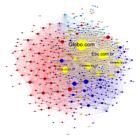
Our analysis revealed the existence of seven clusters with a modularity of 0.225, which can be considered relatively low. The figure below shows the graph built with Gephi from the data of hyperlinks between websites collected with Hyphe:
Next, we used a Bayesian variant (Funke; Becker, 2019) of the Stochastic Block Model (SBM) as introduced by Peixoto (2014) to extract the meso-level topological structure of a directed network and detect the modular hierarchical structure of dense networks. Moreover, SBM develops a hierarchical model of the blocks, offering a top-level overview of how connectivity patterns are structured within each media outlet. Our analysis based on the SBM showed the existence of six large blocks: hypercenter, center, regional/local media, left and right-wing opinion journalism, and sites with progressive themes.
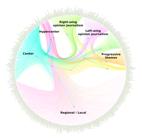
The hypercenter and center blocks attract significant attention (measured as inbound links) across the entire media ecosystem, displaying exceptionally high eigenvector centrality compared to other blocks. Both blocks comprise the primary Brazilian traditional media outlets, including television, printed newspapers, weekly magazines, and radio stations, which predominantly existed before the Internet era, alongside some digital native media with large audiences within Brazil’s media landscape.
The hypercenter mainly consists of the biggest communication groups with national reach in the country, such as Globo.com, Folha.com, Record.com, certain news portals owned by internet service providers (Terra Portal and the IG Portal), as well as the portal of the Empresa Brasil de Comunicação (EBC) and the portals of the Chamber of Deputies (Câmara dos Deputados, 2025) and the Senate (Senado Federal, 2025).
The center block primarily comprises media vehicles also with national reach (veja.abril.com.br, Istoe.com.br, Jovempan.com.br, Estadao.com.br, band.uol.com.br, redetv.com.br, sbt.com.br, among others), some communication groups from economically significant states in Brazil, typically print newspapers (correiobraziliense.com.br, Em.com.br, Diariodepernambuco.com.br, Jornaldebrasilia.com.br, among others), and digital-native information channels (Poder360.com.br, Catacralivre.com.br).
Regional and local media mostly consist of print newspapers and radio stations focused on local news coverage, such as Goiasinterior.com.br, Carajasjornal.com.br, Diariopotiguar.com.br, Jornalcorreiodovale.com.br, among others.
Left and right-wing opinion journalism predominantly comprises digital native media with distinct ideological positions. Examples of left-leaning news sites include Brasildefato.com.br, Revistaforum.com.br, Outraspalavras.com.br, among others. Right-wing opinion sites include Mises.org.br, Jornaldacidadeonline.com.br, Oantagonista.com.br, Revistaoeste.com.br. Notably, this block also includes some religious channels, such as Gospelprime.com.br, Folhagospel.com.br, Gospelmais.com.br.
Media with progressive themes can be defined as the search for increasing levels of well-being for the majority of the population, expansion of social rights and equality in the exercise of political rights (Fuser, 2018), and which are primarily digital native sites covering topics like race and feminism (Noticiapreta.com.br, Bloqueirasnegras.com.br), the environment (Infoamazonia.com.br, Amazonia.org.br), and press freedom (Observatoriodaimprensa.com.br, Apublica.com.br), among others.
Below, we have a representation of connectivity between different blocks. Darker squares indicate stronger connection probabilities.
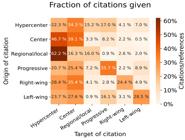
This figure allows us to perceive the different directions and intensities of citations between the sites analyzed. As we can see, sites from the hypercenter and center blocks are more likely to be cited by sites from other blocks. They reciprocate in a distinctive manner, providing minimal credit to sites outside their respective blocks.
Legislators and news sites - the influence on Twitter
For our subsequent analysis, on June 10th, 2022 we gathered a dataset comprising the 3,200 most recent tweets posted by each member of the Brazilian 56th Legislature up to that day, utilizing médialab’s web mining tool, minet v0.60.4 (Plique et al., 2022), to query the Twitter API v1.1. Among nearly 1 million tweets collected, we identified 360,000 tweets containing shared links, with 62,475 of those tweets pointing to URLs within the websites included in our media corpus.
To assess whether these links shared by legislators indicated support or criticism towards the corresponding articles or media sources, we randomly sampled 10% of the 62,475 tweets, dividing them into four equal subsets of 1,560 tweets each, which were individually reviewed using the Catwalk tool, developed at médialab SciencesPo to qualitatively review a corpus of tweets (Verjat; Ricci; Ooghe-Tabanou, 2025). Each reviewer was assigned the task to determine for each individual tweet whether the message sharing a link towards a media was “critical”, when the legislator was clearly criticizing the article, “in support” when the message was either simply sharing a link to the article without any comment or completing it with an enthusiastic message, or “undecided” when this could not be clearly interpreted. Following typical attrition dynamics on Twitter, approximately 4.97% (311) of these tweets had already been removed, either by their authors or by Twitter. Among the remaining tweets, we discovered that 94.32% (5,897) were categorized as “in support” and only 0.70% (44) as “critical”.
Following our strategy, we then constructed a bipartite network that brings together both legislators and media outlets, linking them when the former share links to the latter. The network comprises nodes representing legislators (depicted as small circles) colored on a spectrum ranging from red (left) to blue (right), indicating their political orientation.
To classify the ideological orientation of political actors, we combine a conceptual reference with an empirical typology. While Bobbio’s (2001) classic distinction between left and right informs general understandings of polarization, we adopt the categorization proposed by Bolognesi, Ribeiro, and Codato (2023), based on expert surveys, to reflect contemporary alignments in the Brazilian party system.12
The larger circles represent web entities from our Hyphe corpus, representing media outlets. The positioning of these web entities in the graph is determined by which legislators shared links to those sites, and the size of each circle corresponds to its influence, measured by the number of links shared within the corpus. Additionally, the color of each circle denotes its SBM block classification: yellow (hypercenter), orange (center), green (regional/local), purple (specific progressive themes), red (left-wing opinion journalism), and blue (right-wing opinion journalism).
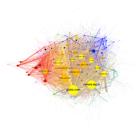
The data reveals that center and hypercenter sites are positioned towards the center of the graph and are closer to right-wing members of congress. Left-wing opinion journalism sites and those focused on progressive themes are situated on the left side of the graph, closer to elected officials affiliated with left-wing or center-left parties. Conversely, right-wing opinion journalism sites are located on the right side of the graph, nearer to legislators associated with far-right parties.
Regional media, which are typically less frequently shared, are notably absent from the left side of the graph and are instead dispersed across the center and right side. This distribution suggests a pattern where regional media outlets are more commonly shared by legislators aligned with center and right-wing political affiliations.
It is worth emphasizing that both the data collection and the analysis presented in this study capture the dynamics of the Brazilian digital public space as it stood in mid-2022. Since then, Twitter’s data access policies have undergone substantial changes following the platform’s acquisition by Elon Musk, making it impossible to reproduce the original methodological procedures. For this reason, the findings discussed here should be understood as a snapshot of that moment - a contextual portrait of the ecosystem during the period in which the data was gathered.
Results and discussion
We now turn to the discussion of the empirical findings, focusing on how the structure of the Brazilian digital media ecosystem and the media sharing practices of legislators shape the digital public space. The analysis examines the segmentation and hierarchies among media outlets, as well as the ideological alignments and symbolic disputes reflected in legislators’ sharing patterns.
The structure of the Brazilian media ecosystem on Twitter
Mapping the relationships among Brazilian media outlets reveals the segmentation, hierarchies, and information flows that organize the digital public space and set the context for legislative interactions.
The network analysis of media sources, visualized in Figures 1, 2, and 3, reveals a segmented structure composed of interconnected clusters, each corresponding to specific ideological and thematic profiles. As depicted in Figures 1 and 2 (the initial networks) and Figure 3 (illustrating a matrix of citations between news sites), the traditional Brazilian mainstream media remains highly central in the digital media production landscape.
In the first network, we observe a political media ecosystem comprising three primary clusters: a center (including Grupo Globo, EBC, and Grupo Folha), a left (encompassing Carta Capital, Brasil de Fato, Poder360, and Apublica), and a right (involving Gazeta do Povo, Jovem Pan, and O Antagonista). Theses dynamics differ from the United States case, where Benkler, Faris and Roberts (2018, p. 73) argue that there is a polarization between the right and the rest of the media ecosystem. In Brazil, the structure is more distinctly tripolar, with clearly delineated poles.
The centrality of traditional media sites can be understood through the lens of how digital natives (both on the right and left) react to the agenda set by mainstream traditional media. Figure 3 highlights an interesting aspect: progressive websites, aside from citing themselves, are also cited by the hypercenter (17%), left-wing websites (16.1%), and center (8.2%). These progressive platforms, focusing on topics like feminism, ethnicity, the environment, gender, and indigenous issues, often serve as reliable sources of information that inform the center and hypercenter sites on these subjects. For instance, a journalist working on a hypercenter website covering the Amazon rainforest’s devastation might seek information from a progressive site specializing in environmental causes.
Conversely, websites from opinion journalism blocks, whether left or right, as well as regional and local sites, struggle to attract attention from other blocks aside from their own. Typically, these sites react to the agenda-setting capability of the center and hypercenter sites in the public discourse space. As illustrated in Figure 1, these sites occupy the periphery of the network.
The formation of the red cluster, comprising left-wing opinion journalism and progressive sites, can be partly attributed to the emergence of a left-wing political blogosphere in the mid-2000s (Aldé, Escobar; Chagas, 2007), characterized by counter-hegemonic media production on websites and blogs associated with the progressive sphere, critiquing biased coverage by major Brazilian mass media corporations (Carvalho; Albuquerque; Santos Júnior, 2020). Generally, progressive and left-wing opinion journalism websites remain on the fringes of the media ecosystem, with limited agenda-setting power, often relegated to reacting and attempting to reinterpret news from mainstream media (Miguel, 2019, p. 52).
The emergence and consolidation of the right’s digital information networks (the blue cluster) occurred nearly a decade later. Certain columnists in the mainstream press14 intensified criticism of PT governments following the Mensalão scandal, contributing to an environment conducive to an anti-corruption discourse, with the Workers’ Party as the primary target (Rocha, 2018). The protests that ensued shortly after Dilma Rousseff’s re-election in 2014, culminating in her impeachment in 2016, solidified the perception that the Workers’ Party government was exceptionally corrupt, fueling anti-corruption movements that catalyzed the Lava Jato operation. This environment saw the emergence of several right-wing news sites, such as Jornal Cidade Online, Folha Política, and MBL News (Alves, 2019; Penteado; Lerner, 2018).
Among the right-wing news sites in our dataset, O Antagonista garnered attention through its coverage of the investigations conducted by the Federal Public Ministry in 2014, focused on the Lava Jato operation, which uncovered a money-laundering scheme involving politicians, executives, and civil servants. Notably, this operation led to the arrest of former president Luiz Inácio Lula da Silva, although subsequent evidence suggested his unfair targeting (Proner et al., 2017).
Gazeta do Povo, a regional newspaper based in Curitiba, Paraná, underwent an editorial transformation in 2017, embracing conservative moral values and economic liberalism. According to Tavares (2020, p.133, author’s translation), “Gazeta do Povo moves away from a catch-all, generalist model and begins to focus on segmented and niche coverage”. This repositioning propelled the company into national prominence, functioning as an informal mouthpiece for the Bolsonaro government and mirroring the role of Breitbart News in the American context (Martins, 2018).
JovemPan, a media company encompassing radio and cable TV with a focus on journalism and entertainment, also adopted a more conservative stance in recent years aligned with Jair Bolsonaro’s far-right government. During the 2022 presidential elections, the Superior Electoral Court accused JovemPan of producing and disseminating fake news targeting left-wing candidate Lula da Silva (Vaquer, 2022) Positioned within the center cluster (Figure 2), JovemPan has faced investigations for allegedly supporting the January 8, 2023, coup attempt (Ministério Público Federal, 2023), resembling Fox News in the U.S. in its blend of identity affirmation and biased political coverage (Benkler, 2021).
Beyond these dominant clusters, it is important to highlight the role of public and institutional sources. An intriguing discovery is the significant authority held by Empresa Brasil de Comunicação (EBC). Despite the EBC television channel not attaining substantial audience levels, it boasts the second-highest indegree among all surveyed sites in the first network depicted in Figure 1. One plausible explanation is that its News Agency (Agência Brasil, 1999) supplies free information to local and regional news sites that do not produce content at the national or international levels.
Additionally, other groups of information producers in the Brazilian digital public space include communication and information portals from legislative bodies e.g., the Chamber of Deputies (Câmara dos Deputados, 2025) and Senate (Senado Federal, 2025) websites, public institutions such as the Federal Prosecution Service, and local and regional media outlets which is widespread in a country as vast as Brazil. Among digitally native information portals, sites such as Metrópoles and Poder360 exhibit considerable centrality and high indegree, enhancing their authority among their peers.
In conclusion, the analysis of the first network of citations between media sites (Figures 1, 2, and 3) shows that the Brazilian digital public space on Twitter is characterized by a tripolar division - center, left, and right - differing markedly from the binary polarization observed in the U.S. media ecosystem (Benkler; Faris; Roberts, 2018). In Brazil, mainstream media outlets occupy a central and agenda-setting role, being cited both by left-wing and right-wing opinion journalism sites, as well as progressive and regional websites. This distinctive dynamic reflects the hybrid and contested nature of the Brazilian informational environment, laying the groundwork for understanding how legislators engage with the media ecosystem, as analyzed in the following section.
The relationship between legislators and the media ecosystem
Building on the discussion of media ownership concentration, ideological alignments within the Brazilian media system, and the rise of alternative digital platforms (Alves, 2019; Cesarino, 2020; Lima, 2006; Miguel; Biroli, 2017; Porto; Neves; Lima, 2018), this section turns to the question of how federal legislators engage with this evolving informational landscape. Our goal is to map the structure of link-sharing practices among legislators on Twitter, tracing patterns of ideological segmentation, contestation over visibility, and the strategic alignment of media sources across political blocs.
The third network (Figure 4) illustrates the frequency with which digital media outlets are cited by the 513 federal deputies and 81 senators of the 56th legislature in their tweets, organized into clusters based on the modularity algorithm. Among the commercial mainstream vehicles, not only Globo and Folha media corporations are central, but also other traditional mass media outlets such as Jornal Estado de São Paulo, the weekly magazine Veja, the prominent newspaper Correio Braziliense from the federal capital, and CNNBrasil are highlighted. All these sites belong to the center cluster, which alongside hypercenter sites, possess the highest authority among their peers, as observed in the first network of Figures 1 and 2, and in the bipartite graph of Figure 45. The hypercenter and center serve as the primary sources of information for the other clusters, whether to support or challenge their viewpoints. While these news sites may not command the same authority among their peers as hypercenter sites, they wield significant influence when analyzing their presence in legislators’ tweets.
The network analysis revealed a polarized structure, organized into three major blocs: a left-wing bloc, a centrist bloc, and a right-wing bloc (Figure 45). These communities emerged from the interactions among legislators and the URLs they shared, forming distinct clusters in the digital public space.
The left-wing bloc was predominantly associated with traditional media outlets that maintain an editorial stance critical of the Bolsonaro government, such as Folha de S.Paulo, UOL, and O Globo. In addition to these, links to progressive digital-native outlets like Brasil 247, Revista Fórum, and Carta Capital were frequently shared. Legislators in this bloc also circulated content produced by feminist, LGBTQIA+, indigenous, and environmentalist media platforms, reflecting broader agendas linked to human rights and minority representation.
In addition to Figure 4 and as demonstrated in Table 1, when conducting a content analysis of 10% of the total 62,475 tweets, 94.32% (5,897) of the tweets from analyzed legislators corroborate the information produced by news sites. Hence, we can infer a political alignment between legislators and the news outlets they share on Twitter.
It is noteworthy that sites constituting the center and hypercenter blocks are cited more frequently by right-wing legislators than left-wing ones. Upon careful examination of the graph, we observe that in the vicinity of these high-indegree sites, we predominantly find right-wing legislators (represented by blue nodes). These findings align with Santos Júnior’s research on polarization in Brazil, analyzing Facebook posts from 2011 to 2019. According to Santos Júnior, the traditional journalistic press “is appropriated and cited more frequently by right-wing actors than by the left, reinforcing the historical pattern of antagonism within the progressive field towards traditional media” (Santos Júnior, 2023, p. 25, author’s translation). Additionally, as previously mentioned, the mainstream national press traditionally exhibits a liberal right-wing ideological bias (Azevedo, 2017). This helps explain the proximity between right-wing legislators and these outlets, as opposed to the distance observed between these outlets and left-wing legislators.
In the 56th Legislature of the National Congress there were 410 deputies and 61 senators affiliated with parties on the right of the ideological spectrum (Agência Câmara de Notícias, 2022; Senado Federal, 2022) who were more likely to cite Brazil’s main media conglomerates, which also have a more liberal point of view both economically and politically. Virtually all major Brazilian media corporations (whether from the hypercenter or center clusters) are extensively cited by center, center-right, and right-wing legislators: folha.com, Estadão.com.br, Globo.com, veja.abril.com.br, cnnbrasil.com.br, Ig.com.br, correiobraziliense.com.br, r7.com.
The institutional portals of the Chamber of Deputies and Senate remain relevant as legislators perceive them as direct sources of information on their initiatives, enabling them to communicate news directly to their constituents without relying on commercial media vehicles. These portals are positioned to the right of the network in the bipartite graph of Figure 4, indicating that they were cited more frequently by legislators affiliated with right-wing parties. A plausible explanation would be that right-wing and center-right legislators tend to cite and support information provided by these sites, given that their news agendas and coverage are determined by editorial directions aligned with the ideological spectrum of these legislators. This is because portals like câmara.leg.br and senado.leg.br were under the control of presidents of right-wing parties,15 and EBC was controlled by the government of President Jair Bolsonaro (2019-2022).
On the other hand, the EBC (Empresa Brasil de Comunicação) loses much of its relevance, supporting the earlier argument about its importance for local and regional sites that lack content production capabilities. When we analyze the centrality of EBC through legislative citations, this need diminishes, and there is less incentive for legislators to cite this portal. Instead, legislators strategically prefer to cite traditional mainstream sites from the center and hypercenter blocks, which have greater visibility.
Regarding partisan media, opinion journalism sites-whether from the right, left, or progressive spectrum-often occupy the margins of the network. These sites typically attract a small “but highly loyal and dedicated” (Santos Júnior, 2023, author’s translation) audience, primarily partisan in nature. In Figure 4, we can observe that legislators affiliated with political parties farther from the ideological center tend to be closer to these hyper-partisan media outlets.
Progressive sites, facing visibility challenges in traditional mass media, have historically sought digital infrastructures as avenues to gain visibility. These platforms facilitate the creation and development of counterpublics that organize, mobilize, and challenge political elites and mainstream media interpretations. Sites focusing on progressive causes such as press freedom, feminism, indigenous communities, LGBTQIA+ issues, environmental concerns, and racial justice also tend to be positioned more externally on the network, often alongside legislators affiliated with left-wing ideologies.
In this Legislature, there were 121 deputies in the Chamber of Deputies and 20 senators from left-wing or center-left parties, forming a minority of 131 legislators within the total universe of 594. These legislators are positioned further to the left in the bipartite graph of Figure 4. They share links in their tweets predominantly from communication sites originating from the cluster of left-wing opinion newspapers, such as brasil247.com, diariodocentrodomundo.com.br, jornalggn.com.br, and brasildefato.com.br, all of which are native digital sites. The explicitly left-leaning press outlets, which originally existed as print magazines and also have a digital presence, include revistaforum.com.br and cartacapital.com.
We also observe that far-right legislators affiliated with the Liberal Party16 and part of the blue cluster (such as Bia Kicis, Coronel Girão, Eduardo Bolsonaro, Carla Zambelli) tend to cite websites like RevistaOeste, JornaldaCidadeOnline, PlenoNews, and SensoIncomum, which are predominantly known for producing disinformation (Lelo; Caminhas, 2021; Nalon; Ribeiro, 2020; Rudnitzki; Scofield, 2020a, 2020b). These extreme-right legislators corroborate the information produced by these sites in their tweets, contributing to the dissemination of disinformation. Similarly to the United States (Allcott; Gentzkow, 2017; Benkler, 2021), the Brazilian extreme right tends to produce and share more disinformation compared to the left (Dourado, 2020).
These findings align with existing literature discussing ideology and disinformation across various contexts including the US (Bennett; Livingston, 2021; Guess; Nagler; Tucker, 2019), Brazil (Carvalho et al., 2022; Dourado, 2020), and France (Gaumont; Panahi; Chavalarias, 2018). This body of research suggests that individuals with more conservative leanings tend to share fake news more frequently than their leftist counterparts. Despite diligent efforts by Brazilian media organizations to conduct fact-checking and mitigate the impact of disruptive communication (Rodriguez-Perez; Seibt, 2022), a key element in understanding this phenomenon is the pronounced skepticism among supporters of the Brazilian extreme right government towards traditional news channels, often labeling them as communist, leftist, or globalist (Massuchin et al., 2022).
During the tenure of Brazil’s far-right president over the past four years, the press largely fulfilled its oversight role, encountering significant resistance from right-wing voters regarding mainstream media outlets, which were accused of disseminating fake news (Cesarino, 2020; Nicoletti; Flores, 2022). This rejection of traditional media channels by ideologically aligned citizens due to critical coverage of the conservative populist government mirrors a phenomenon observed during Donald Trump’s administration in the United States.17
In addition to right-wing legislators, evangelical-based religious sites like gospelprime.com.br and gospelmais.com.br, Pleno.news have propagated disinformation (Lelo; Caminhas, 2021; Rudnitzki; Scofield, 2020b; Sousa; Vettorassi; Andrade Júnior, 2021) and aligned themselves with Brazil’s former far-right president. Similar to developments in the United States (Benkler, 2021), an alignment between evangelicals and conservatism has emerged in Brazil. The rise of evangelical fundamentalism has advanced conservative values and contributed to the election of conservative-leaning legislators. This alignment was fueled by opposition to advances made by feminist and LGBTQIA+ movements, resulting in legislative measures targeting “gender ideology”, reproductive rights, and marriage equality (Almeida, 2019; Martins, 2020).
These findings highlight how Brazilian legislators not only reflect but also reinforce the segmentation of the digital public space through ideological alignments and strategic media engagement. Understanding these interactions is essential for analyzing the symbolic disputes that structure contemporary democratic dynamics in Brazil.
Concluding remarks
This study underscores the enduring influence of traditional media corporations with right-wing biases in shaping the Brazilian digital public space on Twitter, despite the emergence of new political contenders and partisan information websites. The alignment between these traditional media outlets, political elites, and a liberal perspective with anti-Workers’ Party sentiments highlights their role in maintaining and reinforcing partisan viewpoints rather than upholding neutrality and objectivity.
Furthermore, while digital infrastructures have facilitated visibility for progressive groups, they have also amplified the presence of radical anti-democratic factions (Fielitz; Marcks, 2019). In Brazil, a growing distrust in political institutions has been fostered by an alternative digital communication ecosystem (Cesarino, 2020) that diverges from the principles of liberal democracy grounded in rational discourse. This ecosystem notably contributed to the attempted coup on January 8, 2023, in the Brazilian Federal Capital, operating beyond traditional information paradigms and disrupting conventional communication and politics.
The complexity of Brazil’s digital media ecosystem on Twitter, shaped by the rise of new information actors through alternative channels (including left- and right-wing opinion journalism, disinformation sites, and specialized thematic information sites), has facilitated new forms of contestation against the homogenous discourse propagated by commercial media outlets, often referred to as the mainstream media. These contests introduce fractures in the hegemonic discourse space, allowing for the inclusion of new actors, inquiries, and perspectives that illuminate social and political conflicts within Brazil’s deeply unequal socio-economic landscape.
Despite the emergence of these new actors, traditional Brazilian media entities such as Grupo Globo, Folha, and Estadão continue to occupy central positions in Brazil’s digital public space on Twitter. The initial promise of the internet in democratizing voice and visibility has not dismantled the hierarchy in information production and distribution capabilities. Similar to the media ecosystem in France (Cointet et al., 2021), while new actors have entered, they often assume secondary roles, echoing the agendas set by mainstream media.
These findings offer a meaningful contribution to political science by showing that ideological segmentation in digital political communication is not simply the result of pre-existing political divides. Rather, it stems from deliberate processes of symbolic positioning and the selective production of visibility by elected officials. By tracing how left- and right-wing legislators engage with different segments of the media ecosystem, this study reveals the asymmetrical strategies shaping Brazil’s digital public space. On one side, left-leaning actors seek to construct counterpublics through media outlets centered on progressive agendas and minority representation. On the other, the far right has deepened its investment in hyperpartisan platforms and disinformation tactics, using them to challenge institutional legitimacy and reshape dominant political narratives.
Thus, this study challenges perspectives that assume that digital fragmentation leads automatically to the pluralization of the public space. Instead, it reveals the persistence of structural asymmetries and the concentration of symbolic power even within a diversified digital ecosystem, providing new insights into the relationship between digital infrastructures, political polarization, and democracy.
It is also important to recognize one of the study’s limitations concerning the temporal scope of the data. Our analysis is based on link-sharing practices observed up to June 2022. While the broader dynamics of ideological segmentation and symbolic contestation have continued to manifest - notably during the 2022 elections and the events of January 8th, 2023 - it remains an open question whether these patterns have persisted or evolved. Future research will be essential to assess the continuity or transformation of these dynamics in Brazil’s shifting political landscape.
Several avenues for further research emerge from this study. These include exploring why certain media conglomerates wield greater influence than others among their peers, investigating the relationships between right-wing and centrist legislators with regional and local news sites, and conducting in-depth interviews with legislators to better understand their media selection practices. Additionally, future studies could benefit from a multiplatform approach, examining how different social media environments shape legislative communication strategies beyond Twitter.
References
-
AGÊNCIA BRASIL. [Site institucional]. 1999. Available at: Available at: https://agenciabrasil.ebc.com.br/ Accessed on: January 15, 2025.
» https://agenciabrasil.ebc.com.br/ -
AGÊNCIA CÂMARA DE NOTÍCIAS. PL desponta como maior bancada da Câmara, seguido pela federação liderada pelo PT. Câmara dos Deputados, 2022. Available at: Available at: https://www.camara.leg.br/noticias/911504-pl-desponta-como-maior-bancada-da-camara-seguido-pela-federacao-liderada-pelo-pt Accessed on: January 15, 2025.
» https://www.camara.leg.br/noticias/911504-pl-desponta-como-maior-bancada-da-camara-seguido-pela-federacao-liderada-pelo-pt -
ALDÉ, A.; ESCOBAR, J.; CHAGAS, V. A febre dos blogs de política. Revista FAMECOS: Mídia, Cultura e Tecnologia, Porto Alegre, v. 14, n. 33, p. 29-40, 2007. Available at: Available at: https://revistaseletronicas.pucrs.br/revistafamecos/article/view/3431/0 Accessed on: January 15, 2025.
» https://revistaseletronicas.pucrs.br/revistafamecos/article/view/3431/0 -
ALLCOT, H.; GENTZKOW, M. Social media and fake news in the 2016 election. The Journal of Economic Perspectives, v. 31, n. 2, p. 211-235, 2017. Available at: Available at: https://www.jstor.org/stable/44235006 Accessed on: January 15, 2025.
» https://www.jstor.org/stable/44235006 -
ALMEIDA, R. de. Bolsonaro presidente: conservadorismo, evangelismo e a crise brasileira. Novos Estudos CEBRAP, São Paulo, v. 38, n. 1, 2019. Available at: Available at: https://www.scielo.br/j/nec/a/rTCrZ3gHfM5FjHmzd48MLYN/ Accessed on: January 15, 2025.
» https://www.scielo.br/j/nec/a/rTCrZ3gHfM5FjHmzd48MLYN/ -
ALVES, Marcelo. Desarranjo da visibilidade, desordem informacional e polarização no Brasil entre 2013 e 2018. 2019. 399f. Tese (Doutorado em Comunicação) - Universidade Federal Fluminense, Niterói, 2019. Available at: Available at: https://app.uff.br/riuff/handle/1/15381 Accessed on: January 15, 2025.
» https://app.uff.br/riuff/handle/1/15381 - ARAL, Sinan. The hype machine: how social media disrupts our elections, our economy and our health, and how we must adapt. London: Harper Collins Publisher, 2020.
- AZEVEDO, Fernando Antônio. A grande imprensa e o PT (1989-2014). São Carlos: EdUFSCar, 2017.
-
AZEVEDO, Fernando Antônio. A imprensa brasileira e o PT: um balanço das coberturas das eleições presidenciais (1989-2006). Revista Eco-Pós, Rio de Janeiro, v. 12, n. 3, p. 48-65, 2009. Available at: Available at: https://revistaecopos.eco.ufrj.br/eco_pos/article/view/931 Accessed on: January 15, 2025.
» https://revistaecopos.eco.ufrj.br/eco_pos/article/view/931 -
AZEVEDO, Fernando Antônio. Mídia e democracia no Brasil: relações entre o sistema de mídia e o sistema político. Opinião Pública, Campinas, v. 12, n. 1, p. 88-113, abr./maio 2006. Available at: Available at: https://www.scielo.br/j/op/a/TzJkgQBnG64hk5QyKCCv5NR/ Accessed on: January 15, 2025.
» https://www.scielo.br/j/op/a/TzJkgQBnG64hk5QyKCCv5NR/ -
BENKLER, Y. A political economy of the origins of asymmetric propaganda in American media. In: BENNETT, W. L.; LIVINGSTON, S. (eds.). The disinformation age. New York: Cambridge University Press, 2021. p. 43-66. Available at: Available at: https://www.cambridge.org/core/services/aop-cambridge-core/content/view/1F4751119C7C4693E514C249E0F0F997/9781108843058AR.pdf/The_Disinformation_Age.pdf Accessed on: January 15, 2025.
» https://www.cambridge.org/core/services/aop-cambridge-core/content/view/1F4751119C7C4693E514C249E0F0F997/9781108843058AR.pdf/The_Disinformation_Age.pdf - BENKLER, Y.; FARIS, R.; ROBERTS, H. Network propaganda: manipulation, disinformation, and radicalization in American politics. Oxford: Oxford University Press, 2018.
-
BENNETT, W. L.; LIVINGSTON, S. A brief history of the disinformation age. In: BENNETT, W. L.; LIVINGSTON, S. (eds.). The disinformation age. New York: Cambridge University Press, 2021. p. 3-40. Available at: Available at: https://www.cambridge.org/core/services/aop-cambridge-core/content/view/1F4751119C7C4693E514C249E0F0F997/9781108843058AR.pdf/The_Disinformation_Age.pdf Accessed on: January 15, 2025.
» https://www.cambridge.org/core/services/aop-cambridge-core/content/view/1F4751119C7C4693E514C249E0F0F997/9781108843058AR.pdf/The_Disinformation_Age.pdf -
BLONDEL, V. D.; GUILLAUME, J. L.; LAMBIOTTE, R.; LEFEBVRE, E. Fast unfolding of communities in large networks. Journal of Statistical Mechanics: Theory and Experiment, v. 2008, n. 10. [P10008]. Available at: Available at: https://iopscience.iop.org/issue/1742-5468/2008/10 Accessed on: January 15, 2025.
» https://iopscience.iop.org/issue/1742-5468/2008/10 - BOBBIO, N. Direita e esquerda: razões e significados de uma distinção política. 2. ed. São Paulo: Unesp, 2001.
-
BOLOGNESI, B.; RIBEIRO, E.; CODATO, A. Uma nova classificação ideológica dos partidos políticos brasileiros. Dados: Revista de Ciências Sociais, Rio de Janeiro, v. 66, n. 2, p. 1-29, 2023. [e20210164]. Available at: Available at: https://www.scielo.br/j/dados/a/zzyM3gzHD4P45WWdytXjZWg/ Accessed on: January 15, 2025.
» https://www.scielo.br/j/dados/a/zzyM3gzHD4P45WWdytXjZWg/ -
CÂMARA DOS DEPUTADOS. [Site institucional]. 2025. Available at: Available at: https://www.camara.leg.br/ Accessed on: January 15, 2025.
» https://www.camara.leg.br/ -
CAMURÇA, M. A. Religião, política e espaço público no Brasil: perspectiva histórico/sociológica e a conjuntura das eleições presidenciais de 2018. Estudos de Sociologia, Recife, v. 2, n. 25, p. 125-159, 2019. Available at: Available at: https://periodicos.ufpe.br/revistas/revsocio/article/view/243765 Accessed on: January 15, 2025.
» https://periodicos.ufpe.br/revistas/revsocio/article/view/243765 - CARDON, D. Culture numérique. Paris: Presses de Sciences Po, 2019.
-
CARDON, D. Inside the mind of PageRank. Réseaux, v. 177, p. 63-95, 2013. Available at: Available at: https://shs.cairn.info/journal-reseaux-2013-1-page-63 Accessed on: January 15, 2025.
» https://shs.cairn.info/journal-reseaux-2013-1-page-63 -
CARDON, D.; COINTET, J.-P.; OOGHE, B.; PLIQUE, G. Unfolding the multi-layered structure of the French mediascape. Hal open science, 2019. [working paper]. Available at: Available at: https://hal.archives-ouvertes.fr/hal-02163951 Accessed on: January 15, 2025.
» https://hal.archives-ouvertes.fr/hal-02163951 -
CARLSON, M. Blogs and journalistic authority. Journalism Studies, v. 8, n. 2, p. 264-279, 2007. Available at https://doi.org/10.1080/14616700601148861. Accessed on: January 15, 2025.
» https://doi.org/10.1080/14616700601148861 - CARLSON, M.; ROBINSON, S.; LEWIS, S. C. News after Trump: journalism’s crisis of relevance in a changed media culture. New York: Oxford University Press, 2021.
-
CARVALHO, E. M.; SANTOS JÚNIOR, M. A.; NEVES, L. F. F.; OLIVEIRA, T. M.; MASSARI, L.; CARVALHO, M. S. Vacinas e redes sociais: o debate em torno das vacinas no Instagram e Facebook. Cadernos de Saúde Pública, Rio de Janeiro, v. 38, n. 11, p. 1-13, 2022. [e00054722]. Available at: Available at: https://cadernos.ensp.fiocruz.br/ojs/index.php/csp/article/view/7935 Accessed on: January 15, 2025.
» https://cadernos.ensp.fiocruz.br/ojs/index.php/csp/article/view/7935 -
CEFAÏ, D. Publics et publicité: vers une enquête pragmatiste. Politika, 24 maio 2017. Available at: Available at: https://www.politika.io/fr/article/publics-publicite-enquete-pragmatiste Accessed on: January 15, 2025.
» https://www.politika.io/fr/article/publics-publicite-enquete-pragmatiste -
CESARINO, Letícia. Como vencer uma eleição sem sair de casa: a ascensão do populismo digital no Brasil. Internet & Sociedade, v. 1, n. 1, p. 91-120, 2020. Available at: Available at: https://revista.internetlab.org.br/wp-content/uploads/2020/02/Como-vencer-uma-eleic%CC%A7a%CC%83o-sem-sair-de-casa.pdf Accessed on: January 15, 2025.
» https://revista.internetlab.org.br/wp-content/uploads/2020/02/Como-vencer-uma-eleic%CC%A7a%CC%83o-sem-sair-de-casa.pdf -
CHADWICK, A. The hybrid media system: politics and power. 2nd ed. New York: Oxford University Press, 2017. Available at: Available at: https://academic.oup.com/book/1922 Accessed on: January 15, 2025.
» https://academic.oup.com/book/1922 - CHENEY-LIPPOLD, J. We are data: algorithms and the making of our digital selves. New York: New York University Press, 2019.
-
COINTET, J.-P.; CARDON, D.; MOGOUTOV, A.; OOGHE-TABANOU, B.; PLIQUE, G.; MORALES, P. R. Uncovering the structure of the French media ecosystem. arXiv:2107.12073, 2021. Available at: Available at: https://arxiv.org/abs/2107.12073 Accessed on: January 15, 2025.
» https://arxiv.org/abs/2107.12073 -
CORDONIER, L.; BREST, A. Comment les Français s’informent-ils sur Internet? Analyse des comportements d’information et de désinformation en ligne. Étude de la Fondation Descartes, mars 2021. Available at: Available at: https://www.fondationdescartes.org/wp-content/uploads/2021/03/Etude_Information_Internet_FondationDescartes_2021.pdf Accessed on: January 15, 2025.
» https://www.fondationdescartes.org/wp-content/uploads/2021/03/Etude_Information_Internet_FondationDescartes_2021.pdf -
DAHLBERG, L. Visibility and the public sphere: a normative conceptualisation. Javnost - The Public - Journal of the European Institute for Communication and Culture, v. 25, n 1-2, p. 35-42, 2018. Available at: Available at: https://www.tandfonline.com/doi/full/10.1080/13183222.2018.1418818 Accessed on: January 15, 2025.
» https://www.tandfonline.com/doi/full/10.1080/13183222.2018.1418818 -
DOURADO, T. M. S. G. Fake news na eleição presidencial de 2018 no Brasil. 308f. 2020. Tese (Doutorado) - Programa de Pós-Graduação em Comunicação e Culturas Contemporâneas, Universidade Federal da Bahia, Salvador, 2020. Available at: Available at: https://repositorio.ufba.br/handle/ri/31967 Accessed on: January 15, 2025.
» https://repositorio.ufba.br/handle/ri/31967 -
FERES JUNIOR, J.; SASSARA, L. O cão que nem sempre late: o Grupo Globo e a cobertura das eleições presidenciais de 2014 e 1998. Compolítica, v. 6, n. 1, p. 30-63, 2016. Available at: Available at: https://revista.compolitica.org.br/index.php/revista/article/view/94 Accessed on: January 15, 2025.
» https://revista.compolitica.org.br/index.php/revista/article/view/94 -
FIELITZ, M.; MARCKS, H. Digital fascism: challenges for the open society in times of social media. UC Berkeley: Center for Right-Wing Studies, 2019. Available at: Available at: https://escholarship.org/uc/item/87w5c5gp Accessed on: January 15, 2025.
» https://escholarship.org/uc/item/87w5c5gp -
FUNKE, T.; BECKER, T. Stochastic block models: a comparison of variants and inference methods. PloS ONE, v. 14, n. 4, p. 1-40, 2019. [e0215296]. Available at: https://doi.org/10.1371/journal.pone.021529. Accessed on: January 15, 2025.
» https://doi.org/10.1371/journal.pone.021529 -
FUSER, I. América Latina: progressismo, retrocesso e resistência. Saúde Debate, Rio de Janeiro, v. 42, spe3, p. 78-89, 2018. Available at: Available at: https://www.scielo.br/j/sdeb/a/RkFdz3N3wps6sScfLnnyqqS/ Accessed on: January 15, 2025.
» https://www.scielo.br/j/sdeb/a/RkFdz3N3wps6sScfLnnyqqS/ -
GAUMONT, N.; PANAHI, M.; CHAVALARIAS, D. Reconstruction of the socio-semantic dynamics of political activist Twitter networks: method and application to the 2017 French presidential election. PLoS One, v. 13, n. 9, p. 1-38, 2018. [e0201879]. Available at: https://doi.org/10.1371/journal.pone.0201879.Accessed on: January 15, 2025.
» https://doi.org/10.1371/journal.pone.0201879 -
GENIAL/QUAEST PESQUISA. Pesquisa quantitativa nacional de 02 a 06 de maio. 2024. Available at: Available at: https://quaest.com.br/relatorios-dc5902a407f4f271a324451899baf0f0/ Accessed on: January 15, 2025.
» https://quaest.com.br/relatorios-dc5902a407f4f271a324451899baf0f0/ -
GUALLARDI, C. P.; FREIRE, N. P.; FAGUNDES, M. C.; MINAYO, M. C. S. Fake news e hesitação vacinal no contexto da pandemia da COVID-19 no Brasil. Ciência e Saúde Coletiva, Rio de Janeiro, v. 27, n. 5, p. 1849-1858, 2022. Available at: Available at: https://www.scielo.br/j/csc/a/PBmHtLCpJ7q9TXPwdVZ3kGH/ Accessed on: January 15, 2025.
» https://www.scielo.br/j/csc/a/PBmHtLCpJ7q9TXPwdVZ3kGH/ -
GUESS, A.; NAGLER, J.; TUCKER, J. Less than you think: prevalence and predictors of fake news dissemination on Facebook. Science Advances, v. 5, n. 1, eaau4586, 2019. Available at: https://www.science.org/doi/10.1126/sciadv.aau4586 Accessed on: January 15, 2025.
» https://doi.org/10.1126/sciadv.aau4586 -
GUIA DE MÍDIA. [Site institucional]. 2021. Available at: Available at: https://www.guiademidia.com.br Accessed on: January 15, 2025.
» https://www.guiademidia.com.br - GRAMSCI, A. Cadernos do cárcere. Volume 1. Rio de Janeiro: Civilização Brasileira, 2000.
- HINDMAN, M. The myth of digital democracy. Princeton: Princeton University Press, 2008.
-
JACOMY, M.; GIRARD, P.; OOGHE-TABANOU, B.; VENTURINI, T. Hyphe, a curation-oriented approach to web crawling for the social sciences. Tenth International AAAI Conference on Web and Social Media, v. 10, n. 1, p. 595-598, 2016. Available at: Available at: https://ojs.aaai.org/index.php/ICWSM/article/view/14777 Accessed on: January 15, 2025.
» https://ojs.aaai.org/index.php/ICWSM/article/view/14777 -
JACOMY, M.; VENTURINI, T.; HEYMANN, S.; BASTIAN, M. (2014). ForceAtlas2, a continuous graph layout algorithm for handy network visualization designed for the Gephi software. PLOS ONE, v. 9, n. 6, p. 1-12, 2014. [e98679]. Available at: https://doi.org/10.1371/journal.pone.0098679 Accessed on: January 15, 2025.
» https://doi.org/10.1371/journal.pone.0098679 - JUNGHERR, A.; SCHROEDER, R. Digital transformations of the public arena. Cambridge: Cambridge University Press, 2021.
- KATZ, E.; LAZARSFELD, P. F. Personal influence: the part played by people in the flow of mass communications. New York: Free Press, 1955.
- KERCHE, F; FERES JÚNIOR, J. (coord.). Operação Lava Jato e a democracia brasileira. São Paulo: Editora Contra Corrente, 2018.
-
LELO, T. V.; CAMINHAS, L. Desinformação sobre gênero e sexualidade e as disputas pelos limites da moralidade. Matrizes, São Paulo, v. 15, n. 2, p. 179-203, 2021. Available at: Available at: https://revistas.usp.br/matrizes/article/view/179801 Accessed on: January 15, 2025.
» https://revistas.usp.br/matrizes/article/view/179801 - LIMA, V. A. Mídia: crise política e poder no Brasil. São Paulo: Editora Fundação Perseu Abramo, 2006.
- LIMA, V. A. The state, television and political power in Brazil. Critical Studies in Mass Communication, v. 5, n. 2, p. 108-128, 1988.
-
CARVALHO M. E.; ALBUQUERQUE, A.; SANTOS JÚNIOR, M. A. Brazilian blogosfera progressista: digital vanguards in dark times. tripleC: Communication, Capitalism & Critique, v. 18, n. 1, p. 219-235, 2020. Available at: Available at: https://www.triple-c.at/index.php/tripleC/article/view/1126 Accessed on: January 15, 2025.
» https://www.triple-c.at/index.php/tripleC/article/view/1126 -
MARINONI, B. Concentração dos meios de comunicação de massa e o desafio da democratização da mídia no Brasil. Intervozes, 2015. Available at: Available at: https://intervozes.org.br/wp-content/uploads/2016/02/Projeto-FES-Artigo-concentracao-meio.pdf Accessed on: January 15, 2025.
» https://intervozes.org.br/wp-content/uploads/2016/02/Projeto-FES-Artigo-concentracao-meio.pdf -
MARTINS, Rafael Moro. Como a Gazeta do Povo fez sua guinada à direita e ao bolsonarismo. The Intercept Brasil, 9 dez. 2018. Available at: Available at: https://theintercept.com/2018/12/09/gazeta-do-povo-guinada-direita-bolsonaro/ Accessed on: January 15, 2025.
» https://theintercept.com/2018/12/09/gazeta-do-povo-guinada-direita-bolsonaro/ - MARTINS, H. Comunicações em tempos de crise. São Paulo: Expressão Popular, Fundação Rosa Luxemburgo, 2020.
-
MASSUCHIN, M. G.; ORSO, M.; MOURA, J. F.; SALEH, D. M. “Trash!”, “leftist!”, “scumbag!”, “#fakenews”, but not so much: attacks and criticism towards media institutions and strategic use of journalism by online far-right activism in Brazil. Brazilian Journalism Research, Brasília, v. 18, n. 3, p. 492-523, 2022. Available at: Available at: https://www.scielo.br/j/bjr/a/c9vJLCrn7LTNx6v4RZsD49N/ Accessed on: January 15, 2025.
» https://www.scielo.br/j/bjr/a/c9vJLCrn7LTNx6v4RZsD49N/ - MATTOS, S. A televisão no Brasil. Salvador: Editora Inamã, 2000.
-
MIGUEL, L. F. Jornalismo, polarização política e a querela das fake news. Estudos em Jornalismo e Mídia, Brasília, v. 16, n. 2, p. 46-58, 2019. Available at: Available at: https://periodicos.ufsc.br/index.php/jornalismo/article/view/1984-6924.2019v16n2p46/41755 Accessed on: January 15, 2025.
» https://periodicos.ufsc.br/index.php/jornalismo/article/view/1984-6924.2019v16n2p46/41755 - MIGUEL, L. F.; BIROLI, F. Introdução: mídia, conflito e formação de preferências. In: BIROLI, F.; MIGUEL, L. F. (orgs.). Notícias em disputa: mídia, democracia e formação de preferências no Brasil. São Paulo: Editora Contexto, 2017. p. 7-22.
-
MIGUEL, L. F.; BIROLI, F. Meios de comunicação de massa e eleições no Brasil: a influência simples à interação complexa. Revista USP, São Paulo, v. 90, p. 74-83, jun./ago. 2011. Available at: Available at: https://revistas.usp.br/revusp/article/view/34013 Accessed on: January 15, 2025.
» https://revistas.usp.br/revusp/article/view/34013 -
MIGUEL, L. F.; COUTINHO, A. A. A crise e suas fronteiras: oito meses de “mensalão” nos editoriais dos jornais. Opinião Pública, Campinas, v. 13, n. 1, p. 97-123, 2007. Available at: Available at: https://www.scielo.br/j/op/a/YzvvJQqyFQNLb55DYPLgsML/ Accessed on: January 15, 2025.
» https://www.scielo.br/j/op/a/YzvvJQqyFQNLb55DYPLgsML/ -
MINISTÉRIO PÚBLICO FEDERAL - Procuradoria da República em São Paulo. MPF instaura inquérito contra a Jovem Pan por divulgar fake news e incitar atos antidemocráticos. 2023. Portal MPF, 9 jan. 2023. Available at: Available at: https://www.mpf.mp.br/sp/sala-de-imprensa/noticias-sp/mpf-instaura-inquerito-contra-a-jovem-pan-por-divulgar-fake-news-e-incitar-atos-antidemocraticos Accessed on: January 15, 2025.
» https://www.mpf.mp.br/sp/sala-de-imprensa/noticias-sp/mpf-instaura-inquerito-contra-a-jovem-pan-por-divulgar-fake-news-e-incitar-atos-antidemocraticos -
NALON, T.; RIBEIRO, A. Como sete sites lucraram com anúncios no Google ao publicar desinformação sobre a pandemia. Aos Fatos, 21 maio 2020. Available at: Available at: https://www.aosfatos.org/noticias/como-sete-sites-lucraram-com-anuncios-no-google-ao-publicar-desinformacao-sobre-pandemia/ Accessed on: January 15, 2025.
» https://www.aosfatos.org/noticias/como-sete-sites-lucraram-com-anuncios-no-google-ao-publicar-desinformacao-sobre-pandemia/ - NAPOLI, P. M. Social media and the public interest: media regulation and the public interest. New York: Columbia University Press, 2019.
-
NEWMAN, M. E. J. Modularity and community structure in networks. Proceedings of the National Academy of Sciences of the United States of America, v. 103, n. 23, p. 8577-8582, 2006. Available at: https://dx.doi.org/10.1073/pnas.0601602103. Accessed on: January 15, 2025.
» https://doi.org/10.1073/pnas.0601602103 -
NICOLETTI, J.; FLORES, A. M. Violence against journalists on Jair Bolsonaro’s YouTube channel: analysis of the first 100 days of the Covid-19 pandemic in Brazil. Brazilian Journalism Research, v. 18, n. 1, p. 4-35, 2022. Available at: Available at: https://bjr.sbpjor.org.br/bjr/article/view/1438 Accessed on: January 15, 2025.
» https://bjr.sbpjor.org.br/bjr/article/view/1438 -
OOGHE-TABANOU, B.; JACOMY, M.; GIRARD, P.; PLIQUE, G. Hyperlink is not dead! Proceedings of the 2nd International Conference on Web Studies (WS.2). New York, p. 12-18, 2018. Available at: DOI: https://doi.org/10.1145/3240431.3240434. Accessed on: January 15, 2025.
» https://doi.org/10.1145/3240431.3240434 -
PEIXOTO, T. P. Hierarchical block structures and high-resolution model selection in large networks. Physical Review X, v. 4, n. 1, 011047, 2014. Available at: Available at: https://journals.aps.org/prx/abstract/10.1103/PhysRevX.4.011047 Accessed on: January 15, 2025.
» https://journals.aps.org/prx/abstract/10.1103/PhysRevX.4.011047 - PENTEADO, C. L.; LERNER, C. A direita na rede: mobilização online no impeachment de Dilma Rousseff. Debate, Belo Horizonte, v. 10, n. 1, p. 12-24, 2018.
- PERSILY, N.; TUCKER, J. A. (orgs.). Social media and democracy: the state of the field, prospects for reform. Cambridge: Cambridge University Press, 2020.
-
PLIQUE, G.; BRETEAU, P.; FARJAS, J.; THÉRO, H.; DESCAMPS, J.; PELLÉ, A. Minet: a webmining CLI tool & library for Python. Zenodo, 19 maio 2022. Available at: https://doi.org/10.5281/zenodo.6564204. Accessed on: January 15, 2025.
» https://doi.org/10.5281/zenodo.6564204 -
PORTO, Mauro; NEVES, Daniela; LIMA, Barbara. Crise hegemônica, ascensão da extrema direita e paralelismo político: Globo e Record nas eleições presidenciais de 2018. Compolítica, v. 10, n. 1, p. 5-34, 2020. Available at: Available at: https://revista.compolitica.org.br/index.php/revista/issue/view/21 Accessed on: January 15, 2025.
» https://revista.compolitica.org.br/index.php/revista/issue/view/21 - PRONER, C.; CITTADINO, G.; RICOBOM, G.; DORNELLES, J. R. (orgs.). Comentários a uma sentença anunciada: o processo Lula. Bauru: Canal 6, 2017.
-
RECORD. [Site institucional]. 2025. Available at: Available at: https://record.r7.com/ Accessed on: January 15, 2025.
» https://record.r7.com/ -
RECUERO, R.; SOARES, F. B.; GRUZD, A. Hyperpartisanship, disinformation and political conversations on Twitter: the Brazilian presidential election of 2018. Proceedings of the International AAAI Conference on Web and Social Media, Atlanta, v. 14, n. 1, p. 569-578, 2020. Available at: Available at: https://ojs.aaai.org/index.php/ICWSM/article/view/7324/7178 Accessed on: January 15, 2025.
» https://ojs.aaai.org/index.php/ICWSM/article/view/7324/7178 -
RECUERO, R.; SOARES, F.; ZAGO, G. Polarização, hiperpartidarismo e câmaras de eco: como circula a desinformação sobre Covid-19 no Twitter. Revista Contracampo, Niterói, v. 40, n. 1, p. 1-17, 2021. Available at: https://doi.org/10.22409/contracampo.v40i1.45611. Accessed on: January 15, 2025.
» https://doi.org/10.22409/contracampo.v40i1.45611 - REZENDE, G. Telejornalismo no Brasil: um perfil editorial. São Paulo: Summus, 2000.
- ROCHA, C. O boom das novas direitas brasileiras: financiamento ou militância? In: GALLEGO, E. S. (org.). O ódio como política: a reinvenção da direita no Brasil. São Paulo: Boitempo, 2018. p. 47-52.
-
RODRIGUEZ-PEREZ, C.; SEIBT, T. The Brazilian fact-checkers criteria: an analysis of the guiding purposes, principles, and routines of this journalistic practice. Brazilian Journalism Research, v. 18, n. 2, p. 350-373, 2022. Available at: Available at: https://www.scielo.br/j/bjr/a/ThwdtVgvHGVm5KY8BZH3T3R/ Accessed on: January 15, 2025.
» https://www.scielo.br/j/bjr/a/ThwdtVgvHGVm5KY8BZH3T3R/ - ROSSINI, P. Beyond toxicity in the online public sphere: understanding incivility in online political talk. In: DUTTON, W. H. (ed.). A research agenda for digital politics. Edward Elgar Publishing, 2020. p. 160-170.
-
ROUVROY, A.; BERNS, T. Governamentalidade algorítmica e perspectivas de emancipação: o díspar como condição de individuação pela relação? Revista Eco Pós - Tecnolopolíticas e Vigilância, v. 18, n. 2, p. 36-56, 2015. Available at: Available at: https://revistaecopos.eco.ufrj.br/eco_pos/article/view/2662/2251 Accessed on: January 15, 2025.
» https://revistaecopos.eco.ufrj.br/eco_pos/article/view/2662/2251 -
RUDNITZKI, E.; SCOFIELD, L. Grupo de mídia evangélica que pertence a senador bolsonarista é um dos que mais dissemina desinformação, afirmam pesquisadores. Agência Pública, Poder, 31 ago. 2020b. Available at: Available at: https://apublica.org/2020/08/grupo-de-midia-evangelica-que-pertence-a-senador-bolsonarista-e-um-dos-que-mais-dissemina-desinformacao-afirmam-pesquisadores/ Accessed on: January 15, 2025.
» https://apublica.org/2020/08/grupo-de-midia-evangelica-que-pertence-a-senador-bolsonarista-e-um-dos-que-mais-dissemina-desinformacao-afirmam-pesquisadores/ -
RUDNITZKI, E.; SCOFIELD, L. Página do Exército e sites governamentais ajudam desempenho de portais bolsonaristas no Google. Agência Pública, 16 nov. 2020a. Available at: Available at: https://apublica.org/2020/11/pagina-do-exercito-e-sites-governamentais-ajudam-desempenho-de-portais-bolsonaristas-no-google/ Accessed on: January 15, 2025.
» https://apublica.org/2020/11/pagina-do-exercito-e-sites-governamentais-ajudam-desempenho-de-portais-bolsonaristas-no-google/ -
RUSSELL, A. Coming to terms with dysfunctional hybridity: a conversation with Andrew Chadwick on the challenges to liberal democracy in the second-wave networked era. Studies in Communication Sciences, v. 20, n. 2, p. 211-225, 2020. Available at: Available at: https://www.hope.uzh.ch/scoms/article/view/j.scoms.2020.02.005/1259 Accessed on: January 15, 2025.
» https://www.hope.uzh.ch/scoms/article/view/j.scoms.2020.02.005/1259 -
SALLES, D.; MARTINS, B. M.; SANTINI, R. M. “Deus, Pátria, Família e Liberdade”: a radicalização política no ecossistema de mídia evangélica digital no Brasil. Mídia & Cotidiano, v. 18, n. 1, p. 36-63, 2024. Available at: Available at: https://www.researchgate.net/publication/377265407_Deus_Patria_Familia_e_Liberdade_a_radicalizacao_politica_no_ecossistema_de_midia_evangelica_digital_no_Brasil Accessed on: January 15, 2025.
» https://www.researchgate.net/publication/377265407_Deus_Patria_Familia_e_Liberdade_a_radicalizacao_politica_no_ecossistema_de_midia_evangelica_digital_no_Brasil -
SANTINI, Rose Marie; SALLES, Débora; MARTINS, Bruno Mauricio Mattos; BARROS, Carlos Eduardo; TRAIANO, Heloisa; CAMPOS, Lorena; LOUREIRO, Marina; DIAS, Bernardo; GOMES, Matheus; HADDAD, João Gabriel; MAGALHÃES, Thamyres. Acompanhamento da desinformação durante as eleições 2022. Rio de Janeiro: NetLab - Laboratório de Estudos de Internet e Redes Sociais, Universidade Federal do Rio de Janeiro (UFRJ), 2022. Available at: Available at: https://netlab.eco.ufrj.br/post/acompanhamento-multiplataforma-da-desinformação-durante-as-eleições-2022 Accessed on: January 15, 2025.
» https://netlab.eco.ufrj.br/post/acompanhamento-multiplataforma-da-desinformação-durante-as-eleições-2022 -
SANTOS JÚNIOR, M. A. dos. As flutuações de longo prazo da polarização no Brasil: análise do compartilhamento de informações políticas entre 2011 e 2019. Dados, Rio de Janeiro, v. 66, n. 2, 2023. Available at: Available at: https://www.scielo.br/j/dados/a/R7CjTc36wwQ8JRqJXD3qTRt/ Accessed on: January 15, 2025.
» https://www.scielo.br/j/dados/a/R7CjTc36wwQ8JRqJXD3qTRt/ -
SENADO FEDERAL. [Site institucional]. 2025. Available at: Available at: https://www.senado.leg.br/ Accessed on: January 15, 2025.
» https://www.senado.leg.br/ -
SENADO FEDERAL. Senadores da 56.ª Legislatura (2019-2023) - por partido, 2022. Available at: Available at: https://www25.senado.leg.br/web/senadores/legislaturas-anteriores/-/a/56/por-partido Accessed on: January 15, 2025.
» https://www25.senado.leg.br/web/senadores/legislaturas-anteriores/-/a/56/por-partido -
SOUSA, A. H. F.; VETTORASSI, A.; ANDRADE JÚNIOR, P. M. A doxa conservadora no Brasil: mídia evangélica e eleições presidenciais em 2018. Ponta de Lança: Revista Eletrônica de História, Memória & Cultura, São Cristóvão, v. 15, n. 28, p. 115-139, 2021. Available at: Available at: https://periodicos.ufs.br/pontadelanca/article/view/16044 Accessed on: January 15, 2025.
» https://periodicos.ufs.br/pontadelanca/article/view/16044 -
TAVARES, C. Q. Do jornalismo informativo ao de posição: a ‘guinada à direita’ do jornal Gazeta do Povo. Revista Mídia e Cotidiano, v. 14, n. 3, p. 118-136, 2020. Available at: Available at: https://www.researchgate.net/publication/344291557_Do_jornalismo_informativo_ao_de_posicao_a_guinada_a_direita_do_jornal_Gazeta_do_Povo Accessed on: January 15, 2025.
» https://www.researchgate.net/publication/344291557_Do_jornalismo_informativo_ao_de_posicao_a_guinada_a_direita_do_jornal_Gazeta_do_Povo -
THEOCHARIS, Y.; BARBERÁ, P.; FAZEKAS, Z.; POPA, S.; PARNET, O. A bad workman blames his tweets: the consequences of citizens’ uncivil twitter use when interacting with party candidates. Journal of Communication, v. 66, n. 6, p. 1007-1031, 2016. Available at: https://doi.org/10.1111/jcom.12259. Accessed on: January 15, 2025.
» https://doi.org/10.1111/jcom.12259 -
TUCKER, J.; GUESS, A.; BARBERA, P.; VACCARI, C.; SIEGEL, A.; SANOVICH, S.; STUKAL, D.; NYHAN, B. Social media, political polarization, and political disinformation: a review of the scientific literature. SSRN Electronic Journal, p. 1-95, 2018. [on-line]. Available at: Available at: https://papers.ssrn.com/sol3/papers.cfm?abstract_id=3144139 Accessed on: January 15, 2025.
» https://papers.ssrn.com/sol3/papers.cfm?abstract_id=3144139 -
USHER, N. Breaking news production processes in US metropolitan newspapers: Immediacy and journalistic authority. Journalism, v. 19, n. 1, p. 21-36, 2017. Available at: https://doi.org/10.1177/1464884916689151 Accessed on: January 15, 2025.
» https://doi.org/10.1177/1464884916689151 -
VAQUER, Gabriel. TSE notifica Jovem Pan por fake news contra Lula e propaganda pró-Bolsonaro. Notícias da TV (UOL), 6 set. 2022. Available at: Available at: https://noticiasdatv.uol.com.br/noticia/televisao/tse-notifica-jovem-pan-por-fake-news-contra-lula-e-propaganda-pro-bolsonaro-88524 Accessed on: January 15, 2025
» https://noticiasdatv.uol.com.br/noticia/televisao/tse-notifica-jovem-pan-por-fake-news-contra-lula-e-propaganda-pro-bolsonaro-88524 -
VERJAT B.; RICCI D.; OOGHE-TABANOU B. Catwalk [tool]. 2025. Available at: Available at: https://medialab.sciencespo.fr/en/tools/catwalk/ Accessed on: January 15, 2025.
» https://medialab.sciencespo.fr/en/tools/catwalk/ -
WARDLE, Claire; DERAKHSHAN, Hossein. Information disorder: toward an interdisciplinary framework for research and policy making. Strasbourg: Council of Europe, 2017. [Council of Europe Report DGI (2017) 09]. Available at: Available at: https://edoc.coe.int/en/media/7495-information-disorder-toward-an-interdisciplinary-framework-for-research-and-policy-making.html?utm_source=chatgpt.com Accessed on: January 15, 2025.
» https://edoc.coe.int/en/media/7495-information-disorder-toward-an-interdisciplinary-framework-for-research-and-policy-making.html?utm_source=chatgpt.com
-
1
The authors gratefully acknowledge the financial support provided by the Coordenação de Aperfeiçoamento de Pessoal de Nível Superior (CAPES) - Brasil, under Process No. 88887.570377/2020-0. We are also grateful to the reviewers of the Revista Brasileira de Ciência Política for their insightful suggestions and contributions to the improvement of this article.
-
5
Hegemony is understood here in the Gramscian sense, as the capacity of a social group to exercise leadership by articulating consensus through ideological and cultural means, not merely coercion (Gramsci, 2000).
-
6
The Record Group (Record, 2025) comprises companies in radio, television, print newspapers, the internet, among other ventures.
-
7
The interactive network data used to generate Figure 1 is available as a Gephi file at the following link: https://github.com/medialab/2022-Brazil-digital-public-space/raw/refs/heads/main/2022-09-16-EPB-medias.gephi. It can be opened and explored using the Gephi software.
-
8
The hyperlinks network connecting media outlets is structured in groups of blocks that have been interpreted as hypercenter, regional/local, center, left-wing opinion journalism, right-wing opinion journalism, and progressive themes.
-
10
Visual representation of the associated generative SBM model. The darker the rectangles, the more cited the sites in the block
-
11
Link to the data associated with Figure 3: https://github.com/medialab/202-Brazil-digital-public-space/blob/main/2022-04-26-EPB-in-webentities_links_categories-matrix.csv
-
12
According to this classification, parties such as the Workers’ Party (PT), the Socialism and Liberty Party (PSOL), and the Communist Party of Brazil (PCdoB) were considered left-wing; the Brazilian Socialist Party (PSB), the Democratic Labor Party (PDT), and the Sustainability Network (REDE) were categorized as center-left; the Brazilian Democratic Movement (MDB) and the Social Democratic Party (PSD) as centrist; the Brazilian Social Democracy Party (PSDB) and Progressistas (PP) as right-wing; and the Social Liberal Party (PSL), the Patriota Party (PATRI), and the Social Christian Party (PSC) as far-right.
-
13
The interactive network data used to generate Figure 45 is available as a Gephi file at the following link: https://github.com/medialab/2022-Brazil-digital-public-space/raw/refs/heads/main/2022-09-13-EPB-medias-MPs.gephi. It can be opened and explored using the Gephi software.
-
14
Publications like “O Lulismo no Poder” (2010) by Merval Pereira, “O país dos petralhas” (2008) and “Máximas de um País Minimal” (2009) both written by Reinaldo Azevedo.
-
15
Federal Deputy Rodrigo Maia, from Democrats, president between (2016 to 2020) and Arthur Lira, from Progressistas, president between (2021 to 2025).
-
16
Although the Liberal Party (PL) was traditionally classified as a centrist or center-right party, its recent alignment with the Bolsonaro movement and the aggregation of far-right discourse among its leadership and affiliates after 2021 positioned it closer to the far-right spectrum in practical political behavior. This realignment is reflected in the patterns of media link sharing observed among PL-affiliated legislators.
-
17
In the United States, traditional media is called “liberal media” and “lamestream media” by conservatives. (Bennet; Livingston, 2021, p. 21).
-
9
Link to the corresponding file: https://raw.githubusercontent.com/medialab/2022-Brazil-digital-public-space/refs/heads/main/2022-04-26-EPB-in-prepared-entropy_16412-1651152323.02161-3072px-labels.png and link to the data associated with figure 2: https://github.com/medialab/2022-Brazil-digital-public-space/blob/main/2022-04-26-EPB-in-webentities-medias_categories.csv
-
Data availability
The entire dataset from this study was published in the article.
-
Editoras
Debora Rezende de AlmeidaRebecca Neaera Abers
The entire dataset from this study was published in the article.

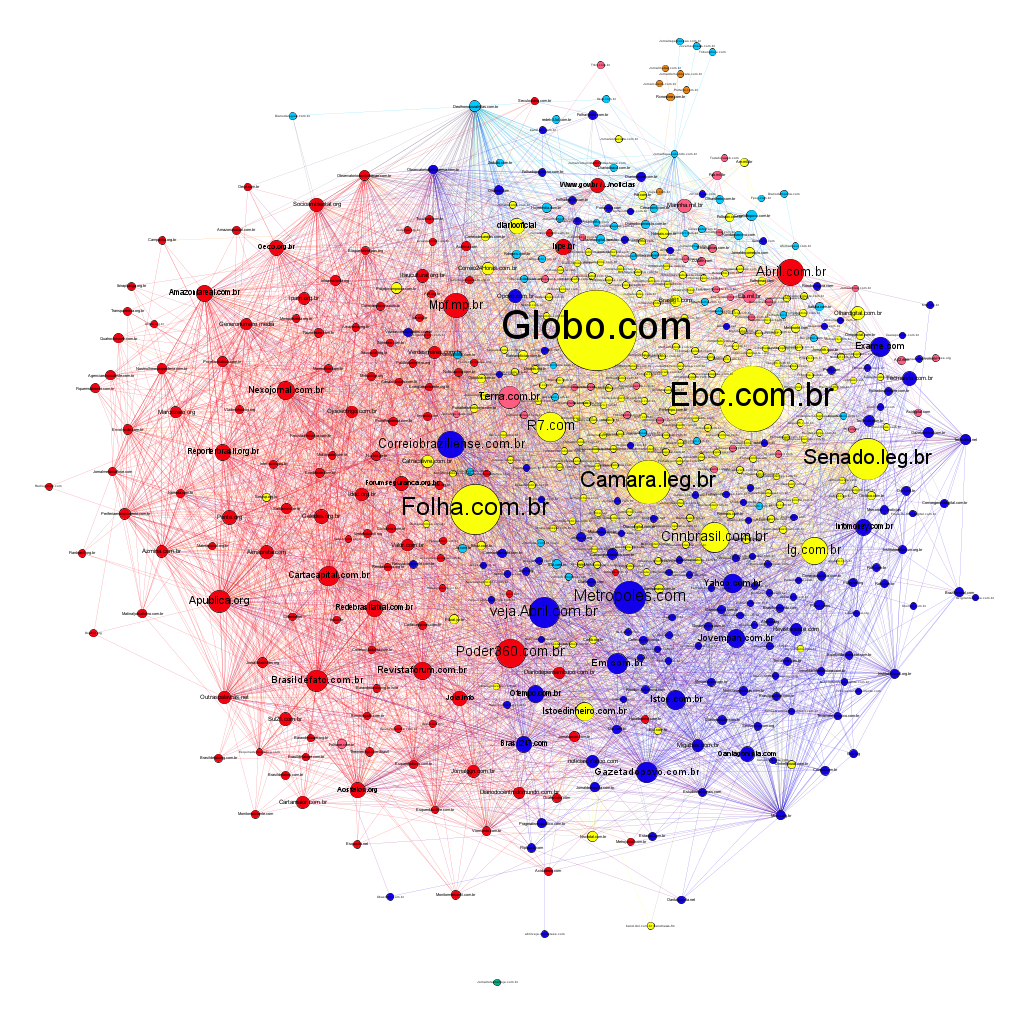 Source: Own elaboration.
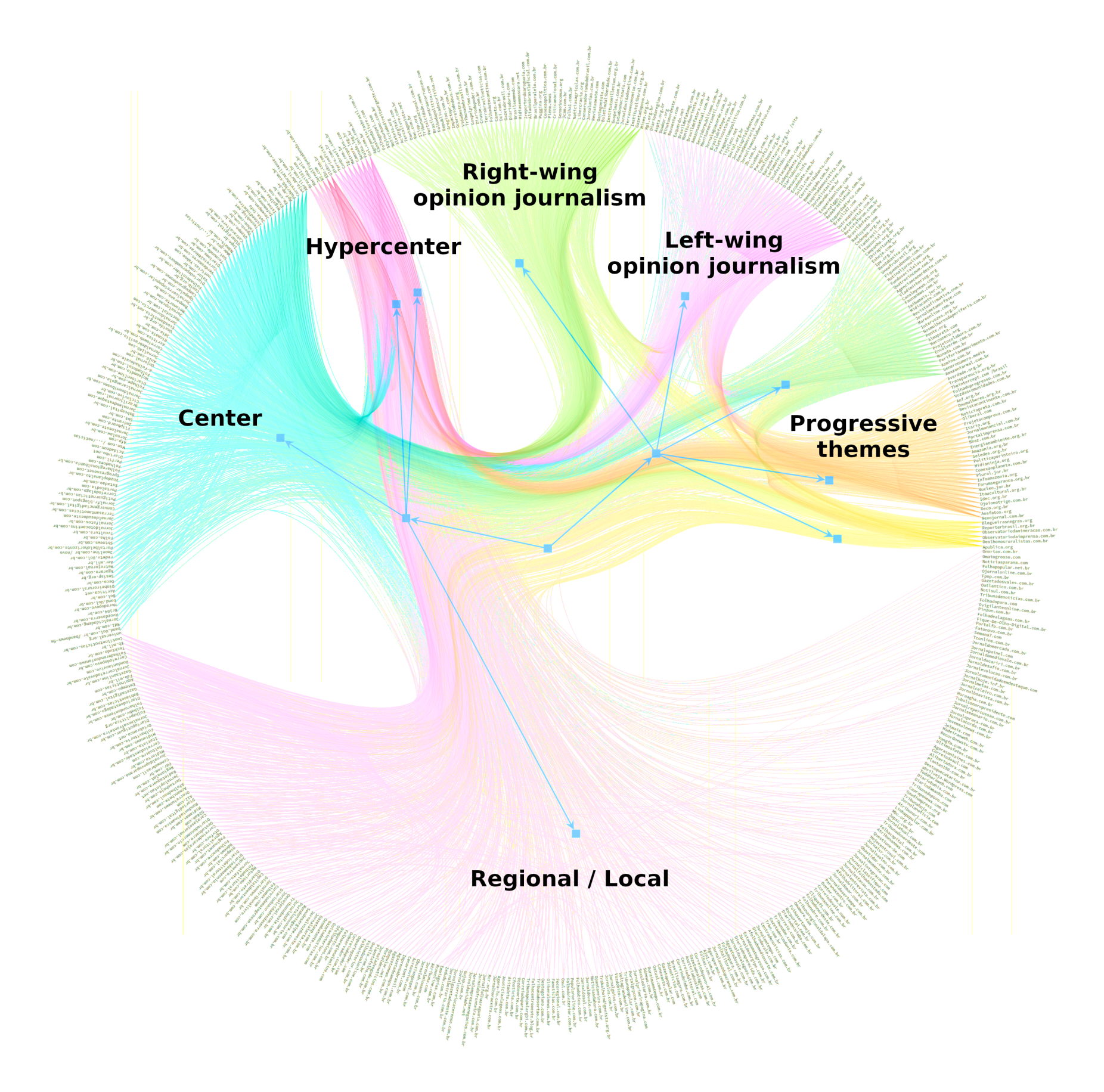 Source: Own elaboration.9
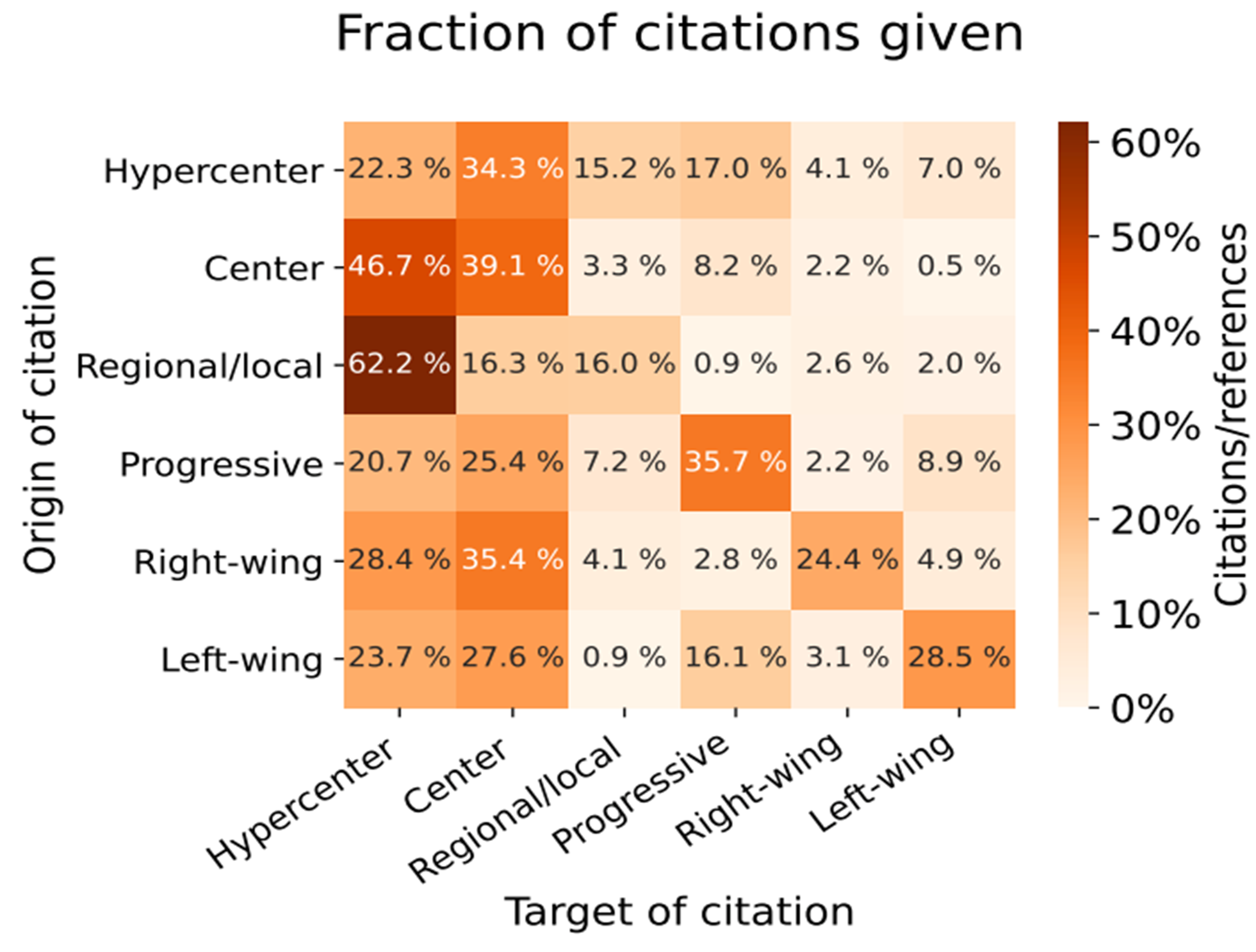 Source: Own elaboration.
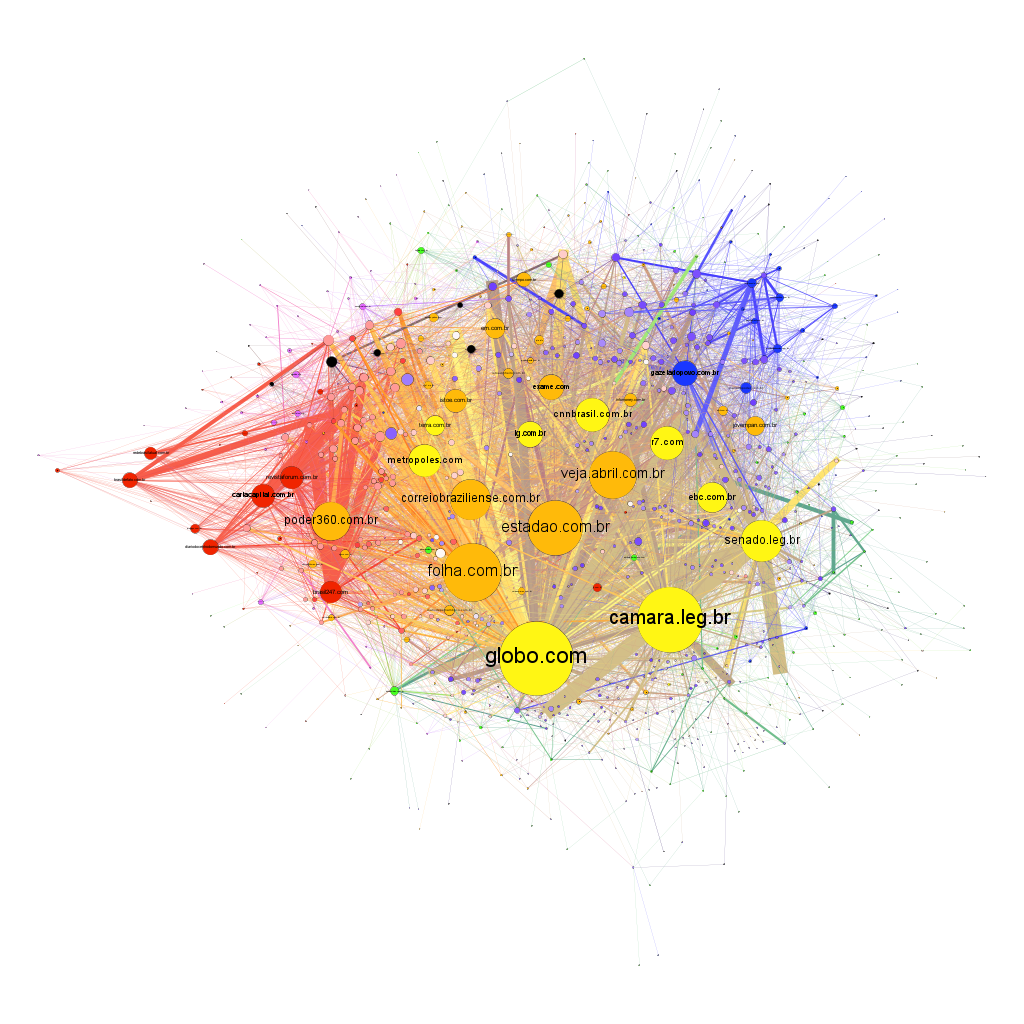 Source: Own elaboration.