 Combining grasses and legumes cover crops improved sandy soil physical quality
ABSTRACT
In sandy soils, low organic carbon content and weak structural stability often constrain pore functionality, water availability, and gas exchange, highlighting the need for management strategies that improve soil physical quality. The aim of this study was to quantify the impact of cover crops on SOC, soil physical properties, and soil processes in a sandy loam dystrophic Ferralsol (Latossolo Vermelho-Amarelo Distrófico). The experiment followed a randomized complete block design composed of five treatments and five repetitions. The experimental treatments were: (1) Control (fallow plots subjected to weed desiccation), (2) G (single grass: Urochloa ruziziensis), (3) GG (two grasses intercropped: Pennisetum americanum + U. ruziziensis), (4) GL (one grass and one legume intercropped: P. americanum + Mucuna pruriens), and (5) MIX (two grasses and one legume intercropped: P. americanum + U. ruziziensis + M. pruriens). Undisturbed samples were collected from the layers of 0.00-0.10, 0.10-0.20, 0.20-0.40, and 0.40-0.60 m to determine physical indicators such as bulk density (Bd), total porosity (TP), field capacity (FC), permanent wilting point (PWP), plant-available water (PAW), and the soil water retention curve, pore size distribution, water storage capacity (FC/TP), saturated hydraulic conductivity (Ksat), air permeability (Kair), and pore continuity index (K1). Results demonstrated that, compared with the Control (absence of cover crops), GL (grass + legume), MIX (mixed species), and GG (grasses) improved air conductivity by 8, 3.5, and 2.9 times, and pore continuity by 5.8, 2.9, and 2.2 times, respectively. The MIX system led to a 39 % increase in SOC relative to the Control. Additionally, intercropping two grass species with one legume (MIX) and combining one grass with one legume (GL) resulted in a 19 % increase in plant-available water compared with the Control treatment. Importantly, these improvements in pore architecture occurred without significant changes in soil bulk density (Bd) or total porosity (TP), underscoring that cover crops can reorganize the pore network independently of mass–volume relationships. Combination of grasses and legumes (GL, MIX) has substantial potential to improve plant-available water and the overall soil physical quality of sandy soils.
Keywords
water storage; water flow; air flow; pore continuity index; bulk density
INTRODUCTION
World agricultural production needs to expand by 60 % to meet demand for food and fiber by 2050 (Lipper et al., 2014). This scenario has led to the expansion of agriculture into marginal areas, including sandy soils (Cordeiro et al., 2022a), which cover approximately 5 billion hectares worldwide, of which 4 % are used for agriculture (Huang and Hartemink, 2020). Sandy soils typically have low organic carbon (SOC) content, weak structural aggregation, unstable aggregates, and restricted water-holding capacity. Additionally, their pore system is predominantly composed of larger diameter pores (DeLaune et al., 2019; Nouri et al., 2019). These characteristics, particularly low SOC content and poor structural stability, make sandy soil highly susceptible to degradation processes, including erosion and compaction (Yost and Hartemink, 2019). Therefore, strategies to improve physical quality, water retention and availability, and organic carbon in sandy soils are needed.
In tropical sandy soils, intensive agricultural practices — including conventional tillage, continuous cropping, and overgrazing — have accelerated soil degradation, leading to reduced crop productivity and environmental concerns (Cordeiro et al., 2021, 2022b). In contrast, conservation-based approaches such as no-tillage (NT) and maintaining permanent soil cover have emerged as effective strategies to enhance the sustainability of production systems and minimize soil degradation (Blanco-Canqui et al., 2015; Nunes et al., 2020). When integrated with complementary conservation practices, long-term NT has demonstrated the capacity to increase soil organic carbon and stimulate biological activity, thereby improving soil structure and increasing the continuity of biopores near the surface (Nunes et al., 2021). Additionally, evidence indicates that NT systems enhance macroporosity, which improves soil physical functioning by promoting gas exchange, water movement, and deeper root development, thereby enhancing access to subsurface water resources (Blanco-Canqui and Ruis, 2018).
No-tillage systems are currently implemented on over 100 million hectares worldwide and are recognized for their agronomic and environmental advantages. Despite these benefits, the development of compacted soil layers has become increasingly common in areas under intensive crop production (Cavalieri et al., 2009; Reichert et al., 2009), potentially restricting root growth and limiting access to water and nutrients. In NT systems, compaction is often linked to repeated traffic of heavy agricultural machinery (Ferreira et al., 2020a), limited crop rotation, and insufficient return of plant residues and root biomass to the soil (Nouri et al., 2018).
Adoption of cover crops within crop rotation systems has been increasingly promoted due to their positive effects on soil physical conditions, particularly in fragile environments (Bonetti et al., 2023). These species improve soil infiltration capacity and enhance soil organic carbon (SOC) stocks, which are directly associated with greater water retention, lower runoff potential, and reduced erosion risk. Reported increases in soil SOC following cover crop adoption range from 30 % after 11 years of continuous use (Olsen et al., 2014) to 36 % after only one year of implementation (Haruna et al., 2020). In parallel, reductions in soil bulk density have also been documented, with decreases of 3 % (Haruna et al., 2017), 7 % (Demir et al., 2019), and 14 % (Nascente et al., 2015) compared with bare fallow conditions. These improvements are attributed to enhanced root biomass and decomposition, which promote aggregation and increase soil porosity.
Studies conducted in fine-textured soils reinforce the positive impacts of no-tillage systems with cover crops. For instance, Villamil et al. (2006) observed that a five-year NT system incorporating rye (Secale cereale) and hairy vetch (Vicia villosa) reduced soil compaction while enhancing total porosity, water availability, and aggregate stability. Similarly, Blanco-Canqui et al. (2011) reported that after 15 years of NT in a silt loam soil, the integration of cover crops increased surface SOC, cumulative infiltration, and aggregate stability, while alleviating surface compaction often associated with long-term NT. In a long-term evaluation, Keisling et al. (1994) found that winter cover crops such as rye, hairy vetch, and crimson clover (Trifolium incarnatum) improved saturated hydraulic conductivity, soil water retention, total porosity, and macroporosity compared with NT without cover crops.
Despite growing evidence that cover crops can enhance soil physical properties, most studies have focused on fine- and medium-textured soils in temperate regions, with limited attention to sandy soils in tropical environments. These soils are particularly vulnerable to degradation due to their inherently low organic matter content, weak aggregation, and poor water retention. Furthermore, few studies have systematically evaluated how different functional combinations of grass and legume cover crops influence key physical indicators, such as air permeability, pore continuity, and water availability, in no-tillage systems. Understanding these interactions is essential to design cover cropping strategies that improve the sustainability and resilience of agricultural systems on sandy soil. Therefore, this study tested the hypothesis that cover crops, grown either single or intercropped, under no-till system, positively impact the physical quality of a sandy-loam soil. This study aimed to quantify the impact of cover crops on SOC and soil physical properties and processes, including bulk density, total porosity, water storage capacity, hydraulic conductivity, air permeability, pore continuity index, water retention curve, frequency by pore class, pore class volume fraction, and plant available water.
MATERIALS AND METHODS
Study location
The study was carried out at the Experimental Farm of the School of Agricultural Sciences, Western São Paulo University, located in Presidente Bernardes, in the southeastern region of São Paulo State, Brazil (22° 11’ 43” S, 51° 40’ 30” W; 401 m a.s.l.). The soil at the experimental site is classified as a Latossolo Vermelho-Amarelo Distrófico (Santos et al., 2018), equivalent to a Ferralsol according to the WRB system (IUSS Working Group WRB, 2014), featuring a sandy texture and 140 g kg-1 of clay in the 0.00-0.20 m soil layer (Table 1). Regional climate is transitional between a humid and subhumid megathermal with dry winters (Aw) and a humid subhumid mesothermal with hot summers (Cfa), as described by Braido and Tommaselli (2010). Mean annual rainfall is 1,558 mm, concentrated from October to March, with a mean air temperature around 24 °C and average relative humidity near 65 %.
Prior to the experiment, the area was under pasture with Urochloa brizantha for ten years. The trial began in 2015 following chemical desiccation of the pasture and surface application of 1.5 Mg ha-1 of lime without incorporation. Subsequent annual lime applications were carried out: 0.85 Mg ha-1 in 2016, 1.0 Mg ha-1 in 2017, and 1.7 Mg ha-1 in 2018. Gypsum was also applied in 2018 at a rate of 1.0 Mg ha-1. All plots were managed under no-tillage. Summer crops included soybean (Glycine max) during the 2015–2016 and 2017–2018 seasons, and cotton (Gossypium hirsutum L.) in 2016–2017, 2018–2019, and 2019–2020. Cover crops were grown during the winter season, as described in the experimental design section.
Experimental design and studied treatments
The trial followed a randomized complete block design with five treatments and five replications. Each plot was 15 m long and 9 m wide, totaling 135 m² per unit. Treatments consisted of different cover crops, grown single and intercropped, with the aim of enhancing their functional diversity before cotton cultivation. Treatments were: Control – fallow area with weed desiccation; G – one grass (U. ruziziensis); GG – two grasses intercropped (P. americanum + U. ruziziensis); GL – one grass intercropped with a legume (P. americanum + M. pruriens); and MIX – two grasses intercropped with one legume (P. americanum + U. ruziziensis + M. pruriens). In the fallow area, the following weeds were identified: Conyza bonariensis, Gomphrena celosioides, Cleome affinis, Micranthemum umbrosum, Digiraria insularis, Portulaca oleracea and Richardia brasiliensis as well as U. ruziziensis from the soil seed bank. Desiccation of the cover crops and the fallow area occurred on November 4, 2020.
Cover crop species were sown in rows using mechanical equipment, seeding rates were 6 kg ha-¹ for Urochloa ruziziensis, 18 kg ha-1 for Pennisetum americanum (pearl millet), and 90 kg ha-1 for Mucuna pruriens (velvet bean). These seeding densities were maintained for both monoculture and intercropping treatments. Row spacing was set at 0.22 m. The sowing depth was 0.02 m for U. ruziziensis and P. americanum, and 0.04 m for M. pruriens. Fertilization in 2018 consisted of 20 kg ha-1 of N, 30 kg ha-1 of P₂O₅, and 26 kg ha-1 of K₂O. In the subsequent season (2019), the species were re-established without additional fertilization.
Soil sampling and soil physical properties analysis
Undisturbed soil samples were collected on June 13, 2021, using cylinders measuring 5 cm in height and 7.5 cm in internal diameter. Soil samples were collected at four depth intervals: 0.00-0.10, 0.10-0.20, 0.20-0.40, and 0.40-0.60 m, with one replicate per plot per layer, resulting in a total of 100 samples. To prevent moisture loss, samples were sealed in aluminum foil and kept refrigerated at approximately 5 °C until laboratory processing. Soil texture was analyzed through the hydrometer technique as outlined by Gee and Bauder (1986).
To establish soil water retention curves, soil samples were first saturated via capillary action for 24 h. Subsequently, samples were drained at matric potentials of -1, -3, -6, and -10 kPa on a tension table and at -300 to -1000 kPa using a pressure plate apparatus. The -1500 kPa water content was determined using a WP4-C dewpoint potentiometer. Soil water retention data were modeled using the Van Genuchten (1980) equation (Equation 1).
in which: θ is the volumetric water content (m3 m-3); θr and θs are residual and saturated water contents (m3 m-3), respectively; α (kPa-1) and n are empirical parameters; and ψ is the soil matric potential (kPa) (Van Genuchten, 1980).
Water storage capacity (FC/TP) and air storage capacity (Pair/TP) were calculated according to Reynolds et al. (2008). Threshold values of 0.60≤ FC/TP ≤0.70 and 0.30≤ Pair/TP ≤0.40 were used as reference values for optimal soil physical quality.
Pore size distribution was derived by applying the first derivative to the Van Genuchten function. Equivalent pore diameter (EPD) was calculated using the capillarity equation (Equations 2 and 3), assuming standard values for water and air densities (1000 and 1.184 kg m-3, respectively), liquid–solid contact angle (0°), and gravitational acceleration (9.8165 m s-2).
in which: EPD is the equivalent diameter (µm), and m is empirical parameter.
Available water for plants (PAW) was estimated as the difference between the volumetric water content at field capacity (θFC; Assouline and Or, 2013) and at the permanent wilting point (PWP, ψ = -1500 kPa; van Lier et al., 2022), expressed in m3 m-3 (Equation 4):
Air permeability (Kair) was measured on soil samples equilibrated at a matric potential of –10 kPa using a constant-head permeameter, following the procedure described by Ball and Schjønning (2002). Airflow through the samples was regulated using a mass flow controller, and differential pressure was recorded using a manometer. The Kair was calculated using equation 5.
Q refers to air mass flow (m3 s-1), η is the dynamic viscosity of air at 20 °C (1.84 × 10⁻⁵ N s m-2), AS is the cross-sectional area for air passage (m2), z is the height of the soil core (m), and P is the variation of air pressure (Pa).
After measurements, the samples were dried in an oven at 105 °C for a 24-hour period. Dried samples were ground and passed through a 2-mm sieve. Particle density (Pd) was measured using a helium gas pycnometer (Flint and Flint, 2002), and SOC was determined using the Walkley–Black method (Nelson and Sommers, 1982). Bulk density (Bd) was calculated as the ratio of dry mass to sample volume. Water content (θ) was derived from Bd. Air-filled porosity (Pair) was determined by subtracting the water content at –10 kPa from the total porosity. The pore continuity index (K1) was estimated as the ratio between Kair and Pair, following Ball et al. (1988).
Saturated hydraulic conductivity (Ksat) was determined through the constant-head permeameter technique, following Klute and Dirksen (1986) (Equation 6).
The V refers to the volume of water that percolated (m3); L is the core height (m); A is the soil sample’s cross-sectional area (m2); h corresponds to the water column height (m); and t is the time (hours).
Statistical analysis
Data were evaluated to ensure compliance with the assumptions of analysis of variance (ANOVA), including normality of residuals, homogeneity of variances (homoscedasticity), and independence of observations. Normality was assessed using the Shapiro-Wilk test (Shapiro and Wilk, 1965), and homogeneity of variances was verified using the Levene test (Levene, 1960).
Due to skewness and heteroscedasticity, data for saturated hydraulic conductivity (Ksat), air permeability (Kair), and pore continuity index (K1) were logarithmically transformed (base 10). These transformations were necessary to satisfy ANOVA assumptions by stabilizing variances and improving the normality of data distribution, ensuring valid statistical inferences.
ANOVA was conducted separately for each soil depth layer, and treatment means were compared using Tukey test at the 5 % significance level. All statistical analyses were performed using SAS software (Institute, 2002).
Principal Component Analysis (PCA) was conducted to identify the main patterns of variation among soil physical properties and to evaluate the multivariate relationships between cover crop treatments, soil physical properties, and soil organic carbon. A biplot was constructed to visualize the distribution of treatments relative to the principal components and to explore correlations among variables. All multivariate analyses were conducted using the OriginLab software version 9.95 (OriginLab Inc., Northampton, USA).
RESULTS
Regardless of the soil layer, the impact of cover crop on soil bulk density (Bd), total porosity (TP), air-filled porosity (Pair), water storage capacity (FC/TP), and air storage capacity (Pair/TP) was not significant (p>0.05; Table 2).
Bulk density (Bd), total porosity (TP), air-filled porosity at -10 kPa (Pair), soil water holding capacity (FC/TP), air storage capacity (Pair/TP) as a function of cover crop and soil layers
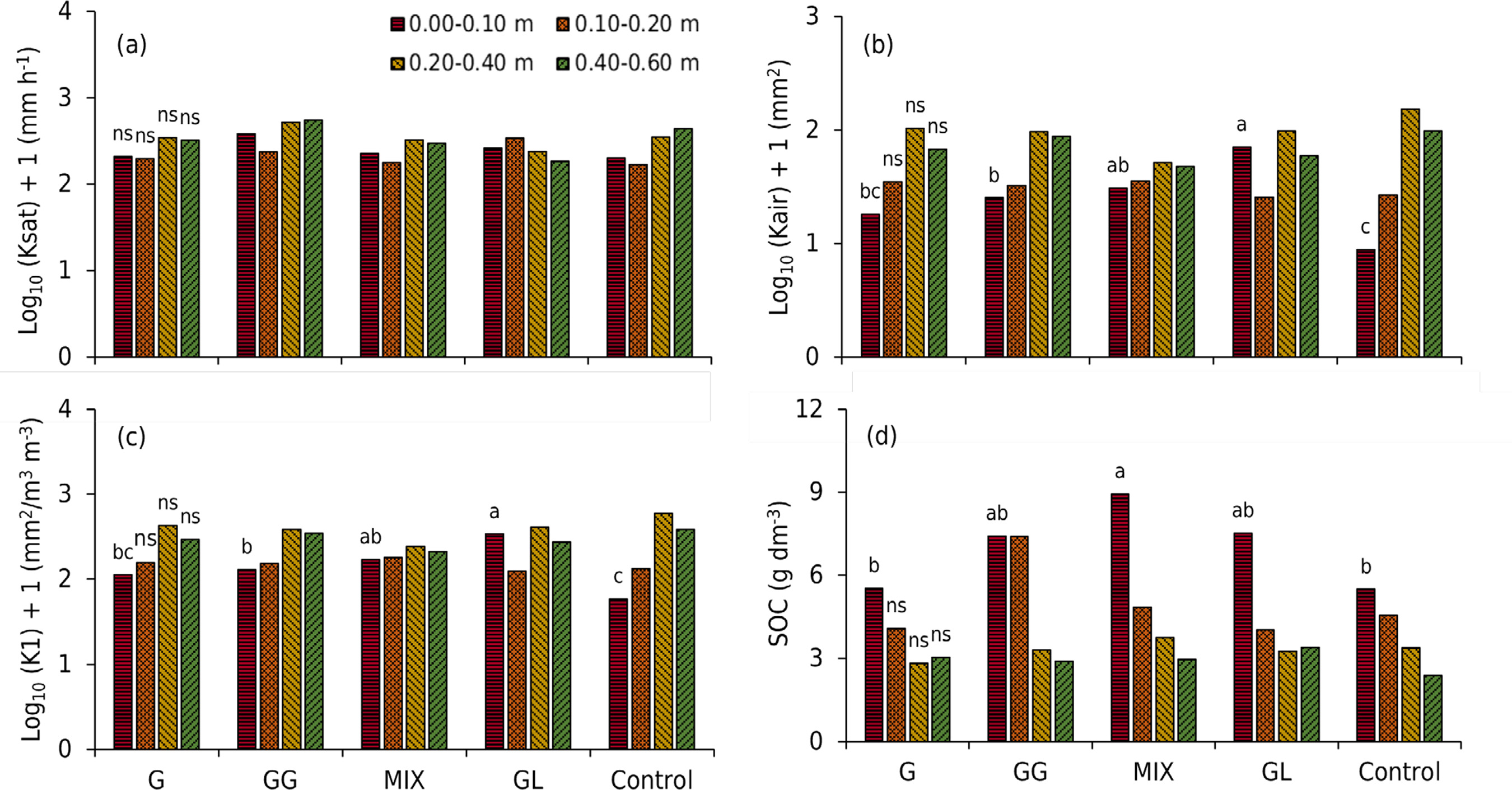
In the surface layer (0.00–0.10 m), Kair and K1 were significantly (p<0.05) affected by cover crops treatments (Figures 1b and 1c), while saturated hydraulic conductivity (Ksat) was not (Figure 1a). The control treatment showed the lowest values of air permeability (Kair) and pore continuity (K1), which were statistically different from those of the GL, MIX, and GG treatments (Figures 1b and 1c). Reductions in Kair and K1 in the Control treatment were 8.05, 3.50, and 2.88, and 5.75, 2.88, and 2.18, respectively, compared with the GL, MIX, and GG treatments. Furthermore, in the topsoil layer, the Control treatment showed Kair values below 1 µm², indicating a severe restriction of airflow. The MIX treatment showed a positive increase in SOC values of 39 and 38 % compared with the Control and G treatments (p<0.05; Figure 1d).

Hydraulic conductivity (Ksat), air permeability (Kair), pore continuity index (K1), and soil organic carbon (SOC) in different treatments with cover crops at the 0.00-0.10 m (a), 0.10-0.20 m (b), 0.20-0.40 m (c) and 0.40-0.60 m (d) soil layers. G: Single grass; GG: Intercropping of two grasses; GL: Intercropping of a grass with a legume; MIX: Intercropping of a mixture of two grasses and one legume; Control: no cover crops. Treatment means followed by the same letters and ns are not statistically different based on Tukey test at 5 % probability.
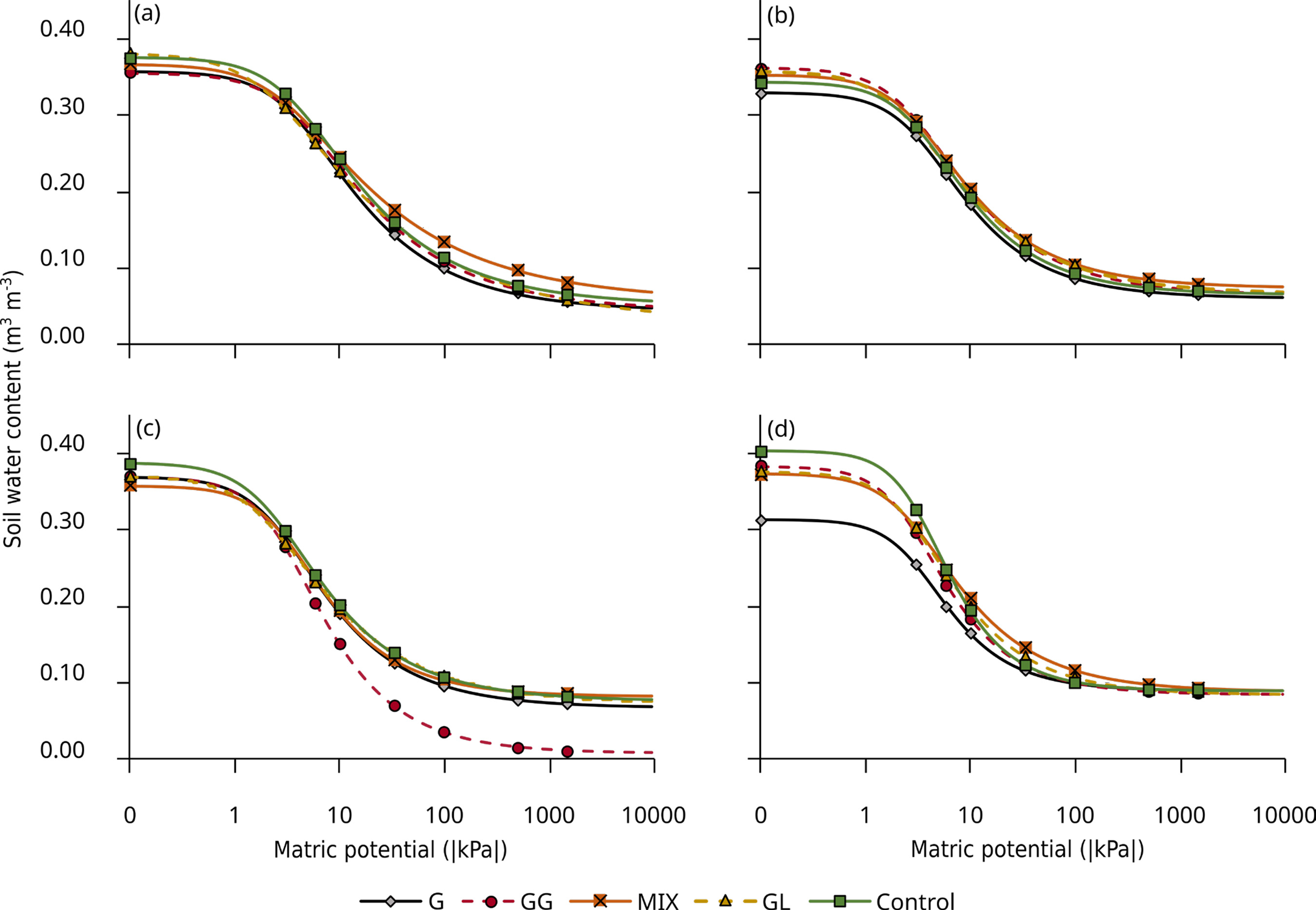
Soil water retention curve was slightly influenced by the cover crop treatments (Figure 2). The MIX treatment increased in soil water content at matric potentials from -10 to -1500 kPa in the 0.00-0.10 m soil layer (Figure 2a). No significant modifications were detected in the 0.10-0.20 m layer (Figure 2b). The GG treatment showed a decrease in water content between -10 and -1500 kPa in the 0.20-0.40 m layer (Figure 2c). In the 0.40-0.60 m layer, soil water content decreased at matric potentials between -1 and -10 kPa in cover crop systems relative to the control (Figure 2d).
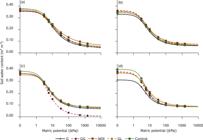
Soil water retention curve in different management treatments with cover crops at the 0.00–0.10 m (a), 0.10–0.20 m (b), 0.20–0.40 m (c) and 0.40–0.60 m (d) layers. G: Single grass; GG: Intercropping of two grasses; GL: Intercropping of a grass with a legume; MIX: Intercropping of a mixture of two grasses and one legume; Control: no cover crops.
In the 0.00–0.10 m layer, the GL treatment presented a significantly greater frequency of pore classes than the GG, G, and Control treatments (Figure 3a), corroborating the Kair results. Figure 3b shows that the most frequent pore class in the GL treatment was mesopores (100-30 µm). Additionally, in the GL treatment, macropores (>100 µm) were rearranged into mesopores, a behavior also observed in the MIX treatment (Figure 3b).
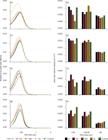
Pore size frequency distribution curve (a, c, e, g) and pore size volume fraction in different treatments with cover crops at the 0.00-0.10 m (a, b), 0.10-0.20 m (c, d), 0.20-0.40 m (e, f) and 0.40-0.60 m (g, h) layers. G: Single grass; GG: Intercropping of two grasses; GL: Intercropping of a grass with a legume; MIX: Intercropping of a mixture of two grasses and one legume; Control: no cover crops.
No notable differences were detected in pore class frequency or volume fraction within the 0.10–0.20 m layer (Figures 3c and d). At the 0.20–0.40 m layer, the frequency of pore size classes (Figure 3e) and the pore class volume fraction (>100 and 100-30 µm; Figure 3f) were higher in the GG treatment. In the 0.40–0.60 m layer, the Control treatment showed the highest frequency of pore size classes (Figure 3g) and the highest pore class volume fraction (>100 and 100-30 µm; Figure 3h).
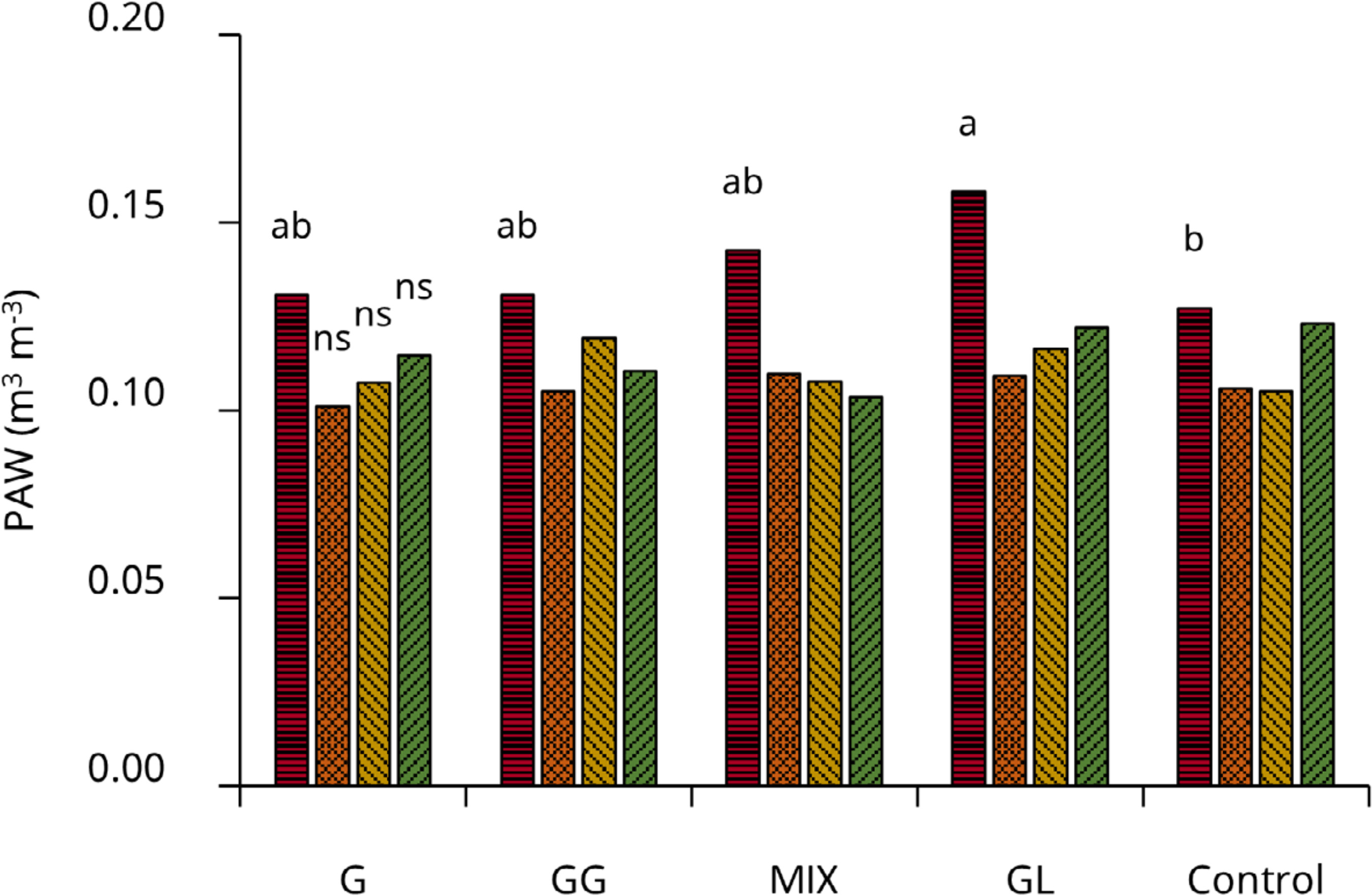
Plant available water (PAW; Figure 4) increased by 19 % in the 0.00-0.10 m layer of the GL treatment compared with the Control. Despite the findings in the soil water retention curve, pore size class frequency, and volumetric fraction per pore size class in the 0.20-0.40 and 0.40–0.60 m layers, no changes were observed in the plant available water content in these layers.

Plant available water (PAW) in different management treatments with cover crops for the 0.00-0.10 m, 0.10-0.20 m, 0.20-0.40 m and 0.40–0.60 m layers. G: Single grass; GG: Intercropping of two grasses; GL: Intercropping of a grass with a legume; MIX: Intercropping of a mixture of two grasses and one legume; Control: no cover crops. Treatment means followed by the same letters and ns are not statistically different based on Tukey test at 5 % probability.
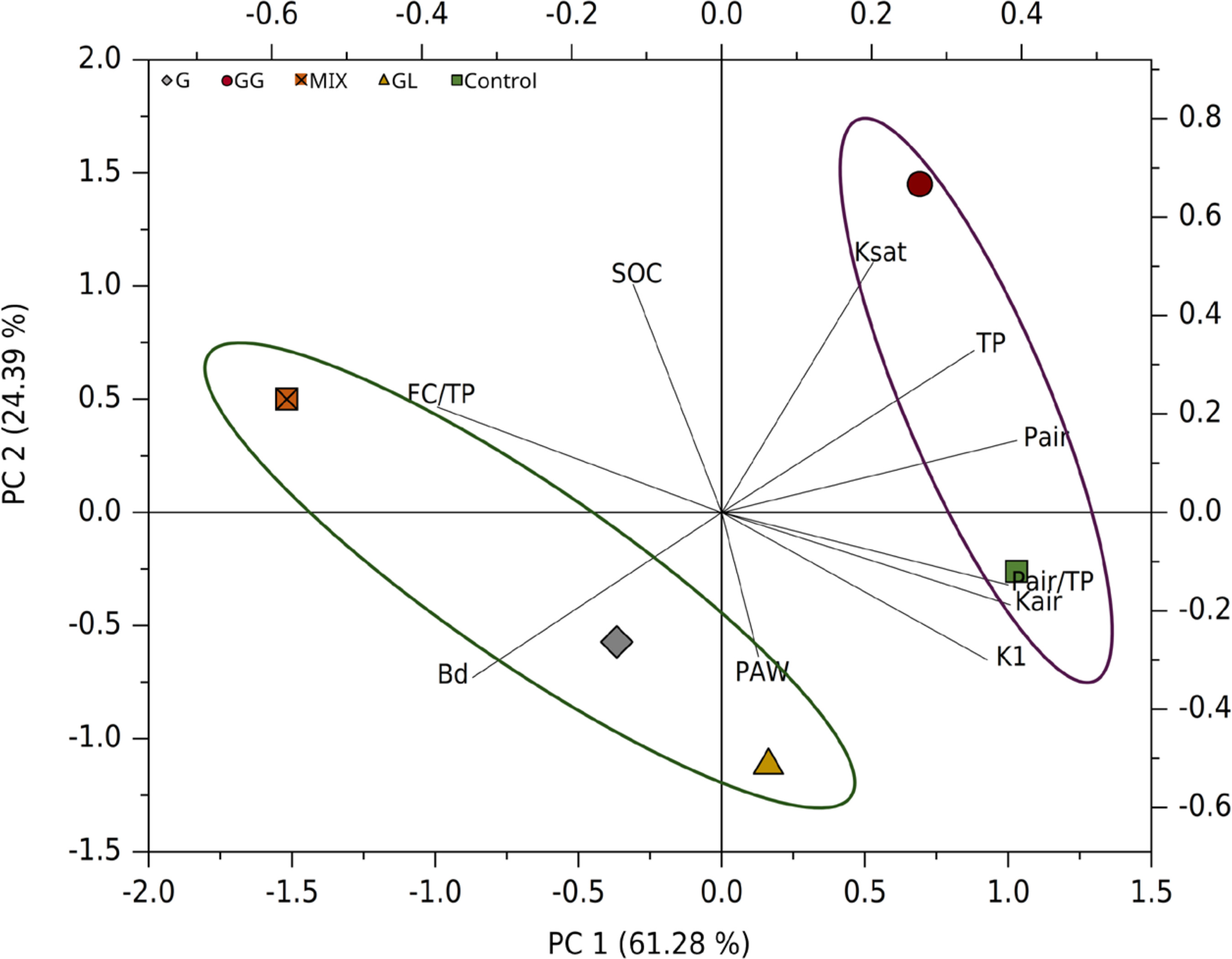
Principal component analysis (PCA) identified three components (PCs) with eigenvalues ranging from 6.13 to 2.44, accounting for 85.67 % of the total variation in the dataset (Table 3 and Figure 5). The first principal component (PC1) explained 61.28 % of the variance and showed negative loadings for bulk density and water storage, while showing positive associations with total porosity, air-filled porosity, air storage capacity, air permeability, and the pore continuity index. This component reflects variations in soil physical properties, particularly those linked to pore structure and functionality. The second PC accounted for 24.39 % of the explained variance and was positively correlated with hydraulic conductivity and soil organic carbon, and negatively correlated with bulk density.
Summary of the principal component analysis of the soil physical properties in different management treatments with cover crops
Figure 5 shows the distribution of treatments in PCs, with the grouping of the GL and MIX treatments, associated with increased water storage, plant-available water, and soil organic carbon. The GG treatment was linked to increased hydraulic conductivity. Meanwhile, the G treatment was associated with increased bulk density, whereas the Control treatment was linked to enhanced pore continuity and air permeability.
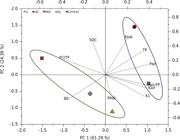
Principal component analysis of soil variable represented by the bulk density (Bd), total porosity (TP), air-filled porosity at –10 kPa (Pair), soil water holding capacity (FC/TP), air storage capacity (Pair/TP), saturated hydraulic conductivity (Ksat), air permeability (Kair), pore continuity index (K1), plant available water (PAW) and soil organic carbon (SOC) in different management treatments with cover crops. G: Single grass; GG: Intercropping of two grasses; GL: Intercropping of a grass with a legume; MIX: Intercropping of a mixture of two grasses and one legume; Control: no cover crops.
DISCUSSION
In the medium term, combining multiple cover crop species has shown significant potential to enhance the soil physical quality of the top layer (0.00-0.10 m) of sandy soils. For instance, combining grasses with legumes improves air permeability and pore continuity in the topsoil layer. However, over the six-year experimental period, under the conditions of this study, cover cropping did not lead to noticeable changes in soil physical properties below the 0.10 m layer. These results align with previous studies from both tropical and temperate regions, which have shown that cover crops can improve the physical condition of surface soil layers (e.g., Anghinoni et al., 2017; DeLaune et al., 2019; Nouri et al., 2019; Cagna et al., 2025).
In this study, the most pronounced effects of cover crops were found in variables such as air permeability, pore continuity, soil organic carbon content, and plant-available water. On the other hand, no significant changes were detected in soil bulk density, total and air-filled porosity, water and air retention capacities, or saturated hydraulic conductivity as a result of cover crop treatments. This is consistent with findings from prior studies, which also showed that not all soil physical properties respond equally to cover cropping. For instance, Blanco-Canqui and Ruis (2020) reported that soil bulk density was responsive to cover crops in only 31 % of the studies analyzed, meaning that in 69 % of cases, this soil physical property was not affected by cover crops. Similarly, saturated hydraulic conductivity showed no significant change in 60 % of assessments. Chen and Weil (2010) evaluated the effect of cover crops, such as forage radish, rapeseed, and rye, on soil physical properties, and found no significant effects of these cover crops as compared with fallow on soil bulk density.
The influence of cover crops on soil structural attributes is influenced by multiple variables, such as cover crop species, duration of adoption, soil classification, management practices (e.g., tillage), cropping system, and climatic background (Blanco-Canqui and Ruis, 2018). Jokela et al. (2009) suggested that some soil physical properties may take 4 years or more to fully respond to cover cropping. Similarly, other studies by Ruis et al. (2020) and Blanco-Canqui et al. (2023) found no improvement in aggregate stability following the use of rye (Secale cereale L.) as a cover crop, even after four and eight years of implementation. It is important to note that in this experiment, machinery traffic in the plots was minimal, limited to operations such as sowing cover crops and cotton and harvesting cotton. During the application of agrochemicals, the tractor operated between the plots rather than within them. As a result, only three traffic events occurred annually, a practice unlikely to be replicated in a commercial farming system.
Among the treatments, only treatment G did not show a significant increase in air permeability and pore continuity compared with the Control, suggesting that the intercropping treatments (GL, MIX, and GG) contributed to beneficial alterations in the physical properties of the upper soil layer. The root development of the crops used in these intercropped treatments likely led to pores with improved size and continuity, thereby enhancing the soil’s capacity for convective air transport. This is supported by the frequency of pore classes observed in the GL treatment. These findings can be attributed to differences in root morphology and their developmental behavior. Grasses typically produce finer roots with a fasciculate root system, which can increase soil microporosity (Soares et al., 2021). In contrast, legumes develop roots with larger diameter, more suberized compared with grass roots, and specialize in forming larger pores (Yang et al., 2019). In addition to root morphology, the stimulation of biological activity by cover crops likely contributed to the observed improvements in pore structure. Root exudates and microbial polysaccharides promote aggregation, while fungal hyphae enhance pore connectivity, particularly in systems with higher plant diversity (Gao et al., 2017; Naveed et al., 2017).
Air permeability measurements in the Control treatment indicate severe aeration restriction in the 0.00-0.10 m layer, reflecting the pore organization in that layer, suggesting that fallow practices over the years have caused degradation of soil structure (Abdollahi and Munkholm, 2014; Ruis et al., 2023). Soil bulk density values were similar among treatments. Therefore, differences in air permeability and pore continuity are attributed to the species present in the experiment. The fallow treatment, which did not include cover crops but allowed weed presence, failed to alter soil bulk density. However, cover crop roots provided continuous and interconnected pores, which weed roots are incapable of providing. Although no significant variations were detected in bulk density, total porosity, air-filled porosity, water and air storage capacity, and hydraulic conductivity, air permeability and pore continuity results suggest that intercropped cover crops positively impacted soil physical quality. The increase in pore size and continuity are crucial factors in alleviating root growth pressure within the soil profile (Bonetti et al., 2019; Soares et al., 2021; Blanco-Canqui et al., 2023).
The use of diverse cover crop mixtures increased soil organic carbon (SOC) content in the 0.00-0.10 m layer (Figure 1d). Principal component analysis indicated a positive association between organic carbon accumulation and the GL treatment in the surface layer (Figure 4a). It is well established that cover crops contribute to SOC enrichment (Blanco-Canqui et al., 2015), particularly in the topsoil layer (Cavalieri et al., 2009; Blanco-Canqui et al., 2015; Ferreira et al., 2020b), mainly due to the accumulation of organic material. Subsurface layers, on the other hand, tend to respond over extended periods (>6 years) (Salazar et al., 2020). Blanco-Canqui et al. (2015) also observed that the mixture of legumes and grasses promotes a higher increase in SOC due to the higher biomass production, which agrees with the results found in the MIX treatment. The increase in SOC in MIX and GL treatments likely contributed to the generation of more stable aggregates and improved mesoporosity, which favors both water retention and air flow in the soil matrix. Such effects are especially relevant in sandy soils, where organic matter is critical for structural stabilization due to the low intrinsic cohesion of mineral particles (Oades, 1984; Blanco-Canqui et al., 2023).
In the 0.00-0.10 m layer, SOC was 38 % higher under the MIX treatment compared with the Control. According to Cordeiro et al. (2022a), in the same experiment, SOC levels under the MIX system were 79 % higher than in fallow plots at the 0.00-0.10 m soil layer and 31 % higher at 0.10-0.20 m. Additionally, the MIX treatment showed the highest shoot (2019 growing season) and root biomass production (2018 growing season) within the 0.00–0.20 m soil layer compared with the fallow treatment (Cordeiro et al., 2021). The MIX treatment also had lower C:N ratios in both shoots (C:N = 38) and roots (C:N = 52), resulting in higher C conversion into SOC, whereas the fallow treatment showed a negative C conversion rate (Cordeiro et al., 2022a). Similarly, Blanco-Canqui et al. (2011) found that SOC concentration was 30 % higher in areas under cover crop systems than in fallow areas at the 0–0.075 m layer. According to Blanco-Canqui and Jasa (2019), Blanco-Canqui et al. (2023), and Ruis and Blanco-Canqui. (2017), there is a strong relationship between soil organic carbon and soil physical properties. Our results, as evidenced by the principal component analysis, highlight the significant role of organic carbon content in increasing soil hydraulic conductivity and available water and in reducing soil bulk density (Figure 5).
Slight variations were detected in the soil water retention curve (Figure 2). The MIX treatment showed greater water retention across matric potentials from –10 to –1500 kPa in the 0.00-0.10 m layer, probably associated with increased soil organic carbon levels (Figure 1d). Analysis of pore class frequency and pore volume fraction indicated that the GL treatment had a reduced volume of macropores (<100 µm) and an increased volume of mesopores (100-30 µm) when compared with the Control in the 0.00-0.10 m soil layer. The reduction in SOC levels negatively impacts aggregation, leading to a pore organization with the Control treatment exhibiting greater macroporosity, likely due to the dominance of sand-sized particles (Huang and Hartemink, 2020). The reorganization towards smaller pore sizes in the GL treatment is attributed to the deposition of exudates and root tissue, which stimulate biological activity and consequently, soil particle aggregation (Gao et al., 2017; Huang and Hartemink, 2020).
In coarse-textured soils with low surface charge, aggregation depends on the deposition of organic carbon compounds derived from roots and aboveground plant parts, as well as those resulting from increased soil biological activity (Oades, 1984; Naveed et al., 2017). Plant roots, especially root hairs, and fungal hyphae exude polysaccharides similar to sugars and other organic compounds, which promote the binding of individual particles into soil aggregates (Read et al., 2003; Gao et al., 2017; Naveed et al., 2017; Zhang et al., 2020). From a management perspective, the inclusion of grass-legume mixtures, particularly those involving legumes, may represent a nature-based strategy to improve soil structural integrity and increase resilience to water deficit in sandy environments. This approach is especially promising for rainfed systems in tropical regions, where water availability is often the main constraint to productivity.
The beneficial effects of substituting fallow periods with cover crops in no-till systems are essential for promoting the sustainability of intensified agricultural practices in sandy soils (Peterson et al., 2020; Ruis et al., 2023). Increased water availability for plants can be a critical factor in plant development (Bhattacharya, 2021; Cagna et al., 2025), especially during periods of reduced precipitation in sandy soil environments. Our findings on air permeability, pore continuity, pore size distribution, volumetric fractions by pore size class, and available water suggest that a grass-legume cover crop combination enhances the physical structure of the 0.00-0.10 m layer.
Consistent with our results, previous research has shown that replacing fallow with cover crops significantly alters soil properties, including SOC accumulation, porosity, and hydrological function (Basche et al., 2016; Anghinoni et al., 2019; Cordeiro et al., 2022a). Altogether, our study reinforces the value of functional plant diversity in cover cropping systems, emphasizing that multi-species intercropping (especially grass-legume combinations) is a viable strategy to improve the physical quality and functioning of sandy soils.
CONCLUSION
The use of cover crops, particularly functionally diverse mixtures of grasses and legumes under no-till management, significantly improves the physical functioning of sandy soils, even without altering soil bulk density. Although no significant differences were observed in mass-to-volume relationships, key dynamic indicators of soil structure, such as air permeability and the pore continuity index, showed substantial improvements in the surface layer (0.00-0.10 m). These advances reflect a reorganization of the pore system and increased pore connectivity, which are critical for gas diffusion, water movement, root development, and microbial activity.
Improvements in soil structural functionality do not rely solely on reducing compaction but can be achieved through changes in pore architecture and biologically driven formation of porous structures. The enhanced pore continuity and redistribution of macropores into mesopores observed in intercropped systems, especially those combining grasses and legumes, suggest a biologically mediated structural improvement, likely associated with distinct root morphology, root exudate release, and stimulation of soil biota. Overall, the findings reinforce the potential of multi-species cover cropping systems as effective solutions for restoring and sustaining soil function in sandy-textured environments.
ACKNOWLEDGEMENTS
We thank the São Paulo Western University (UNOESTE) for the partnership and research support.
-
How to cite:
Cagna CP, Tormena CA, Rocha CH, Echer FR, Silva PLF, Biru MK, Nunes MR. Combining grasses and legumes cover crops improved sandy soil physical quality. Rev Bras Cienc Solo. 2025;49:e0250105. https://doi.org/10.36783/18069657rbcs20250105
-
FUNDING
The authors are grateful to CNPq (Conselho Nacional de Desenvolvimento Científico e Tecnológico) for providing scholarships and research grants. This study was financed in part by the Coordenação de Aperfeiçoamento de Pessoal de Nível Superior – Brazil (CAPES) - Finance Code 001. We also thank the USDA National Institute of Food and Agriculture Research Capacity Fund (Hatch) project 7004188 (Hatch grant FLA-SWS-006289 to MRN).
DATA AVAILABILITY
The data will be provided upon request.
REFERENCES
-
Abdollahi L, Munkholm LJ. Tillage system and cover crop effects on soil quality: I. Chemical, mechanical, and biological properties. Soil Sci Soc of Americ J. 2014;78:262-70. https://doi.org/10.2136/sssaj2013.07.0301
» https://doi.org/10.2136/sssaj2013.07.0301 -
Anghinoni G, Tormena CA, Lal R, Moreira WH, Betioli Júnior E, Ferreira CJB. Within cropping season changes in soil physical properties under no-till in Southern Brazil. Soil Till Res. 2017;166:108-12. https://doi.org/10.1016/j.still.2016.10.015
» https://doi.org/10.1016/j.still.2016.10.015 -
Anghinoni G, Tormena CA, Lal R, Zancanaro L, Kappes C. Enhancing soil physical quality and cotton yields through diversification of agricultural practices in central Brazil. Land Degrad Dev. 2019;30:788-98. https://doi.org/10.1002/ldr.3267
» https://doi.org/10.1002/ldr.3267 -
Assouline S, Or D. Conceptual and parametric representation of soil hydraulic properties: A review. Vadose Zone J. 2013;12:vzj2013.07.0121.. https://doi.org/10.2136/vzj2013.07.0121
» https://doi.org/10.2136/vzj2013.07.0121 -
Ball BC, Schjønning P. Air permeability. In: Dane JH, Topp GC, editors. Methods of soil analysis: Part 4 Physical methods. Madison, Wisconsin: Soil Science Society of America; 2002. p. 1141-58. https://doi.org/10.2136/sssabookser5.4.c46
» https://doi.org/10.2136/sssabookser5.4.c46 -
Ball BC, O’Sullivan MF, Hunter R. Gas diffusion, fluid flow and derived pore continuity indices in relation to vehicle traffic and tillage. Eur J Soil Sci. 1988;39:327-39. https://doi.org/10.1111/j.1365-2389.1988.tb01219.x
» https://doi.org/10.1111/j.1365-2389.1988.tb01219.x - Banzatto DA, Kronka SN. Experimentação agrícola. Jaboticabal: Funep; 2006.
-
Basche AD, Kaspar TC, Archontoulis SV, Jaynes DB, Sauer TJ, Parkin TB, Miguez FE. Soil water improvements with the long-term use of a winter rye cover crops. Agr Water Manage. 2016;172:40-50. https://doi.org/10.1016/j.agwat.2016.04.006
» https://doi.org/10.1016/j.agwat.2016.04.006 -
Bhattacharya A. Effect of soil water deficit on growth and development of plants: a review. In: Bhattacharya A, editor. Soil water deficit and physiological issues in plants. Singapore: Springer; 2021. p. 393-488. https://doi.org/10.1007/978-981-33-6276-5_5
» https://doi.org/10.1007/978-981-33-6276-5_5 -
Blanco-Canqui H, Mikha MM, Presley DR, Claassen MM. Addition of cover crops enhances no-till potential for improving soil physical properties. Soil Sci Soc Am J. 2011;75:1471-82. https://doi.org/10.2136/sssaj2010.0430
» https://doi.org/10.2136/sssaj2010.0430 -
Blanco-Canqui H, Shaver TM, Lindquist JL, Shapiro CA, Elmore RW, Francisc CA, Hergert GW. Cover crops and ecosystem services: Insights from studies in temperate soils. Agron J. 2015;107:2449-74. https://doi.org/10.2134/agronj15.0086
» https://doi.org/10.2134/agronj15.0086 -
Blanco-Canqui H, Ruis SJ. No-tillage and soil physical environment. Geoderma. 2018;326:164-200. https://doi.org/10.1016/j.geoderma.2018.03.011
» https://doi.org/10.1016/j.geoderma.2018.03.011 -
Blanco-Canqui H, Jasa PJ. Do grass and legume cover crops improve soil properties in the long term? Soil Sci Soc Am J. 2019;88:1181-7. https://doi.org/10.2136/sssaj2019.02.0055
» https://doi.org/10.2136/sssaj2019.02.0055 -
Blanco-Canqui H, Ruis SJ. Cover crop impacts on soil physical properties: A review. Soil Sci Soc Am J. 2020;84:1527-76. https://doi.org/10.1002/saj2.20129
» https://doi.org/10.1002/saj2.20129 -
Blanco-Canqui H, Ruis SJ, Koehler-Cole K, Elmore RW, Francis CA, Shapiro CA, Proctor CA, Fergunson RB. Cover crops and soil health in rainfed and irrigated corn: What did we learn after 8 years? Soil Sci Soc Of Amer J. 2023;87:1174-90. https://doi.org/10.1002/saj2.20566
» https://doi.org/10.1002/saj2.20566 -
Bonetti JA, Anghinoni I, Gubiani PI, Cecagno D, Moraes MT. Impact of a long-term crop livestock system on the physical and hydraulic properties of an Oxisol. Soil Till Res. 2019;186:280-91. https://doi.org/10.1016/j.still.2018.11.003
» https://doi.org/10.1016/j.still.2018.11.003 -
Bonetti JA, Nunes MR, Fink JR, Moraes MT, Tormena CA, Oliveira SM. Effect of soil compaction and cover crop management on soil physical quality, biomass production and corn and soybean yield. Arch Agron Soil Sci. 2023;69:3502-13. https://doi.org/10.1080/03650340.2023.2247995
» https://doi.org/10.1080/03650340.2023.2247995 -
Braido LMH, Tommaselli JTG. Caracterização climática e dos anos extremos (chuvoso e seco): Seus efeitos na produção de cana-de-açúcar, milho e soja para a região do Pontal do Paranapanema-SP. Rev Formação. 2010;1:13-34. https://doi.org/10.33081/formacao.v1i17.313
» https://doi.org/10.33081/formacao.v1i17.313 -
Cagna CP, Tormena CA, Guimarães R, Lugão SM, Costa MA, Batista MA, Figueiredo GC, Nunes MR. Nitrogen fertilization allows grazing intensification without degrading soil physical quality. Soil Till Res. 2025;247:106344. https://doi.org/10.1016/j.still.2024.106344
» https://doi.org/10.1016/j.still.2024.106344 -
Cavalieri KM, Silva AP, Tormena CA, Leão TP, Dexter AR, Hakansson I. Long-term effects of no-tillage on dynamic soil physical properties in a Rhodic Ferrasol in Paraná, Brazil. Soil Till Res. 2009;103:158-64. https://doi.org/10.1016/j.still.2008.10.014
» https://doi.org/10.1016/j.still.2008.10.014 -
Chen G, Weil RR. Penetration of cover crop roots through compacted soils. Plant Soil. 2010;331:31-43. https://doi.org/10.1007/s11104-009-0223-7
» https://doi.org/10.1007/s11104-009-0223-7 -
Cordeiro CFS, Rodrigues DR, Rocha CH, Araujo FF, Echer FR. Glomalin and microbial activity affectes by cover crops and nitrogen management in sandy soil with cotton cultivation. Appl Soil Ecol. 2021;167:104026. https://doi.org/10.1016/j.apsoil.2021.104026
» https://doi.org/10.1016/j.apsoil.2021.104026 -
Cordeiro CFS, Rodrigues DR, Echer FR. Cover crops improve soil organic carbono stock reduce organic matter lability in tropical sandy soil. Agron J. 2022a;114:1546-56. https://doi.org/10.1002/agj2.21019
» https://doi.org/10.1002/agj2.21019 -
Cordeiro CFS, Rodrigues DR, Echer FR. Cover crops and controlled-release urea drecrease need for mineral nitrogen fertilizer for cotton in sandy soil. Field Crop Res. 2022b;276:108387. https://doi.org/10.1016/j.fcr.2021.108387
» https://doi.org/10.1016/j.fcr.2021.108387 -
van Lier QJ, Logsdon SD, Pinheiro EAR, Gubiani PI. Plant available water. Enc Soils Environ. 2023;5:509-15. https://doi.org/10.1016/B978-0-12-822974-3.00043-4
» https://doi.org/10.1016/B978-0-12-822974-3.00043-4 -
Delaune PB, Mubvumba P, Lewis KL, Keeling JW. Rye cover crop impacts soil properties in a long-term cotton system. Soil Sci Soc Am J. 2019;83:1451-8. https://doi.org/10.2136/sssaj2019.03.0069
» https://doi.org/10.2136/sssaj2019.03.0069 -
Demir Z, Tursun N, Isik D. Effects of different cover crops on soil quality parameters and yield in an apricot orchard. Int J Agric Biol. 2019;21:399-408. https://doi.org/10.17957/IJAB/15.0000
» https://doi.org/10.17957/IJAB/15.0000 -
Ferreira CJB, Tormena CA, Severiano EC, Zotarelli L, Betioli Júnior E. Soil compaction influences soil physical quality and soybean yield under long-term no-tillage. Arch Agron Soil Sci. 2020a;67:383-96. https://doi.org/10.1071/SR20148
» https://doi.org/10.1071/SR20148 -
Ferreira ACB, Borin ALDC, Lamas FM, Bogiani JC, Silva MAS, Silva Filho JL, Staut LA. Soil Carbon accumulation in cotton production systems in the Brazilian Cerrado. Acta Sci. 2020b;43:e43039. https://doi.org/10.4025/actasciagron.v42i1.43039
» https://doi.org/10.4025/actasciagron.v42i1.43039 -
Flint AL, Flint LE. Particle density. In: Dane JH, Topp GC, editors. Methods of soil analysis: Part 4 Physical methods. Madison, Wisconsin: Soil Science Society of America; 2002. p. 229-40. https://doi.org/10.2136/sssabookser5.4.c10
» https://doi.org/10.2136/sssabookser5.4.c10 -
Gao W, Muñoz-Romero V, Ren T, Ashton RW, Morin M, Clark IM, Powlson DS, Whalley WR. Effect of microbial activity on penetrometer resistence and elastic modulus of soil at different temperatures. Eur J Soil Sci. 2017;68:412-9. https://doi.org/10.1111/ejss.12440
» https://doi.org/10.1111/ejss.12440 -
Gee GN, Bauder JW. Particle size distribution. In: Klute A, editor. Methods of Soil Analysis: Part 1 Physical and mineralogical methods. Madison, Wisconsin: Agronomy Society of America and Soil Science Society of America; 1986. p. 383-411. https://doi.org/10.2136/sssabookser5.1.2ed.c15
» https://doi.org/10.2136/sssabookser5.1.2ed.c15 -
Haruna SI, Anderson SH, Nkongolo NV, Reinbott T, Zaibon S. Soil thermal properties influenced by perennial biofuel and cover crop management. Soil Sci Soc Am J. 2017;81:1147-56. https://doi.org/10.2136/sssaj2016.10.0345
» https://doi.org/10.2136/sssaj2016.10.0345 -
Haruna SI, Anderson SH, Udawatta RP, Gantzer CJ, Phillips NC, Cui S, Gao Y. Improving soil physical properties through the use of cover crops: A review. Agrosyst Geosci Environ. 2020;3:e20105. https://doi.org/10.1002/agg2.20105
» https://doi.org/10.1002/agg2.20105 -
Huang J, Hartemink A. Soil and environmental issues in sandy soils. Earth-Sci Rev. 2020;208:103295. https://doi.org/10.1016/j.earscirev.2020.103295
» https://doi.org/10.1016/j.earscirev.2020.103295 -
Institute S. In: Institute, S. (Ed.), SAS: User’s Guide: Statistics. ninth ed. Cary, NC: SAS Institute; 2002. p. 943. https://support.sas.com/documentation/onlinedoc/91pdf/sasdoc_91/stat_ug_7313.pdf?
» https://support.sas.com/documentation/onlinedoc/91pdf/sasdoc_91/stat_ug_7313.pdf? - IUSS Working Group WRB. World reference base for soil resources 2014, update 2015: International soil classification system for naming soils and creating legends for soil maps. Rome: Food and Agriculture Organization of the United Nations; 2015. (World Soil Resources Reports, 106).
-
Jokela WE, Grabber JH, Karlen DL, Balser TC, Palmquist DE. Cover crop and liquid manure effects on soil quality indicators in a corn silage system. Agron J. 2009;101:727-37. https://doi.org/10.2134/agronj2008.0191
» https://doi.org/10.2134/agronj2008.0191 -
Keisling TC, Scott HD, Waddle BA, Williams W, Frans RE. Winter cover crops influence on cotton yield and selected soil properties. Commun Soil Sci Plan. 1994;25:3087-100. https://doi.org/10.1080/00103629409369250
» https://doi.org/10.1080/00103629409369250 - Klute A, Dirksen C. Hydraulic conductivity of saturated soils. In: Methods of soil analysis. Madison, Wisconsin: American Society of Agronomy and Soil Science Society of America; 1986. p. 694-700.
-
Lipper L, Thornton P, Campbell B, Baedeker T, Braimoh A, Bwalya M, Caron P, Cattaneo A, Garrity D, Henry K, Hottle R, Jackson L, Jarvis A, Kossam F, Mann W, McCarthy N, Meybeck A, Neufeldz H, Remington T, Sen PT, Sessa R, Shula R, Tibu A, Torquebiau E. Climate-smart agriculture for food security. Nat Clim Change. 2014;4:1068-72. https://doi.org/10.1038/nclimate2437
» https://doi.org/10.1038/nclimate2437 -
Nascente AS, Li Y, Crusciol CAC. Soil aggregation, organic carbon concentration and soil bulk density as affected by cover crop species in a no-tillage system. Rev Bras Cienc Solo. 2015;39:871-9. https://doi.org/10.1590/01000683rbcs20140388
» https://doi.org/10.1590/01000683rbcs20140388 -
Naveed M, Brown LK, Raffan AC, George TS, Bengough AG, Roose T, Sinclair I, Koebernick N, Cooper L, Kackett CA, Hallett PD. Plant exudates may stabilize or weaken soil depending on species, origin and time. Eur J Soil Sci. 2017;68:806-16. https://doi.org/10.1111/ejss.12487
» https://doi.org/10.1111/ejss.12487 -
Nelson DW, Sommers LE. Total carbon, organic carbon and organic matter. In: Page AL, editor. Methods of soil analysis: Part 2 Chemical and microbiological properties. 2nd ed. Madison, Wiscosin: Soil Science Society of America; 1982. p. 539-79. https://doi.org/10.2134/agronmonogr9.2.2ed.c29
» https://doi.org/10.2134/agronmonogr9.2.2ed.c29 -
Nouri A, Lee J, Yin X, Tyler DD, Saxton AM. Thirty-four years of no-tillage and cover crops improve soil quality and increase cotton yield in Alfisols, Southeastern USA. Geoderma. 2019;337:998-1008. https://doi.org/10.1016/j.geoderma.2018.10.016
» https://doi.org/10.1016/j.geoderma.2018.10.016 -
Nouri A, Youssef F, Basaran M, Lee J, Saxton AM, Erpul G. The effect of fallow tillage management on aeolian soil losses in semiarid Central Anatolia, Turkey. Agrosyst Geosci Environ. 2018;1:1-13. https://doi.org/10.2134/age2018.07.0019
» https://doi.org/10.2134/age2018.07.0019 -
Nunes MR, Karlen DL, Moorman TB, Cambardella CA. How does tillage intensity affect chemical soil health indicators? A United States meta-analysis. Agrosyst Geosci Environ. 2020;3:e20083. https://doi.org/10.1002/agg2.20083
» https://doi.org/10.1002/agg2.20083 -
Nunes MR, Vaz CMP, Pessoa TN, Denardin JE, Karlen DL, Giarola NFB, Libardi PL. Inherent and dynamic effects on the structural stability of Brazilian Oxisols. Geoderma R. 2021;27:e00426. https://doi.org/10.1016/j.geodrs.2021.e00426
» https://doi.org/10.1016/j.geodrs.2021.e00426 -
Oades JM. Soil organic matter and structural stability: Mechanisms and implications for management. Plant Soil. 1984;76:319-37. https://doi.org/10.1007/BF02205590
» https://doi.org/10.1007/BF02205590 -
Olsen K, Ebelhar SA, Lang JM. Long-term effects of cover crops on crop yields, soil organic carbon stocks and sequestration. Open J Soil Sci. 2014;4:284-92. https://doi.org/10.4236/ojss.2014.48030
» https://doi.org/10.4236/ojss.2014.48030 -
Peterson GA, Westfall DG, Schipanski ME, Fonte SJ. Soil and crop management systems that ameliorate damage caused by decades of dryland agroecosystem mismanagement. Agron J. 2020;112:3227-38. https://doi.org/10.1002/agj2.20257
» https://doi.org/10.1002/agj2.20257 -
Read DB, Bengough AG, Gregory PJ, Crawford JW, Robinson D, Scrimgeour CM, Young IM, Zhang K, Zhang X. Plant roots realease phospholipid surfactants that modify the physical and chemical properties of soil. New Phytol. 2003;157:315-26. https://doi.org/10.1046/j.1469-8137.2003.00665.x
» https://doi.org/10.1046/j.1469-8137.2003.00665.x -
Reichert JM, Suzuki LEAS, Reinert DJ, Horn R, Håkansson I. Reference bulk density and critical degree-of-compactness for no-till crop production in subtropical highly weathered soils. Soil Till Res. 2019;102:242-54. https://doi.org/10.1016/j.still.2008.07.002
» https://doi.org/10.1016/j.still.2008.07.002 -
Reynolds WD, Drury CF, Yang XM, Tan CS. Optimal soil physical quality inferred through structural regression and parameter interactions. Geoderma. 2008;146:466-74. https://doi.org/10.1016/j.geoderma.2008.06.017
» https://doi.org/10.1016/j.geoderma.2008.06.017 -
Ruis SJ, Blanco-Canqui H. Cover crops could offset crop residue removal effects on soil carbon and other properties: A review. Agron J. 2017;109:1785-805. https://doi.org/10.2134/agronj2016.12.0735
» https://doi.org/10.2134/agronj2016.12.0735 -
Ruis SJ, Blanco-Canqui H, Elmore RW, Proctor C, Koehler-Cole K, Ferguson RB, Francis CA, Shapiro CA. Impacts of cover crop planting dates on soils after four years. Agron J. 2020;112:1649-65. https://doi.org/10.1002/agj2.20143
» https://doi.org/10.1002/agj2.20143 -
Ruis SJ, Stepanovic S, Blanco-Canqui H. Intensifying a crop-fallow system: Impacts on soil properties, crop yields, and economics. Renew Agr Food Syst. 2023;38:e42. https://https://doi.org/10.1017/S1742170523000133
» https://doi.org/10.1017/S1742170523000133 -
Salazar MP, Soracco CG, Villarreal R, Polich NG, Turinetto MJ, Lozano LA. Winter cover crops effects on soil organic carbono and soil physical quality in a Typical Argiudoll under continuous soybean cropping. Rev Bras Cienc Solo. 2020;44:0200103. https://doi.org/10.36783/18069657rbcs20200103
» https://doi.org/10.36783/18069657rbcs20200103 - Santos HG, Jacomine PKT, Anjos LHC, Oliveira VA, Lumbreras JF, Coelho MR, Almeida JA, Araújo Filho JC, Oliveira JB, Cunha TJF. Sistema brasileiro de classificação de solos. 5. ed. rev. ampl. Brasília, DF: Embrapa; 2018.
-
Soares MB, Tavanti RFR, Rigotti AR, Lima JP, Freddi OS, Petter FA. Use of cover crops in the southern Amazon region: What is the impact on soil physical quality? Geoderma. 2021;384:114796. https://doi.org/10.1016/j.geoderma.2020.114796
» https://doi.org/10.1016/j.geoderma.2020.114796 -
Shapiro SS, Wilk MB. An analysis of variance test for normality (complete samples). Biometrika. 1965;52:591-611. https://doi.org/10.2307/2333709
» https://doi.org/10.2307/2333709 -
Van Genuchten MTA. Closed-form equation for predicting the hydraulic conductibity of unsaturated soils. Soil Sci Soc Am J. 1980;44:892-8. https://doi.org/10.2136/sssaj1980.03615995004400050002x
» https://doi.org/10.2136/sssaj1980.03615995004400050002x -
Villamil MB, Bollero GA, Darmody RG, Simmons FW, Bullock DG. No-till corn/soybean systems including winter cover crops. Soil Sci Soc Am J. 2006;70:1936. https://doi.org/10.2136/sssaj2005.0350
» https://doi.org/10.2136/sssaj2005.0350 -
Yang Y, Tilman D, Furey C, Lehman C. Soil carbon sequestration accelerated by restoration of grassland biodiversity. Nat Commun. 2019;10:718. https://doi.org/10.1038/s41467-019-08636-w
» https://doi.org/10.1038/s41467-019-08636-w -
Yost JL, Hartemink AE. Soil organic carbono in sandy soils: A review. Adv Agron. 2019;158:217-310. https://doi.org/10.1016/bs.agron.2019.07.004
» https://doi.org/10.1016/bs.agron.2019.07.004 -
Zhang W, Gao W, Whalley WR, Ren T. Physical properties of a sandy soil as affected by incubation with a synthetic root exudate: Strength, thermal and hydraulic conductivity, and evaporation. Eur J Soil Sci. 2020;72:782-92. https://doi.org/10.1111/ejss.13007
» https://doi.org/10.1111/ejss.13007
Edited by
-
Editor:
José Miguel Reichert https://orcid.org/0000-0001-9943-2898 and João Tavares Filho https://orcid.org/0000-0002-6005-6335