 Physical and chemical properties and enzymatic activities and their relations with potential availability of cadmium in Andean Colombian cacao-crop soils
ABSTRACT
Cadmium (Cd) is a toxic heavy metal with no biological function in plants. This element has been found at high levels in some Andean Colombian cacao-crop soils. This study aims to assess the relations between soil physical and chemical properties, enzymatic activities, and Cd levels in rhizospheric and non-rhizospheric soils, and Cd accumulation based on soil-to-plant transfer factors. Physical and chemical properties, pseudo-total and potentially available Cd (DPTA-Cd), and soil enzymatic activities related to C, N, and P cycles were analyzed in soils at two layers. Pseudo-total Cd levels present in non-rhizospheric soils ranged from 1 to 9 mg kg-1, and were higher in rhizospheric soils with more acidic pH. Cadmium did not differ significantly with soil layer. Overall, P, pH, Zn, organic carbon, and effective cation exchange capacity were related to potentially available Cd. Urease decreased, and protease and alkaline phosphatase increased in soils with higher Cd, showing a synchronous inverse behaviour. Cadmium contents in cacao plants follow the order: leaf litter > leaves > beans. The transfer factors soil-to-leaves were >1, indicating that Cd is accumulated more efficiently in leaves (TF >1) than in beans (TF <1). This research improves knowledge of Cd dynamics relative to physicochemical and biochemical parameters in cacao-crop soils.
Keywords
pseudo-total cadmium; rhizosphere; soil-to-plant transfer factors; urease; protease
INTRODUCTION
Cacao (Theobroma cacao L.) is a crop of significant economic and social importance, recognized as one of the most valuable agricultural commodities worldwide due to its extensive use in the production of various goods and its suitability for direct consumption (Anoraga et al., 2024). In recent years, global production has continued to rise, reaching 4,449,000 Mg in the 2023/2024 season (ICCO, 2025). In Colombia, cacao production reached a record high of 73,000 Mg in 2024, marking an increase of 13,169 Mg compared with 2023 (Federación Nacional de Cacaoteros, 2025). However, cadmium (Cd) contamination in Colombian cacao is an increasing concern, as several regions in the country have soils with elevated Cd levels, which can compromise cacao quality and marketability (Aguirre-Forero et al., 2020; Bravo et al., 2021, 2024a).
Cadmium is a heavy metal highly toxic even at low concentrations and has no natural biological function in organisms (Charkiewicz et al., 2023). Its presence in the soil poses a potential risk to the ecosystem, the growth and development of organisms, and their interactions, due to its non-biodegradability and persistence (Zulfiqar et al., 2023). Cadmium accumulation in crops is determined by four main processes: uptake by roots from the soil, root-to-shoot translocation via the xylem, sequestration, and redistribution in above-ground tissues such as stems, leaves, and grains through the phloem (Yi et al., 2023). These processes can severely affect crop production systems, posing risks to human health, food security, and agricultural economics (Bari et al., 2019; Huybrechts et al., 2020; McLaughlin et al., 2021).
Cadmium occurs in soil due to either natural or anthropogenic sources (Li et al., 2013). Naturally, Cd enters through the weathering of parent materials rich in minerals such as greenockite, hawleyite, cadmoselite, and monteponite, volcanic emissions, wind-blown dust, sea spray, and forest fires (Khan et al., 2017). Anthropogenic presence is mainly due to combustion emissions, landfills, mining, organic and inorganic fertilizers, and metal industry waste discharges (Kubier et al., 2019; Rizvi et al., 2020; Joya-Barrero et al., 2023). The United States Environmental Protection Agency (USEPA) has established a critical level of Cd in agricultural soils at 0.43 mg kg-1 (USEPA, 2002), while the European Union has set the threshold at 1.00 mg kg-1 (Ballabio et al., 2024). In Colombia, however, a critical level for Cd contamination in soils has not yet been officially established (Espana et al., 2018).
In soils, Cd can exist in various chemical forms, but only one of these forms of total Cd (TCd) is available for uptake by the plants. The potentially available Cd (ACd) depends on the soil fraction in which it is found: (i) non-exchangeable or insoluble fraction, forming precipitated complexes with carbonates, sulfides, sulfates, Fe-Mn oxides, and minerals; (ii) exchangeable or readily soluble fraction, such as hydrated metal oxides, Cd ions adsorbed into soil organic matter, and clay particles; or (iii) solution fraction, completely available as divalent cation (Cd2+), cadmium sulfate (CdSO4), and cadmium chloride (CdCl2), among others (Hao et al., 2021).
Cadmium bioavailability is governed by soil physical and chemical properties, primarily pH, organic matter (OM) content, cation exchange capacity (CEC), and clay fraction (Lamb et al., 2016; Cheng et al., 2025). Cadmium increases as soil pH decreases because pH influences the ionic species of Cd present in the soil, thereby affecting its solubility and mobility, which, in turn, determine its availability (Meter et al., 2019; Liu et al., 2022). However, this relation is not always decisive and can be affected by the presence of less soluble forms, such as carbonates, through the isomorphic substitution of minerals such as calcite (Joya-Barrero et al., 2023).
The effect of soil texture and cation exchange capacity (CEC) on ACd is not straightforward, as clay mineralogy also plays a key role in Cd adsorption. Clays can strongly adsorb metal ions depending on the specific surface area and surface charge of the minerals within them (Xu et al., 2022). Additionally, compounds such as OM, iron (Fe), and aluminum (Al) oxides significantly influence Cd retention due to their ability to bind Cd, leading to its adsorption or precipitation (Qu et al., 2021). Consequently, there is an inverse relationship between OM content and ACd levels. Furthermore, due to the chemical similarity between zinc (Zn) and Cd, an inverse relation between these two elements is commonly observed in soils, as they influence each other's uptake, transport, and toxicity (Ming et al., 2016). Consequently, high Zn concentrations can reduce Cd uptake, while low Zn concentrations might not have a significant effect or could even enhance Cd uptake (Smolders and Mertens, 2013).
The presence of heavy metals in the soil also affects key biological functions, including enzyme activity, by inhibiting microbial growth and disrupting their physiological processes. These are the primary sources of many soil enzymes, which act as catalytic proteins that drive biochemical reactions, participate in nutrient cycles, and support essential metabolic processes in the soil (Jaworska and Lemanowicz, 2019). Among the reported enzymes, some promote essential metabolic processes and play a key role in rapid responses to stress conditions. These include oxidoreductases and hydrolases, two of the most widely studied enzyme types in soil (Mokrikov et al., 2021). Oxidoreductases include enzymes such as dehydrogenase, polyphenol oxidase, catalase, nitrate reductase, and sulphate reductase. Hydrolases include urease, sucrase, proteases, phosphatases, cellulase, and β-glucosidase (Liao et al., 2023). Due to their sensitivity to environmental changes, these enzymes are considered reliable indicators of soil health (Dick and Tabatabai, 1994; Acosta et al., 2007; Marcinkeviciene et al., 2013; USDA, 2022). Therefore, determining their activity in the presence of Cd is useful for estimating the effects of this metal on soil quality (Wang et al., 2007; Gao et al., 2010; Xian et al., 2015).
Cadmium uptake and accumulation in plants are affected by genetic factors, such as plant genotype and the structure and function of the soil microbial community (Alloway, 2013; Yi et al., 2020). The rhizosphere microbial community creates a microenvironment characterized by the presence of root exudates (organic acids, proteins, peptides, amino acids, polysaccharides, and sugars) (Qin et al., 2020). These compounds cause changes in pH and organic carbon (OC) that directly affect the availability of Cd fractions in the rhizosphere soil, creating a unique environment (Legrand et al., 2005; Msimbira and Smith, 2020; Sterckeman and Thomine et al., 2020) different from the non-rhizosphere soil (Adarme-Duran et al., 2024).
In some crops, such as rice, wheat, and potato, Cd can accumulate in plant tissues at contents exceeding levels that pose a risk to human health (Jan and Parray, 2016). The maximum permitted level of Cd in foodstuffs set by the European Commission is 0.02 mg kg-1 for fresh fruits and 0.10-0.20 mg kg-1 for seeds and cereal grain (Hou et al., 2020; European Commission, 2021). In cacao (Theobroma cacao L.), since 2019, the European Commission (2021) has established permissible thresholds of 0.10-0.80 mg kg-1 of Cd in dry matter, depending on the percentage of cacao present in the final product. This regulation is of concern for cacao-producing countries in South America and the Caribbean since, in recent years, contents of Cd in the beans have been reported to exceed the limits set by regulatory authorities (Chavez et al., 2015; Bravo et al., 2018, 2024a; Gramlich et al., 2018; Rofner, 2021). These levels are up to three times higher than those reported in Central America and East Africa, and ten times higher than in West Africa (Bertoldi et al., 2016).
To date, few field studies have examined the relations between physical and chemical properties, the natural content of TCd and ACd, and soil enzymatic activities related to Cd content in different cacao plant tissues. Additionally, there is little evidence on the effects of cultivation on physical and chemical properties, enzyme activity, and potentially available Cd, especially regarding the role of the cacao rhizosphere and how these processes affect Cd accumulation in tissues. We hypothesize that there is a correlation between potentially available Cd, physical and chemical properties, and enzyme activities, depending on soil type (rhizohosperic and non-rizospheric soils) and soil layer, and that these relations are affected by the presence or absence of the cacao crop.
This study aimed to: (i) assess the relations between the soil physical and chemical properties, enzymatic activities, and pseudo-total and potentially ACd (DPTA-Cd) at two layers, in bulk soils with and without cacao crops, (ii) determine if the rhizospheric zone affects the pseudo-total and potentially available Cd levels in cacao soils, and (iii) determine the level of Cd accumulation in the cacao plant tissues based on soil-to-plant transfer factors.
MATERIALS AND METHODS
Study site
The study was carried out in the central Andean region of Colombia, in the municipality of Yacopí, Cundinamarca, Colombia (5° 27’ 35” N, 74° 20’ 18” W) at an altitude between 1,100 to 1,300 m a.s.l. This region corresponds to the Holdridge category of very humid premontane tropical forest with an average annual temperature of 24 °C and precipitation between 2,000 and 4,000 mm yr-1 (Consejo Municipal Yacopí, 2000). The geology belongs to the lithological categories b6k6-St (shale, chert, limestone, arenite, and phosphorite rocks) and b2b6-Sm (shale with gypsum deposits, chert, limestone, and arenite rocks (SGC, 2015). Soil associations present in the area correspond to Typic Udorthents - Typic Dystrudepts and Humic Dystrudepts - Typic Hapludands (Dystric Regosol - Dystric Cambisol and Humic Dystric Cambisol - Andosol), corresponding to the MVVe and MPKd units, respectively (IGAC, 2000) (Supplementary Material - Figure 1).
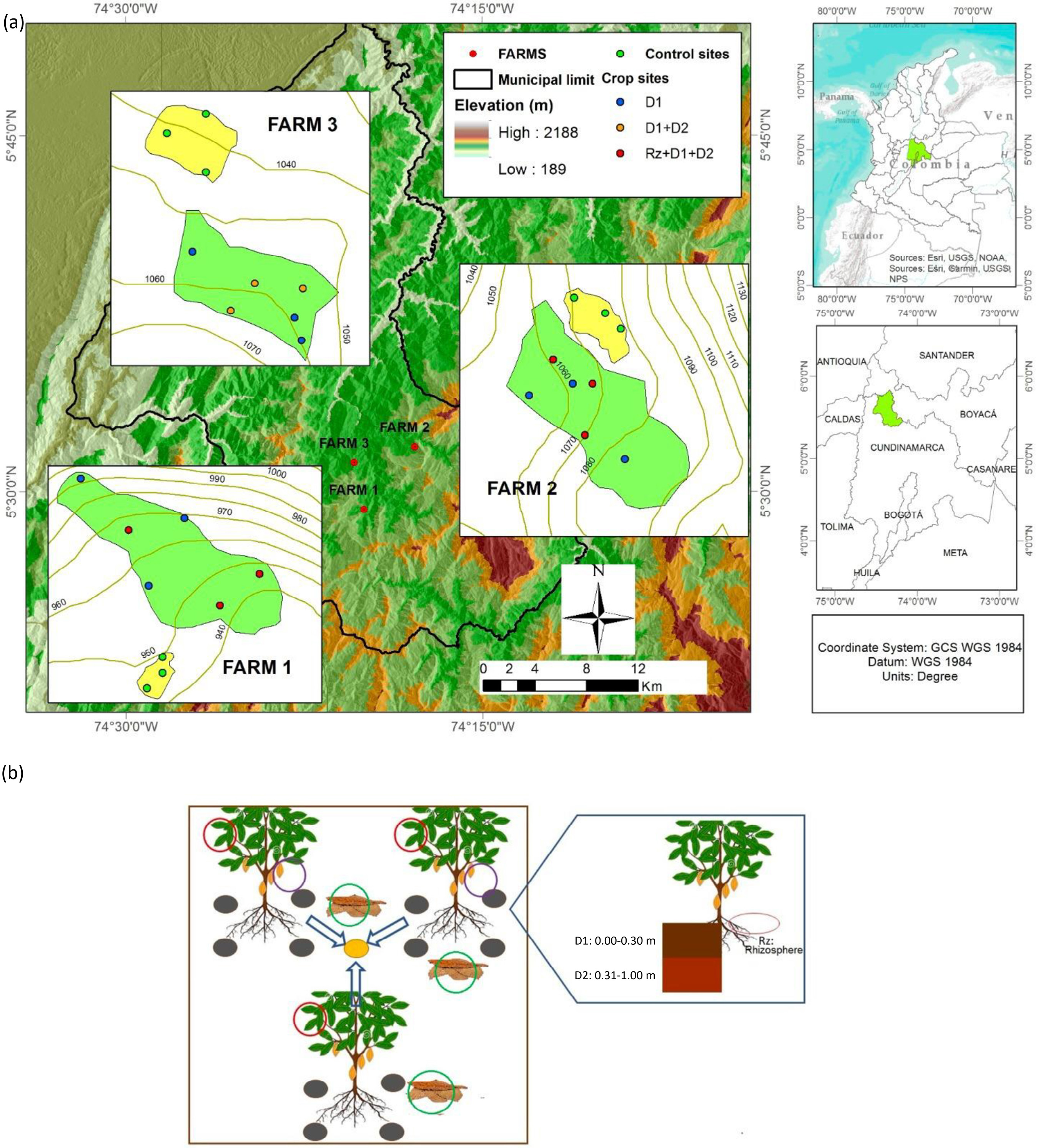
The selection of the three cacao-producing farms was based on the characterization performed by Rodriguez-Albarracin et al. (2019), which found that soils from farm one (F1) had pseudo-TCd >5.0 mg kg-1, and soils from the other two farms (F2 and F3) had pseudo-TCd <2 mg kg-1. All three farms presented similar characteristics in terms of (i) cacao genotype CCN51 scion, (ii) an area with cacao crops (SCC) in a productive state with a slope of the terrain <30 %, and (iii) an area without cacao crops (SWC). The location of the farms is shown in figure 1a.
Soil and cacao tissue sampling and experimental design
The terrain was analyzed in SAGA-GIS using the ALOS PALSAR Digital Elevation Model (DEM) (Conrad et al., 2015) to select homogeneous plots. To select soil sample sites within the plots, the Latin hypercube conditioned sample methodology with field correction (Minasny and McBratney, 2006) was used. In each farm, we selected two plots, one without cacao (SWC; yellow area in figure 1a) and another with cacao crops (SCC; green area in figure 1a). The vegetation present in the SWC of F1 corresponded to secondary forest relicts, and in F2 and F3 to pastures. In SWC, we acquired three bulk (no rhizospheric) soil samples at a layer of 0.00-0.30 m (D1) and one sample at 0.31-1.00 m. In SCC, we took six bulk soil samples at D1 and three samples at D2. At each sampling point of SCC, three productive trees were selected, and bulk soil samples were collected at 0.30 m N, S, E, and W from the trunk to obtain a composite sample of approximately 0.5 kg for each layer (Figure 1b). Additionally, we sampled three rhizospheric soils (Rz) in F1 and F2 in SCC according to Adarme-Duran et al. (2024). We obtained rhizosphere samples by the superficial roots of the plants (0.00-0.10 m) and gently shaking them to detach loosely adhered soil from the roots. A total of 45 soil samples were collected.
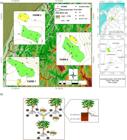
Spatial distribution of sampling points across three cacao farms. The maps on the right indicate the location of Colombia and the municipality of Yacopí (a). The map on the left shows the two selected plots per farm. The color circles indicate the soil type samples collected at each sampling point. Green: control samples, without cacao crops. Blue: samples collected at a layer D1 (0.00–0.30 m). Orange: samples collected at D1 and D2 (0.31–1.00 m). Red: samples collected at D1, D2, and the rhizosphere (Rz). (b) Illustration of the sampling methodology. Each sampling point corresponds to three productive cacao trees. The leaf, leaf litter, and fruit samples correspond to red, green, and purple color circles, respectively. Green circles represent soil subsamples used to obtain a composite soil sample for each sampling point.
We also collected cacao leaf litter, leaves, and fruits at each of the six sampling points for SCC plots. Samples of the leaf litter were collected under the canopy of the three trees, and leaves were obtained from the branches of the middle third of the plant. Additionally, at least two mature fruits (depending on availability) were obtained per sampling point. Beans were extracted from the fruits and mixed to obtain a composite sample, according to Arévalo-Gardini et al. (2017). They were then dried to obtain fermented cotyledons, which were stored in plastic bags for further analysis. Soil samples were packed in double airtight bags, and the cacao tissue samples were placed in paper bags with silica gel. All samples were rapidly taken to the laboratory for processing. Samples destined for enzyme activity determination were stored at -20 °C.
Soil physical and chemical analyses
Physical and chemical analyses were performed as reported by Rodriguez-Albarracin et al. (2019). Dry soil was analyzed after being passed through a 2 mm sieve at room temperature. Soil texture was determined by the Bouyoucos method. Soil pH was determined after suspending the soil in water (1:1 w/v). Organic carbon was measured by the Walkley and Black method (IGAC, 2006), and exchangeable calcium, magnesium, potassium, and sodium by extraction with 1 mol L-1 ammonium acetate at pH 7.0. The effective cation exchange capacity (ECEC) was defined as the total amount of exchangeable cations. Available manganese, iron, zinc, and copper were measured by extraction with diethylenetriaminepentaacetic acid (DTPA) 1:2 (w/v) using a Perkin-Elmer AAnalyst 300 AAS flame atomic absorption spectrophotometer (PE AAnalyst 300 FAAS, DK) for quantification. Phosphorus was determined using the Bray-II method (IGAC, 2006).
Determination of pseudo-total and potentially available cadmium (Cd-DPTA) contents in soils
Pseudo-total Cd (TCd) and potentially available Cd (ACd) or Cd-DTPA analyses were performed as reported by Rodriguez-Albarracin et al. (2019). Pseudo-TCd determination was performed by aqua regia (HCl: HNO3- 3:1) extraction, and potentially ACd was determined using DTPA extraction solution as follows: 12.5 g of soil was shaken for 2 h with 25 mL of a DTPA solution [(0.005 mol L-1 diethylenetriaminepentaacetic acid (DTPA), 0.01 mol L-1 calcium chloride dihydrate (CaCl2 · 2H2O), and 0.1 mol L-1 triethanolamine (TEA)]. Centrifugation was performed at 5000 rpm for 15 min, and then the supernatant was filtered with qualitative filter paper. Determinations were performed by atomic absorption spectroscopy (PE AAnalyst 300 FAAS; Perkin-Elmer, DK). Standard curve for pseudo-TCd and potentially ACd was created using CdCl2 aliquots (Sigma-Aldrich Crop., 99 % purity w/w, CA) in concentrations from 0.10 to 2.00 mg L-1 with a limit of detection (LOD): 0.11 mg L-1 and limit of quantification (LOQ): 0.35 mg L-1. The calibration curve showed linear regression, with a zero intercept and no deviation from linearity at a 95 % confidence level. The R2 values were between 0.997 to 0.995 (Supplementary Material - Figure 2). The method's performance for pseudo-total Cd was determined using the Wageningen Evaluating Program for Analytical Laboratories (WEPAL) Z-score. For a RiverClay soil from the Netherlands with a Cd content of 8.26 mg kg-1, a Z-score of close to -2 was obtained. This value indicates adequate method performance, with a recovery percentage (trueness) of 87.53 %.
Determination of the enzymatic activity of non-rhizospheric (bulk) soils
Enzymatic activity was determined for the following six enzymes in bulk soil samples: urease (U), protease (PR), β-glucosidase (BG), acid phosphatase (AP), alkaline phosphatase (ALP), and phosphodiesterase (PD). For the evaluation of U activity, the method used was based on the colorimetric determination of ammonia released after incubation of the soil samples with urea solution for 2 h at 37 °C (Kandeler et al., 1996; Vasquez and Torres, 2000). For PR, the method based on the use of casein as a substrate was used, incubating the soil samples for 2 h at 50 °C and pH 8.1 for the extraction of amino acids, with subsequent application of trichloroacetic acid and Folin-Ciocalteu reagent in alkaline solution for colorimetric determination (Ladd and Butler, 1972).
For BG activity, the method used was the determination of p-nitrophenol (PNP) released after incubation of soil with p-nitrophenyl β-D-glucoside (PNG) solution for 1 h at 37 °C. For AP, ALP, and PD activities, we evaluated the PNP released after incubation of the soil samples with bis-p-nitrophenyl phosphate (BPN) solution for an hour at 37 °C (Alef and Nannipieri, 1995). Absorbances were then measured at wavelengths of 405 nm for the BG, AP, ALP, and PD activities, at 690 nm for the U activity, and at 700 nm for the PR activity. Absorbances were measured with the Microplate Reader 680 XR (BioRad, USA).
Cadmium contents in cacao tissues and soil-to-plant transfer factors
For cacao leaf litter, leaves, and beans, Cd was determined by calcinating 3 g of a previously pulverized sample at 450 °C for 6 h. The ash was then dissolved in HCl (1:1) and HNO3 according to the AOAC method 999.11 (AOAC, 1999). For the determination of Cd in beans, the materials were fermented for 8 days at 45 °C, turning every two days to simulate marketing conditions. The calibration curve showed linear regression, with a zero intercept and no deviation from linearity at 95 % confidence level. The R2 were between 0.997 to 0.995 (Supplementary Figure 2).
To determine the level of Cd accumulation in the tissues based on the potentially ACd content in the soil, transfer factors (TF) were calculated for leaf-to-soil and bean-to-soil as reported by Zhang et al. (2014) (TF = Cd tissue / potentially ACd soil).
Pairwise analysis
The pairwise Kruskal-Wallis test was used to assess the statistical significance of each physical and chemical variable, plant tissue, and enzymatic activity (p-value<0.05), and the Mann-Whitney-Wilcoxon test with correction of the p-value of Benjamini and Hochberg (1995) was performed as a post hoc test. The following factors were assessed: soil with and without a cacao crop (SCC, SWC), soil type (Rz and bulk), and layer (D1 and D2).
Spearman's Correlation Coefficient was used to: (i) evaluate the relation between potentially ACd, and Cd contents in tissues (leaf litter, leaves, and beans); (ii) determine the relation between pseudo-TCd and potentially ACd with the physical and chemical properties and enzymatic activity of SCC. For this step, PCA and subsequent clustering using the Manhattan method with the first two components were done to identify clustering among SCC samples. All statistical tests were performed using R Studio 2022.07.1 software (R version 4.1.3) and the R corrplot library (Taiyun and Viliam, 2021) to determine Spearman correlation coefficients.
RESULTS
Physical and chemical properties of the soil
Soils studied had predominantly loam textures (Supplementary Material - Figure 3). The F1 soils were characterized by significantly higher pH, ECEC, Ca, Mn, and Zn contents (p<0.05) compared with F2 and F3 (Supplementary Material - Figure 4). The F2 soils had significantly lower N values (p<0.05) than F1 and F3. The F3 soils exhibited significantly higher P and OC contents compared with F1 and F2.
There were no marked trends in soil physical and chemical properties between soils with (SCC) and without cacao crops (SWC) (Supplementary Material - Figure 4). However, the exchangeable bases Ca, Mg, and K had higher values in SCC compared with SWC. In the SWC, a higher OC content was detected in F2 and F3. The Rz soil had higher OC and exchangeable bases (Ca2+, Mg2+, and K+) than D1 and D2. In general, pH tended to be higher at greater depth. In contrast, Ca2+, Mg2+, and K+, N, and OC contents were higher at the surface (D1), except for Ca in F1.
Pseudo-total and potentially available cadmium contents in soil
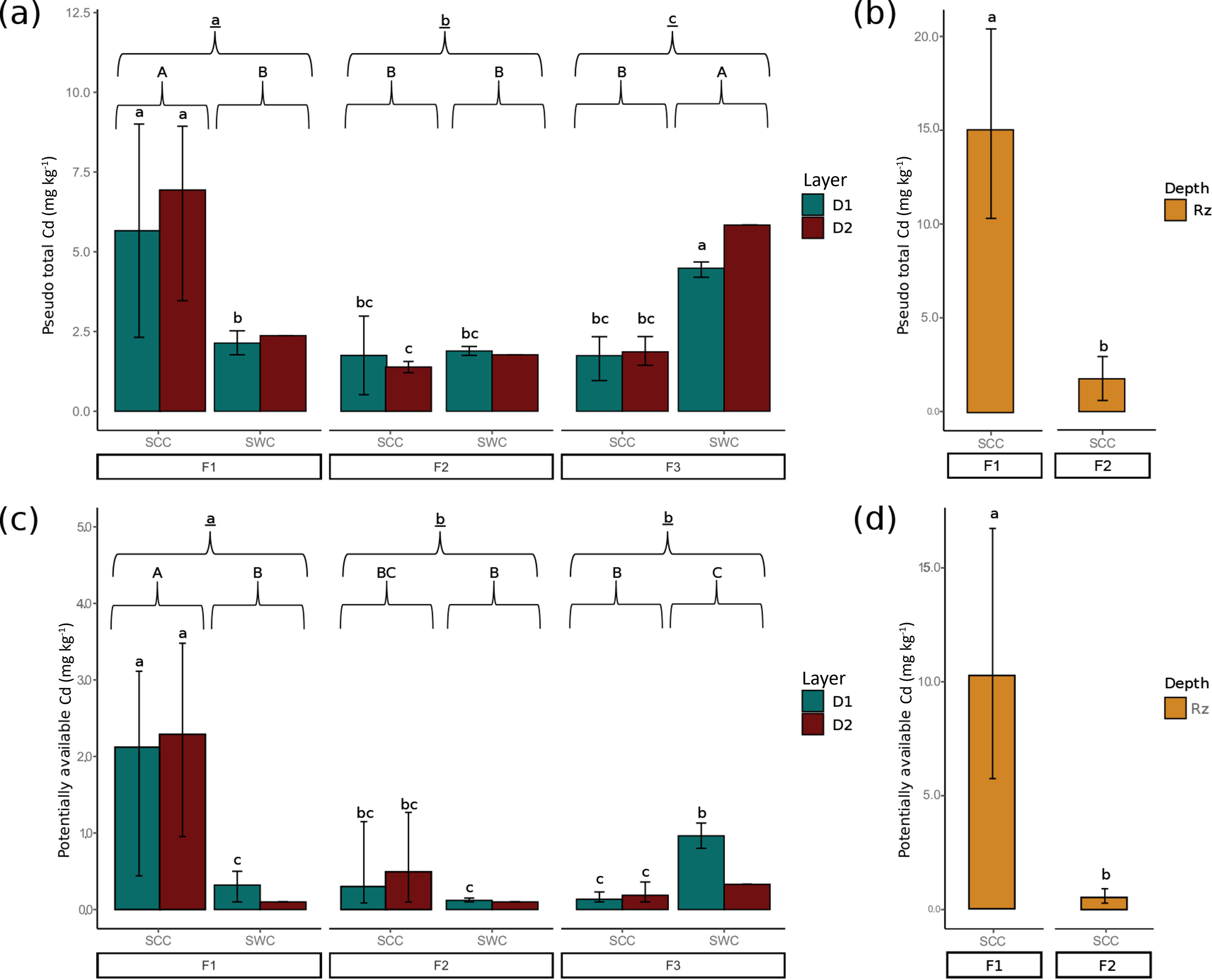
The contents of pseudo-TCd or potentially ACd differed significantly among the bulk soils of the three farms evaluated, being higher (p<0.05) in F1 soils compared with F2 and F3 (Figure 2a). Additionally, for F1, the TCd content was significantly higher in SCC (9.19 ± 5.05 mg kg-1) than SWC (2.25 ± 0.16 mg kg-1). In contrast, the soils in F2 showed no differences between SCC and SWC. In F3, higher Cd content (5.16 ± 0.96 mg kg-1) was found in SWC soils. The Rz soils in F1 exhibited the highest content of pseudo-TCd in all samples analyzed (14.97 ± 5.08 mg kg-1) (Figure 2b). There were no significant differences in pseudo-TCd between layers D1 and D2 in all the farms analyzed in SCC (D1: 3.31 ± 2.50 mg kg-1; D2: 3.39 ± 3.07 mg kg-1) and SWC (D1: 2.83 ± 1.26 mg kg-1; D2: 3.32 ± 2.19 mg kg-1).
The content of potentially ACd was significantly higher in F1 soils than in F2 and F3 soils (Figure 2c). Significantly higher levels of potentially ACd were found in the SCC of the F1 (>2 mg kg-1) compared with the SWC (<1 mg kg-1). The potentially ACd level in the Rz soil of F1 (10.24 ± 5.80 mg kg-1) was significantly higher than the potentially ACd at D1 and D2 (p<0.05). In F2, in contrast, no significant differences were observed between potentially ACd in D1 and D2 (p<0.05) (Figure 2c).
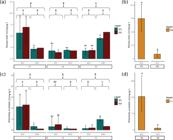
Comparison of pseudo-TCd and potentially ACd contents in soil at two layers and in rhizospheric soil between cacao-cultivated (SCC) and uncultivated (SWC) plots across three farms. The bars represent the layer at which the samples were collected: the dark green bar corresponds to samples taken from 0.00–0.30 m (D1), the olive<span class="pdf-miss">-</span>colored bar represents samples collected from 0.31–1.00 m (D2), and the yellow bar indicates samples collected from the rhizosphere (Rz). (a) Pseudo-TCd content (mg kg⁻¹) ± S.D. for D1 and D2. (b) Pseudo-TCd content (mg kg⁻¹) ± S.D. for Rz. (c) Potentially ACd content (mg kg⁻¹) ± S.D for D1 and D2. (d) Potentially ACd content (mg kg⁻¹) ± S.<span class="pdf-reverse-miss" title="Texto no PDF ausente no HTML: "11"" data-missing="11">D for</span> Rz. n = 3 for all samples except the soil D1, with n = 6. Letters above the bars indicate significant differences (p<0.05) between conditions, either comparing the presence or absence of cacao cultivation within each farm or comparing among the three farms.
Enzymatic activity in non-rhizospheric (bulk) soils
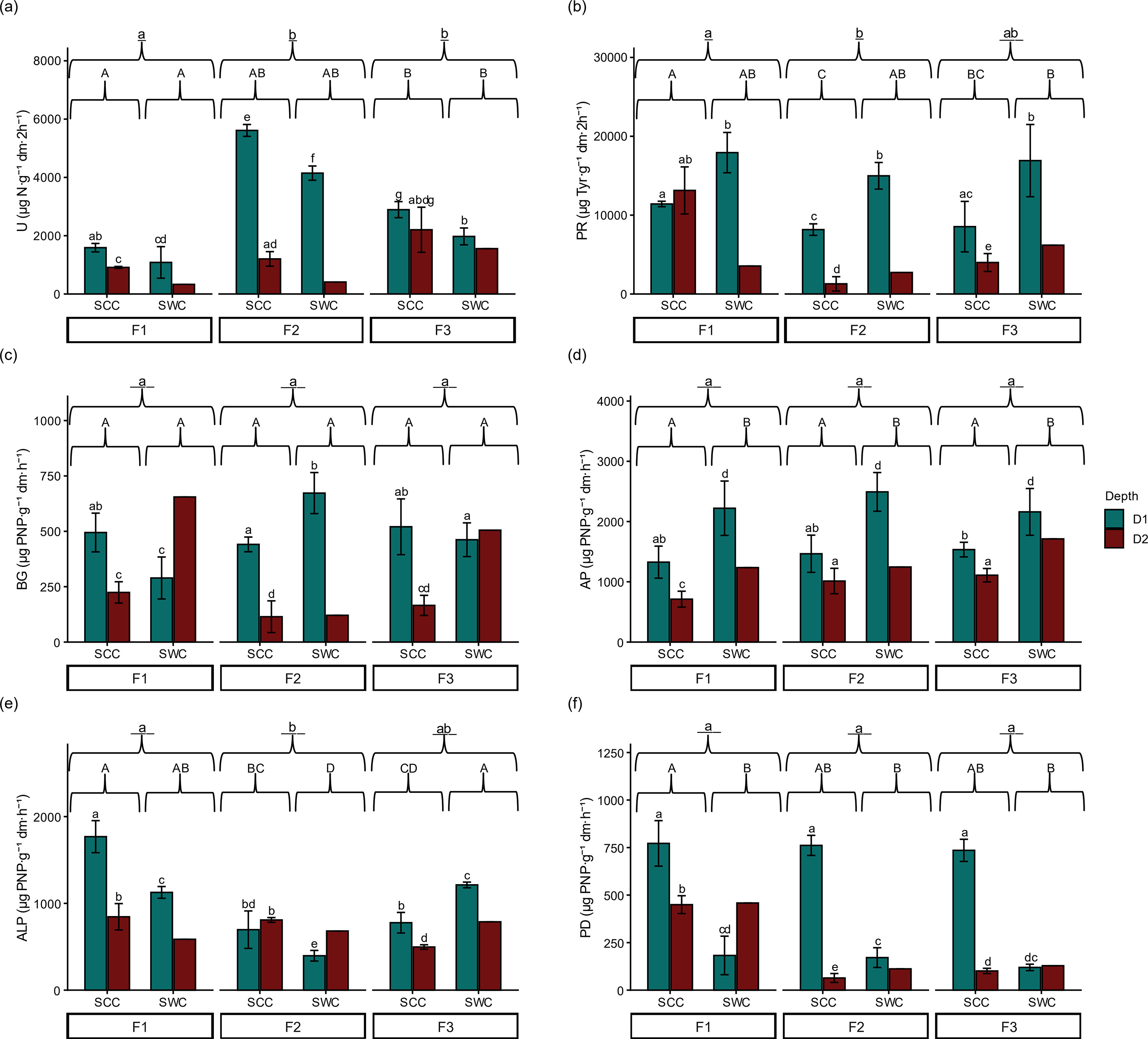
We measured the activity of two enzymes related to the nitrogen cycle, urease (U) and protease (PR) (Figures 3a and 3b), and one enzyme related to the carbon cycle, β-Glucosidase (BG). Urease activity was significantly lower in F1 compared with F2 and F3. No significant differences were detected between soils with and without cacao cultivation. The U activity was significantly higher in D1 compared with D2 for F1 and F2 (Figure 3a). The PR activity was significantly higher in F1 relative to F2 and higher in SWC compared with SCC in F2. Additionally, PR was higher in D1 than D2 for all farms except F1 SCC (Figure 3b). No differences were observed in BG activity between farms, nor between SCC and SWC. However, BG was significantly higher in D1 than in D2 for SCC (Figure 3c).
We did not find differences among farms in the activity of enzymes involved in the P cycle (Figure 3d). For AP, we found higher activity in samples from SCC than from SWC. For SCC, we found higher values at D1 than at D2 on F1 and F3 (p<0.05). Additionally, we found ALP to be significantly higher in F1 than in F2, and for F2 and F3, we found significant differences between SCC and SWC (Figure 3e). The ALP was significantly higher at D1 for F1 and F3. No significant differences were found between farms for PD. The SCC was significantly higher than SWC at D1 for F1 (Figure 3f).
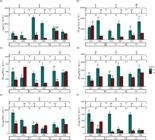
Enzymatic activity in soils at two layers (D1: 0.00-0.30 m, dark green; D2: 0.31-1.00 m, olive green) across three farms (F1, F2, F3) at sites with (SCC) and without (SWC) cacao crops ± S.D. (n = 3). (a) urease (U), (b) protease (PR), (c) β-glucosidase (BG), (d) acid phosphatase (AP), (e) alkaline phosphatase (ALP), and (f) phosphodiesterase (PD). The letters above the bars represent significant differences between treatments, comparing either the presence or absence of cacao cultivation within each farm or between the three farms (p<0.05).
Relations between physical and chemical parameters and enzymatic activity in non-rhizospheric (bulk) soils with respect to cadmium levels
An initial survey of soil sample data from the three farms indicated that the results fall into two clusters, one corresponding to F1 and the other to F2 and F3 (Height = 0.8) (Supplementary Material - Figure 5). Therefore, the correlations between physical and chemical parameters and soil enzyme activity are presented as F1 compared with F2 + F3. For F1, ACd showed a significantly higher coefficient with P (r >0.85, p<0.01), followed by pH (r > 0.82, p<0.01), Zn (r >0.74, p<0.01), OC (r >0.73, p<0.01), and ECEC (r >0.71, p<0.01). In addition, the potentially ACd showed the highest correlation with TCd (r >0.94, p<0.01). Similar results were found between pseudo-TCd and the same physical and chemical parameters, except for OC, where the correlation was much weaker (r > 0.55, p<0.01). In contrast, for F2 + F3, potentially ACd and pseudo-TCd showed a weak correlation between them (r >0.44, p<0.05), and the potentially ACd presented a weaker correlation with most of the physicochemical parameters except for Ca (r = 0.66, p<0.05) and Zn (r = 0.65, p<0.05).
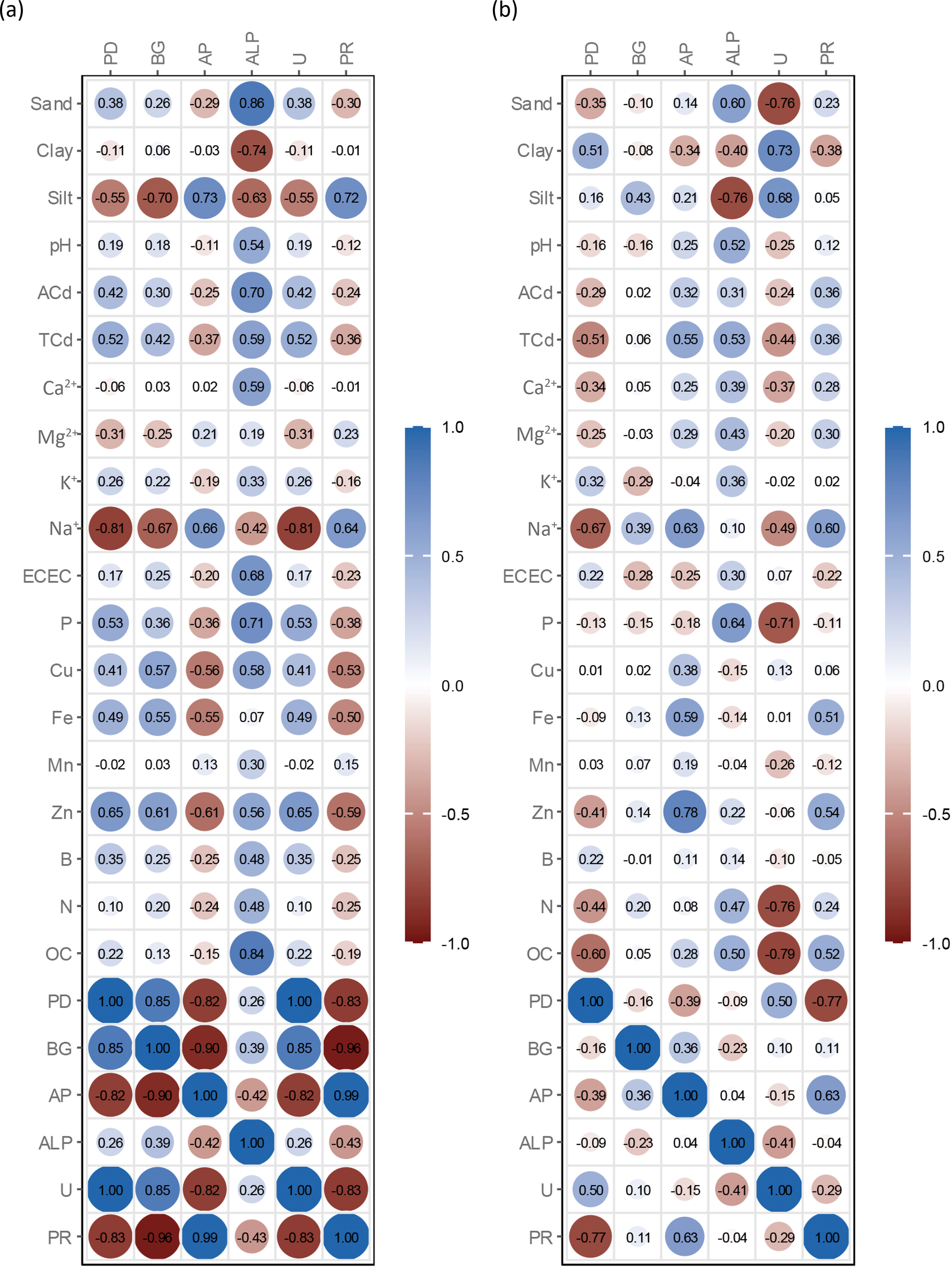
We assessed the relations between Cd levels and enzyme activity. For F1, the soil contents of potentially ACd and pseudo-TCd were positively correlated with ALP (r = 0.70, p<0.01 and r = 0.59, p<0.05, respectively) (Figure 4a). For F2 + F3, potentially ACd showed weak correlations with all enzymatic activities, and pseudo-TCd correlated positively with AP and ALP (r = 0.55, p<0.05 and r = 0.53, p<0.05, respectively) and negatively with PD (r = -0.51, p<0.05) (Figure 4b). For F1, PR was positively correlated with silt (r = 0.72, p<0.01), Na (r = 0.64, p<0.05), AP (r = 0.99, p<0.01), and negatively with PD (r = -0.83, p<0.01) and BG (r = -0.96, p<0.01). The BG correlated positively with PD (r = 0.85, p<0.01), U (r = 0.85, p<0.01) and negatively with silt (r = -0.70, p<0.01), AP (r = -0.97, p<0.01) and PR (-0.96, p<0.01). The ALP correlated positively with sand (r = 0.86, p<0.01), ECEC (r = 0.68, p<0.05), P (r = 0.71, p<0.01), and OC (r = 0.84, p<0.01). The PD was negatively correlated with Na (r = -0.76, p<0.01).
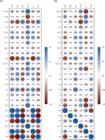
Spearman correlations between enzymatic activities and soil physical and chemical properties in the soil samples that came from areas with cacao crops (SCC) and at a layer of 0.00-0.30 m (D1) across the three farms. Abbreviations: potentially available cadmium (ACd), pseudo-total cadmium content (TCd), calcium (Ca2+), magnesium (Mg2+), potassium (K+), sodium (Na+), effective cation exchange capacity (ECEC), phosphorus (P), iron (Fe), manganese (Mn), zinc (Zn), boron (B), nitrogen (N), organic carbon content (OC), urease (U), protease (PR), β-glucosidase (BG), acid phosphatase (AP), alkaline phosphatase (ALP), and phosphodiesterase (PD). (a) Correlations for samples of farm 1 (F1). (b) Correlations for samples of farms 2 (n = 3) and 3 (F2+F3) (n = 6). Red circles indicate positive correlations and blue circles indicate negative correlations. Circle size indicates a higher coefficient of determination.
For F2 + F3 (Figure 4b), U activity was negatively correlated with sand (r = -0.77, p<0.01), P (r = -0.77, p<0.01), N (r = -0.69, p<0.05), and OC (r = -0.76, p<0.01). The PR and BG were not significantly correlated with any of the physicochemical parameters. However, AP was positively correlated with Na (r = 0.63, p<0.05), Zn (r = 0.78, p<0.01), and PR (r = 0.63, p<0.05).
Cadmium contents in cacao tissues and soil-to-plant transfer factors
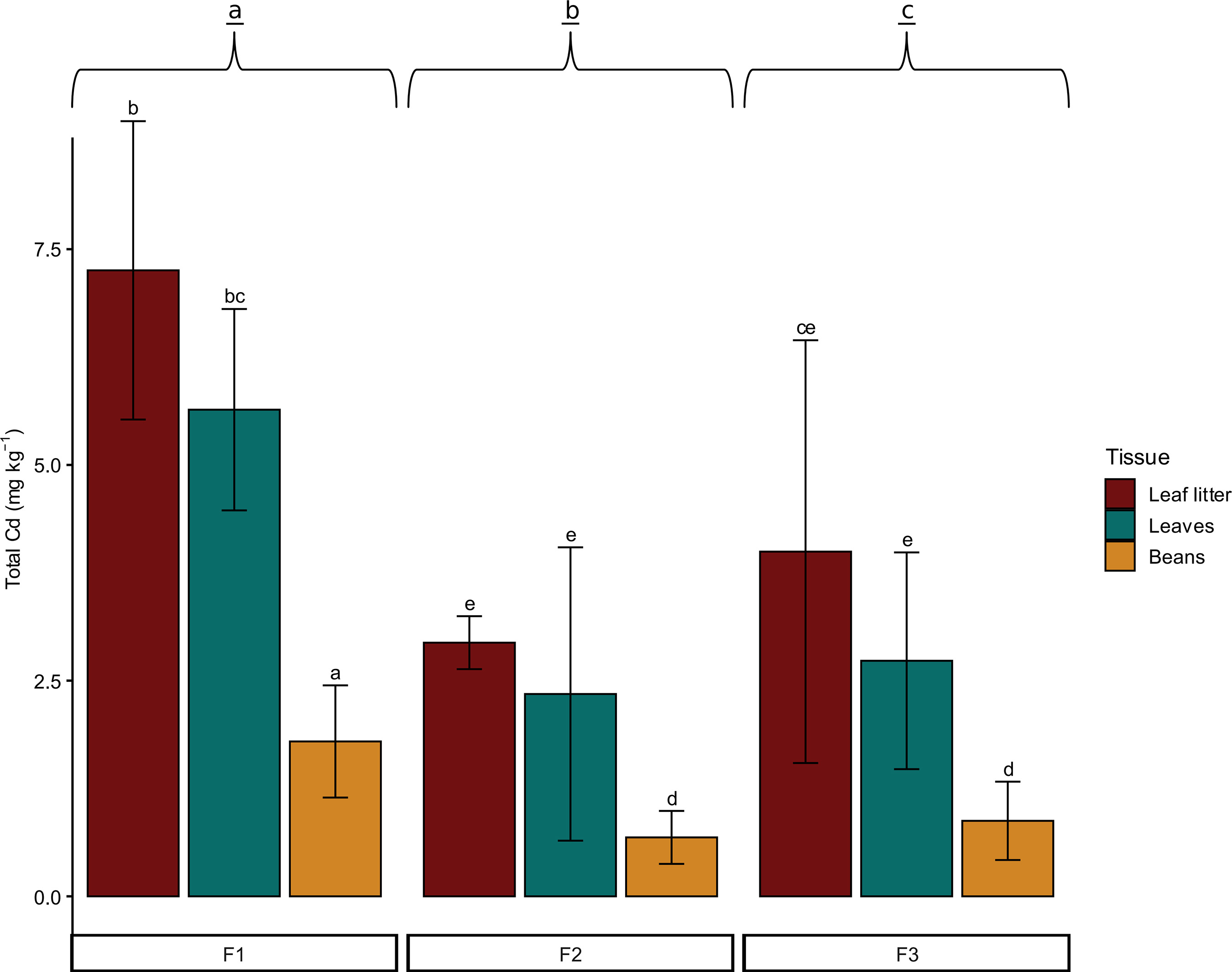
Cadmium contents in the leaf litter, leaf, and bean samples differed between farms (Figure 5). The F1 had higher levels of Cd (4.89 ± 2.63 mg kg-1), than F3 (2.53 ± 2.01 mg kg-1) and F2 (1.99 ± 1.51 mg kg-1). Across all the farms, we found no significant differences between the Cd content found in leaf litter (1.18 - 9.86 mg kg-1) and leaves (0.9 - 7.23 mg kg-1). However, significant differences were observed between Cd content in beans (0.40 - 2.61 mg kg-1) and in other tissues. The beans contained, on average, 0.68 times less Cd compared with the leaves. Overall, the Cd content detected was leaf litter > leaves > beans with a soil-to-leaf transfer factor (TF) of 2.32 (F1), 0.69 (F2), and 1.27 (F3), which were three times higher than the TF found in beans [0.74 (F1), 0.23 (F2) and 0.41 (F3)].
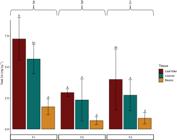
Average cadmium content (mg kg-1) is shown for three distinct cacao plant tissues, collected from the three farms analyzed in this study (F1, F2, and F3) ± S.D (n = 3). Olive-green bar represents the leaf litter, the dark green bar represents the leaves, and the yellow bars represent the cacao beans. The letters above the bars denote significant differences between conditions (p<0.05), either comparing the presence or absence of cacao cultivation within each farm or comparing the three farms.
DISCUSSION
Physical and chemical properties of soil samples
The pH is one of the most important soil properties that affects nutrient availability, and according to Libohova et al. (2020), the ideal pH for cacao crops is between 6 and 7, with 6.5 as the optimum. However, the crop can be grown on soils with values close to 5 and even on alkaline soils with pH between 7 and 8. In this study, 85 % of the soils sampled had a pH between 4.7 and 6.5, indicating they were slightly to moderately acidic. The pH does not appear to be a limitation for cacao crop development. The F1 had soils closer to neutrality than F2 and F3, which had moderately acidic pH values, with a pH lower than 5.5.
The results showed differences in the chemical properties of the soil samples studied. The SCC tended to have higher levels of OC, ECEC, Ca2+, Mg2+, K+, Cu, B, and Zn than the SWC, a difference that was more evident for F1. These high values could be explained by the geology of soil formation in this area. Soils are derived from mudstone, claystone, and Cretaceous limestone, all of which are rich in Zn, and limestone, which is especially rich in Ca (SGC, 2015; Mendoza et al., 2020).
The Rz samples were slightly more acidic than the bulk soil samples (D1 and D2). This may have occurred because the rhizosphere has a microenvironment different from the bulk soil. Close interactions between roots and microorganisms influence the biological and chemical characteristics of soil. Also, root exudates, rich in carbon and generally low in pH, can affect the microbial community, making it more diverse, active, and synergistic, thereby promoting the bioavailability of elements for plant absorption (Neina, 2019; Hakim et al., 2022; Fu et al., 2023). The D1 soil samples showed higher OC content than those of D2 due to greater biological activity in the topsoil, as expected.
Pseudo-total and potentially available cadmium contents in soils
The pseudo-TCd content found in the bulk soils at a layer of 0.00-0.30 m (D1: minimum value of 0.96 mg kg-1 and maximum of 9.02 mg kg-1) are in the range reported for other cacao producing regions of Colombia at this same layer (minimum values of 0.01 and a maximum of 27.00 mg kg-1) (Bravo et al., 2021, 2024a,b; Joya-Barrero et al., 2023; Adarme-Duran et al., 2024; Guarín et al., 2024). The pseudo-TCd values obtained were higher than the pseudo-TCd averages reported in Latin American and Caribbean countries, such as Peru: 0.53 mg kg-1 (Huamaní-Yupanqui et al., 2012; Thomas et al., 2023); Ecuador: 0.44 mg kg-1 (Argüello et al., 2019, 2023); Honduras: 0.25 mg kg-1 (Gramlich et al., 2018), 0.63 mg kg-1 (Engbersen et al., 2019); and Trinidad and Tobago: 0.14 mg kg-1 (Lewis et al., 2018). Pseudo-TCd and potentially ACd in Rz were 1.25 - 2.64 times more than in D1, a result similar to that reported by Adarme‑Duran et al. (2024). However, the average values we found for Rz in F1 were 8 times higher than those determined by them.
Pseudo-TCd contents can vary widely, as reported across soil samples in this research and by Rodríguez-Albarracín et al. (2019) and Cordoba-Novoa et al. (2023) for the same study area, where pseudo-TCd content in soil at a layer of D1 ranged from 0.45 mg kg-1 to 53.77 mg kg-1. In this research, we also analyzed soil samples at greater depths (D2: 0.31-1.00 m) and found results like those reported by Rodríguez-Albarracín et al. (2019) and Chavez et al. (2015) for cacao topsoils in Colombia and Ecuador, respectively.
In this study, the average pseudo-TCd content across all soil samples analyzed did not differ significantly with depth. The geochemical anomaly map of Colombia (SGC, 2018) indicates that the study area is located within a Cd "hotspot" in sediments and is situated on chronostratigraphic units composed of shales, cherts, limestones, sandstones, and phosphorites (Gómez and Montes, 2020). He et al. (2005) and Kubier et al. (2019) report that these rocks are generally high in Cd content (>25 mg kg-1). This indicates a possible type of geogenic contamination and metal recirculation with accumulation on the surface because of the decomposition of cacao leaf litter (Gramlich et al., 2018; Vanderschueren et al., 2021; Gil et al., 2022; Guarín et al., 2024). This would also explain the small variation in the average pseudo-TCd content between D1 and D2. The potentially ACd present in 50 % of the D1 sites was above the critical average Cd threshold (0.45 mg kg-1) that has been set for agricultural soils (Usepa, 2002; Smolders and Mertens, 2013; Kuvier et al., 2019).
We also observed that the Rz soils of F1 had the highest contents of pseudo-TCd and potentially ACd among all the soil samples analyzed. The rhizosphere alters the solubility and bioavailability of trace elements in soil (Liu et al., 2021; Adarme-Duran et al., 2024). Changes in pH, contents of organic matter, and the exudation of organic substances by microorganisms and roots facilitate the solubility of heavy metals (Legrand et al., 2005; Zeng et al., 2017; Neina, 2019; Fu et al., 2023).
Enzymatic activity of non-rhizospheric (bulk) soils
The enzyme assays associated with N cycling, U, and PR showed contrasting responses. The lower U activity in soils with higher Cd content in F1 highlights the negative effect of heavy metal contamination on soil enzymatic activity for the specific conditions of the observational sampling carried out in the present study. In this case, U activity is highly sensitive to Cd contamination in the soil. The higher Cd content gradually decreases U activity, which may be due to direct enzyme inhibition or to microbiological activity that contributes to its dynamics (Yeboah et al., 2021; Bayraklı et al., 2025). The U activity was significantly higher in soil samples at D1 compared with samples at D2 (Figure 3a), indicating that enzymatic activity decreases with increasing soil depth, as reported by Sun et al. (2021). This suggests that the diversity of the ureolytic microbial community is higher in the upper soil layers.
Higher values of PR activity were observed in F1 compared with F2 and F3 in soils with cacao (SCC). Higher values were also observed in the SWC plots at D1 over D2 at all three evaluated farms (Figure 3b). This is consistent with the findings of Renella et al. (2005), who recorded increases in PR in soils with higher Cd contents. These findings, for the specific conditions of the observational sampling carried out in the present study, indicate possible synchronous inverse behaviors by enzymes involved in the N cycle, such as U and PR, and are in line with previous reports by other authors such as Farfán et al. (2020), Avellaneda-Torres et al. (2012, 2018), and Caballero et al. (2018). Grzyb et al. (2021) and Feng et al. (2025) reported an increase in PR activity in surface soils with higher organic matter content. This suggests higher protein degradation is occurring in surface soils (D1) due to increased microbial activity at these depths. These observations indicate a need to clarify these interactions by conducting studies that delve deeper into the dynamics of these enzymes and the Cd contents.
In the enzymatic analysis of the C cycle, the BG enzyme did not show significant differences across soil Cd levels. However, BG showed higher activity in D1 SCC surface soils across the three farms. This aligns with observations of the U and PR enzymes, where higher enzymatic activity is evident in topsoils due to increased biological, microbial, and root exudate activity in surface layers (Dove et al., 2020; Marinari et al., 2021).
The ALP activity varied among farms, following the same trend as PR, which showed higher activity in farms with higher Cd content. This could be explained by an increase in enzyme activity due to Cd contamination and to the pH reported at these farms. The F1 had a higher pH than the other farms, creating a slightly alkaline environment where the enzyme was closer to its optimum pH. This coincides with reports indicating that ALP activity is higher in alkaline soils (Długosz et al., 2023). The low activity of ALP in SCC soils on F1 could be attributed to the high contents of Cd, Zn, Mn, and Cu in these soils. This agrees with the findings of Feng et al. (2025), who reported that the presence of metal ions impairs ALP enzymatic activity. Finally, PD activity did not show significant changes with increasing soil Cd content.
Relations between physical and chemical properties and enzymatic activity in non-rhizospheric (bulk) soils with respect to cadmium levels
The content of ACd positively correlated with pH in both F1 and F2 + F3. This differs from the commonly observed dynamics in soils, where metal availability decreases at higher pH (Huang et al., 2014; Elbana et al., 2018; Arguello et al., 2023; López et al., 2025). However, this relation has been previously observed by Chavez et al. (2015), Rodríguez-Albarracin et al. (2019), Carrillo et al. (2023), and Adarme-Duran et al. (2024).
The pH values of the sampled soils ranged from 4.7 to 6.5 and showed a strong positive correlation with potentially ACd (r >0.82, p<0.01). At pH values above 5.5, Cd is commonly found in insoluble forms, such as carbonates (Kubier et al., 2019). The presence of these minerals may be due to enrichment from the weathering of parent material and other pedogenic processes, especially in this area, which is characterized by the presence of sedimentary rocks such as limestone (Gómez and Montes, 2020). In limestones, substitutions can occur in which Ca is exchanged for Cd because of their similar charges (Joya-Barrero et al., 2023). This would explain the positive relations between Cd and pH. However, it is important to consider that rhizosphere conditions may mediate the potential for metal availability (Dong et al., 2007), thereby modifying the rhizospheric microenvironment and favoring the solubilization and availability of the metal, even under conditions that are, in principle, considered restrictive. These results show that further geochemical and petrography studies in the area, and larger rhizospheric soil samples are needed.
The positive correlation between ACd and Ca could also suggest that Cd is associated with carbonates. According to Smolders and Mertens (2013), Cd can substitute for divalent cations such as Ca because of its similar ionic radius, enriching carbonates, and increasing the metal content in the soil parent material. According to IGAC (2000), the geology in this region is characterized by carbonate intercalations, and Rodriguez-Albarracin et al. (2019) have reported Cd fractions associated with carbonates up to 13.25 mg kg-1. This fraction is sensitive to pH changes and is readily available under acidic conditions, such as the rhizosphere, where organic acids are released (Chavez et al., 2015).
In this study, soil enzymes do not show a unique correlation trend with ACd and TCd contents. Correlations among U, PR, and ALP enzymatic activities observed in F1 indicate that enzymes are sensitive to high ACd. Micronutrient content could also affect these enzymatic activities. The Na levels were negatively correlated with PD, BG, and U, and positively correlated with AP. Zinc was positively correlated with PD and U, and negatively with AP. This may indicate a response of soil enzymatic activities to increased Cd levels, mediated by the participation of Na and Zn. This is consistent with reports indicating that enzymes are sensitive to soil micronutrient content and that they affect the dynamics of nitrogen, carbon, and phosphorus cycles, independent of variations in soil macronutrients (Bakshi and Varma, 2010; Li et al., 2017; Moghimian et al., 2017; Xie et al., 2017).
Cadmium contents in cacao tissues and soil-to-plant transfer factors
We observed that the accumulation of Cd in all evaluated tissue samples was higher in leaf litter > leaf > bean, with a soil-to-leaf transfer factor (TF) higher than the soil-bean TF. These differences align with the findings reported by Gramlich et al. (2017) in Bolivia, Llatance et al. (2018) in Peru, Barraza et al. (2017) in Ecuador, and Rodríguez-Albarracin et al. (2019) in Colombia. Ramtahal et al. (2015) found that Cd contents are higher in the leaf > pod > seed coat > almond. In our study, the soil-to-leaf transfer factor (TF) is greater than 1 (F1 and F3), indicating that cacao plants exhibit enrichment of the metal in their leaves due to high-capacity metal storage. Metal detoxification and sequestration in these organs could be effective by the vacuoles of leaf cells, and there is an effective system for cell-to-cell metal distribution (Kramer, 2010). In contrast, the soil-to-beans TF was always less than 1, showing that beans are a less effective system for Cd accumulation.
For different genotypes of cacao, TF values have been reported in the range of 3.4 to 7.1. In this research, the maximum TF value was 2.9, lower than reported for cacao. However, this value is higher than that reported for non-accumulating plants such as wheat (0.27), leafy vegetables (0.19), and rye (0.11), among others (Vanderschueren et al., 2021). Accumulator plants translocate and accumulate Cd in their aerial tissues to reduce the potential toxicity in root tissues and avoid affecting their primary metabolism (Kramer, 2010; Blommaert et al., 2022).
Cadmium content in cacao tissues exceeded the maximum allowed limit of 1.1 mg kg-1, according to the regulations for cacao beans of the European Commission (Chavez et al., 2015; Vanderschueren et al., 2021). Cadmium absorption and accumulation in plants are due to the Cd dynamics between plants and soil, which depend on the level of Cd contamination in the soil and the plant species (Guala et al., 2010; Bravo et al., 2024a). Indeed, a significant correlation was observed between the potentially ACd content in the soil and Cd in leaves (r = 0.65, p<0.01) and beans (r = 0.94, p< 0.01).
In cacao cultivation, the decomposition of leaf litter and harvest residues on the soil surface acts as a source of organic matter and fertilization for cacao soils (Hartemink, 2005; Agbotui et al., 2024). In this research, higher contents of Cd were found in the leaf litter, demonstrating that cacao tree litter is an important source of readily potentially ACd in the surface layer of the soil due to the faster decomposition rates in tropical climates (Gramlich et al., 2018; Barraza et al., 2019; Guarín et al., 2024). This was evidenced by the significant correlation (r = 0.79, p<0.01) between Cd in leaf litter and the ACd at 0.00-0.30 m layer.
CONCLUSIONS
The levels of pseudo-total cadmium and potentially available cadmium showed high variability in the soils studied. There were no significant differences in cadmium (Cd) contents between soil layers. Additionally, under the conditions of the observational sampling in our study, in soils with the highest levels of Cd, the variables most strongly associated with potentially available Cd are phosphorus and pH, followed by zinc, organic carbon, and effective cation exchange capacity. Soil enzyme activities did not show a single trend across the variables studied. In soils with higher Cd content, urease (U) activity decreased, whereas protease (PR) and alkaline phosphatase activity increased. We identified a possible synchronous inverse behavior of U and PR, enzymes involved in the nitrogen cycle. We recommend that future research on this be conducted to clarify this behavior. We also determined that Cd is significantly higher in rhizospheric soils, which correspond to a more acidic pH environment than in non-rhizospheric soils. In addition, the soil-to-plant transfer factors (TF) indicated that Cd is accumulated more efficiently in leaves (TF >1) than in beans (TF <1). Leaf litter content of Cd was higher than in other plant tissues. Cadmium was also higher in the soil at a layer of 0.00-0.30 m. This research contributes to understanding the recirculation of Cd in the soil-to-plant system.
ACKNOWLEDGEMENTS
The authors thank the cacao farmers for allowing them collect samples. Special thanks to Karen Mahecha Ríos for her assistance in designing the graphic abstract.
-
How to cite:
Bustos-Linares CC, González-Bello DA, Bejarano-Ramírez MA, Avellaneda-Torres LM, Henao MC, Torres-Rojas E. Physical and chemical properties and enzymatic activities and their relations with potential availability of cadmium in Andean Colombian cacao-crop soils. Rev Bras Cienc Solo. 2026;50:e0250076. https://doi.org/10.36783/18069657rbcs20250076
-
FUNDING
This study was supported by the Research Division of Bogotá campus at the Universidad Nacional de Colombia for under grant for research projects. This work was conducted under Ministerio de Ambiente, Vivienda y Desarrollo Territorial (MAVDT) collection permit 0255, March 14, 2014.
DATA AVAILABILITY
All data was generated and analyzed in this study
SUPPLEMENTARY MATERIALS
Supplementary data to this article can be found online at https://www.rbcsjournal.org/wp-content/uploads/articles_xml/1806-9657-rbcs-50-e0250076/1806-9657-rbcs-50-e0250076-suppl01.pdf
SUPPLEMENTARY DATA
REFERENCES
-
Acosta V, Cruz L, Sotomayor D, Pérez L. Enzyme activities as affected by soil properties and land use in a tropical watershed. Appl Soil Ecol. 2007;35:35-45. https://doi.org/10.1016/j.apsoil.2006.05.012
» https://doi.org/10.1016/j.apsoil.2006.05.012 -
Adarme-Duran CA, Ágreda J, Brandão PFB, Castillo E. Cadmium availability in rhizosphere and non-rhizosphere soils in cacao farms in Santander, Colombia. Environ Monit Assess. 2024;196:1254. https://doi.org/10.1007/s10661-024-13301-x
» https://doi.org/10.1007/s10661-024-13301-x -
Agbotui DK, Ingold M, Buerkert A. Carbon and nutrient cycling in cocoa agroforests under organic and conventional management. Nutr Cycl Agroecosyst. 2024;129:7-20. https://doi.org/10.1007/s10705-024-10349-6
» https://doi.org/10.1007/s10705-024-10349-6 -
Aguirre-Forero SE, Piraneque-Gambasica NV, Vásquez-Polo JR. Heavy metals content in soils and cocoa tissues in Magdalena department Colombia: Emphasis in cadmium. Entramado. 2020;16:298-310. https://doi.org/10.18041/1900-3803/entramado.2.6753
» https://doi.org/10.18041/1900-3803/entramado.2.6753 -
Alef K, Nannipieri P. Methods in applied soil microbiology and biochemistry. London: Academic Press; 1995. https://doi.org/10.1016/B978-0-12-513840-6.X5014-9
» https://doi.org/10.1016/B978-0-12-513840-6.X5014-9 -
Alloway BJ. Sources of heavy metals and metalloids in soils. In: Alloway BJ, editor. Heavy metals in soils. Dordrecht: Springer; 2013. v. 22. p. 11-50. https://doi.org/10.1007/978-94-007-4470-7_2
» https://doi.org/10.1007/978-94-007-4470-7_2 -
Anoraga SB, Shamsudin R, Hamzah MH, Sharif S, Saputro AD. Cocoa by-products: A comprehensive review on potential uses, waste management, and emerging green technologies for cocoa pod husk utilization. Heliyon. 2024;10:e35537. https://doi.org/10.1016/j.heliyon.2024.e35537
» https://doi.org/10.1016/j.heliyon.2024.e35537 - AOAC International. AOAC Official Method 999.11 - Determination of lead, cadmium, copper, iron, and zinc in foods. AOAC;1999.
-
Argüello D, Chavez E, Lauryssen F, Vanderschueren R, Smolders E, Montalvo D. Soil properties and agronomic factors affecting cadmium concentrations in cacao beans: A nationwide survey in Ecuador. Sci Total Environ. 2019;649:120-7. https://doi.org/10.1016/j.scitotenv.2018.08.292.
» https://doi.org/10.1016/j.scitotenv.2018.08.292 -
Argüello D, Chavez E, Gutierrez E, Pittomvils M, Dekeyrel J, Blommaert H, Smolders E. Soil amendments to reduce cadmium in cacao (Theobroma cacao L.): A comprehensive field study in Ecuador. Chemosphere. 2023;52:138318. https://doi.org/10.1016/j.chemosphere.2023.138318
» https://doi.org/10.1016/j.chemosphere.2023.138318 -
Avellaneda-Torres LM, León TE, Torres E. Impact of potato cultivation and cattle farming on physicochemical parameters and enzymatic activities of Neotropical high Andean Páramo ecosystem soils. Sci Total Environ. 2018;631-32:1600-10. https://doi.org/10.1016/j.scitotenv.2018.03.137
» https://doi.org/10.1016/j.scitotenv.2018.03.137 - Avellaneda-Torres LM, Melgarejo LM, Narváez CE, Sánchez J. Enzymatic activities in bacterial consortia of soils under potato cultivation with conventional management and under pasture. Rev Fac Nac Agron Medellín. 2012;65:6349-60.
-
Bakshi M, Varma A. Soil enzyme: The state-of-the-art. In: Shukla G, Varma A, editors. Soil enzymology. Berlin Heidelberg: Springer; 2010. p. 1-23. https://doi.org/10.1007/978-3-642-14225-3_1
» https://doi.org/10.1007/978-3-642-14225-3_1 -
Ballabio C, Jones A, Panagos P. Cadmium in topsoils of the European Union–an analysis based on LUCAS topsoil database. Sci Total Environ. 2024;912:168710. https://doi.org/10.1016/j.scitotenv.2023.168710
» https://doi.org/10.1016/j.scitotenv.2023.168710 -
Bari MA, Akther MS, Reza MA, Kabir AH. Cadmium tolerance is associated with the root-driven coordination of cadmium sequestration, iron regulation, and ROS scavenging in rice. Plant Physiol Biochem. 2019;136:22-33. https://doi.org/10.1016/j.plaphy.2019.01.007.
» https://doi.org/10.1016/j.plaphy.2019.01.007 -
Barraza F, Schreck E, Lévêque V, Uzu G, López F, Ruales J, Prunier J, Marquet A, Maurice L. Cadmium bioaccumulation and gastric bioaccessibility in cacao: A field study in areas impacted by oil activities in Ecuador. Environ Pollut. 2017;229:950-63. https://doi.org/10.1016/j.envpol.2017.07.080
» https://doi.org/10.1016/j.envpol.2017.07.080 -
Barraza F, Moore RET, Rehkämper M, Schreck E, Lefeuvre G, Kreissig,K, Coles BJ, Maurice L. Cadmium isotope fractionation in the soil – cacao systems of Ecuador: A pilot field study. RSC Advances. 2019;9:34011-22. https://doi.org/10.1039/C9RA05516A
» https://doi.org/10.1039/C9RA05516A -
Benjamini Y, Hochberg Y. Controlling the false discovery rate: A practical and powerful approach to multiple testing. J R Stat Soc B (Methodol). 1995;57:289-300. https://doi.org/10.1111/j.2517-6161.1995.tb02031.x
» https://doi.org/10.1111/j.2517-6161.1995.tb02031.x -
Bertoldi D, Barbero A, Camin F, Caligiani A, Larcher R. Multielemental fingerprinting and geographic traceability of Theobroma cacao beans and cocoa products. Food Control. 2016;65:46-53. https://doi.org/10.1016/j.foodcont.2016.01.013
» https://doi.org/10.1016/j.foodcont.2016.01.013 -
Bravo D, Leon C, Martínez CA, Varón VM, Araujo GA, Vargas R, Quiroba-Mateus R, Zamora A, Rodriguez EAG. The first national survey of cadmium in cacao farm soil in Colombia. Agronomy. 2021;11:761. https://doi.org/10.3390/agronomy11040761
» https://doi.org/10.3390/agronomy11040761 -
Bravo D, Pardo S, Benavides J, Rengifo G, Braissant O, Leon C. Cadmium and cadmium-tolerant soil bacteria in cacao crops from northeastern Colombia. J Appl Microbiol. 2018;124:1175-94. https://doi.org/10.1111/jam.13698
» https://doi.org/10.1111/jam.13698 -
Bravo D, Araujo-Carrillo GA, Carvalho F, Chaali N, León-Moreno C, Quiroga-Mateus R, López-Zuleta S, Domínguez O, Arenas P, Avella E. First national mapping of cadmium in cacao beans in Colombia. Sci Total Environ. 2024a;954:176398. https://doi.org/10.1016/j.scitotenv.2024.176398
» https://doi.org/10.1016/j.scitotenv.2024.176398 -
Bravo D, Quiroga-Mateus R, López-Casallas M, Torres S, Contreras R, Mendez Otero AC, Araujo-Carrillo GA, González-Orozco CE. Assessing the cadmium content of cacao crops in Arauca, Colombia. Environ Monit Assess. 2024b;196:387. https://doi.org/10.1007/s10661-024-12539-9
» https://doi.org/10.1007/s10661-024-12539-9 -
Carrillo K, Martínez M, Ramírez L, Argüello D, Chavez E. Cadmium (Cd) distribution and soil-plant relationship in cacao farms in Costa Rica. Environ Monit Assess. 2023;95:1209. https://doi.org/10.1007/s10661-023-11817-2
» https://doi.org/10.1007/s10661-023-11817-2 -
Chavez E, He ZL, Stoffella PJ, Mylavarapu RS, Li YC, Moyano B, Baligar VC. Concentration of cadmium in cacao beans and its relationship with soil cadmium in southern Ecuador. Sci Total Environ. 2015;533:205-14. https://doi.org/10.1016/j.scitotenv.2015.06.106
» https://doi.org/10.1016/j.scitotenv.2015.06.106 -
Charkiewicz AE, Omeljaniuk WJ, Nowak K, Garley M, Nikliński J. Cadmium toxicity and health effects—A brief summary. Molecules. 2023;28:6620. https://doi.org/10.3390/molecules28186620
» https://doi.org/10.3390/molecules28186620 -
Cheng S, Liao J, Jia F, Wen Y. Characterization of Cd and Pb bioavailability in agricultural soils using DGT technique and DIFS model. Minerals. 2025;15:386. https://doi.org/10.3390/min15040386
» https://doi.org/10.3390/min15040386 -
Conrad O, Bechtel B, Bock M, Dietrich H, Fischer E, Gerlitz L, Wehberg V, Wichmann V, Böhner J. System for Automated Geoscientific Analyses (SAGA) v. 2.1.4. Geosci Model Dev. 2015;8:1991-2007. https://doi.org/10.5194/gmd-8-1991-2015
» https://doi.org/10.5194/gmd-8-1991-2015 -
Consejo Municipal Yacopí - Cundinamarca. Esquema de Ordenamiento Territorial (EOT) del municipio de Yacopí. Cundinamarca: EOT Yacopí Cundinamarca; 2000. Available from: https://repositoriocdim.esap.edu.co/bitstream/handle/20.500.14471/19167/23059-1.pdf?sequence=1&isAllowed=y.
» https://repositoriocdim.esap.edu.co/bitstream/handle/20.500.14471/19167/23059-1.pdf?sequence=1&isAllowed=y -
Cordoba-Novoa HA, Cáceres-Zambrano J, Torres-Rojas E. Isolation of native cadmium-tolerant bacteria and fungi from cacao (Theobroma cacao L.)-cultivated soils in central Colombia. Heliyon. 2023;9:e22489. https://doi.org/10.1016/j.heliyon.2023.e22489
» https://doi.org/10.1016/j.heliyon.2023.e22489 -
Dick WA, Tabatabai MA. Kinetic parameters of phosphatases in soils and organic waste materials. Soil Sci. 1984;137:7-15. https://doi.org/10.1097/00010694-198401000-00002
» https://doi.org/10.1097/00010694-198401000-00002 -
Dove NC, Arogyaswamy K, Billings SA, Botthoff JK, Carey CJ, Cisco C, DeForest JL, Fairbanks D, Fierer N, Gallery RE, Kaye JP, Lohse KA, Maltz MR, Mayorga E, Pett-Ridge J, Yang WH, Hart SC, Aronson EL. Continental-scale patterns of extracellular enzyme activity in the subsoil: An overlooked reservoir of microbial activity. Environ Res Lett. 2020;15:1040a1. https://doi.org/10.1088/1748-9326/abb0b3
» https://doi.org/10.1088/1748-9326/abb0b3 -
Effron D, de la Horra AM, Defrieri RL, Fontanive V, Palma RM. Effect of cadmium, copper, and lead on different enzyme activities in a native forest soil. Commun Soil Sci Plant Anal. 2004;35(9-10):1309–21. https://doi.org/10.1081/CSS-120037548.
» https://doi.org/10.1081/CSS-120037548 -
Elbana TA, Selim HM, Akrami N, Newman A, Shaheen SM, Rinklebe J. Freundlich sorption parameters for cadmium, copper, nickel, lead, and zinc for different soils: Influence of kinetics. Geoderma. 2018;324:80-8. https://doi.org/10.1016/j.geoderma.2018.03.019.
» https://doi.org/10.1016/j.geoderma.2018.03.019 -
Engbersen N, Gramlich A, Lopez M, Schwarz G, Hattendorf B, Gutierrez O, Schulin R. Cadmium accumulation and allocation in different cacao cultivars. Sci Total Environ. 2019;678:660-70. https://doi.org/10.1016/j.scitotenv.2019.05.001.
» https://doi.org/10.1016/j.scitotenv.2019.05.001 -
Espana VAA, Pinilla ARR, Bardos P, Naidu R. Contaminated land in Colombia: A critical review of current status and future approach for the management of contaminated sites. Sci Total Environ. 2018;618:199-209. https://doi.org/10.1016/j.scitotenv.2017.10.245
» https://doi.org/10.1016/j.scitotenv.2017.10.245 -
European Commission. Commission Regulation (EU) 2021/1323 of 10 August 2021 amending Regulation (EC) No 1881/2006 as regards maximum levels of cadmium in certain foodstuffs (Text with EEA relevance). Off J Eur Union. 2021;138:75. Available from: http://data.europa.eu/eli/reg/2021/1323/oj
» http://data.europa.eu/eli/reg/2021/1323/oj -
Farfán M-A, Forero S-M, Avellaneda-Torres L-M. Evaluation of impacts of potato crops and livestock farming in Neotropical high Andean Páramo soils, Colombia. Acta Agron. 2020;69:106-16. https://doi.org/10.15446/acag.v69n2.82206
» https://doi.org/10.15446/acag.v69n2.82206 -
Federación Nacional de Cacaoteros. Producción nacional de cacao en Colombia 2025 [Internet]. Bogotá: Fedecacao; 2025 [cited 2025 Jul 28]. Available from: https://www.fedecacao.com.co/
» https://www.fedecacao.com.co/ -
Florida N. Cadmium in soil and cacao beans of Peruvian and South American origin. Rev Fac Nac Agron Medellín. 2021;74(2). https://doi.org/10.15446/rfnam.v74n2.91107.
» https://doi.org/10.15446/rfnam.v74n2.91107 -
Fu X, Huang Y, Fu Q, Qiu Y, Zhao J, Li J, Wu X, Yang Y, Liu H, Yang X, Chen H. Critical transition of soil microbial diversity and composition triggered by plant rhizosphere effects. Front Plant Sci. 2023;14:1252821. https://doi.org/10.3389/fpls.2023.1252821
» https://doi.org/10.3389/fpls.2023.1252821 -
Gao Y, Zhou P, Mao L, Zhi Y, Shi W. Assessment of effects of heavy metals combined pollution on soil enzyme activities and microbial community structure: Modified ecological dose–response model and PCR-RAPD. Environ Earth Sci. 2010;60:603-12. https://doi.org/10.1007/s12665-009-0200-8
» https://doi.org/10.1007/s12665-009-0200-8 -
Gil JP, López-Zuleta S, Quiroga-Mateus RY, Benavides-Erazo J, Chaali N, Bravo D, Cadmium distribution in soils, soil litter and cacao beans: a case study from Colombia. Int J Environ Sci Technol. 2022;19:2455-76. https://doi.org/10.1007/s13762-843021-03299-x
» https://doi.org/10.1007/s13762-843021-03299-x - Gómez J, Montes E. Mapa geológico de Colombia en Relieve 2020. Escala 1:1000000. Bogotá: Servicio Geológico Colombiano; 2020.
-
Gramlich A, Tandy S, Andres C, Chincheros JC, Armengot L, Schneider M, Schulin R. Cadmium uptake by cocoa trees in agroforestry and monoculture systems under conventional and organic management. Sci Total Environ. 2017;580:677-86. https://doi.org/10.1016/j.scitotenv.2016.12.014
» https://doi.org/10.1016/j.scitotenv.2016.12.014 -
Gramlich A, Tandy S, Gauggel C, López M, Perla D, Gonzalez V, Schulin R. Soil cadmium uptake by cocoa in Honduras. Sci Total Environ. 2018;612:370-8. https://doi.org/10.1016/j.scitotenv.2017.08.145
» https://doi.org/10.1016/j.scitotenv.2017.08.145 -
Gu X, Evans LJ, Barabash SJ. Modeling the adsorption of Cd(II), Cu(II), Ni(II), Pb(II), and Zn(II) onto montmorillonite. Geochim Cosmochim. 2010;74(20):5718–28. https://doi.org/10.1016/j.gca.2010.07.016.
» https://doi.org/10.1016/j.gca.2010.07.016 -
Guala SD, Vega FA, Covelo EF. The dynamics of heavy metals in plant–soil interactions. Ecol Model. 2010;221:1148-52. https://doi.org/10.1016/j.ecolmodel.2010.01.003
» https://doi.org/10.1016/j.ecolmodel.2010.01.003 -
Guarín D, Martín‑López JM, Libohova Z, Benavides‑Bolaños J, Maximova SN, Guiltinan MJ, Spargo J, Silva MA, Fernández A, Drohan P. Accumulation of cadmium in soils, litter and leaves in cacao farms in the North Sierra Nevada de Santa Marta, Colombia. Geoderma R. 2024;36:e00762. https://doi.org/10.1016/j.geodrs.2024.e00762
» https://doi.org/10.1016/j.geodrs.2024.e00762 -
Hakim S, Nawaz MS, Siddique MJ, Hayat M, Gulzar U, Imran A. Metagenomics for rhizosphere engineering. In: Dubey RC, Kumar P, editors. Rhizosphere engineering. London: Academic Press; 2022. p. 395-416. https://doi.org/10.1016/B978-0-323-89973-4.00022-3
» https://doi.org/10.1016/B978-0-323-89973-4.00022-3 -
Hao W, Flynn SL, Alessi DS, Konhauser KO. Change of the point of zero net proton charge (Pznpc) of clay minerals with ionic strength. Chem Geol. 2018;493:458–67. https://doi.org/10.1016/j.chemgeo.2018.06.023.
» https://doi.org/10.1016/j.chemgeo.2018.06.023 -
Hao X, Bai L, Liu X, Zhu P, Liu H, Xiao Y, Geng J, Liu Q, Huang L, Jiang H. Cadmium speciation distribution responses to soil properties and soil microbes of plow layer and plow pan soils in cadmium-contaminated paddy fields. Front Microbiol. 2021;12:774301. https://doi.org/10.3389/fmicb.2021.774301
» https://doi.org/10.3389/fmicb.2021.774301 -
Hartemink AE. Nutrient stocks, nutrient cycling, and soil changes in cocoa ecosystems: A review. Adv Agron. 2005;86:227-53. https://doi.org/10.1016/S0065-2113(05)86005-5
» https://doi.org/10.1016/S0065-2113(05)86005-5 -
He ZL, Yang XE, Stoffella PJ. Trace elements in agroecosystems and impacts on the environment. J Trace Elem Med Biol. 2005;19:125-40. https://doi.org/10.1016/j.jtemb.2005.02.010
» https://doi.org/10.1016/j.jtemb.2005.02.010 -
Hou D, O’Connor D, Igalavithana AD, Alessi D-S, Luo J, Tsang DCW, Sparks DL, Yamauchi Y, Rinklebe J, Ok YS. Metal contamination and bioremediation of agricultural soils for food safety and sustainability. Nat Rev Earth Environ. 2020;1:366-81. https://doi.org/10.1038/s43017-020-0061-y
» https://doi.org/10.1038/s43017-020-0061-y - Huamaní-Yupanqui HA, Huauya-Rojas MA, Mansilla-Minaya LG, Florida-Rofner N, Trujillo GMN. Presence of heavy metals in organic cacao (Theobroma cacao L.) crop. Acta Agron. 2012;61:339-44.
-
Huang P, Li T, Li A, Yu X, Hu N. Distribution, enrichment and sources of heavy metals in surface sediments of the North Yellow Sea. Cont Shelf Res. 2014;73:1-13. https://doi.org/10.1016/j.csr.2013.11.014
» https://doi.org/10.1016/j.csr.2013.11.014 -
Huybrechts M, Hendrix S, Bertels J, Beemster GTS, Vandamme D, Cuypers A. Spatial analysis of the rice leaf growth zone under controlled and cadmium-exposed conditions. Environ Exp Bot. 2020;177:104120. https://doi.org/10.1016/j.envexpbot.2020.104120
» https://doi.org/10.1016/j.envexpbot.2020.104120 - Instituto Geográfico Agustín Codazzi - IGAC. Estudio general de suelos y zonificación de tierras del Departamento de Cundinamarca. Subdirección de Agrología. Departamento Administrativo Nacional de Estadística. Bogotá: IGAC; 2000.
- Instituto Geográfico Agustín Codazzi - IGAC. Métodos analíticos del Laboratorio de Suelos. 6th ed. Bogotá: IGAC; 2006.
-
Jan S, Parray JA. Heavy metal uptake in plants. In: Jan S, Parray JA, editors. Approaches to heavy metal tolerance in plants. Singapore: Springer; 2016. p. 1-18. https://doi.org/10.1007/978-981-10-1693-6_1
» https://doi.org/10.1007/978-981-10-1693-6_1 -
Jaworska H, Lemanowicz J. Heavy metal contents and enzymatic activity in soils exposed to the impact of road traffic. Sci Rep. 2019;9:19981. https://doi.org/10.1038/s41598-019-56418-7
» https://doi.org/10.1038/s41598-019-56418-7 -
Joya-Barrero V, Huguet C, Pearse J. Natural and anthropogenic sources of cadmium in cacao crop soils of Santander, Colombia. Soil Syst. 2023;7:12. https://doi.org/10.3390/soilsystems7010012
» https://doi.org/10.3390/soilsystems7010012 -
Juma NG, Tabatabai MA. Distribution of phosphomonoesterases in soils. Soil Sci. 1978;162(2):101-8. https://doi.org/10.1097/00010694-197808000-00006.
» https://doi.org/10.1097/00010694-197808000-00006 -
Kandeler E, Margesin R, Öhlinger R, Schinner F. Methods in soil biology. New York: Springer-Verlag; 1996. https://doi.org/10.1007/978-3-642-60966-4
» https://doi.org/10.1007/978-3-642-60966-4 -
Khan MA, Khan S, Khan A, Alam M. Soil contamination with cadmium, consequences and remediation using organic amendments. Sci Total Environ. 2017;601-602:1591-605. https://doi.org/10.1016/j.scitotenv.2017.06.030
» https://doi.org/10.1016/j.scitotenv.2017.06.030 -
Kirkham MB. Cadmium in plants on polluted soils: Effects of soil factors, hyperaccumulation, and amendments. Geoderma. 2006;137(1-2):19-32. https://doi.org/10.1016/j.geoderma.2006.08.024.
» https://doi.org/10.1016/j.geoderma.2006.08.024 -
Kubier A, Wilkin RT, Pichler T. Cadmium in soils and groundwater: A review. Appl Geochem. 2019;108:104388. https://doi.org/10.1016/j.apgeochem.2019.104388
» https://doi.org/10.1016/j.apgeochem.2019.104388 -
Ladd JN, Butler JHA. Short-term assays of soil proteolytic enzyme activities using proteins and dipeptide derivatives as substrates. Soil Biol Biochem. 1972;4:19-30. https://doi.org/10.1016/0038-0717(72)90038-7
» https://doi.org/10.1016/0038-0717(72)90038-7 -
Lamb DT, Kader M, Ming H, Wang L, Abbasi S, Megharaj M, Naidu R. Predicting plant uptake of cadmium: Validated with long-term contaminated soils. Ecotoxicology. 2016;25:1563-74. https://doi.org/10.1007/s10646-016-1712-0
» https://doi.org/10.1007/s10646-016-1712-0 -
Legrand P, Turmel MC, Sauvé S, Courchesne F. Speciation and bioavailability of trace metals (Cd, Cu, Ni, Pb, Zn) in the rhizosphere of contaminated soils. In: Huang PM, Gobran GR, editors. Biogeochemistry of trace elements in the rhizosphere. Amsterdam: Elsevier; 2005. p. 261-99. https://doi.org/10.1016/B978-044451997-9/50010-6
» https://doi.org/10.1016/B978-044451997-9/50010-6 -
Lewis C, Lennon AM, Eudoxie G, Umaharan P. Genetic variation in bioaccumulation and partitioning of cadmium in Theobroma cacao L. Sci Total Environ. 2018;640-41:696-703. https://doi.org/10.1016/j.scitotenv.2018.05.365
» https://doi.org/10.1016/j.scitotenv.2018.05.365 -
Li T-Q, Liang C, Han X, Yang X. Mobilization of cadmium by dissolved organic matter in the rhizosphere of hyperaccumulator Sedum alfredii Chemosphere. 2013;91:970-6. https://doi.org/10.1016/j.chemosphere.2013.01.100
» https://doi.org/10.1016/j.chemosphere.2013.01.100 -
Li LZ, Tu C, Peijnenburg WJGM, Luo YM. Characteristics of cadmium uptake and membrane transport in roots of intact wheat (Triticum aestivum L.) seedlings. Environ Pollut. 2017;221:351-8. https://doi.org/10.1016/j.envpol.2016.11.085
» https://doi.org/10.1016/j.envpol.2016.11.085 -
Liao Z, Fan J, Lai Z, Bai Z, Wang H, Cheng M, Zhang F, Li Z. Response network and regulatory measures of plant–soil–rhizosphere environment to drought stress. Adv Agron. 2023;180:93-196. https://doi.org/10.1016/bs.agron.2023.03.002
» https://doi.org/10.1016/bs.agron.2023.03.002 -
Liu H, Ling Y, Liu N, Chen Y, Wei S. The determination of regulating thresholds of soil pH under different cadmium stresses using a predictive model for rice safe production. Environ Sci Pollut Res. 2022;29:88008-17. https://doi.org/10.1007/s11356-022-21751-4
» https://doi.org/10.1007/s11356-022-21751-4 -
Liu N, Lou X, Li X, Shuai Z, Liu H, Jiang Z, Wei S. Rhizosphere dissolved organic matter and iron plaque modified by organic amendments and its relations to cadmium bioavailability and accumulation in rice. Sci Total Environ. 2021;792:148216. https://doi.org/10.1016/j.scitotenv.2021.148216
» https://doi.org/10.1016/j.scitotenv.2021.148216 - Libohova Z, Martín-López JM, da Silva M, Lagoueyte C, Cruz J, Drohan P, Maximova S, Guiltinan M, Ferruzzi M, Guarín D, Reich P, Kome C, Zapata YP, Sanchez GG, Quintero C, Botero C, Winters N, Robotham M. Soil and cacao genomics survey of Sierra Nevada de Santa Marta Region, Colombia. Washington, DC: United States Department of Agriculture, Natural Resources Conservation Service / International Center for Tropical Agriculture (CIAT) / Pennsylvania State University; 2020.
-
López J, Saldarriaga J, Tamayo A. Effect of biogas slurry-modified biochar on Cd immobilization, uptake, translocation, and the bioavailability of N, P, and K in soil. J Soil Sci Plant Nutr. 2025;25:1234-50. https://doi.org/10.1007/s42729-025-02530-9
» https://doi.org/10.1007/s42729-025-02530-9 -
Llatance WO, Gonza CJ, Guzmán W, Pariente E. Bioacumulación de cadmio en el cacao (Theobroma cacao) en la Comunidad Nativa de Pakun, Perú. Rev Forest Perú. 2018;33:63-75. https://doi.org/10.21704/rfp.v33i1.1156
» https://doi.org/10.21704/rfp.v33i1.1156 -
Marcinkeviciene A, Boguzas V, Balnyte S, Pupaliene R, Velicka R. Influence of crop rotation, intermediate crops, and organic fertilizers on the soil enzymatic activity and humus content in organic farming systems. Eur Soil Sci. 2013;46:198-203. https://doi.org/10.1134/S1064229313020105
» https://doi.org/10.1134/S1064229313020105 -
Marinari S, Marabottini R, Falsone G, Vianello G, Vittori L, Agnelli A, Massaccesi L, Cocco S, Cardelli V, Serrani D, Corti G. Mineral weathering and lessivage affect microbial community and enzyme activity in mountain soils. Appl Soil Ecol. 2021;167:104024. https://doi.org/10.1016/j.apsoil.2021.104024
» https://doi.org/10.1016/j.apsoil.2021.104024 -
McLaughlin MJ, Smolders E, Zhao FJ, Grant C, Montalvo D. Managing cadmium in agricultural systems. Adv Agron. 2021;166:1-129. https://doi.org/10.1016/bs.agron.2020.10.004
» https://doi.org/10.1016/bs.agron.2020.10.004 - Mendoza OH, Portilla KA, Pérez A, Castellanos F, Orejuela CJ. Atlas Geoquímico de Colombia - Versión 2020. Bogotá: Servicio Geológico Colombiano; 2020.
-
Meter A, Atkinson RJ, Laliberte B. Cadmium in cacao from Latin America and the Caribbean – A review of research and potential mitigation solutions. Rome: Bioversity International; 2019. Caracas: CAF. Available from: https://scioteca.caf.com/handle/123456789/1506
» https://scioteca.caf.com/handle/123456789/1506 -
Minasny B, McBratney AB. A conditioned Latin hypercube method for sampling in the presence of ancillary information. Comput Geosci. 2006;32:1378-88. https://doi.org/10.1016/j.cageo.2005.12.009
» https://doi.org/10.1016/j.cageo.2005.12.009 -
Ming H, Naidu R, Sarkar B, Lamb DT, Liu Y, Megharaj M, Sparks D. Competitive sorption of cadmium and zinc in contrasting soils. Geoderma. 2016;268:60-8. https://doi.org/10.1016/j.geoderma.2016.01.021
» https://doi.org/10.1016/j.geoderma.2016.01.021 -
Mokrikov G, Minnikova T, Kazeev K, Kolesnikov S. Use of soil enzyme activity in assessing the effect of no-till in the South of Russia. Agron Res. 2021;19:171-84. https://doi.org/10.15159/AR.20.240
» https://doi.org/10.15159/AR.20.240 -
Moghimian N, Hosseini SM, Kooch Y, Darki BZ. Impacts of changes in land use/cover on soil microbial and enzyme activities. Catena. 2017;157:407-14. https://doi.org/10.1016/j.catena.2017.06.003
» https://doi.org/10.1016/j.catena.2017.06.003 -
Msimbira LA, Smith DL. The roles of plant growth promoting microbes in enhancing plant tolerance to acidity and alkalinity stresses. Front Sustain Food Syst. 2020;4:106. https://doi.org/10.3389/fsufs.2020.00106
» https://doi.org/10.3389/fsufs.2020.00106 -
Neina D. The role of soil pH in plant nutrition and soil bioremediation. Appl Environ Soil Sci. 2019;2019:5794869. https://doi.org/10.1155/2019/5794869
» https://doi.org/10.1155/2019/5794869 -
Qin S, Liu H, Nie Z, Rengel Z, Gao W, Li C, Zhao P. Toxicity of cadmium and its competition with mineral nutrients for uptake by plants: A review. Pedosphere. 2020;30:168-80. https://doi.org/10.1016/S1002-0160(20)60002-9
» https://doi.org/10.1016/S1002-0160(20)60002-9 -
Qu C, Fein JB, Chen W, Ma M, Cai P, Huang Q. Mechanistic investigation and modeling of Cd immobilization by iron (hydr)oxide–humic acid coprecipitates. J Hazard Mater. 2021;420:126603. https://doi.org/10.1016/j.jhazmat.2021.126603
» https://doi.org/10.1016/j.jhazmat.2021.126603 -
Ramtahal G, Chang Yen I, Ahmad N, Bekele I, Bekele F, Maharaj K, Wilson L, Harrynanan L. Prediction of soil cadmium bioavailability to cacao (Theobroma cacao L.) using single-step extraction procedures. Commun Soil Sci Plant Anal. 2015;46:2585-94. https://doi.org/10.1080/00103624.2015.1089262
» https://doi.org/10.1080/00103624.2015.1089262 -
Renella G, Mench M, Landi L, Nannipieri P. Microbial activity and hydrolase synthesis in long-term Cd-contaminated soils. Soil Biol Biochem. 2005;37:133-9. https://doi.org/10.1016/j.soilbio.2004.06.015
» https://doi.org/10.1016/j.soilbio.2004.06.015 -
Rizvi A, Zaidi A, Ameen F, Ahmed B, AlKahtani MDF, Khan SM. Heavy metal induced stress on wheat: Phytotoxicity and microbiological management. RSC Adv. 2020;10:38379-403. https://doi.org/10.1039/D0RA05610C
» https://doi.org/10.1039/D0RA05610C -
Rodríguez-Albarracín HS, Darghan AE, Henao MC. Spatial regression modeling of soils with high cadmium content in a cocoa producing area of Central Colombia. Geoderma R. 2019;16:e00214. https://doi.org/10.1016/j.geodrs.2019.e00214
» https://doi.org/10.1016/j.geodrs.2019.e00214 -
Smolders E, Mertens J. Cadmium. In: Alloway BJ, editor. Heavy metals in soils. Netherlands: Springer; 2013. p. 283-311. https://doi.org/10.1007/978-94-007-4470-7_10
» https://doi.org/10.1007/978-94-007-4470-7_10 -
Sterckeman T, Thomine S. Mechanisms of cadmium accumulation in plants. Crit Rev Plant Sci. 2020;39:322-59. https://doi.org/10.1080/07352689.2020.1792179
» https://doi.org/10.1080/07352689.2020.1792179 -
Sun Z, Zhang Z, Li F, Nie Y, Yu H, Xu J. One pot asymmetric synthesis of (R)-phenylglycinol from racemic styrene oxide via cascade biocatalysis. ChemCatChem. 2019;11:3802-7. https://doi.org/10.1002/cctc.201900492
» https://doi.org/10.1002/cctc.201900492 -
Taiyun W, Viliam S. R package 'corrplot': Visualization of a Correlation Matrix - Version 0.92 [Internet]; 2021. Available from: https://github.com/taiyun/corrplot
» https://github.com/taiyun/corrplot -
Thomas E, Atkinson R, Zavaleta D, Rodriguez C, Lastra S, Yovera F, Arango K, Pezo A, Aguilar J, Tames M, Ramos A, Cruz W, Cosme R, Espinoza E, Chavez CR, Ladd B. The distribution of cadmium in soil and cacao beans in Peru. Sci Total Environ. 2023;881:163372. https://doi.org/10.1016/j.scitotenv.2023.163372
» https://doi.org/10.1016/j.scitotenv.2023.163372 - United States. Environmental Protection Agency - Usepa. Methods for measuring the acute toxicity of effluents and receiving waters to freshwater and marine organisms. 5th ed. Washington, DC: Usepa; 2002.
-
Vanderschueren R, Argüello D, Blommaert H, Montalvo D, Barraza F, Maurice L, Schreck E, Schulin R, Lewis C, Vazquez JL, Umaharan P, Chavez E, Sarret G, Smolders E. Mitigating the level of cadmium in cacao products: Reviewing the transfer of cadmium from soil to chocolate bar. Sci Total Environ. 2021;781:146779. https://doi.org/10.1016/j.scitotenv.2021.146779
» https://doi.org/10.1016/j.scitotenv.2021.146779 -
Wang Y, Shi J, Wang H, Lin Q, Chen X, Chen Y. The influence of soil heavy metals pollution on soil microbial biomass, enzyme activity, and community composition near a copper smelter. Ecotoxicol Environ Saf. 2007;67:75-81. https://doi.org/10.1016/j.ecoenv.2006.03.007
» https://doi.org/10.1016/j.ecoenv.2006.03.007 -
Xian Y, Wang M, Chen W. Quantitative assessment on soil enzyme activities of heavy metal contaminated soils with various soil properties. Chemosphere. 2015;139:604-8. https://doi.org/10.1016/j.chemosphere.2014.12.060
» https://doi.org/10.1016/j.chemosphere.2014.12.060 -
Xie X, Pu L, Wang Q, Zhu M, Xu Y, Zhang M. Response of soil physicochemical properties and enzyme activities to long-term reclamation of coastal saline soil, Eastern China. Sci Total Environ. 2017;607-8:1419-27. https://doi.org/10.1016/j.scitotenv.2017.05.185
» https://doi.org/10.1016/j.scitotenv.2017.05.185 -
Xu W, Liu C, Zhu JM, Bu H, Tong H, Chen M, Tan D, Gao T, Liu Y. Adsorption of cadmium on clay-organic associations in different pH solutions: The effect of amphoteric organic matter. Ecotoxicol Environ Saf. 2022;236:113509. https://doi.org/10.1016/j.ecoenv.2022.113509
» https://doi.org/10.1016/j.ecoenv.2022.113509 -
Yeboah JO, Shi G, Shi W. Effect of heavy metal contamination on soil enzymes activities. J Geosci Environ Protect. 2021;9:135-54. https://doi.org/10.4236/gep.2021.96008
» https://doi.org/10.4236/gep.2021.96008 -
Yi Z, Lehto NJ, Robinson BH, Cavanagh JAE. Environmental and edaphic factors affecting soil cadmium uptake by spinach, potatoes, onion and wheat. Sci Total Environ. 2020;713:136694. https://doi.org/10.1016/j.scitotenv.2020.136694
» https://doi.org/10.1016/j.scitotenv.2020.136694 -
Yi Y, Liu H, Chen G, Wu X, Zeng F. Cadmium accumulation in plants: Insights from phylogenetic variation into the evolution and functions of membrane transporters. Sustainability. 2023;15:12158. https://doi.org/10.3390/su151612158
» https://doi.org/10.3390/su151612158 -
Zeng Q, Liu Y, Fang Y, Ma R, Lal R, An S, Huang Y. Impact of vegetation restoration on plants and soil C:N:P stoichiometry on the Yunwu Mountain Reserve of China. Ecol Eng. 2017;109:92-100. https://doi.org/10.1016/j.ecoleng.2017.10.003
» https://doi.org/10.1016/j.ecoleng.2017.10.003 -
Zhang H, Chen J, Zhu L, Yang G, Li D. Transfer of cadmium from soil to vegetable in the Pearl River Delta area, South China. PLoS ONE. 2014;9:e108572. https://doi.org/10.1371/journal.pone.0108572
» https://doi.org/10.1371/journal.pone.0108572 -
Zulfiqar U, Haider FU, Maqsood MF, Mohy-Ud-Din W, Shabaan M, Ahmad M, Kaleem M, Ishfaq M, Aslam Z, Shahzad B. Recent advances in microbial-assisted remediation of cadmium-contaminated soil. Plants. 2023;12:3147. https://doi.org/10.3390/plants12173147
» https://doi.org/10.3390/plants12173147
Edited by
-
Editor:
José Miguel Reichert https://orcid.org/0000-0001-9943-2898 and Clístenes Willians Araújo do Nascimento https://orcid.org/0000-0002-5103-5524