
 Between gardens and backyards: three generations of quilombola women sentipensando the soil and its cultivation
ABSTRACT
Amid contemporary debates on decolonial ecologies and traditional knowledge, it is essential to understand how historically marginalized communities articulate the interconnections among territory, nature, and cultural practices. This study seeks to understand the existence of a sentipensante relationship — from the Spanish sentipensar, a way of knowing in which thought and feeling flow as one — between quilombola women, the soil on which they build their lives, and their agricultural practices. It explores how three women from different generations, from the urban Adelaide Maria Trindade Batista Quilombola – one of the quilombo communities formed by enslaved, free, or freed black people, in the first half of the 19th century - located in Palmas, Paraná, Brazil, perceive and interact with the soil of their gardens and backyards. The research examines how this bond becomes evident in their perceptions, narratives, daily cultivation practices, and in the intergenerational transmission of knowledge. Rooted in ethnographic methodology and a qualitative approach, the study draws on personal communications, recorded in audio and captured in field notes and later organized and interpreted through content analysis. The findings suggest that the connections between quilombola women, the soil and its cultivation are deeply embedded in their history, culture, identity and sense of belonging. Their work with the soil and agricultural practices is an expression of intimacy with the earth, an act of cultural resistance, and a preservation of ancestrality — a relationship that is, in its essence, sentipensante.
Keywords
Sentipensar
; urban quilombo; ancestrality; intergenerational knowledge
INTRODUCTION
Soil is far more than a mere layer of minerals, organic matter, water, and living organisms that covers the Earth surface and sustains life. It is also an essential element of culture, for all peoples who — without exception — depend on and engage with it in manifold ways to ensure their survival. Since ancient times, this interaction between humans and soil has been, and remains, one of the primordial factors in human existence, evolution, and development.
Among traditional communities — such as Indigenous and quilombola peoples — strategies for soil use are fundamental not only for survival but also for the preservation of the environment and of culture itself. These communities, characterized by their intrinsic connection to nature, hold vast ancestral knowledge of natural resources, developed and transmitted across generations.
This knowledge emerges independently of formal research or rural communication institutions and encompasses not only agricultural uses of soil but also a wide range of activities such as handicrafts, fishing, medicinal treatments, housing construction, mining and body painting. This diversity of knowledge significantly contributes to advancing the pedological understanding and to the recognition of local wisdom (Alves, 2005).
Among the traditional peoples who maintain deep ties to the Earth and the land, the quilombola communities have particularly profound cultural, historical, and spiritual connections to the territory they inhabit. For them, land is a "[...] collective space, encompassing all the necessary and indispensable places in which men and women, young and old, can create and recreate their lives [...] where ethnic, historical and cultural survival is warranted" (Escobar, 2015). Within these spaces, quilombola communities preserve ancient traditions, ancestral knowledge, and sustainable environmental management practices, resisting the pressures of the colonial power and knowledge.
When we speak about quilombos, the first thought that comes to mind is one tied to a life built and lived in the countryside. However, it is essential to recognize that the essence of these communities is not confined to rural settings. Although rural quilombos are more widely known, "a significant aspect of constructing quilombola identity and respect for remnant quilombo communities today is acknowledging the existence of numerous quilombos within urban areas" (Souza and Gusmão, 2011). These urban quilombos are also vital expressions of Afro-descendant and Afro-Brazilian resistance in places marked by the African diaspora and the violence of slavery.
Even in urban quilombola communities, traditional practices, knowledge, and wisdom related to nature, agriculture, and ecology continue to be developed and passed down through generations. These practices can be critical to the livelihoods of some families and to the preservation of ancestral culture.
Women play a central role in transmitting this knowledge and in instructing younger generations to understand and carry forward cultural production within the quilombo environment. "However, this process unfolds within the flow of daily life and small, ordinary situations in such a way that it often goes unnoticed by those involved" (Silva, 2021). This is the case, for instance, in relation to the knowledge, practices and skills embedded in hortas (gardens) and quintais (backyards), which, as Kempf (2022) points out, are spaces of female autonomy, stewardship, and resistance
These gardens and backyards are places where relationships between people, Terra (Earth as a living entity), and terra (soil as material ground) flourish. These are spaces where hands get dirty, where they work, weed, dig holes and furrows, mound earth, plant, sow, water, stake, harvest, release and recharge energies – and where the bond with the natural world is renewed. In this dynamic, spaces of resistance take root, and the quilombo soil, more than just a territory, inspires a sense of territoriality among its people—as their ground, their foundation, their home. It is here where ancestral knowledge is applied, transmitted, honored and celebrated, becoming an extension of the 'very being' of these communities.
Notwithstanding, the knowledge constructed, preserved, and intergenerationally transmitted by traditional populations is deeply affected by the coloniality of knowledge inherent to Western modernity and its dualistic ontology. It is often discredited and disregarded by mainstream science. However, as Escobar (2015) noted, many communities that uphold a non-dualistic worldview have advanced through ontological struggles, resisting this marginalization and shaping their relations and ways of being through a sentipensante attitude—deeply connected to nature and to their ancestrality.
The concept of sentipensar, drawn from contributions of Arturo Escobar (2014, 2015, 2016), refers to an approach that transcends mere rational and objective reflection on interactions with the surrounding world. It embraces a more holistic approach, acknowledging the roles of emotions, senses, feelings, and intuition in decision-making. A sentipensante attitude involves not only critical thought but also deep feeling—empathetic, reflective, compassionate, and respectful—toward the complexities of life, thereby cultivating a closer connection with nature, other living beings, and ourselves.
From this perspective, the central question of this study is whether women in urban quilombola communities sustain a sentipensante relationship with the soil on which they live and the cultivation practices they develop. The hypothesis suggests that their relationship with the soil is not merely utilitarian but also symbolic and emotional, expressing a profound sense of belonging and identity. Thus, the objective was to investigate how these women perceive and relate to the soil of their territory - their gardens and backyards - and from this, to understand how this relationship is expressed in their perceptions, narratives, everyday cultivation practices, and in the intergenerational transmission of knowledge.
MATERIALS AND METHODS
This study is the result of an ongoing doctoral research project, submitted to and approved by the ethics committee of the Federal University of Technology – Paraná (UTFPR) (UTFPR; protocol No. 7.289.667), in full compliance with the ethical standards established by Brazilian legislation.
The topic of this study emerged from a conversation with a quilombola woman, a resident of the Adelaide Maria Trindade Batista Quilombola Community (Figura 1), in the municipality of Palmas, in the southwestern region of Paraná State, Brazil. During that dialogue, together with other family members, she asked her daughter to urgently bring her corn seeds, for being the right season, and she would need to plant them the next day before the "good moon" for sowing would have passed. In the same chat, she mentioned cultivating medicinal plants and pointed through the kitchen window to her backyard, where she raises chickens and hosts a pair of jacus (Penelope obscura, a large bird native to the region). The birds had grown accustomed to feeding in her 'terreiro'1 and eventually began to 'posar'2 on one of the trees on her land.

Localization of Adelaide Maria Trindade Batista Quilombola Community (2025). Adapted from Lagos (2014).
That moment of exchange revealed a profound connection between the woman and the soil she lives on — a bond that transcends mere cultivation and care, but involves both reason and feeling, grounded in ancestral knowledge. This insight inspired the proposal for this study.
The study was advanced by information derived from audio recordings and field notes, as well as from personal communication, through a series of encounters between the researcher and three women from three different generations, all of the same family, in this quilombola community.
No structured interview guide was used; only an initial orientation toward the overarching theme, from which conversations unfolded — sometimes moving closer to, sometimes straying from — the central subject. The intention was to qualitatively explore the interlocutors' perceptions of soil, their relationships with it, cultivation practices, and the transmission of knowledge across generations.
The adopted methodology — employed with a view to enriching and contributing to the organic growth of understanding of the interactions between quilombola communities, the soil of their territory, and their cultivation practices — may be compared to planting seeds in fertile soil. The ethnographic approach served as a substrate for the research objectives, into which the seeds of the study were sown and where their roots sprouted and intertwined with the traditions, values and practices, bringing forth, as Mattos (2011) suggested, a holistic comprehension of the lives, the daily existence and the experiences of the participants.
Watered by the qualitative approach, rooted in "the notion of the social construction of the realities under study [and focused] on the perspectives of [the] participants, in their daily practices and their everyday knowledge related to the topic" (Flick, 2009), the interactions, narratives and experiences shared by these women served as nutrients that enriched the fertile ground of this research, enabling it to flourish and bear fruit.
Much like a farmer who examines ripe fruit in his orchard, the collected data were subsequently analyzed, using the content analysis technique proposed by Bardin (1977), extracting meanings, identifying trends, establishing themes and categories, and ultimately interpreting the discourses.
The analysis unveiled underlying meanings within the topics, conversations, discourses, and actions, revealing profound layers of human experience and complex relationships that unfold among the participants, the soil they live on, and the cultivation practices that sustain their lives and cultures.
To acknowledge their generosity and invaluable contributions, the interlocutors are identified by their real names: Maria Arlete Ferreira da Silva (81), Maria Isabel Cabral da Silva (42), and Emanuele de Fátima Rosa de Andrade (25). This decision complies with scientific ethical standards — approved by the Research Ethics Committee of the Federal University of Technology – Paraná (UTFPR) (Opinion No. 7.289.667) — and reflects the mutual agreement of all participants.
The findings below emerged from their life experiences, reflections and perceptions regarding the land upon which they build their lives. Their words, captured in pronouncements and analyzed in this research, were organized into three analytical categories: Soil management techniques and environmental interpretation; Soil and ancestrality: cultural heritage; and Affective relationships with the soil: belonging and identity.
Soil management techniques and environmental interpretation
The first analytical category seeks to understand how the interlocutors interact with the soil and cultivate their gardens and backyards. We examined how they apply traditional knowledge and practices in their daily activities on/with the soil and how they read and interpret the environment to guide their cultivation strategies. The following excerpts highlight some of the practices they use in caring for soil and plants:
[...] I tell them to pile up the leaves. I want you to see the compost over there, worms, earthworms wriggling as if they were boiling. They are the ones that make the hummus, right? [...] The leaves rot away down there and then there are the trees we prune, and the branches lay on top. But under those leaves, I want you to see how well-fertilized that soil is. That is where I will plant corn. When we step on it, the soil feels soft. [Interview with Maria Arlete].
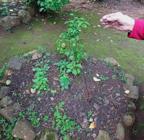
Once I said, half-joking — and it stuck — that when I met my partner, God looked down here and said, 'Let us get this quilombola woman and a landless man together, just to see what happens.' - What happened was an organic garden (Figura 2), and we are proud to say that all the food we produce is one hundred percent free of any kind of chemical fertilizers. That is because he and I combine the ancestral knowledge of my great-grandparents and grandparents and his, who did not use chemical fertilizers or spray pesticides to control pests. Everything was resolved with a hoe. And even though it was all done with a hoe, it was based on a study they did not use even know existed, what we now call agroecology — a science grounded in treating the soil with organic fertilization. Maintenance, repair, pest prevention - all without harming the soil, using organic products derived from animal manure or even plant residues. [Interview with Emanuele].

In her words, Maria Arlete describes her technique for producing natural fertilizer to prepare the soil for planting, highlighting the importance of tree leaves and earthworms in this process. Her account reveals a keen understanding of decomposition cycles and the essential role of worms in soil fertility. By stating that the soil becomes "soft" after this management, she demonstrates an ability to assess soil quality and adapt practices accordingly, even determining what to plant in that specific plot—corn—indicating an awareness of crop requirements.
In the second statement, Emanuele expresses her commitment to traditional agricultural practices rooted in ancestral knowledge and agroecology. She values food grown without chemical fertilizers or pesticides, opting instead for organic inputs from manure and plant residues. This approach reflects a dedication to preserving the soil and a careful reading of the environment, embodying a commitment to sustainable agricultural practices. Both excerpts clearly show a profound connection between the interlocutors and the land, combining traditional knowledge with contemporary agroecological principles.
According to Kempf (2022), for quilombola women, "environmental care is part of their way of life, and long before modern terms such as agroecology, agroforestry, or organic were coined, these practices were already lived out by the communities." This aligns with Emanuele's reflection, which emphasizes that her cultivation practices (understood by her as agroecological) are rooted in ancestral knowledge passed down through generations. She emphasizes that her ancestors, unaware of today's scientific terminology, practiced what is now widely recognized as agroecology.
The following statements address how the interlocutors interpret climate, weather and natural elements, analyzing them to identify the most suitable moments and techniques for cultivation:
Now is the season when everything is sprouting. Even turmeric (Curcuma longa). Well, I love turmeric [...] it sprouts and I harvest its tubers. When winter comes, all, all of its leaves die, everything dies. That is when it is time for us to dig and take out the little tubers. And the ones left behind, later they sprout again [...]. These days, I was complaining: 'My goodness, my turmeric is not sprouting.' But then today, I saw one shoot - because there is been lots of rain, lots of frost and cold. [But] it will sprout. [Interview with Maria Arlete].
So we used to have all this, but we do not have it anymore. Everything has an influence — these heavy rains, too much sun, too much heat, too much cold. The climate has become so unbalanced, even for planting. Now we do not even know anymore, we can not do things the way we did them before. I used to ask my grandmother, 'Grandma, now is the time to plant what?' because I could not remember it all…..[and she would say:] Now we will plant this or that. But now it does not work that well anymore. [Interview with Maria Isabel].
Whoever works with plants, no matter which ones, knows it is not only, 'Oh, I will make myself a garden at my house.' You will need some aptitude, patience, care and gentleness. You have to know the soil, the weather, the sky, the wind and the moon. Mainly, you have got to know the soil and especially the plant, because plants are some of the most temperamental living beings I have ever known and that is because they are in direct contact with the soil. So, all the care in cultivating plants, my plants, is based on the lunar calendar, on the weather — whether it is dry or wet — if the wind is turning to rain or to storm, if the stars announce rain or sunshine. All of these [cues] are still extremely useful, and will always be, as long as the earth is the Earth [Interview with Emanuele].
Maria Arlete’s statement highlights her deep familiarity with plant cycles and seasonality. She observes the time of year when turmeric begins to sprout, recognizing that its leaves die in the winter, and that this is the appropriate moment to harvest the tubers. In addition, as the other participants do, she notes that climatic conditions, such as rain and frost, influence plant development.
Maria Isabel’s narrative also expresses some concern about environmental and climatic changes that affect their farming practices. She describes the climate as destabilized, markedly different from how it once was, with heavier rains and excessive sunlight, heat and cold. These changes disrupt people’s ability to plan and follow traditional farming practices. She reports how she often asks her grandmother about the appropriate time to plant certain crops. However, due to altered environmental conditions, the old techniques are no longer as effective. This suggests the need to continually adjust cultivation strategies in response to environmental and climatic shifts, underscoring the importance of a dynamic, adaptive approach to working with the land.
Along the same lines, Emanuele underscores the complexity of plant cultivation, stressing the relevance of maintaining an intimate connection with nature and cultivating sensitivity to interpret its signs and cycles. She affirms that this process requires more than only a wish or decision to plant — it will demand skill, patience, care, and knowledge about the different elements of nature, such as soil, weather, sky, wind, stars, and the moon.
Her discourse further suggests that her experiences confirm the importance of traditional knowledge and empirical observation in agriculture. She reinforces that such knowledge is, and always will be, of immense value to agricultural practice, in recognition and appreciation of the quilombola ancestral heritage.
This approach underscores the profound understanding that quilombola women have of nature and how they interpret and adapt to it, thereby refining their cultivation techniques. By grounding their practices in the calendar, the seasons of the year and the moon phases, and by observing environmental and climatic patterns, they are able to adapt their agricultural activities to the specific conditions of the environment they inhabit. At the same time, they can reinvent traditional knowledge and methods to address contemporary challenges. This contributes to both the sustainability of their agricultural practices and the preservation of their cultural identity.
The capacity for deep analysis and sensitivity to the nuances of the natural environment that these quilombola women have is evidence of their experience of the concept of sentipensar, as devised by Escobar (2014; 2016). By combining sensory experiences, affective resonances, and reflective thought in their relationship with the environment and their farming activities — attentive to the signals of nature and responsive to its demands — they sentipiensam with the soil, the plants, the climate, the weather, indeed with all the elements and phenomena of nature that sustain their existence.
In addition, by rooting their agricultural practices in the ancestral knowledge of their people - characterized by care, respect for nature, and based on organic methods that avoid chemical pesticides and fertilizers - they reaffirm their worldview. As Escobar (2016) argues, they engage in an ontological struggle to defend their world, which, even unintentionally, becomes a political act of resistance and preservation of their knowledge, identity, and culture, in opposition to the influences of modern coloniality.
Soil and ancestrality: Cultural heritage
The second analytical category focuses on the intergenerational transmission of traditional knowledge in quilombola communities, related to soil management and cultivation practices. Based on the statement of Silva (2021) that “within the quilombo, women have a very powerful and deeply valued relationship of knowledge exchange among each other”, we sought to understand how this exchange occurs and its relevance for the preservation of quilombola cultural identity, as well as for the capacity of these communities to adapt to ongoing environmental and social transformations.
The following narrative establishes a direct connection between the presence of certain plants and the historical or contemporary presence of Black people in a given place. This association reflects Maria Arlete’s profound connection with quilombola cultural heritage and ancestrality:
Wherever I see a jaracatiá tree [Jacaratia spinosa], I say: Black people used to live here once. As well as arum lilies and those big leaves that produce those tubers... yams... and here we have, we have yams and arum lilies, too. [Interview with Maria Arlete].
By identifying these plants as markers of the presence of Black individuals, the interlocutor demonstrates not only practical knowledge of the local flora but also cultural and historical awareness of her ancestral roots. This connection with the land and with nature, mediated through the knowledge and recognition of plants cultivated by her ancestors, strengthens the bond between present-day communities and their historical heritage, reinforcing the importance of preserving quilombola identity.
Moreover, by observing a jaracatiá, an arum lily, a yam, or other plants associated with quilombola agricultural culture, she not only recognizes their presence but also interprets their cultural and historical meanings. She associates these plants with the historical presence of Black communities in the area, pointing to a profound connection between local flora and quilombola ancestry. This corroborates Escobar (2014) statement that ancestral presence in a territory is reflected in the memories of elders, oral traditions, customs and historical research. The persistence of an alternative way of life and worldview evidences this continuity of ancestral legacy.
Thus, the association between plants and the history of her people, expressed in Dona Maria Arlete’s words, is a clear example of sentipensar the territory and cultivation. It involves a sensory understanding of the environment and a critical reflection on its cultural and historical context. In addition, her knowledge transcends mere observation, integrating experience and cultural interpretation to understand the world around her.
In the same sense of relating soil cultivation with ancestrality and cultural heritage, the following accounts demonstrate how traditional knowledge is preserved and transmitted across generations in the Quilombola Community Adelaide Maria Trindade Batista:
I learned to plant and work with soil from my mother and my grandmother, because that is all we used back then. In my grandmother’s time — she was born in 1867 and died in ’59 — so you see, we only drank teas like that. From her, I learned all about teas and foods, too. [Interview with Maria Arlete].
Here, the interlocutor explains that she learned to plant and work the land from her mother and grandmother, emphasizing that in the past they relied solely on the foods and medicinal teas they grew themselves. She also recalls that her knowledge of teas and foods, still applied today, stems from this intergenerational transmission. This experience traces back to distant times- her grandmother having been born in 1867 - indicating the continuity of quilombola agricultural tradition across the decades and the importance of preserving these ancestral knowledges.
The following statements by Maria Isabel bring new nuances to the topic in question:
You know, back then, we used to have a huge garden, right here where Grama’s house stands now. The house was up front and this was the garden, and all of us would come to plant here. I would tend it together with my grandmother. Later I would come to harvest, you know [...]. I always learned from my grandmother how to plant medicines, lettuce, parsley, chives, beets [...]. I would say it like this: I am still in the generation of my aunts [...]. I have this connection with the things my grandmother does and teaches. I feel something is missing if I do not put it into practice, you know, so it is something natural [...]. I feel a need to work with the soil, you understand? So I think that is something that comes like, from generations [...]. And this also comes from my great-grandfather, and from my grandfather too […]”. [Interview with Maria Isabel].
In this account, the interlocutor describes her personal connection with the land and with agricultural practices passed down from older generations. She describes learning from her grandmother how to cultivate food and medicinal plants (Figure 3), noting that her bond with the land is also an inheritance from her grandfather and great-grandfather, which highlights the strong role of intergenerational education in this family.
Maria Arlete explaining the properties and uses of Guinea henweed (Petiveria alliacea) grown in her backyard (2023).
Particularly striking is her recollection that, in the past, she and other family members shared the same garden — located on her grandmother’s terrain — planting, tending, and reaping the harvests together. This reflects a continuous transmission of quilombola cultural heritage, the integration of these practices into family life and a profound sense of sharing. It resonates with what Silva (2021) describes as a “traditional education grounded in the flows of life.”
This participant's account also reveals her need to work with the land and her desire to put the knowledge passed down to her by her ancestors into practice. This highlights her emotional-affective connection to soil and cultivation, along with her commitment to preserving traditional quilombola knowledge and ensuring its continuity for future generations.
Below, Emanuele reveals her historical and identity-based connection to farming, not only as a means of providing a living, but as a practice rooted in ancestrality, cultural preservation, and the transmission of knowledge between generations. Moreover, she understands the value of land as a symbol of resistance, affiliation, and the continuity of quilombola traditions.
This relationship we have with the land did not begin as a hobby, you see. My great-grandparents did not wake up one day and think, ‘Gee, we have got to find something to make time pass, so let us start a garden.’ Even though they were ‘employed,’ so to speak, what they earned was not enough to sustain their family. They had three children [...]. So they maintained this relationship with the land out of necessity for family subsistence. But [they were able to do this] because they had learned it from someone, somewhere. Where? From our ancestors still alive at that time, in the quilombo. [Interview with Emanuele].
I had my first contact with plant cultivation when I was a child and it came to me through my grandparents [...]. They grew vegetables, fruits, flowers and medicinal herbs. All of this in the backyard of their house in an urban area of the town [...]. If I am allowed, of course, I intend to pass this on to my children, my grandchildren and my great-grandchildren, because beyond preserving quilombola culture, it is an ancestral memory full of affection I have of my grandparents, my great-grandparents and my history. So, in this sense, the land is the root of my ancestrality. [Interview with Emanuele].
In the first passage, Emanuele emphasizes that the relationship with the land is not a mere pastime but an essential practice for family survival, transmitted across generations of quilombola communities. She highlights that her great-grandparents learned these skills from their own ancestors within the quilombo and passed them on to younger generations, including herself. In addition, Emanuele’s account underscores the critical role of soil and cultivation in ensuring the sustainability and survival of quilombola communities.
In the second account, echoing the other participants, Emanuele affirms that she learned soil management and cultivation from her grandparents. This indicates the intergenerational transmission of agricultural practices within quilombola families is not recent but a longstanding cultural aspect which, according to Silva (2021), highlights ancestrality as a civilizational value of these people and represents the “basis of identity formation for quilombola women.”
In this sense, Escobar (2016) further emphasized that ancestrality is not merely a memory of the past but an orientation in the present, a responsibility that inspires struggles and resistance to defend the many worlds that modern coloniality presses on to make them disappear. According to this author, ancestrality enables communities to envision a different future. This aligns perfectly with Emanuele’s second narrative, in which she expresses her intention to teach future generations the quilombola knowledge and practices she has received, thereby preserving culture while keeping alive the ancestral memory she carries from her forebears.
This intention to perpetuate ancestral knowledge confirms, in practice, Escobar's (2015) statement that ancestral heritage is not static but dynamic and in constant renewal. In other words, despite social, political, and cultural changes over time, the essence of this connection with the ancients continues to shape contemporary perspectives and movements.
Even as communities adapt and reinvent themselves in response to global changes, they can remain firmly rooted in their cultural and historical foundations (Escobar, 2015). In the context of quilombola communities, this results in a “quilombola reinvention,” a dialectical movement “between belonging to an ancestrality, linked to the idea of tradition and the (re)inscriptions demanded by the social context” (Silva, 2021).
Emanuele's succinct but powerful statement — “the land is the root of my ancestrality” — casts light on the very essence of her relationship with soil. It reveals the tight bond between her personal identity and the land on which it is built, particularly in communities historically entwined with their land, as in quilombola communities. Here, land is more than merely a geographic space but a locus of belonging, existence, and cultural meaning, as Silva (2021) underscores.
In this affirmation, she conveys the importance she attributes to the land as constitutive of her identity and cultural heritage. It suggests a deep emotional and spiritual bond with the quilombo, the place where her ancestors lived, worked, related, and where the transmission of knowledge and ancestrality are expressed, intertwined with the environment.
The testimonies presented here corroborate Escobar (2015) conception of ancestrality and its significance in understanding communities and social movements such as the quilombola. The author defines ancestrality as the connection people have to the territory on which they have built their existence over time. This relation is not limited to the physical occupation of a space but encompasses a range of values, knowledge, and practices transmitted across generations.
This intergenerational transmission of knowledge — manifesting the quilombola women’s intrinsic bond with the past and with the preservation of their ancestors’ experiences and teachings — influences their daily practices of working with the soil. It fills them with sensitivity, respect and consideration for the environment as a whole, revealing an emotional and cognitive connection with both the land and the Earth and reflecting a sentipensante attitude.
Affective relationships with the soil: belonging and identity
The third category of analysis seeks to deepen understanding of the emotional bond that quilombola women cultivate with the soil of the urban quilombo, as well as the ways this relationship shapes their identities and sense of belonging. From this perspective, this section explores the affective and symbolic dimensions of their interaction with the land, examining how these unfold in their narratives and shape their worldviews, individual and collective identities, and their quilombola sense of belonging and ancestrality.
The testimonies below reveal the profound affective connection of Maria Arlete with the soil and with the natural environment she inhabits:
Nowadays, [having] land is like finding a pan of money. It is worth gold. It is a treasure. Because it is from the land that we get our food, our sustenance, is not it? It is from the land you get medicine, food, you plant, you make it grow. If you do not have land - how would you make ends meet? Like many quilombola today, who have rented a place to live, they do not have their land anymore. Lucky are those ones who have kept and preserved that little piece of land of theirs, and there they plant collards, chives. [Interview with Maria Arlete].
Now, when I live close to nature, in the open air where we – you see – where we are connected with nature, with the wind, with the rain, with the morning breeze. You open the window and see everything, you feel that light breath of wind and rain. That is how we live in connection with nature. It is a good relationship we have with nature - with the land, the plants, the animals, the birds. [Interview with Maria Arlete].
In the first statement, the land is described as a real treasure, likened to finding a “pan of money.” This metaphor underscores her perception of it as invaluable and fundamental to the sustenance and survival of quilombola communities, since it serves as the foundation for producing both food and natural medicines essential to life. This dependence is a strong marker of the intimate and affective bond these communities maintain with the land, acknowledging it as the primary source of resources that sustain their existence.
Her words align with Kempf (2022), who highlights that gardens and backyards are “mirrors of multifold knowledge and tasks,” where “women create spaces of autonomy and resistance,” and where they produce “food for consumption, food for sale, medicines for family care,” while fostering relationships of care and affection with the environment.
In the second account, Maria Arlete describes her harmonious relationship with nature, emphasizing her daily connection to elements such as wind, rain, and the morning breeze. This reflects her admiration and sensitivity toward the natural environment surrounding her and highlights an appreciation of the environment as a space for connection and comfort. She mentions the satisfaction of living “in the open air” and the freedom of being in contact with nature, which give her a sense of freedom, balance, and spiritual well-being. Similarly, the narratives of Maria Isabel shed light on the profound affective ties that quilombola women sustain with the soil and nature that surround them:
There is this feeling of realizing: wait, it is me who did this. This dish I prepared here was planted by my grandmother. I am cooking the corn my grandmother planted [...]. So there is all of that - of looking at a tree you planted and now you can go and hang a hammock in it. [Interview with Maria Isabel].
I miss it if I do not go outside, if I do not step on the soil if I do not work with the soil. I always got to have some chives, some parsley, just something I have planted, something from my backyard that I can go and pick. The tea I drink, too, I have got to go out and pick it. [Interview with Maria Isabel].
(Showing a picture of the family seated in the yard, beneath a tree – Figura 4) “Look, let me show you this. We hardly ever sit in here, right, Grama? We sit out there [...]. So this place for us, I usually say, I call this sacred, you know, it is a different kind of relationship. To come out here, to sit out there in the yard, to put my feet on the ground and listen to her [the grandmother] talking. [Interview with Maria Isabel].
Our soil (soil), the land, the territory for us — it is that place of comfort, you know, like a sacred space, related to memory, and affective memories, too. When you think of your people, you know this is where you have your roots. [Interview with Maria Isabel].

These discourses reveal Maria Isabel’s deep appreciation for soil and nature, showing her practical awareness of their importance to quilombola communities. As observed for Maria Arlete, Maria Isabel emphasizes the need to maintain a close relationship with the land as indispensable for producing food and medicinal herbs — core elements of the quilombola culture. The acts of planting and harvesting in her own garden and backyard are described as a source of satisfaction and pride, making her feel connected to her ancestors.
An interesting aspect of these narratives is the need of the interlocutor to interact with the soil. She expresses that she needs the direct contact with the soil — working with it, stepping barefoot on it — which brings a sense of fulfillment and well-being, suggesting an intimate connection with nature and a profound appreciation for engaging physically with the territory she inhabits.
Like Maria Arlete, Maria Isabel talks about the pleasure she feels to be able to be in open-air spaces, in contact with nature, as in her grandmother’s backyard. She describes it as a sacred space where the family gathers round, and bonds are strengthened. Sitting barefoot in the backyard, in the shade of the trees, and listening to her grandmother’s stories makes her feel connected to her ancestral roots and enriches her affective memory.
The recognition of the space as a place of comfort, a sacred place of belonging, underscores the role of the land not only as a natural resource vital to physical survival, but also as a symbol of identity and an emotional connection to the environment, family, and community. It is a place imbued with affection, where her roots lie and where her people's collective memory is preserved.
In the same vein, Emanuele's discourse underscores the vital role of the relationship with the land for food production and family sustenance, portraying it as the foundational element of her ancestrality and cultural belonging.
The land is the root of my ancestrality. It is more than a territory. Even before I understood what territory meant, I always saw the land as my space for living or producing what is necessary to help support my family [...]. Later, when the idea of territory and belonging started to sink in, I realized that land is something that is part of me, not necessarily the other way around. [Interview with Emanuele].
From the beginning, Emanuele defined land as the root of her ancestrality, a vital link to past generations. This statement suggests a continuous and intimate relationship with the soil, which she perceives as essential to her personal identity and worldview. Her discourse further reveals that, from an early age, she understood land as a space of living and of producing the essential foods that sustain her family. This perspective underscores the soil’s practical significance as a source of livelihood and security for quilombola communities. Simultaneously, Emanuele articulates land as something intrinsic to her, representing a space of emotional significance, belonging and connection to her family and cultural roots, echoing the sentiments expressed by Maria Isabel.
These conversations collectively challenge the dualist ontology of Western modernity, which, as Escobar (2015) noted, is grounded in separations such as “human and non-human, nature and culture, individual and community, ‘us’ and ‘them,’ body and mind, secular and sacred, reason and emotion etc.” Instead, they reflect a non-dualist worldview where humans and the environment, culture and nature, form an interconnected and interdependent whole.
The narratives of the three interlocutors converge with Silva’s (2021) assertion that “for quilombola, land is life, land is home,” and that “nature [is a] source of energy or vital force for quilombola women” (Silva, 2021). These perspectives highlight the interconnection between quilombola communities and their environment, recognizing soil not merely as a physical resource but as an essential element of identity and life itself. In this sense, their testimonies contribute to the constitution of what Escobar (2015) describes as a “dense web of interrelations and materiality that we call relationality, or relational ontology.”
From this standpoint, neither the quilombola women, nor the soil, nor cultivation, nor nature can be regarded as discrete, self-contained entities that exist independently. Rather, what exists is a whole world that is renewed moment by moment, day by day, through countless actions that link a multiplicity of humans and non-humans. Summing up: a relational ontology posits that nothing — neither humans nor non-humans — preexists the relationships that constitute them. We all exist because everything exists (Escobar, 2015).
In view of the profound connection these women share with the land, we come to understand that - beyond subsistence - their very existence, memories, affections and emotions are linked to it. This relationship surpasses a merely utilitarian interaction, revealing an emotional, cognitive, and spiritual interdependence with the natural environment surrounding them. This insight allows the conclusion that a sentipensante relation exists between quilombola women and the soil they inhabit and cultivate.
CONCLUSIONS
The interlocutors in this study maintain a profound connection to the soil and to the cultivation of their gardens and backyards. The places become spaces of resilience, where not only food and medicinal plants are grown, but where ancestrality and the preservation of traditional knowledge take root, even amidst ongoing environmental changes and the persistent coloniality of knowledge - spaces where the land, the Earth, the territory and nature as a whole give rise to a sentipensante relationship.
The quilombola women who play a key role in this study understand the soil properties — its fertility, management, care and cultivation. In their gardens, backyards, one finds a wide variety of plants, including teas, aromatic herbs, vegetables, fruits, greens, and, in some cases, small animals. The agricultural techniques they apply are largely shaped by traditional methods they affirm to have learned from their ancestors. The preservation of these ancestral cultural practices — through which they mobilize knowledge of soil, plants, and cultivation accumulated across generations — emerges as a form of resistance against the pressure of the historical adversities endured by quilombola communities. The continuity of this intergenerational transmission of traditional knowledge not only strengthens quilombola identity but also sustains an ecologically balanced relationship with the environment, ensuring food security, health, and the well-being of these communities, as attested by participants' accounts. Consequently, more than an area where they produce food, the soil of the urban quilombo serves as a space of intergenerational education, where the younger learn from the older generations, safeguarding valuable practices that constitute the quilombola cultural heritage.
Their ability to interpret the environment, the weather, the climate, and the lunar phases is also a distinctive marker of the relationship between the quilombola women, the soil, and its cultivation. This understanding of the environment and its natural patterns, apart from guiding their agricultural activity, also reflects a deeply respectful, intrinsic bond with nature — a relation purely sentipensante. This contributes to their farming practices and helps preserve and strengthen the bond with their ancestral ties.
Based on the statements of these three women from different generations, we understand that quilombola communities do not use the land only for growing food and ‘natural medicines’. Rather, they maintain a profound spiritual and cultural connection with it and other natural elements. This connection surpasses the utilitarian exploitation of resources and involves a far more complex interaction between humans and the natural environment. One such example is an interlocutor’s account of her need to work with the soil or her pleasure of walking barefoot in the backyard of her grandmother’s house during the outdoor family gatherings.
In conclusion, the interlocutors of this study maintain a sentipensante connection with the soil on which they live and cultivate their gardens and backyards. In this context, sentipensar is expressed as they weave emotions, intuitions, feelings and sensory experiences into their interactions with the environment, transmit knowledge across generations and make decisions about what, how, when and where to plant, based not only on what they think but also on feeling.
In cultivating the land, they are not only carrying out a practical task in a physical environment but also engaging in reflection and expressing deep respect and emotional attachment to the soil, the root of their ancestry. This suggests a holistic and integrated worldview in which the land plays a central role in their sense of belonging.
Thus, the soil of the urban quilombo, far more than a place where seeds germinate, crops intertwine and harvests grow, is a space where sentipensar flourishes, illuminating the complexity and depth of the relationships between quilombola communities and the land they cultivate, nourishing not only their bodies but also their hearts, souls and cultural identities.
Acknowledgments
We express our deep gratitude to the three quilombola women, interlocutors of this study, who welcomed us with such care and generosity, sharing their stories, memories, and knowledge.
-
How to cite:
Prado DS, Mello NA. Between gardens and backyards: Three generations of quilombola women sentipensando the soil and its cultivation. Rev Bras Cienc Solo. 2026;50:e0250034. https://doi.org/10.36783/18069657rbcs20250034
-
1
For the research interlocutors, the term “terreiro” refers to the backyard of their homes.
-
2
For the research interlocutors, the term “posar” means roost/settle for sleep in a place.
DATA AVAILABILITY
All data was generated or analyzed in this study
REFERENCES
- Alves AGC. Conhecimento local e uso do solo: Uma abordagem etnopedológica. Interciência. 2005;30:524-8.
- Bardin L. Análise de conteúdo. Lisboa, Portugal: Edições 70; 1977.
- Escobar A. Sentipensar con la Tierra: Las luchas territoriales y la dimensión ontológica de las Epistemologías del Sur. Rev Antropol Iberoam. 2016;11:11-32.
-
Escobar A. Territorios de diferencia: La ontología política de los “derechos al territorio”. Cuad Antropol Soc. 2015;41-25-38. https://doi.org/10.5380/dma.v35i0.43540.
» https://doi.org/10.5380/dma.v35i0.43540 - Escobar A. Sentipensar con la tierra: Nuevas lecturas sobre desarrollo, territorio y diferencia. Medellín, Colombia: Ediciones Unaula; 2014.
- Flick U. Desenho da pesquisa qualitativa. Porto Alegre: Artmed; 2009.
- Kempf RB. Saberes e fazeres de mulheres camponesas e quilombolas nas agriculturas: produzindo formas de resistências e existências [thesis]. Curitiba: Universidade Federal do Paraná; 2022.
-
Lagos MB. “Palmas para Mulheres Mil” em comunidades quilombolas: A Participação do IFPR - Câmpus Palmas no Programa Nacional de Inclusão Social [dissertation]. Pato Branco: Universidade Tecnológica Federal do Paraná; 2014. Available from: https://repositorio.utfpr.edu.br/jspui/bitstream/1/854/1/PB_PPGDR_M_Lagos%2c%20Marcia%20Beraldo_2014.pdf
» https://repositorio.utfpr.edu.br/jspui/bitstream/1/854/1/PB_PPGDR_M_Lagos%2c%20Marcia%20Beraldo_2014.pdf -
Mattos CLG. A abordagem etnográfica na investigação científica. In: Mattos CLG, Castro PA, editors. Etnografia e educação: Conceitos e usos. Campina Grande: EDUEPB; 2011. p. 49-83. https://doi.org/10.7476/9788578791902
» https://doi.org/10.7476/9788578791902 -
Silva MIC. A intergeracionalidade quilombola: O caso da comunidade Adelaide Maria Trindade Batista em Palmas-PR [dissertation]. Francisco Beltrão: Universidade Estadual do Oeste do Paraná; 2021. Available from: https://tede.unioeste.br/bitstream/tede/5837/5/Maria_Isabel_C_Silva_2021.pdf
» https://tede.unioeste.br/bitstream/tede/5837/5/Maria_Isabel_C_Silva_2021.pdf - Souza MLA, Gusmão, NMM. Identidade quilombola e processos educativos presentes num quilombo urbano: o caso do Quilombo Brotas. Educ Ling. 2011;14:75-93.
Edited by
-
Editor:
José Miguel Reichert https://orcid.org/0000-0001-9943-2898 and Deborah de Oliveira https://orcid.org/0000-0002-7340-5792


