 Diversity of arbuscular mycorrhizal fungi in a long-term no-tillage onion production system
ABSTRACT
Onion is predominantly grown under conventional management. Alternatively, the no-tillage vegetable system uses cover crops to form a residue layer, which improves soil physical, chemical, and biological quality. Aiming to understand the effect of mycorrhizal and non-mycorrhizal cover crops on arbuscular mycorrhizal fungus diversity, we used morphological characterization of spores and high-throughput sequencing in soil from a long-term experiment with no-tillage onion. Treatments were black oats (Avena strigosa Schreb.); rye (Secale cereale L.); oilseed radish (Raphanus sativus L.); rye + oilseed radish; black oats + oilseed radish before the onion crop, and the control was a fallow area. In spring, all plots had onions, followed by velvet-bean in summer. Additionally, a conventional tillage system area and a forest, both adjacent to the experiment, were evaluated. Morphological identification of spores of arbuscular mycorrhizal fungi showed dominance of the Glomeraceae and Acaulosporaceae families. The DNA sequencing of rhizospheric soil confirmed those data and estimated 75 operational taxonomic units, with a predominance of the genus Glomus. Presence of oilseed radish, a non-mycorrhizal cover crop, did not reduce the occurrence of fungal species in relation to mycorrhizal cover crops. The use of different cover crop species in a long-term succession system maintains the natural mycorrhizal community.
Keywords
Allium cepa
; AMF; conventional tillage; cover crops; high-throughput sequencing; taxonomy
INTRODUCTION
Onion (Allium cepa L.) is the third most-produced vegetable worldwide (Hanci, 2018). Its cultivation is predominantly managed in a conventional tillage system (CVS), which includes plowing and harrowing, as well as high rates of soluble fertilizers and agrochemicals, which may lead to the degradation of chemical, physical, and biological soil properties (Sheoran et al., 2018; De-Mastro et al., 2019), and a decrease in soil microbial activity (Lori et al., 2017). The no-tillage vegetable system (NTVS) uses minimal soil disturbance, fractionated fertilizer applications, and crop rotation, including cover crops (CC). This method aims to reduce or even eliminate the use of agrochemicals, thereby aiding in the recovery and improvement of soil properties (Fayad et al., 2019). In onions, those practices increase soil organic carbon and nitrogen (Comin et al., 2018; Bortolini et al., 2021), pH, exchangeable calcium, magnesium, potassium (Santos et al., 2018), and available phosphorus (Oliveira et al., 2017; Ventura et al., 2021), improve soil structure (Loss et al., 2017), and can modify microbial-related traits, such as glomalin contents, which are related to arbuscular mycorrhizal fungi (AMF) (Bortolini et al., 2021).
Arbuscular mycorrhizal fungi (AMF), the soil fungi associated with over 80 % of plant species (Hijri and Bâ, 2023), are obligate symbionts that enhance nutrient and water uptake and bolster plant defenses against biotic factors (Heijden et al., 2015). The diversity of AMF in agricultural systems needs to be better studied (Powell and Rillig, 2018), particularly in tropical and subtropical soils (Jemo et al., 2018). A review of 54 studies conducted under various environmental conditions revealed an 11 % increase in the diversity of these microorganisms in non-conventional systems (Bowles et al., 2016). Similarly, a 7-year experiment showed that minimum tillage increased spore numbers by 39 % compared with conventional practices (Sale et al., 2015). A 13-year study associated no-tillage with 8 and 66 % increase in spore numbers and AMF species diversity, respectively (Wetzel et al., 2014). In Brazilian tropical conditions, increases of 30 and 12 % in spore numbers and AMF species diversity were observed in no-tillage compared to conventional systems (Pontes et al., 2017).
Management and the selection of plant species affect AMF diversity (Silva et al., 2015; Stürmer et al., 2018), especially when non-mycorrhizal plant species are used, i.e., those that do not form associations with symbiotic fungi (Conceição et al., 2022). Continued use of canola (Brassica napus L.), a non-mycorrhizal plant, for ten years in monoculture, led to reduced AMF diversity, with the occurrence of only two genera and predominance of Claroideglomus, while crop rotation with wheat had five AMF genera, and barley-wheat-canola sequence had six genera (Floch et al., 2022). In the Cerrado (Brazilian Savanna), morphological analysis of spores revealed 64 AMF species, with Glomeraceae and Acaulosporaceae predominating in systems with mycorrhizal plants (Pontes et al., 2017). Use of high-throughput sequencing techniques in the analysis of ryegrass (Lolium multiflorum Lam.) and hairy vetch (Vicia sativa L.), which are mycorrhizal plants, followed by mustard (Sinapis alba L.), a non-mycorrhizal species, before corn (Zea mays L.) and soybean (Glycine max (L.) Merr.) showed that the soil AMF community is affected by the mycorrhizal status of the previous crops (Higo et al., 2019). However, we did not find studies on no-tillage onion production that characterize AMF communities in mycorrhizal and non-mycorrhizal plants.
Black oats (Avena strigosa Schreb.) and rye (Secale cereale L.), cover crops that are associated with AMF, and oilseed radish (Raphanus sativus L.), which do not form such associations (Miranda et al., 2001), are widely used as cover crops in southern Brazil (Kurtz et al., 2013). We hypothesize that the characteristic of forming or not forming mycorrhizal associations modifies the soil AMF community; mycorrhizal species increase the diversity of these microorganisms, while non-mycorrhizal species reduce it. Furthermore, conducting studies of this nature in long-term experiments under the same system can facilitate the identification of biological temporal dynamics and evaluate the system stability (Reinke et al., 2019).
This study aimed to evaluate the effects of cover crops (mycorrhizal and non-mycorrhizal) on the diversity of arbuscular mycorrhizal fungi, using morphological approaches and high-throughput sequencing in soil from a long-term no-tillage onion production system.
MATERIALS AND METHODS
Location, history, and experimental design
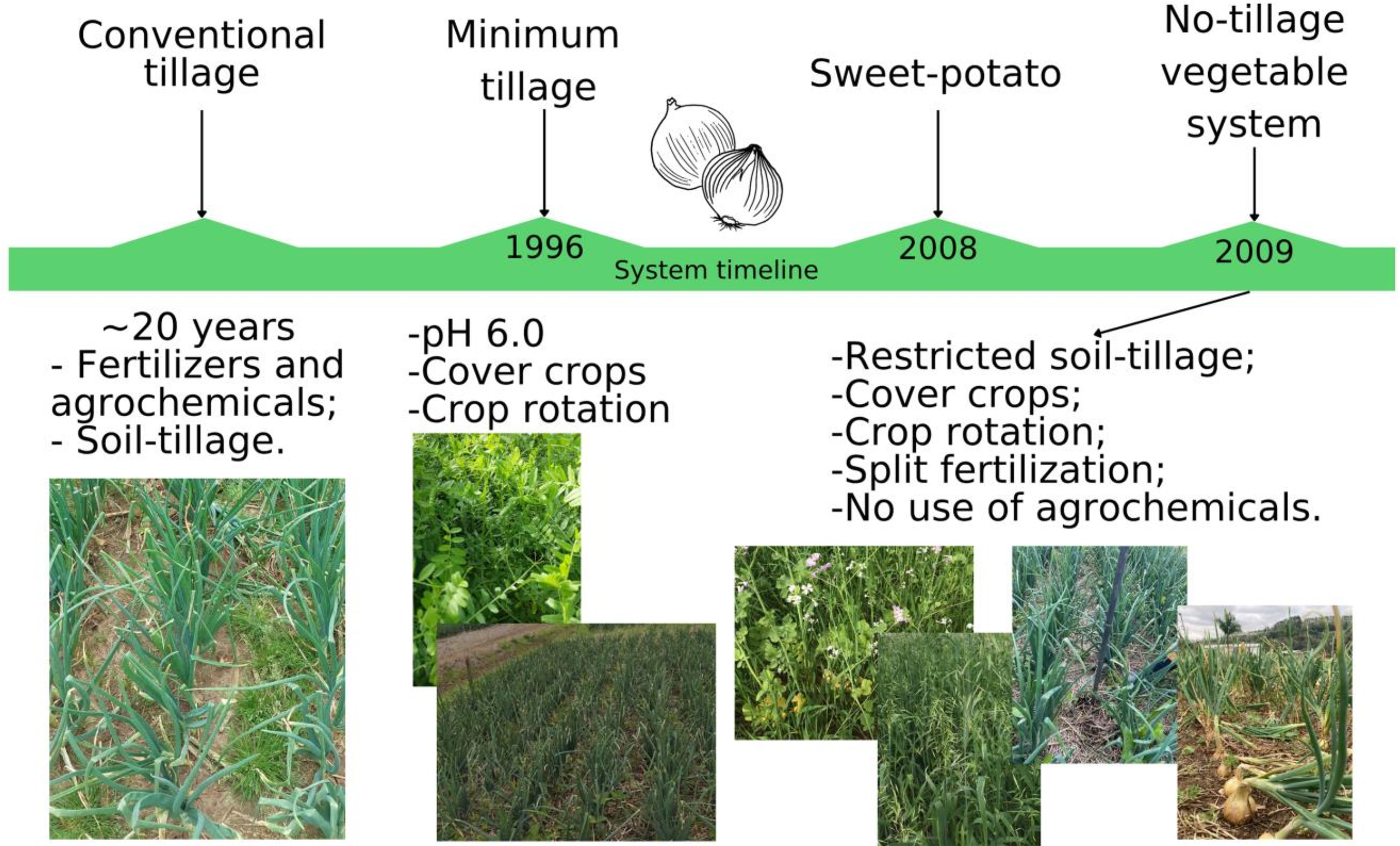
The study was conducted in Ituporanga, southern Brazil (27° 24’ 52” S, 49° 36’ 9” W, 475 m). According to the Köppen classification system, the climate is humid subtropical mesothermal (Cfa), with an average annual temperature of 17.6 °C and precipitation of 1,400 mm. The soil in the area is a Cambissolo Distrófico Alumínico típico or Humic Cambisol (Santos et al., 2013; Soil Survey Staff, 2014) with a loam-clay texture (380, 200, and 420 g kg-1 of clay, silt, and sand, respectively). The onion production with a conventional tillage system (CTS) lasted for approximately 20 years until 1996, when lime was applied to raise the soil pH to 6.0, and a minimum-tillage onion production was implemented with crop rotation and cover crops [black-oats, velvet-bean (Mucuna aterrima (Piper & Tracy) Holland), millet (Pennisetum glaucum (L.) R. Br.), sunn-hemp (Crotalaria juncea L.), and hairy-vetch] from 1996 to 2007. Sweet potato (Ipomoea batatas (L.) Lam.) was grown in 2008, and subsequently, the no-tillage onion experiment was established. In the first year (2009), weeds were desiccated with glyphosate®, and no agrochemicals were applied thereafter. The history of the area is summarized in figure 1.
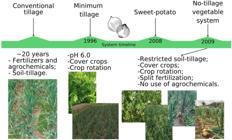
In the no-tillage vegetable system (NTVS), winter species were sown each year in autumn (April) by broadcasting, and the plants were rolled down in mid-winter (July) at full bloom using a knife roller (model RF240, MBO Ltda). Until 2011, 96 kg of P2O5, 125 kg of K2O, and 100 kg of N per hectare were applied annually in the form of poultry bedding, half at seedling transplanting and the remainder 45 days later. The poultry bedding had 193.2 g kg-1 total organic carbon and 20 g kg-1 total N. From 2011 onward, the application of natural phosphate ceased because phosphorus levels were considered very high, according to regional criteria (SBCS, 2016). Subsequently, furrows were made with a machine adapted for direct onion planting, and onion seedlings (cv. Empasc 352 - Bola Precoce) were manually transplanted, with a spacing of 0.40 m between rows and 0.10 m between plants, with 10 onion rows per plot. Weeding was carried out at 60 and 90 days after transplanting.
Treatments consisted of single and mixed cover crops during winter: black oats (Avena strigosa Schreb.) (BO); rye (Secale cereale L.) (RY) 120 kg seeds ha-1, oilseed radish (Raphanus sativus L.) (OR) (20 kg ha-1); BO + OR (60 and 10 kg ha-1) and OR + RY (60 and 10 kg ha-1), and fallow (weeds). The plots (5.0 × 5.0 m) were in a randomized block design with six replicates. All plots had onion in the spring and velvet bean (Mucuna pruriens (L.) DC.) in summer.
Two studies were carried out: the first characterized soil AMF diversity in 2017 using spore morphology, while the second used high-throughput sequencing in 2020 and 2021. In the first study, the treatments included: single rye (RY), single oilseed radish (OR); a consortium of RY + OR, and fallow. Additionally, we evaluated an area with 41 years of onion with a conventional tillage system, where millet (Pennisetum glaucum (L.) R. Br.) has been grown since 2007 in summer, and a secondary forest area with over 35 years of regeneration, both adjacent to the experimental site. In the second study, rye was replaced by black oats due to seed availability and to lower pathogenic propagule numbers. Treatments were single BO, single OR, a consortium of BO + OR, and fallow. Soil chemical properties from both studies are provided in Supplementary Material 1.
Total root mycorrhizal colonization of cover crops in 2017 was 20 and 12 % in rye roots at the treatments containing rye single and intercropped (rye + oilseed radish). In 2020, black oats roots showed 59 and 53 % total colonization in single and intercropped (black oats + oilseed radish) treatments, respectively. In both years, oilseed radish did not demonstrate root colonization.
Spore extraction and identification (Study 1)
In 2017, 300 g of rhizospheric soil (0.00-0.10 m) per plot were collected 85 days after winter cover crop sowing and 92 days after the onion transplanting (spring). In the conventional system and the forest, samples were collected during the same period, following the methodology proposed by TSBF (Tropical Soil Biology and Fertility) (Hart et al., 2015). The samples were transported and kept at 4 °C until processing.
A 100-gram sample was used for direct spore extraction to perform taxonomic identification of AMF using morphological methods, and the remainder was used to establish trap cultures (Morton et al., 1993) to induce sporulation of species that were not previously captured. Extraction of AMF spores from 50-cm³ soil subsamples was performed by wet-sieving, followed by separation using a sucrose gradient (Gerdemann and Nicolson, 1963). Spores were mounted on permanent slides with polyvinyl lactoglycerol (PVLG) and PVLG mixed with Melzer reagent (1:1, v/v), and classified into morphotypes based on shape, size, color, and hyphal accessories (Stürmer and Siqueira, 2011).
For the morphological identification, slides of each morphotype were analyzed using information from the International Culture Collection of Glomeromycota (CICG) at the Regional University of Blumenau (FURB). Comparisons were made with the original species descriptions (Schenck and Perez, 1990) and online species description references from the International Culture Collection of (Vesicular) Arbuscular Mycorrhizal Fungi (INVAM) at West Virginia University, USA (https://invam.wvu.edu/) and the Department of Phytopathology, University of Agriculture in Szczecin, Poland (http://www.agro.ar.szczecin.pl).
High-throughput sequencing of soil arbuscular mycorrhizal fungi (Study 2)
At the end of the cover crop cycles (full bloom) in 2020 and 2021, as well as at the end of the onion cycle in 2020 and the end of the velvet bean cycle in 2021, 20 g of rhizospheric soil attached to the plant root systems were collected. This material was placed in plastic bags, transported to the laboratory in a thermal box, and stored at -80 °C for subsequent characterization of the soil AMF community. The DNA was extracted from 0.25 g of soil using the DNeasy PowerSoil® Kit (QIAGEN, Hilden, Germany), eluted in 50 µL, in triplicate, according to the manufacturer's instructions. The quantity of extracted DNA was verified with the NanoDrop Lite® spectrophotometer (Thermo Scientific).
The 18S region was amplified using the nested-PCR technique. In the first PCR cycle, the primers NS31 (5’ GAA CCC AAA CAC TTT GGT TTC C 3’) (Simon et al., 1992) and AML2 (5’ GAA CCC AAA CAC TTT GGT TTC C 3’) (Lee et al., 2008) were used. The reaction mix contained 1 µL of DNA, 0.2 µmol L-1 of each primer, 10.0 µL of 2x PCRBio Ultra Mix® (PCRBiosystems), and ultrapure water to complete a final volume of 25 µL. The reaction included a denaturation step at 94 °C for 2 min, followed by 33 cycles of 30 s at 94 °C for denaturation, 30 s at 65 °C for annealing, and 40 s at 72 °C for extension. The reaction was completed with a final extension step of 10 min at 72 °C. Subsequently, the PCR product was purified using the AMPure® system (Beckman Coulter, California, USA). The second PCR reaction used the primers AMV4.5NF (5’ AAG CTC GTA GTT GAA TTT CG 3’) and AMDGR (5’ CCC AAC TAT CCC TAT TAA TCA T 3’) (Geel et al., 2014). The reaction included 1 µL of the product from the first PCR (NS31/AML2), 0.2 μmol L-1 of each primer, 10.0 µL of 2x PCRBio Ultra Mix (PCRBiosystems), and ultrapure water to achieve a final volume of 25 µL. The thermocycler was programmed for an initial step of 2 min at 95 °C, followed by 28 cycles of 30 s at 95 °C for denaturation, 30 s at 58 °C for annealing, 40 s at 72 °C for extension, and a final extension step of 10 min at 72 °C (Sato et al., 2005). After the cycles were completed, the PCR product was purified, and Nextera XT Index Primer 1® (N7xx) and Nextera XT Index Primer 2® (S5xx) adapters were attached to the amplified DNA.
The AMF diversity was analyzed using NGS on the Illumina MiSeq® platform, configured for 2x250 bp reads with an average coverage of 10,000 reads per sample (Vasar et al., 2017). Bioinformatic processing was conducted as follows: data were processed using QIIME 2® software version 2020.8 (Pauvert et al., 2019). Primers were removed using Cutadapt, while reads were merged with PEAR, and chimeras were filtered using the denoise-paired algorithm from DADA2. Operational taxonomic units (OTU) were classified using the MaarjAM reference database (http://maarjam.botany.ut.ee/) (Hart et al., 2015) version 2019. Phylogenetic trees were constructed from alignments with similarities above 97 %.
Statistical analyses
In the first study, a heatmap was constructed to visualize the frequency of AMF species across different systems, presented in percentages (0, 25, 50, 75, and 100 %). Principal Coordinates Analysis (PCoA) and distance-based Redundancy Analysis (dbRDA) were conducted using Jaccard dissimilarity (Clarke, 1993). These analyses aimed to assess the similarity among AMF communities in areas with different soil coverages and in winter and spring. Additionally, a permutational multivariate analysis of variance (PERMANOVA) (Anderson, 2006) was applied to determine differences in the AMF community composition between the different soil coverages and the mentioned seasons. This analysis was also used to compare mycorrhizal community data with soil chemical properties, after verifying multivariate homogeneity.
In the second study, the data obtained were analyzed using PERMIDISP and again by PCoA. A phylogenetic tree was constructed from OTU generated based on alignments with >97 % sequence similarity, using the MAFFT software for sequence alignment, the maximum likelihood method for phylogenetic inference, and 999 bootstrap replicates to assess node support. The trees were visualized using the FigTree software.
The AMF diversity was assessed based on the Shannon-Weiner and Margalef indices, and evenness was calculated using the Pielou index. All tests and analyses were conducted using the R software version 4.1.2 (R Core Team, 2023).
RESULTS
First study: Spore morphology of the AMF
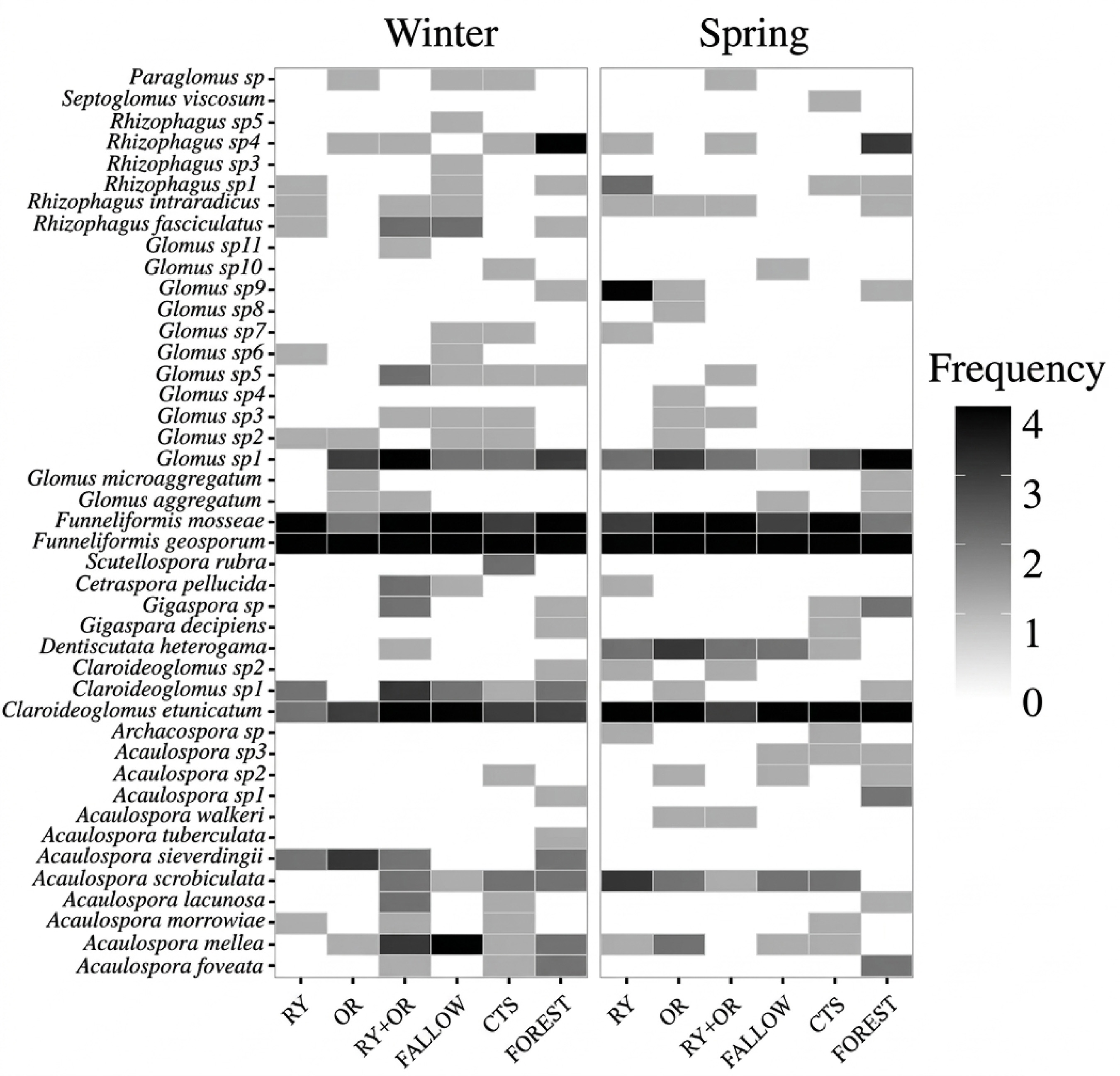
During the 2017 winter cover crop cycle, we identified 37 arbuscular mycorrhizal fungus morphotypes, distributed across 11 genera and five families within the phylum Glomeromycota (Figure 2). The Glomeraceae family had the highest richness, with 19 species. There were nine Acaulosporaceae species, five Gigasporaceae, three Claroideoglomeraceae, and Paraglomeraceae had one species.
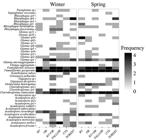
Relative frequency of AMF species assessed by morphological techniques, during the cover crop cycle (winter) and onion cycle (spring) in soil covered with rye (RY), oilseed radish (OR), rye + oilseed radish (RY+OR), fallow in the No-Tillage Vegetable System (NTVS) for onions, in a Conventional Tillage System (CTS), and a Forest.
A total of 11 AMF species were identified in the treatments with single rye (RY) and oilseed radish (OR), 21 species in the rye + oilseed radish consortium (RY+OR), and 19 species occurred in both the conventional tillage system (CTS) and the forest soil (Figure 2). Six species were predominant: Acaulospora mellea was dominant in the OR, Claroideoglomus etunicatum was predominant in the RY+OR or OR, Rhizophagus sp4 in Forest, Glomus sp1 in RY+OR. Funneliformis genus was present in all treatments, and Funneliformis geosporum was dominant.
During the onion cycle (spring), 35 morphotypes were identified, distributed across 12 genera and six families. The family Glomeraceae was the most frequent, with 17 species, followed by Acaulosporaceae with 9, Gigasporaceae with 4, Claroideoglomeraceae with 3, and Archaerosporaceae and Paraglomeraceae with 1 species each (Figure 2). Fifteen AMF species were found in the RY, 16 in the OR, 13 in RY+OR, 11 in OR, 14 in CTS, and 17 species in the forest. The six dominant species were: Glomus sp9 in the RY treatment; Glomus sp1 in Forest; Funneliformis mosseae in the OR and RY+OR; and CTS, Claroideoglomus etunicatum was found in all treatments except RY+OR, and Funneliformis geosporum was dominant in all areas. For photographs of the dominant species (Supplementary Material 2).
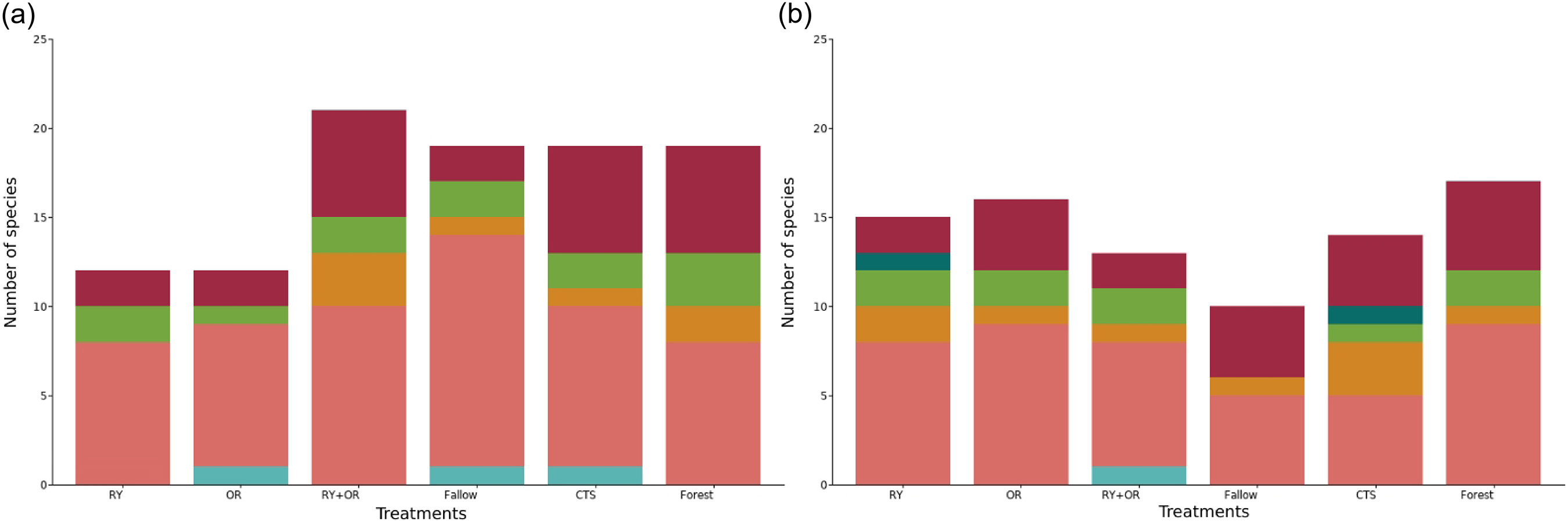
In the families with the highest number of species, Glomeraceae had 13 species in OR, 10 in RY+OR, nine in CTS, eight in Forest, seven in RY, and seven in OR, while Acaulosporaceae had six species in the RY+OR, CTS, and Forest, and two species in RY, OR, and OR (Figure 3a).
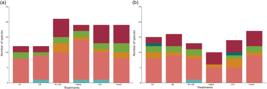
Number of AMF species per family during the cover crop in winter (a) and during the onion in spring (b) in soil covered with rye (RY), oilseed radish (OR), rye + oilseed radish (RY+OR), fallow in the No-Tillage Vegetable System (NTVS) for onions, and in the Conventional Tillage System (CTS) and Forest.
During the onion cycle, the families with the highest number of species, Glomeraceae and Acaulosporaceae, showed varied distributions among the treatments. We found nine Glomeraceae species in the OR and Forest, eight in RY, seven in RY+OR, and five in CTS and OR. Acaulosporaceae had five species in Forest, four in OR, OR, CTS, and two in RY and RY+OR (Figure 3b). Some species occurred exclusively in certain seasons: during winter, i.e., the cover crop cycle, exclusive species included A. sieverdingii, A. tuberculata, S. rubra, G. sp6, G. sp11, R. fasciculatus, R. sp3, and R. sp5. In the onion cycle (spring), the exclusive species were A. walkeri, A. sp3, Archaeospora sp., G. sp4, G. sp8, and Septoglomus viscosum.
The Forest showed differences in species diversity and family composition with the rye and fallow (Figures 2 and 3). In the Forest, species not found in the rye cultivation included six from the family Acaulosporaceae, three from Glomeraceae, and two from Gigasporaceae. Compared to fallow, the Forest had five species from Acaulosporaceae, three from Glomeraceae, two from Gigasporaceae, and one from Claroideoglomeraceae.
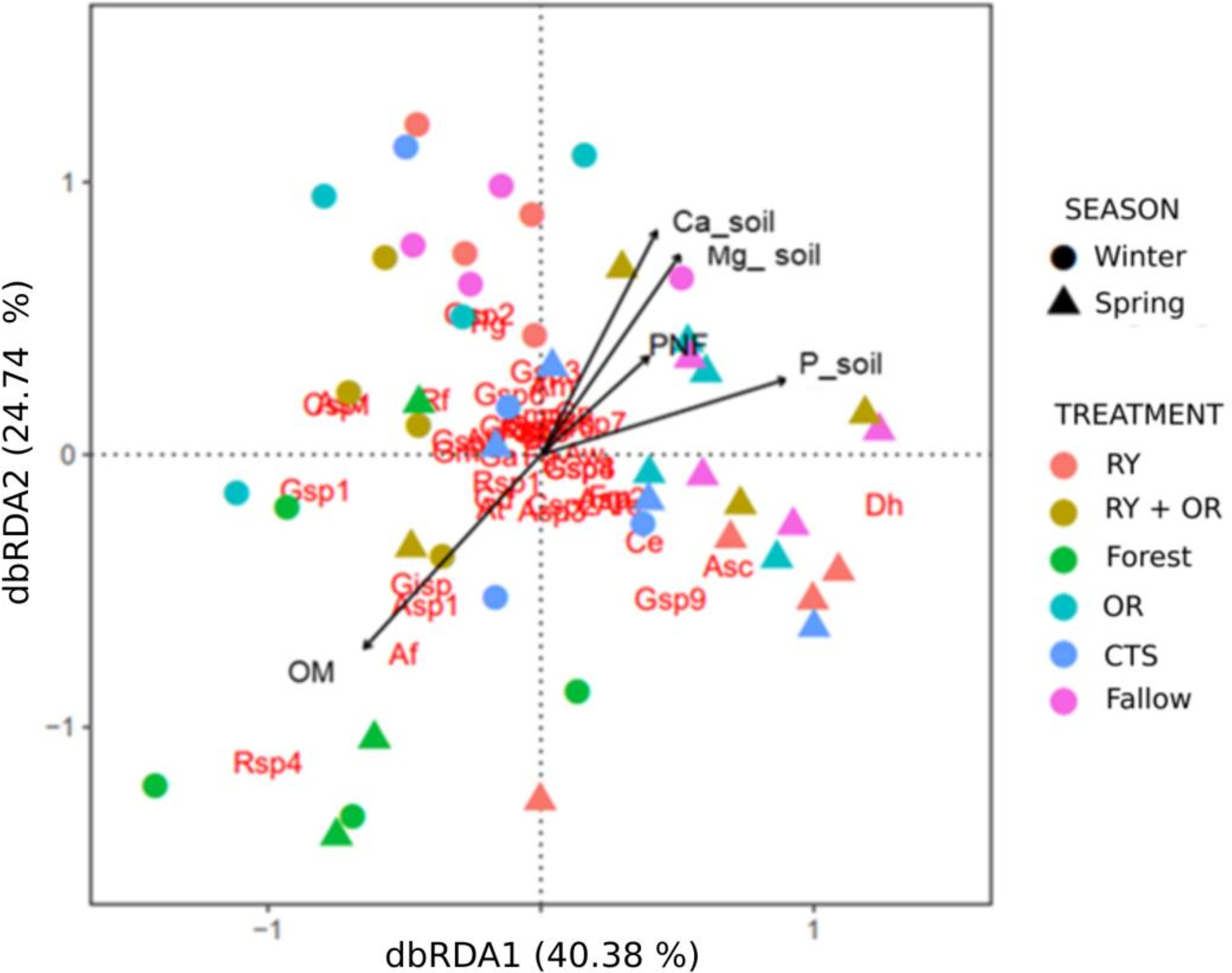
PERMANOVA indicated an effect of both cover crops and seasons on AMF diversity (Figure 4), with Pseudo F5,36 = 1.64; p = 0.008 for cover crops and Pseudo F1,36 = 4.03; p = 0.001 for seasons, with no interaction between those factors (Pseudo F5,36 = 1.41; p = 0.053). The AMF community structure in the Forest differed from the RY treatment (p = 0.03) and fallow (p = 0.03), while the other treatments did not show differences. Principal Coordinates Analysis (PCoA) explained 18.8 % of the data variation (Supplementary Material 3).
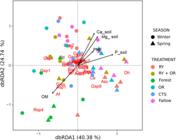
Distance-based Redundancy Analysis (dbRDA), with Jaccard dissimilarity matrix, between the AMF diversity and soil chemical properties (PNF - phosphatase activity; P - soil Phosphorus; Ca - Calcium; Mg - Magnesium; MO - Organic Matter) in soil covered with rye (RY), oilseed radish (OR), rye + oilseed radish (RY+OR), fallow in the No-Tillage Vegetable System (NTVS) for onions, and in the Conventional Tillage System.
However, when soil chemical properties were incorporated into the distance-based Redundancy Analysis (dbRDA), the method explained a significantly higher proportion of variation (65 %; Figure 4). That analysis highlighted the effects of calcium, phosphorus, and organic matter on soil AMF diversity, and demonstrated the influence of soil chemical properties on the dynamics of those fungal communities.
In the dbRDA, there was a noticeable distinction between the Forest and the other treatments, highlighting the unique effects of plant communities on specific AMF taxa. Species such as Rhizophagus sp4 (Rsp4), Acaulospora foveata (Af), Acaulospora sp1 (Asp1), Gigaspora sp (Gisp), and Glomus sp1 (Gsp1) increased their frequency in spring (Figure 4). Moreover, the dbRDA was able to better differentiate the seasons. This was evidenced by the separation of species such as Cetraspora (Ce), Acaulospora scrobiculata (Asc), Diversispora (Dh), and Glomus sp9 (Gsp9), all displaying distinct patterns of prevalence in each season. That shows how environmental and temporal factors influence AMF diversity in different cropping systems and seasons.
Second study: High-throughput sequencing of soil arbuscular mycorrhizal fungi
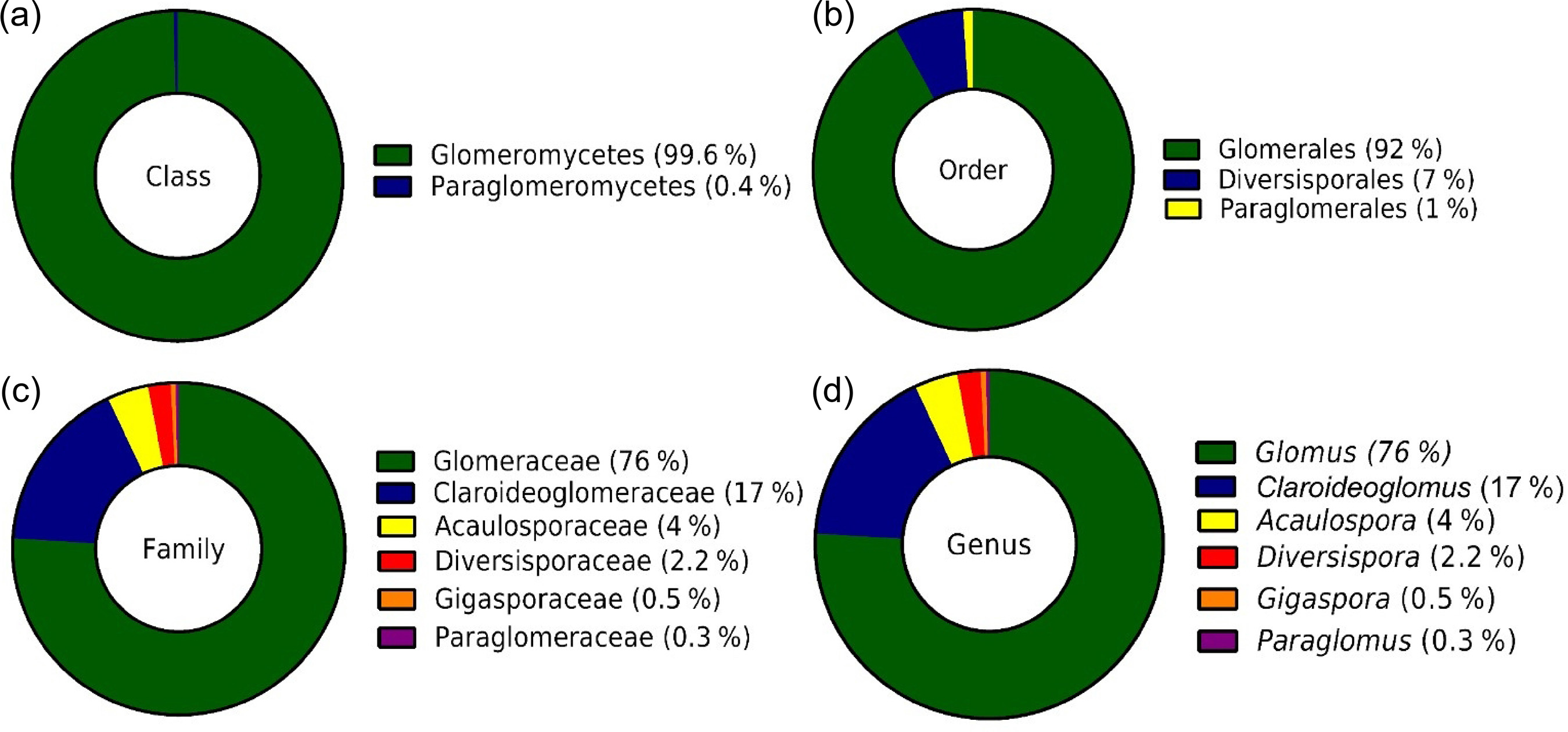
We identified 75 operational taxonomic units (OTU), from a total of 570,237 sequencing reads, belonging to the genera Glomus, Claroideoglomus, Diversispora, Acaulospora, Gigaspora, and Paraglomus. The OTU are predominantly distributed in the classes Glomeromycetes (99.6 %) and Paraglomeromycetes (0.4 %) (Figure 5a). The majority belong to the order Glomerales (92 %), with the remainder divided between Diversisporales (7 %) and Paraglomerales (1 %) (Figure 5b). The families include Glomeraceae (76 %), Claroideoglomeraceae (17 %), Acaulosporaceae (4 %), Diversisporaceae (2.2 %), Gigasporaceae (0.5 %), and Paraglomeraceae (0.3 %) (Figure 5c). The predominant genera were Glomus (76 %), followed by Claroideoglomus (17 %), Acaulospora (4 %), Diversispora (2.2 %), Gigaspora (0.5 %), and Paraglomus (0.3 %) (Figure 5d).
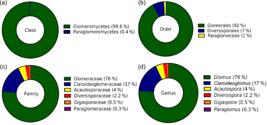
Distribution (%) of the molecular AMF community evaluated in the no-tillage vegetable system (NTVS) for onions with different winter cover crops and temporal analyses by class (a), order (b), family (c), and genus (d).
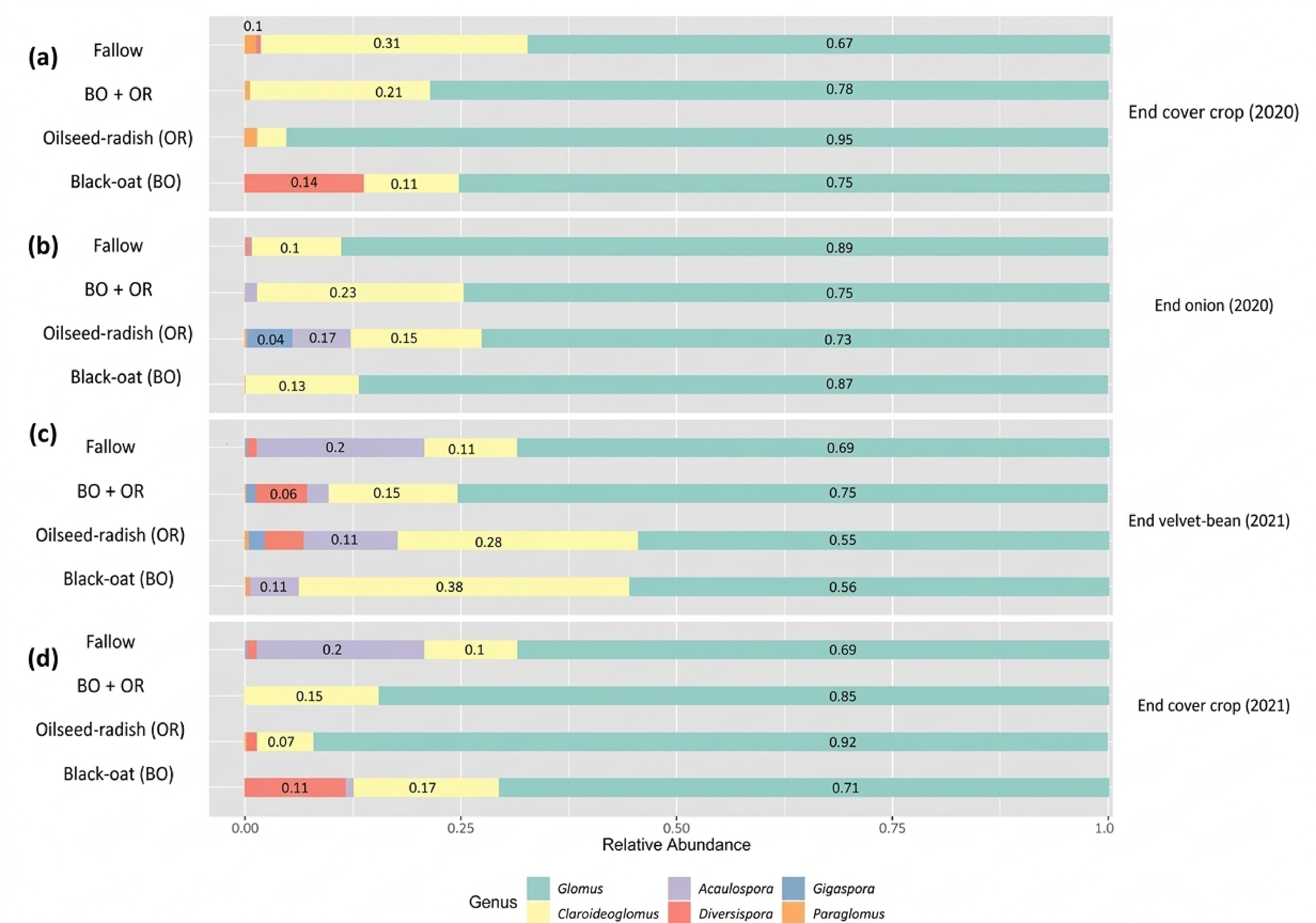
Analysis of AMF relative abundance across different treatments and seasons revealed a marked dominance of the genus Glomus (Figure 6). At the end of the cover crop cycles in 2020 and 2021, in treatments including cover crops (BO, OR, BO+OR), the genera Glomus, Claroideoglomus, Acaulospora, Diversispora, and Paraglomus were identified. In contrast, the fallow areas had higher diversity, including the genus Gigaspora (Figures 6a and 6d). In subsequent onion crops, the proportion of Claroideoglomus increased, particularly in treatments with oilseed radish, which showed a higher occurrence of the genus Acaulospora (Figure 6b). In the case of the velvet bean (M. aterrima) crop, there was a reduction in the dominance of Glomus, which fell below 55 %, and an increase in the occurrence of Acaulospora. Additionally, Claroideoglomus increased its occurrence in treatments with black oats and oilseed radish during winter (Figure 6c).
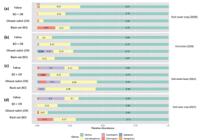
Relative abundance (1.0 = 100 %) of AMF genera identified from the rhizospheric soil at different times end cover crop (2020) (a), end onion (2020) (b), end velvet-bean (2021) (c) and end cover crop (2021) in the No-Tillage Vegetable System (NTVS) for onions evaluated across different seasons in 2020 and 2021 with different winter cover crops.
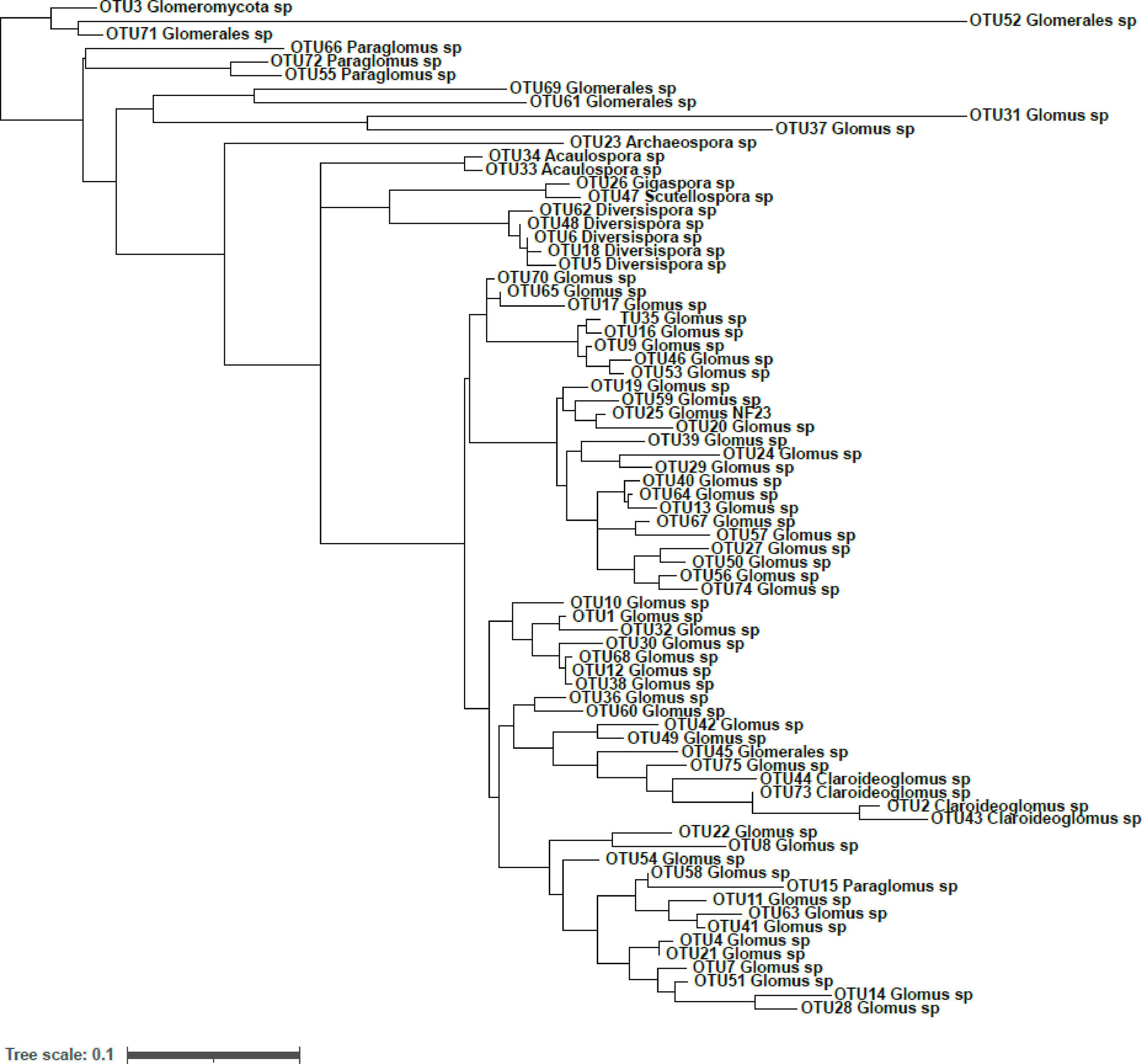
Phylogenetic tree showed alignment rates higher than 80 % (Figure 7), allowing for the classification of OTU into small clades, primarily at the genus level. However, there are notable exceptions, such as OTU 3, which was consistently classified up to the phylum Glomeromycota with 100 % certainty, and OTUs 61 and 69, which were classified up to the order Glomerales.
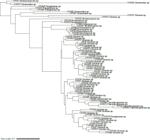
Phylogenetic tree based on sequences from the 18S region for AMF from rhizospheric soil of onion crops in the No-Tillage Vegetable System (NTVS) evaluated across different seasons in 2020 and 2021 with different winter cover crops. Clades based on alignments of domains (>97 %) with the maximum likelihood method, and 999 bootstrap replicates.
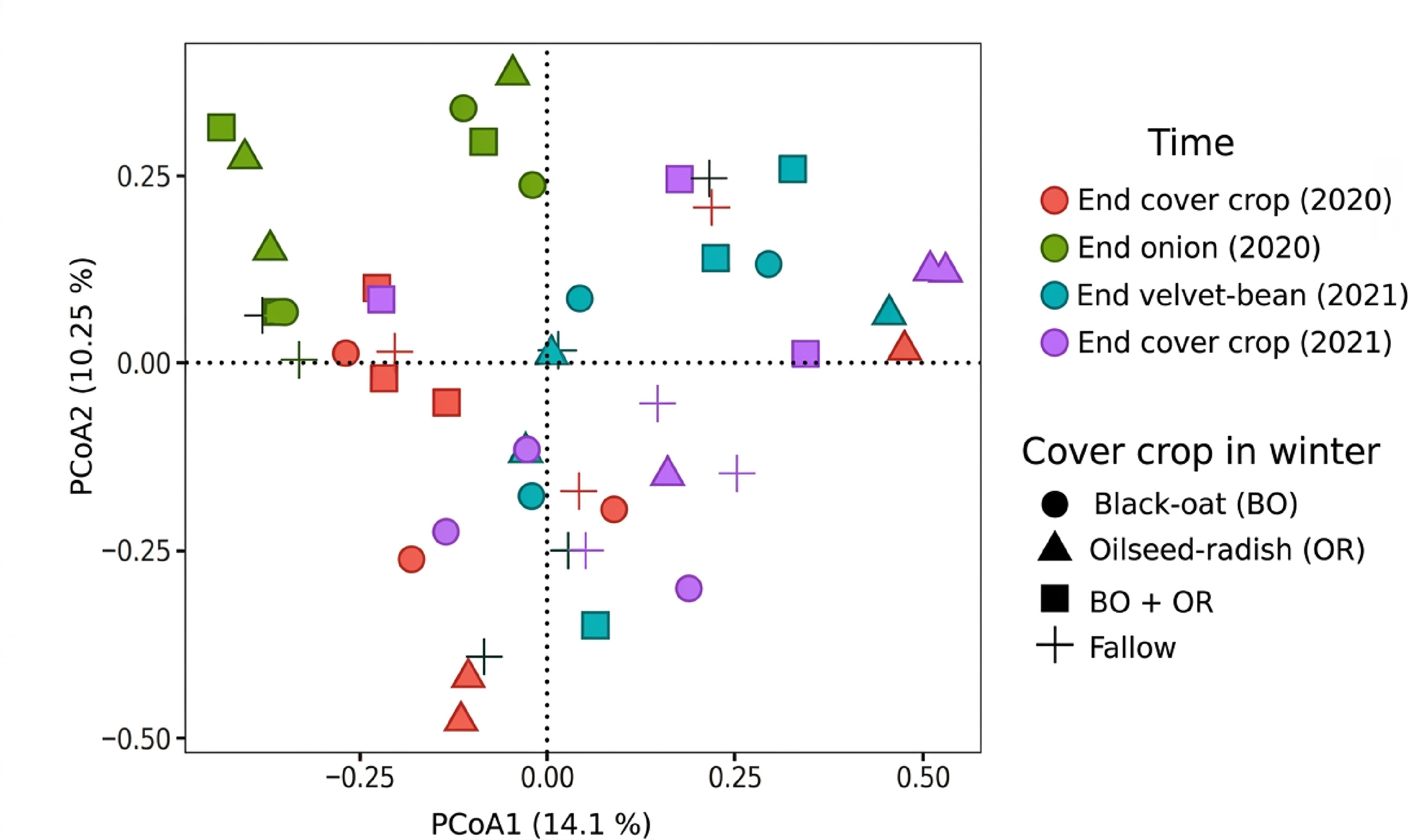
PERMANOVA revealed an interaction between cover crops and the seasons (p-value of 0.03), indicating that the combination of different types of cover and the seasons affected the diversity of AMF. The PCoA was able to explain 24.35 % of the variation in the data. Although no clear clustering trend was observed in most evaluations, an exception occurred at the end of the onion cycle, when the data showed less dispersion and were predominantly concentrated in the first quadrant of the PCoA (Figure 8).
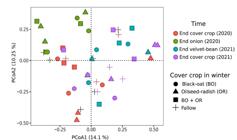
Principal Coordinates Analysis (PCoA) based on Bray-Curtis distance for the AMF community present in the No-Tillage Vegetable System (NTVS) for onions with different cover crops evaluated across different seasons in 2020 and 2021.
DISCUSSION
The identification of arbuscular mycorrhizal fungi (AMF) species based on spore morphology, which in some cases reached the species level, showed that the families Glomeraceae and Acaulosporaceae are predominant in the long-term experiment and adjacent areas (Figures 2 and 3). The genera Glomus and Acaulospora are commonly found in tropical regions (Stürmer et al., 2018; Vieira et al., 2018), a pattern also observed in this study in subtropical conditions. The consistent presence of Glomeraceae in various land-use systems can be attributed to their high capacity to tolerate environmental changes, their ability to form anastomoses, and the formation of robust mycelial networks in plant communities, distinguishing features of this family (De-La-Providencia et al., 2005). Acaulospora, in turn, was the second most frequent genus and was also noted as significant in Brazilian forest ecosystems (Stürmer and Siqueira, 2008).
In winter, growing a single cover crop species resulted in a reduction in the number of AMF species (Figure 2). This occurred with oilseed radish, which is a non-mycorrhizal plant, but also with rye, which is mycorrhizal. The decreases in spore production may be associated with reduced plant diversity. This phenomenon was observed after growing oilseed radish and rye for 3 years, leading to a reduction in the AMF community composition compared to the consortium of rye with pea or rye with clover (Cloutier et al., 2020).
Archaeospora sp. (Archaeosporaceae) was detected exclusively in rye and in the conventional tillage system, which has a history of using millet, a mycorrhizal Poaceae (Figures 2 and 3). Although we found no studies directly associating P. glaucum with this AMF species, it has been shown that Archaeospora predominates in systems with Poaceae (Channabasava and Lakshman, 2015). The dominant species in our long-term experiment can be explained by their generalist nature (Chiomento et al., 2019). For example, Claroideoglomus was identified as dominant in all treatments (Figures 2 and 3). A study on soil microbial diversity and colonization in onion after mycorrhizal and non-mycorrhizal cover crops showed that the presence of non-mycorrhizal species did not affect spore diversity, but 23 species were found in soil around onion roots, most of which belonged to the genera Glomus and Claroideoglomus (Pakarinen et al., 2021).
The dbRDA (Figure 4) showed that AMF diversity was affected by soil cover type and season. Those results are in agreement with proposed models of geographic distribution for AMF species, emphasizing climate as a relevant abiotic factor and the plant community as a biotic factor (Eom et al., 2000; Chaudhary et al., 2008).
Despite being an established and low-cost technique, the morphological assessment of the AMF in ecosystems or areas impacted by human activities has limitations. Those limitations include variable sporulation among species, morphological ambiguities, and varying spore integrity (Kehri and Akhtar, 2018). Therefore, it is recommended to complement such surveys with molecular techniques, such as high-throughput sequencing (Noreen et al., 2023). Molecular approaches allow precise differentiation among similar species, detection of non-sporulating AMF, and reliable, detailed characterization of the AMF community structure (Hart et al., 2015), as observed in our study.
When comparing the results of our first survey, based on spore morphology, with the data obtained from DNA sequencing some years later, in the same area, all the families identified in 2017 were confirmed, including Glomeraceae, Acaulosporaceae, Gigasporaceae, Claroideoglomeraceae, and Paraglomeraceae, with a clear dominance by Glomeraceae (Figures 2, 3, 5, and 6). The molecular technique additionally allowed the identification of the family Diversisporaceae (Figures 5 and 6). This difference can be attributed to the identification method used since genetic sequencing, unlike the morphological approach, does not depend on a relatively abundant production of spores and the preservation of their structures for identification (Noreen et al., 2023). So far, to our knowledge, there are no studies on AMF diversity in no-tillage vegetable production using high-throughput sequencing.
The use of various cover crops did not result in significant changes in arbuscular mycorrhizal fungi diversity, likely due to the stability of the system, which had already been using onions in the spring and velvet-bean in the summer for 11 and 12 years, respectively, by 2020 and 2021. Fallow had higher AMF diversity (Figure 6), and this increase can be attributed to the presence of diverse weeds in this area (Souza et al., 2020), as observed in tropical conditions (Mhlanga et al., 2022).
Onion growth increases the proportion of the genus Claroideoglomus. Notably, in the treatments with oilseed radish, the dominance of the genus Acaulospora was also observed (Figure 6). In comparison, a study using conventional onion tillage and high-throughput sequencing, identified 14 phylotypes, with distributions of 79, 14, and 7 % for the genera Glomus, Archaeospora, and Paraglomus, respectively (Galván et al., 2009). Those differences can be attributed to various factors, including environmental conditions (Cardoso and Andreotte, 2016), the plant species, and the management system adopted (Angelini et al., 2012).
Velvet-bean increases in the occurrence of the genera Claroideoglomus and Acaulospora in treatments that use black oats and oilseed radish (Figure 6). That underscores the effect of cover crops on AMF diversity, as evidenced by a previous study reporting the presence of Acaulospora, Glomus, and Scutellospora following velvet-bean cultivation (Benedetti et al., 2005). This observation highlights the role of cover crops in modulating AMF communities, determining their composition and diversity.
We decided to classify fungi up to the genus level to include all identified OTU, given that classification up to the species level resulted in numerous unclassified OTU. This limitation arises because the MaarjAM database (Öpik et al., 2010), a global reference for AMF classification used in its 2019 version for this study, still contains a limited number of sequences, particularly those of Brazilian origin. This situation underscores the importance of studies like ours for enriching the database and contributing to the scientific community (López-García et al., 2020). Some OTU were classified only up to higher levels, such as the phylum (OTU 3) and the order (OTU 61 and 69) (Figure 7). This indicates that those AMF have not yet been adequately classified in the genetic bank used, suggesting opportunities for further investigations in this field.
The PCoA in the second study did not reveal clear clustering trends, except at the end of the onion cycle (Figure 8). This specificity may be associated with the dominance of the genus Glomus and the low diversity of genera observed and cataloged. This phenomenon highlights a possible impact of monoculture and the phenological state of the onion on the structure of arbuscular mycorrhizal fungi communities, as discussed by Prates et al. (2021). Such a situation underscores the complex interaction between agricultural practices and soil biodiversity, which affects the composition and dynamics of microbial communities.
Our study hypothesized that the presence of a non-mycorrhizal species, such as oilseed radish, would decrease the diversity of AMF present in the environment, but this was not evident from the spore taxonomy or high-throughput sequencing. This is linked to the consolidation of the management system, which has a history of growing onion and velvet-bean mycorrhizal species after winter cover crops since 2009. That management system may have maintained or reestablished AMF species in the system (Caproni et al., 2018), suggesting that the resilience of AMF communities to changes in crop composition, and highlighting the complexity of interactions between plants and microorganisms in the soil.
CONCLUSIONS
Morphological identification of arbuscular mycorrhizal fungi (AMF) spores revealed a dominance of the families Glomeraceae and Acaulosporaceae. This was confirmed by high-throughput sequencing of the rhizospheric soil, which yielded 75 operational taxonomic units, predominantly of the genus Glomus. The hypothesis that the presence of a non-mycorrhizal plant, such as oilseed radish, would decrease the occurrence of AMF species was not supported by either morphological assessments or molecular techniques, showing that AMF communities are affected by the management system as a whole. Use of various cover crop species in a long-term succession system maintains the natural mycorrhizal community in terms of occurrence. This suggests that crop diversity within rotational systems plays a critical role in sustaining the health and stability of soil microbial communities.
-
How to cite:
Ventura BS, Giovanetti LK, Meyer E, Almeida AFN, Kurtz C, Comin JJ, Stürmer SL, Lovato PE. Diversity of arbuscular mycorrhizal fungi in a long-term no-tillage onion production system. Rev Bras Cienc Solo. 2026;50:e0250039. https://doi.org/10.36783/18069657rbcs20250039
DATA AVAILABILITY
The data will be provided upon request.
SUPPLEMENTARY DATA
Supplementary data to this article can be found online at https://doi.org/10.1016/XXX
REFERENCES
-
Anderson MJ. Distance-based tests for homogeneity of multivariate dispersions. Biometrics. 2006;62:245-53. https://doi.org/10.1111/j.1541-0420.2005.00440.x
» https://doi.org/10.1111/j.1541-0420.2005.00440.x -
Angelini GAR, Loss A, Pereira MG, Torres JLR, Júnior OJS. Colonização micorrízica, densidade de esporos e diversidade de fungos micorrízicos arbusculares em solo de Cerrado sob plantio direto e convencional. Semina: Cienc Agrar. 2012;33:115-30. https://doi.org/10.5433/1679-0359.2012v33n1p115
» https://doi.org/10.5433/1679-0359.2012v33n1p115 - Benedetti T, Antoniolli ZI, Giracca EMN, Steffen RB. Diversidade de fungos micorrízicos arbusculares na cultura do milho após uso de espécies de plantas de cobertura de solo. Rev Cienc Agrovet. 2005;4:44-51.
-
Bortolini JG, Soares CRFS, Muller MJ, Ferreira GW, Meyer E, Vieira CK, Souza M, Kurtz C, Lourenzi CR, Lovato PE, Loss A, Comin JJ. Soil carbon, glomalin, and aggregation in onion crop under no-tillage with cover crops or conventional tillage systems for eight years. J Agric Stud. 2021;9:130-50. https://doi.org/10.5296/jas.v9i2.18196
» https://doi.org/10.5296/jas.v9i2.18196 -
Bowles TM, Jackson LE, Loeher M, Cavagnaro TR. Ecological intensification and arbuscular mycorrhizas: a meta-analysis of tillage and cover crop effects. J Appl Ecol. 2016;54:1785-93. https://doi.org/10.1111/1365-2664.12815
» https://doi.org/10.1111/1365-2664.12815 -
Caproni AL, Granha JRDO, Fornaciari AJ, Nobre CP, Mendonça LP, Berbara RLL. Diversity of Arbuscular mycorrhizal fungi in an Amazon environment after mining. Floresta Ambient. 2018;25:e20150224. https://doi.org/10.1590/2179-8087.022415
» https://doi.org/10.1590/2179-8087.022415 - Cardoso EJBN, Andreote FD. Microbiologia do solo. 2nd ed. Piracicaba: ESALQ; 2016.
-
Channabasava A, Lakshman HC. Biodiversity of arbuscular mycorrhizal fungi in the rhizosphere of selected millets, South Western India. Nova Hedwig. 2015;101:111-30. https://doi.org/10.1127/nova_hedwigia/2015/0253
» https://doi.org/10.1127/nova_hedwigia/2015/0253 - Chaudhary VB, Lau MK, Johnson NC. Macroecology of microbes – Biogeography of the Glomeromycota. In: Varma A, editor. Mycorrhiza: State of the art, genetics and molecular biology, eco-function, biotechnology, eco-physiology, structure and systematics. Berlin, Heidelberg: Springer; 2008. p. 529-63.
-
Chiomento JLT, Sturmer SL, Carrenho R, Costa RC, Scheffer-Basso SM, Antunes LEC, Nienow AA, Calvete EO. Composition of arbuscular mycorrhizal fungi communities signals generalist species in soils cultivated with strawberry. Sci Hortic. 2019;253:286-94. https://doi.org/10.1016/j.scienta.2019.04.029
» https://doi.org/10.1016/j.scienta.2019.04.029 -
Clarke KR. Non-parametric multivariate analyses of changes in community structure. Aust J Ecol. 1993;18:117-43. https://doi.org/10.1111/j.1442-9993.1993.tb00438.x
» https://doi.org/10.1111/j.1442-9993.1993.tb00438.x -
Cloutier ML, Murrell E, Barbercheck M, Kaye J, Finney D, García-González I, Bruns MA. Fungal community shifts in soils with varied cover crop treatments and edaphic properties. Sci Rep. 2020;10:6198. https://doi.org/10.1038/s41598-020-63173-7
» https://doi.org/10.1038/s41598-020-63173-7 -
Comin JJ, Ferreira LB, Santos LH, Koucher LP, Machado LN, Santos Junior E, Mafra AL, Kurtz C, Souza M, Brunetto G, Loss A. Carbon and nitrogen contents and aggregation index of soil cultivated with onion for seven years using crop successions and rotations. Soil Till Res. 2018;184:195-202. https://doi.org/10.1016/j.still.2018.08.002
» https://doi.org/10.1016/j.still.2018.08.002 -
Conceição TA, Goss M, Andrade G, Brito I. The effect of plant mycotrophy and soil disturbance on soil microbial activity. Soil Use Manage. 2022;39:634-44. https://doi.org/10.1111/sum.12871
» https://doi.org/10.1111/sum.12871 -
De-La-Providencia IE, Spiza FA. Fernández F, Delmas NS, Declerck S. Arbuscular mycorrhizal fungi reveal distinct patterns of anastomosis formation and hyphal healing mechanisms between different phylogenic groups. New Phytol. 2005;165:261-71. https://doi.org/10.1111/j.1469-8137.2004.01236.x
» https://doi.org/10.1111/j.1469-8137.2004.01236.x -
De-Mastro F, Cocozza C, Traversa A, Savy D, Abdelrahman HM, Brunetti G. Influence of crop rotation, tillage and fertilization on chemical and spectroscopic characteristics of humic acids. PLoS ONE. 2019;14:e0219099. https://doi.org/10.1371/journal.pone.0219099
» https://doi.org/10.1371/journal.pone.0219099 -
Eom AH, Hartnett DC, Wilson GWT. Host plant species effects on arbuscular mycorrhizal fungal communities in tallgrass prairie. Oecologia. 2000;122:435-44. https://doi.org/10.1007/s004420050050
» https://doi.org/10.1007/s004420050050 - Fayad JA, Arl V, Comin JJ, Mafra AL, Marchesi DR. Sistema de plantio direto de hortaliças: Método de transição para um novo modo de produção. São Paulo: Expressão Popular; 2019.
-
Floch JB, Hamel C, Laterrière M, Tidemann B, St-Arnaud M, Hijri M. Long-Term persistence of arbuscular mycorrhizal fungi in the rhizosphere and bulk soils of non-host Brassica napus and their networks of co-occurring microbes. Front Plant Sci. 2022;13:828145. https://doi.org/10.3389/fpls.2022.828145
» https://doi.org/10.3389/fpls.2022.828145 -
Galván GA, Parádi I, Burger K, Baar J, Kuyper TW, Scholten OE, Kik C. Molecular diversity of arbuscular mycorrhizal fungi in onion roots from organic and conventional farming systems in the Netherlands. Mycorrhiza. 2009;19:317-28. https://doi.org/10.1007/s00572-009-0237-2
» https://doi.org/10.1007/s00572-009-0237-2 -
Geel MV, Busschaert P, Honnay O, Lievens B. Evaluation of six primer pairs targeting the nuclear rRNA operon for characterization of arbuscular mycorrhizal fungal (AMF) communities using 454 pyrosequencing. J Microbiol Methods. 2014;106:93-100. https://doi.org/10.1016/j.mimet.2014.08.006
» https://doi.org/10.1016/j.mimet.2014.08.006 -
Gerdemann JW, Nicolson TH. Spores of mycorrhizal Endogone species extracted from soil by wet sieving and decanting. Trans Br Mycol Soc. 1963;46:235-44. https://doi.org/10.1016/S0007-1536(63)80079-0
» https://doi.org/10.1016/S0007-1536(63)80079-0 -
Hanci FA. Comprehensive overview of onion production: Worldwide and Turkey. ISRG J Agri Vet Sci. 2018;11:17-27. https://doi.org/10.9790/2380-1109011727
» https://doi.org/10.9790/2380-1109011727 -
Hart MM, Aleklett K, Chagnon P, Egan C, Ghignone S, Helgason T, Lekberg Y, Opik M, Pickles BJ, Waller L. Navigating the labyrinth: A guide to sequence‐based, community ecology of arbuscular mycorrhizal fungi. New Phytol. 2015;207:235-47. https://doi.org/10.1111/nph.13340
» https://doi.org/10.1111/nph.13340 -
Heijden MGA, Martin FM, Selosse M, Sanders IR. Mycorrhizal ecology and evolution: The past, the present, and the future. New Phytol. 2015;205:1406-23. https://doi.org/10.1111/nph.13288
» https://doi.org/10.1111/nph.13288 -
Higo M, Tatewaki Y, Gunji K, Kaseda A, Isobe K. Cover cropping can be a stronger determinant than host crop identity for arbuscular mycorrhizal fungal communities colonizing maize and soybean. PeerJ. 2019;7:e6403. https://doi.org/10.7717/peerj.6403
» https://doi.org/10.7717/peerj.6403 -
Hijri M, Bâ A. Mycorrhizal fungi and plants in terrestrial ecosystems. Front. Plant Sci. 2023;4:1180884. https://doi.org/10.3389/fpls.2023.1180884
» https://doi.org/10.3389/fpls.2023.1180884 -
Jemo M, Dhiba D, Hashem A, Allah EFA, Alqarawi AA, Tran LP. Mycorrhizal fungal community structure in tropical humid soils under fallow and cropping conditions. Sci Rep. 2018;8:17061. https://doi.org/10.1038/s41598-018-34736-6
» https://doi.org/10.1038/s41598-018-34736-6 - Kehri HK, Akhtar O. Approaches in studying the diversity of arbuscular mycorrhizal fungi. In: Singh S, editor. Biodiversity: Monitoring management and utilization. New Delhi: Astral International; 2018. p. 91-110.
-
Kurtz C, Ernani PR, Pauletti V, Menezes Junior FOG, Vieira Neto J. Produtividade e conservação de cebola afetada pela adubação nitrogenada no sistema de plantio direto. Hortic Bras. 2013;31:559-67. https://doi.org/10.1590/S0102-05362013000400009
» https://doi.org/10.1590/S0102-05362013000400009 -
Lee J, Lee S, Young PW. Improved PCR primers for the detection and identification of arbuscular mycorrhizal fungi: PCR primers for arbuscular mycorrhizal fungi. FEMS Microbiol Ecol. 2008;65:339-49. https://doi.org/10.1111/j.1574-6941.2008.00531.x
» https://doi.org/10.1111/j.1574-6941.2008.00531.x -
López-García A, Jurado-Rivera JA, Bota J, Cifre J, Baraza E. Space and vine cultivar interact to determine the arbuscular mycorrhizal fungal community composition. J Fungi. 2020;6:317. https://doi.org/10.3390/jof6040317
» https://doi.org/10.3390/jof6040317 -
Lori M, Symanaczik S, Mader P, Deyn G, Gattinger A. Organic farming enhances soil microbial abundance and activity—A meta-analysis and meta-regression. PLoS ONE. 2017;12:e0180442. https://doi.org/10.1371/journal.pone.0180442
» https://doi.org/10.1371/journal.pone.0180442 -
Loss A, Santos Junior E, Schmitz D, Veiga M, Kurtz C, Comin JJ. Atributos físicos do solo em cultivo de cebola sob sistemas de plantio direto e preparo convencional. Rev Colomb Cienc Hortic. 2017;11:105-13. https://doi.org/10.17584/rcch.2017v11i1.6144
» https://doi.org/10.17584/rcch.2017v11i1.6144 -
Mhlanga B, Ercoli L, Piazza G, Thierfelder C, Pellegrino E. Occurrence and diversity of arbuscular mycorrhizal fungi colonising off-season and in-season weeds and their relationship with maize yield under conservation agriculture. Biol Fertil Soils. 2022;58:917-35. https://doi.org/10.1007/s00374-022-01678-1
» https://doi.org/10.1007/s00374-022-01678-1 - Miranda JCC, Miranda LN, Vilela L, Vargas MA, Carvalho AM. Manejo da micorríza arbuscular por meio da rotação de culturas nos sistemas agrícolas do Cerrado. Planaltina: Embrapa Cerrados; 2001.
- Morton J, Bentivenga S, Wheeler W. Germplasm in the international collection of arbuscular and vesicular-arbuscular mycorrhizal fungi (INVAM) and procedures for culture development, documentation and storage. Mycotaxon. 1993;48:491-528.
-
Noreen S, Yassen T, Iqbal J, Abbasi BA, Elsadek MF, Eldin SM, Ijaz S, Ali I. Morphological and molecular characterizations of arbuscular mycorrhizal fungi and their influence on soil physicochemical properties and plant nutrition. ACS Omega. 2023;8:32468-82. https://doi.org/10.1021/acsomega.3c02489
» https://doi.org/10.1021/acsomega.3c02489 -
Oliveira RA, Comin JJ, Tiecher T, Piccin R, Somavilla LM, Loss A, Lourenzi CR, Kurtz C, Brunetto G. Release of phosphorus forms from cover crop residues in agroecological no-till onion production. Rev Bras Cienc Solo. 2017;41:e0160272. https://doi.org/10.1590/18069657rbcs20160272
» https://doi.org/10.1590/18069657rbcs20160272 -
Öpik M, Vanatoa A, Moora M, Davison J, Kalwij JM, Reier U, Zobel M. The online database MaarjAM reveals global and ecosystemic distribution patterns in arbuscular mycorrhizal fungi (Glomeromycota). New Phytol. 2010;188:223-41. https://doi.org/10.1111/j.1469-8137.2010.03334.x
» https://doi.org/10.1111/j.1469-8137.2010.03334.x -
Pakarinen A, Fritze H, Timonen S, Kivijarvi P, Velmala S. Boreal soil microbial diversity and seed onion mycorrhizal colonization is unaffected by preceding one season crop cultivation. Eur J Soil Biol. 2021;105:103335. https://doi.org/10.1016/j.ejsobi.2021.103335
» https://doi.org/10.1016/j.ejsobi.2021.103335 -
Pauvert C, Buée M, Laval V, Edel-Hermann V, Fauchery L, Gautier A, Lesur I, Vallance J, Vacher C. Bioinformatics matters: The accuracy of plant and soil fungal community data is highly dependent on the metabarcoding pipeline. Fungal Ecology. 2019;41:23-33. https://doi.org/10.1016/j.funeco.2019.03.005
» https://doi.org/10.1016/j.funeco.2019.03.005 -
Pontes JS, Oehl F, Pereira CD, Machado CTT, Coyne D, Silva DKA, Maia LC. Diversity of arbuscular mycorrhizal fungi in the Brazilian's Cerrado and in soybean under conservation and conventional tillage. Appl Soil Ecol. 2017;117-118:178-89. https://doi.org/10.1016/j.apsoil.2017.04.023
» https://doi.org/10.1016/j.apsoil.2017.04.023 -
Powell JR, Rillig MC. Biodiversity of arbuscular mycorrhizal fungi and ecosystem function. New Phytol. 2018;220:1059-75. https://doi.org/10.1111/nph.15119
» https://doi.org/10.1111/nph.15119 - Prates CJN, Viana AES, Bonfim JA, Santos CV, Trindade DB. Diversidade de fungos micorrízicos arbusculares na cultura da mandioca em função do preparo de solo e da adubação. Agroecossistemas. 2021;13:84-103.
-
R Development Core Team. R: A language and environment for statistical computing. Vienna, Austria: R Foundation for Statistical Computing; 2023. Available from: http://www.R-project.org/
» http://www.R-project.org/ -
Reinke BA, Miller DAW, Janzen FJ. What have long-term field studies taught us about population dynamics? Annual review of ecology, evolution, and systematics. Annu Rev Ecol Evol Syst. 2019;50:261-78. https://doi.org/10.1146/annurev-ecolsys-110218-024717
» https://doi.org/10.1146/annurev-ecolsys-110218-024717 -
Sale V, Aguilera P, Laczko E, Mader P, Berner A, Zihlmann U, Heijden MGA, Oehl F. Impact of conservation tillage and organic farming on the diversity of arbuscular mycorrhizal fungi. Soil Biol Biochem. 2015;84:38-52. https://doi.org/10.1016/j.soilbio.2015.02.005
» https://doi.org/10.1016/j.soilbio.2015.02.005 - Santos HG, Jacomine PKT, Anjos LHC, Oliveira VA, Oliveira JB, Coelho MR, Lumbreras JF, Cunha TJF. Sistema brasileiro de classificação de solos. 3. ed. rev. ampl. Rio de Janeiro: Embrapa Solos; 2013.
-
Santos LH, Loss A, Canton L, Souza M, Ferreira GW, Kurtz C, Brunetto G, Lourenzi CR, Lovato PE, Comin JJ. Carbon and nitrogen content in granulometric fractions of organic matter in soil aggregate sunder no-tillage and conventional tillage planting systems for onions. Idesia. 2018;36:7-15. https://doi.org/10.4067/S0718-34292018005002001
» https://doi.org/10.4067/S0718-34292018005002001 -
Sato K, Suyama Y, Saito M, Sagawara K. A new primer for discrimination of arbuscular mycorrhizal fungi with polymerase chain reaction-denature gradient gel electrophoresis. Grassl Sci. 2005;51:179-81. https://doi.org/10.1111/j.1744-697X.2005.00023.x
» https://doi.org/10.1111/j.1744-697X.2005.00023.x - Schenck NC, Perez Y. Manual for the identification of VA mycorrhizal fungi. Gainesville, FL: Synergistic Publications; 1990.
-
Sheoran HS, Kakar R, Kumr N, Seema. Impact of organic and conventional farming practices on soil quality: a global review. Appl Ecol Environ Res. 2018;17:951-68. https://doi.org/10.15666/aeer/1701_951968
» https://doi.org/10.15666/aeer/1701_951968 -
Silva RF, Marco R, Bertollo GM, Matuoka M, Menegol DR. Influência do uso do solo na ocorrência e diversidade de FMAs em Latossolo no Sul do Brasil. Semina: Cienc Agrar. 2015;36:1851-62. https://doi.org/10.5433/1679-0359.2015v36n3Supl1p1851
» https://doi.org/10.5433/1679-0359.2015v36n3Supl1p1851 -
Simon L, Lalonde M, Bruns TD. Specific amplification of 18S fungal ribosomal genes from vesicular–arbuscular endomycorrhizal fungi colonizing roots. Appl Environ Microbiol. 1992;58:291-95. https://doi.org/10.1128/aem.58.1.291-295.1992
» https://doi.org/10.1128/aem.58.1.291-295.1992 - Soil Survey Staff. Keys to soil taxonomy. 12th ed. Washington, DC: United States Department of Agriculture, Natural Resources Conservation Service; 2014.
-
Souza M, Vargas MMM, Ventura BS, Müller Júnior V, Soares CRFS, Kurtz C, Comin JJ, Lovato PE. Microbial activity in soil with onion grown in a no-tillage system with single or intercropped cover crops. Cienc Rural. 2020;50:e20190849. https://doi.org/10.1590/0103-8478cr20190849
» https://doi.org/10.1590/0103-8478cr20190849 -
Stürmer SL, Bever JD, Morton JB. Biogeography of arbuscular mycorrhizal fungi (Glomeromycota): A phylogenetic perspective on species distribution patterns. Mycorrhiza. 2018;28:587-603. https://doi.org/10.1007/s00572-018-0864-6
» https://doi.org/10.1007/s00572-018-0864-6 - Stürmer SL, Siqueira JO. Diversidade de fungos micorrízicos arbusculares em ecossistemas brasileiros. In: Moreira FMS, Siqueira JO, Brussaard L, editors. Biodiversidade do solo em ecossistemas brasileiros. Lavras: UFLA; 2008. p. 537-84.
-
Stürmer SL, Siqueira JO. Species richness and spore abundance of arbuscular mycorrhizal fungi across distinct land uses in Western Brazilian Amazon. Mycorrhiza. 2011;21:255-67. https://doi.org/10.1007/s00572-010-0330-6
» https://doi.org/10.1007/s00572-010-0330-6 -
Vasar M, Andreson R, Davison J, Jairus T, Moora M, Remm M, Young JPW, Zobel M, Opik M. Increased sequencing depth does not increase captured diversity of arbuscular mycorrhizal fungi. Mycorrhiza. 2017;27:761-73. https://doi.org/10.1007/s00572-017-0791-y
» https://doi.org/10.1007/s00572-017-0791-y -
Ventura BS, Meyer E, Souza M, Vieira AS, Scarsanella JA, Comin JJ, Lovato PE. Soil phosphorus availability and uptake by mycorrhizal and non-mycorrhizal plants in an onion no-tillage system. Cienc Rural. 2021;51:e20200740. https://doi.org/10.1590/0103-8478cr20200740
» https://doi.org/10.1590/0103-8478cr20200740 -
Vieira CK, Marascalchi MN, Rodrigues AV, Armas RD, Sturmer SL. Morphological and molecular diversity of arbuscular mycorrhizal fungi in revegetated iron-mining site has the same magnitude of adjacent pristine ecosystems. J Environ Sci. 2018;67:330-43. https://doi.org/10.1016/j.jes.2017.08.019
» https://doi.org/10.1016/j.jes.2017.08.019 -
Wetzel K, Silva G, Matczinski U, Oehl F, Fester T. Superior differentiation of arbuscular mycorrhizal fungal communities from till and no-till plots by morphological spore identification when compared to T-RFLP. Soil Biol Biochem. 2014;72:88-6. https://doi.org/10.1016/j.soilbio.2014.01.033
» https://doi.org/10.1016/j.soilbio.2014.01.033
Edited by
-
Editor:
José Miguel Reichert https://orcid.org/0000-0001-9943-2898 and Marco Aurélio Carbone Carneiro https://orcid.org/0000-0003-4349-3071