 Phosphorus accumulation in vineyard soils of Southern Brazil and its environmental implications
ABSTRACT
Phosphate fertilization is a consolidated practice in Southern Brazil vineyards and directly affects soil phosphorus P fractions, with implications for environmental sustainability due to the risk of P transfer to adjacent agroecosystems. This study aimed to (i) evaluate changes in P fractions according to cultivation time and soil depth in vineyards of Southern Brazil, and (ii) compare P accumulation patterns with other regional studies, assessing the contaminant potential of these areas. Three vineyard sites with different cultivation periods were selected in the municipalities of Bento Gonçalves (BG), Santana do Livramento (SL), and Urussanga (U), with a native forest used as a reference. Soil samples were collected in 0.00–0.05, 0.05–0.10, 0.10–0.15, and 0.15–0.20 m layers in BG, and 0.00–0.05, 0.05–0.10, 0.10–0.20, and 0.20–0.40 m layers in the vineyards of SL and U and submitted to P chemical fractionation, and the P stratification index was calculated. In addition, data on P fractions from published studies were compiled, and the environmental critical P-threshold of the 0.00–0.05 m layer was estimated for all vineyard soils. The vineyards evaluated showed significant accumulation of all P fractions, with the highest concentration in the surface layers (0.00–0.05 and 0.05–0.10 m), regardless of cultivation time. This accumulation was observed in both labile and moderately labile forms, reflecting successive fertilizer applications. Stratification was more pronounced in vineyard soils compared with native forest, consistent with surface fertilization and the low mobility of phosphate in subtropical soils. Sandy soils exhibited greater P mobility, with residual P increases in deeper layers. The relationship between total organic carbon and organic P fractions highlighted the role of soil organic matter, particularly in clay-rich Inceptisols of higher-altitude vineyards. Compared with critical environmental limits, 81 % of vineyard soils exceeded the P threshold, in some cases by up to 9.9 times, indicating a high risk of P losses through runoff and erosion. These findings demonstrate that vineyard soils in Southern Brazil accumulate across all P fractions and depths, surpassing agronomic requirements and environmental safety limits. Adjustments in fertilization practices, including suspending P fertilizer in high-P soils, adopting cover crops, and continuously monitoring soil and plant P, are urgently needed to balance vineyard productivity with the resilience and sustainability of these agroecosystems.
Keywords
phosphorus fractionation; Vitis sp.; phosphate fertilizer; P stratification; environmental risk
INTRODUCTION
The Southern region of Brazil is mainly responsible for the cultivation of Vitis sp., with 54 % of the production in the country, both for processing and for in natura consumption (IBGE, 2025). To ensure the success of vineyard production, mineral nutrition and management are essential for the quantity and quality of the fruit. Among the main nutrients that the plant needs is phosphorus (P), a macronutrient that directly contributes to the composition of phospholipids, the synthesis of DNA and RNA, in addition to ATP, which provides plant cells with the energy needed to carry out all metabolic cellular processes (Heuer et al., 2017). Most of the predominant soils in the Southern region of Brazil are characterized by being highly weathered and with low levels of plant-available P, including grapevines. This is due to the high content of iron (Fe) and aluminum (Al) oxides, which cause P adsorption at high-energy adsorption sites (Fink et al. 2014).
Phosphate fertilizer application in vineyards is crucial to sustaining grape production, and P rates are based on leaf and soil chemical analyses (CQFS-RS/SC, 2016). However, the reference values used for those recommendations are based on American grape vines (Vitis labrusca) grown in clay soils (CQFS-RS/SC, 2016). Consequently, their applicability to other grapevine species and to soils with contrasting textures, such as sandy soils, is limited. This, combined with successive P fertilization and the strong adsorption of P to the soil mineral fraction, promotes P accumulation and alters its distribution within the soil profile.
Soil P occurs in organic and inorganic forms, both in solution and in solid phases. To assess its distribution, sequential chemical fractionation methods, such as the Hedley procedure and its modifications, are commonly used. These methods employ extractants of increasing strength to estimate the amounts of P, from the more labile fractions to those of lower lability (Chang and Jackson, 1957; Bowman and Cole, 1978; Hedley et al., 1982; Condron and Newman, 2011). Although the chemical P fractionation procedure is widely employed, Barrow et al. (2020) noted inconsistencies in this methodology: the P fractions do not occur in soil as they are grouped, and the extractors are not selective and cannot specifically extract each P fraction. It cannot be assumed that each extractant used in this procedure exclusively extracts a P fraction; this can be inferred from the nature of the compounds and their availability to plants (Gu and Margenot, 2020). The way P accumulates in the soil (i.e., more or less labile, in organic or inorganic forms) depends, among others, on the history and quantity of P applied (Schmitt et al., 2019), the type of soil (Boitt et al., 2022), and also according to the nature of the fertilizer used, which can be mineral or organic (Tiecher et al., 2021). Studies conducted in vineyards in Southern Brazil, focusing on cultivation time, have consistently reported P accumulation, especially in the more labile fractions (Brunetto et al., 2013; Schmitt et al., 2013a,b, 2014). This condition raises concerns not only from an agronomic perspective, as it may mask the actual nutritional demand of grapevines, but also from an environmental perspective, due to the potential risk of P transfer to adjacent aquatic environments.
Given the relevance of this aspect, several studies have sought to establish parameters for determining the amount of P that can be applied to soil without posing an environmental risk. Dall’Orsoletta et al. (2021) proposed a critical environmental P threshold based on clay content and slope as the main variables in a mathematical model. This threshold defines the maximum concentration of available soil P without risk of water contamination (Gatiboni et al., 2020). Establishing a P threshold for vineyard soils may improve understanding of these areas, as few studies have addressed critical P values in this context. Although phosphate fertilization is a well-established practice in vineyards and there are published studies on the accumulation of P fractions in vineyard soils in southern Brazil, a review of the magnitude of this effect is still needed. Meta-analysis is an efficient tool for compiling and evaluating datasets from existing publications (Huang et al., 2019; Karimi et al., 2021). An integrated discussion of the vineyard situation in the region is essential to understand P fraction behavior better, improve fertilization strategies, and minimize environmental risks. Therefore, the objectives of this study were: (1) to evaluate changes in P fractions according to cultivation time and soil depth in vineyards of southern Brazil; and (2) to compare the forms of P accumulation observed with other studies from the region, as well as to assess the contaminant potential of these areas. We hypothesized that, regardless of cultivation time, P accumulation occurs not only in the labile fractions but also in the non-labile ones, especially in the surface soil layer.
MATERIALS AND METHODS
Site description and treatments
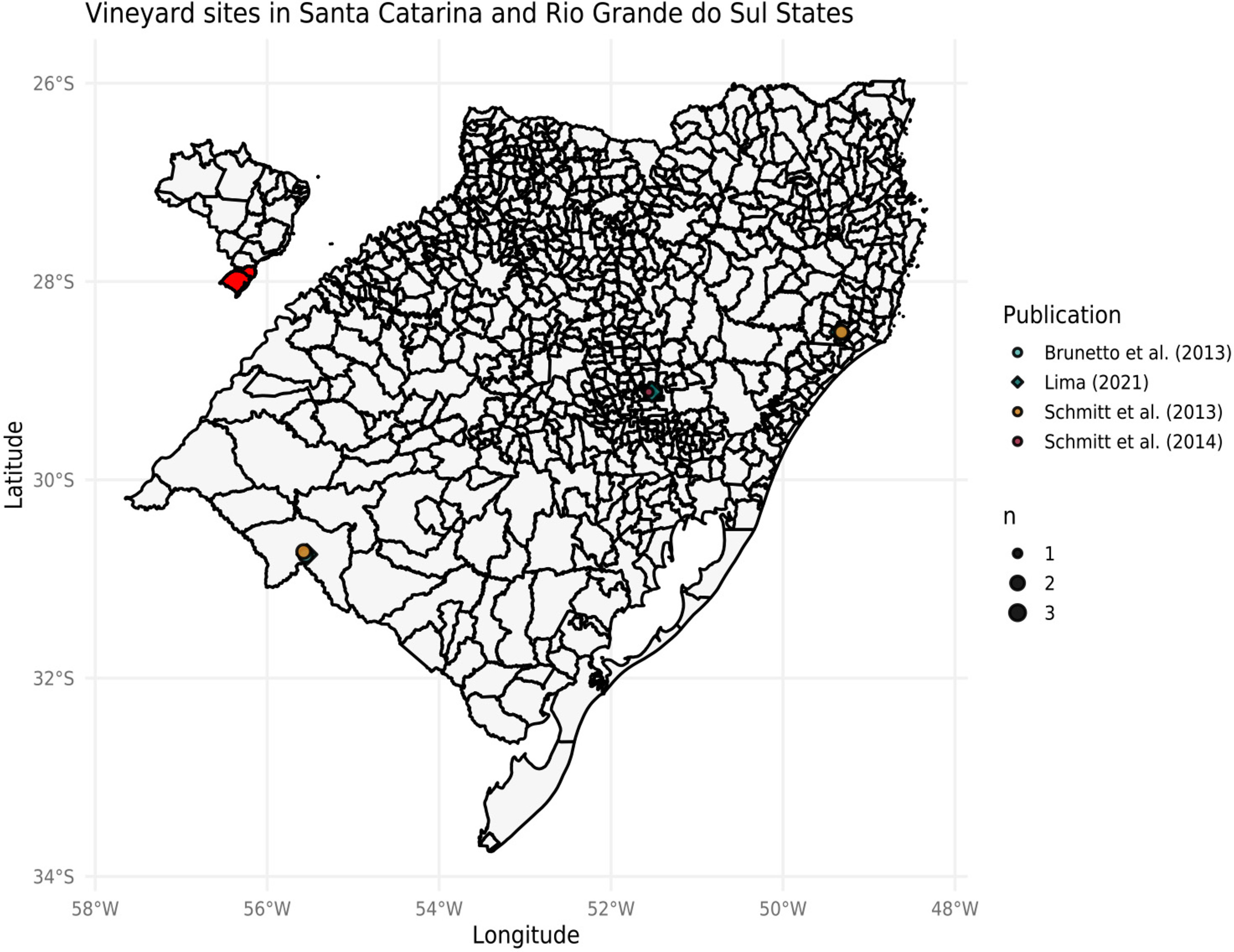
The study was conducted in vineyard areas located in the municipalities of Bento Gonçalves (BG) and Santana do Livramento (SL), in the state of Rio Grande do Sul (RS), and Urussanga (U), in the state of Santa Catarina (SC), Brazil (Figure 1). In each municipality, three vineyard areas were selected with different cultivation times, named according to the number of years under cultivation at the time the soil sampling was performed (2017). In addition, one native forest area (NF), adjacent to the vineyards, was included as a reference for the natural soil conditions in each location.

Vineyard sites across the states of Santa Catarina and Rio Grande do Sul, Southern Brazil. The diamond symbol represents the sites where soil samples were collected and analyzed in the present study (Lima, 2021). Other symbols correspond to vineyard sites compiled from previous publications (Brunetto et al., 2013; Schmitt et al., 2013a,b, 2014). Symbol size is proportional to the number of vineyards sampled (n).
The municipalities of Bento Gonçalves and Santana do Livramento are located in the Serra Gaúcha and Campanha Gaúcha regions, respectively. The climate of the Serra Gaúcha region is classified as Cfb, according to the Köppen climate classification system. It lies at altitudes ranging from 600 to 800 m, with average annual precipitation of 1,700 mm, a mean temperature of 17.2 °C, and relative air humidity of 76 %. The climate of the Campanha Gaúcha region is classified as Cfa, according to the Köppen climate classification system. Its altitude ranges from 100 to 300 m, with average annual precipitation of 1,370 mm, a mean temperature of 18.4 °C, and relative humidity of 75 %.
In Bento Gonçalves (RS), the vineyards were established in 1982 (V35 – 35 years; 29°09'50" S, 51°32'04" W), 1984 (V37 – 37 years; 29°09'48" S, 51°31'44" W), and 1978 (V39 – 39 years; 29°09'43" S, 51°31'43" W). According to Santos et al. (2025), the soils in these areas are classified as Cambissolo Húmico, which corresponds to Inceptisols according to the Soil Survey Staff (2022). The vineyards were planted with the cultivar ‘Isabel’ (Vitis labrusca L.), ungrafted (own-rooted), and trained in a high pergola system, with a plant spacing of 2.2 × 3.5 m, totaling 1,429 plants ha-1. Prior to vineyard establishment, liming was carried out by applying lime on the soil surface followed by incorporation, aiming to raise the soil pH to 6.0. At planting, 87 kg ha-1 of P, as triple superphosphate (TSP), and 75 kg ha-1 of K, as potassium chloride (KCl), were applied and incorporated into the soil. In the following years, maintenance fertilization was carried out annually by applying 26 kg ha-1 of P as TSP, on the soil surface in the planting row without incorporation. In the five years prior to soil sampling, no fertilizers were applied. The total amount of P applied until sampling was 847 kg ha-1 in V35, 898 kg ha-1 in V37, and 950 kg ha-1 in V39.
In Santana do Livramento (RS), vineyards were established in 2004 (V13 – 13 years; 30°46′41″ S, 55°22′34″ W), 1998 (V19 – 19 years; 30°47′44″ S, 55°21′56″ W), and 1981 (V36 – 36 years; 30°46′59.08″ S, 55°21′10.44″ W). The soils in these areas were classified as Argissolo Vermelho (Santos et al., 2025), corresponding to Ultisols (Soil Survey Staff, 2022). The vineyards were planted with the cultivar ‘Cabernet Sauvignon’ (Vitis vinifera), grafted onto SO4 rootstock (Vitis berlandieri × Vitis riparia), and trained in a vertical shoot positioning (VSP) system. Annual fertilization consisted of 19.6 kg ha-1 of P applied uniformly in all vineyards as TSP source, resulting in cumulative inputs of 255 kg ha-1 in V13, 373 kg ha-1 in V19, and 706 kg ha-1 in V36.
In Urussanga (SC), the soil was classified as Cambissolo Húmico (Santos et al., 2025), corresponding to Inceptisols (Soil Survey Staff, 2022). The region has a Cfa climate according to the Köppen classification system, characterized as humid mesothermal with no defined dry season and hot summers, with an average annual temperature of 19.2 °C, precipitation of 1,540 mm, and relative humidity of 81.5 %. The selected vineyard areas in Urussanga were: V22 – 22 years of cultivation, established in 1995, removed in 2010, and replanted in 2012 (28°29'43.0" S, 49°15'03.4" W); V36 – 36 years of cultivation, established in 1981, removed in 2004, and replanted in 2006 (28°29'41.1" S, 49°15'12.5" W); and V60 – 60 years of continuous cultivation (28°29'37.8" S, 49°13'44.4" W). Vineyards V22 and V36 were planted with the cultivar ‘Niágara Rosa’, and V60 with the cultivar ‘Goethe’, all grafted onto Paulsen rootstock and trained using the high pergola system. The planting spacing was 1.5 × 3.0 m, totaling 2,400 plants ha-¹. Lime application practices varied among areas. In V22, liming was performed in 2010 before the replanting of the second vineyard; in V36, lime was applied twice, in 1985 and 2005, both times with incorporation to a depth of 0.20 m. In V60, five lime applications were performed throughout the vineyard history, always on the surface and without incorporation. Fertilization in all three vineyards followed conventional management practices, with periodic applications according to the crop agronomic requirements.
Soil sampling and evaluations
Soil samples were collected in July 2017. In each area, three trenches were opened using a cutting shovel, Dutch auger, and a knife. Deformed soil samples were collected from the 0.00–0.05, 0.05–0.10, 0.10–0.15, and 0.15–0.20 m layers in the vineyards of Bento Gonçalves, and from the 0.00–0.05, 0.05–0.10, 0.10–0.20, and 0.20–0.40 m layers in the vineyards of Santana do Livramento and Urussanga. The sampling depths differed among the areas due to physical limitations encountered in deeper layers during sampling in Bento Gonçalves. The samples were air-dried, gently crushed, and passed through a 2 mm mesh sieve to obtain air-dried fine earth (ADFE) for subsequent analyses. The following soil properties were determined in the ADFE: sand, silt and clay, by the Pipette Method (Teixeira et al., 2017), pH(H2O) (ratio 1:1), available P, K, Cu, and Zn contents (extracted via Mehlich-1), exchangeable Al, Ca, and Mg contents (extracted via 1 mol L-1 KCl), as described in Tedesco et al. (1995). In the solution obtained, the available P content was determined by colorimetry, in accordance with Murphy and Riley (1962), in a UV-Visible Spectrophotometer (UV - 1600, PRO-TOOLS). Potassium content was determined in a flame photometer (DM-62, DIGIMED). The Al content was obtained by titration with 0.0125 mol L-1 NaOH. The Ca, Mg, Cu, and Zn contents were determined in an Atomic Absorption Spectrophotometer (Aanalyst 200, PERKINELMER). From the data obtained, potential acidity (H+Al), Ca2++Mg2++K+ saturation (%), Al saturation (Al%), and effective cation exchange capacity (CTCefet.) and potential (CTCpH7.0) were calculated according to equations presented by (CQFS-RS/SC, 2016). Total organic carbon (TOC) levels were also determined (Teixeira et al., 2017). All these data are presented in table 1.
Physical and chemical properties of soils from vineyards under different cultivation times in Bento Gonçalves (BG), Santana do Livramento (SL), and Urussanga (U), as well as from adjacent native forest (NF) areas
Subsequently, the chemical fractionation of P was performed using sequential extractions, as proposed by Hedley et al. (1982) and modified by Condron and Goh (1989), yielding inorganic (Pi) and organic (Po) P fractions. For this, 0.500 g samples of dry soil were subjected to the sequential extractants described below: anion-exchange resin in slides (PiAER fraction); NaHCO3 0.5 mol L-1 (PiBIC and PoBIC fractions); NaOH 0.1 mol L-1 (PiOH and PoOH fractions); HCl 1.0 mol L-1 (PiHCl fraction) and NaOH 0.5 mol L-1 (PiOH5 and PoOH5 fractions). After the extractions, the remaining soil was dried in an oven and digested with H2SO4 + H2O2 + MgCl2, yielding the residual P fraction (Pres.). The P content in the acidic extracts (PiAER, PiBIC, PiOH, PiHCl, PiOH5, and Pres) was determined according to Murphy and Riley (1962), while in the alkaline extracts (PoBIC, PoOH, and PoOH5), they were determined according to Dick and Tabatabai (1977).
The stratification index was calculated for each plot to illustrate the severity of stratification for each soil P fraction measurement. Our soil P stratification index (Pstrat) was calculated for each plot as follows:
in which: “0.00–0.05 m” is the mean concentration of the soil P measurement at 0.00–0.05 m soil layer; and “0.05–0.20 m” represents the mean concentration in the 0.05 to 0.20 m soil layer (n = 3 for the BG areas and n = 2 for the SL and U areas).
Compiled data descriptions
To compare studies on soil P fractions in vineyards with different years of cultivation in the Southern region of Brazil, a systematic search of articles published on electronic platforms such as ScienceDirect and Google Scholar was conducted. Besides limiting the choice of publications only to studies conducted in Southern Brazil, the keywords used were: “Videira”, “adubação fosfatada”, “fósforo inorgânico”, “fósforo orgânico”, and “fracionamento químico de fósforo” ("Grapevine", "phosphate fertilization", "inorganic phosphorus", "organic phosphorus", and "chemical phosphorus fractionation"). Four scientific articles were selected, in addition to the data obtained in the vineyards of the present study, totaling 84 observations.
The data from the selected publications was extracted from tables and digitalized figures, with the following parameters: Experiment location, geographic coordinates (latitude and longitude), soil classification, clay content (g kg-1), total organic carbon (TOC) (g kg-1), available P (Mehlich-1 extractor) (mg kg-1), year of soil sampling (year), time of vineyard cultivation (years), soil layer (cm), and the P fractions obtained according to the sequential chemical fractionation of P (PiAER, PiBIC, PiOH, PiHCl, PiOH5, PoBIC, PoOH, PoOH5, and Pres).
Subsequently, data analysis was restricted to the average parameter values in the 0.00-0.05 m soil layer for each vineyard analyzed. The sum of the inorganic P fractions (PiAER, PiBIC, PiOH, PiHCl, PiOH5, and PiSUM) and the organic P fractions (PoBIC, PoOH, PoOH5) (PoSUM), and the residual fraction (Pres). To obtain the slope data for each vineyard, digital elevation models (DEM) were used as support for the ALOS PALSAR scenes, with a spatial resolution of 12.5 m, available in the Alaska Satellite Facility Vertex database (https://search.asf.alaska.edu/#/). The processing of the models (DEM) was carried out in ArcGIS® 10.5.1, using the interpolation of geographic coordinates from Google Earth Pro® files, thereby obtaining the slope of the vineyards analyzed. Subsequently, the Environmental Critical Limit of P (P-threshold) was calculated according to Dall’Orsoletta et al. (2021), which takes into account the data from particle size analysis in the 0.00-0.05 m soil layer and the slope of the evaluated vineyard areas. The critical environmental limit of P (P-threshold), as per (Dall’Orsoletta et al. 2021), according to equation 2, is established for areas with less than 25 % slope:
in which: C is the clay content of the area (%); and S is the slope of the area (%).
Statistical analysis
Statistical analysis included checking the normality of the data using the Shapiro–Wilk test and the homogeneity of variances using Levene’s test, followed by analysis of variance (ANOVA). When significant differences were detected (p<0.05), means were compared using Tukey test (p<0.05). For each area (BG, SL, and U), the data were organized in a two-way ANOVA design with the factors cultivation time and soil layer, considering the native forest (NF) as a treatment level of the first factor. These factors and their interactions were treated as fixed effects, while field replicates (blocks) were included as a random effect in mixed-effect models (lme), separately for each soil P fraction. Additionally, the P stratification index (Pstrat) was compared between the vineyard means in each area (BG, SL, and U) and the overall mean of the native forest (NF) using the Kruskal–Wallis test (p<0.05). Correlations between soil parameters in the 0.00–0.05 m layer, based on values compiled from the literature, were evaluated using linear regression models. All analyses were performed using RStudio software (version 2025.05.1).
RESULTS
Effect of cultivation time on the distribution of P fractions in vineyard soils
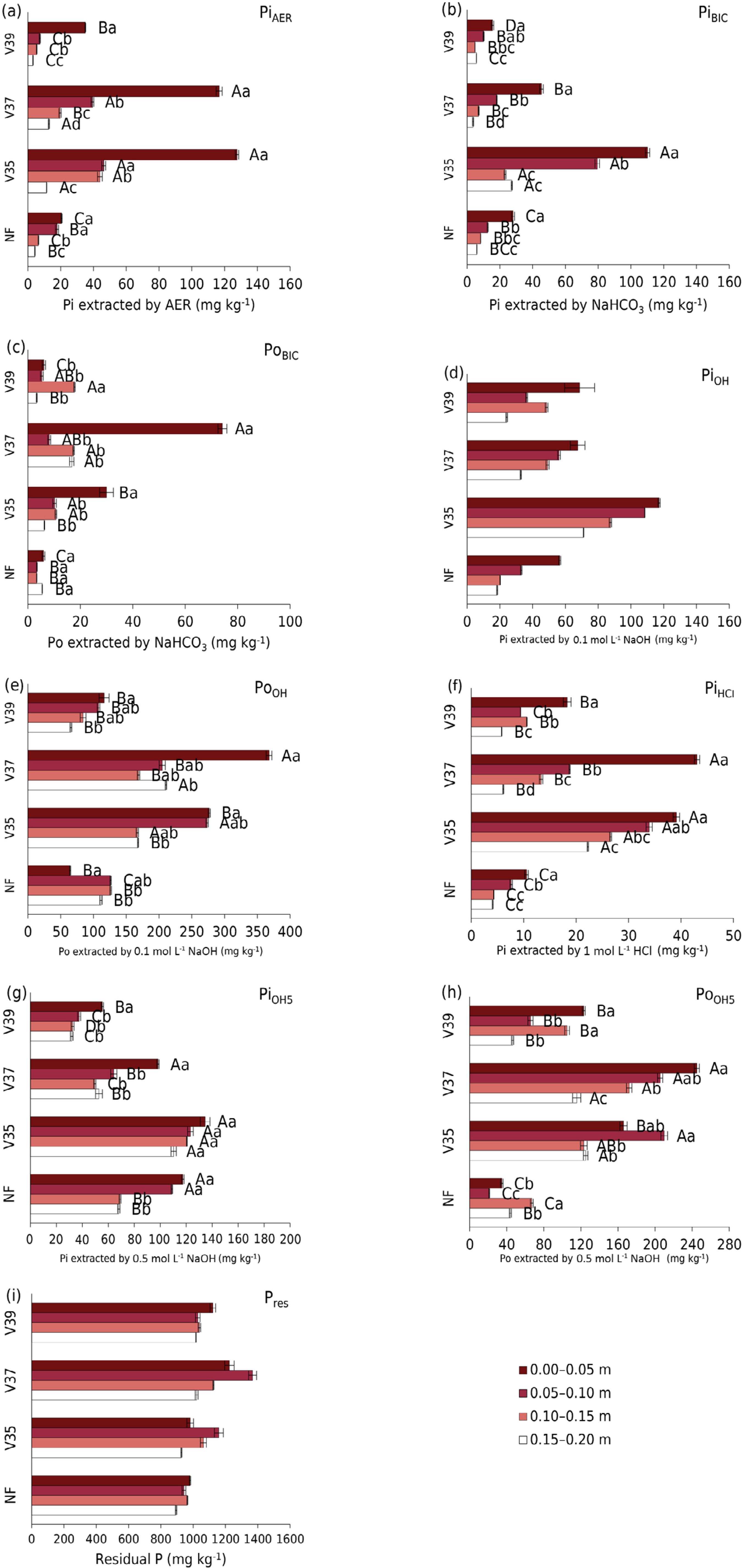
The effects of cultivation time, soil depth, and their interaction were significant for all P fractions, except for PiOH and Pres in the Bento Gonçalves (BG) areas (Table 2 and Figure 2). In all comparisons, the oldest vineyard (V39) in BG showed the lowest P fraction contents, both by stratified layer and considering the 0.00–0.20 m soil layer. Regarding inorganic fractions, the highest contents of PiAER, PiHCl, and PiOH5 were observed in the 0.00–0.05 m layer of vineyards V35 and V37 in BG, which did not differ significantly from each other. Values ranged from 117 to 127 mg kg-¹ for PiAER, 39 to 43 mg kg-¹ for PiHCl, and 98 to 135 mg kg-¹ for PiOH5 (Figures 2a, 2f, and 2g). Compared with other vineyards and the native forest area, V37 also showed the highest contents of the organic fractions PoBIC, PoOH, and PoOH5, likewise concentrated in the 0.00–0.05 m layer, with means of 74, 368, and 245 mg kg-¹, respectively (Figures 2c, 2e, and 2h). In the 0.00–0.20 m layer, an average increase in inorganic P fractions was observed in the vineyards compared with the native forest. These increases ranged from 1.0 to 4.7 times for PiAER, 0.7 to 4.4 times for PiBIC, 1.4 to 3.0 times for PiOH, 1.7 to 4.6 times for PiHCl, and 0.4 to 1.3 times for PiOH5. Regarding organic fractions, increments ranged from 1.8 to 6.4 times for PoBIC, 0.9 to 2.2 times for PoOH, and 2.0 to 4.4 times for PoOH5. For the residual fraction (Pres), contents were 1.1 to 1.3 times higher in vineyards than in the native forest.
Significance of the effects of experimental factors (cultivation time and depth) and their interaction on soil P fractions in vineyards located in Bento Gonçalves (BG), Santana do Livramento (SL), and Urussanga (U), as determined by analysis of variance (ANOVA)
Soil P fractions across soil layers in vineyards with different cultivation times in Bento Gonçalves (BG-RS): V35 (35 years of cultivation), V37 (37 years of cultivation), V39 (39 years of cultivation), and NF (native forest). Anion-exchange resin in slides (PiAER fraction – a); 0.5 mol L‑1 NaHCO3 (PiBIC and PoBIC fractions – b and c); 0.1 mol L‑1 NaOH (PiOH and PoOH fractions– d and e); 1.0 mol L‑1 HCl (PiHCl fraction – f) and 0.5 mol L‑1 NaOH (PiOH5 and PoOH5 fractions – g and h); Residual P fraction (Pres. – i). Bars with different letters indicate statistically significant differences at the 0.05 level (Tukey test). Uppercase letters compare locations within the same soil layer, while lowercase letters compare soil layers within each location. Error bars represent the standard error of three replicates.
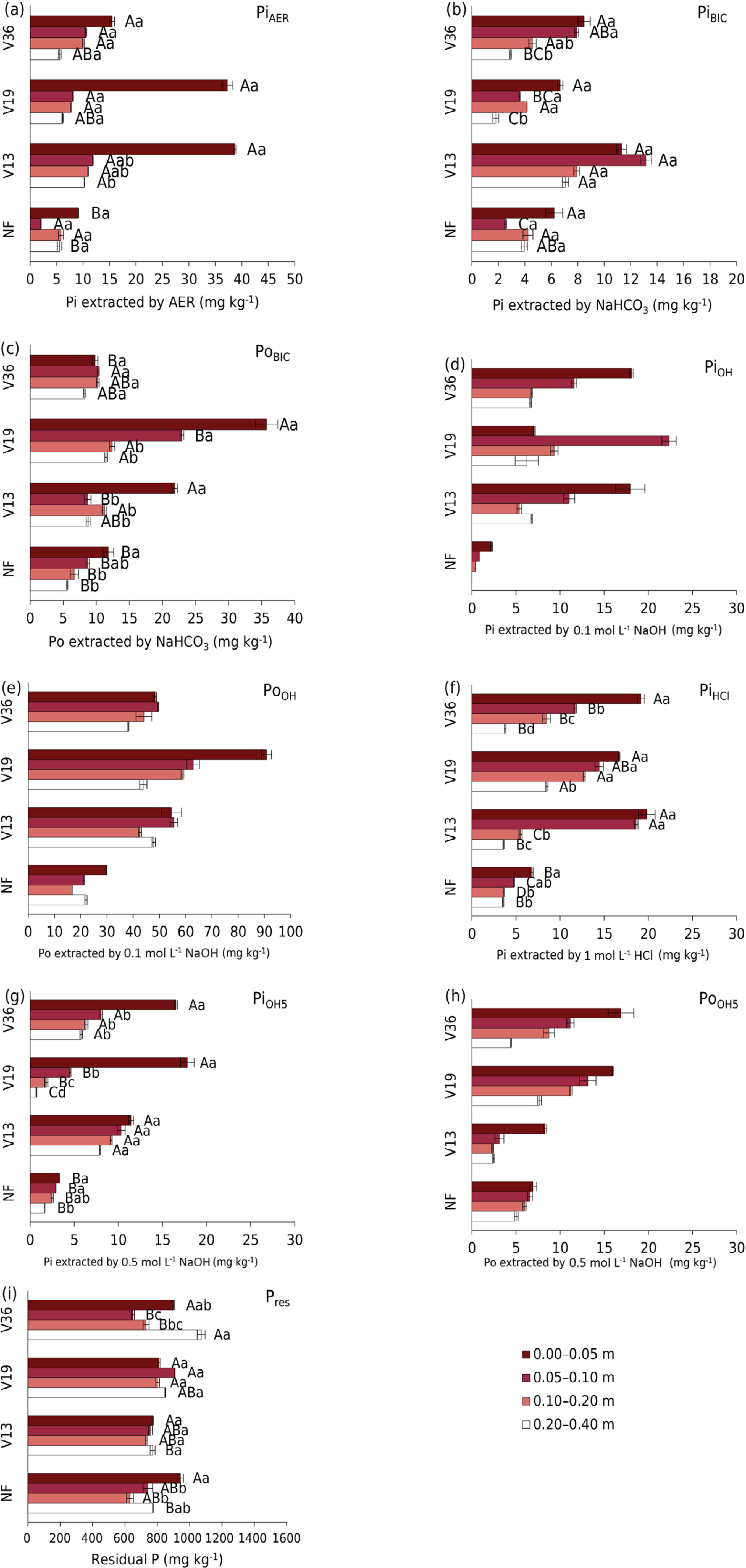
In Santana do Livramento (SL) areas, only the contents of PiOH, PoOH, and PoOH5 were not significantly affected by the interaction between cultivation time and soil depth (Table 2 and Figure 3). In these three vineyards, regardless of cultivation time, the contents of PiAER, PiBIC, PoBIC, PiHCl, and PiOH5 decreased with increasing soil depth (Figures 3a, 3b, 3c, 3f, and 3g). It should be noted that in the surface soil layer (0.00–0.05 m), SL vineyards showed similar contents for most evaluated fractions, except for PoBIC. For this fraction, values were 36 mg kg-1 in vineyard V19, 22 mg kg-1 in V13, and 10 mg kg-1 in V36 (Figure 3c). Considering V36 in SL, an increase in the residual fraction (Pres) with depth was observed, reaching 1071 mg kg-1 in the 0.20–0.40 m layer (Figure 3i).

Soil P fractions across soil layers in vineyards with different cultivation times in Santana do Livramento (SL-RS): V13 (13 years of cultivation), V19 (19 years of cultivation), V36 (36 years of cultivation), and NF (native forest). Anion-exchange resin in slides (PiAER fraction – a); 0.5 mol L‑1 NaHCO3 (PiBIC and PoBIC fractions – b and c); 0.1 mol L‑1 NaOH (PiOH and PoOH fractions– d and e); 1.0 mol L‑1 HCl (PiHCl fraction – f) and 0.5 mol L‑1 NaOH (PiOH5 and PoOH5 fractions – g and h); Residual P fraction (Pres– i). Bars with different letters indicate statistically significant differences at the 0.05 level (Tukey Test). Uppercase letters compare locations within the same soil layer, while lowercase letters compare soil layers within each location. Error bars represent the standard error of three replicates.
In the Urussanga (U) areas, cultivation time, soil layer, and the interaction between these factors significantly affected all organic and inorganic P fractions (Table 2 and Figure 4). In all vineyards, regardless of cultivation time, the highest accumulation of these fractions was observed in the surface layer (0.00–0.05 m), decreasing with increasing soil depth. Among the vineyards in U, V22 showed the lowest contents of both organic and inorganic P fractions, whereas V36 exhibited the highest accumulation across all fractions, both in the stratified analysis and in the 0.00–0.40 m layer, except for PiOH5, which had a content similar to that of V60.
Soil P fractions across soil layers in vineyards with different cultivation times in Urussanga (U-SC): V22 (22 years of cultivation), V36 (36 years of cultivation), V60 (60 years of cultivation), and NF (native forest). Anion-exchange resin in slides (PiAER fraction – a); 0.5 mol L‑1 NaHCO3 (PiBIC and PoBIC fractions – b and c); 0.1 mol L‑1 NaOH (PiOH and PoOH fractions– d and e); 1.0 mol L‑1 HCl (PiHCl fraction – f) and 0.5 mol L-1 NaOH (PiOH5 and PoOH5 fractions – g and h); Residual P fraction (Pres.– i). Bars with different letters indicate statistically significant differences at the 0.05 level (Tukey test). Uppercase letters compare locations within the same soil layer, while lowercase letters compare soil layers within each location. Error bars represent the standard error of three replicates.
Phosphorus fractions stratification in vineyard soils
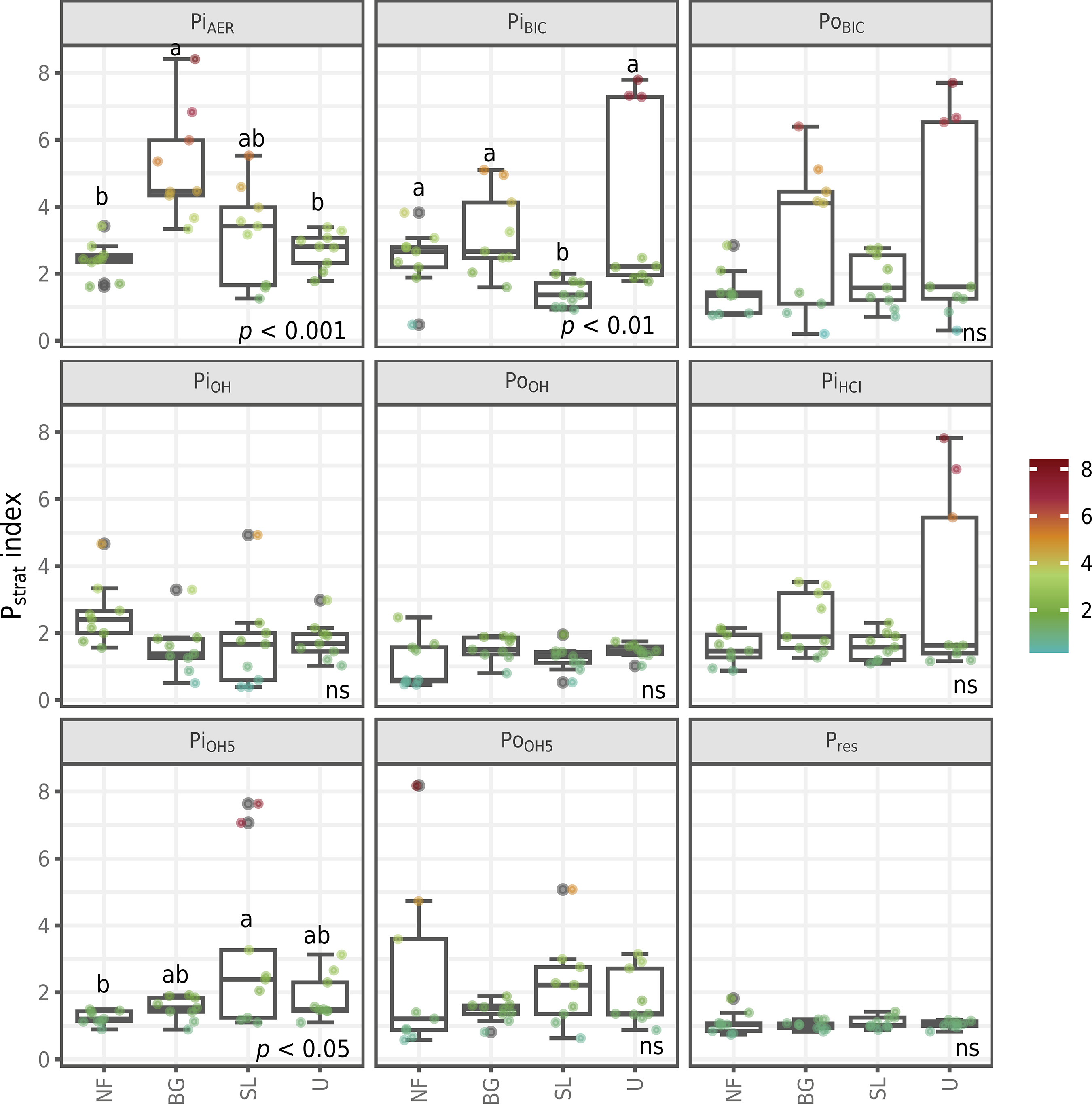
The stratification indices of P fractions ranged from 0.7 to 6.9 in the vineyards of Bento Gonçalves (BG), from 0.5 to 4.7 in Santana do Livramento (SL), and from 0.9 to 7.5 in Urussanga (U), whereas in native forest areas (NF) they ranged from 1.1 to 2.6 (Figure 5). Notably, the stratification indices of the first three P fractions (PiAER, PiBIC, and PoBIC) exhibited the largest numerical differences between vineyard and native forest areas.
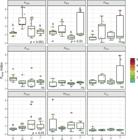
Soil P stratification index (Pstrat) in vineyards areas from Bento Gonçalves (BG-RS), Santana do Livramento (SL-RS), and Urussanga (U-SC), and an average of their native forest for each soil P fraction. Colored dots represent individual vineyards within the three municipalities and the native forest areas, according to the color scale. Anion-exchange resin in slides (PiAER fraction); 0.5 mol L‑1 NaHCO3 (PiBIC and PoBIC fractions); 0.1 mol L‑1 NaOH (PiOH and PoOH fractions); 1.0 mol L‑1 HCl (PiHCl fraction) and 0.5 mol L‑1 NaOH (PiOH5 and PoOH5 fractions); Residual P fraction (Pres.); ns: not significant.
Statistically, the highest stratification of the PiAER fraction was observed in BG vineyards (5.2), followed by SL (3.2), U (2.7), and NF (2.4). For the PiBIC fraction, the highest stratification occurred in U (3.9), followed by BG (3.2), NF (2.4), and SL (1.4). Similarly, for the PiOH5 fraction, comparing vineyard and native forest areas, SL showed the highest stratification index (3.2), followed by U (1.8), BG (1.5), and NF (1.4). However, no statistical difference was observed among areas for the PiHCl stratification index; a wide range was recorded, particularly in U vineyards, ranging from 1.2 to 7.8.
P-thresholds for vineyard soils in Southern Brazil
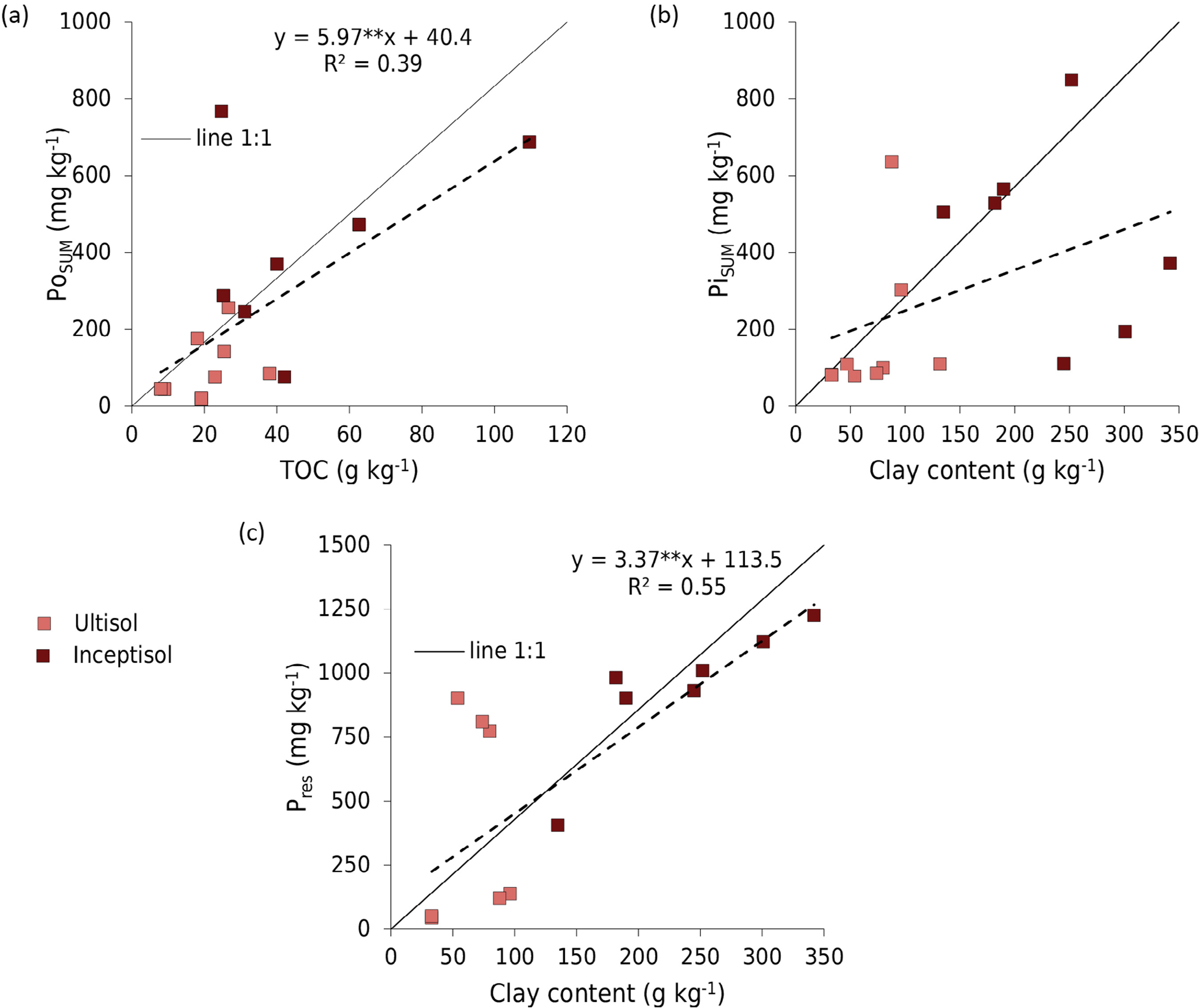
The relationship between total organic carbon (TOC) and the sum of organic P fractions (PoSUM) in vineyard soils (Figure 6a) showed a significant positive correlation (p<0.01). For the sum of inorganic P fractions (PiSUM) (Figure 6b), a low positive correlation with clay content was observed (p>0.05), with high data dispersion. The correlation between residual P (Pres) and clay content was positive and significant, indicating that each additional 1 g kg-1 of clay corresponded to an increase of 3.4 mg kg-1 in Pres (Figure 6c). Across all comparisons, Inceptisols exhibited the greatest increases and ranges in Po, Pi, and residual P.
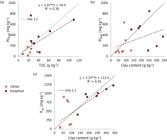
Linear regressions by soil type (Ultisol and Inceptisol) in the 0.00–0.05 m soil layer from vineyard areas in Southern Brazil: (a) total organic carbon (TOC) vs. sum of organic P fractions (PoSUM); (b) clay content vs. sum of inorganic P fractions (PiSUM); and (c) clay content vs. residual P (Pres). **: p<0.01.
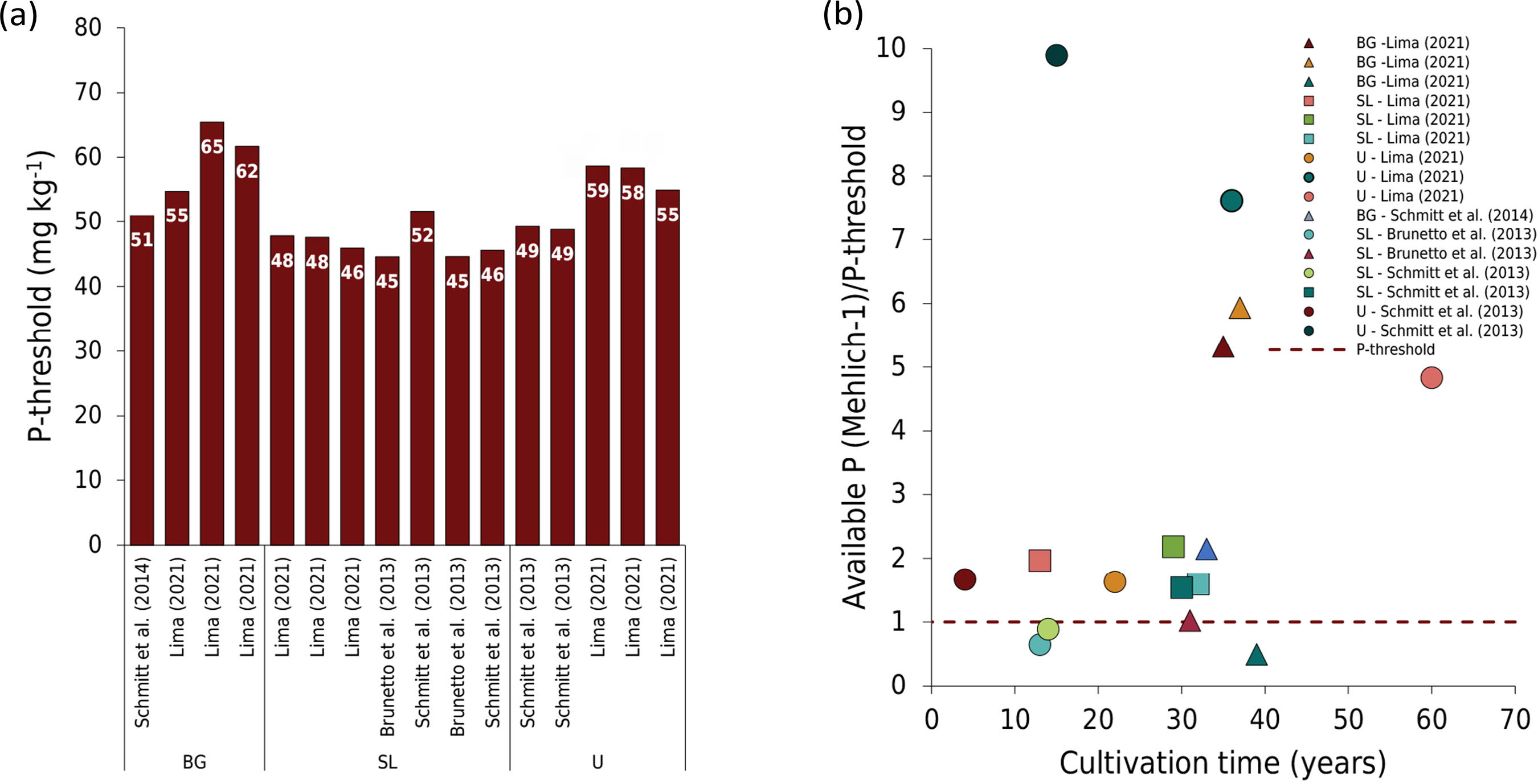
Based on clay content and slope (Table 3) of the vineyard areas, P-thresholds were estimated for each site, as shown in figure 6a. In the vineyards of Bento Gonçalves (BG), values ranged from 51 to 62 mg kg-1, in Santana do Livramento (SL), from 45 to 52 mg kg-1, and in Urussanga (U), from 49 to 58 mg kg-1 (Figure 7a). However, when these critical environmental limits were compared with the available P content (Mehlich-1) in the 0.00–0.05 m soil layer, only 19 % of the vineyards analyzed (i.e., 3 out of 16) had values below the calculated critical limit (Figure 7b). The vineyards exceeding this critical limit had available P concentrations ranging from 1.5 to 9.9 times above the estimated value for each location.
Data extracted from literature publications, including physical and chemical properties in the 0.00-0.05 m layer of soils from vineyards with different cultivation times in Southern Brazil

P-threshold in the 0.00–0.05 m soil layer calculated for each vineyard based on soil clay content and soil slope (Dall’Orsoletta et al., 2021) (a), and the relationship between available P by Mehlich-1 and P-threshold in the 0.00–0.05 m soil layer for each vineyard area according to cultivation time (b). The red dashed line represents the P-threshold limit.
DISCUSSION
In the three vineyard regions evaluated in this study, Bento Gonçalves, Santana do Livramento, and Urussanga, the effect of cultivation time on soil P fraction accumulation did not follow a linear pattern (Figures 2, 3, and 4). That is, older vineyards did not necessarily exhibit greater P accumulation. Nevertheless, all vineyards, regardless of age, showed high levels of P fractions, ranging from labile forms (PiAER, PiBIC, PoBIC) to moderately labile forms (PiOH, PiHCl, PiOH5, PoOH, and PoOH5), due to alteration and enhancement by phosphate fertilization. The saturation of reactive functional groups explains the increase in more labile P fractions: phosphate adsorption initially occurs on protonated groups at mineral surfaces, and subsequently on less accessible groups. As successive phosphate applications are made, the most reactive sites become saturated, reducing the binding energy of adsorbed phosphates and thereby enhancing the effectiveness of fertilization in increasing plant P availability. In the vineyards of Santana do Livramento, this effect was also observed for the residual P fraction (Pres), considered non-labile. This behavior is associated with the low adsorption capacity of regionally sandy soils (Table 1), which increases phosphate mobility in the soil profile and promotes the accumulation of this fraction in the 0.20–0.40 m layer over successive phosphate applications.
It should be noted that, at the time of soil sampling for this study, the available P content, extracted by Mehlich-1 in the diagnostic layer (Table 1), was above the critical soil test value (CSTV) of P, ranging from the “High” to “Very High” classes. This supports the hypothesis that phosphate fertilization in these areas has been excessive and exceeds crop requirements, since, according to Melo (2003), only 0.6 kg of P is absorbed by grapevines per ton of grapes produced. In addition to increasing labile and available P fractions, phosphate fertilization in these areas also raised the levels of P fractions not directly available to plants. However, these P fractions contribute indirectly to plant nutrition through buffering or a “cascade effect” among the less labile fractions when the more labile P fractions in the soil become depleted, as demonstrated by Tiecher et al. (2018).
The suspension of phosphate fertilization appears feasible under these conditions. In the vineyards of Santana do Livramento, for example, this practice had not been performed for five years, although soil fertility monitoring was maintained. According to CQFS-RS/SC (2016), maintenance fertilization in vineyards should be determined based on the P content in leaves, petioles, or soil, in correlation with productivity. Beyond the importance of soil sampling for monitoring, it is also essential to track P content in grapevine vegetative organs during the growing season, particularly at flowering or verasion, which constitutes a more effective tool to guide appropriate phosphate fertilization decisions (Stefanello et al., 2025). Furthermore, studies such as Andrade et al. (2023) and Stefanello et al. (2023, 2025) emphasize the importance of adjusting CSTV of P in soil and leaves, providing updated technical support for regional recommendations on phosphate fertilization.
The accumulation of P fractions in the surface soil layers (0.00–0.05 and 0.05–0.10 m) was observed in all vineyards. This stratification occurs because, in established, fully productive vineyards, phosphate fertilization is applied on the soil surface beneath the grapevine canopy. Additionally, the phosphate anion strongly interacts with the highly reactive binding sites of the mineral fraction in subtropical soils, resulting in low mobility and accumulation in the soil profile. It should be noted that P fraction stratification also occurs in native forest areas, as a natural process driven by residue deposition and decomposition at the soil surface, as well as by plant-driven nutrient cycling. However, in vineyard soils, the stratification of labile and moderately labile P fractions is accentuated by phosphate fertilization. Consequently, root system development and water uptake may be reduced, compromising grapevine nutritional status, productivity, and berry and must composition (Schreiner and Osborne, 2018). Potential management strategies to mitigate this condition and enhance nutrient cycling include the use of cover crops (Zalamena and Melo, 2021; Barker et al., 2025; Loss et al., 2025) and the incorporation of P in the grapevine interrows (Tassinari et al., 2024). The latter practice is still under research and is not common in commercial vineyards, mainly due to the risk of mechanical damage to the plant root system.
Vineyards on Inceptisols, particularly in Bento Gonçalves (RS), exhibited a greater range and accumulation in the organic P fractions due to the high TOC content in the surface soil layer (Table 3). It should also be noted that these vineyards are located at higher altitudes compared with the others, above 700 m a.s.l., which implies lower average temperatures and, consequently, a reduced mineralization rate of soil organic matter (Dortzbach et al., 2020). Additionally, the higher clay content in these vineyards, situated on elevated terrain, aids in stabilization and protects a significant portion of the organic matter from mineralization (Ebeling et al., 2011). The higher Pi content in the Serra Gaúcha region is explained by the basaltic origin of its parent material, in addition to the increment provided by phosphate fertilization. Assunção et al. (2020) reported that vineyards on basaltic soils show higher Pi contents compared with soils derived from other parent materials. The residual fraction is strongly associated with the soil mineral fraction and its parent material, and consequently with clay content. Notably, the soils of vineyards in Bento Gonçalves are of basaltic origin and therefore present high pedogenic Fe and Al contents (Flores et al., 2012; Wilson et al., 2022). The relationship between the residual P fraction and clay content also illustrates the soil buffering capacity in P supply, i.e., the direct contribution of legacy P to plant nutrition as the more labile P fractions are depleted (Tiecher et al., 2018; Pavinato et al., 2024).
The P-threshold values varied among regions mainly due to differences in clay content and slope in the vineyard areas, which influence adsorption capacity and the risk of surface P transport. Soils in Bento Gonçalves exhibited the highest values, consistent with clay-rich soils and greater retention capacity, whereas Santana do Livramento showed the lowest values due to its sandy texture and lower Fe and Al oxide contents, which reduce the number of adsorption sites. Regarding slope, two distinct situations were observed: in areas with steeper slopes, the risk is increased due to higher surface P transport associated with runoff and erosion. In low-slope areas, reduced surface movement favors P accumulation in the soil. The combination of these factors explains, for instance, why the sandy soils of vineyards in Urussanga, when combined with higher slopes (Table 3), exhibited a higher contaminant potential.
The comparison between the P-threshold and available P indicated that 81 % of the vineyards exceeded the critical environmental limit, with surpluses up to 9.9 times, suggesting saturation of adsorption sites and greater susceptibility to desorption and runoff losses. Climatic factors, such as intense rainfall, can exacerbate these losses by increasing P transport to water bodies (Amado et al., 2002). Considering the observed P accumulation and the exceedance of environmental limits in the studied vineyards, it is plausible that adjacent water bodies may be affected by P transport and enrichment. Regional studies have documented this process, showing the enrichment of P fractions derived from anthropized soils in Southern Brazilian agricultural catchments intensified by crops cultivated, such as tobacco (Tiecher et al., 2017; Zafar et al., 2017; Bender et al., 2018). Also, the intensive application of swine manure to agricultural soils (Tiecher et al., 2020) has resulted in the contamination of surface waters, as demonstrated in the Braço do Norte catchment in Southern Santa Catarina (Cadoná et al., 2022). State-level water quality monitoring programs in Santa Catarina (Qualiágua project) and Rio Grande do Sul (RS Água project) provide an institutional framework for targeted assessments and should also be encouraged in other Brazilian states.
According to Gatiboni et al. (2015), when available P surpasses the P-threshold, phosphate fertilization should be suspended and mitigation measures adopted. Recommended management practices include the use of cover crops to enhance the cycling of P fractions in soil and reduce sheet erosion and P transfer to aquatic environments, as well as continuous monitoring of P levels in the soil and vine leaves. These results highlight the need to revise phosphate fertilization strategies in vineyards across the three regions, particularly in areas with a prolonged history of P applications exceeding grape export. The P-threshold estimation methodology based on texture and slope (Dall’Orsoletta et al., 2021) proved effective in identifying higher-risk areas and can guide management actions and regional viticulture policies.
CONCLUSIONS
Regardless of cultivation time, soils showed greater accumulation of P fractions in the surface layers, from the most labile to the non-labile forms, due to successive phosphate fertilizations. This accumulation contributes to both the immediate availability of P and the soil P legacy, which can be managed strategically over the long term. The stratification of P fractions in the surface layers (0.00–0.05 and 0.05–0.10 m) reflects the superficial application of fertilizers and the low mobility of phosphate ions in subtropical soils, and is more pronounced in vineyard soils than in native areas.
The comparison between available P and the P-threshold revealed that most vineyards (81 %) exhibit P surpluses relative to the P-threshold, indicating a potential risk of losses through erosion and surface runoff, especially in sandy soils and areas with higher slopes. The P-threshold estimation methodology, considering soil texture and slope, proved effective in identifying higher-risk areas and supporting sustainable management decisions and regional fertilization policies.
These findings highlight the need to revise and, where appropriate, reduce phosphate fertilization in high-risk areas to improve both agronomic efficiency and environmental protection. Given the high levels of available P and the concomitant contribution of less labile P fractions as available P becomes depleted, vineyard productivity can likely be maintained even with reduced fertilizer inputs. However, because growers often resist reducing or omitting P fertilization, recommendations must be carefully framed to minimize the potential agronomic risks. Promoting regular soil and leaf tissue analyses, supported by technical assistance and extension programs, will be essential to fostering site-specific, sustainable phosphorus management in vineyard systems across Southern Brazil.
-
How to cite:
Lima AP, Souza M, Loss A, Comin JJ, Tiecher T, Lourenzi CR. Phosphorus accumulation in vineyard soils of Southern Brazil and its environmental implications. Rev Bras Cienc Solo. 2026;50:e0250159. https://doi.org/10.36783/18069657rbcs20250159
-
FUNDING
This study was supported by the Brazilian Federal Foundation for Support and Evaluation of Graduate Education (CAPES) through the Master's scholarship granted to the first author.
DATA AVAILABILITY
The data will be provided upon request.
REFERENCES
-
Amado TJC, Prochnow D, Eltz FLF. Perdas de solo e água em períodos de anomalias climáticas: “El niño” e “La niña” no Sul do Brasil. Rev Bras Cienc Solo. 2002;26:819-27. https://doi.org/10.1590/S0100-06832002000300028
» https://doi.org/10.1590/S0100-06832002000300028 -
Andrade CB, Comin JJ, Moura-Bueno JM, Brunetto G. Obtaining reference values for nutrients in vineyard soils through boundary line approach using Bayesian segmented quantile regression on commercial farm data. Eur J Agron. 2023;150:126928. https://doi.org/10.1016/j.eja.2023.126928
» https://doi.org/10.1016/j.eja.2023.126928 -
Assunção SA, Pereira MG, Dortzbach D, Silva Neto EC. Influence of parent material on organic phosphorus fractions in vineyard soils in Santa Catarina, Brazil. Rev Ambient Água. 2020;9:445-58. https://doi.org/10.4136/ambi-agua.2546
» https://doi.org/10.4136/ambi-agua.2546 -
Barker RW, Helmers MJ, McDaniel MD. Cover crops can mitigate no-tillage-induced labile phosphorus stratification. Soil Sci Soc Am J. 2025;89:e70064. https://doi.org/10.1002/saj2.70064
» https://doi.org/10.1002/saj2.70064 -
Barrow NJ, Sen A, Roy N, Debnath A. The soil phosphate fractionation fallacy. Plant Soil. 2020;459:1-11. https://doi.org/10.1007/s11104-020-04476-6
» https://doi.org/10.1007/s11104-020-04476-6 -
Bender MA, Santos DR, Tiecher T, Minella JPG, Barros CAP. Phosphorus dynamics during storm events in a subtropical rural catchment in southern Brazil. Agric Ecosyst Environ. 2018;261:93-102. https://doi.org/10.1016/j.agee.2018.04.004
» https://doi.org/10.1016/j.agee.2018.04.004 -
Boitt G, Marchezan C, Alberto C, Brunetto G, Rog C, Girotto E, Ademar P, Ferreira A, Jos C, Colpo L, Condron L. The fate of pig slurry phosphorus applied to a sandy loam soil under no-till cropping in southern Brazil. Geoderma. 2022;422:115931. https://doi.org/10.1016/j.geoderma.2022.115931
» https://doi.org/10.1016/j.geoderma.2022.115931 -
Bowman RA, Cole CV. An exploratory method for fractionation of organic phosphorus from grassland soils. Soil Sci. 1978;125:95-101. https://doi.org/10.1097/00010694-197802000-00006
» https://doi.org/10.1097/00010694-197802000-00006 -
Brunetto G, Lorensini F, Ceretta CA, Gatiboni LC, Trentin G, Girotto E, Miotto A, Lourenzi CR, Melo GW. Soil phosphorus fractions in a sandy typic Hapludaft as affected by phosphorus fertilization and grapevine cultivation period. Commun Soil Sci Plant Anal. 2013;44:1937-50. https://doi.org/10.1080/00103624.2013.794819
» https://doi.org/10.1080/00103624.2013.794819 -
Cadoná EA, Sete PB, Comin JJ, Loss A, Soares CRFS, Souza EL, Lourenzi CR, Cantu RR. Contaminação do solo e da água por fósforo em função de atividade suinícola em bacia hidrográfica de Santa Catarina. Rev Ibero Am Cienc Ambient. 2022;13:276–88. https://doi.org/10.6008/CBPC2179-6858.2022.005.0021
» https://doi.org/10.6008/CBPC2179-6858.2022.005.0021 -
Chang SC, Jackson ML. Fractionation of soil phosphorus. Soil Sci. 1957;4:133-44. https://doi.org/10.1097/00010694-195708000-00005
» https://doi.org/10.1097/00010694-195708000-00005 - Comissão de Química e Fertilidade do Solo - CQFS-RS/SC. Manual de calagem e adubação para os Estados do Rio Grande do Sul e de Santa Catarina. 11. ed. Porto Alegre: Sociedade Brasileira de Ciência do Solo - Núcleo Regional Sul; 2016.
-
Condron LM, Goh KM. Effects of long-term phosphatic fertilizer applications on amounts and forms of phosphorus in soils under irrigated pasture in New Zealand. J Soil Sci. 1989;40:383-95. https://doi.org/10.1111/j.1365-2389.1989.tb01282.x
» https://doi.org/10.1111/j.1365-2389.1989.tb01282.x -
Condron LM, Newman S. Revisiting the fundamentals of phosphorus fractionation of sediments and soils. J Soils Sediments. 2011;11:830-40. https://doi.org/10.1007/s11368-011-0363-2
» https://doi.org/10.1007/s11368-011-0363-2 -
Dall’Orsoletta DJ, Gatiboni LC, Mumbach GL, Schmitt DE, Boitt G, Smyth TJ. Soil slope and texture as factors of phosphorus exportation from pasture areas receiving pig slurry. Sci Total Environ. 2021;761:144004. https://doi.org/10.1016/j.scitotenv.2020.144004
» https://doi.org/10.1016/j.scitotenv.2020.144004 -
Dick WA, Tabatabai MA. Determination of orthophosphate in aqueous solutions containing labile organic and inorganic phosphorus compounds. J Environ Qual. 1977;6:82-5. https://doi.org/10.2134/jeq1977.00472425000600010018x
» https://doi.org/10.2134/jeq1977.00472425000600010018x -
Dortzbach D, Pereira MG, Loss A, Santos OAQ. Compartimentos da matéria orgânica do solo em vinhedos altomontanos de Santa Catarina. Braz J Dev. 2020;6:10677-91. https://doi.org/10.34117/bjdv6n3-080
» https://doi.org/10.34117/bjdv6n3-080 -
Ebeling AG, Anjos LHC, Perez DV, Pereira MG, Gomes FWF. Atributos químicos, carbono orgânico e substâncias húmicas em Organossolos Háplicos de várias regiões do Brasil. Rev Bras Cienc Solo. 2011;35:325-36. https://doi.org/10.1590/S0100-06832011000200004
» https://doi.org/10.1590/S0100-06832011000200004 -
Fink JR, Inda AV, Bayer C, Torrent J, Barrón V. Mineralogy and phosphorus adsorption in soils of south and central-west Brazil under conventional and no-tillage systems. Acta Sci Agron. 2014;36:379-87. https://doi.org/10.4025/actasciagron.v36i3.17937
» https://doi.org/10.4025/actasciagron.v36i3.17937 - Flores CA, Pötter RO, Sarmento EC, Weber EJ, Hasenack H. Os solos do Vale dos Vinhedos. Brasília: Embrapa; 2012. 176 p.
-
Gatiboni LC, Nicoloso RS, Mumbach GL, Souza Junior AA, Dall’Orsoletta DJ, Schmitt DE, Smyth TJ. Establishing environmental soil phosphorus thresholds to decrease the risk of losses to water in soils from Rio Grande do Sul, Brazil. Rev Bras Cienc Solo. 2020;44:e0200018. https://doi.org/10.36783/18069657rbcs20200018
» https://doi.org/10.36783/18069657rbcs20200018 -
Gatiboni LC, Smyth TJ, Schmitt DE, Cassol PC, Oliveira CMB. Soil phosphorus thresholds in evaluating risk of environmental transfer to surface waters in Santa Catarina, Brazil. Rev Bras Cienc Solo. 2015;39:1225-34. https://doi.org/10.1590/01000683rbcs20140461
» https://doi.org/10.1590/01000683rbcs20140461 -
Gu C, Margenot AJ. Navigating limitations and opportunities of soil phosphorus fractionation. Plant Soil. 2020;459:13-7. https://doi.org/10.1007/s11104-020-04552-x
» https://doi.org/10.1007/s11104-020-04552-x -
Hedley MJ, Stewart JWB, Chauhan BS. Changes in inorganic and organic soil phosphorus fractions induced by cultivation practices and by laboratory incubations. Soil Sci Soc Am J. 1982;46:970-6. https://doi.org/10.2136/sssaj1982.03615995004600050017x
» https://doi.org/10.2136/sssaj1982.03615995004600050017x -
Heuer S, Gaxiola R, Schilling R, Herrera-Estrella L, López-Arredondo D, Wissuwa M, Delhaize E, Rouached H. Improving phosphorus use efficiency: A complex trait with emerging opportunities. Plant J. 2017;90:868-85. https://doi.org/10.1111/tpj.13423
» https://doi.org/10.1111/tpj.13423 -
Huang Y, Wang L, Wang W, Li T, He Z, Yang X. Current status of agricultural soil pollution by heavy metals in China: A meta-analysis. Sci Total Environ. 2019;651:3034-42. https://doi.org/10.1016/j.scitotenv.2018.10.185
» https://doi.org/10.1016/j.scitotenv.2018.10.185 -
Instituto Brasileiro de Geografia e Estatística - IBGE. Levantamento sistemático da produção agrícola. Rio de Janeiro: IBGE; 2025. Available from: https://www.ibge.gov.br/estatisticas/economicas/agricultura-e-pecuaria/9201-levantamento-sistematico-da-producao-agricola.html?=&t=resultados
» https://www.ibge.gov.br/estatisticas/economicas/agricultura-e-pecuaria/9201-levantamento-sistematico-da-producao-agricola.html?=&t=resultados -
Karimi B, Masson V, Guilland C, Leroy E, Pellegrinelli S, Giboulot E, Maron PA, Ranjard L. Ecotoxicity of copper input and accumulation for soil biodiversity in vineyards. Environ Chem Lett. 2021;19:2013-30. https://doi.org/10.1007/s10311-020-01155-x
» https://doi.org/10.1007/s10311-020-01155-x - Lima AP. Frações de fósforo em solos de vinhedos com diferentes históricos de cultivo no sul do Brasil [dissertation]. Florianópolis: Universidade Federal de Santa Catarina; 2021.
- Loss MBT, Dutra BR, Todeschini EÂ, Filho JLM, Brighenti AF, Loss A. Plantas de cobertura para solos de vinhedos: Principais espécies e benefícios edáficos. In: Brunetto G, Natale W, Rozane DE, Loss A. Estratégias de manejo da fertilidade do solo e da nutrição de videiras. Santa Maria: Sociedade Brasileira de Ciência do Solo – Núcleo Regional Sul; 2025. p. 449-87.
- Melo GWB. Uvas americanas e híbridas para processamento em clima temperado. Bento Goncalves: Embrapa Uva e Vinho; 2003. (Instrução técnica).
-
Murphy J, Riley JP. A modified single solution method for the determination of phosphate in natural waters. Anal Chim Acta. 1962;27:31-6. https://doi.org/10.1016/S0003-2670(00)88444-5
» https://doi.org/10.1016/S0003-2670(00)88444-5 -
Pavinato PS, Gotz LF, Teles APB, Arruda B, Herrera WB, Chadwick DR, Jones DL, Withers PJA. Legacy soil phosphorus bioavailability in tropical and temperate soils: Implications for sustainable crop production. Soil Till Res. 2024;244:106228. https://doi.org/10.1016/j.still.2024.106228
» https://doi.org/10.1016/j.still.2024.106228 - Santos HG, Jacomine PKT, Anjos LHC, Oliveira VA, Lumbreras JF, Coelho MR, Almeida JA, Araújo Filho JC, Lima HN, Marques FA, Oliveira JB, Cunha TJF. Sistema brasileiro de classificação de solos. 6. ed. rev. ampl. Brasília, DF: Embrapa; 2025.
-
Schmitt DE, Comin JJ, Ceretta CA, Gatiboni LC, Tiecher T, Lorensini F, Heinzen J, Ambrosini VG, Moraes MP, Brunetto G. Accumulation of phosphorus fractions and contamination potential in vineyard soils in the southern region of the state of Santa Catarina, Brazil. Rev Bras Cienc Solo. 2013a;37:1256-66. https://doi.org/10.1590/s0100-06832013000500015
» https://doi.org/10.1590/s0100-06832013000500015 -
Schmitt DE, Comin JJ, Gatiboni LC, Tiecher T, Lorensini F, Melo GWB, Girotto E, Guardini R, Heinzen J, Brunetto G. Phosphorus fractions in sandy soils of vineyards in southern Brazil. Rev Bras Cienc Solo. 2013b;37:472-81. https://doi.org/10.1590/s0100-06832013000200018
» https://doi.org/10.1590/s0100-06832013000200018 -
Schmitt DE, Gatiboni LC, Girotto E, Lorensini F, Melo GWB, Brunetto G. Phosphorus fractions in the vineyard soil of the Serra Gaúcha of Rio Grande do Sul, Brazil. Rev Bras Eng Agric Ambient. 2014;18:134-40. https://doi.org/10.1590/S1415-43662014000200002
» https://doi.org/10.1590/S1415-43662014000200002 -
Schmitt DE, Gatiboni LC, Heidemann JC, Dall’Orsoletta DJ, Boitt G, Brunetto G. Phosphorus fractions in soil cultivated with vineyards after 62 years of poultry litter addition. Pesq Agropec Bras. 2019;54:e00817. https://doi.org/10.1590/S1678-3921.PAB2019.V54.00817
» https://doi.org/10.1590/S1678-3921.PAB2019.V54.00817 -
Schreiner RP, Osborne J. Defining phosphorus requirements for Pinot noir grapevines. Am J Enol Vitic. 2018;69:351-59. https://doi.org/10.5344/ajev.2018.18016
» https://doi.org/10.5344/ajev.2018.18016 - Soil Survey Staff. Keys to soil taxonomy. 13th ed. Washington, DC: United States Department of Agriculture, Natural Resources Conservation Service; 2022.
-
Stefanello L, Schwalbert R, Schwalbert R, Nunes F, Garlet L, Dotto L, Krug A, Kulmann M, Ciampitti I, Brunetto G. Leaf phosphorus concentration as a diagnostic tool for predicting grape composition in subtropical viticulture. Eur J Agron. 2025;167:127555. https://doi.org/10.1016/j.eja.2025.127555
» https://doi.org/10.1016/j.eja.2025.127555 -
Stefanello L, Schwalbert R, Schwalbert R, Tassinari A, Garlet L, De Conti L, Ciotta M, Ceretta C, Ciampitti I, Brunetto G. Phosphorus critical levels in soil and grapevine leaves for South Brazil vineyards: A Bayesian approach. Eur J Agron. 2023;144:126752. https://doi.org/10.1016/j.eja.2023.126752
» https://doi.org/10.1016/j.eja.2023.126752 -
Tassinari A, Stefanello L, Moura-Bueno JM, Siqueira GN, Peripolli GZ, Dias BG, Grando DL, Natale W, Ceretta CA, Brunetto G. Strategies to increase the phosphorus content in the soil profile of vineyards grown in subtropical climates. Plants. 2024;13:24-34. https://doi.org/10.3390/plants13172434
» https://doi.org/10.3390/plants13172434 - Tedesco MJ, Gianello C, Bissani CA, Bohnen H, Volkweiss SJ. Análises de solo, plantas e outros materiais. 2. ed. Porto Alegre: Universidade Federal do Rio Grande do Sul; 1995. (Boletim técnico, 5).
- Teixeira PC, Donagemma GK, Fontana A, Teixeira WG. Manual de métodos de análise de solo. 3. ed. rev e ampl. Brasília, DF: Embrapa; 2017.
-
Tiecher T, Brunetto G, Rheinheimer D, Gatiboni LC, Comin JJ, Eugênio D, Tiecher TL, Ambrosini VG. Phosphorus accumulation in a southern Brazilian Ultisol amended with pig manure for nine years. Sci Agric. 2021;78:e20190157. https://doi.org/10.1590/1678-992X-2019-0157
» https://doi.org/10.1590/1678-992X-2019-0157 -
Tiecher T, Gomes MV, Ambrosini VG, Amorim MB, Bayer C. Assessing linkage between soil phosphorus forms in contrasting tillage systems by path analysis. Soil Till Res. 2018;175:276-80. https://doi.org/10.1016/j.still.2017.09.015
» https://doi.org/10.1016/j.still.2017.09.015 -
Tiecher T, Schenato RB, Santanna MA, Caner L, Rheinheimer DS. Phosphorus forms in sediments as indicators of anthropic pressures in an agricultural catchment in southern Brazil. Rev Bras Cienc Solo. 2017;41:e0160569. https://doi.org/10.1590/18069657rbcs20160569
» https://doi.org/10.1590/18069657rbcs20160569 -
Tiecher TL, Lourenzi CR, Girotto E, Tiecher T, De Conti L, Marques ACR, Silva LOS, Marchezan C, Brunetto G, Ceretta CA. Phosphorus forms leached in a sandy Typic Hapludalf soil under no-tillage with successive pig slurry applications. Agric Water Manag. 2020;231:106406. https://doi.org/10.1016/j.agwat.2020.106406
» https://doi.org/10.1016/j.agwat.2020.106406 -
Wilson SG, Dahlgren RA, Margenot AJ, Rasmussen C, O’Geen AT. Expanding the Paradigm: The influence of climate and lithology on soil phosphorus. Geoderma. 2022;421:115809. https://doi.org/10.1016/j.geoderma.2022.115809
» https://doi.org/10.1016/j.geoderma.2022.115809 -
Zafar M, Tiecher T, Capoane V, Troian A, Rheinheimer DS. Characteristics, lability and distribution of phosphorus in suspended sediment from a subtropical catchment under diverse anthropic pressure in Southern Brazil. Ecol Eng. 2017;101:174-84. https://doi.org/10.1016/j.ecoleng.2016.12.008
» https://doi.org/10.1016/j.ecoleng.2016.12.008 - Zalamena J, Meio GW. Manejo de plantas de cobertura do solo em vinhedos. In: Rufato L, Marcon Filho JL, Briguenti AF, Borego A, Kretzschmar AA, editors. A cultura da videira: vitivinicultura de altitude. Florianópolis: UDESC; 2021. p. 369-78.
Edited by
-
Editor:
José Miguel Reichert https://orcid.org/0000-0001-9943-2898 and Leandro Souza da Silva https://orcid.org/0000-0002-1636-6643