| A1 |
22° 14’ 21” S
60° 02’ 15” W |
Shrubland. Vegetation: Salta trifiora (Griseb.) Adr. Sánchez (commonly known as Guaimi pire) and Bromelia serra Griseb. (known as karaguata). |
5.9 |
Pristine |
| A2 |
22° 14’ 27.46” S
60° 02’ 10.76” W |
Pastures: Megathyrsus maximus Jacq (Gatton panic or guinea grass), weeds Nicotiana glauca Graham (known as palan palan), Calotropis procera (Aiton) W.T. Aiton (known as tuja bola) |
6.6 |
Anthropogenic |
| B1 |
21° 34’ 34.28” S
60° 44’ 28.17” W |
Xerophytic forest. Vegetation: cacti, Aspidosperma quebracho-blanco Schltdl. (known as quebracho blanco), sedges |
6.8 |
Pristine |
| B2 |
21° 34’ 40.26” S
60° 42’ 18.40” W |
Chemical fallow for soybean production (Glycine max L. Merr.). Weeds: Conyza sp. (known as Mbu’y) |
6.0 |
Anthropogenic |
| C1 |
22° 17’ 26.43” S
59° 58’ 43.05” W |
Natural forest. Vegetation: Ceiba chodatii (Hassl.) Ravenna (known as samu’ú) |
6.4 |
Pristine |
| C2 |
22° 17’ 24.27” S
59° 58’ 53.11” W |
Over 60 years of citriculture |
6.7 |
Anthropogenic |
| D1 |
22° 19’ 38.40” S
60° 4’ 17.82” W |
Natural forest. Vegetation: Neltuma sp. (known as algarrobo), Salta trifiora (Griseb.) Adr. Sánchez (commonly known as Guaimi pire), cacti, sedges |
5.2 |
Pristine |
| D2 |
22° 19’ 52.10” S
60° 4’ 6.30” W |
Grape production (Vitis vinifera L.). Previous use: Megathyrsus maximus (Jacq.) B.K. Simon & S.W.L. Jacobs var. maximus (Gatton panic or guinea grass) |
6.1 |
Anthropogenic |
| E1 |
22° 24’ 13.94” S
60° 3’ 39.25” W |
Natural forest |
5.5 |
Pristine |
| E2 |
22° 24’ 26.05” S
60° 3’ 19.83” W |
Agricultural plot: sesame production (Sesamum indicum L.) and fallow |
6.4 |
Anthropogenic |
| F1 |
22° 23’ 20.62” S
60° 2’ 55.06” W |
Shrubland. Vegetation: Salta trifiora (Griseb.) Adr. Sánchez (commonly known as Guaimi pire), cacti, Aspidosperma quebracho-blanco Schltdl. (known as quebracho blanco), Schinopsis balansae Engl. (known as quebracho colorado) |
5.4 |
Pristine |
| F2 |
22° 23’ 22.63” S
60° 2’ 50.32” W |
Chemical fallow for pasture, agricultural plot in forage crop rotation. Weeds: grasses and broadleaf plants: Portulaca sp., Ipomoea sp., Amaranthus sp., Calotropis sp. |
5.6 |
Anthropogenic |
| G1 |
22° 18’ 7.08” S
59° 53’ 31.24” W |
Natural forest. Vegetation: Aspidosperma quebracho-blanco Schltdl. (known as quebracho blanco), Schinopsis balansae (Engl.) (known as quebracho colorado) |
5.6 |
Pristine |
| G2 |
22° 17’ 55.18” S
59° 54’ 14.35” W |
Agricultural plot: peanut production (Arachis hypogaea L.) |
5.9 |
Anthropogenic |
| H1 |
22° 19’ 13.10” S
60° 13’ 4.04” W |
Natural forest. Vegetation: Aspidosperma quebracho-blanco Schltdl. (known as quebracho blanco), Salta trifiora (Griseb.) Adr. Sánchez (commonly known as Guaimi pire), Ceiba chodatii (Hassl.) Ravenna (known as samu’ú) |
5.9 |
Pristine |
| H2 |
22° 19’ 6.37” S
60° 13’ 3.27” W |
Agricultural plot: sesame production (Sesamum indicum L.) |
5.8 |
Anthropogenic |
| I1 |
22° 23’ 20.6” S
60° 09’ 21.2” W |
Natural forest. Vegetation: Ceiba chodatii (Hassl.) Ravenna (known as samu’ú), Salta trifiora (Griseb.) Adr. Sánchez (commonly known as Guaimi pire) |
6.0 |
Pristine |
| I2 |
22° 23’ 22.9” S
60° 09’ 21.4” W |
Agricultural plot: peanut production (Arachis hypogaea L.) |
5.7 |
Anthropogenic |
| J1 |
22° 14’ 15.2” S
59° 59’ 05.1” W |
Forest |
6.1 |
Pristine |
| J2 |
22° 14’ 26.9” S
59° 59’ 01.6” W |
Pastures |
7.4 |
Anthropogenic |
| K1 |
22° 25’ 12.0” S
60° 06’ 03.6” W |
Forest |
5.7 |
Pristine |
| K2 |
22° 14’ 26.9” S
59° 59’ 01.6” W |
Pastures: Megathyrsus maximus (Jacq.) B.K. Simon & S.W.L. Jacobs var. maximus (Gatton panic or guinea grass) |
6.3 |
Anthropogenic |
| L1 |
22° 29’ 53.68” S
59° 43’ 58.85” W |
Forest |
5.1 |
Pristine |
| L2 |
22° 29’ 49.15” S
59° 43’ 59.26” W |
Agricultural plot: peanut production (Arachis hypogaea L.), fallow |
6.0 |
Anthropogenic |
| M1 |
22° 20’ 37.73” S
60° 3’ 38.75” W |
Forest |
5.6 |
Pristine |
| M2 |
22° 21’ 05.45” S
60° 03’ 20.2” W |
Forestry use |
5.5 |
Anthropogenic |
| N1 |
22° 06’ 30.7” S
60° 07’ 39.4” W |
Forest. Vegetation: Salta trifiora (Griseb.) Adr. Sánchez (commonly known as Guaimi pire), Ceiba chodatii (Hassl.) Ravenna (known as samu’ú) |
6.2 |
Pristine |
| N2 |
22° 06’ 30.9” S
60° 07’ 44.0” W |
Crop rotation between pasture and maize (Zea mays L.) |
6.1 |
Anthropogenic |
| O1 |
22° 27’ 155” S
61° 3’ 143” W |
Forest |
6.6 |
Pristine |
| O2 |
22° 27’ 377” S
61° 3’ 177” W |
Agricultural plot: peanut production (Arachis hypogaea L.) |
6.1 |
Anthropogenic |
| P1 |
22° 18’ 51.68” S
61° 48’ 38.37” W |
Forest |
6.5 |
Pristine |
| P2 |
22° 19’ 07.32” S
61° 48’ 29.40” W |
Agricultural plot. Crop rotation consisting of soybean, cotton, wheat, and sesame. 6 years of use. Deep water irrigation |
6.9 |
Anthropogenic |
| Q1 |
23° 00’ 47.19” S
61° 49’ 54.10” W |
Forest. Vegetation: Tessaria dodoneifolia (Hook. & Arn.) |
6.7 |
Pristine |
| Q2 |
22° 59’ 47.81” S
61° 47’ 15.76” W |
Pastures: Megathyrsus maximus (Jacq.) B.K. Simon & S.W.L. Jacobs var. maximus (Gatton panic or Guinea grass) |
6.8 |
Anthropogenic |

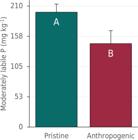
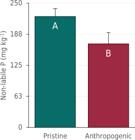
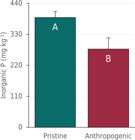
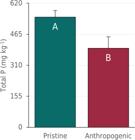
 Phosphorus fractionation in soils of the Paraguayan Chaco under pristine and anthropogenic conditions
 Thumbnail
 Thumbnail
 Thumbnail
 Thumbnail
 Thumbnail
 Thumbnail
 Thumbnail