 Submerged Archaeoanthrosols of the estearias (stilt villages) in Maranhão: A new frontier in Pedoarchaeology in Brazil
ABSTRACT
The submersed anthrosols of the estearias in Maranhão exhibit unique characteristics that expand our understanding of anthropogenic soils in complex hydromorphic and fluviolacustrine environments. This study aimed to characterize these soils morphologically, physically, and chemically, and to compare them with other Amazonian Archaeological Dark Earths (ADEs) from upland and floodplain environments. A database of 160 anthropic horizons from 71 profiles in eight studies was compiled from theses and dissertations, allowing detailed comparative analyses. Principal Component Analysis and Pearson correlation were applied to identify the main soil properties associated with each environment. The results indicate that, beyond anthropogenic additions, prolonged flooding and redox-affected conditions play a crucial role in soil formation. When combined with horizons containing ceramic artifacts, charcoal, and organic sediments, these features suggest that the estearias soils formed under distinct dynamics compared to typical ADEs. The novel association of anthropogenic and organic horizons in submerged estuarine soils highlights the complexity of environmental and human interactions in the region. These findings support the need for revising ADE classification criteria, particularly regarding the exclusive use of available phosphorus as a diagnostic parameter. Complementary studies, including micromorphology, mineralogy, and spatial and temporal analyses, are essential to understand the genesis and dynamics of these soils. Despite their limited agricultural potential, these soils represent a valuable scientific and cultural heritage.
Keywords
anthropization; hydromorphism; Anthropogenic Soils; paleoenvironments; Archaeological Dark Earth
INTRODUCTION
For at least 11,000 years BP, the Amazonian lowlands have been inhabited by hunter-gatherer groups whose progressive adaptation to the hot, humid tropical environment was essential to their survival and development. Their earliest records consist of cave shelters, such as those found in Carajás and Monte Alegre (PA), and later shell mounds (sambaquis) devoid of ceramics or agricultural traces. Over time, these sites evolved into more recent adaptations, often overlapping settlements, characterized by more complex archaeological soils formed through diversified cultures, with much broader geographic distribution patterns (Meggers, 1979; Roosevelt, 1992; Neves, 2000). Research across multiple disciplines seeks to understand not only the relationship between current landscape features and anthropogenic modifications but also how landscapes influenced the process of human occupation in the Amazonian environment (Miller and Nair, 2006; Arroyo-Kalin, 2010; Roosevelt, 2013; Maezumi et al., 2018; Oliveira et al., 2020).
Soils altered by pre-Columbian human activity are among the primary evidence of anthropogenic influence in the humid tropical environment. Studies indicate that the formation of these soils resulted from the accumulation of organic and mineral residues generated during the process of sedentism, which, over time, acted as an agent of change in their natural properties. The most internationally recognized anthropogenic soils to date are the Archaeological Dark Earths (ADEs), known for their dark coloration and traces of prolonged human occupation, including ceramic and lithic artifacts as well as partially carbonized residues. From a pedological perspective, ADEs are distinguished by their high concentrations of phosphorus, calcium, magnesium, zinc, and manganese, in addition to lower acidity, strong biological structuring, and remarkable resilience, and these sharply contrast with adjacent soils, which are generally nutrient-deficient and acidic (Costa and Kern, 1999; Lehmann et al., 2003; Schaefer et al., 2004; Kämpf and Kern, 2005; Kern et al., 2009; Garcia et al., 2015; Lombardo et al., 2022).
Most of the knowledge generated about ADEs is based on the physiographic context of the Amazon and Madeira River valleys, where early studies suggested that these soils were restricted to well-drained areas, known as "terra firme" (upland). However, subsequent research has documented their presence in floodplains, known as “várzea” (floodplain) environments (Stenberg, 1998; Myers et al., 2003; Souza et al., 2009; Fraser et al., 2011b; Macedo et al., 2019). This discovery revealed that ADEs sites were distributed throughout the complex Amazonian biosystem, embedded in a wide variety of soils and landscapes (Woods and McCann, 1999; Kern et al., 2003). Given their interconnected and complementary nature, it is estimated that ADEs cover approximately 3 % of the Amazon region, appearing in patches ranging from 0.5 to 350 hectares. However, these estimates may be questioned due to the lack of detailed soil surveys in the region (Erickson, 2003; Sombroek et al., 2003; Campos et al., 2011; McMichael et al., 2014).
In the transitional areas between the Amazon region, the coastal environment, and adjacent biomes, more recent research has sought to identify new occurrences of Anthrosols, not only to understand their genesis but also to integrate the findings with ethnographic data from these sites, shedding light on the dynamics of the communities that formed them (Schaan et al., 2006; Schmidt et al., 2014, 2023; Arregui, 2022). A notable example is the estearias Archaeological Sites, located in the Maranhão Lowland microregion (Maranhão State), which represents the western coastal sector of the Amazonian environment. These archaeological sites contain ceramic and lithic artifacts, as well as accumulations of charcoal and organic material in a soil layer that can exceed 0.40 m in thickness, exhibiting several morphological similarities to ADEs (Navarro, 2016, 2018a,b).
These sites, partially or entirely submerged in lakes and rivers, are characterized by wooden stakes driven into hydromorphic soils, known as esteios, from which the term estearias is derived. These structures represent the remains stilt villages (palafitas) that, according to radiocarbon dating, existed nearly 7,000 years BP, with their main occupation period dating back to 800-1100 BP, corresponding to the late pre-Columbian Amazonian occupation (Navarro, 2017, 2018b, 2022; Navarro et al., 2020). Most of these sites remain submerged year-round, but during a brief dry season (October to December), water levels recede enough to expose the soil surface and the esteios, revealing ceramic and lithic fragments, as well as organic residues on the surface and in the subsurface.
Despite the first mentions of the estearias dating back to the mid-18th century, these archaeological sites remain among the least studied in Brazil (Navarro, 2017, 2018a; Navarro and Roosevelt, 2021). The associated submerged anthropogenic soils developed under conditions of water saturation and reduction, yet no pedological characterization or comparison with other Anthrosols found in upland or other Amazonian environments has been conducted to date. This study aimed to characterize the estearias Anthrosols, analyzing their main morphological, physical, and chemical properties and comparing them with other anthropic soils from different Amazonian environments to assess the similarities and differences in ADEs under varying formation conditions.
MATERIALS AND METHODS
Study area characterization
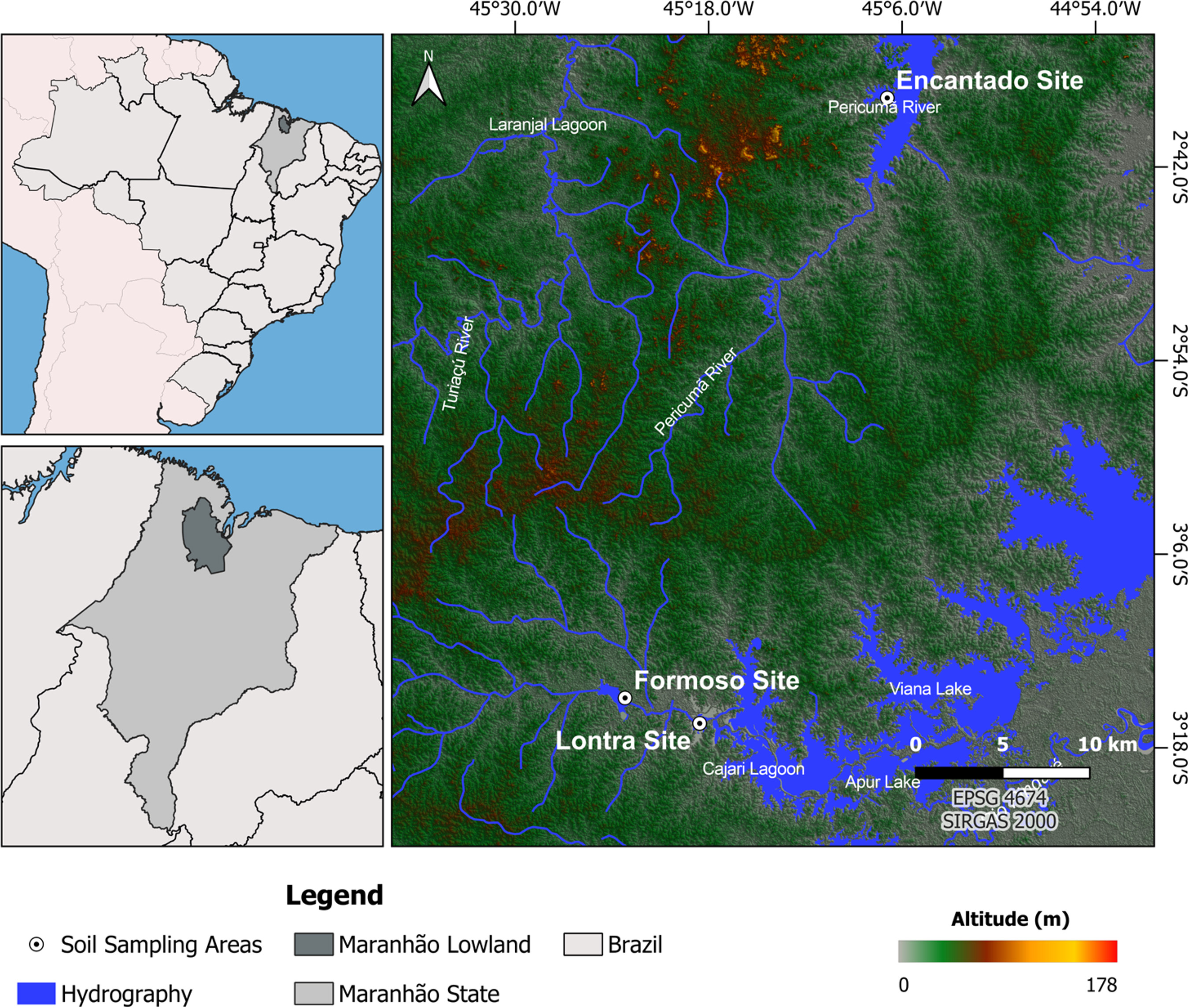
Maranhão Lowland is located within the eastern limits of the Amazon biome, in the state of Maranhão, and comprises an extensive Environmental Protection Area (APA, the Portuguese acronym) of approximately 1,775,035.6 ha (Figure 1). It is surrounded by the flattened terrain of the Bacabal Submarine Surface, characterized by coalescing estuaries of the Mearim, Turiaçu, Itapecuru, and Pindaré rivers, lakes, swamps, floodable fields, and a mix of land uses (agroecosystems) (Conceição et al., 2013; Dantas et al., 2013; Farias Filho et al., 2013). According to the Köppen classification system, the climate of the Maranhão Lowland is of type Aw – tropical with concentrated rainfall from January to July and a dry season from August to December (Menezes, 2020). Precipitation ranges from 1,600 to 2,500 mm per year, and the average annual temperature is consistently above 18 °C (Baristella et al., 2013).

Location map of the Lontra, Formoso, and Encantado archaeological sites in the Maranhão Lowland region, Maranhão State, Brazil. Main hydrographic features of the area are highlighted.
Regarding geology, the Maranhão Lowland is located between the Barreirinhas and São Luís sedimentary basins, consisting of Tertiary rock substrate and extensive Quaternary sediment coverage, especially from the Holocene. Neotectonics is significant in the area, affecting clayey and sandy formations that form estuaries and plains with straight elevation changes. The relief is flat, with vast areas prone to flooding due to river dynamics. The Maranhão Lowland hosts various ecosystems, including forests, savannas, and floodplain fields, with a complex hydrographic network that shapes local vegetation and biodiversity (Ab'Saber, 2006; Suguio, 2010; Machado and Torres, 2012; Rocha et al., 2015).
Within this area, three estearia sites were selected, where the stilts do not remain submerged year-round: Lontra, Formoso, and Encantado. At these sites, six soil profiles were described and collected: two from each site, one in the anthropized area and the other in a position without evident anthropic influence (Figure 2). The profiles were described and collected according to the method described in Santos et al. (2015).

Anthropogenic soils of the estearias, non-anthropogenic soils, occurrence environment, and artifacts found. (a) and (b): Lontra site; (c) and (d): Formoso site; (e) and (f): Encantado site; (g): Ceramic artifact.
Laboratory analyses
For the chemical and textural analyses, the collected samples were air-dried, crushed, and sieved through a 2 mm mesh to obtain the air-dried fine earth fraction (ADF). Chemical characterization included the following parameters: pH(H2O) at a soil solution ratio of 1:2.5; available and residual phosphorus; exchangeable bases (Ca2+, Mg2+, K+, and Na+), exchangeable aluminum (Al3+), and potential acidity (H+Al). From these data, sum of bases (SB = Ca2+ + Mg2+ + K+ + Na+), cation exchange capacity (CECp = BS + (H+Al)), base saturation (BS= (SB/CECp) × 100), and exchangeable aluminum saturation (Al S. = Al3+ / (SB + Al3+) × 100) were calculated. Total organic carbon (TOC) was determined by the wet oxidation method, using the Walkley-Black adapted method, which involves the oxidation of organic carbon with potassium dichromate (Teixeira et al., 2017).
Granulometric analysis was performed using 10 g of ADF with 50 mL of 0.1 mol L-1 NaOH and 150 mL of deionized water, dispersed for 16 h at 50 rpm. Sand fraction was separated using a 0.053 mm mesh sieve and subdivided into fine sand (0.05 to 0.02 mm) and coarse sand (0.2 to 2 mm). Clay and silt suspension was transferred to a 500 mL graduated cylinder, completed with water for sedimentation according to Stokes Law. The clay fraction was obtained by the pipette method, and silt was determined by difference (Teixeira et al., 2017).
Comparative analyses with other anthropogenic soils in Brazil
For comparative analysis with other Archaeological Dark Earths (ADEs), graduate research studies available in national academic repositories, such as the Digital Library of Theses and Dissertations (BDTD) and institutional repositories of Brazilian universities, were consulted. The selection of studies was conducted through keyword searches (such as Amazonian Dark Earths, “Terra Preta de Índio”, and anthropic soils), followed by a full review of the documents to verify their suitability for the proposed objective. Only studies that provided detailed information on morphological, physical, and chemical properties, allowing comparison with the data obtained in this study, were included. Studies that lacked such information or dealt with anthropic soils outside the Amazonian context were excluded. In total, 160 anthropic horizons were considered, corresponding to 71 profiles from eight studies, whose titles and authors are listed in table 1.
Data from the literature were then divided into two main Amazonian ecosystem environments, uplands and floodplains, and compared with the soils from the Maranhão Lowland. Principal Component Analysis and Pearson Correlation were applied, along with visualizations using scatter plots, boxplots, and histograms, to identify the main soil properties associated with each analyzed environment. This approach ensures that the comparative dataset is robust, comprehensive, and directly comparable with the Maranhão Lowland soils studied here. The analyses aimed to assess the primary differences between these environments and the variability of Amazonian Archaeological Dark Earths. The data were analyzed using the R statistical software (R Development Core Team, 2024).
RESULTS
General characteristics of Archaeological Anthrosols and associated soils
Profiles exhibiting signs of anthropization at the three sites presented anthropic A horizons (Au) characterized by dark colors (low value and chroma), cumulative thickness exceeding 0.20 m, and the presence of microfragmented charcoal as well as ceramic and lithic artifacts (Table 2). Two of these anthropic horizons (P1 and P5) were predominantly organic, classifying them morphologically as histic-sapric (H). Due to their mixed characteristics, these horizons were classified as Hu, combining both histic and anthropic properties.
Morphological characteristics of the soils described at the Lontra, Formoso, and Encantado sites
At the Lontra site, the anthropic profile also contained gleyed horizons (Cg) with abundant medium-to-large yellowish mottles and a hydrogen sulfide odor, indicating the presence of sulfides. In contrast, non-anthropic profiles displayed subsurface gleyed horizons and dark surface horizons resulting from organic matter accumulation in periodically flooded environments, where histic horizons were common. Profile depths were generally limited to approximately 1.00 m, with variable structure and consistency among horizons.
Particle size analysis revealed a wide range of textures. In anthropic soils (P1, P3, and P5), sand, silt, and clay fractions ranged from 25 to 540 g kg-¹, 123 to 492 g kg-¹, and 210 to 803 g kg-¹, respectively. In non-anthropic profiles (P2, P4, and P6), the corresponding ranges were 29–847 g kg-¹ for sand, 49–396 g kg-¹ for silt, and 103–853 g kg-¹ for clay (Table 3). Fine fractions (silt and clay) predominated at Lontra and Encantado, whereas sand was more abundant at Formoso. Overall, anthropic horizons contained a higher proportion of sand, particularly fine sand.
Soils in the estearias were generally acidic (pH <5.5). At Formoso and Encantado, anthropic horizons were less acidic than non-anthropic ones. At Lontra, anthropic horizons were extremely acidic (pH 2.4–3.7), while non-anthropic soils remained around pH 4.0. Total organic carbon (TOC) varied considerably, exceeding 80 g kg-¹ in the non-anthropic profiles of Formoso and Encantado (P4 and P6). Both anthropic and non-anthropic profiles at Encantado exhibited histic horizons (3H) at their bases, with TOC contents of 232 and 322 g kg-¹, respectively, indicating burial of organic matter (Table 4).
Available phosphorus (P) in anthropic horizons ranged from 5.1 to 105.1 mg kg-¹, with lower values at Encantado, while non-anthropic profiles were naturally P-poor. Potassium (K) ranged from 14 to 270 mg kg-¹, without a clear pattern related to anthropization. Ca²⁺ and Mg²⁺ varied from 0.57–10.23 and 0.62–11.59 cmolc kg-¹, respectively, showing no significant differences between anthropic and non-anthropic profiles. Sodium (Na) was negligible in all profiles, likely due to limitations of the Mehlich-1 extractant. Exchangeable acidity (Al³⁺) was highest at Lontra, whereas potential acidity (H+Al) followed the same trend as TOC.
Effective cation exchange capacity (CTCe) ranged from 6.74 to 40.75 cmolc kg-¹ in anthropic horizons and from 1.72 to 21.74 cmolc kg-¹ in non-anthropic profiles, while potential CEC (CTCp) ranged from 13.64 to 66.43 and 6.38 to 61.31 cmolc kg-¹, respectively (Table 5). Only the anthropic profile at Formoso showed base saturation (V%) above 50 %, whereas aluminum saturation (m%) was highest at Lontra (>49 %).
Chemical characteristics and micronutrient concentrations of soils described at the Lontra, Formoso, and Encantado sites
Sulfur (S) contents were particularly high in P1 (Cgj1 and Cgj2: 4131.8 and 3795.8 mg kg-¹), while other profiles ranged from 130 to 11,423 mg kg-¹, except P3 (<35 mg kg-¹), apparently correlating with TOC. Anthropic soils were enriched in Zn, while Cu distribution was variable with no consistent pattern. Available Fe ranged from 23.9 to 1730.3 mg kg-¹, and Mn levels were low, neither showing a clear relationship with anthropization (Table 5).
According to the Brazilian Soil Classification System (SiBCS), only profiles P1 and P3 met the criteria for anthropic horizons. Profile P5, although displaying an anthropic A horizon and histic horizons containing artifacts, did not reach the minimum levels of available phosphorus and was classified as an Organossolo with anthropic characteristics. Non-anthropic profiles were classified according to their properties, resulting in Gleissolos and Organossolos of different histic or anthropic subtypes (Table 6). Under WRB criteria, none of the anthropic horizons qualified as pretic horizons, whereas non-anthropic profiles were classified as Gleysols and Histosols, reflecting their hydromorphic and organosolic properties.
Classification of anthropic and non-anthropic soils described and collected at the Lontra, Formoso, and Encantado sites
Principal Component Analysis and the relationships of soil properties in the Estearias and Other Archaeological Dark Earths
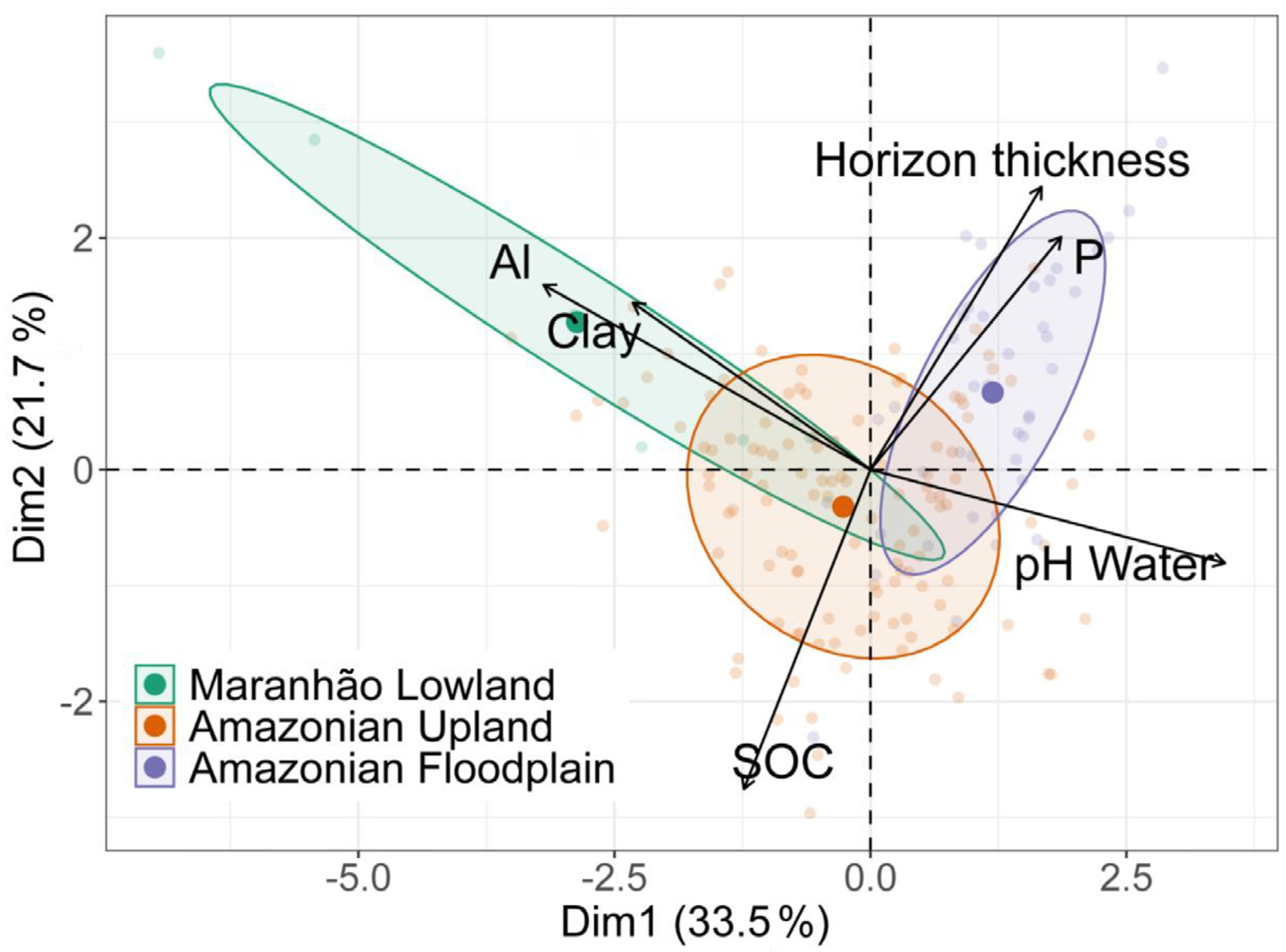
Principal Component Analysis (PCA) (Figure 3) indicated that available P, thickness of the anthropic horizon, pH, TOC, Al³⁺, and clay content were the most relevant properties. The first two components explained 55.2 % of the variance, distributing the samples according to the characteristics of the different environments (Figure 4). The fluviolacustrine environment of the estearias showed high levels of Al³⁺ and clay, while pH displayed an inverse pattern.
Principal Component Analysis (PCA) for anthropogenic horizons in ADEs located in the Maranhão Lowland, Amazonian Upland and Floodplain.
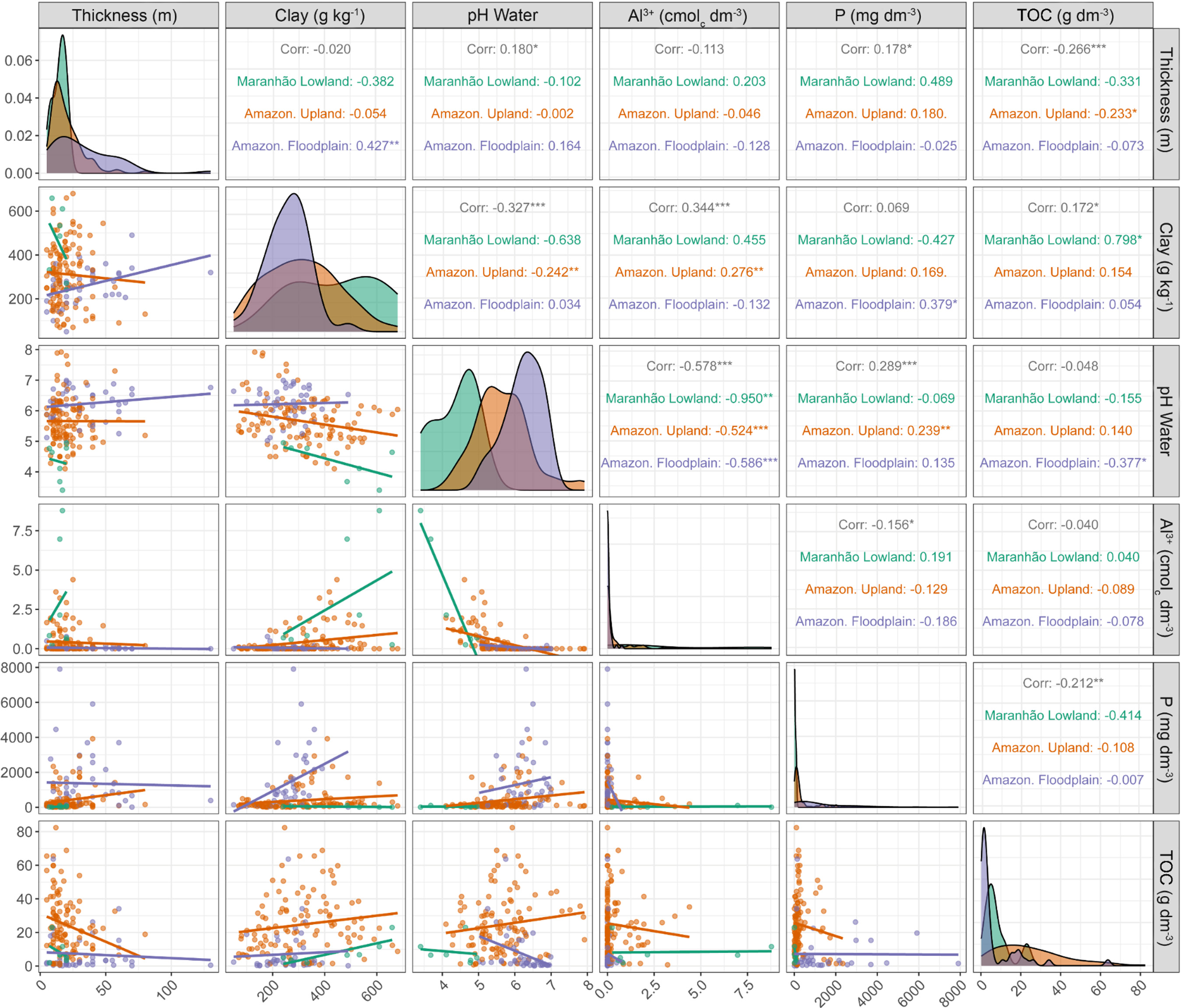
Correlations among these properties were mostly weak to moderate, although specific patterns emerged for each environment (Figure 4). Across the entire dataset, the strongest correlations were between pH and Al³⁺ (r = -0.578) and between clay and Al³⁺ (r = 0.344), highlighting the strong association between acidity-related properties. In the estearia soils, correlations were particularly pronounced for clay (r = -0.638 and 0.455 with pH and Al³⁺, respectively).
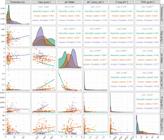
Correlations between the principal components identified in the anthropogenic horizons of ADEs from the Maranhão Lowland, Amazonian Upland and Floodplain.
In the Maranhão Lowland, clay was also strongly correlated with TOC (r = 0.798), emphasizing its key role in protecting organic compounds. In floodplain soils, the negative correlation between TOC and pH (r = -0.377) was notable. The correlation between clay and anthropic horizon thickness was positive only in floodplain environments (r = 0.427). Available P showed positive correlations with pH (r = 0.289) and negative correlations with TOC (r = -0.212). In the estearia soils, P was negatively correlated with both TOC (r = -0.414) and clay (r = -0.427). Conversely, in floodplain soils, the correlation between P and clay was positive (r = 0.379).
The soil texture triangle (Figure 5) highlighted distinct patterns among the three environments. In the uplands, horizons displayed high variability, ranging from sandy and sandy loam to clay. Floodplain horizons were less variable, concentrating in intermediate classes such as loam and clay loam. In the fluviolacustrine estearia environment, more clayey classes predominated, ranging from clay to silty clay.

Granulometry distributed across the different textural classes of anthropic horizons studied by various authors in different environments.
Figure 6 shows the percentage distribution of soil classes across the three environments. In floodplain (V), Neossolos Flúvicos and Gleissolos Háplicos predominated, with a minor contribution from Cambissolos Flúvicos. In uplands (TF), the greatest diversity of soil classes was observed. In the fluviolacustrine estearia environment (FL), Gleissolos and Organossolos were dominant.
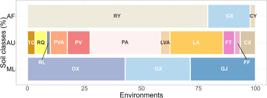
Soil classes with anthropic horizons studied by different authors. Amazonian Floodplain (AF), Amazonian Upland (AU), and Maranhão Lowland (ML) environments.
DISCUSSION
Estearias soils: Morphological, textural, and chemical properties
Estearia soils of Maranhão remain submerged for nearly ten months each year, and even during the dry season, the water table rarely drops below 0.80 m, limiting profile depth to around 1.00 m. These conditions promote intense hydromorphism, resulting in darkened horizons with high TOC contents due to organic matter accumulation and reduced decomposition rates (Van Den Broek and Van Der Marel, 1969; Mafra et al., 2007; Amendola et al., 2018; Marschner, 2021). In the mottles of P1, yellow to orange coloration suggests the possible presence of jarosite, an FeSO4 mineral formed through sulfide oxidation under restricted drainage, typical of swamps or mangrove environments (Prada-Gamero et al., 2004; Bomfim et al., 2015; Gomes et al., 2016).
Seasonal sediment deposition strongly influences textural variability, a feature common in alluvial soils such as those in the Maranhão Lowland (Lima et al., 2006; Valladares, 2009; Campos et al., 2012; Cipriano-Silva et al., 2020). Mudflats associated with mangroves, similar to the Cgj horizons of P1, exhibit stratified layers ranging from fine sand to clay, reflecting depositional energy dynamics (Mendes, 2005). This sedimentary heterogeneity is reflected in structural and consistency differences between surface and subsurface horizons, evidencing genesis from diverse sedimentary sources (Lima et al., 2006; Montenegro and Montenegro, 2006; Cipriano-Silva et al., 2020).
Anthropic profiles showed higher sand contents, likely linked to fire management and the presence of ceramic debris discarded by pre-Columbian communities (Smith, 1980; Teixeira and Martins, 2003; Teixeira et al., 2009; Barros et al., 2016; Schaefer et al., 2025). In well-drained contexts, charcoal fragments and high temperatures can stabilize fine particles and organic residues into small aggregates, increasing the sand fraction in anthropic soils (Ketterings et al., 2000; Mataix-Solera et al., 2011; Bento-Gonçalves et al., 2012; Agbeshie et al., 2022). In the estearias, however, hydromorphism limits this effect, and the anthropic influence on sand content is mainly evident in the abundant charcoal within the Au and Hu horizons. This indicates that biomass burning primarily occurred at the surface of stilt-house platforms for food and ceramic preparation, as supported by the reddened and carbonized clay blocks observed in P6 (Figure 7), since the waterlogged soils for most of the year would have prevented significant thermal impacts.

Soil block with clear signs of carbonization and oxidation removed from the anthropic profile of the Encantado site (P6). (a) Position of the clay layer in the profile; (b) Enlargement of the oxidized face; (c) Soil block and charred material removed from the profile.
The estearia soils exhibit a predominance of fine sand over coarse sand, indicative of low-energy floodplains (Lima et al., 2006, 2007), typical of fluvio-lacustrine systems, which likely supported fishing as a primary food source for the communities inhabiting the stilt villages (Navarro, 2017, 2018ab; Navarro and Roosevelt, 2021). Extended flooding periods allow fine particles to remain suspended for longer and settle gradually, producing more clayey surface horizons. This surface clay accumulation reflects both environmental conditions and the prolonged lacustrine phase, whereas the high silt content points to low pedogenetic intensity, as sediment deposition exceeds the rate of genetic horizon development (Valladares, 2009; Guimarães et al., 2013; Farias Filho et al., 2020).
At the Formoso (P3) and Encantado (P5) sites, anthropic soils were less acidic than non-anthropic soils, a pattern observed in ADEs on upland but not in floodplain settings (Lima et al., 2002; Schaefer et al., 2004; Falcão et al., 2009; Macedo et al., 2017). This reduced acidity is attributed to the incorporation of ashes rich in Ca, K, and Na from the combustion of organic matter (Woods, 2003). Conversely, pH values in the Cgj1 and Cgj2 horizons suggest a thiomorphic character (mangrove influence), resulting from H₂SO₄ formation due to sulfide oxidation during flooding and drying cycles, redistributing compounds along the profile (Ferreira et al., 2007a,b; Combatt et al., 2013; Lee et al., 2021). Thus, in floodplains, the anthropization effect on pH is controlled by hydromorphism and the presence of native sulfides (Woods, 2003; Schaefer et al., 2025).
Total organic content was highly variable and unevenly distributed between surface and subsurface horizons, reflecting both anthropogenic additions and natural accumulation in reducing environments, consistent with the criteria for histic classification (Santos et al., 2018). Evidence suggests that original organic horizons were buried, while anthropic horizons formed over sediments richer in organic matter, representing an association between anthropic and organic soils.
Available phosphorus (P), a required criterion for anthropic horizons (>30 mg kg-¹) (Santos et al., 2018; IUSS Working Group WRB, 2022), was not consistently reached, but the presence of lithic and ceramic artifacts near stilt villages supports and integrated with morphological features, demonstrating a clear anthropization processes. The articulated position of some artifacts and their direct association with structural elements indicate that part of the material remains in situ, although partial reworking or secondary transport by hydrological events cannot be completely ruled out, a characteristic of dynamic fluvio-lacustrine systems.
Low P levels may reflect community dietary habits, losses during flood cycles, or natural acidity favoring P fixation to Al (Glaser et al., 2001; Collins et al., 2002; Kämpf and Kern, 2005; Silva et al., 2011; Kendall et al., 2018; Mehmood et al., 2018; Cavassani et al., 2021). Phosphorus variability may also be linked to sediment dispersion and inheritance from previously weathered material (Lima et al., 2002; Macedo et al., 2019; Schaefer et al., 2025).
Exchangeable K, Ca, and Mg values reflect interactions between parent material, natural acidity, and deposition of organic or ceramic residues. Elevated K⁺ levels may derive from ceramic fragments rich in potassium (Lima et al., 2002; Correa, 2007; Falcão et al., 2009; Barros et al., 2012), while low Ca²⁺ and Mg²⁺ are associated with acidity that rapidly dissolves fish bones and spines (Smith, 1980; Schaefer et al., 2004; Kämpf and Kern, 2005; Novotny et al., 2009; Souza et al., 2009, 2016; Macedo et al., 2017). The H+Al follows the same pattern as TOC, indicating that most potential acidity results from organic matter decomposition (Falcão and Borges, 2006; Ebeling et al., 2008; Bento et al., 2020).
Sulfur concentrations in the Cgj1 and Cgj2 horizons of P1 indicate sulfide influence and suggest ancient mangrove ecosystems. The combination of high organic matter, anaerobic conditions, acidic pH, and elevated Al³⁺ favors sulfate reduction to sulfides, supporting the hypothesis that these areas were mid-Holocene paleomangroves, evolving into productive lacustrine systems before probable partial drainage at the end of the Holocene (Prada-Gamero et al., 2004; Vasconcelos et al., 2014; Bomfim et al., 2015; Kida and Fujitake, 2020; Moraes et al., 2021, 2022).
Zinc enrichment follows patterns observed elsewhere and is linked to decomposition of plant materials used in stilt villages, incorporated after site abandonment (Kern and Kämpf, 1989; Costa and Kern, 1999; Lima et al., 2002; Lehmann et al., 2003; Woods, 2003; Souza et al., 2009; Fraser et al., 2011a; Barbosa et al., 2020; Bento et al., 2020). Available Fe tends to be lower due to complexation with organic matter and redox dynamics in hydromorphic soils (Correa, 2007; Cunha et al., 2009; Frohne et al., 2011; Shaheen et al., 2019).
According to the SiBCS, only profiles P1 and P3 met the criteria for anthropic horizons. Profile P5, despite having an anthropic A horizon and H horizons with artifacts, did not reach the minimum available P and was thus classified as an Organossolo with anthropic traits. Other profiles were classified based on their properties, resulting in Gleissolos and Organossolos of various histic or anthropic subtypes (Table 6). Following WRB criteria, none of the anthropic horizons qualified as pretic horizons, whereas non-anthropic profiles were classified as Gleysols and Histosols, reflecting their hydromorphic and organosolic properties.
Archeoanthrosols across distinct Amazonian environmental contexts
In the fluvio-lacustrine estearia environment, high Al³⁺ and clay contents, grouped in the analysis, are associated with low pH, highlighting the characteristic acidity of these soils. This acidity reflects Al³⁺ saturation and the hydromorphic conditions of frequently flooded areas, within an acidic, nutrient-poor, and pre-weathered setting of the Barreiras Group domain (Mafra et al., 2007; Vasconcelos et al., 2014; Amendola et al., 2018; Corrêa et al., 2023). Although clay production through weathering in anthropic soils is possible, the correlation between clay content and acidity suggests that proton retention, enhanced by TOC and sulfurization processes, is the primary mechanism driving acidification in this environment.
In contrast, in the Amazonian floodplain, the thickness of anthropic horizons and P contents emerge as key factors, with thicker horizons showing higher P concentrations, reflecting the disposal of nutrient-rich materials and the practices and population densities of the communities that once inhabited these areas (Smith, 1980; Glaser et al., 2001; Kern et al., 2003; Kämpf and Kern, 2005). In these soils, the negative relationship between TOC and pH is more pronounced, indicating that naturally more alkaline soils become increasingly acidified as organic matter accumulates, intensifying organic acidification processes.
Upland soils exhibit greater variability, particularly regarding TOC, highlighting the combined influence of pedogenetic and biological factors, which is accentuated by efficient drainage and continuous cultivation after site abandonment. The depositional influence on clay accumulation is also evident in the correlations between clay content and the thickness of anthropic horizons. In the estearias, these correlations reflect natural clay retention in saturated environments, whereas in the floodplain, the positive correlation indicates depositional conditions with longer duration and higher energy, emphasizing distinct formation dynamics across environments (Lima et al., 2007; Campos et al., 2012; Cipriano-Silva et al., 2020).
The integrated interpretation of correlation analyses, the soil texture triangle, and environmental context suggests that in estearia anthropic horizons, the combination of high-water saturation, accumulation of clay and TOC, and sulfurization processes governs acidification. In floodplain and upland soils, other factors, such as sediment deposition, population density, and post-abandonment management, predominate in controlling chemical and textural dynamics, evidencing distinct pedogenetic trajectories across environments.
Implications for the classification of anthropic soils in the estearias
Differences observed in the anthropic soils of the estearias raise questions regarding the adequacy of the criteria currently employed in classification systems. Although these soils share elements with ADEs, their unique characteristics, such as persistent hydromorphism, the occurrence of histic horizons, and, in some cases, pronounced acidity, indicate marked distinctions in soils that have been generically referred to as “Terra Preta de Índio”. These distinctions should be considered when recognizing Antrossolos at the order level in the SiBCS.
The presence of an Organossolo with anthropic characteristics warrants special attention, as such an occurrence has not previously been documented in studies examining ADEs to date. Despite not fitting the conventional definitions of these dark earths, these soils retain unequivocal traces of past human activity, particularly in horizon organization and artifact accumulation. This finding broadens the spectrum of recognized archaeopedological situations, demonstrating that anthropic influence is not restricted to upland environments.
Identified soil classes directly reflect the hydromorphic conditions of the Amazonian floodplain. Gleissolos, and less frequently Organossolos, predominate under water-saturated conditions, favoring both organic matter accumulation and sulfide oxidation processes. In upland areas, a greater diversity of classes is observed, associated with the heterogeneous distribution of ADEs, ranging from well-drained zones to areas where partial drainage restriction does not result in full hydromorphism. Consequently, the coexistence of anthropic horizons across different pedoenvironmental contexts demonstrates that the variability of these formations extends beyond the concepts traditionally associated with ADEs, with direct implications for refining soil classification.
CONCLUSIONS
Estearia soils (under stilt villages) of Maranhão exhibit unique characteristics that expand the understanding of Anthrosols in complex hydromorphic environments, particularly in fluviolacustrine settings. In addition to anthropic inputs, hydromorphism and flooding cycles play a fundamental role in the formation of these soils, directly influencing their properties. When associated with anthropic horizons containing ceramic artifacts, charcoal, and organic sediments, these features demonstrate that estearias exhibit a distinct formation dynamic from typical Amazonian Archaeological Dark Earths (ADEs), both in upland and floodplain areas.
The superposition of anthropic and organic soils in former mangrove ecosystems underscores the complexity of environmental and human interactions in the region. The data highlight the need to revise the criteria for classifying ADEs, particularly regarding phosphorus content as a key determining parameter. These findings emphasize the archaeological and environmental relevance of the estearia sites, contributing to the understanding of the practices and adaptations of pre-Columbian communities that inhabited Amazonia.
Further attention is drawn to the importance of complementary investigations, both spatial (well-drained surrounding soils) and temporal (geochronology of occupation), as well as micromorphological and mineralogical analyses, which may deepen knowledge of the genesis and dynamics of these soils. Although little studied and unsuitable for agriculture, these soils represent a valuable scientific and cultural heritage.
ACKNOWLEDGMENTS
We thank Museu de Solos Dokuchaev (UEMA), Laboratório de Arqueologia (LARq/UFMA), and Núcleo Terrantar (UFV) for logistical support, as well as the Graduate Program in Soils and Plant Nutrition (PPGSNP/UFV) for research support.
-
How to cite:
Lalas A, Schaefer CEGR, Ker JC, Navarro AG, Siqueira RG, Firmino FHT, Silva MB. Submerged Archaeoanthrosols of the estearias (stilt villages) in Maranhão: A new frontier in Pedoarchaeology in Brazil. Rev Bras Cienc Solo. 2026;50nspe1:e0250065. https://doi.org/10.36783/18069657rbcs20250065
-
FUNDING
This study was conducted with the support of Coordenação de Aperfeiçoamento de Pessoal de Nível Superior – Brasil (CAPES) – Finance Code 001.
DATA AVAILABILITY
The data will be provided upon request.
REFERENCES
- Ab’Saber A. Brasil: Paisagens de exceção - O litoral e o Pantanal Mato-Grossense: patrimônios básicos. Cotia: Ateliê Editorial; 2006.
-
Agbeshie AA, Abugre S, Atta-Darkwa T, Awuah R. A review of the effects of forest fire on soil properties. J For Res. 2022;33:1419-41. https://doi.org/10.1007/s11676-022-01475-4
» https://doi.org/10.1007/s11676-022-01475-4 -
Amendola D, Mutema M, Rosolen V, Chaplot V. Soil hydromorphy and soil carbon: A global data analysis. Geoderma. 2018;324:9-17. https://doi.org/10.1016/j.geoderma.2018.03.005
» https://doi.org/10.1016/j.geoderma.2018.03.005 - Aquino RE. Características de atributos do solo em ambientes da região Sul do estado do Amazonas [dissertation]. Jaboticabal: Universidade Estadual Paulista; 2014.
-
Arregui AG. Activating dark earths: Somatosoils and the carbonic loops of Amazonian ecologies. J R Anthropol Inst. 2022;28:854-74. https://doi.org/10.1111/1467-9655.13770
» https://doi.org/10.1111/1467-9655.13770 -
Arroyo-Kalin M. The Amazonian formative: Crop domestication and anthropogenic soils. Diversity. 2010;2:473-504. https://doi.org/10.3390/d2040473
» https://doi.org/10.3390/d2040473 -
Barbosa JZ, Motta ACV, Corrêa RS, Melo VF, Muniz AW, Martins GC, Silva LCR, Teixeira WG, Young SD, Broadley MR. Elemental signatures of an Amazonian Dark Earth as result of its formation process. Geoderma. 2020;361:114085. https://doi.org/10.1016/j.geoderma.2019.114085
» https://doi.org/10.1016/j.geoderma.2019.114085 - Baristella M, Bolfe EL, Vicente LE, Victoria DC. Relatório do banco de dados do macrozoneamento ecológico-econômico do Estado do Maranhão. Campinas: Embrapa; 2013.
-
Barros KRM, Lima HV, Canellas LP, Kern DC. Fracionamento químico da matéria orgânica e caracterização física de Terra Preta de Índio. Rev Cienc Agrar. 2012;55:44-51. https://doi.org/10.4322/rca.2012.037
» https://doi.org/10.4322/rca.2012.037 -
Barros KRM, Lima HV, Rodrigues S, Kern DC. Distribuição da porosidade textural e estrutural em solos de Terra Preta Arqueológica. Rev Cienc Agron. 2016;47:609-15. https://doi.org/10.5935/1806-6690.20160073
» https://doi.org/10.5935/1806-6690.20160073 -
Bento LR, Constantino IC, Tadini AM, Melo CA, Ferreira OP, Moreira AB, Bisinoti MC. Chemical and spectroscopic characteristics of Anthrosol (Amazonian dark earth) and surrounding soil from the Brazilian Amazon forest: Evaluation of mineral and organic matter content by depth. J Braz Chem Soc. 2020;31:1623-34. https://doi.org/10.21577/0103-5053.20200048
» https://doi.org/10.21577/0103-5053.20200048 -
Bento-Gonçalves A, Vieira A, Úbeda X, Martin D. Fire and soils: Key concepts and recent advances. Geoderma. 2012;191:3-13. https://doi.org/10.1016/j.geoderma.2012.01.004
» https://doi.org/10.1016/j.geoderma.2012.01.004 -
Bomfim MR, Santos JAG, Costa OV, Otero XL, Boas GSV, Capelão VS, Souza ES, Nacif PGS. Gênese, caracterização e classificação de solos de mangue na Bacia do Rio Subaé, Bahia, Brasil. Rev Bras Cienc Solo. 2015;39:1247-60. https://doi.org/10.1590/01000683rbcs20140555
» https://doi.org/10.1590/01000683rbcs20140555 -
Campos MCC, Ribeiro MR, Souza Júnior VS, Ribeiro Filho MR, Almeida MC. Topossequência de solos na transição campos naturais-floresta na região de Humaitá, Amazonas. Acta Amazon. 2012;42:387-98. https://doi.org/10.1590/S0044-59672012000300011
» https://doi.org/10.1590/S0044-59672012000300011 -
Campos MCC, Ribeiro MR, Souza Júnior VS, Ribeiro Filho MR, Souza RVCC, Almeida MC. Caracterização e classificação de terras pretas arqueológicas na Região do Médio Rio Madeira. Bragantia. 2011;70:598-609. https://doi.org/10.1590/S0006-87052011000300016
» https://doi.org/10.1590/S0006-87052011000300016 - Cavassani RS. Caracterização e classificação de solos com horizonte antrópico no sul do estado de Rondônia [dissertation]. Seropédica: Universidade Federal Rural do Rio de Janeiro; 2018.
-
Cavassani RS, Anjos LHC, Pereira MG, Garcia AC. Amazonian dark earths in Rondônia State: Soil properties, carbon dating and classification. Rev Bras Cienc Solo. 2021;45:e0200160. https://doi.org/10.36783/18069657RBCS20200160
» https://doi.org/10.36783/18069657RBCS20200160 -
Cipriano-Silva R, Valladares GS, Azevedo AC, Anjos LHC, Pereira MG, Pinheiro Junior CRP. Alluvial soil formation in the plains of northeastern Brazil. Rev Bras Cienc Solo. 2020;44:e0190110. https://doi.org/10.36783/18069657rbcs20190110
» https://doi.org/10.36783/18069657rbcs20190110 -
Collins MJ, Nielsen-Marsh CM, Hiller J, Smith CI, Roberts JP, Prigodich RV, Wess TJ, Csapò J, Millard AR, Turner-Walker G. The survival of organic matter in bone: A review. Archaeometry. 2002;44:383-94. https://doi.org/10.1111/1475-4754.t01-1-00071
» https://doi.org/10.1111/1475-4754.t01-1-00071 - Combatt EM, Lani JL, Alvarez V VH. Characterization of physical, chemical, and mineralogical properties of acid sulfate soils of the state of Espirito Santo-Brazil and Córdoba-Colombia. Rev Cienc Agr. 2013;30:8-19.
- Conceição MVS, Moreira JF, Farias Filho MS. O espaço natural da Baixada Maranhense. In: Silva FFM, editor. O espaço geográfico da baixada maranhense. 2 ed. São Luís: Edufma; 2013. p. 23-32.
- Correa GR. Caracterização pedológica de Arqueo-antropossolos no Brasil: Sambaquis na Região dos Lagos (RJ) e Terras Pretas de Índio na região do Baixo Rio Negro/Solimões (AM) [dissertation]. Viçosa, MG: Universidade Federal de Viçosa; 2007.
-
Corrêa MM, Araújo Filho JC, Schaefer CEGR, Ker JC. Soils of the Coastal Tablelands under Atlantic Forest (Tabuleiros Costeiros). In: Schaefer CEGR, editor. The soils of Brazil. Cham: Springer; 2023. p. 221-38. https://doi.org/10.1007/978-3-031-19949-3_8
» https://doi.org/10.1007/978-3-031-19949-3_8 -
Costa ML, Kern DC. Geochemical signatures of tropical soils with archaeological black earth in the Amazon, Brazil. J Geochem Explor. 1999;66:369-85. https://doi.org/10.1016/S0375-6742(99)00038-2
» https://doi.org/10.1016/S0375-6742(99)00038-2 -
Cunha TJF, Madari BE, Canellas LP, Ribeiro LP, Benites VM, Santos GA. Soil organic matter and fertility of anthropogenic dark earths (Terra Preta de Índio) in the Brazilian Amazon basin. Rev Bras Cienc Solo. 2009;33:85-93. https://doi.org/10.1590/S0100-06832009000100009
» https://doi.org/10.1590/S0100-06832009000100009 - Dantas ME, Shinzato E, Bandeira ICN, Souza LV, Renk JFC. Compartimentação geomorfológica. Bandeira ICN, editor. Geodiversidade do estado do Maranhão: Programa geologia do Brasil. Teresina: CPRM; 2013. p. 31-62.
-
Ebeling AG, Anjos LHC, Perez DV, Pereira MG, Valladares GS. Relação entre acidez e outros atributos químicos em solos com teores elevados de matéria orgânica. Bragantia. 2008;67:429-39. https://doi.org/10.1590/S0006-87052008000200019
» https://doi.org/10.1590/S0006-87052008000200019 -
Erickson C. Historical ecology and future explorations. In: Lehmann J, Kern DC, Glaser B, Woods WI, editors. Amazonian Dark Earths. Dordrecht: Kluwer Academic Publishers; 2003. p. 455-500. https://doi.org/10.1007/1-4020-2597-1_23
» https://doi.org/10.1007/1-4020-2597-1_23 -
Falcão N, Clement C, Tsai S, Comerford N. Pedology, fertility, and biology of central Amazonian Dark Earths. In: Woods WI, Teixeira WG, Lehmann J, Steiner C, WinklerPrins A, Rebellato L, editors. Amazonian Dark Earths: Wim Sombroek’s Vision. Dordrecht: Springer Netherlands; 2009. p. 213-28. https://doi.org/10.1007/978-1-4020-9031-8_11
» https://doi.org/10.1007/978-1-4020-9031-8_11 -
Falcão NPS, Borges LF. Efeito da fertilidade de terra preta de índio da Amazônia Central no estado nutricional e na produtividade do mamão hawaí (Carica papaya L.). Acta Amazon. 2006;36:401-6. https://doi.org/10.1590/S0044-59672006000400001
» https://doi.org/10.1590/S0044-59672006000400001 - Farias Filho MS, Ferraz Júnior ASL, Nascimento M. Uso agrícola dos campos inundáveis da Baixada Maranhense com a cultura do arroz frente à degradação das áreas altas. In: Silva FFM, editor. O espaço geográfico da Baixada Maranhense. 2 ed. São Luis: EDUFMA; 2013. p. 85-112.
- Farias Filho MS, Bueno CRP, Valladares GS. Caracterização e classificação de solos hidromórficos sobre os aluviões fluviomarinhos no município de Arari – MA. Ra’e Ga. 2020;47:85-98.
-
Ferreira TO, Otero XL, Vidal-Torrado P, Macías F. Redox processes in mangrove soils under Rhizophora mangle in relation to different environmental conditions. Soil Sci Soc Am J. 2007a;71:484-91. https://doi.org/10.2136/sssaj2006.0078
» https://doi.org/10.2136/sssaj2006.0078 -
Ferreira TO, Vidal-Torrado P, Otero XL, Macías F. Are mangrove forest substrates sediments or soils? A case study in southeastern Brazil. Catena. 2007b;70:79-91. https://doi.org/10.1016/j.catena.2006.07.006
» https://doi.org/10.1016/j.catena.2006.07.006 -
Fraser J, Teixeira W, Falcão N, Woods W, Lehmann J, Junqueira AB. Anthropogenic soils in the Central Amazon: From categories to a continuum. Area. 2011a;43:264-73. https://doi.org/10.1111/j.1475-4762.2011.00999.x
» https://doi.org/10.1111/j.1475-4762.2011.00999.x -
Fraser JA, Junqueira AB, Clement CR. Homegardens on Amazonian Dark Earths, non-anthropogenic upland, and floodplain soils along the Brazilian middle Madeira River exhibit diverging agrobiodiversity. Econ Bot. 2011b;65:1-12. https://doi.org/10.1007/s12231-010-9143-y
» https://doi.org/10.1007/s12231-010-9143-y -
Frohne T, Rinklebe J, Diaz-Bone RA, Du Laing G. Controlled variation of redox conditions in a floodplain soil: Impact on metal mobilization and biomethylation of arsenic and antimony. Geoderma. 2011;160:414-24. https://doi.org/10.1016/j.geoderma.2010.10.012
» https://doi.org/10.1016/j.geoderma.2010.10.012 - Garcia L, Costa JA, Kern DC, Frazão FJL. Caracterização de solos com terra preta: Estudo de caso em um sítio Tupi-Guarani pré- colonial da Amazônia Oriental. Rev Arqueol. 2015;28:52-81.
-
Glaser B, Haumaier L, Guggenberger G, Zech W. The “Terra Preta” phenomenon: A model for sustainable agriculture in the humid tropics. Naturwissenschaften. 2001;88:37-41. https://doi.org/10.1007/s001140000193
» https://doi.org/10.1007/s001140000193 -
Gomes FH, Ker JC, Ferreira TO, Moreau AMS, Moreau MS. Characterization and pedogenesis of mangrove soils from Ilhéus-BA, Brazil. Rev Cienc Agron. 2016;47:599-608. https://doi.org/10.5935/1806-6690.20160072
» https://doi.org/10.5935/1806-6690.20160072 -
Guimarães ST, Lima HN, Teixeira WG, Neves Junior AF, Silva FWR, Macedo RS, Souza KW. Caracterização e classificação de Gleissolos da várzea do rio Solimões (Manacapuru e Iranduba), Amazonas, Brasil. Rev Bras Cienc Solo. 2013;37:317-26. https://doi.org/10.1590/S0100-06832013000200003
» https://doi.org/10.1590/S0100-06832013000200003 -
IUSS Working Group WRB. World reference base for soil resources. International soil classification system for naming soils and creating legends for soil maps. 4th. ed. Vienna, Austria: International Union of Soil Sciences (IUSS); 2022. Available from: https://www.isric.org/sites/default/files/WRB_fourth_edition_2022-12-18.pdf
» https://www.isric.org/sites/default/files/WRB_fourth_edition_2022-12-18.pdf - Kämpf N, Kern DC. O solo como registro da ocupação humana pré-histórica na Amazônia. In: Vidal-Torrado P, Alleoni LRF, Cooper M, Silva APD, Cardoso EJ, editors. Tópicos em ciência do solo. Viçosa, MG: Sociedade Brasileira de Ciência do Solo; 2005. v. 4. p. 277-320.
-
Kendall C, Eriksen AMH, Kontopoulos I, Collins MJ, Turner-Walker G. Diagenesis of archaeological bone and tooth. Palaeogeogr Palaeoclimatol Palaeoecol. 2018;491:21-37. https://doi.org/10.1016/j.palaeo.2017.11.041
» https://doi.org/10.1016/j.palaeo.2017.11.041 -
Kern DC, D’aquino G, Rodrigues TE, Frazao FJL, Sombroek W, Myers TP, Neves EG. Distribution of Amazonian Dark Earths in the Brazilian Amazon. In: Lehmann J, Kern DC, Glaser B, Woods WI, editors. Amazonian Dark Earths. Dordrecht: Kluwer Academic Publishers; 2003. p. 51-75. https://doi.org/10.1007/1-4020-2597-1_4
» https://doi.org/10.1007/1-4020-2597-1_4 - Kern DC, Kämpf N. Antigos assentamentos indígenas na formação de solos com Terra Preta Arqueológica na Região de Oriximiná-PA. Rev Bras Cienc Solo. 1989;13:219-25.
- Kern DC, Kämpf N, Woods WI, Denevan WM, Costa ML, Frazão FJL, Sombroek W. Evolução do conhecimento em Terra Preta de Índio. In: Teixeira WG, Kern DC, Madari BE, Woods W, editors. As terras pretas de índio da Amazônia: Sua caracterização e uso deste conhecimento na criação de novas áreas. Manaus: Embrapa Amazônia Oriental; 2009. p. 72-81.
-
Kern J, Giani L, Teixeira W, Lanza G, Glaser B. What can we learn from ancient fertile anthropic soil (Amazonian Dark Earths, shell mounds, Plaggen soil) for soil carbon sequestration? Catena. 2019;172:104-12. https://doi.org/10.1016/j.catena.2018.08.008
» https://doi.org/10.1016/j.catena.2018.08.008 -
Ketterings QM, Bigham JM, Laperche V. Changes in soil mineralogy and texture caused by slash‐and‐burn fires in Sumatra, Indonesia. Soil Sci Soc Am J. 2000;64:1108-17. https://doi.org/10.2136/sssaj2000.6431108x
» https://doi.org/10.2136/sssaj2000.6431108x -
Kida M, Fujitake N. Organic carbon stabilization mechanisms in mangrove soils: A review. Forests. 2020;11:981. https://doi.org/10.3390/f11090981
» https://doi.org/10.3390/f11090981 -
Lee S, O’Loughlin EJ, Kwon MJ. Impact of organic acids and sulfate on the biogeochemical properties of soil from urban subsurface environments. J Environ Manage. 2021;292:112756. https://doi.org/10.1016/j.jenvman.2021.112756
» https://doi.org/10.1016/j.jenvman.2021.112756 -
Lehmann J, Kern DC, Glaser B, Woods WI. Amazonian Dark Earths. Dordrecht: Kluwer Academic Publishers; 2003. https://doi.org/10.1007/1-4020-2597-1
» https://doi.org/10.1007/1-4020-2597-1 - Lima HN. Gênese, química, mineralogia e micromorfologia de solos da Amazônia Ocidental [thesis]. Viçosa, MG: Universidade Federal de Viçosa; 2001.
-
Lima HN, Mello JWV, Schaefer CEGR, Ker JC, Lima AMN. Mineralogia e química de três solos de uma toposseqüência da bacia sedimentar do Alto Solimões, Amazônia ocidental. Rev Bras Cienc Solo. 2006;30:59-68. https://doi.org/10.1590/S0100-06832006000100007
» https://doi.org/10.1590/S0100-06832006000100007 -
Lima HN, Schaefer CER, Mello JWV, Gilkes RJ, Ker JC. Pedogenesis and pre-Colombian land use of “Terra Preta Anthrosols” (“Indian black earth”) of Western Amazonia. Geoderma. 2002;110:1-17. https://doi.org/10.1016/S0016-7061(02)00141-6
» https://doi.org/10.1016/S0016-7061(02)00141-6 - Lima HN, Teixeira WG, Souza KW. Os solos da paisagem da várzea com ênfase do trecho entre Coari e Manaus. In: Fraxe TJP, Pereira HS, Witoski AC, editors. Comunidades Ribeirinhas Amazônicas: Modos de vida e uso dos recursos naturais. Manaus: EDUA; 2007. p. 35-52.
-
Lombardo U, Arroyo-Kalin M, Schmidt M, Huisman H, Lima HP, Moraes CM, Neves EG, Clement CR, Fonseca JA, Almeida FO, Alho CFBV, Ramsey CB, Brown GG, Cavallini MS, Costa ML, Cunha L, Anjos LHC, Denevan WM, Fausto C, Caromano CF, Fontana A, Franchetto B, Glaser B, Heckenberger MJ, Hecht S, Honorato V, Jarosch KA, Junqueira AB, Kater T, Tamanaha EK, Kuyper TW, Lehmann J, Madella M, Maezumi SY, Cascon LM, Mayle FE, McKey D, Moraes B, Morcote-Ríos G, Barbosa CAP, Magalhães MP, Prestes-Carneiro G, Pugliese F, Pupim FN, Raczka MF, Py-Daniel AR, Riris P, Rocha BC, Rodrigues L, Rostain S, Macedo RS, Shock MP, Sprafke T, Bassi FS, Valle R, Vidal-Torrado P, Villagrán XS, Watling J, Weber SL, Teixeira WG. Evidence confirms an anthropic origin of Amazonian Dark Earths. Nat Commun. 2022;13:3444. https://doi.org/10.1038/s41467-022-31064-2
» https://doi.org/10.1038/s41467-022-31064-2 - Macedo RS. Pedogênese e indicadores pedoarqueológicos em Terra Preta de Índio no município de Iranduba-AM. Piracicaba: Universidade de São Paulo Escola Superior de Agricultura “Luiz de Queiroz”; 2014.
-
Macedo RS, Teixeira WG, Corrêa MM, Martins GC, Vidal-Torrado P. Pedogenetic processes in Anthrosols with pretic horizon (Amazonian Dark Earth) in Central Amazon, Brazil. PLoS One. 2017;12:e0178038. https://doi.org/10.1371/journal.pone.0178038
» https://doi.org/10.1371/journal.pone.0178038 -
Macedo RS, Teixeira WG, Lima HN, De Souza ACG, Silva FWR, Encinas OC, Neves EG. Amazonian dark earths in the fertile floodplains of the Amazon River, Brazil: An example of non-intentional formation of anthropic soils in the Central Amazon region. Bol Mus Para Emilio Goeldi Cienc Hum. 2019;14:207-27. https://doi.org/10.1590/1981-81222019000100013
» https://doi.org/10.1590/1981-81222019000100013 - Machado PJ, Torres FT. Introdução à hidrogeografia. São Paulo: Cengage Learning; 2012.
-
Maezumi SY, Robinson M, Souza J, Urrego DH, Schaan D, Alves D, Iriarte J. New insights from pre-Columbian land use and fire management in Amazonian dark earth forests. Front Ecol Evol. 2018;6:111. https://doi.org/10.3389/fevo.2018.00111
» https://doi.org/10.3389/fevo.2018.00111 -
Mafra AL, Senesi N, Brunetti G, Miklós AAW, Melfi AJ. Humic acids from hydromorphic soils of the upper Negro river basin, Amazonas: Chemical and spectroscopic characterisation. Geoderma. 2007;138:170-6. https://doi.org/10.1016/j.geoderma.2006.11.005
» https://doi.org/10.1016/j.geoderma.2006.11.005 -
Marschner P. Processes in submerged soils – linking redox potential, soil organic matter turnover and plants to nutrient cycling. Plant Soil. 2021;464:1-12. https://doi.org/10.1007/s11104-021-05040-6
» https://doi.org/10.1007/s11104-021-05040-6 -
Mataix-Solera J, Cerdà A, Arcenegui V, Jordán A, Zavala LM. Fire effects on soil aggregation: A review. Earth Sci Rev. 2011;109:44-60. https://doi.org/10.1016/j.earscirev.2011.08.002
» https://doi.org/10.1016/j.earscirev.2011.08.002 -
McMichael CH, Palace MW, Bush MB, Braswell B, Hagen S, Neves EG, Silman MR, Tamanaha EK, Czarnecki C. Predicting pre-Columbian anthropogenic soils in Amazonia. Proc R Soc B: Biol Sci. 2014;281:2013.2475. https://doi.org/10.1098/rspb.2013.2475
» https://doi.org/10.1098/rspb.2013.2475 -
Meggers BJ. Climatic oscillation as a factor in the prehistory of Amazonia. Am Antiq. 1979;44:252-66. https://doi.org/10.2307/279075
» https://doi.org/10.2307/279075 -
Mehmood A, Akhtar MS, Imran M, Rukh S. Soil apatite loss rate across different parent materials. Geoderma. 2018;310:218-29. https://doi.org/10.1016/j.geoderma.2017.09.036
» https://doi.org/10.1016/j.geoderma.2017.09.036 - Mendes AC. Geomorfologia e sedimentologia. In: Fernandes MEB, editor. Os manguezais da costa norte brasileira. Bragança, PA: Fundação Rio Bacanga; 2005. vol. 2. p. 13-32.
- Menezes RHN. Caracterização climática do estado do Maranhão. In: Silva MB, Lumbreras JF, Coelho MR, Oliveira VA, editors. Guia de Campo da XIII Reunião Brasileira de Classificação e Correlação de Solos: RCC do Maranhão. Brasília, DF: Embrapa; 2020. p. 148-75.
-
Miller RP, Nair PKR. Indigenous agroforestry systems in Amazonia: From prehistory to today. Agroforest Syst. 2006;66:151-64. https://doi.org/10.1007/s10457-005-6074-1
» https://doi.org/10.1007/s10457-005-6074-1 - Miranda JF. Terras Pretas Arqueológicas no Médio Amazonas e Alto Solimões: Química, mineralogia, micromorfologia e idade [thesis]. Viçosa, MG: Universidade Federal de Viçosa; 2018.
-
Montenegro AAA, Montenegro SMGL. Variabilidade espacial de classes de textura, salinidade e condutividade hidráulica de solos em planície aluvial. Rev Bras Eng Agríc Ambient. 2006;10:30-7. https://doi.org/10.1590/S1415-43662006000100005
» https://doi.org/10.1590/S1415-43662006000100005 -
Moraes CA, Costa ML, Navarro AG, Negrão LBA, Valente GJS, Pöllmann H, Behling H. Holocene vegetation, climate, sea-level oscillation, and human impact inferred from the archaeological site Cabeludo in Maranhão State, NE Brazil. Palaeogeogr Palaeoclimatol Palaeoecol. 2022;608:111292. https://doi.org/10.1016/j.palaeo.2022.111292
» https://doi.org/10.1016/j.palaeo.2022.111292 -
Moraes CA, Costa ML, Navarro AG, Meneses MENS, Negrão LBA, Pöllmann H, Behling H. Holocene coastal environmental changes inferred by multi-proxy analysis from Lago Formoso sediments in Maranhão State, northeastern Brazil. Quat Sci Rev. 2021;273:107234. https://doi.org/10.1016/j.quascirev.2021.107234
» https://doi.org/10.1016/j.quascirev.2021.107234 -
Myers TP, Denevan WM, Winklerprins A, Porro A. Historical perspectives on Amazonian Dark Earths. In: Lehmann J, Kern DC, Glaser B, Woods WI, editors. Amazonian Dark Earths. Dordrecht: Kluwer Academic Publishers; 2003. p. 15-28. https://doi.org/10.1007/1-4020-2597-1_2
» https://doi.org/10.1007/1-4020-2597-1_2 -
Navarro AG. Ways of making the body on the stilt villages: an archaeological study of the figurines in Maranhão. Bol Mus Para Emilio Goeldi Cienc Hum. 2022;17:20210005. https://doi.org/10.1590/2178-2547-BGOELDI-2021-0005
» https://doi.org/10.1590/2178-2547-BGOELDI-2021-0005 -
Navarro AG. New evidence for late first-millennium AD stilt-house settlements in Eastern Amazonia. Antiquity. 2018a;92:1586-603. https://doi.org/10.15184/aqy.2018.162
» https://doi.org/10.15184/aqy.2018.162 -
Navarro AG. Morando no meio dos rios e lagos. Rev Arqueol. 2018b;31:73-103. https://doi.org/10.24885/sab.v31i1.535
» https://doi.org/10.24885/sab.v31i1.535 -
Navarro AG. As cidades lacustres do Maranhão: As estearias sob um olhar histórico e arqueológico. Dialogos. 2017;21:126-42. https://doi.org/10.4025/dialogos.v21i3.39850
» https://doi.org/10.4025/dialogos.v21i3.39850 - Navarro AG. Arte e estilo nas estearias maranhenses. Arq Mus Hist Nat Jard Bot UFMG. 2016;25:100-24.
-
Navarro AG, Reis AHC, Oliveira WC. Arqueologia nas fronteiras da Baixada Maranhense: as ocupações pré-históricas dos sítios Boca do Campo e Mearim 01 e possíveis relações com as estearias. Tessituras: Rev Antropol Arqueol. 2020;8:62-92. https://doi.org/10.15210/tes.v8i2.18659
» https://doi.org/10.15210/tes.v8i2.18659 -
Navarro GA, Roosevelt A. New evidence of the Formative in the Amazon: A stilt village culture in Maranhão, Brazil. Bol Antropol. 2021;2:196-224. https://doi.org/10.53766/BA/2021.02.102.01
» https://doi.org/10.53766/BA/2021.02.102.01 -
Neves EG. O velho e o novo na arqueologia amazônica. Revista USP. 2000;44:86-111. https://doi.org/10.11606/issn.2316-9036.v0i44p86-111
» https://doi.org/10.11606/issn.2316-9036.v0i44p86-111 -
Novotny EH, Hayes MHB, Madari BE, Bonagamba TJ, Azevedo ER, Souza AA, Song G, Nogueira CM, Mangrich AS. Lessons from the Terra Preta de Índios of the Amazon region for the utilisation of charcoal for soil amendment. J Braz Chem Soc. 2009;20:1003-10. https://doi.org/10.1590/S0103-50532009000600002
» https://doi.org/10.1590/S0103-50532009000600002 -
Oliveira EA, Marimon-Junior BH, Marimon BS, Iriarte J, Morandi PS, Maezumi SY, Nogueira DS, Aragão LEOC, Silva IB, Feldpausch TR. Legacy of Amazonian Dark Earth soils on forest structure and species composition. Glob Ecol Biogeogr. 2020;29:1458-73. https://doi.org/10.1111/geb.13116
» https://doi.org/10.1111/geb.13116 -
Prada-Gamero RM, Vidal-Torrado P, Ferreira TO. Mineralogia e físico-química dos solos de mangue do rio Iriri no canal de Bertioga (Santos, SP). Rev Bras Cienc Solo. 2004;28:233-43. https://doi.org/10.1590/S0100-06832004000200002
» https://doi.org/10.1590/S0100-06832004000200002 -
R Development Core Team. R: A language and environment for statistical computing. Vienna, Austria: R Foundation for Statistical Computing; 2024. Available from: http://www.R-project.org/
» http://www.R-project.org/ -
Rocha HO, Silva MWC, Marques FLT, Leite Filho DC. Gradiometria magnética e radar de penetração no solo aplicados em Estearias de Penalva (MA). Geol USP Sér Cient. 2015;15:3-14. https://doi.org/10.11606/issn.2316-9095.v15i1p3-14
» https://doi.org/10.11606/issn.2316-9095.v15i1p3-14 -
Roosevelt AC. The Amazon and the Anthropocene: 13,000 years of human influence in a tropical rainforest. Anthropocene. 2013;4:69-87. https://doi.org/10.1016/j.ancene.2014.05.001
» https://doi.org/10.1016/j.ancene.2014.05.001 - Roosevelt AC. Arqueologia amazônica. In: Cunha MC, editor. História dos Índios no Brasil. São Paulo: Fapesp; 1992. p. 31-86.
- Santos HG, Jacomine PKT, Anjos LHC, Oliveira VA, Lumbreras JF, Coelho MR, Almeida JA, Araújo Filho JC, Oliveira JB, Cunha TJF. Sistema brasileiro de classificação de solos. 5. ed. rev. ampl. Brasília, DF: Embrapa; 2018.
- Santos LAC. Caracterização de solos antrópicos e não antrópico ao longo de uma topossequência no município de Apuí-AM [thesis]. Recife : Universidade Federal Rural de Pernambuco; 2014.
- Santos RD, Santos HG, Ker JC, Anjos LHC, Shimizu SH. Manual de descrição e coleta de solo no campo. 7 ed. rev. ampl. Viçosa, MG: Sociedade Brasileira de Ciência do Solo; 2015.
-
Schaan D, Kern D, Frazão F. An assessment of the cultural practices behind the formation (or not) of Amazonian Dark Earths in Marajo island archaeological sites. In: Woods WI, Teixeira WG, Lehmann J, Steiner C, WinklerPrins A, Rebellato L, editors. Amazonian Dark Earths: Wim Sombroek’s Vision. Dordrecht: Springer Netherlands; 2009. p. 127-41. https://doi.org/10.1007/978-1-4020-9031-8_6
» https://doi.org/10.1007/978-1-4020-9031-8_6 -
Schaefer CEGR, Lima HN, Gilkes RJ, Mello JWV. Micromorphology and electron microprobe analysis of phosphorus and potassium forms of an Indian Black Earth (IBE) Anthrosol from Western Amazonia. Aust J Soil Res. 2004;42:401-9. https://doi.org/10.1071/SR03106
» https://doi.org/10.1071/SR03106 -
Schaefer CEGR, Souza KW, Lima HN, Teixeira WG, Corrêa GR. Soil attributes as proxies of anthropic influence in the floodplain of the Amazon Valley, Brazil. J South Am Earth Sci. 2025;152:105314. https://doi.org/10.1016/j.jsames.2024.105314
» https://doi.org/10.1016/j.jsames.2024.105314 -
Schmidt MJ, Goldberg SL, Heckenberger M, Fausto C, Franchetto B, Watling J, Lima H, Moraes B, Dorshow WB, Toney J, Yamalui K, Waura K, Kuikuro H, Kuikuro TW, Kuikuro T, Yahila K, Kuikuro A, Teixeira W, Rocha B, Honorato V, Tavares H, Magalhães M, Barbosa CA, Fonseca JA, Mendes K, Alleoni LRF, Cerri CEP, Arroyo-Kalin M, Neves E, Perron JT. Intentional creation of carbon-rich dark earth soils in the Amazon. Sci Adv. 2023;9:eadh8499. https://doi.org/10.1126/sciadv.adh8499
» https://doi.org/10.1126/sciadv.adh8499 -
Schmidt MJ, Py-Daniel AR, Moraes CP, Valle RBM, Caromano CF, Texeira WG, Barbosa CA, Fonseca JA, Magalhães MP, Santos DSC, Silva RS, Guapindaia VL, Moraes B, Lima HP, Neves EG, Heckenberger MJ. Dark earths and the human built landscape in Amazonia: a widespread pattern of Anthrosol formation. J Archaeol Sci. 2014;42:152-65. https://doi.org/10.1016/j.jas.2013.11.002
» https://doi.org/10.1016/j.jas.2013.11.002 -
Shaheen SM, Alessi DS, Tack FMG, Ok YS, Kim KH, Gustafsson JP, Sparks DL, Rinklebe J. Redox chemistry of vanadium in soils and sediments: Interactions with colloidal materials, mobilization, speciation, and relevant environmental implications - A review. Adv Colloid Interface Sci. 2019;265:1-13. https://doi.org/10.1016/j.cis.2019.01.002
» https://doi.org/10.1016/j.cis.2019.01.002 -
Silva FWR, Lima HN, Teixeira WG, Motta MB, Santana RM. Caracterização química e mineralogia de solos antrópicos (Terras Pretas de Índio) na Amazônia central. Rev Bras Cienc Solo. 2011;35:673-81. https://doi.org/10.1590/S0100-06832011000300002
» https://doi.org/10.1590/S0100-06832011000300002 -
Smith NJH. Anthrosols and human carrying capacity in Amazonia. Ann Assoc Am Geogr. 1980;70:553-66. https://doi.org/10.1111/j.1467-8306.1980.tb01332.x
» https://doi.org/10.1111/j.1467-8306.1980.tb01332.x -
Sombroek W, Ruivo MDL, Fearnside PM, Glaser B, Lehmann J. Amazonian Dark Earths as carbon stores and sinks. In: Lehmann J, Kern DC, Glaser B, Woods WI, editors. Amazonian Dark Earths. Dordrecht: Kluwer Academic Publishers; 2003. p. 125-39. https://doi.org/10.1007/1-4020-2597-1_7
» https://doi.org/10.1007/1-4020-2597-1_7 - Souza KW. Gênese, mineralogia, micromorfologia e formas de fósforo em arqueo-antropossolos da várzea do Rio Amazonas [thesis]. Viçosa, MG: Universidade Federal de Viçosa; 2011.
-
Souza KW, Lima HN, Schaefer CEGR, Teixeira WG, Pulrolnik K, Corrêa GR. Phosphorous forms in cultivated indian Black Earth (Anthrosols) of varying texture in the brazilian Amazon. Rev Bras Cienc Solo. 2009;33:1347-55. https://doi.org/10.1590/S0100-06832009000500027
» https://doi.org/10.1590/S0100-06832009000500027 -
Souza LC, Lima HV, Rodrigues S, Kern DC, Silva ÁP, Piccinin JL. Chemical and physical properties of an anthropogenic dark earth soil from Bragança, Pará, Eastern Amazon. Acta Amazon. 2016;46:337-44. https://doi.org/10.1590/1809-4392201505663
» https://doi.org/10.1590/1809-4392201505663 - Stenberg HR. A água e o homem na várzea do Careiro. 2 ed. Belém: Museu Paraense Emilio Goeldi; 1998.
- Suguio K. Geologia do Quaternário e mudanças ambientais. São Paulo: Oficina Texto; 2010.
- Teixeira PC, Donagemma GK, Fontana A, Teixeira WG. Manual de métodos de análise de solo. 3. ed. rev e ampl. Brasília, DF: Embrapa; 2017.
- Teixeira WG, Kern DC, Madari BE, Lima HN, Woods W. As Terras Pretas de Índio da Amazônia: Sua caracterização e uso deste conhecimento na criação de novas áreas. Manaus: Embrapa Amazônia Ocidental; 2009.
-
Teixeira WG, Martins GC. Soil physical characterization. In: Lehmann J, Kern DC, Glaser B, Woods WI, editors. Amazonian Dark Earths. Dordrecht: Kluwer Academic Publishers; 2003. p. 271-86. https://doi.org/10.1007/1-4020-2597-1_15
» https://doi.org/10.1007/1-4020-2597-1_15 -
Valladares GS. Caracterização química e granulométrica de solos do Golfão maranhense. Acta Amazon. 2009;39:923-33. https://doi.org/10.1590/S0044-59672009000400020
» https://doi.org/10.1590/S0044-59672009000400020 -
Van Den Broek JMM, Van Der Marel HW. Weathering, clay migration and podzolization in a hydromorphic loess soil. Geoderma. 1969;2:121-50. https://doi.org/10.1016/0016-7061(69)90019-6
» https://doi.org/10.1016/0016-7061(69)90019-6 -
Vasconcelos RW, Dos V, Gomes S, Lucena DR, Silva OA, Sousa AC, D’Andrea AF. Soil organic matter and soil acidity in Mangrove areas in the river Paraiba Estuary, Cabedelo, Paraiba, Brazil. Eur J Soil Sci. 2014;3:157-62. https://doi.org/10.18393/ejss.76445
» https://doi.org/10.18393/ejss.76445 -
Woods WI. Development of Anthrosol research. In: Lehmann J, Kern DC, Glaser B, Woods WI, editors. Amazonian Dark Earths. Dordrecht: Kluwer Academic Publishers; 2003. p. 3-14. https://doi.org/10.1007/1-4020-2597-1_1
» https://doi.org/10.1007/1-4020-2597-1_1 - Woods WI, Mccann JM. The anthropogenic origin and persistence of Amazonian dark earths. Yearbook Conf Latin Am Geogr. 1999;25:7-14.
Edited by
-
Editor:
Marcos Gervasio Pereira https://orcid.org/0000-0002-1402-3612 and Fabio Soares de Oliveira https://orcid.org/0000-0002-1450-7609