
 Irrigation strategies and soil conditioning on thermal index and yield of cherry tomato
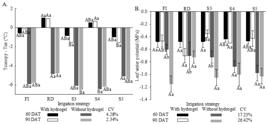
Tomato cultivation is highly demanding on the supply of water throughout its phenological cycle, especially in regions where rainfall is irregular or scarce. Given the above, the objective of this study was to analyze the viability of thermal index for determining water deficit in cherry tomato under different strategies of controlled deficit irrigation and use of a hydrogel-type soil conditioner. The experimental design adopted was randomized blocks in a 5 × 2 split-plot arrangement, referring to the irrigation strategies (FI - Full irrigation, RD - Regular deficit irrigation, with a continuously applied water deficit, S3 - Irrigation with controlled deficit in the vegetative stage, S4 - Irrigation with controlled deficit in the flowering and fruiting stages and S5 - Irrigation with controlled deficit in the maturation and harvest stages), with water deficit established at 50% of crop evapotranspiration, and use of hydrogel (WiH - With hydrogel, WoH - Without hydrogel), with four replicates, and with three plants per plot. The variables tested were: total number of flowers and fruits, total fruit weight and canopy thermal index. At 60 days after transplanting, the regular deficit irrigation and irrigation with controlled water deficit in the flowering, without hydrogel, showed the highest means of thermal index (0.98, 1.03 and 0.70 °C, respectively) and lowest leaf water potential (-0.70, -0.48 and -0.50 MPa, respectively). The thermal index obtained by thermographic images is viable for determining the effects of water deficit on cherry tomato.
Key words:
Solanum lycopersicum; water deficit; infrared thermography; water-retaining polymer
Deficit irrigation in flowering and fruiting stages for cherry tomatoes has negative impact on fruit production.
In the regular deficit irrigation strategy without hydrogel, thermal index indicated greater sensitivity to temperature.
Thermographic images facilitate the assessment of water deficit in cherry tomatoes through the analysis of thermal indices.
 Thumbnail
 Thumbnail
 Thumbnail
 Thumbnail
 Thumbnail
 Thumbnail
 Thumbnail
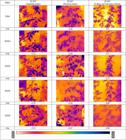
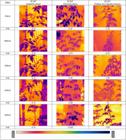
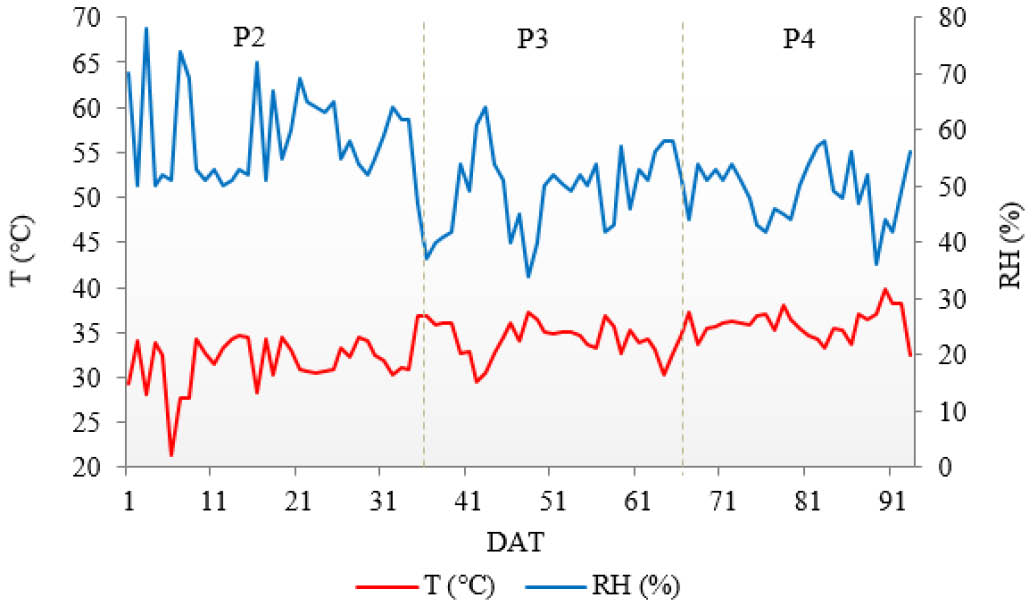 P2 - Vegetative stage, P3 - flowering and fruiting stages, P4 - Maturation and harvest stages
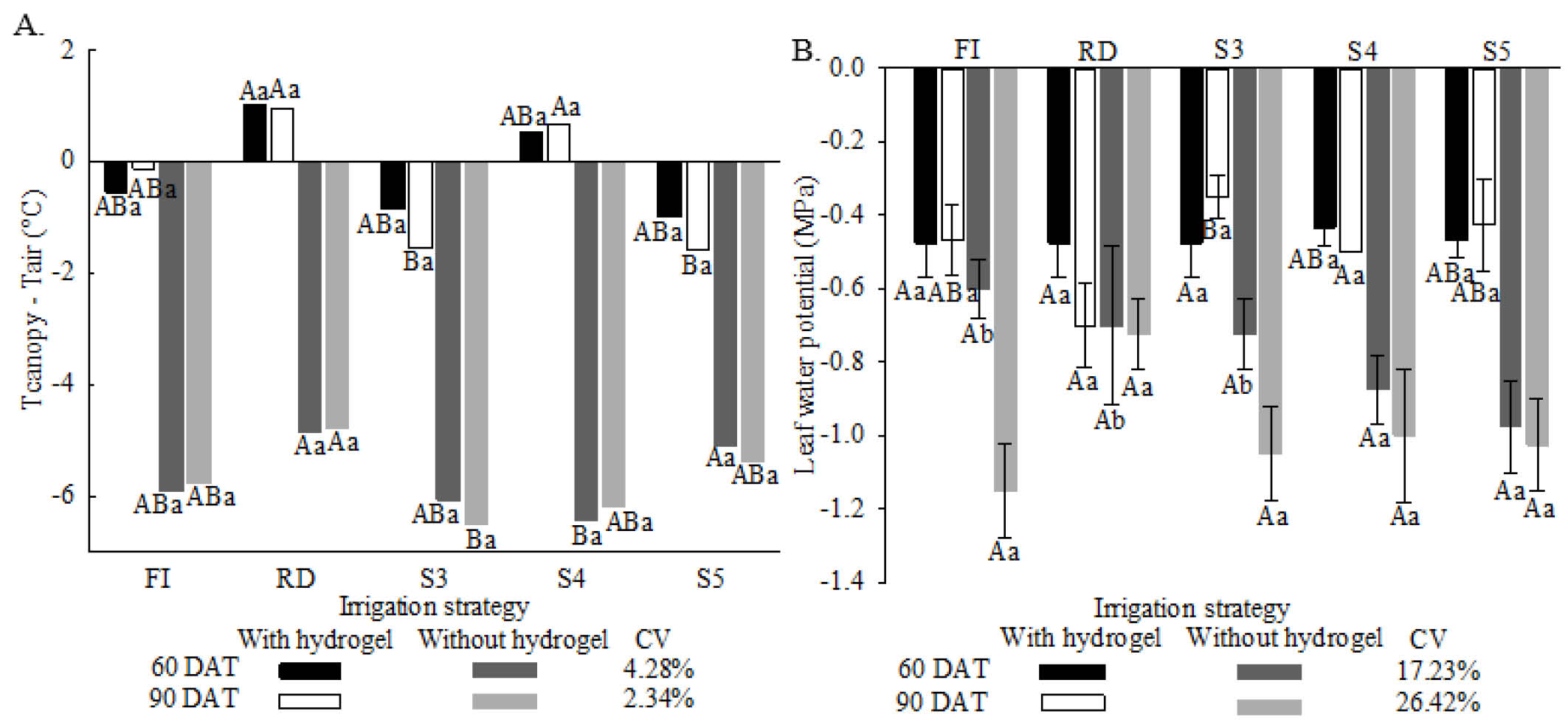 Means followed by the same uppercase letter and by the same lowercase letter do not differ statistically by Tukey test (p ≤ 0.05) between irrigation strategy and hydrogel, respectively; Vertical bars represent the standard error of the mean (n = 4)
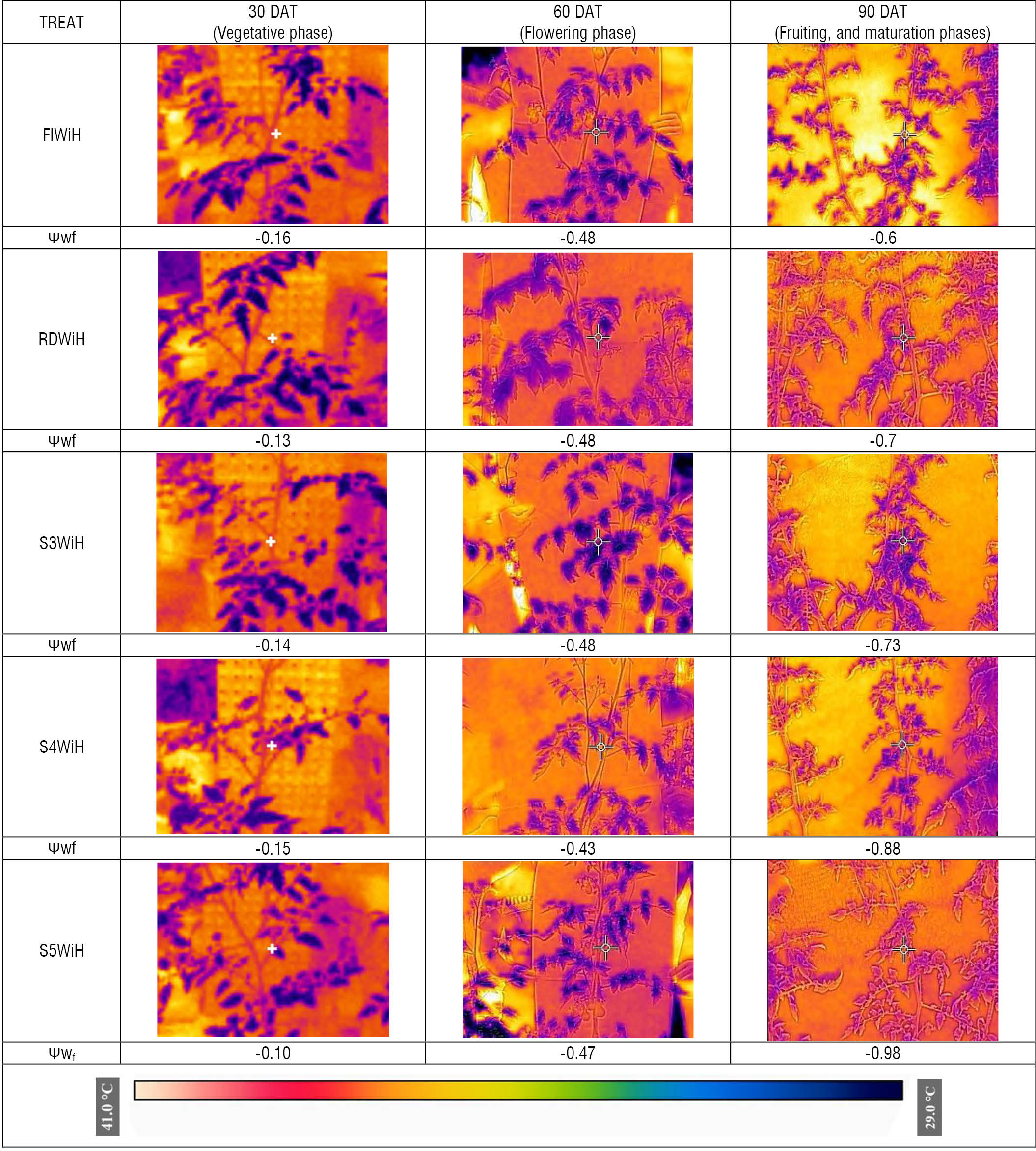 Treatments: FIWiH - Full irrigation with hydrogel; RDWiH - Irrigation with regular water deficit with hydrogel; S3WiH - Irrigation with controlled water deficit in the vegetative stage with hydrogel; S4WiH - Irrigation with controlled water deficit in the flowering and fruiting stages with hydrogel, and S5WiH - Irrigation with controlled water deficit in the maturation and harvesting stages with hydrogel
 Treatments: FIWoH - Full irrigation without hydrogel; RDWoH - Irrigation with regular water deficit without hydrogel; S3WoH - Irrigation with controlled water deficit in the vegetative stage without hydrogel; S4WoH - Irrigation with controlled water deficit in the flowering and fruiting stages without hydrogel, and S5WoH - Irrigation with controlled water deficit in the maturation and harvesting stages without hydrogel.
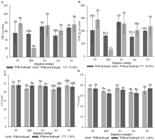
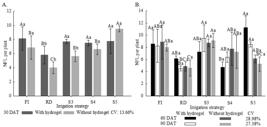
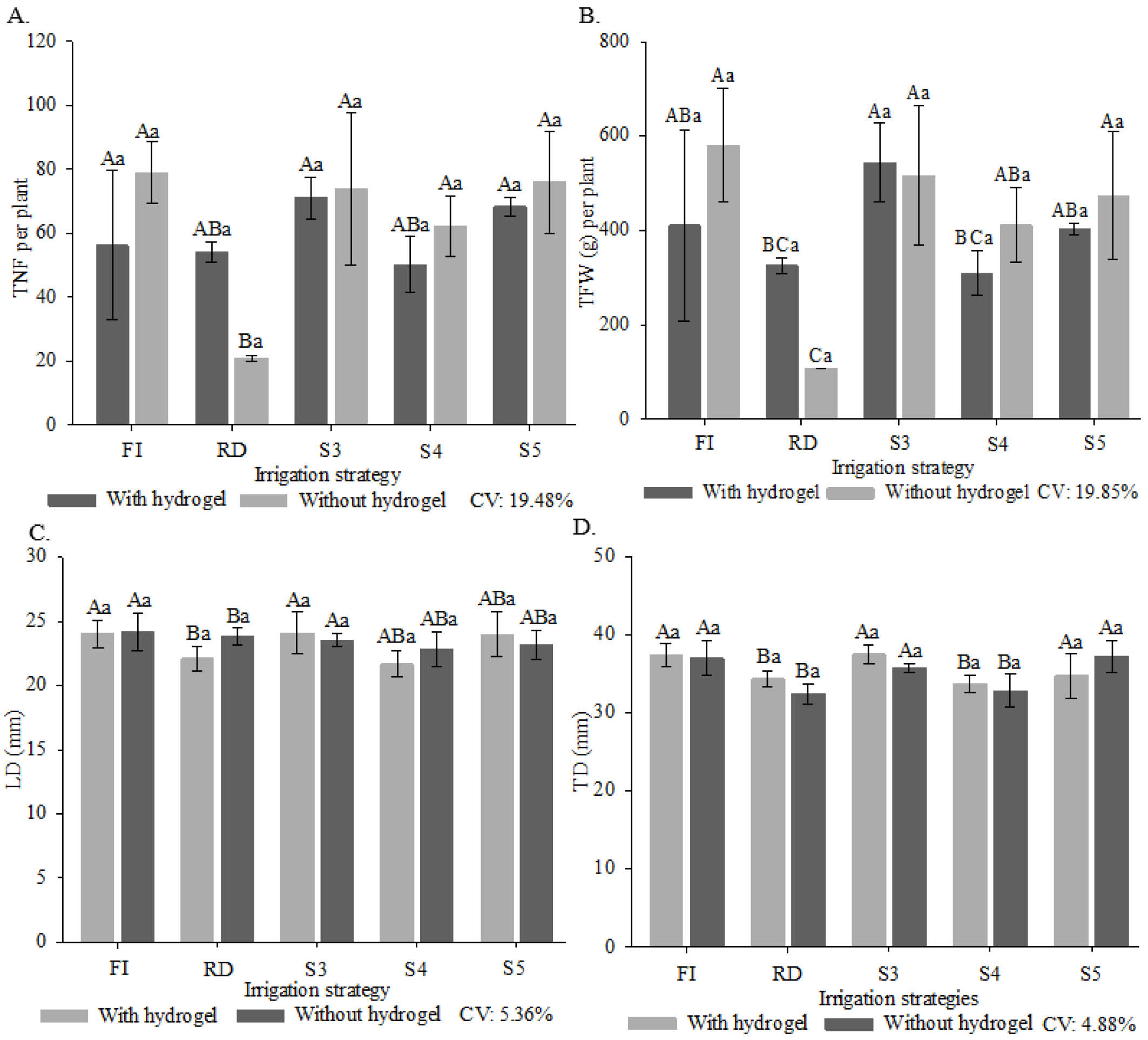 Means followed by the same uppercase letter and by the same lowercase letter do not differ statistically by Tukey test (p ≤ 0.05) between irrigation strategy and hydrogel, respectively; Vertical bars represent the standard error of the mean (n = 4)
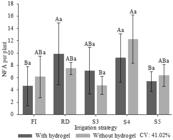
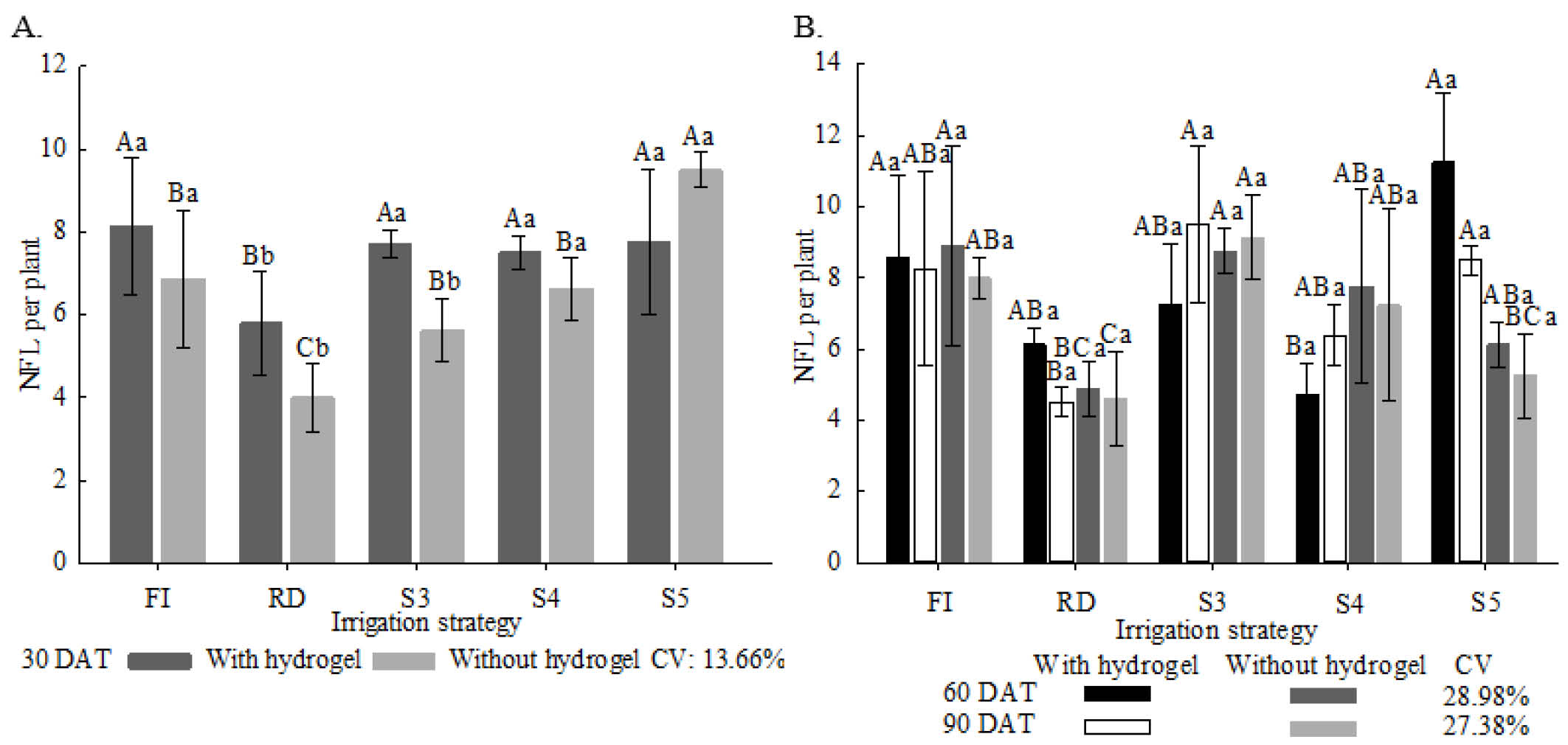 Means followed by the same uppercase letter and by the same lowercase letter do not differ statistically by Tukey test (p ≤ 0.05) between irrigation strategy and hydrogel, respectively; Vertical bars represent the standard error of the mean (n = 4)
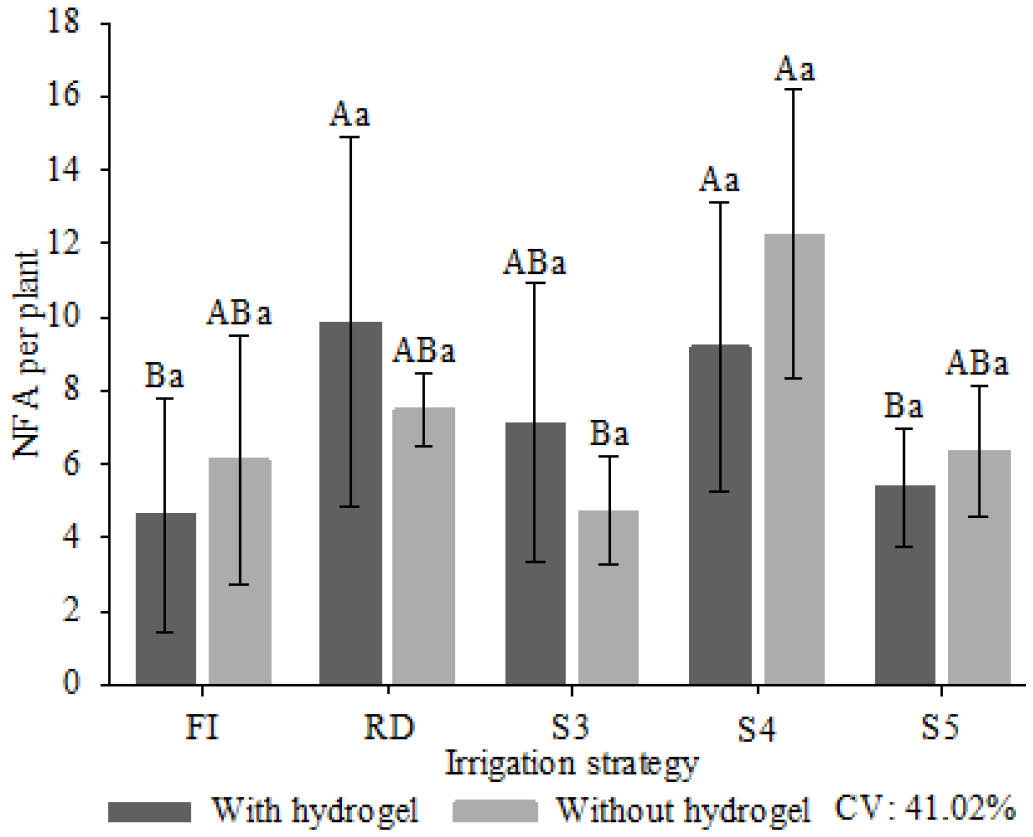 Means followed by the same uppercase letter and by the same lowercase letter do not differ statistically by Tukey test (p ≤ 0.05) between irrigation strategy and hydrogel, respectively; Vertical bars represent the standard error of the mean (n = 4)