
 Interval of irrigation suppression in beet cultivation under salt stress
ABSTRACT
Salt and water stresses affect the agronomic performance of the beet crop (Beta vulgaris L.). The aim of the present study was therefore to evaluate the effect of suppressing irrigation on the yield and quality of the tuberous root of beet under salt stress. The experiment was conducted from February to May 2023 in a greenhouse at the University of the International Integration of Afro-Brazilian Lusophony (UNILAB), Redenção, Ceará, Brazil. The experimental design used was completely randomized in a 5 × 2 factorial arrangement, with 5 repetitions, corresponding to five intervals of irrigation suppression: SI1= no water suppression interval (control), SI2 = suppression interval from 20 to 35 days after sowing (DAS), SI3 = suppression interval from 35 to 50 DAS, SI4 = suppression interval from 50 to 65 DAS and SI5 = suppression interval from 65 to 80 DAS, and the two levels of electrical conductivity of the irrigation water: 0.8 and 6.2 dS m-1. The use of water with high salinity reduced the mass and length of the tuberous root, as well as its yield; however, it promoted an increase in the soluble solids content of beet. Salt stress negatively affected root diameter and pH in the water suppression intervals from 20 to 35 DAS and from 50 to 65 DAS. The treatment with water suppression interval from 35 to 50 DAS resulted lower performance in tuberous root mass and yield.
Key words:
Beta vulgaris L.; salinity; water stress
HIGHLIGHTS:
Irrigation with brackish water (6.2 dS m-1) negatively affects the yield and quality of the tuberous root of beet.
The suppression of irrigation between 35 and 50 days after sowing reduced tuberous root mass and yield.
Salt and water stresses combined compromise the quality of beet tuberous root.
RESUMO
Os estresses salino e hídrico afetam o desempenho agronômico da cultura da beterraba (Beta vulgaris L.). Sendo assim, objetivou-se no presente estudo avaliar o efeito da supressão da irrigação na produtividade e qualidade da raiz tuberosa da beterraba sob estresse salino. O experimento foi realizado de fevereiro a maio de 2023, em casa de vegetação da Universidade da Integração Internacional da Lusofonia Afro-Brasileira (UNILAB), Redenção, Ceará. O delineamento experimental utilizado foi o inteiramente casualizado (DIC) em arranjo fatorial 5 × 2, com 5 repetições, corresponde a cinco intervalos de supressões de irrigação: IS1= sem intervalo de supressão de água (testemunha), IS2 = intervalo de supressão dos 20 a 35 dias após a semeadura (DAS), IS3 = intervalo de supressão dos 35 a 50 DAS, IS4 = intervalo de supressão dos 50 a 65 DAS e IS5 = intervalo de supressão dos 65 a 80 DAS e duas condutividades elétricas da água de irrigação: 0,8 e 6,2 dS m-1. O uso de água com salinidade elevada reduziu a massa e o comprimento da raiz tuberosa, bem como a produtividade da raiz tuberosa; entretanto, promoveu aumento no teor de sólidos solúveis da beterraba. O estresse salino afetou negativamente o diâmetro da raiz e o pH no intervalo de supressão de água dos 20 a 35 DAS e dos 50 a 65 DAS. O tratamento com intervalo de supressão de água dos 35 a 50 DAS, proporciona menor desempenho em massa de raiz tuberosa e a produção da beterraba.
Palavras-chave:
Beta vulgaris L.; salinidade; estresse hídrico
Introduction
Beet belongs to the Chenopodiaceae family and is one of the most economically valuable vegetables in the world, being widely cultivated in Brazil; its demand has been expanding in recent years due to its chemical properties and bioactive compounds and for the industrial sector due to its sugar production (Veras et al., 2017), with national yield ranging from 28 to 33 t ha-1 (Santos et al., 2020).
Irrigation is the only way to ensure safe agricultural production, especially in tropical regions with hot and dry climates. However, it is necessary to use water rationally, without causing water deficits in crops. When plant cells run out of water, cellular dehydration occurs, inducing the accumulation of abscisic acid (ABA) and morphophysiological changes in plants, which can delay the reproductive development of the plant and reduce fruit quality (Silva et al., 2020; Wakchaure et al., 2020; Moura et al., 2023).
Another problem for irrigation in the Northeast is water quality, as farmers commonly use brackish water, containing high levels of salts. Salinity reduces the osmotic potential of the soil and negatively affects the absorption of nutrients and water by plants, impairing vegetative growth, physiological indices and agricultural performance of crops (Oliveira et al., 2022; Sousa et al., 2023).
Therefore, strategies to mitigate salt stress and improve water use efficiency are essential. However, the use of combined stresses (water and salt) can affect ionic homeostasis, physiological indices, and agricultural yield. Ribeiro et al. (2024) evaluated the effect of salt stress associated with water stress on the agronomic performance of beet crops and found reductions in photosynthesis, transpiration and water use efficiency. The aim of the present study was therefore to evaluate the effect of suppressing irrigation on the yield and quality of the tuberous root of the beet crop under salt stress.
Material and Methods
The experiment was conducted in a 0.2-mm-thick plastic arch greenhouse from February 14 to May 5, 2023, in the experimental area of the Universidade da Integração Internacional da Lusofonia Afro-Brasileira (UNILAB), Redenção, Ceará, Brazil (4° 13’ 33’’ S; 38° 43’ 50’’ W and altitude of 92 m).
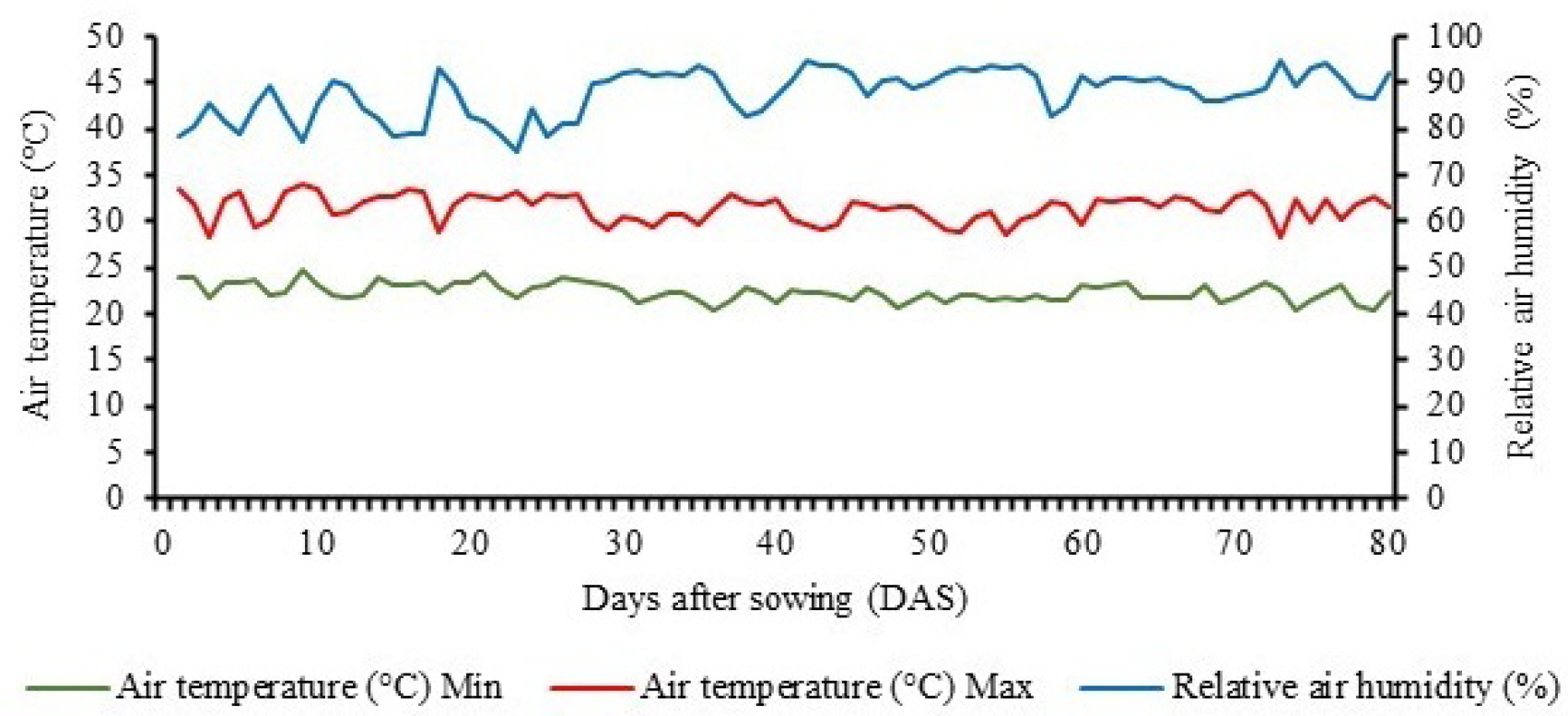
According to Köppen’s global classification system, the region’s climate is classified as BSh’, with very hot temperatures and predominant rainfall in the summer and fall seasons (Alvares et al., 2013). Weather data during the experiment (February to May 2023) was monitored inside the greenhouse using a data logger (HOBO® U12-012 Temp/RH/Light/Ext) (Figure 1).
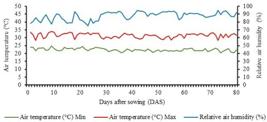
Average values of maximum (Max.) and minimum (Min.) air temperatures and mean relative air humidity observed during the experimental period (February 14 to May 5, 2023)
The experimental design used was completely randomized in a 5 × 2 factorial arrangement, with 5 repetitions, and two plants per pot, corresponding to five intervals of irrigation suppression (SI): SI1= no water suppression interval (control), SI2 = water suppression interval from 20 to 35 days after sowing (DAS), SI3 = water suppression interval from 35 to 50 DAS, SI4 = water suppression interval from 50 to 65 DAS and SI5 = water suppression interval from 65 to 80 DAS, following adaptation by Costa et al. (2008), and two electrical conductivities of the irrigation water (ECw - 0.8 and 6.2 dS m-1). The electrical conductivity of irrigation water related to the saline treatment was defined by Gadelha et al. (2021) when carrying out the study under the same soil and climate conditions as this study, where they adapted the threshold salinity of the crop (5.8 dS m-1), proposed by Maas & Hofman (1977).
The substrate used was made up of sand, sandy soil, and bovine manure in a ratio of 5:4:1 (v/v) respectively, and its chemical analysis was carried out at the laboratory belonging to the Universidade Federal de Lavras (UFLA), following the methodology described in Teixeira et al. (2017) (Table 1).
The beet seed used in the study was Topseed’s Early Wonder cultivar, characterized as early with a cycle of between 70 and 80 days, round-shaped roots, high yield, and resistance to diseases. When sowing, five seeds were placed directly into plastic pots with a volumetric capacity of 8 L to ensure uniformity in the stand. Once the seedlings were established, at 10 days after sowing (DAS), thinning was carried out, leaving a single plant per pot, with dimensions of 23 cm high x 24 cm wide.
Mineral fertilization was based on the recommendations of Resende & Cordeiro (2007), corresponding at 60 kg ha-1 of N (urea, 45% of N), 210 kg ha-1 of P2O5 (single superphosphate, 18% of P2O5) and 120 kg ha-1 of K2O (potassium chloride, 62% of K2O), applying 6 g of urea, 21 g of single superphosphate and 12 g of potassium chloride per pot.
During the experiment, the water used came from the Auroras Campus water supply system, stored in 100-L drums, with an electrical conductivity of 0.8 dS m-1, and brackish water of 6.2 dS m-1 was prepared using the salts sodium chloride (NaCl), calcium chloride (CaCl2.2H2O), and magnesium chloride (MgCl2.6H2O), in an equivalent ratio of 7:2:1 (Medeiros, 1992), following the relationship between ECw and its concentration (mmolc L-1 = EC × 10) according to Richards (1954).
Irrigations were carried out manually, and the volume to be applied was calculated according to the principle of the drainage micro-lysimeter (Eq 1), keeping the soil at field capacity and applying a fixed leaching fraction of 15% as recommended by Ayers & Westcot (1999)
where:
VI - volume of water to be applied in the irrigation event (mL);
Vp - volume of water applied in the previous irrigation event (mL);
Vd - volume of water drained (mL); and,
LF - leaching fraction of 0.15.
At 80 DAS, the following yield components were analyzed: tuberous root diameter (TRD, mm), tuberous root length (TRL, mm), using a digital caliper and expressed in millimeters, tuberous root mass (TRM, g pot-1) and tuberous root yield (TRY, g pot-1), using a precision digital scale. Then, the tuberous root was processed to analyze the post-harvest variables. According to the treatments, 5 g of the aqueous extract of beetroot, diluted in 50 mL of distilled water, were weighed to analyze the soluble solids (SS) (°Brix) and pH using a portable digital refractometer and a benchtop pH meter, respectively, according to the methodology of the Adolfo Lutz Institute (Instituto Adolfo Lutz, 2005).
The data obtained were subjected to the Kolmogorov-Smirnov test to verify the normality of the data. They were then subjected to analysis of variance using the F test and, if significant, subjected to Tukey’s test (p ≤ 0.05), using Assistat software 7.7 Beta (Silva & Azevedo, 2016).
Results and Discussion
According to the analysis of variance (Table 2), there was an interaction between the factors irrigation suppression interval (SI) and brackish water (BW) for the following variables: tuberous root diameter (TRD) and hydrogen potential (pH). For tuberous root mass (TRM), soluble solids (SS) and tuberous root yield (TRY), there were individual effects of the irrigation suppression interval and brackish water, while for tuberous root length (TRL), there was an individual effect of the brackish water by the ‘F’ test.
Summary of the analysis of variance for the variables tuberous root mass (TRM), tuberous root yield (TRY), soluble solids (SS), tuberous root length (TRL), tuberous root diameter (TRD), and hydrogen potential (pH) in beet (Beta vulgaris L.) subjected to different water suppression intervals and irrigation water salinity
The tuberous root mass (Figure 2A) showed no statistical difference between the control treatment (no water suppression - SI1) and the water suppression interval from 20 to 35 DAS - SI2, water suppression interval from 50 to 65 DAS - SI4 and water suppression interval from 60 to 85 DAS - SI5, but was statistically superior to the water suppression interval from 35 to 50 DAS - SI3. It should be noted that at this stage the beet root begins to thicken and accumulate nutrients (Costa et al., 2008), i.e., water stress negatively affected performance in root mass, since stress limits water absorption by plants, resulting in greater energy expenditure to obtain water for their basic functions.
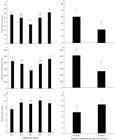
Tuberous root mass (A and B), tuberous root yield (C and D) and soluble solids (E and F) of beet (Beta vulgaris L.) as a function of water suppression intervals (A, C and E) and electrical conductivity of irrigation water (B, D and F) at 80 days after sowing (DAS)
A similar trend to the one reported in this study was found by Fruet et al. (2019), who observed that water deficit (60 days after transplantation) negatively affected the tuberous root mass of the sugar beet crop. Miranda & Pereira (2019) also observed a decrease in tuberous root mass of beet crop with increasing soil water tension in the final phase (75 days after transplantation).
In Figure 2B, statistical analysis revealed that water with lower salinity (0.8 dS m-1) resulted in a higher tuberous root mass, with a value of 40.04 g, compared to water with higher salinity (6.2 dS m-1), which led to a root mass of 20.35 g. This difference represents a 49.17% reduction in root mass between the two treatments. Excess salts in the soil via irrigation water cause a reduction in the soil’s osmotic potential and consequently in the absorption of water and nutrients by the plant, affecting the filling of the tuberous root and consequently its mass (Lima et al., 2021). Similarly, Semedo et al. (2024) reported a negative effect of salt stress on fruit mass in zucchini plants.
As with tuberous root mass, only the treatment with a water suppression interval of 35 to 50 DAS-SI3 led to lower tuberous root yield, being statistically inferior to the other intervals (Figure 2C), with a reduction of 35.51% when compared to the highest value in the water suppression interval of 60 to 85 DAS-SI5, being 283.09 and 460.39 g per pot, respectively. This data distribution is probably associated with water deficit in the tuberous root filling phase, where water stress is one of the main obstacles for agricultural crops, affecting leaf water potential, transpiration and the distribution of photoassimilates and consequently plant productivity (Moura et al., 2023).
As found in this study, Ferreira et al. (2021) also found a reduction in beet crop yield under water stress, where the plants were subjected to irrigation depths with 80% of crop evapotranspiration. Similarly, Miranda & Pereira (2019) described that the yield of the beet crop was better under lower soil water tension.
The use of higher salinity water led to a 49.17% reduction in tuberous root yield when compared to lower salinity water (Figure 2D). There is a direct relationship between tuberous root yield and tuberous root mass, since the beet root has the capacity to store photoassimilates, transforming the product of photosynthesis into nutrients. However, salt stress reduces leaf area, as well as the length of the root, which can reach approximately 13 cm, as reported by Santos et al. (2016).
Corroborating the results obtained, Gadelha et al. (2021) worked with sugar beet crops irrigated with brackish water (5.8 dS m-1) and found that tuberous root yield decreased as a result of increased salt stress. Similarly, Ribeiro et al. (2024), when evaluating the agronomic performance of sugar beet crops subjected to salt stress (4.5 and 6.0 dS m-1), found a reduction in tuberous root yield.
As shown in Figure 2E, for the soluble solids content, the treatment (no water suppression interval) obtained the lowest average, but it did not differ statistically from the SI3 treatment. The result shows that water stress stimulated greater production of solids (sugars) in the beet plant tissue, leading to earlier maturation of the tuberous root (Mahmoud et al., 2018).
Conversely, Fruet et al. (2019) confirmed that the highest soluble solids value was obtained for the treatment with the highest water depth (130% of evapotranspiration) applied to the beet crop. In contrast, Ribeiro et al. (2024) found a different response from that obtained in this study, where the 50 and 100% water regimes did not influence the soluble solids content in beet plants.
Salt stress was statistically superior to the control treatment for soluble solids content (Figure 2F), revealing a 27.08% increase. The higher concentration of salts in the irrigation water probably accelerated the maturation of the tuberous root, indicating that there was an increase in the sugar content present in the plant tissues (Bouras et al., 2021).
A similar trend for the same variable was reported by Ribeiro et al. (2024) in beet under salt stress of 6.0 dS m-1. These same authors found a positive linear effect with an increase in salt stress, obtaining 39.39% increase compared to the control. Corroborating this study, Gadelha et al. (2021) found that the soluble solids content of the beet crop was higher when using water with a higher salt concentration (5.8 dS m-1) compared to the lower electrical conductivity of the irrigation water (0.3 dS m-1).
According to Figure 3, the length of the tuberous root showed a statistical difference between the electrical conductivity levels of the water applied; it was higher when irrigating with lower salinity water (0.8 dS m-1) compared to the higher salinity water (6.2 dS m-1), with values of 55.53 and 41.4 (mm) respectively, showing a reduction of 25.45%.
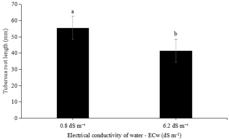
Tuberous root length of beet (Beta vulgaris L.) as a function of the electrical conductivity of the irrigation water at 80 days after sowing (DAS)
The length of a tuberous root indicates the capacity to store starch in the plant tissue of a crop, but in environments that have abiotic stresses, such as salt stress, changes can occur in the physiology of the plant, a fact confirmed by the action of salt stress in reducing the length of the tuberous root (Silva et al., 2015).
These results corroborate the study carried out by Lima et al. (2021), in which the authors found that the use of saline water in beet cultivation affected the length of the tuberous root, but to a lesser extent when irrigated with water of lower salinity. Similarly, Gadelha et al. (2021) also found reductions in the length of beet tubers under salt stress.
For tuberous root diameter (Figure 4A), the lower salinity water (0.8 dS m-1) was statistically superior to the higher salinity water in the water suppression intervals SI2, SI4 and SI5. Among the irrigation waters, the lowest salinity was statistically equal in SI1, SI4 and SI5, while for water with higher salinity there was no statistical difference between the studied intervals. This result may be associated with the joint effect of water and salt stress, responsible for reducing the diameter of the tuberous root, which directly affects the accumulation of photoassimilates in the storage organ (Yolcu et al., 2021).
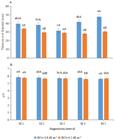
Tuberous root diameter (A) and pH (B) of beet (Beta vulgaris L.) as a function of different water suppression intervals and electrical conductivity of the irrigation water at 80 days after sowing (DAS)
The opposite trend to that found in this study was observed by Ribeiro et al. (2024) in beet crops irrigated with brackish water under water stress. The mentioned authors observed no effect of the interaction between these factors on tuberous root diameter. On the other hand, when studying the beet crop irrigated with brackish water (8 dS m-1) and without water restriction, Gadelha et al. (2021) found a reduction in the diameter of the tuberous root of the beet crop.
Based on Figure 4B, the hydrogen potential (pH) of the aqueous extract of beet root variable showed a statistical difference under the irrigation water of 0.8 dS m-1 for the water suppression intervals of 35 to 50 DAS - SI2 and under the water suppression interval of 60 to 85 DAS - SI4, but the highest value was found in the control treatment - SI1 (without water suppression interval). The pH values are all within the standard for beetroot cultivation (5.2 to 6.0), proposed by Barreto et al. (2013). This effect may have induced greater enzyme synthesis, which leads to the production of acidic compounds such as malic acid (Santos et al., 2019).
In pot experiment, Ribeiro et al. (2024) evaluated the effect of salt stress on beet plants under water reduction and obtained a similar response to that found in this study, obtaining a pH of 6.23 in the aqueous extract of beet root.
Conclusions
-
The use of water with high salinity reduced the mass and length of the tuberous root, as well as its yield; however, it promoted an increase in the soluble solids content in the beet crop (Beta vulgaris L.).
-
Salt stress negatively affected root diameter and pH in the water suppression interval from 20 to 35 and from 50 to 65 days after sowing.
-
Treatment with water suppression interval of 35 to 50 days after sowing results in lower tuberous root mass performance and tuberous root yield in the beet crop.
Acknowledgments
The authors would like to thank FUNCAP (Fundação Cearense de Apoio ao Desenvolvimento Científico e Tecnológico) for supporting this study.
Literature Cited
- Alvares, C. A.; Stape, J. L.; Sentelhas, P. C.; Gonçalves, J. L. M.; Sparovek, G. Köppen’s climate classification map for Brazil. Meteorologische Zeitschrift, v.22, p.711-728, 2013.
- Ayers, R. S.; Westcot, D. W. A qualidade da água na agricultura. 2.ed. Campina Grande: UFPB, 1999. 153p. Estudos FAO: Irrigação e Drenagem, 29.
-
Barreto, C. R.; Zanuzo, M. R.; Wobeto, C.; Rosa, C. C. B. Produtividade e qualidade da beterraba em função da aplicação de doses e nitrogênio. Revista Brasileira Multidisciplinar, v.16, p.145-158, 2013. https://doi.org/10.25061/2527-2675/ReBraM/2013.v16i1.52
» https://doi.org/10.25061/2527-2675/ReBraM/2013.v16i1.52 -
Bouras, H.; Bouaziz, A.; Bouazzama, B.; Hirich, A.; Choukr-Allah, R. How phosphorus fertilization alleviates the effect of salinity on sugar beet (Beta vulgarisL.) productivity and quality. Agronomy, v.11, p.1-12, 2021. https://doi.org/10.3390/agronomy11081491
» https://doi.org/10.3390/agronomy11081491 -
Costa, R. N. T.; Vasconcelos, J. P.; Silva, L. A.; Ness, R. L. L. Interferência do excesso de água no solo e componentes de produção em beterraba. Horticultura Brasileira, v.26, p.74-77, 2008. https://doi.org/10.1590/S0102-05362008000100014
» https://doi.org/10.1590/S0102-05362008000100014 -
Ferreira, L. A.; Tormen, G. P.; Silva, S.; Silva, S.; Gonçalves, L. D.; Campos, D. S. Efeito de lâminas de irrigação no rendimento de beterraba cultivada no Alto São Francisco, Minas Gerais. Research, Society and Development, v.10, e18010817228, 2021. https://doi.org/10.33448/rsd-v10i8.17228
» https://doi.org/10.33448/rsd-v10i8.17228 -
Fruet, D. L.; Tambani, M.; Araújo, J. C.; Sturmer, S. L.; Valicheski, R. R. Desempenho da beterraba sob diferentes lâminas de irrigação e doses de pó de rocha adicionadas ao solo. Brazilian Journal of Development, v.5, p.9620-9627, 2019. https://doi.org/10.34117/bjdv5n7-141
» https://doi.org/10.34117/bjdv5n7-141 -
Gadelha, B. B.; Freire, M. H. C.; Sousa, H. C.; Costa, F. H. R.; Lessa, C. I. N.; Sousa, G. G. Crescimento e produção de beterraba irrigada com água salina em diferentes tipos de cobertura vegetal. Revista Brasileira de Engenharia Agrícola e Ambiental, v.25, p.847-852, 2021. https://doi.org/10.1590/1807-1929/agriambi.v25n12p847-852
» https://doi.org/10.1590/1807-1929/agriambi.v25n12p847-852 - Instituto Adolfo Lutz. 2005. Métodos físico-químicos para análise de alimentos: normas analíticas do Instituto Adolfo Lutz. 4.ed. Brasília: ANVISA, 2005. 1018p.
-
Lima, A. F. S.; Almeida, M. S.; Gomes, K. J. S.; Sousa, G. G.; Freire, M. H. C.; Marques, V. B. Potassium fertilization and salt stress on beet crop. Journal of Plant Nutrition, v.45, p.984-991, 2021. https://doi.org/10.1080/01904167.2021.1994597
» https://doi.org/10.1080/01904167.2021.1994597 -
Maas, E. V.; Hoffman, G. J. Crop salt tolerance current assessment. Journal of the Irrigation Drainage Division, v.103, p.115-134, 1977. https://doi.org/10.1061/JRCEA4.0001137
» https://doi.org/10.1061/JRCEA4.0001137 -
Mahmoud, E. S. A.; Hassanin, M. A.; Borham, T. I.; Emara, E. I. Tolerance of some sugar beet varieties to water stress. Agricultural Water Management, v.201, p.144-151, 2018. https://doi.org/10.1016/j.agwat.2018.01.024
» https://doi.org/10.1016/j.agwat.2018.01.024 - Medeiros, J. F. Qualidade da água de irrigação utilizada nas propriedades assistidas pelo “GAT” nos Estados do RN, PB, CE e avaliação da salinidade dos solos. Campina Grande: UFPB , 1992. 173p. Dissertação Mestrado.
-
Miranda, J. R.; Pereira, G. M. Cultivo da beterraba sob diferentes tensões de água no solo. Irriga, v.24, p.220-235, 2019. http://dx.doi.org/10.15809/irriga.2019v24n2p220-235
» http://dx.doi.org/10.15809/irriga.2019v24n2p220-235 -
Moura, E. A.; Mendonça, V.; Figueirêdo, V. B.; Oliveira, L. M.; Melo, M. F.; Irineu, T. H. S.; Andrade, A. D. M.; Chagas, E. A.; Chagas, P. C.; Ferreira, E. S.; Mendonça, L. F. M.; Figueiredo, F. R. A. Irrigation depth and potassium doses affect fruit yield and quality of figs (Ficus carica L.). Agriculture, v.13, e640, 2023. https://doi.org/10.3390/agriculture13030640
» https://doi.org/10.3390/agriculture13030640 -
Oliveira, F. R.; Sousa, G. G.; Sousa, J. T. M.; Leite, K. N.; Guilherme, J. M. S.; Nogueira, R. S. Respostas fisiológicas da cultura da beterraba sob ambiente agrícola e estresse salino. Revista Ambiente & Água, v.17, e2868, 2022. https://doi.org/10.4136/ambi-agua.2868
» https://doi.org/10.4136/ambi-agua.2868 - Resende, G. M.; Cordeiro, G. G. Uso de água salina e condicionador do solo na produtividade de beterraba e cenoura no semi-árido do Submédio São Francisco. Petrolina: Embrapa Semi-Árido, 2007. 4p.
-
Ribeiro, R. M. R.; Sousa, G. G.; Barbosa, A. S.; Matos, E. C.; Viana, T. V. A.; Leite, K. N.; Costa, F. H. R.; Cambissa, P. B. C.; Sales, J. R. S.; Santos, S. O. The impact of saline and water stress on the agronomic performance of beet crops. Brazilian Journal of Biology, v.84, e276278, 2024. https://doi.org/10.1590/1519-6984.276278
» https://doi.org/10.1590/1519-6984.276278 - Richards, L. A. Diagnosis and improvement of saline and alkali soils. Washington: US Department of Agriculture, 1954. 160 p. USDA Agriculture Handbook, 60.
- Santos, C. A.; Oliveira, A. B.; Rocha, I. A.; Freitas, P. G. N.; Beterraba: a raiz forte da terra. Revista Campo & Negócios: Anuário AH 2020, p.31-34, 2020.
-
Santos, D. P. D.; Santos, C. S. D.; Silva, P. F. D.; Pinheiro, M. P. M. A.; Santos, J. C. Crescimento e fitomassa da beterraba sob irrigação suplementar com água de diferentes concentrações salinas. Revista Ceres, v.63, p.509-516, 2016. https://doi.org/10.1590/0034-737X201663040011
» https://doi.org/10.1590/0034-737X201663040011 -
Santos, H. C.; Pereira, E. M.; Medeiros, R. L. S.; Costa, P. M. A.; Pereira, W. E. Production and quality of okra produced with mineral and organic fertilization. Revista Brasileira de Engenharia Agrícola e Ambiental , v.23, p.97-102, 2019. http://doi.org/10.1590/1807-1929/agriambi.v23n2p97-102
» http://doi.org/10.1590/1807-1929/agriambi.v23n2p97-102 -
Semedo, T. C. M.; Sousa, G. G.; Sousa, H. C.; Schneider, F.; Lima, J. M. P.; Gomes, K. R.; Simplício, A. A. F.; Saraiva, K. R. Production and fruit quality of Italian zucchini under brackish water irrigation strategies. Revista Brasileira de Engenharia Agrícola e Ambiental , v.28, e277139, 2024. https://dx.doi.org/10.1590/1807-1929/agriambi.v28n10e277139
» https://dx.doi.org/10.1590/1807-1929/agriambi.v28n10e277139 -
Silva, A. O.; Silva, E. F. F.; Bassoi, L. H.; Klar, A. E. Desenvolvimento de cultivares de beterraba sob diferentes tensões da água no solo. Horticultura Brasileira , v.33, p.12-18, 2015. https://doi.org/10.1590/S0102-053620150000100003
» https://doi.org/10.1590/S0102-053620150000100003 -
Silva, F. A. S.; Azevedo, C. A. V. The Assistat software version 7.7 and its use in the analysis of experimental data. African Journal of Agricultural Research, v. 11, p.3733-3740, 2016. https://doi.org/10.5897/AJAR2016.11522
» https://doi.org/10.5897/AJAR2016.11522 -
Silva, J. A.; Santos, P. A. B.; Carvalho, L. G.; Moura, E. G.; Andrade, F. R. Gas exchanges and growth of soybean cultivars submitted to water deficiency. Pesquisa Agropecuária Tropical, v.50, p.1-9, 2020.https://doi.org/10.1590/1983-40632020v5058854
» https://doi.org/10.1590/1983-40632020v5058854 -
Sousa, G. G.; Sousa, H. C.; Lessa, C. I.; Goes, G. F.; Freire, M. H. C.; Souza, M. V. P.; Gomes, S. P.; Schneider, F. Production of watermelon seedlings in different substrates under salt stress. Revista Brasileira de Engenharia Agrícola e Ambiental , v. 27, p.343-351, 2023. https://doi.org/10.1590/1807-1929/agriambi.v27n5p343-351
» https://doi.org/10.1590/1807-1929/agriambi.v27n5p343-351 - Teixeira, P. C.; Donagemma, G. K.; Fontana, A.; Teixeira, W. G. Manual de métodos de análise de solo. 3.ed. Brasilia: Embrapa, 2017. 573p.
-
Veras, P. V.; Valnir Junior, M.; Lima, L. S. S.; Rocha, J. P. A.; Demontiezo, F. L. L.; Aragao, M. F. Avaliação de crescimento de cultivares de beterraba de mesa sob diferentes lâminas de irrigação. Revista Brasileira de Agricultura Irrigada, v.11, p.1271-1277, 2017. https://doi.org/10.7127/rbai.v11n200597
» https://doi.org/10.7127/rbai.v11n200597 -
Wakchaure, G. C.; Minhas, P. S.; Meena, K. K.; Kumar, S.; Rane, J. Effect of plant growth regulators and deficit irrigation on canopy traits, yield, water productivity and fruit quality of eggplant (Solanum melongena L.) grown in the water scarce environment. Journal of Environmental Management, v.262, e110320, 2020. https://doi.org/10.1016/j.jenvman.2020.110320
» https://doi.org/10.1016/j.jenvman.2020.110320 -
Yolcu, S.; Alavilli, H.; Ganesh, P.; Panigrahy, M.; Song, K. Salt and drought stress responses in cultivated beets (Beta vulgaris L.) and wild beet (Beta maritima L.). Plants, v.10, e1843, 2021. https://doi.org/10.3390/plants10091843
» https://doi.org/10.3390/plants10091843
Financing statement
There are no supplementary sources.

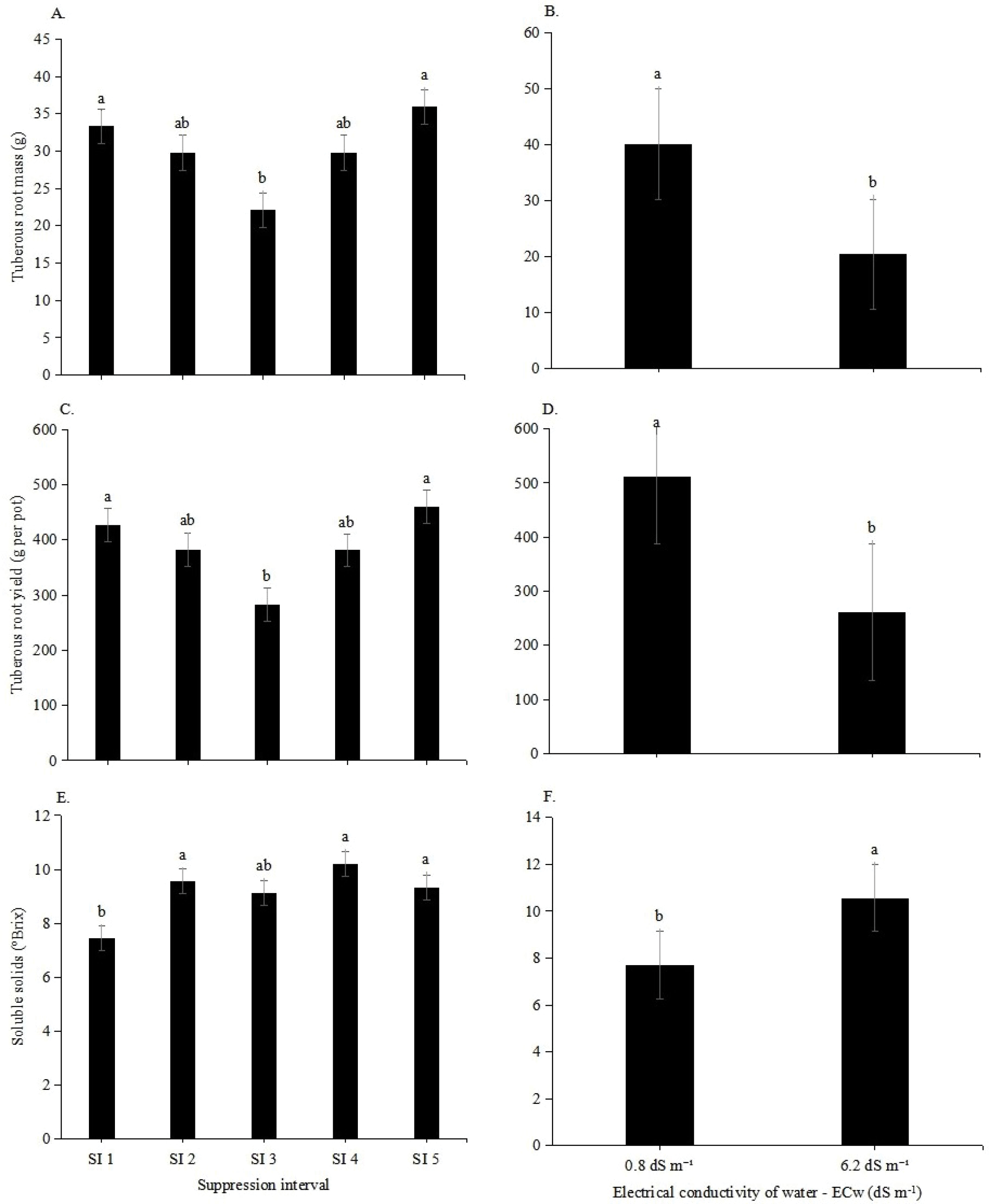 Means followed by different lowercase letters indicate significant differences by Tukey’s test (p ≤ 0.05). Vertical bars represent the standard error of the mean (n = 5). Suppression interval: SI1 - no water suppression interval (control); SI2 - 20 to 35 DAS; SI3 - 35 to 50 DAS; SI4 - 50 to 65 DAS; SI5 - 65 to 80 DAS and the second factor was two levels of salinity in the irrigation water: ECw - 0.8 and 6.2 dS m-1. The use of water with high salinity (6.2 dS m-1)
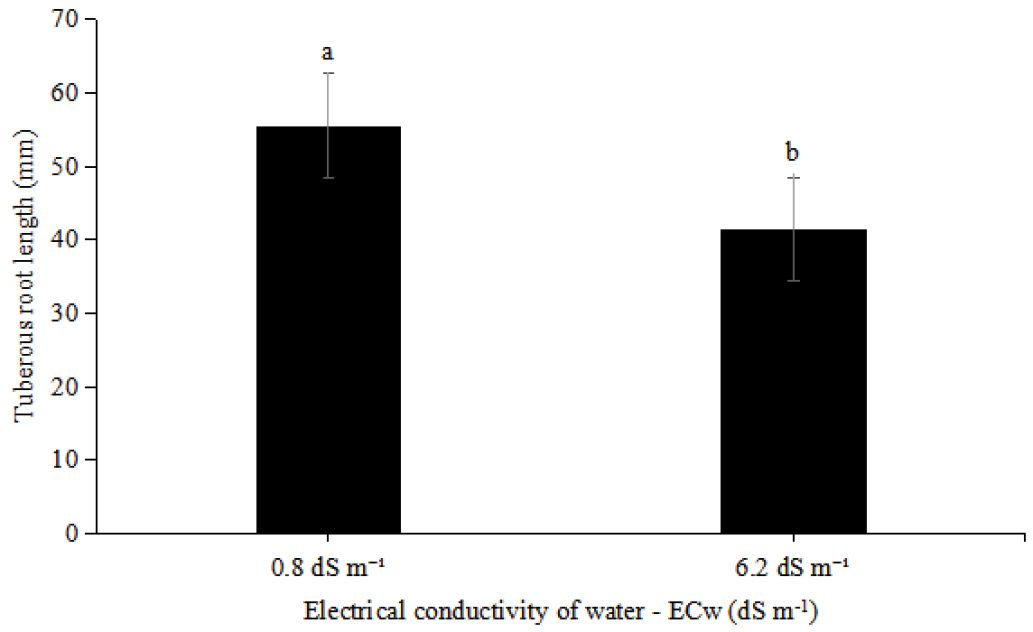 Means followed by the same letter do not differ statistically by the Tukey test (p ≤ 0.05).
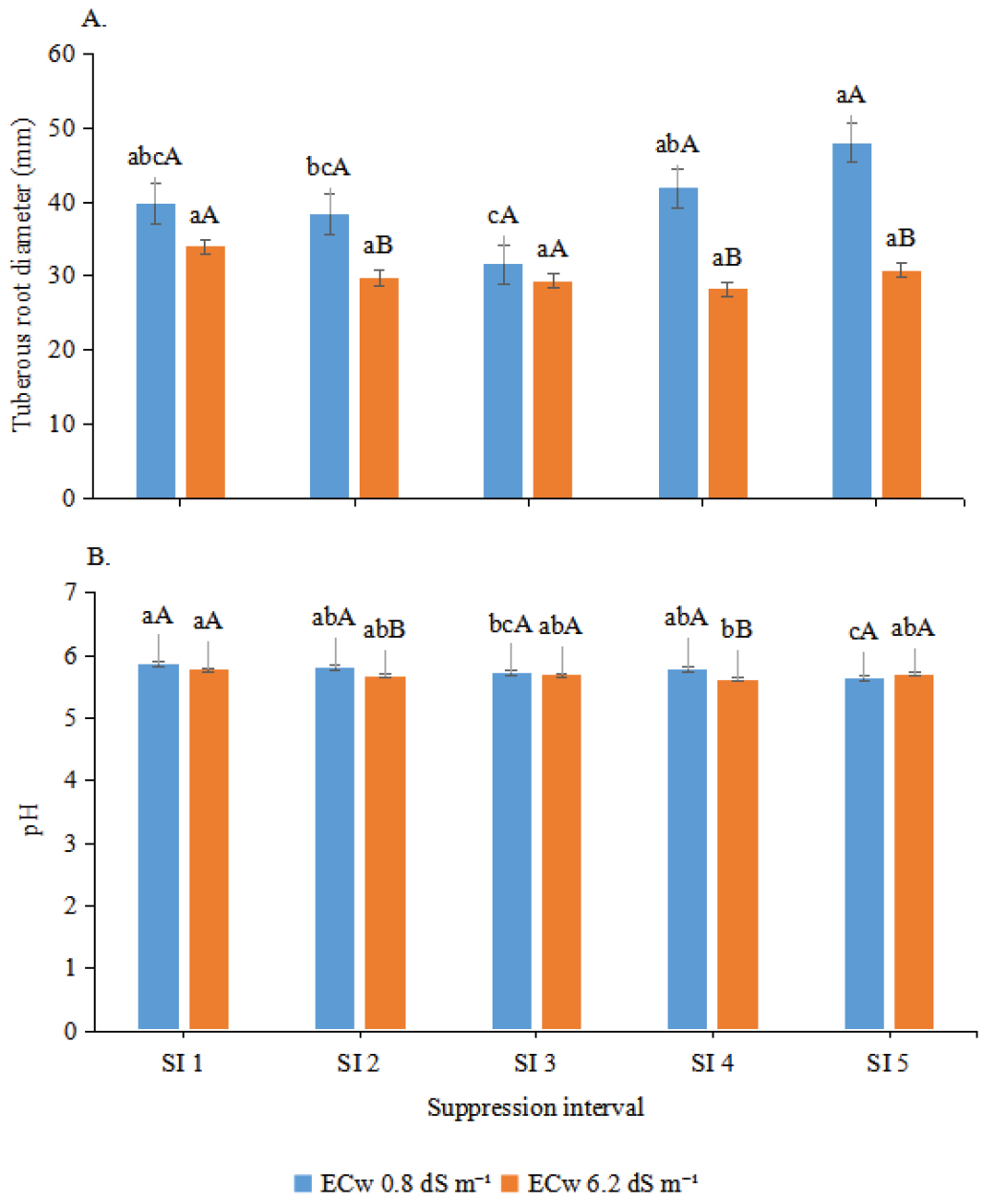 Lowercase letters compare the mean values of the different water suppression intervals at the same ECw level and uppercase letters compare the ECw values within each water suppression interval; same letters are not significantly different by Tukey’s test (p ≤ 0.05). Suppression interval: SI1 - No water suppression interval (control); SI2 - 20 to 35 DAS; SI3 - 35 to 50 DAS; SI4 - 50 to 65 DAS; SI5 - 65 to 80 DAS