 Delirium in hospitalized older adults: influence of sociodemographic and clinical factors in a longitudinal study
Abstract
Objective To analyze the effects of sociodemographic and clinical characteristics on the occurrence of delirium in hospitalized older adults.
Method A prospective longitudinal study was conducted with 427 older adults aged ≥60 years without delirium at hospital admission, between March 2022 and July 2023. Delirium was monitored daily until discharge or death. Kaplan–Meier curves were used to estimate survival, and Cox proportional hazards regression was used to calculate hazard ratios (95% CI), assessed using the Wald test. The proportional hazards assumption was verified using Schoenfeld residuals.
Results The risk of delirium was 5.47 times higher in frail individuals, 2.5 times higher in those receiving palliative care, and 2.51 times higher in individuals with dementia. Income greater than 3.1 minimum wages was a protective factor, reducing the risk by 71% compared with the 0–1 minimum wage category. Older adults with hospitalizations in the previous 12 months had a 56% lower risk of delirium. Age ≥80 years (p=0.0007), widowhood (p=0.0142), low body weight (p=0.0002), frailty (p<0.001), dementia (p≤0.0001), and palliative care (p≤0.0001) were associated with shorter time to first delirium episode.
Conclusion Frailty, dementia, and the need for palliative care were the main risk factors for delirium in older adults, whereas higher income showed a protective effect. Recognition of these factors allow the implementation of targeted, individualized, and more effective preventive and therapeutic strategies for delirium in hospitalized older adults.
Keywords
Aged; Hospitalization; Delirium; Observational Study; Risk Factors.
Resumo
Objetivo Analisar os efeitos das características sociodemográficas e clínicas na ocorrência de delirium em pessoas idosas hospitalizadas.
Método Estudo longitudinal prospectivo realizado com 427 pessoas idosas (≥60 anos de idade) sem ocorrência de delirium na admissão hospitalar, entre março de 2022 e julho de 2023. O delirium foi monitorado diariamente até alta ou óbito. Curvas de Kaplan–Meier estimaram a sobrevida, e a regressão de Cox calculou as razões de risco (IC95%), avaliadas pelo teste de Wald. A proporcionalidade dos riscos foi verificada pelos resíduos de Schoenfeld.
Resultados O risco de <italic>delirium </italic>foi 5,47 vezes maior nos frágeis, 2,5 vezes maior em cuidados paliativos e 2,51 vezes maior em pessoas com demência. Renda superior a 3,1 salários mínimos foi fator protetor, reduzindo o risco em 71% em relação à faixa de 0 a 1 salário mínimo. Pessoas idosas com internações nos últimos 12 meses apresentaram risco de delirium 56% menor. Idade ≥80 anos (p=0,0007), viuvez (p=0,0142), baixo peso (p=0,0002), fragilidade (p<0,001), demência (p≤0,0001) e cuidados paliativos (p≤0,0001) associaram-se a menor tempo até o primeiro episódio de delirium.
Conclusão A fragilidade, demência e necessidade de cuidados paliativos foram os principais fatores de risco para delirium em pessoas idosas, enquanto maior renda mostrou efeito protetor. Reconhecer esses fatores permite direcionar tratamentos e cuidados preventivos, individualizados e mais eficazes para delirium na população idosa hospitalizada.
Palavras-chave
Idoso; Hospitalização; Delirium; Estudo Observacional; Fatores de Risco.
INTRODUCTION
Delirium is an acute and multifactorial neuropsychiatric syndrome, considered one of the most prevalent conditions among hospitalized older adults, due to the concomitant presence of multiple risk factors1. It is characterized by alterations in consciousness and attention, disorganized thinking, fluctuation in cognitive status, as well as symptoms such as hallucinations, incoherent speech, emotional lability, and disturbances of the sleep–wake cycle2. These manifestations reflect the vulnerability of the central nervous system in the presence of acute clinical conditions, adverse effects of medications (including intoxication or withdrawal), surgical and anesthetic procedures, and metabolic or electrolyte imbalances3.
The epidemiology of delirium varies according to the clinical and care context. In the hospital setting, the hospitalization process itself acts as a stressor for older adults, contributing to delirium rates ranging from 18% to 35% at admission and from 11% to 29% during hospitalization4. In a more detailed analysis, prevalence reaches 26.2% in clinical wards, being particularly high in palliative care (55.9%) and internal medicine wards (41%)5. Despite its high frequency, delirium remains underdiagnosed in approximately one third of cases, compromising patient safety and quality of care6.
The consequences of delirium extend beyond the acute episode and associated distress, being related to increased morbidity and mortality7, prolonged length of hospital stay, persistent functional and cognitive decline8, as well as higher rates of institutionalization after discharge and increased healthcare costs7.
Furthermore, delirium is not a uniform entity but rather a heterogeneous syndrome that encompasses patients with different sociodemographic profiles, degrees of vulnerability, cognitive reserve, and clinical presentations. Treating all cases as “one delirium with a single cause” makes it difficult to identify specific risk factors, underlying pathophysiological mechanisms, and personalized strategies for prevention and management9. Moreover, recent longitudinal studies have demonstrated that, even in specific clinical scenarios, delirium is strongly associated with increased in-hospital and post-discharge mortality10,11.
Given its high prevalence in the hospitalized geriatric population and its functional and cognitive impact, it is imperative to understand its local epidemiology, identify modifiable risk factors, and improve prevention and management strategies12. Nevertheless, there is a lack of studies that systematically integrate sociodemographic and clinical characteristics in the Brazilian hospital context. In addition to these limitations, there is an important gap in the analysis of time to delirium onset, an essential aspect for identifying critical periods of risk and guiding timely preventive interventions. The absence of such data limits the identification of specific risk profiles and makes the implementation of targeted interventions more difficult.
In this context, the present study aimed to analyze the effects of sociodemographic and clinical characteristics on the occurrence of delirium in hospitalized older adults in an institution located in the southern region of Brazil.
METHOD
For the systematic development of this study, the Strengthening the Reporting of Observational Studies in Epidemiology (STROBE) guidelines were followed13.
This is a prospective longitudinal study conducted with older adults aged ≥60 years, without a diagnosis of delirium at admission, hospitalized with clinical conditions that allowed follow-up in medical or surgical wards of a medium-complexity hospital in southern Brazil. Data collection was conducted between March 2022 and July 2023, and the follow-up period corresponded to the length of hospital stay. Delirium occurrence was assessed daily as the dependent variable. The prospective longitudinal design allows the observation of outcome incidence over time in the same individual, enabling the analysis of temporal changes and associations with greater methodological robustness14.
To define the study sample, the following inclusion criteria were defined: age ≥60 years, hospitalization, and absence of delirium at hospital admission. Individuals presenting clinical instability were excluded, defined as the presence of hemodynamic, respiratory, or metabolic alterations, or acute symptoms associated with clinical severity at the time of evaluation, as well as those under droplet precautions.
This article is a subproject of the main study entitled “Physical frailty and clinical, functional, psychosocial, nutritional outcomes and care demands in hospitalized older adults”. The time frame used for sample size calculation corresponded to the pre-pandemic period (year 2019). The calculation considered a prevalence of 50% of delirium in hospitalized older adults, a 95% confidence level, and a sampling error of 5%. Based on these parameters, the minimum sample size obtained was 352 patients, to which 20% was added to account for possible losses to follow-up.
From the initial sample of 547 older adults, 120 (21.9%) presented delirium at admission and were therefore excluded from longitudinal follow-up. Thus, 427 individuals were followed daily during hospitalization. The occurrence of delirium was assessed until discharge or death. Assessments were conducted by a trained research team using validated instruments for delirium detection, and diagnoses were confirmed by a geriatrician.
For data collection, a sociodemographic and clinical questionnaire was used, including the following variables of interest: sex, age, race/ethnicity, marital status, education, income, delirium, physical frailty, comorbidities, palliative care, and history of falls. Nutritional status was classified using the Body Mass Index (BMI), with values from 22 to 27 kg/m2 considered normal weight, values below this range were classified as underweight, and values above as overweight15. Physical frailty was classified according to the five components of the Fried phenotype, namely: handgrip strength, gait speed, fatigue/exhaustion, weight loss, and energy expenditure. Based on the measurement of these five markers, older adults were classified into three categories: frail, when three or more criteria were present; pre-frail, when one or two markers were identified; and non-frail, when none of the markers were present16. The dependent variable (delirium) was assessed daily using the Confusion Assessment Method (CAM), a validated instrument that investigates four cardinal features: acute onset and fluctuating course, inattention, disorganized thinking, and altered level of consciousness17.
At baseline, sociodemographic variables, clinical history, delirium, and physical frailty were collected from participants. During the in-hospital follow-up assessments, delirium was monitored daily, from admission until discharge or death, using the Confusion Assessment Method (CAM). At the final assessment (hospital discharge), physical frailty and delirium were reassessed, maintaining the same instruments and procedures used at baseline, in order to verify changes in the status of these participants.
To analyze the occurrence of the first diagnosis of delirium in relation to demographic variables and clinical conditions, the population profile at hospital admission was compared with the diagnosis of delirium. Ninety-five percent confidence intervals (95% CI) estimated using the Wilson score were presented instead of p-values, as they provide more relevant information for clinical and epidemiological interpretation, including the magnitude of the effect and the precision of the estimates. The proportional hazards assumption was evaluated using Schoenfeld residuals.
Initially, survival analysis was explored using Kaplan–Meier curves. The log-rank test was used to compare survival curves between groups, testing whether survival times were statistically different. The null hypothesis of this test assumes that there is no significant difference in survival between the compared groups. Since the log-rank test does not allow simultaneous testing of the effect of other independent variables on survival time, semiparametric Cox proportional hazards models were performed.
In the modeling stage, crude hazard ratio (HR) estimates were presented with their respective 95% confidence intervals (95% CI). Multivariable Cox regression was used to estimate adjusted associations between the variables of interest and the time to outcome occurrence. The significance of the covariate coefficients in the survival models was assessed using the Wald test.
The selection of independent variables to compose the multiple Cox regression model was based on theoretical and epidemiological criteria, prioritizing biological plausibility and previous literature on factors associated with delirium and survival. A full-model approach was adopted, in which all covariates of interest and adjustment variables (sociodemographic, clinical, and laboratory) were retained simultaneously in the multivariable analysis, regardless of the level of statistical significance (p-value) observed in the crude analysis. This strategy was used to ensure unrestricted control of confounding factors and to present adjusted estimates of the effect of each variable in the presence of the others, avoiding bias resulting from the exclusion of variables based purely on automated statistical criteria.
The adequacy of the final model was confirmed by the analysis of Schoenfeld residuals to verify the proportional hazards assumption. All statistical tests adopted a significance level of 5%.
The main study received approval from the Research Ethics Committee involving Human Beings of the Health Sciences Sector of the Universidade Federal do Paraná (No. 7.913.461) and from the Research Ethics Committee involving Human Beings of the Municipal Health Department of Curitiba (No. 5.055.260). All ethical principles were respected, including voluntary and informed participation of older adults and their caregivers, in accordance with the recommendations of Resolution No. 466 of the Brazilian National Health Council, dated December 12, 2012.
DATA AVAILABILITY
The entire dataset supporting the results of this study is available upon request from the corresponding author.
RESULTS
Table 1 shows that 14.05% of the older adults followed developed delirium during hospitalization. There was a predominance of females among individuals with delirium (53.3%) compared with those without delirium (52.9%). The mean age was higher in the delirium group (79.5 ± 9.79 years) compared with the non-delirium group (73.6 ± 8.25 years). Among participants who developed delirium, 48.3% were widowed and 45% reported income between 0 and 1 minimum wage.
Frequency distribution of sociodemographic characteristics according to delirium occurrence (N=427). Curitiba, PR, 2022–2023.
Table 2 shows that, among individuals who developed delirium during hospitalization, the most frequent comorbidities were Chronic Obstructive Pulmonary Disease, dementia, stroke, and cancer. Among older adults without delirium, the most frequent comorbidities were hypertension, diabetes, congestive heart failure, and ischemic heart disease.
Frequency distribution of comorbidities and occurrence of delirium (N=427). Curitiba, PR, 2022–2023.
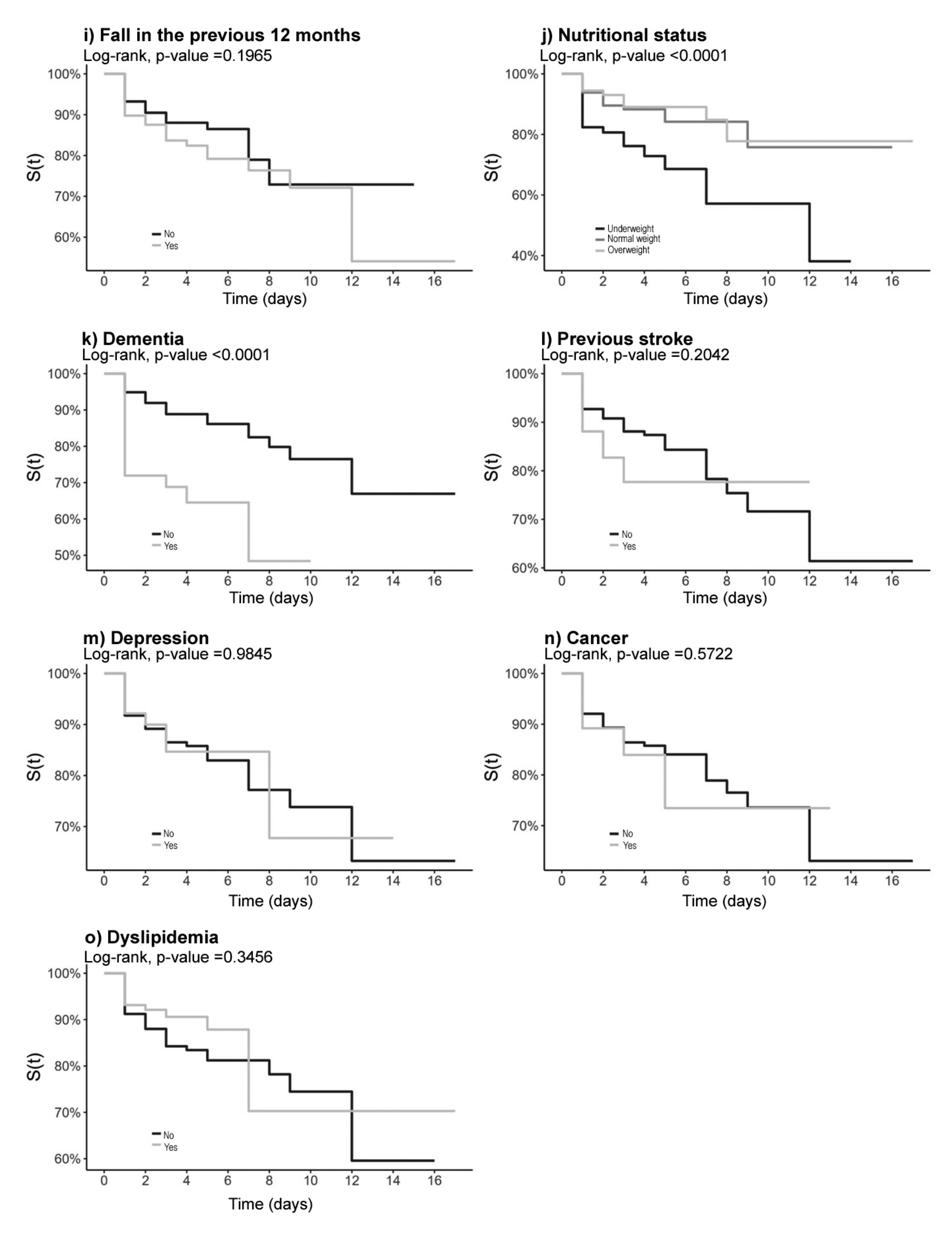
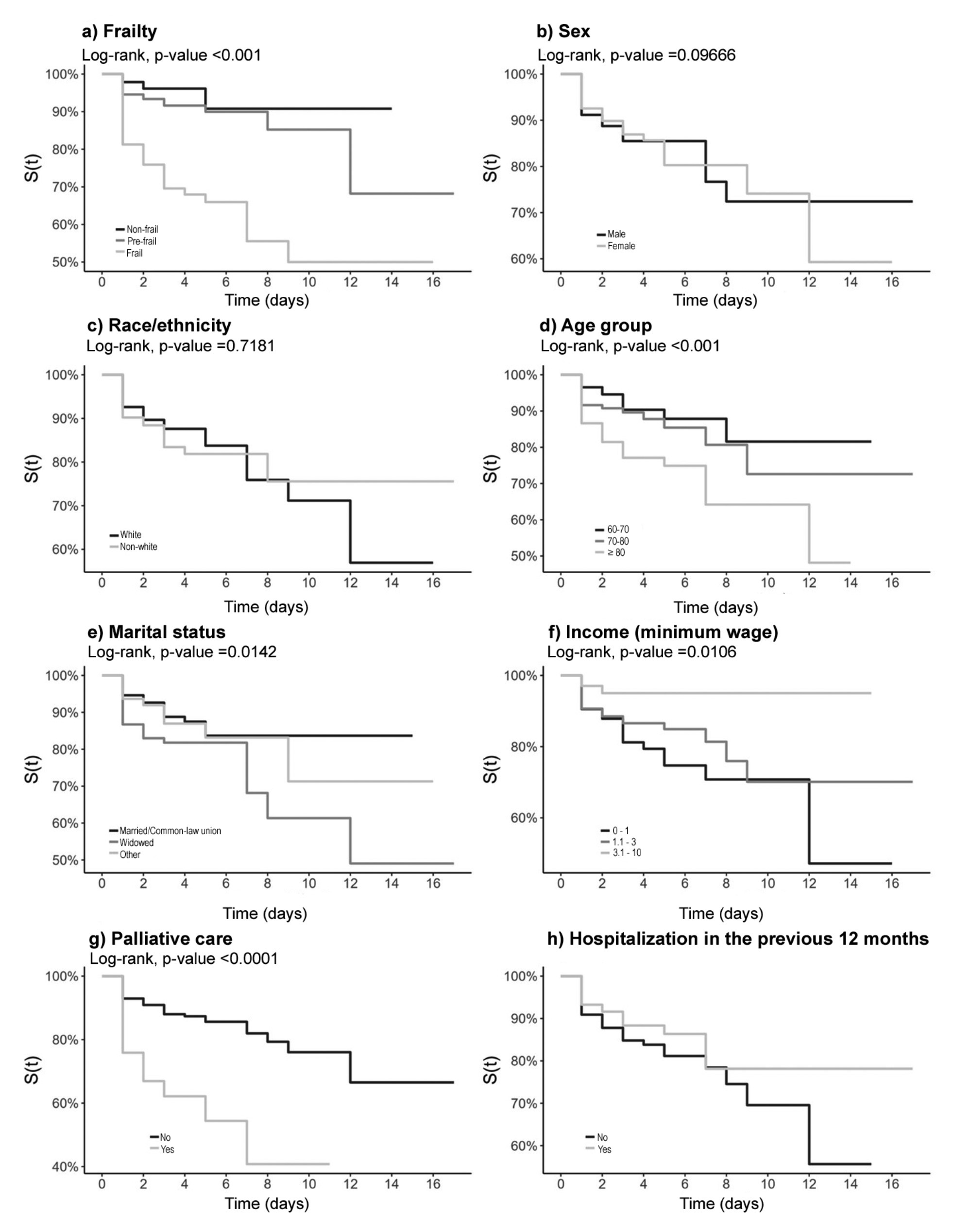
Figure 1 shows that frailer older adults (p<0.0001), those aged over 80 years (p=0.0007), widowed individuals (p=0.0142), those receiving palliative care (p≤0.0001), those with low body weight (p=0.0002), and those diagnosed with dementia (p≤0.0001) experienced the first episode of delirium earlier during hospitalization. Income higher than three minimum wages was identified as a protective factor for incident delirium (p=0.0106).
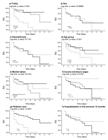
Kaplan–Meier survival curves for sociodemographic characteristics and comorbidities of hospitalized older adults until the development of delirium (N = 427). Curitiba, PR, 2022–2023.
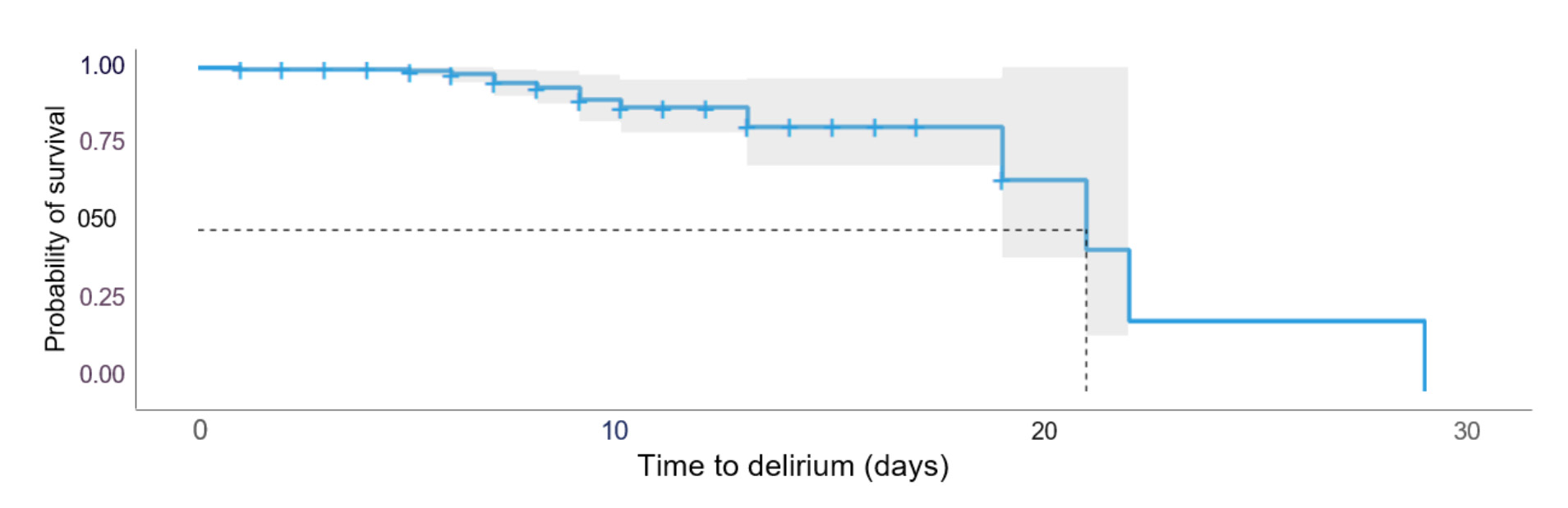
The overall Kaplan–Meier curve (Figure 2) shows that the cumulative probability of delirium-free survival remained above 50% throughout the observation period. Consequently, the median delirium-free survival time was not reached in the total sample (95% CI: 12 days to not reached). The restricted mean delirium-free survival time was 13.1 days (SE: 0.63).
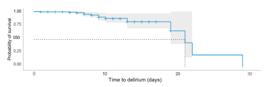
Kaplan–Meier survival curves of hospitalized older adults until the development of delirium (N=427). Curitiba, PR, 2022–2023.
Table 3 shows that frail older adults had a 5.47-fold higher risk of early-onset delirium. Receiving palliative care was associated with a 2.5-fold higher risk, and the presence of dementia was associated with a 2.51-fold higher risk of early-onset delirium. Income higher than 3.1 minimum wages was associated with a 71% lower risk of occurrence, and a history of previous hospitalizations was associated with a 58% reduction in the risk of early-onset delirium.
Cox proportional hazards models for the association between first diagnosis of delirium and sociodemographic characteristics and comorbidities of hospitalized older adults (N=427). Curitiba, PR, 2022–2023.
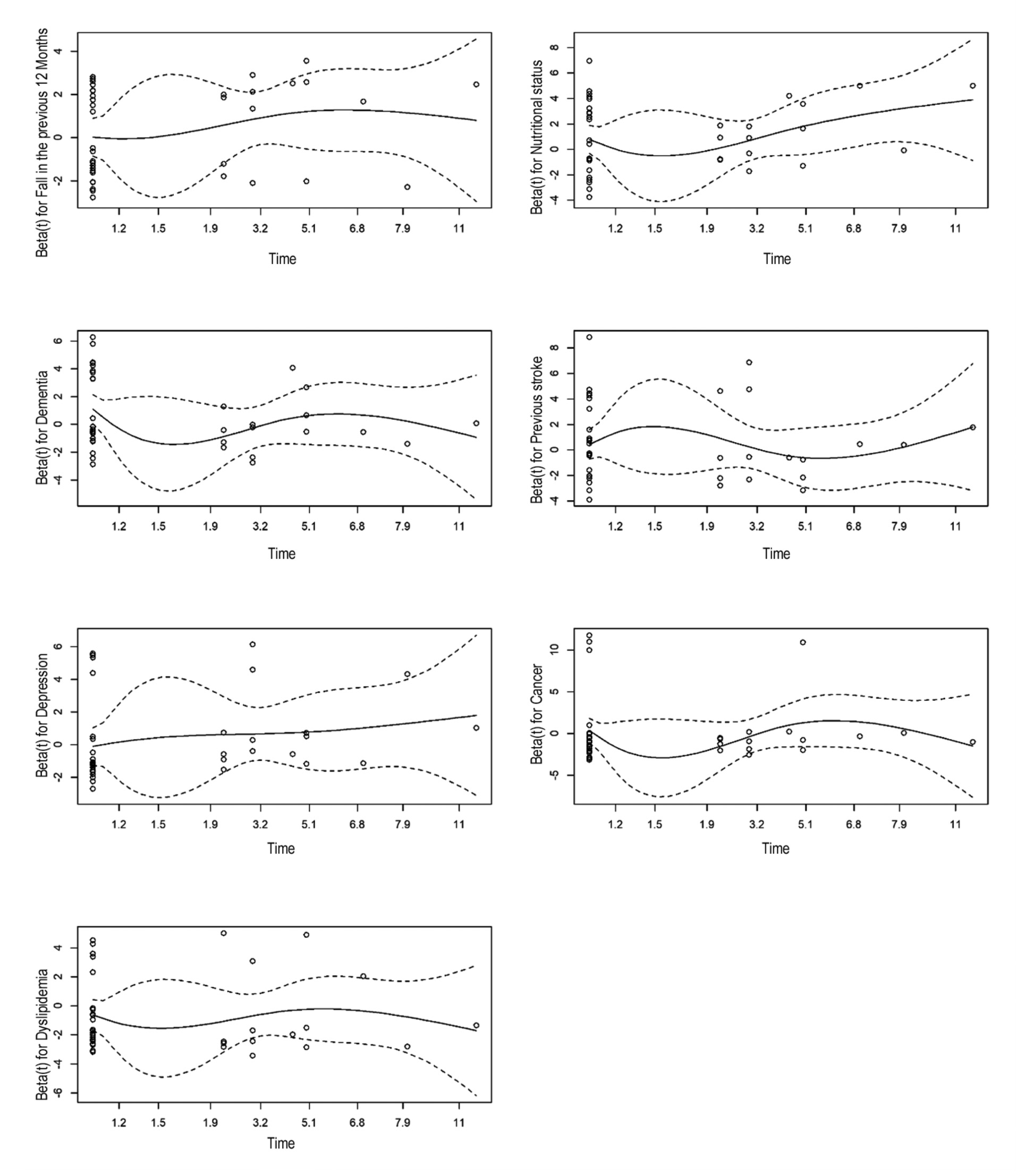
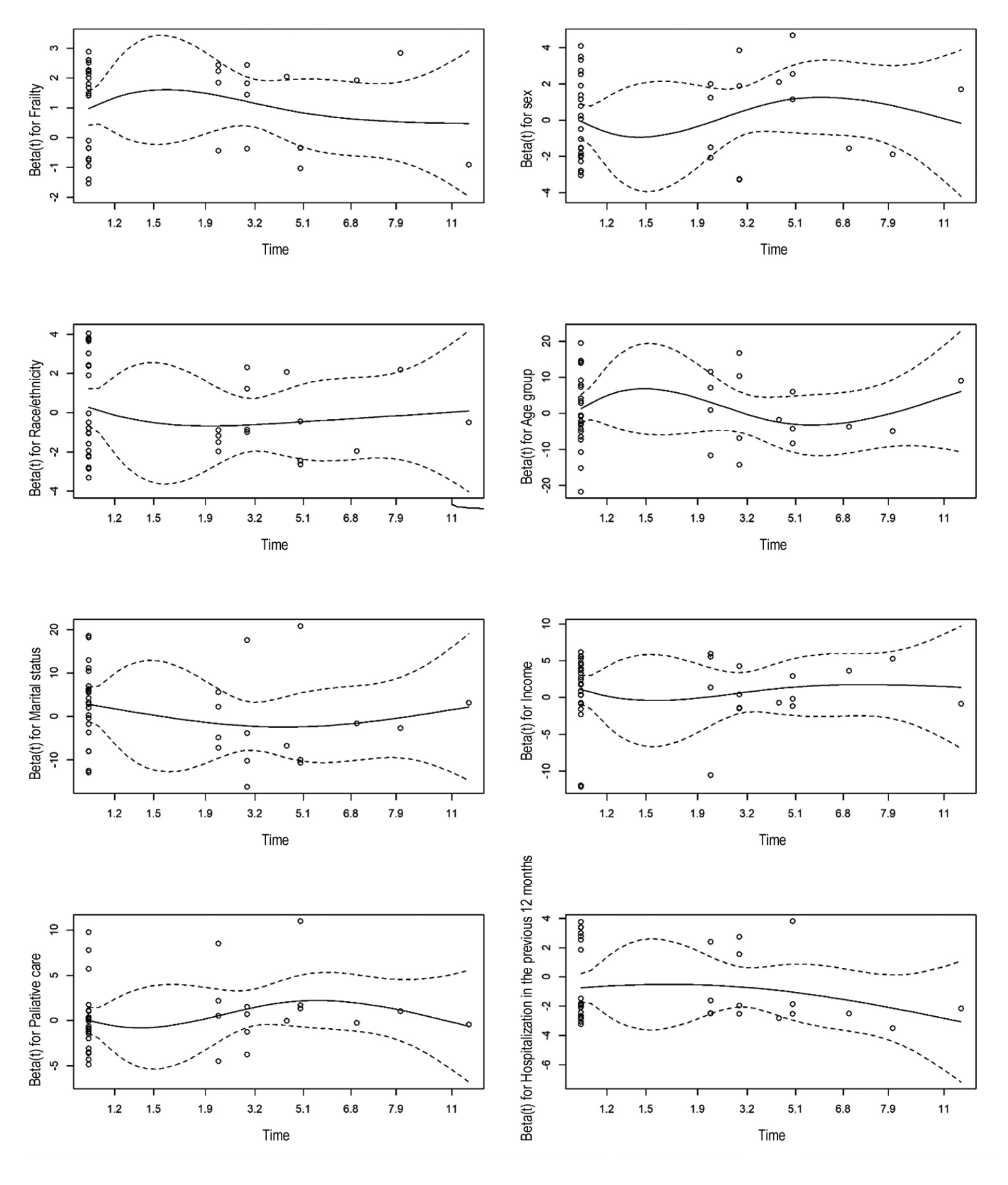
As shown in Figure 3, no violations of the proportional hazards assumption were identified. This finding was confirmed by the proportional hazards assumption test, whose p-values were greater than 0.05, indicating that the null hypothesis was not rejected. Therefore, the adjusted model adequately met the assumptions of the Cox proportional hazards model.
Schoenfeld residual plot – first diagnosis of delirium in hospitalized older adults (N=427). Curitiba, PR, 2022–2023.
DISCUSSION
The characteristics observed in the sample, such as frailty, dementia, and the need for palliative care, represent classical markers of physiological and cognitive vulnerability associated with delirium. Advanced age is associated with reduced homeostatic reserve, immune dysfunction, and a greater burden of comorbidities, increasing the risk of an exaggerated response to acute stressors18. Population-based data from Spain corroborate the importance of advanced age as a predisposing factor for delirium. In a sample of 4,628,397 hospitalized patients, an increase in delirium prevalence with advancing age was observed, reaching 48% among individuals aged 81 to 90 years19.
Frailty, defined as a state of increased vulnerability to acute stressors16, is a strong clinical predictor of delirium. In the present study, frail individuals had a 5.47-fold higher risk of delirium compared with non-frail individuals, in agreement with previous studies reporting a two- to threefold increased risk in hospitalized populations20,21. In a recent literature review, the authors stated that frailty and delirium share common pathophysiological mechanisms, including chronic inflammation, neurodegeneration, metabolic insufficiency, and increased vascular burden, suggesting that both may represent interrelated manifestations of an accelerated biological aging process22. These findings highlight the importance of systematic strategies for screening and management of frailty as a central component in the prevention of delirium in hospitalized older adults.
Frail older adults tend to develop delirium earlier than non-frail individuals. The relationship between frailty, delirium, and length of hospital stay was explored in a multicenter study using the Clinical Frailty Scale23. Delirium occurred earlier in frail patients. Among those who developed delirium during hospitalization, length of hospital stay did not vary according to frailty status; however, in older adults without delirium, greater frailty was associated with progressively longer hospital stay. Thus, the impact of delirium may outweigh the incremental effect of frailty on the duration of hospitalization23.
Low body weight also emerged as a significant risk factor, associated with earlier onset of delirium, as reported in a study conducted in South Korea with 5,622 hospitalized older adults, in which the overall incidence of delirium reached 19%, with a significantly higher risk among underweight patients (OR 1.51; 95% CI 1.07–2.12)24. Although the literature addresses several risk factors for delirium development, there is still a gap regarding the analysis of time to onset of the condition.
Regarding dementia, the present study identified a 2.51-fold higher risk of delirium in individuals with this diagnosis, in agreement with the literature that identifies dementia as an important predisposing factor25,26. Reduced cognitive reserve and difficulty adapting to the hospital environment reinforce this vulnerability. Another variable explored was room type, with a lower risk of delirium observed in older adults hospitalized in single rooms (HR 0.66; 95% CI 0.48–0.93)24. A systematic review aimed to evaluate risk stratification instruments for delirium, and the synthesis of results identified dementia as the most frequent factor, with odds ratios ranging from 3.3 to 18.33 27.
Longitudinal studies demonstrate that the presence of dementia is associated not only with a higher risk of delirium but also with longer hospital stay (14.3 vs. 7.7 days) and increased hospital costs28. Therefore, this condition is highly relevant in planning care for hospitalized older adults.
In the social domain, variables such as widowhood and low income reveal less explored but critical dimensions related to vulnerability to delirium. Income higher than three minimum wages was identified as a protective factor against early occurrence of delirium, with a relative risk reduction of 71%. These findings are supported by a prospective cohort study conducted in Boston (USA), in which populations living in socioeconomically disadvantaged neighborhoods had a doubled risk of postoperative delirium (RR 2.0; 95% CI 1.3–3.1; p=0.01)29. These results suggest that social determinants should be interpreted considering contextual inequalities, access to trained caregivers, and the availability of social support networks. Lower socioeconomic status has also been associated with a higher incidence of frailty, greater likelihood of progression to more advanced frailty states, and lower probability of reversal30.
Widowhood, in turn, may reflect loss of social and emotional support, favoring isolation and reducing resilience to acute stressors. Studies indicate that older adults living alone constitute a heterogeneous group, in which some maintain independence and diversified support networks, while others present a higher risk of prolonged hospitalization and increased hospital costs31,32. These findings highlight the importance of integrated social approaches to mitigate vulnerabilities that predispose to delirium.
In the clinical domain, receiving palliative care emerges as a robust factor associated with increased risk of delirium. In the present study, older adults receiving palliative care had a 2.5-fold higher risk of delirium compared with those not receiving this type of care. Systematic reviews demonstrate widely variable prevalence of delirium in palliative care, estimated between 4% and 88%, with approximately one third of hospitalized patients in palliative settings presenting delirium33, reaching up to 93% in terminal stages34.
The high prevalence of delirium in palliative care reflects the complex interaction of multiple precipitating factors, including polypharmacy, use of medications with anticholinergic effects, metabolic disturbances, infections, and exacerbated physical and psychological distress, making this population particularly vulnerable34. Recognition of this increased risk reinforces the need for systematic strategies for prevention, early identification, and individualized management of delirium in palliative care, aiming to reduce suffering and improve quality of life for patients and caregivers.
Unexpectedly, older adults with a history of hospitalization in the previous 12 months showed a 58% lower relative risk of delirium diagnosis compared with those without previous hospitalization. One possible explanation for this finding is that prior hospitalizations may have facilitated the recognition of risk factors and the implementation of multicomponent preventive strategies, as demonstrated in programs such as the Hospital Elder Life Program35. In addition, a possible selection bias should be considered, since more fragile patients or those who had previously developed delirium may have died, characterizing a survivor bias.
Delirium is a challenging condition for research in the hospital setting, given its fluctuating presentation. A limitation of this study is the scarcity of investigations that systematically incorporate the variable “time to delirium onset” in hospitalized older adults, which makes direct comparisons difficult and increases the complexity of temporal analysis of this geriatric syndrome.
CONCLUSION
The identified risk factors represent markers of multidimensional vulnerability in older adults, indicating reduced physiological, cognitive, and social reserve to cope with acute stressors, with frailty, presence of dementia, and the need for palliative care standing out as the main independent risk factors. Conversely, higher income was identified as a significant protective factor, highlighting the role of socioeconomic determinants in the occurrence of delirium.
Survival analysis allowed the identification of significant differences in the time to the first episode, reinforcing the relevance of preventive strategies directed toward higher-risk groups. These findings contribute to the improvement of early screening and clinical management of delirium in older adults, with implications for clinical practice and health policy planning.
In this context, delirium should not be considered merely an episodic event, but rather a sign of overall clinical decompensation and increased risk for worse clinical outcomes, such as mortality and functional decline. The identification and management of these conditions are essential to prevent the occurrence of delirium and to mitigate its consequences.
References
- 1 Saraiva MD, Apolinario D, Avelino-Silva TJ, Tavares CAM, Gattás-Vernaglia IF, Fernandes CM, et al. The impact of frailty on the relationship between life-space mobility and quality of life in older adults during the COVID-19 pandemic. J Nutr Health Aging [Internet]. 2021 ?citado em 2025 Jul 23];25(4):440-7. Disponível em: https://doi.org/10.1007/s12603-020-1532-z
-
2 American Psychiatric Association. Diagnostic and statistical manual of mental disorders: DSM-5. 5th ed. Washington, DC: American Psychiatric Association; 2013. 947 p. Disponível em: https://doi.org/10.1176/appi.books.9780890425596
» https://doi.org/10.1176/appi.books.9780890425596 - 3 Bellelli G, Brathwaite JS, Mazzola P. Delirium: a marker of vulnerability in older people. Front Aging Neurosci [Internet]. 2021 [citado em 2025 Jul 23];13:626127. Disponível em: https://doi.org/10.3389/fnagi.2021.626127
- 4 Inouye SK, Westendorp RG, Saczynski JS. Delirium in elderly people. Lancet [Internet]. 2014 [citado em 2025 Nov 13];383(9920):911-22. Disponível em: https://doi.org/10.1016/S0140-6736(13)60688-1
- 5 Boettger S, Zipser CM, Bode L, Spiller T, Deuel J, Osterhoff G, et al. The prevalence rates and adversities of delirium: Too common and disadvantageous. Palliat Support Care [Internet]. 2021[citado em 2025 Nov 13];19(2):161-9. Disponível em: https://doi.org/10.1017/S1478951520000632
- 6 Schiess C, Hofer L, Von Felten S, Bartussek J, Petry H, Ernst J. Prevalence, risk factors and impact of delirium in adult inpatients in a tertiary care hospital: A point prevalence study. J Clin Nurs [Internet]. 2025 [citado em 2025 Nov 13];34(3):921-31. Disponível em: https://doi.org/10.1111/jocn.17113
- 7 Han QYC, Rodrigues NG, Klainin-Yobas P, Haugan G, Wu XV. Prevalence, Risk Factors, and Impact of Delirium on Hospitalized Older Adults with Dementia: A Systematic Review and Meta-Analysis. J Am Med Dir Assoc [Internet]. 2022 [citado em 2025 Ago 13];23(1):23-32.e27. Disponível em: https://doi.org/10.1016/j.jamda.2021.09.008
- 8 Goldberg TE, Chen C, Wang Y, Jung E, Swanson A, Ing C, et al. Association of Delirium With Long-term Cognitive Decline: A Meta-analysis. JAMA Neurol [Internet]. 2020 [citado em 2025 Ago 13];77(11):1373-1381. Disponível em: https://doi.org/10.1001/jamaneurol.2020.2273
- 9 Bowman EML, Brummel NE, Caplan GA, Cunningham C, Evered LA, Fiest KM, et al. Advancing specificity in delirium: The delirium subtyping initiative. Alzheimers Dement [Internet]. 2024 [citado em 2025 Ago 13];20(1):183-94. Disponível em: https://doi.org/10.1002/alz.13419
- 10 Trevisan C, Grande G, Rebora P, Zucchelli A, Valsecchi MG, Focà E, et al. Early Onset Delirium During Hospitalization Increases In-Hospital and Postdischarge Mortality in COVID-19 Patients: A Multicenter Prospective Study. J Clin Psychiatry [Internet]. 2023 [citado em 2025 Out 19];84(5):22m14565. Disponível em: https://doi.org/10.4088/JCP.22m14565
- 11 Avelino-Silva TJ, Roma MFB, Dutra AF, Malheiro A, Speranza ACC, Casale AMC, et al. Geriatric Syndromes and Mortality Among Hospitalized Older Adults. JAMA Netw Open [Internet]. 2026 [citado em 2026 Fev 02];9(1):e2555740. Disponível em: https://doi.org/10.1001/jamanetworkopen.2025.55740
- 12 Wilke S, Steiger E, Bärwolff TL, Kleine JF, Müller-Werdan U, Rosada A. Delirium in older hospitalized patients-A prospective analysis of the detailed course of delirium in geriatric inpatients. PLOS ONE [Internet]. 2023 [citado em 2025 Out 19];18(3):e0279763. Disponível em: https://doi.org/10.1371/journal.pone.0279763
- 13 Cuschieri S. The STROBE guidelines. Saudi J Anaesth [Internet]. 2019 [citado em 2025 Out 19];13(5):31. Disponível em: https://doi.org/10.4103/sja.SJA_543_18
-
14 Longitudinal Design. In: Salkind NJ, editor. Encyclopedia of Research Design [Internet]. 2455 Teller Road, Thousand Oaks (CA) United States: SAGE Publications, Inc.; 2010 [citado em 2025 Set 25]. Disponível em: https://www.scribd.com/document/427102862/Neil-J-Salkind-Encyclopedia-of-Research-Design-2010-SAGE-Publications-Inc-pdf
» https://www.scribd.com/document/427102862/Neil-J-Salkind-Encyclopedia-of-Research-Design-2010-SAGE-Publications-Inc-pdf -
15 Brasil. Ministério da Saúde. Secretaria de Atenção à Saúde. Departamento de Atenção Básica. Nota técnica SISVAN municipal: estado nutricional dos usuários da atenção básica [Internet]. Brasília: Ministério da Saúde; 2004 [citado em 2026 Fev 02]. Disponível em: http://tabnet.datasus.gov.br/cgi-win/SISVAN/CNV/notas_sisvan.html
» http://tabnet.datasus.gov.br/cgi-win/SISVAN/CNV/notas_sisvan.html - 16 Fried LP, Tangen CM, Walston J, Newman AB, Hirsch C, Gottdiener J, et al. Frailty in Older Adults: Evidence for a Phenotype. J Gerontol A Biol Sci Med Sci [Internet]. 2001 [citado em 2025 Out 19];56(3):M146-57. Disponível em: https://doi.org/10.1093/gerona/56.3.m146
-
17 Inouye SK. Clarifying Confusion: The Confusion Assessment Method: A New Method for Detection of Delirium. Ann Intern Med [Internet]. 1990 [citado em 2025 Out 27]; 113(12):941-8. Disponível em: https://doi.org/10.7326/0003-4819-113-12-941
» https://doi.org/10.7326/0003-4819-113-12-941 - 18 Hshieh TT, Inouye SK, Oh ES. Delirium in the Elderly. Clin Geriatr Med. [Internet]. 2020 [citado em 2025 Out 19];36(2):183-99. Disponível em: https://doi.org/10.1016/j.cger.2019.11.001
- 19 Marco J, Méndez M, Cruz-Jentoft AJ, García Klepzig JL, Calvo E, Canora J, et al. Clinical characteristics and prognosis for delirium in Spanish internal medicine departments: An analysis from a large clinical-administrative database. Rev Clínica Esp [Internet]. 2019 [citado em 2025 Set 10];219(8):415-23. Disponível em: https://doi.org/10.1016/j.rce.2019.02.005
- 20 Mahanna-Gabrielli E, Zhang K, Sieber FE, Lin HM, Liu X, Sewell M, et al. Frailty Is Associated With Postoperative Delirium But Not With Postoperative Cognitive Decline in Older Noncardiac Surgery Patients. Anesth Analg [Internet]. 2020 [citado em 2025 Set 25];130(6):1516-23. Disponível em: https://doi.org/10.1213/ANE.0000000000004773
- 21 Wu CR, Chang KM, Tranyor V, Chiu HY. Global incidence and prevalence of delirium and its risk factors in medically hospitalized older patients: A systematic review and meta-analysis. Int J Nurs Stud [Internet]. 2025 [citado em 2025 Nov 20];162:104959. Disponível em: https://doi.org/10.1016/j.ijnurstu.2024.104959
- 22 Bellelli G, Triolo F, Ferrara MC, Deiner SG, Morandi A, Cesari M, et al. Delirium and frailty in older adults: Clinical overlap and biological underpinnings. J Intern Med [Internet]. 2024 [citado em 2025 Out 19];296(5):382-98. Disponível em: https://doi.org/10.1111/joim.20014
- 23 Geriatric Medicine Research Collaborative, Faheem W, Nandra T, Richardson S, Saliu D, Wilson D, et al. Increasing frailty is associated with higher prevalence and reduced recognition of delirium in older hospitalised inpatients: results of a multi-centre study. Eur Geriatr Med [Internet]. 2023 [citado em 2025 Out 15];14(2):325-32. Disponível em: https://doi.org/10.1007/s41999-022-00737-y
- 24 Ko Y, Kim HE, Park JY, Kim JJ, Cho J, Oh J. Relationship between body mass index and risk of delirium in an intensive care unit. Arch Gerontol Geriatr [Internet]. 2023 [citado em 2025 Out 11];108:104921. Disponível em: https://doi.org/10.1016/j.archger.2023.104921
- 25 Blandfort S, Gregersen M, Rahbek K, Juul S, Damsgaard EM. Single-bed rooms in a geriatric ward prevent delirium in older patients. Aging Clin Exp Res [Internet]. 2020 [citado em 2025 Out 11];32(1):141-7. Disponível em: https://doi.org/10.1007/s40520-019-01173-y
- 26 Marquetand J, Bode L, Fuchs S, Ernst J, von Känel R, Boettger S. Predisposing and Precipitating Factors for Delirium in the Very Old (≥80 Years): A Prospective Cohort Study of 3,076 Patients. Gerontology [Internet]. 2021[citado em 2025 Out 10];67(5):599-607. Disponível em: https://doi.org/10.1159/000514298
- 27 Seidenfeld J, Lee S, Ragsdale L, Nickel CH, Liu SW, Kennedy M. Risk factors and risk stratification approaches for delirium screening: A Geriatric Emergency Department Guidelines 2.0 systematic review. Acad Emerg Med [Internet]. 2024 [citado em 2025 Out 11];31(10):969-84. Disponível em: https://doi.org/10.1111/acem.14939
- 28 Fuchs S, Bode L, Ernst J, Marquetand J, Von Känel R, Böttger S. Delirium in elderly patients: Prospective prevalence across hospital services. Gen Hosp Psychiatry [Internet]. 2020 [citado em 2025 Out 19];67:19-25. Disponível em: https://doi.org/10.1016/j.genhosppsych.2020.08.010
- 29 Arias F, Chen F, Fong TG, Shiff H, Alegria M, Marcantonio ER, et al. Neighborhood-Level Social Disadvantage and Risk of Delirium Following Major Surgery. J Am Geriatr Soc ?Internet?. 2020 [citado em 2025 Out 19];68(12):2863-71. Disponível em: https://doi.org/10.1111/jgs.16782
- 30 Hanlon P, Politis M, Wightman H, Kirkpatrick S, Jones C, Khan M, et al. Frailty and socioeconomic position: A systematic review of observational studies. Ageing Res Rev [Internet]. 2024 [citado em 2025 Out 19];100:102420. Disponível em: https://doi.org/10.1016/j.arr.2024.102420
- 31 Barrenetxea J, Tan KB, Tong R, Chua K, Feng Q, Koh WP, et al. Emergency hospital admissions among older adults living alone in the community. BMC Health Serv Res [Internet]. 2021 [citado em 2025 Out 19];21(1):1192. Disponível em: https://doi.org/10.1186/s12913-021-07216-3
- 32 Barrenetxea J, Yang Y, Markides KS, Pan A, Koh WP, Feng Q. Social support and health among older adults – the Singapore Chinese Health Study. Ageing Soc [Internet]. 2022 [citado em 2025 Out 19];42(8):1921-37. Disponível em: https://doi.org/10.1017/S0144686X20001944
- 33 Watt CL, Momoli F, Ansari MT, Sikora L, Bush SH, Hosie A, et al. The incidence and prevalence of delirium across palliative care settings: A systematic review. Palliat Med [Internet]. 2019 [citado em 2025 Out 19];33(8):865-77. Disponível em: https://doi.org/10.1177/0269216319854944
- 34 Seiler A, Schubert M, Hertler C, Schettle M, Blum D, Guckenberger M, et al. Predisposing and precipitating risk factors for delirium in palliative care patients. Palliat Support Care [Internet]. 2020 [citado em 2023 Out 20];18(4):437-46. Disponível em: https://doi.org/10.1017/S1478951519000919
- 35 Hshieh TT, Yang T, Gartaganis SL, Yue J, Inouye SK. Hospital Elder Life Program: Systematic Review and Meta-analysis of Effectiveness. Am J Geriatr Psychiatry [Internet]. 2018 [citado em 2024 Out 25];26(10):1015-33. Disponível em: https://doi.org/10.1016/j.jagp.2018.06.007
Edited by
-
Edited by
Maria Luiza Diniz de Sousa Lopes