 Effectiveness of single-dose methotrexate in the treatment of ectopic pregnancy: a retrospective study
Objective: Evaluate the effectiveness of Methotrexate in clinical treatment of ectopic pregnancy and analyze the influence of clinical and laboratory variables on the treatment outcome.
Methods: It was a retrospective study of 95 patients undergoing clinical treatment with Methotrexate at a private tertiary hospital in the metropolitan region of Belo Horizonte. Variables such as age, presence of pelvic pain, previous ectopic pregnancy, initial beta-hCG level and largest adnexal mass measurement were analyzed. The theoretical framework followed a data search in PubMed, selecting 17 articles in total.
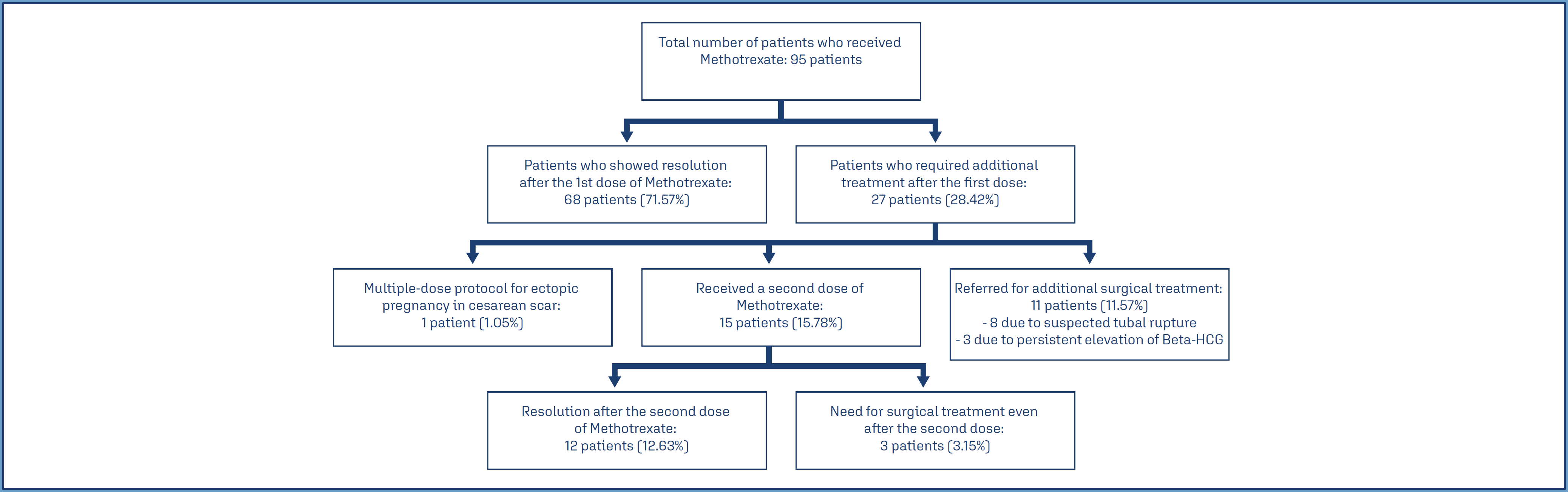
Results: The clinical success rate with a dose of Methotrexate was 71,6%. Among the variables evaluated, only the initial beta-hCG value showed statistical significance with the outcome, therefore, higher the beta-hCG, lower the chance of treatment effectiveness, with a p-value of 0.002. The other variables analyzed did not show any significant association.
Conclusion: Methotrexate has been shown to be effective in most cases of ectopic pregnancy, with the initial beta-hCG value standing out as a predictor of treatment failure. The findings reinforce the importance of adequate patient selection and laboratory monitoring in clinical follow-up.
Keywords
Ectopic pregnancy; Methotrexate; Effectiveness; Pelvic pain; Treatment outcome; Treatment failure
 Thumbnail
 Thumbnail